UNIVERSIDADE DE LISBOA
FACULDADE DE CIÊNCIAS
DEPARTAMENTO DE BIOLOGIA VEGETAL
Optimization of a Bioassay to Evaluate
Escherichia coli Stress Responses
Ana Lúcia Evaristo Russo
Mestrado em Microbiologia Aplicada
Dissertação orientada por:
Cecília R.C. Calado
Ana Tenreiro
II
Acknowledgments
First of all, I would like to express my sincere gratitude to my advisors, Professor Cecília Calado for giving me the opportunity to work in a totally different area from mine and with a very innovative technique, the infrared spectroscopy. Thank you as well for all the support, availability and advise given during this project. To the Instituto Superior de Engenharia de Lisboa (ISEL) for having received me in the second year of the master's degree.
I also appreciate to DrugsPlatf-2017 and GenTox-2017 projects, financed by Instituto Politécnico de Lisboa, for supporting this work.
To Bernardo Cunha for all the patience to guide me in the first practical tests, for all the advices and also for having done all the data processing, which was crucial for the analysis of my results.
I also want to thank to all my post-graduation professors for all the knowledge they passed to me, which have been very useful during my master thesis and to Faculdade de Ciências da Universidade de Lisboa for having accepted my candidature in the Master of Microbiology.
A hearthfelt thank to my colleagues that shared this academic journey with me, who supported me and gave me the strength to continue. We started this journey together but, unfortunately, we had to finish it apart. However, I am very grateful for meeting you. To all of my friends for supporting me. To my beloved boyfriend, Miguel Mataloto, the greatest thanks for all the patience and unconditionally support during this last year and for having accompanied me in all the stages of this journey. I am truly sure that I could not made it without you.
Last but not least, an enormous thank to my family, especially my mother, father, sister, grandmother and grandfathers, who had support me more than anyone at all stages of my life. To my parent’s thank you for allowing me to have an education, this would be completely impossible without you.
III
Abstract
In the last decade, Fourier Transform Infrared Spectroscopy (FTIR) has been applied in several areas, being an increasingly used technique in microbiology, especially for whole cell metabolomics fingerprint. However, the reproducibility of this technique is influenced by a large number of factors such as the physiological state of cells, sample manipulation and growth conditions. In order to solve this problem, the present work intends to optimize a bioassay for evaluating the response of microorganisms to stress conditions, using Escherichia coli as a model, as its metabolic pathways share pronounced similarities to mainstream pathways across other microorganisms.
The bioassay was optimized in terms of nutrient medium concentration, E.coli growth phase and exposed time to the stress agents. The stress agents used were: ethanol, bleach, sodium chloride, hydrochloric acid and sodium hydroxide. These agents were chosen for having different mechanisms of action in microorganism’s cells. A bioassay which allows to evaluate the metabolic response of the microorganism cell when exposed to stress conditions is important to increase knowledge about microbial metabolism and for example for the development of new drugs. After the bioassay optimization, it was decided to test the assay exposing the E. coli cells to six antibiotics, whose mechanism of action is known. This allows to observe if the optimization of the bioassay meets the objective of differentiating samples exposed to different substances. It was observed that the conditions that allow higher reproducibility and sensitivity of the bioassay are different for each type of stress agent, but as a general rule exposing the cells to stress agents for 24 hrs, use the nutrient medium 1.25x concentrate and the cells in the stationary growth phase were the global optimal conditions to distinguish the various mechanisms of action on the metabolism of E. coli cells.
The approach described allowed to identify the impact of each parameter on the metabolic resolution of the biomolecular fingerprint acquired by FTIR spectroscopy, and therefore, the adapted bioassay maximizes the metabolic fingerprinting ability of the method, namely to characterize different metabolic stress responses.
KEYWORDS: Stress Response, Escherichia coli, Fourier transform Infra-red Spectroscopy,
III
Resumo
Na última década, a espectroscopia por transformada de Fourier (FTIR) tem vindo a ser aplicada às mais diversificadas áreas, sendo uma técnica cada vez mais utilizada em microbiologia, por permitir obter resultados num curto espaço de tempo e por ter um baixo custo por análise. No entanto, a reprodutibilidade desta técnica é influenciada por um grande número de fatores, entre os quais, o estado fisiológico das células, o método de manipulação da amostra e as condições de crescimento. Para tentar solucionar este problema, o presente trabalho pretende otimizar um bioensaio, baseado em espectroscopia de infravermelho, para avaliar a resposta metabólica dos microrganismos quando expostos a condições de stress, utilizando a bactéria Escherichia coli como modelo, uma vez que as suas vias metabólicas são muito semelhantes com as de outros microrganismos.
O bioensaio foi otimizado em termos da concentração de nutriente do meio de cultura, (tendo sido testadas as concentrações 1.25, 2.5 e 5x), fase de crescimento da bactéria E. coli (onde foram utilizadas células na fase exponencial, no início da fase estacionária e na fase estacionária) e o tempo de exposição das células aos agentes de stress (1, 8 e 24 h). Os agentes de stress utilizados foram: álcool, lixívia, cloreto de sódio, ácido clorídrico e hidróxido de sódio. Estes agentes foram escolhidos por teres diferentes mecanismos de ação nas células dos microrganismos. É de extrema importância o desenvolvimento e otimização de bioensaios que permitam avaliar a resposta metabólica das células dos microrganismos quando expostos a condições adversas, para aumentar o conhecimento sobre o metabolismo microbiano e, por exemplo, para o desenvolvimento de novos antibióticos. Após a otimização do bioensaio, foi decidido testar o ensaio expondo as células de E. coli a seis antibióticos diferentes, cujos mecanismos de ação são conhecidos. Desta maneira, é possível observar se a otimização do bioensaio cumpre o objetivo de diferenciar amostras expostas a diferentes substâncias. Observou-se que as condições que permitem obter uma maior reprodutibilidade e sensibilidade do bioensaio são diferentes para cada tipo de agente de stress, mas regra geral, expor as células aos agentes de stress durante 24 horas, usar o meio 1.25x concentrado e as células na fase de crescimento estacionária permite distinguir os vários mecanismos de ação no metabolismo das células de E. coli.
A metodologia descrita permitiu identificar o impacto de cada parâmetro na resolução metabólica da impressão digital biomolécula adquirida pela espectroscopia FTIR e, portanto, o bioensaio otimizado maximiza a capacidade metabólica de impressão digital do método, nomeadamente ao caracterizar diferentes respostas metabólico ao stress.
Palavras-Chave: Resposta ao stress, Escherichia coli, Espectroscopia de infravermelho por
IV
Table of contents
List of figures ... V List of Abbreviations ... X 1. Thesis overview ... 1 1.1 Objectives ... 1 1.2 Thesis Outline ... 1 2. Introduction ... 2 2.1 Infrared spectroscopy ... 2 2.1.1 Instrumentation ... 4 2.1.2 Acquisition Modes ... 6 2.1.3 Applications to Microbiology... 62.1.4 Chemometrics and Spectral pre-processing techniques ... 8
2.2 Bioassay optimization ... 11
2.2.1 Escherichia coli bacteria and stress responses ... 12
2.2.2 Application of the bioassay ... 14
3. Materials and methods ... 16
3.1 Culture growth conditions and Bioassay ... 16
3.2. Preparation of solutions of stress agents ... 17
3.3 Preparation of antibiotic solutions ... 18
3.4 FTIR spectra acquisition, preprocessing and analysis ... 19
4. Results and Discussion ... 20
4.1 Bioassay optimization ... 20
4.1.1 Effect of nutrient media concentration ... 21
4.1.2 Effect of E. coli growth phase ... 31
4.1.3 Incubation time ... 38
4.1.4 Global analysis of the bioassay ... 48
4.2 Application of the bioassay ... 50
5. Conclusions and prospects ... 59
V
List of figures
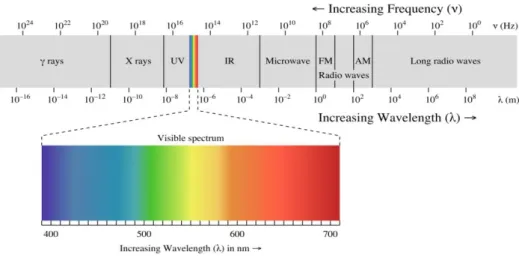
Figure 2.1 - Electromagnetic spectrum (Adapted from: KHANACADEMY, 2017) ... 2
Figure 2.2 - Regions of the infrared spectrum (Adapted from: Edmund Scientific, 2017) ... 3
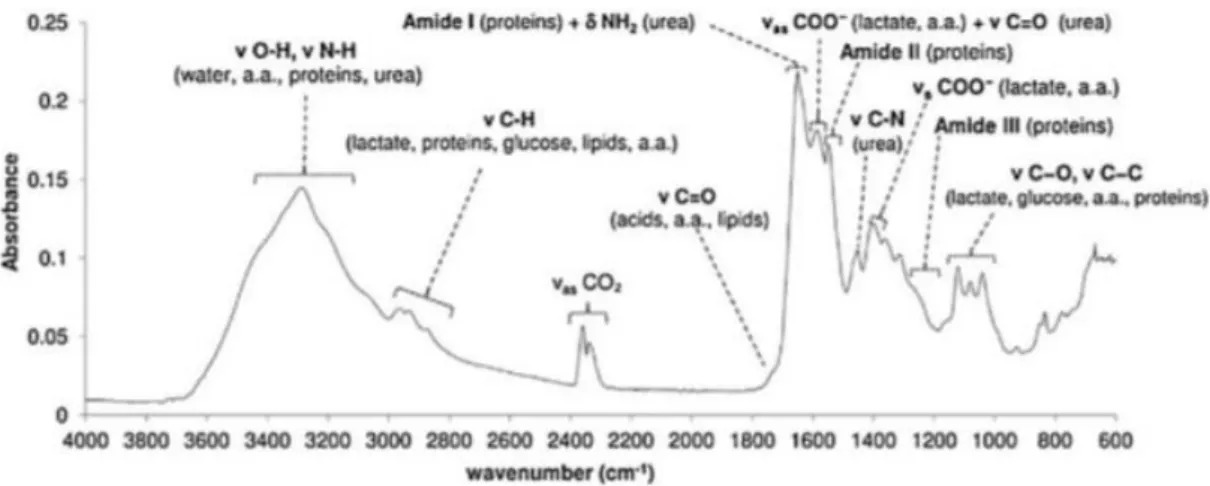
Figure 2.3 - MIR absorption spectrum with bands associated to molecular bounds of biomolecules
highlighted (Graça et al., 2013) ... 8
Figure 2.4 - Spectral derivatives (Adapted from: ASDinc, 2017) ... 10
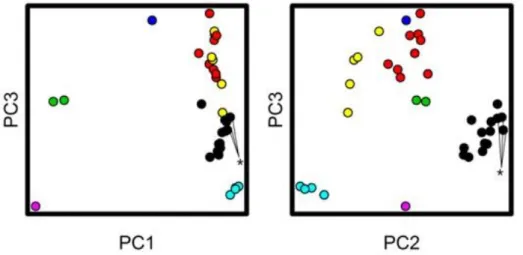
Figure 2.5 – PCA of different E. coli isolates to see if the unidentified isolates correspond to the
known isolate. The different colours represent the different isolates of E.coli, the black ones are identified as ST131 isolates, while other colours indicate groups of unknown sequence types
(Adapted from: Harrison and Hanson, 2007) ... 11
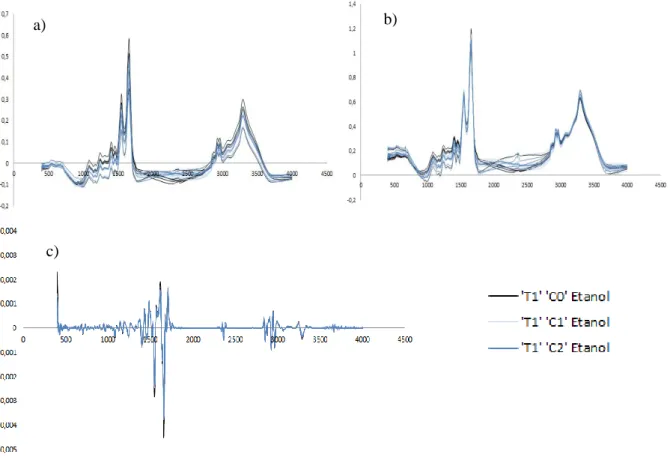
Figure 4.1 - FTIR spectra obtained from quintuplicates of assays of E. coli cells incubated for 1 hour
(T1) with ethanol concentrations of 0 (C0), 2 (C1) and 10% (C2) (v/v) a) without preprocessing, b) preprocessed by baseline correction, normalization and MSC, c) preprocessing by second derivative. ... 20
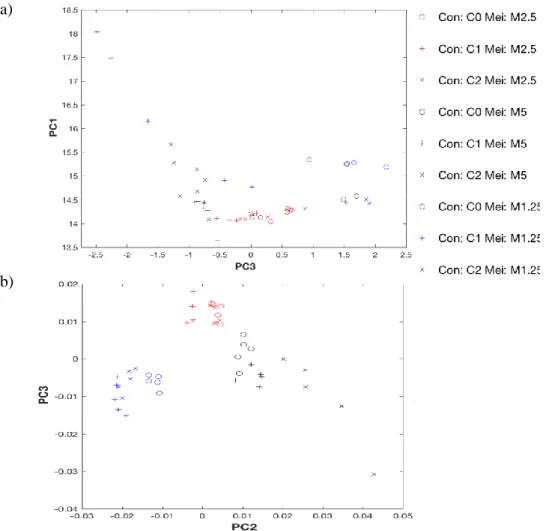
Figure 4.2 - PCA score plot of FTIR spectra of E.coli submitted to different ethanol concentrations
(C0 = 0; C1 = 2; C2 = 10% (V/V)) and incubated with different nutrient media concentration (M 1.25x, 2.5x and 5x). a) without preprocessing b) preprocessed by base line correction and
normalization Amide I. PC1, PC2 and PC3 represents 95%, 4% and 1% of data variance, respectively ... 22
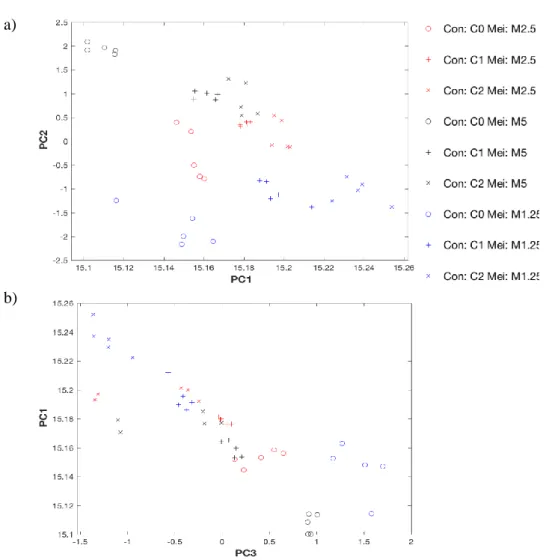
Figure 4.3 - PCA score plot of FTIR spectra of E. coli submitted to different bleach concentrations
(C0 = 0; C1 = 10; C2 = 80 ppm) and incubated with different nutrient media concentration (M 1.25x, 2.5x and 5x) a) preprocessed by base line correction and Min Max normalization b) preprocessed second derivative. PC1, PC2 and PC3 represent 98%, 1% and 1% of data variance, respectively... 23
Figure 4.4 – PCA score plot of FTIR spectra of E. coli submitted to different sodium chloride
concentrations (C0 = 0; C1 = 4; C2 = 8% (W/V)) and incubated with different nutrient media concentration (M 1.25x, 2.5x and 5x) a) preprocessed by base line correction, Min Amide I
normalization and MSC b) preprocessed by base line correction, MinMax normalization and MSC. PC1, PC2 and PC3 represent 98%, 1% and 1% of data variance, respectively... 25
Figure 4.5 - PCA score plot of FTIR spectra of E. coli submitted to different hydrochloric acid
concentrations (C0 = 0; C1 = 250; C2 = 500 μL) and incubated with different nutrient media concentration (M 1.25x, 2.5x and 5x) a) preprocessed by base line correction, Min Amide I
normalization and MSC b) preprocessed by second derivative. PC1, PC2 and PC3 represent 95%, 4% and 1% of data variance, respectively ... 27
Figure 4.6 - PCA score plot of FTIR spectra of E. coli submitted to different sodium hydroxide
concentrations (C0 = 0; C1 = 250; C2 = 500 μL) and incubated with different nutrient media concentration (M 1.25x, 2.5x and 5x) a) preprocessed by base line correction b) preprocessed by MinMax normalization and MSC. PC1, PC2 and PC3 represent 95%, 4% and 1% of data variance, respectively ... 29
Figure 4.7 - PCA score plot of FTIR spectra of E. coli submitted to different concentrations (C) of the
stress agents ethanol (A1), bleach (A2), sodium chloride (A3), hydrochloric acid (A4) and sodium hydroxide (A5) and different nutrient media concentration (M 1.25x, 2.5x and 5x) a) medium 1.25x, with spectra preprocessed by second derivative, b) medium 2.5x, with spectra preprocessed by base line correction, MinMax normalization and MSC c) medium 5x, with spectra preprocessed by Min
VI Amide I normalization and MSC. PC1, PC2 and PC3 represent 96%, 3% and 1% of data variance, respectively ... 30
Figure 4.8 - PCA score plot of FTIR spectra of E. coli submitted to different ethanol concentrations
(C0 = 0; C1 = 2; C2 = 10% (V/V)) and in different growth phase (8, 16 and 24 hrs), preprocessed by base line correction and Min Amide I normalization. PC1, PC2 and PC3 represent 98%, 1% and 1% of data variance, respectively ... 31
Figure 4.9 - PCA score plot of FTIR spectra of E. coli submitted to different bleach concentrations
(C0 = 0; C1 = 10; C2 = 80 ppm) and in different growth phase (8, 16 and 24 hrs), preprocessed by base line correction, MinMax normalization and MSC. PC1, PC2 and PC3 represent 98%, 1% and 1% of data variance, respectively ... 32
Figure 4.10 - PCA score plot of FTIR spectra of E. coli submitted to different sodium chloride
concentrations (C0 = 0; C1 = 4; C2 = 8% (W/V)) and in different growth phase (8, 16 and 24 hrs), preprocessed by base line correction. PC1, PC2 and PC3 represent 95%, 4% and 1% of data variance, respectively ... 33
Figure 4.11 - PCA score plot of FTIR spectra of E. coli submitted to different hydrochloric acid
concentrations (C0 = 0; C1 = 250; C2 = 500 μL) and in different growth phase (8, 16 and 24 hrs), a) preprocessed by second derivative. PC1, PC2 and PC3 represent 94%, 5% and 1% of data variance, respectively. ... 34
Figure 4.12 - PCA score plot of FTIR spectra of E. coli submitted to different sodium hydroxide
concentrations (C0 = 0; C1 = 250; C2 = 500 μL) and in different growth phase (8, 16 and 24 hrs), preprocessed by second derivative. PC1, PC2 and PC3 represent 91%, 6% and 3% of data variance, respectively ... 35
Figure 4.13 - PCA score plot of FTIR spectra of E. coli submitted to different concentrations (C) of
the stress agents ethanol (A1), bleach (A2), sodium chloride (A3), hydrochloric acid (A4) and sodium hydroxide (A5) and different in different growth phase (8, 16 and 24 hrs) a) after eight hrs of growth, preprocessed by second derivative b) after sixteen hrs of growth, preprocessed by base line correction, Min Amide I normalization and MSC c) after twenty-four hrs of growth, preprocessed by second derivative. PC1, PC2 and PC3 represent 98%, 1% and 1% of data variance, respectively ... 37
Figure 4.14 - PCA score plot of FTIR spectra of E. coli submitted to different ethanol concentrations
(C0 = 0; C1 = 2; C2 = 10%) and with different incubation times (1, 8 and 24 hrs) a) preprocessed by base line correction and MinMax normalization b) preprocessed by second derivative. PC1, PC2 and PC3 represent 98%, 1% and 1% of data variance, respectively ... 38
Figure 4.15 - PCA score plot of FTIR spectra of E. coli submitted to different bleach concentrations
(C0 = 0; C1 = 10; C2 = 80 ppm) and with different incubation times (1, 8 and 24 hrs) a) preprocessed by second derivative b) preprocessed by Min Amide I normalization and MSC. PC1, PC2 and PC3 represent 98%, 1% and 1% of data variance, respectively ... 40
Figure 4.16 - PCA score plot of FTIR spectra of E. coli submitted to different sodium chloride
concentrations (C0 = 0; C1 = 4; C2 = 8% (W/V)) and with different incubation times (1, 8 and 24 hrs) a) without preprocessing b) preprocessed by MinMax normalization and MSC. PC1, PC2 and PC3 represent 98%, 1% and 1% of data variance, respectively ... 42
Figure 4.17 - PCA score plot of FTIR spectra of E. coli submitted to different hydrochloric acid
concentrations (C0 = 0; C1 = 250; C2 = 500 μL) and with different incubation times (1, 8 and 24 hrs) a) without preprocessing b) preprocessed by second derivative. PC1, PC2 and PC3 represent 95%, 4% and 1% of data variance, respectively. ... 44
Figure 4.18 - PCA score plot of FTIR spectra of E. coli submitted to different sodium hydroxide
VII a) preprocessed by base line correction, Min Amide I normalization and MSC b) preprocessed by second derivative. PC1, PC2 and PC3 represent 88%, 8% and 4% of data variance, respectively... 45
Figure 4.19 - PCA score plot of FTIR spectra of E. coli submitted to different concentrations (C) of
the stress agents ethanol (A1), bleach (A2), sodium chloride (A3), hydrochloric acid (A4) and sodium hydroxide (A5) and with different incubation times (1, 8 and 24 hrs) a) after one hr of incubation, preprocessed by second derivative b) after eight hrs of incubation, preprocessed by second derivative c) after twenty four hrs of incubation, preprocessed by second derivative. PC1, PC2 and PC3 represent 95%, 4% and 1% of data variance, respectively. ... 47
Figure 4.20 - PCA score plot of FTIR spectra of E. coli submitted to different concentrations of the
antibiotic amoxicillin (C0 = 0; C1 = 0.01; C2 = 0.04; C3 = 0.2; C4 = 5; C5 = 25; C6 = 62.5; C7 = 125 mg/μL) a) preprocessed by second derivative b) preprocessed by second derivative. PC1, PC2 and PC3 represent 98%, 1% and 1% of data variance, respectively. ... 51
Figure 4.21 - PCA score plot of FTIR spectra of E. coli submitted to different concentrations of the
antibiotic ampicillin (C0 = 0; C1 = 0.01; C2 = 0.04; C3 = 0.2; C4 = 5; C5 = 25; C6 = 62.5; C7 = 125 mg/μL) a) without preprocessing b) preprocessed by second derivative. PC1, PC2 and PC3 represent 98%, 1% and 1% of data variance, respectively. ... 52
Figure 4.22 - PCA sore plot of FTIR spectra of E. coli submitted to different concentrations of the
antibiotic ciprofloxacin (C0 = 0; C1 = 0.01; C2 = 0.04; C3 = 0.2; C4 = 5; C5 = 25; C6 = 62.5; C7 = 125 mg/μL) a) preprocessed by base line correction and Min Amide I normalization b) preprocessed by Min Amide I normalization. PC1, PC2 and PC3 represent 98%, 1% and 1% of data variance, respectively ... 53
Figure 4.23 - PCA sore plot of FTIR spectra of E. coli submitted to different concentrations of the
antibiotic erythromycin (C0 = 0; C1 = 0.01; C2 = 0.04; C3 = 0.2; C4 = 5; C5 = 25; C6 = 62.5; C7 = 125 mg/μL) a) preprocessed by base line correction and Min Amide I normalization b) preprocessed by second derivative. PC1, PC2 and PC3 represent 98%, 1% and 1% of data variance, respectively.. 54
Figure 4.24 - PCA sore plot FTIR spectra of E. coli submitted to different concentrations of the
antibiotic metronidazole (C0 = 0; C1 = 0.01; C2 = 0.04; C3 = 0.2; C4 = 5; C5 = 25; C6 = 62.5; C7 = 125 mg/ μL) a) preprocessed by base line correction, Min Amide I normalization and MSC b) preprocessed by Min Max normalization. PC1, PC2 and PC3 represent 98%, 1% and 1% of data variance, respectively ... 55
Figure 4.25 - PCA sore plot FTIR spectra of E. coli submitted to different concentrations of the
antibiotic neomycin (C0 = 0; C1 = 0.01; C2 = 0.04; C3 = 0.2; C4 = 5; C5 = 25; C6 = 62.5; C7 = 125 mg/μL) a) preprocessed by base line correction, Min Amide I normalization and MSC b) preprocessed by Min Max normalization. PC1, PC2 and PC3 represent 98%, 1% and 1% of data variance,
respectively ... 56
Figure 4.26 - PCA sore plot FTIR spectra of E. coli submitted to different concentrations of the all
antibiotics tested (amoxicillin, ampicillin, ciprofloxacin, erythromycin, metronidazole and neomycin) a) preprocessed by base line correction and Min Amide I normalization b) pre-processed by base line correction and Min Amide I normalization. PC1, PC2 and PC3 represent 98%, 1% and 1% of data variance, respectively ... 58
VIII
List of Tables
Table 2.1 - Spectra bands and its associated absorbing chemical groups and corresponding
biomolecules (Adapted from: Naumann, 2001) ... 7
Table 2.2 - Sigma factors of E. coli (Adapted from: Abee and Wouters, 1999) ... 12
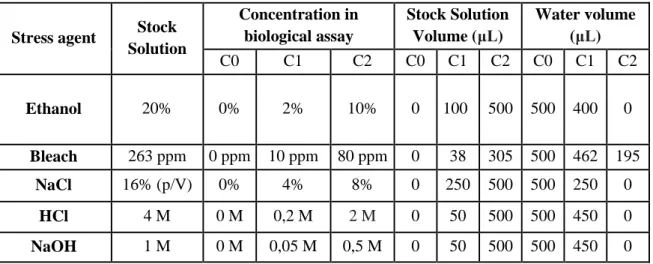
Table 3.1 - Stock solutions of the stress agents and quantities in the assays……….17
Table 0.2 - Summary of assays conditions……….17
Table 3.3 - Reaction mixtures of the solution 250 mg/L ... 18
Table 3.4 - Reaction mixtures of the solution 1 mg/L ... 18
Table 4.1 - p-values of the spectral ratios obtained from the quintuplicates of the assay with E. coli with different concentrations of ethanol (C0 = 0; C1 = 2; C2 = 10% (V/V)) and incubated with different nutrient media concentration (M 1.25x, 2.5x and 5x). The statistically significant p-values (p<0.05) are highlighted in green ... 22
Table 4.2 - p-values of the spectral ratios obtained from the quintuplicates of the assay with E. coli with different concentrations of bleach (C0 = 0; C1 = 10; C2 = 80 ppm) and incubated with different nutrient media concentration (M 1.25x, 2.5x and 5x). The statistically significant p-values (p<0.05) are highlighted in green ... 24
Table 4.3 - p-values of the spectral ratios obtained from the quintuplicates of the assay with E. coli with different concentrations of sodium chloride (C0 = 0; C1 = 4; C2 = 8% (W/V)) and incubated with different nutrient media concentration (M 1.25x, 2.5x and 5x). The statistically significant p-values (p<0.05) are highlighted in green the statistically significant p-values are highlighted in green ... 26
Table 4.4 - p-values of the spectral ratios obtained from the quintuplicates of the assay with E. coli with different concentrations of hydrochloric acid (C0 = 0; C1 = 250; C2 = 500 μL) and incubated with different nutrient media concentration (M 1.25x, 2.5x and 5x). The statistically significant p-values (p<0.05) are highlighted in green ... 28
Table 4.5 - p-values of the spectral ratios obtained from the quintuplicates of the assay with E. coli with different concentrations of sodium hydroxide (C0 = 0; C1 = 250; C2 = 500 μL) and incubated with different nutrient media concentration (M 1.25x, 2.5x and 5x). The statistically significant p-values (p<0.05) are highlighted in green ... 29
Table 4.6 - p-values of the spectral ratios obtained from the quintuplicates of the assay with E. coli with different ethanol concentrations (C0 = 0; C1 = 2; C2 = 10% (V/V)) and in different growth phase (8, 16 and 24 hrs). The statistically significant p-values (p<0.05) are highlighted in green ... 32
Table 4.7 - p-values of the spectral ratios obtained from the quintuplicates of the assay with E. coli with different bleach concentrations (C0 = 0; C1 = 10; C2 = 80 ppm) and in different growth phase (8, 16 and 24 hrs). The statistically significant p-values (p<0.05) are highlighted in green ... 33
Table 4.8 - p-values of the spectral ratios obtained from the quintuplicates of the assay with E. coli with different sodium chloride concentrations (C0 = 0; C1 = 4; C2 = 8% (W/V)) and in different growth phase (8, 16 and 24 hrs). The statistically significant p-values (p<0.05) are highlighted in green ... 34
Table 4.9 - p-values of the spectral ratios obtained from the quintuplicates of the assay with E. coli with different hydrochloric acid concentrations (C0 = 0; C1 = 250; C2 = 500 μL) and in different growth phase (8, 16 and 24 hrs). The statistically significant p-values (p<0.05) are highlighted in green ... 35
Table 4.10 - p-values of the spectral ratios obtained from the quintuplicates of the assay with E. coli
IX growth phase (8, 16 and 24 hrs). The statistically significant p-values (p<0.05) are highlighted in green ... 36
Table 4.11 - p-values of the spectral ratios obtained from the quintuplicates of the assay with E. coli
with different ethanol concentrations (C0 = 0; C1 = 2; C2 = 10%) and with different incubation times (1, 8 and 24 hrs). The statistically significant p-values (p<0.05) are highlighted in green ... 39
Table 4.12 - p-values of the spectral ratios obtained from the quintuplicates of the assay with E. coli
with different bleach concentrations (C0 = 0; C1 = 10; C2 = 80 ppm) and with different incubation times (1, 8 and 24 hrs). The statistically significant p-values (p<0.05) are highlighted in green the statistically significant p-values are highlighted in green ... 41
Table 4.13 - p-values of the spectral ratios obtained from the quintuplicates of the assay with E. coli
with different sodium chloride concentrations (C0 = 0; C1 = 4; C2 = 8% (W/V)) and with different incubation times (1, 8 and 24 hrs). The statistically significant p-values (p<0.05) are highlighted in green ... 43
Table 4.14 - p-values of the spectral ratios obtained from the quintuplicates of the assay with E. coli
with different acid hydrochloric concentrations (C0 = 0; C1 = 250; C2 = 500 μL) and with different incubation times (1, 8 and 24 hrs). The statistically significant p-values (p<0.05) are highlighted in green ... 44
Table 4.15 - p-values of the spectral ratios obtained from the quintuplicates of the assay with E. coli
with different sodium hydroxide concentrations (C0 = 0; C1 = 250; C2 = 500 μL) and with different incubation times (1, 8 and 24 hrs). The statistically significant p-values (p<0.05) are highlighted in green ... 46
Table 4.16 - Optimal conditions for the bioassay for each stress agent taking into account nutrient
concentration, E. coli growth phase and incubation time ... 48
Table 4.17 - Main spectral ratios that reflected the effect of each stress agents on the cell metabolism
... 50
Table 4.18 - p-values of the spectral ratios obtained from the quintuplicates of the assay with E. coli
with different amoxicillin concentrations (C0 = 0; C1 = 0.01; C2 = 0.04; C3 = 0.2; C4 = 5; C5 = 25; C6 = 62.5; C7 = 125 mg/μL). The statistically significant p-values (p<0.05) are highlighted in green. ... 51
Table 4.19 - p-values of the spectral ratios obtained from the quintuplicates of the assay with E. coli
with different ampicillin concentrations (C0 = 0; C1 = 0.01; C2 = 0.04; C3 = 0.2; C4 = 5; C5 = 25; C6 = 62.5; C7 = 125 mg/μL). The statistically significant p-values (p<0.05) are highlighted in green ... 53
Table 4.20 - p-values of the spectral ratios obtained from the quintuplicates of the assay with E. coli
with different ciprofloxacin concentrations (C0 = 0; C1 = 0.01; C2 = 0.04; C3 = 0.2; C4 = 5; C5 = 25; C6 = 62.5; C7 = 125 mg/μL). The statistically significant p-values (p<0.05) are highlighted in green 54
Table 4.21 - p-values of the spectral ratios obtained from the quintuplicates of the assay with E. coli
with different erythromycin concentrations (C0 = 0; C1 = 0.01; C2 = 0.04; C3 = 0.2; C4 = 5; C5 = 25; C6 = 62.5; C7 = 125 mg/μL). The statistically significant p-values (p<0.05) are highlighted in green 55
Table 4.22 - p-values of the spectral ratios obtained from the quintuplicates of the assay with E. coli
with different metronidazole concentrations (C0 = 0; C1 = 0.01; C2 = 0.04; C3 = 0.2; C4 = 5; C5 = 25; C6 = 62.5; C7 = 125 mg/μL). The statistically significant p-values (p<0.05) are highlighted in green. ... 56
Table 4.23 - p-values of the spectral ratios obtained from the quintuplicates of the assay with E. coli
with different neomycin concentrations (C0 = 0; C1 = 0.01; C2 = 0.04; C3 = 0.2; C4 = 5; C5 = 25; C6 = 62.5; C7 = 125 mg/μL). The statistically significant p-values (p<0.05) are highlighted in green ... 57
X
List of Abbreviations
ATR: Attenuated total reflection BT: Bacto tryptone
DPT: Data point table Far-IR: Far infrared
FTIR: Fourier Transform Infrared IR: Infrared
MIR: Mid-Infrared
MSC: Multiple scattering correction NIR: Near-Infrared
OD: Optical density PC: Principal component
PCA: Principal component analysis RNAP: RNA polymerase
ROS: Reactive oxygen species SNR: Signal-to-noise ratio YE: Yeast extract
1
1. Thesis overview
1.1 Objectives
The main goal of the present study was to optimize a bioassay to evaluate the biochemical and metabolic profile of Escherichia coli (E. coli) bacteria, when exposed to diverse environmental conditions as stress agents as: ethanol, bleach, sodium chloride, hydrochloric acid, sodium hydroxide and antibiotics. The bioassay is based on Fourier Transform Infrared (FTIR) spectroscopy analysis of micro volume of an incubation mixture of E. coli cells with a nutrient medium and the stress agents. The FTIR spectra are acquired in a simple, rapid, economic, sensitive and high-throughput mode. In order to reach a high sensitivity in the evaluation the effect of environmental conditions in the bacteria metabolism, it is intended to optimise the following conditions related to the incubation mixture of the bacteria with the stress agents: nutrient medium concentration, E. coli growth phase and incubation time. Another goal was to find spectral biomarkers for the changes that occur in the metabolism of bacteria when exposed to stress conditions.
1.2 Thesis Outline
The present work is divided into three parts: general introduction, optimization of a bioassay based on Fourier Transform Infrared spectroscopy and bioassay testing through exposure of E. coli to different antibiotics. The first part includes a description of IR spectroscopy, where some theoretical explanations about the technique and the description of the analysis methods are presented. The last two sections of this work are related to the experimental work carried out. For the bioassay optimization, the following parameters of the bacteria incubation mixture with the stress agents were evaluated: the growth phase of the bacteria, incubation time of the reaction mixture with the stress agents and the composition of the nutrient medium used on the incubation mixture. Finally, the optimized bioassay was used to evaluate the effect of six different antibiotics on the bacteria metabolism that affects the bacteria metabolism by different mechanisms as by inhibiting the cell membrane synthesis, the protein synthesis and DNA synthesis.
2
2. Introduction
2.1 Infrared spectroscopy
Spectroscopy consists in the study of electromagnetic radiation emitted or absorbed by a body. The term began to be used at the end of the XIX century, after Bunsen and Kirchhoff, in 1860, found that absorption and emission spectra made it possible to determine the presence of certain chemical elements in a sample, which allowed the discovery of cesium, rubidium and thallium (Thomas, 1991). Nowadays, a spectrum is understood as the representation of a given magnitude referring to a study object as a function of the frequency, energy or wavelength of the absorbed or emitted radiation. Absorption occurs when the emitted radiation is attenuated by the sample and emission takes place when radiation is produced by the sample due to excitation by a light source (Thomas, 1991). The set of electromagnetic radiation constitutes the electromagnetic spectrum, which is dividing into several regions: gamma rays, x-rays, ultraviolet, visible, infrared, microwave, radio (figure 2.1).
In this work was intended to use infrared (IR) radiation to study the metabolic changes in E. coli bacteria when exposed to adverse conditions. In 1800, William Herschel discovered that IR is a non-ionizing radiation in the invisible portion of the electromagnetic spectrum that is adjacent to the long wavelengths. Herschel placed a mercury thermometer on the spectrum obtained by a crystal prism with the purpose of measuring the heat emitted by each colour. He found that the heat was stronger closer to the red light of the spectrum. This was the first experiment that observed that heat can be captured in the image form, as with visible light (Oliveira and Silva, 2014). The IR region can be subdivided into three distinct zones, according to the wavelength: near infrared (NIR), medium infrared (MIR) and far infrared (far-IR). Far-IR ranges from 400 to 4 𝑐𝑚−1 in the IR spectrum, MIR represents the region between 4000 and 400 𝑐𝑚−1 and NIR the region between 14000 and 4000 𝑐𝑚−1 (Figure 2.2) (Smith, 2011). In this work, was used the MIR radiation, which will be discussed later.
3
Figure 2.2 - Regions of the infrared spectrum (Adapted from: Edmund Scientific, 2017)
The IR absorbed by the molecules in the sample, stimulates its molecular vibration. At temperatures above absolute zero the molecule atoms are in continuous vibration with respect to each other. When a molecule is exposed to IR radiation it only absorbs the frequencies corresponding to its own vibration frequency. These changes in the vibration mode of molecules produce the bands in the IR spectrum. Each band is characterized by a frequency and amplitude (Duygu, 2009). Almost any molecule that possesses covalent bounds absorbs IR radiation, excepting monoatomic molecules (𝐻𝑒 𝑜𝑟 𝑁𝑒) and homopolar diatomic molecules (𝐻2, O2 …). Since monoatomic molecules have only one atom, it does not have dipolar moment. Homopolar diatomic molecules are formed by only one type of atoms, having the same electronic filed, so it does not have a dipolar moment as well. All the other type of molecules has dipolar moment absorbing IR radiation which allow it’s quantitative or qualitative analysis by IR spectroscopy (Griffiths, 2002). Considering the changes in the vibrational modes of the molecules, there are essentially two types of vibrations, which can be classified depending on changes on the bond length or angle: stretching and bending vibrations (Figure 2.3). The stretching is a symmetric or antisymmetric rhythmical movement along the bond length. The bending vibration occurs when there is a change of the angle between two atoms or a group of atoms (Babrah, 2009).
MIR spectroscopy is an extremely reliable and widely recognized fingerprinting technique. As previously mentioned mid-infrared represents the region between 4000 and 400 𝑐𝑚−1. It includes fundamental vibration signatures of major molecules that compose the tissues and biological fluids. Therefore, the absorption spectrum in mid-infrared of a biologic element is representative of its composition because it accurately reflects the structure of the molecules constituting the sample, which makes this technique more sensitive and more complete in terms of spectra information, comparing to NIR spectroscopy because most bands in NIR region are consequence of overtones and combinations of vibrations from different chemical elements and functional group. Another advantage is that the calibration data in the mid-infrared is much more generic than in the NIR and thus it is more likely transferable from instrument to instrument (Smith, 2011). On the other hand, water absorbs much more radiation in the MIR region than in NIR region, which can be a problem when we are analysing aqueous samples, being usually necessary an extra step of sample dehydration before
4 spectral acquisition. Furthermore, MIR radiation has a shorter wavelength than NIR radiation and consequently less energy, so the ability of this kind of radiation to penetrate the sample is reduced (Landgrebe et al., 2010). Therefore, deciding which technique will be the measurement of choice depends on the sample format, the required sample environment, the available database and which process provides the most relevant information to answer the required question.
Figure 2.3 - Molecular vibrational modes (Babrah, 2009)
2.1.1 Instrumentation
Infrared (IR) spectroscopy is a technique that is being increasingly used in biology, especially for whole cell metabolomics fingerprint. The instrument used in IR spectroscopy is called infrared spectrometer or spectrophotometer and consists mainly in a beam source, a monochromator or an interferometer (depending on the type of spectrometer), a sample holder or sample presentation interface and a detector that will detect the radiation that is transmitted or reflect by the sample (Reich, 2005). The beam source may consist on an inert solid thermally heated or in an incandescent filament like tungsten or quartz/halogen lamps, for NIR region, and carbon-silicon bars, for MIR radiation (Christian, 1994).
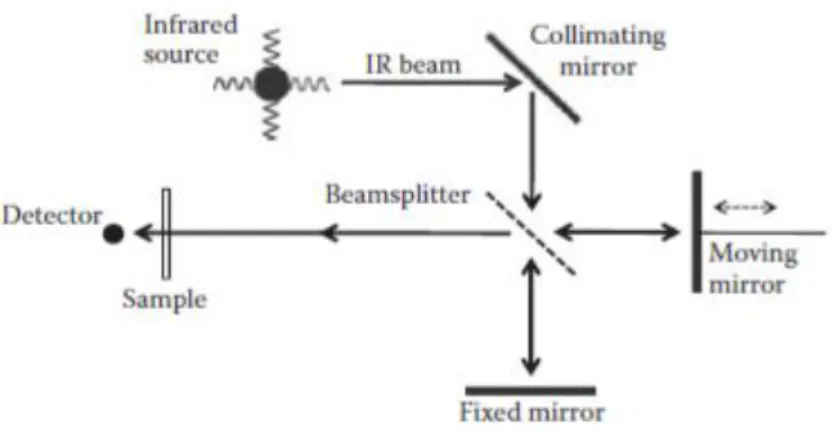
The interferometer consists of a beam splitter, a fixed mirror, and a mirror that translates back and forth, very precisely. The beam splitter is made of a special material that transmits half of the radiation striking it and reflects the other half. Radiation from the source strikes the beam splitter and separates into two beams. One beam is transmitted through the beam splitter to the fixed mirror and the second is reflected by the beam splitter to the moving mirror. The fixed and moving mirrors reflect the radiation back to the beam splitter (figure 2.4). Again, half of the reflected radiation is transmitted and half is reflected at the beam splitter, resulting in one beam passing to the detector and the second back to the source (Martin, 2002). The Michelson interferometer is still used today in most Fourier Transformed Infra-Red (FTIR) spectrometers. The first FTIR equipment to be marketed was
5 manufactured by Digilab, subsidized by Block Engeneering in Massachusetts in the late 1960's. This first FTIR incorporated an interferometer developed by Albert Abraham Michelson in 1880 (Thermo Scientific, 2008).
Figure 2.4 - Scheme of the Michelson interferometer (Smith, 2011)
FTIR spectroscopy uses a composite beam of light with varying wavelengths. Once the absorbance measurement is performed, the light beam is modified to a combination of wavelengths different from the previous beam, which forms a second set of data. This process is repeated several times. The resulting spectrum is called an interferogram (a spectrum consisting on intensity versus acquisition time) that is later traduce to the final IR spectrum (intensity versus frequency or wavelengths) by the mathematical operation called Fourier-Transform (Stuart, 2004). The IR spectrum is characteristic of each type of molecule, since it depends mainly of the atoms mass, their geometric arrangement and the bound forces between them. Since there are no two different molecules that possess these three same characteristics, each molecule will have, in theory, a distinct spectrum. Extending that concept, two different samples, with distinct molecular composition will also have different spectra. This principle is the foundation of IR spectroscopy and it makes possible to virtually distinguish, qualify or quantify any type of sample (Smith, 2011).
FTIR
spectroscopy
has advantages over classical molecular biology techniques, such as speed and simplicity of execution, need for few consumables and reduced cost per analysis, in the same time has advantages over the dispersive spectrometer since the FTIR spectrometer simultaneously collects data from a wide spectral range (Thermo Scientific, 2008).6
2.1.2 Acquisition Modes
Depending on the sample properties, FTIR spectra can be acquired mainly in three different experimental configurations: transmission, reflection-absorption (transflection) or attenuated total reflection (ATR). The first one operates by transmitting IR radiation through sample-substrate, whereas in transflection the radiation interacts with sample and is most reflected back but a part is also absorbed by the substrate. Finally, on the ATR mode, the sample is placed on a crystal with a higher refractive index than the sample, inducing total internal reflection of incident radiation, which is attenuated and penetrates into the sample as an evanescent wave (Lima, 2015).
In transflection, the low-emissivity slides, commonly used as reflector substrates, contribute to the formation of a standing wave perpendicular to sample surface that leads to spectral changes not related with the sample biochemical properties (Greenler, 1966). In transmission mode, spectra collected are submitted to a variety of physical effects occurring at the same time with absorption, and requires corrections for phenomena, such as light scattering, refraction, dispersion and other optical effects specifically related to measuring thin films, which may also induce spectral distortions (Chan, 2013). The ATR sampling mode presents usually a high SNR (signal-to-noise ratio) compared to those obtained by transfection and transmission configurations (Lima, 2015), however for diluted samples the SRN signal can also be low. In this work the transmission mode was used because it is the most suitable for the type of samples used (liquid/aqueous samples), also due to its capacity to be measured in high-throughput mode.
2.1.3 Applications to Microbiology
Stair and Coblentz in 1935 were perhaps the first to record the spectra of biological materials such as onion skins, the membrane of fish bladder, bat's wings, egg albumin, egg membranes (Norris, 1959) and Randall et al. (1951) were the first to record the spectra of whole cells of bacteria. In 1959 was published an article stating that bacteria have a characteristic infrared spectrum, unique to each strain. However, at that time it was considered a very time consuming process. Naumann and his collaborators highly contributed for the descriptions of the FTIR spectroscopy applications to microbiology as presented today. Through their studies they were able to elaborate a table where the various functional groups that can be present in the microbial cells are described. The regions of MIR spectrum corresponding to each group of biomolecules are nowadays well characterized, namely regions associated with proteins, lipids, amino acids and even lactate, urea or glucose absorption (Bellisola, 2012) (figure 2.5). Generally, the study of a particular strain characteristic uses one or more spectral zones and not just a single functional group. An adaptation of the table described by Naumann can be seen in the table 2.1.
7
Table 2.1 - Spectra bands and its associated absorbing chemical groups and corresponding biomolecules (Adapted from: Naumann, 2001)
Wave number Designation
~3500 O-H stretching movements of hydroxyl groups
~3200 N-H stretches of proteins
~2955 Asymmetric C-H stretching movements of -CH3 in fatty acids
~2930 Asymmetric C-H distances of > CH2
~2918 Asymmetric C-H stretching movements of > CH2 in fatty acids
~2898 C-H stretching movements in methyl groups
~2870 Symmetrical C-H distending movements of -CH3
~2850 Symmetrical C-H distances of > CH2 in fatty acids
~1740 Stretching movements > C=O of the esters
~1715 Stretching movements > C=O of carbonic acids
~1680 Stretching movements > C=O of nucleic acids
~1695 Components of the amide I band
~1685 Resulting from beta-antiparallel sheets
~1675 Beta configuration of proteins
~1655 Alpha helical structures of amide I
~1637 Structures of the beta sheets of amide I
~1550 – 1520 Amide II
~1515 Tyrosine band
~1468 C-H deformation of > CH2
~1400 Symmetric distending movements C=O of COO
-~1310 - 1240 Protein amide III band
~1250 – 1220 Asymmetric distending movements P=O of > PO-2 of phosphodiesters
~1200 – 900 C-O and C-C distension movements and C-O-C deformation of carbohydrates
~1090 – 1085 Symmetrical distending movements P=O of > PO2
-~720 Rotation of the C-H bond of > CH2
8 Since then, spectroscopic methods have been applied for diverse biological applications, such as monitoring microbial and mammalian cell cultures. This allows to estimate, from a single spectrum, several variables such as cell growth, nutrients consumption (e.g., glucose and glycerol), metabolic by-products (e.g., ethanol and acetate) production and consumption and plasmids and recombinant proteins production (Arnold, et al., 2003; Sellick, et al., 2010). The high sensitivity of MIR spectroscopy also enabled bacteria typing and subtyping (Amiali, et al., 2007; Davis , et al., 2012), the detection of cell cycle events and mechanism discrimination of cell death between apoptosis and necrosis (Jamin, et al., 2003; Hammiche, et al., 2005), monitoring of stem cells differentiation (Aksoy and Severcan, 2012), cancer-related research and diagnosis (Bogomolny, et al., 2007), other diseases diagnosis (e.g., renal failure (Khanmohammadi, et al., 2013), and metabolic fingerprinting of amniotic fluid for early prenatal disorders (Graça, et al., 2013). In most of the works described, whole microorganism cells were analysed and presented very complex spectra since the resulting spectrum depends on the total chemical composition of cells (intracellular material, membrane and wall). Due to the complexity of the resulting spectrum, an evaluation of the spectra through multivariate analysis is indispensable (Chemometrics) (Lavine, 1998).
2.1.4 Chemometrics and Spectral pre-processing techniques
Chemometrics is the use of mathematical and statistical methods to improve the understanding of chemical information and to correlate quality parameters or physical properties to analytical instrument data (Roggo et al., 2007). Chemometrics was first introduced in the chemical field, being nowadays a widely used tool in several other areas such as spectroscopy (Geladi, 2003). The science of chemometrics gives spectroscopists many efficient ways to solve the calibration problem for analysis of spectral data. Chemometrics can be used to enhance methods development and make routine use of statistical models for data analysis (Bu, 2007). The application of pre-processing techniques is a very important step in the analysis of spectral data, since it enables the elimination of physical phenomena due to undesired variations, such as noise, differences along the sample thickness, and differences in the number cells across the sample and scattering events. This procedure has the goal of minimizing the irrelevant information present in the final spectra (Bu, 2007). In the present work some pre-processing techniques are reviewed, namely those used along the work: baseline correction, normalization, multiplicative scatter correction and spectral derivatives.
Figure 2.3 - MIR absorption spectrum with bands associated to molecular bounds of biomolecules highlighted (Graça et al., 2013)
9 Not always the obtained spectra are grounded at zero. The type of algorithm used depends on the baseline correction needed. Those spectra which are dislocated from zero by a constant value are the simpler cases, since subtracting the value in question from the spectrum is usually enough. Though there are more difficult cases, for instance cases in which the baseline presents a slope, or even spectra with curvatures. In these cases an algorithm generating a function, a linear or polynomial function, can bring the spectrum to zero (Otto, 1999; Smith, 2011). There are probably two main disadvantages of using baseline correction algorithms. First, it is difficult to find a function that adjusts properly to the spectrum curvature, although there are already some good algorithms. Besides, the curvature along the spectrum is not always equal, so a unique function will hardly adjust correctly to the entire spectrum. Therefore, sometimes it is preferred to apply derivatives for offset correction. The problem of applied derivatives is that the resulting spectra will be noisier than the raw one (Smith, 2011).
The goal of normalization is pre-processing the data in order to minimize differences between the samples that are related with factors, such as differences in cell concentration. A careful design of the experience is still a critical factor that must be always taken into account before pre-processing the data. There are several methods for normalizing spectral data (Randolph, 2006). In the present work, all spectra were normalized using the Amide I band, at 1650 𝑐𝑚−1. Basically, all spectra were divided by a previously determined constant, so all the spectra ended up having the same intensity at 1650 −1.
The multiplicative scatter correction (MSC) has been proposed as method in NIR spectroscopy to correct signals for noise. Light scattering or change in path length for each sample is estimated relative to that of an ideal sample. For this method a reference spectrum is necessary, which is usually the mean spectrum of all available spectra. MSC works by fitting each spectrum to the average spectrum, which is thought to be the ideal, performing a transformation where the spectral data (𝑥1, 𝑥2, …, 𝑥𝑝) is converted into new values (𝑧1, 𝑧2, …, 𝑧𝑝), where 𝑝 corresponds to wavelengths (Fearn et al., 2009). The following equation describes the transformation from 𝑥 to 𝑧
𝑧𝑖 = 𝑥𝑖−𝑎
𝑏 , (Equation 2.1)
where 𝑎 represents the intercept and 𝑏 the slope of a least-squares regression of 𝑥1, 𝑥2, …, 𝑥𝑝 on the values 𝑟1, 𝑟2, …, 𝑟𝑝 coming from the reference spectra.
Spectral derivatives are normally employed to remove baseline offsets and for highlighting spectral information, through the resolution of overlapping bands (figure 2.6). Applying the first derivate is extremely useful in cases where the offset is constant, since de first derivate of a constant is zero. The second derivative can also be applied and the result will be not only the removal of the baseline offset but also the resolution of overlapping bands (Otto, 1999). First and second derivatives can also be useful to highlight subtle differences between spectra, allowing to extract more information from spectral data. However, before applying derivatives, it is important to have in mind that the derivative spectra will have more noise than the initial one, so first and second derivatives must be applied in spectral data with high SNR, or using filters as polynomial fitting do decrease noise before application of derivatives (Lourenço et al., 2012; Scholz et al., 2012).
10
Principal component analysis (PCA) is a probably the most used processing technique to emphasize variation on data and bring out strong patterns in a dataset. It is often used to make data easy to explore and visualize when we are dealing with high dimensional data as spectral data (Jollife,
2002). It is a mathematical procedure that uses an orthogonal transformation to convert a set of
observations of possibly correlated variables into a set of values of linearly uncorrelated variables called principal components. The number of major components is less than or equal to the number of original variables. PCs are ordered in terms of variance in the data set explained, with the first PCs representing the major variance in the data (Jollife, 2002).
The initial data matrix is decomposed as following:
𝑋 = 𝑇𝑃𝑇 + 𝐸, (Equation 2.2)
where 𝑛 is the number of samples in 𝑋, 𝑝 is the number of variables in 𝑋, 𝑔 is the number of chosen factors, 𝑋 (𝑛 × 𝑝) is the descriptor data matrix, 𝑇 (𝑛 × 𝑔) is the score matrix, 𝑃 (𝑝 × 𝑔) represents the loading matrix and 𝐸 (𝑛 × 𝑝) is the error matrix for the 𝑋-data matrix. Thus, a PC is described as a combination of loadings and scores, where loadings represent the contribution of each wavenumber to the PC and scores results from linear combinations of the initial data in X. Therefore each spectrum can be described as a combination of principle components (Naes et al., 2002).
Since the variance fraction can be covered by one, two or three PCs, it is possible to visualize almost the entire data by plotting these PCs against each other. In theory the samples with closer scores will be more similar to each other (figure 2.7) (Otto, 1999).
11
Figure 2.7 – PCA of different E. coli isolates to see if the unidentified isolates correspond to the known isolate. The different colours represent the different isolates of E.coli, the black ones are identified as ST131 isolates, while other colours indicate
groups of unknown sequence types (Adapted from: Harrison and Hanson, 2007)
2.2 Bioassay optimization
Bioassays are an important tool to determine the biological effect caused by chemical, physical or biological agents on specific cells in environmental sciences in which complex mixtures of toxic compounds are present. In general, a bioassay could serve to detect metabolic perturbations, quantify the extent of the metabolic changes and classify the type of alterations observed. The uncovering of a metabolic modification is the basic of every bioassay, but not many tests are designed to quantify and classify the changes detected, though these two additional pieces of information are instrumental to understand not only that, for instance, there is a toxic agent in the sample, but also which type of action exerts and the strength of its activity (Corte, 2010).
Infrared spectroscopy was introduced as a tool to provide fingerprints of microorganisms, in the early nineties, demonstrating that the spectrum describes the metabolic state of the cells, bringing the Fourier transform infrared spectroscopy technique in the group of the metabolomics procedures (Helm, 1991). The metabolic alterations caused by different types of stress in microorganisms were studied with FTIR in a number of cases such as the bacterial response to antibiotics, the effect of starvation or different types of environmental stress (Corte, 2010).
This work intends to improve a bioassay that allows the study of the metabolic alterations in bacteria when exposed to stress conditions, taking into account three variables: growth phase of the culture, time of exposure to the stress agent and nutrient medium concentration. For this study was chose to use five substances that cause different types of stress, which will be explained later, but first it will make a small introduction of the bacterium chosen for this study: Escherichia coli.
12
2.2.1 Escherichia coli bacteria and stress responses
Escherichia coli is a widespread bacteria that can survive and adapt to growth under a wide range of conditions (Moen et al., 2009). E. coli is in the family Enterobacteriaceae. The bacteria is gram negative, rod shaped, non-spore forming and motile with peritrichous flagella or nonmotile. They can grow under aerobic and anaerobic conditions and have an optimum temperature of growth between 35 and 40°C (CDC, 2015). Together with Staphylococcus aureus it is the most common and one of the oldest symbiotic bacteria in mankind. It was discovered by the German-Austrian Theodor Escherich, in 1885 (Kyriakides, 1998). E. coli bacteria usually live in the intestines of people and animals. Most of the strains are harmless and actually are an important part of a healthy human intestinal tract. However, some E. coli are pathogenic being associated with intestinal and extra intestinal infections in humans and many animals (CDC, 2015). It is the most thoroughly studied bacterium, and is often a preferred model organism, as it uses mainstream metabolic pathways that are similar to the corresponding metabolic functions in other bacteria (Liang et al., 2002).
Escherichia coli encounter numerous different stresses during their growth, survival, and infection. Many bacterial species exhibit a general stress response that can be induced by different stress conditions and, phenotypically, renders the cells broadly stress resistant (Chung et al., 2006). A basic knowledge of how different adverse conditions affect E. coli is important when exploring the response potential, understanding how bacteria adapt and minimize the risk of illness (Chung et al., 2006).
Microorganisms have developed signal transduction systems to sense environmental stresses and to control the coordinated expression of genes involved in cellular defence mechanisms. These
evolved protective or adaptive networks assist microorganisms to modify their environments and/or to
survive the stress condition. A common regulatory mechanism involves sigma factors. Sigma factors are small proteins that bind to RNA polymerase (RNAP). The presence of the sigma factor allows the RNAP enzyme to bind at specific promoter sequences on the chromosome, and initiate transcription of particular genes, depending on the sigma factor. This way, genetic expression is controlled at the transcription level. In E. coli, the housekeeping σ factor, σ70, is responsible for transcription from many of the gene promoters under normal nonstress conditions (Chung et al., 2006; Hengge-Aronis, 2002).
Table 2.2 - Sigma factors of E. coli (Adapted from: Chung et al., 2006)
Sigma factor Gene Function
σ70
rpoD Housekeeping functions
σ54(σN
) glnF, nrtA, rpoN Nitrogen-regulated genes
σ32
htpT, rpoH Heat-shock genes
σ24(σE
) rpoE Heat-shock genes
σ28
flbB+flaI, rpoF Flagella synthesis/chemotaxis σ38(σS
13 Under stress conditions, alternative σ factors to σ70 with different promoter specificities are induced, resulting in the expression of specialized regulons, in response to a variety of stresses. In this manner, gene expression is modified by different sigma factors. In E. coli and other enteric bacteria, σS (RpoS) is the master regulator of the general stress response. The sigma factors of E. coli are listed in Table 2.2 (Hengge-Aronis, 2002).
Five well known stressing chemicals, at different concentrations, were used to the bioassay optimization: ethanol (EtOH), sodium hypochlorite (commercially known as bleach), sodium chloride (NaCl), hydrochloric acid (HCl) and sodium hydroxide (NaOH). These chemicals are characterized by different cytotoxic mechanisms as briefly outlined below.
Ethanol damages cell wall and membrane integrity, causing increased stress, particularly reactive oxygen species (ROS), which damages DNA and reduces the O2 level. Decreased
cross-membrane proton gradient from cross-membrane damage, coupled with hypoxia, leads to reduced ATP production by aerobic respiration, driving cells to rely more on fatty acid oxidation, anaerobic respiration and fermentation for ATP production. The reduced ATP generation results in substantially decreased synthesis of macromolecules (Cao, et al., 2017). Ethanol can directly bind to 213 proteins including transcription factors, altering their function. All these changes together induce multiple stress responses, reduced biosynthesis, cell viability and growth. The main target of ethanol activity appears to be the cell membrane (Canetta, 2006). Ethanol-adapted E. coli cells restore the majority of these reduced activities through selection of specific genomic mutations and alteration of stress responses, ultimately restoring normal ATP production, macromolecule biosynthesis, and growth (Cao, et al., 2017).
Bleach, mainly constituent by sodium hypochlorite, oxidizes the microorganisms and attacks essential cell components including lipids, proteins and DNA (Ho-Hyuk et al., 2008).
The antimicrobial activity of sodium induces loss of the membrane integrity and cell disruption at high concentrations, enzymatic inhibition and problems in the lipids and phospholipids metabolism. The aminoacids undergo a chloramination reaction forming chloramines (Estrela, 2003). Salt causes slow and poor growth and induces glycerol accumulation. The effect to which salt concentration causes changes in bacterial growth depends on the osmotic balance required for such growth. Some bacteria require a high salt concentration to initiate growth, whereas other bacteria would not survive under these conditions. Although E. coli may have optimal growth in the absence of salt, it is still growing in its presence but in a slower rate (Corte, 2010).
E. coli is a neutrophile bacterium, which means that the optimum pH of growth is close to pH 7. Stress induced by acids and bases, such as HCl and NaOH, causes changes in intracellular pH, which impairs cell viability (Salmond et al., 1984). The antimicrobial activity of organic acids, such as acetic acid, is thought to be due to the ability of the undissociated acid to freely cross the cell membrane and release protons inside the cell. The lowering of pH is opposed in the cell by removal of excess protons at the expense of ATP, which depletes ATP reserves, resulting in death (Hosein, et al., 2011). An alternative explanation for the toxicity of organic acids is that acid anions become trapped in the cell cytoplasm and accumulate inside the cell, raising ionic strength and potentially disrupting metabolism. Decreasing intracellular pH results in a low transmembrane pH gradient and may reduce anion levels inside the cell. This may result in reduced metabolic activity, because enzymes in the cytoplasm may not function well below neutral pH (Hosein, et al., 2011).
14 Exposure of gram-negative bacteria to high pH destroys cell membranes and causes leakage of the internal cell content. Cell membranes may be disrupted by saponification of lipids or solubilisation of proteins. Gram negative cells are also susceptible to alkaline pH, in part because the thin peptidoglycan layer loses structural integrity and ruptures (Sharma and Beuchat, 2004).
2.2.2 Application of the bioassay
The bioassay that is intended to be optimized in this work may be applied to different types of studies such as monitoring the effect of various substances on the metabolism of microorganisms, development of new drugs, evaluate the efficiency of treatments. In this case it was chosen to evaluate the mechanism of action of six antibiotics. From 1940, the use of antibiotics was generalized, which revolutionized the treatment of infectious diseases, contributing significantly to the reduction of mortality. However, its excessive and often inappropriate use has promoted the emergence and proliferation of resistant bacteria (INSA, 2010). This fact makes extremely important the development of new techniques that allow the in-depth study of the effect of each antibiotic on the metabolism of bacteria.
The selected antibiotics were: ampicillin, amoxicillin, neomycin, ciprofloxacin, metronidazole and erythromycin. These antibiotics were chosen for having different mechanisms of action. Ampicillin and amoxicillin act by inhibiting cell wall synthesis. On the other hand, neomycin and erythromycin inhibits protein synthesis. Finally, ciprofloxacin and metronidazole act by interfering with DNA synthesis.
Ampicillin is a semi-synthetic derivative of penicillin that functions as an orally active broad-spectrum antibiotic. Is a penicillin beta-lactam antibiotic. Ampicillin has in vitro activity against gram-positive and gram-negative aerobic and anaerobic bacteria (Williamson, et al., 1980).
Amoxicillin is a broad spectrum semisynthetic antibiotic similar to ampicillin, except that its resistance to gastric acid allows higher serum levels with oral administration. It is a moderate-spectrum antibiotic active against a wide range of gram-positive, and a limited range of gram-negative organisms. The incidence of β-lactamase-producing resistant organisms, including E. coli, appears to be increasing. Amoxicillin is sometimes combined with clavulanic acid, a β-lactamase inhibitor, to increase the spectrum of action against gram-negative organisms, and to overcome bacterial antibiotic resistance mediated through β-lactamase production (Okamoto, et al., 2002)
The mechanism of action of ampicillin and amoxicillin consists in binding to specific penicillin binding proteins (PBPs) located within the bacterial cell wall. It inhibits the third and last stage of bacterial cell wall synthesis. Cell lysis is then mediated by bacterial cell wall autolytic enzymes such as autolysins. These two antibiotics are indicated for the treatment of ear, nose and throat, genitourinary tract and skin infections, and lower respiratory tract structure due to susceptible (b-lactamase-negative) strains of Streptococcus spp. (only a and b-hemolytic strains), S. pneumoniae, Staphylococcus spp., H. influenzae, E. coli, P. mirabilis or E. faecalis (Okamoto, et al., 2002).
Neomycin is an aminoglycoside antibiotic. Aminoglycosides work by binding to the bacterial 30S ribosomal subunit, causing misreading of t-RNA, leaving the bacterium unable to synthesize proteins vital to its growth. Aminoglycosides are useful primarily in infections involving aerobic,
15 gram-negative bacteria, such as Pseudomonas, Acinetobacter, and Enterobacter. In addition, some mycobacteria, including the bacteria that cause tuberculosis, are susceptible to aminoglycosides. Infections caused by gram-positive bacteria can also be treated with aminoglycosides, but other types of antibiotics are more potent and less damaging to the host. In the past the aminoglycosides have been used in conjunction with penicillin-related antibiotics in streptococcal infections for their synergistic effects, particularly in endocarditis. Aminoglycosides are mostly ineffective against anaerobic bacteria, fungi and viruses (Gill and Amyes, 2004).
Erythromycin is a macrolide antibiotic produced by Saccharopolyspora erythraea. It inhibits bacterial protein synthesis by binding to the bacterial 50S ribosomal subunits. Binding inhibits peptidyl transferase activity and interferes with translocation of amino acids during translation and assembly of proteins. Erythromycin may be bacteriostatic or bactericidal depending on the organism and drug concentration. Is indicated for treatment of infections caused by susceptible strains of microorganisms in the following diseases: respiratory tract infections (upper and lower), in the treatment of infections due to Corynebacterium minutissimum, intestinal amebiasis caused by Entamoeba histolytica, skin and soft tissue infections caused by Streptococcus pyogenes and Staphylococcus aureus, primary syphilis caused by Treponema pallidum, infections caused by Chlamydia trachomatis, nongonococcal urethritis caused by Ureaplasma urealyticum, and Legionnaires disease caused by Legionella pneumophila (Douthwaite and Aagaard, 1993).
Ciprofloxacin is a broad-spectrum anti-infective agent of the fluoroquinolone class and it has in vitro activity against a wide range of gram-negative and gram-positive microorganisms. There is no known cross-resistance between ciprofloxacin and other classes of antimicrobials. The bactericidal action of ciprofloxacin results from the inhibition of enzymes topoisomerase II (DNA gyrase) and topoisomerase IV, which are required for bacterial DNA replication, transcription, repair, strand supercoiling repair, and recombination (Leavis, et al., 2006). Ciprofloxacin is indicated for the treatment of the following infections caused by susceptible organisms: urinary tract infections, acute uncomplicated cystitis, chronic bacterial prostatitis, lower respiratory tract infections, acute sinusitis, skin and skin structure infections, bone and joint infections, complicated intra-abdominal infections, infectious diarrhea, typhoid fever, uncomplicated cervical and urethral gonorrhoea (Leavis, et al., 2006).
Metronidazole, a synthetic antibacterial and antiprotozoal agent of the nitroimidazole class, is used against protozoa such as Trichomonas vaginalis, amebiasis, and giardiasis. It is extremely effective against anaerobic bacterial infections and is also used to treat Crohn's disease, antibiotic-associated diarrhea, and rosacea. Metronidazole is a prodrug. Unionized metronidazole is selective for anaerobic bacteria due to their ability to intracellularly reduce metronidazole to its active form. The reduced metronidazole covalently binds to DNA, disrupt its helical structure, inhibiting bacterial nucleic acid synthesis and resulting in bacterial cell death (Li, et al., 2007).