Influence of the Fraction of Comonomers and Diluents on the Preparation of Polymeric
Microspheres Based on Poly (Methacrylic acid-
co
-divinylbenzene) Obtained by
Precipitation Polymerization
Mario Piccaglia Netoa, Jacira Aparecida Castanharoa, Márcia Gomes de Oliveirab,
Marcos Antonio da SilvaCostaa*
Received: October 05, 2017; Revised: September 15, 2018; Accepted: November 14, 2018
Preparation and characterization of polymeric microspheres based on poly(methacrylic acid-co-divinylbenzene) (P(MAA-co-DVB)) by precipitation polymerization are reported. The influence
of the change in comonomer composition, crosslinking degree, ratio of total monomers/diluents by weight/volume (g/100 mL) and the volume ratio of diluents were studied. Spherical particles were
obtained in the range from 1.42 to 8.41 µm. An increase in particle size and thermal resistance with decreasing molar fraction of methacrylic acid (MAA) were observed, associated with increases in
critical chain length (CCL) and the number of crosslinks in this system, respectively. The analysis of particles with molar fraction of 50% MAA and acetonitrile/toluene volumetric ratio of 75/25 showed that larger particle size and yield were achieved with increasing ratio of total monomers/diluents (g / 100 mL). The particles prepared with 14% molar fraction of MAA obtained greater swelling ratios
than the particles prepared with 50% MAA.
Keywords: Precipitation polymerization, Microspheres, Swelling ratio.
*e-mail: [email protected]
1. Introduction
The wide range of commercial applications of polymer
microspheres has encouraged research in this field during
the last decade. Polymer microspheres with optimized
characteristics, such as uniform size and shape, functionality
of the base polymer, morphology of the polymer particles
and degree of crosslinking, are widely used as functional supports, for chromatographic separation, in biomedical
devices, coating additives and controlled release reservoirs, among other areas 1-4. Size, size distribution, chemical nature and functionality are important characteristics of
spherical particles 5. The variety of applications depends on the different combinations of these characteristics. Polymer microspheres of uniform size are essential for drug delivery systems because the distribution of microspheres in the
organism and interaction with biological cells are greatly
affected by particle size 6. Precipitation polymerization is
the only method able to generate monodisperse beads in a
single step (no additional processes or apparatuses), without the use of stabilizers or surfactants 5,7-8. In precipitation polymerization, the dissolution ability of a solvent is extremely important to determine particle morphology, such
as porosity, crosslinking degree and particle size 7. Several studies report the use of precipitation polymerization for the synthesis of monodisperse supports. For example, Shi
et al. (2012) 9 synthesized poly(methacrylic acid-co-ethylene
glycol dimethacrylate) micro and nanospheres, with average
diameters in the range of 136 nm to 1644 µm, to develop a drug delivery system. Liu et al. (2015) 10 prepared poly(methacrylic
acid-co-ethylene glycol dimethacrylate) microspheres with
superior recognition properties and evaluated their binding
performances in detail by static, kinetic and dynamic rebinding
tests. The results showed good morphology, monodispersity,
and high adsorption capacity and excellent selectivity to
the target molecule, metronidazole. Zeng et al. (2018) 11 also imprinted poly(methacrylic acid‐co‐ethylene glycol dimethacrylate) nanocarriers for recognition and sustained release of diclofenac in four different types of solvents. Results showed that uniformly sized nanospheres with relatively good porosity could only be obtained in acetonitrile. The
binding experiments indicated that nanospheres prepared
in acetonitrile displayed much higher binding capacity than other materials, with a maximum binding capacity of 65.18
mg g−1. Despite the reports in the literature on methacrylic
acid using precipitation polymerization, we found no studies of the influence of the reaction parameters in this synthesis on the final characteristics of poly(methacrylic
acid-co-divinylbenzene) spherical particles. This work
aims to elucidate the influence of the molar fraction of
comonomers, the ratio between the total monomer mass/
volume of diluents and the ratio of different diluents used to
obtain poly(methacrylic acid-co-divinylbenzene) particles aUniversidade do Estado do Rio de Janeiro (UERJ), Rua São Francisco Xavier, 524-PHLC, 20550900,
Maracanã, Rio de Janeiro, RJ, Brasil
by the precipitation polymerization technique, seeking to optimize their production process.
2. Experimental section
2.1 Materials
The monomers were 80% divinylbenzene (DVB) (Sigma-Aldrich, USA), 98% methacrylic acid (MAA) (Sigma-(Sigma-Aldrich,
USA) and α-azobisisobutyrinitrile (AIBN) (Migquimica, Brazil). The diluents were acetonitrile PA ACS (Vetec) and toluene ACS (Vetec, Brazil). The solvents 99.8% glacial
acetic acid (Merck) and methanol PA ACS (Vetec) were
used in the wash solution. The AIBN initiator was purified
by recrystallization from methanol. The remaining reagents
were used without further purification procedures.
2.2 Precipitation polymerization process
Polymerizations were carried out in a 150 mL Schlenk-type flask. Methacrylic acid (MAA) and divinylbenzene
(DVB) were dissolved in acetonitrile, or acetonitrile with
toluene. The obtained solution was treated for 5 minutes with ultrasound, after which the AIBN was added. In all
reactions, the percentage of AIBN was maintained at 4.62%
of the monomer’s total weight. The solution was left under nitrogen flow for 5 minutes, and then the flask was hermetically sealed, with the reaction medium under nitrogen atmosphere. The solution was heated to 60 ºC and kept under constant magnetic stirring for 24 hours. At the end of the reaction, the resulting particles were separated from the reaction medium and washed with 100 mL of acetic acid/methanol solution (15/85 by volume), and then washed with 100 mL of pure methanol. This step was performed by centrifugation at a speed of 5000 rpm for 40 minutes. After washing, the particles were oven dried at 60 ºC for 24 hours. When the effect of methacrylic acid concentration was studied, the
molar fraction methacrylic acid varied from 14 to 80%. To
evaluate the effect of monomer dilution, the total monomer/ diluent ratios (g/100mL) was increased from 2.0 to 12. When the effect of diluent composition was evaluated, the acetonitrile/toluene volumetric ratio employed was 100/0,
75/25 and 50/50.
3. Characterization of the Particles
Produced by Precipitation Polymerization
3.1 Size and particle size distribution
The Malvern Mastersizer 2000 laser diffraction testing instrument was used to evaluate size and particle size distribution. The mathematical treatment used was the Fraunhofer model. The sample dispersion unit was Hydro 2000S (A) with water as dispersant and without surfactant.
The samples was stirred before the start of the test to disperse
the particles and inhibit agglomeration. The light source used was a helium neon laser, with λ = 632.8 nm, with a reading range of 0.1 to 1000µm. The results were obtained based on the volume of particles.
3.2 Yield
The yields were obtained gravimetrically through equation 1:
(1)
3.3 Thermogravimetric analysis (TGA)
The thermal resistance of the microspheres was checked
using a thermogravimetric analyzer (TA Instruments, Q50 V6.4 Build 193). Approximately 3 mg of each sample was placed in a platinum dish and heated at temperature of 500 º C in nitrogen atmosphere at a flow rate of 100 mL.
3.4 Swelling ratio
The swelling ratio was calculated by equation 2:
(2)
Where Ws is the sample mass after swelling, Wd is the
mass of the sample in the dry state, and Rsw is the swelling
ratio. The particles were immersed in acetonitrile/toluene solution (50/50 v.v.) for 24 hours at room temperature. The swelling ratios were calculated in triplicate.
3.5 Fourier-transform infrared spectroscopy
(FTIR)
A Perkin Elmer Spectrum One spectrometer was used. The analyses were carried out qualitatively, in the range of
450-4000 cm -1, with resolution of 4.0 cm -1, in ATR mode.
3.6 Optical microscopy (OM)
An Olympus SZX10 optical microscope was used to evaluate the morphology of the spheres and to screen the
samples for light scattering analysis. Samples were observed
directly inside a Neubauer chamber, without previous treatment.
3.7 Scanning electron microscopy (SEM)
A FEI Quanta Feg 450 scanning electron microscope was used to evaluate the morphology of the spheres. The
samples were coated with a thin layer of gold to increase
their conductivity and protect against localized heating. A secondary electron detector was used to capture images, in high vacuum mode with acceleration voltage of 20 kV.
%
%
Yield Percentage
theoretical mass of yield mass obtained from the particle
100
100
#
=
%
RSW WWW 100 d
s d
#
4. Results and Discussion
4.1 Influence of the composition of comonomers
on polymer particles
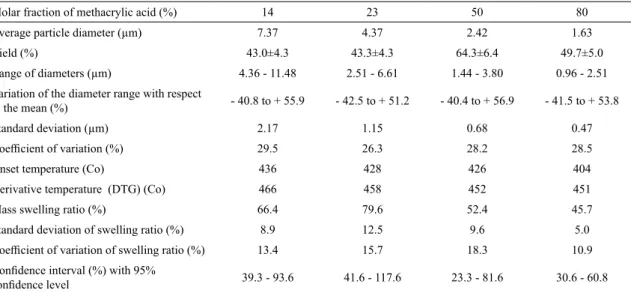
Table 1 presents the results of the characteristics of the final polymer particles obtained according to comonomer
composition variation. As can be seen, the increase in the
MAA fraction caused a decrease in average particle diameter.
The highest yield was achieved when 50 % of MAA was applied. On the other hand, at 80%, the yield was practically
the same those achieved when 14 and 23 % were used. These events are caused by the decrease in CCL (critical chain size). The CCL is defined as the size of the chain at which polymer precipitation begins to form the nuclei, which increases with increasing solubility of the polymer in the diluents 7,9,12. Thus, the lower the CCL, the lower the mean particle diameter in the final product and the higher the amounts of precipitated nuclei and their yield will be.
The solubility characteristics of the diluents and the comonomers used in this work are presented in Table 213 through the parameters of Hansen and Hildebrand. The
increase in the polar character of the synthesized polymer
is mainly due to the increase of carboxylic acid groups of methacrylic acid, as indicated by its parameter δh, which is
larger than that of DVB. The closer these parameters are,
the greater the solubility of the comonomer in the diluent.
The increase in yield accompanied by the increase of the
MAA% in the polymer (up to 50%) is explained by the fact that a smaller fraction of these chains become soluble in the reaction medium and by the decrease in CCL. There is also a greater number of hydrogen bonds between the resulting polymer chains. The higher number of carboxylic acid groups
in the polymer chains facilitated the growth, formation
and agglutination of the primary nuclei. Hydrogen bonds
facilitated the interactions between the free oligomers to
form the nuclei and also facilitated the interactions between growing nuclei and the free monomers and oligomers during
the synthesis. In the sample with 80% MAA there was already
a significant decrease in the number of crosslinks, which resulted in lower yield. Since the formation of these particles occurs by entropic precipitation, with a high reduction of the amount of free vinyl in the nuclei and oligomers, yield reduction begins 6,12.
Figure 1 shows optical particle micrographs prepared
with 80% and 23% MAA molar fraction. The presence of monodisperse microspheres can be seen in both samples. The
synthesis with 80% MAA (Fig. 1a) already shows intense agglomeration of microspheres, probably caused by the
interaction of hydrogen bonds between the carboxylic acid
groups of the particles 1.
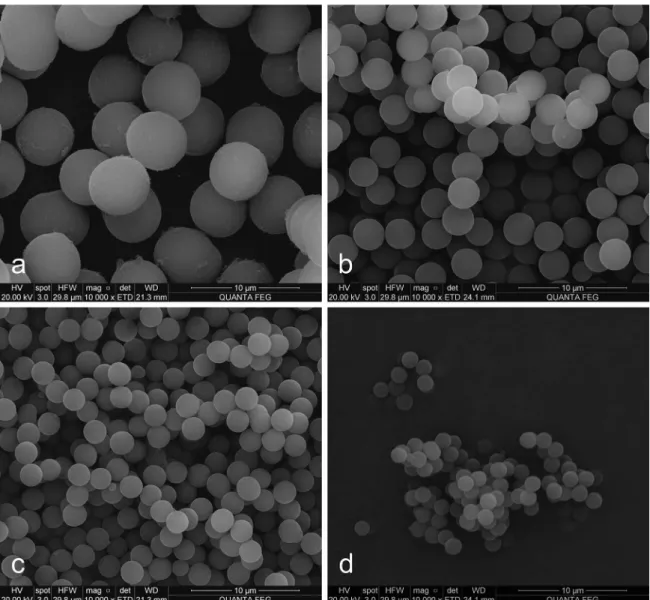
Figure 2 shows the scanning electron micrographs of the
microspheres prepared with (a) 14%, (b) 23%, (c) 50% and (d) 80% MAA molar fractions. The presence can be seen of monodisperse microspheres in all the samples. Also, the size of the polymer particles decreased with the increase of
the MAA fraction in the system as previously reported. In precipitation polymerization, the reaction medium must be a poor solvent for the resultant polymer chains. Immiscibility of the chain in the solvent controls the Critical Chain Length (CCL) above which oligomers precipitate as primary particles and coagulate to form nuclei. In practice, not every growing soluble oligomer will reach CCL and precipitate because part of them will just become supplement for the nuclei growth instead. Therefore more nuclei would be formed if the CCL becomes short under certain conditions, and with the number of nuclei increasing, the residual monomers or soluble oligomers in the reaction medium needed for nuclei growth
(also called particle growth) will decrease correspondingly,
resulting in smaller spheres. According to our results, there
Table 1. Methacrylic acid molar fraction influence on final polymer particle characteristics (prepared with acetonitrile/toluene volumetric ratio of 75/25, and total monomer/diluent ratio of 4g/100 mL)
Molar fraction of methacrylic acid (%) 14 23 50 80
Average particle diameter (µm) 7.37 4.37 2.42 1.63
Yield (%) 43.0±4.3 43.3±4.3 64.3±6.4 49.7±5.0
Range of diameters (µm) 4.36 - 11.48 2.51 - 6.61 1.44 - 3.80 0.96 - 2.51 Variation of the diameter range with respect
to the mean (%) - 40.8 to + 55.9 - 42.5 to + 51.2 - 40.4 to + 56.9 - 41.5 to + 53.8
Standard deviation (µm) 2.17 1.15 0.68 0.47
Coefficient of variation (%) 29.5 26.3 28.2 28.5
Onset temperature (Co) 436 428 426 404
Derivative temperature (DTG) (Co) 466 458 452 451
Mass swelling ratio (%) 66.4 79.6 52.4 45.7
Standard deviation of swelling ratio (%) 8.9 12.5 9.6 5.0 Coefficient of variation of swelling ratio (%) 13.4 15.7 18.3 10.9 Confidence interval (%) with 95%
was a decrease in the particle diameter when the methacrylic acid concentration (MMA) was increased (hence a decrease
in DVB). With the increase of the methacrylic acid fraction there was a decrease in the solubility of the resulting polymer chains, with the decrease in CCL. The lower the CCL, the greater the number of cores that precipitate and smaller the sizes of the microspheres. This decrease in CCL occurred due to the increase of the polar character of the resulting polymer chains. The solubility characteristics of the diluents and the polymers can be analyzed parameters of Hansen and Hildebrand, as shown in Table 2. The increase in the polar polymers of the polymer is mainly due to the increase of carboxylic acid groups of methacrylic acid, which can be evidenced by the δh parameter (Table 2), which is greater than DVB, while the acetonitrile/toluene = 75/25 is 5.41.
The thermogravimetric analysis (TGA) is presented in Table 1. There was a slight decrease in the onset temperature and the temperature of maximum thermal degradation with
the increase of the MAA fraction. This decrease in thermal
resistance occurs due to the reduction of the DVB fraction in the samples, which causes a decline in the number of crosslinks present in the final product. These results are in agreement with the literature 14,15. All samples also showed a single DTG peak, indicating their degradation occurred in a single step. Table 1 also shows the swelling results of
the microspheres obtained with different molar fractions of MAA. The highest swelling values occurred in the sample with 23% MAA, due to the higher affinity of the polymer containing this MAA fraction with the diluents. The "Q" test was applied for acceptance of the results, according to equation 3:
(3)
Where Xq is the value questioned, Xp is its nearest
neighbor, and f is the range of the whole set, where the value
of Q must be below the critical Q value. The confidence level chosen was 95%, and the critical Q for this level is 0.97.
According to Table 1, all the particles obtained very
close coefficients of average diameter variation. The particles
prepared with molar fraction of 23% MAA had the smallest size variation.
Figure 3 shows the results obtained by the light scattering technique of the synthesized polymers. In the particles obtained using 23% MAA molar fraction, a second population with a lower frequency was formed, around 800 nm in diameter, as shown in Figure 3b. In the particles with 80% MAA, a second population was formed around 50 µm (Fig. 3d). This result
can be explained by the intense agglomeration of particles
caused by the strong interaction of hydrogen bonds between
Table 2. Hansen/Hildebrand solubility parameters of the diluents and monomers13 Diluents(s) or monomer δ(Mpa1/2)a δ
d(Mpa
1/2)b δ
p(Mpa
1/2)c δ
h(Mpa 1/2)d
Acetonitrile 24.43 15.34 18.00 6.14
Acetonitrile/Toluene
75/25 (V/V) 23.04 16.06 15.60 5.41
Acetonitrile/Toluene
50/50 (V/V) 21.55 16.74 12.77 4.58
Toluene 18.21 18.04 1.43 2.05
Divinylbenzene 19.90 18.60 1.00 7.00
Methacrylic acid 19.01 15.80 2.80 10.20
a δ = Hildebrand solubility parameter, b δ
d = Hansen's parameter of the dispersive cohesive energy, c δ
p = Polar Hansen's parameter of
cohesive energy, d δ
h = Hansen's parameter of cohesive energy of hydrogen bonds
Figure 1. Optical microscopy of polymer particles prepared with acetonitrile/toluene volumetric ratio of 75/25 and molar fractions of: (a) 80% methacrylic acid and (b) 23% methacrylic acid. The presence of particle agglomeration in "(a)" (arrow) is observed. (400 X magnification).
the carboxylic acid groups of the particles 1. In the sample prepared with 23% MMA molar fraction, a population of small particles (around 40 µm) was observed. This can be attributed to the portion of agglutinated particles. Figures 3a and 3c show the size distribution occurring practically as a single group of particles in the polymers prepared with 14%
and 50% molar fraction of MAA, respectively.
Figure 4 shows the FTIR spectra with the axial strain bands characteristic of the CH bond of the vinyl group at
3084 and at 3018 cm -1 and flexion around 904 and 989
cm -1 (di-substituted benzenes), which are less evident
with increasing MAA fraction. The characteristic bands
of aromatic CH bonding appear at the wavelengths 710,
796 and 836 cm-1 (mono-substituted benzenes). The axial deformation vibration of C=C extends into the ring (phenyl groups) at 1602 cm-1, and symmetrical axial deformation of alkenes occurs around 1629 cm-1. The latter (1629 cm-1)
was less evident with increasing MAA fraction, indicating a smaller fraction of DVB and free vinyl in the polymer.
Around 1705 cm-1, the presence of asymmetric elongation vibration, characteristic of the C=O group, can be seen, and around 3440 cm-1 a wide axial deformation vibration band of the OH group is present, both belonging to the MAA, which
becomes more evident with the increase of the acid fraction in the polymer particles. The characteristic symmetrical
vibration of the C-O group appears between 1216-1218 cm-1 and the asymmetric and symmetrical C-H saturated type
stretching appears in the region 2923-2937 cm-1.
4.2 Influence of the ratio of total monomers/
diluents on polymer particles
The results of yield and average particle diameter are
shown in Table 3. It can be noted that both parameters increased with the increase of the initial concentration of the
total monomers. From the 6.7g/100ml, coagulate formation
g/100 mL of total monomers/diluents. There was coagulation
of the particles prepared with 14% and 50% molar fractions
and acetonitrile/toluene ratio of 75/25. When the diluent was pure acetonitrile, it was still possible to generate microspheres in the ratio of 6.7 g/100 ml of total monomers/diluents, due to the lower yield. With increasing ratio of total monomers/ diluents from 4g/100mL to 6.7g/100mL in pure acetonitrile,
there was practically no change in the mean particle diameters prepared with 14% MAA, with an increase in yield. Under the same conditions, the particles prepared with 50% molar
fraction of MAA showed a very significant increase in mean diameter, without significant change in yield. It is likely that this result was an effect of increasing the solubility of the polymer in formation, caused by a greater amount of free monomers in the reaction medium.
Table 6 shows the Influence of acetonitrile/toluene volumetric ratio on the swelling ratio of particles prepared
with 50% and 14% molar fraction of MMA. As can be seen, the swelling ratios were 29.6%, 52.4% and 75.5%, in particles prepared with 50% MAA molar fraction and
acetonitrile/toluene (v.v.) ratios of 100/0, 75/25 and 50/50,
respectively. In the particles prepared with molar ratio of
14% MAA, and acetonitrile/toluene (v.v.) ratios of 100/0,
75/25 and 50/50, the swelling ratios were 38.0%, 66.4% and 137.8%, respectively. All particles were prepared with
4 g/100 mL ratio of total monomers/diluents. In all the experiments, the "Q" test was applied for acceptance of the results, with a confidence level of 95%. There was an increase in the swelling ratio when the acetonitrile/toluene volumetric ratio changed from 100/0 to 50/50 in all the
Figure 4. FTIR spectra of polymer particles with acetonitrile/toluene volumetric ratio of 75/25, using top-down: 14%, 23%, 50%, and 80% methacrylic acid molar fractions.
also occurred. This can be explained by the increase in the number of nuclei, which increases the probability of collisions and aggregation between them. Thus the chance of aggregation or coagulation among primary particles
increased with higher monomer concentration 7.
4.3 Influence of diluent composition
Table 4 shows the influence of the ratio of diluents on final polymer particles prepared with 14% and 50% molar fractions. The reactions were carried out with the ratio of 4.0 g/100 mL of total monomers/diluents. The difference in particle size observed due to the change in the diluent ratio can be attributed to changes in CCL. At the 50/50 acetonitrile/ toluene ratio, microgels were formed in the particles prepared with 50% and 14% MAA, due to the excessive solvation of the growing polymers. By changing the acetonitrile/toluene
ratio from 100/0 to 75/25, there was an increase in the yield of the particles prepared with molar fractions of 14% and 50% MAA. In the particles prepared with 50% MAA, this
yield increase occurred due to the decrease in CCL9. In the particles prepared with 14% MAA, although the acetonitrile/ toluene ratio changed from 100/0 to 75/25, increasing the solubility and the CCL, the yield was slightly higher. This was because in all results obtained in the acetonitrile/toluene ratio of 100/0, yields were lower than the 75/25 ratio due to solvation effects of the initiator, comonomers, and polymer in formation with the changing composition of the diluents 9.
Table 3. Influence of total monomer/diluent ratio (g/100 mL) on the particles prepared with acetonitrile/toluene volumetric ratio of 75/25 and 50% MAA molar fraction
Ratio of total monomers / diluents (g/100 mL) Average particle diameter (µm) Polymerization yield (%) Diameter range studied (µm) Diameter range variation in relation to the
average (%)
Standard
deviation (µm) CV*(%)
2.0 very low yield 2.4±0.2 - - -
-3.0 1.42 34.6±3.5 0.83 - 2.19 -41.4 to +54.0 0.40 28.5 4.0 2.42 64.3±6.4 1.44 - 3.80 -40.4 to +56.9 0.68 28.2 5.0 2.86 71.9±7.2 1.66 - 4.36 -42.1 to +52.2 0.78 27.1
6.7 coagulated 79.3±7.9 - - -
-8.0 coagulated 83.4±8.3 - - -
-10.0 coagulated 87.8±8.8 - - -
-12.0 coagulated 95.8±9.6 - - -
-*CV = variation coefficient
Table 4. Influence of the acetonitrile/toluene volumetric ratio on final polymer particles prepared with 14% and 50% MAA molar fraction, and 4.0 g / 100 mL ratio of total monomers/ diluents
Acetonitrile/ toluene volumetric ratio (v/v) Molar fraction of metacrylic acid (%) Average particle diameter (µm) Diameter range of particles (µm) Diameter range variation (%) Standard deviation (µm) Particle size coefficient of variation ratio (%) Particle yield (%)
100/0 2.82 1.66 -4.36 -41.2 to +54.7 0.85 30.2 47.2±4.7 75/25 50 2.42 1.44 – 3.8 -40.4 to +56.9 0.68 28.2 64.3±6.4 50/50 microgel microgel microgel microgel microgel microgel 100/0 5.64 3.31 – 8.71 -41.3 to +54.5 1.65 29.3 37.9±3.8 75/25 14 7.37 4.36 – 11.48 -40.8 to +55.9 2.17 29.5 43.0±4.3 50/50 microgel microgel microgel microgel microgel microgel
Table 5. Influence of the acetonitrile/toluene volumetric ratio on final polymer particles prepared with 14% and 50% MAA molar fraction, and 6.7 g / 100 mL ratio of total monomers/ diluents
Acetonitrile/ toluene volumetric ratio (v/v) Molar fraction of metacrylic acid (%) Average particle diameter (µm) Diameter range of particles (µm) Diameter range variation (%) Standard deviation (µm) Particle size coefficient of variation ratio (%) Particle yield (%)
100/0 8.41 5.01 – 13.18 -40.4 to +56.8 2.53 30.1 45.2±4.5
75/25 50 coagulated 79.3±7.9
50/50 microgel microgel
100/0 5.68 3.31 – 8.71 -41.7 to +53.4 1.70 30.0 46.8±4.7
75/25 14 coagulated 76.1±7.6
50/50 microgel microgel
Table 6. Influence of acetonitrile/toluene volumetric ratio on the swelling ratio of particles prepared with 50% and 14% molar fraction of MMA
Acetonitrile/toluene volumetric ratio
(v/v)
Molar fraction of metacrylic acid (%)
Mass swelling ratio (%)
Standard desviation (%)
Coefficient of variation of swelling ratio (%)
Confidence interval (%) with 95% confidence level
100/0 29.6 5.3 18.1 13.3-45.9
75/25 50 52.4 9.6 18.3 23.3-81.6
50/50 75.5 5.7 7.5 58.2-92.8
100/0 38.0 5.7 14.9 20.8-55.2
75/25 14 66.4 8.9 13.4 39.3-93.6
50/50 137.8 19.2 14.0 79.4=196.3
tests. On the other hand, no difference was observed when
the molar fraction of methacrylic acid changed from 50 to 14. This indicates that the increase in DVB concentration when the mole fraction of methacrylic acid changed from 50
to 14 was not sufficient to produce a number of crosslinks
capable of being detected by the swelling test.
5. Conclusions
In the present study, it was possible to synthesize spherical
particles of poly(methacrylic acid-co-divinylbenzene) in the
diameter range of 1.42-8.41 µm. With the increase of DVB concentration, the average particle diameter increased due to the higher CCL with the increase crosslinking degree, and
the polymers presented higher thermal resistance. The highest yield was achieved with particles prepared with 50% molar fraction of MAA. SEM micrographs showed monodisperse microspheres and increased average diameter with decreasing MAA fraction. Particle size analyses showed the formation
of a second group of particles around 800 nm in the particles
prepared with 23% MAA, and intense agglomeration of the particles prepared with 80% MAA
There was clot formation in the particles prepared with
14% and 50% molar fractions, total monomer/ diluent ratio of 6.7 g/100 mL and acetonitrile/toluene volumetric ratio of 75/25. The higher the toluene fraction in the preparation of
the particles with 14% and 50% of MAA was, the greater the
swelling ratio of the final particles, and the lower the number of crosslinks of the final polymer. The particles prepared with
molar fraction of 14% MAA obtained greater swelling ratios than those prepared with 50% MAA. There was microgel
formation in the particles prepared with acetonitrile/toluene volumetric ratio of 50/50, due to the excessive solvation of
the growing polymers.
6. Acknowledgment
We thank Fundação de Amparo à Pesquisa do Estado do Rio de Janeiro (FAPERJ), Conselho Nacional de Desenvolvimento Científico e Tecnológico (CNPq) and Coordenação de Aperfeiçoamento de Pessoal do Nível Superior (CAPES) for financial support. We also thank Laboratório de Engenharia de Polimerização (ENGEPOL) of Instituto Alberto Luiz Coimbra de Pós-Graduação e Pesquisa de Engenharia (COPPE-UFRJ) for particle size analyses.
7. References
1. Bai F, Yang X, Li R, Huang B, Huang W. Monodisperse hydrophilic polymer microspheres having carboxylic acid groups prepared by distillation precipitation polymerization.
Polymer. 2006;47(16):5775-5784.
2. Simeonov M, Monova A, Kostova B, Vassileva E. Drug transport in stimuli responsive acrylic and methacrylic interpenetrating polymer networks. Journal of Applied Polymer Science. 2017;134(42):45380-45386.
3. Gao B, Chen T, Cui K. Constituting of a new surface-initiating system on polymeric microspheres and preparation of basic protein surface-imprinted material in aqueous solution. Polymers Advanced Technologies. 2018;29(1):575-586.
4. Liao L, Peng C, Li S, Lu Z, Fan Z. Evaluation of bioresorbable polymers as potential stent material-In vivo degradation behavior and histocompatibility. Journal of Applied Polymer Science. 2016;134(1):44355-44364.
5. Gokmen MT, Prez FED. Porous polymer particles-A comprehensive guide to synthesis, characterization, functionalization and applications.
Progress in Polymer Science. 2011;37(3):365-405.
6. Bai F, Huang B, Yang X, Huang W. Synthesis of monodisperse poly (methacrylic acid) microspheres by distillation-precipitation polymerization. European Polymer Journal. 2007;43(9):3923-3932.
7. Cui H, Chen H, Qu R, Wang C, Sun C, Zhou W, et al. Highly crosslinked poly(styrene-co-divinylbenzene) microspheres prepared by precipitation polymerization: Effects of the polymerization parameters on the characteristics of the particles. Journal of Applied Polymer Science. 2009;111(6):3144-3149.
8. Elbert DL. Liquid-liquid two-phase systems for the production of porous hydrogels and hydrogel microspheres for biomedical applications: A tutorial review. Acta Biomaterialia. 2011;7(1):31-56. 9. Shi Y, Lv H, Lu X, Huang Y, Zhang Y, Xue W. Uniform molecularly
imprinted poly(methacrylic acid) nanospheres prepared by precipitation polymerization: the control of particle features suitable for sustained release of gatifloxacin. Journal of Materials Chemistry. 2012;22(9):3889-3898.
10. Liu J, Zhang L, Han Song L, Liu Y, Tang H, Li Y. Synthesis of metronidazole-imprinted molecularly imprinted polymers by distillation precipitation polymerization and their use as a solid-phase adsorbent and chromatographic filler. Journal of Separation Science. 2015;38(7):1172-1178.
11. Zheng L, Wang H, Cheng X. Molecularly imprinted polymer nanocarriers for recognition and sustained release of diclofenac.
Polymers Advanced Technologies. 2018;29(5):1360-1371.
12. Yan Q, Zhao T, Bai Y, Zhang F, Yang W. Precipitation Polymerization in Acetic Acid: Study of the Solvent Effect on the Morphology of Poly(divinylbenzene). Journal of Physical Chemistry B. 2009;113(10):3008-3014.
13. Piccaglia Neto M. Preparação e caracterização de microesferas poliméricas à base de poli(ácido metacrílico-co-divinilbenzeno) obtidas por polimerização por precipitação. [Dissertation]. Rio de Janeiro: Rio de Janeiro State University; 2013.
14. Jin JM, Lee JM, Ha MH, Lee K, Choe S. Highly crosslinked poly (glycidyl methacrylate-co-divinyl benzene) particles by precipitation polymerization. Polymer. 2007;48(11):3107-3115.