ESCOLA UNIVERSITÁRI
MESTRADO INTEGRADO EM MEDICINA VETERINÁRI
Possible
in a Collie w
Carlos André Ribeiro
ESCOLA UNIVERSITÁRIA VASCO DA GAMA
MESTRADO INTEGRADO EM MEDICINA VETERINÁRI
Possible emodepside toxicosis
in a Collie with MDR1 gene mutation
Carlos André Ribeiro Dias
ESCOLA UNIVERSITÁRI
MESTRADO INTEGRADO EM MEDICINA VETERINÁRI
Possible
in a Collie w
Aut
Aluno do Mestrado Integrado em
Orient
Departamento de Medicina
Orient
Clinica
Co
Departamento de Medicina
ESCOLA UNIVERSITÁRIA VASCO DA GAMA
MESTRADO INTEGRADO EM MEDICINA VETERINÁRI
Possible emodepside toxicosis
in a Collie with MDR1 gene mutation
Coimbra, Abril de 2014
Autor: Carlos André Ribeiro Dias
grado em Medicina Veterinária, Escola Universitária Vasco da G
Orientadora: Prof.ª Dr.ª Anabela Almeida
Medicina Veterinária, Escola Universitária Vasco da Gama
Orientadora Externa: Dr.ª Inês Marquês
Clinica Veterinária VetCondeixa
Co-Orientador: Dr. Hugo Vilhena
Medicina Veterinária, Escola Universitária Vasco da Gama
INA VETERINÁRIA
o da Gama
da Gama
i
Resumo
O gene da multirresistência aos fármacos 1 (MDR1) é responsável por codificar uma proteína
transportadora, designada glicoproteína-P (P-gp). A P-gp encontra-se presente em diferentes tecidos,
tais como, células endoteliais dos vasos cerebrais, células dos túbulos renais, intestino, pele, entre
outros. Está também presente em alguns tipos de células neoplásicas, onde se encontra
frequentemente sobre-expressa. É uma proteína transmembranar glicosada, que tem a função de
transportar para o exterior das células diversos compostos anfipáticos e hidrofóbicos tais como
toxinas e xenobióticos, entre os quais vários fármacos usados correntemente na prática veterinária.
Em algumas raças de cães é frequente a existência de uma mutação do gene MDR1, que
origina a síntese de uma P-gp não funcional. A ausência da P-gp na barreira hematoencefálica
permite a acumulação dos seus substratos no sistema nervoso central, originando neurotoxicidade.
Atualmente são reconhecidas várias moléculas como substratos da P-gp. Esta mutação é
classicamente associada à neurotoxicidade por ivermectina em cães das raças Collie e seus
cruzamentos. No entanto, esta mutação está também descrita em diversas outras raças de cães,
maioritariamente de pastoreio, e tem sido associada a toxicidade provocada por outros fármacos e
toxinas.
Este trabalho relata um caso clínico de um cão de raça Rough Collie, que foi assistido na
Clínica Veterinária VetCondeixa com um quadro clínico de sintomatologia neurológica ligeira,
incluindo depressão, desorientação, ataxia, tremores musculares, hipersalivação, midríase bilateral e
alterações propriocetivas. Tratava-se de um cão de 21 meses de idade, que tinha sido desparasitado
cerca de oito horas antes do aparecimento dos sinais clínicos citados, com uma administração oral de
emodepside e praziquantel (Profender®), e vacinado com CaniLeish®. A dose administrada do desparasitante interno correspondia a cerca do dobro da dose de tratamento recomendada. Face aos
sinais clínicos observados, foi instituído tratamento de suporte e efetuado um teste de DNA, que
revelou uma mutação homozigótica no gene MDR1.
A neurotoxicidade evidenciada neste caso clínico leva-nos a suspeitar que poderá ter sido
provocada por sobredosagem de emodepside num cão de raça Collie portador de uma mutação
homozigótica no gene MDR1. Apesar da neurotoxicidade associada à sobredosagem de emodepside
ser reconhecida pela Agência Europeia do Medicamento, este é, de acordo com o nosso
conhecimento, o primeiro caso clínico descrito de uma suspeita de intoxicação por emodepside.
Considerando a importante função da P-gp na distribuição dos fármacos no organismo, seria
importante proceder ao despiste da mutação do gene MDR1, sobretudo em cães de raças em que
Abstract
The multi-drug resistance gene 1 (MDR1) is responsible for encoding an efflux transport
protein designated P-glycoprotein (P-gp). The P-gp is expressed in various tissues such as the
capillary endothelial cells of the brain, renal tubular cells, intestinal cells, skin, among others. It is also
present in some types of neoplastic cells, where it is often overexpressed. It is a glycosylated
transmembrane protein that transports several amphipathic and hydrophobic molecules such as toxins
and xenobiotics, including drugs commonly used in veterinary practice.
A mutation in MDR1 gene is frequent in some dog breeds, and encodes the synthesis of a
non-functional P-gp. The absence of P-gp in the blood-brain barrier may originate the accumulation of
its substrates in the central nervous system, leading to neurotoxicity. Currently, a wide variety of
molecules are known to be substrates of P-gp. This mutation has been classically associated with
ivermectin neurotoxicity in dogs of Collie breeds. However, this mutation has been described in
several other dog breeds, mainly herding breeds, and associated with toxicity of other drugs and
toxins.
This paper describes a clinical report of a 21-month old male Rough Collie dog that presented
to VetCondeixa Veterinary Clinic due to development of mild neurological signs, including depression,
disorientation, ataxia, muscle tremors, hypersalivation, bilateral mydriasis and proprioceptive deficits.
The dog was dewormed eight hours previously to development of clinical signs with an oral
administration of emodepside and praziquantel (Profender®), and vaccinated with Canileish®. The dose administered was nearly the double of the recommended treatment dose. The clinical signs were
interpreted as associated to an emodepside toxicosis, and appropriated supportive treatment
instituted. A DNA-test was performed, and an homozygous mutation in the MDR1 gene detected.
Here is described a clinical case of a strong suspicion of neurotoxicity associated with an
overdose of emodepside in a Collie dog carrier of an homozygous mutation in the MDR1 gene.
Although the neurotoxicity associated with the overdose of emodepside is recognized by the European
Medicines Agency, this is, to our best knowledge, the first clinical report of a possible emodepside
toxicosis.
Considering the relevance of P-gp function in drug disposition, it is of paramount importance to
screen the MDR1 gene mutation, especially in dogs breeds where this mutation is frequent, so that
iii
Índice geral
Abstract...2
Background….………...3
Case presentation...7
Discussion...8
Conclusions...10
References...11
Appendix...16
Índice de Tabelas
Table 1 - Examples of P-Glycoprotein substrates...5Lista de Abreviaturas
ATP - Adenosine Triphosphate
ABC - ATP-binding cassette
ABCB1 - ATP-binding cassette B1 gene
BBB - Blood Brain Barrier
bp - Base Pair
CBC - Complete Blood Count
CNS - Central Nervous System
del - Deletion
DNA - Deoxyribonucleic Acid
EMA - European Medicine Agency
h - Hour
IV - Intravenous
K - Potassium
kDa - Kilodalton
Kg - Kilogram
MDR1 - Multi-drug resistance 1 gene
mg - Milligram
mL - Milliliter
nt - Nucleotide
NSW - North South West
PCR - Polymerase Chain Reaction
P-gp - P - Glycoprotein
RTD - Recommended Treatment Dose
SLO-1 - Gene which encodes the Calcium-Activated Potassium Channels
® - Registered Trademark
% - Percentage
(+/+) - Homozygous normal for the gene mutation
(-/+) - Heterozygous for the gene mutation
Possible emodepside toxicosis
in a Collie with MDR1 gene mutation
Carlos A. R. Dias1, Hugo C. R. Vilhena1, Inês S. Marquês2, Anabela M. Almeida1
1
Escola Universitária Vasco da Gama
Av. José R. Sousa Fernandes
Campus Universitário – Bloco B
Lordemão
3020-210 Coimbra, Portugal
2
Clinica Veterinária VetCondeixa
Rua St António 5-lj A
3150-159 Condeixa-a-Nova, Portugal
Abstract
The multi-drug resistance gene 1 (MDR1) is responsible for encoding an efflux transport
protein designated P-glycoprotein (P-gp). The P-gp is expressed in various tissues such as the
capillary endothelial cells of the brain, renal tubular cells, intestinal cells, skin, among others. It is also
present in some types of neoplastic cells, where it is often overexpressed. It is a glycosylated
transmembrane protein that transports several amphipathic and hydrophobic molecules, such as
toxins and xenobiotics, including drugs commonly used in veterinary practice.
A mutation in MDR1 gene is frequent in some dog breeds, and encodes the synthesis of a
non-functional P-gp. The absence of P-gp in the blood-brain barrier may originate the accumulation of
its substrates in the central nervous system, leading to neurotoxicity. Currently, a wide variety of
molecules are known to be substrates of P-gp. This mutation has been classically associated with
ivermectin neurotoxicity in dogs of Collie breeds. However, this mutation has been described in
several other dog breeds, mainly herding breeds, and associated with toxicity of other drugs and
toxins.
This paper reports a clinical case of a strong suspicion of neurotoxicity associated with an
overdose of emodepside in a Collie dog carrier of an homozygous mutation in the MDR1 gene.
Although the neurotoxicity associated with the overdose of emodepside is recognized by the European
Medicines Agency, this is, to our best knowledge, the first clinical report of a possible emodepside
toxicosis.
Considering the relevance of P-gp function in drug metabolism, it is of paramount importance
to screen the MDR1 gene mutation, especially in dogs breeds where this mutation is frequent, so that
safe drugs are used in the treatment of these animals.
Keywords:
Collie, Emodepside, Adverse Drug Reactions, MDR 1 gene mutation, ABCB1 gene,3
Background
The ATP-binding cassette-B1 (ABCB1) gene, also designated as multi-drug resistance 1
(MDR1) gene encodes an adenosine triphosphate (ATP) driven efflux pump called P-glycoprotein
(P-gp). This is a 170 kDa transmembrane protein which belongs to the family of membrane bound
ATP-binding cassette (Dean et al., 2001). The P-gp was reported for the first time in 1976, in ovary cells of
Chinese hamsters, where it was largely expressed and responsible for the resistance to colchicine and
other chemotherapeutic agents (Juliano & Ling, 1976 cit. by Martinez et al., 2008). Later, in the 1980s,
the gene who codes the P-gp was identified and designated as the MDR1 gene due to its
overexpression in multi-drug resistant tumor cells (Ueda et al., 1987).
Physiologically, this P-gp transports a wide range of structurally diverse compounds that are
amphipathic and hydrophobic such as toxins, xenobiotics and many drugs to the outside of the cells
(Borst & Oude-Elferink, 2002; Mealey, 2004), except in skin cells, where P-gp exerts its transport
function in the reverse direction, acting as an influx pump (Ito et al., 2008; Hashimoto et al., 2013).
The P-gp is present in several tissues with secretory and excretory functions such as the canalicular
membrane of hepatocytes, in the luminal membrane of the proximal tubules of the kidney, in the brush
border membrane of enterocytes, in capillary endothelial cells of the brain and testis, in trophoblast
cells, in the cortex and medulla of adrenal glands and in hematopoietic stem cells (Thiebaut et al.,
1987; Cordon-Cardo et al., 1989; Chaudhray & Robinson, 1991). P-gp limits drug absorption in the
luminal membrane of enterocytes after oral administration, promotes its elimination from the body into
bile and urine through its expression in the hepatocytes and proximal tubular kidney cells, and
prevents the accumulation of its substrates in the central nervous system (CNS) (Fromm, 2004). It is
also present, and frequently overexpressed, in some types of neoplastic cells, rendering them
multi-drug resistant (Thiebaut et al., 1987; Cordon-Cardo et al., 1989; Chaudhray & Robinson, 1991).
In 1996, Schinkel et al. reported that homozygous affected (-/-) mices for the MDR1 gene
mutation had increased penetration of some drugs into the CNS when compared with wild type mices,
suggesting that P-gp is fundamental to the functional integrity of the blood-brain barrier (BBB).
Mealey et al. (2001) identified a 4-base pair deletion in the fourth exon of the MDR1 gene in
ivermectin-sensitive Collies, which was referred as MDR1 nt230(del4). The deletion mutation causes a
frameshift, which generates multiple stop codons that give origin to a truncated P-gp with less than
10% of the wild type amino acid sequence. This allele was associated to loss of the P-gp function
(Roulet et al., 2003; Mealey, 2004).
Ivermectin has been the drug more frequently associated to neurotoxicity in dogs with the
MDR1 mutation, especially in Collies and its crosses (Seward, 1983 cit. by Monobe et al., 2013; Paul
et al., 1987 cit. by Mealey, 2004; Hopper et al., 2002). Ivermectin is a P-gp substrate, and when this
glycoprotein is absent, ivermectin penetrates the BBB and accumulates in the CNS, causing different
levels of neurotoxicity according to the dose administered to the dog (Geyer & Janko, 2012). The
clinical signs associated include vomiting, ataxia, mydriasis, muscle tremors, hypersalivation, seizures,
2004; Geyer et al., 2005a; See et al., 2009). Beyond macrocyclic lactones and chemotherapeutic
agents, several other drugs were identified as substrates of P-gp, some of them routinely used in
veterinary practice (Table 1).
Although Collie breeds have been the most frequent breeds related to this mutation, Neff et al.
(2004) showed that eight more breeds could also be associated. Six of them were from the Collie
lineage, and interestingly the other two were breeds of the sighthound group. Although these two
sighthound breeds didn't belong to the herding group of the Collie lineage, it was concluded that all the
dogs included in the study that carried the mutant allele were descendants from the same dog that
lived in Great Britain before the first records of genetic isolation breeds, in 1870. Since then, MDR1
5
Table 1 - Examples of P-glycoprotein substrates
Chemotherapeutics Antimicrobial agents Opioids Macrocyclic Lactones
Actinomycin D Doxycycline Butorphanol Ivermectin*
Docetaxel¥ Erythromycin*,¥ Fentanyl Milbemycin Oxime
Doxorubicin Grepafloxacin Loperamide Moxidectin
Etoposide¥ Itraconazole*,¥ Methadone* Selamectin
Imatinib Ketoconazole* Morphine
Mitoxantone Levofloxacin Pentazocine* Miscellaneous
Paclitaxel Sparfloxacin Bromocriptine*
Vinblastine¥ Tetracycline Antiemetics Chlorpromazine*
Vincristine¥ Domperidone Colchicine
Immunosuppressants Ondansetron Emodepside
Steroid hormones Cyclosporine A*,¥ Flesinoxam
Aldosterone Tacrolimus*,¥ H1-antihistamines Grapefruit Juice*
Cortisol¥ Fexofenadine Phenytoin
Dexamethasone¥ Cardiac drugs Terfenadine Rhodamine 123
Estradiol Amiodarone Terfenadine
Hydrocortisone Carvedilol* H2-antihistamines Vecuronium
Methylprednisolone Digitoxin Cimetidine
Progesterone Digoxin Ranitidine
Diltiazem¥ Antidepressants Losartan
Amitriptyline Nicardipine*
Fluoxetine* Quinidine*
Paroxetine* Talinolol
St John's Wort* Verapamil*,¥ *P-glycoprotein inhibitors
¥
Substrate of Cytochrome P450 3A
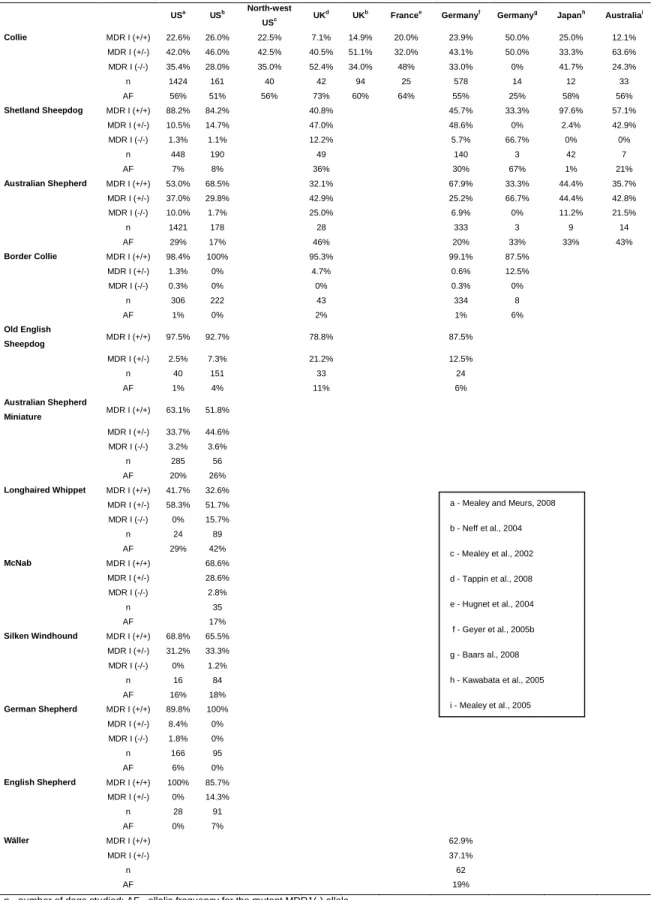
Table 2 - Genotyping studies on frequency of MDR1 mutation
USa
USb North-west USc UK
d UKb Francee Germanyf Germanyg Japanh Australiai
Collie MDR I (+/+) 22.6% 26.0% 22.5% 7.1% 14.9% 20.0% 23.9% 50.0% 25.0% 12.1% MDR I (+/-) 42.0% 46.0% 42.5% 40.5% 51.1% 32.0% 43.1% 50.0% 33.3% 63.6% MDR I (-/-) 35.4% 28.0% 35.0% 52.4% 34.0% 48% 33.0% 0% 41.7% 24.3% n 1424 161 40 42 94 25 578 14 12 33 AF 56% 51% 56% 73% 60% 64% 55% 25% 58% 56%
Shetland Sheepdog MDR I (+/+) 88.2% 84.2% 40.8% 45.7% 33.3% 97.6% 57.1% MDR I (+/-) 10.5% 14.7% 47.0% 48.6% 0% 2.4% 42.9% MDR I (-/-) 1.3% 1.1% 12.2% 5.7% 66.7% 0% 0%
n 448 190 49 140 3 42 7
AF 7% 8% 36% 30% 67% 1% 21%
Australian Shepherd MDR I (+/+) 53.0% 68.5% 32.1% 67.9% 33.3% 44.4% 35.7% MDR I (+/-) 37.0% 29.8% 42.9% 25.2% 66.7% 44.4% 42.8% MDR I (-/-) 10.0% 1.7% 25.0% 6.9% 0% 11.2% 21.5%
n 1421 178 28 333 3 9 14
AF 29% 17% 46% 20% 33% 33% 43%
Border Collie MDR I (+/+) 98.4% 100% 95.3% 99.1% 87.5% MDR I (+/-) 1.3% 0% 4.7% 0.6% 12.5% MDR I (-/-) 0.3% 0% 0% 0.3% 0%
n 306 222 43 334 8
AF 1% 0% 2% 1% 6%
Old English
Sheepdog MDR I (+/+) 97.5% 92.7% 78.8% 87.5%
MDR I (+/-) 2.5% 7.3% 21.2% 12.5%
n 40 151 33 24
AF 1% 4% 11% 6%
Australian Shepherd
Miniature MDR I (+/+) 63.1% 51.8%
MDR I (+/-) 33.7% 44.6% MDR I (-/-) 3.2% 3.6% n 285 56 AF 20% 26%
Longhaired Whippet MDR I (+/+) 41.7% 32.6% MDR I (+/-) 58.3% 51.7% MDR I (-/-) 0% 15.7% n 24 89 AF 29% 42%
McNab MDR I (+/+) 68.6% MDR I (+/-) 28.6% MDR I (-/-) 2.8%
n 35
AF 17%
Silken Windhound MDR I (+/+) 68.8% 65.5% MDR I (+/-) 31.2% 33.3% MDR I (-/-) 0% 1.2% n 16 84 AF 16% 18%
German Shepherd MDR I (+/+) 89.8% 100% MDR I (+/-) 8.4% 0% MDR I (-/-) 1.8% 0% n 166 95
7
Case presentation
A 21-month-old male Rough Collie, weighing 17.5 Kg, was presented to VetCondeixa
veterinary clinic presenting mild neurological clinical signs, eight hours after administration of oral
Profender® (Bayer HealthCare, Pymble, NSW, Australia) and vaccination with CaniLeish® (Virbac, Carros, France). Recommended treatment doses (RTD) of emodepside and praziquantel for dogs are
of 1 mg/kg and 5 mg/Kg, respectively. The Profender® tablet administered contained 30 mg of emodepside and 150 mg of praziquantel, which corresponds to approximately the double of the RTD.
On physical examination, the dog presented mild neurologic clinical signs, including ataxia,
depression, disorientation, muscle tremors, hypersalivation and bilateral mydriasis. Also presented
proprioceptive deficits in all four limbs, although the interpretation was difficult due the dog's overall
weakness. The dog was completely reluctant to eat or drink and it had been necessary to encourage
him to walk. The dog's vital signs were within normal limits.
Blood samples were collected for a complete blood count and serum biochemistry which
results were within normal limits. Later, an MDR1 genotyping by PCR method was requested. The
MDR1 genotyping detected a recessive homozygous mutation for that gene (Appendix 1).
Supportive treatment was instituted with intra-vascular (IV) fluid therapy with Ringer Lactate
solution at an infusion rate of 2.5 mL/kg/h, and administration of diazepam (0.5 mg/Kg) and vitamins of
B complex (association of thiamine, pyridoxine and cyanocobalamin). Although the clinical signs were
not suggestive, a possible immunologic reaction to CaniLeish® vaccine was considered, and a single IV methylprednisolone (2 mg/Kg) was administered.
The animal was regularly monitored and an improvement in his clinical condition was
observed in the following hours. Twelve hours after admission, the neurologic status was stabilized
and the animal accepted a low volume of food and water without vomiting. Twenty-four hours after
hospitalization the dog manifested only a slight ataxia. The dog was monitored in the following days,
and clinical signs resolved completely without relapses.
Due to the overdose of Profender®administered, the clinical signs presented, the response to supportive treatment and the detection of the homozygous mutation in the MDR1 gene in the
genotyping PCR test, a strong suspicion of an emodepside toxicosis associated with a P-gp
Discussion
This article describes a clinical case of a strong suspicion of an emodepside intoxication in a
Rough Collie dog carrier of an homozygous MDR1 gene mutation. The dog was presented to
VetCondeixa veterinary clinic due to development of mild neurologic clinical signs eight hours after
oral administration of Profender® (Bayer HealthCare, Pymble, NSW, Australia) and vaccination with CaniLeish®(Virbac, Carros, France). The tablet ingested was manufactured for dogs weighing 30 Kg (30 mg emodepside, 150 mg praziquantel), nearly the double of the dog's weight (17.5 Kg), and the
neurotoxicity evidenced by the animal was considered to be attributable to the overdose of
emodepside administered.
At the time of admission, the first clinical suspicion was of an immunologic reaction against the
CaniLeish®vaccine. Although the clinical signs were not strongly suggestive, the immunologic reaction was considered and an IV administration of methylprednisolone (2 mg/Kg) was given. No clinical
improvement was detected after methylprednisolone administration.
Adverse reactions to CaniLeish® are reported by EMA (2011) in the European Public Assessment Report on CaniLeish, and have also been described in clinical practice (Coedo, 2013).
Most adverse reactions reported are related with temporary local reactions such as swelling, nodule
development, pain on palpation or erythema, and resolve spontaneously within two days to two
weeks. Other temporary signs commonly described following vaccination can also occur such as
hyperthermia, apathy and digestive disorders lasting one to six days. Allergic-type reactions are
uncommon (EMA, 2011; Coedo, 2013). Vasovagal shock has also been reported in clinical practice,
but is usually mild and resolves within a few minutes (Coedo, 2013).
In fact clinical signs presented by the animal were rather compatible with neurotoxicosis than
with the adverse reactions described to the vaccine. In addition, the lack of clinical response to
methylprednisolone administration led clinicians to focus on Profender®administration.
Profender®is an endectocide used for prevention and treatment of gastrointestinal parasitism in dogs. The active constituents are emodepside and praziquantel. Emodepside belongs to a new
chemical group of depsipeptides, being a semi-synthetic compound produced by fermentation of the
fungus Mycelia sterilia, and is a substrate of P-gp (EMA, 2008). Emodepside is effective against
nematodes, and acts by two different metabolic pathways at neuromuscular junctions. Directly in
pre-and post-synaptic calcium-activated potassium SLO-1 gene channels in the muscle pre-and neurons, pre-and
9
According to Guest et al. (2007) and the European Medicines Agency (EMA, 2008),
Profender®is accepted as a safe product when is administered to the dogs at the RTD, but when the RTD is overlapped, some neurological signs are expected, including muscle tremors, incoordination
and behavioral changes. Without treatment, clinical signs are transient and self-limiting within eight
hours (EMA, 2008). Furthermore, the data provided by EMA also describes that a study was
performed to investigate the safety of Profender® in Collie dogs with homozygous mutation of the MDR1 gene, which demonstrated that Profender®was well tolerated in those dogs when emodepside was administered up to doses of 1.6 mg/Kg, and praziquantel up to doses of 8 mg/Kg. Mild and
transient neurological symptoms as muscle tremors, ataxia, hypersalivation and in rare cases seizures
developed in dogs with the MDR1 gene mutation when active substances were administered at a dose
twice or more times higher than the RTD (EMA, 2008). In the present case report, a dose nearly the
double of the RTD was administered to a Rough Collie carrier of a MDR1 gene mutation. The
neurological symptoms developed were mild and transient. Supportive treatment was instituted, and
12-hours later the dog manifested a significant improvement in clinical signs. Twenty-four hours after
administration of Profender®, the dog manifested only a slight ataxia, which resolved completely in a few days.
In our opinion, intoxication due to praziquantel is unlikely in this case since praziquantel is an
“old” drug authorized since 1975, and has a safety margin up to five fold of the RTD (5 mg/Kg) (EMA,
1996; Maddison et al., 2008:216). The dose of praziquantel administered in this case (150 mg) was
approximately 1.7 times higher than the RTD, but significantly lower than the toxic dose. In addition,
praziquantel is not considered a P-gp substrate, as recently shown by Dupuy et al. (2010) in an in vitro
study. Furthermore, to our best knowledge, there are no reports of development of neurologic clinical
symptoms related with adverse reactions to praziquantel in dogs.
In this case, a dose of emodepside approximately 1.7 times higher than the RTD was
administered to a Rough Collie carrier of an homozygous mutation of the MDR1 gene, which in our
opinion was the probable cause of the clinical status presented by the animal. The absence of P-gp in
liver, intestine, and kidneys may increase the oral bioavailability of P-gp substrates, such as
emodepside, also reducing its elimination from the organism (Thiebaut et al., 1987, Mealey et al.,
2005). Simultaneously, P-gp absence in the BBB may allow emodepside accumulation and binding to
receptors in the CNS, which causing the neurologic symptoms. Clinical signs associated with
emodepside intoxication might also be related to the possible binding of emodepside to the potassium
SLO-1 channels, also present in mammals, which are reported to be associated to hormone release,
Conclusions
Profender® is considered a safe and effective endectocide for prevention and treatment of gastrointestinal parasitism in dogs when administered at the RTD. Nonetheless, emodepside, a P-gp
substrate, has a reduced margin of safety in dogs with the MDR1 gene mutation. Administration of
dosages above the RTD might originate the development of neurological clinical symptoms, which are
in most cases mild, transient and self-limiting, but in rare cases severe clinical signs like seizures can
develop. Thus, Profender® should be administered consciously at the RTD, mainly in dogs with confirmed MDR1 mutation and in dogs of breeds in which this mutation is frequent. For the same
reason, all P-gp substrates are recommended to be used with care, in homozygous but also
11
References
Borst P. and Elferink R. O. (2002) Mammalian ABC transporters in health and disease, Annual
Review of Biochemistry. 71: 537-592
Chaudhary P. M. and Roninson I. B. (1991) Expression and activity of P-glycoprotein, a multidrug
efflux pump, in human hematopoietic stem cells, Cell. 66(1): 85-94
Coedo, R. (2013) CaniLeish®: un año de experiencia en España, Bionews. 10
Cordon-Cardo C., O'Brien J. P., Casals D., et al. (1989) Multidrug-resistance gene (P-glycoprotein) is
expressed by endothelial cells at blood-brain barrier sites, Proceedings of the National
Academy of Sciences of the United States of America. 86(2): 695-698
Crisford A., Murray C., O'Connor V., et al. (2011) Selective toxicity of the anthelmintic emodepside
revealed by heterologous expression of human KCNMA1 in Caenorhabditis elegans,
Molecular Pharmacology. 79(6): 1031-1043
Dean M., Rzhetsky A. and Allikmets R. (2001) The human ATP-binding cassette (ABC) transporter
superfamily, Genome Research. 11(7): 1156-1166
Dowling P. (2006) Pharmacogenetics: it's not just about ivermectin in collies, The Canadian Veterinary
Journal. La Revue Veterinaire Canadienne. 47(12): 1165-1168
Dupuy J., Alvinerie M., Menez C. and Lespine A. (2010) Interaction of anthelmintic drugs with
P-glycoprotein in recombinant LLC-PK1-mdr1a cells, Chemico-Biological Interactions. 186(3):
280-286
EMA (European Medicines Agency) (1996) Praziquantel - Summary Report (1), Committee for
Veterinary Medicinal Products / The European Agency for the Evaluation of Medicinal Products. Cannary Wharf, London, United Kingdom, [EMEA/MRL/141/96_FINAL].
EMA (European Medicines Agency) (2008) Profender European Public Assessment Report ,
European Medicines Agency. Last updated: 25/03/2013. Available in: http://www.ema.europa.eu/docs/pt_PT/document_
_library/EPAR_-_Product_Information/veterinary/000097/WC500063851.pdf. Accessed in
EMA (European Medicines Agency) (2011) CaniLeish European public assessment report, European
Medicines Agency. Last updated: 21/01/2013. Available in:
http://www.ema.europa.eu/docs/en_GB/document_library/EPAR_-_Product_Information/veterinary/002232/WC500104954.pdf. Accessed in 13-04-2014
Fromm M. F. (2004) Importance of P-glycoprotein at blood-tissue barriers, Trends in Pharmacological
Sciences. 25(8): 423-429
Guest M., Bull K., Walker R. J., et al. (2007) The calcium-activated potassium channel, SLO-1, is
required for the action of the novel cyclo-octadepsipeptide anthelmintic, emodepside, in
Caenorhabditis elegans, International Journal for Parasitology. 37(14): 1577-1588
Geyer J., Doring B., Godoy J. R., Moritz A. and Petzinger E. (2005a) Development of a PCR-based
diagnostic test detecting a nt230(del4) MDR1 mutation in dogs: verification in a
moxidectin-sensitive Australian Shepherd, Journal of Veterinary Pharmacology and Therapeutics. 28(1):
95-99
Geyer J., Doring B., Godoy J. R., et al. (2005b) Frequency of the nt230 (del4) MDR1 mutation in
Collies and related dog breeds in Germany, Journal of Veterinary Pharmacology and
Therapeutics. 28(6): 545-551
Geyer J. and Janko C. (2012) Treatment of MDR1 mutant dogs with macrocyclic lactones, Current
Pharmaceutical Biotechnology. 13(6): 969-986
Gramer I., Leidolf R., Doring B., et al. (2011) Breed distribution of the nt230(del4) MDR1 mutation in
dogs, The Veterinary Journal. 189(1): 67-71
Hashimoto N., Nakamichi N., Uwafuji S., et al. (2013) ATP binding cassette transporters in two distinct
compartments of the skin contribute to transdermal absorption of a typical substrate, Journal
of Controlled Release : Official Journal of the Controlled Release Society. 165(1): 54-61
Hopper K., Aldrich J. and Haskins S. C. (2002) Ivermectin toxicity in 17 collies, Journal of Veterinary
13
Ito K., Nguyen H. T., Kato Y., et al. (2008) P-glycoprotein (Abcb1) is involved in absorptive drug
transport in skin, Journal of Controlled Release. 131(3): 198-204
Kawabata A., Momoi Y., Inoue-Murayama M. and Iwasaki T. (2005) Canine mdr1 gene mutation in
Japan, The Journal of Veterinary Medical Science. 67(11): 1103-1107
Linardi R. L. and Natalini C. C. (2006) Multi-drug resistance (MDR1) gene and P-glycoprotein
influence on pharmacokinetic and pharmacodymanic of therapeutic drugs, Ciência Rural
.
36:336-341
Maddison J. E., Page S. W., Church D. B. (2008) Small Animal Clinical Pharmacology. 2nd Ed.
Philadelphia, PA: Saunders, pp. 216-217.
Martinez M., Modric S., Sharkey M., et al. (2008) The pharmacogenomics of P-glycoprotein and its
role in veterinary medicine, Journal of Veterinary Pharmacology and Therapeutics. 31(4):
285-300
Martin R. J., Buxton S. K., Neveu C., Charvet C. L. and Robertson A. P. (2012) Emodepside and
SL0-1 potassium channels: a review, Experimental Parasitology. SL0-132(SL0-1): 40-46
Mealey K. L. (2004) Therapeutic implications of the MDR-1 gene, Journal of Veterinary Pharmacology
and Therapeutics. 27(5): 257-264
Mealey K. L., Bentjen S. A. and Waiting D. K. (2002) Frequency of the mutant MDR1 allele associated
with ivermectin sensitivity in a sample population of collies from the northwestern United
States, American Journal of Veterinary Research. 63(4): 479-481
Mealey K. L., Greene S., Bagley R., et al. (2008) P-glycoprotein contributes to the blood-brain, but not
blood-cerebrospinal fluid, barrier in a spontaneous canine p-glycoprotein knockout model,
Drug Metabolism and Disposition. 36(6): 1073-1079
Mealey K. L. and Meurs K. M. (2008) Breed distribution of the ABCB1-1Delta (multidrug sensitivity)
polymorphism among dogs undergoing ABCB1 genotyping, Journal of the American
Veterinary Medical Association. 233(6): 921-924
Mealey K. L., Munyard K. A. and Bentjen S. A. (2005) Frequency of the mutant MDR1 allele
associated with multidrug sensitivity in a sample of herding breed dogs living in Australia,
Monobe M., Lunsford K., Araújo J., Bulla C. (2013) Detection of heterozygous MDR1 nt230(del4)
mutation in a mixed-breed dog: case report of possible doxorubicin toxicosis, Dove Press.
4: 35-38
Neff M. W., Robertson K. R., Wong A. K., et al. (2004) Breed distribution and history of canine
mdr1-1Delta, a pharmacogenetic mutation that marks the emergence of breeds from the collie
lineage, Proceedings of the National Academy of Sciences of the United States of America.
101(32): 11725-11730
Nelson O. L., Carsten E., Bentjen S. A. and Mealey K. L. (2003) Ivermectin toxicity in an Australian
Shepherd dog with the MDR1 mutation associated with ivermectin sensitivity in Collies,
Journal of Veterinary Internal Medicine. 17(3): 354-356
Roulet A., Puel O., Gesta S., et al. (2003) MDR1-deficient genotype in Collie dogs hypersensitive to
the P-glycoprotein substrate ivermectin, European Journal of Pharmacology. 460(2-3): 85-91
Sakaeda T., Nakamura T. and Okumura K. (2002) MDR1 genotype-related pharmacokinetics and
pharmacodynamics, Biological & Pharmaceutical Bulletin. 25(11): 1391-1400
Sartor L. L., Bentjen S. A., Trepanier L. and Mealey K. L. (2004) Loperamide toxicity in a collie with the
MDR1 mutation associated with ivermectin sensitivity, Journal of Veterinary Internal Medicine.
18(1): 117-118
Schinkel A. H., Wagenaar E., Mol C. A. and van Deemter L. (1996) P-glycoprotein in the blood-brain
barrier of mice influences the brain penetration and pharmacological activity of many drugs,
The Journal of Clinical Investigation. 97(11): 2517-2524
See A. M., McGill S. E., Raisis A. L. and Swindells K. L. (2009) Toxicity in three dogs from accidental
oral administration of a topical endectocide containing moxidectin and imidacloprid, Australian
Veterinary Journal. 87(8): 334-337
15
Veterinary Clinical Pharmacology Laboratory (2012) Drugs reported to cause problems in dogs that
carry the MDR1 mutation. Information from the VCPL at Washington State University,
Washington State University. Last updated: 02/2012. Available in:
[email protected] /96 045 8864/ 253 421 038
Edifício Spinpark, Avepark- Parque de Ciência e Tecnologia
Zona Industrial da Gandra, S. Cláudio do Barco 4805-017 Barco
–
Guimarães
Dados animal
NOME: Baltique
Dados Clínica
Associação
Cognitária São
Jorge Milreu
Espécie
Raça
Sexo
D. N.
ID
IDVet-067-C- 00002
Felina
Rough
Collie
M
10/02/2011Med. Vet.: Dr. Carlos Dias
Proprietário: Carlos Cortes
Data: 04/07/2013
Resultados MDR
–
Hipersensibilidade à Ivermectina
MDR, Defeito (Hipersensibilidade à Ivermectina)
Mutação: Homozigotico Genótipo: -/-
O animal é portador do genótipo homozigoto para la mutação nt230 de MDR1. Carece de um sistema funcional de transporte.
O defeito terá sido herdado dos seus pais e será transmitido à sua descendência. Certas drogas não devem ser usadas no tratamento deste animal.
PCR