Pre-frailty in the elderly and the driver license test for motor
vehicles
Pré-fragilidade em idosos e a habilitação para direção de veículos automotores
Maria Helena Lenardt1, Susanne Betiolli1, Letícia Marie Sakai1, Nathalia Hammerschmidt Kolb Carneiro1, Maria Angélica Binotto1, Dayana Cristina Moraes1
Objective: to investigate the association between the condition of physical pre-frailty in elderly people and the
final results of the driver license test for motor vehicles. Methods: cross-sectional study carried out with 347 elderly who underwent driver license tests. A questionnaire and tests were applied, and information on the result of the driver license test was collected. A descriptive statistical analysis and a non-parametric test were performed. Results: 163 (47.0%) were found to be pre-frail, 71 (43.6%) had reduced hand grip strength, 65 (39.9%) had reduced level of physical activity and 62 (38.0%), reduced gait speed. The result of the driver test indicated 115 (70.6%) pre-frail elderly to be able to drive with restriction. Pre-frailty was not associated with the results of the driver license test (p=0.744). Conclusion: although the pre-frail condition was frequent, there
was no significant association with the result of the driver test.
Descriptors: Frail Elderly; Geriatric Nursing; Physical Fitness; Automobile Driver Examination; Automobile
Driving.
Objetivo: investigar a associação entre a condição de pré-fragilidade física e os resultados finais da habilitação de idosos para dirigir veículos automotores. Métodos: estudo transversal realizado com 347 idosos submetidos
aos exames de habilitação. Aplicou-se questionário estruturado, testes para avaliação da fragilidade física e
coletadas informações do resultado da habilitação. Foi realizada análise estatística descritiva e teste não
paramétrico. Resultados: encontraram-se 163 (47,0%) pré-frágeis, 71 (43,6%) deles possuíam força de
preensão manual diminuída, 65 (39,9%) redução do nível de atividade física e 62 (38,0%) velocidade da marcha
reduzida. O resultado do exame indicou 115 (70,6%) pré-frágeis aptos com restrição. A pré-fragilidade não se associou aos resultados da habilitação veicular (p=0,744). Conclusão: embora a condição de pré-fragilidade
tenha se mostrado elevada entre os idosos submetidos ao exame de aptidão física e mental para a habilitação veicular, não houve associação significativa entre essa classificação de fragilidade e o resultado da habilitação
veicular.
Descritores: Idoso Fragilizado; Enfermagem Geriátrica; Aptidão Física; Exame para Habilitação de Motoristas;
Condução de Veículo.
1Universidade Federal do Paraná. Curitiba, PR, Brazil.
Corresponding author: Letícia Marie Sakai
Introduction
The physical health of the elderly may be com-promised considering that aging is often marked by gradual decline of various physiological systems, mul-timorbities and dependencies that contribute to the loss of autonomy and independence. This becomes even more worrisome when the elderly is in the con-dition of pre-frailty or physical frailty(1).
Physical frailty is defined as “a medical syn -drome with multiple causes and contributions/deter-minants that is characterized by decreased strength, endurance and physiological function that increases the vulnerability of the individual and leads to greater dependence and/or death”(1:392). The phenotype of this
syndrome consists of five components: unintentional
weight loss, self-report of fatigue/exhaustion, redu-ced hand grip strength, reduredu-ced physical activities and reduction of gait speed(2).
An international study of 7,439 elderly people
(aged ≥ 65 years) indicated a significant pre-frailty in -dex in the elderly, corresponding to 45.0% of the sam-ple(3). This percentage is even higher in the national context, as observed in a survey of 958 elderly people,
of whom 522 (55.4%) were classified as pre-frail(4). Identifying pre-frailty is essential for health care planning, because this condition is amenable to reversal. Furthermore, there is a need to improve the scenarios of the various institutions and services that are useful for the elderly, so that they be able to meet the particularities of this age group. Among the servi-ces is the institution responsible for the acquisition or renewal of the national driver’s license.
Statistical data show a significant number of
elderly drivers of motor vehicles. In 2013, according to a survey conducted by the Transit Department of Paraná, there were 219,439 drivers over 65 who were active and driving. This share of the elderly represents 4.7% of the 4.5 million drivers registered in Paraná and is estimated to rise in the next years(5).In 2015, in Espírito Santo, there were 1,328,344 drivers, of whi-ch 163,513 (12.3%) were over 60(6). In the same year,
in the State of Rio de Janeiro, the estimates were of 5,469,196 drivers, of which 564,332 (10.3%) were
el-derly (≥ 60 years)(7).
Driving a motor vehicle is important for the elderly, as it allows independent(8) mobility and has a positive impact on their quality of life. However,
dri-ving a car can become an increasingly difficult activity
with advancing years, due to the aging process and declines in visual, motor and cognitive functions. This contributes to reducing the safety of the elderly driver
in the traffic, besides endangering other drivers and
pedestrians.
In view of the significant number of elderly dri -vers of motor vehicles, the high incidence of pre-frailty
in Brazilian elderly and the lack of national scientific
knowledge on the subject, it is important to screen for physical frailty among this particular population. The physical fragility phenotype is one of the instruments that can provide an evaluation of the elderly segment of the population and, consequently, contribute to a safer driving.
Therefore, the following question was set for this research: what is the association between the condition of physical pre-frailty in the elderly and the
final results of the driver license test for motor vehi -cles? The objective is to investigate the association between the condition of physical pre-frailty in the
elderly and the final results of the driver license test
for motor vehicles.
Methods
This is a cross-sectional study carried out with
elderly people (≥ 60 years old) who underwent physi -cal and mental evaluation for driver license test. The study site comprised 54 evaluation clinics in the city of Curitiba, PR, Brazil, in the period from August 2015 to March 2016.
The selection of clinics occurred by a simple
draw. The clinics were classified as C1 to C54 and
inclusion criteria: to be accredited to perform physical and mental and/or psychological evaluationand, and to have a proper space to perform the tests.
Due to the lack of quantitative data on the num-ber of elderly patients received in each clinic and the
way of distribution of the elderly by the traffic institu -tion, a standard number of 35 elderly people was eva-luated in each of the 11 clinics drawn until the end of the sampling period.
The following inclusion criteria of participants
were chosen: age ≥ 60 years; presenting cognitive abi -lity assessed by the Mini-Mental State Examination, according to the schooling: 13 points for individuals without schooling, 18 points for low and medium schooling and 26 points for high schooling(9). The ex-clusion criteria were: to present diseases, problems and/or physical symptoms that, for any reason, could prevent the application of the questionnaires and the tests.
Four hundred and nineteen elderly people were approached in the sample period, 43 of whom refused to participate. Among the elderly who agreed to participate in the study, 29 were excluded because they did not reach the required score in the
Mini-Men-tal State Examation. Thus, the final sample consisted
of 347 participants.
Data collection was performed using a structu-red questionnaire, a physical frailty syndrome
evalua-tion and data was searched to identify the final result
of the physical and mental evaluation in the National Driver Register. The structured questionnaire addres-sed sociodemographic and driving-related issues: age, sex, marital status, schooling, type of vehicle (manual
or automatic transmission), difficulty to push the pe -dals, hold the steering and handling the gearshift.
To evaluate physical frailty, the five compo -nents of the phenotype(2): unintentional weight loss; gait speed; hand grip strength; self-reported fatigue/ exhaustion and level of physical activity. Unintentio-nal weight loss was assessed according to self-report of weight loss in the last 12 months. The elderly who reported loss equal to or greater than 4.5 kg of body
weight were considered frail.
Gait speed was evaluated by the average time in seconds that the elderly would take to travel three
times, in a usual speed and in a flat floor, a distance of
4.6 meters. The start and end distance of 4.6 meters were marked by a signaling rope. Values were adjus-ted for median height, according to sex. The elderly with values in the lowest quintile were considered frail for this component.
Hand grip strength was measured using a Ja-mar dynamometer (Lafayette Instruments, Lafayette, Indiana, United States) placed in the dominant hand of the elderly, in three attempts, with a one-minute inter-val between them. The elderly whose average of the three measures was in the lowest quintile, adjusted for sex and body mass index, were considered frail.
Fatigue/exhaustion was evaluated according to self-report in the response to items 7 and 20 of the Depression Scale(10): In the last week, say how often (A) you felt that everything you did was an struggle? And (B) you felt that you cannot continue doing your things? The possible answers were: 0 - rarely or ne-ver (< 1 day), 1 - part or small part of the time (1-2 days), 2 - good of the time (3-4 days) and 3 - most of
the time (> 4 days). The elderly who answered “2” or “3” for any of these questions was considered frail for
this component.
The level of physical activity was assessed through the Minnesota Leisure Activity Questionnai-re(11), validated for Brazilian elderly. The questionnai-re makes it possible to measuquestionnai-re the caloric expenditu-re by means of self-expenditu-reported involvement in diffeexpenditu-rent physical activities in the last year. After adjusting for sex, the values that were in the lowest quintile were considered frail for this component.
From these five components, the elderly frail
for three or more of these characteristics were con-sidered overall frail; those who were frail in one or
two criteria were classified as overall pre-frail (focus
basis of the study(2).
The last stage of the study consisted in a se-arch in the National Driver Register with the aim of
identifying the final result of the physical and mental evaluation, which has the categories: “able”, “able with restrictions”, “temporarily unable” and “unable”(12).
When the result is “able with restrictions”, the system specifies the restrictions that the candidate presented.
The data were analyzed in the Statistical Packa-ge for Social Sciences version 20.0. Non-parametric tests of association between variables (chi-square) were used in the statistical analyses; p-values ≤0.05
were considered statistically significant.
The study complied with the formal require-ments contained in the national and international regulatory standards for research involving human beings.
Results
Of the 347 elderly participants, four (1.2%) were considered frail, 163 (47.0%) pre-frail and 180 (51.8%) non-frail. Among the pre-frail elderly, the mean age was 69.2 (± 7.31) years, with a minimum of 60 and a maximum of 90 years. There was a pre-dominance of male elderly (n=116; 71.2%), mar-ried (n=106; 65.0%), followed by widowers (n=24, 14.7%), divorced/separated/judiciously separated (n=16; 9.8%), single (n=13, 8.0%) and living with a partner (n=4, 2.5%).
The level of education with the highest fre-quency was higher education (n=53, 32.5%), follo-wed by complete secondary education (n=28; 17.2%), complete primary school (n=22; 13.5%), incomplete primary school (n=16; 9.8%), complete elementary school (n=14; 8.6%), incomplete elementary scho-ol (n=14; 8.6%), incomplete higher education (n=8; 4.9%), incomplete secondary education (n=5; 3.1%) and those who read and write (n=3; 1.8%).
Regarding the components of frailty, there was a prevalence of reduced hand grip strength in 71
(43.6%) elderly, followed by reduced level of physical activity (n=65, 39.9%) and gait speed (n=62, 38.0%).
Unintentional weight loss was identified in only 12
(7.4%) elderly, and self-report of fatigue and exhaus-tion was not present in the studied populaexhaus-tion.
The driving-related variables showed a predo-minance of elderly drivers of manual vehicles (n=122, 74.9%), followed by automatic vehicles (n=33, 20.3%), manual and automatic vehicles (n=7, 4.3%) and elder-ly who did not have a car (n=1, 0.6%). The majority
of the elderly had no difficulty in pushing the pedals
(n=160, 98.2%), but three (1.8%) reported to have
this difficulty. None of the elderly reported difficulties
with the steering (n=163, 100.0%) or with gearshift (n=163, 100.0%).
Among the 163 pre-frail elderly, 37 (22.7%) were considered able, 115 (70.6%) able with restric-tion and 11 (6.7%) temporarily unable to drive,
accor-ding to the final results of the driver license test.
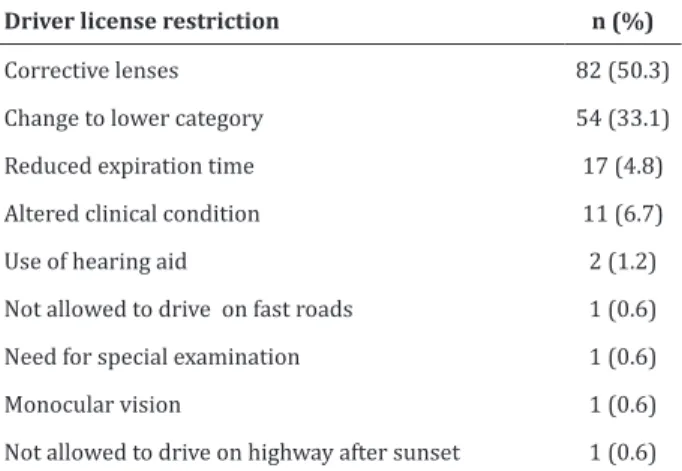
Table 1 - Distribution of restrictions applied to the
final result of the driver license test for the pre-frail
elderly
Driver license restriction n (%)
Corrective lenses 82 (50.3)
Change to lower category 54 (33.1)
Reduced expiration time 17 (4.8)
Altered clinical condition 11 (6.7)
Use of hearing aid 2 (1.2)
Not allowed to drive on fast roads 1 (0.6)
Need for special examination 1 (0.6)
Monocular vision 1 (0.6)
Not allowed to drive on highway after sunset 1 (0.6) Note: the sum of the restrictions exceeds the number of pre-frail elderly indi-viduals because a same person may present one or more restrictions
Table 1 shows the types of restrictions of the
pre-frail elderly in the final result of the driver license
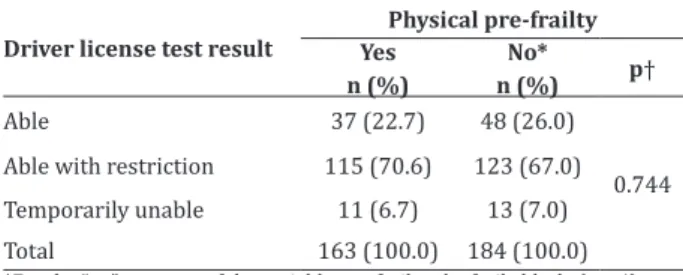
Table 2 - Association between pre-frailty and the dri-ver test results for the pre-frail elderly
Driver license test result
Physical pre-frailty Yes
n (%)
No*
n (%) p†
Able 37 (22.7) 48 (26.0)
0.744 Able with restriction 115 (70.6) 123 (67.0)
Temporarily unable 11 (6.7) 13 (7.0)
Total 163 (100.0) 184 (100.0)
*For the “no” category of the variable pre-frailty, the frail elderly (n = 4) were grouped with the non-frail elderly (n = 180); † Chi-square test; p≤0.05
The results of the driver license test show a predominance of pre-frail elderly (n=115, 70.6%).
There was no significant statistical association betwe -en pre-frailty and the result of the elderly’s driver li-cense test (Table 2).
Discussion
The limitations of the study to be noted are related to the method, which does not allow the es-tablishment of cause and effect relationships, and the self-reported type of questions that make up the eval-uation of the phenotype of fragility. The results of the hand grip strength assessment collected by the transit institution and by the researchers were different: the
first had pre-established cut-off points for adults and
older adults that indicate reduced hand grip strength and uses a less accurate dynamometer; the criterion used in the present study, on the other hand considers the values of hand grip strength the values reduced when these lay in the lowest quintile of the sample studied, and uses a more sensitive dynamometer.
Among the elderly who underwent physical and mental evaluation, men predominated. The prev-alence of males is linked to the occupation of profes-sional drivers; few women practice occupations as drivers. Researchers evaluated 172 elderly to investi-gate the association between physical frailty and so-ciodemographic and clinical characteristics of elder-ly undergoing the driver license test, and they found
predominance of males among participants (n=120; 70.6%)(13).
The pre-frail condition (n=163; 47.0%) was similar to that found in international(3,14) and nation-al(15-16) surveys assessing this phenotype(2). In North America, the percentage of pre-frail elderly was around 45.5%(3), and in the Asian continent, 47.3%(14). The Brazilian study with 433 elderly people that val-idated the instrument by self-reported frailty syn-drome assessment found 45.9% of pre-fragile elder-ly(16). In a study that identified the profile of frailty and its associated factors in 139 elderly people enrolled in a Family Health Unit, the prevalence was even higher: 61.8%(15).
Pre-frail elderly often make up the highest per-centage of the sample in studies(2-4,14) regardless of the site investigated. This endorses the importance of interventions aimed at pre-frailty, a condition with greater preventive potential, for anticipating the de-pendence and the clinical manifestations typical of the syndrome(1).
Difficulty to push pedals, reduced hand grip
strength, level of physical activity and gait speed were found among the pre-frail older people able to drive. It is believed that these aspects may represent risk factors for safe driving. It is important to intervene in the pre-frail stage by considering the positive conse-quences of maintaining a safe driver as long as pos-sible(13).
The need to track pre-frail elderly during the physical and mental evaluation at the driver license test is very pertinent, since the evolution of this con-dition can be rapid and compromise the safe driving. The pre-frail condition is susceptible to interventions, among them the use of vitamin D, caloric and protein supplementation, the practice of physical activity and the reduction of polypharmacy(1).
ad-equate force allows for safer shifts and maneuvers with the steering wheel of the vehicle. Analyses based
on data from the Sarcopenia Projectconcluded that
increases in hand grip strength may have positive
ef-fects on the physical fitness of the elderly(17).
The reduction of the level of physical activity of pre-frail elderly was the second most prevalent com-ponent in the study. A similar result was found in a re-search that investigated the association between hand grip strength and physical activity in the elderly in the condition of physical frailty. The decrease in physical
activity was identified in 73 (37.4%) pre-frail primary
health care users(18).
In order to examine exercise interventions to manage frailty in the elderly, researchers suggested in a review study that physical training programsaimed at vulnerable elderly could improve their physical condition. The review did not show the best exercise program but considered its practice to be relevant and
a positive influence on the process of frailty(19).
The third most frequent component was the reduced gait speed (n=62, 38.0%). This is an import-ant marker to be investigated. It evaluates the phys-ical and functional performance of the elderly and is
indicated as a criterion for the identification of sarco -penia(20). Reduced gait speed may be detrimental to
driving vehicles, as it may cause difficulty to press the
pedals with the lower limbs.
The pre-frail condition was frequent but not
significantly associated (p=0.744) with the final re -sults of the physical and mental evaluation of the el-derly. This is worrisome when considering the expres-sive number of pre-frail elderly who were considered to be able to drive vehicles, despite the restriction.
Assessing the physical condition of elderly drivers of vehicles is imperative because they may present weaknesses in manual grip strength or gait speed. These, in turn, may pose some risks for car dri-ving, not only to the elderly themselves but also to the general population. It should be emphasized that the
unit responsible for controlling traffic through license
tests only evaluates the manual grip strength using a less accurate dynamometer (10 Kgf graduation).
Although most of the elderly were approved for driving with restrictions and received the Natio-nal Driver’s License, we emphasized that these are not strictly disabling physical restrictions. This might explain the absence of the relationship between the
physical frailty in the elderly and the final result of the driver license test. There is a significant lack of stu -dies in the current literature addressing pre-fragility and driving, and this restricted the discussions of the present results.
The study is novel for gerontological nursing, pointing to the need for further research on the
sub-ject, and offers subsidies for a safer traffic, based on
more complete evaluations that investigate the par-ticularities of elderly drivers. The applicability of the
findings includes the identification of pre-frail indivi -duals and the help in the creation of programs to sub-sidize interventions to revert the syndrome of frailty among elderly drivers of vehicles.
Conclusion
Pre-frailty was frequent among the elderly un-dergoing the physical and mental evaluation for the
driver license test, but there was no significant asso -ciation between the pre-frail condition and the result of the test. From the high number of pre-frail elderly, the majority was approved with restrictions in the dri-ver license test and, among the components of frailty, reduced hand grip strength, reduced level of physical activity and reduced gait speed prevailed.
Acknowledgements
To the Fundação Araucária de Apoio ao
Collaborations
Lenardt MH, Betiolli S, Sakai LM, Carneiro NHK, Binotto MA and Moraes DC contributed to the project design, data analysis and interpretation, article
wri-ting, critical review of the intellectual content and fi -nal approval of the version to be published.
References
1. Morley J, Vellas B, Avellan VKG, Anker S, Bauer J, Bernabei R, et al. Frailty consensus: a call to action. J Am Med Dir Assoc. 2013; 14(6):392-7. doi: http://dx.doi.org/10.1016/j.jamda.2013.03.022
2. Fried L, Tangen C, Walston J, Newman A, Hirsch C, Gottdiener J, Seeman T, et al. Frailty in older adults: evidence for a phenotype. J Gerontol A Med Sci Med Sci. 2001; 56(3):46-56
3. Bandeen-Roche K, Seplaki C, Huang J, Buta B, Kalyani R, Veradhan R, et al. Frailty in older
adults: a nationally representative profile in the
United States. J Gerontol A Biol Sci Med Sci. 2015; 70(11):1427-34. doi: http://dx.doi.org/10.1093/ gerona/glv133
4. Pegorari MS, Tavares DMDS. Factors associated with the frailty syndrome in elderly individuals living in the urban area. Rev Latino-Am Enfermagem. 2014; 22(5):874-82. doi: http:// dx.doi.org/10.1590/0104-1169.0213.2493
5. Rosa D. Paraná tem 219 mil motoristas com mais de 65 anos de idade. Departamento de Trânsito do Paraná [Internet]. 2012 [citado 2016 Out 17]. Disponível em: http://www.detran.pr.gov.br/ modules/noticias/article.php?storyid=689
6. Departamento de Trânsito do Espírito Santo.
Relatório Anual de Estatística de Trânsito – 2015
[Internet]. 2015 [citado 2011 jun 27]. Disponível em: http://www.detran.es.gov.br/default.asp
7. Departamento de Trânsito do Rio de Janeiro. Anuário Estatístico 2015 [Internet]. 2015 [citado 2011 jun 27]. Disponível em: http://www.detran. rj.gov.br/_include/geral/anuario_estatistico_ detran_rj_2015.pdf
8. Karthaus M, Falkenstein, M. Funcional changes and driving performace in older drivers: assessment and interventions. Geriatrics. 2016; 12(1):2-18. doi: http://dx.doi.org/10.3390/ geriatrics1020012
9. Bertolucci PHF, Brucki SMD, Campacci SR, Juliano Y. The Mini-Mental State Examination in an
out-patient population: influence of literacy. Arq Neu -ropsiquiatr. 1994; 52(1):1-7. doi: http://dx.doi. org/10.1590/S0004-282X1994000100001
10. Radloff LS. The CES-D scale: a self-report
depression scale for research in the general population. Appl Psychol Meas. 1977; 1(3):385-401.
11. Taylor HL, Jacobs Jr DR, Schucker B, Knudsen J, Leon AS, Debacker G. A questionnaire for the assessment of leisure-time physical activities. J Chronic Dis. 1978; 31(12):745-755. doi: http:// dx.doi.org/10.1016/0021-9681(78)90058-9
12. Conselho Nacional de Trânsito (BR). Código de
Trânsito Brasileiro. Resolução n°517 de 29 de janeiro de 2015: altera a Resolução CONTRAN n° 425, de 27 de novembro de 2012, que dispões sobre
o exame de aptidão física e mental, a avaliação psicológica e o credenciamento das entidades
públicas e privadas que tratam o art. 147 e §§ 1º
a 4º, e o art. 148 do Código de Trânsito Brasileiro.
Brasília: Conselho Nacional de Trânsito; 2015.
13. Lenardt MH, Cechinel C, Binoto MA, Carneiro NHK, Lourenço TM. Relationship between physical fragility and socio-demographical and clinical factors of elderly performing driving license testing. Esc Anna Nery. 2016; 20(4):1-9. doi: http://dx.doi.org/10.5935/1414-8145.20160097
14. Çakmur H. Frailty among elderly adults in a rural area of Turkey. Med Sci Monit. 2015; 21:1232-42. doi: http://dx.doi.org/10.12659/MSM.893400
15. Santos PHS, Fernandes MH, Casotti CA, Coqueiro
RDS, Carneiro JAO. Perfil de fragilidade e fatores
16. Nunes D, Duarte Y, Santos J, Lebrão M. Screening for frailty in older adults using a self-reported instrument. Rev Saúde Pública. 2015; 49(2). doi: 10.1590/S0034-8910.2015049005516
17. Alley DE, Shardell MD, Peters KW, McLean RR, Dam TTL, Kenny AM, et al. Grip strength cutpoints for
the identification of clinically relevant weakness.
J Gerontol A Biol Sci Med Sci. 2014; 69(5):559-66. doi: http://dx.doi.org/10.1093/gerona/glu011
18. Lenardt MH, Carneiro NHK, Binotto MA,
Setoguchi LS, Cechinel C. The relationship between physical frailty and sociodemographic and clinical characteristics of elderly. Esc Anna Nery. 2015; 19(4):585-92. doi: http://dx.doi. org/10.5935/1414-8145.20150078
19. Labra DC, Guimaraes-Pinheiro C, Maseda A,
Lorenzo T, Millán-Selenti JC. Effects of physical exercise interventions in frail older adults: a systematic review of randomized controlled trials. BMC Geriatr. 2015; 15:154. doi: http://dx.doi. org/10.1186/s12877-015-0155-4