2014 July-Aug.;22(4):654-61 DOI: 10.1590/0104-1169.3538.2464 www.eerp.usp.br/rlae
Copyright © 2014 Revista Latino-Americana de Enfermagem This is an Open Access article distributed under the terms of the Creative Commons Attribution Non-Commercial License (CC BY-NC).
This license lets others distribute, remix, tweak, and build upon your work non-commercially, and although their new works must also acknowledge you and be non-commercial, they don’t have to license their derivative works on the same terms.
Corresponding Author: Wanderley Matos Reis Júnior Wanderley Matos Reis Júnior
Universidade Estadual do Sudoeste da Bahia. Departamento de Saúde Rua José Moreira Sobrinho, s/n
Departamento de Saúde 1 Bairro: Jequiezinho
CEP: 45206-510, Jequié, BA, Brasil E-mail: [email protected]
Wanderley Matos Reis Júnior
1José Ailton Oliveira Carneiro
2Raildo da Silva Coqueiro
3Kleyton Trindade Santos
4Marcos Henrique Fernandes
21 MSc, Assistant Professor, Departamento de Saúde, Universidade Estadual do Sudoeste da Bahia, Jequié, BA, Brazil. 2 PhD, Adjunct Professor, Departamento de Saúde, Universidade Estadual do Sudoeste da Bahia, Jequié, BA, Brazil.
3 Doctoral student, Universidade Federal da Bahia, Salvador, BA, Brazil. Assistant Professor, Universidade Estadual do Sudoeste da Bahia,
Jequié, BA, Brazil.
4 Master’s student, Universidade Estadual do Sudoeste da Bahia, Jequié, BA, Brazil.
Objective: to identify the prevalence of the factors associated with pre-frailty and frailty of
elderly residents in a municipality with a low Human Development Index Method: Cross-sectional
study with a populational and household framework conducted with 316 elderly people. Frailty
was determined from the presence of three or more of the following factors: (i) self-reported
unintentional weight loss; (ii) lack of strength and energy; (iii) weakness; (iv) slowness; (v)
low level of physical activity. The association between frailty and socio-demographic, behavioral
and health factors was measured using the multinomial logistic regression technique. Results:
The prevalence of pre-frailty and frailty was 58.7% and 23.8%, respectively. The adjusted
regression model showed that the state of pre-frailty was associated with gender, age group
and BMI, and frailty was associated with gender, age group, hospitalization, functional capacity,
and self-perceived health. Conclusion: The evidence presented in this study demonstrates
more variables associated with the frailty condition, reinforcing the concept of a multifactorial
clinical syndrome that may result in the loss of functionality.
Descriptors: Aging; Frail Elderly; Health Status.
Introduction
The aging process brings changes, which together
with the increased prevalence of chronic diseases can
cause the onset of geriatric syndromes, among which
the frailty syndrome is highlighted. Frailty includes
factors of different orders, being characterized as
a syndrome resulting from the loss of physiological
reserves and adaptation to stressors, where the energy deicit, sarcopenia, decreases the muscle strength and tolerance to effort leading to an exacerbated decline in
multiple systems that places the individual in a condition
of greater vulnerability(1).
Frailty has increasingly emerged as an important
concept, both in the clinical care of older people, as
well as in studies on aging. As a clinical syndrome, it
is usually associated with an increased risk of adverse
situations such as falls, disabilities, institutionalization,
and death(2). There is no deined scientiic consensus
regarding the term frailty, its deinition and its indicators, nor how it can be identiied or even evaluated. However, the majority of studies that deal with frailty generally deine it as an unstable condition related to functional decline, from the interaction of the individual with the
environment, in which, an event considered of minor
impact can cause limitations in the performance of
voluntary activities and result in the loss of autonomy
and functional capacity(3).
The reversal of the installation of advanced frailty frameworks may be linked to the identiication of factors that are considered open to modiications, such as socioeconomic conditions, lifestyle, and social support, in which the early identiication of signs and symptoms causing the frailty syndrome may
indicate the adoption of objective interventions that
prevent complications of the frailty and injuries in the
elderly population(4).
In Brazil, the majority of municipalities experience
an increase in the number of elderly in the population
each year. They present poor health indicators and
this may contribute to the development of early frailty
resulting in an unfavorable prognosis with dependence,
hospitalization and severe complications in the
subsequent years(4). In addition, research into the
identiication of frailty in the elderly is at an early stage, therefore there are few population-based studies that
present factors involved in the process of frailty in the
Brazilian population.
When studying frailty it is essential to consider
the context in which this process takes place. Since
Brazil is a country of continental dimensions it is
essential to understand how frailty develops in regions
marked by pronounced social inequalities. Thus, the
aim of this study was to identify the prevalence and
the factors associated with pre-frailty and frailty of
elderly residents in a community with a low human
development index.
Method
This is a cross-sectional study that is part
of epidemiological study with a community and
populational basis, the title of which is: Nutritional
status, risk behaviors and health conditions of the
elderly people of Lafaiete Coutinho-BA. A census
was conducted in January 2011 with elderly people
residing in urban areas, registered in the Family
Health Strategy, which achieves 100% coverage. All those aged ≥60 years (n=355) were contacted for interviews and to carry out examinations (blood
tests, arterial pressure measurement, anthropometric
measures, and motor tests). Of the 355 elderly
people, 316 participated in the study (89.0%). There
were 17 refusals (4.8%) and 22 (6.2%) individuals
were not located in their residences after three visits
at different times.
A speciic form was used, based on the questionnaire used in the Health, Welfare and Aging Study –
SABE (http://hygeia.fsp.usp.br/sabe/quetionario.php),
conducted in seven countries in Latin America and the
Caribbean(5), with the International Physical Activity
Questionnaire (IPAQ)(6), adapted for the elderly(7) added
to this, as well as the Geriatric Depression Scale (GDS),
used for screening for depression in the elderly and
consisting of 15 questions with yes or no answers, also
having been validated for use in Brazil(8).
Frailty (dependent variable) was identiied according to the modiied version of frailty, considering ive components(1): 1. Weight Loss: deined by the
self-report of unintentional weight loss of ≥3 kg during the 12 months preceding the study(9), as the instrument
used was based on the SABE study, which does not
make an objective prediction for weight loss. 2. Muscle
weakness: Manual Gripping Force (MGF) was evaluated
by means of a hydraulic dynamometer (Saehan Corporation SH5001, Korea). Frailty was deined according to the gender and body mass index (BMI).
Rev. Latino-Am. Enfermagem 2014 July-Aug.;22(4):654-61.
were: 0<BMI<22 – MGF≤19Kgf.; 22≤BMI≤27 – MGF≤21Kgf., BMI>27 – MGF≤22Kgf.; and for women: 0<BMI<22 – MGF≤11Kgf.; 22≤BMI<27 – MGF≤15Kgf., BMI>27 – MGF≤14Kgf. 3. Low resistance and energy: deined based on two questions of the GDS(8): “Have you
put aside many of your activities and interests?” and
“Do you feel full of energy?”. A positive answer to the irst question and/or a negative answer to the second were considered evidence of low resistance/lack of energy. 4. Slowness in the walking test: deined through the physical performance of a 2.44m walking test. The
slowness was adjusted according to the gender and
height of the elderly person. The height was divided into
two categories based on the median (50th percentile)
men ≤1.61m and women ≤1.49m, below or equal to the median; men >1.61m and women >1.49m, above the median. For each category the cutoff points that
considered the individual slow in the walking test were ixed in the 75th percentile: below or equal to the median,
≥5s and ≥6s (for men and women, respectively); above the median, ≥4s (for both genders). Low level of physical activity: The instrument used to evaluate the level of
habitual physical activity was the International Physical
Activity Questionnaire (IPAQ)(7). The individuals who
performed less than 150 minutes per week of moderate
and/or vigorous physical activity were considered insuficiently active.
An ordinal variable with scores ranging from zero to ive (0-5) was created from the sum of the points of all the components, with the following classiication adopted: 0 points = not frail; 1-2 points = pre-frail; ≥3 points = frail(1). All the individuals who responded
to only 3 components and that were classiied as frail were considered. Individuals who answered at least 4 components for the classiication of frailty were considered eligible for the other classiications(9). Thus, 286 subjects, classiied
according to frailty phenotype, were included in
the analysis.
The explanatory variables were: 1.
Sociodemographic: Gender, Age group, Knowledge of
how to read and write a message, Family arrangement,
Participation in religious activity. 2. Behavioral:
Consumption of alcoholic beverage, and Use of
tobacco. 3. Health conditions: Hospitalization in the
previous year, Body Mass Index BMI: (BMI<22kg/m2 =
underweight, 22 kg/m2≤BMI≤27kg/m2 = appropriate,
and BMI>27kg/m2 = overweight)(10), Fall event in the
previous year, Number of self-reported chronic diseases,
and Functional capacity (measured through the Basic
Activities of Daily Living (BADL) using the Katz scale(11)
and Instrumental Activities of Daily Living (IADL), using
the Lawton scale(12)).
Amount of medications used, Self-perceived
health, and Cognitive status (assessed through the
Mini-Mental State Examination questionnaire. using the validated a modiied version(13) to verify the reliability of
the answers – score >12 = not compromised and score ≤12 = compromised). When the cognitive status score was not reached, the informant was asked to
responded to another instrument, which was the
Functional Activities questionnaire of Pfeffer(14), with
information pertaining to the elderly person, thus
evaluating the need for a substitute informant during
the interview.
The associations between frailty and the explanatory variables were veriied by obtaining crude and adjusted estimates of the odds ratio, using a conidence interval of 95%, through a multinomial logistic regression model. Variables that showed statistical signiicance of at least 20% (p≤0.20) in the crude analysis were included in the adjusted analysis, following the order
of a hierarchical model for the determination of
the outcomes(15).
According to the model established, the variables of
the upper levels (distal) interact among themselves and
determine the variables of the lower levels (proximal).
Regarding the effect of each explanatory variable
on the outcome, the variables of the same level and
upper levels in the model were controlled for, with the
statistical criterion for remaining in the model being 20% (p≤0.20).
The study was approved by the Research Ethics
Committee of the State University of Southwest Bahia
(nº 064/2010). Data were tabulated and analyzed
using the Statistical Package for the Social Sciences for
Windows (SPSS®), version 16.0 program.
Results
The prevalence of pre-frailty and frailty of the
elderly people living in the urban area of the municipality
of Lafaiete Coutinho-BA was 57.8 and 23.8%,
respectively.
Table 1 shows the crude analysis of the independent
variables that composed the socio-demographic,
behavioral, and health condition factors and their
Table 1 - Association between sociodemographic, behavioral, and health condition factors and pre-frailty and frailty
in elderly people living in the community. Lafaiete Coutinho, BA, Brazil, 2011
Variables Frail Pre-frail p-value
n % ORcrude (CI 95%) n % ORcrude (CI 95%)
Gender 0.002
Male 31 23.7 1 66 50.4 1
Female 37 23.9 2.53(1.18-5.43) 102 65.8 3.28(1.68-6.41)
Age group <0.001
60-69 years 16 14.7 1 66 60.6 1
70-79 years 19 19.0 1.78(0.72-4.35) 63 63.0 1.43(0.71-2.85)
≥80 years 33 42.9 11.13(3.61-34.32) 39 50.6 3.19(1.13-8.96)
Knows how to read and write a message 0.029
Yes 18 18.0 1 57 57.0 1
No 50 26.9 2.77(1.28-6.01) 111 59.7 1.94(1.02-3.69)
Family arrangement 0.450
Accompanied 54 22.6 1 141 59.0 1
Alone 14 29.8 1.90(0.67-5.35) 27 57.4 1.40(0.54-3.62)
Religious activity 0.952
Participants 63 23.7 1 156 58.6 1
Does not participate 5 25 1.24(0.28-5.46) 12 60 1.20(0.32-4.45)
Alcohol consumption 0.329
Does not consume 64 24.7 1 152 58.7 1
Consumes 4 14.8 0.38(0.10-1.39) 16 59.3 0.64(0.25-1.67)
Use of tobacco 0.249
Never smoked 20 17.2 1 73 62.9 1
Ex-smoker 39 28.5 1.95(0.88-4.29) 75 54.7 1.02(0.53-1.99)
Currently smokes 9 27.3 2.58(0.69-9.70) 20 60.6 1.57(0.48-5.08)
Hospitalization in the previous year 0.003
No 41 19.0 1 132 61.1 1
One or more times 27 38.6 4.04(1.58-10.30) 36 51.4 1.67(0.69-4.03)
Body Mass Index 0.006
Appropriate 34 26.8 1 64 50.4 1
Overweight 10 12.5 0.65(0.25-1.71) 57 71.3 1.98(0.94-418)
Underweight 22 28.9 2.34(0.90-6.05) 46 60.5 2.60(1.09-6.21)
Fall Event 0.012
No 41 19.2 1 132 61.7 1
Yes 26 36.6 2.88(1.20-6.91) 36 50.7 1.24(0.55-2.79)
Number of chronic diseases 0.044
None 13 22.4 1 30 51.7 1
One 17 17.5 1.03(0.38-2.77) 61 62.9 1.60(0.71-3.59)
Two or more 37 31.1 3.04(1.16-7.99) 68 57.1 2.42(1.04-5.65)
Functional capacity < 0.001
Independent 12 9.5 1 79 62.7 1
Dependent in the Instrumental Activities of Daily Living (IADL)
37 31.4 9.81(3.83-25.10) 70 59.3 2.81(1.33-5.96)
Dependent in the Basic Activities of Daily Living (BADL) and Instrumental Activities of Daily Living (IADL)
16 43.2 15.55(3.84-62.86) 18 48.6 2.65(0.73-9.61)
Use of medication 0.002
Up to one 18 15.9 1 66 58.4 1
Two or more 50 28.9 3.83(1.76-8.35) 102 59.0 2.13(1.12-4.05)
Self-perceived health 0.005
Positive 18 15.7 1 68 59.1 1
Negative 46 27.7 3.52(1.61-7.71) 99 59.6 2.01(1.05-3.81)
Cognitive State 0.004
Uncompromised 32 17.4 1 111 60.3 1
Rev. Latino-Am. Enfermagem 2014 July-Aug.;22(4):654-61.
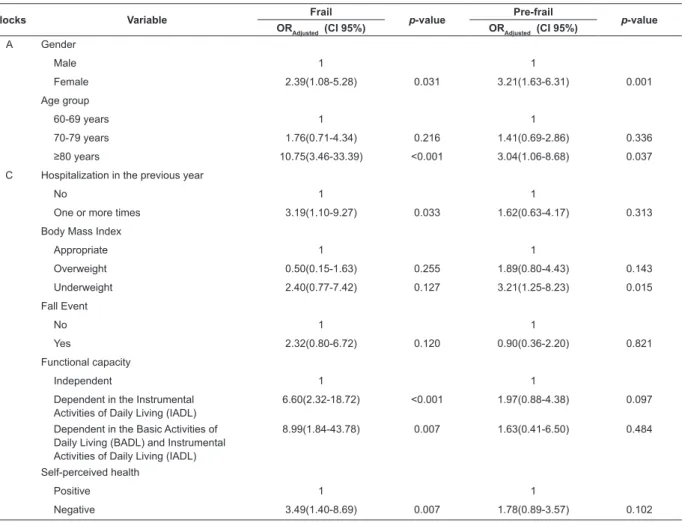
Table 2 - Final multiple multinomial logistic regression model of the association between pre-frailty and frailty and the
independent variables of the study. Lafaiete Coutinho, BA, Brazil, 2011 A signiicant association was found in the crude
analysis for the variables: female gender (p=0.002), age group (p<0.001), knows how to read and write a message (p =0.029), hospitalization in the previous year (p=0.003), BMI (p=0.006), fall event (p=0.012), number of chronic diseases (p=0.044), functional capacity (p<0.001), medication use (p=0.002),
self-perceived health (p=0.005) and cognitive status (p= 0.004).
Table 2 presents the adjusted hierarchical
analysis, through multinomial logistic regression, of
the association between the independent variables that obtained signiicance, and the classiication of the frailty phenotype.
Blocks Variable Frail p-value Pre-frail p-value
ORAdjusted (CI 95%) ORAdjusted (CI 95%)
A Gender
Male 1 1
Female 2.39(1.08-5.28) 0.031 3.21(1.63-6.31) 0.001
Age group
60-69 years 1 1
70-79 years 1.76(0.71-4.34) 0.216 1.41(0.69-2.86) 0.336
≥80 years 10.75(3.46-33.39) <0.001 3.04(1.06-8.68) 0.037
C Hospitalization in the previous year
No 1 1
One or more times 3.19(1.10-9.27) 0.033 1.62(0.63-4.17) 0.313
Body Mass Index
Appropriate 1 1
Overweight 0.50(0.15-1.63) 0.255 1.89(0.80-4.43) 0.143
Underweight 2.40(0.77-7.42) 0.127 3.21(1.25-8.23) 0.015
Fall Event
No 1 1
Yes 2.32(0.80-6.72) 0.120 0.90(0.36-2.20) 0.821
Functional capacity
Independent 1 1
Dependent in the Instrumental Activities of Daily Living (IADL)
6.60(2.32-18.72) <0.001 1.97(0.88-4.38) 0.097
Dependent in the Basic Activities of Daily Living (BADL) and Instrumental Activities of Daily Living (IADL)
8.99(1.84-43.78) 0.007 1.63(0.41-6.50) 0.484
Self-perceived health
Positive 1 1
Negative 3.49(1.40-8.69) 0.007 1.78(0.89-3.57) 0.102
In the irst step the variables of the sociodemographic block were analyzed, and the variables that remained
associated with the frail stage were: female gender (p=0.031) and age group ≥80 years (p<0.001) and, with the pre-frail stage, also female gender (p=0.037) and age group ≥80 years (p=0.001).
In the second step the variables of the health
conditions block were included and those that continued to be associated with the frail classiication were: hospitalization in the previous year, one or more times (p=0.033), functional capacity for both dependent in the IADL (p<0.001), as well as in the BADL and IADL
(p=0.007), and also self-perceived negative health (p=0.007). Only the underweight BMI variable (p=0.015) remained associated with the pre-frail classiication.
The variables related to behavioral aspects, i.e.,
consumption of alcoholic beverages and tobacco use
were not included in the adjusted model, as they did not present at least 20% statistical signiicance (p≤0.20).
Discussion
In the present study 23.8% of the elderly people
frailty prevalence values were higher when compared
to international studies(16). The explanation for the wide
variation in the prevalence of frailty in the elderly is
probably related to socioeconomic differences among
the elderly people studied, as well as the methodological
differences in the use of some instruments that differ
from those that compose the items used(16).
In the present study women had a higher
prevalence in both the pre-frail and frail categories,
corroborating other studies that indicated that elderly
women are frailer than elderly men, and presented a
frailty prevalence of over 13% for the men and 17%
for the women. Over three years, the women had
twice the pre-frailty incidence rates compared to the
men(17).
In a study conducted in Taiwan, which estimated the prevalence of frailty and identiied factors associated with frailty, from the data of the Survey of Health
and Living Status of the Elderly, it was found that the
prevalence of frailty increased with age and was higher
in women(18).
Longevity is another aspect that should be taken
into consideration. A national study, which is part of the
multicentric project Frailty in Elderly Brazilians (Fibra),
analyzed prevalence characteristics and associated
factors related to frailty and, of the sociodemographic
variables included in the model, only age was associated,
even when adjusted for the other variables, thus demonstrating the inluence of the aging process on the emergence of frailty(19).
Weight loss has been reported to be important
information related to the prediction of frailty.
However, its participation in the phenomenon is still
unclear, considering that weight loss does not precisely
represent muscle loss, and a simultaneous increase in
fat mass could mask the real estimate(20).
The studies that have investigated the association
between the BMI and frailty are still inconclusive.
Some have shown that pre-frail and frail elderly men
presented lower BMI values and that the prevalence
of frailty is slightly higher in normal and underweight
men(20). Others, however, have reported an association
of increased BMI values with the frail situation, mainly
observed in frail elderly women(21).
The indings of the present study were consistent with the results of the study in which ive Latin American and Caribbean cities were investigated, including São Paulo, Brazil, which veriied that higher BMI values for women were related to a greater
probability of frailty(9).
The observation of the association between
dependence in performing instrumental and basic
activities and frailty is presented in national and
international studies, demonstrating the degree of
injury that this impairment generates in the elderly, by
directly limiting them in their autonomy, resulting in a
decrease in the quality of life(1). The data obtained are
consistent with the literature in that, after adjustment,
an association between the BADL, IADL and frailty was
also found(18).
However, it is critical to know how the process
of functional disability takes place and its relationship
to frailty, therefore important adverse factors are
interrelated to the two events, such as fatigue, low levels
of physical activity and decreased muscle strength,
which have been suggested as predictors for functional
disability(22).
In this study, self-perceived health was
associated with being frail, corroborating other
findings(18). There are suggestions in the literature
that this issue is influenced by the life trajectory and
the experiences of the elderly people and the way
they deal with adverse situations(1), and overcoming
these situations has been sustained by the theory
that proposes the relationship between resilience in
the elderly and frailty(23).
Some limitations of the study are that this research
is characterized as a cross-sectional type study, in
which there is no possibility of establishing cause and
effect, and that some of the instruments used required
subjective or self-reported information, which may
lead to memory bias. Longitudinal studies and the use
of more objective instruments are needed to make
the inferences about the predictive indicators of frailty
more robust.
Conclusion
The prevalence of pre-frailty and frailty was 58.7%
and 23.8%, respectively. The evidence presented in
this study showed that the state of pre-frailty was
associated with gender, age group and BMI. While the
state of frailty was associated with gender, age group,
hospitalization, functional capacity and self-perceived
health. There were more variables associated with
the frailty condition, which reinforces the concept of
a multifactorial clinical syndrome that may result
in the loss of functionality. Furthermore, it is worth
mentioning once again that the high prevalence of
Rev. Latino-Am. Enfermagem 2014 July-Aug.;22(4):654-61.
important information, considering the possibility of
deterioration and becoming frail over a short period,
which will result in more care and spending on the
health of these elderly people.
Therefore, the results published on the subject
should serve to guide and improve the healthcare
policies for the elderly, as well as assist the professionals
involved in their care, whose purpose should be to
prevent deterioration and its consequences, and the
development of the preliminary stages of frailty into an
advanced situation.
References
1. Fried LP, Tangen CM, Walston J, Newman AB, Hirsh
C, Gottdiener J, et al. Frailty in older adults. J GerontolA
Biol Sci Med Sci. 2001;56:M146-57.
2. Wong CH, Weiss D, Sourial N, Karunananthan S,
Quail JM, Wolfson C, et al. Frailty and its association
with disability and comorbidity in a community-dwelling
sample of seniors in Montreal: a cross-sectional study.
Aging Clin Exp Res. 2010;22:54-62.
3. Xue QL. The frailty syndrome: definition and natural
history. Clin Geriatr Med. 2011;27(1):1-15.
4. Veras R. Envelhecimento populacional contemporâneo:
demandas, desafios e inovações. Rev Saúde Pública.
2009;43(3):548-54.
5. Albala C, Lebrão ML, León Díaz EM, Ham-Chande R,
Hennis A, Palloni A, et al. Encuesta Salud, Bienestar y
Envejecimiento (SABE): metodología de la encuesta
y perfil de la población estudiada. Rev Panam Salud
Publica. 2005;17(5/6):307-22.
6. Craig CL, Marshall AL, Sjöström M, Bauman AE, Booth
ML, Ainsworth BE, et al. International physical activity
questionnaire: 12-country reliability and validity. Med
Sci Sports Exerc. 2003;35(8):1381-95.
7. Benedetti TRB, Mazo GZ, Barros MVG. Aplicação do
questionário internacional de atividades físicas (IPAQ)
para avaliação do nível de atividades físicas de mulheres
idosas: validade concorrente e reprodutibilidade
teste-reteste. Rev Bras Ciênc Mov. 2004;12:25-34.
8. Almeida OP, Almeida SA. Confiabilidade da
versão brasileira da escala de depressão em
geriatria (GDS) versão reduzida. Arq Neuropsiquiatr.
1999;57(2B):421-6.
9. Alvarado BE, Zunzunegui MV, Be´Land F, Bamvita JM.
Life course social and health conditions linked to Frailty
in Latin American Older Men and Women. J Gerontol A
Sci Med Sci. 2008;63(12):1399–406.
10. American Academy of Family Physicians. American
Dietetic Association. National Council on the Aging.
Nutrition screening e intervention resources for
healthcare professionals working with older adults.
Nutrition Screening Initiative [Internet]. Washington:
American Dietetic Association; 2002 [acesso 21 jul
2011]. Disponível em: www.eatright.org
11. Katz S, Ford AB, Moskowitz RW, Jackson BA, Jaffe
MW. Studies of illness in the aged. The index of ADL:
a standardized measure of biological and psychosocial
function. JAMA. 1963; 185(12):914-9.
12. Lawton MP, Brody EM. Assesment of older people:
selfmaintaining and instrumental activities of daily
living. Gerontologist. 1969;9(3):179-86.
13. Icaza MC, Albala C. Projeto SABE. Minimental State
Examination (MMSE) del estudio de dementia en Chile:
análisis estatístico. Brasília: OPAS; 1999.
14. Pfeffer RI, Kurosaki TT, Harrah CH Jr, Chance JM,
Filos S. Measurement of functional activities in older
adults in the community. J Gerontol. 1982;37(3):323-9.
15. Victora CG, Huttly SR, Fuchs SC, Olinto MTA. The role
of conceptual frameworks in epidemiological analysis: a
hierarchical approach. Int J Epidemiol. 1997;26:224-7.
16. Tribess S, Oliveira RJ. Síndrome da fragilidade
biológica em idosos: revisão sistemática. Rev Salud
Pública. 2011;13(5):853-64.
17. Peterson MJ, Giuliani C, Morye MC, Pierper CF,
Evenson KR, Mercer V, et al. Physical activity as a
preventative factor for frailty: the health, aging, and
body composition study. J Gerontol A Biol Sci Med Sci.
2009;64(1):61-8.
18. Chen CY, Wu SC, Chen LJ, Lue BH. The prevalence
of subjective frailty and factors associated with frailty
in Taiwan. Arch Gerontol Geriatr. 2010;50(Suppl
1):S43-7.
19. Sousa AC, Dias RC, Maciel AC, Guerra RO. Frailty
syndrome and associated factors in community-dwelling
elderly in Northeast Brazil. Arch Gerontol Geriatr.
2012;54:e95-e101.
20. Cawthon PM, Marshall LM, Michael Y, Dam TT,
Ensrud KE, Barrett-Connor E, et al. Frailty in older men:
prevalence, progression, and relationship with mortality.
J Am Geriatr Soc. 2007;55(8):1216-23.
21. Blaum CS, Xue QL, Michelon E, Semba R,
Fried LP. The association between obesity and the
frailty syndrome in older women: the Women’s
Health and Aging Studies. J Am Geriatr Soc.
2005;53(6):927-34.
22. Avlund K. Fatigue in older adults: an early
indicator of the aging process? Aging Clin Exp Res.
Received: Oct. 16th 2013 Accepted: May 20th 2014
23. Varadhan R, Seplaki CL, Xue QL, Bandeen-Roche K,
Fried LP. Stimulus-response paradigm for characterizing
the loss of resilience in homeostatic regulation associated