Prognostic value of circulating DNA levels in
critically ill and trauma patients
INTRODUCTION
he number of studies investigating the use of circulating nucleic acids as potential biomarkers has grown signiicantly in recent years. he detection of such biomarkers is a minimally invasive alternative for the diagnosis and prognosis of various clinical conditions. he presence of extracellular nucleic acids in the bloodstream was irst described by Mandel and Métais in 1948.(1)
However, the analysis of circulating nucleic acids, particularly circulating DNA, in a number of chronic conditions, including neoplasms, has only been explored in the last 15 years.(2)
he potential of circulating DNA levels as a biomarker has been demonstrated in patients with numerous acute pathologies that have a high risk of intensive care needs and in-hospital deaths. he mechanism by which plasma DNA levels increases in patients with these conditions remains unclear. he rapidly elevated concentrations of circulating DNA levels that are observed in patients with several acute injuries suggest that extracellular DNA originates from tissue necrosis.(3) In contrast, apoptosis may contribute
to persistent increases in circulating DNA levels. he reduced clearance of DNA caused by impaired organ function during systemic inlammation may also be a contributing factor.(4)
Edison Moraes Rodrigues Filho1,2, Nilo Ikuta1,2,3, Daniel Simon1,2, Andrea Pereira Regner1,2
1. Laboratory for Biomarkers of Trauma, Universidade Luterana do Brasil - Canoas (RS), Brazil.
2. Postgraduate Program in Cellular and Molecular Biology Applied to Health, Universidade Luterana do Brasil - Canoas (RS), Brazil.
3. Simbios Biotecnologia - Canoas (RS), Brazil.
he number of studies investigating circulating nucleic acids as potential biomarkers has increased in recent years. he detection of such biomarkers is a minimally invasive alternative for the diagnosis and prognosis of various clinical conditions. he value of circulating DNA levels as a predictive biomarker has been demonstrated in patients sufering from numerous acute pathologies that have a high risk of intensive care needs and
Conflicts of interest: None.
Submitted on February 15, 2014 Accepted on July 15, 2014
Corresponding author:
Edison Moraes Rodrigues Filho
Centro de Pesquisa em Ciências Médicas da Universidade Luterana do Brasil
Avenida Farroupilha, 8.001 - Prédio 22, 5º andar - São José
Zip code: 92425-900 - Canoas (RS), Brazil E-mail: [email protected]
Responsible editor: Felipe Dal Pizzol
Valor prognóstico dos níveis de DNA circulante em pacientes
graves e em pacientes com trauma
ABSTRACT
Keywords: Critical illness; Critical
care; Wounds and injuries; Biological markers; Prognosis; DNA/blood
in-hospital deaths. he mechanism by which circulating DNA levels increase in patients with these conditions remains unclear. In this review, we focused on the potential use of this biomarker for prognosis prediction in critically ill and trauma patients. he literature review was performed by searching MedLine using PubMed in the English language.
METHODS
he literature was reviewed by searching MedLine using PubMed and the following Medical Subject Heading (MeSH) terms in the English language: “intensive care”, “critically ill”, “trauma”, “brain traumatic injury”, “free-serum DNA”, and “plasma DNA”. A focused search was performed using the references in the papers. he article selection criteria were clinical studies and adult patient population. For the purposes of this review, the article exclusion criteria were as follows: burns, strokes, and acute coronary syndromes. here was no restriction by the publication date.
RESULTS
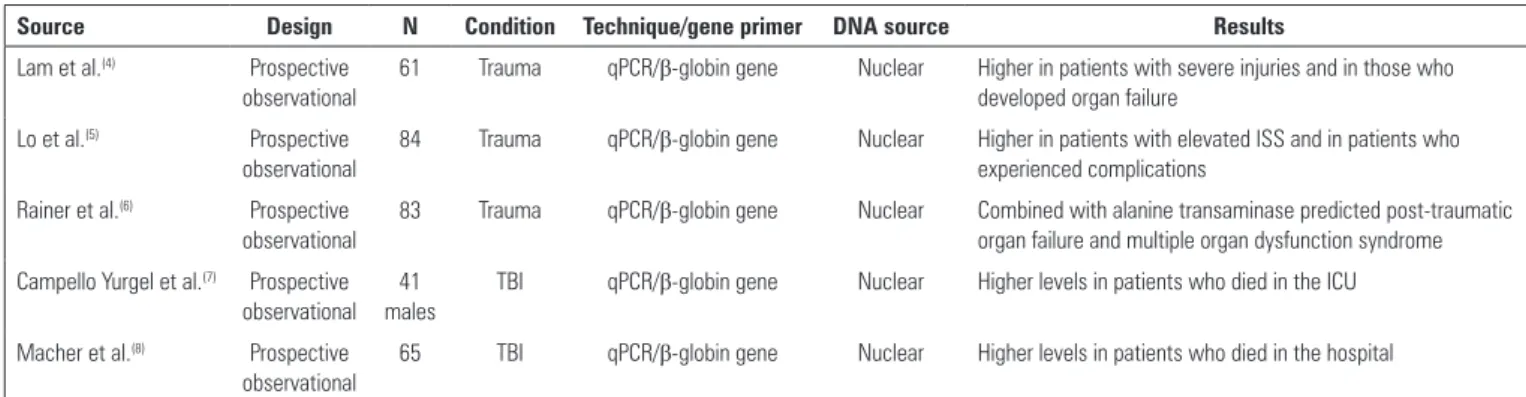
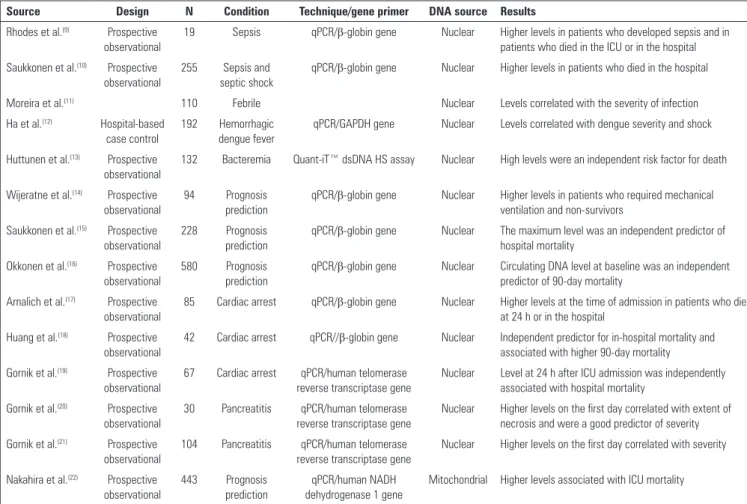
he papers on nuclear DNA are organized according to pathological conditions. A special topic discusses the results of the papers regarding mitochondrial DNA. he relevant data, which are summarized in tables 1 and 2, are divided into trauma and other critical care conditions, respectively.
Circulating nuclear DNA levels in trauma patients
Trauma scores were introduced more than 30 years ago to describe injury-related anatomical and physiological alterations, as well as other consequences of injuries. Trauma scores are useful tools for facilitating triage and pre-hospital treatment, generating records with consistent terminology, describing the severity of injuries, assessing quality of care and clinical outcomes, evaluating and comparing the systems of care for trauma victims, and standardizing deinitions for epidemiology, research and funding.(23)
A template is created when a trauma score is used to predict an outcome or to correlate with a prognostic measure. hese models allow for predictions and
comparisons between groups of patients and systems of assistance for trauma victims.(23) A simple score is
suitable for decision-making with respect to screening. However, the complex consequences of trauma are best described using scores and prediction models that include anatomical and physiological changes, as well as age and co-morbidities.(23)
Numerous scoring systems have been described in the last 30 years. Several of these scores have been regionally applied with success. However, no scoring system or triage system is universally accepted. he rapid and widely available laboratory tests can be extremely useful in this context.(23)
Lo et al.(5) irst evaluated circulating nuclear DNA levels
in 84 trauma patients approximately 60 minutes after a closed trauma. he measured circulating nuclear DNA levels were higher in patients with higher Injury Severity Scores. Additionally, circulating nuclear DNA levels were 11.6 to 12 times higher in patients who experienced complications, such as acute lung injury, acute respiratory distress syndrome and death, than in patients who did not develop these complications.(5)
Rainer et al.(6) measured circulating nuclear DNA
levels in 83 trauma patients. he samples were collected up to 210 minutes after the trauma, and a combination of circulating nuclear DNA levels and alanine transaminase (ALT) predicted post-traumatic organ failure and multiple organ dysfunction syndrome in 93% and 87% of patients, respectively.
Lam et al.(4) studied the kinetic proile of circulating
nuclear DNA levels in 2 populations of trauma patients. In the irst population, the samples were collected from 25 patients every 20 minutes for 3 hours after the trauma. In the second population, a daily sample was collected from 36 patients who were admitted to the intensive care unit (ICU). In the irst population,
Table 1 - Characteristics of the included trauma studies
Source Design N Condition Technique/gene primer DNA source Results
Lam et al.(4) Prospective observational
61 Trauma qPCR/β-globin gene Nuclear Higher in patients with severe injuries and in those who developed organ failure
Lo et al.(5) Prospective
observational
84 Trauma qPCR/β-globin gene Nuclear Higher in patients with elevated ISS and in patients who experienced complications
Rainer et al.(6) Prospective observational
83 Trauma qPCR/β-globin gene Nuclear Combined with alanine transaminase predicted post-traumatic organ failure and multiple organ dysfunction syndrome
Campello Yurgel et al.(7) Prospective observational
41 males
TBI qPCR/β-globin gene Nuclear Higher levels in patients who died in the ICU
Table 2 - Characteristics of the included intensive care unit studies
Source Design N Condition Technique/gene primer DNA source Results
Rhodes et al.(9) Prospective observational
19 Sepsis qPCR/β-globin gene Nuclear Higher levels in patients who developed sepsis and in patients who died in the ICU or in the hospital
Saukkonen et al.(10) Prospective observational
255 Sepsis and septic shock
qPCR/β-globin gene Nuclear Higher levels in patients who died in the hospital
Moreira et al.(11) 110 Febrile Nuclear Levels correlated with the severity of infection
Ha et al.(12) Hospital-based case control
192 Hemorrhagic dengue fever
qPCR/GAPDH gene Nuclear Levels correlated with dengue severity and shock
Huttunen et al.(13) Prospective observational
132 Bacteremia Quant-iT™ dsDNA HS assay Nuclear High levels were an independent risk factor for death
Wijeratne et al.(14) Prospective observational
94 Prognosis
prediction
qPCR/β-globin gene Nuclear Higher levels in patients who required mechanical ventilation and non-survivors
Saukkonen et al.(15) Prospective observational
228 Prognosis prediction
qPCR/β-globin gene Nuclear The maximum level was an independent predictor of hospital mortality
Okkonen et al.(16) Prospective observational
580 Prognosis prediction
qPCR/β-globin gene Nuclear Circulating DNA level at baseline was an independent predictor of 90-day mortality
Arnalich et al.(17) Prospective observational
85 Cardiac arrest qPCR/β-globin gene Nuclear Higher levels at the time of admission in patients who died at 24 h or in the hospital
Huang et al.(18) Prospective observational
42 Cardiac arrest qPCR//β-globin gene Nuclear Independent predictor for in-hospital mortality and associated with higher 90-day mortality
Gornik et al.(19) Prospective observational
67 Cardiac arrest qPCR/human telomerase reverse transcriptase gene
Nuclear Level at 24 h after ICU admission was independently associated with hospital mortality
Gornik et al.(20) Prospective observational
30 Pancreatitis qPCR/human telomerase reverse transcriptase gene
Nuclear Higher levels on the first day correlated with extent of necrosis and were a good predictor of severity
Gornik et al.(21) Prospective observational
104 Pancreatitis qPCR/human telomerase reverse transcriptase gene
Nuclear Higher levels on the first day correlated with severity
Nakahira et al.(22) Prospective observational
443 Prognosis prediction
qPCR/human NADH dehydrogenase 1 gene
Mitochondrial Higher levels associated with ICU mortality
qPCR - quantitative polymerase chain reaction; ICU - intensive care unit; GAPDH - glyceraldehyde-3-phosphate dehydrogenase; dsDNA - double stranded deoxyribonucleic acid; HS - high sensitivity; NADH - nicotinamide-adenine dinuleotide reduced.
circulating nuclear DNA levels were increased 20 minutes after the trauma and were signiicantly higher in patients with more severe trauma and in patients who developed multi-organ failure. In the second population, circulating nuclear DNA levels were higher in patients who developed multi-organ failure between the 2nd day
and the 4th day after admission to the ICU. In patients
with persistent multi-organ failure who remained in the ICU, circulating nuclear DNA levels remained elevated for 28 days after the trauma. he majority of survivors with multi-organ dysfunction exhibited an extremely high initial peak in circulating nuclear DNA levels, followed by a smaller sustained increase.
Circulating nuclear DNA levels in traumatic brain injured patients
Globally, trauma is a leading cause of death for individuals under 45 years of age. Up to half of the
deaths in this group are caused by brain trauma.(24,25)
Establishing prognostic criteria is important for the efective treatment of patients with severe traumatic brain injury (TBI) because the accurate identiication of patients at increased risk requires an efective predictor. he Glasgow coma scale (GCS) is one of the most important short-term prognostic predictors after TBI.(26) Although the GCS is useful in the acute
phase, the Glasgow outcome scale (GOS) is the most widely used scale for assessing medium- and long-term prognosis after TBI and other non-traumatic brain injuries.(27) However, associated conditions and the low
predictive value of clinical assessment in patients with severe TBI complicate the identiication of patients at increased risk for the development of secondary brain damage and death.(28) A practical and sensitive biomarker
DNA levels were signiicantly higher in non-survivors than in survivors. Additionally, the circulating nuclear DNA levels were higher in patients who did not survive hospitalization than in survivors. Notably, the circulating nuclear DNA levels on the irst day in the ICU constituted an independent predictor of mortality.
Moreira et al.(11) measured the levels of circulating
nuclear DNA, procalcitonin and C-reactive protein in 110 febrile patients with a diagnosis of fever of unknown origin, localized infection, sepsis or septic shock. he circulating nuclear DNA levels correlated with the severity of infection. he best thresholds for predicting infection and sepsis were 2,800 GE/mL and 14000 GE/mL, respectively. Importantly, higher concentrations of circulating nuclear DNA levels were found in non-survivors than in survivors. Additionally, the diagnostic eiciency of the circulating nuclear DNA levels was similar to the diagnostic eiciency of procalcitonin and C-reactive protein levels. hus, the results indicated that normal circulating nuclear DNA levels might exclude the presence of infection in a febrile patient, whereas high concentrations indicate a severe infection and exhibit a high prognostic value for predicting mortality in the absence of other causes that justify the values.
Ha et al.(12) assessed the levels of circulating nuclear
DNA levels in 192 patients with hemorrhagic dengue fever and reported that the higher circulating nuclear DNA levels correlated with the severity and the presence of shock.
Huttunen et al.(13) evaluated the circulating nuclear
DNA levels in 132 patients with bacteremia caused
by Staphylococcus aureus, Streptococcus pneumoniae,
Streptococcus β-hemolyticus and Escherichia coli. he
maximum values obtained between 1 day and 4 days after the irst positive blood cultures were signiicantly higher in non-survivors than in survivors. hese values exhibited a discriminatory power of 0.81 for predicting death. High levels (1.52mg/mL) of circulating nuclear DNA levels were an independent risk factor for death. hus, the majority of deaths in septic bacteremia patients and some deaths in patients with serious viral infections appear to be the result of an inadequate immune response that is caused by extensive immune cell death. his process is also called immunoparalysis of sepsis.(35)
Consequently, an increasing amount of efort has been devoted to the development of new biomarkers. Potential biomarkers for brain damage include S100-B protein, C-tau, neuron-speciic enolase and Hsp70.(30) However,
none of these proteins has been established as a broadly applicable marker for predicting brain damage.
Campello Yurgel et al.(7) investigated circulating nuclear
DNA levels in 41 male victims with isolated severe TBI or isolated severe TBI with associated extracerebral injuries. he results indicated a signiicant correlation between higher circulating nuclear DNA levels in the irst 24 hours after severe TBI and death. Furthermore, persistent, elevated, circulating nuclear DNA levels appeared to correlate with higher mortality.
Recently, Macher et al.(8) investigated circulating
nuclear DNA levels in 65 patients with severe TBI during the irst 96 hours after admission to the ICU. After an initial peak in circulating nuclear DNA levels, a larger reduction in circulating nuclear DNA levels was detected within the irst 24 hours among survivors than among non-survivors.
Circulating nuclear DNA levels in sepsis patients
Severe sepsis and septic shock are the leading causes of death in the ICU, with a mortality rate ranging between 30% and 60%.(31,32) Several biomarkers have been
evaluated for predicting mortality and morbidity in septic patients; however, none of these markers has proven to be useful in clinical practice.(33)
Martins et al.(34) were the irst authors to describe the
presence of circulating DNA in a small group of septic patients. Subsequently, Rhodes et al.(9) assessed circulating
nuclear DNA levels in 52 ICU patients, and 19 of these patients developed severe sepsis or septic shock. High levels of circulating nuclear DNA measurements were observed in patients who developed sepsis and in patients who died in the ICU or in the hospital. Circulating nuclear DNA levels were an independent predictor of mortality. he sensitivity and the speciicity of circulating nuclear DNA levels for predicting death in ICU patients were 92% and 80%, respectively, when concentrations greater than 127ng/mL were used.
Saukkonen et al.(10) assessed circulating nuclear DNA
Circulating nuclear DNA levels for predicting prognosis in critically ill patients
During the last three decades, several prognostic scores have been used to predict severity in critically ill patients. he principal scores used for predicting prognosis in critically ill adult patients are the Acute Physiology and Chronic Health Evaluation (APACHE) Score, the Simpliied Acute Physiology Change (SAPS) and the Probability of Death Model (MPM).(36) he
predictor variables that are commonly used in these scores are age, co-morbidities, physiological changes, acute diagnoses, and bias as a function of time (e.g., treatment and measurement at diferent times). However, these scores require constant updating(37)
because they deteriorate with time and lose the capacity for discrimination and calibration. Moreover, these prognostic scores usually assume that unavailable data values are normal, which can negatively afect their performance.(38) Factors, such as patient preferences
for life support, individual responses to the disease, environment and treatment efects, also inluence outcomes and may not be included in the prediction models. he majority of models do not include a measure of bias as a function of time. In theory, many limitations of these traditional prognostic models could be overcome by the early collection of samples for laboratory tests, such as the free nucleic acid test.
Wijeratne et al.(14) irst investigated 94 patients and
the prognostic value of circulating nuclear DNA levels measured at the time of their admission to the ICU. he circulating nuclear DNA levels correlated with C-reactive protein levels and the Sequential Organ Failure Assessment (SOFA) scores. Additionally, the patients who required mechanical ventilation and the non-survivors had signiicantly higher circulating nuclear DNA levels. he best threshold for predicting death was 6109 GE/mL.
Saukkonen et al.(15) studied 228 patients admitted
to one clinical ICU and two clinical-surgical ICUs. he samples were collected at the time of admission, the following morning and 48 hours after the second sample. he peak circulating nuclear DNA levels correlated signiicantly with the APACHE II scores and with the maximum SOFA scores. Additionally, the circulating nuclear DNA levels at the time of hospital admission were higher in non-survivor patients than
in survivors, and the maximum circulating nuclear DNA level was an independent predictor of hospital mortality.
Okkonen et al.(16) studied 580 patients who required
invasive or noninvasive mechanical ventilation for more than 6 hours in 25 Finnish ICUs. he samples for circulating nuclear DNA determination were collected at the time of admission and 2 days later. he circulating nuclear DNA levels at the time of admission were signiicantly higher in patients who did not survive the 90th day, and the circulating nuclear DNA levels higher
than 16,000 GE/mL were independent predictors of death.
Circulating nuclear DNA levels in cardiac arrest patients
he survival rates for patients who experience out-of-hospital cardiac arrest have not improved despite advances in cardiopulmonary resuscitation.(39) Clinical
variables in the patient’s history, variables related to cardiopulmonary resuscitation and post resuscitation, and several biomarkers have been examined for prognostic purposes. However, none of these factors has proven to be efective.
hus, Arnalich et al.(17) evaluated circulating nuclear
DNA levels in 85 victims of out-of-hospital cardiac arrest who experienced a sustained return of spontaneous circulation after approximately 27 minutes. Of 85 patients studied, 30 died within 24 hours and 58 patients died during hospitalization. he circulating nuclear DNA levels were signiicantly higher in non-survivors at 24 hours and in patients who died during hospitalization than in survivors. he best cut-of for predicting mortality at 24 hours was 4340 GE/mL, and the best cut-of for predicting hospital mortality was 3485 GE/mL. he risk of death within 24 hours and during hospitalization increased by 1.75 times and 1.36 times, respectively, for every increase of 500 GE/mL in circulating nuclear DNA levels.
Huang et al.(18) assessed 42 victims of out-of-hospital
cardiac arrest. he circulating nuclear DNA levels measured within 2 hours of the event were higher in non-survivor patients compared to survivors, and a value higher than 1170 GE/mL was an independent predictor of in-hospital mortality after 90 days.
Gornik et al.(19) recently assessed 67 victims of
university-associated intensive care units. he circulating nuclear DNA levels were measured at the time of admission and at 24±1 hours after admission. he multivariate analysis showed that “low-low” time and circulating nuclear DNA levels at 24 hours after ICU admission were independently associated with hospital mortality. he ROC curve for the circulating nuclear DNA levels 24 hours post admission showed 81.0% sensitivity and 78.3% speciicity for the cut-of value of 0.115ng/µL.
Circulating nuclear DNA levels in pancreatitis patients
Acute pancreatitis is typically a mild illness; however, approximately 20% of patients have severe disease with local and systemic complications and high mortality. Early identiication of this subgroup of patients is critical because early treatment can reduce morbidity and mortality. he methods used for stratifying risk include Ranson and APACHE II scores and C-reactive protein levels. Abdominal computed tomography is also useful for assessing pancreatic necrosis,(40) which is an important
determinant of severity.
Gornik et al.(20) irst measured the circulating nuclear
DNA levels in 30 patients with pancreatitis, using samples collected at the time of admission and after 1 day, 4 days, and 7 days. he patients who developed severe pancreatitis had signiicantly higher circulating nuclear DNA levels on the irst day compared to the patients with mild disease. he circulating nuclear DNA levels also correlated with the extent of necrosis and were a good predictor of severity (ROC AUC, 0.97).
Gornik et al.(21) extended their initial studies by
determining the circulating nuclear DNA levels in 104 patients sufering from pancreatitis. A total of 33 patients met the criteria for severe disease, and 71 patients had mild disease. Of the patients with severe pancreatitis, 28 patients were hospitalized in the ICU. he samples were collected on the irst day. he circulating nuclear DNA levels were lower in the patients with mild disease than in the patients with severe disease. Additionally, circulating nuclear DNA levels diferentiated the patients with severe disease from the patients with mild disease according to high sensitivity and speciicity (90.9% and 88.7%, respectively) using a cut-of value of >0.304ng/µL. his level of circulating nuclear
DNA was more sensitive and more speciic than C-reactive protein levels, APACHE II scores and Ranson scores.
Circulating mitochondrial DNA levels
Additional cell-free DNA species, such as cell-free mitochondrial DNA (mtDNA), are under evaluation for clinical relevance.(41) hus far, mtDNA has been shown to
be more sensitive to oxidative damage than nuclear DNA.(41)
his observation has made available exciting opportunities for non-invasive diagnostic evaluation that can be performed with high accuracy and at a reasonable cost.
Earlier studies suggested that circulating mitochondrial DNA (mtDNA) levels are increased in response to stimuli, such as trauma(42) and sepsis.(43)
Nakahira et al.(22) recently assessed blood samples
obtained from two prospective, observational, cohort studies of ICU patients (n=443). he medical ICU patients with elevated circulating mtDNA levels (≥3200 copies/ml plasma) had increased odds of dying within 28 days of ICU admission in both cohorts (odds ration - OR, 7.5 and 8.4). Nakahira et al. demonstrated that elevated circulating mtDNA levels may improve risk prediction in the medical ICU patients.
FINAL CONSIDERATIONS
he studies presented in this review demonstrate that circulating DNA levels could be a valuable tool in diagnosis and prognosis prediction for a number of critical diseases. Circulating DNA levels may facilitate the stratiication of patients, particularly when one or more measurements are performed early in the clinical time frame. However, diferent genomic sequences used for ampliication and small samples obtained limit the extrapolation of these results. herefore, future studies with larger samples of patients are necessary to standardize the technique and to deine more accurate cut-of points.
ACKNOWLEDGMENTS
REFERENCES
1. Mandel P, Métais P. Les acides nucléiques du plasma sanguin chez l’homme. C R Acad Sci Paris. 1948;142:241-3.
2. van der Vaart M, Pretorius PJ. Is the role of circulating DNA as a biomarker of cancer being prematurely overrated? Clin Biochem. 2010;43(1-2):26-36. 3. Ziegler A, Zangemeister-Wittke U, Stahel RA. Circulating DNA: a new
diagnostic gold mine? Cancer Treat Rev. 2002;28(5):255-71.
4. Lam NY, Rainer TH, Chan LY, Joynt GM, Lo YM. Time course of early and late changes in plasma DNA in trauma patients. Clin Chem. 2003; 49(8):1286-91.
5. Lo YM, Rainer TH, Chan LY, Hjelm NM, Cocks RA. Plasma DNA as a prognostic marker in trauma patients. Clin Chem. 2000;46(3):319-23. 6. Rainer TH, Lo YM, Chan LY, Lam NY, Lit LC, Cocks RA. Derivation of a
prediction rule for posttraumatic organ failure using plasma DNA and other variables. Ann N Y Acad Sci. 2001;945:211-20.
7. Campello Yurgel V, Ikuta N, Brondani da Rocha A, Lunge VR, Fett Schneider R, Kazantzi Fonseca AS, et al. Role of plasma DNA as a predictive marker of fatal outcome following severe head injury in males. J Neurotrauma. 2007;24(7):1172-81.
8. Macher H, Egea-Guerrero JJ, Revuelto-Rey J, Gordillo-Escobar E, Enamorado-Enamorado J, Boza A, et al. Role of early cell-free DNA levels decreased as a predictive marker of fatal outcome after severe traumatic brain injury. Clin Chem Acta. 2012;414:12-7.
9. Rhodes A, Wort SJ, Thomas H, Collinson P, Benett ED. Plasma DNA concentration as a predictor of mortality and sepsis in critically ill patients. Crit Care. 2006;10(2):R60.
10. Saukkonen K, Lakkisto P, Pettilä V, Varpula M, Karlsson S, Ruokonen E, Pulkki K; Finnsepsis Study Group. Cell-free plasma DNA as a predictor of outcome in severe sepsis and septic shock. Clin Chem. 2008;54(6):1000-7. 11. Moreira VG, Prieto B, Rodríguez JS, Alvarez FV. Usefulness of cell-free
plasma DNA, procalcitonin and C-reactive protein as markers of infection in febrile patients. Ann Clin Biochem. 2010;47(Pt 3):253-8.
12. Ha TT, Huy NT, Murao LA, Lan NT, Thuy TT, Tuan HM, et al. Elevated levels of cell-free circulating DNA in patients with acute dengue virus infection. PLoS One. 2011;6(10):e25969.
13. Huttunen R, Kuparinen T, Jylhävä J, Aittoniemi J, Vuento R, Huhtala H, et al. Fatal outcome in bacteremia is characterized by high plasma cell free DNA concentration and apoptotic DNA fragmentation: a prospective cohort study. PLoS One. 2011; 6(7):e21700.
14. Wijeratne S, Butt A, Burns S, Sherwood K, Boyd O, Swaminathan R. Cell-free plasma DNA as a prognostic marker in intensive treatment unit patients. Ann N Y Acad Sci. 2004;1022:232-8.
15. Saukkonen K, Lakkisto P, Varpula M, Varpula T, Voipio-Pulkki LM, Pettilä V, et al. Association of cell-free plasma DNA with hospital mortality and organ dysfunction in intensive care unit patients. Intensive Care Med. 2007;33(9):1624-7.
16. Okkonen M, Lakkisto P, Korhonen AM, Parviai-nen I, Reinikainen M, Varpula T, Pettilä V; FINNALI Study Group. Plasma cell-free DNA in patients needing mechanical ventilation. Crit Care. 2011;15(4):R196.
17. Arnalich F, Menéndez M, Lagos V, Ciria E, Quesada A, Codoceo R, et al. Prognostic value of cell-free plasma DNA in patients with cardiac arrest outside the hospital: an observational cohort study. Crit Care. 2010;14(2):R47.
18. Huang CH, Tsai MS, Hsu CY, Chen HW, Wang TD, Chang WT, et al. Circulating cell-free DNA levels correlate with postresuscitation survival rates in out-of-hospital cardiac arrest patients. Resuscitation. 2012;83(2):213-8. 19. GorniK I, Wagner J, Gasparović V, Milicic D, Degoricija V, Skoric B, et al.
Prognostic value of cell-free DNA in plasma of out-of-hospital cardiac arrest survivors at ICU admission and 24h post-admission. Resuscitation. 2014;85(2):233-7.
20. Gornik I, Wagner J, Gasparović V, Lauc G, Gornik O. Free serum DNA is an early predictor of severity in acute pancreatitis. Clin Biochem. 2009; 42(1-2):38-43. 21. Gornik O, Gornik I, Wagner J, Radić D, Lauc G. Evaluation of cell-free DNA
in plasma and serum as early predictors of severity in acute pancreatitis. Pancreas. 2011;40(5):787-8.
22. Nakahira K, Kyung SY, Rogers AJ, Gazourian L, Youn S, Massaro AF, et al. Circulating mitochondrial DNA in patients in the ICU as a marker of mortality: derivation and validation. PLoS Med. 2013;10(12):e1001577; discussion e1001577.
23. Champion HR. Trauma scoring. Scand J Surg. 2002;91(1):12-22. Review. 24. Gennarelli TA. Mechanisms of brain injury. J Emerg Med. 1993;11 Suppl
1:5-11. Review.
25. Jennett B. Epidemiology of head injury. Arch Dis Child. 1998;78(5):403-6. 26. Balestreri M, Czosnyka M, Chatfield DA, Steiner LA, Schmidt EA,
Smielewski P, et al. Predictive value of Glasgow Coma Scale after brain trauma: change in trend over the past ten years. J Neurol Neurosurg Psychiatry. 2004;75(1):161-2.
27. Wilson JT, Pettigrew LE, Teasdale GM. Structured interviews for the Glasgow Outcome Scale and the extended Glasgow Outcome Scale: guidelines for their use. J Neurotrauma. 1998;15(8):573-85.
28. Ghajar J. Traumatic brain injury. Lancet. 2000;356(9233):923-9. 29. Townend WJ, Guy MJ, Pani MA, Martin B, Yates DW. Head injury outcome
prediction in the emergency Department: a role for protein S-100B? J Neurol Neurosurg Psychiatry. 2002;73(5):542-6.
30. Oliveira CO, Ikuta N, Regner A. Outcome biomarkers following severe traumatic brain injury. Rev Bras Ter Intensiva. 2008;20(4):411-21. 31. Angus DC, Linde-Zwirble WT, Lidicker J, Clermont G, Carcillo J, Pinsky MR.
Epidemiology of severe sepsis in the United States: analysis of incidence, outcome, and associated costs of care. Crit Care Med. 2001;29(7):1303-10. 32. Alberti C, Brun-Buisson C, Burchardi H, Martin C, Goodman S, Artigas A, et al. Epidemiology of sepsis and infection in ICU patients from an international multicentre cohort study. Intensive Care Med. 2002;28(2):108-21. Erratum in: Intensive Care Med. 2002;28(4):525-6.
Nos últimos anos, o número de estudos que investigam os ácidos nucleicos circulantes como potenciais biomarcadores tem aumentado. A detecção desses biomarcadores é uma alternativa minimamente invasiva para o diagnóstico e o prognóstico de diversas condições clínicas. O valor dos níveis de DNA circulante como biomarcador preditivo foi demonstrado em pacientes com numerosas patologias agudas que apresentam
riscos elevados de necessitar cuidados intensivos e de sofrer mortalidade hospitalar. Os mecanismos pelos quais os níveis de DNA circulante aumentam em pacientes com essas condições ainda são obscuros. Nesta revisão, focalizamos o potencial uso deste biomarcador para predição prognóstica em pacientes graves e pacientes com trauma. A revisão da literatura foi feita por meio de busca no MedLine utilizando o PubMed em inglês.
RESUMO
Descritores: Doença crítica; Cuidados críticos; Ferimentos e
33. Kibe S, Adams K, Barlow G. Diagnostic and prognostic biomarkers of sepsis in critical care. J Antimicrob Chemother. 2011;66 Suppl 2:ii33-40. 34. Martins GA, Kawamura MT, Carvalho Mda G. Detection of DNA in the
plasma of septic patients. Ann N Y Acad Sci. 2000;906:134-40. 35. Hotchkiss RS, Nicholson DW. Apoptosis and caspases regulate death and
inflammation in sepsis. Nat Rev Immunol. 2006;6(11):813-22.
36. Keegan MT, Gajic O, Afessa B. Severity of illness scoring systems in the intensive care unit. Crit Care Med. 2011;39(1):163-9.
37. Afessa B, Gajic O, Keegan MT. Severity of illness and organ failure assessment in adult intensive care units. Crit Care Clin. 2007;23(3):639-58. 38. Afessa B, Keegan MT, Gajic O, Hubmayr RD, Peters SG. The influence of missing
components of the Acute Physiology Score of APACHE III on the measurement of ICU performance. Intensive Care Med. 2005;31(11):1537-43.
39. Fairbanks RJ, Shah MN, Lerner EB, Ilangovan K, Pennington EC, Schneider SM. Epidemiology and outcomes of out-of-hospital cardiac arrest in Rochester, New York. Resuscitation. 2007;72(3):415-24.
40. Balthazar EJ. Staging of acute pancreatitis. Radiol Clin North Am. 2002;40(6):1199-209.
41. Chan SW, Chevalier S, Aprikian A, Chen JZ. Simultaneous quantification of mitochondrial DNA damage and copy number in circulating blood: a sensitive approach to systemic oxidative stress. Biomed Res Int. 2013;2013:157547.
42. Zhang Q, Raoof M, Chen Y, Sumi Y, Sursal T, Junger W, et al. Circulating mitochondrial DAMPs cause inflammatory responses to injury. Nature. 2010; 464(7285):104-7.