Mestre
New strategies to detect and understand
genotype-by-environment interactions
and QTL-by-environment interactions
Dissertação para obtenção do Grau de Doutor em Estatística e Gestão do Risco, especialidade em Estatística
Orientador: Stanislaw Mejza, Full Professor, Poznan
University of Life Sciences, Poland
Co-orientador: João Tiago Mexia, Jubilee Full Professor,
FCT-UNL, Portugal
Júri:
Presidente: Prof. Doutor Fernando José Pires Santana Arguente(s): Prof. Doutor Hans-Peter Piepho
Prof. Doutora Ana Maria Nobre Vilhena Pires Parente
Vogais: Prof. Doutora Maria Antónia Amaral Turkman Prof. Doutor Carlos Manuel Agra Coelho
Prof. Doutor Stanislaw Mejza
Prof. Doutor João Tiago Praça Nunes Mexia
Mestre
New strategies to detect and understand
genotype-by-environment interactions
and QTL-by-environment interactions
Dissertação para obtenção do Grau de Doutor em Estatística e Gestão do Risco, especialidade em Estatística
Orientador: Stanislaw Mejza, Full Professor, Poznan
University of Life Sciences, Poland
Co-orientador: João Tiago Mexia, Jubilee Full Professor,
FCT-UNL, Portugal
Júri:
Presidente: Prof. Doutor Fernando José Pires Santana Arguente(s): Prof. Doutor Hans-Peter Piepho
Prof. Doutora Ana Maria Nobre Vilhena Pires Parente
Vogais: Prof. Doutora Maria Antónia Amaral Turkman Prof. Doutor Carlos Manuel Agra Coelho
Prof. Doutor Stanislaw Mejza
Prof. Doutor João Tiago Praça Nunes Mexia
Copyright
Acknowledgements
The last four and half years were (mostly) great and challenging! I had the great chance to work with many people and to visit many places during this journey. It is a pleasure to thank now to those who made the end of this thesis possible, either because of their scientific or emotional support.
First of all I would like to thank to my Mentors who share their knowledge with me and contributed greatly for my development as a researcher and as a person:
to my supervisors Stanislaw Mejza and João Tiago Mexia. Professor Mexia and Professor Mejza were with me since the beginning, and have done everything they could to help me in any way I
needed. I’m deeply grateful to them for all the help and unconditional support. I’m very glad I can
have them by my side, as friends and collaborators. They are always there!
to Hugh G. Gauch. Hugh definitively was one of the most important people for me in these years! His contribution to my scientific and personal development was immeasurable. He was great and even without knowing me or asking for any reference he accepted me as his guest in Cornell and shared his office with me. Hugh spent a lot of time with me discussing real science and the reasons why we do that. I’m deeply thankful for having the chance of meeting and really get to know him. Hugh is the best person I have ever met and represents what all people (including researchers) should
be like. I have no doubts I’m a better person now because of him.
to Fred van Eeuwijk. I had the chance to work with Fred in Wageningen for about two years, which really contributed for my development in many ways. We had great meetings where I learned a lot
from our discussions and from his great knowledge in this topic. I’m really thankful to Fred for giving
me the supervision, to wrap up this thesis and for the great support in the final stage of this thesis. He contributed greatly for a better outcome.
I also would like to thank all my Co-Authors which in one way or in other helped me to finish the chapters of this thesis and improve my knowledge on several topics.
Besides my Mentors and Co-Authors, I had the chance to meet great people and make very good friends I hope to keep. In CMA we had a great environment created by a few good friends: Miguel Fonseca, Miguel de Carvalho, Elsa, Agostinho, Sandra and Vanda. In Poznan I have also found great people I can now call friends, namely Kasia, Ania and Aga. They were great and I felt at home in Poznan. In Wageningen I really enjoyed the company and conversations with Paul, Sabine, Nurudeen, Maria João, Marcos, Alba, Noor and
the great “football people” who work in the research group of Organic Farming Systems. I’ll definitively
miss our matches! I thank all of them and many others not mentioned for the enjoyable time I spend with them!
I must not forget the financial support which allowed me to reach this end. I would like to thank Fundação para a Ciência e Tecnologia (Portuguese Foundation for Science and Technology), of Ministério da Ciência, Tecnologia, e Ensino Superior, Portugal, for my doctoral grant SFRH/BD/35994/2007, which lasted for four years. I would also like to thank the project N N310 447838 supported by Ministry of Science and Higher Education, Poland, for further financial support.
Resumo
Interação entre genótipo e ambiente (GEI) é frequente em ensaios multi-localização, e traduz-se por
diferentes respostas dos genótipos em diferentes ambientes. Com o desenvolvimento das marcas
moleculares e técnicas de mapeamento, os investigadores podem analisar todo o genoma para detectar as
localizações específicas dos genes que influenciam a característica quantitativa de interesse. Estas localizações
são denominadas de quantitative trait locus (QTL) e, quando estes QTLs apresentam diferentes respostas em
diferentes ambientes, estamos perante interações entre QTL e ambiente (QEI), que é a base da GEI. Uma
boa compreensão destas interações permite aos investigadores selecionar melhores genótipos para diferentes
condições ambientais e, consequentemente, melhorar colheitas em paises desenvolvidos e, especialmente, em
países em desenvolvimento. Nesta tese de doutoramento pretendo apresentar novas estratégias para
melhorar a deteção e perceção de QTLs, especialmente QTLs associados a QEI no contexto de ensaios
multi-localização, utilizando e fornecendo open source software.
Na primeira parte desta tese é apresentada uma comparação entre dois dos métodos mais usados na
análise da GEI: a análise conjunta de regressões (JRA) e o modelo de efeitos principais aditivos e interação
multiplicativa (AMMI). Esta comparação é realizada em termos de “robustez” com o aumento da proporção
de valores omissos, e em termos da obtenção dos genótipos dominates/vencedores. Nos capítulos seguintes
são apresentados métodos com duas e três etapas onde os modelos AMMI são usados para aumentar a
precisão dos dados fenotípicos, e os respectivos scores usados para ordenar os ambientes na procura de
padrões ecológicos ou biológicos. A primeira destas abordagens (duas etapas) é apropriada quando a
variância do erro é constante ao longo dos ambientes, enquanto a segunda (três etapas) é uma generalização
permitindo ter em conta diferenças na variância do erro ao usar o modelo AMMI ponderado (WAMMI,
proposto nesta tese). A parte final da tese ilustra uma estratégia para simular e modelar GEI e QEI em
características complexas como a produção/rendimento, com base numa série de parâmetros fisiológicos
dependendo apenas dos dados genotípicos. Isto é realizado usando um modelo eco-fisiológico de
crescimento de colheitas com sete parâmetros dependentes de QTLs.
Abstract
Genotype-by-environment interaction (GEI) is frequent in multi-environment trials, and represents
differential responses of genotypes across environments. With the development of molecular markers and
mapping techniques, researchers can go one step further and analyse the whole genome to detect specific
locations of genes which influence a quantitative trait such as yield. These locations are called quantitative
trait locus (QTL), and when these QTLs have different expression across environments we talk about
QTL-by-environment interactions (QEI), which is the base of GEI. Good understandings of these interactions
enable researchers to select better genotypes across different environmental conditions and, consequently, to
improve crops in developed and developing countries. In this thesis I intend to present new strategies to
improve detection and better understanding of QTLs, especially those exhibiting QEI in the context of
multi-environment trials, by using and providing open source software.
The first part of this thesis presents a comparison between two of the most used methods to analyse and
to structure GEI: the joint regression analysis (JRA) and the additive main effects and multiplicative
interaction (AMMI) model. This comparison is made in terms of “robustness” with different incidence rates of missing values, and in terms of dominant/winner genotypes. In the following chapters two- and
three-stages approaches are presented in which the AMMI model is used to gain accuracy in the phenotypic data,
and their scores used to order the environments to find ecological or biological patterns. The first approach
(two stages) is appropriated when the error variance is constant across environments, whereas the second
(three stages) is more general and accounts for differences in the error variances by using the proposed
weighted AMMI model (WAMMI). The final part of the thesis illustrates a strategy to simulate and to model
GEI and QEI in complex traits, with the example of yield, based on a number of physiological parameters
purely genotype dependent. This is done by using an eco-physiological genotype-to-phenotype model with
seven parameters defined with a simple QTL basis.
Table of contents
Acknowledgements ... v
Resumo.. ... vii
Abstract.. ... ix
Table of contents ... xi
List of Figures ... xv
List of Tables ... xvii
List of Abbreviations... xix
General Introduction ... 1
1. Introduction ... 1
1.1. Genotype-by-environment interactions – the statistical analysis of two–way tables ... 3
1.2. 1.2.1. Statistical models based on regression and singular value decomposition ... 4
1.2.2. The inclusion of environmental and genotypic information in the model ... 5
1.2.3. Taking into account the variance structure of the data ... 5
1.2.4. QTL-by-environment interactions ... 6
1.2.5. Eco-physiological genotype-to-phenotype models ... 6
Objectives and outline of the thesis ... 7
1.3. 1.3.1. Outline of the thesis ... 8
A comparison between joint regression analysis and the additive main effects and multiplicative interaction 2. model: the robustness with increasing amounts of missing data ... 11
Abstract ... 11
Introduction ... 12
2.1. Materials and methods ... 12
2.2. 2.2.1. Joint regression analysis ... 12
2.2.2. L2 environmental indexes ... 13
2.2.3. The zigzag algorithm ... 14
2.2.4. Upper contour ... 15
2.2.5. Genotype comparison and selection ... 16
2.2.6. AMMI models ... 16
2.2.7. Durum wheat yield data ... 16
2.2.8. Simulation of missing values ... 17
Results and discussion ... 18
2.3. 2.3.1. A comparison between the algorithms and the alternative methods ... 18
2.3.2. Genotype comparison and selection ... 19
2.3.3. AMMI preliminary analyses ... 19
2.3.4. Upper contour and mega-environments ... 22
2.3.5. Stability with missing values ... 23
Conclusion ... 24
2.4. A comparison between joint regression analysis and the AMMI model: a case study with barley ... 25
3. Abstract ... 25
Introduction ... 26
3.1. Materials and methods ... 27
3.2. 3.2.1. Joint regression analysis ... 27
3.2.2. AMMI model ... 31
3.2.3. The Data ... 32
Results ... 32
3.3. 3.3.1. JRA – 2004 ... 32
3.3.2. JRA – 2005 ... 33
3.3.3. JRA – 2006 ... 34
3.3.4. AMMI analysis – 2004 ... 34
3.3.5. AMMI analysis – 2005 ... 35
3.3.6. AMMI analysis – 2006 ... 37
3.3.7. Comparison between JRA and AMMI model ... 37
Discussion ... 38
3.4. Supplementary material ... 40
3.5. Two new strategies for detecting and understanding QTL-by-environment interactions ... 43
4. Abstract ... 43
Introduction ... 44
4.1. Materials and methods ... 45
4.3.2. Gaining accuracy ... 50
4.3.3. Understanding GEI ... 52
4.3.4. Predicting QTL scans ... 56
4.3.5. Improving QTL detections ... 56
Results for the barley experiment ... 58
4.4. 4.4.1. Previous studies ... 58
4.4.2. Preliminary analyses ... 59
4.4.3. Gaining accuracy ... 59
4.4.4. Understanding GEI ... 60
Discussion ... 64
4.5. 4.5.1. AQ analysis... 64
4.5.2. Direct and indirect criteria for model choice ... 65
4.5.3. Interpretation of AMMI parameters ... 66
4.5.4. Number of mega-environments ... 66
4.5.5. Future prospects ... 67
Supplementary material ... 68
4.6. A complex trait with unstable QTLs can follow from component traits with stable QTLs: an illustration by a 5. simulation study in pepper ... 69
Abstract ... 69
Introduction ... 70
5.1. Materials and methods ... 72
5.2. 5.2.1. Description of the Model: genotype-to-phenotype model ... 72
5.2.2. Parameterization of the model ... 73
5.2.3. Environments ... 73
5.2.4. Simulation of the population ... 74
5.2.5. Sensitivity analyses ... 76
5.2.6. Factorial regression ... 77
5.2.7. Bilinear models: AMMI and GGE ... 77
5.2.8. QTL analysis ... 77
Results ... 78
5.3. 5.3.1. Factorial regression analysis ... 78
5.3.2. GGE and AMMI analysis ... 78
5.3.3. QTL analyses ... 81
Discussion ... 82
5.4. 5.4.1. The importance of studying and understanding the GEI and QEI in simulation studies ... 82
5.4.2. How complex should a crop growth model be to generate GEI and QEI? ... 83
Supplementary material ... 86
5.5. Weighted AMMI to study genotype-by-environment interaction and QTL-by-environment interaction... 89
6. Abstract ... 89
Introduction ... 90
6.1. Materials and methods ... 91
6.2. 6.2.1. Plant materials... 91
6.2.2. AMMI analysis ... 93
6.2.3. Weighted AMMI analysis ... 94
6.2.4. Weighted AQ analysis ... 95
6.2.5. Linear mixed model ... 96
Results for the simulated pepper data ... 96
6.3. 6.3.1. Preliminary analysis ... 96
6.3.2. AMMI analysis ... 96
6.3.3. Weighted AMMI analysis ... 98
6.3.4. AQ analysis and weighted AQ analysis ... 98
6.3.5. The 100 simulated data sets and comparison between methods ... 99
Results for the barley experiment ... 100
6.4. 6.4.1. Preliminary analysis ... 100
6.4.2. AMMI analysis ... 100
6.4.3. Weighted AMMI analysis ... 102
6.4.4. AQ analysis and weighted AQ analysis ... 102
6.4.5. Weighted AQ analysis and comparison with QTL mixed linear models ... 103
6.5.1. Weighted AMMI analysis ... 103
6.5.2. AMMI model selection ... 105
6.5.3. The influence of the heritability in the results ... 105
6.5.4. Alternatives to the QTL mixed model methodology ... 106
Supplementary material ... 107
6.6. General Discussion ... 113
7. Summary ... 113
7.1. The usefulness of simulation models ... 114
7.2. Final remarks ... 116
List of Figures
Figure 1.1. Number of publications about GEI, QEI, QTL and G-P models, per year. ... 2
Figure 1.2. Proportion of publications about QEI within the number of publications about QTLs, per year. ... 2
Figure 1.3. Number of publications on research about GEI, per statistical method, per year. ... 3
Figure 2.1. Upper contour with the four dominant genotypes in the durum wheat population. ... 15
Figure 2.2. Ockham's hill for accuracy of the yield estimates for the durum wheat experiment. ... 21
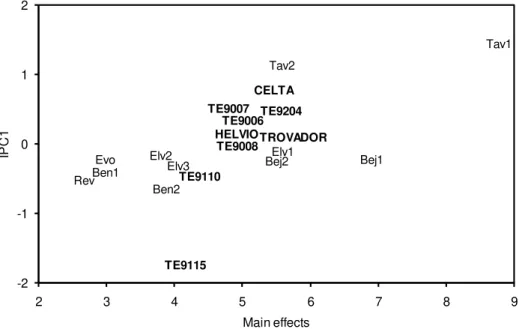
Figure 2.3. AMMI1 biplot for the durum wheat experiment. ... 22
Figure 3.1. AMMI1 biplot for 2004. ... 36
Figure 3.2. AMMI2 biplot for 2005. ... 37
Figure 3.3. AMMI2 biplot for 2006. ... 38
Figure 4.1. QTL scans for the 11 environments of the wheat PHS experiment ordered by location and year ... 48
Figure 4.2. QTL scans for the main effects and IPC1 to IPC3 for the wheat PHS experiment ... 49
Figure 4.3. Ockham’s valley for the wheat PHS experiment ... 50
Figure 4.4. QTL scans for Ketola 2004 based on the AMMI1 estimates and the raw data or naïve estimates. ... 51
Figure 4.5. The AMMI1 biplot for the wheat PHS experiment. ... 52
Figure 4.6. QTL scans for the 11 environments of the wheat PHS experiment, with the environments ordered by the environment IPC1 scores. ... 53
Figure 4.7. QTL expression as a function of environment IPC1 scores for the wheat PHS experiment. ... 55
Figure 4.8. Ockham’s hill for QTL detections for the wheat PHS experiment. ... 57
Figure 4.9. The AMMI2 biplot for the barley yield experiment. ... 61
Figure 4.10. QTL scans for the 16 environments of the barley yield experiment. ... 62
Figure 4.11. QTL expression as a function of environment PC1 scores for the barley yield experiment. ... 64
Figure 5.1. Schematic diagram of the crop growth model with seven physiological parameters. ... 72
Figure 5.2.Genetic map for pepper. ... 75
Figure 5.3. GGE biplot for one random realization of the two-way table... 80
Figure 5.4. AMMI2 biplot for one random realization of the two-way table. ... 81
Figure 6.1. QTL scans for 6 environments of the yield data for pepper. ... 97
Figure 6.2. AMMI2 and WAMMI2 biplots for one randomly chosen realization. ... 98
Figure 6.3. Summary of the number of detected QTLs for the actual data, AMMI2 predicted values, WAMMI2 predicted values and linear mixed model... 99
Figure 6.4. Number of QTLs detected per environment. ... 100
Figure 6.5. QTL scans for the 13 environments for the means of the SxM yield data, AMMI3 predicted values, and WAMMI3 predicted values. ... 101
Figure 6.6. Biplots for the first two axes of AMMI3 and WAMMI3 models, for the SxM yield data. ... 102
Figure 6.7. Genetic map with the information of the place where a QTL was detected for the SxM yield data. ... 104
Figure 7.1. Parents (Yolo Wonder and CM334) and F1 of the recombined inbred lines of pepper population and glasshouse experiments. ... 114
Figure 7.2. Observed and simulated yield for the pepper population in SP1 and SP2. ... 115
List of Tables
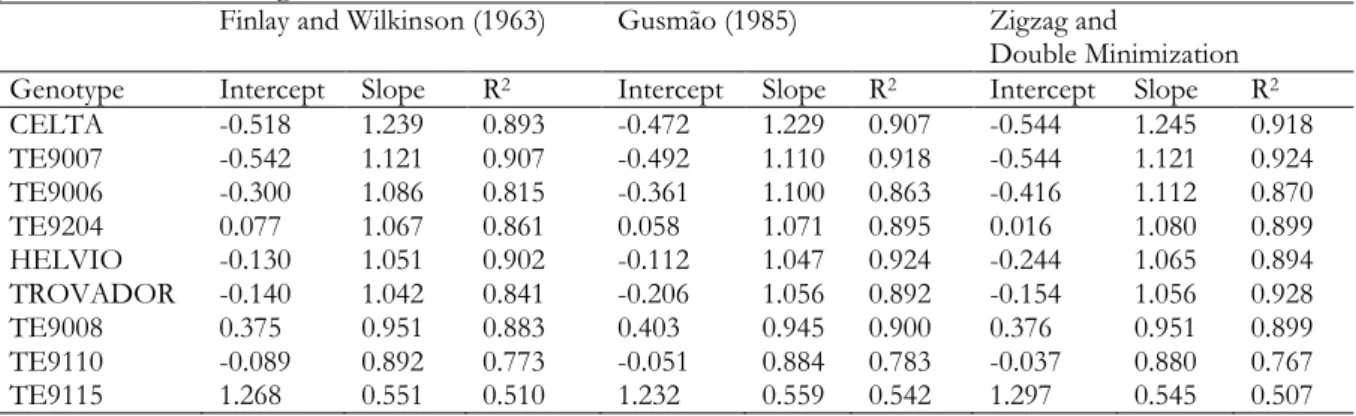
Table 2.1. Adjusted regression coefficients and coefficients of determination. ... 18
Table 2.2. Sums of the sums of squares of residuals. ... 19
Table 2.3. Dominant and number of significantly dominated genotypes for JRA, environments where the genotypes were dominant (JRA) and where the genotypes were winners (AMMI)... 20
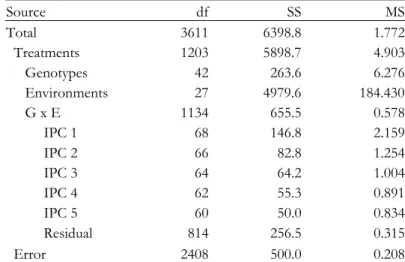
Table 2.4. AMMI4 analysis of variance. ... 21
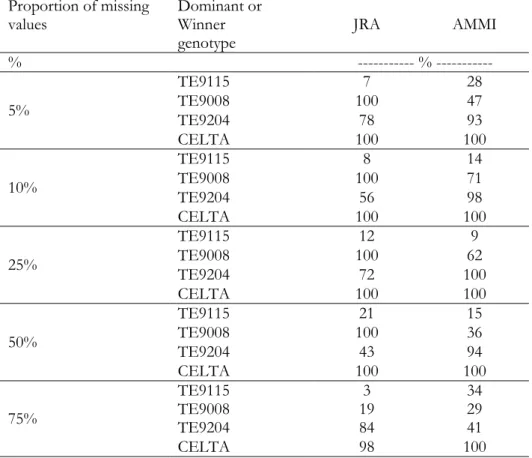
Table 2.5. Proportion of runs in which dominant genotypes (JRA) and winners of mega-environments (AMMI) are common to the results of the original data ... 24
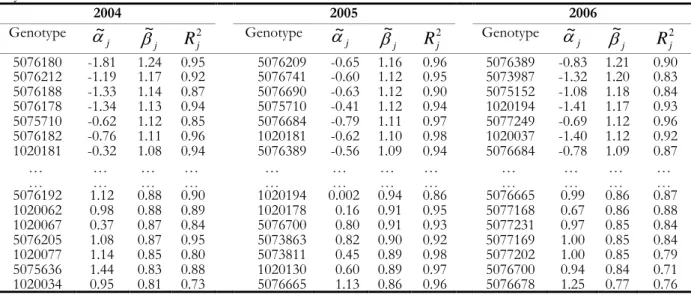
Table 3.1. Adjusted regressions coefficients and coefficients of determination, ordered by slope in each year. ... 32
Table 3.2. The dominant genotypes, range of dominance, environments where the genotypes are dominant and the number of significantly dominated genotypes for 2004. ... 33
Table 3.3. The dominant genotypes, range of dominance, environments where the genotypes are dominant and the number of significantly dominated genotypes for 2005. ... 33
Table 3.4. The dominant genotypes, range of dominance, environments where the genotypes are dominant and the number of significantly dominated genotypes for 2006. ... 34
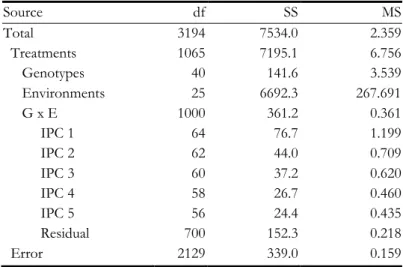
Table 3.5. Results of the ANOVA for the AMMI5 model in 2004... 35
Table 3.6. Results of the ANOVA for the AMMI5 model in 2005... 36
Table 3.7. Results of the ANOVA for the AMMI5 model for 2006... 38
Table 3.8. Model comparison for predict ability for yield in spring barley for 2004, 2005 and 2006... 39
Table 4.1. Main QTLs for preharvest sprouting. ... 47
Table 4.2. AMMI3 analysis of variance for the preharvest spouting scores of the cross Cayuga x Caledonia. ... 49
Table 4.3. AMMI7 analysis of variance for the yield of the cross Steptoe x Morex. ... 59
Table 5.1. The seven genotype specific, environment independent physiological parameters in the yield model, parameterized for greenhouse sweet pepper. ... 74
Table 5.2. Parameterization of the constants in the model for sweet pepper. ... 74
Table 5.3. Genetic architecture in the eco-phisiological genotype-to-phenotype model. ... 76
Table 5.4. Sensitivity analysis for the physiological parameters and environmental characterizations. ... 79
Table 5.5. ANOVA for the AMMI model with 2 interaction principal components. ... 80
Table 5.6. QTL effects and standard errors for the 10 detections for several subsets of environments. ... 83
Table 6.1. The 12 environments used in the simulated yield data for pepper. ... 92
Table 6.2. Genetic architecture of the simulated yield data for pepper (signal).. ... 92
Table 6.3. The 13 environments used in the SxM analysis. ... 93
Table 6.4. ANOVA of the AMMI5 model for the simulated yield data for pepper. ... 97
List of Abbreviations
AMMI – additive main effects and multiplicative interaction ANOVA – analysis of variance
AQ – AMMI analysis followed by QTL scans CxC –‘Cayuga’ × ‘Caledonia’
CIM – composite interval mapping df – degrees of freedom
DH – doubled haploid
EM – expectation-maximization FDMC – fruit dry matter content FTF – fraction to fruits
GEI – genotype-by-environment interactions
GGE – genotype main effect plus genotype by environment interaction GLI – genotype-by-location interactions
G-P – genotype-to-phenotype
IPC – interaction principal component JRA – joint regression analysis
LOD – logarithm of odds LUE – light use efficiency MET – multi-environment trial MS – mean square
PCA – principal components analysis PHS – preharvest sprouting
QEI – QTL-by-environnement interaction QTL – quantitative trait locus
RMSPD – root mean square predictive difference S×M –‘Steptoe’ × ‘Morex’
S/N – signal to noise SREG – sites regression SS – sum of squares
SVD – singular value decomposition
Chapter 1
General Introduction
1.
Introduction
1.1.
One of the main challenges in statistical genetics is to find superior genotypes over a wide range of
agro-ecological conditions and also over a number of years. This is also a challenge for farmers, breeders and
geneticists although farmers and breeders have often conflicting interests: breeders want genotype that can
be sold everywhere and farmers a genotype adapted to their climate and soil management. To achieve this
purpose, multi-environment trials (METs) are conducted in which a series of genotypes is evaluated over
environmental conditions and over time. The data from these MET are usually summarized in a two-way
table with genotypes in the rows and environments (local/year combinations) in the columns. In the most of
these two-way tables it is possible to find differences between genotypes in their phenotype (e.g. yield)
stability along environments, i.e. the genotypic and environmental effects are not simply additive and
genotype-by-environment interaction (GEI) is present in the data. GEI is defined by the change of genetic
ranking of genotypes with the environment, e.g., a genotype that is superior at well watered conditions may
yield poorly under dry conditions. The GEI can be expressed either as crossovers, when two different
genotypes change in rank order of performance when evaluated in different environments, or inconsistent
responses of some genotypes across environments without changes in rank order. The study and
understanding of these interactions is a major challenge, in order to improve complex traits (e.g. yield) across
environmental gradients.
With the development of molecular markers and mapping techniques, researchers can go one step
further and analyse the whole genome to detect specific locations of genes which influence a quantitative
trait. These locations are called quantitative trait locus (QTL) and when these QTLs have different
expression across environments we talk about QTL-by-environment interactions (QEI), which is the base of
GEI. A good understanding of these interactions allows researchers to select better genotypes across
different environmental gradients and, consequently, to improve crops for developed and, in particular, for
developing countries, based on theirs climate and soil characteristics.
One more step further can be achieved when using computer simulations to “replace” the field
experiments. Many studies have been made and many papers written about topics such as “eco-physiological
models”, “crop growth models” (Spitters, 1990, van Ittersum et al., 2003) and “genotype-to-phenotype
(G-P) models” (Chenu et al., 2009). These models allow the use of genetic and environmental characteristics to simulate the behaviour of each genotype in each environmental set-up along the growing season (Rodrigues
Figure 1.1 shows the number of publications per year, from 1990 to 2011 (October), which included
GEI, QEI, QTL or G-P models in the title or abstract plus keywords. The published research about G-P
models had a sharp peak in1996 and then decreased to about 20% in 2003, where started to increase almost
linearly until now. The number of publication on GEI between 1996 and 2002 didn’t change much but, since 2003 it increased so that in 2010 were published 3.5 more papers than in 2002 (210 in 2002; 737 in
2010). The number of publications about QTLs has increased linearly from 1993 until 2008 but since then it
seems to be stagnated. With the increase in number of publications about QTLs and about GEI, it would be
expectable a relatively high increase of research on QEI. However, there is little research on this topic, only
about 1% of all publications about QTLs also focus on QEI (Figure 1.2). Therefore I would expect a sharp
growth in the number of publications about QEI soon.
Figure 1.1. Number of publications about GEI, QEI, QTL and G-P models, per year. The information was obtained from the Scopus database in the period 1990-2011. The count for G-P model includes the
text “crop growth model”, “genotype-to-phenotype model” and “physiological model”. These results are very similar to the ones in the ISI Web of Science database.
Figure 1.2. Proportion of publications about QEI within the number of publications about QTLs, per year. The information was obtained from the Scopus database in the period 1990-2011.
0 500 1000 1500 2000 2500
1990 1991 1992 1993 1994 1995 1996 1997 1998 1999 2000 2001 2002 2003 2004 2005 2006 2007 2008 2009 2010 2011
Year of publication
N u m b e r o f p u b li ca ti o n s .
G-P Abstract G-P Title QTL - Abstract QTL - Title QEI - Abstract QEI - Title GEI - Abstract GEI - Title
0.0% 0.5% 1.0% 1.5% 2.0%
1990 1991 1992 1993 1994 1995 1996 1997 1998 1999 2000 2001 2002 2003 2004 2005 2006 2007 2008 2009 2010 2011 Year of publication
Genotype-by-environment interactions
–
the statistical
1.2.
analysis of two
–
way tables
To better understand the GEI and QEI, and to make predictions for different environments and/or
different years, a wide range of statistical methods have been used. They have been applied to the output of
extensive experiments and plant breeding programs conducted under different environmental conditions (or
locations) and over several years (van Eeuwijk et al., 2005, Malosetti et al., 2010, Aastveit and Mejza, 1992,
Kang and Gauch, 1996).
Figure 1.3 shows the behaviour of the research on GEI by statistical technique used, along time. As in
Figure 1.1 we can observe that the amount of research on GEI together with QTL analyses has been almost
constant since 2005. Research on regression based techniques continues to increase within GEI analysis and
is the most common statistical tool used since 1990. The particular case of factorial regression models
represents less than 10% of the total research on regression for GEI. Research articles which use graphical
techniques such as biplots (Gabriel, 1971) or genotype main effect plus genotype-by-environment interaction
(GGE) biplots (Yan and Kang, 2002) had a sharp increase, especially since 2004. There is also a clear
increase for research on singular value decomposition techniques such as principal component analysis
(PCA) and additive main effects and multiplicative interaction (AMMI) models (Gauch, 1992). It explains
also the steep increase of biplots because PCA and AMMI models also use these graphical representations in
their outputs.
Figure 1.3. Number of publications on research about GEI, per statistical method, per year. The information was obtained from the Scopus database in the period 1990-2011, searching for “genotype
environment interaction” together with each of the statistical methods considered. 0
50 100
1990 1991 1992 1993 1994 1995 1996 1997 1998 1999 2000 2001 2002 2003 2004 2005 2006 2007 2008 2009 2010 2011
Num
b
e
r
o
f
G
EI
p
u
b
lic
a
ti
o
n
s
Year of publication
Cluster Analysis Mixed models QTL AMMI or PCA
1.2.1.
Statistical models based on regression and singular value decomposition
The simplest model to describe phenotypic observations along environments is the additive model
without interaction term. In this case, the expected phenotypic response for genotype in
environment equals the grand mean plus the genotype and environment main effects (both
expressed as deviations from the grand mean), that is
(1.1)
The additive model is the base of all the models with interaction, but it is only applicable when there isno GEI in the two-way table with genotypes in the rows and environments in the columns, that is, when the
phenotypic response across environments is a set of parallel lines. If there is interaction between genotypes
and environments, model (1.1) can be written to account for GEI, that is
(1.2)
where represents the GEI term for genotype i and environment . The full interaction model (1.2)
has as many parameters to be estimated as genotype-by-environment combinations, which is associated with
tests less precise because the lack of degrees of freedom, and represents a less parsimonious model. An
alternative extension of the additive model (1.1) was first proposed by Finlay and Wilkinson (1963), where
the phenotypic responses across environments are regressed on the phenotypic mean over environments (a
measure of productivity or biological quality in the absence of other environmental characterizations). The
GEI is expressed by the I slopes βiand the model can be written as
(1.3)
Another regression based model was presented by Gusmão (1985) where the (physical) block
information is used to correct for spatial effects. In this way the phenotypic responses per block are
regressed across environments resulting in regressions, where is the number of blocks.
A further alternative to the full interaction model is the additive main effects and multiplicative
interaction (AMMI) model (Gollob, 1968, Mandel, 1969, Bradu and Gabriel, 1978, Gauch, 1988, Gauch,
1992), which is more flexible than the Finlay and Wilkinson regression because can partition the interaction
in terms. It combines the analysis of variance (ANOVA) and principal component
analysis (PCA), with ANOVA performed first and then PCA (i.e. the singular value decomposition) applied
to the resultant matrix of GEI (Gauch, 1992). The model can be written as
∑
∑ (1.4)
where is the singular value for interaction principal component (IPC) , is the left singular vector for
genotype in component , is the right singular vector for environment in component , is the
residual for genotype i in environment , and is the number of retained components. A similar alternative
is the GGE model (Yan and Kang, 2002) which applies the PCA to the two-way table without the
environmental main effects, i.e.
with and genotypic and environmental parameters (scores) for the bilinear term . Both the AMMI
and GGE models are more useful when using graphical representations such as biplots (Gabriel, 1971).
1.2.2.
The inclusion of environmental and genotypic information in the model
When specific environmental (and/or genotypic) information is available (e.g. rainfall, radiation,
temperature, marker information), the advisable linear-bilinear model to be used is the biadditive factorial
regression model, also termed as reduced rank factorial regression (Denis, 1988, van Eeuwijk et al., 1996, van
Eeuwijk, 1995)because it allows the inclusion of this extra information in the model. Considering the simple
case in which the interaction is due to two environmental variables and , the model can be written as
(1.6) where and are the genotypic sensitivities to the two environmental variables, respectively. This model
is an extension of the Finlay-Wilkinson regression (1.3) in which the interaction is written based on several
real environmental variables. This allows a physiological interpretation of the GEI in terms of real
environmental information. The generalization for the case when environmental covariates
are available is straightforward:
∑ (1.7)
A similar expression can be obtained when, besides the environmental covariates, we also have
information about genotypic covariates (e.g. physiological parameters or marker information). This
generalization for environmental covariates and genotypic covariates , can be
written as:
∑ ∑ ∑ ∑ (1.8)
These regression coefficients are not genotype or environment dependent. The coefficients are
genotypic sensitivities to the environmental covariables and the denote environmental weighting
constants with respect to the genotypic covariable (Baril et al., 1995). The parameters represent
coefficients with respect to cross-products of genotypic covariables, and environmental covariables
. Further generalizations are possible depending on the research interests (van Eeuwijk et al., 1996, Romagosa et al., 2009).
1.2.3.
Taking into account the variance structure of the data
A more elaborated approach to understand GEI is the mixed model framework (Galwey, 2006, Verbeke
and Molenberghs, 2009). This methodology, combines the modelling of the mean and the variance, and
provides a powerful tool to analyse GEI. The main advantage of these models is the availability of modelling
the heterogeneity of variance across environments and correlations between environments. Unlike the
models presented before where all terms, except the residual, are fixed, the mixed linear model (Searle, 1971)
provides a framework where the fixed effects can be combined with several random terms. Residual
variances and random parameters. A mixed model for a two-way table indexed by genotypes and
environments is
(1.9) where the model parameters are defined as before. Typically, is fixed and , and are
random, following a normal distribution with zero mean and a variance specific to the term (Boer et al.,
2007, Malosetti et al., 2004).
1.2.4.
QTL-by-environment interactions
When dealing with QEI instead of GEI, the described fixed and mixed models can be easily adapted.
For example the QTL model with interaction can be written as
(1.10)
where is the QTL main effect, is the QEI, is the genotypic residual, and is the
residual from the interaction. More details on these models and the how to include genetic information such
as marker information can be found in van Eeuwijk et al. (2005) and Romagosa et al. (2009).
A major point of interest is whether QEI can be detect for the phenotypic trait of interest and to see
whether we could interpret this QEI in terms of underlying QTLs for physiological parameters or
molecular markers. The QTL model that we are interested uses explicit marker derived information to
describe the GEI in terms of QTLs in their dependence on the environments (i.e. the QEI). The inclusion
of this marker information, genetic predictors, allows to test whether the phenotypic trait (e.g. yield) is
affected by the DNA at a particular genome position, and whether this effect depends on the
environment. A mixed linear model definition following Boer et al. (2007) is
[ ] [ ]
=[ ] [∑ ]
(1.11) where is the intercept for each environment, is derived from marker genotype information for
genotype , the QTL allele substitution effect for environment , is the total number of QTL
underlying (e.g. yield), and follows a multivariate normal distribution with zero mean vector and a
given variance-covariance (VCOV) matrix. The choice of the best VCOV structure can be done by
following the procedure described in Malosetti et al. (2004) and Boer et al. (2007).
1.2.5.
Eco-physiological genotype-to-phenotype models
All the models described so far are intended to analyse the data after collected in multi-environment
trials. That procedure of collecting data is expensive, time-consuming and has limitations regarding the
number of genotypes, traits and environmental conditions considered. Simulation tools such as
genotype-to-phenotype models have proved to be useful in a better understanding of GEI and QEI (van Eeuwijk et al.,
2010).
A physiologically inspired alternative approach for collecting field data is based on physiological crop
with a prior biological structure (Spitters, 1990, van Ittersum et al., 2003) that can be used to help
understanding GEI and QEI (Tardieu, 2003, van Eeuwijk et al., 2005, Letort et al., 2008, Chenu et al., 2009,
Cooper et al., 2009, Bertin et al., 2010, van Eeuwijk et al., 2010). These models allow the simulation along the
growing season (i.e. every day) of the trait of interest (e.g. yield) and need, as input: (i) genotypic information
of the crop at hand, i.e. the genetic map with the position of the markers in the chromosomes and marker
information; (ii) information about the physiological parameters of the model for each of the considered
genotypes; and (iii) environmental characterizations of the study (i.e. weather, soil, etc.). These models allow
the inclusion of genetic information such as previously found QTLs for the trait and/or QTLs for the
physiological parameters, which will result in a more parsimonious and meaningful model. A particularly
strong point of crop growth models in comparison to more statistical G-P models is that they contain
explicit representations of development over time which may be useful in describing GEI (Chenu et al.,
2009). Otherwise the “time” would be an extra dimension on the phenotypic observations and harder to collect.
Objectives and outline of the thesis
1.3.
Despite the wide range of available references and techniques (as described before) to explore and better
understand GEI and QEI, not all of them are available to all breeders and researchers. In some cases,
because the statistical methods are too complex to be computationally implemented and applied by
non-statisticians. In other cases because, although these complex techniques are already well implemented in
statistical packages, the software is commercial and too expensive for developing countries where the
statistical improvements are slow to arrive.
One of the goals of this thesis is to propose strategies to improve the detection and understanding of
QTLs, especially those exhibiting QEI in the context of METs, using open source software (e.g. QTL
Cartographer, Wang et al., 2007; MATMODEL, Gauch, 2007; and R/qtl, Broman and Sen, 2009). One of
the strategies described here consist in the two stages AQ analysis, that is, the application of a parsimonious
AMMI model (Gauch, 1992) to the phenotypic data in order to gain accuracy, and then use those AMMI
predicted values to obtain the QTL scans (Gauch et al., 2011). The possibility of ordering the environments
by AMMI scores allows the analysis of patterns with ecological or biological interpretation. Other strategy, a
three stages approach, is able to account for differences in error variance across environments. This will be
done by using the weighted AMMI model (WAMMI, proposed in this thesis), instead of the standard AMMI
model, and to obtain the QTL scans (Gauch et al., 2011) based on the WAMMI scores (Rodrigues et al.,
2012b).
A second objective of this thesis is to illustrate a strategy for modelling GEI and QEI in complex traits
(e.g. yield), that departs from dissection of a target complex trait in a number of component traits, where
each of the component traits is purely genotype dependent. An eco-physiological genotype-to-phenotype
model with seven parameters, simulated for a back cross population of pepper (Capsicum annuum L.), is
QTLs are assumed to be in different chromosomes. We show that the QTL associated to the most
important parameters, for the trait in study, can be detected in the exact same place where they were
allocated during the simulation. These QTL detections were made using only the final phenotypic data
and the genetic map with the marker information.
1.3.1.
Outline of the thesis
This thesis consists of five papers to be found in Chapters 2–6. Three categories can be distinguished:
in Chapters 2 and 3 the application and comparison of methods prevails;
in Chapters 4 and 6 new methodology is presented;
in Chapter 5 a simulation model is discussed and its outcome analysed with existing and new methodology.
In Chapter 2 (A comparison between Joint Regression Analysis and the Additive Main Effects and Multiplicative interaction model: the robustness with increasing amounts of missing data) the main properties of joint regression
analysis (JRA), a model based on the Finlay-Wilkinson regression to analyse multi-environment trials, and
of the additive main effects and multiplicative interaction (AMMI) model, are presented. This study
compares JRA and the AMMI model with particular focus on robustness with increasing amounts of
missing values completely at random.
An application is presented which uses a data set from a breeding program of durum wheat (Triticum
turgidum L., Durum Group) conducted in Portugal. The two models result in similar dominant cultivars (in
JRA) and winner of mega-environments (in AMMI) for the same environments. However, JRA had more
stable results with the increase in the incidence rates of missing values.
Chapter 3 (A comparison between joint regression analysis and the AMMI model: a case study with barley) compares JRA and AMMI models and evaluates the agreement between the winners of mega-environments
obtained from the AMMI analysis and the genotypes in the upper contour of the JRA. An iterative
algorithm is used to obtain the environmental indexes for JRA, and standard multiple comparison
procedures are adapted for genotype comparison and selection. This study includes three data sets from a
spring barley (Hordeum vulgare L.) breeding program carried out between 2004 and 2006 in Czech Republic.
The results from both techniques are integrated in order to advice plant breeders, farmers and
agronomists for better genotype selection and prediction for different years and/or different
environments.
In Chapter 4 (Two New Strategies for Detecting and Understanding QTL-by-Environment Interactions) two new strategies for detecting QTLs and understanding QEI are presented. The first is to use a parsimonious
AMMI model to gain accuracy for the phenotypic data used in QTL scans, thereby improving QTL
in order to reveal consistent patterns and systematic trends that often have an evident ecological or biological
interpretation. These two strategies together are illustrated with two examples: preharvest sprouting scores
of a biparental wheat (Triticum aestivum L.) population from 14 environments spread over five years, and yield
for a doubled haploid barley (Hordeum vulgare L.) population tested in 16 environments.
Chapter 5 (A complex trait with unstable QTLs can follow from component traits with stable QTLs: an illustration by
a simulation study in pepper) illustrates a strategy for modeling of GEI and QEI in complex traits that departs
from dissection of a target complex trait in a number of component traits, where each of the component
traits is purely genotype dependent. An eco-physiological genotype-to-phenotype model converts the set of
genotype specific component traits into the complex target trait by integrating the components with
environmental inputs over the duration of the growing season. We developed a seven component
eco-physiological model for yield in pepper that simulated for a back cross population yield and yield
components, where the yield components were given a simple QTL basis. We demonstrate the viability of
our modeling approach for complex traits by a case study in sweet pepper (Capsicum annuum L.). We show
how credible patterns of GEI and QEI for yield can be simulated from genotype specific yield components
with a simple QTL basis.
Chapter 6 (Weighted AMMI to study genotype-by-environment interaction and QTL-by-environment interaction) introduces a generalization of AMMI model that accounts for heterogeneity of error variance across
environments, the weighted AMMI, or WAMMI. WAMMI is useful for studying GEI as well as QEI. For
QEI, we perform an initial analysis by WAMMI, and take the predicted values from this analysis as starting
point for QTL analyses per environment. We look at the performance of this strategy in relation to QTL
scans on the actual data and AMMI predicted values. We also make a comparison with a full mixed model
approach to QTL mapping for multiple-environments. We used two data sets for making comparisons: (i)
data from a simulated pepper (Capsicum annuum) back cross population using a crop growth model to relate
genotypes to phenotypes; and (ii) a doubled-haploid barley (Hordeum vulgare L.) population. Our results
demonstrate that the QTL scans of the WAMMI predicted values outperform the QTL scans for the actual
data and for the AMMI predicted values, being very similar to the QTL mixed model approach, with respect
to the number of QTLs detected.
Chapter 7 (Discussion) summarizes the results from the preceding chapters and presents a short discussion about the usefulness of the eco-physiological genotype-to-phenotype models when compared
Chapter 2
A comparison between joint regression analysis
2.
and the additive main effects and multiplicative
interaction model: the robustness with increasing
amounts of missing data
Abstract
This chapter joins the main properties of joint regression analysis (JRA), a model based on the
Finlay-Wilkinson regression to analyse multi-environment trials, and of the additive main effects and
multiplicative interaction (AMMI) model. The study compares JRA and AMMI with particular focus on
robustness with increasing amounts of randomly selected missing data. The application is made using a
data set from a breeding program of durum wheat (Triticum turgidum L., Durum Group) conducted in
Portugal. The results of the two models result in similar dominant cultivars (JRA) and winner of
mega-environments (AMMI) for the same mega-environments. However, JRA had more stable results with the
increase in the incidence rates of missing values.
Introduction
2.1.
Joint regression analysis (JRA) has been widely used in crop sciences, to structure and understand
genotype-by-environment interaction (GEI) (Eberhart and Russell, 1966, Finlay and Wilkinson, 1963,
Gusmão, 1985, Mooers, 1921, Pereira and Mexia, 2008, Yates and Cochran, 1938, Zheng et al., 2009), and
in genetics, to analyse quantitative trait loci (QTL) -by-environment interaction (Emebiri and Moody,
2006, Korol et al., 1998).
In this chapter we are mainly interested in the approach proposed by Gusmão (1985) in which the
precision in analysing series of randomized block experiments was highly increased, by considering
environmental indexes for individual blocks instead of only one environmental index per environment. In
the literature some variants of JRA are also denoted as SREG (Sites Regression) model (Cornelius et al.,
1992, Crossa et al., 2002, Setimela et al., 2007).
Williams (1952), Gollob (1968), Mandel (1971), Bradu and Gabriel (1978) and Gauch (1988) have
made an important contribution to the development of additive main effects and multiplicative interaction
(AMMI) models. These models have been widely used to analyse multi-environment trials (METs)
because of their flexibility in allowing the use of several multiplicative terms to explain the GEI.
One of the difficulties in choosing the right tool to analyse METs arises when there are missing values
in the two-way table of genotypes and environments. These missing values can be either systematic
(Calinski et al., 1992, Denis and Baril, 1992), or selected completely at random in the two-way table.
This chapter brings together the main features of JRA and AMMI models, and compares them for
analysing a durum wheat (Triticum turgidum L., Durum Group) trial with particular focus on robustness
with increasing amounts of random missing data, either missing replications or missing cells (more likely
when the proportion of missing values is high). The aim here is not to compare the method’s ability to
estimate missing values in comparison to real data (Alarcón et al., 2010, Bergamo et al., 2008) but to
compare the overall stability when increasing the incidence rate of missing values. An emphasis is made in
the comparison between (i) the upper contour of JRA and the mega-environments of the AMMI model;
and (ii) the stability of the dominant/winner genotypes across environments. To obtain the results for the
JRA we developed an R code, and the MATMODEL software (Gauch and Furnas, 1991) was used to fit
the AMMI models.
Materials and methods
2.2.
2.2.1.
Joint regression analysis
JRA has proven to be an important model for analysing and interpreting the GEI of two-way
classified tables and continues to be largely used as a complement of traditional statistical analysis in
genetics, plant breeding, and agronomy, for determining yield stability of different genotypes or
agronomic treatments across environments (Crossa, 1990). JRA may also be used for the analysis of series
linear regression, per genotype, of the yield on a synthetic variable measuring productivity, the
environmental index.
JRA, when applied to two-way tables obtained from METs, aims to determine the stability of the
genotypes or agronomic treatments over a wide range of environmental conditions and to interpret the
interaction (non-additivity). Let be a continuous response variable (usually yield) corresponding to a
row factor (usually the genotypes), and a column factor (usually the
environments). The model used for the analysis of METs can be defined as
(2.1) where is the grand mean, and are the genotype and environment main effects, is the
interaction and is the residual. A sub-model of (2.1), aiming at estimating some stability parameters for
making comparisons between varieties is given by JRA, and allows us to partitioning the GEI into two
parts of interest, i.e.
(2.2) where is a linear regression coefficient for the -th genotype and a deviation (unexplained GEI)
(Freeman, 1973). The JRA model can then be written as
, [ ] [ ] ,
i j i j i j ij
y G E bE
* ,
* *
[Gi] [b Ei j] ij, (2.3) where comprises both the unexplained GEI and the experimental error (Shukla, 1972). We assume
fixed genotypic and environmental effects and random residual term.
The model (2.3) used in the present chapter does not take into account the block effects since it uses
the blocks as environments, following Gusmão (1985). If an experiment is designed with randomized
blocks and the treatments correspond to the genotypes to be compared, for each block in each design,
the environmental index is measured by the average yield. For each of the genotypes, a linear regression
of yield on environmental indexes is adjusted.
2.2.2.
L
2environmental indexes
For convenience, let us consider the joint regression model of the second equation in (2.3), where
*
*
, 1
i Gi i
G b b, , is the environmental index corresponding to blocks instead of
environments, the number of blocks, is a continuous response (e.g. yield) for cultivar/genotype in
block if present, and the pairs
* *
, , 1, , ,
i i
G b i I , are the regression coefficients, for the genotypes.
To obtain the estimates for the regression coefficients and the environmental indexes, the goal
function to be minimized should be
2* * * * , 1 1 , , J b
J J b
ij i j i i j
i j
S G b E p y G b E . (2.4)
Usually the weight is 1 [0] when genotype is present [absent] in block . These weights may differ
when the i-th genotype is present. The main problem in such modeling is how to estimate the parameters.
However, the lately proposed so called zigzag algorithm (Pereira and Mexia, 2010) is very efficient in
finding the estimates of
* *
, , 1, , ,
i i
G b i I and . This zigzag algorithm is an alternating least
squares based algorithm (Calinski et al., 1992, Denis and Baril, 1992, Digby, 1979, Gabriel and Zamir,
1979, Gauch and Zobel, 1990). For the complete case, Pereira and Mexia (2010) presented an alternative
algorithm, the double minimization algorithm, which converges to the absolute minimum of the goal
function (2.4) and is an adaptation of the algorithm first presented by Fisher and Mackenzie (1923). More
details on the zigzag and double minimization algorithms can be found in Pereira and Mexia (2010).
2.2.3.
The zigzag algorithm
Using the zigzag algorithm the minimization of the loss function (2.4) is carried out iteratively, starting
with some initial values for the environmental indexes. Since the choice of these initial values has some
effect on the number of iterations it should be made carefully. For the complete case (i.e. all the genotypes
are present in each environment) the average yield per block can be a good initial value (Gusmão, 1985).
When incomplete blocks are used we have a very convenient situation when α-designs are used. Then as the initial values for environmental indexes one may take the average yields for the corresponding
superblock. In the worst case any initial values may be taken (Pereira, 2004), but the choice of values close
to the environmental index speeds up the calculation.
After choosing the starting values for environmental indexes, the goal function is minimized with
respect to the regression coefficients Then the and are fixed
and new environmental indexes are computed, and so on until the convergence of the algorithm. At the
end of each iteration the environmental indexes are rescaled so that its range is kept unchanged. Hence,
the iteration procedure is called zigzag algorithm and it may be described as follows:
(i) Calculation of the initial values for the environmental indexes b0
x , which ranges within the interval
0 0
[a , b ], a = Min{x , . . . , x } and b = Max{x , . . . , x } ;0 01 0b 0 01 0b
(ii) Minimize the function
, 0
J J b
S G b x and obtain
0b
G x and
0b
b x ;
(iii)To minimize
0 , 0
,J J b
b b
S x G x b x minimize the functions:
21
, , 1,.. ,.
J
i ij i
J
j j i
J
j j
h x p Y G b x i b
G b ,
to obtain the new vector '0 b
x , of the new environmental indexes;
(iv)Standardize the vector of environmental indices to keep unchanged the range. With
0 01 0 0 01 0
' ' , . . . , 'b , ' { ' , . . . , ' }b
a Min x x b Max x x
take
0 0
1 0 0 0
0 0
' ' ' '
i i
b a
x a x a
b a
to obtain the vector 1b
x , the new environmental indexes;
(v) Repeat the steps from (ii) to (iv) until successive sums of sums of squares of weighted residuals differ by less than a fixed amount (e.g. 10-9).
2.2.4.
Upper contour
When two of the regressions on genotypes intersect it means that one of the genotypes is better for
higher environmental indexes while the other is preferable for lower environmental indexes. The
intersection of regressions shows more than one genotype with similar performance. The upper contour
of the JRA is a concave polygonal (Mexia et al., 1997), constituted by segments of the adjusted regression
lines, that contains the higher adjusted yields for the environmental indexes (Figure 2.1). Each of these
segments will correspond to a range of variation of the environmental indexes in which the associated
genotype will have the maximum adjusted yield (Pereira and Mexia, 2008). These genotypes are called
dominant and should be selected. The remaining genotypes should be compared with the dominant to
check whether they are dominated on the entire range for the adjusted environmental indexes, . If so,
they can be safely discarded from the breeding program.
Figure 2.1. Upper contour with the four dominant genotypes in the durum wheat population. The abbreviations for the 11 environments are placed in the axis of the environmental indexes (Bej1: Beja1; Bej2: Beja2; Ben1: Benavila1; Ben2: Benavila2; Evo: Évora; Elv1: Elvas1; Elv2: Elvas2; Elv3: Elvas3; Rev: Revilheira; Tav1: Tavira1; Tav2: Tavira2).
An analogy can be made between Figure 2.1 in this chapter and Figure 2 in Gauch and Zobel (1997),
where the AMMI1 nominal yields from a corn trial is depicted as a function of the environment
interaction principal component (IPC) axis 1. A more detailed comparison in what concerns the winner
2.2.5.
Genotype comparison and selection
Let L be the number of dominant genotypes with dominant ranges (ci'i', di'i' 1 ), ' 1,...,i L1.
The entire range for the environmental indexes will be
c1 , dL
. To have interaction betweengenotypes and , and environments there are two possible cases for different slopes, i i' and i i'. After establishing the upper contour, non-dominant genotypes should be compared with the
dominant ones. This comparison should be made on the left [right] extreme of the dominance range if the
non-dominated genotypes have lower [greater] slope than the dominant one. So, when i i' i i'
we are led to compare the adjusted values i ix and i'i'x at the environmental index i i1.
These comparisons between slopes may be made using one of the statistical tests: (i) one-sided t tests
without correction for multiple testing; (ii) Scheffé multiple comparison tests (Scheffé, 1959); (iii)
Bonferroni multiple comparison method (Seber and Lee, 2003); (iv) Tukey multiple comparison method
(complete case); and (v) Control of False Discovery Rate which is robust against erroneous rejections
(Benjamini and Hochberg, 1995). More details of these tests can be found in Pereira and Mexia (2008).
2.2.6.
AMMI models
The core idea of the AMMI models is: (i) first apply the additive analysis of the variance model
(ANOVA) to a two-way table (in the present case with genotypes and environments); and (ii) secondly
apply the multiplicative principal component analysis (PCA) model to the residual from the additive
model (in this case to the interaction) (Gauch, 1992). The AMMI model with multiplicative terms can
be written as
N i,j i j , , i,j
n=1
y = + + n n i n j , (2.5)
where is the yield of genotype in environment ; the grand mean; the genotype mean deviations
(the genotype means minus the grand mean); the environment mean deviations; the singular value
for the PCA axis ; and are the genotype and environment PCA scores for PCA axis ; is the
number of PCA axes retained by the model; and is the residual. If the experiment is replicated, an
error term which is the difference between the mean and the single observation for replicate ,
should be added.
The main purposes of the AMMI models were pointed out by Crossa (1990): (i) model diagnosis
(Bradu and Gabriel, 1978); (ii) to clarify GEI (Crossa et al., 1990, Zobel et al., 1988); and (iii) to improve
the accuracy of yield estimates (Crossa et al., 1990, Zobel et al., 1988).
2.2.7.
Durum wheat yield data
All the properties and comparisons presented in this chapter are illustrated with a data set resulting
(ENMP, Elvas) in the years of 1992/1993 and 1993/1994. It contains the yield from nine genotypes
(CELTA; HELVIO; TE9006; TE9007; TE9008; TE9110; TE9115; TE9204; and TROVADOR) of
durum wheat (Triticum turgidum L., Durum Group), measured in 11 environments (Benavila1; Revilheira;
Évora; Elvas1; Beja1; Tavira1; Elvas2; Tavira2; Elvas3; Benavila2 and Beja2), and performed in complete
randomized blocks with four replicates. These environments were obtained in two years, the first 6 in the
first and the second 5 in the second year. Only the locations Tavira, Benavila and Beja were the same in
both years. All the locations in this data set are in south Portugal, Tavira being at the sea side (Algarve)
while the remaining in the inland (Alentejo). More details about this data set can be found in Pereira and
Mexia (2010).
2.2.8.
Simulation of missing values
Since the plants may be destroyed by animals, floods or during the harvest, and the yield
measurements may be erroneously performed and inadequately introduced in the data base, missing values
are common in agricultural experiments. When dealing with missing values researchers should decide
between: (i) find a good tool to estimate the missing values (Alarcón et al., 2010, Bergamo et al., 2008), or
(ii) chose a robust technique against missing observations to perform the analysis. In the present study we
will be interested in the second approach, namely to compare the robustness of JRA and AMMI with the
increasing of missing data. Our interest here is to study the case where the missing values were selected
“completely” at random, instead of having systematic patterns (Calinski et al., 1992, Denis and Baril, 1992). Our simulation procedure can be summarized in the following steps:
(i) Choose the incidence rate of missing values (e.g. );
(ii) Remove, “completely” at random, of the two-way table with genotypes and environments, leaving at least one observation in each environment and in each genotype;
(iii) a. Use the zigzag algorithm (Pereira and Mexia, 2010) to compute the regression coefficients and the L2 environmental indexes for JRA by minimizing the loss function (2.4); Results such as those shown
in Figure 2.1 and in Table 2.3 can be obtained using the appropriated multiple comparison tests
mentioned above. b. Use the MATMODEL software (Gauch and Furnas, 1991) to estimate the missing values. Results such as those shown in Table 2.3 can be obtained by this software.
(iv)Repeat (ii) and (iii) n times for each incidence rate of missing values. The number of interactions n should be chosen based on the size of the original two-way table. In this particular case we used
.
For higher incidence rates of missing values it is more likely that not only replications are missing, but
cells (means). In this case an Expectation-Maximization (EM) algorithm provides an effective general
strategy for obtaining maximum likelihood estimates (Gauch, 1992). This procedure has been adapted for
AMMI and is called EM-AMMI (Gauch and Zobel, 1990), and is implemented in the MATMODEL