Simultaneous determination of tartaric acid and potassium in wines using a
multicommuted flow system with dialysis
Sara M. Oliveira, Teresa I.M.S. Lopes, Ildikó V. Tóth
1, António O.S.S. Rangel
∗ CBQF/Escola Superior de Biotecnologia, Universidade Católica Portuguesa, Rua Dr. António Bernardino de Almeida, 4200-072 Porto, PortugalKeywords:
Multicommuted flow system Dialysis
Wines Tartaric acid Potassium
a b s t r a c t
A multicommuted flow system with the propulsion device placed before detection is proposed for the determination of tartaric acid and free potassium in table and Port wines. A dialysis unit was introduced to increase sample dilution and minimize matrix interferences. The determination of tartaric acid was based on the spectrophotometric monitorization of the complex formed by the dialyzed analyte with vanadate. Potentiometric measurement of potassium was carried out through an ion selective tubular electrode. Dynamic linear ranges of 0.500–5.00 g L−1and 390–2000 mg L−1were achieved for tartaric acid and potassium determinations, respectively. Detection and quantification limits of 0.1 and 0.4 g L−1
of tartaric acid were obtained, respectively. For the potentiometric determination, a detection limit of 1× 10⁻⁴mol L−1was achieved. The accuracy of the method was assessed by analysis of 30 wine samples
by the proposed methodology and manual procedures. There were no statistical differences between the 2 sets of results, in both determinations. Relative standard deviations lower than 2.1 and 2.4% were attained by the spectrophotometric and potentiometric measurements, respectively. A determination rate of 52 h−1was achieved.
1. Introduction
Tartaric acid is the most significant part of the acid fraction of grapes and wines. Being one of the strongest organic acids present in grapes, it plays a great role in wine acidity, thus affecting colour, taste, chemical and microbiological stability of the final product[1]. Nevertheless, the major physical instability in bottled wines is due to the precipitation of the tartaric salts, essentially as potassium bitartrate, and in lower concentrations, as calcium tartrate. Pre-vention of this precipitation in bottled wines is desirable because consumers find it objectionable and an indication of poor quality control[2]. For this reason, tartaric acid and potassium determina-tions are parameters of routine analysis performed in wineries.
The reference method for tartaric acid determination in wines is based on a determination of tartaric acid as calcium tartrate after a 12 h precipitation. Then, the precipitate is filtered, washed and dried to constant weight, being finally titrated with EDTA[3]. This procedure is rarely used since it requires a double precipi-tation in wines containing L(−)tartaric acid[1]. Routine analysis are performed according to the usual method of OIV, based on the Rebelein procedure, which consists on the separation of
tar-∗ Corresponding author. Tel.: +351 225580064; fax: +351 225090351. E-mail address:[email protected](A.O.S.S. Rangel).
1Present address: REQUIMTE, Servic¸o de Química-Física, Faculdade de Farmácia,
Universidade de Porto, Rua Aníbal Cunha, 164, 4050-047 Porto, Portugal.
taric acid using an ion-exchange resin before development of the colour with vanadic acid[3]. Both previous methods are tedious, laborious and time-consuming. In response to these limitations, flow methodologies have been developed in order to automate and thus improve the analytical features of this determination in wine samples. Flow injection analysis (FIA) with spectrophotometric detection is the most common[4–6], but potentiometric detection was also employed[7]. A sequential injection (SIA) combined with infrared spectrometry and a spectrophotometric multicommuted (MCFIA) flow systems were also proposed by Schindler et al.[8]and Fernandes and Reis[9], respectively.
Regarding potassium determination, atomic absorption spec-trophotometry and flame atomic emission spectrometry are the recommended detection methods, after dilution of the wine[10]. However, these procedures allow only the assessment of total potassium content. Free and total potassium determinations in wines were also carried out by flow methodologies. Free potassium content has been determined potentiometrically using FIA[11,12] and SIA [13] systems. The flow methodologies for total potas-sium concentration include FIA[12,14,15], and multisyringe flow systems[16], using flame atomic emission detector. Total potas-sium was also determined potentiometrically by SIA, after previous microwave digestion of the sample in the presence of hydrogen peroxide[13].
In the present work, a multicommuted flow system for the simultaneous determination of tartaric acid and free potassium in table and Port wines is proposed. A dialysis unit was
intro-Fig. 1. Schematic diagram of the multicommuted flow system. P: peristaltic pump; Vi: solenoid valves; Ci: confluences; DU: dialysis unit; RCi: reaction coils: RC1= 200 cm;
RC2= 25 cm; S: sample, 0.56 mL min−1; H2O, 0.56 mL min−1; R1: acetic acid, 0.56 mL min−1; R2: vanadate colorimetric reagent 0.56 mL min−1; R3: ionic strength adjuster
solution, 1.4 mL min−1; W: waste; D: spectrophotometer (500 nm); G: ground electrode; TE: tubular ion selective electrode; RE: reference electrode; MV: voltmeter; REC: dual channel chart recorder. In the valves, the position “on” is represented by a continuous line and the position “off” is represented by a dotted line.
duced in the manifold in order to minimize matrix interferences for tartaric acid determination, so that samples could be intro-duced in the flow system directly, without the need to carry out any previous treatment. Under typical experimental conditions, low dialysis efficiencies (<15%) are attained in flow methods[17–19]. Thus, dilution of the analyte is inherent to dialysis processes, and benefits this work due to the high tartaric acid concentrations usu-ally present in wines. Tartaric acid determination is based on the spectrophotometric monitoring at 500 nm of the complex formed with vanadate, in slightly acidic medium[1]. Potassium measure-ments were carried out using a flow-through ion selective tubular electrode. Therefore, the novelty of the proposed flow methodol-ogy is the direct assessment of tartaric acid and free potassium using the same manifold, with no need for prior off-line sample treatment.
2. Experimental
2.1. Reagents and solutions
All solutions were prepared using deionised water and analyti-cal grade quality reagents.
Tartaric acid stock solution was prepared by dissolving 50.1115 g of L(+) tartaric acid (Merck) in 500.0 mL of deionised water. Potassium stock solution was obtained by dissolving 7.4617 g of KCl (Merck), previously dried at 110◦C overnight, in 100.0 mL of water. Mixed standards containing tartaric acid and potassium were prepared from the respective stock solutions of tar-taric acid 100.0 g L−1and potassium 1.000 mol L−1. Ethanol (99.5% (v/v), Panreac) was added to the mixed standards in concentra-tions of 12 and 20% (v/v) for the analysis of table and Port wines, respectively.
Vanadate colorimetric reagent was obtained by dissolving 0.585 g of ammonium monovanadate (Merck) in 100 mL of NaOH (Merck) 1 mol L−1where 3.0 mL of tartaric acid 25 g L−1was added and the final volume of the solution was adjusted to 500.0 mL. The acceptor solution was prepared by adding 40.0 mL of glacial acetic acid 100% (Merck) to a 1000 mL volumetric flask, and adjusting the volume with water.
The R3 solution was composed by NaCl 7.5× 10⁻²mol L−1 as
ionic strength adjuster (ISA) and KCl 1.5× 10⁻⁵mol L−1. In the
comparison procedure, an ISA solution containing 5× 10⁻²mol L−1
NaCl was used.
2.2. Apparatus
The system manifold comprehended a propulsion device con-nected to solenoid valves controlled by computer, a separation device, two detection systems and a recorder (Fig. 1).
The flow direction was controlled by three-way solenoid valves (NResearch, 161 T031, Caldwell, NJ, USA), operated by means of a power drive (CoolDriveTM, NResearch).
A Gilson Minipuls 3 multi-channel peristaltic pump (Gilson, Villiers-le-Bel, France) and PVC pumping tubes (Ismatec, Glat-tbrugg, Switzerland) were used to propel all solutions at independent flow rates for each channel. All tubing connecting the different components was made of PTFE with 0.8 mm inner diam-eter (W025953, Omnifit, Cambridge, UK). Acrylic laboratory made y-shaped joints were used as confluences.
A 486 personal computer (FR-746WW-A9, Digital, Gumi, South Korea), equipped with an interface card (PCL-818L, Advantech, Taipei, Taiwan) running a lab-made software written in QuickBasic 4.5 (Microsoft, USA) controlled the switching of the solenoid valves. The dialysis device consisted of two separate acrylic blocks, pressed against each other by 4 screws, with a surface area of 140 mm2 and the matching cavities characterized by a zig–zag
channel configuration. A pre-mounted cellulose dialysis membrane with a molecular weight cut-off of 15–25 kDa and thickness of 15m (Acculab, Accu-mount Type C, Cat. N◦AL-170-0406-02, NJ,
USA) was placed between the two blocks, being replaced weekly. A UV/vis spectrophotometer set at 500 nm (Unicam 5625, Cam-bridge, UK), equipped with a flow-through cell with 18L of internal volume and 1 cm flow path (Hellma 178.712-QS, Mull-heim/Baden, Germany) was used as the detection system for the tartaric acid determination. The analytical signals were recorded using a dual channel chart recorder (Kipp & Zonen BD112, Delft, Holland).
Potentiometric determination of potassium was carried out using a Crison (Barcelona, Spain) micropH 2002 voltmeter. A tubular potassium ion selective electrode without inner reference solution was used as the indicator electrode. An Orion 900200 (Boston, USA) double junction electrode, with the outer
com-Table 1
Protocol sequence for the determination of tartaric acid and potassium in wines. The letters N and F represent positions on and off, respectively.
Step Description Position of the commutation valves Time (s)
V1 V2 V3 V4 V5 V6
1 Wash connection between V1and C1with sample N F N N N N 15
2 Wash connection between C1and V6with H2O F F F N F N 20
3 Sample introduction N N F F F N 42.9
4 Propel towards the detectors; signals registration F F F F F F 80
partment filled with NaCl 0.05 mol L−1was used as the reference electrode. The sensor membrane of the ion selective electrode was prepared as previously described: 0.01 g of valinomycin (Fluka) and 0.002 g of tetrakis(4-chlorophenyl)borate (KTCPB) (Fluka) were dis-solved in 0.658 g of dioctyl sebacate (DOS) (Fluka), being mixed subsequently with 0.33 g of polyvinyl chloride (PVC) (Fluka) pre-viously dissolved in 6 mL of tetrahydrofuran (Fluka) [12]. After complete dissolution, the PVC based sensor was added drop wise into the cylindrical hole of the tubular electrode flow module, con-structed as described by Alegret et al.[20]. A thin layer of membrane inside the tubular electrode was formed after evaporation of the solvent tetrahydrofuran. The membrane was then dried at room temperature for 24 h and conditioned overnight with a solution of KCl 0.02 mol L−1. The ion selective electrodes were stored in a 5× 10⁻⁴mol L−1KCl solution between determinations. The
tubu-lar electrode was placed in a laboratory made acrylic body adapted for flow methodologies, as described previously [20]. The total potassium determinations were carried out in a flame emission photometer (Jencons Scientific Ltd.), using an air-propane flame. 2.3. Flow procedure
The developed flow protocol and timing sequence is given in Table 1. The first part (steps 1–2) corresponded to washing steps of the manifold, being only necessary when a new sample was ana-lyzed. After the washing steps, the sample containing tartaric acid and potassium was introduced in the donor channel of the dialysis device and propelled to the waste through valve V6. The tartaric acid
within the low molecular weight compounds of the wine matrix present in the sample diffuses over the dialysis membrane to the acceptor solution (step 3). In the last step, while the dialyzed tar-taric acid was mixed with the colorimetric vanadate reagent and propelled to the spectrophotometric detector, the remaining sam-ple plug between C1and V6was propelled with water and R3to the
voltmeter for the potentiometric determination of potassium (step 4).
2.4. Sample preparation
Table and Port wine samples were purchased from local super-markets and analyzed by the developed flow system without any treatment.
2.5. Comparison procedures
Aiming to assess the quality of the results provided by the pro-posed methodology, tartaric acid and potassium determinations in table and Port wines were also performed by discrete methodolo-gies.
Tartaric acid comparison procedure was carried out accord-ing to the usual method of OIV[3]. A glass column (10–11 mm internal diameter, 300 mm long) fitted with a drain tap and pre-viously packed with 10 g of a strongly basic anionic exchange resin (Amberlite IRA-400, Aldrich) in the acetate form was used for the separation of tartaric acid, followed by the colorimetric reaction with vanadate.
The determination of free potassium was carried out by con-ventional shaped electrodes without inner reference solution[21] and with the same sensor used in the tubular electrode of the flow methodology. 2.00 mL of standard or sample and 20.00 mL of ISA solution were mixed and maintained under constant stirring while potential difference between the ion selective and the reference electrode was registered.
The total potassium determination was performed by flame emission spectrometry, as recommended by AOAC[22].
3. Results and discussion
The study of the flow system was carried out using the uni-variate method and the values were selected considering accuracy, sensitivity and determination frequency of the methodology. 3.1. Development of the multicommuted flow system
The development of the flow system was performed in two phases. The first part contemplated the study of the parameters of the spectrophotometric determination, using the configuration depicted in Fig. 1, but without the system components relative to the potentiometric determination. In a second phase, potentio-metric determination was introduced in the flow system and the respective parameters were studied.
3.1.1. Tartaric acid determination
Initial studies of the flow system were focused on the separa-tion process. Dialysis devices with linear and zig–zag configurasepara-tions and surface areas of 72–280 mm2 were studied. This evaluation
was based on the analytical characteristics obtained from cal-ibration curves using tartaric acid concentrations ranging from 0.50 to 5.00 g L−1. Dialysis devices with higher surface areas pro-vided higher sensitivity values, but greater baseline instability was noticed, probably due to higher pressure variations. So, a dialy-sis device with a zig–zag configuration, surface area of 140 mm2
and a channel depth of 0.5 mm was selected for further work. Using this dialysis unit, a common cellophane and two commercial pre-mounted (Skalar and Accu-mount) dialysis membranes were tested, by establishment of calibration curves using standard solu-tions containing 1.0–5.0 g L−1 of tartaric acid. Relative slopes of 37.1, 86.3 and 100% were attained for cellophane, Skalar and Accu-mount membranes, respectively. The pre-Accu-mounted Accu-Accu-mount dialysis membrane was then chosen.
Aiming to improve the sensitivity of the methodology, concur-rent and counter-curconcur-rent flows as well as the positions of donor and acceptor solutions in the separation device were evaluated. In both studies, similar sensitivity values were attained. Thus, con-current flows of donor and acceptor solutions was used in further studies.
To evaluate the influence of the stop flow approach in the dialy-sis process, the acceptor stream was stopped for time periods from 0 to 60 s, while the donor solution was passing continuously in the separation device. Then, the donor stream was stopped from 0 to 30 s, while the acceptor solution was continuously passing through the dialysis unit. Results, presented inFig. 2demonstrate that the
Fig. 2. Influence on the sensitivity of stop periods of donor (♦) and acceptor (×) solutions, using the proposed method.
sensitivity increased linearly about 60% when the stop period of acceptor solution was varied from 20 to 60 s, probably due to longer reaction times attained with longer stop periods of the acceptor solution. Regarding the donor stream, a 20% increase on the sen-sitivity was observed when rising the donor stop period from 0 to 10 s, increasing 8.3% more with a 20 s stop period. Nevertheless, stop periods imply longer analytical cycles, decreasing the sample throughput. Stop periods of donor and acceptor solutions were not applied in the proposed system since the desirable sensitivity was already attained without the need to stop the flow. However, this study reveals that the increase of sensitivity may be accomplished by the stopped flow approach, a useful tool that may be imple-mented in the analysis of samples containing lower tartaric acid contents than those present in wines.
Two flow cells with optical paths of 1 and 2 cm were tested. The 2 cm flow cell provided an increase of 25% on the sensitivity, but also poorer baseline stability, due to the higher internal volume of this cell. For this reason, the flow cell with the optical path of 1 cm was used in the next experiments.
Reaction coil (RC1) lengths between 60 and 300 cm were tested.
A sensitivity increase of 15% was observed when RC1 length was
increased from 60 to 150 cm, maintaining constant for 200 and 250 cm lengths. However, a decrease of 5% was obtained with the longer length, probably due to the higher dispersion of the reaction product. A length of 200 cm was chosen for RC1.
In the flow rate study, sample and carrier flow rates were varied in the same way to avoid pressure differences in the flow system. Flow rate of R1was also maintained the same as R2in order to keep
the buffer composition constant. Flow rates were varied from 0.30 to 1.5 mL min−1. A decrease on the sensitivity was verified with the increase of the flow rate of the donor solution (sample or H2O),
justified by the lower residence time of the sample in the separa-tion device, and thus lower transfer efficiency. Regarding R1and R2
flow rates, the sensitivity decreased with flow rate increase, due to shorter reaction times attained with higher flow rates. Flow rates of 0.56 mL min−1were chosen for all reagents involved in tartaric acid determination.
The influence of ammonium vanadate concentration in R2was
evaluated between 7 and 20 mmol L−1. The sensitivity increased 11% when this concentration was increased from 7 to 10 mmol L−1, being constant for higher values. Hence, ammonium vanadate 10 mmol L−1was used in further work.
According to previous works, the presence of tartaric acid in the colorimetric reagent improves the linearity and sensitivity of the reaction[4,5]. So, the concentration of tartaric acid in R2was
stud-ied in a range of 0–3.0 mmol L−1. A 28% increase on the sensitivity was observed up to 0.5 mmol L−1, keeping stable for higher con-centrations. A concentration of 1.0 mmol L−1was selected, since a better linearity (R2= 0.9995) was obtained with this concentration
in comparison with lower concentrations. The poor linearity was more pronounced for standard solutions with lower tartaric acid content.
Previous studies[4]showed an optimum molar ratio of acid to base of 1.75 in the buffer solution. So, the buffer system was studied by changing simultaneously the concentrations of acetic acid (R1) and NaOH (in R2), keeping a constant ratio of 1.75.
Acetic acid concentrations of 0.35, 0.70 and 1.4 mol L−1 were tested using NaOH concentrations of 0.2, 0.4 and 0.8 mol L−1, respectively. Although obtaining similar sensitivity values using all tested concentrations, the minimal concentrations necessary for a good linearity (R2= 0.9997) were CH
3COOH 0.7 mol L−1and NaOH
0.4 mol L−1. Thus, these concentrations were chosen for further experiments.
The influence of the sample volume on the sensitivity was eval-uated in the range from 100 to 500L. The sensitivity increased approximately 64% up to 400L, and only 7.7% more for the max-imum volume tested. Since the sample volume was defined by the aspiration time controlled by computer, higher sample vol-umes implied longer determination cycles. Thus, a sample volume of 400L was selected, as a compromise between sensitivity and determination frequency.
After study of chemical and physical parameters of the flow system, the transfer efficiency of dialysis was assessed through establishment of calibration curves with and without dialysis, using tartaric acid standard solutions. A dialysis transfer efficiency of 5.2% was obtained. This parameter was calculated as the quotient between the slope of calibration curves obtained by the multicom-muted flow system with and without the dialysis device.
Before application of the methodology to analysis of wines, the influence of ethanol in the dialysis process was evaluated, by tracing calibration curves using standard solutions containing tartaric acid concentrations between 0.500 and 5.00 g L−1and ethanol contents of 0–20% (v/v). Ethanol contents of 0, 10, 12, 14, 16 and 20% resulted in relative slopes of 100, 86.9, 84.6, 83.3, 80.9, and 78.3%, respec-tively. These results indicate that the ethanol content has a great influence on the sensitivity of the method, which was previously described [5]. To overcome this interference, standard solutions were prepared using ethanol concentrations of 12 and 20% (v/v) for analysis of table and Port wines, respectively.
To assess the possibility of application of the developed method to coloured wines, the effect of sample colour was evaluated by injecting a sample of table red wine with and without introduc-ing R1 and R2solutions. In the latter, reagents were replaced by
deionised H2O. No significant analytical signal was registered in
the absence of the colorimetric reagent at the 500 nm monitor-ing wavelength, allowmonitor-ing the application of the methodology to strongly coloured wines.
3.1.2. Free potassium determination
After studying all the parameters involved in tartaric acid determination, potentiometric determination of potassium was included in the flow system, according toFig. 1and the respective physical and chemical parameters were evaluated.
Regarding the flow manifold, in a first approach, valve V6(Fig. 1)
was not included in the flow system and the sample volume used for tartaric acid determination was sent towards the potentiomet-ric determination. However, with this approach, no stable baseline was achieved in the potentiometric measurement, due to the use of an excessive sample volume. Valve V6was introduced with the
purpose to reduce the sample volume, by discarding most of the sample plug after passing the separation device. So, the sample vol-ume used in the potassium determination was given by the volvol-ume remaining in the tubing from C1to V6. This sample volume was then
calculated by summing the volumes from connections: confluence C1to the dialysis unit (35L), from the dialysis unit to valve V6
(35L) and the volume of the dialysis unit (70 L), resulting in a sample volume of 140L for the potentiometric detection.
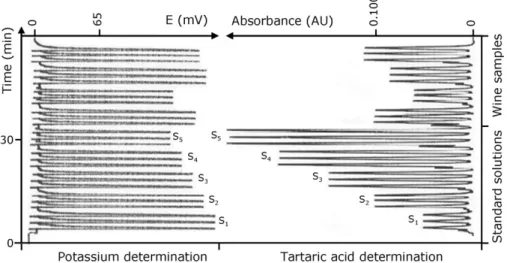
Fig. 3. Recorder output obtained by the presented methodology in the determination of table wines, corresponding to the analysis of a set of standard solutions prepared in
ethanol 12% (S1= tartaric acid (TA) 1.00 g L−1+ K+2000 mg L−1; S2= TA 2.00 g L−1+ K+1290 mg L−1; S3= TA 3.00 g L−1+ K+860 mg L−1; S4= TA 4.00 g L−1+ K+590 mg L−1; S5= TA
5.00 g L−1+ K+390 mg L−1) and four different samples.
The flow rate of R3(Fig. 1) was varied from 0.97 to 2.2 mL min−1.
Similar analytical characteristics were achieved with all tested val-ues. Further studies were carried out using 1.4 mL min−1for R3, to
ensure good baseline stability. The study of RC2 length was
per-formed with lengths ranging from 10 to 50 cm. A good mixing of the sample with the ionic strength adjuster was accomplished with 25 cm, so this was the chosen length for RC2.
Aiming to allow simultaneous determination of both analytes, the first study focused on the evaluation of the behaviour of mixed standard solutions containing tartaric acid and potassium, with 12% of ethanol. Using co-increasing concentration of the ana-lytes, precipitation was observed in the standard solution with higher concentrations of both analytes. To avoid this, increasing concentrations of tartaric acid were combined with decreasing con-centrations of potassium. However, precipitation still occurred in standards containing ethanol 20% (v/v), due to lower solubility. This effect was eliminated by restricting the linear range for the tartaric acid determination to 0.500–2.50 g L−1for analysis of Port wines,
being this range adequate for these kind of samples. Similar slopes were obtained using single or mixed standard solutions, in both determinations. Thus, mixed standards were used in the following studies, allowing a single calibration for both analyte determina-tions.
The R3 solution was composed by the ionic strength adjuster
(NaCl) and KCl to improve baseline stability. NaCl and KCl con-centrations were varied from 3.0× 10⁻³ to 0.20 mol L−1 and from 1.5× 10⁻⁶ to 1.5× 10⁻³mol L−1, respectively. This study
revealed that better baseline stability was obtained using NaCl 7.5× 10⁻²mol L−1and KCl 1.5× 10⁻⁵mol L−1. So, application of the
flow system to wine samples was performed with these concentra-tions in the R3solution.
3.2. Analytical performance
The developed methodology allowed the determination of tar-taric acid, over concentration ranges of 1.00–5.00 g L−1 (table
Table 2
Study of interfering species in the proposed flow system, using table and Port wine matrices.
Specie studied Concentration tested (g L−1) Sample matrix Relative deviation (%)
Tartaric acid determination Potassium determination
Glucose 10 Table wines −0.91 −0.65
Port wines −1.38 −3.48
Frutose 10 Table wines −1.21 −2.60
Port wines −2.68 −2.89
Citric acid 1 Table wines −0.92 −1.59
Port wines 0.66 0.37
Ascorbic acid 0.15 Table wines −4.54 1.65
Port wines −4.95 0.98
Lactic acid 2 Table wines −3.68 0.67
Port wines 2.64 3.66
Malic acid 2 Table wines −4.39 0.36
1.5 Port wines −3.54 −2.61
Acetic acid 5 Table wines −1.51 −1.95
Port wines 0.69 1.00
CO2 2 Table wines 4.19 −0.64
SO2 0.25 Table wines 0.31 1.00
Port wines 1.38 3.74
Glycerol 10 Table wines −0.92 −0.91
Table 3
Results obtained for the determination of tartaric acid and potassium in wines by the proposed flow system (MCFIA) and the manual procedures, and corresponding relative deviations (RD).
Sample Tartaric acid (g L−1) Free potassium (mg L−1) Total potassium (mg L−1)
Manuala MCFIAa RD (%) Manuala MCFIAa RD (%) Manuala
White table wine 1 2.05± 0.01 2.02± 0.01 −1.46 911± 18 884± 10 −2.96 1017± 6
2 1.46± 0.01 1.44± 0.00 −1.37 398± 5 408± 4 2.51 460± 2 3 1.06± 0.01 1.02± 0.01 −3.77 804± 9 794± 9 −1.24 899± 6 4 1.32± 0.00 1.28± 0.02 −3.03 530± 7 514± 14 −3.02 560± 5 5 1.38± 0.01 1.43± 0.01 3.62 621± 6 643± 8 3.54 657± 3 6 1.00± 0.01 1.01± 0.02 1.00 699± 5 733± 14 4.86 794± 4 7 2.18± 0.01 2.09± 0.01 −4.13 1074± 31 1080± 27 0.56 1132± 4 8 1.91± 0.01 1.98± 0.02 3.66 882± 30 859± 9 −2.61 983± 8 9 1.94± 0.01 2.02± 0.01 4.12 428± 9 423± 7 −1.17 464± 3 10 2.09± 0.02 2.16± 0.02 3.35 728± 20 697± 8 −4.26 776± 8
Red table wine 1 1.59± 0.01 1.61± 0.01 1.26 1046± 11 1073± 12 2.58 1165± 3 2 1.92± 0.02 1.82± 0.01 −5.21 1142± 7 1098± 31 −3.85 1265± 3 3 1.70± 0.02 1.78± 0.02 4.71 1214± 10 1186± 14 −2.31 1237± 5 4 2.18± 0.01 2.25± 0.02 3.21 1116± 24 1143± 35 2.42 1171± 6 5 1.95± 0.01 1.89± 0.01 −3.08 1128± 42 1113± 13 −1.33 1168± 8 6 1.69± 0.02 1.66± 0.04 −1.78 1081± 27 1073± 18 −0.74 1133± 3 7 1.64± 0.01 1.69± 0.02 3.05 1330± 39 1368± 16 2.86 1378± 6 8 2.13± 0.01 2.05± 0.02 −3.76 1018± 31 1007± 12 −1.08 1105± 4 9 1.80± 0.01 1.84± 0.01 2.22 1105± 31 1067± 18 −3.44 1182± 6 10 2.38± 0.01 2.42± 0.01 1.68 946± 24 985± 11 4.12 1069± 4 Port wine 1 0.74± 0.01 0.75± 0.01 1.35 841± 31 815± 14 −3.09 993± 9 2 0.58± 0.01 0.60± 0.00 3.45 626± 32 651± 0 3.99 718± 8 3 0.58± 0.01 0.57± 0.01 −1.72 808± 38 788± 18 −2.48 889± 7 4 1.16± 0.01 1.21± 0.00 4.31 832± 30 793± 9 −4.69 972± 7 5 0.67± 0.01 0.64± 0.01 −4.48 652± 28 630± 7 −3.37 699± 4 6 0.83± 0.00 0.81± 0.05 −2.41 868± 39 873± 10 0.58 967± 5 7 0.73± 0.00 0.70± 0.01 −4.11 878± 42 861± 10 −1.94 982± 6 8 0.82± 0.01 0.84± 0.01 2.44 751± 30 776± 9 3.33 864± 5 9 1.14± 0.01 1.19± 0.01 4.39 870± 34 873± 10 0.34 989± 5 10 0.91± 0.01 0.88± 0.01 −3.30 816± 17 793± 9 −2.82 1004± 5
aAverage± standard deviation of three determinations.
wines) or 0.500–2.50 g L−1 (Port wines) and potassium over the range of 390–2000 mg L−1 in wine samples (recorder output presented in Fig. 3). Typical calibration curves are repre-sented by the equations: absorbance = 0.0528 (±0.0020) × [tartaric acid]− 0.0069 (±0.0026), R = 0.9996 (tartaric acid concentra-tions expressed in g L−1) and potential difference (mV) = 59.2 (±1.9) × log [potassium] + 248 (±4), R = 0.9993 (potassium con-centrations expressed in mol L−1). The values between brackets correspond to the standard deviations calculated from 10 regres-sion curves, obtained during a 1-month period.
The detection and quantification limits of the spectrophotomet-ric determination were calculated from the least-squares linear regression parameters[23], providing detection and quantification limits of 0.1 and 0.4 mg L−1, respectively. The detection limit of the potassium ion selective electrode was 1× 10⁻⁴mol L−1.
The determination frequency was calculated by counting the time of each step of the analytical cycle plus the time needed for the switching of the solenoid valves. Considering both determinations, a determination rate of 52 h−1was achieved.
3.3. Interference studies
The study of potential interfering species was performed con-sidering the levels of the main compounds usually present in wine samples. This study was carried out by adding known concentra-tions of the possible interfering compound to a standard solution containing TA 2.00 g L−1+ K+ 700 mg L−1+ ethanol 12% for table
wine matrix and TA 1.00 g L−1+ K+700 mg L−1+ ethanol 20% (v/v)
for Port wine matrix. The apparent TA and K+contents were
cal-culated by interpolation of the obtained analytical signal on the calibration curves previously established with the standard solu-tions. The compounds were considered to interfere if the originated
apparent concentration had a relative deviation above 5%[23]from the standard used in this study. The relative deviations presented inTable 2reveal that none of the studied compounds interfered in the methodology, using both determinations and matrices. Possible interfering cations in the potentiometric measurement were eval-uated in previous studies[24]. The average potassium/interferents ratio in wine samples is expected to be much higher than the tol-erated limit for this sensor system.
3.4. Determination of tartaric acid and potassium in table and Port wines
To assess the accuracy of the method, 30 table wines were ana-lyzed by the proposed system and by the manual procedures. The results and the corresponding relative deviations are presented in Table 3.
Since the origin of tartaric salts is consequent from the reaction between free potassium and tartrates, the objective of this work was the determination of free potassium instead of total potassium content. Nevertheless, total potassium content was also deter-mined using flame emission spectrometry. As expected, higher levels of total potassium content were achieved for all wine samples when compared with the values of the free potassium fraction.
From the comparison of the obtained results by the developed flow system and those provided by the manual procedures, a rela-tion of the type Cs= C0+ SCr(where Csis the result of the proposed
methodology and Crrepresents the results of the discrete method)
was established. The equation parameters and the 95% confidence interval limits[23]are presented inTable 4. These results demon-strate a good agreement between the proposed methodology and the manual methods, since slope is close to unity and the intercept is close to zero.
Table 4
Parameters of the equation Cs= C0+ SCrfor comparison of the results (g L−1of TA; mg L−1of K+) obtained by the developed method (Cs) and the manual procedures (Cr), and
values of the relative standard deviation (R.S.D.) obtained from 10 consecutive analysis of 2 wine samples, for each wine type.
Sample C0a Sa Rb R.S.D.c(%)
Tartaric acid determination White table wines −0.0252 (±0.1806)
1.02 (±0.11)
0.992 0.72 (1.27) 0.37 (2.15) Red table wines 0.0562
(±0.3842) 0.972 (±0.201) 0.969 1.0 (1.77) 0.77 (2.37) Port wines −0.0708 (±0.0855) 1.09 (±0.102) 0.994 2.1 (0.71) 1.8 (1.10) All wines −0.00490 (±0.05570) 1.01 (±0.04) 0.996 Potassium determination White table wines 12.4
(±57.9)
0.977 (±0.079)
0.995 2.4 (395) 1.1 (1068) Red table wines 28.8
(±270.7) 0.973 (±0.242) 0.956 2.2 (1258) 2.1 (978) Port wines 61.4 (±149.1) 0.911 (±0.187) 0.970 1.7 (711) 2.1 (899) All wines 0.360 (±37.8) 0.994 (±0.042) 0.994
aThe values in parentheses are the limits of the 95% confidence intervals for the estimated parameters. bCorrelation coefficient.
c The values in parentheses are the tested sample concentrations, expressed in g L−1of tartaric acid and mg L−1of potassium.
The repeatability of the flow methodology was assessed from 10 consecutive injections of 2 red, 2 white and 2 Port wine samples. Relative standard deviations lower than 2.1 and 2.4% were achieved for tartaric acid and potassium determinations, respectively.
4. Conclusions
The proposed method allowed the determination of tartaric acid and free potassium in table and Port wines, within the concentra-tion ranges expected in this kind of samples.
This paper demonstrated, for the first time, the feasibility and usefulness of using an in-line dialysis process in a multicommuted flow system. The inclusion of the dialysis unit provided the neces-sary sample dilution and eliminated the colour effect of red and Port wines, minimising possible interferences on the spectrophotomet-ric reaction. Thus, the separation mechanism allowed the analysis of both analytes without any sample treatment, using the same sample plug in a single manifold. Moreover, a single calibration curve was carried out for the determination of both analytes, a valuable attribute concerning the time of analysis of potassium and tartaric acid contents during the process of stabilization of wines.
The simple and inexpensive instrumentation, easy manipu-lation and high determination throughput are valuable charac-teristics that make the system appealing for routine analysis in wineries. Good accuracy and precision were achieved, and the results obtained by the developed system compared well with those provided by the manual methods.
Acknowledgements
Sara Oliveira acknowledges the financial support from Fundac¸ão para a Ciência e a Tecnologia (FCT) and FSE (III Quadro Comunitário) for the grant SFRH/BD/23782/2005.
References
[1] M.A. Amerine, C.S. Ough, Acidity and Individual Acids, Wiley, New York, 1980, pp. 58–62.
[2] R.B. Boulton, V.L. Singleton, L.F. Bisson, R.E. Kunkee, The Physical and Chemical Stability of Wine, Chapman & Hall, New York, 1996, pp. 320–331.
[3] International Organisation of Vine and Wine (OIV), Compendium of Interna-tional Methods of Wine and Must Analysis, Tartaric acid, vol. 1, Paris, 2007, MA-E-AS313-05-ACITAR.
[4] F. Lázaro, M.D. Luque de Castro, M. Valcárcel, Analyst 111 (1986) 729–732. [5] A.O.S.S. Rangel, I.V. Tóth, Analyst 123 (1998) 661–664.
[6] H.A.D.F.O. Silva, L.M.B.C. Álvares-Ribeiro, Talanta 58 (2002) 1311–1318. [7] M.G.F. Sales, C.E.L. Amaral, C.M.D. Matos, Fresenius J. Anal. Chem. 369 (2001)
446–450.
[8] R. Schindler, R. Vonach, B. Lendl, R. Kellner, Fresenius J. Anal. Chem. 362 (1998) 130–136.
[9] E.N. Fernandes, B.F. Reis, Anal. Chim. Acta 557 (2006) 380–386.
[10] International Organisation of Vine and Wine (OIV), Compendium of Interna-tional Methods of Wine and Must Analysis, Potassium, vol. 2, Paris, 2007, MA-E-AS322-02-POTASS.
[11] L. Ilcheva, R. Yanakiev, V. Vasileva, N. Ibekwe, Food Chem. 38 (1990) 105–112. [12] A.O.S.S. Rangel, I.V. Tóth, Anal. Sci. 12 (1996) 887–891.
[13] S. Zarate, A.N. Araújo, M.C.B.S.M. Montenegro, R. Perez-Olmos, Am. J. Enol. Vitic. 54 (2003) 46–49.
[14] J.L.F.C. Lima, A.O.S.S. Rangel, Am. J. Enol. Vitic. 41 (1990) 284–288.
[15] J.L.F.C. Lima, A.O.S.S. Rangel, M.M.S. Roque da Silva, Atom. Spectrosc. 12 (1991) 204–206.
[16] M.I.G.S. Almeida, M.A. Segundo, J.L.F.C. Lima, A.O.S.S. Rangel, J. Anal. At. Spec-trom. 24 (2009) 340–346.
[17] M. Miró, W. Frenzel, Anal. Chim. Acta 512 (2004) 311–317.
[18] M.D. Luque de Castro, F.P. Capote, N.S. Ávila, Trac - Trend Anal. Chem. 27 (2008) 315–326.
[19] O. Kritsunankul, B. Pramote, J. Jakmunee, Talanta 79 (2009) 1042– 1049.
[20] S. Alegret, J. Alonso, J. Bartroli, J.L.F.C. Lima, A.A.S.C. Machado, J.M. Paulis, Anal. Lett. 18 (1985) 2291–2303.
[21] J.L.F.C. Lima, A.A.S.C. Machado, Analyst 111 (1986) 799–802.
[22] Association of Official Analytical Chemists (AOAC), Official Methods of Analysis, Method 963.13. Potassium and sodium in wines, vol. II, 16th ed., Arlington, Maryland, 1997.
[23] J.C. Miller, J.N. Miller, Statistics for Analytical Chemistry, 3rd ed., Ellis Horwood, New York, 1993, pp. 53–54, 110–116, 120–124.
[24] International Union of Pure Applied Chemistry (IUPAC), Pure Appl. Chem. 72 (2000) 1851–2082.