Emigdio Enrique Orellana Jimenez1, Sérgio Paulo Hilgenberg2, Márcia Cristina Rastelli3,
Gibson Luiz Pilatti4, Bruno Orellana5, Ulisses Coelho6
Rebonding of unused brackets with
different orthodontic adhesives
Objective: To compare in vitro shear bond strength (SBS) of different orthodontic adhesives in bonding and repeat-edly rebonding metal brackets, and to evaluate the bond failure site with the adhesive remnant index (ARI).
Methods: Specimens consisted of 90 extracted human first premolars, randomly divided into three groups (n=30). The adhesives Alpha Plast (AP), Concise™ (CO) and Transbond™ XT (TB) were used in each group. Three SBS tests were performed, i.e., one at T0 (initial) and the other two at T1 and T2 (first and second rebond-ings, respectively), observing a 24-hour interval. The tests were performed in a Shimadzu AG-I (10kN) SBS test-ing machine, at a speed of 0.5 mm/min.
Results: SBS data were subjected to ANOVA, Tukey’s test and Bonferroni test (p<0.05). For the ARI, the Kruskal Wal-lis test was performed, followed by the Dunn test. The results revealed that at T0 groups AP and CO showed SBS values that were near, but above TB values; and at T1 and T2, the highest SBS values were observed for the AP group, followed by the CO and TB groups.
Conclusion: Statistically significant differences were found in SBS between groups AP, CO and TB during bonding and repeated rebondings of unused metal brackets, with group AP achieving the highest SBS value. Regarding ARI, adhesive AP exhibited bond failure at the enamel-adhesive interface, with a higher enamel fracture frequency.
Keywords: Shear bond strength. Brackets. Orthodontic adhesives. Rebonding.
How to cite this article: Jimenez EEO, Hilgenberg SP, Rastelli MC, Pilatti GL,
Orel-lana B, Coelho U. Rebonding of unused brackets with different orthodontic adhesives. Dental Press J Orthod. 2012 Mar-Apr;17(2):69-76.
Submitted: August 15, 2008 - Revised and accepted: March 2, 2009
» The authors report no commercial, proprietary, or financial interest in the products or companies described in this article.
Contact address: Emigdio Enrique Orellana Jimenez
R. Barão do Serro Azul, 275 – Centro – CEP: 84.010-210 – Ponta Grossa / PR – Brazil E-mail: [email protected]
1 Full Professor and MSc in Orthodontics, State University of Ponta Grossa (UEPG).
2 MSc in Dentistry, UEPG.
3 MSc in Dentistry, UEPG.
4 Associate Professor, PhD, Periodontics, UEPG.
5 Associate Professor, PhD in Orthodontics, Centro Paranaense University (UNICENTRO), Full Professor, PhD in Orthodontics - Center of Higher Education of Campos Gerais (CESCAGE)
INTRODUCTION
Orthodontics has made significant improvements in recent decades with the use of new technologies that streamline orthodontic practice. The introduction of enamel acid etching1 fostered the development of the direct bonding technique, which is currently the meth-od of choice for placement of orthmeth-odontic accessories.2
Despite significant advances in orthodontic ad-hesives in recent years, studies regarding bonding show that 5 to 10% of clinical bond failures occur in both self-curing and light-curing composite res-ins.2,3,4 Bracket bond and rebonding failures are now commonplace, which can result in treatment delays and increased cost of orthodontic treatment main-tenance.4 Bond failures may occur due to chewing, bonding procedure deficiencies or little retention of some bracket bases. It occurs most frequently in mandibular second premolars.5
When bracket bond failure occurs, it can be han-dled in three different manners: 1) Rebonding the re-conditioned bracket, 2) Bonding of an unused bracket, and 3) Using a bracket welded to an orthodontic band in cases of persistent bond failures. Studies show that rebonding an unused bracket provides greater SBS than rebonding a recycled bracket.6,7,8
Another aspect that has been addressed in differ-ent studies is the recycling of brackets, consisting of removal of the remaining adhesive from their base and reusing them. Bracket reuse, however, has been questioned in terms of biosafety and, from a me-chanical standpoint, due to distortion of the bracket slot or base upon removal, which may result in (a) increased friction with orthodontic archwire, or (b) reduced adhesion, respectively. Furthermore, when rebonding brackets, unused or recycled, additional enamel loss may occur during debonding, on removal of adhesive remnant from the tooth surface, or dur-ing rebonddur-ing procedures.5,7
In assessing the rebonding of unused brackets, Bis-hara et al8 highlighted the effect of repeated rebonding on SBS in a sample of 15 extracted human molars using metal upper central incisor brackets (Victory Series™ - 3M). The brackets were bonded and rebonded with Transbond™ XT adhesive system (3M Unitek) three times using unused brackets. Bracket bonding in-volved 300 g of pressure prior to light-curing. Shearing test was performed with a Zwick mechanical testing
machine at 5 mm/min speed. In all trials, the brack-ets were debonded 30 minutes after bonding. ANOVA results for the three debonding times showed no sig-nificant difference between groups (p=0.104). How-ever, when the total shearing load for each tooth was assessed between debonding sequences 1 and 3, ten teeth exhibited a significant SBS decrease (p=0.001) (4.6 ± 2.5 MPa), and five teeth showed significant in-creases (2.8 ± 1.6 MPa). These findings revealed that SBS may increase or decrease after second rebond-ing. Changes in SBS values may be related to changes observed in the morphological characteristics of each etched enamel surface due to adhesive remnant. The adhesive remnant index (ARI) showed no significant difference between the three groups.
Later, in 2002, Bishara et al9 evaluated the effect of bracket rebonding on the SBS of metal orthodon-tic brackets bonded and rebonded with two adhe-sive systems. Thirty-one freshly extracted human molars were used. Unused Victory Series™ maxil-lary central incisor brackets (3M) were employed in each bonding sequence. Group 1 (n=15) was bonded with Transbond™ XT (3M) and Group 2 (n=16) with SmartBond (Gestenco). A Zwick mechanical testing machine was used at a speed of 5 mm/min. Results showed statistically significant differences. Trans-bond™ XT (4.4 ± 2.3 MPa) showed a higher SBS than SmartBond™ (2.2 ± 2.6 MPa) in all tests. Overall, the teeth where brackets were rebonded had sig-nificantly lower SBS owing to the adhesive remnant on the enamel surface. The authors confirmed that changes in SBS may be related to changes in mor-phological characteristics of the enamel surface as a result of the presence of adhesive remnant.
The recent economic globalization has signifi-cantly reduced the costs of orthodontic accessories, leading orthodontists to rebond unused brackets instead of recycled brackets. Bonding a new bracket seems to be faster and less risky than recondition-ing used brackets to bond them anew. The aim of this study, therefore, was to compare the in vitro
MATERIAL AND METHODS
The research design was submitted to and ap-proved by the Ethics Committee of the Ponta Grossa State University (COEP/UEPG) – Report #40/2006, Protocol 06269/06.
This study used 90 extracted maxillary premo-lars — all extractions indicated for orthodontic pur-poses — of patients aged between 12 and 14 years old. With the aid of a stereomicroscope magnifier (8x), the teeth were selected based on the following crite-ria: Intact buccal surface, cracks free, caries, restora-tions or fractures and not having received any kind of pretreatment with chemical agents. Careful cleaning, storage and selection of teeth were meant to avoid changes that might jeopardize adhesion.
Morelli metal brackets specific for canines and premolars were used. The brackets had a base area of 13.02 mm2, and a 13.88 mm perimeter. These val-ues were obtained automatically using the Solid-Works Software according to manufacturer in-structions.
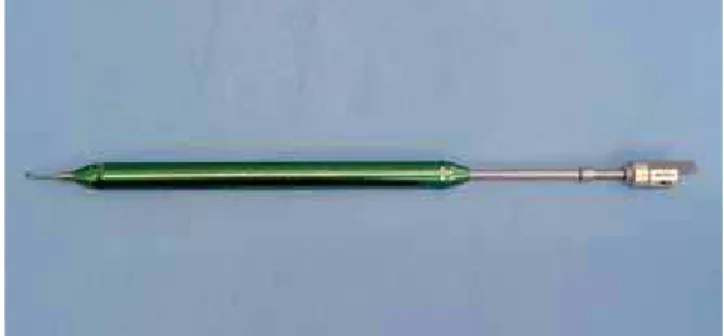
Ninety specimens were randomly divided into 3 groups (n=30), according to which composite resin was used: Group AP – Alpha Plast Orthodontic Adhe-sive (DFL), Group CO – Concise™ Orthodontic Ad-hesive (3M/ESPE), and Group TB – Transbond™ XT (3M Unitek). A prototype device especially developed by the authors for the placement of accessories was used to position all brackets. A 3M Unitek universal positioner and a Morelli dynamometer were modi-fied. With this modification a device was obtained (Fig 1) that positions the bracket and applies pressure evenly (300 grams), according to the method created by Bishara et al.8,9 Therefore, all brackets were bond-ed at a standard height of 4 mm and with a composite layer of uniform thickness. Before curing the mate-rial, all adhesive excess was removed with the aid of an explorer. All bonding procedures were performed by the same operator. After bonding, each specimen was stored for 24 hours in distilled water at room temperature in plastic containers with lids, sepa-rated and identified with specific numbering on the base of the PVC pipe according to each group, which were then subjected to mechanical shear tests. These tests followed the ISO/TR 11405 standard (2003) and were performed in a Shimadzu AG-I (10kN) test-ing machine at loadtest-ing speed of 0.5 mm/min, and
the breaking loads were recorded in Newtons and converted to megapascal. Three SBS tests were per-formed for each of the experimental groups at three different times, i.e., T0 (first bonding), T1 and T2, re-ferring to the first and second rebonding, respective-ly. The interval between rebondings was 24 hours.
The adhesive remnant index (ARI) was observed with a stereomicroscope magnifier (Carl Zeiss, Bra-zil) with 8X magnification. The amount of adhe-sive remaining on the enamel after debonding was qualitatively assessed according to the scores used by Artun and Bergland.10 After recording the ARI at T0, the adhesive remnants were removed with a spe-cial carbide bur manufactured by TP Orthodontics, using high speed and water cooling. After every 10 specimens, a new bur was used to ensure consistent cutting. After recording the ARI at T1 and T2, the ad-hesive remnant removal procedure was repeated and observing a polished enamel surface prior to rebond-ing, thus completing the experiment. This methodol-ogy is simplified in Figure 2.
RESULTS
Table 1 presents the SBS values in MPa, with means and standard deviations for each experi-mental group under study.
The quantitative variable “shear bond strength” was evaluated taking into account the variation fac-tor “experimental group”, in a total of three groups: AP group, CO group and TB group, and time varia-tion factor at 3 times (T0 – bonding, T1 – first re-bonding and T2 – second rere-bonding). According to the null hypothesis (H0) the three materials tested at the 3 times should promote identical shear bond strength. Normal data distribution was confirmed
by the Kolmogorov Smirnov test, which allowed the parametric ANOVA test to be applied to two fixed criteria. Should the null hypothesis be rejected, the Tukey and Bonferroni (post hoc) tests for multiple comparisons would be applied.
Table 1 shows the mean values and standard devia-tions for shear bond strength (MPa) for each group and experimental period. With the exception of T0, when the specimens of groups AP and CO showed SBS values that were very near but higher than TB; the highest SBS values were observed in Group AP, fol-lowed by groups CO and TB.
ANOVA showed that there was statistically signif-icant difference in the group factor (p<0.001); and for the interaction between the time and group factors, (p=0.007). However, it did not show differences for the time factor (p= 0.453).
By applying Tukey’s multiple comparisons test for the group factor, it demonstrated that there
were statistically significant differences between the three experimental groups, with the highest SBS values found in the AP group, followed by the CO group and TB group, which exhibited the low-est values for this variable. The data from these tests can be seen in Figure 4.
To assess the qualitative variable “Adhesive Remnant Index” (ARI) the nonparametric Kruskal Wallis test was applied. If the null hypothesis, ac-cording to which all groups would show equal ARI values, were to be rejected, the comparison between the mean positions of the samples would be per-formed using the Dunn test for multiple compari-sons in order to detect between which groups exist-ed statistically significant differences. For all tests, a 0.05 level of confidence was adopted. The tests were conducted with the aid of SPSS 13.0 software for Windows and Graphpad Instat version 3.05. The non-parametric Kruskal Wallis test was applied and
Figure 2 - Methodology applied to each group.
Table 1 - SBS values in MPa, means and standard deviations for each experimental group under study at T0, T1 and T2
1st Test - T
0 2
nd Test - T
1 3
rd Test - T 2
Groups Groups Groups
Adhesive AP CO TB AP CO TB AP CO TB
Mean 34.18 36.74 22.83 40.28 29.43 23.20 40.71 32.48 25.85
s.d. 13.50 11.25 7.10 11.21 6.54 7.19 8.74 7.79 19.17
Figure 3 - Mean shear bond strength for each experimental group.
Shear bond str
eng
th (MP
a)
Alpha Plast T 0
50 40 30 20 10 0
Alpha Plast T 1
Alpha Plast T 2
Concise T 0
Concise T 1
Concise T 2
Transbond T 0
Transbond T 1
Transbond T 2
Sample T0 (after 24 hours)T1 (after 48 hours)T2
Alpha Plast (n=30)
Initial bonding + shearing + ARI
First rebonding + shearing + ARI
Second rebonding + shearing + ARI
Concise (n=30)
Initial bonding + shearing + ARI
First rebonding + shearing + ARI
Second rebonding + shearing + ARI
Transbond XT (n=30)
Initial bonding + shearing + ARI
First rebonding + shearing + ARI
Test Group Versus group Difference
between means Standard error
Level of
significance 95% confidence interval
Tukey
AP CO 4.4230 1.61479 0.018 0.6123 8.2336
AP TB 13.8099 1.59234 0.000 10.0522 17.5676
CO AP -4.4230 1.61479 0.018 -8.2336 -.6123
CO TB 9.3869 1.52258 0.000 5.7939 12.9800
TB AP -13.8099 1.59234 0.000 -17.5676 -10.0522
TB CO -9.3869 1.52258 0.000 -12.9800
Figure 4 -Tukey’s test for multiple comparisons for the group factor.
Figure 5 - Frequency and median of values obtained for the Adhesive Remnant Index (ARI).
Group n Median Mean positions
Alpha Plast - T0 30 0 60.76
Concise - T0 30 1 82.60
Transbond - T0 30 2 153.48
Alpha Plast - T1 21 1 124.45
Concise - T1 24 2 151.73
Transbond - T1 26 1 126.17
Alpha Plast - T2 15 1 100.40
Concise - T2 24 1 82.16
Transbond - T2 25 2 140.24
Figure 6 - Mean positions obtained for the Adhesive Remnant Index (ARI) for the Kruskal-Wallis test.
* Statistically significant difference (p<0.05) found in comparing groups AP and CO.
* Statistically significant difference (p<0.05) found when comparing to group CO.
180
Alpha Plast Concise Transbond T0 T1 T2
160 140 120 100 80 60 40 20 0
yielded a value of KW=65.79, with 8 degrees of free-dom, considered statistically significant (p<0.0001). Thus, the null hypothesis (equal ARI for all groups) was rejected. Figure 5 shows the frequency and me-dian of values obtained for ARI. The comparison between the sample mean positions was made by the Dunn multiple comparisons test, results can be seen in Tables 2 and 3. At T0 the ARI for Group TB was statistically higher than those of groups AP and CO (p<0.05). There were no statistically significant differences between the groups at T1, whereas at T2, the ARI for group TB was statistically higher than that of group C (p<0.05), with no difference between the other groups, as can be observed in Figure 6.
In analyzing the behavior of group AP at differ-ent times, a statistically significant difference was found only between T0 and T1, while for group CO statistically significant differences were detected between T0 and T1, and also between T1 and T2.
There was no statistically significant difference between periods T0 and T2, and between the three periods assessed for group TB.
DISCUSSION
Bracket bond failures are a frequent occurrence in orthodontic practice. It is jeopardizing as it results in increased treatment time and operating costs, requir-ing a greater number of appointments11 which can in-convenience the orthodontist and the patient alike. Identifying the cause of failure can help orthodontists reduce its occurrence, and instruct the patient on how to take proper care in order to avoid repeated bond failures and rebondings.12 It is also important to un-derstand the bonding mechanism, that involve at least two interfaces: The enamel/adhesive interface and bracket/adhesive interface.2
When faced with the need to rebond metal brackets, several options are available: Using the
same bracket that suffered debonding,6,7,13-17 using thermocycled brackets,5,18 or sandblasted recycled brackets,19 with or without primer20,21 or using new brackets.8,9,19,22 This fact establishes the necessity of further scientific research in the pursuit of the most appropriate method.
In this study, shear bond strength (SBS) tests were employed by following the recommenda-tions found in the articles reviewed in the litera-ture5,8,9,14,16,21,22 with loading speed of 0.5 mm/min. (ISO TR 11405) provided by a mechanical testing machine Shimadzu AG-I with a 10kN load.
The most widely cited light-cured orthodontic adhesive in the literature was Transbond XT, which seems to be the “gold standard.” It is a hybrid resin with a fair amount of filler. In this study, this adhe-sive achieved a shear bond strength (MPa) of 22.83 ± 7.10 in initial bonding; 23.20 ± 7.19 in the first re-bonding and 25.85 ± 10.17 in the second rere-bonding. These values are close to those reported by Mui et al7, Liu et al,23 Mondelli and Freitas17, and Pithon et al,21 who demonstrated Transbond XT’s adequate adhesion to dental structure. These findings differ
T0 x T1 T0 x T2 T1 x T2
Difference
between points p value
Difference
between points p value
Difference
between points p value
Alpha Plast -63.686 p<0.01 -39.633 p>0.05 ns 24.052 p>0.05 ns
Concise -69.129 p<0.01 0.4333 p>0.05 ns 69.536 p<0.01
Transbond 27.31 p>0.05 ns 13.243 p>0.05 ns -14.067 p>0.05 ns
Table 2 - Comparison between the mean positions by the Dunn multiple comparisons test.
T0 x T0 T1 x T1 T2 x T2
Difference
between points p value
Difference
between points p value
Difference
between points p value
Alpha Plast X Concise -21.833 p>0.05 ns -27.277 p>0.05 ns 18.233 p>0.05 ns
Alpha Plast X Transbond -92.717 p<0.001 -1.721 p>0.05 ns -39.84 p<0.05 ns
Concise X Transbond 70.883 p>0.001 -25.556 p>0.05 ns 58.073 p>0.05
Table 3 -Comparison between the mean positions by the Dunn multiple comparisons test.
from the lower values found by Bishara et al8,9 due to the fact that the SBS reading was performed only 30 minutes after rebonding by these authors.
Concise Orthodontic Adhesive was cited in sev-eral studies.5,13,19,21 This adhesive contains 78% fill-er and is self-curing, for this reason it is the most often cited in studies assessing chemical-cured adhesives. In this study, this adhesive achieved a shear bond strength (MPa) of 36.74 ± 11.25 at ini-tial bonding (T0); 29.43 ± 6.54 in the first rebond-ing (T1) and 32.48 ± 7.79 in the second rebonding (T2). These values are close to those reported by Francisconi et al,5 Quick et al19 and Pithon et al21 who demonstrated that this adhesive also features adequate adhesion to dental structure.
But this is no longer true and bracket recycling can af-fect bonding quality, as shown by Dickinson and Pow-ers25 as it deteriorates the bracket mesh base, thereby reducing shear bond strength (SBS).
SBS on rebonding remains controversial. In the view of some authors it is inferior to the first bond-ing20 whereas others argue that it is comparable to6 or even superior to the original bonding.9 This study in-volved unused brackets and found statistically signifi-cant differences in SBS between bonding (T0) and the first rebonding (T1) for the Alpha Plast group, whereas for the Concise group the difference was significant between T0 and T1 as well as T1 and T2. For the Trans-bond XT group, no statistically significant difference was found between the three periods, in disagreement with Wright and Powers26 who found no loss in the SBS properties of this adhesive.
The ARI index used in this study was consistent with the results reported in the work of Hirani and Sheriff20, which showed that the group bonded with Transbond XT had a score ranging between 1 and 2, in the same way, bondings made with Concise also had a score ranging between 1 and 2. Bondings performed with the Alpha Plast showed that ARI scores were con-centrated between 0 and 1, indicating that part of the adhesive remained attached to the bracket and part to the tooth. However, this adhesive showed the greatest number of enamel fractures, compared with the other composite resins tested in this study.
The Alpha Plast adhesive system has seldom been used in laboratory experiments and was test-ed in this study because it is a self-curing adhesive widely used by orthodontists. It shows good bond-ing results as ascertained by the values achieved in
the tests of this study, with values of 34.18 ± 13.50 MPa for initial bonding, 40.28 ± 11.21 in the first re-bonding and 40.71 ± 8.74 in the second rere-bonding. These values are statistically superior to the results found for the Concise and Transbond XT adhesives. This superiority can be due to the finding reported by Dickinson and Powers25 namely, that composite resin filler content was shown in vitro to affect the adhesive force of brackets that rely on mechanical retention. Composites resins with a high amount of filler would provide improved adhesion to metal brackets when compared to low-filler composite resins. However, the elevated SBS of AP adhesive, caused a negative consequence of enamel fracture in most of the times, indicating the necessity of fur-ther studies by the manufacturer, in the attempt of keeping the adhesive properties while reducing biological consequences.
CONCLUSIONS
Given the methods used and results achieved in this in vitro study, it is reasonable to conclude that:
1 – There was a statistically significant difference in shear bond strength (MPa) between the Al-pha Plast and Transbond XT groups, as well as between the Alpha Plast and Concise Orth-odontic groups during bonding and repeated rebonding of new metal brackets.
1. Buonocore MG. A simple method of increasing the adhesion of acrylic filling materials to enamel surfaces. J Dent Res. 1955;34(6):849-53.
2. Ianni Filho D, Silva TBC, Simplício AHM, Lofredo LCM, Ribeiro RP. Avaliação in vitro da força de adesão de materiais de colagem em Ortodontia: ensaios mecânicos de cisalhamento. Rev Dental Press Ortod Ortop Facial. 2004;9(1):39-48.
3. Zachrisson BU. Clinical experience with direct bonded orthodontic retainers. Am J Orthod. 1977;71(4):440-8.
4. Chamda RA, Stein E. Time-related bond strengths of light-cured and chemically cured bonding systems: an in vitro study. Am J Orthod Dentofacial Orthop. 1996;110(4):378-82.
5. Francisconi PAS, Souza CS, Scucuglia LR, Rosa HM. Influência da termociclagem na análise da resistência ao cisalhamento do cimento de ionômero de vidro (Fuji Ortho LC) e da resina composta (Concise Ortodôntico), utilizados na colagem de braquetes ortodônticos. Rev FOB. 2000;8(3-4):9-14.
6. Egan FR, Alexander AS, Cartwright GE. Bond strength of rebonded orthodontic brackets. Am J Orthod Dentofacial Orthop. 1996;109(1):64-70.
7. Mui B, Rossouw PE, Kulkarni GV. Optimization of procedure for rebonding dislodged orthodontic brackets. Angle Orthod. 1999;69(3):276-81.
8. Bishara SE, VonWald L, Laffoon JF, Warren JJ. The effect of repeated bonding on the shear bond strength of a composite resin orthodontic adhesive. Angle Orthod. 2000;70(6):435-41.
9. Bishara SE, Laffoon JF, Vonwald L, Warren JJ. The effect of repeated bonding on the shear bond strength of different orthodontic adhesives. Am J Orthod Dentofacial Orthop. 2002;121(5):521-5.
10. Artun J, Bergland S. Clinical trials with crystal growth conditioning as an alternative to acid-etch enamel pretreatment. Am J Orthod Dentofacial Orthop. 1984;85(4):333-40.
11. Pinto AS, Pinto LAMS, Cilense M, Melo ACM, Terra AMV. A reciclagem de braquetes na clínica ortodôntica. Ortodontia. 1996;29(2):63-7.
12. Powers JM, Kim HB, Turner DS. Orthodontic adhesives and bond strength testing. Semin Orthod. 1997;3(3):147-56.
13. Penido SMMO, Martins JCR. Avaliação da resistência ao cisalhamento de braquetes reciclados e novos recolados. Rev Dental Press Ortod Ortop Facial. 1998;3(6):45-52.
REFERENCES
14. Tavares SW, Consani S, Nouer D, Magnani MBBA, Pereira Neto JS, Romano F. Evaluation in vitro of the shear bond strength of aluminum oxide recycled brackets. Braz J Oral Sci. 2003;2(7):378-81.
15. Eminkahyagil N, Arman A, Cetinsahin A, Karabulut E. Effect of resin-removal methods on enamel and shear bond strength of rebonded brackets. Angle Orthod. 2006;76(2):314-21.
16. Pithon MM, Santos RL, Oliveira MV, Ruellas AC, Romano FL. Metallic brackets bonded with resin-reinforced glass ionomer cements under different enamel conditions. Angle Orthod. 2006;76(4):700-4.
17. Mondelli AL, Freitas MR. Estudo comparativo da resistência adesiva da interface resina/braquete, sob esforços de cisalhamento, empregando três resinas compostas e três tipos de tratamento na base do braquete. Rev Dental Press Ortod Ortop Facial. 2007;12(3):111-25.
18. Harari D, Gillis I, Redlich M. Shear bond strength of a new dental adhesive used to bond brackets to unetched enamel. Eur J Orthod. 2002;24(5):519-23.
19. Quick AN, Harris AM, Joseph VP. Office reconditioning of stainless steel orthodontic attachments. Eur J Orthod. 2005;27(3):231-6.
20. Hirani S, Sherriff M. Bonding characteristics of a self-etching primer and precoated brackets: an in vitro study. Eur J Orthod. 2006;28(4):400-4.
21. Pithon MM, Oliveira MV, Ruellas ACO, Romano FL. Shear bond strength of orthodontic brackets to enamel under different surface treatment conditions. J Appl Oral Sci. 2007;15(2):127-30.
22. Chung CH, Friedman SD, Mante FK. Shear bond strength of rebonded mechanically retentive ceramic brackets. Am J Orthod Dentofacial Orthop. 2002;122(3):282-7. 23. Liu JK, Chung CH, Chang CY, Shieh DB. Bond strength and debonding
characteristics of a new ceramic bracket. Am J Orthod Dentofacial Orthop. 2005;128(6):761-5.
24. Tavares SW, Consani S, Nouer DF, Magnani MBBA, Nouer PRA, Martins LM. Shear bond strength of new and recycled brackets to enamel. Braz Dent J. 2006;17(1):44-8.
25. Dickinson PT, Powers JM. Evaluation of fourteen direct-bonding orthodontic bases. Am J Orthod. 1985;78(6):630-9.