Oxidative Stress and Endothelial Dysfunction in Chronic Kidney
Disease
Valeria Costa-Hong
1, Luiz Aparecido Bortolotto
1, Vanda Jorgetti
2, Fernanda Consolim-Colombo
1, Eduardo M Krieger
1,
Jose Jayme Galvão De Lima
1Unidade de Hipertensão, Instituto do Coração (InCor)1; Disciplina de Nefrologia do Hospital das Clínicas da Faculdade de Medicina da Universidade de São Paulo2, São Paulo, SP - Brazil
Summary
Background:Chronic kidney disease (CKD) is characterized by the high prevalence of atherosclerosis. Considering that endothelial dysfunction and oxidative stress are promoters of atherosclerosis, it is of interest to verify whether the two conditions are associated in CKD patients still free of clinical cardiovascular disease (CVD).
Objective:To evaluate the association between oxidative stress and endothelial function in end-stage CKD patients without clinically evident CVD.
Methods:We studied 22 nondiabetic, nonsmoker CKD patients without clinical CVD treated by maintenance hemodialysis and 22 healthy controls. Endothelium- dependent and independent vascular reactivity and oxidative stress, as determined by the plasma levels of thiobarbituric acid-reactive substances – TBARS, were evaluated in all subjects.
Results: Endothelium-dependent (6.0 ± 4.25 vs. 11.3 ± 4.46 %, p< 0.001) and endothelium-independent (11.9 ± 7.68 vs. 19.1 % ± 6.43 %, p< 0.001) vascular reactivity were reduced, while TBARS (2.63 ± 0.51 vs. 1.49 ± 0.42 nmols/mL) was increased in CKD patients when compared to controls. TBARS levels were significantly related to endothelium-dependent vascular reactivity (r= - 0.56, p< 0.001) and to systolic blood pressure (r= - 0.48, p= 0.002).
Conclusion:Oxidative stress is increased in CKD patients free of CVD and is associated with endothelial dysfunction in patients and controls. The results suggest that oxidative stress and endothelial dysfunction may be involved in the increased susceptibility of CKD patients to CVD and cardiovascular complications. (Arq Bras Cardiol 2009;92(5):381-386)
Key words:Oxidative stress; atherosclerosis; kidney failure chronic; renal insufficiency; renal dialysis.
Mailing address: Luiz Aparecido Bortolotto •
Unidade de Hipertensão, Instituto do Coração (InCor) - Rua Enéas Carvalho Aguiar, 44, 05.403-000, São Paulo, SP - Brazil E-mail: [email protected], [email protected]
Manuscript received July 16, 2008; revised manuscript received August 27, 2008; accepted September 04, 2008.
Introduction
Oxidative stress is defined as tissue damage caused by the disequilibrium between pro- and antioxidant factors. It is present in a large variety of pathological conditions and it is believed that it functions as a pathogenetic agent in many of these conditions. One of the main effects of oxidative stress is the decrease in the biological activity of nitric oxide (NO)1.
This effect is expressed through the endothelial dysfunction, which is considered a precursor of atherosclerosis2.
The chronic kidney disease (CKD) is characterized by a state of generalized vasculopathy, accompanied by elevated cardiovascular mortality, caused mainly by atherosclerosis3.
As the endothelial dysfunction is involved in the genesis of atherosclerosis and the oxidative stress can cause this dysfunction, it is of interest to verify whether the two conditions are associated in patients with CKD still without clinical cardiovascular disease (CVD). This approach can allow the early identification of patients
at higher risk of developing future complications.
The objective of this investigation was to evaluate possible associations between oxidative stress and endothelial dysfunction in a group of patients with advanced CKD (stage 5) still free of clinically evident CVD.
Methods
The participants (patients and controls) signed the Free and Informed Consent Form and the study was approved by the Ethics Committee of the Institution. The patients were selected from the Osteodystrophy Outpatient Clinic of Hospital das Clinicas of the School of Medicine of the University of Sao Paulo (HC-FMUSP) and referred to Instituto do Coracao (The Heart Institute-InCor) for cardiovascular assessment.
Original Article
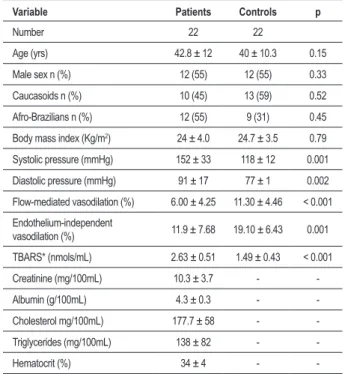
Table 1 – Clinical, laboratory and demographic characteristics and vascular reactivity and anatomy evaluation values and large artery function in the patients and controls
Variable Patients Controls p
Number 22 22
Age (yrs) 42.8 ± 12 40 ± 10.3 0.15
Male sex n (%) 12 (55) 12 (55) 0.33
Caucasoids n (%) 10 (45) 13 (59) 0.52
Afro-Brazilians n (%) 12 (55) 9 (31) 0.45
Body mass index (Kg/m2) 24 ± 4.0 24.7 ± 3.5 0.79
Systolic pressure (mmHg) 152 ± 33 118 ± 12 0.001
Diastolic pressure (mmHg) 91 ± 17 77 ± 1 0.002
Flow-mediated vasodilation (%) 6.00 ± 4.25 11.30 ± 4.46 < 0.001
Endothelium-independent
vasodilation (%) 11.9 ± 7.68 19.10 ± 6.43 0.001
TBARS* (nmols/mL) 2.63 ± 0.51 1.49 ± 0.43 < 0.001
Creatinine (mg/100mL) 10.3 ± 3.7 -
-Albumin (g/100mL) 4.3 ± 0.3 -
-Cholesterol mg/100mL) 177.7 ± 58 -
-Triglycerides (mg/100mL) 138 ± 82 -
-Hematocrit (%) 34 ± 4 -
-* Thiobarbituric acid-reactive species
vascular access in one of the upper limbs, only, were studied. The exclusion criteria were the following: diabetes, cancer, clinically evident cardiovascular disease, smokers, liver or thyroid disease, use of oral contraceptives or drugs for the treatment of dyslipidemia and patients with a history of myocardial infarction, stroke, myocardial or peripheral vascular revascularization, renal transplant and parathyroidectomy.
Clinical and laboratory evaluation
All patients were submitted to comprehensive cardiovascular and laboratory evaluation, which included chest x-ray, two-dimensional echocardiogram and electrocardiogram at rest. The coronary artery disease was investigated and excluded in all cases by myocardial scintigraphy and pharmacological stress with dipyridamole. Total cholesterol and fractions, triglycerides, albumin, hematocrit and creatinine were measured by conventional methods.
Oxidative stress was assessed in plasma, through the colorimetric method, by determining the products of the peroxidation of the lipids that react with thiobarbituric acid (TBARS). TBARS measurements were carried out in the Laboratory of Basic Research on Kidney Disease (LIM 12, Discipline of Nephrology, School of Medicine of the University of Sao Paulo). The effect of the oxygen-reactive species on the lipids leads to the production of several substances that react with the thiobarbituric cid and can be measured by spectrophotometry. The plasma samples were treated with trichloroacetic acid before the addition of 0.6% thiobarbituric acid.
The optical density of the supernatant was determined by spectrophotometry and the concentration of the products of the lipidic peroxidation was calculated. The levels of TBARS were expressed in nmols/mL4.
Table 1 shows the main clinical and laboratory data of the patients.
Hemodialysis
The patients had been undergoing hemodialysis for 17 to 148 months (median 67 months) through an arteriovenous fistula, three times a week, for 4 hours.
Medication
The treatment was based on the reduction of the intake of phosphorus-rich foods and the prescription of calcitriol and sevelamer and calcium supplements. Forty-four percent of the patients used calcium-based phosphorus chelants, 42% used sevelamer, 27% used calcitriol and 7% used desferal. The anti-hypertensive medication was based on the use of renin-angiotensin system inhibitors, beta-blockers and calcium-channel inhibitors, alone or in combination, in 48%, 44% and 48% of the patients. All medication, including the hypotensive medication, was withdrawn 4 days before the tests.
Endothelial function assessment
The tests were carried out in the morning, after an 8-hour fast, with the individual resting, in the horizontal decubitus position, in a calm environment, with electrocardiographic and
blood pressure monitoring. The flow-mediated vasodilation (endothelium-dependent) and the smooth vascular muscle response to nitroglycerin, a vasodilator (endothelium-independent) were assessed sequentially in the brachial artery of the contralateral limb to the arteriovenous fistula used in the dialysis. The tests were performed according to the directives of the International Brachial Artery Reactivity Task Force (version 2002)5.
The brachial artery was accessed above the elbow fold. The artery diameter was verified by ultrasonography (Sequoia Echocardiography System, version 6.0, Acuson, Siemens, Ca, USA) equipped with a high-resolution linear transducer (7-12 MHz) and coupled to a computer specifically programmed to record and analyze this type of data. Six images were elected for each phase of the test, coinciding with the R wave of the electrocardiogram. The data were obtained at basal conditions, after the induction of reactive hyperemia and after the administration, by oral aerosol, of 0.45 mg of nitroglycerin (Natrispray; Procter & Gamble Pharmaceutics, France). The degree of vasodilation obtained was expressed as a percentage in relation to basal values.
The blood samples were collected and all assessments were carried out 20 to 30 hours after a dialysis session, in one day between two consecutive dialysis sessions.
Controls
Figure 1 -Flow-mediated vasodilation and endothelium-independent
vasodilation in patients with CKD (n=22) and controls (n=22). Differences between the groups: p<0.001.
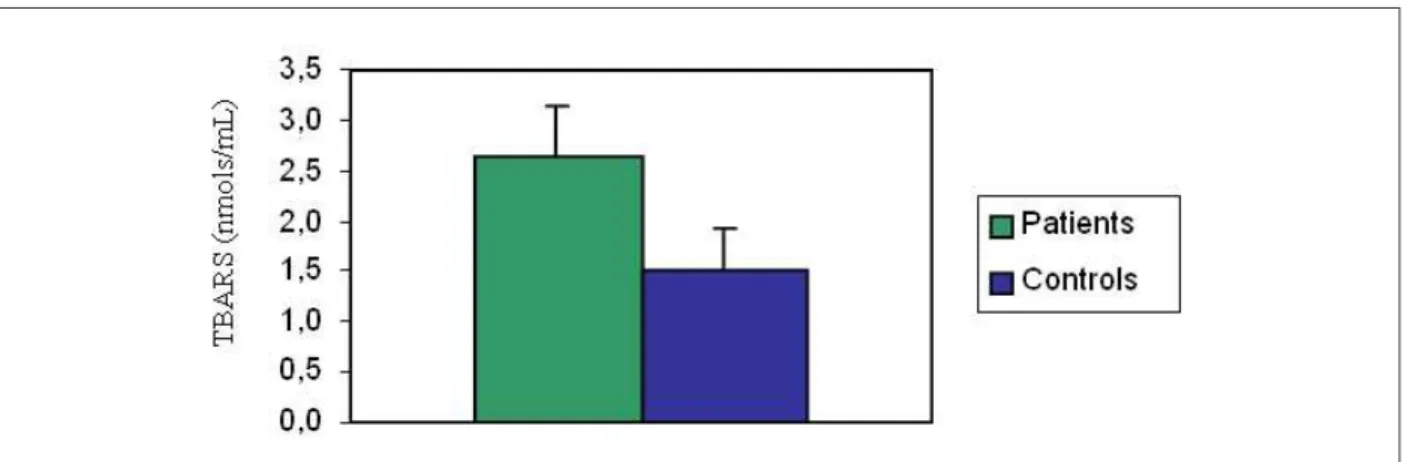
Figure 2 -Thiobarbituric acid-reactive species in Patients with CKD (n=22) and Controls (n=22). Difference between the groups < 0.001.
were submitted to the evaluation of vascular reactivity in the brachial artery and oxidative stress, following the same protocols used for the patients.
Statistical analysis
The results are expressed as means ± standard deviations, medians and percentages. A p value < 0.05 was considered statistically significant. The variables were compared by Student’s t test, Chi-square test and analysis of covariance (ANCOVA), when appropriate. The correlations were verified by Pearson’s correlation analysis. Initially, the following variables were assessed at the univariate model: age, sex, ethnicity, duration of dialysis, body mass index (BMI), systolic and diastolic arterial pressures, hematocrit and TBARS levels, albumin, total cholesterol and triglycerides. The variables selected by the univariate model were tested at a multivariate model (logistic regression) to verify the independently associated factors with alterations in function and vascular structure. All calculations were carried out using the SPSS software package, version 10.0.
Results
Table 1 shows the main demographic and clinical characteristics as well as vascular reactivity values of patients and controls. Age, sex, ethnicity and BMI were similar in the two groups. On the other hand, the systolic and diastolic pressures were higher in the patients’ group.
Vascular reactivity
Not only the endothelium-dependent FMV (6.0 % ± 4.3 %
versus 11.3 % ± 4.5 %; p< 0.001), but also the
endothelium-independent vasodilation (11.9 % ± 7.7 % versus 19.1 % ± 6.4 %; p< 0.001) was decreased in comparison to the values observed in the controls (Table 1 and Figure 1). In patients, the values obtained were around 50% lower than those observed in the controls.
The oxidative stress, determined by the plasma concentration of the TBARS, was significantly higher in the patients than in the controls (2.63 ± 0.51 versus 1.49 ± 0.43, p< 0.001, Table 1 and Figure 2).
Original Article
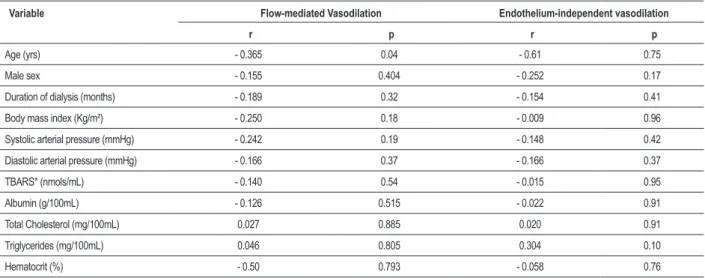
Table 2 – Correlations between the clinical and laboratory variables and low-mediated vasodilation and endothelium-independent vasodilation in the patients
Variable Flow-mediated Vasodilation Endothelium-independent vasodilation
r p r p
Age (yrs) - 0.365 0.04 - 0.61 0.75
Male sex - 0.155 0.404 - 0.252 0.17
Duration of dialysis (months) - 0.189 0.32 - 0.154 0.41
Body mass index (Kg/m²) - 0.250 0.18 - 0.009 0.96
Systolic arterial pressure (mmHg) - 0.242 0.19 - 0.148 0.42
Diastolic arterial pressure (mmHg) - 0.166 0.37 - 0.166 0.37
TBARS* (nmols/mL) - 0.140 0.54 - 0.015 0.95
Albumin (g/100mL) - 0.126 0.515 - 0.022 0.91
Total Cholesterol (mg/100mL) 0.027 0.885 0.020 0.91
Triglycerides (mg/100mL) 0.046 0.805 0.304 0.10
Hematocrit (%) - 0.50 0.793 - 0.058 0.76
* Thiobarbituric acid-reactive species.
Table 3 – Correlations between thiobarbituric acid-reactive species (TBARS) with clinical data and vascular variables of patients and controls analyzed together (n=44)
Variable TBARS
r P
Flow-mediated vasodilation (%) - 0.56 < 0.001
Endothelium-independent vasodilation (%) - 0.44 0.004
Body mass index (Kg/m²) 0.35 0.84
Age (yrs) 0.05 0.74
Systolic arterial pressure (mmHg) 0.48 0.002
Diastolic arterial pressure (mmHg) 0.44 0.004
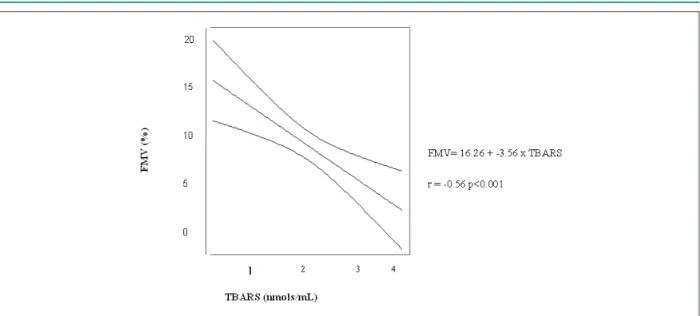
the endothelium-independent vasodilation (p= 0.004). There were also positive correlations with the systolic and diastolic pressures. However, at the multivariate analysis (Table 4, Figure 3) only the FMV (p= 0.001) and the systolic arterial pressure (p= 0.001) remained in the model.
Discussion
The most interesting result of this study was the observation of the inverse association between oxidative stress and endothelium-dependent flow-mediated vasodilation. This correlation, however, was only observed when patients and controls were analyzed together. We did not observe significant correlations between oxidative stress and vascular reactivity in the patients, although the oxidative stress was higher in patients than in controls.
We interpreted this negative result as a consequence of the little variability of the individual value of TBARS around the
mean value. This might mean that, in patients with advanced CKD, oxidative stress reaches maximum levels and that other factors have a crucial role in endothelium dysfunction, although without necessarily ruling out the participation of oxidative stress6.
Finally, the absence of correlation between oxidative stress and endothelium-independent vasodilation at the multivariate analysis is in accordance with the hypothesis that the decrease in vascular reactivity in the studied individuals (patients and controls) was due primarily to the endothelial dysfunction, with the participation of oxidative stress7-9.
Other factors must be recalled as possibly responsible for the decreased vascular reactivity in our patients. The asymmetric dimethylarginine (ADMA), of which levels are elevated in CKD, interferes with the NO generation through the competitive inhibition with the NO-synthase enzyme8,10.
Chronic inflammation, with an increase in factors such as C-reactive protein and several cytokines, also occurs in CKD and interferes with the endothelial fucntion11,12. However, there
are no data to verify the participation of these factors in the present investigation.
The endothelial dysfunction is currently considered an early marker of atherosclerosis and cardiovascular disease, in general13-15. Our study shows that flow-mediated
vasodilation is impaired in patients with CKD without systemic or coronary atherosclerotic disease. The data allow us to speculate that this alteration might be in part caused by oxidative stress, as previously demonstrated in the general population12. If that is the case, conducts destined
to reduce or control the oxidative stress might influence the prognosis of these patients, especially those who are still free of significant atherosclerotic lesions.
Table 4 –Variables associated to the concentration of thiobarbituric acid-reactive species (TBARS) in the group of patients and controls analyzed together (n=44) (logistic regression)
Chi-square F P
Flow-mediated vasodilation (%) 5.12 11.8 0.001
Systolic arterial pressure (mmHg) 6.85 8.6 0.001
Figure 3 -Correlation between low-mediated vasodilation (FMV) and thiobarbituric acid-reactive species (TBARS).
and we did not evaluate other factors potentially involved in endothelial dysfunction. The main asset of the study is the fact that we studied a homogenous population of non-diabetic individuals, in whom cardiovascular disease was thoroughly investigated. For this reason we can affirm with a reasonable degree of safety that the observed alterations were primarily due to CKD and not to comorbidities.
In brief, the present study confirms the existence of the involvement of vascular reactivity in patients with CKD and
suggests that this phenomenon is caused by uremia and not by other associated conditions. The involvement of the vascular reactivity, even though it involves endothelium-dependent and independent vasodilation, seems to be mainly due to the endothelial dysfunction and oxidative stress is probably involved in this process.
Potential Conflict of Interest
No potential conflict of interest relevant to this article was reported.
Sources of Funding
There were no external funding sources for this study.
Study Association
This article is part of the thesis of Doctoral submitted by Valéria Aparecida da Costa Hong, from Universidade de São Paulo – Instituto do Coração.
References
1. Widlansky ME, Gokce N, Keaney JF Jr, Vita JA. The clinical implications of endothelial dysfunction. J Am Coll Cardiol. 2003; 42: 1149-60.
2. Bonetti PO, Lerman LO, Lerman A. Endothelial dysfunction: a marker of atherosclerotic risk. Arterioscler Thromb Vasc Biol. 2003; 23: 168-75.
3. Go AS, Chertow GM, Fan D, McCulloch CE, Hsu CY. Chronic kidney disease and the risks of death, cardiovascular events, and hospitalization. N Engl J Med. 2004; 351: 1296-305.
4. Ohkawa H, Ohishi N, Yagi K. Assay for lipid peroxides in animal tissues by thiobarbituric acid reaction. Anal Biochem. 1979; 95: 351-8.
5. Corretti MC, Anderson TJ, Benjamin EJ, Celermajer D, Charbonneau F,
Creager MA, et al. Guidelines for the ultrasound assessment of endothelial-dependent flow-mediated vasodilation of the brachial artery: a report of the International Brachial Artery Reactivity Task Force. J Am Coll Cardiol. 2002; 39: 257-65.
6. London GM, Pannier B, Agharazii M, Guerin AP, Verbeke FH, Marchais SJ. Forearm reactive hyperemia and mortality in end-stage renal disease. Kidney Int. 2004; 65: 700-4.
7. Ghiadoni L, Cupisti A, Huang Y, Mattei P, Cardinal H, Favilla S, et al. Endothelial dysfunction and oxidative stress in chronic renal failure. J Nephrol. 2004; 17: 512-9.
Original Article
determinants of endothelial dysfunction in CKD: oxidative stress and asymmetric dimethylarginine. Am J Kidney Dis. 2006; 47: 42-50.
9. Siems W, Quast S, Carluccio F, Wiswedel I, Hirsch D, Augustin W, et al. Oxidative stress in chronic renal failure as a cardiovascular risk factor. Clin Nephrol. 2002; 58 (Suppl 1): S12-9.
10. Kocak H, Gumuslu S, Ermis C, Mahsereci E, Sahin E, Gocmen AY, et al. Oxidative stress and asymmetric dimethylarginine is independently associated with carotid intima media thickness in peritoneal dialysis patients. Am J Nephrol. 2008; 28: 91-6.
11. Annuk M, Soveri I, Zilmer M, Lind L, Hulthe J, Fellstrom B. Endothelial function, CRP and oxidative stress in chronic kidney disease. J Nephrol. 2005; 18: 721-6.
12. Annuk M, Zilmer M, Lind L, Linde T, Fellstrom B. Oxidative stress and endothelial function in chronic renal failure. J Am Soc Nephrol. 2001; 12: 2747-52.
13. Patel AR, Kuvin JT, Sliney KA, Rand WM, Chiang JC, Udelson JE, et al. Gender-based differences in brachial artery flow-mediated vasodilation as an indicator of significant coronary artery disease. Am J Cardiol. 2005; 96: 1223-6.
14. Perrone-Filardi P, Cuocolo A, Brevetti G, Silvestro A, Storto G, Dellegrottaglie S, et al. Relation of brachial artery flow-mediated vasodilation to significant coronary artery disease in patients with peripheral arterial disease. Am J Cardiol. 2005; 96: 1337-41.