Proteomic profiling of liver from
Elaphe taeniura
, a common snake in eastern
and southeastern Asia
Liang Chen
1, Hengchuan Xia
3, Yiting Wang
2, Keping Chen
3, Lvgao Qin
3, Bin Wang
3, Qin Yao
3,
Jun Li
4, Yuanqing He
3and Ermi Zhao
1,51
Key Laboratory of Bio-resources and Eco-environment, College of Life Sciences, Sichuan University,
Chengdu, Sichuan Province, China.
2
College of Athletic Sports, Yangzhou University, Yangzhou, Jiangsu Province, China.
3Institute of Life Sciences, Jiangsu University, Zhenjiang, Jiangsu Province, China.
4
Center for Physics and Chemistry, Jiangsu University, Zhenjiang, Jiangsu Province, China.
5
Chengdu Institute of Biology, the Chinese Academy of Sciences, Chengdu, Sichuan Province, China.
Abstract
Snake liver has been implicated in the adaptation of snakes to a variety of habitats. However, to date, there has been no systematic analysis of snake liver proteins. In this study, we undertook a proteomic analysis of liver from the colubrid snakeElaphe taeniura using a combination of two-dimensional electrophoresis (2-DE) and matrix-assisted laser desorption/ionization time of flightmass spectrometry (MALDI-TOF MS). We also constructed a local protein sequence database based on transcriptome sequencing to facilitate protein identification. Of the 268 protein spots revealed by 2-DE 109 gave positive MS signals, 84 of which were identified by searching the NCBInr, Swiss-Prot and local databases. The other 25 protein spots could not be identified, possibly because their transcripts were not be stable enough to be detected by transcriptome sequencing. GO analysis showed that most proteins may be involved in binding, catalysis, cellular processes and metabolic processes. Forty-two of the liver proteins identified were found in other reptiles and in amphibians. The findings of this study provide a good reference map of snake liver proteins that will be useful in molecular investigations of snake physiology and adaptation.
Keywords: 2D electrophoresis,Elaphe taeniura, MALDI-TOF mass spectrometry, protein.
Received: November 14, 2012; Accepted: May 11, 2013.
Introduction
Proteomics has been widely used for the global analy-sis of protein profiles and has provided insights into mecha-nisms related to development, physiology and pathology (Yaneset al., 2007). Proteomic studies have been reported for various organisms, such asbacteria, mouse, rat, guinea pig (Cavia porcellus), worms (Nematoda), Leguminosae (Medicago sativa Linn), rice (Oryza sativa) and humans (Klose, 1975; O’Farrell, 1975; Scheele, 1975; Emmert-Bucket al., 2000; Kajiet al., 2000; Ahramet al., 2002; Liet al., 2003), as well as amphibians,e.g., the African clawed frogXenopus laevis (Jelasoet al., 2005; Gillardin et al., 2009), and snakes (Campbell and Campbell,2001). Al-though proteomic analyses of venoms from more than 55 snake genera have been reported (Fryet al., 2003; Serrano
et al., 2005; Menezeset al., 2006; Yaneset al., 2007; Fox
and Serrano, 2008), to date there has been no proteomic analysis of snake tissues.
Snakes are highly adapted to a variety of terrestrial, arboreal, semiaquatic and marine habitats (Conant and Col-lins,1991). This adaptability has been attributed to the de-velopment of a special metabolic system in snakes. The liver plays a major role in metabolism, including glycogen storage, red blood cell degradation, plasma protein synthe-sis, hormone production and detoxification (Dardevet et al., 2006; Reddy and Rao, 2006), and also contains dis-ease-associated proteins (Zeindl-Eberhart et al., 2001; Yokoyamaet al., 2004). Recent studies have shown that snake liver has a strong metabolic capacity (Ladymanet al., 2003; Starcket al., 2004) that may have an important role ensuring survival in nature. Previous studies of snake liver have focused mainly on plasma proteins (Chiu and Lam,1994), as well as histological and biochemical analy-ses (Chiu and Wong, 1974; Wong and Chiu, 1979; Chang and Zheng, 2003); there have been no molecular biology or proteomic analyses.
Send correspondence to Ermi Zhao. Key Laboratory of Bio-Re-sources and Eco-environment, College of Life Sciences, Sichuan University, No.24 South Section 1, Yihuan Road, 610064 Chengdu, Sichuan Province, China. E-mail: [email protected].
In this report, we describe the first proteomic study of snake liver using 2-DE and MALDI-TOF MS. The source of liver was Elaphe taeniura (Cope, 1861; Pike et al., 2008), a colubrid snake with a wide distribution in China, Russian, Japan, India and southeastern Asia. Since there are no reports on snake genomes, we also constructed a local database of predicted protein sequences based on trans-criptome sequencing data; this database significantly facili-tated protein identification. A reference map of the E. taeniuraliver protein profile was successfully constructed and 84 of 268 protein spots were identified.
Materials and Methods
Preparation
AdultE. taeniura were provided by Nanjing Jinlin Snake Industry Co. Ltd. (Jiangsu province, China). After anesthesia by an intraperitoneal injection of an overdose (45 mg/kg) of sodium pentobarbital, we dissected the body of snakes. Samples of the liver tissue were immediately frozen in liquid nitrogen and stored at -70 °C until use. All of the procedures conformed to ethical standards for the treatment of animals and were designed to minimize animal suffering. The protocol was approved by the ethics commit-tee of the Laboratory for Animal Research Center at Jiang-su University, China. All reagents were from Sigma unless stated otherwise.
Protein sample preparation
Hepatic tissue (0.15 g) was homogenized with a pre-cooled mortar and pestle in 1.5 mL of lysis buffer contain-ing 7 M urea, 2 M thiourea and 4% Chaps followed by sonication (twice) for 10 s on ice. The homogenate was transferred to an Eppendorf tube and centrifuged (10,000g, 20 min, 4 °C). Protein samples were treated with a 2-DE clean-up kit (GE Healthcare), vacuum-dried and dissolved in 120mL of buffer A containing 7 M urea, 2 M thiourea, 4% Chaps, 0.2% Bio-Lyte pH 3-10 and 65 mM dithiotreitol (DTT). The protein concentration was determined using the Bradford assay with bovine serum albumin (BSA) as stan-dard. The protein samples were stored at -20 °C for later use.
Two-dimensional electrophoresis
Isoelectric focusing (IEF) was done using an IPGphor focusing system (Bio-Rad) according to the manufacturer’s instructions. IPG strips (linear pH 3-10 gradient; 17 cm) were run at 20 °C. The protein sample (1.4 mg) was first rehydrated in buffer using active rehydration (13 h with 50 V) in a total volume of 400mL after which IEF was done with a voltage gradient of 250 V (0.5 h), 1,000 V (1 h) and 10,000 V (5 h), and then continued for a total of 60 kVh at 10 kV. The focused strip was equilibrated for 15 min with equilibration solution (6 M urea, 0.375 M Tris-HCl, pH 8.8, 20% (v/v) glycerol, 2% (w/v) SDS and 0.002% (w/v)
bromophenol blue) containing 2% (w/v) DTT and for an-other 15 min with same solution containing 2.5% (w/v) iodoacetamide. SDS-PAGE was done using 12% gels at 30 mA (constant) until the dye front reached the bottom of the gel. The gel was stained with 0.1% coomassie brilliant blue G-250 (Bio-SafeTM, Bio-Rad) and photographed with a digital single lens reflex (Nikon D5000) and standard lens (AF 50 mm f/1.4D).
In situdigestion
268 protein spots in the 2D gel that were detected by coomassie brilliant blue staining were manually excised, transferred to Eppendorf tubes and then destained, re-duced, alkylated and digested with trypsin. Briefly, the gel slices were immersed in double-distilled water, sonicated (twice) for 10 min, washed with 100 mM NH4HCO3
/ace-tonitrile (1:1, v/v), dehydrated in ace/ace-tonitrile and dried in a Speedvac vacuum concentrator (Eppendorf AG, Ham-burg, Germany). The protein slices were then reduced with 10 mM DTT in 100 mM NH4HCO3for 1 h at 56 °C
and then incubated with 40 mM iodoacetamide in 100 mM NH4HCO3for 45 min at room temperature. The protein
spots were washed sequentially with 25 mM ammonium bicarbonate, 50% acetonitrile and 100% acetonitrile, and then incubated overnight in 25 mM NH4HCO3containing
20mg of trypsin/mL at 37 °C (Lianget al., 2007; Qinet al., 2009).
Mass spectrometry analysis
After digestion, the protein peptides were extracted twice in 0.5% trifluoroacetic acid (TFA) and 2.5% TFA/50% acetonitrile. A one microliter sample was then spotted onto an MTP Anchor Chip board (Bruker) and ana-lyzed with a MALDI-TOF mass spectrometer. Peptide mass fingerprints of 1,000-4,000 Da were obtained. Stan-dard peptides were used as external stanStan-dards. The peak value of the trypsin peptide and matrix were used as inter-nal parameters (Kimet al., 2007).
Liver transcriptome ofE. taeniura
Bioinformatics analysis
Open reading frames were identified by using an in-house program based on ‘GetORF’ from EMBOSS (Riceet al., 2000). Gene annotation was done by BLASTP searching against the Swiss-Prot and GenBank databases with an E value cutoff of 1e-3. The predicted proteins were used to construct a local MASCOT protein database and to analyze the peptide finger prints of snake liver proteins.
To identify the proteins, the MS fingerprints were screened against the NCBInr and Swiss-Prot sequence da-tabases with the search engine MASCOT. Unidentified proteins were searched in a local database constructed spe-cifically for this purpose. Fixed modification was set to be carbamidomethyl (C) and variable modification was set to be oxidation (M). The mass tolerance was set as±0.2 to± 0.8 Da. The species were set as Chordata and a CI score > 62 was considered to be a positive match.
The resulting protein sequences were aligned with Interpro Scan to obtain the gene ontology (GO) identifica-tions and the collected information was then analyzed by WEGO (Yeet al., 2006).
Configuration and installation of local database
The Configuration Editor/Database Maintenance of the MASCOT homepage was used for the custom database
configuration. In this process, the translated protein se-quence in sese-quence directory file is parsed and compressed by the MASCOT program, producing homonyms a00, i00, s00 and a statistics database retrieval file in which the MS data perform a retrieval step. Subsequently, the new data-base name (cldata) was entered in the EST sequence file path in the configuration page, options and parsing rules were defined and applied to complete a new database defi-nition. Details on the settings can be provided by the authors on request.
Results
Protein profile ofE. taeniuraliver
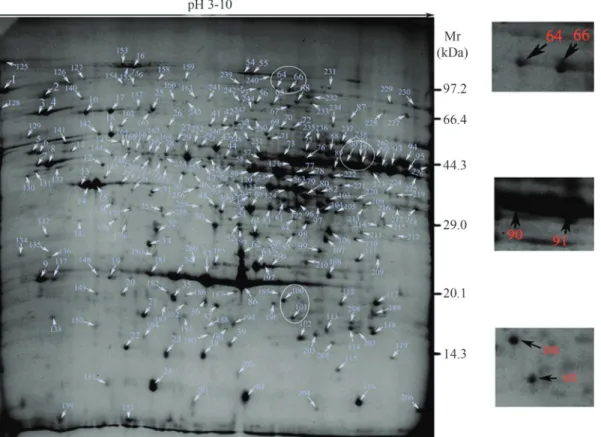
Figure 1 shows a reference 2-DE map ofE. taeniura
liver in which 268 spots were detected. The pIs of 196 pro-tein spots ranged from 5 to 9 (73.1% of spots); 21 spots had a pI < 4 (7.83% of spots) and 26 had a pI > 9 (9.7% of spots). The molecular masses of most proteins were be-tween 29 kDa and 97.2 kDa. 109 protein spots had a good MS signal, 84 of which were identified. Of these 84 pro-teins, 54 were represented in the NCBInr and Swiss-Prot databases for Chordata and 30 were in the local database. Table 1 summarizes the data for these proteins.
Table 1- Proteins identified by MALDI-TOF mass spectrometry and MASCOT.
Spot Protein name Accession no. Database Species pI/kDa p value Coverage
(%)
Score
1 N-terminal plus middle do-mains (N+m) of Grp94
gi|159794958 NCBInr Canis lupus familiaris 6.38/58167 5.40E-03 26 84
4 Hypothetical protein BRAFLDRAFT_71661
gi|260823156 NCBInr Branchiostoma floridae 8.39/147395 5.40E-02 10 74
5 Heat shock protein HSP 90-a-like
gi|327278721 NCBInr Anolis carolinensis 4.98/84451 4.30E-09 36 146
6 Tubulinb-4 chain-like gi|327263983 NCBInr Anolis carolinensis 4.82/50080 2.70E-11 47 184
7 Mitochondrial ATP synthase bsubunit
gi|47575824 NCBInr Xenopus(Silurana) tropicalis
5.38/56328 1.30E-06 38 120
8 Mitochondrial ATP synthase bsubunit
gi|148223359 NCBInr Xenopus laevis 5.25/56395 2.10E-10 44 158
9* Nicotinamide
N-methyltransferase-like
- Local Elaphe taeniura 5.10/32099 1.60E-04 29 82
12* Cytochromeb-c1 complex subunit 1, mitochondrial-like
- Local Elaphe taeniura 5.64/53739 5.60E-08 33 122
13 Unnamed protein product gi|47207906 NCBInr Tetraodon nigroviridis 6.68/50199 7.40E-03 23 82
14 POTE ankyrin domain family member F
A5A3E0 Swiss-Prot Homo sapiens 5.83/123020 3.80E-02 12 63
15 Actin, cytoplasmic type 5 gi|288541396 NCBInr Xenopus laevis 5.30/42165 4.60E-04 44 95
17 Heat shock cognate 71 kDa protein-like
gi|74211333 NCBInr Anolis carolinensis 5.37/71027 5.90E-04 25 121
18 Heat shock protein60 kDa gi|296439571 NCBInr Mesocricetus auratus 4.73/29133 2.20E-02 33 78
19* Putative prohibitin variant 1 - Local Elaphe taeniura 5.59/31571 4.00E-03 38 74
20*D Hypothetical protein VC0395_0781
- Local Elaphe taeniura 9.05/4233 3.30E-03 86 74
21* Thioredoxin-dependent per-oxide reductase, mitochon-drial-like
- Local Elaphe taeniura 8.72/28255 8.70E-03 28 70
24 Putative protein FAM157A C9JC47 Swiss-Prot Homo sapiens 11.26/43211 1.60E-02 32 67
25 Heat shock 70 kDa protein 9 (mortalin)
gi|148228693 NCBInr Xenopus laevis 5.68/72800 3.00E-03 19 86
27 40S ribosomal protein S6 P47838 Swiss-Prot Gallus gallus 10.83/28808 4.10E-02 37 63
28* 4-Trimethylaminobutyraldehy de dehydrogenase-like
- Local Elaphe taeniura 8.66/41807 2.00E-05 36 96
29 Predicted: hypothetical pro-tein
gi|194685097 NCBInr Bos taurus 9.03/183966 1.90E-02 16 78
30 Leucine-rich repeat and coiled-coil domain-containing protein 1
Q69ZB0 Swiss-Prot Mus musculus 5.67/120577 5.80E-03 19 72
31 Interleukin 15 receptora chain isoform 1A
gi|29028294 NCBInr Mus musculus 9.51/24907 5.30E-02 32 74
32 Predicted: low quality pro-tein: prohibitin-like
gi|334323093 NCBInr Monodelphis domestica 5.57/29882 8.30E-03 37 82
35 Protein Wnt-2b Q98SN7 Swiss-Prot Gallus gallus 9.17/44464 1.80E-02 33 67
37* Heme oxygenase 1-like - Local Elaphe taeniura 9.26/36906 3.50E-09 46 134
39* Glutathione S-transferase 2-like
- Local Elaphe taeniura 5.63/17123 4.80E-05 46 93
40 2-Hydroxyacyl-CoA lyase 1 Q8CHM7 Swiss-Prot Rattus norvegicus 7.08/64431 4.30E-02 18 63
46 Keratin 10 gi|186629 NCBInr Homo sapiens 4.72/39832 4.10E-03 33 85
50 PMCA4 gi|170524482 NCBInr Caviaporcellus 7.66/36538 4.20E-02 34 75
Spot Protein name Accession no. Database Species pI/kDa p value Coverage (%)
Score
53 Novel protein with part of an AIG1 family domain
gi|220672712 NCBInr Danio rerio 7.77/26642 9.80E-03 47 81
54 Pyruvate carboxylase, gene 1 gi|148227386 NCBInr Xenopus laevis 6.47/130809 1.20E-03 16 90
58 Predicted: hypothetical pro-tein
gi|114641340 NCBInr Pan troglodytes 11.59/32713 5.20E-02 32 74
59 Alpha-enolase Q9W7L0 Swiss-Prot Python regius 6.97/47940 1.10E-02 26 69
60 Guanine nucleotide binding protein (G protein)
gi|291394810 NCBInr Oryctolagus cuniculus 4.76/8647 5.00E-02 64 74
61 Unnamed protein product gi|189053805 NCBInr Homo sapiens 6.00/35047 3.40E-02 26 76
64* Cytoplasmic aconitate hydratase
- Local Elaphe taeniura 6.30/99709 3.50E-07 24 114
66* Cytoplasmic aconitate hydratase
- Local Elaphe taeniura 6.30/99709 6.70E-04 17 81
67*D Altered inheritance of chondria protein 36, mito-chondrial
- Local Elaphe taeniura 8.30/34827 2.50E-02 45 73
68* Trifunctional purine biosynthetic protein adenosine-3-like
- Local Elaphe taeniura 6.49/89044 3.50E-07 25 114
70 Ribosomal RNA large subunit methyltransferase L
Q0I4C6 Swiss-Prot Haemophilus somnus 129PT
7.96/82748 2.20E-02 25 74
71 Predicted: hypothetical pro-tein
gi|114672613 NCBInr Pan troglodytes 7.26/227989 5.20E-02 10 74
73D Protease gi|308187502 NCBInr Pantoea vagansC9-1 5.96/52002 1.30E-02 33 90
74 Tau-crystallin protein gi|21325980 NCBInr Crocodylus palustris 6.23/47879 1.60E-02 38 79
75* Delta-1-pyrroline-5-carboxyla te dehydrogenase, mitochon-drial
- Local Elaphe taeniura 6.99/31850 1.00E-05 39 100
76 Primosomal protein N’ Q9WY22 Swiss-Prot Thermotoga maritima 8.71/85017 4.90E-02 25 70
77 Alpha-enolase gi|17367189 NCBInr Sceloporus undulatus 6.64/47806 3.40E-02 28 76
78 Alpha-enolase gi|17367183 NCBInr Python regius 6.97/47940 2.90E-02 39 87
79 Serine/threonine-protein kinase DCLK1
Q9JLM8 Swiss-Prot Mus musculus 9.00/84671 3.10E-02 13 64
80 Unnamed protein product gi|47210960 NCBInr Tetraodon nigroviridis 9.92/5919 4.00E-02 60 75
82 Immunoglobulin heavy chain variable region
gi|10636766 NCBInr Homo sapiens 8.60/11954 5.30E-02 86 74
83 Predicted: centrosomal pro-tein of 72 kDa-like
gi|297674852 NCBInr Pongo abelii 6.36/12737 3.90E-02 58 75
87*D MURB_BRASB - Local Elaphe taeniura 6.33/32561 1.90E-02 40 74
88 Atherin Q6SPF0 Swiss-Prot Homo sapiens 7.12/56189 1.40E-02 18 68
90* Glutamate dehydrogenase 1, mitochondrial-like
- Local Elaphe taeniura 6.82/59370 2.50E-02 25 66
91 Predicted: glutamate dehydrogenase 1
gi|327277111 NCBInr Anolis carolinensis 8.21/60994 1.70E-06 31 119
92 Structure of glutamate dehydrogenase complexed with bithionol
gi|239781822 NCBInr Bos taurus 7.01/55945 4.00E-04 29 95
93 Hypothetical protein BRAFLDRAFT_237370
gi|260811424 NCBInr Branchiostoma floridae 9.28/22817 2.40E-03 61 88
94* Catalase-like - Local Elaphe taeniura 7.79/62201 4.50E-10 33 143
95* Retinal dehydrogenase 1-like isoform 2
- Local Elaphe taeniura 7.47/56628 2.80E-03 16 75
Characteristics of the transcriptome assembly
DNA sequencing by Illumina HiSeq 2000 resulted in a cDNA library containing 29,614,448 reads and 2,754,143,664 bases. The number of paired-end reads was 14,807,224, with an average length of 93 bp. A total of 88,907 contigs > 100 bp in size (which reflected the quality of the data) was assembled using Velvet and Oases soft-wares, and 23,285 predicted proteins had clear biological annotations.
Protein identification and GO analysis
Of the 84 identified proteins, 42 were matched to am-phibian and reptile protein sequence databases. Interest-ingly, the amphibian and reptile databases contained no information for the remaining 42 proteins, although there were matches in databases of other species. The presence of these protein spots in the 2D gel indicates that many snake proteins remain to be identified. For instance, protein spot 74 was identified as tau-crystallin, a homologue of which
Spot Protein name Accession no. Database Species pI/kDa p value Coverage
(%)
Score
96* Adenylosuccinate lyase - Local Elaphe taeniura 6.17/58590 3.50E-07 34 114
97* Fumarylacetoacetase-like - Local Elaphe taeniura 6.87/24136 2.00E-02 36 66
98 Predicted: aconitate hydratase, mitochondrial
gi|297261176 NCBInr Macaca mulatta 6.65/73986 4.50E-03 24 85
99* Sorbitol dehydrogenase - Local Elaphe taeniura 6.21/37677 2.20E-10 37 146
100* 4-Hydroxyphenylpyruvate dioxygenase-like
- Local Elaphe taeniura 6.02/27951 1.10E-06 42 109
101* 4-Hydroxyphenylpyruvate dioxygenase-like
- Local Elaphe taeniura 6.02/27951 1.90E-04 27 87
103* ZYRO0D06578p - Local Elaphe taeniura 10.86/4600 4.90E-02 90 63
105* Sulfotransferase 6B1-like - Local Elaphe taeniura 8.10/40274 2.70E-03 28 75
106 Predicted: similar to electron transfer flavoprotein
gi|114658278 NCBInr Pan troglodytes 8.75/30249 2.10E-03 35 88
107 L-Lactate dehydrogenase B chain (LDH-B)
gi|17433148 NCBInr Sceloporus undulatus 6.50/36850 4.80E-02 31 74
108* S-Formylglutathione hydrolase-like
- Local Elaphe taeniura 6.58/32218 4.50E-10 50 143
109 Acyl-CoA thioesterase 8, isoform CRA_c
gi|149042921 NCBInr Rattus norvegicus 6.38/22691 1.90E-02 37 78
110* Uncharacterized
oxidoreductase C663.06c-like
- Local Elaphe taeniura 8.19/31028 2.00E-02 20 66
111 Probable ATP-dependent RNA helicase DHX40
Q6PE54 Swiss-Prot Mus musculus 8.91/89728 3.30E-02 12 64
112* Uncharacterized
oxidoreductase C663.06c-like
- Local Elaphe taeniura 8.19/31028 1.90E-02 26 67
113* Proteasome subunit beta type-2-like
- Local Elaphe taeniura 6.73/25119 1.10E-02 49 69
114 Uncharacterized protein C11orf86
A6NJI1 Swiss-Prot Homo sapiens 11.47/13164 5.40E-02 34 62
116 Ribose-phosphate
pyrophosphokinase 2 isoform 2
gi|4506129 NCBInr Homo sapiens 6.00/35431 2.10E-02 37 78
117* Abhydrolase
do-main-containing protein 14B
- Local Elaphe taeniura 7.22/23842 1.80E-06 58 107
118 Unnamed protein product gi|47218712 NCBInr Tetraodon nigroviridis 5.77/101753 1.90E-02 9 78
120 Histone-lysine N-methyltransferase
Q96L73 Swiss-Prot Homo sapiens 8.40/302109 2.70E-02 6 65
123 Unnamed protein product gi|313233113 NCBInr Oikopleura dioica 7.46/83911 3.30E-02 14 76
124* Glutamine synthetase-like - Local Elaphe taeniura 8.00/45741 1.60E-04 26 88
*Proteins that matched the local database for the liver transcriptome ofE. taeniura.DProteins associated with bacteria. The pI/kDa values shown in the Ta-ble are theoretical.
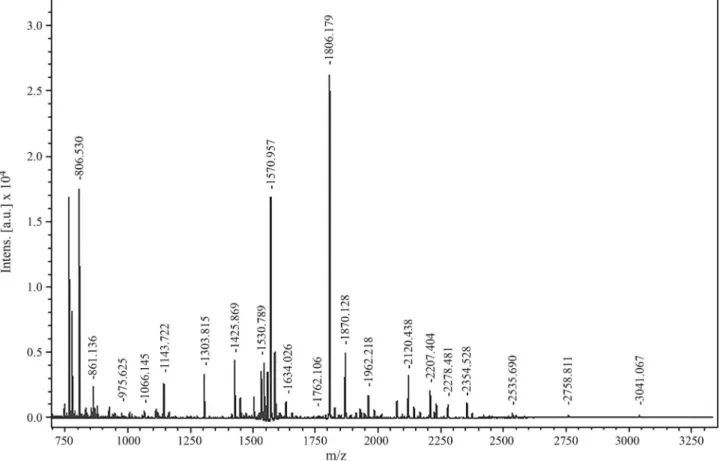
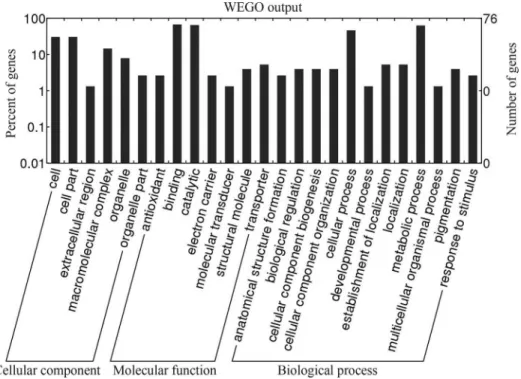
has been found mainly in crocodiles. Figure 2 shows the peptide fingerprint and peptide match for spot 74 obtained with the MASCOT database. GO analysis showed that these proteins are mainly involved in binding, catalysis, cellular processes and metabolic processes (Figure 3).
Discussion
In this study, we successfully constructed a reference map for the liver protein profile of the colubrid snakeE. taeniura.To date, liver proteomic analyses have been re-ported for mammals and fish (Karimet al., 2011; Moletteet al., 2012). As far as we know, the present report is the first to describe the protein profile for snake liver. Preliminary experiments showed that common protein extraction meth-ods such as alcohol phenyl, TCA/acetone, schizolysis were not applicable to snake liver (unpublished results). Instead, a combination of a 2D clean-up kit with the method de-scribed here significantly improved the resolution, and 268 protein spots were detected in 2D gels after staining with Coomassie blue. Further optimization of the protein extrac-tion and visualizaextrac-tion method could be helpful in identify-ing even more proteins.
As the snake genome has not yet been described and many proteins could not be identified by searching the NCBInr and Swiss-Prot databases, we constructed a local database based on transcriptome sequencing data. As a
re-sult, 84 of the 109 protein spots with high MS scores were identified. Interestingly, the remaining 25 proteins could not be identified although they were present in the 2D gels (Figure1); these proteins may be exclusive to snakes. In ad-dition, some protein spots,e.g., spots 64 and 66, and spots 90 and 91, were found to be the same proteins, although they migrated at different positions in 2-DE. This is a com-mon finding in proteomic studies, as some proteins vary in their post-translational modifications (Meri and Baumann, 2001; Brettevilleet al., 2009; Merkleyet al., 2009). For ex-ample, protein spots 64 and 66 were identified as aconitate hydratase, which is predicted to have 11 phosphorylation sites. Similarly, protein spots 100 and 101 corresponded to dimeric 4-hydroxyphenylpyruvate dioxygenase (Lindblad
et al., 1970; Ruetschiet al., 1997), the dimeric nature of which could contribute to variation in the migration pattern in 2-DE. GO analysis showed that most of the proteins identified were involved in catalytic activity, metabolic processes and binding activity, a finding consistent with liver proteomic data for other species (Miet al., 2007; Wei
et al., 2007).
Heat shock proteins (Hsps) Hsp60, Hsp70 and Hsp90 (spots 18, 25 and 5, respectively, in Figure 1) were highly expressed in liver tissue ofE. taeniura. Hsps are a family of proteins induced by diverse stress factors, such as an in-crease in temperature, infection, inflammation, starvation,
hypoxia and water deprivation. These proteins play impor-tant roles in protein folding, translocation and the assembly of intracellular proteins that may protect against environ-mental stress (Gray et al., 1999; Nollen and Morimoto, 2002; Sunet al., 2008; Di Domenicoet al., 2010). In the face of increasing habitat destruction, many animals, in-cluding reptiles, are facing severe environmental chal-lenges that require physiological adaptations. The elevated expression of Hsps in snake liver may help to protect this species from such stress and could contribute to the ability of snakes to adapt to different environments.
Some of the proteins identified here,e.g., tau-crys-tallin (spot 74) anda-enolase (spots 59, 77 and 78), have also been found in amphibians and reptiles. Tau-crystallin is a taxon-restricted crystallin found in the eye lenses of reptiles and a few avian species but is presumably absent in mammals (Mishraet al., 2002). The level of tau-crystallin expression in the lens varies among species,e.g., in croco-diles it is the least abundant crystallin and is present in trace amounts (Williamset al., 1985; Mishraet al., 2002). Inter-estingly, tau-crystallin had a relatively high expression in
E. taeniuraliver.
Acknowledgments
This work was supported by Natural Science Fun-dation for Universities of Jiangsu Province (No. 10KJB180001), Start-Up Research Funding of Jiangsu University for Distinguished Scholars (No.09JDG005), and Postdoctoral daily finance of Jiangsu University (1143002139). We thank professors Xiaoyong Liu and
Haijun Liu for their scientific advice and technical exper-tise.
References
Ahram M, Best CJ, Flaig MJ, Gillespie JW, Leiva IM, Chuaqui RF, Zhou G, Shu H, Duray PH, Linehan WM,et al.(2002) Proteomic analysis of human prostate cancer. Mol Carcinog 33:9-15.
Bretteville A, Ando K, Ghestem A, Loyens A, Begard S, Beau-villain JC, Sergeant N, Hamdane M and Buee L (2009) Two-dimensional electrophoresis of tau mutants reveals specific phosphorylation pattern likely linked to early tau conformational changes. PloS One 4:e4843.
Campbell KR and Campbell TS (2001) The accumulation and ef-fects of environmental contaminants on snakes: A review. Environ Monit Assess 70:253-301.
Chang C and Zheng R (2003) Effects of ultraviolet B on epidermal morphology, shedding, lipid peroxide, and antioxidant en-zymes in Cope’s rat snake (Elaphe taeniura). J Photochem Photobiol B 72:79-85.
Chiu K and Lam K (1994) Plasma T3 and T4 levels in a snake,
Elaphe taeniura. Comp Biochem Physiol A 107:107-112. Chiu KW and Wong CC (1974) Testicular cycles of the striped
racer,Elaphe taeniura. Gen Comp Endocrinol 23:242-244. Conant R and Collins J (1991) A Field Guide to Amphibians and
Reptiles of Eastern and Central North America. Houghton Mifflin Co, Boston, 450 pp.
Cope ED (1861) Catalogue of the Colubridae in the Museum of the Academy of Natural Sciences of Philadelphia. Part 3. Proc Acad Nat Sci Philadelphia 12:553-566.
Dardevet D, Moore MC, Remond D, Everett-Grueter CA and Cherrington AD (2006) Regulation of hepatic metabolism by enteral delivery of nutrients. Nutr Res Rev 19:161-173.
Di Domenico F, Sultana R, Tiu GF, Scheff NN, Perluigi M, Cini C and Butterfield DA (2010) Protein levels of heat shock pro-teins 27, 32, 60, 70, 90 and thioredoxin-1 in amnestic mild cognitive impairment: An investigation on the role of cellu-lar stress response in the progression of Alzheimer disease. Brain Res 1333:72-81.
Emmert-Buck MR, Gillespie JW, Paweletz CP, Ornstein DK, Basrur V, Appella E, Wang QH, Huang J, Hu N, Taylor P,et al.(2000) An approach to proteomic analysis of human tu-mors. Mol Carcinog 27:158-165.
Fox JW and Serrano SM (2008) Exploring snake venom proteo-mes: Multifaceted analyses for complex toxin mixtures. Proteomics 8:909-920.
Fry BG, Wuster W, Ryan Ramjan SF, Jackson T, Martelli P and Kini RM (2003) Analysis of Colubroidea snake venoms by liquid chromatography with mass spectrometry: Evolution-ary and toxinological implications. Rapid Commun Mass Spectrom 17:2047-2062.
Gillardin V, Silvestre F, Dieu M, Delaive E, Raes M, Thome JP and Kestemont P (2009) Protein expression profiling in the African clawed frogXenopus laevistadpoles exposed to the polychlorinated biphenyl mixture aroclor 1254. Mol Cell Proteomics 8:596-611.
Gray CC, Amrani M and Yacoub MH (1999) Heat stress proteins and myocardial protection: Experimental model or potential clinical tool? Int J Biochem Cell Biol 31:559-573.
Jelaso AM, Delong C, Means J and Ide CF (2005) Dietary expo-sure to Aroclor 1254 alters gene expression in Xenopus laevisfrogs. Environ Res 98:64-72.
Kaji H, Tsuji T, Mawuenyega KG, Wakamiya A, Taoka M and Isobe T (2000) Profiling ofCaenorhabditis elegansproteins using two-dimensional gel electrophoresis and matrix as-sisted laser desorption/ionization-time of flight-mass spec-trometry. Electrophoresis 21:1755-1765.
Karim M, Puiseux-Dao S and Edery M (2011) Toxins and stress in fish: Proteomic analyses and response network. Toxicon 57:959-969.
Kim Y, Nandakumar MP and Marten MR (2007) Proteome map ofAspergillus nidulansduring osmoadaptation. Fungal Ge-net Biol 44:886-895.
Klose J (1975) Protein mapping by combined isoelectric focusing and electrophoresis of mouse tissues. A novel approach to testing for induced point mutations in mammals. Human-genetik 26:231-243.
Ladyman M, Bonnet X, Lourdais O, Bradshaw D and Naulleau G (2003) Gestation, thermoregulation, and metabolism in a vi-viparous snake, Vipera aspis: Evidence for fecundity-independent costs. Physiol Biochem Zool 76:497-510. Li WW, Quinn GB, Alexandrov NN, Bourne PE and Shindyalov
IN (2003) A comparative proteomics resource: Proteins of
Arabidopsis thaliana. Genome Biol 4:R51.
Liang Y, Chen H, Tang M and Shen S (2007) Proteome analysis of an ectomycorrhizal fungus Boletus edulis under salt shock. Mycol Res 111:939-946.
Lindblad B, Lindstedt S, Olander B and Omfeldt M (1970) Purifi-cation ofp-hydroxyphenylpyruvate hydroxylase from hu-man liver. Acta Chem Scand 25:329-330.
Menezes MC, Furtado MF, Travaglia-Cardoso SR, Camargo AC and Serrano SM (2006) Sex-based individual variation of snake venom proteome among eighteenBothrops jararaca
siblings. Toxicon 47:304-312.
Meri S and Baumann M (2001) Proteomics: Posttranslational modifications, immune responses and current analytical tools. Biomol Eng 18:213-220.
Merkley MA, Hildebrandt E, Podolsky RH, Arnouk H, Ferris DG, Dynan WS and Stoppler H (2009) Large-scale analysis of protein expression changes in human keratinocytes immor-talized by human papilloma virus type 16 E6 and E7 onco-genes. Proteome Sci 7:29.
Mi J, Garcia-Arcos I, Alvarez R and Cristobal S (2007) Age-re-lated subproteomic analysis of mouse liver and kidney pero-xisomes. Proteome Sci 5:19.
Mishra AK, Chandrashekhar R, Aggarwal RK and Sharma Y (2002) Crocodilian tau-crystallin: Overexpression, purifica-tion, and characterization. Protein Expr Purif 25:59-64. Molette C, Théron L, Marty-Gasset N, Fernandez X and
Rémig-non H (2012) Current advances in proteomic analysis of (fatty) liver. J Proteomics 75:4290-4295.
Nollen EA and Morimoto RI (2002) Chaperoning signaling path-ways: Molecular chaperones as stress-sensing ‘heat shock’ proteins. J Cell Sci 115:2809-2816.
O’Farrell pH (1975) High resolution two-dimensional electropho-resis of proteins. J Biol Chem 250:4007-4021.
Pike DA, Pizzatto L, Pike BA and Shine R (2008) Estimating sur-vival rates of uncatchable animals: The myth of high juve-nile mortality in reptiles. Ecology 89:607-611.
Qin L, Liu X, Li J, Chen H, Yao Q, Yang Z, Wang L and Chen K (2009) Protein profile of Nomuraea rileyispore isolated from infected silkworm. Curr Microbiol 58:578-585. Reddy JK and Rao MS (2006) Lipid metabolism and liver
inflam-mation. II. Fatty liver disease and fatty acid oxidation. Am J Physiol Gastrointest Liver Physiol 290:G852-858.
Rice P, Longden I and Bleasby A (2000) EMBOSS: The Euro-pean Molecular Biology Open Software Suite. Trends Genet 16:276-277.
Ruetschi U, Rymo L and Lindstedt S (1997) Human
4-hydroxy-phenylpyruvate dioxygenase gene (HPD). Genomics
44:292-299.
Scheele GA (1975) Two-dimensional gel analysis of soluble pro-teins. Characterization of guinea pig exocrine pancreatic proteins. J Biol Chem 250:5375-5385.
Serrano SM, Shannon JD, Wang D, Camargo AC and Fox JW (2005) A multifaceted analysis of viperid snake venoms by two-dimensional gel electrophoresis: An approach to under-standing venom proteomics. Proteomics 5:501-510. Starck JM, Moser P, Werner RA and Linke P (2004) Pythons
me-tabolize prey to fuel the response to feeding. Proc Biol Sci 271:903-908.
Sun B, Wang JH, Lv YY, Zhu SS, Yang J and Ma JZ (2008) Proteomic adaptation to chronic high intensity swimming training in the rat heart. Comp Biochem Physiol Part D Genomics Proteomics 3:108-117.
Wei Y, Wang J, Zhang X, Xu M and Dai J (2007) Identification and characterization of expressed sequence tags from the liver of rare minnow (Gobiocypris rarus). Comp Biochem Physiol D 2:356-362.
Williams LA, Ding L, Horwitz J and Piatigorsky J (1985) tau-Crystallin from the turtle lens: Purification and partial char-acterization. Exp Eye Res 40:741-749.
Wong C and Chiu K (1979) The snake thyroid gland V. Effects of hypophysectomy on iodine metabolism in the striped racer,
Yanes O, Aviles FX, Wenzel R, Nazabal A, Zenobi R and Calvete JJ (2007) Proteomic profiling of a snake venom using high mass detection MALDI-TOF mass spectrometry. J Am Soc Mass Spectrom 18:600-606.
Ye J, Fang L, Zheng H, Zhang Y, Chen J, Zhang Z, Wang J, Li S, Li R and Bolund L (2006) WEGO: A web tool for plotting GO annotations. Nucleic Acids Res 34:W293-297. Yokoyama Y, Kuramitsu Y, Takashima M, Iizuka N, Toda T,
Terai S, Sakaida I, Oka M, Nakamura K and Okita K (2004) Proteomic profiling of proteins decreased in hepatocellular carcinoma from patients infected with hepatitis C virus. Proteomics 4:2111-2116.
Zeindl-Eberhart E, Klugbauer S, Dimitrijevic N, Jungblut PR, Lamer S and Rabes HM (2001) Proteome analysis of rat
hepatomas: Carcinogen-dependent tumor-associated pro-tein variants. Electrophoresis 22:3009-3018.
Internet Resources
Interpro Scan, http://www.ebi.ac.uk/Tools/pfa/iprscan/ (accessed August 28, 2012).
WEGO, http://wego.genomics.org.cn/cgi-bin/wego/index.pl (ac-cessed August 30, 2012).
Associate Editor: Ana Tereza R. Vasconcelos