* Extracted from the thesis “O conhecimento dos pacientes acerca da tuberculose”, Programa de Pós-Graduação em Enfermagem,
Universidade Federal do Amazonas, Universidade do Estado do Pará, 2012.
1 Universidade Federal do Amazonas, Escola de Enfermagem de Manaus, Programa de Pós-Graduação em Enfermagem, Manaus, AM, Brazil. 2 Universidade de São Paulo, Escola
de Enfermagem de Ribeirão Preto, Ribeirão Preto, SP, Brazil.
3 Fundação Oswaldo Cruz, Instituto Leônidas e Maria Deane, Manaus, AM, Brazil.
Received: 09/17/2015 Approved: 05/30/2016
ORIGINAL ARTICLE DOI: http://dx.doi.org/10.1590/S0080-623420160000500012
Corresponding author:
Evelyne Marie Therese Mainbourg Instituto Leônidas e Maria Deane Rua Teresina, 476 – Adrianópolis CEP 69057-070 – Manaus, AM, Brasil [email protected]
ABSTRACT
Objective: To identify the socioeconomic and clinical-epidemiological factors related to tuberculosis in new cases and retreatment cases. Method: Comparative study with 126 patients, of which 42 were retreatment cases after default attended in a reference center, and 84 were new cases completing the irst treatment and treated in Basic Health Units. he collection of primary data was through interview, and of secondary data by records of the Notiiable Diseases Information System. Comparative analysis between the two groups. Results: he new cases difer from retreatment cases regarding educational level. he clinical-epidemiological proile shows a signiicant diference in relation to performance of the tuberculin skin test, and the HIV test result (positive) in favor of new cases. In relation to performance of sputum culture and the result (positive) of the irst sputum smear of the irst and second samples, in favor of retreatment cases. Conclusion:
he two groups are signiicantly diferent in clinical and epidemiological characteristics that show the access to exams.
DESCRIPTORS
Tuberculosis; Patients; Patient Dropouts; Epidemiology; Health Proile; Public Health Nursing.
Differences in the clinical-epidemiological profile between new
cases of tuberculosis and retreatment cases after default*
Diferenças no perfil clínico-epidemiológico entre casos novos de tuberculose e casos em retratamento após abandono
Diferencias en el perfil clínico-epidemiológico entre casos nuevos de tuberculosis y casos en retratamiento tras abandono
Aylana de Souza Belchior1, Ricardo Alexandre Arcêncio2, Evelyne Marie Therese Mainbourg3
How to cite this article:
Differences in the clinical-epidemiological profile between new cases of tuberculosis and retreatment cases after default
INTRODUCTION
Tuberculosis (TB) is a major public health problem. A third of the population is infected with Mycobacterium tu-berculosis. Twenty-two countries account for 80% of the TB burden, and Brazil is in 16th place in terms of incidence(1).
According to the World Health Organization (WHO), ‘new cases’ are all patients with tuberculosis who have never used antituberculosis drugs, or used them for less than a month, and were diagnosed through laboratory or radio-logical tests, or clinical criteria. Retreatment is when the person did the TB treatment for more than 30 days and needs a new treatment for recurrence after cure (RC) or return after abandonment (RA)(2).
In Brazil, between 2005 and 2014, were diagnosed 73,000 new cases of tuberculosis per year on average, ac-counting for an incidence rate of 33.5/100,000 inhabitants. In 2013, 72.5% of cases of pulmonary TB were cured, a re-sult still inferior to the goal recommended by the WHO(3). Of these cases, 10.9% abandoned the treatment, and 4,577 people died(1).
he state of Amazonas has the highest TB incidence rate in the country (68.4/100,000 inhabitants), twice the national average. Manaus, the state capital, has contributed signiicantly to this scenario, because in 2013 was recorded the incidence rate of 93.8 cases per 100 thousand inhabit-ants in the city, while the national average was 33.5 cases per 100 thousand inhabitants(1). Regarding abandonment, in the same year was recorded the treatment abandonment percentage of 18% in Manaus(1), almost double the national average (10.9%).
Some published studies have already addressed the fac-tors associated with treatment abandonment(4-9)
. However, in addition to factors associated with abandonment, was considered the proile of patients who return to treat-ment. What characterizes these subjects? What are the diferences between these patients in relation to new cases, which are also likely to abandon treatment, but mostly reach the cure in their irst treatment? Some studies have found the low educational level and previous abandon-ment as factors associated with abandonabandon-ment(10). Other studies found the association between young age, alcohol abuse, unemployment, low educational level and abandon-ment of prior treatabandon-ment with abandonabandon-ment(11). However, there were no studies characterizing these patients with the view to support health services actions aimed specii-cally at such patients. he proile can indicate subsidies to conduct treatment, and thus avoid new episodes of aban-donment. On the other hand, in a study on the proile of notiied tuberculosis cases and factors associated with abandonment performed in the state of Minas Gerais, the results showed the independent association between ment abandonment and the use of drugs, interest in treat-ment and information about the disease(12).
he aim of this study was to identify diferences in so-cioeconomic and clinical-epidemiological proile between new cases of TB and retreatment cases after default.
METHOD
his is a comparative cross-sectional study. Sixty-two cases in retreatment were identiied after treatment aban-donment in 2011, which in that situation were followed in the Reference Center in Sanitary Pneumology of the state of Amazonas, Brazil. he new cases were collected from data of the Basic Health Units where the retreatment cases had previously performed the treatment that was abandoned. he objective of this procedure was to identify patients with similar characteristics, living conditions, treat-ment conditions, and access to health services.
Since it was not possible to locate 20 patients (32%) of the 62 in retreatment, were recruited 42 patients in re-treatment after default in 2011, and 84 new cases of TB completing the irst treatment between December 2011 and April 2012. he new cases were selected in the ratio of 2 to 1 until reaching the proposed number of subjects.
Inclusion criteria were age over 18 years and having had the irst treatment in the city of Manaus. Given that Manaus accounts for about 70% of the TB notiications of the state of Amazonas, the study was focused only in the capital city.
Data were collected through the application of an inter-view form prepared for this study and previously tested. he interviews were conducted by a single researcher (member of the research team), lasted 20 to 30 minutes, and were held in the health service or the residence of the subject, according to each individual’s preference. he form included questions about the socioeconomic proile of subjects: sex, age range, race/color, marital status, educational level, oc-cupation, income and lifestyle. Clinical, laboratory and epi-demiological data were obtained from the medical records of the subject or from the notiication/investigation records of the Notiiable Diseases Information System (Sinan - Sistema de Informação de Agravos de Notiicação).
he Student’s t test and then, the Levene’s test were used to certify the homoscedasticity of variances in the analysis of the educational level variable. For the compari-son of proportions between the variables of interest (accord-ing to the subject’s condition: new case or retreatment case after default), was used the Pearson’s chi-square test (Χ2) with Yates correction or Fisher’s exact test, when appropri-ate. he type I error was set at 5% for all tests.
he project was approved by the Research Ethics Committee of the Universidade Federal do Amazonas (CEP/UFAM) under number CAAE 0441.0.115.000-11, and the study subjects signed the Informed Consent form (IC).
RESULTS
Table 2 shows the clinical and epidemiological char-acterization of new cases of TB and retreatment cases after default. Significant differences can be identified in the use of tuberculin skin test (favoring new cases),
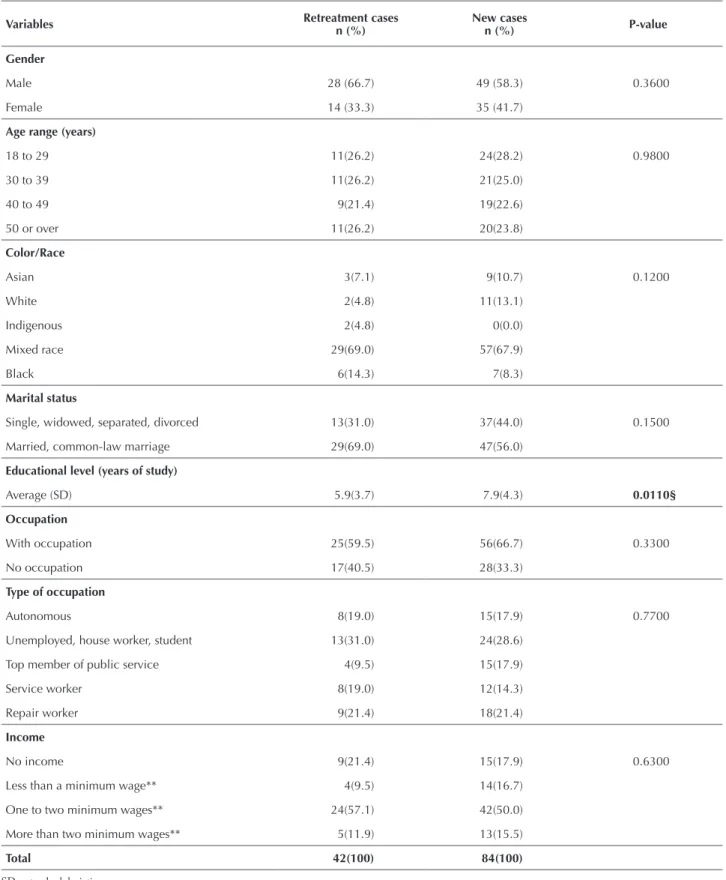
Table 1 – Socioeconomic characteristics of new cases and retreatment cases of tuberculosis – Manaus, AM, Brazil, 2011.
Variables Retreatment casesn (%) New casesn (%) P-value
Gender
Male 28 (66.7) 49 (58.3) 0.3600
Female 14 (33.3) 35 (41.7)
Age range (years)
18 to 29 11(26.2) 24(28.2) 0.9800
30 to 39 11(26.2) 21(25.0)
40 to 49 9(21.4) 19(22.6)
50 or over 11(26.2) 20(23.8)
Color/Race
Asian 3(7.1) 9(10.7) 0.1200
White 2(4.8) 11(13.1)
Indigenous 2(4.8) 0(0.0)
Mixed race 29(69.0) 57(67.9)
Black 6(14.3) 7(8.3)
Marital status
Single, widowed, separated, divorced 13(31.0) 37(44.0) 0.1500
Married, common-law marriage 29(69.0) 47(56.0)
Educational level (years of study)
Average (SD) 5.9(3.7) 7.9(4.3) 0.0110§
Occupation
With occupation 25(59.5) 56(66.7) 0.3300
No occupation 17(40.5) 28(33.3)
Type of occupation
Autonomous 8(19.0) 15(17.9) 0.7700
Unemployed, house worker, student 13(31.0) 24(28.6)
Top member of public service 4(9.5) 15(17.9)
Service worker 8(19.0) 12(14.3)
Repair worker 9(21.4) 18(21.4)
Income
No income 9(21.4) 15(17.9) 0.6300
Less than a minimum wage** 4(9.5) 14(16.7)
One to two minimum wages** 24(57.1) 42(50.0)
More than two minimum wages** 5(11.9) 13(15.5)
Total 42(100) 84(100)
SD = standard deviation. § = Student’s t test.
** = Minimum wage value: R$ 622.00 in December 2011 (Banco Central do Brasil). Note: p in bold corresponds to statistical signiicance level of 5%.
Differences in the clinical-epidemiological profile between new cases of tuberculosis and retreatment cases after default
Table 2 – Clinical and epidemiological characteristics of new cases and retreatment cases of tuberculosis patients – Manaus, AM, Brazil, 2011.
Variables Retreatment cases n (%) New cases n (%) P-value
Chest X-ray
Not performed 4(9.5) 15(17.9) 0.2200
Performed 38(90.5) 69(82.1)
Result
Abnormal 36(94.7) 64(92.8) 0.6900
Normal 2(5.3) 5(7.2)
Tuberculin skin test
Not performed 41(97.6) 53(63.1) 0.0000**
Performed 1(2.4) 31(36.9)
Result
Positive 0(0.0) 26(83.9) 0.1800a
Negative 1(100) 5(16.1)
Clinical form
Pulmonary 39(92.9) 64(76.2) 0.0700
Extrapulmonary 3(7.1) 19(22.6)
Pulmonary + extrapulmonary 0(0.0) 1(1.2)
Extrapulmonary
Cutaneous 0(0.0) 2(10.0) 1.0000
Peripheral ganglionic 1(33.3) 5(25.0)
Bone 0(0.0) 1(5.0)
Anal 0(0.0) 3(15.0)
Pleural 2(66.7) 9(45.0)
Bacilloscopy 1st sample
Not performed 3(7.1) 12(14.3) 0.2400
Performed 39(92.9) 72(85.7)
Result
Positive 33(84.6) 47(65.3) 0.0300*
Negative 6(15.4) 25(34.7)
Bacilloscopy 2nd sample
Not performed 3(7.1) 14(16.7) 0.1400
Performed 39(92.9) 70(83.3)
Result
Positive 30(76.9) 32(45.7) 0.0000*
Negative 9(23.1) 38(54.3)
Sputum culture
Not performed 17(40.5) 75(89.29) 0.0000*
Performed/in progress 25(59.5) 9(10.71)
Result
Positive 18(72) 5(55.6) 0.4200
Negative 7(28) 4(44.4)
HIV test
Not performed 21(50.0) 43(43.4) 0.5700
Performed/in progress 21(50.0) 56(56.6)
Result
Positive 1(4.8) 9(34.6) 0.0100*
Negative 20(95.2) 17(65.4)
Variables Retreatment cases n (%) New cases n (%) P-value
Associated diseases Aids
Yes 2(4.8) 10(11.9) 0.6400*
No or unknown 40(95.2) 74(88.1)
Alcoholism
Yes 7(16.7) 8(9.5) 0.2432
No or unknown 35(83.3) 76(90.5)
Mental disease
Yes 0(0.0) 1(1.2) 0.4777*
No or unknown 42(100.0) 83(98.8)
Diabetes
Yes 1(2.4) 8(9.5) 0.1422*
No or unknown 41(97.6) 76(90.5)
Total 42(100) 84(100)
*Fisher’s exact test (5% signiicance level).
Note: p-value in bold corresponds to statistical signiicance level of 5%. ...continuation
he patients of new cases have higher educational level, are more easily subjected to the tuberculin test, and have positive HIV test results in a higher proportion. he pa-tients of retreatment cases are more easily subjected to spu-tum culture, and have positive results of the spuspu-tum smear microscopy, both in the irst and the second sample, in a higher proportion.
DISCUSSION
he group of patients who completed the TB treatment (new cases) and the group in retreatment after default were studied at the same time. he new cases were selected from the same population source that cases in retreatment, which avoids possible biases. Moreover, this is the most common form of studying events related to the end outcome of pa-tients with tuberculosis. In most studies, it is common to ind incorrect or dubious information, especially with ref-erence to habits and risk factors (smoking, consumption of alcohol or drugs). In our study, this was not diferent.
As in many studies of diferent areas, note that the edu-cational level variable shows signiicant diferences between the analyzed groups. In this study, the number of years of education among new cases of tuberculosis is 25% higher on average, compared to cases in retreatment. his data is similar to the results presented in the 2012 Epidemiological Bulletin(13), and shows the considerable importance of school education in the conduct adopted before a health problem with symptoms sometimes insidious and subject to prejudice.
By analyzing the complementary tests, it was found that in almost all patients who abandoned treatment, the tuber-culin skin test had not been done, while over half of new cases did not do this test. Corroborating this inding, previ-ous studies have shown that in most reported cases of tuber-culosis, both the new and retreatment, the tuberculin skin test was not done(14-15). However, according to the Manual of recommendations for the control of tuberculosis(2), the
tuberculin skin test is indicated for populations at high risk of infection and illness from tuberculosis: people living with HIV-AIDS and professionals working in health services where there are TB patients. he justiication for not perform-ing the tuberculin test is based on this information, since in the study it was identiied that the vast majority of patients did not have health problems related to tuberculosis, such as AIDS, alcoholism, mental illness and diabetes. Other studies support this inding(12,16).
Regarding the completion of laboratory tests, in retreat-ment cases, both in the irst and the second sample, the smear result was positive for at least three out of four patients. Among new cases, the result of the irst sample was posi-tive for two thirds of patients, while in the second sample, less than half of results was positive. he predominance of positive results in sputum smear microscopy has already been described(17-18). However, this inding cannot be attributed to the fact that health services prioritize patients in retreatment for performing sputum smear microscopy, since this exami-nation is a priority for patients seeking health services for respiratory problems or radiological changes in the lungs.
Culture is a method of high speciicity and sensitivity in TB diagnosis. In pulmonary cases with negative bacilloscopy, the sputum culture can increase the bacteriological diagnosis of the disease in up to 30%(2). In this study, the number of cases in retreatment who did the sputum culture is almost the triple of new cases. In fact, cases in retreatment are more easily subject to completion of sputum culture in routine service, considering that these patients were diagnosed as having contracted tuberculosis, but require a more accurate laboratory diagnosis. In contrast, new cases should do the tuberculin skin test irst.
Differences in the clinical-epidemiological profile between new cases of tuberculosis and retreatment cases after default
is not a satisfactory result, there are more serious situations, such as in Salvador(19), where only 6.6% of patients diagnosed with TB underwent HIV serology testing.
In a study, the diference of serological HIV testing results between two groups was signiicant; more than a third of new cases were positive compared with less than 5% of positive for cases in retreatment. In a study performed in Recife, where the incidence of TB-HIV co-infection was 12.7/100,000 inhabitants in 2012, similar to Manaus in the same year (14.7/100,000 inhabitants)(3), only 2.4% of cured cases were positive compared to less than 4% of positive results among cases in retreatment(10). Hence, the result of this study should not be general-ized, because the sample size is very small and these are secondary data.
As for educational level, the greater number of years of study of new cases may explain the increased accessibility to the health system and less abandonment of treatment.
Some methodological limitations may have afected this study results. he irst refers to the fact that some of the associations found did not reach signiicance, which could be attributed to lack of statistical power. Another limitation could be related to a possible recall bias.
CONCLUSION
he data presented indicate that knowing the proile of TB patients allows to alert the program about possible risks of treatment abandonment in order to prevent the spread of disease and increased morbidity and mortality.
he results suggest conducting further studies, since the socioeconomic characteristics were not associated with retreatment. here was little surprise in relation to clinical and epidemiological characteristics. herefore, the expla-nation of having to repeat the treatment should be sought in other variables.
It is expected that this study results arouse relections in health professionals, provide support for the intensiica-tion of educaintensiica-tional activities by the teams, and contribute signiicantly to improve the health actions related to pa-tients undergoing tuberculosis treatment.
his study should expand discussions on the topic, contributing to teaching/research, and mainly to improve-ment of care, emphasizing the need for patients follow-ing treatment until the cure of a disease that has evolved rapidly in recent years, in order to reduce the number of cases of treatment abandonment.
RESUMO
Objetivo: Identiicar fatores socioeconômicos e clínico-epidemiológicos associados à tuberculose em casos novos e em casos em retratamento. Método: Estudo comparativo de 126 pacientes, sendo 42 casos em retratamento por abandono atendidos num Centro de Referência e 84 casos novos concluindo o primeiro tratamento, atendidos em Unidades Básicas de Saúde. Levantamento de dados primários por entrevista e dados secundários pela Ficha de Informação de Agravos de Notiicação. Análise comparativa entre os dois grupos. Resultados: Os casos novos diferem dos em retratamento quanto à escolaridade. O peril clínico-epidemiológico mostra que há diferença signiicativa quanto à realização do teste tuberculínico e o resultado do teste HIV (positivo) a favor dos casos novos. Quanto à realização da cultura de escarro e o resultado (positivo) da baciloscopia de escarro da primeira e da segunda amostras, a favor dos casos em retratamento. Conclusão: Os dois grupos diferem signiicativamente por características clínico-epidemiológicas que retratam o acesso a exames.
DESCRITORES
Tuberculose; Pacientes; Pacientes Desistentes do Tratamento; Epidemiologia; Peril de Saúde; Enfermagem em Saúde Pública.
RESUMEN
Objetivo: Identiicar factores socioeconómicos y clínico-epidemiológicos asociados con la tuberculosis en casos nuevos y en casos en retratamiento. Método: Estudios comparativo de 126 pacientes, siendo 42 casos en retratamiento por abandono atendidos en un Centro de Referencia y 84 casos nuevos concluyendo el primer tratamiento, atendidos en Unidades Básicas de Salud. Relevamiento de datos primarios por entrevista y datos secundarios por la Ficha de Información de Agravios de Notiicación. Análisis comparativo entre ambos grupos. Resultados: Los casos nuevos diieren de los en retratamiento en cuanto a la escolaridad. El peril clínico-epidemiológico muestra que hay diferencia signiicativa en cuanto a la realización de la prueba tuberculínica y el resultado de la prueba VIH (positivo) a favor de los casos nuevos. En cuanto a la realización del cultivo de esputo y el resultado (positivo) de la baciloscopia de esputo de la primera y la segunda muestras, están a favor de los casos en retratamiento. Conclusión: Ambos grupos diieren signiicativamente por características clínico-epidemiológicas que retratan el acceso a estudios.
DESCRIPTORES
Tuberculosis; Pacientes; Pacientes Desistentes del Tratamiento; Epidemiología; Peril de Salud; Enfermería en Salud Pública.
REFERENCES
1. Boletim Epidemiológico. Tuberculose. Brasília: Ministério da Saúde, Secretaria de Vigilância em Saúde [Internet]. 2015 [citado 2015 jul. 22];46(9):1-19. Disponível em: http://portalsaude.saude.gov.br/images/pdf/2015/marco/27/2015-007---BE-Tuberculose---para-substitui----o-no-site.pdf
3. Brasil. Ministério da Saúde; Secretaria de Vigilância em Saúde, Departamento de Vigilância das Doenças Transmissíveis. Programa da Tuberculose no Brasil. Indicadores epidemiológicos e operacionais. Brasília: MS; 2014.
4. Ajao KO, Ogundun AO, Afolabi OT, Ojo TO, Atiba BP, Oguntunase DO. Treatment compliance and challenges among tuberculosis patients across selected health facilities in Osun State Nigeria. Afr J Med Med Sci. 2014;43 Suppl:21-9.
5. Fluegge KR. Using spatial disease patterns and patient-level characteristics to describe prevalence elastic behavior in treatment for Latent Tuberculosis Infection (LTBI). Public Health Nurs. 2015;32(5):517-31.
6. Putera I, Pakasi TA, Karyadi E. Knowledge and perception of tuberculosis and the risk to become treatment default among newly diagnosed pulmonary tuberculosis patients treated in primary health care, East Nusa Tenggara: a retrospective study. BMC Res Notes. 2015;8:238.
7. Craig GM, Zumla A. The social context of tuberculosis treatment in urban risk groups in the United Kingdom: a qualitative interview study. Int J Infect Dis. 2015;32:105-10.
8. Wei XL, Yin J, Zou GY, Zhang ZT, Walley J, Harwell J, et al. Treatment interruption and directly observed treatment of multidrug-resistant tuberculosis patients in China. Int J Tuberc Lung Dis. 2015;19(4):413-9.
9. Silva PF, Moura GS, Caldas AJM. Fatores associados ao abandono do tratamento da tuberculose pulmonar no Maranhão, Brasil, no período de 2001 a 2010. Cad Saúde Pública. 2014;30(8):1745-54.
10. Silva CCAV, Andrade MS, Cardoso MD. Fatores associados ao abandono do tratamento de tuberculose em indivíduos acompanhados em unidades de saúde de referência na cidade do Recife, Estado de Pernambuco, Brasil. Epidemiol Serv Saúde. 2013;22(1):77-85.
11. Furlan MCR, Oliveira SP, Marcon SS. Factores associated with nonadherence of tuberculosis treatment in the state of Paraná. Acta Paul Enferm. 2012;25(n.spe):108-14.
12. Paixão LMM, Gontijo ED. Proile of notiied tuberculosis cases and factors associated with treatmente dropout. Rev Saúde Pública.
2007;41(2):205-13.
13. Boletim Epidemiológico. Tuberculose. Brasília: Ministério da Saúde, Secretaria de Vigilância em Saúde [Internet]. 2012 [citado 2015 jul. 22];43(1):15-9. Disponível em: http://portalsaude.saude.gov.br/images/pdf/2014/julho/23/BE-2012-43--1--pag-15-19-Tuberculose-no-Brasil.pdf
14. Oliveira SMVL, Rufino-Netto A, Paniago AMM, Oliveira AO, Marques M, Cunha RV, et al. Tuberculin skin test: operational research in
the state of Mato Grosso do Sul, Brazil. J Bras Pneumol. 2011;37(5):646-54.
15. Maciel, ELN, Martinato, CA, Bandeira, CFR, Tonini MS, Dietze R, Ramos MC. Epidemiologic study of tuberculosis in child and adolescents less than 15 years old in Grand Vitória-ES, Brazil, from 1990 to 2001. Cad Saúde Colet. 2006; 14(1): 81-94.
16. Braga JU, Pinheiro JS, Matsuda JS, Barreto JAPB, Feijão AMM. Factors associated with noncompliance with tuberculosis treatment in primary care services in two Brazilian cities, Manaus and Fortaleza, from 2006 to 2008. Cad Saúde Colet. 2012; 20(2):225-33.
17. Belo EM, Orellana JDY, Levino A, Basta PC. Tuberculose nos municípios amazonenses da fronteira Brasil-Colômbia-Peru-Venezuela: situação epidemiológica e fatores associados ao abandono. Rev Panam Salud Publica. 2013;34(5):321-9.
18. Durans JJF, Sá EM, Pereira LFB, Soares DL, Oliveira PS, Aquino DMC, et al. Peril clínico e sociodemográico de pacientes que abandonaram
o tratamento de tuberculose no Município de São Luís – MA. Rev Pesq Saúde. 2013;14(3):175-8.