Working memory dysfunction in insomniac adults: a
systematic metanalytical review
Bárbara MonteiroI, Maristela CandidaI, Suzana MonteiroI, Flávia PaesI, Ti-Fei YuanII, Ang LiIII, Xin SunIII, Nuno Barbosa F. RochaIV, Carlos CamposI,IV, Antonio Egidio NardiI, Sergio MachadoI,V
DOI: 10.5935/MedicalExpress.2016.02.02
I Universidade Federal do Rio de Janeiro, Instituto de Psiquiatria, Laboratório de Pânico e Respiração, Rio de Janeiro, Brazil. II Nanjing Normal University, School of Psychology, Nanjing, China.
III Jinan University Institute of CNS Regeneration Guangdong, Hong Kong, Macau, China (GHMICR), Guangdong Key Laboratory of Brain Function and Diseases,
Guangzhou, China.
IV Instituto tecnológico do Porto, Escola de Tecnologia de Saúde, Porto, Portugal.
V Universidade Salgado de Oliveira, Physical Activity Neuroscience, Physical Activity Sciences Postgraduate Program, Niterói, Brazil.
BACKGROUND: Insomnia is the most commonly occurring sleep disorder: recent reports estimate that 25-30% of adults in the general population occasional instances of experience insomnia, while 10% sufer from disturbances severe enough to meet diagnostic criteria for insomnia. Little is known about the mechanisms, causes, clinical course, and consequences of this condition. Over 30 studies have been published on the matter but only a small proportion has found diferences in the working memory of individuals with vs. without insomnia.
OBJECTIVE: To summarize evidence regarding the diferences in working memory performance between insomniac vs. normal adult sleepers.
METHODS: The survey was conducted using an advanced search in the ISI Web of Science and MEDLINE/PubMed with the terms “sleep”, “insomnia” and “working memory” as major descriptors; these were crossed with the following keywords: “psychological tests”, “neuropsychology” and “performance”.
RESULTS: A total of 112 articles were identiied in the search conducted in PubMed and Web of Science. After the screening, 102 articles unrelated to the proposed theme were excluded. Thus, 10 articles were analyzed by the eligibility and exclusion criteria, and included in this systematic review.
CONCLUSION: The information resulting from the analysis of the reviewed articles suggests that mild, but not deinitive deicits in cognitive performance might be masked by insigniicant disparities in studies comparing insomniac individuals with normal sleepers. This shortcoming can be circumvented by larger and better-characterized samples, together with optimized methodological control of factors which might otherwise result in confounding variations among participants.
KEYWORDS: Insomnia, working memory, cognitive performance.
Monteiro B, Candida M, Monteiro S, Paes F, Yuan TF, Li A, Sun X, Rocha NBF, Campos C, Nardi AE, Machado S. Working Memory Dysfunction in Insomniac Adults: a Systematic Metanalytical Review. MedicalExpress (São Paulo, online): 2016;3(2):M160202
Received for Publication on November 29, 2015; First review on January 5, 2016; Accepted for publication on January 25, 2016; Online on March 2, 2016
E-mail: [email protected]
■
INTRODUCTIONInsomnia is the most common sleep disorder: recent reports estimate that 25-30% of adults in the general population experience occasional instances of insomnia, while 10% suffer from sleep disturbance
severe enough to meet diagnostic criteria for insomnia.1-3
In addition, little is known about the mechanisms, causes, clinical course, and consequences of this highly prevalent chronic condition.4 According to the Diagnostic
and Statistical Manual of Mental Disorders (DSM-5),5
adopted the PICOS (population, intervention, comparators, outcomes and study design) recommendation to determine
eligibility as specified:
1. Population - young men and/or women diag-nosed with insomnia according to DSM-III, IV, V or ICD-10 and not associated with neurological or psychiatric comorbidities, aged between 20 and 59 years;
2. Intervention - patients submitted to the neu-ropsychological assessment, associated with or without the use of medications and other assessments (i.e., polysomnography, sleep diary, Actigraph);
3. Comparators - a control group composed of healthy good sleepers without a history or any sleep disorder for comparison;
4. Results - instruments or tests that assess working memory were accepted;
5. Research design - observational studies were selected to investigate the working memory performance in insomnia.
Sources
The studies were retrieved from a MEDLINE/PubMed and ISI Web of Knowledge. Experts on the subject of the present
study were also contacted to send articles. To find additional
articles, all tables were examined for evidence of previous sys-tematic reviews and found references to observational studies as necessary. In addition, we analyzed the references of all selected articles. Searches were closed on October 20th of 2015.
Search
The search was conducted in all databases using the following terms: “sleep”, “insomnia” and “working memory” as major descriptors; they were crossed with the following keywords: “psychological tests”, “neuropsychology” and “performance”.
Selection of studies
The selection of studies was performed by two independent researchers that, in case of disagreement, sought a consensus on the selection. The evaluation consisted of a selection of studies by analysis of the title, followed by analysis of the summary and then the full text. With persistent disagreement between these two researchers, a third one was requested to complete the process. Relevant articles were obtained and assessed for inclusion and exclusion, according to the criteria described below.
Data collection
The following data were extracted from the ar-ticles: sample size, participant characteristics, types of tasks, tests/instruments used, working memory measu-generates a functional impairment of the individual. In
addition, according to the International Classification of
Sleep Disorders (ICDS),6 insomnia is characterized by
frequent complaints related to difficulty falling asleep or staying asleep and/or poor sleep despite adequate conditions for sleep.
Complaints related to altered cognitive functioning are also frequent and involve memory and concentration
problems, difficulty in making decisions and frequent
work-related mistakes.7-9 However, these complaints
have not been unequivocally corroborated by objective performance-based measures. Over 30 studies have been published on the matter but only a small proportion has found differences between individuals with and without insomnia. For example, a recent review indicates that tests measuring working memory (e.g., Digit Span,
Letter-Number Sequencing) have yielded contradictory findings.
The lack of consistent evidence has led some authors to question the existence of daytime cognitive impairments in insomnia,10 and to attribute daytime complaints to other
mechanisms such as excessive attention toward expected consequences of poor sleep.11
Even though the findings suggest good cognitive performance by insomniac individuals, they could result from methodological errors associated with some major points, such as the use of insensitive instruments to detect
cognitive deficits, heterogeneity of sample and statistical
power. In fact, some studies12-16 were performed with
small samples, i.e., less than 20 individuals per group, compromising the statistical power to detect subtle differences between normal sleepers and insomniac individuals. Moreover, the individuals included in most studies seem to have not always been properly diagnosed with insomnia in terms of in terms of the severity of sleep disorders, which may have led to a measure of heterogeneity in the samples with the consequent decrease in statistical power. Another problem is the use of inappropriate instruments for the evaluation of insomnia, what may
have hampered the detection of cognitive deficits. Given
these limitations, it is reasonable to question whether the
inconsistent findings between insomniac individuals and controls in available studies (i.e., negative findings) can be
accepted as evidence of preserved cognitive functioning in individuals with insomnia. Therefore, the aim of the study is to summarize evidence regarding the differences between insomniac and normal adult sleepers on working memory performance.
■
METHODSEligibility criteria
rements and main significant results. In addition, other information about the methods and outcomes were collected. These procedures were performed by two independent investigators, who reached a consensus in case of disagreement.
Exclusion Criteria
We excluded articles that (1) provided no effective results, (2) generated questions but no answers, (3) included samples composed of elderly, children and adolescents, or (4) included individuals who did not have detailed statistical procedure applicable.
Risk of bias in studies
For assessing the risk of bias, each included article was analyzed according to the following factors: (a) the presence of eligibility criteria for participants in the sample, (b) results of all moments from the analysis for more than 85% of the sample, (c) presence of a control group, and (d) presentation of intergroup variability of the results.
■
RESULTSBased on the defined criteria, 132 articles were found
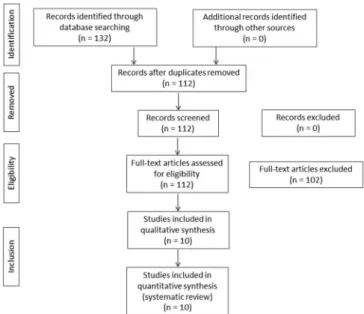
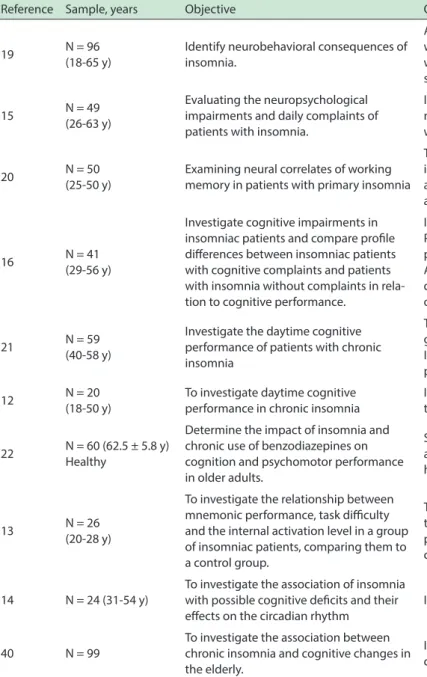
in the search conducted in PubMed and Web of Science; 20 duplicates were excluded. After screening, 102 articles were excluded, which were not related to the proposed theme. Therefore, ten articles were analyzed by eligibility criteria, according to “PRISMA”, and by exclusion criteria as shown in Figure 1. All of them met the criteria for this review and were included in this study. The data presented in these studies are summarized in Table 1.
None of the studies indicated if psychologists administered the neuropsychological tests. The diagnosis for insomnia was conducted according to DSM-IV,
International Classification of Sleep Disorders and Technion
Sleep Questionnaire. No study reported the severity of insomnia
For assessment of insomnia, the following in-struments were used: “Wechsler Test of Adult Reading (WTAR)”, “Auditory psychomotor vigilance task (PVT)”, “PVT-TT, Switching Attention Task (SAT)”, “N-Back task (N-BACK)”, “Performance Evaluation and Effort Scale (PEES)”, “Karolinska Sleepiness Scale (KSS)”, “Visual Analogue Scale-Alertness (VASA)”, “Stroop Color and Word Test (SCWT)”, “Digit Span Subtest of the WAIS-III”, “Brief Test Attention (BTA)”, “Letter-number Sequencing subtest of the WAIS-III”, “Sustained Attention (SA)”, “Digit Symbol Substitution Test (DSST)”, “Trail Making Test (TMT)”, “Controlled Oral Word Association Test (COWAT)”, “Hop-kins verbal learning test (HVLT)”, “Paced Auditory Serial Addition Task (PASAT)”, “Tower Test from the D-KEFS”, “Verbal Fluency”, “Continuous Performance Test-II (CPT-II)”, “California Verbal Learning Task (CVLT-II)” and “Easy letter memory task”.
With regard to the type of study, all the articles were observational studies, with healthy good sleepers as the control. For the main outcomes, results are unclear (see Table 1); this will be explained in the discussion.
■
DISCUSSIONOur objective was to summarize evidence regarding the impact of insomnia on the performance of working memory. Collectively, results suggest that insomniac patients present worse performance in tasks requesting working memory; however, further studies are necessary. Therefore, our discussion is divided into subtopics in order to better explore the impact of insomnia on working memory.
Instruments used in the studies selected
One factor that often contributes to inconsistent findings is the large number of measurements of cognitive performance, often used without a plausible justification.18 Tasks that have different levels of
complexity, with different processing demands, are commonly applied, and then, used for comparison between studies.18 The selected studies used different
tests, and only four tests were used in common among these ten studies. The N-back task was used in three studies,19-21 the Digit Span in two studies,15,16,22 the Digit
Symbol in two studies12,15 and the Trail Making Test in
two studies.12,22
Table 1 - Studies that investigated the inluence of insomnia on working memory performance Reference Sample, years Objective Outcomes
19 N = 96 (18-65 y)
Identify neurobehavioral consequences of insomnia.
Alternating attention and working memory were signiicantly worse in insomniacs patients. In the control group performed worse sustained attention is associated with subjective sleepiness.
15 N = 49 (26-63 y)
Evaluating the neuropsychological impairments and daily complaints of patients with insomnia.
Insomnia patients showed no overall deicits on
neuropsychological tests. Sleep was signiicantly associated with the ield of motor speed.
20 N = 50 (25-50 y)
Examining neural correlates of working memory in patients with primary insomnia
There is an abnormal neural function in patients with insomnia resulting in decreased performance of brain regions and an inability to modulate neurally that is irrelevant during a working memory task.
16 N = 41 (29-56 y)
Investigate cognitive impairments in insomniac patients and compare proile diferences between insomniac patients with cognitive complaints and patients with insomnia without complaints in rela-tion to cognitive performance.
Insomnia patients have clinically signiicant deicits. Patients with higher cognitive complaints showed a worse performance in neuropsychological tests.
All observed deicits were signiicantly associated with diiculty continuation of sleep, whether subjectively or objectively measured and regardless of the sleep pattern.
21 N = 59 (40-58 y)
Investigate the daytime cognitive performance of patients with chronic insomnia
The authors found no signiicant diferences between the two groups on the memory test.
In the N-Back task insomniac patients showed a worse performance when compared to the control group.
12 N = 20 (18-50 y)
To investigate daytime cognitive performance in chronic insomnia
Insomniac patients showed a worse performance in selected tests when compared to the control group.
22 N = 60 (62.5 ± 5.8 y) Healthy
Determine the impact of insomnia and chronic use of benzodiazepines on cognition and psychomotor performance in older adults.
Sleepless participants in use or not of benzodiazepines, have a poorer performance of working memory when compared to healthy individuals.
13 N = 26 (20-28 y)
To investigate the relationship between mnemonic performance, task diiculty and the internal activation level in a group of insomniac patients, comparing them to a control group.
The authors found no signiicant diferences between the two groups on the memory test. In N-Back task the insomniac patients showed a worse performance when compared to the control group.
14 N = 24 (31-54 y)
To investigate the association of insomnia with possible cognitive deicits and their efects on the circadian rhythm
Insomniacs showed greater impairment of working memory.
40 N = 99
To investigate the association between chronic insomnia and cognitive changes in the elderly.
Insomniacs had a poorer performance on memory tasks when compared to healthy subjects.
Cognitive impairment in patients with insomnia
Over the years, researchers interested in the area of sleep and cognition have been aiming at developing
cognitive impairment profiles in patients with insomnia
with daytime complaints performance.23 Several studies
pointed out that insomniac subjects commonly present
cognitive deficits or no deficit at all.24-26 Nevertheless,
these studies suffered from a limitation, namely small and heterogeneous samples, which is a limiting factor to detect small differences between individuals with insomniac individuals and healthy sleepers. In line with recent reports that insomnia preferentially interrupts the performance of complex but not of easy tasks,27,28 we
have detected deficits in working memory. A functional
prefrontal cortex is the biological requisite for the normal performance of these complex tasks.29,30 It may be noted
that similar cognitive processes are also disturbed as a consequence of experimental induction of partial chronic sleep deprivation31 or of shallow sleep,32 the presence of
which has been reported in, at least, some clinical insomniac cases, thereby suggesting their potential association with cognitive function.
It was recently reported that insomnia and short sleep duration could have an adverse effect on tasks tapping the executive control of attention, whereas people with longer sleep duration did not suffer from such symptom.33
possible that the quality of sleep just prior to the test, or more generally, the duration of poor sleep before the test, may affect the cognitive performance. Finally, cognitive impairments in insomniac patients may vary from one to another, owing to idiosyncratic vulnerability to sleep loss, fatigue, mood, and so forth. Moreover, for any individual, cognitive impairments may also differ at varied time points; this is probably determined by the quality and duration of his/her recent sleep.
The clinical signiicance of cognitive impairments in insomnia
In accordance with impaired working memory, in-dividuals with insomnia have subjectively reported their memory problems.7,8 Of note, there may be discrepancies
between objective and subjective measurements on such cognitive impairments, which may result from exaggeration
or overestimation of daytime deficits by the insomniac pa -tients themselves.15 Nonetheless, such differences are
nons-pecific to insomniac individuals, given that these symptoms
have been documented not only in a variety of disorders, including mild cognitive impairment,44 schizophrenia,45 and
multiple sclerosis,46 but also in healthy people.47 Although
the impairments could be influenced by multiple factors,
such as fatigue and mood, in some studies,48,49 subjective
performance (as compared to objective performance) has the potential advantage of predicting structural brain damage or cognitive decline. However, whether actual day--to-day functioning can be better predicted by objective or
self-reported cognitive deficits remains the object of con -trovery.50,51 Objective cognitive deficits observed in some
studies have been in compliance with daytime activities typically reported to be impaired in insomniac individu-als.12-14,16,19,21,22,40 Given the importance of working memory
in conducting complex tasks,51 even subtle impairment of
these functions may cause an increased frequency of non--motor vehicle accidents (e.g., falls, work-related, etc.), or a decreased work productivity related to insomnia.7,52,53
Limitations
There are several factors to be considered in the selected studies, with regard to age, educational levels and who administrated the tests. No study indicated who administered the neuropsychological tests. Only six articles matched participants for age,12-14,16,20,21 in contrast to the
other four articles.15,19,22,40 None of the studies indicated
the level of education of the participants, even though it is
a well known fact that these variables influence cognitive
performance.26 For instance, four studies selected
parti-cipants over 60 years, which lead us to question whether
the cognitive deficits found are not arising from old age
cognitive loss.15,19,22,40 Some studies report on an insufficient
sample, with few individuals analyzed so that it
questio-nable whether one can confirm the presence of a deficit.
polysomnography,22 who presented sometimes, with even
more pronounced impairment than those successfully diagnosed by polysomnography.34 This indicates that
mechanisms other than poor sleep may also contribute to the cognitive decline in individuals with insomnia. For instance, fatigue, anxiety and negative mood that are well-recognized in insomnia have been reported to induce cognitive impairments in association with dysfunction of the prefrontal cortex.35-39
The working memory impairment in insomniac patients was observed in the studies by Shekleton et al.,19
Varkevisser et al.,14 Vignola et al.,22 and Haimov et al.40 This
impairment seems to happen regardless of whether insomnia is being treated with medication or not. For example, the study of Cellini et al.13 shows that insomniacs have a worse
performance in tests involving work memory. The study by Drummond et al.20 points out that insomniac patients show
less activation of the frontoparietal system involved in working memory. In these patients, brain areas typically involved in tasks involving working memory would not be engaged in the operation; no activation was observed for any other brain area to compensate for non activation of this system.
Magnitude of impact of insomnia in working memory
Although it is already well established that insomniac patients have daytime losses that interfere directly and
significantly with their social, emotional and occupational
life, not all insomniac patients will present this pattern of
deficit.
Subclinical aggravation of depression and anxiety symptoms were often coincidentally observed in insomniac individuals. Likewise, subclinical cognitive impairments might also be observed from this systematic review showing differences in performance. The discoveries mentioned above may as well be explained by individual variability in cognitive impairments. Parenthetically, and based on the evidence from epidemiological studies on the distribution of daytime symptoms, different patients may not be necessarily subject to identical consequences. For example, sleep deprivation has been shown to induce cognitive vulnerability with trait-like individual differences.41
Similarly, fatigue resulting from sleep loss may also have differential effects on insomniac individuals.42 From this
perspective, it seems reasonable to speculate that the contribution of sleep loss, fatigue and other psychological factors to cognitive impairments, as well as to the severity itself, may differ among insomniac patients. To complicate matter, a dose-dependent detrimental effect on cognitive function was observed following prolongation of sleep-restriction duration.31 It is noteworthy that with the access
to a night of normal sleep, individuals could get a complete recovery from the aforementioned impairments by sleep restriction.32 Because insomniac individuals demonstrated
Other relevant factors include (1) the distinct methods for assessing these criteria, considering pos-sible discussions about comparability of results among different studies; and (2) the generalizability to subjects with primary or prolonged insomnia. Nevertheless, our major concern was the application of performance tests, which were originally developed and validated to assess
the cognitive deficits in neurological disorders and brain
injuries, rather than insomnia. Moreover, these tests may fail to distinguish differences of cognitive functions among insomniac patients, owing to their insensitivity to insomnia.
■
FINAL CONSIDERATIONS AND CLINICAL IMPLICATIONSThe discoveries reported in our current research
suggest that mild, but not definitive deficits in cognitive performance might be masked by insignificant disparities
in studies comparing insomniac individuals with normal sleepers. Further investigations determining these underrepresented roles are undoubtedly required before
drawing definite conclusions concerning the specific nature
and extent of cognitive impairments relating insomnia.
Determination of the clinical significance of cognitive deficits by means of normative data or by examining their
relation to actual everyday function warrants further investigation. Moreover, strategies such as ecological momentary assessment, qualitative analysis or daytime monitoring with diaries may be advantageous in terms of their ability to help enhance the comprehension on how performance in experimental cognitive tests could be associated with the actual day-to-day function. To provide an entry point for the elucidation of the detailed mechanisms, more studies are wanted to estimate the correlates of diurnal impairments, which should extend beyond the sleep continuity variables, comprising sleep quality and other daytime insomniac symptoms including fatigue, arousal,
anxiety and negative mood. Because daytime deficits have
been the object of speculation as important determinants relating to seeking treatment, it is important to introduce measurements assessing cognitive function into intervention
studies to determine the clinical significance of treatment outcomes. Identification of definite cognitive deficits in
chronic insomnia is also informative to clinical practice. A complete inquiry on cognitive functioning together with other diurnal insomniac symptoms (e.g. irritability, fatigue, excessive worry) is indispensable.
■
CONFLICT OF INTERESTThe authors declare no conflict of interest.
■
AUTHOR CONTRIBUTIONSMonteiro B, Candida M, Monteiro S, Paes F and Machado S developed the project, discussed the data,
wrote the first draft of the article, and reviewed its final
form; Yuan TF, Li A, Sun X, Rocha NBF, Campos C, Nardi AE, discussed the data and reviewed the final form of the
article.
DISFUNÇÃO DA MEMÓRIA DE TRABALHO EM ADULTOS INSONES: UMA REVISÃO SISTEMÁTICA
INTRODUÇÃO: A insônia é o distúrbio do sono mais
comum: relatórios recentes estimam que 25-30% dos adultos sofrem episódios de insônia, enquanto 10% sofrem
de distúrbio do sono suficientemente grave para cumprir
os critérios de diagnóstico para insônia. Além disso, pouco se sabe sobre os mecanismos, causas, evolução clínica, e consequências desta doença crónica altamente prevalente. Mais de 30 estudos foram publicados sobre o assunto, mas apenas uma pequena proporção encontrou diferenças entre os indivíduos com e sem insônia, por exemplo, na memória de trabalho.
OBJETIVO: Examinar as evidências sobre as
diferenças entre adultos insones e normais no desempenho da memória de trabalho.
MÉTODOS: A pesquisa foi realizada usando uma
pesquisa avançada no ISI Web of Science e MEDLINE/ PubMed com os termos “sleep”, “insônia” e “memória de trabalho” como os principais descritores, que foram cruzados com as seguintes palavras-chave: “testes psicológicos”, “neuropsicologia” e “performance”.
RESULTADOS: Um total de 132 artigos foram
identificados na pesquisa realizada no PubMed e Web of
Science; 20 duplicações foram excluídas. Após a triagem, 102 artigos foram excluídos, que não estavam relacionadas com o tema proposto. Assim, 10 artigos foram selecionados por critérios de elegibilidade e de exclusão, e incluídos na revisão sistemática.
CONCLUSÃO: As descobertas relatadas em nosso
estudo sugerem que os deficits leves mas não permanentes de desempenho cognitivo podem ser mascarados por disparidades insignificantes em estudos que comparam indivíduos com insônia com pessoas com sono normal. Tal deficiência pode ser contornada pela análise de amostras maiores e mais bem caracterizadas, em conjunto com o controle metodológico otimizado de fatores que potencialmente podem incorrer em variações entre os participantes.
■
REFERENCES1. Morin CM, LeBlanc M, Daley M, Gregoire JP, Merette C. Epidemiology
of insomnia: prevalence, self-help treatments, consultations, and determinants of help-seeking behaviors. Sleep Med. 2006;7(2):123-30. http://dx.doi.org/10.1016/j.sleep.2005.08.008
2. Ohayon MM, Reynolds 3rd CF. Epidemiological and clinical relevance of insomnia diagnosis algorithms according to the DSM-IV and the
International Classification of Sleep Disorders (ICSD). Sleep Med.
2009;10(9):952-60. http://dx.doi.org/10.1016/j.sleep.2009.07.008
3. Roth T, Jaeger S, Jin R, Kalsekar A, Stang PE, Kessler RC. Sleep problems,
comorbid mental disorders, and role functioning in the national comorbidity survey replication. Biol Psychiatry. 2006;60(12):1364-71. http://dx.doi.org/10.1016/j.biopsych.2006.05.039
4. Fernandez-Mendoza J, Vgontzas AN. Insomnia and its impact on
physical and mental health. Curr Psychiatry Rep. 2013;15(12):418. http://dx.doi.org/10.1007/s11920-013-0418-8
5. American Psychiatry Association. Diagnostic and Statistical Manual of Mental disorders - DSM-5. 5th.ed. Washington: American Psychiatric Association, 2013.
6. Chung KF, Yeung WF, Ho FY, Yung KP, Yu YM, Kwok CW. Cross-cultural and comparative epidemiology of insomnia: the Diagnostic and
statistical manual (DSM), International classification of diseases (ICD) and International classification of sleep disorders (ICSD). Sleep Med.
2015;16(4):477-82. http://dx.doi.org/10.1016/j.sleep.2014.10.018.
7. Leger D, Stal V, Guilleminault C, Raffray T, Dib M, Paillard M. Les
consequences diurnes de l’insomnie: impact sur la qualité de vie. Rev Neurol. (Paris) 2001;157(10):1270-8.
8. Roth T, Ancoli-Israel S. Daytime consequences and correlates of insomnia in the United States: results of the 1991 National Sleep Foundation Survey. II. Sleep. 1999;22(Suppl. 2):S354-8.
9. Linton SJ, Bryngelsson I. Insomnia and its relationship to work and health in a working-age population. J Occup Rehabilit.
2000;10(2):169-83. http://dx.doi.org/10.1023/A:1009408204694
10. Kyle SD, Espie CA, Morgan K. “Not just a minor thing, it is something major, which stops you from functioning daily”: quality of life and daytime functioning in insomnia. Behav Sleep Med. 2010;8(3):123-40. http://dx.doi.org/10.1080/15402002.2010.487450
11. Harvey AG. A cognitive model of insomnia. Behav Res Ther.
2002;40(8):869-93.
12. Bonnet MH, Arand DL. 24-hour metabolic rate in insomniacs and matched normal sleepers. Sleep. 1995;18(7):581-8.
13. Cellini N, de Zambotti M, Covassin N, Sarlo M, Stegagno L. Working memory impairment and cardiovascular hyperarousal in young primary insomniacs. Psychophysiology. 2014;51(2):206-14. http:// dx.doi.org/10.1111/psyp.12167
14. Varkevisser M, Van Dongen HP, Kerkhof GA. Physiologic indexes in
chronic insomnia during a constant routine: evidence for general hyperarousal? Sleep. 2005;28(12):1588-96.
15. Orff HJ, Drummond SP, Nowakowski S, Perlis ML. Discrepancy
between subjective symptomatology and objective neuropsychological performance in insomnia. Sleep. 2007;30(9):1205-11.
16. Fortier-Brochu E, Morin CM. Cognitive impairment in individuals with
insomnia: clinical significance and correlates. Sleep.
2014;37(11):1787-98. http://dx.doi.org/10.5665/sleep.4172
17. Liberati A, Altman DG, Tetzlaff J, Mulrow C, Gøtzsche PC, Ioannidis JP, et
al. The PRISMA statement for reporting systematic reviews and meta-analyses of studies that evaluate healthcare interventions: explanation
and elaboration. BMJ. 2009;339:b2700. http://dx.doi.org/10.1136/
bmj.b2700.
18. Newson RS, Kemps EB. The nature of subjective cognitive complaints
of older adults. Int J Aging Hum Dev. 2006;63(2):139-51. http://dx.doi.
org/10.2190/1EAP-FE20-PDWY-M6P1
19. Shekleton JA, Flynn-Evans EE, Miller B, Epstein LJ, Kirsch D, Brogna
LA, et al. Neurobehavioral performance impairment in insomnia: relationships with self-reported sleep and daytime functioning. Sleep 2014;37(1):107-16. http://dx.doi.org/10.5665/sleep.3318
20. Drummond SPA, Walker M, Almklov E, Campos M, Anderson DE, Straus LD. Neural correlates of working memory performance in primary insomnia. Sleep. 2013;36(9):1307-16. http://dx.doi.org/10.5665/sleep.2952
21. Varkevisser M, Dongen H, Amsterdam J, Kerkhof G. Chronic Insomnia and
Daytime Functioning: An Ambulatory Assessment. Behav Sleep Med. 2007;5:279-96. http://dx.doi.org/10.1080/15402000701557425 22. Vignola A, Lamoureux C, Bastien C, Morin C. Effects of Chronic Insomnia
and Use of Benzodiazepines on Daytime Performance in Older Adults.
J Gerontol B Psychol Sci Soc Sci. 2000;55(1):54-62. http://dx.doi.
org/10.1093/geronb/55.1.P54
23. Fortier-Brochu E, Beaulieu-Bonneau S, Ivers H, Morin C. Insomnia and Daytime Cognitive Performance: A meta-analysis. Sleep Med Rev. 2012;16:83-94. http://dx.doi.org/10.1016/j.smrv.2011.03.008
24. Shekelton JA, Rogers NL, Rajaratnam SMW. Searching for the daytime
impairments of primary insomnia. Sleep Med Rev. 2010;14:47-60. http://dx.doi.org/10.1016/j.smrv.2009.06.001
25. Riedel BW, Lichstein K. Insomnia and daytime functioning. Sleep Med Rev. 2000;4(3):277-98. http://dx.doi.org/10.1053/smrv.1999.0074 26. Fulda S, Schulz H. Cognitive dysfunction in sleep disorders. Sleep Med
Rev. 2001;5(6):423-45. http://dx.doi.org/10.1053/smrv.2001.0157
27. Altena E, Van Der Werf YD, Strijers RL, Van Someren EJ. Sleep loss affects vigilance: effects of chronic insomnia and sleep therapy. J
Sleep Res. 2008;17(3):335-43. http://dx.doi.org/10.1111/j.1365-2869.2008.00671.x.
28. Edinger JD, Means MK, Carney CE, Krystal AD. Psychomotor performance deficits and their relation to prior nights’ sleep among
individuals with primary insomnia. Sleep. 2008;31(5):599-607.
29. Braver TS, Barch DM, Kelley WM, Buckner RL, Cohen NJ, Miezin FM, et
al. Direct comparison of prefrontal cortex regions engaged by working and long term memory tasks. Neuroimage. 2001;14(1):48-59. http:// dx.doi.org/10.1006/nimg.2001.0791
30. Unterrainer JM, Rahm B, Kaller CP, Ruff CC, Spreer J, Krause BJ, et al.
When planning fails: individual differences and error-related brain activity in problem solving. Cerebral Cortex. 2004;14:1390-7. http:// dx.doi.org/10.1093/cercor/bhh100
31. Van Dongen HP, Maislin G, Mullington JM, Dinges DF. The cumulative cost
of additional wakefulness: dose response effects on neurobehavioral functions and sleep physiology from chronic sleep restriction and total sleep deprivation. Sleep. 2003;26(2):117-26.
32. Van Der Werf YD, Altena E, Schoonheim MM, Sanz-Arigita EJ, Vis JC, De Rijke W, et al. Sleep benefits subsequent hippocampal functioning.
Nat Neurosci. 2009;12(2):122-3. http://dx.doi.org/10.1038/nn.2253
33. Fernandez-Mendoza J, Calhoun S, Bixler EO, Pejovic S, Karataraki M,
Liao D, et al. Insomnia with objective short sleep duration is associated
with deficits in neuropsychological performance: a general population
study. Sleep. 2010;33(4):459-65.
34. Sugerman JL, Stern JA, Walsh JK. Daytime alertness in subjective and objective insomnia: some preliminary findings. Biol
Psychiatry. 1985;20(7):741-50. http://dx.doi.org/10.1016/0006-3223(85)90153-2
35. van der Linden D, Frese M, Meijman TF. Mental fatigue and the control of cognitive processes: effects on perseveration and planning. Acta Psychol. 2003;113(1):45-65. http://dx.doi.org/10.1016/S0001-6918(02)00150-6
36. van der Linden D, Frese M, Sonnentag S. The impact of mental fatigue on exploration in a complex computer task: rigidity and loss of systematic strategies. Hum Factors. 2003;45(3):483-94. http://dx.doi. org/10.1518/hfes.45.3.483.27256
37. Eysenck MW, Derakshan N, Santos R, Calvo MG. Anxiety and cognitive performance: attentional control theory. Emotion. 2007;7(2):336-53. http://dx.doi.org/10.1037/1528-3542.7.2.336
38. Smallwood J, Fitzgerald A, Miles LK, Phillips LH. Shifting moods,
wandering minds: negative moods lead the mind to wander. Emotion. 2009;9:271-6. http://dx.doi.org/10.1037/a0014855
40. Haimov I, Hanuka E, Horowitz Y. Chronic insomnia and cognitive functioning among older adults. Behav Sleep Med. 2008;6(1):32-54. http://dx.doi.org/10.1080/15402000701796080
41. Van Dongen HP, Baynard MD, Maislin G, Dinges DF. Systematic
interindividual differences in neurobehavioral impairment from sleep loss: evidence of trait like differential vulnerability. Sleep. 2004;27(3):423-33.
42. Fortier-Brochu E, Beaulieu-Bonneau S, Ivers H, Morin CM. Relations between sleep, fatigue, and health-related quality of life in individuals
with insomnia. J Psychosom Res. 2010;69(5):475-83. http://dx.doi.
org/10.1016/j.jpsychores.2010.05.005
43. Vallieres A, Ivers H, Bastien CH, Beaulieu-Bonneau S, Morin CM. Variability and predictability in sleep patterns of chronic insomniacs.
J Sleep Res. 2005;14(4):447-53.
http://dx.doi.org/10.1111/j.1365-2869.2005.00480.x
44. Roberts JL, Clare L, Woods RT. Subjective memory complaints and
awareness of memory functioning in mild cognitive impairment: a
systematic review. Dement Geriatr Cogn Disord. 2009;28(2):95-109.
http://dx.doi.org/10.1159/000234911
45. Johnson I, Tabbane K, Dellagi L, Kebir O. Self-perceived cognitive
functioning does not correlate with objective measures of cognition in schizophrenia. Compr Psychiatry. 2011;52(6):688-92. http://dx.doi. org/10.1016/j.comppsych.2010.12.008
46. Kinsinger SW, Lattie E, Mohr DC. Relationship between depression, fatigue, subjective cognitive impairment, and objective neuropsycho-logical functioning in patients with multiple sclerosis. Neuropsychol-ogy. 2010;24(5):573-80. http://dx.doi.org/10.1037/a0019222
47. Wilhelm O, Witthöft M, Schipolowski S. Self-reported cognitive failures:
competing measurement models and self-report correlates. J Individ
Differ. 2010;31:1-14. http://dx.doi.org/10.1027/1614-0001/a000001
48. Haley AP, Hoth KF, Gunstad J, Paul RH, Jefferson AL, Tate DF, et al.
Subjective cognitive complaints relate to white matter hyperintensities and future cognitive decline in patients with cardiovascular disease.
Am J Geriatr Psychiatry. 2009;17(11):976-85. http://dx.doi. org/10.1097/JGP.0b013e3181b208ef
49. Nunes T, Fragata I, Ribeiro F, Palma T, Maroco J, Cannas J, et al. The outcome of elderly patients with cognitive complaints but normal
neuropsychological tests. J Alzheimers Dis. 2009;19(1):137-45. http:// dx.doi.org/10.3233/JAD-2010-1210
50. Chaytor N, Schmitter-Edgecombe M. The ecological validity of neuropsychological tests: a review of the literature on everyday cognitive skills. Neuropsychol Rev. 2003;13(4):181-97. http://dx.doi.
org/10.1023/B:NERV.0000009483.91468.fb
51. Marcotte TD, Grant I, editors. The neuropsychology of everyday functioning. New York: The Guilford Press, 2010.
52. Daley M, Morin CM, LeBlanc M, Gregoire JP, Savard J, Baillargeon
L. Insomnia and its relationship to health-care utilization, work absenteeism, productivity and accidents. Sleep Med. 2009;10(4):427-38. http://dx.doi.org/http://dx.doi.org/10.1016/j. sleep.2008.04.005
53. Rosekind MR, Gregory KB, Mallis MM, Brandt SL, Seal B, Lerner D. The
cost of poor sleep: workplace productivity loss and associated costs.