Vol.52, n. 4: pp.1027-1036, July-August 2009
ISSN 1516-8913 Printed in Brazil BRAZILIAN ARCHIVES OF
BIOLOGY AND TECHNOLOGY
A N I N T E R N A T I O N A L J O U R N A L
Microbial Succession Within an Anaerobic Sequencing
Batch Biofilm Reactor (ASBBR) Treating Cane Vinasse at
55
oC
Maria Magdalena Ferreira
Ribas
1*, Fabio Alexandre Chinalia
2, Eloisa Pozzi
3and Eugenio
Foresti
31Universidade Estadual de Maringá; Campus do Arenito; Rodovia PR 482 km 45; 87820-000; Cidade Gaúcha - PR
- Brasil. 2National University of Ireland; University Road.; Galway - Ireland. 3Hidráulica e Saneamento; Escola de Engenharia de São Carlos; Universidade de São Paulo; Av. Trabalhador São Carlense, 400; C. P.: 359; 13560-970; São Carlos - SP - Brasil
ABSTRACT
The aim of this work was to investigate the anaerobic biomass formation capable of treating vinasse from the production of sugar cane alcohol, which was evolved within an anaerobic sequencing batch biofilm reactor (ASBBR) as immobilized biomass on cubes of polyurethane foam at the temperature of 55ºC. The reactor was inoculated with mesophilic granular sludge originally treating poultry slaughterhouse wastewater. The evolution of the biofilm in the polyurethane foam matrices was assessed during seven experimental phases which were thus characterized by the changes in the organic matter concentrations as COD (1.0 to 20.0 g/L). Biomass characterization proceeded with the examination of sludge samples under optical and scanning electron microscopy. The reactor showed high microbial morphological diversity along the trial. The predominance of Methanosaeta-like cells was observed up to the organic load of 2.5 gCOD/L.d. On the other hand, Methanosarcina-like microorganisms were the predominant archaeal population within the foam matrices at high organic loading ratios above 3.3 gCOD/L.d. This was suggested to be associated to a higher specific rate of acetate consumption by the later organisms.
Key words: anaerobic digestion, adaptation phase, wastewater, sugar cane, biofilm, microbiology
*
Author for correspondence:[email protected]
INTRODUCTION
The quantity and quality of the wastewater generated in the production of ethanol using sugar cane as primarily substrate is one of the largest environmental problems in Brazil. Brazilian production of ethanol was estimated as 15.1 billion
liters per year (Agrianual, 2005), and
approximately 12 to 14 liters of vinasse is generated with each liter of produced ethanol. The
conventional biological treatments. On the other hand, considerable attention has been paid towards the development of new strategies for the biological treatment, such as anaerobic reactors aiming at the conversion of organic matter into biogas (Kennedy et al., 1991). For instance, the anaerobic bath reactor has simple operation regarding instrumentation, and it is also an important tool for the fundamental research focusing several important aspects of anaerobic biodegradation (Zaiat et al., 2001). Biomass retention within such reactor results from the growth of microorganisms attached to a support material or from self-immobilization process such as granules that remain in the interstices of the polyurethane matrices by the formation of biofilm (Varesche et al., 1997). It has been reported that the immobilization process enhances the thermo-stability of the system by providing an extra biomass buffer for a sudden change in temperature (van Lier, 1996). The largest problem regarding the applicability of thermophilic reactors is the availability of thermophylic anaerobic sludge for the reactor’s inoculation and start-up procedure (Ahring, 1994). Therefore, the choice of a mesophilic sludge with high microbial diversity is crucial to ensure the development of a thermophilic biomass. Chen (1983) evaluated the metabolic adaptation of mesophilic anaerobic sludge to thermophilic temperatures and from that only 9% were thermophiles and 1% were obligate thermophiles from the total bacterial population in the mesophilic reactor.
Assumptions of the presence of certain types of microorganisms by optical microscopy are uncertain, but according to Sarti et al.(2006), apart
from chemical analysis, microscopic
microbiological observations are an important approach available for monitoring the changes in the microbial populations of a biofilm. This knowledge is useful for making it possible to understand some of the metabolic advantages and/or disadvantages of such systems during anaerobic treatment which are commonly assessed by organic matter removal efficiencies.
The aim of this work was to observe the microbial evolution of a thermophilic biofilm formed within an anaerobic sequencing batch reactor treating vinasse at 55oC by optical and scanning electron microscopy. The seeding sludge was obtained from an UASB (upflow anaerobic sludge blanket) reactor treating poultry slaughterhouse wastewater at ambient temperature.
MATERIALS AND METHODS
The bench scale ASBBR had total and working volumes of 7.2 liters and 3.5 liters, respectively. It was composed by two concentric cylindrical flasks with internal diameters of 19 and 22 cm, both with 25 cm of height. The space between the external and internal walls was filled with warm water continuously recycled from an external bath kept at 55 ± 2oC. The reactor was filled with polyurethane foam cubes of 1 cm (apparent density of 23 kg/m3 and 95% porosity) for biomass immobilization. The foams were placed in a perforated cylindrical basket (mesh 0.5 cm) of stainless steel with external and internal diameters of 17.5 cm and 7.0 cm, respectively, and height of 18 cm. This basket was placed in the reactor. Mixing was achieved using a mechanical mixer axis of 2 impellers fixed in the void space in the center of the stainless steel basket. The experimental set-up used is shown in Figure 1. This mixer was operated at 300 rotations per minute. The cubic foam matrices were inoculated with mesophilic granular anaerobic sludge (36 mg of total volatile solids/g of sludge) taken from an UASB reactor treating poultry slaughterhouse wastewater at ambient temperature (~25oC). The initial temperature of the operation of the reactor was 35oC. But, the temperature was raised abruptly from 35oC to 55oC after 21 days of inoculation.
Filling and discharge were performed by diaphragmatic pumps controlled by the timers. The vinasse was collected from the exit disposal duct of the industry and stored in a refrigerator (~4oC). The feeding medium supplied to the experimental reactor was diluted vinasse and dilution ratios were carried out according to the required organic concentration of each experimental phase. This medium was enriched with a solution of mineral salts, (phosphorus, calcium and iron) trace metals (nickel, cobalt and selenium) and NaHCO3. The
HCO3
Figure 1 - Diagrammatic representation of the ASBBR reactor (Lapa, 2003): (1) Anaerobic sequencing batch biofilm reactor, (2) warm water jacket, (3) stainless steel basket, (4) Engine of the mechanical propellers, (5) propellers, (6) feeding pump, (7) discharging pump, (8) heat exchangers, (9) sampler, (10) bench.
The cubes were macerated to remove the adhered biomass and each sample was stamped at previously prepared slides containing 2% agar– agar layer. Observations were made using an Olympus BX-60 equipped with contrast-phase and fluorescence, measured by ultraviolet light excitation, and documentation was made using ‘‘Optronics’’ camera and software ‘‘Image Pro Plus’’ (4.1). Methanosarcina-like cells can be tentatively identified by fluorescence microscopy, because they have some unique coenzymes, F420 and F350, which turn them fluorescents. The morphological incidence of observed cells in the random chosen microscopic fields was classified as frequent (more than 40%), less frequent (between 10 and 40%), rare (less than 10%) and absent (not observed).
Samples for scanning electron microscopy (SEM) were subjected to the technique developed by Nation (1983) and adapted to bacterial biofilms by Araujo (1995). The sample preparation procedures are also described in Lima et al. (2005). Briefly, the samples were fixed in 0.1 M phosphate buffer (pH 7.3) containing 2.5% glutaraldehyde for 12 h at 4ºC. After fixation, the samples were rinsed three times in 0.1 M phosphate buffer (pH 7.3) and dehydrated gradually after successive immersions in ethanol solutions of increasing concentrations (50, 70, 80, 90 and 95%). Each rinsing and
dehydrating step lasted 10 min. The samples were washed three times in 100% ethanol before immersion in hexamethyldisilazane for 30 seconds. The drying step was completed by holding the samples at 60ºC for 2 h. The particles were then coated with gold powder and stuck onto microscope slides with silver glue. SEM analyses were performed using a Zeiss model DSM-960 digital scanning microscope.
Microbial diversity was also assessed by carrying out the polymerase chain reaction and denaturing
gradient gel electrophoresis (PCR/DGGE)
technique according to Muyzer (1999) with bacterial and archaeal primers used by Nübel et al. (1996) and Großkopf et al. (1998), respectively. This technique was only applied for samples from the inoculum and for samples from the last experimental phase VII considering the biomass was already adapted the thermophilic temperature treating vinasse.
After the DGGE analysis of the individual biofilm samples, the individual DGGE profiles were compared to each other by using the pair-wise similarity coefficient Cs, determined as follows: Cs=[2j/(a+b)]*100, where a was the number of DGGE bands in inoculum, b was the number of DGGE bands in biomass from the phase VII, and j was the number of common DGGE bands. Two identical DGGE profiles have a Cs value of 100%, Detail 1: Propeller
3.6 cm
and two completely different profiles have a Cs value of 0% (Gillan et al., 1998).
Phenol and organic acids concentrations were quantified by gas chromatography (Moraes et al., 2001).
The performance of the ASBBR was evaluated by
monitoring the influent and effluent
characteristics. Chemical oxygen demand (COD), total solids (TS), total volatile solids (TVS) and pH were determined according to the Standard Methods for the Examinations of Water and
Wastewater (1995). Bicarbonate alkalinity (BA) was according to DiLallo and Albertson (1961), modified by Ripley et al. (1986). Total volatile acids (TVA) were evaluated according to DiLallo and Albertson (1961). Sulfate was analyzed twice in the crude vinasse. The nitrogen compounds were determined only in the vinasse. In the phase VII, sulfate and sulfite temporal profiles were obtained by analyzing samples from the internal liquid of the reactor.
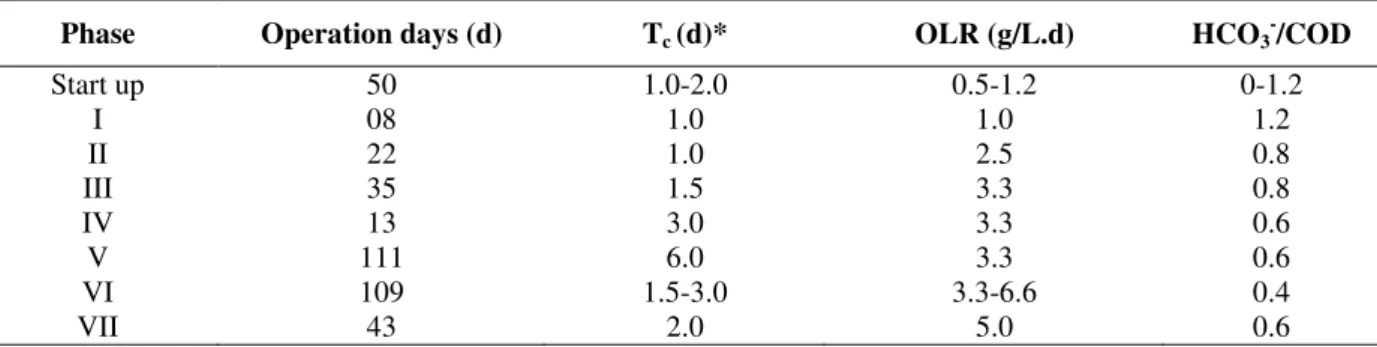
Table 1 – Experimental phases in the thermophilic ASBBR.
Phase Operation days (d) Tc (d)* OLR (g/L.d) HCO3-/COD
Start up 50 1.0-2.0 0.5-1.2 0-1.2
I 08 1.0 1.0 1.2
II 22 1.0 2.5 0.8
III 35 1.5 3.3 0.8
IV 13 3.0 3.3 0.6
V 111 6.0 3.3 0.6
VI 109 1.5-3.0 3.3-6.6 0.4
VII 43 2.0 5.0 0.6
* Tc - Time of cycle.
RESULTS AND DISCUSSION
An average the COD value for the crude vinasse was 51 g/L (± 8.5 of standard deviation). Sulfate, total potassium and total nitrogen concentrations were 1.80 (± 0.15) g S-SO4
-2
/L, 6.1 (± 5.6) g Ktotal/L and 2.4 (± 3.0) g Ntotal/L, respectively, at a
pH of 4.6. The results, however, varied considerably according to the specific constitution of different sugar cane crops.
The phase of biomass adaptation lasted 39 cycles (corresponding to 50 days of operation). The operational cycles were of 24 h until 28th cycle; after, it was increased to 48 h until the 39th cycle. This strategy was adopted to guarantee enough residence time for organic acid degradation and methane production. In this phase, the organic loading rate was increased from 0.5 to 1.2 gCOD/L.d and alkalinity was supplemented at the ratio of 1.2 HCO3
-/COD. Until the 21st cycle, the reactor was operated at temperature of 35ºC. From this cycle, the temperature was abruptly raised to 55ºC.
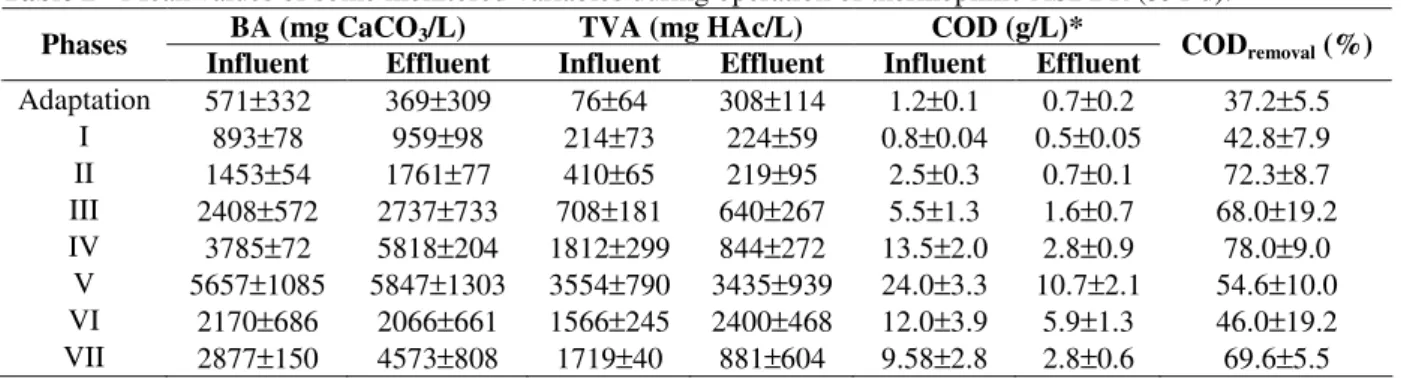
Table 2 - Mean values of some monitored variables during operation of thermophilic ASBBR (391 d). BA (mg CaCO3/L) TVA (mg HAc/L) COD (g/L)*
Phases
Influent Effluent Influent Effluent Influent Effluent CODremoval (%) Adaptation 571±332 369±309 76±64 308±114 1.2±0.1 0.7±0.2 37.2±5.5
I 893±78 959±98 214±73 224±59 0.8±0.04 0.5±0.05 42.8±7.9 II 1453±54 1761±77 410±65 219±95 2.5±0.3 0.7±0.1 72.3±8.7 III 2408±572 2737±733 708±181 640±267 5.5±1.3 1.6±0.7 68.0±19.2 IV 3785±72 5818±204 1812±299 844±272 13.5±2.0 2.8±0.9 78.0±9.0
V 5657±1085 5847±1303 3554±790 3435±939 24.0±3.3 10.7±2.1 54.6±10.0 VI 2170±686 2066±661 1566±245 2400±468 12.0±3.9 5.9±1.3 46.0±19.2 VII 2877±150 4573±808 1719±40 881±604 9.58±2.8 2.8±0.6 69.6±5.5
*COD – total influent COD and centrifuged (at 2000 rotations per minute) effluent COD.
The physiological acclimation of the biomass along the experiment was observed by the progressive increment on the organic matter removal efficiencies (43 to 78%) recorded from phase I to IV. On the other hand, it was possible that the amount of organic matter in the influent of the phase V (20 gCOD/L) imposed a shock load into the system. Progressive increases in the concentrations of volatile acids were observed in phases III, IV and V (Table 2). Despite that, the bicarbonate alkalinity generated in the reactor was kept constant even after the reduction in the
bicarbonate amendments in the substrate from 0.8 (phase III) to 0.6 HCO3
-/COD (phases IV and V). Furthermore, all the results obtained in phases I, II, III and IV pointed out at a specific adaptation of the mesophilic sludge to the thermophilic
condition. High diversity of microbial
morphologies was observed throughout the experiments. The optical microscopy was used to estimate the incidence and frequency of observed microbial morphologies and to score them as predominant, frequent, less frequent and rare (Table 3).
Table 3 – Morphological incidence during experimental phases in ASBBR at thermophilic conditions.
Experimental phases – Sample points*
I II III IV V VII
Morphologies
T M B T M B T M B T M B T M B T M B
Bactéria Domain
Coccus - - + +++ + + - + - - - + - +++ +++ - + +
Rods
+++ +++ +++ +++ ++
+ +++ ++ ++ +++ +++ +++ +++
++
+ +++ +++ +++ ++
+ ++
+
Curve rod - ++ ++ - - ++ + + + - ++ ++ ++ +++ +++ ++ ++ ++
Filaments - + + - - ++ + + ++ +++ +++ +++ ++ ++ + + ++ ++
Archaea Domain
Methanosaeta–like +++ +++ +++ +++ ++ +++ ++ +++ +++ +++ +++ +++ + ++ + + + +
Methanosarcina-
like - +++ +++ -
++
+ ++ +++ +++ +++ ++ +++ +++ + +++ +++ +++
++ +
++ + Fluorescent rods
- + +++ - - +++ +++ +++ +++ - - - ++
+ +++ +++ +++ ++
+ ++
+ Others
S. cereavisiae-like
+++ +++ +++ +++ ++
+ +++ +++ +++ +++ ++ +++ +++ ++
+ +++ +++ ++ ++ ++
*Sample points in the reactor: T – top, M – middle, B – bottom.
Incidence: (+++) Frequent, (++) Less frequent, (+) Rare, (-) Not observed.
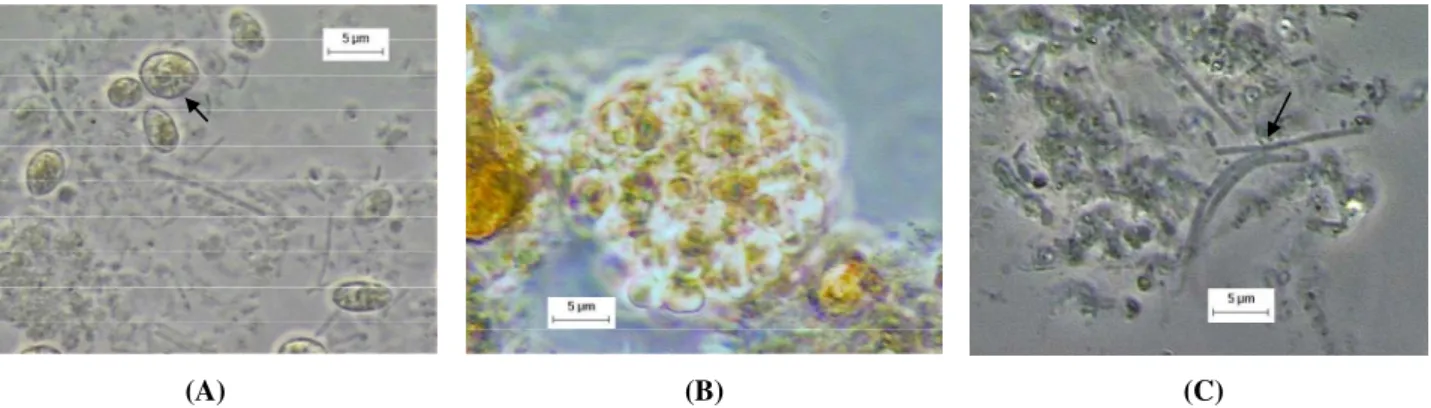
The inoculum taken from UASB reactor showed several morphotypes of rods (curve, fine, coccoid, grouped coccoid) as cells (Fig. 2a and 2c), fine filaments which were similar to Methanosaeta-like cells (Fig. 2c: arrow) and morphotypes resembling Methanosarcine-like cells (Fig. 2b).
foam were neither different regarding their size
nor their microbial morphotypes. These
observations could be a resultant of the hydrodynamic characteristics of ASBBR, which has been commonly defined as being of complete mixed reactor and, therefore, as a result it reduced the effect of substrate stratification and mass transference within the biofilm.
During the experimental phases, rods of several morphotypes and filaments were frequently observed (Fig. 2c), which were generally
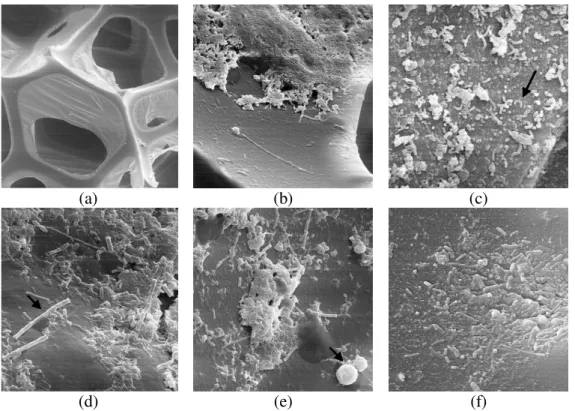
associated with the hydrolysis and fermentation phases of the anaerobic degradation pathway. The predominance Methanosaeta-like cells (Fig. 4d: arrow) was detected at the initial phases I and II with only a few incidences of Methanosarcina-like
cells. However, the occurrence of these
methanogens of the genus Methanosarcina
increased in the subsequent phases, with the increment of the vinasse concentrations starting from the phase III with 5 gCOD/L and OLR of 3.3 g/L.d.
(A) (B) (C)
Figure 2 - Observed morphologies by optical microscopy (1500X): (a) diversity of rods and yeast
S. cerevisiae - like: arrow, (b) Methanosarcine –like cells and, in detail, the same cell in fluorescence, (c) biomass and cells Methanosaeta -like (arrow), rods and cocci.
Methanosarcina have higher growth rate (µmaximum), of 1.27 to 2.04 d
-1
, than Methanosaeta (0.48 to 0.72 d-1) with acetate like carbon resource in termophilic conditions (55ºC) (van Lier, 1993; van Lier, 1995). The acetotrophic methanogens are present in the samples with high organic loading,
which generally resulted in high acetate
concentrations (Ahring, 1994).
In samples collected after six hours of a cycle, about 70, 150 and 300 mg/L of acetic acid was detected in the phases I, II and III, respectively. These values were totally decreased until the end of the cycles.
During the experiments, abundant frequency of yeasts-like cells, especially at the reactor’s top was also recorded. The presence of oxygen in such region might have played an important role affecting the vertical distribution of such organisms within the reactor. Another reason would be the capacity of the yeasts to float due to the presence of oil droplets within the cells. It is important to point out that yeast cells might have been present in the wastewater and have not
contributed to important degradation role during the vinasse anaerobic treatment. Such an assumption could be made because the observed yeast cells resembled Saccharomyces cereavisiae (arrows of the Fig. 2a and 4e) which were common during ethanol production using a fermentative process. It was possible that the yeast-like cells were inactive at 55oC and also accounting for the low likelihood of intact survival after the distillation process.
The occurrence of curve rods was also observed that could be sulfate reducing bacteria (SRB). Dessulfovibrio-like cells appeared starting from the phase III with 5 gCOD/L and 0.16 g S-SO4
2-/L. The organic matter of the influent may follow degradation by two distinct metabolic routes in anaerobic conditions: methanogenesis or sulfate reduction. When sulfate is available, it can be used as final electron acceptor for anaerobic respiration causing organic matter degradation without the production of methane. Methanogenesis is only favored in this competition when organic matter and sulfate ratio is higher than 0.67 COD/SO4
2-(Hulshoff et al., 1998). For instance, in phase V (with 20.0 g COD/L and 0.65 g S-SO4
2-/L), the
COD/SO4
ratio was 31.0, therefore, amply favorable for methanogenesis. In the previous experiments (phases I and II), the presence of SRB-like cells was not observed, in spite of their reproducing high rates when compared to the methanogens. This happened probably because the inoculum had high density of methanogenic organisms, and, thus, they dominated in the system. But when the organic concentration in substrate was higher (starting from the phase III with 5 gCOD/L), methanogenic organisms could have had a reduction in their activity, once it was observed that the average COD removal declined from 72% (phase II with 2.5 gCOD/L) to 68% in the phase III (Table 2) and SBR-like morphotypes were more frequently observed. Therefore, the SRB might have overcome the disadvantage of its low density in the inoculation when high contents of organic matter were applied provoking an organic shock, especially in the initial hours of the
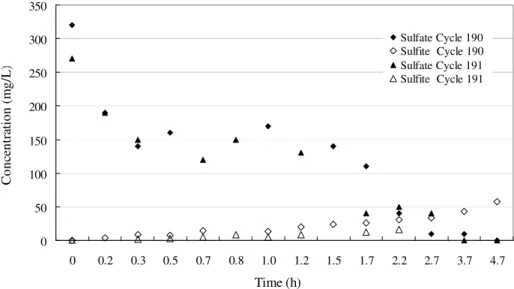
cycles. Then, the SBR-like cells were observed in the next phases. To prove this hypothesis, samples of the effluent of two different cycles were collected in the last experimental phase for sulfate and sulfite analyses (Fig. 3) in the first five hours. The total elimination of the sulfate ion was observed after fourth hour. It is well known that sulfite ions are products of the SBR metabolism in the organic matter degradation (Postgate, 1984). Figure 4c shows the morphology of curve rod observed under scanning electronic microscopy. In the phase VII, the fine and small rods (Fig. 4f)
observed could be hydrogen-utilizing
methanogens (Ahring, 1994), for instance, Methanobacterium. Some of those morphotypes were fluorescent in epifluorescence microscopy. Phenol values were detected from 1 to 7 mg/L along all the experimental phases. Phenol was totally degraded during the operating cycles at each batch. This could be due to high diversity of rods and coccus.
0 50 100 150 200 250 300 350
0 0.2 0.3 0.5 0.7 0.8 1.0 1.2 1.5 1.7 2.2 2.7 3.7 4.7
Time (h)
C
o
n
ce
n
tr
at
io
n
(
m
g
/L
)
Sulfate Cycle 190 Sulfite Cycle 190 Sulfate Cycle 191 Sulfite Cycle 191
Figure 3 - Profile of sulfate and sulfite along the cycles 190 and 191 of the phase VII.
DGGE-profiling showed considerable variation regarding bacterial and archaeal diversity between the mesophilic inoculum and the established thermophilic biomass from the phase VII with a similarity coefficient of 0.005% both for the bacterial and archaeal populations. This meant that the populations changed almost completely from the inoculation to the end of operation (Fig. 5). The biomass developed in the sludge of the phase VII was different from the inoculum because all the environmental conditions were altered. The
archaeal Methanosaeta-like, several morphotypes of rods, yeast-like cells and some cells resembling Methanosarcina spp. From phase IV onwards, Methanosarcina-like cells became more frequent allied with fluorescent rods that were tentatively identified as hydrogenotrophic methanogens. The choice of the inoculum might also have been a determinant factor affecting the competition between the methanogenesis and sulfate-reducing
metabolism. Although the organic loads applied to the biomass were expected to be assimilated by the methanogenic population, the results indicated that high initial COD concentration could have had a pronounced effect on the performance of the sequencing batch reactor. Therefore, the biomass metabolic potential for COD removal from vinasse would depend on a previous evaluation of the microbial populations colonizing the reactor.
(a) (b) (c)
(d) (e) (f)
Figure 4 - Scanning electronic microscopy: (a) polyurethane foam for biomass immobilization (100X), (b) biomass superficial adherence to the support (1000X), (c) several types of rods and curve rod (arrow) (3000X), (d) rods and Methanosaeta –like (arrow) (3000X), (e) Methanosaeta –like cells and yeast (arrow), (f) similar to hydrogen-utilizing methanogens rods cells (3000X).
ACKNOWLEDGEMENTS
The authors acknowledge the financial support received for this work from FAPESP- Fundação de Amparo a Pesquisa do Estado de São Paulo given to the Thematic Project n. 2001-05489-0, Brazil,
and the grant received from CAPES -
Coordenação de Aperfeiçoamento de Pessoal de Nível Superior, Brazil.
RESUMO
Este trabalho investigou a formação de um biofilme anaeróbio capaz de tratar vinhaça da produção de álcool de cana-de-açúcar, que evoluiu dentro de um reator operado em bateladas seqüenciais com biofilme (ASBBR) tendo a biomassa imobilizada em cubos de espuma de poliuretano na temperatura de 55ºC. O reator foi inoculado com lodo granular mesofílico tratando água residuária de abatedouro de aves. A evolução do biofilme nas matrizes de espuma de poliuretano foi observada durante sete fases experimentais que
foram caracterizadas por mudanças nas
concentrações de matéria orgânica como DQO (1,0 a 20,0 g/L). A caracterização da biomassa foi feita por exames de amostras do lodo em microscopia ótica e eletrônica de varredura. O
reator apresentou grande diversidade de
morfologias ao longo do experimento. A
predominância de células como Methanosaeta
foram observadas até a carga orgânica de 2,5 gDQO/L.d. Por outro lado, microrganismos como Methanosarcina foram a população arquéia predominante nas matrizes de espuma em taxas de carregamento orgânico acima de 3,3 gDQO/L.d. Este fato pode estar relacionado com maior taxa de utilização específica de acetato por esses microrganismos.
REFERENCES
Agrianual (2005), Anuário da agricultura brasileira. 10th ed. São Paulo, FNP Consultoria, Brasil, pp. 270-272. (in Portuguese)
Ahring, B.K. (1994), Status on science and application of thermophilic anaerobic digestion. Water Science and Technology, 30 (12), 241-249.
Araújo, J. C. (1994), Acompanhamento da evolução do biofilme e caracterização química e biológica em reator de leito fluidificado tratando esgoto sanitário sintético. MSc. Thesis, Escola de Engenharia de São Carlos, Universidade de São Paulo, São Carlos, SP, Brasil. (in Portuguese)
Chen, M. (1983), Adaptation of mesophilic anaerobic sewage fermentor populations to thermophilic temperatures. Applied and Environmental Microbiology, 45 (4), 1271-1276.
Dilallo, R. and Alberton, O. E. (1961), Volatile acids by direct titration. Journal of Water Pollution Control Federation, 33 (4), 356-356.
Gillan, D. C., Speksnijder, A. G. C. L., Zwart, G., Ridder, C. (1998), Genetic diversity of the biofilm covering Montacuta feruginosa (Mollusca, Bivalvia) as evaluated by denaturing gradient gem electrophoresis analysis and cloning of PCR-amplified gene fragments coding for 16S rRNA.
Applied and Environmental Microbiology, 64 (9), 3464-3472.
Großkopf, R., Janssen, P. H., Liesack, W. (1998), Diversity and structure of the methanogenic community in anoxic rice paddy soil microcosms as examined by cultivation and direct 16S rRNA gene sequence retrieval, Applied and Environmental Microbiology, 64, 960–969.
Kennedy, K. J., Sanchez, W. A., Hamoda, M. F., Droste, R.L. (1991), Performance of anaerobic sludge blanket sequencing batch reactors. Research Journal of Water Pollution Control Federation, 63, 75-83. Hulshoff, P. L., Lens, P. N. L., Stams, A. J. M.,
Lettinga, G. (1998), Anaerobic treatment of sulphate-rich watewaters. Biodegradation 9, 213–224.
Lapa, K. R. (2003), Avaliação de desempenho do reator anaeróbio em batelada seqüencial (ASBR), contendo biomassa imobilizada em pedra pome, para tratamento de esgoto sanitário. MSc. Thesis, Escola de Engenharia de São Carlos, 106p. Universidade de São Paulo, São Carlos, SP, Brasil. (in Portuguese) Lima, C. A. A., Ribeiro, R., Foresti, E., Zaiat, M.
(2005), Morphological study of biomass during the start-up period of a fixed-bed anaerobic reactor treating domestic sewage. Brazilian Archives of Biology and Technology, 48 (5), 841-849.
Moraes, E. de M., Foresti, E., Zaiat, M., Adorno, M. A. T. (2001), Determinação de ácidos voláteis por cromatografia gasosa em efluentes de reatores anaeróbios. In: Chernicharo, C.A.L. (coord.). Pós-tratamento de efluentes de reatores anaeróbios: aspectos metodológicos. Belo Horizonte: Prosab. p. 35-39.
Nation, J. L. (1983), A new method using hexamethyldilazane for preparation of soft tissues for scanning electron microscopy. Stain Technology, 58, 347-351.
Nübel, U., Engelen, B., Felske, A., Snaidr, J,. Wieshuber, A., Amann, R. I., Ludwig, W., Backhaus, H. (1996), Sequence heterogeneities of genes ncoding 16S rRNAs in Paenibacillus polymyxa detected by temperature gradient gel electrophoresis, Journal of Bacteriology. 178, 5636–5643.
Postgate, J. R. (1984), The sulphate-reducing bacteria, 2 ed., Cambridge: Cambridge University Press. Ripley, L. E., Boyle, W. C. and Converse, J. C. (1986),
Improved alkalimetric monitoring anaerobic digestion of high-strenght wastes. Journal of water pollution control federation, 58, 406-411.
Sarti, A., Pozzi, E., Chinalia, F.A., Zaiat, M., Foresti, E. (2006), The performance of an anaerobic sequencing batch biofilm reactor treating domestic sewage colonized by anoxygenic phototrophic bacteria.
Chemosphere, 62, 1437–1443.
Standard Methods for the Examination of Water and Wastewater (1995), American Public Health Association / American Water Works Association / Water Environment Federation, 19th ed. Washington, DC, USA.
Van Lier, J. B. (1993), Depuración anaerobia de águas residuales, Actas del seminario digestión anaerobia
de aguas residuales, Valladolid, Spain, 5, 1-12. (in Spanish)
Van Lier, J. B. (1995), Thernophilic anaerobic wastewater treatment; temperature aspects and process stability. Thesis. Wageningen University, 181p.
Van Lier, J. B. (1996), Limitations of thermophilic anaerobic wastewater treatment and the consequences for process design, Antonie van Leeuwenhoek, 69, 1-14.
Varesche, M. B. A., Zaiat, M., Vieira, L. G. T., Vazoller, R. F., Foresti, E. (1997), Microbial colonization of polyurethane foam matrices in horizontal-flow anaerobic immobilized-sludge reactor. Applied Microbiology and Biotechnology, 48, 534-538.
Wilkie, A. C., Riedesel, K. J. and Owens, J. M. (2000), Stillage characterization and anaerobic treatment of ethanol stillage from conventional and cellulosic feedstocks. Biomass and Bioenergy, 19, 63 - 102. Zaiat, M., Rodrigues, J. A. D., Ratusznei, S. M.,
Camargo, E. F. M., Borzani, W. (2001), Anaerobic sequencing batch reactors for wastewater treatment: A developing technology. Applied Microbiology and Biotechnology, 55: 29 - 35