Embodied Emotions: Observations and Experiments in Architecture and Corporeality, Vol. I Doutoramento em Arquitectura
Especialidade em Teoria e Prática do Projecto
Nome do Doutorando Maria da Piedade Aldinhas de Freitas Ferreira Nome do Orientador Doctor of Philosophy José Manuel Pinto Duarte Constituição do Júri:
Presidente Doutor José Manuel Aguiar Portela da Costa, Professor Associado,
Faculdade de Arquitetura da Universidade de Lisboa.
Vogais Doctor of Philosophy José Manuel Pinto Duarte, Professor Catedrático,
Faculdade de Arquitectura da Universidade de Lisboa;
Doutora Ana Leonor Magalhães Madeira Rodrigues, Professor Associada,
Faculdade de Arquitetura da Universidade de Lisboa;
Doctor of Philosophy Henri Achten, Professor,
Faculty of Architecture of Czech Technical University in Prague;
Doctor of Philosophy Altino João Serra de Magalhães Rocha, Professor Auxiliar,
Universidade de Évora;
Doutor José Nuno Dinis Cabral Beirão, Professor Auxiliar,
Faculdade de Arquitetura da Universidade de Lisboa.
Tese especialmente elaborada para a obtenção do grau de doutor Documento definitivo
Embodied Emotions: Observations and Experiments in Architecture and Corporeality, Vol. I Doutoramento em Arquitectura
Especialidade em Teoria e Prática do Projecto
Nome do Doutorando Maria da Piedade Aldinhas de Freitas Ferreira Nome do Orientador Doctor of Philosophy José Manuel Pinto Duarte Constituição do Júri:
Presidente Doutor José Manuel Aguiar Portela da Costa, Professor Associado,
Faculdade de Arquitetura da Universidade de Lisboa.
Vogais Doctor of Philosophy José Manuel Pinto Duarte, Professor Catedrático,
Faculdade de Arquitectura da Universidade de Lisboa;
Doutora Ana Leonor Magalhães Madeira Rodrigues, Professor Associada,
Faculdade de Arquitetura da Universidade de Lisboa;
Doctor of Philosophy Henri Achten, Professor,
Faculty of Architecture of Czech Technical University in Prague;
Doctor of Philosophy Altino João Serra de Magalhães Rocha, Professor Auxiliar,
Universidade de Évora;
Doutor José Nuno Dinis Cabral Beirão, Professor Auxiliar,
Faculdade de Arquitetura da Universidade de Lisboa.
Tese especialmente elaborada para a obtenção do grau de doutor Documento definitivo
Abstract
This thesis is dedicated to the topic of the relationship between the Body and Architecture, in particular regarding the contemporary “embodied mind” theory. It includes a theoretical review on the topic based on the study of the different ways Architecture has followed the transformations that the views on the Body have endured throughout Western history, under the evolution and influence of different disciplines such as philosophy, technology, science, religion and art. Within this context, the thesis proposes a methodology based on performance arts, which explores the use of embodied practices in design education. Such a methodology aimed at testing how it is possible to influence users’ emotions using architectural space. The thesis argues that this can be achieved through a process of empathy between the users’ body and architectural space. To support this claim, the thesis presents a set of experiments undertaken in the context of architectural teaching. The results of such experiments were evaluated through the analysis of video and photo documentation, as well as through quantitative and qualitative data collected using emotion measurement tools and questionnaires, respectively.
Keywords
Resumo
Esta tese é dedicada ao tema da relação entre Corpo e Arquitetura, em particular ao paradigma contemporâneo da “mente encarnada”. A tese inclui uma revisão teórica sobre o tema, com base no estudo do modo como a Arquitetura acompanhou ao longo da história as tranformações ocorridas no entendimento do Corpo Humano sob a influência de diferentes disciplinas, como a filosofia, a tecnologia, a ciência, a religião e a arte.
Dentro deste contexto, a tese propõe uma metodologia baseada nas artes performativas e explora o uso de práticas corporais no ensino da arquitectura. Tal metodologia teve como objetivo testar como é possível influenciar as emoções dos utilizadores através do espaço arquitetônico. A tese argumenta que tal pode ser conseguido através de um processo de empatia entre o Corpo e o Espaço. Para comprovar esta hipótese, a tese apresenta um conjunto de experiências realizadas no contexto do ensino de arquitetura. Os resultados de tais experiências foram avaliados através da análise de documentação vídeo e fotográfica e de dados quantitativos e qualitativos recolhidos através de instrumentos biométricos de medição psico-fisiológica e de questionários, respectivamente .
Palavras-Chave
Acknowledgments
Fist of all, I would like to express my most sincere thanks to my advisor Professor José Pinto Duarte, for inspiring me during my first steps at the Curso de Doutoramento em Arquitectura, for sharing with me knowledge on contemporary approaches to Design through the use of Digital tools, for establishing vital contacts with institutions such as UCSB and MIT, namely Professor Marcus Novak and Professor George Stiny, for calling my attention to the importance of being present at international conferences and to present and publish my work, for the continuous encouragement and support through all the process of research, for the trust in my hypothesis and in my capabilities of undertaking this task until the end, and finally, for accepting to be my Advisor after the departure of Professor Duarte Cabral de Mello, my first tutor and Advisor.
I also must express my deepest gratitude to Professor Duarte Cabral de Mello, whose wisdom, friendship and humour I will always miss. Professor Cabral de Mello was the most important reference during the process of this research and to him I owe the acquisition of knowledge on different areas such as Architecture, Philosophy, Cybernetics, Logics, and even Politics. Besides that, Professor Cabral de Mello encouraged me to follow my own ideas, never imposing their own, and it was in the most delightful collaborative spirit that I had the privilege of exchanging ideas with him on a very regular basis and mostly, develop a critical eye towards the profession of Architect and its role in society and teaching.
I also wish to thank all the Professors who have contributed with references, critiques and encouragement, both the ones I have met during my times as a student in the Architectural Doctoral Program at FA/ULisboa, as well as others whom I encountered and came to meet at international conferences. Most importantly I would like to thank to Ana Macara (FMH/ULisboa), Luís Romão, Maria João Durão, Carlos Figueiredo, Mário Kruger, Rui Barreiros Duarte, José Callado, Maria Manuel Godinho de Almeida, Maria Calado and Pedro Abreu (FA/ULisboa), as well as George Stiny, Terry Knight (MIT), and Edith Ackermann (MIT), Marcus Novak (UCSB), Marcos Cruz (Bartlett School of Design), Teresa Heitor (IST/ULisboa), Josep Muntañola (ETSAB), Gottfried Muller (TU Dortmund), and Didier Stricker (DFKI). I especially thank Professor Andreas Kretzer (TU Kaiserslautern) for believing in my project since our first talk and for providing me with the facilities and working environment necessary to pursue my research. Thank you also to Katinka Schreiber for her friendship and dedicated encouragement and for instilling me to pursue my ideas until the end, at a time when all hopes to finish this endeavour seemed lost. I also want to thank Professor Matthias Schirren, responsible for the Geschichte und Theorie der Architektur Department (TUK) for inviting me to participate in the Colloquium for the PhD Students and for his attentive critique, references, encouragement and interest in my work.
I also thank all the colleagues with whom I exchanged thoughts and ideas during these six years. Since there are so many, it is a hard task to name them all without forgetting anyone, so I thank in particular Alexandra Paio (ISCTE), José Nuno Beirão (FA/ULisboa), Nuno Miguel Seabra (UL/ULisboa) and Bruno Araújo (INESC-IST/ULisboa).
I especially thank Benjamin Schenkenberger (DFKI) for his collaboration in the experiments, Lukas Reif (TUK) for his precious assistance in documenting my classes and Franziska Wilken (TUK) for participating as a lecturer and a guest critic in my class on “Corporeal Architecture”. I also wish to thank my students at TU Kaiserslautern, to whom I owe their willingness to offer their creativity in very experimental projects, for being generous enough to share their own views on Architecture and Design and for their boundless enthusiasm. This thesis wouldn’t have been possible without them.
I also wish to express my gratitude to my close friends, who remained loyal and had the heart to understand the many months, in some cases years, of silence and for their encouragement and support to this endeavour, especially during the many obstacles and disappointments that I often came across. In particular I thank, Catarina Alves, Daniel Garcia, Paulo Valquaresma, Mafalda Lacerda, Paulo Miguel Melo, Stu, Debbie, Sami and Beca Schmill; and Cecília Mello and Clyde Jones. I especially thank my friends in Germany, who not only provided me with the love and support needed to settle in a new country but to whom I owe the recovery of my health and happiness. Enormous thanks to Christa, Harald, Michaela, Florian, Antonia, Ferdinand, Paivi, Haike, Franziska, Andreas, Biggie, and Thomas and Thomas Kreisler.
I also wish to express my deepest thanks to my family, especially my mother Isabel, for always instigating my curiosity, for sharing with me her wonderful library and for many, sometimes heated, intellectual debates. I also wish to thank my father Pedro, for always respecting my professional choices and never doubting my capabilities, for always being present, understanding, and loving.
I also must thank my sisters Concha and Francisca, for the continuous love and support. To Concha I especially want to thank her support during my first year in Germany. And last, but most importantly, I thank my life partner Andreas, for having inspired me to fight for my dreams, for his love and support to my work and life, for the trust in my capabilities, for sharing so many wonderful adventures and for making my life beautiful. This thesis is dedicated to him.
Table of Contents
Volume IIntroduction Steps Towards a Corporeal Architecture…….…….47 Motivations Scope Research Problem Research Strategy Methodology Organization Contributions
Outlook on further research
Chapter 1 The Narrative Body and the Body of Paradigm…...77 Chapter 2 The Material Body and the Immaterial Body……...91 Chapter 3 The Dual Body and the Embodied Mind……...…107 Chapter 4 The Beautiful Body and the Sublime Body……..…..119 Chapter 5 The Natural Body and the Disciplined Body……...133 Chapter 6 The Fragmented Body and the Unified Body……....153 Chapter 7 The Material Body and the Mechanical Body….…...173 Chapter 8 The Essential Body and the Performative Body…....193 Chapter 9 The Performative Body and the Totalitarian Mind…213 Chapter 10 From Bodies without Organs to Organs without Bodies ………..233 Chapter 11 The Embodied Mind and the Mind in Numbers…....255 Chapter 12 From the Inside-Out: Experiments in Architecture and
Corporeality……….…..……....275 Conclusion If Vitruvius was a Dancer………...…………355
Table of Contents
Volume III Thesis Structure 25
II The Grammar of Movement 31
III Raummetaphern 75
IV Feel your Design 217
V Corporeal Architecture 379
VI De Humani Corporis Fabrica 497
VII Curriculum Vitae 549
VIII Samples of Articles 559
IX Invitations for periods as Visiting Scholar abroad 563 X Recommendations for scholarship Applications 567
XI Personal statements for scholarship Applications 571 XII Invitation for Teaching Commision at DIGITALE 577 WERKZEUGE, Technische Universität Kaiserslautern,
Deutschland
XIII Research Partnership proposal with DFKI 583
XIV Research Awards 587
Chapter 1
Fig. 1.01 - Shiva as Nataraja, canonical depiction from the 10th
century AD. Source:
http://commons.wikimedia.org/wiki/File:Shiva_Nataraja_Museum_ Rietberg_RVI_501.jpg?uselang=pt
Fig.1.02: Leonardo da Vinci, Vitruvian Man. 1940. Source: http://commons.wikimedia.org/wiki/File:Da_Vinci_Vitruve_Luc_V iatour.jpg?uselang=pt
Fig.1.03: Cesare Cesariano, Vitruvian Man. 1521. Source: Database: promDILPS, Universität Leipzig, Institut für Kunstgeschichte, Universität Leipzig.
Fig.1.04. Francesco di Giorgio Martini. Vitruvian Man. 1470. Source: http://commons.wikimedia.org/wiki/Vitruvian_Man#mediaviewer/ File:FGMartini1.jpg
Fig.1.05: Caryatid from the Erechtheion in Athens. Marble, Greek
artwork. c. 420 BC. Source:
http://commons.wikimedia.org/wiki/File:Caryatid_Erechtheion_B M_Sc407.jpg?uselang=pt
Fig 1.06: Giovanni Battista Piranesi. Pantheon in Rome. 1743-1747. Source: http://commons.wikimedia.org/wiki/File:Piranesi-6036.jpg?uselang=pt
Fig. 1.07: Francesco di Giorgio Martini. Figure with Proportions. 1470. Source: Database promDILPS, Universität Leipzig, Institut für Kunstgeschichte, Universität Leipzig
Fig. 1.08: ibid; drawing of church plan. Source: promDILPS, Universität Leipzig, Institut für Kunstgeschichte, Universität Leipzig Fig. 1.09: ibid; drawing of church façade. Source: Digitale Diathek, Justus-Liebig-Universität Gießen, Institut für Kunstgeschichte, Justus-Liebig-Universität Gießen
Fig. 1.10: Eugène Viollet-Le-Duc,. Medieval Architects. 1856. Source: http://commons.wikimedia.org/wiki/File:Architectes.medievaux.png ?uselang=pt
Fig. 1.11: ibid. Gothic Cathedral. 1856. XIII century. Source: http://commons.wikimedia.org/wiki/File:Cathedrale.XIIIe.siecle.pn g
Fig. 1.12: ibid. Paris Cathedral, Vertical Section. 1856. Source: http://commons.wikimedia.org/wiki/File:Coupe.transversale.cathedr ale.Paris.png
Fig. 1.13: Unknown author. Medieval Cosmology.Source: Database: promDILPS, Universität Leipzig, Institut für Kunstgeschichte, Universität Leipzig.
Fig. 1.14: Unknown author. Medieval Cosmology.Source: Database: promDILPS, Universität Leipzig, Institut für Kunstgeschichte, Universität Leipzig.
Fig. 1.15: Unknown author. Ebstorf Map, fragment. 1234 (?). Source: http://en.wikipedia.org/wiki/Ebstorf_Map#mediaviewer/File:Ebsto rfer-stich2.jpg
Fig. 1.16: Leonardo da Vinci. Cranial Sagital Section. 1589. Source:
http://prometheus.uni-koeln.de/pandora/image/show/bern-ca31a2a18606c3f2937c9c5db8a4cd9d644e3dbd
Fig. 1.17: Leonardo da Vinci. Vertical section of the sexual act. 1490. Source: http://prometheus.uni-koeln.de/pandora/image/large/bern-a1fdf0988c129de42ca8a181d62805900fc215d6
Fig. 1.18: Leonardo da Vinci. Representation of the foetus in uterus.
1510. Source:
http://prometheus.uni-
koeln.de/pandora/image/large/bern-0ea0334de63aeab83733abdab816b035255eb92e
Fig. 1.19: Raphael. School of Athens. 1510. Source:
http://prometheus.uni-koeln.de/pandora/image/large/bern-1d7deb7af392ce1dd0b07cc0e31a54ffbcbfe9fc
Chapter 2
Fig. 2.01: Albrecht Dürer. Construction of the female head on the basis of the wife of 8 head lengths, Profile, En-Face, Rear View, transferred by the transfer to the floor plan. 1602. Source:
http://prometheus.uni-koeln.de/pandora/image/large/trier-a814a3d16737b23b791398f94adfb0d236297b74
Fig. 2.02: Albrecht Dürer. Study of face and proportions of a female
body. 1602. Source:
http://prometheus.uni-
Fig. 2.03: Albrecht Dürer,.. Proportions of the human body. 1528. Source: http://prometheus.uni-koeln.de/pandora/image/large/genf-d08b8145c93790c6d031acc2ab97a8b5fb282e29
Fig. 2.04: Leon Battista Alberti. De statua. 1568. Source:
http://prometheus.uni- koeln.de/pandora/image/large/eichstaett_ub-2df4f9c2a6c350a32573834ada26f150404120d5
Fig. 2.05: Leon Battista Alberti. Ionic order. 1969. Source:
http://prometheus.uni-koeln.de/pandora/image/large/ddorf-db24c5b8bc49e7480424b34a2b6e3ef177976190
Fig. 2.06: Leon Battista Alberti. Study on Proportions. c. 1600.
Source:
http://prometheus.uni- koeln.de/pandora/image/large/dadaweb-5156f1ceb41949d77cbcaa7a33037d32817542ef
Fig. 2.07: Leonardo da Vinci. Study of a man’s torso in proportion to his head, including figures of a rider in motion. 1490. Source:
http://prometheus.uni-koeln.de/pandora/image/large/bern-e3b5aefc9ad97d2952e6d10f779c39f832e516e6
Fig. 2.08: Leonardo da Vinci. Study of human figures at work.
1506-1508. Source:
http://prometheus.uni-
koeln.de/pandora/image/large/bern-9e8c665e3f253db21f2c33f11bdf15954380f663
Fig. 2.09: Leonardo da Vinci. 1490. Source:http://prometheus.uni-
koeln.de/pandora/image/large/bern-9e8c665e3f253db21f2c33f11bdf15954380f663
Fig. 2.10: Leonardo da Vinci. Study for flying machines. 1485. Source:
http://upload.wikimedia.org/wikipedia/commons/c/c5/Leonardo_ Design_for_a_Flying_Machine,_c._1488.jpg
Fig. 2.11: Unknown author. Theatrum anatomicum Lycei Patavini, in J. Ph. Tomasini, Gymnasium Patavium, Undine. 1654. Source: http://www.scielo.cl/fbpe/img/ijmorphol/v25n1/fig02-11.jpg Fig. 2.12: Willem van Swanenburg after Jan Cornelis Woudanus, University of Leiden - Vera Anatomiæ. 1610. Source: http://33.media.tumblr.com/eb3adccca368ccf6af531c0bd0be50a4/t umblr_miqj44vkBT1rimtc1o1_1280.png
Fig. 2.13: Unknown artist. Anatomists. C. 16th century.
Source:http://lmaclean.ca/LisaMacLean/nfblog//__HOMEDIR__
/www/LisaMacLean/nfblog/wp-content/uploads/2007/02/Anatomy%20theatre.jpg
Fig. 2.14: Andreas Vesalius. De Humani Corporis Fabrica. 1514–1564. Source:http://upload.wikimedia.org/wikipedia/commons/d/d9/An dreas_Vesalius_-_Anatomy_-_WGA25035.jpg
Fig. 2.15: Andreas Vesalius. De Humani Corporis Fabrica. 1514–1564. Source:
http://31.media.tumblr.com/tumblr_m0hbnd7b0v1rpu7fvo1_500.jp g.
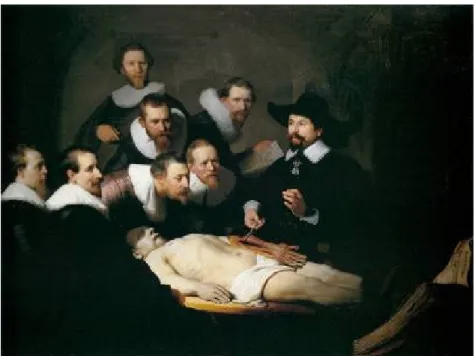
Fig. 2.16: Rembrant Harmenszoon van Rijn. The Anatomy Lesson of
Nicolaes Tulp, 1632. Source:
http://upload.wikimedia.org/wikipedia/commons/8/8c/The_Anato my_Lesson.jpg
Fig. 2.17: Ciro Ferri. St. Agnes in Agony, paradise fresco of the dome. Roma, Piazza Navona. 1668.
Source:
https://farm4.staticflickr.com/3333/4626886845_53ffd62b04.jpg Fig. 2.18: Francesco Borromini. Facade of Church of San Carlo alle
Quattro Fontane. 1646.
Source:http://en.wikipedia.org/wiki/San_Carlo_alle_Quattro_Fonta ne#mediaviewer/File:San_Carlo_alle_Quattro_Fontane.jpg
Fig. 2.19: Sebastiano Giannini. Section of San Carlo alle Quattro
Fontane. 1730. Source:
http://en.wikipedia.org/wiki/San_Carlo_alle_Quattro_Fontane#me diaviewer/File:Borromini_Drawing_02-2009-23-01-retouched.jpg Fig. 2.20: Gian Lorenzo Bernini. 1656 - 1667. Source: https://deephighlands.files.wordpress.com/2013/08/st-peters-square-in-the-vatican.jpg
Source: http://deephighlands.files.wordpress.com/2013/08/st-peters-square-in-the-vatican.jpg
Fig. 2.21: Claude Perrault. Drawing of a hedgehog. 1688. Source: http://static.flickr.com/44/145935636_8f4e109237.jpg
Fig. 2.22: Claude Perrault. Classification of the five orders of
columns. 1683. Source:
http://www.wga.hu/html_m/p/perrault/5orders.html
Fig. 2.23: Gian Lorenzo Bernini. The Ecstasy of St. Theresa. 1647-1652
Source: http://sexualityinart.files.wordpress.com/2009/08/bernini-ecstasy-of-st-theresa-93-s.jpg
Fig. 2.24: Gian Lorenzo Bernini. The Ecstasy of St. Theresa. 1647-1652
Source:
http://upload.wikimedia.org/wikipedia/commons/e/e4/Teresaberni ni.JPG
Fig. 2.25: Gian Lorenzo Bernini. The Ecstasy of St. Theresa. 1647-1652
Source:
http://www.backtoclassics.com/images/pics/gianlorenzobernini/gia nlorenzobernini_theecstasyofsainttherese-detail.jpg
Fig. 2.26: Gian Lorenzo Bernini. Blessed Ludovica Albertoni. 1671– 74
Source:
http://upload.wikimedia.org/wikipedia/commons/6/67/Blessed_Lu dovica_Albertoni_by_Gian_Lorenzo_Bernini_(setting).jpg
Fig. 2.27: Gian Lorenzo Bernini. Blessed Ludovica Albertoni. 1671– 74
Source:
http://upload.wikimedia.org/wikipedia/commons/5/54/Blessed_Lu dovica_Albertoni_by_Gian_Lorenzo_Bernini.jpg
Fig. 2.28: Gian Lorenzo Bernini. Blessed Ludovica Albertoni. 1671– 74
Source:
http://upload.wikimedia.org/wikipedia/commons/4/4f/Blessed_Lu dovica_Albertoni_by_Gian_Lorenzo_Bernini_(detail).jpg
Chapter 3
Source:
http://upload.wikimedia.org/wikipedia/commons/3/3f/Descartes_ Discours_de_la_Methode.jpg
Fig. 3.02: Renée Descartes. L’Homme. 1637. Source: http://exhibits.hsl.virginia.edu/treasures/files/2011/12/QP29_D44 _1729_fig16-22_big.jpg
Fig. 3.03: Renée Descartes. L’Homme. 1637. Source: http://www.johnchiappone.com/images/philosophy/ch15/Rene_D escartes_L_homme_2.JPG
Fig. 3.04: Renée Descartes. Formation of inverted retinal images in the eyes and transmission to the brain. 1637.
Source: http://plato.stanford.edu/entries/mental-imagery/dsee.gif Fig. 3.05: Claude Perrault. L'Observatoire (au fond), la Colonnade du palais du Louvre (au centre), la porte Saint-Antoine (au premier plan). Planche tirée de: Dix livres d’architecture de Vitruve corrigés et traduits nouvellement en français. 1673.
Source: http://prometheus.uni-koeln.de/pandora/image/large/genf-c6adc7477c958a8b736dfdf81cbcbef435989457
Fig.3.06: Claude Perrault. Le dix Livres d'Architecture de Vitruve.
1673. Source:
http://prometheus.uni- koeln.de/pandora/image/large/eichstaett_ub-37837cd2ba0f222c2528457f8d34a1812ddf7af5 Fig. 3.07: Claude Perrault. Corinthian capital. 1683.
Source:
http://prometheus.uni- koeln.de/pandora/image/large/eichstaett_ub-e28db8965fe3c02dc14926daee895add8c0929d0
Fig. 3.08: Claude Perrault. L’aspect de les different ordres de colones. 1683.
Source:
http://prometheus.uni-
koeln.de/pandora/image/large/digidia-81ebbed3fb3d3596eb4b908f2c9bc604840b28e0
Fig. 3.09: Claude Perrault. Project pour le façade du Louvre. 1776.
Source:
http://prometheus.uni- koeln.de/pandora/image/large/dadaweb-358e92a8587fc0ac2495ec50acdba320757a98ec
Chapter 4
Fig. 4.01: Marc-Antoine Laugier. Cabane primitive (refuge, Die Urhütte). Essai sur l'architecture. 1755. Source:
http://prometheus.uni-koeln.de/pandora/image/large/genf-2a4a421b08344438a6497de269f2841b4ae72e99
Fig. 4.02: Marc-Antoine Laugier. Le Temple des Sauvages, An Essay on Architecture. 1755.
Source:
https://lh6.googleusercontent.com/-psNOObncUP8/TYM9dbRV1zI/AAAAAAAAAj0/_BybwciW8E8 /s1600/larc+antoine+laugier+hut.jpg
Fig. 4.03: Sir Joshua Reynolds. Members of the society of the Diletantti. 1734.
Source:
http://londongrandtour.files.wordpress.com/2010/12/diletantti-by-sir-joshua-reynolds.jpg
Fig. 4.04: Julien David le Roy. Drawing of the Greek ruins. 1770. Source:
http://p2.la-img.com/184/15114/4965096_1_l.jpg
Fig. 4.05: Julien David le Roy. Plan and Elevation of Temple of Istria at Pola, Les Ruines des plus beaux monuments de la Grèce. 1758. Fig. 4.06: Giovanni Battista Piranesi. Carceri Plate VI- The Smoking Fire. 1771.
Source: http://images.zeno.org/Kunstwerke/I/big/311D049a.jpg Fig. 4.07: Giovanni Battista Piranesi. L’antechita Romanae. 1748. Source: http://im.ft-static.com/content/images/e32324ac-b726-11df-839a-00144feabdc0.img
Chapter 5
Fig. 5.01: Unkown author Weaving Machine operated by a young girl.
c.1850. Source:
http://ehstoday.com/site-files/ehstoday.com/files/imagecache/galleryformatter_slide_penton /gallery_images/6WeavingMachine.gif
Fig. 5.02: Unknown author. Sweeper and Doffer. c.1850. Source:
http://webs.bcp.org/sites/vcleary/ModernWorldHistoryTextbook/I ndustrialRevolution/Images/sweeper-and-doffer.jpg
Fig. 5.03: Unknown author. Phrenology Chart. c. 1850. Source: http://herd.typepad.com/herd_the_hidden_truth_abo/images/2007 /07/06/phrenology.jpg
Fig. 5.04: Unknown author. Phrenology Chart on the “Grades of Intelligence” according to physiognomy and skull’s size. c. 1850. Source:
http://www.bc.edu/bc_org/avp/cas/fnart/phrenology/phreno01.jp g
Fig. 5.05: Sir Joseph Paxton. Chrystal Palace. 1851. Source:
http://media.web.britannica.com/eb-media/52/12552-004-DAD4D003.jpg
Fig. 5.06: Unknown author. Victorian Lady Dress. c.1800. Source: http://greatexpecations.wiki.manheimcentral.org/file/view/Victoria n-dress.JPG/178724361/227x417/Victorian-dress.JPG
Fig. 5.07: Peter Robinson. c.. Advertisement for the “Perfecta” corset
for women. 1850. Source:
http://littlewolfblog.files.wordpress.com/2010/11/corset.jpg
Fig. 5.08: Gazette of Fashion and Cutting-Room Companion,.. Victorian men’s fashion. c. 1850.
Source:
http://mistercrew.com/files/2010/09/victorian_mens_fashion_01.j pg
Fig. 5.09: Unknown author. German physiotherapy machines. c.1850. Source: http://i.dailymail.co.uk/i/pix/2013/06/27/article-2350131-1A8ABFE6000005DC-430_634x502.jpg
Fig. 5.10: Jean- Leon Gerome. La grand piscine à Bursa. 1885. Source: http://sheriffali.files.wordpress.com/2013/04/the-bath-jean-leon-gerome-1824-1904.jpg
Fig. 5.11: Unknown author. Salpêtrière Hospital, Paris. c. 1881. Source:
http://www.adriangramary.com/agramary/Articulos/Entradas/2012 /1/21_CHARCOT,_AUGUSTINE_Y_LA_ICONOGRAFIA_FOT
OGRAFICA_DE_LA_SALPETRIERE_files/P.-113ExternalViewSalpetriere-224.jpg
Fig. 5.12: Jean-Martin Charcôt. Catalepsy. 1881. Source: http://31.media.tumblr.com/99ec05638688dd3e9299a45445af6fc0/t umblr_mf5mbmUWdC1rkh6xoo1_500.jpg
Fig. 5.13: Unknown author. Jane Avril. c. 1892. Source:
https://c2.staticflickr.com/8/7169/6503959331_77d542d79e_z.jpg Fig. 5.14: Henri Toulouse-Lautrec. Jane Avril. 1899. Source:
http://2.bp.blogspot.com/-w_DYHjrODmQ/TfuaaJ3XakI/AAAAAAAABQM/VwZVwGEV Y58/s1600/JaneAvril.jpg
Fig. 5.15: Guillaume-Benjamin-Amand Duchenne de Boulogne. Experiment with electrodes in a psychiatric patient. 1862. Source: http://31.media.tumblr.com/tumblr_m44eigTYba1qkj2rgo1_400.jpg Fig. 5.16: Jean-Martim Charcôt. Patient strapped to the hospital bed
after hysteria attack. c.1881. Source:
http://www.javierviver.com/wp-content/uploads/2012/06/Imagen-23.jpg
Fig. 5.17: Unknown author. Poster of Harry Houdini. c. 1906. Source:
http://www.magictricks.com/assets/images/houdini/posters/houdi ni_handcuff_king.jpg
Fig. 5.18: Irvin Willat. Harry Houdini in “The Grim Game”. 1919. Source:http://upload.wikimedia.org/wikipedia/commons/2/2a/Har ry_Houdini-b.jpg
Fig. 5.19: Robert Mitchel. Cross section of Robert Barker's two-level
panorama at Leicester Square. c. 1793. Source:
http://www.panoramaonview.org/panhistory_barker_double.gif Fig. 5.20: Unknown author. New York, Coney Island. c.1890.Source: https://ephemeralnewyork.files.wordpress.com/2011/01/newyorkco neyislandmusic.jpg
Fig. 5.21: Unknown author. Wonder Wheel. c. 1890. Source: http://www.screanews.us/NewYork/BrooklynOld_files/WonderW heel.jpg
Fig. 5.22: Unknown author. Example of a typical office room in a
bourgeois household. c. 1890. Source:
http://static.torontopubliclibrary.ca/da/images/LC/pictures-r-4416.jpg
Fig. 5.23: Mary Cassat. Antoinette at her dressing table. 1909. Source: http://www.marycassatt.org/Antoinette-At-Her-Dressing-Table.jpg
Fig. 5.24: James McNeall Whistler. Whistler’s Mother. 1871. Source: http://upload.wikimedia.org/wikipedia/commons/1/1b/Whistlers_ Mother_high_res.jpg
Fig. 5.25: Unknown author. Early suffragettes. c.1900. Source: http://historiana.eu/image/fit/400/285/uploads/casestudy/icons/v otes_for_women_400285.jpg
Fig. 5.26: Unknown author. Advertisement for the Sanatorium of Bilz in Germany. c. 1912. Source: http://www.baden-in-radebeul.de/galerie/images/BilzSanatorium.jpg
Fig. 5.27: Unknown author. Advertisement for the “Sapolio Soap”. 1900. Source: http://www.pinterest.com/pin/560979697307037577/ Fig. 5.28: Unknown author.. Medicine Bottle. c. 1900 Source: http://www.unz.de/uploads/pics/Foto_UNZ_23_11_S.8_Nr.1_52_ 5x80mm.jpg
Fig. 5.29: Eadweard Muybridge. Studies on human locomotion. c.
1887. Source:
http://etab.ac-poitiers.fr/coll-mauze/IMG/pdf/COURS_chronophotographie_et_peinture.pdf Fig. 5.30: Guillaume-Benjamin-Amand Duchenne de Boulogne. 1862. Source:
http://upload.wikimedia.org/wikipedia/commons/0/0c/Plate_depic ting_emotions_of_grief_from_Charles_Darwin's_book_The_Expres sion_of_the_Emotions.jpg
Fig. 5.31: Guillaume-Benjamin-Amand Duchenne de Boulogne. 1862.
Source: http://i0.wp.com/sciencereview.berkeley.edu/wp-content/uploads/2011/11/BSRIssue21_v1_singlePage_Page_32_sid ebar.jpg?resize=800%2C478
Fig. 5.32: Guillaume-Benjamin-Amand Duchenne de Boulogne. 1862.
Source:
http://4.bp.blogspot.com/-tQC- KjrFOaY/UIQ77TVonLI/AAAAAAAABFc/DHUf5-RN4DE/s1600/16.jpg
Chapter 6
Fig. 6.01: Unknown author. Photograph of workers outside the factory.
Source:
http://www.escapeintolife.com/wp-content/uploads/2010/01/03-0331a.gif
Fig. 6.02: John Ruskin. Drawing from notebook, study of the
architecture of Venice. c. 1894. Source:
http://news.lancs.ac.uk/Web/News/Pages/390B1418A8E63C10802 5779800587E33.aspx
Fig. 6.03: Unknow author. Interior of Alberti’s Basilica of St. Andrea,
Mantua. c. 2010. Source:
http://classconnection.s3.amazonaws.com/793/flashcards/1262793 /jpg/46.leon_battista_alberti_interior_of_church_of_sant'_andrea_ mantua1330537054430.jpg
Fig. 6.04: Karl Friedrich Schinkel. Altes Museum Berlin. 1825-1830.
Source:
http://www.larici.it/architettura-ambiente/composizione/musei/immagini/schinkel1b.jpg
Fig. 6.05: Karl Bötticher. Section of the Greek Doric Temple at Pæstum as restored by Bötticher. 1844-1852. Source: http://www.digilibraries.com/html_ebooks/102326/29759/www.di gilibraries.com@29759@29759-h@[email protected]
Fig. 6.06: Antonio Averlino Filarete. Adam, Vitruv. c. 1465. Source: http://prometheus.uni-koeln.de/pandora/image/large/paderborn-b0e8a701af0edaac60999a2feca434eaffd890be
Fig. 6.07: Gottfried Semper. Primitive Hut. 1851. Source: http://2.bp.blogspot.com/_dc5iTWU_wsU/SgDaE2xAR6I/AAAA AAAAANQ/UqGEtvzRlZY/s1600-h/Semper+Fig06.jpg
Fig. 6.08: Gottfried Semper. Opera of Dresden. 1837 – 1841. Source:
http://prometheus.uni-koeln.de/pandora/image/large/genf-f79a55cd2e414fd1c416203c558f9693e829acca
Fig. 6.09: Eugène Viollet-le-Duc. Chateaux de Pierrefonds, Façade
drawing. 1858. Source:
http://prometheus.uni-
koeln.de/pandora/image/large/genf-cc37810db9410987e61e14aeac84dde29ce97fa8
Fig. 6.10: Eugène Viollet-le-Duc. Chateaux de Pierrefonds, Section.
1858. Source:
http://www.histoire-image.org/photo/fullscreen/cou4_viollet_002z.jpg
Fig. 6.11: Christian Jank. Neuschwanstein Castle. 1869. Source:
http://4.bp.blogspot.com/-S4arEe8MJvs/UBbFJOI6vVI/AAAAAAAAKNI/rFNEU1MVD1Y /s400/Neuschwanstein+-++1869+ideaal+ontwerp+Jank.jpg
Fig. 6.12: August von Heckel. Illustration of the Lohengrin at the
Neuschwanstein Castle. 1886. Source:
http://upload.wikimedia.org/wikipedia/commons/8/84/August_vo n_Heckel_Lohengrin.jpg
Fig. 6.13: Eduard Riedel. Neuschwanstein Castle, Throne room. 1869-
c.1892. Source:
http://upload.wikimedia.org/wikipedia/commons/8/82/Neuschwa nstein_throne_room_00180u.jpg
Fig. 6.14: Eduard Riedel. Neuschwanstein Castle, Grotto. 1869- c.1892. Source:
http://www.chriskuzneski.com/tour/crown_files/grotto1.jpg
Fig. 6.15: Christian Jank. Herrenchiemsee Palace. 1878-1895. Source: http://members.canb.auug.org.au/~lpb/diary/photos/Herrenchiem see_Palace-27Oct07.jpg
Fig. 6.16: John Ruskin. Plate VII, in “The Seven Lamps of
Architecture”. 1855. Source:
http://www.victorianweb.org/painting/ruskin/drawings/7lamps10.j pg
Fig. 6.17: John Ruskin. Watercolour in “The Stones of Venice”. 1845. Source: http://www.vam.ac.uk/users/sites/default/files/d.1726-1908_ruskin_watercolour_750px.jpg
Fig. 6.18: John William Waterhouse. The Lady of Shalott. 1888. Source:
http://upload.wikimedia.org/wikipedia/commons/7/70/John_Willi am_Waterhouse_The_Lady_of_Shalott.jpg
Fig. 6.19: William Morris. Garden Tulip wallpaper. 1885. Source: https://dailyjapanesetextile.files.wordpress.com/2012/07/garden-tulip-by-william-morris-1885.jpg
Fig. 6.20: William Morris. Book illustration of one of Kelmscot
Press’s editions. c. 1891. Source:
http://ve.torontopubliclibrary.ca/collected_works/images/guinevere _p1_43.jpg
Fig. 6.21: Charles Rennie Mackintosh. Argyle Chair. 1898-1899 Source:
http://media.bauhausitaly.com/articoli/fonte/mackintosh409_29.jpg Fig. 6.22: Charles Rennie Mackintosh, Stained Glass window in House for an Art Lover. 1901. Source: http://www-static.weddingbee.com/wp-content/uploads/2009/09/03/rennie.jpg Fig. 6.23: Katsushika Hokusai. The Great Wave off Kanagawa. c.
1829–32. Source:
http://en.wikipedia.org/wiki/The_Great_Wave_off_Kanagawa#me diaviewer/File:Great_Wave_off_Kanagawa2.jpg
Fig. 6.24: Unknown author. Wohnhaus Franz-Joseph-Str.19, Munich.
c. 1890. Source:
http://upload.wikimedia.org/wikipedia/commons/1/13/M%C3%B Cnchen_Jugendstil_2.jpg
Fig. 6.25: Alphonse Mucha. The Four Seasons. c. 1895. Source: http://www.artinthepicture.com/artists/Alphonse_Mucha/seasons.j peg
Fig. 6.26: Antoni Gaudí. Interior of Casa Milà, Barcelona. 1906-1910.
Source:
=antoni+gaud%C3%AD+casa+mila+interior&oq=antoni+gaud%C 3%AD+casa+mila+interior&gs_l=img.3...5336.7529.0.8511.9.9.0.0.0. 0.93.491.7.7.0....0...1c.1.51.img..9.0.0.0JbaorfVVjA#facrc=_&imgdii= _&imgrc=jhS6mBFkCVEtuM%253A%3BEnodpaPv1TB4AM%3Bh ttp%253A%252F%252Fgaudi.hit.bg%252Fantoniogudi- Casa%252520Batllo-interior.jpg%3Bhttp%253A%252F%252Fgaudi.hit.bg%252F%3B700 %3B473
Fig. 6.27: Antoni Gaudí. Interior of Casa Batlló, Barcelona.
1904-1906. Source:
http://upload.wikimedia.org/wikipedia/commons/8/80/Casa_Batll %C3%B3_(Antoni_Gaudi)_(interior),_43,_Passeig_de_Gr%C3%A0c ia,_Eixample,_Barcelona,_Catalonia,_Spain.jpg
Fig. 6.28: Victor Horta. Hotel Tassel, interior with iconic stairway.
1893-1894. Source:
http://upload.wikimedia.org/wikipedia/commons/a/af/Tassel_Hou se_stairway.JPG
Chapter 7
Fig. 7.01: Daniel Libeskind. Interior of the Jewish Museum in Berlin.
1992-2001. Source:
http://www.e-architect.co.uk/images/jpgs/berlin/juedisches_museum_cbitterbredt _14.jpg
Fig. 7.02: Daniel Libeskind. Detail of interior of the Jewish Museum
in Berlin. 1992-2001. Source:
http://us.123rf.com/450wm/carlosneto/carlosneto1209/carlosneto 120900126/15416416-jewish-museum-interior-detail-shalechet-fallen-leaves-in-a-section-of-the-void--berlin-germany-proje.jpg
Fig. 7.03: Henri van de Velde. Interior of a dinning room with decorative wall panels by Paul Elie-Ranson. 1895. Source:
http://www.19thc-artworldwide.org/summer_05/articles/gr/weis_14b.jpg
Fig. 7.04: Henri van de Velde. Reception Dress. c. 1902. Source: http://www.deltacollege.edu/emp/jbarrows/Velde1.jpg
Fig. 7.05: Lustige Blaetter, Berlin. "Van der Blöde" Parody of van
http://www.bc.edu/bc_org/avp/cas/fnart/symbolist/images/va ndevelde_parody.jpg
Fig. 7.06: Adolf Loos. Interior of the American Bar. 1903-1908.
Source:
http://preview-riba.contensis.com/Images/RIBATrust/RIBALibrary/OnlineEx hibitions/AdolfLoos/4B-BarArea.jpg
Fig. 7.07: Adolf Loos. House in Michaelerplatz, “Looshouse”.
1910. Source:
http://wienwiki.wienerzeitung.at/WIENWIKI/images/b/b7/Lo oshaus_August_1910.jpg
Fig. 7.08: Jože Plečnik. Church of the Most Sacred Heart of Our
Lord, Prague. 1929-1932. Source:
http://static.panoramio.com/photos/large/40684525.jpg
Fig. 7.09: Josef Chochol. Residential building in the Czech Cubist
style. 1913. Prague. Source:
http://4.bp.blogspot.com/_ZzJ4xx1MkJE/R8U1owAdpEI/AA
AAAAAAANE/DDFbINYwLQY/s1600-h/1469183899_f7de1c76dc_o.jpg
Fig. 7.10: Charles C. Abbots. Rockefeller Beam Workers Lunch.
c. 1900. Source:
http://x3.cdn03.imgwykop.pl/c3201142/comment_S7FnoYL5n 8S0X9Xt4zUqzAe32S5mlXkt.jpg
Fig. 7.11: Louis Sullivan. Prudential Building in Chicago. 1896. Source:
http://classconnection.s3.amazonaws.com/171/flashcards/1175171 /png/curtain_wall1334079550192.png
Fig. 7.12: Unknown author. Factory workers. c. 1900. Source: https://i.ytimg.com/vi/k55pJcx2IY4/default.jpg
Fig. 7.13: Unknown author. Henry Ford Assembly Line. 1913. Source:
http://carrosantigos.files.wordpress.com/2008/10/thumb1280x1280 _2904111721_35026e168a_o.jpg
Fig. 7.14: Frank Gilbreth. Chronocyclograph, Efficiency Studies.
1908-1924. Source:
http://www.anglia.ac.uk/ruskin/en/home/faculties/alss/deps/engli sh_media/research/research_activities/fastslow_conference.Maincon tent.0003.Image.gif
Chapter 8
Fig. 8.01: Unknown author. Sanatorium Monte Veritá. c. 1907. Source:
http://www.seriehesse.usi.ch/allaricercadellaverita/en/editor/media /prj481/pre11608/pim28721.jpg.rex.jpg
Fig. 8.02: Unknown author. The School of Art, managed by Rudolph
von Laban. c. 1914. Source:
http://www.gusto-graeser.info/Sprache%20Spanisch/MonteVeritaGross.jpg
Fig. 8.03: Unknown author. Dalcroze Institute at Hellerau. c.1913. Source:
http://www.hellerau.org/english/i/history_images/image/6.1.jpg Fig. 8.04: Adolphe Appia. Rhythmic Spaces. c.1913. Source: http://socks-studio.com/img/blog/appia-01.jpg
Fig. 8.05: Vzevolod Meyerhold. Bio-Mechanics Exercises. 1920-1930.
Source:
http://4.bp.blogspot.com/- 8PEGU9T6w2A/UFLThjJdaTI/AAAAAAAAAJ0/qTiMlqAyq-I/s1600/meyerhold-biomechanics-exercises.jpg
Fig. 8.06: Liubov Popova. The Magnanimous Cuckold. 1922. Source:
http://www.londontheatreblog.co.uk/wp-content/uploads/2009/02/popova1.jpg
Fig. 8.07: Lux Feininger. Oskar Schlemmer and the Bauhaus’ theatre crew at the school’s stage. 1922. Source:
http://prometheus.uni-koeln.de/pandora/image/large/genf0b72688825c4c440d5336639 1201d8fa045b5e5e
Fig. 8.08: Oskar Schlemmer. Designs for the Triadic Ballet. 1922
– 1926. Source:
http://prometheus.uni-
koeln.de/pandora/image/large/genf-c839286d6c20e0d40d0b25072e3157eac9a9e904
Fig. 8.09: Oskar Schlemmer. Drawing for “Figure in Space with Plane Geometry and spatial Delineations”. 1924. Source: http://prometheus.uni-koeln.de/pandora/image/large/dresden-6c06ee0c425f5c860193fed4b88d8cdc99c69406
Fig. 8.10: Lux Feininger. “Dance in Space (Delineation of Space with Figure)”, multiple exposure photograph, Bauhaus Stage
demonstration. 1927. Source: http://mindintomatter.ca/wp-content/uploads/2013/12/Theater-Exercise-Bauhaus.jpg
Fig. 8.11: Oskar Schlemmer. Diagram for “Gesture Dance”.
1926. Source:
http://38.media.tumblr.com/tumblr_m8rvyxSH4s1qcvwrgo1_50 0.jpg
Fig. 8.12: Oskar Schlemmer. Drawing from “Mensch und Kunstfigur”. 1925. Source: http://prometheus.uni-
koeln.de/pandora/image/large/dresden-b4ab8358662bc615cf65c77950f0a5b74cf195fd
Fig. 8.13: Rudolph Steiner. First Goetheanum, Dornach. 1921. Source:
http://www.rudolfsteinerweb.com/galleries/First_Goetheanum/ Exterior/slides/Rudolf%20Steiner's%20First%20Goetheanum% 20Exterior0019.jpg
Fig. 8.14: Rudolph Steiner. Second Goetheanum, Dornach. 1928. Source:
http://www.rudolfsteinerweb.com/galleries/Second_Goetheanu m/slides/Rudolf%20Steiner's%20Second%20Goetheanum%200 007.jpg
Fig. 8.15: Unknown author. Group of dancers at the Dalcroze Institute, Hellerau. c. 1912. Source: http://media-cache-ak0.pinimg.com/216x146/e3/fe/b6/e3feb6bf64e272f4c92156f4 8c639936.jpg
Fig. 8.16: Unknown author. Dance production at the Dalcroze
Institute, Hellerau. c.1913. Source:
http://img.index.hu/imgfrm/7/2/9/8/BIG_0000137298.jpg Fig. 8.17: Paula Stockmar. Retrato de Johannes Itten. 1921.
Source:
http://prometheus.uni-
koeln.de/pandora/image/large/bern-4035df31b0d80f82d7e341839fbdb18743c6577a
Chapter 9
Fig. 9.01: Simon Muller. Haus der Kunst, München. 1953. Source:
Fig. 9.02: Unknown author. Haus der Kunst, München. c. 1937.
Source:
http://faculty-web.at.northwestern.edu/art-history/werckmeister/April_29_1999/Troost.jpg
Fig. 9.03: Peter Behrens. AEG Turbine Factory. 1909. Source: http://classconnection.s3.amazonaws.com/200/flashcards/1474 200/jpg/18-1a1336345932292.jpg
Fig. 9.04: Le Corbusier. The Modulor. 1948-1955. Source: http://prometheus.uni-koeln.de/pandora/image/large/digidia-b2887bd9cc2850650b5104879544110cc047ce69
Fig. 9.05: King Vidor. The Fountainhead, Screenshots. 1949. Source: http://vimeo.com/68662628
Fig. 9.06: King Vidor. The Fountainhead, Screenshots. 1949. Source: http://vimeo.com/68662628
Fig. 9.07: King Vidor. The Fountainhead, Screenshots. 1949. Source: http://vimeo.com/68662628
Fig. 9.08: Charlie Chaplin, Modern Times. 1936. Source: http://1.bp.blogspot.com/_Zcdh9RHLfNU/TNsGQ1hsKuI/AAA AAAAAAV0/xdtLAQpIJp4/s1600/charliechaplin5.jpg
Fig. 9.09: Nuno Cera, “Unité d'Habitation" within the exhibition "Ghosts", Centro Cultural de Belém. Lisbon, curator Nuno Crespo. 2006. Source: by author, with his permission.
Fig. 9.10: Le Corbusier. Children at the Unité d’Habitation of
Marseille. 1945-52. Source:
http://media-cache-ec0.pinimg.com/236x/6b/5d/b9/6b5db982eec065594124eecd3ba1c 71b.jpg
Fig. 9.11: Le Corbusier. Children at the Unité d’Habitation of
Marseille. 1945-52. Source:
http://blogs.artinfo.com/objectlessons/files/2013/04/cite-radieuse-rooftop.jpg
Fig. 9.12: Jacques Tati.. Screenshot from Mon Oncle. 1958. Source: http://05031979.net/wp-content/uploads/2008/08/filmrocking.jpg. Source:
Fig. 9.13: : Jacques Tati. Screenshot from Mon Oncle. 1958. Source: https://c2.staticflickr.com/4/3461/3385351039_685b9de49f.jpg
Chapter 10
Fig. 10.01: Stanley Kubrick. Screenshot from “A Space Odissey”.
1968. Source:
http://www.art- magazin.de/asset/Image/DESIGN/coldwar-design-london/2001_Space_Odyssey_ar.jpg
Fig. 10.02: Stanley Kubrick Screenshot from “A Space Odissey”.
1968. Source:
http://1.bp.blogspot.com/-KGItPkts8So/TfKjnSgjfOI/AAAAAAAAB6U/Cax45JhUTfM/s16 00/2001%2Bspace%2Bodyssey%2Bin%2Bspace.jpg
Fig. 10.03: David Cronenberg. Screenshots from “eXistenZ”. 1999. Source: https://www.youtube.com/watch?v=V78x8lGYiK8
Fig. 10.04: David Cronenberg. Screenshots from “eXistenZ”. 1999. Source: https://www.youtube.com/watch?v=V78x8lGYiK8
Fig. 10.05: David Cronenberg. Screenshots from “eXistenZ”. 1999. Source: https://www.youtube.com/watch?v=V78x8lGYiK8
Fig. 10.06: David Cronenberg. Screenshots from “eXistenZ”. 1999. Source: https://www.youtube.com/watch?v=V78x8lGYiK8
Fig. 10.07: David Cronenberg. Screenshots from “eXistenZ”. 1999. Source: https://www.youtube.com/watch?v=V78x8lGYiK8
Fig. 10.08: David Cronenberg. Screenshots from “eXistenZ”. 1999. Source: https://www.youtube.com/watch?v=V78x8lGYiK8
Fig. 10.09: David Cronenberg. Screenshots from “eXistenZ”. 1999. Source: https://www.youtube.com/watch?v=V78x8lGYiK8
Fig. 10.10: David Cronenberg. Screenshots from “eXistenZ”. 1999. Source: https://www.youtube.com/watch?v=V78x8lGYiK8
Fig. 10.11: David Cronenberg. Screenshots from “eXistenZ”. 1999. Source: https://www.youtube.com/watch?v=V78x8lGYiK8
Fig. 10.10: Unknown author. Jackson Pollock, dripping. 1950. Source: http://americanwiki.pbworks.com/f/JacksonPollock2.jpg Fig. 10.12: Rebecca Horn. The Feathered Prison Fan. 1978. Source: http://www.rebecca-horn.de/pix/_biografie/Sanfte_02.jpg
Fig. 10.13: Anna Halprin, Anne Collot & Guests. Parades & Changes, Replay. 2009. Source: http://www.thecollectedsomewhat.com/wp-content/uploads/2009/11/Anna_Halprin_Anne_Collod.jpg
Fig. 10.14: Marcel Duchamp “Nude Descending a Staircase, No. 2”. 1912. Source: http://uploads4.wikiart.org/images/marcel-duchamp/nude-descending-a-staircase-no-2-1912.jpg
Fig. 10.15: Merce Cunningham. Biped. 1999. Source: http://openendedgroup.com/images/biped_3.jpg
Fig. 10.16: Merce Cunningham. Biped. 1999. Source: http://openendedgroup.com/images/biped_3.jpg
Fig. 10.17: Merce Cunningham. Biped. 1999. Source: http://openendedgroup.com/images/biped_3.jpg
Fig. 10.18: Helena Almeida. A Experiência do Lugar. 2009. Source: http://25.media.tumblr.com/tumblr_m8iglndk931qe31lco3_500.jpg Fig. 10.19: Helena Almeida. A Experiência do Lugar. 2009. Source: http://www.mariosequeira.com/mseq/sites/default/files/artists/190 HEAL030.jpg
Fig. 10.20: Stelarc. Ear on Arm. 2008. Source: http://www.cs.cmu.edu/sites/default/files/stelarc_b.jpg
Fig. 10.21: Stelarc. Installation of “Ear on Arm” through surgery.
2006. Source:
http://www.csad.uwic.ac.uk/chrisshort/DerBlaueReiterII/Images/E arOnArm3.jpg
Fig. 10.22: Marcos Cruz. The Inhabitable Flesh of Architecture. 2007.
Source:
Fig. 10.23: James Cameron. Screenshot from Avatar. 2010. Source: http://nukethefridge.com/wp-content/uploads/2014/04/Avatar-4.jpg
Fig. 10.24: MRI, Digital section of a human brain. Source: http://upload.wikimedia.org/wikipedia/commons/3/3b/MRI_brain .jpg
Fig. 10.25: Marcus Novak. Allobrain. 2009. Source: http://2010.sonicacts.com/wp-content/gallery/upload-conference-invisible-architectures/copy_0_ns_AlloBrain1_MN.tiff.jpg
Chapter 11
Fig. 11.01: Plutchik’s wheel of Emotions. Fig. 11.02: Scheme of thinking process. Fig. 11.03: Self-Assessment Manikin (SAM).
Fig. 11.04: Phillip Stark, Citrus Squeezer, used by Norman as an example of Emotional Design.
Fig. 11.05: e-Health Platform with Arduino board and sensors.
Chapter 12
Fig. 12.01: Humanoid drawing model used as a reference for digital parametric puppet. Image by the author.
Fig. 12.02: Output of “Genera(c)tiveHumanoidLifeForm” AutoLISP code: Male, Female, Child, OverAveragePerson and UnderAveragePerson. Image by the author.
Fig. 12.03: Giacomo Balla. Technical study for “Girl Running on a Balcony”. 1912. Source:
Fig. 12.04: Giacomo Balla. Dynamism of a Dog on a Leash. 1912. Source: http://c300221.r21.cf1.rackcdn.com/dynamism-of-a-dog-on-a-leash-by-giacomo-balla-1335288229_b.jpg
Fig. 12.05: Edward Muybridge. “Animal Locomotion Plate 99”. 1887. Source:
http://www.atgetphotography.com/Images/Photos/Muybridge/mu ybridge_1.jpg
Fig. 12.06: Simulation of sequence overlapping of the outputs of the “Genera(c)tiveHumanoidLifeForm” program and two different results, 2009. Images by the author.
Fig. 12.07: Simulation of sequence overlapping of the outputs of the “Genera(c)tiveHumanoidLifeForm” program and two different results, 2009. Images by the author.
Fig. 12.08: Simulation of sequence overlapping of the outputs of the “Genera(c)tiveHumanoidLifeForm” program and two different results, 2009. Images by the author.
Fig. 12.09: Grammar of Movement’s Initial Shape, 2009. Image by the author.
Fig. 12.10: Example of Rule R3, 2009. Images by the author. Fig. 12.11: Example of Rule R12, 2009. Images by the author.
Fig. 12.12: Choreography generated by random application of the Rules, 2009. Images by the author.
Fig. 12.13: Choreography final result, 2009. Image by the author. Fig. 12.14: Raummetaphern. Student performing “Alle Brücken hinter sich abbrechen”.
Fig. 12.15: Raummetaphern: experimental setting scheme.
Fig. 12.16: Raummetaphern: preparation of the setting at the Digitale Werkzeuge, Fachbereich Architektur,TU Kaiserslautern.
Fig. 12.17-18: Raummetaphern neutral Masks and Questionnaires used during student’s performance (left) and student being prepared for performance (right).
Fig. 12.19-20: Raummetaphern: examples of Students’ work, Sich benehmen wie die Axt im Walde - behaving like an axe in a forest, and Hinter dem Mond leben - living behind the moon.
Figs. 12.22-23: “Feel your Design”: working area, a cube of 0.5 x 0.5 x 0.5 m (left), and scheme of sensory design (right).
Fig. 12.24: Feel your Design: experiment setup scheme.
Fig. 12.25-26: Feel your Design: immersive booth with black/opaque curtain, bench, and peeping area (left) and author peeping through the opening to view the model.
Fig. 12.27-28: Feel your Design: students installing model over a pedestal at booth’s window height (left) and detail of student’s model “Surfstation” with automated fan to spread “scentscape” into the booth (right).
Fig. 12.30-31: “Feel your Design”: inside view of student’s immersive model “Surfstation” (left) and inside view of student’s immersive model “Spiegel” (right).
Fig. 12.32: Raummetaphern: experimental setting scheme.
Fig. 12.33: Corporeal Architecture: the Body as Architectural Element. “Entablature with Caryatid and Atlas”. Students performing with object inside the cube during Experiment #3.
Fig. 12.34-37: Corporeal Architecture: students performing with sticks to explore basic kinesiology concepts – planes, axes, diagonals and degrees of movement according to Laban and Schlemmer. Figs. 12.38-39: Corporeal Architecture: body Extension “The Architect’s Hand” and body Restriction “Out of Touch” (left) and student performing with object (right).
Fig. 12.40-41: Corporeal Architecture: performance day, author and assistant installing e-health platform sensors and neutral mask on student.
Fig. 12.42-44: De Humani Corporis Fabrica: “Eating Dinner”, Student performing the same actions in Setting #1, Setting #4 and Setting #5.
Fig. 12.42-43: De Humani Corporis Fabrica: “Working, reading and relaxing at the office space” (left) and “Eating Dinner” (right), students performing in Settings.
List of Acronyms
CAD – Computer-Aided DesignCAM – Computer-Aided Manufacturing
CDA – Curso de Doutoramento em Arquitectura
DFKI – Deutsche Forschungszentrum für Künstliche
Intelligenz GmbH
eCAADe - Education and research in Computer Aided Architectural Design in Europe
EEG - Electroencephalography EM – Emotion Measurement
ETSAB – Escola Tècnica Superior d'Arquitectura de Barcelona FA/ULisboa – Faculdade de Arquitectura da Universidade de Lisboa FAUTL – Faculdade de Arquitectura da Universidade Técnica de Lisboa
INESC - Instituto de Engenharia de Sistemas e Computadores ISCTE – Instituto Superior de Ciências do Trabalho e da Empresa IST – Instituto Superior Técnico
MIT – Massachusetts Institute of Technology MRI – Magnetic resonance imaging
PhD - Doctor of Philosophy RP – Rapid Prototyping
TUK – Technische Universität Kaiserslautern TV - Television
UCSB – University College Santa Bárbara UCSD – University College San Diego
Habe nun, ach! Philosophie, Juristerei und Medizin, Und leider auch Theologie Durchaus studiert, mit heißem Bemühn. Da steh ich nun, ich armer Tor! Und bin so klug als wie zuvor;
Introduction
Motivations
Personal motivations
This thesis is grounded on a lifelong interest in the human body as artistic material. Therefore, the reasons to pursue research on this topic come mostly from personal interest. As a consequence, this introduction contains some biographical references which go beyond pure research facts, but they were considered important for understanding the work presented herein. The reader might find them different from what is usually expected from scientific writing, but hopefully s/he will understand their significance.
The first step in the exploration of the human body started with the decision to pursue art studies during the last three years of the author’s high-school training. At that time, the focus of interest was mainly in drawing and painting, but the expression of emotions and movement began to take shape as the main topic of interest for two reasons – first, due to the author’s passion for theater and performance art, which was taken as a complementary educational activity in her early teens, and second, due to the author’s own maladjustment to sports and motor coordination in general, which made any kind of physical prowess seem fascinating and interesting for observation and study. When the author had to decide which academic degree and career to pursue after high school, studying architecture seemed an appropriate way of exploring the intertwined concepts of movement and space.
After the first approaches to such questions in the design studio, the author came to think more about the importance of restrictions in the design process and how these restrictions are mostly a consequence of the human body’s condition. The idea that the human body also is conditioned by architecture was deeply implanted in the author’s own reading of architectural space. Since then, the archetypical notion of architecture as the primal shelter of the body and the classical analogy of architecture as a body itself were responsible for an understanding of architecture as a vital extension of the body. These ideas, as well as the notions of movement, rhythm, proportion and architecture as a container for the body, were explored during the author’s architectural studies.
In spite of being a student of architecture, the author maintained a growing interest in art, especially performance and body art. It was during the time as an architecture student that the opportunity to visit exhibitions with works by artists such as Rebecca Horn, Marina Abramović, and Helena Almeida emerged. It also was during this time the author became aware of the work by Mathew Barney. The first glimpses at Barney’s “Cremaster Cycle” and “Drawing Restraint” triggered the idea of combining the interests on the body and on performance in space for a specific endeavor someday. In the summer of 2007, a year before finishing the Diploma in Architecture, the author found, at a bookstore in Porto, Francesca Alfano Miglietti’s “Extreme Bodies: the use and abuse of the Body in Art” through which she was introduced to the works of Stelarc, Brakhage and to Gilles Deleuze’s “body without organs,” amongst other impressive works.
In that same year, the author started to practice yoga and Pilates, thereby finding another way of understanding the body, this time around from the inside-out.
The practice of these disciplines of self-awareness changed completely the perception of the world and of architecture. Skills such as motor coordination improved significantly, together with the capacity to conceive spaces and visualize geometry. A new reading of the built environment prompt thoughts about motion, matter, weight, effort, texture and scent, and the author began to think about architecture as an immersive experience that could be consciously designed by the architect. Quotes by masters of architecture, such as Le Corbusier, Louis Khan, and Frank Lloyd Wright started to make sense and memories of visits to sacral spaces, such as Westminster Abbey in London or Mosteiro da Batalha in Portugal gained a new significance. The remembrance of architectural theory classes in which medieval pilgrimage churches were given as examples of some of the most complex achievements in the history of building brought back synesthetic impressions from childhood like the pungent smell of fresh flowers, incense, and candles that one felt while helping to prepare the church for catholic mass. The new worldview that was gained through these embodied practices of self-awareness seemed not only to increase the general quality of life and well-being, but also allowed the author to draw a map that could be used to understand and explore the relationship between body, movement, architecture, experience, and emotion in design.
Disciplinary Motivations
The decision to start the PhD program at the Faculty of Architecture of the Technical University of Lisbon was natural since the curriculum offered by the school matched the author’s research interests in Architecture. The Doctoral Program in Architecture (Curso de Doutoramento em Arquitectura - CDA) included five areas of specialization and the decision to pursue the specialization on “Design
Theory and Practice” was based on the fact that the author wanted to develop a project on the theme of the “body” that had both a theoretical foundation and a concrete application, such as the conception and construction of an object, of a performance, or of an architectural space. The idea was to integrate the designed “object” in an interactive context like an exhibition, but as the author’s research evolved, it seemed that the most fitting application for the acquired knowledge was in the teaching of architecture.
The first year of the CDA, which the author started in October 2008, consisted of coursework that included two mandatory courses, Research Methodology and Thesis Preparation Seminar, and several electives courses, that permitted one to choose them according to his or her research interests. The author’s choice included “Computer Programming for Architecture”, “History of Construction”, “Architecture, Film and Multimedia”, “Ephemeral and experimental architecture”, “Color and Light in Architecture and Urban Design”, “Digital Design and Fabrication”, “Shape Grammars” and “What is meant by Design?”.
The last course turned out to be one of the most influential in structuring the author’s thesis proposal and it was taught by Professor Duarte Cabral de Mello, who was her tutor in the first year of the CDA, and later became her thesis supervisor. To him the author owes countless and invaluable exchanges of knowledge, the acquisition of a critical eye towards the profession of architect, and the thinking of its ethical responsibility towards society. Unfortunately, Professor Cabral de Mello’s health did not allow him to continue following this research and it was with great sadness that the author had to accept his departure in 2013.
Hopefully, this thesis will be able to convey some of his thoughts and honor his friendship and wisdom.
Scope and Organization
The knowledge acquired with the coursework part of the CDA, as well as the author’s own independent research on the topic of the Body were fundamental to structure this thesis. After this first year, however, it was necessary to go through a period of three years, exclusively dedicated to literature review, to visit architectural works and exhibitions, to participate in conferences, to discussion with specialists and peers, and to study and practice disciplines of somatic self-awareness.
The fact that the word “body” brings immediately a never-ending source of topics to which it is related, makes the task of choosing to which “body” one is referring to particularly difficult. The thesis reviews some of the most important topics related to the “body”, meaning the Human body, concretely in the context of the historical evolution of architectural theory and practice, starting with Vitruvius’s treatise and ending in the 21st century. The thesis makes this historical review taking in consideration contemporary scientific concerns brought by the recent “embodied mind” theory and the complex changes in society that have occurred in the Digital Age.
The author believes that even after a significant but necessary disciplinary reduction, the study of particular body-related topics such as the issues of gender, human-animal relations, the body as the locus of power, the body as a conveyor of signs, the fashion body, or the
diseased body, just to name a few, would be important to attain a more holistic understanding of the subject. The disciplinary reduction was made following the chronology of architectural history and taking into account scholarly work that addressed the subject of the “body” in architecture, particularly through treatises. Most likely, this chronology is incomplete, as the oldest document of Western architecture known to refer to its relation to the body is Vitruvius’ De Arquitectura, which was written around 15 BC.
This thesis is organized into fourteen chapters. After the opening chapter, “Introduction,” Chapter 1 describes the context in which the thesis emerged and evolved, introduces the main question, and then presents the hypothesis and the methodology used to test it. Chapters 2 through 10 provide a historical account on the topic of emotions as a consequence of architectural space, with the aim of demonstrating that this topic has been approached in the history, theory and practice of architecture, at least since Vitruvius. These chapters represent an original contribution to the academic realm since there is no other scholarly work that makes such a review, with the exception of Pallarmaa’s and Mallgrave’s contributions on the topics of “corporeal architecture” and “embodied architecture,” respectively. Chapter 11 defines the concept of emotions from a contemporary perspective and describes the techniques used to qualify and quantify emotions, which were used as a basis for the experimental work presented in Chapter 12. The “Conclusion” closes the document by presenting the main conclusions and outlining future work.
This thesis thus includes an experimental approach that aims to confirm some of the theoretical assumptions. This was accomplished by developing the set of experiments addressed in Chapter 12, which aimed at showing that architectural space does
affect emotions, that it is possible to design artefacts (objects and architectural spaces) to trigger specific emotions, and that their effectiveness in triggering such emotions can be verified by quantifiable means. These experiments implemented the topics of “corporeal architecture,” “embodied architecture,” and “emotional design” in the context of architecture teaching.
Most importantly, the thesis aims to contribute to the scientific realm with knowledge that was extracted from such experiments, using a methodology that translates into quantifiable data changes in the emotional landscape of human bodies when interacting with design objects, immersive architecture models, and specific architectural settings. The thesis evolves gradually from an extensive theoretical review to the description of the experiments undertaken in an architectural teaching context, which tested and confirmed the hypothesis on different scales, settings and conditions.
The last chapter of the thesis presents the general conclusions that emerged from the research as a whole. The possibility of rethinking the role of embodied practices in the teaching and practice of architecture, and their integration with CAD/CAM and emotion measurement technologies is discussed within the theoretical and technological framework provided by the thesis. The concluding chapter presents and discusses possible paths for future research.
Research Problem
Social interaction in cyberspace is a very important aspect of communication today, as a growing number of individuals and groups are using the same tools for leisure and work, such as email and social networks.
These modes of interaction are subjecting the body to very specific and limited tasks that are mostly mechanical and passive and this is leading to reflections on the kind of consequences it can have on the human body, in short or medium terms. As digital space blurs with physical space, it is urgent to understand the impact on contemporary living, in what concerns the body as a holistic system and its health as an organism dependent on sensory stimulation. Medical studies are already relating an increase in pathologies such as the lack of visual acuity, muscular skeletal disorders, obesity, insomnia and depression with the excess of human-computer interaction. It also leads to concerns with, younger generations, as they seem to grow in hyper stimulation, and even children begin to show signs of overloaded stress, such as troubles in concentrating while studying.
Many software and hardware designers, supported by new studies on the human brain, think that the majority of information systems used today disregards the whole potential of the human mind, while conditioning and limiting it at the same time. (Lanier, 2010) The excess of images and the primacy of vision over the other senses also express the superficiality of media culture and of some architecture. Many buildings are designed with this kind of approach, in part due to the use of digital tools that are primarily oriented to the production of images on a flat screen.
At the same time, knowledge on instinctive actions of the human body and mind has grown considerably in the last years, due to studies of the human brain in cognitive sciences (Varela, 1991) and neurosciences. (Damásio, 1995) These have shed new light on the sensorial experience of the body and also on the role of emotions and subconscious thinking in reasoning and acting, breaking the chains of Cartesian Dualism. Descartes’ cogito ergo sum (I think therefore I