CORRELATION BETWEEN ANTRHOPOMETRIC INDICATORS AND
BLOOD PRESSURE IN ADOLESCENTS
Aline Viana de Oliveira1, Ana Cristina Pereira de Jesus Costa2, Lívia Maia Pascoal3, Leonardo Hunaldo dos
Santos4, Emilia Soares Chaves5, Márcio Flávio Moura de Araújo6
1 RN. Family Health Strategy nurse. São Luiz, Maranhão, Brazil. E-mail: [email protected]
2 Master of Nursing. Professor in the Nursing Undergraduate Program, Universidade Federal do Maranhão (UFMA). São Luiz,
Maranhão, Brazil. E-mail: [email protected]
3 Master of Nursing. Professor in the UFMA Nursing Undergraduate Program. São Luiz, Maranhão, Brazil. E-mail: livia_mp@
hotmail.com
4 Doctor of Zootechnics. Professor in the UFMA Nursing Undergraduate Program. São Luiz, Maranhão, Brazil. E-mail:
5 Doctor of Nursing. Professor in the Nursing Undergraduate Program, Universidade da Integração Internacional da Lusofonia Afro-Brasileira (UNILAB). Fortaleza, Ceará, Brazil. E-mail: [email protected]
6 Doctor of Nursing. Professor in the UNILAB Nursing Undergraduate Program. Fortaleza, Ceará, Brazil. E-mail: marciofma@
unilab.edu.br
ABSTRACT: The objective of the present study was to analyze the correlation between anthropometric indicators and blood pressure of adolescents from Imperatriz, state of Maranhão, Brazil. It is a quantitative cross-sectional study, developed between September and November of 2012 with 218 students. We used a questionnaire to collect data regarding identiication, anthropometrics, and systolic and diastolic blood pressure. Considering blood pressure, we found that 4.6%, 2.4% and 1.3% of the sample were included in the borderline, stage 1 and stage 2 hypertension categories, respectively. Among female participants, body adiposity index and skinfold presented higher mean values than those of their male counterparts. Furthermore, we observed a positive correlation between systolic blood pressure and height (r=0.18), weight (r=0.20) and waist circumference (r=0.17), and a negative correlation between diastolic blood pressure and body adiposity index (r=-0.18). The measures of neck and waist circumference were the only anthropometric measures with positive and simultaneous correlations with systolic blood pressure for both genders.
DESCRIPTORS: Arterial pressure. Adolescent. School health.
CORRELAÇÃO ENTRE INDICADORES ANTROPOMÉTRICOS E PRESSÃO
ARTERIAL DE ADOLESCENTES
RESUMO: O objetivo deste estudo foi analisar a correlação entre indicadores antropométricos e pressão arterial de adolescentes de Imperatriz-MA. Trata-se de estudo quantitativo do tipo transversal, desenvolvido entre setembro e novembro de 2012 com 218 estudantes. O questionário utilizado contemplou dados de identiicação, antropométricos e pressão arterial sistólica e diastólica. Quanto aos valores de pressão arterial, veriicou-se que 4,6%, 2,4% e 1,3% da amostra estavam inseridos na categoria limítrofe, hipertensão em estágio I e II, respectivamente. Entre o sexo feminino, o índice de adiposidade central e todas as pregas cutâneas apresentaram valores médios superiores ao masculino e, ainda, constatou-se correlação positiva entre pressão arterial sistólica e altura (r=0,18), peso (r=0,20) e circunferência da cintura (r=0,17); negativa entre pressão arterial diastólica e índice de adiposidade central (r=-0,18). A medida da circunferência do pescoço e da cintura foi a única medida antropométrica com correlação positiva e simultânea com pressão arterial sistólica em ambos os sexos. DESCRITORES: Pressão arterial. Adolescente. Saúde escolar.
CORRELACIÓN ENTRE LOS INDICADORES ANTROPOMÉTRICOS Y
PRESIÓN ARTERIAL DE LOS ADOLESCENTES
RESUMEN: El objetivo de este estudio fue analizar la correlación entre la presión antropométrico y sangre de los adolescentes de Imperatriz-MA. Se trata de un estudio transversal, realizado entre septiembre y noviembre de 2012 con 218 estudiantes. El cuestionario incluía datos de identiicación, antropométricas y de presión arterial sistólica y diastólica. En el análisis de las pruebas de correlación de Pearson y de Spearman utilizado bajo criterios preestablecidos. Sólo el 8,3% de la muestra tenía cifras de presión arterial fuera del rango normal, siendo un 4,6%, 2,4% y 1,3% en el límite de la categoría hipertensión en estadio I y II, respectivamente. En las mujeres la tasa de obesidad central y pliegues cutáneos mostraron los mayores valores medios que los hombres. En las niñas hay una correlación positiva entre la presión arterial sistólica y la altura (r=0,18), el peso (r=0,20) y la circunferencia de la cintura (r=0,17); correlación negativa entre la presión arterial diastólica y el índice de adiposidad central (r=-0,18). Una sola medida antropométrica que se correlaciona positivamente con la presión arterial sistólica y simultánea en ambos sexos es la medida de la circunferencia del cuello y la cintura. DESCRIPTORES: Presión arterial. Adolescente. Salud escolar.
INTRODUCTION
Systemic arterial hypertension (SAH) is a multifactorial clinical condition chraacterized by high and sustained levels of blood pressure (BP). It is frequently associated with functional and/or structural alterations of target organs and meta-bolic alterations, with the subsequent increase of risk for fatal and non-fatal cardiovascular events. Therefore, it is a relevant public health problem. High blood pressure (HBP) in the initial stages of life has demonstrated strong correlation with SAH in adulthood. Evidence indicates that HBP affects about 3.5 million Brazilian children and adolescents, and if measures are not taken, these young people will be subject to a variety of future cardiovascular problems.1-2
Among the several risk indicators that con-tribute to developing SAH in adolescents, the most common are high initial BP rates, family history, obesity, sedentarism, smoking and alco-holism.2 On this regard, it has been observed that
adolescents have increased their consumption of industrialized food, eating outside the home and substituting traditional meals for high salt, fat and sugar snacks. The opposite is true with respect to the consumption of fruit, vegetables, legumes and whole grains.3
Adolescence is a critical phase for the ac-cumulation of adipose tissue for both genders, leading to a predisposition to obesity and its comorbidities, such as SAH. It is estimated that approximately 30% of overweight/obese Brazilian children and adolescents have SAH. A longitudi-nal study developed with Brazilian adolescents during 25 years indicated a greater prevalence of excess weight among individuals who maintained high BP throughout the study.4 We also consulted
other authors who emphasize that excess weight is one of the most important factors related to this cardiovascular disease among younger people in the national and global panorama.5-7
The effectiveness of HBP screening in chil-dren and adolescents is not clear. According to recent publications, the variability of this hemo-dynamic parameter is high, decreasing its predic-tive power.6-7 On the other hand, many authors
recommend monitoring altered blood pressure cases among the youth population through the use of anthropometric indicators.5,8-10
Although there is no consensus regarding the best anthropometric predictor of elevated blood pressure in the child and adolescent population, it
is important to use simple, practical and economic methods for evaluating cardiovascular risk. Thus, such methods are essential in the context of clini-cal practice, in the school’s daily routine and in the
ield of epidemiological research, for they allow the
early detection of children and adolescents at risk for developing HBP due to excessive adiposity.4,10
The body adiposity index (BAI) is the refer-ence point for classifying weight status as normal, overweight, obesity or morbid obesity. It is also a more reliable alternative for quantifying body fat. In contrast, the body mass index (BMI) represents robustness more than adiposity, for muscular and obese individuals can present the same BMI. In fact, some researchers recommend that preference be given to the use of anthropometric measures that represent the distribution of body fat instead
of the BMI, to establish a signiicant association
between excess weight and high BP levels in chil-dren and adolescents.11
Waist circumference (WC) is the main in-dicator of abdominal concentration of fat and is commonly associated with the same risk factors related to obesity. Among these, we have the measurement of skinfolds and, more recently, the waist-stature ratio, which are being investigating regarding their accuracy in predicting the risk of higher blood pressure.10,12 However, further
research is necessary to clarify the relation of BP with the triceps skinfold and waist-stature ratio. Thus, such measurements constitute important methods for diagnosing overweight/obesity and central obesity in epidemiological studies and in clinical practice, due to their simple-to-use, precise and reproducible nature.4,12
Another important measurement is the neck circumference (NC), which has also been investi-gated as a screening instrument for individuals with excess body fat. Furthermore, it has been correlated to several anthropometric measure-ments regarding fat localization, as well as to cardiovascular risk factors.12
the present study was to analyze the correlation between anthropometric indicators and blood pressure of adolescents in the city of Imperatriz, state of Maranhão, Brazil.
METHOD
This is a quantitative cross-sectional study13
conducted between September and November of 2012 in a public school of the state educational system of the city of Imperatriz, Maranhão, Brazil. The municipality of Imperatriz has a population of 234,547 inhabitants, is located in the southeast of Maranhão and is a regional reference for its educational and health services.
As in other Brazilian municipalities, the Imperatriz municipal educational system consists of municipal, state and private schools. There are 20 thousand students enrolled in the public school system divided among 30 schools, seven thousand in elementary schools and 13 thousand in high schools.
For the purposes of data collection, we chose a state institution that participates in the following university outreach program:
“Ado-lescence: its nature and conlicts,” offered by the
Federal University of Maranhão, with a diverse student body from different neighborhoods of Imperatriz.
Before entering the study, all participants presented the free and informed consent form duly signed by parents/legal guardians for those under 18 years. The study respected all ethical and legal principles regarding human research in Brazil, such as providing information about the
study’s risks, beneits, and participant’s anonym -ity. The Research Ethics Committee of the Federal University of Ceará approved this study, under protocol n. 253/10.
We selected participants by convenience, according to the following inclusion criteria: be-ing an adolescent, that is, aged between 10 and
19 years, according to the deinition provided by
the World Health Organization;14 being a high
school student; both genders; studying in the morning or afternoon period and not presenting any anatomical alteration that would interfere in the measurement of anthropometric data. This school had 379 regularly enrolled students with the characteristics mentioned above. Of these, 219 agreed to participate, 160 declined and one preg-nant student was removed from the study. Thus, our sample consisted of 218 subjects.
Data were collected between September and
November of 2012, by ive nursing academics
who, in August 2012, participated in a 12-hour training session in order to standardize measure-ment procedures and data collection. It was also an opportunity for acquiring familiarity with the study’s instruments to avoid possible bias in data collection.
The instrument for data collection was
divided into three parts: identiication (age, sex
and grade level), anthropometric data and blood pressure data. The measured anthropometric data were height, weight, waist circumference (WC), hip circumference (HC), neck circumference (NC), waist-hip ratio (WHR) and waist-stature ratio (WSR). We also measured the following skinfolds: triceps (TSF), biceps (BSF), chest (CSF), abdominal (ASF) and iliac crest (ICSF). Furthermore, we cal-culated the body adiposity index (BAI), and took systolic (SBP) and diastolic (DBP) blood pressure measures.
For weight measurement, subjects were barefoot and wearing light clothing and we used a portable Techline® digital scale with a 0.1 kg precision. Height was measured using a stadiom-eter attached to a mechanical anthropometric scale with a 0.5 cm sensitivity. In order to guarantee the precision of height measurements, participants were instructed to stand upright and immobile, open hands on thighs and head adjusted to the Frankfurt horizontal.15
We measured WC, HC and NC using an inextensible and inelastic measuring tape, ac-cording to the correct technique for measuring circumferences, including being careful to avoid compressing adipose skin tissue and position-ing the tape correctly in order to delimitate the mid-point of the particular circumference.15 The
results for WC values were stratiied into normal
and high. For participants aged 17 or under, the cutoff points were analyzed according to Taylor’s criteria, which takes into account the adolescent’s age and sex.15 For the 25 participants aged 18 and
older, we considered values ≥ 94 cm as high for males and ≥ 80 cm for females.16 Hip circumference
was measured around the most prominent region of the gluteus.15
For determining NC, we instructed partici-pants to stand still, with their head in the Frankfurt horizontal, looking straight ahead. In the present
not altered for values <39 cm. For women, NC
was considered altered for values ≥35 cm and not
altered for values <35 cm.17
By dividing WC by HC, we obtained the
HWR, which was stratiied into low, moderate,
high and very high. The values obtained were interpreted according to the Canadian Standard-ized Test of Fitness, speciic for adolescents.17 The
WSR was obtained by dividing WC by height in centimeters, and we established 0.50 as the limit for normal WSR value.18
Skinfold thickness was measured with a high-precision Sanny® research-quality caliper with a 0.1 mm sensitivity and at constant pressure, calipered by the Brazilian Calibration Network. We took three measurements for each skinfold and then calculated their arithmetical mean to use as data. Skinfold measurements occurred in the following order: triceps (TSF), biceps (BSF), chest (CSF), abdominal (ASF) and iliac crest (ICSF). In order to guarantee measurement accuracy and reli-ability, skinfolds were measured with participants in standing position, arms relaxed alongside their body. Calipers were correctly positioned
accord-ing to the speciic literature.15
We obtained BAI by dividing the WC (cm) by height (m), multiplied by the square root of height. From this result, we subtracted 18 and established
the following stratiication for men: normal weight
(8-20), overweight (21-25) and obesity (>25). For women, these items were scored as 21-32, 33-38 and > 38, respectively.
Blood pressure was measured using an automatic Techline MG 150f ® digital arm sphigmomanometer, with an easily adjustable nylon cuff over the main artery, 2-3 cm above the cubital fossa. The device’s range of measure-ment and maximum error were 40-250 mmHg and ± 3mmHg, respectively. The instrument is registered at the Brazilian Health Surveillance Agency and possesses a seal of quality from the
National Institute of Metrology, Quality and
Technology. Measurements were taken three times, with a one-minute interval between each take. The mean of the last two measurements was established as the individual’s blood pres-sure. Before verifying blood pressure, we con-ducted the care procedures recommended by the Brazilian Society of Hypertension in order to guarantee the reliability of the measurements obtained.1
Results of BP measurements were ana-lyzed considering the classification for children and adolescents based on age group, height and sex. Thus, adolescents with SBP and DBP lower than values corresponding to the 90th
percentile were interpreted as normal. Those with SBP and/or DBP equal to or greater than the 90th percentile, and lower than the 95th
percentile were classified as pre-hypertensive. Adolescents who reached SBP and DBP values equal to or greater than the 95th percentile were
classified as presenting high blood pressure, supposedly hypertensive.1
Three team members typed the collected information and, after comparison, it was stored in a data bank on a Microsoft Excel 2007 spreadsheet. We conducted data analysis with the help of the Statistical Analysis System software. The associa-tion between SBP and DBP measurements and an-thropometric measurements (height, weight, BAI, WC, HC, WHR, WSR, NC, BSF, TSF, CSF, ASF, and ICSF) was investigated through Pearson’s
correlation coeficient for variables that presented
normal distribution and homogeneity of variance. For variables with non-normal distribution and/ or heterogeneity of variance, we used Spearman’s
correlation coeficient.
For all the analyzed variables, normality was measured through the Shapiro-Wilk test, and homogeneity, through the Bartlett’s test, both at a
5% signiicance level. These assumptions were ac -cepted for the SBP, DBP, height, weight, BAI, WC, HC and WHR variables, which presented normal distribution and homogeneity of variance. On the other hand, WSR, NC, TSF, BSF, CSF, ASF and ICSF presented non-normal distribution. These associations were investigated according to the
speciicities of each sex.
RESULTS
The distribution of the adolescents indicated a numerical superiority of the female sex (59.8%), mean age 16.3 years (SD± 1.1). Regarding age, there was a prevalence of 16 to 17 years, corre-sponding to 60.6% of the total sample. Concerning
high school grade, 48.6% were in their irst year,
18.2% in the second and 32.7% in the third and
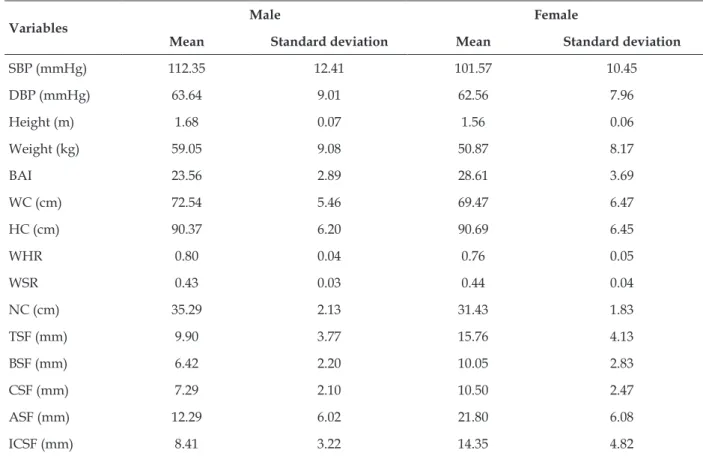
Table 1 - Mean values and standard deviation of the measurements of adolescents according to sex. Imperatriz, Maranhão, Brazil, 2012 (n=218)
Variables Male Female
Mean Standard deviation Mean Standard deviation
SBP (mmHg) 112.35 12.41 101.57 10.45
DBP (mmHg) 63.64 9.01 62.56 7.96
Height (m) 1.68 0.07 1.56 0.06
Weight (kg) 59.05 9.08 50.87 8.17
BAI 23.56 2.89 28.61 3.69
WC (cm) 72.54 5.46 69.47 6.47
HC (cm) 90.37 6.20 90.69 6.45
WHR 0.80 0.04 0.76 0.05
WSR 0.43 0.03 0.44 0.04
NC (cm) 35.29 2.13 31.43 1.83
TSF (mm) 9.90 3.77 15.76 4.13
BSF (mm) 6.42 2.20 10.05 2.83
CSF (mm) 7.29 2.10 10.50 2.47
ASF (mm) 12.29 6.02 21.80 6.08
ICSF (mm) 8.41 3.22 14.35 4.82
With respect to waist circumference, 201
(91.7%) students were classiied as normal and
18 (8.3%) as obese. For waist-hip ratio, 82 (37.4%) presented low scores, 81 (36.9%) moderate and
56 (25.7%) high. Regarding the classiication of
neck circumference, we observed that 20 (9.2%) presented altered values.
We found that 201 (91.7%) adolescents pre-sented normal blood pressure values. Among the 18 (8.3%) participants whose blood pressure values were outside of normality standards, 10 (4.6%) belonged to the borderline category, 5 (2.4%) were stage 1 hypertensive and 3 (1.3%), stage 2 hypertensive.
Table 2 displays the correlations of anthro-pometric variables according to sex. The data in-dicate that male adolescents obtained higher mean values for SBP and DBP and weight, WC and NC variables. Among female participants, BAI and all skinfolds presented higher values with respect to males. Regarding items HC, WHR and WSR, mean values were approximate.
Table 2 - Pearson’s correlation coeficient (r) between anthropometric measurements and SBP and DBP values among adolescents, according to sex. Imperatriz, Maranhão, Brazil, 2012 (n=218)
Variables SBP DBP
Male
Height (m) 0.34 ‡ 0.23 †
Weight (kg) 0.52 ‡ 0.40 ‡
BAI -0.32 ‡ -0.15 *
WC (cm) 0.39 ‡ 0.28 ‡
HC(cm) 0.43 ‡ 0.40 ‡
WHR -0.00 * -0.15 *
Female
Height (m) 0.18 † 0.24 ‡
Weight (kg) 0.20 † 0.13 *
BAI -0.08 * -0.18 †
WC (cm) 0.17 † 0.14 *
HC (cm) 0.16 * 0.10 *
WHR -0.06 * 0.08 *
Table 2 presents the variables with normal distribution and their correlation with SBP and DBP values according to sex. We found that, among the male adolescents, the only items that
did not display signiicant correlation were WHR
and BAI with DBP, as well as WSR with SBP. Fur-thermore, these participants’ SBP demonstrated an inverse relation with BAI (r=-0.32). We found the opposite result when investigating weight, which displayed a proportional and median relationship with SBP. Among female adolescents, there was a positive correlation between SBP with height,
weight and WC. For DBP, the only signiicant vari
-able was weight. However, despite the signiicant
correlations presented, none were considered
strong, since the positive and negative coeficients
fell between 0.30 and 0.70.
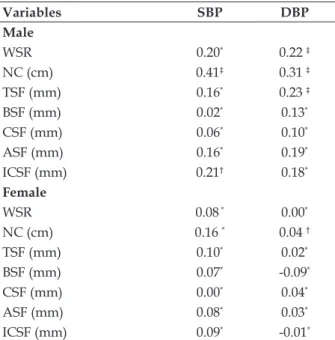
Table 3 displays the variables with non-nor-mal distribution and their correlation to SBP and DBP values according to sex. Neck circumference
(NC) presents direct and statistically signiicant
correlation with DBP in both sexes. Furthermore, the DBP of male adolescents presented correlation with WSR and TSF, while SBP presented the same result with ICSF. The only anthropometric mea-surement that presented simultaneous correlation with SBP for both sexes was NC and WC.
Table 3 - Spearman’s correlation coeficient (rs)
between anthropometric measurements and SBP and DBP values among adolescents, according to sex. Imperatriz, Maranhão, Brazil, 2012 (n=218)
Variables SBP DBP
Male
WSR 0.20* 0.22 ‡
NC (cm) 0.41‡ 0.31 ‡
TSF (mm) 0.16* 0.23 ‡
BSF (mm) 0.02* 0.13*
CSF (mm) 0.06* 0.10*
ASF (mm) 0.16* 0.19*
ICSF (mm) 0.21† 0.18*
Female
WSR 0.08 * 0.00*
NC (cm) 0.16 * 0.04 †
TSF (mm) 0.10* 0.02*
BSF (mm) 0.07* -0.09*
CSF (mm) 0.00* 0.04*
ASF (mm) 0.08* 0.03*
ICSF (mm) 0.09* -0.01*
* Statistically non-signiicant; † 5% level of statistical signiicance; ‡ 1% level of statistical signiicance.
DISCUSSION
Approximately 8% of our adolescent sample had high blood pressure. This result is lower than that of other studies conducted in Brazil, which detected 11.8% and 52.4% percentiles for this juvenile health problem.2,19-21 However, a recent
systematic review concluded that the prevalence of HBP among children and adolescents could encompass values between 3 and 20% at a global level. Furthermore, this divergence can also be
justiied because percentages can vary according
to the method and number of measurements, as well as to diagnostic criteria.6
The protocol for classifying blood pres-sure in this article was the same as that in the
abovementioned articles, speciic for children and
adolescents. However, the present analysis was based on one measurement obtained through the oscillometric method. Other authors emphasize that SBP and DBP assessments throughout time and the use of the auscultatory method lead to the detection of lower blood pressure levels.4,6 Thus,
we conjecture that a longitudinal replication of this study could detect values lower than those found at the moment. This fact reinforces the permanent need for monitoring adolescent’s blood pressure in the school setting.
Another result found in this study was the predominance of more elevated SBP and DBP
val-ues among male adolescents. This data conirms the indings made by other similar studies,10,12,22 in
which the prevalence of HBP among males ranged from 10.2% to 52%. Nonetheless, some authors
have not identiied any association between blood
pressure and sex in adolescents.22-23 This result may
be related to the fact that up to 12 years of age, both SBP and DBP do not diverge according to sex. It is only in adolescence that this situation inverts itself and there is a male supremacy regarding higher blood pressure values.24
In the present investigation, the only an-thropometric measurements that presented cor-relation with SBP in both sexes were NC and WC. In contrast with this result, a longitudinal study conducted with Brazilian children and
adolescents found signiicant correlation between
hypertension and NC, subscapular skinfold and ICSF.23 Other publications, also conducted with
adolescents, identiied statistically signiicant as -sociations between TSF and SBP,2 SBP/DPB with
WC and HC,20 high blood pressure and WC,24
We analyzed similar studies that found that the BMI, WC, WSR and conicity index are better anthropometric indicators for predicting pre-hypertension and pre-hypertension in adolescents and adults.5,9 When presenting an anthropometric
classiication that indicates excess weight, the ado -lescent’s chance for having high blood pressure is 3.1 times higher.20 The literature also indicates that
there is a 10 mmHg and 4 mmHg increase in SBP and DBP, respectively, with respect to values ex-pected for age and sex in overweight adolescents.24
In the present study, WC demonstrated a strong relation with the adolescent’s blood pres-sure, a fact similar to that presented in other con-sulted studies.22-23 This fact intensiies the role of
abdominal fat concentration as a predictor for de-veloping HBP in adolescents. In opposition to the
previously mentioned studies, we did not ind any signiicance between these two variables, which
raises the hypothesis that the cutoff points for WC
classiication may have distorted the estimates for
high blood pressure risk in these studies. In fact, authors have criticized the use of cutoff points for
all ethnicities, for this variable is not suficiently speciic for detecting HBP levels in Brazilian chil -dren and adolescents, which is possibly due to the
strong miscegenation that deines the Brazilian population and that requires speciic values.22-25
Concerning neck circumference, male ado-lescents presented higher mean values of adiposity
and a direct and statistically signiicant correlation
with DBP in both sexes.
We found only one citation in the literature regarding the association between NC and blood pressure in adolescents. In this case, there was a
statistically signiicant association between NC
and dyslipidemia13 among adults, and Brazilian
studies that found an association or statistically
signiicant correlation between hypertension and
SBP/DBP, respectively.17,26 We also found
publica-tions from Europe and the United States whose re-sults demonstrated a positive correlation between SBP/DBP and neck circumference.27-29
Despite the scarcity of bibliographic studies on the topic, we consulted some manuscripts that were unanimous in stating the following conclu-sion: NC is a measurement capable of predicting alterations in body fat and metabolism.11,13,27-29
Therefore, it can serve as an important practical instrument for predicting blood pressure and car-diovascular risk, for most frequently, hypertension can by asssyptomatic.30
CONCLUSION
Anthropometric evaluation is a simple, effec-tive and low-cost measure that can contribute to deal with high blood pressure, for anthropometric indicators can provide indications of body fat accumulation and consequently, of disorders cor-related with elevated SBP and DBP, blood glucose and triglyceride levels. In light of this observation, we consider it a priority to encourage early detec-tion and weight reducdetec-tion, for even small losses
can result in signiicant decreases in blood pres -sure in the juvenile population.
Despite the fact that a small portion of the sample presented high blood pressure, the values
for SBP and DBP indicated signiicant correlations
with some anthropometric measurements, espe-cially WC and NC. Another important issue is the need for nurses to increase their presence in the school setting in order to monitor risk factors for noncommunicable chronic diseases. This situation can take place through health education actions that promote a healthy lifestyle since childhood and/or adolescence. Another important, practi-cal and economipracti-cally viable measurement is the analysis of anthropometric data, for with this instrument, school nurses can help promote the health of children and adolescents.
As a limitation of our study, we mention the fact that we based our blood pressure analysis on one single evaluation (cross-sectional analysis) and with a reduced sample. Therefore, causal relations may not have been established. Furthermore, we emphasize that we did not evaluate other cardio-vascular risk indicators, such as glucose toler-ance and body fat composition. These are very important items for evaluating the risk related to hypertension in children and adolescents. In light of these methodological limitations, we recom-mend that the results presented in this study be used with caution. We also suggest that this study be replicated in other clinical scenarios with an improved methodological design.
REFERENCES
1. Sociedade Brasileira de Cardiologia, Sociedade Brasi-leira de Hipertensão, Sociedade BrasiBrasi-leira de Nefrolo-gia, IV Diretrizes Brasileiras de Hipertensão Arterial. Rev Bras Hipertens. 2010 Dez; 95(supl.1): 1-51. 2. Araújo TL, Lopes MVO, Cavalcante TF, Guedes NG,
3. Abreu S, Santos R, Moreira C, Santos PC, Mota J, Moreira P. Food consumption, physical activity and socio-economic status related to BMI, waist circum-ference and waist-to-height ratio in adolescents. Public Health Nutr. 2013 Jul; 22 (Suppl 1): S1-16. 4. Fonseca FL, Brandão AA, Pozzan R, Campana
EMG, Pizzi OL, Magalhães MEC, et al. Relação
entre a pressão arterial e índices antropométricos na infância/adolescência e o comportamento das
variáveis de risco cardiovascular na fase adulta jovem, em seguimento de 17 anos: estudo do Rio de Janeiro.Rev SOCERJ. 2008 Set-Out; 21(5):281-90. 5. Campana EMG, Brandão AA, Magalhães MEC,
Freitas EV, Brandão RPAP. Pré-hipertensão em crianças e adolescentes. Rev Bras Hipertens. 2009 Abr-Jun; 16(2):92-102.
6. Thompson M, Dana T, Bougatsos C, Blazina I, Norris SL. Screening for hypertension in children and adolescents to prevent cardiovascular disease. Pediatrics. 2013 Mar; 131(3):490-525.
7. Chiolero A, Bovet P, Paradis G. Screening for elevated blood pressure in children and adolescents: a critical appraisal. JAMA Pediatr. 2013 Mar; 167(3):266-73.
8. D h u p e r S , B u d d h e S , P a t e l S . M a n a g i n g cardiovascular risk in overweight children and adolescents. Pediatr Drugs. 2013 Jun; 15(3):181-90. 9. Beck CC, Pitanga AS, Gondim FJ. Anthropometric
indicators as predictors of high blood pressure in adolescents. Arq Bras Cardiol. 2011 Nov; 96(2):126-30. 10. Oliveira MMA, Fagundes RLM, Moreira EAM,
Trindade EBSM, Carvalho T. Relation between anthropometric indicators and risk factors for cardiovascular disease. Arq Bras Cardiol. 2010 Apr; 94(4):478-85.
11. Moser DC, Giulliano Ide C, Titski AC, Gaya AR, Silva MJC, Leite N. Anthropometric measures and blood pressure in school children. Pediatrics. 2013 May-Jun; 88(3):243-9.
12. Silva KS, Júnior JCF. Risk factors associated with high blood pressure in adolescents. Rev Bras Med Esporte. 2007 Jul-Ago; 13(4):213-6.
13. Polit DF, Beck CT. Fundamentos de pesquisa em Enfermagem: avaliação de evidências para a prática de enfermagem. 7ª ed. São Paulo (SP): Artmed; 2011. 14. Organización Panamericana de la Salud. Promoción
de la salud en las Americas. Washington (US): OPS; 1993.
15. Gonçalves VSS, Faria ER, Morais DC, Franceschini
SCC, Priore SE. Perímetro do pescoço como preditor de excesso de gordura corporal no início da
adolescência. In: Anais do XXII Congresso Brasileiro de Nutrição, 2012 Set 26-29, Olinda, Brasil. Olinda (PE): Vision Eventos; 2012.
16. Duarte ACG, Castellani FR. Semiologia Nutricional. Rio de Janeiro (RJ): Axcel; 2002.
17. Taylor RW, Jones IE, Williams SM, Goulding A. Evaluation of waist circumference, waist-to-hip ratio, and the conicity index as screening tools for high trunk fat mass, as measured by dual-energy X-ray absorptiometry, in children aged 3-19 y. Am J Clin Nutr. 2000 Aug; 72(2):490-5.
18. Smith C, Essop MF. Gender differences in metabolic risk factor prevalence in a South African student population. Cardiovasc J Afr. 2009 May-Jun; 20(3):178-82.
19. Pereira DCR. Análise da circunferência do pescoço
como marcador para síndrome metabólica em
estudantes de uma universidade pública em Fortaleza-CE [dissertação]. Fortaleza (CE): Universidade Federal do Ceará, Programa de Pós-Graduação em Enfermagem; 2012.
20. Canadian Standardized Test of Fitness (CSTF). Operations Manual. 3ª ed. Ottawa (CA): Government of Canada, Fitness and Amateur Sport; 1986. 21. Pinto SL, Silva RCR, Priore SE, Assis AMO, Pinto
LJ. Prevalência de pré-hipertensão e de hipertensão arterial e avaliação de fatores associados em crianças e adolescentes de escolas públicas de Salvador, Bahia, Brasil. Cad Saúde Pública. 2011 Jun; 27(6):1065-76.
22. Christófaro DGD, Casonatto J, Fernandes RA, Mathias FF, Lock MR, Guariglia DA, et al. Pressão
arterial elevada em adolescentes de alto nível
econômico.Rev Paul Pediatr. 2010 Mar; 28(1):23-8. 23. Silva PCV, Araújo MFM, Almeida LS, Vasconcelos
HCA, Freitas RWJF, Damasceno MMC, Lopes MVO. Blood pressure of adolescents in private schools in Fortaleza-CE. Acta Paul Enferm. 2010 Oct; 23(4):512-8.
24. Araújo TL, Lopes MVO, Cavalcante TF, Guedes NG, Moreira FP, Chaves ES, et al. Relación entre medidas antropométricas y valores de la presión arterial en estudiantes brasileños.ALAN [online].
2006 [acesso 2012 Abr 14]; 56(3). Disponível em:
http://www.scielo.org.ve/scielo.php?pid=S0004-06222006000300002&script=sci_arttext
25. ClementeAPG, Santos CD, Silva AAB, Martins VJ, MarchesanoAC, Fernandes MB, et al. Mild stunting is associated with higher blood pressure in overweight adolescents. Arq Bras Cardiol. 2012 Jan; 98(1):6-12.
26. Rosa MLG, Mesquita ET, Rocha ERR, Fonseca VM. Body mass index and waist circumference as markers of arterial hypertension in adolescents. Arq Bras Cardiol. 2007 May; 88(5):573-8.
27. Souza MGB, Rivera IR, Silva MAM, Carvalho ACC. Relationship of obesity with high blood pressure in children and adolescents Arq Bras Cardiol. 2010 Apr; 94(6):714-9.
Correspondence: Márcio Flávio Moura de Araújo Rua Conselheiro da Silva, 708
60862-610 — Jardim Violeta, Fortaleza, CE, Brasil E-mail: [email protected]
Received: November 18, 2013 Approved: March 21, 2014
de risco cardiovascular em mulheres sedentárias. Einstein. 2012 Jul-Sep; 10(3):329-4.
29. Sjöström CD, Hakangard AC, Lissner L, Sjöström L. Body compartment and subcutaneous adipose tissue distribution - risk factor patterns in obese subjects. Obes Res. 1995 Jan; 3(1):9-22.
30. Vallianou NG, Evangelopoulos AA, Bountziouka V, Vogiatzakis ED, Bonou MS, Barbetseas J, et al. Neck circumference is correlated with triglycerides and inversely related with HDL cholesterol beyond BMI and waist circumference. Diabetes Metab Res Rev. 2013 Jan; 29(1):90-7.
31. Preis SR, Massaro JM, Hoffmann U, D’Agostino RBS, Levy D, Robins SJ, et al. Neck circumference as a novel measure of cardiometabolic risk: the Framingham heart study. J Clin Endocrinol Metab. 2010 Aug; 95(8):3701-10.
32. Silva FM, Budó MLD, Silveira CL, Badke MR, Beuter M. Hypertension as a condition of non-disease – the meaning of chronicity in the subjects’ perspective. Texto Contexto Enferm. 2013 Mar
[acesso 04 Abr 2014]; 22(1):123-31. Disponível em: