ABSTRACT:Objective: To determine the prevalence of the Papanicolaou exam among women aged 20 to
59 years in the city of Campinas (state of São Paulo, Brazil) and to analyze associations between this test and ailiation to private health insurance plans as well as socioeconomic/demographic variables and health-related behavior. Method: To do so, a population-based, cross-sectional study was carried out. Statistical analyses took the study design into account. Results: Despite the signiicant socioeconomic diferences between women with and without private health plans, no diferences between these groups were found regarding having been submitted to the Papanicolaou test. In fact no diferences were found as to socioeconomic and health variables analyzed. Among all variables analyzed, only marital status was signiicantly associated with having undergone the test. The Brazilian public health system accounted for 55.7% of the exams. Conclusion: The present indings indicate social equity in the city of Campinas regarding the preventive exam for cervical cancer in the age group studied.
Keywords: Cervix neoplasms prevention. Health inequalites. Women’s health. Vaginal Smears. Early detection of cancer. Cross- Sectional Studies.
Equity of access to Pap smears:
population-based study in Campinas, São Paulo, Brazil
Equidade no acesso ao exame de Papanicolaou: estudo de base populacional
no município de Campinas, São Paulo, Brasil
Vivian Mae Schmidt Lima AmorimI, Marilisa Berti de Azevedo BarrosI
IDepartment of Collective Health, School of Medical Sciences, Universidade Estadual de Campinas – Campinas (SP), Brazil.
Corresponding author: Vivian Mae Schmidt Lima Amorim. Departamento de Saúde Coletiva, Faculdade de Ciências Médicas, Universidade Estadual de Campinas. Rua Tessália Vieira de Camargo, 126, Cidade Universitária “Zeferino Vaz”, CEP 13083-887, Campinas, SP, Brasil.. E-mail: [email protected]
Conict of interests: nothing to declare – Financing source: National Counsel of Technological and Scientiic Development (CNPq, process n. 409747/2006-8).
INTRODUCTION
Cervical cancer is the third cancer with the highest incidence in women worldwide, being the fourth leading cause of death by cancer among this population segment1. In Brazil, it
ranks third among the malignancies that most afect women, with an estimative of 17,540 new cases in 20122. Worldwide, there is an increased incidence of new cases and a decrease
in the mortality rate from this condition3.
The estimated incidence and mortality rates in Brazil have intermediate values in relation to developing countries, but are high when compared to developed countries, which have well-structured early detection programs2.
Several factors are considered risks for the development of cervical cancer: early onset of sexual activity, multiple sexual partners, multiparity, history of sexually transmitted diseases, smoking and use of contraceptive pills4-6. Persistent infection with certain types of human
papillomavirus (HPV), when there is an interaction with other factors, also presents itself as an important risk factor for the onset of the cells precursor to cervical cancer4-7. HPV is
present in 99% of cervical cancers and, in 70% of these cases, types 16 and 18 are detected4,8.
The global average prevalence of HPV infection in women who have normal results for cytology is estimated at 11.7%9. In Brazil, research shows that this prevalence varies
between 10.4% and 24.5%10.
The HPV vaccine is being introduced gradually in several countries as part of the strategy for the primary prevention of cervical cancer. Currently, it is recommended for girls aged 9–12 years who have not yet initiated sexual activity, so that the protective efect may only be
RESUMO:Objetivo: Analisar a desigualdade social na prevalência da realização do exame de Papanicolaou nos últimos três anos segundo iliação a planos privados de saúde e, também, em relação a outras variáveis socioeconômicas, demográicas e de comportamentos relacionados à saúde em mulheres de 20 a 59 anos, residentes no município Campinas (SP). Método: O estudo foi do tipo transversal, de base populacional, e as análises estatísticas consideraram o delineamento da amostra. Resultados: Apesar das signiicativas diferenças socioeconômicas existentes entre as mulheres iliadas e as não iliadas a planos privados de saúde, não foram observadas diferenças na realização do Papanicolaou entre os dois grupos, bem como em relação a todas as outras variáveis socioeconômicas e de saúde analisadas. Somente a situação conjugal revelou-se associada à realização do exame. O SUS foi responsável pela cobertura de 55,7% dos exames realizados. Conclusão: Os resultados apontam a existência de equidade social no município de Campinas quanto à realização do exame preventivo para o câncer do colo de útero na faixa etária estudada.
observed when these generations reach the age of increased risk of disease11-13. In Brazil, the
National Immunization Program has been analyzing the adequacy of the introduction of the HPV vaccine in the immunization schedule, considering epidemiological, immunological, socioeconomic, technological and operational criteria14.
In the current epidemiological context, cervical screening is widely recommended by medical societies and government programs as an efective method for screening and early detection of cervical cancer in sexually active women, with the reduction of mortality from this disease, observed in various parts of the world, being credited to this test12,13,15-17.
In Brazil, the recommended interval is three years after two consecutive negative annual checkups for women aged 25 to 64 years15. The Pap smear is a, cheap safe, easy to perform
test that is well accepted by the general female population. It is able to detect cervical cancer at an early stage, making it curable with relatively simple measures and thus allowing the disease to present a great potential for healing15.
Despite the recommendation of the medical societies for the periodical performance of Pap smears, and despite the test being ofered in primary care services, national and international studies have identiied demographic, socioeconomic and geographic factors that limit access to screening. Among these factors are age, education, income, marital status, health status, membership to private health plans and access to health services, showing the need to the development of strategies for attracting women who did not perform the test properly18-24.
Studies have consistently indicated the presence of social inequalities in access to this screening19-21.
In Brazil, the reduction of morbidity and mortality for cervical cancer has been one of the priorities of the national policy of comprehensive women’s health care, in which the Ministry of Health, in conjunction with states and municipalities, has been engaged to structure health services and improve access to the prevention program and follow-up of this condition25.
Considering the relevance of cervical cancer and the potential for cure when diagnosed early, low cost and ease of performance of Pap smears, the national coverage target of the test and the results of previous research conducted in the city which indicated signiicant social disparity in the coverage of the test18, this study aimed to detect the degree of existing
social inequality in access to cervical screening test according to the possession of private health plan and other socioeconomic and health variables in the female population living in the urban area of the municipality of Campinas, São Paulo.
METHODS
To obtain the ISACAMP-2008 sample, we used probabilistic, stratified and cluster sampling in two stages. In the irst stage, 50 census tracts in the urban area of Campinas with probability proportional to size (number of households) were randomly selected. For the systematic randomized selection, sectors were ordered by the percentage of heads of households who were college educated. The survey aimed to obtain estimates for speciic population subgroups: adolescents aged 10 – 19 years, adults aged 20 – 59 years and seniors aged 60 years or older.
The minimum sample size was estimated at 1,000 individuals for each of the domains, allowing the estimation of a ratio of 0.50, with maximum error between 4 and 5 percentage points, with a conidence interval of 95% (95%CI) and considering a design efect of 2. Considering the possibility of losses, 20% larger households numbers were randomly selected. To obtain the desired sample size for teenagers, adults and seniors, independent samples of 2,150, 700 and 3,900 households, respectively, were selected. In each household, all residents of the area for which the household was randomly selected were intervieweda.
We used data from women aged 20 – 59 years for this study.
Information was obtained through a structured questionnaire in 15 thematic sections, with mostly closed questions, applied directly to the person drawn by trained interviewers. Questionnaires with incomplete or inconsistent information were returned to the ield to be complimented.
The dependent variable for this study was the performance of a Pap smear. Regarding the test, were also analyzed: the last time it was performed, the reason for performing or not performing, knowledge about the test results and whether it was performed in the public or private sector. The main independent variable analyzed was having or not having a private health plan.
The following independent variables were analyzed:
• Variáveis socioeconômicas e demográicas: idade, cor de pele/raça (autorreferida), situação conjugal, religião, naturalidade, escolaridade, situação ocupacional, renda familiar mensal per capita (em salários mínimos) e número de bens duráveis. Para o cálculo da renda familiar per capita, foram considerados os valores dos salários mínimos vigentes no País por ocasião da realização do inquérito.
• Variables of health-related behaviors: physical activity in a leisure context at least once a week, smoking status (smoker, ex-smoker and non-smoker), weekly frequency of alcohol consumption and weekly consumption of fruits or vegetables.
• Variables related to health status: number of chronic diseases reported, hypertension, diabetes mellitus, common mental disorders assessed by the Self Reporting Questionnaire (SRQ-20), with the cutof point used for common mental disorder being 7 or more positive responses and the presence of overweight using the body mass index (BMI = kg/m²) calculated based on weight and height.
• Variables related to the use of health services and preventive practices: dental visit during the year preceding the interview, undergoing a clinical breast exam in the year preceding
the interview, performing a monthly self-examination of breasts and undergoing a mammography in the two years prior to the interview.
Data were entered into a database developed using EpiData, version 3.1. To perform the statistical analyzes, STATA 11 software (Stata Corporation, College Station, USA) was used, which allowed taking into account the variables of the sampling plan: clustering and weighting.
The distribution percentages were estimated according to sociodemographic variables, as well as variables related to the Pap smear and other preventive practices, of women with and without private health insurance, in addition to the prevalence and prevalence ratio and 95%CI of the examination according to the possession of health, and according to other socioeconomic and health variables, through Poisson regression.
The research project that resulted in this study was approved by the Ethics Committee of the School of Medical Sciences of Universidade Estadual de Campinas under protocol No. 932/2009, in addendum to public notice No. 079/2007.
RESULTS
Of selected households in the sample of adults, in 19.6%, the surveying of residents could not be performed due to refusal (10.1%), absence of the resident (3.7%) and other reasons (5.8%). Of the 1,082 adults found in the household that should be interviewed, 11.5% refused to participate.
For this study, data from a sample of 507 women aged 20 to 59 years were analyzed. In this age group, 46.4% of women in Campinas are ailiated with private health plans.
Table 1 shows the existence of signiicant socioeconomic inequalities between women who have health insurance and those who are dependent on the Uniied Health System (SUS). Among those who reported having private health plans, higher proportions of white, catholic women, born in Campinas, with higher levels of education, income and number of durable goods, and who had a steady income, were observed.
Regarding the performance of cervical screening, it was observed that 86.2% (95%CI 82.6 – 89.1) of women aged 20-59 years living in Campinas were scanned in the last three years, and no statistically significant difference was observed in the examination among women who have and who do not have private health insurance. Only 6.8% of women of Campinas in this age group had never performed a Pap test (Table 2).
Only 4.5% of women did not know the result of the last test, and in 3.1% of tests, results indicated some alteration, and these percentages did not difer between the two groups of women. Of the total screenings performed, the public sector accounted for 55.7%, and private health plans, 44.3%, while 8.2% of women who reported having health insurance had the examination performed by SUS (Table 2).
Table 1. Demographic and socioeconomic characteristics of women aged 20 to 59 years according to ailiation to private health insurance. Campinas, ISACAMP, 2008 – 2009.
Variables n
Health insurance
Total
Yes No
n = 226 n = 282 n = 508
Age (years) (p = 0.6630)
20 to 39 281 55.1 56.8 56.0
40 to 59 226 44.9 43.2 44.4
Skin color (self-reported) (p = 0.0000)
White 370 86.9 62.1 73.6
Non-white 135 13.1 37.9 26.4
Marital status (p = 0.0419)
Married 314 61.4 62.1 61.8
Separated/divorced 57 8.4 13.3 11.0
Widowed 12 12.9 3.2 23.2
Single 125 28.9 37.9 38.2
Religion (p = 0.0000)
Catholic 251 60.9 39.5 49.5
Evangelic/Protestant 183 23.7 46.0 35.6
Other 74 15.3 14.5 14.9
Place of birth (p = 0.0000)
Campinas 214 48.9 36.7 42.3
Other SP municipalities 130 32.2 20.0 25.7
Other states 163 19.0 43.5 32.0
Education (years) (p = 0.0000)
0 to 4 88 7.5 25.2 16.9
5 to 8 131 14.1 35.1 25.3
9 or more 289 78.4 39.7 57.8
Employment status (p = 0.0002)
Employed 307 68.1 54.3 60.7
Unemployed 201 31.9 45.7 39.3
Per capita household income (in minimum wages) (p = 0.0000)
≤ 1 226 27.0 58.7 43.9
1 to 2.5 157 30.0 31.3 30.7
2.5 or more 125 43.0 10.0 12.6
Possession of durable goods (p = 0.0000)
6 to 9 167 20.5 42.9 32.4
Is worth mentioning that the absence of inequality regarding the performance of the cervical screening did not occur in relation to preventive practices on detection of breast cancer. The performance of the annual clinical breast exam and mammography in the
Variables n Health insurance Total
Yes No
Cervical screening (p = 0.5889)
Never performed 34 6.1 7.4 6.8
Performed less than 3 years ago 437 87.9 84.7 86.2
Performed more than 3 years ago 36 6.0 7.9 7.0
Reason for not performing (p = 0.1826)
It is not necessary 39 67.1 55.9 60.4
Had no guidance 6 8.1 10.5 9.5
Diiculty in scheduling 3 0 8.1 4.9
I’m a virgin/embarrassing exam 8 20.5 7.6 12.7
Other reasons 8 4.3 17.8 12.4
Reason for performing (p = 0.4473)
Routine 435 93.7 92.1 92.8
Check on health problems 20 4.6 4.0 4.3
Others 14 1.7 3.9 2.9
Knowledge of results (p = 0.3310)
Yes 449 96.9 94.3 95.5
No 21 3.1 5.7 4.5
Results (p = 0.2734)
Normal 435 97.7 96.2 96.9
Alteration 14 2.3 3.8 3.1
Financing of the test (p = 0.0000)
SUS 255 8.2 99.2 55.7
Company health plan 35 16.1 0 7.7
Individual health plan 155 74.7 0 35.7
Others 4 9.4 0.8 8.8
Monthly breast self-exam (p = 0.2065)
Does not perform the self-exam 364 78.8 73.8 76.1
Performs the self-exam 239 21.3 26.2 23.9
Clinical breast exam (p = 0.0000)
Never performed the exam 87 10.0 25.1 18.1
Performed in the last year 320 77.1 59.0 67.3
Performed over 1 year ago 69 12.9 15.9 14.5
Mammography (p = 0.0019)
Never performed 45 12.0 27.0 19.7
Performed less than 2 years ago 142 76.0 52.8 64.0
Performed more than 2 years ago 37 12.0 20.2 13.3
two years preceding the interview was signiicantly more frequent in the women ailiated to private health plans, with no diference between groups in the completion of the monthly breast self-examination (Table 2).
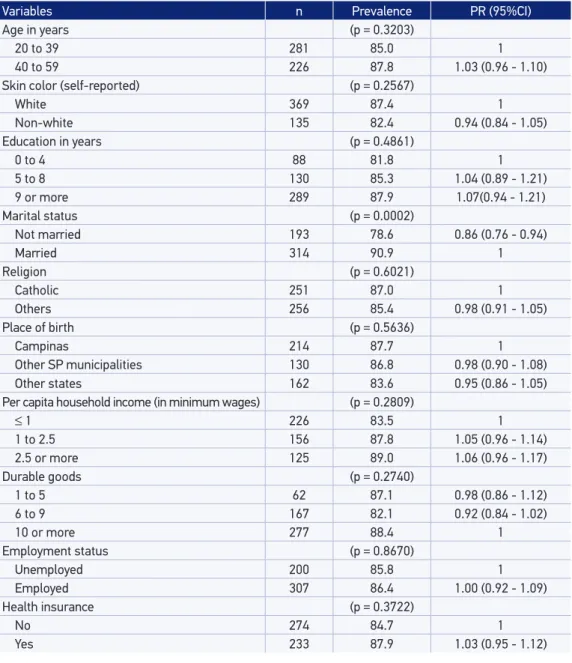
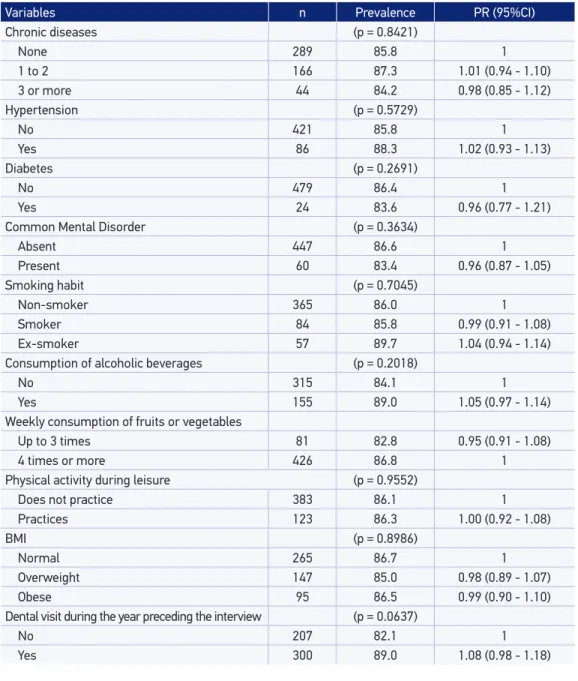
Table 3 shows that there was no diference in the prevalence of having Pap smears for all socioeconomic variables. Only the variable “marital status” was associated to the implementation of cervical screenings. The absence of diferences is also found in Table 4 regarding the variables of health behaviors and mortality.
Table 3. Prevalence of the performance of cervical screening in the last 3 years according to demographic and socioeconomic variables. Campinas, ISACAMP 2008 – 2009.
Variables n Prevalence PR (95%CI)
Age in years (p = 0.3203)
20 to 39 281 85.0 1
40 to 59 226 87.8 1.03 (0.96 - 1.10)
Skin color (self-reported) (p = 0.2567)
White 369 87.4 1
Non-white 135 82.4 0.94 (0.84 - 1.05)
Education in years (p = 0.4861)
0 to 4 88 81.8 1
5 to 8 130 85.3 1.04 (0.89 - 1.21)
9 or more 289 87.9 1.07(0.94 - 1.21)
Marital status (p = 0.0002)
Not married 193 78.6 0.86 (0.76 - 0.94)
Married 314 90.9 1
Religion (p = 0.6021)
Catholic 251 87.0 1
Others 256 85.4 0.98 (0.91 - 1.05)
Place of birth (p = 0.5636)
Campinas 214 87.7 1
Other SP municipalities 130 86.8 0.98 (0.90 - 1.08)
Other states 162 83.6 0.95 (0.86 - 1.05)
Per capita household income (in minimum wages) (p = 0.2809)
≤ 1 226 83.5 1
1 to 2.5 156 87.8 1.05 (0.96 - 1.14)
2.5 or more 125 89.0 1.06 (0.96 - 1.17)
Durable goods (p = 0.2740)
1 to 5 62 87.1 0.98 (0.86 - 1.12)
6 to 9 167 82.1 0.92 (0.84 - 1.02)
10 or more 277 88.4 1
Employment status (p = 0.8670)
Unemployed 200 85.8 1
Employed 307 86.4 1.00 (0.92 - 1.09)
Health insurance (p = 0.3722)
No 274 84.7 1
DISCUSSION
The study results reveal important social inequalities in living conditions and demographics between the segment of women covered by private health plans and those that are dependent on SUS, in the 20-59 years old age range population residing in urban areas in the municipality of Campinas. This inding is expected, considering the inancial cost of membership in
Variables n Prevalence PR (95%CI)
Chronic diseases (p = 0.8421)
None 289 85.8 1
1 to 2 166 87.3 1.01 (0.94 - 1.10)
3 or more 44 84.2 0.98 (0.85 - 1.12)
Hypertension (p = 0.5729)
No 421 85.8 1
Yes 86 88.3 1.02 (0.93 - 1.13)
Diabetes (p = 0.2691)
No 479 86.4 1
Yes 24 83.6 0.96 (0.77 - 1.21)
Common Mental Disorder (p = 0.3634)
Absent 447 86.6 1
Present 60 83.4 0.96 (0.87 - 1.05)
Smoking habit (p = 0.7045)
Non-smoker 365 86.0 1
Smoker 84 85.8 0.99 (0.91 - 1.08)
Ex-smoker 57 89.7 1.04 (0.94 - 1.14)
Consumption of alcoholic beverages (p = 0.2018)
No 315 84.1 1
Yes 155 89.0 1.05 (0.97 - 1.14)
Weekly consumption of fruits or vegetables
Up to 3 times 81 82.8 0.95 (0.91 - 1.08)
4 times or more 426 86.8 1
Physical activity during leisure (p = 0.9552)
Does not practice 383 86.1 1
Practices 123 86.3 1.00 (0.92 - 1.08)
BMI (p = 0.8986)
Normal 265 86.7 1
Overweight 147 85.0 0.98 (0.89 - 1.07)
Obese 95 86.5 0.99 (0.90 - 1.10)
Dental visit during the year preceding the interview (p = 0.0637)
No 207 82.1 1
Yes 300 89.0 1.08 (0.98 - 1.18)
private health plans; social disparity in relation to ownership of these plans is an reality in Brazil and other countries27,28.
As for the performance of cervical screening in the three years preceding the interview, no diference between the prevalence of women ailiated and not ailiated to private health plans was observed, indicating that the public network of primary care in the city of Campinas have succeeded in promoting equity in access to Pap smears to expand coverage of the test. This inding difers from those observed in other Brazilian and foreign studies that identify higher prevalence of cytology examination in the segments of women who have private health plans19,20,29.
The inding of equity, observed in relation to the possession of health insurance, is reinforced by verifying the absence of diferences in the prevalence of having Pap smears for all socioeconomic variables. But equity does not manifest itself only in the coverage of the exam. There was also no diference as to the knowledge of the test results, nor as to the reasons for performing or not performing the test. This is the irst Brazilian study, to our knowledge, that inds equitable access to Pap smears. Results of national surveys have shown signiicant social inequalities in access to preventive screening for cervical cancer19,30,31. Study
conducted with data from the National Household Sample Survey (PNAD) of 2003, regarding the entire Brazilian population, showed that women with higher education and income were more likely to take the test for cytology, compared to women with lower education and income, respectively, OR = 5.14 and OR = 3.0530. In a study conducted in the State of
Pernambuco, women with lower education levels were more likely to not performing a cervical screening (OR = 2.967)32. In relation to ethnicity, study conducted in Pelotas, Rio
Grande do Sul, pointed out that non-white women (OR = 1.44) are more vulnerable to not performing the cervical screening than white women33.
It is noteworthy that equity observed in this study results from recent processes, because a survey conducted in Campinas in 2001/2002, which analyzed a diferent age range from this study, observed signiicant social inequality in access to Pap smears regarding education and race/color18. The inding of equal access to cytology exams in Campinas generates an
expectation that lower inequality can also be obtained for other preventive practices, as the network service gets quality and efectiveness. The inding also indicates that similar results compared to the Pap smear can be achieved in other locations in Brazil, as the coverage of the test expands.
This study also noted that the coverage of cervical screening in Campinas (86.2%) is above the minimum coverage recommended by the Ministry of Health, in the Pact for Life, which aims to the coverage 80% of the target women in the control of cervical cancer34.
The coverage observed in Campinas is above the observed in the survey conducted in 2007 in 27 state capitals and the Federal District, which was of 80.9%35.
associated to the performance of cervical screening, diferent from that observed in other national surveys24,28,32. Study carried out in the U.S. also found no association of age with
the performance of cervical screening22.
Marital status was the only variable signiicantly associated with the performance of cervical screening, similar to the indings of other studies that also found that women who are married or have partners have a higher prevalence in the test compared to those who do not have a partner19,24,32,35. This result could indicate that women consider that the Pap smear
would only be necessary in situations of regular intercourse. It is understood to be under the responsibility of health services the disclosure of information through health education groups or in the waiting room, on the importance of the exam, regardless of the frequency of sexual activity, as a means of early detection of cervical cancer.
An increasing trend was observed in the municipality, although not statistically significant, of the proportion of Pap smear tests performed by SUS (55.7%; 95%CI 46.4 – 64.6) compared to that observed in a previous study conducted in 2001 – 2002 (43.2%; 95%CI 33.1 – 54.0)18. In this study, it was observed that SUS also conducted
tests for women who reported membership in private health plans (8.2%), thus fulfilling one of its guiding principles: universality. The Ministry of Health, since 2006, through the Pact for Life, reaffirmed as a SUS priority the control of cervical cancer and, therefore, pointed out, with the states and municipalities, the need for reorganization of actions aimed at the early detection of this condition by expanding the supply of primary care in cytology not only as a component of the gynecological consultation34. The collection of Pap smear in Campinas is also performed by nurses,
which helps to expand the supply of the examination in the health services of the municipal network37.
Regarding the reasons for not having Pap smears, the study showed that women, ailiated or not ailiated with private health plans, reported as the main reason the exam not inding it to be necessary, and this result is similar to that found in a previous study conducted in Campinas, as well as in a research conducted in the city of São Paulo18,38.
This inding points to the need for health services, public and private, to incorporate, systematically and continuously, educational activities for clariication about the importance of the exam to women.
One limitation of this study is that the information on the performance of the Pap smear test and on the other variables was obtained through interviews and therefore are subject to memory and information bias. The respondent may have been mistaken as to the time elapsed from the last test, or may even have said that they were tested by considering that to be the appropriate and expected response. National19,24 and international21,22,38 studies
carried out on the coverage of the Pap smear test have also used self-reported information. Studies carried out in the USA found a high correlation between self-reported data on preventive practices for various types of cancer, including cervical cancer, and data from medical records of people interviewed, pointing to interviews as a reliable and less expensive method for obtaining such information39,40. Another limitation is the cross-sectional design,
which also restricts the ability to interpret the associations found as derived from cause-efect relationships.
On the positive side, the study shows the importance of conducting health surveys as tools for evaluating the incorporation of health care practices, more particularly the access to preventive examinations and therefore the possibility of monitoring the coverage of these exams and the social inequalities in access.
Failure to verify the association between the performance of cervical screening and the affiliation to a private health plan, as well as all other socioeconomic variables, demonstrates the existence of equity in the municipality of Campinas, in the period studied, regarding the performance of preventive test for cervical cancer. It was also observed equity in the knowledge of the test result, which indicates that both the SUS and private services have provided accompaniment for women after the exam. Campinas has a broad and structured network of public health services with extended hours of service, which facilitates the access of the population to the offered services, including the collection of cytolog y and groups of delivery of the test results. The Ministry of Health, in turn, guides and encourages states and municipalities to develop strategies for attracting women not already covered by the examination, as well as for the development of educational activities in health for clarification on the need of the regular use of certain preventive practices.
Despite these results, the study also noted the existence of a small portion of the population that has never performed the Pap smear test or who has performed it more than three years prior to the interview. For these women, there is a need that public health services ind suitable strategies to motivate them to adhere to this practice, considering that the reasons given for not performing the test are eligible for educational activities. There is a need for studies to better understand the reasons for non-performance, since a small portion (4.9%) reported diiculty in scheduling the examination.
1. World Health Organization. International Agency for Research on Cancer. Globocan 2008. Cancer incidence and mortality worldwide in 2008. Disponível em: http:// globocan.iarc.fr/factsheets/populations/factsheet. asp?uno=900 (acessado em 22 de junho de 2010).
2. Brasil. Ministério da Saúde. Instituto Nacional de Câncer. Estimativa 2012: incidência de câncer no Brasil. Rio de Janeiro; 2011.
3. Forouzanfar MH, Foreman KJ, Delossantos AM, Lozano R, Lopez AD, Murray CJ et al. Breast and cervical cancer in 187 countries between 1980 and 2010: a systematic analysis. Lancet 2011; 378(9801): 1461-84.
4. Markowitz LE, Dunne EF, Saraiya M, Lawson HW, Chesson H, Unger ER. Centers for Disease Control and Prevention. Quadrivalent human papillomavirus vaccine: recommendations of the advisory committee on immunization practices (ACIP). MMWR Recomm Rep 2007; 56(RR2): 1-24.
5. Almonte M, Albero G, Molano M, Carcamo C, Garcia PJ, Pérez G. Risk factors for human papillomavirus exposure and co-factors for cervical cancer in Latin America and the Caribbean. Vaccine 2008; 26(Suppl 11): L16-36.
6. Rosa MI, Medeiros LR, Rosa DD, Bozzeti MC, Silva FR, Silva BR. Papilomavirus humano e neoplasia cervical. Cad Saúde Pública 2009; 25(5): 853-64.
7. Subramanya D, Grivas PD. HPV and cervical cancer: updates on an established relationship. Postgrad Med 2008; 120(4): 7-13.
8. Saslow D, Castle PE, Cox JT, Davey DD, Einstein MH, Ferris DG et al. American Cancer Society guideline for human papillomavirus (HPV) vaccine use to prevent cervical cancer and its precursors. CA Cancer J Clin 2007; 57(1): 7-28.
9. Bruni L, Diaz M, Castellsangué X, Ferrer E, Bosch FX, de Sanjosé S. Cervical human papillomavirus prevalence in 5 continents: meta-analysis of 1 million women with normal cytological indings. J Infect Dis 2010; 202(12): 1789-99.
10. Ayres ARG, Silva GA. Prevalência de infecção do colo do útero pelo HPV no Brasil: revisão sistemática. Rev Saúde Pública 2010; 44(5): 963-74.
11. Muñoz N, Franco EL, Herrero R, Andrus JK, Quadros C, Goldie SJ et al. Recommendations for cervical cancer prevention in Latin America. Vaccine 2008; 26(Suppl 11): L96-107.
12. Murillo R, Almonte M, Pereira A, Ferrer E, Gamboa OA, Jerónimo J et al. Cervical cancer screening programs in Latin America and the Caribbean. Vaccine 2008; 26(Suppl 11): L37-48.
13. Cuzick J. Long-term cervical prevention strategies across the globe. Gynecol Oncol 2010; 117(2 Suppl): S11-4.
14. Brasil. Ministério da Saúde. Agência Nacional de Vigilância Sanitária. Boletim Brasileiro de Avaliação de Tecnologias em Saúde nº17. Câncer de colo de útero: a vacina para a prevenção do HPV e o desaio para melhoria da qualidade do rastreamento no Brasil. Brasília; 2011. Disponível em: http://www.portal. anvisa.gov.br (acessado em 19 de abril de 2012).
15. Brasil. Ministério da Saúde. Instituto Nacional de Câncer. Coordenação Geral de Ações Estratégicas. Divisão de Apoio à Rede de Atenção Oncológica. Diretrizes brasileiras para o rastreamento do câncer do colo do útero. Rio de Janeiro; 2011. Disponível em: http:// www.inca.gov.br (acessado em 19 de abril de 2012).
16. U.S. Preventive Services Task Force (USPSTF). Screening for cervical cancer recomemmendations and rationale. Disponível em: http://www.ahrq.gov/clinic/3rduspstf/ cervcan/cervcanrr.htm (acessado em 22 de junho de 2010).
17. American Cancer Society. Cancer prevention and early detection worksheet for women. Disponível em: http:// www.cancer.org (acessado em 22 de junho de 2010).
18. Amorim VMSL, Barros MBA, César CLG, Carandina L, Goldbaum M. Fatores associados a não realização do Papanicolaou: um estudo de base populacional no município de Campinas, São Paulo, Brasil. Cad Saúde Pública 2006; 22(11): 2329-39.
19. Malta DC, Moura EC, Oliveira M, Santos FP. Usuários de planos de saúde: morbidade referida e uso de exames preventivos, por inquérito telefônico, Brasil, 2008. Cad Saúde Pública 2011; 27(1): 57-66.
20. Martins LFL, Valente JG, Thuler LCS. Factors related to inadequate cervical cancer screening in two Brazilian state capitals. Rev Saúde Pública 2009; 43(2): 318-25.
21. Couture MC, Nguyen CT, Alvarado BE, Velaquez LD, Zunzunegui MV. Inequalities in breast and cervical screening among urban Mexican women. Prev Med 2008; 47(5): 471-86.
22. Nelson W, Moser RP, Gafey A, Wadrom W. Adherence to cervical screening guidelines for U.S. women aged 25- 64: data from 2005 Health Information National Trends Survey (HINTS). J Womens Health 2009; 18(11): 1759-68.
23. Flores K, Bencomo C. Preventing cervical cancer in the latin population. J Womens Health 2009; 18(12): 1935-43.
24. Hackenhaar AA, Cesar JA, Domingues MR. Exame citopatológico de colo uterino em mulheres entre 20 a 59 anos em Pelotas, RS: prevalência, foco e fatores associados à sua não realização. Rev Bras Epidemiol 2006; 9(1): 103-11.
25. Brasil. Ministério da Saúde. Secretaria de Atenção à Saúde. Departamento de Ações Programáticas Estratégicas. Política Nacional de Atenção Integral à Saúde da Mulher: Princípios e Diretrizes. Brasília; 2011.
26. Mary JJ, Willians P. A validity study of a psychiatric screening questionnaire (SRQ-20) in primary care in the city of São Paulo. Br J Psychiatry 1986; 148: 23-6.
27. Farias LO, Melamed C. Segmentação de mercados da assistência à saúde no Brasil. Rev Cien Saúde Coletiva 2003; 18(2): 585-98.
28. Ahluwalia IB, Bolen J, Garvin B. Health insurance coverage and use of selected preventive services by working-age women, BRFSS, 2006. J Womens Health 2007; 16(7): 935-40.
29. Quadros CAT, Victora CG, Dias-da-Costa JS. Coverage and focus of a cervical cancer prevention program in southern Brasil. Rev Panam Salud Publica 2004; 16(4): 223-32.
30. Novaes HMD, Braga PE, Schout D. Fatores associados à realização de exames preventivos para câncer em mulheres brasileiras, PNAD 2003. Rev Cien Saúde Coletiva 2006; 11(4): 1023-35.
31. Brasil. Ministério da Saúde. Instituto Brasileiro de Geograia e Estatística. Um programa da saúde do Brasil. Acesso e utilização dos serviços de saúde, condições de saúde e fatores de risco e proteção á saúde. Rio de Janeiro, 2010. Disponível em: http:// ibge.gov.br/home/estatística/populacao/panorama_ saude_brasil_2003_2008/PNAD_2008_saude.pdf (acessado em 29 de abril de 2012).
32. Albuquerque KM, Frias PG, Andrade CLT, Aquino EML, Menezes G, Szwarcwald CL. Cobertura do teste de Papanicolaou e fatores associados à não realização: um olhar sobre o programa de prevenção do câncer do colo do útero em Pernambuco, Brasil. Cad Saúde Pública 2009; 25(Suppl 2): S301-9.
33. Dias-da-Costa JB, Olinto MTA, Gigante DP, Menezes AMB, Macedo S et al. Cobertura do exame citopatológico na cidade de Pelotas, Rio Grande do Sul, Brasil. Cad Saúde Pública 2003; 19(1): 191-7.
34. Brasil. Ministério da Saúde. Secretaria Executiva. Departamento de Apoio à Descentralização. Coordenação-Geral de Apoio à Gestão Descentralizada. Diretrizes operacionais dos Pactos pela Vida, em Defesa do SUS e de Gestão – Brasília; 2006.
35. Brasil. Ministério da Saúde. Secretaria de Vigilância em Saúde. Secretaria de Gestão Estratégica e Participativa. Vigilância de fatores de risco e proteção para doen-ças crônicas por inquérito telefônico. Vigitel Brasil. Brasília; 2008.
36. Coughlin SC, Leadbetter S, Richards T, Sabatino S. Contextual analysis of breast and cervical cancer screening and factors associated with health care access among United Sates women, 2002. Soc Sci Med 2008; 66(2): 260-75.
37. Prefeitura Municipal de Campinas. Manual de normas e rotinas de procedimentos para a enfermagem. Procedimento: Coleta de citolog ia oncótica. Disponível em: http://2009.campinas.sp.gov.br/ saude/enfermagem/manual_rot_proced/014.htm (acessado em 26 de junho de 2010).
38. Pinho AA, França Junior I, Schraiber LB, D’Oliveira AFPL. Cobertura e motivos para a realização ou não do teste de Papanicolaou no município de São Paulo. Cad Saúde Pública 2003; 19(Supl 2): 5303-13.
39. Montano DE, Phillips WR. Cancer screening by primary care physicians: a comparison of rates obtained from physician self-report, patient survey, and chart audit. Am J Public Health 1995; 85(6): 795-800.
40. Caplan LS, Mcqueen DV, Qualters ML, Garret C, Calonge N. Validity of women’s self-reports of cancer screening test utilization in a managed care population. Cancer Epidemiol Biomark Prev 2003; 12(11 Pt 1): 1182-7.
Received on: 04/30/2012