Authors
Adaiane Calegari1,2 Elvino Guardão Barros2
Francisco Veríssimo Veronese2
Fernando Saldanha Thomé2
1Instituto de Doenças
Renais.
2Universidade Federal
do Rio Grande do Sul – UFRGS.
Submitted on: 02/05/2011 Approved on: 16/10/2011
Correspondence to: Fernando Saldanha Thomé Rua Ramiro Barcelos, 2.350 – sala 2030
Porto Alegre – RS – Brazil Zip code 90035-003 E-mail: daianut@yahoo. com.br
Financial Support: Instituto de Doenças Renais provided ingredients for the intervention formula.
This study was undertaken at the Nephrology Service of Hospital de Clínicas de Porto Alegre – UFRGS.
The authors report no conlict of interest.
A
BSTRACTIntroduction: Malnutrition is multifacto-rial and may be modified by nutritional intervention. We aimed to assess the im-pact of an intervention on the nutritional status of malnourished hemodialysis patients and their acceptance of a non-industrialized nutritional supplement.
Methods: 18 patients were studied, they were selected from a previous nutritional assessment where nutritional risk was defined as: subjective global assessment > 15 plus one criterion for malnutrition. The following variables were assessed: anthropometric parameters, subjec-tive global assessment, dietary intake, six-minute walking test, quality of life (SF-36), and biochemical tests. Patients were randomized to either Control or Intervention Groups. The Intervention Group received a dietetic supplement during dialysis containing 355 kcal, prepared from simple ingredients. After three months, subjects from the Control Group and other patients also consid-ered at nutritional risk underwent the same intervention. The study groups were compared after three months, and all patients were analyzed before and after the intervention. Results: Fifteen men and three women, aged 56.4 ± 15.6 years-old, nine in each group, were stud-ied. The Intervention Group showed an improvement in the subjective global as-sessment (p = 0.04). There were differ-ences in role physical and bodily pain domains of SF-36, with improvement in the Intervention Group and worsen-ing in the Control Group (p = 0.034 and p = 0.021). Comparisons before and after intervention for all patients showed im-provement in the subjective global assess-ment (16.18 ± 4.27 versus 14.37 ± 4.20,
R
ESUMOIntrodução: A desnutrição é multifatorial e modificável por intervenção nutricional. O objetivo do presente estudo foi avaliar o impacto de uma intervenção sobre o esta-do nutricional de pacientes desnutriesta-dos em hemodiálise e a aceitação deles de um su-plemento nutricional não-industrializado. Métodos: 18 pacientes foram estudados, selecionados de uma avaliação nutricio-nal prévia, na qual o risco nutricionutricio-nal foi definido como: avaliação subjetiva global > 15 mais um critério de desnutrição. As variáveis avaliadas foram: parâmetros an-tropométricos, avaliação subjetiva global, inquérito alimentar, teste de caminhada de seis minutos, qualidade de vida (SF-36) e exames bioquímicos. Os pacientes foram randomizados para Grupos Controle ou Intervenção. O Grupo Intervenção rece-beu suplementação dietética durante a diálise, contendo 355 calorias, preparada com ingredientes simples. Depois de três meses, indivíduos do Grupo Controle e pacientes adicionais considerados em risco nutricional receberam a mesma interven-ção. Os Grupos Controle e Intervenção foram comparados após três meses, e os pacientes foram analisados antes e após a intervenção. Resultados: Quinze ho-mens e três mulheres, com idades entre 56,4 ± 15,6 anos, nove em cada grupo, foram estudados. O Grupo Intervenção mostrou melhora na avaliação subjetiva global (p = 0,04). Houve diferenças nos domínios desempenho físico e dor do SF-36, com melhora no Grupo Intervenção e piora no Grupo Controle (p = 0,034 e p = 0,021). Comparações entre antes e depois da intervenção nos pacientes mostrou melhora na avaliação subjetiva global (16,18 ± 4,27 versus 14,37 ± 4,20, p = 0,04) e no teste de caminhada de seis
Pacientes desnutridos em hemodiálise melhoram após
receber intervenção nutricional
I
NTRODUCTIONProtein calorie malnutrition (PCM) is a common con-dition in chronic dialysis (hemodialysis) patients.1 Several studies have indicated a prevalence ranging from 18 to 70% in adult patients. PCM is a strong predictor of morbidity and mortality in this popula-tion of patient.2
Stenvinkel et al.3 have described two types of mal-nutrition in dialysis patients. Malmal-nutrition type 1 is associated with uremic syndrome or uremia-related factors (physical inactivity, dietary restrictions be-tween dialysis sessions, and psychosocial factors), and low protein-caloric intake. Malnutrition type 2 is associated with a chronic inflammatory response and it is characterized by high levels of C-reactive protein (CRP) and pro-inflammatory cytokines.
Pupim et al.4 suggested that oral protein-calorie supplementation is the most affordable, promising, and physiological intervention for HD patients. It is as effective as the intradialytic parenteral nutrition (IDPN) for maintaining a positive net protein balance in the entire body and the in skeletal muscles during HD in malnourished (MN) patients. It also has lasting benefits in the post-dialysis period.
Veeneman et al.5 showed that oral feeding provid-ed during HD acutely improvprovid-ed protein balance. In a prospective study, Caglar et al.6 demonstrated that oral nutritional supplementation given to 85 chronic patients on HD was an effective therapy for malnutri-tion. However, 31% of these patients did not com-plete the study.
The purpose of the present study was to assess the impact of a dietetic intervention on the nutritional status of HD patients at nutritional risk (NR) and
their tolerability to a non-industrialized nutritional supplement.
M
ETHODSPATIENT SELECTION
The study population comprised 78 patients on HD who attended the Divina Providência Hospital, a satellite unit of Hospital de Clínicas of Porto Alegre. Excluded patients were those: clinically unstable; with infectious or inflammatory diseases, neoplasias; scheduled for a transplant; who died or were transferred from the unit before the beginning of the study; and who had been on dialysis for less than three months. Sixty-five patients were included and they underwent a nutritional assessment performed by a dietitian. The assessment consisted of anthropometric measures, laboratory tests, subjective global assessment (SGA), dietary intake, and physical performance.
As several authors have pointed out, the classi-fication of nutritional status requires at least two different methods of assessment.7-10 We have chosen to establish criteria to classify patients as MN, i.e., the SGA score higher than nine, and an additional parameter: triceps skinfold (TS) < 90%, arm cir-cumference (AC) < 90%, arm muscle circir-cumference (AMC) < 90%, serum albumin < 3.5 g/dL, or total body mass index (BMI) < 18.5 kg/m2.
Of the 65 patients, 18 were classified as MN and they were randomized to the interven-tion study, which was approved by the Research Ethics Committee of Hospital de Clínicas of Porto Alegre, IRB 00000921. All subjects signed an in-formed consent.
p = 0.04), and in the six-minute walking test (496.60
± 132.59 versus 547.80 ± 132.48 m; p = 0.036). The nutritional supplement was well tolerated by all pa-tients, and it did not cause side effects. Conclusions:
The nutritional intervention improved the subjective global assessment and quality of life of hemodialy-sis patients at short-term. A global intervention by a dietitian produced specific and nonspecific positive effects in the whole group. Nutritional supplementa-tion was feasible, palatable, and had low cost. Its clinical impact and effectiveness need to be further assessed in a larger group of patients at long-term.
Keywords: Protein-Energy Malnutrition. Nutritional Supplements. Nutrition Assessment. Renal Dialysis. Quality of Life.
minutos (496,60 ± 132,59 versus 547,80 ± 132,48 m; p = 0,036). O suplemento foi bem tolerado pelos pa-cientes, e não causou para-efeitos. Conclusões: A in-tervenção nutricional melhorou a avaliação subjetiva global e a qualidade de vida em pacientes em hemodiá-lise a curto prazo. Uma intervenção global por nutri-cionista produziu efeitos específicos e não-específicos positivos no grupo. A suplementação nutricional foi factível, palatável e de baixo custo. Seu impacto clíni-co e sua efetividade precisam ser mais avaliados num grupo maior de pacientes a longo prazo.
STUDY DESIGN
Subjects were randomized into either a Control Group (C) or an Intervention Group (I). For three months, the Intervention Group received oral in-tradialytic nutritional supplementation, further described, while the Control Group continued on routine nutritional guidance. This first phase of the study consisted of a comparison between these two groups after three months.
After this period and a one-month washout, the second phase of the study was initiated at which time the Control Group subjects also received the interven-tion for three months. Three addiinterven-tional patients fol-lowed at the HD unit met the criteria for MN and al-so received the intervention together with the Control Group. Pre- and post- intervention results were ana-lyzed for all patients. Sixteen patients completed the study intervention.
INTERVENTION
The study intervention consisted of an oral nutri-tional supplementation during each HD session for a three-month period. This supplementation consisted of: 355 kcal and the following ingredients: 53% of carbohydrates, 10 g of proteins, 15 g of lipids, 257 mg of calcium, 271 mg of phosphorus, 313 mg of potassium, and 106 mg of sodium. This formula in-cluded milk, eggs, crystallized sugar, condensed milk, cornstarch, fruit jelly, and sunflower oil. Instructions for its preparation were as follows: mix the egg yolk with the milk, condensed milk, oil, undissolved jelly, and cornstarch. Cook it until it has the consistency of a cream. Then, add the egg whites and crystallized sugar to the cream and beat until it is thick. Mix and then refrigerate it. Preparation time was 15 minutes. This food supplementation was offered to subjects in the period between the beginning and mid-dialysis. In addition, they were provided with special attention, such as nutritional guidance, family counseling, and dental assessment.
NUTRITIONALAND QUALITYOFLIFEASSESSMENTS The anthropometric and body composition assess-ments were carried out with the patient at dry weight by one dietitian after the HD session, using the op-posite arm of the arteriovenous fistula. The follow-ing anthropometric measures were evaluated: body weight, height, AC, and triceps, biceps, subscapular and suprailiac skinfolds. Lean body mass was meas-ured based on the mid-arm circumference (AMC): AMC (cm) = AC (cm) – (TS) in mm x 0.314). Lean
and fat mass were estimated using Programa de Apoio à Nutrição (NutWin software, Escola Paulista de Medicina, São Paulo, Brazil).
The Kalantar-Zadeh questionnaire (1999)11 was applied for the SGA focusing on: weight loss in the last six months; food intake compared to baseline; gastrointestinal symptoms; assessment of functional performance, comorbidities, fat and muscle mass loss, and edema. The final score classifies patients as hav-ing adequate nutrition (≤ 8); NR or mild malnutrition (9 to 23); and moderate malnutrition (24 to 31).
Food intake was assessed using a 24-hour food re-call and the NutWin software.
A six-month median of monthly biochemical pro-files was calculated for albumin, creatinine, urea, potas-sium, calcium, phosphorus, total proteins, and serum lymphocytes, and Kt/V was estimated using Daugirdas II formula.12 In addition, blood was drawn before and after the nutritional intervention on the day of food re-call to measure inflammatory markers, ultra-sensitive CRP, and albumin. Kt/V and protein nitrogen appear-ance (PNA) were also measured on the same day.
The six-minute walking test (six-min WT) mea-sures the maximum distance a patient can cover walk-ing in a 20-meter (m) hallway over six minutes.13,14
For the assessment of quality of life, the SF-36 questionnaire (The Medical Outcomes Study: 36-Item Short Form Health Survey), translated to Portuguese and validated by Ciconelli,15 was used to measure patients’ health status. The MOS SF-36 is a multi-dimensional questionnaire with 36 items comprising eight subscales or domains: physical functioning (PF), social functioning (SF), role physical (RP), role emo-tional (RE), mental health (ME), vitality (VT), bodily pain (BP), and general health (GH). The answers to each question, in each subscale, were added and con-verted into eight scores ranging between 0 and 100. Higher scores indicated better health status. This as-sessment was self-administered, except in five cases where it was administered by the investigator. Three subjects did not undergo this assessment as they were not able to understand it.
For assessing tolerability to the oral nutritional supplementation, a questionnaire about taste, flavor, palatability, content, appetite, gastrointestinal discom-fort, patient’s feelings towards an unknown formula, and expectations about the results was applied.
STATISTICALANALYSIS
Categorical variables were described as absolute and percent relative frequencies. Quantitative variables were described as mean ± standard deviation, or me-dian and interquartile range. For the comparison of the Intervention and Control Groups over time, the
analysis of variance (ANOVA) was used for repetitive measures. Differences between clinical data pre- and post- supplementation were assessed by Student’s t-test for paired samples and Wilcoxon’s t-test using a significance level of 5% (p ≤ 0.05).
R
ESULTSDemographic data and clinical characteristics of 18 subjects are presented in Table 1.
Of the 18 subjects at MN, 12 (66.6%) had ma-jor comorbidities, 11 (61%) had MN type 1 and 7 (39%) had MN type 2 with CRP > 5 mg/L. Total lymphocyte count (< 1,500 mm3) was low in 9 out of 18 subjects at MN. Fifteen subjects completed the first phase of the study. Two subjects died and one moved to peritoneal dialysis (PD), all from the Control Group.
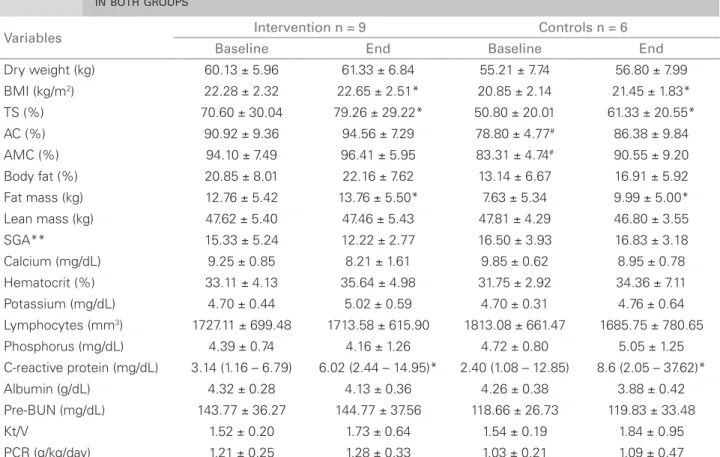
Table 2 shows results of the first phase of the study with baseline and three-month nutritional and laboratory parameters for both groups. Analysis of nutritional status over three months in both groups showed a significant difference in the SGA with Table 1 DEMOGRAPHICANDCLINICAL
CHARACTERISTICSOFHEMODIALYSIS PATIENTS
Variables Characteristics
Gender (M/F) 15 (83.3%) / 3 (16.7%)
Age (years) 56.4 ± 15.58
(range: 26 to 88 years)
CKD etiology
Arterial hypertension 6 (33.3%)
Diabetes mellitus 5 (27.8%)
Polycystic kidneys 1 (5.6%)
Other or unknown 6 (33.3%)
Duration of dialysis (months) 81.6 ± 36.76
(range: 18 to 353 months)
n = 18; CKD: chronic kidney disease.
BMI: body mass index; TS: triceps skinfold; AC: arm circumference; AMC: arm muscle circumference; SGA: subjective global assessment; PCRn: protein catabolic rate; *p < 0.05, comparing to baseline; **p < 0.05, difference of progression between both groups studied; #p < 0.05, comparing to the Intervention Group.
Table 2 NUTRITIONALANDLABORATORYPARAMETERSATBASELINEANDATTHEENDOFATHREE-MONTHFOLLOW-UP INBOTHGROUPS
Variables Intervention n = 9 Controls n = 6
Baseline End Baseline End
Dry weight (kg) 60.13 ± 5.96 61.33 ± 6.84 55.21 ± 7.74 56.80 ± 7.99
BMI (kg/m2) 22.28 ± 2.32 22.65 ± 2.51* 20.85 ± 2.14 21.45 ± 1.83*
TS (%) 70.60 ± 30.04 79.26 ± 29.22* 50.80 ± 20.01 61.33 ± 20.55*
AC (%) 90.92 ± 9.36 94.56 ± 7.29 78.80 ± 4.77# 86.38 ± 9.84
AMC (%) 94.10 ± 7.49 96.41 ± 5.95 83.31 ± 4.74# 90.55 ± 9.20
Body fat (%) 20.85 ± 8.01 22.16 ± 7.62 13.14 ± 6.67 16.91 ± 5.92
Fat mass (kg) 12.76 ± 5.42 13.76 ± 5.50* 7.63 ± 5.34 9.99 ± 5.00*
Lean mass (kg) 47.62 ± 5.40 47.46 ± 5.43 47.81 ± 4.29 46.80 ± 3.55
SGA** 15.33 ± 5.24 12.22 ± 2.77 16.50 ± 3.93 16.83 ± 3.18
Calcium (mg/dL) 9.25 ± 0.85 8.21 ± 1.61 9.85 ± 0.62 8.95 ± 0.78
Hematocrit (%) 33.11 ± 4.13 35.64 ± 4.98 31.75 ± 2.92 34.36 ± 7.11
Potassium (mg/dL) 4.70 ± 0.44 5.02 ± 0.59 4.70 ± 0.31 4.76 ± 0.64
Lymphocytes (mm3) 1727.11 ± 699.48 1713.58 ± 615.90 1813.08 ± 661.47 1685.75 ± 780.65
Phosphorus (mg/dL) 4.39 ± 0.74 4.16 ± 1.26 4.72 ± 0.80 5.05 ± 1.25
C-reactive protein (mg/dL) 3.14 (1.16 – 6.79) 6.02 (2.44 – 14.95)* 2.40 (1.08 – 12.85) 8.6 (2.05 – 37.62)*
Albumin (g/dL) 4.32 ± 0.28 4.13 ± 0.36 4.26 ± 0.38 3.88 ± 0.42
Pre-BUN (mg/dL) 143.77 ± 36.27 144.77 ± 37.56 118.66 ± 26.73 119.83 ± 33.48
Kt/V 1.52 ± 0.20 1.73 ± 0.64 1.54 ± 0.19 1.84 ± 0.95
Table 3 SF-36 QUESTIONNAIREVARIABLES
Variables Intervention n = 9 Controls n = 6
Baseline End Baseline End
Physical role functioning** 12.5 (0.00 – 43.75) 75.0 (6.25 – 100.0) 25.0 (0.0 – 100.0) 0.00 (0.00 – 75.0)
Bodily pain** 52.18 ± 21.46 64.37 ± 20.80 71.25 ± 19.17 53.25 ± 36.80
Physical functioning 55.00 ± 28.78 56.25 ± 30.44 70.00 ± 22.73 55.00 ± 30.27
General health 49.25 ± 20.33 53.00 ± 22.66 47.00 ± 17.79 49.00 ± 10.45
Vitality 55.00 ± 1647 48.75 ± 16.85 67.50 ± 6.45 45.00 ± 14.71
Social functioning 71.87 ± 30.43 73.43 ± 32.34 74.37 ± 43.31 84.37 ± 11.96
Role emotional 0.00 (0.00 – 3.30) 16.65 (0.00 – 66.60) 0.00 (0.00 – 49.95) 16.65 (0.00 – 58.27)
Mental health 65.50 ± 24.55 63.00 ± 19.91 62.00 ± 6.92 78.00 ± 12.00
**p < 0.05, difference between groups.
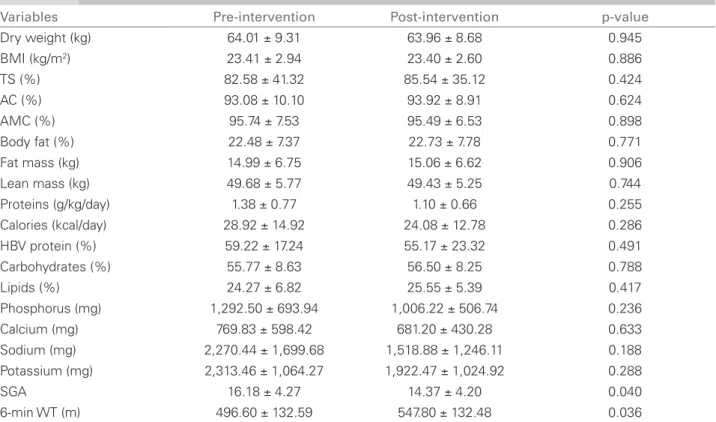
Table 4 COMPARISONOFALLSUBJECTSPRE- ANDPOST-INTERVENTION
Variables Pre-intervention Post-intervention p-value
Dry weight (kg) 64.01 ± 9.31 63.96 ± 8.68 0.945
BMI (kg/m2) 23.41 ± 2.94 23.40 ± 2.60 0.886
TS (%) 82.58 ± 41.32 85.54 ± 35.12 0.424
AC (%) 93.08 ± 10.10 93.92 ± 8.91 0.624
AMC (%) 95.74 ± 7.53 95.49 ± 6.53 0.898
Body fat (%) 22.48 ± 7.37 22.73 ± 7.78 0.771
Fat mass (kg) 14.99 ± 6.75 15.06 ± 6.62 0.906
Lean mass (kg) 49.68 ± 5.77 49.43 ± 5.25 0.744
Proteins (g/kg/day) 1.38 ± 0.77 1.10 ± 0.66 0.255
Calories (kcal/day) 28.92 ± 14.92 24.08 ± 12.78 0.286
HBV protein (%) 59.22 ± 17.24 55.17 ± 23.32 0.491
Carbohydrates (%) 55.77 ± 8.63 56.50 ± 8.25 0.788
Lipids (%) 24.27 ± 6.82 25.55 ± 5.39 0.417
Phosphorus (mg) 1,292.50 ± 693.94 1,006.22 ± 506.74 0.236
Calcium (mg) 769.83 ± 598.42 681.20 ± 430.28 0.633
Sodium (mg) 2,270.44 ± 1,699.68 1,518.88 ± 1,246.11 0.188
Potassium (mg) 2,313.46 ± 1,064.27 1,922.47 ± 1,024.92 0.288
SGA 16.18 ± 4.27 14.37 ± 4.20 0.040
6-min WT (m) 496.60 ± 132.59 547.80 ± 132.48 0.036
n = 16; BMI: body mass index; TS: triceps skinfold; AC: arm circumference; AMC: arm muscle circumference; SGA: subjective global assessment; 6-min WT: six-minute walking test.
improvement in the Intervention Group (p = 0.04). In the SF-36 (Table 3), RP and BP domains had a significant difference between groups (p = 0.034 and p = 0.021, respectively) with improvement in both groups.
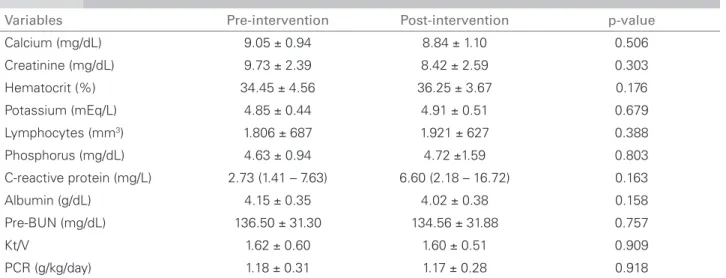
Tables 4, 5, and 6 show a comparison of pre- and post- intervention results of 16 subjects who com-pleted the study (second phase). An improvement in the SGA score (16.18 ± 4.27 versus 14.37 ± 4.20; p = 0.040) and in the WT (496.60 m ± 132.59 versus 547.80 m ± 132.48; p = 0.036) was observed after three months of dietetic intervention.
ingredients of the recipe. The subjects had great ex-pectations about the food’s content. Thirteen subjects expected to receive the supplementation and said that the received amount was small. At the study’s comple-tion, 11 out of 16 subjects expressed a desire to con-tinue receiving the supplementation.
D
ISCUSSIONThere is evidence that the nutritional status assess-ment aimed at identifying MN or individuals at risk is independently associated with morbidity and mortal-ity in CKD patients, especially in those on HD.9,16-18
Studies on the nutritional status of dialysis pa-tients reported 6 to 8% of severe malnutrition and about 33% of mild-to-moderate malnutrition.19-23 In our study, 27% of subjects were at nutritional risk, including severe and mild-to-moderate malnutrition.
Cappeli et al.,24 in a non-randomized study with a large sample of MN patients on HD, suggested that
IDPN intervention can be associated with reduced rates of hospital admission and mortality.
Nutritional intervention in MN patients on HD is often complicated and costly. Prospective random-ized studies have not consistently shown evidence of its benefit although intuitively it is expected to be beneficial.25 In fact, some authors have pointed out that oral supplementation administered dur-ing HD can provide nutritional benefits to MN patients.5,6,26,27
In our study there was an improvement in the SGA score of patients who received the intervention when compared to those who did not receive it. Czekalski28 reported similar findings in the study with parenteral amino acid supplementation. After sixth months, these authors verified a five-point reduction in the SGA scale. While studying oral supplementation, Caglar et al.6 found a 14% decrease in SGA after the intervention compared to baseline. Although they studied a larger sample, there was no Control Group.
Table 5 COMPARISONOFPRE- ANDPOST-INTERVENTIONLABORATORYTESTS
Variables Pre-intervention Post-intervention p-value
Calcium (mg/dL) 9.05 ± 0.94 8.84 ± 1.10 0.506
Creatinine (mg/dL) 9.73 ± 2.39 8.42 ± 2.59 0.303
Hematocrit (%) 34.45 ± 4.56 36.25 ± 3.67 0.176
Potassium (mEq/L) 4.85 ± 0.44 4.91 ± 0.51 0.679
Lymphocytes (mm3) 1.806 ± 687 1.921 ± 627 0.388
Phosphorus (mg/dL) 4.63 ± 0.94 4.72 ±1.59 0.803
C-reactive protein (mg/L) 2.73 (1.41 – 7.63) 6.60 (2.18 – 16.72) 0.163
Albumin (g/dL) 4.15 ± 0.35 4.02 ± 0.38 0.158
Pre-BUN (mg/dL) 136.50 ± 31.30 134.56 ± 31.88 0.757
Kt/V 1.62 ± 0.60 1.60 ± 0.51 0.909
PCR (g/kg/day) 1.18 ± 0.31 1.17 ± 0.28 0.918
PCR: protein catabolic rate.
Table 6 SF-36 PRE- ANDPOST-INTERVENTIONCOMPARISON
Variables Pre-intervention Post-intervention p-value
Physical functioning 54.54 ± 28.16 54.54 ± 30.3 1.00
Physical role functioning 0.00 (0.00 – 25.00) 25.00 (0.00 – 100.00) 0.066
Bodily pain 48.13 ± 21.96 56.46 ± 24.36 0.153
General health 50.72 ± 17.29 46.18 ± 22.85 0.440
Vitality 55.00 ± 14.31 50.45 ± 14.90 0.211
Social functioning 75.00 ± 26.22 77.27 ± 29.48 0.617
Emotional role 0.00 (0.00 – 33.30) 0.00 (0.00 – 66.60) 0.157
Improved quality of life was also seen in our pa-tients, who received the intervention compared to those who did not receive it, especially in the RP and BP domains. Shah et al. only reported significant im-provement in the physical domain of the patients’ quality of life.29 There are few well-designed studies on the effect of either oral or IDPN nutritional thera-py on patients’ quality of life.30 Eustace et al.31 did not find any significant differences in the SF-12 physical health domain between those who received essential amino acid supplementation and the Placebo Group.
In the six-min. WT, subjects were able to walk larger distances after the intervention. There are no other studies of the effect of nutritional supplementa-tion on the WT.
Nutritional supplementation was well accepted by our patients. They reported increased appe-tite, a finding corroborated by Foulks32 who also found gains of lean body mass and increased lev-els of serum albumin after therapy. More recently, Veeneman et al.5 evaluated the effect of providing a meal during HD on total body protein balance. The meal was offered as a protein and energy - en-riched yogurt, cream and powdered milk, and study results showed that such intervention during HD produced a positive protein balance compared to an off-dialysis day. However, it has not yet been established whether this seemingly short-term oral supplementation can offer benefits or improve the overall nutritional status of MN patients on HD in the long-term. As for the good acceptance of the supplementation in our study, the same was not found by Caglar et al.,6 who reported that 27 of 85 patients who were offered an industrialized nutri-tional supplementation refused it.
Eustace et al.31 investigated the beneficial effects of oral amino acid supplementation in patients on HD and PD in a placebo-controlled randomized pro-spective study. As in our study, they did not find sig-nificant differences in anthropometric measures, food intake (calories and proteins), Kt/V, albumin, creati-nine, phosphorus and hematocrit, but this could be explained by either the short time of supplementation or the inadequate “dose” of the intervention.
Dietitian care and intensive monitoring may ex-plain the nonspecific improvement effects seen in our study. A similar finding was reported in another study,33 in which the authors demonstrated that IDPN was an effective therapeutic approach in patients with hypoalbuminemia or in those with inadequate protein intake. Nevertheless, these improvements may have resulted from the dedication and care provided by
nutritionists and health providers or even from pa-tient’s self-motivation.
The non-industrialized supplementation provided in our study proved to be affordable in a develop-ing country, such as Brazil. The monthly cost per patient was on average US$ 2.00. A year of therapy per patient would amount US$ 24.00, much less than what is required for industrialized supplementation therapy. Chertow et al.,34 based on an estimated cost to treat 17 patients, found that the yearly cost for IDPN therapy per patient would be around US$ 510. Comparatively, a year of improvement in the qual-ity of life associated with the erythropoietin therapy amounts to at least US$ 130,000.
In conclusion, overall nutritional intervention pro-duced positive nonspecific and specific effects in all patients studied. Customized nutritional supplemen-tation proved to be palatable, practical, and a low cost treatment. Its clinical impact and effectiveness should be further assessed in a larger group of pa-tients for a longer period.
R
EFERENCES1. Ikizler TA. Protein and energy: Recommended intake and nutrient supplementation in chronic dialysis patients. Semin Dial 2004;17:471-8.
2. National Kidney Foundation K/DOQI clinical practice guidelines for nutrition in chronic reanl failure. Am J Kidney Dis 2000;35(Suppl):S1-140.
3. Stenvinkel P, Heimbürger O, Lindholm B, Bergstrom J, Kaysen GA. Are there two types of malnutrition in chronic renal failure? Evidence for relationships between malnutrition, inflammation and atherosclerosis (MIA syndrome). Nephrol Dial Transplant 2000;15:953-60. 4. Pupim LB, Majchrzak KM, Flakoll PJ, Ikizler TA.
Intradialytic oral nutrition improves protein homeostasis in chronic hemodialysis patients with deranged nutritional status. J Am Soc Nephrol 2006;17:3149-57.
5. Veeneman JM, Kingma HA, Boer TS, Stellaard F, De Jong PE, Reijngoud DJ, et al. Protein intake during hemodialysis maintains a positive whole body protein balance in chronic hemodialysis patients. Am J Phisiol Endocrinol Metab 2003;284:954-65.
6. Caglar K, Fedje L, Dimmitt R, Hakim RM, Shyr Y, Ikizler TA. Therapeutic effects of oral nutritional supplementation during hemodialysis. Kidney Int 2002;62:1054-9. 7. Jeejeebhoy KN, Detsky AS, Baker JP. Assessment
of nutritional status. J Parenter Enteral Nutr 1990;14:S193-6.
8. Jones CH, Wells LM, Wolfenden RC. Is subjective global assessment a reliable measure of nutritional status in hemodialysis? J Renal Nutr 2004;14:26-30.
9. Riella MC, Martins C. Nutrição e o Rim. Rio de Janeiro: Guanabara Koogan; 2001.
11. Kalantar-Zadeh K, Kleiner M, Dunne E, Lee GH, Luft FC. A modified quantitative subjective global assessment of nutrition for dialysis patients. Nephrol Dial Transplant 1999;14:1732-8.
12. Daugirdas JT. Second generation logarithmic estimates of single pool variable volume Kt/V: an analysis or error. J Am Soc Nephrol 1993;4:1205-13.
13. Oliveira Jr. MT, Guimarães GV, Barretto ACP. Teste de 6 minutos em Insuficiência Cardíaca. Arq Bras Cardiol 1996;67:373-4.
14. Guyatt GH, Sullivan MJ, Fallen EL, Taylor DW, Pugsley SO, Berman LB. The 6-minute walk: a new measure of exercise capacity in patients with chronic heart failure. Can Med Assoc J 1985;132:919-22.
15. Ciconelli RM. Tradução para o português e validação do questionário genérico de avaliação de qualidade de vida “Medical Outcomes Study 36 - Item Short-Form Health Survey (SF-36)”. [dissertação]. São Paulo: Universidade Federal de São Paulo; 1997.
16. Williams AJ, McArley A. Body composition, treatment time, and outcome in hemodialysis patients. J Renal Nutr 1999;9:157-62.
17. Kopple J. Nutritional status as a predictor of morbity and mortality in maintenace dilysis patients. Asaio J 1997;43:246-50.
18. Leavey SF, Strawderman RL, Jones CA, Port FK, Held PJ. Simple nutritional indicators as independent predictors of mortality in hemodialysis patients. Am J Kidney Dis 1998;31:997-1006.
19. Cianciaruso B, Kopple JD, Brunori G, Traverso G, Panarello G, Strippoli P, et al. Cross-sectional comparison of malnutrition in continuous ambulatory peritoneal dialysis and hemodialysis patients. Am J Kidney Dis 1995;26:475-86.
20. França FB, Lugon JR. Revisão/Atualização em diálise: nutrição em hemodiálise. J Bras Nefrol 1998;20:484-95. 21. Bilbrey C, Cohen T. Identification and treatment of
protein calorie malnutrition in chronic hemodialysis patients. Nephrol Dial Transplant 1989;18:669-78. 22. Markmann P. Nutritional status of patients of hemodialysis
and peritoneal dialysis. Clin Nephrol 1988;29:75-8.
23. Aparício M, Cano N, Chauveau P, Azar R, Canaud B, Flory A, et al. Nutritional status of hemodialysis patients: a French national cooperative study. Nephrol Dial Transplant 1999;14:1679-86.
24. Cappeli J, Kushner H, Camiscioli TC, Chen SM, Torres MA. Effect of intradialytic parenteral nutrition on mortality rates in end-stage renal disease care. Am J Kidney Dis 1994;23:808-16.
25. Foulks C, Goldestein D, MP K, et al. Indications for the use of intradialytic parenteral nutrition in the malnourished hemodialysis patients. J Renal Nutr 1991;1:23-33. 26. Cuppari L, et al. Effectiveness of oral energy-protein
supplementation in severely malnourished hemodialysis patients. J Renal Nutr 1994;4:127-35.
27. Wilson B, Fernandez-Madrid A, Hayes A, Hermann K, Smith J, Wassell A. Comparison of the effects of two early intervention strategies on the health outcome of malnourished hemodialysis patients. J Renal Nutr 2001;11:1667-71.
28. Czekalski SRH. Intradialytic amino acids supplementation in hemodialysis patients with malnutrition: results of a multicenter cohort study. J Renal Nutr 2004;14:82-8. 29. Shah NA, Mueller BA, Thomas J, Kraus MA, MK S. Effects
of supplemental enteral nutrition on nutritional status and quality of life in ESRD patients receiving hemodialysis. J Am Soc Nephrol 1999;10:303A.
30. United States Renal Data System. Patient mortality and survival. Am J Kidney Dis 1997;30 (Suppl):S86-106. 31. Eustace J, Coresh J, Walser M. Randomized double-blind
trial of oral essential amino acids for dialysis-associated hypoalbuminemia. Kidney Int 2000;57:2527-38.
32. Foulks C. The effect of intradialytic parenteral nutrition on hospitalization rate and mortality in malnourished hemodialysis patients. J Renal Nutr 1991;4:5-10. 33. Moore L, Acchiardo S. Aggressive nutritional
supplementation in chronic hemodialysis patients. CRN Q 1987;11:14-7.