www.spsp.org.br
REVISTA PAULISTA
DE PEDIATRIA
1984-0462/$ - see front matter © 2014 Sociedade de Pediatria de São Paulo. Published by Elsevier Editora Ltda. All rights reserved. KEYWORDS
Mother-child relations; Maternal behavior; Reproducibility of results
Abstract
Objective: To identify and describe research tools used to evaluate bonding between
mother and child up to one year of age, as well as to provide information on reliability and validity measures related to these tools.
Data source: Research studies available on PUBMED, LILACS, ScienceDirect, PsycINFO and CINAHL databases with the following descriptors: mother-child relations and mother infant relationship, as well as the expressions validity, reliability and scale.
Data synthesis: 23 research studies were selected and fully analyzed. Thirteen
evaluation research tools were identified concerning mother and child attachment: seven scales, three questionnaires, two inventories and one observation method. From all tools analyzed, the Prenatal Attachment Inventory presented the higher validity and reliability measures to assess mother and fetus relation during pregnancy. Concerning the puerperal period, better consistency coefficients were found for Maternal Attachment Inventory and Postpartum Bonding Questionnaire. Besides, the last one revealed a higher sensibility to identify amenable and severe disorders in the affective relations between mother and child.
Conclusions: The majority of research tools are reliable to study the phenomenon presented, although there are some limitations regarding the construct and criterion related to validity. In addition to this, only two of them are translated into Portuguese and adapted to women and children populations in Brazil, being a decisive gap to scientific production in this area.
© 2014 Sociedade de Pediatria de São Paulo. Published by Elsevier Editora Ltda. All rights reserved.
REVIEW ARTICLE
Mother-child bonding assessment tools
☆Jaqueline Galdino Albuquerque Perrelli*, Carla Fonseca Zambaldi, Amaury Cantilino,
Everton Botelho Sougey
Universidade Federal de Pernambuco (UFPE), Recife, PE, Brazil
Received 4 December 2013; accepted 23 March 2014
DOI refers to: 10.1590/0103-0582201432318
☆Study conducted at Universidade Federal de Pernambuco, Recife, PE, Brazil. *Corresponding author.
PALAVRAS-CHAVE Relações mãe-ilho; Comportamento materno;
Reprodutibilidade dos testes
Instrumentos de avaliação do vínculo entre mãe e bebê
Resumo
Objetivo: Identificar os instrumentos utilizados na avaliação do vínculo entre mãe e
bebê com até um ano de vida, descrevê-los e fornecer informações sobre suas medidas de confiabilidade, validade e adaptação para o contexto brasileiro.
Fonte de dados: Trata-se de um estudo de revisão integrativa realizado com base nas publicações contidas nas bases de dados PUBMED, LILACS, ScienceDirect, PsycINFO
e CINAHL. Utilizaram-se os descritores mother-child relations e mother infant
rela-tionship, e as expressões validity, reliability e scale. Selecionaram-se 23 pesquisas, que
foram lidas em sua integralidade.
Síntese dos dados: Foram identificados 13 instrumentos de avaliação do apego entre mãe
e bebê: sete escalas, três questionários, dois inventários e um método de observação. Do
total de ferramentas analisadas, o Prenatal Attachment Inventory apresentou maior vali
-dade e confiabili-dade para analisar a relação entre a mãe e o feto durante a gestação. Quanto ao período puerperal, foram encontrados melhores coeficientes de consistência interna para o Maternal Attachment Inventory e o Postpartum Bonding Questionnaire. Além disso, esse último revelou elevada sensibilidade para identificar disfunções leves e graves nas relações afetivas entre mãe e bebê.
Conclusões: Verificou-se que a maioria dos instrumentos é confiável para estudar o
fenômeno em questão. Contudo, foram evidenciadas limitações com relação à validade de construto e de critério. Ademais, apenas dois estão traduzidos e adaptados para a população de mulheres e crianças brasileiras, sendo portanto uma lacuna encontrada na produção científica nessa área.
© 2014 Sociedade de Pediatria de São Paulo. Publicado por Elsevier Editora Ltda. Todos
os direitos reservados.
Introduction
The establishment of bonding between mother and child is a physical and psychological need of babies, which provides comfort and protection. Thus, the mother is considered the safe haven for the establishment of the first emotional attachments of the child, which will reflect on all future
social relations.1 The Theory of Attachment developed by
Bowlby2 suggests there is a human need to develop close
emotional bonds, with the biological function of survival of
the species, from the fetal period until old age. In child
-hood, these emotional interactions are primarily developed
with parents in order to impart comfort, protection, affec
-tion, and love. In adolescence and adulthood, they are enhanced and modified, and new bonds with significant others are developed and incorporated.
The quality of the bond between mother and baby exerts direct influence on the child’s mental health. Therefore, this relationship should be warm, intimate, continuous,
and affectionate, providing pleasure and comfort for both.2
However, the attachment of parents to their children is not instantaneous and instinctive. It is an ongoing process, initi
-ated during pregnancy, in which the fetus becomes part of everyday life of the pregnant woman more intensely, con
-sisting of fantasies, desires, dreams, and representations of
models of motherhood.3,4 The woman’s understanding of her
attachment to her child affects the skills required to under
-stand and respond to the child’s needs.2
Thus, the interactions between parents and children influence the structure of affective ties developed by the child since birth.5 Therefore, it is important to evaluate
the quality of this relationship, especially in the first year of the baby’s life, in order to identify possible disorders in this bonding and prevent future consequences for the child’s mental health.
A review performed in 2010, aimed at describing the main instruments used to analyze the relationship between mother and child, retrieved a total of ten tools. Although there is a variety of tools to study this phenomenon, there is a scarcity of models adapted to the context of Brazilian mothers and babies younger than 1 year. The same study found only one inventory suitable for the aforementioned population, but this tool does not apply to the context of
children younger than 1 year.6 This shows the importance of
verifying recent advances in terms of cross-cultural adapta
-tion of tools to study bonding between mother and child in the Brazilian context.
Selecting the most appropriate tool for a particular study requires verification of its psychometric properties: validity and reliability. The first refers to the capacity of the tool to
precisely verify what is to be measured, whereas the sec
-ond comprises its accuracy to measure a certain event.7,8
Using inaccurate tools to measure the relationship between
mother and child will produce controversial and question
-able data. It is necessary to know the characteristics of the several tools and possibilities for use in the context of Brazilian mothers and babies in detail, considering the peculiarities of this population.
PsycINFO Are the tools used to analyze the bonding between mother and
child younger than 1 year of life accurate and reliable?
Total: 914 publications
Reading of titles and abstracts.
Inclusion criterion 1: summary showing the use of a tool to evaluate the bonding between mother and child aged up to 1 year of life.
67 publications were included for reading of the full text.
Inclusion criterion 2: describe in detail information on the psychometric measures.
23 original articles were reviewed regarding the tools used and their psychometric properties.
Search strategies in the databases: descriptors: (1) child relations, (2) mother-infant relationship, (3) validity, (4) reliability, and (5) scale.
Descriptors/expressions: (4) OR (5) AND (1). Filters: research with mothers of newborns and/or infants with a maximum age of 23 months; publications from January 2002 to January 2013; English, Portuguese,
and Spanish languages. Total: 247
Descriptors/expressions: (1) AND (5). Filters: publi-cations from January 2002 to January 2013; English, Portuguese, and Spanish
languages. Total: 13
Descriptors/expressions: (1) AND (4). Filters: publica-tions from 2002 to January
2013; with the following themes: child care, mental health, mothers and fathers.
Total: 413
Descriptors: (1) OR (2). Filters: research with mothers of newborns AND/ OR infants with a maximum
age of 23 months; publica-tions from January 2002 to January 2013, in English; full text articles and
abs-tracts available. Total: 77
Descriptor (1). Filters: research with mothers of newborns AND/ OR infants with a maximum
age of 23 months; articles published in the period of
2002-2013. Total: 164
PUBMED LILACS ScienceDirect CINAHL
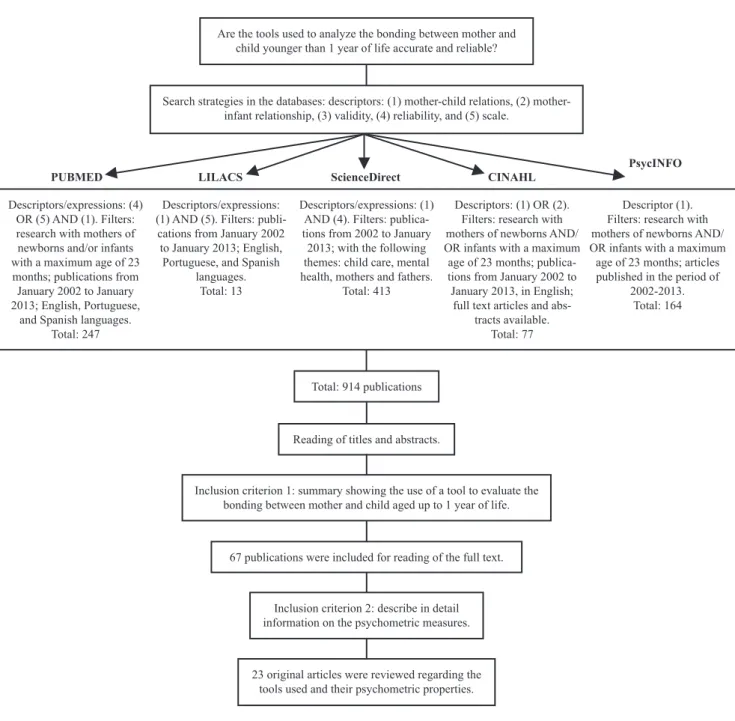
Figure 1 Flowchart for article selection
Method
This is an integrative review study conducted in the pub
-lications found in the following databases: PubMed (U.S. National Library of Medicine), LILACS (Latin American Literature on Health Sciences), ScienceDirect (Elsevier Database), PsycINFO (American Psychological Association), and CINAHL (Cumulative Index to Nursing and Allied Health Literature).
The review was designed to answer the following
research question: are the tools used to analyze the bond
-ing between mother and child younger than 1 year accurate and reliable?
The search for the studies was performed from January to April 2013 using the following descriptors: (1) mother-child relations, (2) mother-infant relationship and its
expressions, (3) validity, (4) reliability, and (5) scale. The detailed search is shown in Figure 1.
A total of 67 studies reported the use of a tool to assess the bonding between mother and child (inclusion criterion 1), and therefore were analyzed for the second inclusion
criterion: investigations showing results regarding the psy
-chometric properties of the used tools. After verification of these aspects, 47 studies did not answer the question that conducted this study. Thus, 23 articles were included in this review. Case reports, theses, dissertations, research
reports, editorials, letters to the editor, short communica
-tions, and review studies were excluded.
The reliability and validity of the tools found in the included studies were assessed. Reliability is usually inves
refers to the degree of similarity of the results obtained in two measurements performed on different occasions.
It is measured based on the test-retest coefficient of reli
-ability. Internal consistency is assessed through Cronbach’s alpha (α) index. Nunnally suggests that a tool is reliable if
the alpha value (α) is at least 0.70.9 Furthermore, values
above 0.80 show high internal consistency.10 To assess
agree-ment between evaluators, the kappa coefficient is used (k≥0.60).11 In addition to the aforementioned, tool validity
was also verified using the content criterion and construct validity.7,8
Results and discussion
The studies described the bond between mother and child during pregnancy and postpartum period. Thirteen tools were identified: seven scales, three questionnaires, two inventories, and an observation method. Of the investigated tools, nine can be used in the first year after birth, and four
during pregnancy. A questionnaire is composed by two appro
-priate versions to puerperal and gestational period. The data
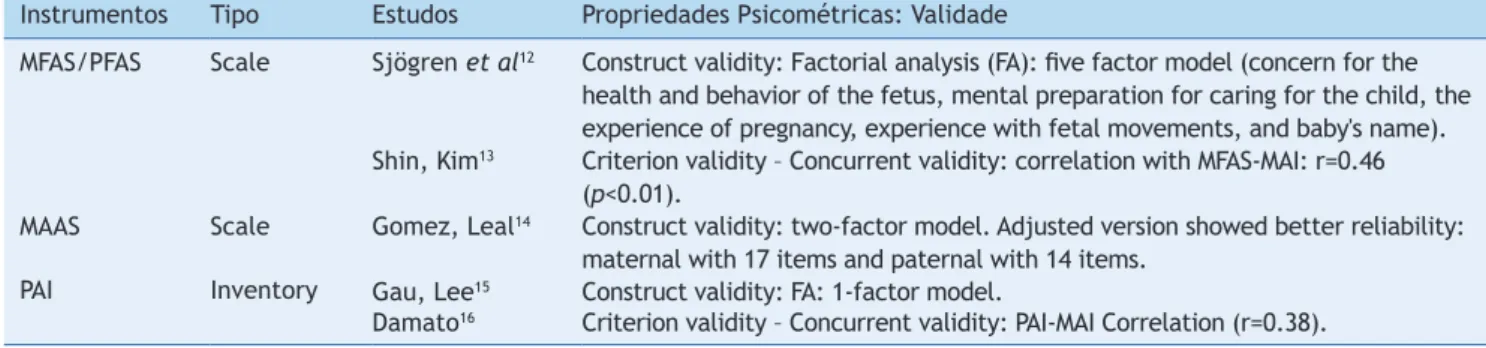
are organized into two categories: mother-child relationship during pregnancy and bond between mother and child in the postpartum period. The psychometric properties of the tools used during pregnancy are shown in Tables 1 and 2.
Mother-child bonding during pregnancy
Two scales were identified for pregnant women: Maternal
Fetal Attachment Scale (MFAS)12,13,17,18 and Maternal
Antenatal Attachment Scale (MAAS).14 The first consists of
23 indicators divided into five subscales: self-differentiation and differentiation of the fetus, interaction with the fetus, attributing characteristics to the fetus, donating oneself and taking responsibility. It can be used for mothers (MFAS) and fathers (Paternal Fetal Attachment Scale [PFAS]), and aims to measure the attachment between the parents and the fetus.20 It has been adapted for Sweden12 and Turkey18
The internal consistency of the MFAS ranged from α=0.82 to α=0.92.13,17,18 The paternal version ranged from α=0.85
to α=0.86.17,18 These results corroborate the findings of
the original version, whose total reliability was α=0.85.20
Table 1 Data on the validity of assessment tools of bonding between mother and baby during pregnancy
Instrumentos Tipo Estudos Propriedades Psicométricas: Validade
MFAS/PFAS Scale Sjögren et al12 Construct validity: Factorial analysis (FA): ive factor model (concern for the health and behavior of the fetus, mental preparation for caring for the child, the experience of pregnancy, experience with fetal movements, and baby's name). Shin, Kim13 Criterion validity – Concurrent validity: correlation with MFAS-MAI: r=0.46
(p<0.01).
MAAS Scale Gomez, Leal14 Construct validity: two-factor model. Adjusted version showed better reliability: maternal with 17 items and paternal with 14 items.
PAI Inventory Gau, Lee15 Construct validity: FA: 1-factor model.
Damato16 Criterion validity – Concurrent validity: PAI-MAI Correlation (r=0.38). MAI, Maternal Attachment Inventory; MFAS, Maternal Fetal Attachment Scale; MAAS, Maternal Antenatal Attachment Scale; PAI, Prenatal Attachment Inventory; PFAS, Paternal Fetal Attachment Scale.
Table 2 Data on the reliability of assessment tools of bonding between mother and baby during pregnancy
Tools Type Studies Psychometric properties: reliability
MFAS/PFAS Scale Shin, Kim13 Internal consistency: MFAS: α=0.92
Seimyr et al 17 Internal consistency: MFAS: total α=0.82; MFAS subscales: variation of α=0.50 to α=0.70; PFAS: total α=0.85; and PFAS subscales: variation of α=0.40 to α=0.80. Ustunsozet al18 Internal consistency of the translated version and adapted to Turkish culture:
MFΑS (α=0.82) and PFAS (α=0.86).
MAAS Scale Gomez, Leal14 Internal consistency: maternal: α=0.78 and paternal: α=0.73. Stability (test-retest): test: r=0.69 (maternal) and r=0.80 (paternal).
MAMA Questionnaire
with subscales
Figueiredo et al19 Internal consistency and coeficient of bipartition (split-half): MAMA total: α=0,85 and split-half r=0.86; Subscale: body image: α=0.74 and split-half r=0.76;
Subscale: somatic symptoms: α=0.62 and split-half r=0.65; Subscale: marital relationship: α=0.75 and split-half r=0.75; Subscale: attitudes toward sex: α=0.82 and split-half r=0.80; Subscale: attitudes toward the pregnancy and the baby: α=0.48 and split-half r=0.54.
PAI Inventory Gau, Lee15 Internal consistency: α=0.89.
Damato16 Internal consistency total PAI: α=0.89.
Regarding the coefficients of the subscales, the variation found in the reviewed studies17,18 was similar to that found
in the validation of the original version (α=0.52 – α=0.73).20
This demonstrates that the tool is reliable to assess the relationship between the parents and the fetus, although it has limitations in its subscales.
Regarding construct validity, a study on the feelings of fathers and mothers regarding the infant showed, through factorial analysis (FA), a five-factor model for this scale.12
Another study with two groups of women presented dis
-tinct two- and three-factor models. The solutions result
-ing from this analysis did not correspond to the original
MFAS subscales and were different in the two groups.21 The
FA aims to reduce the number of dimensions necessary to describe data derived from a large number of measures. These dimensions are defined by a correlation matrix, whose coefficients must show values >0.30.22 The findings
related to the FA of MFAS showed to be divergent between the reviewed studies and the original version. These results suggest problems related to construct validity.
There was moderate concurrent validity between the MFAS and the Maternal Attachment Inventory (MAI), but the
correlation coefficient was lower than adequate (r≥0.70).8
This scale is adapted and validated for the population of Brazilian women. However, only its abstract is available for reading and, therefore, the research was not included in this review. The study was developed with 300 women with gestational ages of 6-9 months. The author notes that the
Brazilian version of MFAS showed acceptable internal con
-sistency, but also had limitations in its semantic content, showing restrictions regarding its validity.23
The MAAS consists of two versions: maternal, with 19 items, and paternal, with 16. The scale has two components: quality and duration of the bond. The items are answered through a five-point scale. High scores indicate a positive
attachment and greater parental concern for the fetus.24
With regard to the psychometric properties, MAAS has been validated for Portuguese women with acceptable internal consistency. Moreover, the test-retest reliability
of the paternal version was higher than the maternal ver
-sion, but both were below the value considered adequate (r≥0.85). Additionally, a two-factor model14 was found.
Originally, this scale also showed two dimensions and had higher levels of reliability, α=0.82 and α=0.83 for the
maternal and paternal versions, respectively.24
Also concerning the assessment of attachment between mother and child during pregnancy, a questionnaire (Maternal Adjustment and Maternal Attitudes [MAMA]) and an inventory (Prenatal Attachment Inventory [PAI]) were identified. The MAMA aims to evaluate the adjustment
and maternal attitudes during pregnancy. It is self-admin
-istered, consisting of 60 items divided into five aspects:
body image, somatic symptoms, marital relationship, atti
-tudes regarding sex, and atti-tudes related to the pregnancy and the baby. The items are answered through a four-point scale: 1) never/not at all; 2) rarely/a little; 3) a lot; 4)
very much. It has two versions: prenatal and postpartum.25
The MAMA is available for the context of Portuguese mothers and has a reliability index of the total scale close to the original version (α=0.89), considered reliable.25
However, the internal consistency of the Portuguese sub
-scales was lower than that found in the original MAMA, described as follows: body image: α=0.89; somatic symp
-toms: α=0.83; marital relationship: α=0.81; attitudes toward sex: α=0.95; and attitudes related to the pregnancy
and baby: α=0.84.25
Another study using the PAI and MAMA, in their original versions, also showed greater internal consistency in the mentioned subscales when compared to the Portuguese version (body image: α=0.76; somatic symptoms: α=0.66; marital relationship: α=0.87; attitudes toward sex: α=0.84,
and attitudes related to the pregnancy and fetus: α=0.68).26
This shows that the subscales of the adapted version for Portuguese women need refinement.
For the split-half correlation coefficient of MAMA, it was observed that attitudes related to the pregnancy and baby, as well as somatic symptoms, had, respectively, r=0.54 and r=0.65.19 The latter showed an even lower result in
the original version (r=0.58).25 The split-half coefficient or
estimated Spearman-Brown reliability refers to the cor
-relation between the components of the two halves of a scale. Values closer to 1.0 show high consistency between the halves of the tool and the test in its entirety.27,28 The
subscales of the Portuguese version of the MAMA that ade
-quately represent the construct related to attitudes and
adjustments of the mother during pregnancy (split-half cor
-relation r≥0.70) were: body image, marital -relationship,
and sex-related attitudes.19 These findings corroborate the
results found in the original study, whose correlation was r=0.72 (body image), r=0.74 (marital relationship), r=0.82 (attitudes toward sex), and r=0.73 (attitudes related to the
pregnancy and the fetus).25
However, in the study by Figueiredo,19 the latter dimen
-sion showed a correlation measure that was lower than the expected minimum. This suggests that, in the Portuguese version, the attitudes related to pregnancy and fetus
(r=0.48), together with somatic symptoms (r=0.62),19
appear to demonstrate problems regarding the verification of the same construct of the other subscales and, there
-fore, they need revision.
The PAI measures the affectionate feelings of the mother in relation to the fetus. It consists of 21 items that are answered based on a four-point Likert scale. Higher scores indicate greater attachment of mother to the fetus.26 This inventory
demonstrated higher levels of internal consistency in the two reviewed studies (α=0.89)15,16 when compared to the original
version (α=0.81),26 demonstrating that the tool is reliable.
Regarding the construct validity, the FA showed that one factor accounted for 79.0% of total variance.15 The study
about the original version demonstrated a five-dimension model, and factor 1 – consisting of 11 items that address
preparation for childbirth, fantasies, affection, and inter
-action – accounted for 50.0% of the variance. Furthermore, this research showed adequate concurrent validity between
PAI and MFAS, whose correlation coefficient was r=0.72.26
Mother-child attachment after the birth
The evaluation of the mother’s emotional response in rela
-tion to the baby in the postpartum period was the objec
discussed: Postpartum Bonding Questionnaire (PBQ),29-35
Mother-Infant Bonding Scale (MIBS),31,34,36-38 Parent-to-infant
Attachment Questionnaire (PAQ),31,39-41 and MAI.13,16 Tables
3 and 4 provide data on the validity and reliability of the identified tools.
The PBQ was the most often used questionnaire in the reviewed studies. This tool aims to identify problems in the mother-baby relationship based on four components: 1) weakened bonding, 2) rejection and pathological rage, 3) anxiety about the baby/anxiety about caring for the baby,
and 4) imminent abuse/risk of abuse.42 It has been trans
-lated and adapted for the German, Dutch, and Chinese cultures. It is a reliable tool to identify dysfunctions in relationships with their children, according to the alpha coefficients of the German29,35 and Dutch31 versions. These
values corroborate the findings of the original study, whose reliability coefficients ranged from α=0.74 to α=0.95.42
Therefore, the PBQ has adequate internal consistency. Regarding predictive validity, adaptation for use in Chinese women showed adequate sensitivity to identify damage in the relationship with the baby.33 Moreover, it
was observed that subscales 1 and 2 showed high sensitivity to identify problems in the bonding between mother and child, and rejection.
The abovementioned results corroborate findings regard
-ing the validation of the original tool, wherein component
1, weakened bonding, showed to be sensitive to identify mothers with mild dysfunction in the mother-child rela
-tionship; and subscale 2, rejection and pathological rage, showed high sensitivity to identify women with severe problems related to rejection of the baby. The remaining
components of the PBQ did not demonstrate high sensitiv
-ity.42
Other authors have used the original version and found similar results, given that the components 1 and 2 were respectively sensitive to identify mothers with some kind of disorder in the mother-child bonding and to identify women that show rejection of the baby. The other factors of the
PBQ did not show enough predictive validity to verify addi
-tional problems in the mother-child relationship.30
The PBQ can be an important tool for the primary care professional, as one of its features is its use in commu
-nity healthcare facilities.42 The basic health units (BHUs)
have flaws regarding the approach of psychosocial aspects
involving the mother-child relationship. Some authors sug
-gest that it is essential to train these professionals to work with the mental health of women during pregnancy and the postpartum period, to promote quality of life for parents and their children.43
The MIBS can be used in the first weeks after the child’s birth up to 4 months postpartum to identify difficulties experienced by the mother in establishing a relationship
Table 3 Data on the validity of assessment tools of bonding between mother and baby during the postpartum period
Instrumentos Estudos Propriedades Psicométricas: Medidas de validade
PBQ Reck et al29 CV: PBQ and EPDS: r=0.43 (25 items) and r=0.41 (16 items), with p<0.001. FA: one-factor model. Nine items showed non-signiicant factorial load and were therefore removed from the German version.
Bronckington et al30 PV: WB: (E=0.68, S=0.82); RR: (E=0.95, S=0.88); A: (E=0.64, S=0.61). IA showed low sensitivity.
Van Bussel et al31 CV: PBQ – total PAQ: 8th–12th week after birth: (ρ=-0.67); 20th–25th week (ρ=-0.63). Total PBQ – MIBS: 8th–12th week (ρ=0.60) and 20th–25th week (ρ=0.56)
Wittkowski et al32 Construct validity: FA: three-factor model.
Siu et al33 PV: Total PBQ: S=74% and Sp=100%; S1: S=84% and Sp=90%; S2: any rejection by the mother of the baby: S=89% and Sp=94%; and pathological rage: S=77% and Sp=68%; S3: S=59% and Sp=90%; S4: rage of any intensity: S=41% and Sp=93%; and moderate to severe: S=50% and Sp=94%.
MIBS Van Bussel et al31 CV: total MIBS – MPAS: (immediately after birth) – ρ=-0.50 and (2 to 4 days after birth) – ρ=-0.45.
Wittkowski et al34 CV: MIBS – PBQ immediately after birth and 2 to 4 days after birth. Taylor et al36 Construct validity: FA: two-factor structure.
Bienfait M et al37 PV: S=0.90 to detect alterations in the mother-baby bonding and Sp=0.80. PAQ Van Busselet al31 CV: PAQ - PBQ (ρ=-0.67 and ρ=-0.63); total PAQ - MIBS (ρ=-0.50 and ρ=-0.45).
Scapesiet al39 FA - Italian version: six-factor model: time with the baby, competence, anxiety, workload activities, indifference, and pleasure with closeness.
Feldstein et al40 CV: PAQ - AQS (r=0.39).
Condon et al41 FA: 3-factor model for parents of babies aged 6 and 12 months. MAI Shin, Kim13 CV: MAI - MFAS: r=0.46 (p<0.01); MSS: r=0.62 (p<0.01).
FA: 3-factor model. Correlation of total MAI with the three factors ranged from r=0.52 to r=0.92.
Damato16 CV: PAI - MAI (r=0.38).
with the baby. It consists of eight adjectives divided into three aspects: positive, negative, and confused attach
-ment. Negative adjectives have inverted scoring. High
scores indicate problems in the mother-infant bonding.36
Regarding psychometric properties, studies using MIBS found a less than ideal (α≥0.70) internal consistency. However, validation research of the original version of the MIBS showed acceptable internal consistency (α=0.71), and
a two-factor model.36
Regarding criterion validity, the aforementioned scale
had high sensitivity to detect mothers with bonding alter
-ations in relation to their children37 and moderate concur
-rent validity with PBQ34 and MPAS.31 However, in this latter
case, the correlation was negative, so that high attach
-ment scores in the MIBS are correlated with low scores in the MPAS.31 This scale has an inverted score for the
negative aspects related to attachment, so higher scores demonstrate difficulties in the bonding between mother and child.36 These findings suggest that the versions for
other cultures have limitations regarding reliability, but
they show predictive and concurrent validity, albeit mod
-erately.
The attachment disorders detected by the MIBS are related to the fact that, in the postpartum period, women
have more mood swings, which may compromise the estab
-lishment of bonding with the child. Depression is a pre
-dictor of emotional problems in the relationship between
mother and baby.43 In the presence of this disease, women
tends to not respond satisfactorily to the needs of the child, whether they be physical, such as food, maintenance of body temperature, and promoting the child’s comfort, or emotional, such as the needs of communication, affection,
and love from the mother toward her child.44-45
The PAQ is a questionnaire consisting of 19 items orga
-nized into three subscales: quality of the attachment (QA), absence of hostility (AH), and pleasure in interaction (PI). This tool is designed to assess the mother’s emotional response in relation to the baby, especially in the first year of life.46 It was used in four investigations, two of
which are related to the adaptation and validation for the Dutch31 and Italian39 cultures. All publications that used this
tool showed acceptable levels of reliability. However, the Dutch version, when used for mothers of infants aged 8-12 weeks, showed problems regarding reliability. The use of this version is appropriate for babies aged between 4 and 5 months.31
As for the original version, the PAQ showed higher inter
-nal consistency than that found in the mentioned versions (α=0.78 – 4-week and 8-month babies, and α=0.79, 4-month babies).46 However, other authors found a higher internal
consistency than that of the original version.41 These find
-ings support the reliability of this instrument. Regarding construct validity, a six-factor model in the Italian ver
-sion was found.39 In contrast, other authors have disclosed
a three-dimension model for mothers of Dutch babies.41
These latter findings corroborate the results of the original version of the tool, whose FA resulted in a three-factor model.46
The MAI is used to measure the attachment between mother and child. It consists of 26 items, organized into a four-point Likert scale. Higher scores indicate greater
attachment between mother and baby.47 It has been trans
-lated and adapted for Korean13 and Brazilian48 female popu
-lations. In the latter case, the validation was conducted for mothers of children aged between 6 and 13 years and showed high reliability (α=0.90).48 The internal consistency
Table 4 Data on the reliability of assessment tools of bonding between mother and baby during the postpartum period
Tools Studies Psychometric properties: measures of reliability
PBQ Reck et al29 IC: version with 25 items: α=0.85; WB: α=0.78; RR: α=0.68; A: α=0.34; and RA: α=0.20. IC: version with 16 items: α=0.85; WB: α=0.81; RR: α=0.75; A: α=0.32; RA: α=0.34. Van Bussel et al31 IC: total PBQ (8th–12th week) α=0.87 and α=0.78 (20th–25th)
Wittkowski et al32 IC - PBQ: factor 1-α=0.94; factor 2-α=0.93; and factor 3-α=0.72. Wittkowski et al34 IC of PBQ: total: α=0.76 and α=0.77; S1-α=0.79; S2 and S3 – α=0.63. Moehler et al35 IC of PBQ: α=0.79.
MIBS Van Busselet al31 IC: total MIBS (immediately after birth) α=0.67 and α=0.58 (2 to 4 days after birth). Wittkowskiet al 34 IC: α=0.55 (immediately after birth) and α=0.49 (2 to 4 days after birth).
Tayloret al36 Version with 8 items (α=0.71).
Figueiredo et al38 IC total scale: α=0.44; S1: α=0.69; S2: α=0.57; and S3: α=0.23. Total scale - split-half (r)=0.52; S1 r=0.52; S2 r=0.45; and S3 r=0.28. Correlation test-retest (Spearman): ρ=0.49.
PAQ Van Busselet al31 IC: total PAQ: (8th–12th weeks after birth) α=0.75 and (20th–25th weeks after birth) α=0.68.
Scapesi et al39 IC: total PAQ: α=0.77.
Feldstein et al40 IC: MPAQ – α=0.79; PPAQ – α=0.85.
Condon et al41 IC: Overall: 6 months of baby (?) – α=0.81; 12 months – α=0.78.
MAI Shin, Kim13 IC: total MAI: α=0.94; Factor 1 (MAI): α=0.94; Factor 2 (MAI): α=0.91; and Factor 3 (MAI): α=0.65.
Damato16 IC (MAI): α=0.92 and α=0.93.
of the original version (α=0.85 – 4-week babies, α=0.76 –
4-month babies, and α=0.85 – 8-month babies)47 showed
lower values than those found in two other studies, with α>0.90.13,16 Thus, the MAI is a robust tool to measure the
attachment between mother and baby.
Other tools were less frequently mentioned in stud
-ies on the relationship between mother and baby in the
postpartum period. They are: Global Rating Scales (GRS),49
Barkin Index of Maternal Functioning (BIMF),50
Parent-Child Early Relational Assessment (PCERA),51 Postpartum
Maternal Attachment Scale (PMAS),52 and Brown Scale of
Interactions.53 All demonstrated high internal consistency,
except the GRS, whose study described no measure of reli
-ability.49 Most items from the Brown Scale showed high
interobserver agreement (kappa>0.85).53 As for measures
of concurrent validity, the GRS showed correlation with the Infant-Toddler Home Inventory49 and the BIMF showed
correlation with the Gratification Check List, the Short-Form Health Survey Mental Functioning component, and
the Hamilton Depression Rating Scale.50
Final considerations
The subscale of attitudes related to pregnancy and the fetus, and somatic symptoms (MAMA) showed problems related to the verification of the same construct in other dimensions of this questionnaire.
The PAI showed criterion and construct validity, in addition to a high reliability index. In contrast, the MFAS showed limitations regarding construct validity. The translation and adaptation for the Brazilian population of mothers and babies has been performed, but this study is not available for electronic access.
As for the postpartum period, the MAI showed better reliability coefficients, but its Brazilian version has not been validated for mothers of children younger than one year. The PBQ was sensitive to identify mothers with mild dysfunction regarding the attachment with their children and women with severe problems related to rejection of their baby. The Portuguese and Dutch versions of the MIBS showed inadequate internal consistency.
Finally, it was observed that most tools show high pre
-cision when measuring maternal-infant attachment, but some have limitations regarding their validity. Moreover, the majority have not been translated and adapted for the Brazilian population. Thus, it is necessary to adapt and validate these tools, considering the specific char
-acteristics of Brazilian mothers and babies in the first year of life.
Conlicts of interest
The authors declare no conflicts of interest.
References
1. Biaggio AM. Psicologia do desenvolvimento. 15th ed. Petrópolis: Vozes; 2001.
2. Bowlby J. Apego: a natureza do vínculo. 3rd ed. São Paulo:
Martins Fontes; 2002.
3. Carmona EV, do Vale IN, Ohara CV, Abrão AC. Diagnóstico de enfermagem “conlito no desempenho do papel de mãe” em mães de recém-nascidos hospitalizados. Rev Latino-Am Enfermagem 2013;21:1-8.
4. Bowlby J. Uma base segura: Aplicações clínicas da teoria do apego. Porto Alegre: Artes Médicas; 1989.
5. Povedano MC, Noto IS, Pinheiro MS, Guinsburg R. Mother’s perceptions and expectations regarding their newborn infants: the use of Broussard’s neonatal perception inventory. Rev Paul Pediatr 2011;29:239-44.
6. Lago VM, Amaral CE, Bosa CA, Bandeira DR. Measures to assess the relationship between parents and children. Rev Bras Crescimento Desenvolvimento Hum 2010;20:330-41.
7. Pasquali L. Instrumentação Psicológica: fundamentos e práticas. Porto Alegre: Artmed; 2010.
8. Polit DF, Beck CT. Fundamentos de pesquisa em enfermagem: avaliação de evidências para a prática da enfermagem. Porto Alegre: Artmed; 2011.
9. Nunnally JC. Introduction to psychological measurement. New York: McGraw-Hill; 1970.
10. Cronbach L. Coeficient alpha and the internal structure of tests. Psychometrika. 1951;16:297-37.
11. Landis JR, Koch GG. The measurement of observer agreement for categorical data. Biometrics 1977;33:159-74.
12. Sjögren B, Edman G, Widström AM, Mathiesen AS, Uvnäs-Moberg K. Maternal foetal attachment and personality during irst pregnancy. J Reprod Infant Psychol 2004;22:57-69.
13. Shin H, Kim YH. Maternal attachment inventory: psychometric evaluation of the Korean version. J Adv Nurs 2007;59:299-307. 14. Gomez R, Leal I. Vinculação parental durante a gravidez: versão
portuguesa da forma materna e paterna da antenatal emotional attachment scale. Psic Saude & Doenças 2007;8:153-65. 15. Gau ML, Lee TY. Construct validity of the prenatal attachment
inventory: a conirmatory factor analysis approach. J Nurs Res 2003;11:177-87.
16. Damato EG. Prenatal attachment and other correlates of postnatal maternal attachment to twins. Adv Neonatal Care 2004;4:274-91.
17. Seimyr L, Sjögren B, Welles-Nyström B, Nissen E. Antenatal maternal depressive mood and paternal-fetal attachment at the end of pregnancy. Arch Womens Ment Health 2009;12:269-79. 18. Ustunsoz A, Guvenc G, Akyuz A, Olaz F. Comparison of
maternal–and paternal–fetal attachment in Turkish couples. Midwifery 2010;26:1-9.
19. Figueiredo B, Mendonça M, Sousa R. Versão portuguesa do maternal adjustment and maternal attitudes (MAMA). Psic Saude & Doenças 2004;5:31-51.
20. Cranley MS. Development of a tool for the measurement of maternal attachment during pregnancy. Nurs Res 1981;30:281-4. 21. Müller ME, Ferketich S. Factor analysis of the maternal fetal
attachment scale. Nurs Res 1993;42:144-7.
22. Figueiredo Filho DB, da Silva Júnior JA. Visão além do alcance: uma introdução à análise fatorial. Opin Publica 2010;16:160-85.
23. Feijó MC. Brasilian validation of the maternal-fetal attachment scale. Arq Bras Psicol (Rio J) 1999;51:52-66.
24. Condon JT. The assessment of antenatal emotional attachment: development of a questionnaire instrument. Br J Med Psychol 1993;66:167-83.
25. Kumar R, Robson KM, Smith AM. Development of a self-administered questionnaire to measure maternal adjustment and maternal attitudes during pregnancy and after delivery. J Psychosom Res 1984;28:43-51.
27. Spearman C. Correlation calculated from faulty data. Br J Psychol 1910;3:271-295.
28. Brown W. Some experimental results in the correlation of mental abilities. Br J Psychol 1910;3:296-322.
29. Reck C, Klier CM, Pabst K, Stehle E, Steffenelli U, Struben K et al. The german version of the postpartum bonding instrument: psychometric properties and association with postpartum depression. Arch Womens Ment Health 2006;9:265-71. 30. Bronckington IF, Fraser C, Wilson D. The postpartum bonding
questionnaire: a validation. Arch Womens Ment Health 2006;9:233-42.
31. Van Bussel JC, Spitz B, Demyttenare K. Three self-report questionnaires of the early mother-to-infant bond: reliability and validity of the Dutch version of the MPAS, PBQ and MIBS. Arch Womens Ment Health 2010;13:373-84.
32. Wittkowski A, Williams J, Wieck A. An examination of the psychometric properties and factor structure of the postpartum bonding questionnaire in a clinical inpatient sample. Br J Clin Psychol 2010;49:163-72.
33. Siu BW, Chow HM, Kwok SS, Li OL, Koo ML, Cheung EF et al. Impairment of mother-infant relationship: validation of the Chinese version of postpartum bonding questionnaire. J Nerv Ment Dis 2010;198:174-9.
34. Wittkowski A, Wieck A, Mann S. An evaluation of two bonding questionnaires: a comparison of the mother-to-infant bonding scale with the postpartum bonding questionnaire in a sample of primiparous mothers. Arch Womens Ment Health 2007;10:171-5. 35. Moehler E, Brunner R, Wiebel A, Reck C, Resch F. Maternal
depressive symptoms in the postnatal period are associated with long-term impairment of mother–child bonding. Arch Womens Ment Health 2006;9:273-8.
36. Taylor A, Atkins R, Kumar R, Adams D, Glover V. A new mother-to-infant bonding scale: links with early maternal mood. Arch Womens Ment Health 2005;8:45-51.
37. Bienfait M, Maury M, Haquet A, Faillie JL, Franc N, Combes C et al. Pertinence of the self-report mother-to-infant bonding scale in the neonatal unit of a maternity ward. Early Hum Dev 2011;87:281-7.
38. Figueiredo B, Marques A, Costa R, Pacheco A, Pais A. Bonding: scale to evaluate parents’ emotional involvement with their infant. Psychologica 2005;40:133-54.
39. Scapesi A, Viterbori P, Sponza S, Zuchinetti P. Assessing mother-to-infant attachment: the Italian Adaptation of a self-report questionnaire. J Reprod Infant Psychol 2004;22:99-109.
40. Feldstein S, Hane AA, Morrison BM, Huangi KY. Relation of the Postnatal attachment questionnaire to the attachment Q-Set. J Reprod Infant Psychol 2004;22:111-21.
41. Condon JT, Corkindale CJ, Boyce P. Assessment of postnatal patern-infant attachment: development of a questionnaire instrument. J Reprod Infant Psychol 2008; 26:195-210.
42. Brockington F, Oates J, George S, Turner D, Vostanis P, Sullivan M
et al. A screening questionnaire for mother-infant bonding disorders. Arch Womens Ment Health 2001;3:133-40.
43. Figueiredo B, Costa R, Pacheco A, Pais A. Mother-to-infant emotional involvement at birth. Matern Child Health J 2009;13:539-49.
44. Cantilino A, Zambaldi CF, Sougey EB, Rennó Júnior J. Postpartum psychiatric disorders. Rev Psiq Clin 2010;37:288-94.
45. Figueiredo B, Costa R. Mother’s stress, mood and emotional involvement with the infant: 3 months before and 3 months after childbirth. Arch Womens Ment Health 2009;12:143-53.
46. Condon JT, Corkindale CJ. The assessment of parent-to-infant attachment: development of a self-report questionnaire. J Reprod Infant Psychol 1998;16:57-76.
47. Müller ME. A questionnaire to measure mother-to-infant attachment. J Nurs Meas 1994;2:129-41.
48. Boeckel MG, Wagner A, Ritter F, Sohne L, Schein S, Grassi-Oliveira R. Análise fatorial do inventário percepção de vinculação materna. RIP 2011;45:439-48.
49. Gunning M, Conroy S, Valoriani V, Figueiredo B, Kammerer MH, Muzik M et al. Measurement of mother-infant interactions and the home environment in a European setting: preliminary results from a cross-cultural study. Br J Psychiatry Suppl 2004;46:s38-44. 50. Barkin JL, Wisner KL, Bromberger JT, Beach SR, Terry MA,
Wisniewski SR. development of the barkin index of maternal. J Women’s Health 2010;19:2239-46.
51. Korja R, Savonlahti E, Ahlqvist-Björkroth S, Stolt S, Haataja L, Lapinleimu H et al. Maternal depression is associated with mother–infant interaction in preterm infants. Acta Pædiatr 2008;97:724-30.
52. Nagata M, Nagai Y, Sobajima H, Ando T, Honjo S. Depression in the early postpartum period and attachment to children - in mothers of nicu infants. Inf Child Dev 2004;13:93-110.