Agroecology as a parameter of environmental challenges
Agroecologia como parâmetro de desafios ambientais
Agroecología como parámetro de desafíos ambientales
Marcio Moacir Bessa1 Matheus Vinicius Abadia Ventura2 Marcia Rodrigues de Oliveira3
Estevam Matheus Costa4
1 Master in Geography by Paulista State University at the Institute of Public Policy and International Relations of Postgraduate Studies in Territorial Development in Latin America and Caribbean (Territorial). Graduated in Business Administration from Faculty of Sciences and Education of Rubiataba. Specialization in Business Management by the Faculty of Sciences and Education of Rubiataba. E-mail: [email protected], Orcid: http://orcid.org/0000-0002-6267-775X 2 PhD Student and Master in Agrarian Sciences - Agronomy by the Goiano Federal Institute Rio Verde campus. Licensing in Mathematics from the Faculty of Education of Lapa. Graduated in Agronomy by Evangelical Faculty of Goianésia. E-mail: [email protected], Orcid: http://orcid.org/0000-0001-9114-121X 3 Master’s Degree in Irrigation in the Cerrado by Instituto Federal Goiano Ceres campus.
Specialization in Engineering University of Rio Verde. Specialization in Geoprocessing by the University of Brasília. Degree in engineering By the Federal University of Tocantins. Technical Course in Environmental Sanitation by the Federal Institute of Goiás. E-mail: [email protected], Orcid: http://orcid.org/0000-0002-3262-2678
4 Master in Agrarian Sciences - Agronomy by Goiano Federal Institute Rio Verde campus. Graduation in Agronomy by University of the State of Minas Gerais. E-mail: [email protected], Orcid: http://orcid.org/0000-0003-4137-1222
Abstract: Agriculture is a complex activity, involving not only food production and
technological factors, an endowment of natural resources and capital impulses, but also a series of processes associated with the effects it produces on society and ecosystems. This article presents an idea that agroecology is an environmental science, a definition of agroecosystem, an example of agroecology and discursive derivation of political and social nature that inspires this science, examining some fields of autonomous analysis and articulation with other disciplines and areas of the knowledge. Finally, interdisciplinary, agroecological and methodological school meanings are explored in ecology, culture, and environmental purposes and as an object of study of agroecology and derivation of political discourse and social health.
Keywords: ecology; culture; environmental dimension; interdisciplinary; environmental
science.
Resumo: A agricultura é uma atividade complexa, envolvendo não apenas a produção de
alimentos e fatores tecnológicos, dotação de recursos naturais e impulsos de capital, mas também uma série de processos associados aos efeitos que produz na sociedade e nos ecossistemas. Este artigo apresenta razões que sustentam a ideia de que a agroecologia é uma ciência ambiental, discutindo a definição de agroecossistema, como um estudo da agroecologia e derivações discursivas de natureza política e social que inspira esta ciência, examinando alguns campos de análise autônoma e articulação com outras disciplinas e áreas do conhecimento. Por fim, os significados interdisciplinares, agroecologicos e eixos metodológicos são explorados com foco na ecologia, na cultura e nos benefícios ambientais e como objeto de estudo da agroecologia e derivações do discurso político e das ciências sociais.
Palavras-chave: ecologia; cultura; dimensão ambiental; interdisciplinar; ciência ambiental. Resumen: La agricultura es una actividad compleja, involucrando no sólo la producción de
alimentos y factores tecnológicos, la dotación de recursos naturales e impulsos de capital, sino también una serie de procesos asociados a los efectos que produce en la sociedad y en los ecosistemas. Este artículo presenta razones que sostienen la idea de que la agroecología es una ciencia ambiental, discutiendo la definición de agroecosistema, como un estudio de la agroecología y derivaciones discursivas de naturaleza política y social que inspira esta ciencia, examinando algunos campos de análisis autónomo y articulación con otras disciplinas y áreas del conocimiento. Por último, los significados interdisciplinarios, agroecologicos y ejes metodológicos son explorados con foco en la ecología, la cultura y los beneficios ambientales y como objeto de estudio de la agroecología y derivaciones del discurso político y de las ciencias sociales.
1 INTRODUCTION
Agriculture is a complex activity, involving not only food production and technological factors, an endowment of natural resources and capital impulses, but also a series of processes associated with the effects it produces on society and ecosystems. From this consideration, one can easily conclude that agricultural activities are a fundamental part of human interaction with nature and from this perspective, their analyzes can be carried out from the environmental point of view. Agriculture is the result of the co-evolution of artificialized ecosystems into human cultures. Agroecology as science tends to be inserted precisely in the field of environmental analysis of agroecosystems, assuming the complexity involved, and generating new theoretical and practical approaches that have been forming what has been called agroecological thinking.
With agroecology as a science, there tends to be the emergence of social movements that claim the fundamental rights of political discourse that emanate the emergence of practices and procedures arising from diverse agricultural alternatives, opposing the dominant model of the Green Revolution (“Revolução Verde”). In this way, there are several concepts that need to be clarified in order to establish the challenges presented by this science under construction. Epistemological efforts made in this regard are very useful in light of human needs to redirect agricultural production processes to forms of less pollution, resource degradation, greater justice and socioeconomic equity given the phenomena recently accepted as valid by world public opinion, such as climate change and the depletion of fossil fuel resources, two of the strongest pillars of the environmental movement’s decades-long evidence of unsustainable development.
2 AGROECOLOGY AS AN ENVIRONMENTAL SCIENCE
Agroecology as an environmental science has as its focus the characterization of complex interrelations (Figure 1), in a dynamic and stable way, established despite being criticized for its theoretical adjustment. The relation of the ecosystem to cultures tends to replace the notion of the environment understood as the relations of society and nature, rather avoid
the so-called philosophical supernaturalism of the human sciences. Also, avoid the debate about whether society as part of nature or not, leading to questioning about the freedom of human beings and their political action. Figure 1 – Integrated and Sustainable Agroecological Production (PAIS) in the Vitoria Settlement, Parcela 60, in Goianésia, Goiás
Source: Bessa et al. (2016).
Thus, environmental discourse is based on two interconnected themes: ecology and culture. The first constituted as a science in a continuous process since the last century, has built almost a theoretical rule of explanations about the functioning of ecosystems, understood as complex entanglements of matter and energy exchanges of fluxes regulated by both the influence of ecosystems and spatial dynamic equilibrium and temporal. From the spectacular advances of ecology in the last decades, they were able to understand and interpret the delicate balances that constitute the very essence of life on the planet. The second, widely discussed as a
unifying concept of the social sciences, explains man’s adaptive processes to the limits imposed by ecosystems and study the causes and effects of human groups’ intervention on ecosystems. Culture understood as a system of parabiological adaptation replacing concepts of energy or materialism used by ecologists to define the humanity niche.
Including the theoretical constructions of the symbolic type, ranging from myths to science, through philosophy, religious beliefs or expressions of art, different types of socioeconomic and political organization that built different human groups throughout history and wide and differentiated technological platforms that, cultural relations of most contemporary societies with nature is now understood in terms of a dominant development model, expressed in the general idea of progress, based mainly on gross domestic product growth and accumulation of wealth.
From there, environmentalism has spawned several currents that criticize these relations and this model because the idea is the very recent development in human history and the peoples of the land have not always had the accumulation of capital as their preferred north. While for the richest, the solution to these relationships with nature or ecosystems found in the concept of harmony, some cultures considered natural as sacred and therefore assigned vital values to the beings of forests, water, and soil. For other cultures, even the inhabitants of the subsoil, of the bowels of the earth, are part of time and space, without interruption between life and death.
As a common denominator, it can be said that in almost all these cultures the desire to know and to belong has prevailed. It is more of a vision of respect and social solidarity and in defining it to reach a state of development, basically in a personal and selfish way. An important corollary of what happened in the above lines is that the idea of development is a subsidiary of the environmental concept, that is, the concept of development, so closely linked to economic orthodoxy, is nothing more than the current form that took the relationship between the ecosystem, the cultural sphere, and society.
It is relevant, at least, in the light of current discussions that place environmental variables under the same category of development, as if only environmental leverage, mitigated or remedied developmental shortcomings
and their mission was only to support, guide, without discussing their own foundations. This narrow view of the class addresses environmental remediation and solutions in the same way through the homogenization and development that has spread and emerged across the planet. This technological optimism has as vision fits well with an alternative and environmental point of view.
On the other hand, if the idea is acceptable according to which development is a form of relationship of interrelations between the ecosystem and culture, one can understand that the absolute necessity of transforming this model into different forms of relationship with nature. This implies a tremendous effort of cultural transformation to different paradigms, whose sketches have only begun to raise some isolated human groups, but that basically involves all humanity.
Therefore, it would be better to talk about the environmental sustainability of society, which according to Bessa, Ventura and Alves (2016), are the effects of production on natural resources, relative to the sustainability of development, since the last meaning is limited to the economic variable, while the first covers environmental. To rethink the equivalent development to reformulate the objectives of unlimited consumption, exclusive comfort, undue appropriation of resources linked to the cult of the body, self, extreme luxury and the desire to possess that dominates today’s society, for the purposes of solidarity, respect, and generosity common as well as past human values.
The objective was to present reasons that support the idea that agroecology is environmental science, discussing the definition of agroecosystem, as a study of agroecology and discursive derivations of political and social nature that inspires this science, examining some fields of autonomous analysis and links with other disciplines and areas of knowledge.
3 AGROECOLOGY: CHALLENGES UNDER CONSTRUCTION
It can be expressed in environmental models of social justice and equity. At the agricultural level, the environmental dimension requires an understanding of the limitations and potential of the biophysical and
ecosystemic scenario, where production activities take place and, at the same time, a cultural approach to human groups, where the symbolic structure, social organization, and platform of technology through which the appropriation of nature is made.
Although mankind’s primordial relationships with ecosystems were certainly extractive, agricultural production system falls from the far neolithic period, as greatest human ingenuity and invention as the main route of human intervention on ecosystems. Agriculture is and will remain, despite the postulates of bioengineering with transgenics, where this current tends to minimize the complexity of life, as the most important vehicle of a relationship of the human being - nature, ecosystem, and culture.
And there is no other human activity that is more environmental than agriculture. In fact, it is from agriculture that mankind has erected and built the first technological tools that disturbed the soil, altered the flow of water, or spawned new fields. Where once, that there was nothing besides plowed forest and water channels. being the first environmental patrimony of humanity in force until now. Caring for the first plantations required renewing soil fertility and then distributing the surplus requested for the creation of roads, transport and storage mechanisms.
The emergence of cities were the direct precursors of current marketing, price regulation, the emergence of new powers and social roles, these are perpetuated from primordial concepts to today’s corporate magnates. Cycles of good and bad harvests have enabled the emergence and decline of agrarian empires throughout the history of mankind, while struggles over land ownership and associated resources have marked the evolution of Latin America and much of the world.
The Green Revolution is the basis of the development of agrarian and industrial capitalism of the last three or four generations, that is, a paradigm of a technological package derived from chemistry and biology, based on the path of intensive use of chemical inputs (SERRA et al., 2016). Agriculture is inseparable from society and environmentalism that provided the conceptual basis needed to rethink the patterns of agricultural development. Agroecology arises only at a time when highly industrialized societies thought it had solved the problems of mass food production without compromising
the stability of the ecosystem and the quality of its food. Several years after the technologies and social and economic relations that accompanied the model of the Green Revolution, which had settled independent countries, especially in Latin America, without being able to solve the problems of mass production or the social inequalities in the field and degradation of the natural resources generated.
Agroecology as a science can be defined as the science that studies the structure and function of agricultural ecosystems from the point of view of their ecological and cultural relationships. This definition, taken a priori, deserves some reflections: First it is understood that the object of study of agroecology. This idea, which at first seems simple, faces epistemological difficulties in trying to define it, in a framework of understanding that goes beyond the biophysical limits or, if you prefer, the ecosystem.
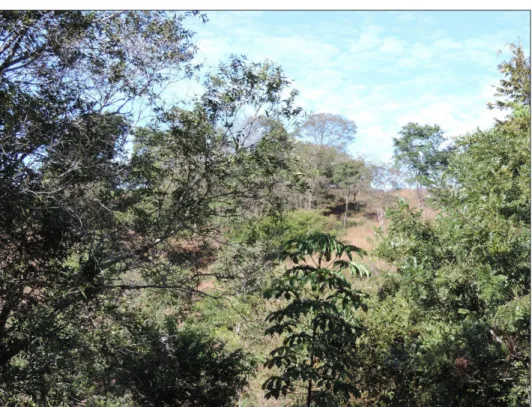
In fact, agroecosystems do not end at the edge of the harvest in the field as they influence and are influenced by cultural factors. However, the social, economic or political boundary of an agroecosystem is diffuse, as it is mediated by intangible decision processes, both at the level of the farmer and other individual and institutional actors. Although the matrix surrounding natural vegetation and characteristics of other biophysical elements influence the dynamics of national agricultural ecosystems, markets, and agricultural policies. Also determine what will happen, how technology, what rhythms and what type of consumers, observing the spectrum of what can be understood as a border or limit of agroecosystems. The agroecological approach, which opens the door to the cultural analysis of agroecosystems, at the same time, generates a new taxonomic challenge, which refers to how to name and classify. Many thinkers assimilate that agroecosystems (Figure 2) are plots, individual properties or entire land gleba scattered over the landscape. In addition to the concepts of production systems applied to a farmer, agribusiness or capitalist units. Sociologists use other attractive categories for denominations that have to do with small, medium or large landlords, tenants or sharecroppers.
Figure 2 – Example of a forest agroecosystem in Goianéesia, Goiás
Source: Authors.
The emerging “landscape ecology” is a science that is not capable of cataloging the different types of agroecosystems and involves them all in globalizing concepts that aim at the study of territorial matrices in which the main figure is the subsume ecological structure and part of the farms agro-ecological. The problem could be scale, but also the incommensurability of the term. The scale consists of many small levels having dominant landscape and large levels such as watersheds or territories. The incommensurability, because, as mentioned above, cultural variables are continuous in time and space.
In addition to this relative lack of definition of the object of study, which should and can be overcome through the consensus of the scientific community, an agroecosystem can be seen as “a set of interactions that occur between soil, cultivated plants, agencies of different trophic levels
and adventitious plants in certain geographic areas, when they are focused from the point of view of energy and information flows, material cycles and their social, economic and political relations, which are expressed in different technological forms of management within specific cultural contexts.
The emphasis of ecological relations is a fundamental pillar of agroecology, which identifies as science and at the same time separates traditional aspects of the agronomic approach. Even from initial definitions of agroecology as a theoretical and methodological approach, using various scientific disciplines aims to study agriculture from an ecological perspective. Proposing strong noticed tendencies to use the ecological science of interrelationships as the basis for the construction of different conventional agricultural processes. These differences result in the emphasis being placed not only on identifying specific and relatively simple biophysical processes but on understanding complex ecological relationships involving many variables.
We can say that agroecologists inquire more emerging properties of agroecosystems according to the machinations to which they are subjected to specific effects of certain isolated agronomic practices. The system effect is more interesting than the partial effect of variables, although this latter perspective is abandoned any interactions, which are put into play when designing agroecosystems with high biodiversity, realizing with theoretical principles and practical applications, both the level of management of the inter-relationship agroecology, soil, and water. Production and quality as a whole are different from those that are obtained by conventional farming methods and at the same time must be studied, appealing to different procedures, closer to the complex as an analysis of the relationships between agroecology that does not deny knowledge specialization seeking to understand its role in the elucidation of unknowns both on the molecular and cellular scale in the field of ecosystem behavior of various organisms of agroecosystems. However, to integrate this knowledge into holistic views that represent the whole rather than the bias of the agricultural system.
This integral brings privileges and a green vision, for example, Integrated Management of Agroecosystems, Integrated Pest Management,
community of soil microorganisms and manipulation of individual strains, integration of subsystems: livestock, forestry, fisheries and agriculture into one single unit in its conceptual and practical separation or an ethical view of healthy foods as opposed to exclusive ideas of plant performance by area. Recent studies show that such genetic knowledge, soils, and plant diseases can be integrated to understand why the fertilized crops are organically tolerant fungi more than those who received chemical fertilization under conventional methods diseases or by certain fungicides, generate possible effects in particular, there is abundant literature describing how the agroecological diversification of agricultural ecosystems leads to regulation of habitats and pest resources through the promotion of an insect complex, with the climate as a driving force in population dynamics with a direct influence on development, reproduction and survival (ALTIERI et al., 2015), although there may be many jobs that have been implemented in this direction, it is also true that many efforts have been focused on specific aspects of agroecosystem management in an attempt to understand the partial effects of certain agricultural procedures.
In this sense, they have carried out studies on the particular dynamics of nutrients, organic matter, preparation methods, weed dynamics, prepared trophobiotic, irrigation systems, associated cultivation or pest management and diseases with biological methods, among many other topics. This does not call into question the holistic agroecological approach, but on the contrary warns about the necessary combination of knowledge and in any case, realizes the stages of transition are still due to scientific thinking to address the integrity of variables in agriculture. And researchers have begun to understand that polycultural projects, with pest and disease reduction, promote a number of positive effects on soil biology and productivity.
Agroecology has opened the door to the study of cultural, ie social, economic, political, historical, philosophical and institutional components that affect fields with equal or in some cases more strongly than purely ecological variables. From an anthropological and environmental perspective, these factors can be solved more easily from the unifying concept of culture
such as agriculture and emerge as a process of co-evolution between societies and nature.
It is clear that the levels or intensities of the artificiality of nature generated by different human groups vary as they change their cultural processes while the cultural processes of modern capitalist societies are increasingly alienated from nature, which even under the transgenic paradigm is intended to be modified and therefore replaced in full. Agriculture is carried out in various fields: domestic, scientific, technological, commercial, political, economic and even military.
In the context of culture, environmental analysis acquires its full meaning as a key factor of agroecology, a subject that has been analyzed as a broad concept, implying physical limits, spreading to the intangible, but real limits. In the case of economic decisions that affect the regulation of market prices or behavioral trends only by certain communities for food production, which can have a significant impact on both regional patterns of local agroecosystems and/or production technologies.
Many questions arise, so when it comes to integrating cultural ecological studies. Some general issues relate, for example, social relations in the transfer of knowledge and information on biodiversity management in the fields, effect of the systems and their implications for statistical models and in general agroecological research, public policy decisions and their impacts on biodiversity, trade treaties, workers associated with agroecological and conventional systems, economic evaluation of weeds and general environmental services of agroecosystems, institutional capacity for agroecological education, consumer attitudes and values related to organic, transgenic and sustainable development; agroecology in the context of rural development, agro-biofuels and food security, climate change, legitimately then agroecology as science investigates these and other relationships in agroecosystems that can be clearly ecological, such as indigenous lands or organic systems, organic or biological production, but also questions, studies, notes, catalogs and analyses of the ecological or cultural systems of agriculture.
4 AGROECOLOGY AS A POLITICAL SPEECH AND SOCIAL ACTION
There is no doubt that the combination, in terms of the science of the two currents of thought which we have just described, inevitably leads to critical positions in the agricultural systems, whatever they may be, and hence the adoption of political positions around them, their types of instrumentalization, their economic and social relations, their ecosystem and cultural impacts, this in a word, raise questions of agricultural development models from an approach that has been called agroecological thinking. From this perspective, the agroecosystem object disputes nature as contrasting ideological positions, as an articulator of social demands and collective rights, as a cultural agglutination.
Legitimized, so the positions that have to do with access to land, especially in countries where social conflicts have been marked by the concentration in few hands of this resource. Agroecology used to criticize the faith and dependence on transnational power that eliminates the possibilities of food autonomy in different regions and countries. Its basic postulates feed the discussion on the use of poisons in agriculture and the international manipulation of the trade of inputs, with positions that oppose the use of toxic substances in food production and, therefore, send clear messages against the opening of the unequal market.
Underlying these social movements, strong philosophical foundations of self-realization and independence, attachment and respect for life. Therefore, the place in the political discourse of agroecology, the tendency of substitution of commercial and financial intermediaries, and acquisition of external inputs, conservation of resources, practices of soil conservation and water recycling, incorporation of native plants and inputs of chemicals , which are based on solid arguments of ecoefficiency, expressed in other forms of different relationships, different ways of socializing own conclusions, various forms of research, multiple channels of communication.
Individual experimentation without the support of the modern scientific-technological apparatus to agroecological producers often leaves the orphans of agro-ecologists before the indispensable need to improvise, with emphasis on the manifestations of life in agroecosystems and the
replacement of concepts of integrated management. All practitioners from various alternative agriculture schools are concerned with producing healthy food, poison-free and equitable distributions of food benefits, but also for watershed conservation, disaster prevention or species maintenance, the practice of mentioned philosophical postulates implies that those who choose this path necessarily include references to other knowledge, different from those of environmental science.
This also generates political decisions and administrative apparatus, in addition to necessarily considering social participation within its recitals and technical and scientific analysis and methodological approaches such as ethnography or research - participatory action. In short, agroecological thought of mergers between scientists trying to study the integrity of ecosystems, including agricultural practices that tend to conserve natural resources and ensure the quality of food produced and social movements that are based on ethical principles of agroecological to claim processes equity, solidarity and competitiveness among those who share several philosophical and ethical foundations of respect for life.
The fields of analysis related to agroecology show that agroecology as the science must establish innovative ways of articulating the ecosystem and cultural visions. In emerging, science has opened its own ways without clear provisions on how it originates and the strengthening of disciplinary or autonomous subfields. This results from the combination of several interdependent phenomena such as new methodological tools, the relative success in predicting phenomena, or a set of hypotheses and theories that are formulated through years of normal science.
Agroecology, while in interdisciplinary construction and science, is linked to the challenges of the emergence of these new thematic areas of knowledge. What can be considered as legitimate consensus and others, depend on science or disciplines that are already formulated or have enough practical theories to be considered as such. An initial field of agroecological work explored for decades, but not sufficiently worked out, to describe and analyze the emerging rules that arise with the increasing complexity of agricultural ecosystems in conversion steps that occur, for
example, from monoculture to polyculture or the simultaneous use of management technologies. The first step, of course, is to describe the components, relationships, and processes of huge agroecosystems, as it deals with and details the relationships (micro and macro) that occur within different subsystems, such as the soil environment, weeds or subsystem of herbivorous animals and their interactions.
It is the field of applied ecology itself. This field should be complemented with descriptions of not only the management practices used by different types of farmers but also with the reported descriptions of the cultural characteristics in which these groups operate, ie with political references, public institutions, commercial networks, economic incentives, the strength or weakness of scientific apparatus, the existence of educational processes and their own motivations, a broader field of analysis uses the analysis of agroecosystems and landscape ecology. It will study agricultural ecosystems from various points of view, including complex relationships, such as the fluid energy of pest dynamics, biogeochemical cycles, and including more cultural variables, in higher categories such as landscape or river basins.
Within these approaches, ecology is defined as the science that studies the interactions that determine the distribution and abundance of organisms, approaching the concepts of geography and integrates dynamic interdisciplinary environmental thinking, where economic and social perspectives appear. The second step in this direction, which may be synchronous, is to make classifications and comparisons between different types of agroecosystems, usually including references to conventional agricultural ecosystems. The available literature is relatively large in these areas, where generally comparisons of both biophysical aspects of soil and water conservation, yields of vegetables or comparative studies of agroecosystems manipulated at different levels of organic versus conventional diversity or technology. However, we are still far from more detailed descriptions of the structure and functioning of various types of agroecosystems, and propose taxonomic classification processes that facilitate the exchange of information and allow the identification of transfer factors of relevant technology.
There are no regional or national maps showing agronomic incidence and territorial dynamics. Comparisons are still scarce in the field of economics and social relations that exist within many agroecosystems. Part of the current, at least in Brazil, focusing on different cultural aspects of agroecosystems has been written from the clues of economics studies or agricultural peasants that highlights the processes of access to the land, dynamic agricultural market or political analysis. However, many of these valuable works in themselves do not reveal direct links to agroecological theory because they are generally comprehensive theoretical approaches to the rural sector as a whole. This opens the door to at least four related and little explored fields that enrich the agroecological collection: Cultural Anthropology, Ecological Economics, Environmental History, and Political Ecology and a strong overlapping additional importance to the production processes with applied agroecology.
Cultural anthropology helps to understand, within the complexity of social relations, the dynamic processes that characterize and distinguish the different types of agricultural management that occur in both agroecosystems, for example in indigenous lands of tropical forests. There is no room to ask about the various logics that rationalize the functioning of these agricultural ecosystems, as well as their implications for the conservation of natural resources and community or institutional decisions to be made. This field is fueled by ecological study and local systems of integrated scientific knowledge, optimizing traditional production systems and conservation processes in their indigenous biodiversity and other issues. The ecological economy, meanwhile, faces the challenge of demonstrating the viability of different types of agroecosystems, such as Integrated and Sustainable Agroecological Production (Figure 3), not so much the focus of neoclassical economics or environmental economics, but rather with the principles of economics ecological that seeks explanations and effects beyond market assessments such as ecological conflict study. This field of action can also draw on the progress made so far by economic anthropology, which has studied the rationality of non-commercial enterprises showing how constraints imposed by the prestige of ecosystem
systems, articulated kinship relationships, peculiar political organization, and models of a good life.
Figure 3 – Integrated and Sustainable Agroecological Production (PAIS) in
the Vitoria Settlement, Parcela 44, in Goianésia, Goiás
Source: Bessa et al. (2016).
The generation of different approaches to the sustainability of the various agricultural ecosystems are aspects of the first order. Here the food safety study investigates the conditions that guarantee permanent and sufficient access to feed the population, considering the culturally defined taste options and nutritional requirements by sex, age, occupation and life cycle moments such as gestation. One concern of this aspect is to capture the impacts that cause different types of interventions on the natural, social and human capital of rural populations through appropriate indicators. An additional field in these perspectives is that of environmental history, attempting to reconstruct both forms of social occupations and territorial processes that marked the origin and consolidation of certain
agricultural systems and their relations with ecosystem environments not only in contemporary times but the past recent and distant from extracting from there guidelines and behaviors to help rethink the purposes and methods of current agricultural systems. In this sense, it assumes a special significance of the recovery of knowledge and the logic of the intervention of old traditional systems.
Knowing the greater or lesser accuracy of the biophysical, ecosystem or cultural causes that led to the rise or decline of certain groups that generated fundamental changes in their rites, technologies or organizational forms, finally political ecology collaborate in the study of the effects of agroecological thinking in the conception and implementation of sectoral and national public policies in the sub-sectorial nature, how it is inserted in the construction of new paradigms of society and the true forms of community participation in the formation and implementation of plans, programs, and projects. The analysis includes national and international scales undertaken in the context of the current processes of mass information and commerce of a global nature that result in multilateral agreements with national effects.
Conflicts over access to resources, especially land, land reform, national development models and plans and national policies that drive agrofuel models, the implications of biotechnology on the manipulation of nature and its responses in the fields of transgenes, green markets and fair trade are other issues in this field, which can recover critical policies for rural development that are excluded in agroecological and environmental approaches. Applied agroecology, meanwhile, intends to implement the accumulation of previous theoretical perspectives, which can be partially identified in several areas:
• Diversified agroecosystem design through increased use of biodiversity and recycling, based on nutrient cycles and understanding and interactions of various species, including integrated forest systems.
• Agroecology the integrated agroecosystem management concept, a series of readily available and inexpensive processes and practices, among which the reproduction and massive release of biological control agents, the production of beneficial organisms, fertilizers, preparation and use of compost, among other practices.
• Ecological pest management aims to establish a durable and environmentally compatible, weed management, pathogen and insect pests with emphasis on increasing the immunity of agroecosystems and habitat management strategies for a wildlife charity.
• Ecological management and conservation of water and soil that implement soil conservation and treatment techniques, improve soil quality and prevent soil contamination, harvesting, conservation and efficient use of water in agroecosystems.
5 THE INTER-RELATIONS OF AGROECOLOGY
The crossroads between agroecology in the cultural, economic, political, historical and applied spheres is not only necessary, but inevitable, and even more so, it is highly desirable, since if anything distinguishes it from thought. Agroecology is the study of complex interrelations rather than the particular phenomena that have already been addressed by traditional agronomy, adapting more easily to the reality of the agricultural production system of family agriculture (ASSIS, 2006). The necessary distinction in many areas of agricultural debate and practices tend to confuse agroecology. As mentioned here, agroecology is a science that investigates by complex processes of productive agricultural systems (SANTOS; CHALUB-MARTINS, 2012), ecological and cultural of small local communities, capitalist or business agricultural systems, strong agricultural technology base, large commercial monocultures and even in transgenic agroecosystems.
In all these cases, agroecological relations can carry out studies that show inefficiencies or environmental potential of several systems in order to claim the positive aspects and propose changes when there is evidence of environmental deterioration. These changes are based on the application of universal principles that take specific technological forms in each situation.
Organic Livestock, however, is a proposal that comes from a combination of different circumstances, which shows the criticism of the model of the Green Revolution. Concerns about the conservation and sustainable use of resources, the desire to keep the concepts of family agriculture, the need to produce healthy food, discussions about the limitations of positive
science and the dominant development models, as well as factors that led to proposals theories and practices opposing the Green Revolution. The model of the life of new agriculture has been improving as a fundamental human right and basic criterion of an agronomic act, like other modes of production like organic agriculture, biodynamic, natural, permaculture, etc. Belonging to the philosophical, ideological and contrasting positions of agricultural practices, the Green Revolution has approaches, principles, and technical interventions. Some of these interventions can not have an agroecological basis as in the case of replacing the input of organic agriculture. The interdisciplinary agroecological, according to the above ideas, it is clear that agroecological studies require methodologies and procedures to account for the complexity of the agricultural systems raised in the previous paragraphs. Although within the agroecological approach fits the specialized approaches in studying processes or organic farming. Organic farming is other denominations, which give similar teachings of agriculture, which by convention are generally designated, however, some researchers do not accept this convention because they believe that there are substantial differences between the three terms.
The general intention of the separate compartments is to integrate phenomena into increasingly aggregate scales, including those in the biophysical world with the social, economic, or political factors. These interdisciplinary approaches, obviously, to share specific results and procedures for each discipline are needed. The concept of interdisciplinarity has as its practice the accepted way of generating interrelations between different disciplines to bring what atomistic science has disunited and generated new valid fields of interpretation about various phenomena about man and nature, in essence, they are complex, in general, the interdisciplinarity develops a perspective sustaining the agroecological thought in a presupposition of the theoretical-methodological epistemological pluralism (GOMES, 1993; FLORIANI; FLORIANI, 2010).
Interdisciplinarity, on the other hand, can be captured and imprisoned by the isolated individual or a community that shares a paradigm. However, the practice of interdisciplinarity does not have a fixed rate or some prescriptions. There are no rules of legitimation that is or is not
interdisciplinary, although it is true that some features in the analysis can be abstracted from the evaluation of the results of many activities and acts of environmental management.
Around them, questions of various kinds that will illuminate your interdisciplinary spirit can be done and will reveal whether other approaches are a kind of group or multidisciplinary. Practices occurring within classrooms, in the implementation of research projects or management activities, requiring interdisciplinarity, have an additional interdisciplinary and personal resource. Phenomena in a different way, that internalizes discourses, that has modified the disciplinary content, that converses with his colleagues, that said the knowledge of several sources or return to the spirit of the universal, is the individual himself as the sole holder of transferable knowledge.
This human being debated in search of new questions and multiple answers requires a great personal effort. The vision and practice of interdisciplinarity are given from nothing. It is built in and outside of the classroom, laboratory or field culture, in daily practice. However, you gain by adding hours of reading and reflection. Accumulating the analyzes on topics that do not have self-control, asking and debating not only with the teachers but agroecology and human groups that make up the family or working environment, besides listening to authorities from other branches of science.
6 FINAL CONSIDERATIONS
Doubting what has been and what must be learned is of paramount importance, a personal and constant effort, that reason can be learned in the academy, but perfects in social practice and generates, so to speak, a self-interdisciplinary. Unraveling answers in the fields or properties that integrate agricultural and livestock production may require the help of various disciplines of the natural sciences that also involve physiologists, pathologists, soil scientists, entomologists, and veterinarians, just as they may need the help of sociologists, anthropologists and economists to elucidate the behavior of some institutional actors.
These are the cases of restricted interdisciplinarity inside or outside still have full validity in terms of trying to solve the problems. Questions integrate these aspects, give rise to legitimate interdisciplinarity in the agroecological context. For example, the work that aims to establish the “system” has an effect on the production of plants or on pest and disease control, on the assessment of agricultural biodiversity, its relations with stability and / or agricultural productivity, differential management to control erosion in different assessments of different types of biofertilizers, integrated management of agricultural ecosystems to control pests and diseases, studies on community participation in river basin management, links between education, health and agricultural production, and community forest conservation.
But there are also those works or approaches in which representatives of the natural sciences, humanities, and members of producer communities, which can be understood as extended interdisciplinary participatory processes. In such investigations viewed differently from reality different methods of addressing problems are combined and tested. Examples of such extended multidisciplinary studies are those that inquire, for example, about the effects of pesticide use on surface water and its implications for human health, studies that institute changes in family groups as a result of processes of agricultural conversions, projects to determine the impact of certain agricultural practices on the income of producers linked to pollution reduction, research on agricultural systems of ethnobotany or soil classification, and integration of traditional management practices with techniques and assessments on the role of science and technology in the transformation of strategic ecosystems located in agricultural communities, which can be accepted as true interdisciplinary research of agroecological and modern character. Work of this nature could, if not move the barriers of epistemological circles, at least elicit broad reflections on society and its interrelationships and nature, breaking old patterns with which it still seeks to address such studies. Agroecological research is, therefore, a trademark and indelible: the seal of interdisciplinarity, the dialogue of knowledge, the emergence of new ideas in each particular scientific paradigm and practice shared by the methods of the team members, including local farmers’ views.
REFERENCES
ALTIERI, M. A.; NICHOLLS, C. I.; HENAO, A.; LANA, M. A. Agroecology and the design of climate change-resilient farming systems. Agronomy for
Sustainable Development, v. 35, n. 3, p. 869-90, July 2015.
ASSIS, R. L. Desenvolvimento rural sustentável no Brasil: perspectivas a partir da integração de ações públicas e privadas com base na agroecologia. Economia Aplicada, Ribeirão Preto, SP, v. 10, n. 1, p. 75-89, Jan./Mar. 2006.
BESSA, M. M.; VENTURA, M. V. A.; ALVES, L. S. Agroecologia, sustentabilidade ea necessidade dos movimentos agroecológicos se tornarem políticas públicas. Revista Desafios, Palmas, TO, v. 2, n. 2, p. 181-97, Jan./June 2016. BESSA, M. M.; ALVES, L. S., VENTURA, M. V. A.; AZEVEDO, E. M. Produção Agroecológica Integrada e Sustentável – PAIS: agroecologia, recuperação e produção econômica da Comunidade do Assentamento Vitória. Cadernos
de Agroecologia, v. 11, n. 2, 2016.
FLORIANI, N.; FLORIANI, D. Saber ambiental complexo: aportes cognitivos ao pensamento agroecológico. Revista Brasileira de Agroecologia, Porto Alegre, RS, v. 5, n. 1, p. 3-23, 2010.
GOMES, J. C. C. Bases epistemológicas da agroecologia. 1993. Cap. 3, p. 71-99. Disponível em: https://www.agencia.cnptia.embrapa.br/recursos/ AgrobCap3ID-mACnHGwS4B.pdf
SANTOS, F. P. D.; CHALUB-MARTINS, L. Agroecologia, consumo sustentável e aprendizado coletivo no Brasil. Educação e Pesquisa, São Paulo, v. 38, n. 2, p. 469-84, Abr./June 2012.
SERRA, L. S.; MENDES, M. R. F.; SOARES, M. V. D. A.; MONTEIRO, I. P. Revolução Verde: reflexões acerca da questão dos agrotóxicos. Revista
Científica do Centro de Estudos em Desenvolvimento Sustentável da UNDB,