Corresponding author: PhD Marilene Rodrigues Chang
e-mail: [email protected]
Received 1 August 2017
Accepted 15 December 2017
doi: 10.1590/0037-8682-0241-2017
Short Communication
Clinical and laboratorial features of oral candidiasis
in HIV-positive patients
Regiane Nogueira Spalanzani
[1], Karine Mattos
[2], Luiza Inahe Marques
[1],
Pedro Fernando Diniz Barros
[2], Pamela Iruama Peres Pereira
[3],
Anamaria Mello Miranda Paniago
[2], Rinaldo Poncio Mendes
[4]and Marilene Rodrigues Chang
[1],[2][1]. Curso de Farmácia, Universidade Federal de Mato Grosso do Sul, Campo Grande, MS, Brasil. [2]. Programa de Pós-Graduação Stricto Sensu em Doenças Infecciosas e Parasitárias,
Universidade Federal de Mato Grosso do Sul, Campo Grande, MS, Brasil.
[3]. Programa de Residência Multiprofissional em Saúde, Universidade Federal de Mato Grosso do Sul, Campo Grande, MS, Brasil.
[4]. Faculdade de Medicina, Universidade Federal de Mato Grosso do Sul, Campo Grande, MS, Brasil.
Abstract
Introduction: We describe the clinical and laboratorial features of oral candidiasis in 66 HIV-positive patients. Methods:
Polymerase chain reaction-based techniques were performed for differentiation of Candida spp. isolated from patients at a public teaching hospital in Midwest Brazil. Results: Oral lesions, mainly pseudomembranous, were significantly related to higher
levels of immunosuppression. Of 45 Candida isolates, 66.7% were C. albicans. Most of the isolates were susceptible to the antifungal drugs tested. Conclusions: Oral lesions were associated with higher immunosuppression levels.Lower susceptibility to antifungals by non-albicans isolates supports the importance of surveillance studies using susceptibility tests to aid in the treatment.
Keywords: Candida spp. HIV. Antifungal susceptibility.
Oral candidiasis is the most common opportunistic fungal infection in individuals infected with the human immunodeficiency virus (HIV) and is considered an independent predictor of immunodeficiency in patients with acquired immunodeficiency syndrome (AIDS)1,2. In addition, esophageal candidiasis is considered to be an AIDS-defining condition3. Clinical features of oral thrush and esophageal candidiasis comprise white oral patches; oral ulcers and painful swallowing may also be observed4.
The cluster of differentiation 4+ (CD4+) T-lymphocyte
count in peripheral blood is an important marker of the patient’s immune status and of their susceptibility to the development of opportunistic infections, such as oropharyngeal candidiasis5. Although Candida albicans is the most frequently-isolated species related to oral opportunistic infections, an increase in the frequency of oral infections caused by non-albicans species such as Candida tropicalis, Candida parapsilosis, Candida glabrata,
Candida krusei and Candida dubliniensis has been observed
in the last decade1,2.
Identification of the species is important for epidemiological reasons and for treatment purposes to ensure a better prognosis since some species present reduced susceptibility to azoles2,4,5. Therefore, the present study aimed to investigate the correlation between the presence of oral lesions caused by Candida spp. with the level of CD4+ T-lymphocyte in HIV-positive patients, and to determine the distribution and antifungal susceptibility of
Candida species isolated from the oral cavities of HIV-positive patients, with and without lesions.
A total of 60 seropositive HIV patients [diagnosed by enzyme-linked immunosorbent assay (ELISA) and Western-blot] admitted at the University Hospital Maria Aparecida Pedrossian (UH-MAP), Mato Grosso do Sul, Brazil, were included in this study. The participants were recruited from December 2014 to July 2015 and data such as age, gender, hospitalization, the presence of oral lesions and CD4+ T-lymphocyte counts were obtained from their medical records. To compare the possible associations between the variables under study, the chi-square test and Fisher’s exact test were applied, as appropriate. Statistical analyses were performed using the program Minitab, version 16 (Minitab Inc., State College, PA, USA).
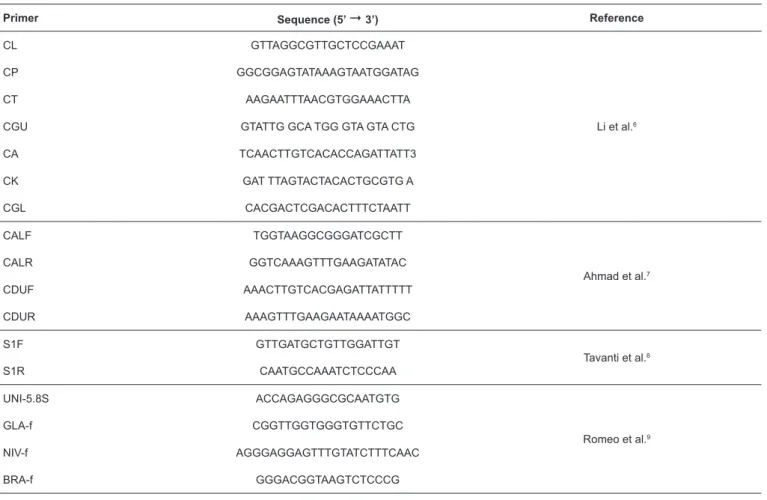
TABLE 1: Primers used in the molecular identification of Candida species.
Primer Sequence (5’ 3’) Reference
CL GTTAGGCGTTGCTCCGAAAT
Li et al.6
CP GGCGGAGTATAAAGTAATGGATAG
CT AAGAATTTAACGTGGAAACTTA
CGU GTATTG GCA TGG GTA GTA CTG
CA TCAACTTGTCACACCAGATTATT3
CK GAT TTAGTACTACACTGCGTG A
CGL CACGACTCGACACTTTCTAATT
CALF TGGTAAGGCGGGATCGCTT
Ahmad et al.7
CALR GGTCAAAGTTTGAAGATATAC
CDUF AAACTTGTCACGAGATTATTTTT
CDUR AAAGTTTGAAGAATAAAATGGC
S1F GTTGATGCTGTTGGATTGT
Tavanti et al.8
S1R CAATGCCAAATCTCCCAA
UNI-5.8S ACCAGAGGGCGCAATGTG
Romeo et al.9
GLA-f CGGTTGGTGGGTGTTCTGC
NIV-f AGGGAGGAGTTTGTATCTTTCAAC
BRA-f GGGACGGTAAGTCTCCCG
CL: Candida lusitaniae; CP: Candida parapsilosis complex; CT: Candida tropicalis; CGU: Candida guillermondii; CA: Candida albicans; CK: Candida krusei;
CGL: Candida glabrata species-specificity primers; CALF + CALR and CDUF + CDUR: species-specificity primers pairs for Candida albicans and Candida
identification, respectively; S1F S1R: primer sequences used for identification of species of UNI-5.8S, the samples were plated in Sabouraud-dextrose agar (Himedia,
India) for 24h at 35ºC. Suggestive colonies of Candida spp. were then plated in CHROMagar Candida (Difco, USA) for
48h at 35°C for presumptive identification. For genotypic identification, genomic deoxyribonucleic acid (DNA) was extracted and purified using the YeaStar™ DNA Extraction Kit (Zymo Research, USA) in accordance with the manufacturer’s instructions.
For the initial differentiation among Candida species, multiplex polymerase chain reaction technique (PCRm) was performed as described by Li et al.6. For the differentiation between C. albicans and C. dubliniensis, C. parapsilosis
complex and C. glabrata complex, the following techniques were performed respectively: duplex PCR7, PCR followed by restriction fragment length polymorphism8 and PCRm9. All the primers used in the PCR techniques are described in Table 1.
The minimum inhibitory concentrations (MIC) of the antifungal agents fluconazole (Pfizer, Brazil), itraconazole (Sigma, USA), voriconazole (Sigma, USA) and amphotericin B (Sigma, USA) were determined using the broth microdilution method. ATCC strains (C. krusei ATCC 6258 and C. parapsilosis
ATCC 22019) were used as quality control. The MIC results
were interpreted according to the Clinical and Laboratory Standards Institute breakpoints10.
Ethical considerations
The study protocol was approved by the Research Ethics Committee of the Federal University of Mato Grosso do Sul. All patients who agreed to participate in this study signed a consent form. To our knowledge, this is the first study on oral candidiasis in the State of Mato Grosso do Sul, Midwest Region, Brazil.
The patients’ ages ranged from 24 to 76 years, with a mean of 42.3 years, and with male predominance (75.8%). Similar to previous studies2,4, the most affected age group was 24 to 40 years, which is the most sexually active population. The prevalence of male HIV-positive patients related to oropharyngeal candidiasis had been reported previously4. Patients’ clinical, demographic and hospital admission data are summarized in Table 2.
TABLE 2: Distribution of 66 HIV-positive patients according to demographic characteristics, unit of attendance, oral lesions, and immunological evaluation
Variable Number Percentage p value*
Gender < 0.001
male (M) 50 75.8
female (F) 16 24.2
Age (years) < 0.001
24 – 40 36 54.5
41 – 60 25 37.9
> 60 5 7.6
Attendance unit <0.001
infectious and parasitic diseases/ward 47 71.2
day-care hospital 17 25.8
adult intensive care 2 3.0
Presence of oral lesions < 0.001
yes 16 24.2
no 50 75.8
Type of oral lesions 0.14
pseudomembranous 8 50.0
erythematous 3 18.8
chronic multifocal 3 18.8
angular cheilitis 2 12.5
Correlation: species vs type of interaction 0.15
Infection
C. albicans 10 33.3
non-albicans Candida 3 20.0
Colonization
C. albicans 20 66.7
non-albicans Candida 12 80.0
Correlation: species vs lesion form 0.50
C. albicans
pseudomembranous 5 83.3
erythematous 2 66.7
C. tropicalis
pseudomembranous 1 16.7
erythematous 1 33.3
TCD4+ lymphocytes count (cells/µL) 0.03
≤200 42 63.6
>200 24 36.4
TABLE 3: In vitro antifungal susceptibility of Candida species isolated from the oral cavities of HIV-positive patients.
Candida species Antifungal agent MICs in μg/mL
MIC range MIC50/90*
C. albicans (n= 300)
Fluconazole 0.125 - 0.500 0,125/0,25
Itraconazole 0.003 - 0.125 0,015/0,06
Voriconazole 0.015 - 0.06 0,015/0,015
Amphotericin B 0.06 - 0.5 0,5/0,5
C. tropicalis (n=6)
Fluconazole 0.125 - 0.500 0,5/0,5
Itraconazole 0.015 - 0.06 0,06/0,060
Voriconazole 0.015 0,015/0,015
Amphotericin B 0.5 - 1 0,5/0,5
C. krusei(n=4)**
Fluconazole -
-Itraconazole 0.015 - 0.125 0,03/0,03
Voriconazole 0.015 - 0.06 0,03/0,03
Amphotericin B 0.5 - 1.0 1/1
C. glabrata sensu stricto (n=2)
Fluconazole 4.0 - 8.0
Itraconazole 0.03 - 0.250
Voriconazole 0.06 - 0.125
Amphotericin B 1
C. parapsilosis sensu stricto (n=2)
Fluconazole 0.125 - 0.5
Itraconazole 0.015- 0.06
Voriconazole 0.015
Amphotericin B 0.06 - 0.5
C. dubliniensis (n=1)
Fluconazole 0.125
Itraconazole 0.015
Voriconazole 0.015
Amphotericin B 0.06
HIV: human immunodeficiency virus; C.: Candida; MIC: minimum inhibitory concentration as defined by the CLSI; CLSI: Clinical and Laboratory Standards Institute.
*MIC50 and MIC90: MIC at which 50% and 90% of the isolates were inhibited. **C. krusei is intrinsically resistant to fluconazole, independent of the MIC result
obtained in vitro.
pseudomembranous (8, 50%), erythematous (3, 18.7%), chronic multifocal (3, 18.7%) and angular cheilitis (2, 12.5%). Candidiasis with pseudomembranous lesion as observed in most cases in our study is consistent with the findings of other authors2,11.
There was no significant correlation between species and type of host-parasite relationship and between species and clinical presentation of oral lesions (Table 2). However, the number of cases was small and these results should be re-evaluated in a larger number of patients.
Among the 16 individuals with oral lesions, 15 (93.7%) had CD4+ T-lymphocyte counts ≤ 200 cells/μL (p < 0.05) showing that oral candidiasis is a highly predictive marker of immunosuppression, as previously reported5,11. Despite having no apparent lesion, 32 (48.5%) patients had Candida spp. isolated from their oral cavities, demonstrating colonization. Previous studies have shown that in Brazil, the rate of colonization has ranged from 50.4% to 62.0% in this group of patients1,12,13. The use of antibiotics and oral prostheses are some of the predisposing factors for oral colonization by
Among the 45 Candida spp. isolates, C. albicans (30, 66.7%)
was prevalent in relation to non-albicans species (15, 33.3%), confirming the results of previous studies1,2,4,13-15. The following non-albicans species were identified: C. tropicalis (6, 13.3%), C. krusei (4, 8.9%), C. parapsilosis sensu stricto (2, 4.4%), C. glabrata sensu stricto (2, 4.4%) and C. dubliniensis (1, 2.2%).
Studies carried out in São Paulo showed that among non-albicans isolates, C. glabrata was the most frequently-isolated species from the saliva of HIV-infected patients without clinical lesions13 while in other cities of the Southeastern region of Brazil such as São José dos Campos-SP and Uberlândia-MG, the most commonly isolated non-albicans species from oropharyngeal candidiasis were C. tropicalis15 and C. parapsilosis1, respectively. This fact shows that the distribution of non-albicans isolates from the oral cavity varies from region to region
To assist the clinician in making therapeutic decisions and to optimize treatment, clinical microbiologists should identify
With the advent of molecular biology techniques, it was possible to differentiate species such as C. albicans and C. dubliniensis, C. parapsilosis complex and C. glabrata complex. Although C. dubliniensis has been associated with oral candidiasis in HIV infected patients worldwide, in our study, as in other Brazilian studies12,13, the prevalence rate of this species was considered low.
The in vitro susceptibility profiles of the Candida species studied are shown in Table 3. Candida albicans, C. tropicalis,
C. krusei, C. parapsilosis sensu stricto and C. dubliniensis
presented susceptibility to all antifungal agents tested. Two isolates of C. glabrata sensu stricto showed dose-dependent susceptibility to fluconazole and one dose-dependent susceptibility to itraconazole.
The pattern of antifungal resistance also varies with geographical region. In contrast to previous studies carried out in other Brazilian regions12,14, non-albicans species isolated from patients living in Mato Grosso do Sul State, showed a high susceptibility to the antifungal agents tested.
I n c o n c l u s i o n , i n d i v i d u a l s w i t h h i g h l e v e l s o f immunosuppression are more susceptible to the development of oral candidiasis. The presence of oral lesions caused by Candida
spp., mainly of the pseudomembranous form, can act as an indirect marker of immunosuppression in HIV-positive patients. In addition, Candida spp. are commonly found among HIV-positive patients with and without oral lesions. Although
C. albicans is the most frequent species isolated in the oral
mucosa, non-albicans isolates represent a relevant percentage of isolates. Despite the good in vitro susceptibility, the lower susceptibility to azoles by non-albicans isolates supports the importance of surveillance studies using susceptibility tests to achieve better results in the pharmacological treatment of oropharyngeal candidiasis.
Acknowledgments
The authors express their gratitude to the Laboratório de Pesquisas Microbiológicas and the Laboratório de Biologia Molecular e Culturas Celulares of the Universidade Federal de Mato Grosso do Sul.
Conflict of interest
The authors declare that there is no conflict of interest.
Financial support
This work was supported by Conselho Nacional de Desenvolvimento Científico e Tecnológico (CNPq) and Fundação de Apoio ao Desenvolvimento do Ensino, Ciência e Tecnologia do Estado de Mato Grosso do Sul (FUNDECT/MS).
REFERENCES
1. Menezes RP, Borges AS, Araujo LB, Pedroso RS, Röder DVDB. Related factors for colonization by Candida species in the oral cavity of HIV-infected individuals. Rev Inst Med Trop Sao Paulo.
2015;57(5):413-9.
2. Das PP, Saikia L, Nath R, Phukan SK. Species distribution & antifungal susceptibility pattern of oropharyngeal Candida isolates
from human immunodeficiency virus infected individuals. Indian J Med Res. 2016;143(4):495-501.
3. World Health Organization (WHO). WHO case definitions of HIV for surveillance and revised clinical staging and immunological
classification of HIV-related disease in adults and children, Geneva:
WHO; 2007.
4. Maheshwari M, Kaur R, Chadha S. Candida species prevalence
profile in HIV seropositive patients from a Major Tertiary Care Hospital, in New Delhi, India. J Pathog. 2016;2016:6204804.
5. Kamtane S, Subramaniam A, Suvarna P. A comparative study of oral candidal carriage and its association with CD4 count between HIV-positive and healthy individuals. J Int Assoc Provid AIDS
Care. 2012;12(1):39-43.
6. Li YL, Leaw SN, Chen J, Chang HC, Chang TC. Rapid
identification of yeasts commonly found in positive blood cultures by amplification of the internal transcribed spacer regions 1 and 2. Eur J Clin Microbiol Infect Dis. 2003;22(11):693-6.
7. Ahmad S, Khan Z. Invasive candidiasis: a review of nonculture-based laboratory diagnostic methods. Indian J Med Microbiol.
2012;30(3):264-9.
8. Tavanti A, Davidson AD, Gow NAR, Maiden MCJ, Odds FC. Candida orthopsilosis and Candida metapsilosis spp. nov. to replace Candida parapsilosis groups II and III. J Clin Microbiol.
2005;43(1):284-92.
9. Romeo O, Scordino F, Pernice I, Lo Passo C, Criseo G. A multiplex
PCR protocol for rapid identification of Candida glabrata and its phylogenetically related species Candida nivariensis and Candida bracarensis. J Microbiol Methods. 2009;79(1):117-20.
10. Clinical and Laboratory Standards Institute (CLSI). Reference method for broth dilution antifungal susceptibility testing of yeasts; Fourth Informational Supplement. CLSI document M27-A3-S4. Wayne, PA: CLSI; 2012.
11. Patel BA, Ganapathy KS. Correlation of oral manifestations with
circulating CD4+ T lymphocytes in patients with HIV/AIDS in
Indian subpopulation. J Indian Acad Oral Med Rad. 2011;23:502-6.
12. Paula SB, Morey AT, Santos JP, Santos PM, Gameiro DG, Kerbauy G, et al. Oral Candida colonization in HIV-infected patients in Londrina-PR, Brazil: antifungal susceptibility and virulence
factors. J Infect Dev Ctries. 2015;9(12):1350-9.
13. Junqueira JC, Vilela SFG, Rossoni RD, Barbosa JO, Costa ACBP, Rasteiro VM, et al. Oral colonization by yeasts in HIV-positive
patients in Brazil. Rev Inst Med Trop. 2012;54(1):17-24.
14. Favalessa OC, Martins MA, Hahn RC. Aspectos micológicos e susceptibilidade in vitro de leveduras do gênero Candida em pacientes HIV-positivos proveniente do estado de Mato Grosso.
Rev Soc Bras Med Trop. 2010;43(6):673-7.
15. Back-Brito GN, Mota AJ, Vasconcellos TC, Querido SM, Jorge AO, Reis AS, et al. Frequency of Candida spp. in the oral cavity of Brazilian HIV-positive patients and correlation with CD4 cell