Raman Spetrosopy as a Powerful Tehnique
in the Charaterization of Ferrouids
Joel C. Rubim
, MareloH. Sousa, Jean C. O.Silva, and FranisoA. Tourinho
InstitutodeQumiadaUniversidadedeBraslia
CP04478, 70919-970,Braslia,Brazil
Reeivedon29January,2001
Ramanspetrosopyhasbeenusedtogetsomeinsightintothehemialompositionandstruture
ofmagneti uids basedonferrites. Theinneras wellas thesurfae strutureof Fe-maghemite
andZn-maghemite have haraterizedby Raman spetrosopy. It hasbeen shownthat dierent
hemial speies are present on the maghemite surfae by hanging the laser exitation energy.
Maghemitesmodiedbytheadsorptionofaspartiandglutamiaidsaswellasthosemodiedby
theadsorptionofmethyleneblue(MB)havealsobeeninvestigatedbyRamanspetrosopy. Ithas
beenshownthatwhileFTIR(Fouriertransforminfrared)spetrosopygivesalmostnoinformation
regardingtothesurfaespeies,Ramanspetrosopyinandoresonanegivessuitableinformation
regardingtotheadsorbatestrutureandbonding. TheRamanspetrosopystudyofthemodied
maghemiteshaveshownthattheorganiaidsadsorbonthemaghemitesurfareasglutamateand
aspartatehemially bounded to Fe(III) ions onthe maghemite surfae,and that MB, a ation,
adsorbsonthemaghemitesurfaeasamonomerbyionpairformationwithoadsorbednitrate.
I Introdution
The advanes in the eld of nanomaterials ask for
experimental tehniquesthat an give information
re-garding to the internal struture of the nanopartiles
as well as to their surfaestruture, sine some
prop-ertiespresentedbythesematerialsarestronglyrelated
tosurfaestrutureandproperties. Poroussilionand
magnetiuidsaregoodexamplesofsuhkindof
nano-materials[1-5℄.
ThedevelopmentofRamaninstrumentationhaving
highlightthroughput,equippedwithhighperformane
CCDdetetors,theuseofoptialmirosopestofous
thelaseronthesampleandolletthesattered
radia-tion, andthenoth ltertehnology auseda
tremen-dous inreasein theuse of Ramanspetrosopyas an
analytial tool. For instane, moleules adsorbed on
surfaes at monolayer levels an be deteted by
Ra-man spetrosopyevenif thesystemdoesnotpresent
surfae-enhanedRamanharateristis[6,7℄. F
urther-more,ifthesystemisin solutionand strongly
absorb-ing, as is the ase of magneti ferrouids, the use of
onfoalspetrosopymakespossibletheaquisitionof
goodqualityRamanspetra[8℄. Inthisase,theuseof
alargeampliationobjetive(x80)tofousthelaser
onthesample,asmallsiltwidth(100m),anda
digi-talpinholegeneratedattheCCDdetetor,guarantees
averysmallsatteringvolumeavoidingre-absorption
oresenebakgroundfrom theglassapillary walls.
Ramanspetrosopyanalsobeseenasavibroni
spetrosopy,sineitangiveinformationregardingto
bothmoleular aspets, the vibrationaland eletroni
[9℄. TheworksofHellerandollaborators[9-11℄are
ex-ellentrefereneswheretheRamansattering
phenom-ena, non resonant and resonant, are desribed in the
time domain formalism. Intheir desription one the
laser photoninterats with the moleuleavibrational
wave paket of the groundeletroni state is pumped
to therstexitedstate. Ifthephotonenergyislose
to an allowed eletroni transition, this wave paket
willevolveintheexitedstate. Afteranite time,the
system relaxesand aStokes shifted Raman photonis
emitted. Inthisase,thevibrationalmodesassoiated
to thehromophorestruture,responsible forthe
ele-tronitransitionwillbepreferentiallyenhaned. Inthis
sense,byjust tuningthelaser energyinavalue
orre-sponding to the absorption of a hromophore part of
theinvestigatedsystemtheirvibrationalmodeswillbe
seletivelyenhaned.
Inthispaperwearegoingtodriveourattentionto
theuse ofRaman spetrosopyin thestudy of
hemi-allysynthesizedferrouids,ormagnetiuids,formed
bythedispersionofnanosizedferrite(M(II)Fe
3 O
4 ,M=
Fe,Zn,Co,Cu,Mn,et.) partilesintoanappropriate
solvent[4,5℄. This kindofsols,named aseletri
adsorbate an generate magneti uids with dierent
properties,someofthemofbiomedialinterest,known
as bioompatiblemagnetiuids[12℄.
In this work we will report the appliation of
surfae Raman spetrosopy in the haraterization
ofnonmodiedeletri-double-layered-ferrouids
(edl-), on edl- modied by the adsorption of organi
aids (HO
2 CCH
2 CH
2 CHNH
2 CO
2
H = glutami and
HO
2 CCH
2 CHNH
2 CO
2
H = asparti) as well as those
modied by the adsorption of methylene blue (MB).
These surfae modiers are very important in the
preparation of bioompatible magneti uids and in
thetreatmentofanerbylaserphotodynamitherapy.
MethyleneBlueisknownasasingletmoleularoxygen
( 1
O
2
) generator[13,14℄. Therefore itwouldbeagood
andidate for the treatment of aner by laser
photo-dynami therapy [15℄. On the other hand, asit
hap-penstootherphotosensitivedrugs,MBpresentsseveral
undesired side eets [13℄. In this sense the magneti
nanopartileanbeviewedasaloaldrugdeliverthat
an beontrolledbyamagnetield. Inthis work we
will alsodisusstheeet ofhangingthelaser
exita-tionenergyin theRamanspetraof theadsorbedMB
as well ason the Raman spetra of the non modied
edl- inorder to showhowdierentlaserenergiesan
exitedierentsurfaespeiesandhromophores.
II Experimental
In this work we have made use of edl- based on
maghemite (-Fe
2 O
3
)that werepreparedaordingto
a previously desribed proedure [4,5℄. The
Zn-edl-waspreparedasdesribedintheliterature[5℄.
Aord-ing to x-ray measurementsthe maghemite (Fe-edl- )
and theZn-edl- partileshaveameandiameterof 10
nmand6.3nm,respetively[8℄.
Themaghemiteedl-modiedbytheadsorptionof
theorganiaids(glutami - sample (A)and asparti
-sample (B))were preparedbythepeptizationof the
ferriteinasolutionontaining10 2
mol/Lofaidthen
thepH isadjusted withaNaOHsolutionto thevalue
of7.0. Afterthataetoneisaddedtoinduethe
preip-itationofthemodiedferrouidwhihisthenltered,
thoroughlywashedwithdoublydistilledwater,ethanol
andaetone,andnallydriedinair,resultinginasolid
powderwithmagnetiproperties. Inthisase,onlythe
solidsampleswereinvestigated. IntheaseoftheMB
modiededl-wehavepreparedthreesamples:
i) Sample (C) was obtained by the peptization of
the maghemite edl- in a pH 2.0 solution ontaining
MB,formingasolutionwithmagnetiproperties. The
amountof solidedl-(maghemite) andMB usedwere
adjustedto giveasolutionat0.2 mol/Linmaghemite
(4.9210 15
partiles/mL) foramonolayeroverageof
MB.WehaveonsideredtheMB areaas10 14
m 2
(1
nm 2
) and the maghemite partile areaas 3.4610 12
m 2
. ThenalMB onentrationin solutionwasthen
estimatedtobea. 2.810 3
mol/L.
ii)Sample(D)waspreparedbytreatingasmall
por-tionof sample (C) asdesribed above for theorgani
aidmodiededl-. Duringthepreparationofsample
D,afterpreipitationofthesolidbytheadditionof
ae-tonewehaveobservedthattheaetonesolutionturned
blue, indiating that not all MB moleules were
ad-sorbedon the maghemite surfae. Therefore, the MB
surfae overage on sample (C)e must be less than a
monolayer.
iii)Sample(E)wasobtainedbyre-dispersinga
er-tain amount of sample (D) in a water solution of pH
2.0.
Only analytial grade reatants were used in all
hemial preparations. The desription of the
edl-modied samples investigated in this work is
summa-rizedin Table1.
Table1. Summarizeddesriptionofthemaghemiteedl-modiedsamples
Sample Desription
Substrate/modier-sampleondition
A maghemiteedl-/glutamiaid-powder
B maghemiteedl-/aspartiaid-powder
C maghemite edl-/methyleneblue -solution
D maghemite edl-/methyleneblue -powder
E maghemite edl-/methyleneblue -redispersed solution
The Raman and laser indued uoresene (LIF)
measurements were performed on a Renishaw Raman
System 3000, equipped with ahighperformane CCD
ameraandanOlympusmirosope. An80xobjetive
wasusedtofousthelaserbeamonthesampleandto
olletthesatteredradiation. TheRamansystemwas
ongured in order we ould makeuse of its onfoal
apability to avoid the strong re-absorption from the
MBsamplesandthestronguoresenefrom theglass
632.8nmlinefrom aHeNelaserandthe514.5nmline
from Ar +
laser (Spetra-Physis). TheFourier
trans-forminfrared(FTIR)spetrawereobtainedonBomem
(MB-series)FTIRinstrument. TheFTIRspetrawere
obtainedfrom KBrpellets.
III Results and Disussion
Ramanspetrosopy ofnon modied
edl-Fig. 1displaysRaman spetraof Feand Zn
edl-solutionsexitedat632.8nm. Whilenoinfrared
spe-trum anbe obtained from these water solutions,the
Raman spetra are very reah in information. Note
thattheFeedl-isquitedierentfromthatofZn
edl-. In a previous work [8℄ we have performed a
de-tailed investigation of these systems. In both ases,
thebroadfeatures observedbelow700m 1
are
har-ateristiofthenanopartilenuleiasbeingomposed
mainly of maghemite (-Fe
2 O
3
). We have identied
Ramanfeaturesharateristiofotherspeieslikenon
stoihiometriFe(III)oxy-hydroxide(theshouldernear
720m 1
)that isonlyobservedfortheFe-edl-.
Figure1. RamanspetraofFeandZnedl-insolution.
Thelowerspetrumwas exitedat514.5nm.
Changingthe laserexitation to the green,a
om-pletelydierentRamanspetrumisobserved(seeFig.
1). The broadfeature near 690m 1
isobservedonly
in solutionforbothFeand Zn-edl-and wasassigned
to the presene of Fe(OH)
3
in the external surfae of
the nanopartile [8℄. Another interesting aspet that
deservesommentsis that all featuresobserved above
950m 1
at632.8nmexitationhavevanishedat514.5
nmexitation. SinetheFe-edl- solutionhasan
ele-troniabsorptionnear650nmthatisnotobservedfor
the Zn-edl-, the presene of these features were
as-signedto aresonantproessesinvolvingthedensityof
phononstatesinthemaghemiteferrouid(Fe-edl-).
Thepartilediameterismuhsmallerthanthelaser
wavelength,thereforethemomentumonservationrule
relaxes,forbiddenphononsbeomeallowedandare
ob-servedonly at632.8 nmexitation dueto aresonane
proess,i.e.,theeletronitransitionnear650nmgives
Ramanspetraofedl-modiedbyamino-aids
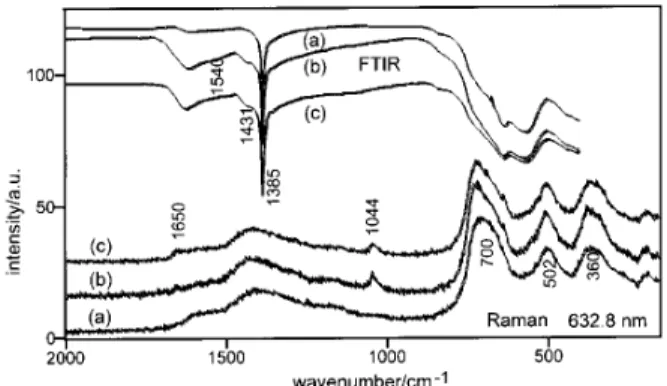
Fig. 2 displays the FTIR and Raman spetra of
solid samples of maghemite and maghemite modied
by the adsorption of glutami (sample A) and
aspar-ti (sample B) aids. The broad struture below 800
m 1
intheFTIRspetrumisduetomaghemite
vibra-tions. TheRamansignalsassoiatedtothemaghemite
appear as broad features at 360, 502, and 700 m 1
[8℄. The very broad and poor resolved feature near
1400m 1
isalsoharateristiofmaghemite[8℄. The
main harateristi vibrations of the adsorbates, the
NHbendingandC=Ostrethingmodesareexpetedto
appearabove 1400m 1
. Comparingthe FTIR
spe-traofmaghemiteandthoseofmodiedmaghemiteone
learly sees features near 1610, 1540 and 1431 m 1
whih ould be due to the adsorbates. The signal at
1385 m 1
ould be due to theoadsorbedNO
3 ion.
On theother hand,FTIRspetrafrom pureKBr
pel-letshavealsoshownthisfeature. Sinethenitrateion
usuallypresentsastrongRamanfeaturenear1050
m-1and wehavenotobservedany feature in thisregion
for the non-modiedsample (Fig.1a), webelieve that
this feature is due to some impurity in the KBr used
to preparethepellets. TheRamansignalsobservedat
1044 and 1650 m 1
(weak) are due to the CCO and
C=Ostrethingmodesofglutamate(oraspartate),
re-spetively.
Figure2. FTIR(KBrpellets)andRamanspetra(powder)
of: (a)maghemiteedl-assolid, (b)glutami(sampleA),
and()asparti(sampleB)modiedmaghemites.
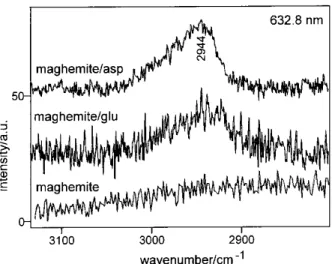
Fig.3presentstheRamanspetraofthemaghemite
samplesintheCHstrethingregion. Thebroadfeature
near2944m 1
isafurtherevidenefortheadsorption
of the organi aidson the maghemite surfae. From
theaboveresults,itseamsthattheorganiaidsare
ad-sorbedonthemaghemitesurfaeasarboxylates,
Figure 3. Raman spetra of the indiated samples inthe
CH strething region(asp and glu stand for aspartiand
glutamiaidmodiedmaghemites,respetively).
Inapreviouswork[16℄wehaveperformeda
ondu-timetri titrationoftheFe-edl-solutionwithasparti
andglutamiaids. Fromtheseresultswewereableto
drawnLangmuir-typeadsorption isothermsand found
no evidenefor multilayeradsorptionfor bothorgani
aids. Themaghemite partileareais3.4610 12
m 2
andtheadsorbatesurfaeonentrationwasestimated
tobea. 1.6710 10
mol/m 2
(wehaveonsideredthe
moleuleareaas1nm 2
). Thisresultandthefatthat
the FTIR spetra of the modied edl- present very
weak signals from the adsorbates are very interesting
sinenormalRamanspetrosopyouldnotexplainthe
observedresults. These resultsall foran explanation
based on a resonane proess mediated by the
parti-le surfae as ausing an enhanement of the Raman
features duetotheadsorbates.
TheRamanspetra ofMethyleneBluemodied
maghemite
MethyleneBlueisastronglyabsorbingdye. Evenat
lowonentrationsMBis presentin theformofdimer
and monomer. The dimer absorbs at 610 nm ( =
9.0610 4
L.mol 1
.m 1
) and the monomer at 662 nm
(=3.8810 4
L.mol 1
.m 1
)[17℄. At10 4
mol/LMB
onentrationandpH2.0,thedimerabsorptionappear
at608nmandisstrongerthanthatofthemonomerat
663nm. Therefore, Ramanspetraexitedat 632nm
areresonaneenhanedeitherfordimer andmonomer
MB speies. It is worth to mention that there is no
reportontheliteratureontheRamanspetrumofMB
in solutionattheresonaneondition,i.e.,usingared
laserline.
Fig. 4shows FTIRand resonane Raman spetra
(exitedat632.8nm)ofmaghemiteedl-thatwas
mod-ied bythe adsorptionofMB (samplesCand D). We
didnotobserveanysignalintheFTIRspetrumofthe
solidsample thatouldbeharateristiofMB.
Com-edl-revealsthatthefeaturenear 1385m 1
(hara-teristi of the presene of NO
3
ion) beomes broader
suggesting that the MB moleule, a ation, interats
withtheadsorbednitratebyionpairformation.
Figure4.FTIR(SampleDinKBrpellet)andRaman
spe-traofMB modiedmaghemite samplesC and Dat632.8
nmexitation.
ContrarytotheFTIRspetrum,theresonane
Ra-man spetra of the MB modied edl- solution and
solid (samples C and D, respetively) present several
featuresthatareharateristiofMB.Intheaseofthe
solidsample,note thatthepreseneofabroadfeature
near 710 m 1
haraterizes the maghemite
nanopar-tile andthe features at492and 1625 m 1
are
har-ateristioftheadsorbedMB. Aswementionedinthe
experimental part,sample Chas MB moleules in
so-lution. However,one doesnotobserveanysignalthat
ouldbeassigned toMB in solution. The omparison
wasdonewiththeRamanspetrumofMBinsolutions
exitedatpre-resonaneondition,at514.5nm
exita-tion[18℄.
Itiswellknownthatmoleulesadsorbedona
rough-enedsilvereletrode anpresentthesurfaeenhaned
Ramansattering (SERS) eet [21-23℄. In this ase,
surfae plasmon-polariton resonanes and photon
as-sisted(surfaemediated)hargetransferexitationare
responsible for the enhanement of the Raman
spe-tra [21-23℄. The enhanement fator for SERS an
be as large as 10 6
. If the adsorbate itself is a
hro-mophorethatstronglyabsorbsthelaserexitationused
in the experiment one an have the surfae-enhaned
resonaneRamansattering(SERRS) eet. At these
onditions,theenhanementfatoran be10 9
oreven
larger[22,24℄. Foromparisonpurposes,Fig. 5displays
the resonane Raman spetrum of solid MB and the
SERR(surfae-enhanedresonaneRaman)spetraof
MB adsorbedona silver eletrode. The Raman
spe-trumofMB insolution,where itispresentas adimer
is verysimilar to thesolid state spetrum. Themain
harateristifeaturesoftheaggregatedMBmoleules
aretheRamansignalsat450and502m 1
. WhenMB
adsorbsonthe silvereletrodeat monolayerondition
450and 502m 1
areveryweak.
Figure5.RamanspetrumofsolidMB(a)andSERR
spe-traofMB adsorbedonasilvereletrodeat monolayer(b)
andmultilayeronditions().
On the other hand, the SERR spetrum at
mul-tilayer ondition [23℄ presents the Raman features at
450and502m 1
relativelystrongerthanthatat 485
m 1
, suggesting that the number of aggregated MB
moleulesat theeletrodesurfaehasinreased.
ComparingtheRR spetraof Fig. 4and those of
Fig. 5weanalsosee that Ramansignalsdue to MB
adsorbed on the maghemite surfaeare broader than
those of solid MB or adsorbed on a silver eletrode.
Forinstane,thefeatureat1625m 1
hasafullwidth
at half maximum(fwhm) valueof 38 m 1
when MB
isadsorbedontheedl-while inthespetraofFig. 5
thefwhmvalueforthisRamansignalis17m 1
.
From the above results onean onlude that the
MBmoleuleadsorbsonthemaghemiteedl-
nanopar-tile surfae as a monomer. The adsorbed monomer
has aRaman signalthat is stronger than that of MB
present in solution and that the surfaeheterogeneity
inthis aseislargerthanthat ofthesilvereletrode.
We have also obtained Raman spetra of the MB
modied edl-exited at 514.5 nm. Almost the same
Ramanlinesobservedat632.8nmareobservedat514.5
nmexitation,buttherelativeintensitiesarequite
dif-ferent(seeFig. 6). Asabovementioned,theMBdimer
in solutionabsorbsnear610nm. This meansthatany
interationofMBhastheeetofinreasingtheenergy
ofthe
transitionresponsiblefortheblueolorof
MB.TheUV-visabsorptionspetrumoftheMB
modi-ededl-presentsastrongabsorptionnear400nm. As
aonsequeneoneneedstodilutetheworkingsolution
and use a verythin uvette. The absorption spetra
obtainedin this way reveal anot welldened feature
near 640 nm. On the other hand, the visible
absorp-tionspetrumofapureFe-edl- solutionalsopresents
afeaturenear650nm. ThereforeitisdiÆulttoassign
Figure 6. Raman spetra ofthe MB modied maghemite
edl- as asolid powder (sampleD) at the indiated laser
exitations.
TheRRspetraoftheMB solution[20℄showthat
as the exiting energy approahes resonane, all
ob-servedvibrationalmodesgetenhaned,indiatingthat
theeletroni systemisdeloalizedoverallbondsin
the rings, i.e., there is no loalized hromophore. On
the otherhand, thespetradisplayed in Fig. 6shows
that theMB vibrationalmodesat 495and1454m 1
arepreferentiallyenhanedongoingfrom514.5to632.8
nmexitation.Thisisanindiationthatthesurfaeof
the maghemite partile has indued some hanges on
the eletroni deloalization of the system. Further
evidenesforthisperturbationwasobtainedfromlaser
indueduoresene(LIF)measurements.
Figure 7. LIF spetra of the investigated MB modied
maghemite edl-: (a)Sample C; (b)Sample D; ()
Sam-pleE.
Fig.7displaystheLIFspetraofsamplesC,D,and
E. SinewehaveMBin solutionintheaseofsample
C,itsLIF spetrumisidential tothatof MBin
solu-tion. TheLIFspetrumofsampleD,asasolidpowder,
showsthat the emission maximumhas shifted a. 57
nm to higher energy (a blue shift). This means that
theemittingeletronistateisat ahigherenergylevel
whenMB isadsorbedonthemaghemitesurfae. This
result is in perfet agreement to the aboveonlusion
based onthe RRmeasurements,that theeletroni
systemoftheMBmoleuleisaetedbytheinteration
withthemaghemitesurfae.
from MB insolutionwasobservedat pre-resonaneor
resonane. Furthermore,no signalfrom adsorbedMB
wasobservedin theFTIRspetrum. These results
to-gether suggest that the Raman ross setion for MB
adsorbedonthemaghemitesurfaeislargerthanthat
ofMB insolutionorevenlargerthantherosssetion
for infraredabsorptions, whih usuallyare10 8
to 10 10
largerthanRamanrosssetions[24℄. Therefore,asin
thepreviousases,webelievethatsomekindofsurfae
enhaned phenomena is playing a rule in the Raman
spetraof MB-modiedmaghemiteferrouid.
IV Final remarks
The resultspresentedin this work havelearlyshown
that Raman spetrosopy is a powerful tehnique in
the haraterizationof pure magnetiuids and those
modiedbytheadsorption ofmoleules with dierent
hemial properties as aminoaids and photosensitive
speies.
In thease of maghemites wehaveshown that by
hanging the laser exitation energy it is possible to
tune on and o the resonane proess for dierent
speies present in the ferrite nanopartiles. For
in-stane, at red exitation one observes the main
on-tributionfrom maghemite(-Fe
2 O
3
)andnon
stoihio-metriFe(III) oxy-hydroxides. Atgreenexitationone
observesthe main ontribution of the Fe(OH)
3 at the
nanopartilesurfae.
Thisis averyinterestingaspetsinewith theuse
of beroptis onean monitorthe preparationof
fer-rouids byin situRamanspetrosopy.
In the study of the adsorption of glutamate and
aspartate it was demonstrated that these speies
ad-sorb hemially on the maghemite surfae by forming
helateompoundswiththeFe(III)ionspresentonthe
maghemite surfae.
The investigation of the MB modiedmaghemites
have shown that Methylene blue,aation, adsorbs as
amonomeronthemaghemitesurfae,probablybyion
pair formation with the oadsorbedNO
3
ions. A
re-markableaspetthatdeservesommentisthe
observa-tionthat theMB-maghemiteferrouidisstill strongly
uoresent. Thisresultsuggeststhat theMB-modied
maghemitemaybeagoodandidateforlaser
photody-namitherapy. Inthissense,furtherinvestigationsare
neessaryin ordertodeterminethequantumeÆieny
of the photoluminesene and the quantum eÆieny
oftripletstategeneration,whihareveryimportantin
the 1
O
2
generation.
Finally,aresonantproessinvolvingthe
nanoparti-le andthespeiesatthenanopartilesurfaemustbe
presentto explainthefatsthat almostnosignalfrom
theinvestigatedadsorbatesareobservedinFTIR
spe-tra of the modied maghemites. This aspet deserves
oneanestimatetheenhanementfators.
Aknowledgements
TheauthorsgratefullyaknowledgetheLaboratorio
de EspetrosopiaMoleular do Instituto de Qumia
daUniversidadedeS~aoPaulo(wheretheRaman
mea-surementswereperformed),andCNPqforresearh
fel-lowshipsandnanialsupport.
Referenes
[1℄ M.S.BrandtandM.Stutzmann,.SolidStateCommun.
93,473(1995).
[2℄ J.L. Gole, F. Dudel, D.R. Grantier and D.A. Dixon,
Phys.Rev.B.36,2137(1997).
[3℄ F.Dudel,J.L.Gole,M.Reiger,P.Kohl,J.Pikeringand
L.Bottomley,J.Eletrohem.So.143,L-164(1996).
[4℄ F.A.Tourinho,R.FrankandR.Massart,J.MaterSi.
25,3249(1990).
[5℄ F.A.Tourinho,J.Depeyrot, G.J.daSilva,andM.C.L.
Lara,Braz.J.Phys.28,413(1998).
[6℄ A. Hugot-Le Go, S. Joiret, and P. Falaras, J. Phys.
Chem.B, 103,9569(1999).
[7℄ N.Esser, Appl.Phys.A-Matter,69,507,(1999).
[8℄ M.H.Sousa,F.A.TourinhoandJ.C.Rubim,J.Raman
Spetros.31,185(2000).
[9℄ E.J.Heller, A.Chem.Res.14,368,(1981).
[10℄ D. Tannor and E.J. Heller, J. Chem. Phys. 77, 202
(1982).
[11℄ E.J. Heller, R.L. Sundberg and D. Tannor, J. Phys.
Chem.86,1822(1982).
[12℄ U.Hafeli,W.Shut,J.TellerandM.Zborowski,Eds.
Sienti andClinialAppliationsof Magneti
Carri-ers, Plenum Press: New York, 1997. U. Hafeliand M.
Zborowski, Eds.Pro. 2 nd
InternationalConferene on
theSientiandClinialAppliationsofMagneti
Car-riers,J.Magn.Magn.Mater.194(1999).
[13℄ E.M.TutiteandJ.M. Kelly,J.Photohem.Photobiol.
B,21,103(1993).
[14℄ J.M.Fernandez,M.D.BilgimandL.I.Grossweiner,J.
Photohem.Photobiol.B,37,131(1997).
[15℄ C.H.Sibata,V.C.Colussi,N.L.Oleink,andT.J.
Kin-sella.Braz.J.MedialandBiologial Researh.33,869
(2000).
[16℄ M.H.Sousa, J.C. RubimandF.A.Tourinho,J.Magn
Magn.Mater.225,67(2001).
[17℄ P.C.YatesandB.Patel,J.Mole.Strut.(Theohem),
315,117(1994).
[18℄ S.H.A.Niolai. Ph.DThesis, InstitutodeQumiada
USP,(1998).
[19℄ D.L. Jeanmaire and R.P. van Duyne, J. Eletroanal.
Chem.84,1(1977).
[21℄ J.C.Rubim,P.Corio,M.C.C.RibeiroandM.Matz,J.
Phys.Chem.99,15765(1995).
[22℄ P. Corio, J.C. Rubim and R. Aroa, Langmuir, 14,
4162(1998).
[23℄ S.H.A. Niolaiand J.C. Rubim, (1996), private
om-muniation.
[24℄ W.B. Person, Infrared Intensities and Atomi Polar
Tensors,Ch.4inVibrationalIntensitiesinInfraredand
Raman Spetrosopy, (Studies in Physial and
Theo-retial Chemistry, 20) ed. W.B. Personand G. Zerbi,