ABSTRACT: Objective: To analyze the contribution of three data sources in the description of traic accidents in the city of Belo Horizonte, Brazil. Methods: Exploratory study of databases: BHTRANS (metropolitan traic and transportation authority), Hospital Admissions and Mortality Information Systems, with estimation of proportions, coeicients and odds ratios. Results: Incomplete data was observed in the three sources, especially regarding alcohol consumption by drivers and use of safety equipment. The victim proile among the sources was consistent: young adults, males, motorcycle riders and pedestrians. In addition to the high mortality rate (19.4 per 100.000 inhabitants), an increase in the number of non-fatal accidents was observed. An increase of 34% in hospital admissions and of 53% in hospital costs was evidenced. The motorcycle accident rate is higher than expected given the leet composition. Male drivers have the highest risk of injury or death; relative to drivers, passengers or pedestrians have a 1,8 times higher risk of death. There was a 12% increase in the number of deaths at the site of the accident, 55% of which showed positive evidence of alcohol use and 50% higher risk of fatal accidents on weekends. Conclusions: Despite some incomplete record keeping and non-speciic death registry codes, it was possible to characterize the main factors associated with accidents: elderly pedestrians, motorcycle riders, alcohol consumption and speeding. The study demonstrated the complementarity of the three data sources, with their diferent goals, and revealed important features of the traic accident event-chain and victim proile, providing key data for the development of mitigation strategies.
Keywords: Traic accidents. Data sources. Information systems. Hospitalization. Mortality. Assessment.
Traic accidents in Belo Horizonte: the view
from three diferent sources, 2008 to 2010
Acidentes de trânsito em Belo Horizonte: o que revelam três diferentes
fontes de informações, 2008 a 2010
Lúcia Maria Miana Mattos PaixãoI,II,III, Eliane Dias GontijoI, Eliane de Freitas DrumondIII,
Amélia Augusta de Lima FricheII, Waleska Teixeira CaiafaI,II
IGraduate Program in Public Health, School of Medicine, Universidade Federal de Minas Gerais – Belo Horizonte (MG), Brazil. IIObservatório de Saúde Urbana – Belo Horizonte (MG), Brazil.
IIIMunicipal Department of Health – Belo Horizonte (MG), Brazil.
Corresponding author: Lúcia Maria Miana Mattos Paixão. Rua Maranhão, 1567/302, Funcionários, CEP: 30150-331, Belo Horizonte, MG, Brazil. E-mail: [email protected]
Conlict of interests: nothing to declare – Financing source: Fundo Nacional de Saúde (MS 25000.052443/2012-80) and research grant funding for the author Waleska Teixeira Caiafa by CNPq.
INTRODUCTION
Traic accidents (TA) are an important public health problem worldwide that requires joint eforts for efective and sustainable prevention1. Brazil ranks ifth among countries
with the highest rates for traic accident-related deaths, with estimation of 40,000 deaths per year2 that, added to seriously injured victims, account for over 150 thousand people and
total costs around R$ 28 billion per year3. The most relevant impacts of CA morbimortality
are seen among young males4, with great repercussion to the health system.
The development and implementation of traic accident prevention policies depend directly on information aimed for surveillance and monitoring systems, and on the analysis of situations in order to determine the magnitude of occurrences, victims’ proile, means of transportation involved, and the mapping of risk areas5. Such information is not fully
available in most countries, Brazil included.
Measures adopted in the country to reduce CA morbimortality have not presented the expected results3. Among the reasons pointed in literature, data about victims, which can
support planning and monitoring, are spread in diferent databases and, in isolation, are not able to show the actual magnitude of the problem. The World Health Organization (WHO) recommends that more than one data source be used in such cases as a shorter and less tortuous path to a broader understanding of health problems6. Traic accidents
with victims are routinely registered by local police authorities in police reports (BO, in
RESUMO: Objetivo: Analisar a contribuição de três diferentes fontes de informações na descrição de acidentes de trânsito em Belo Horizonte. Métodos: Estudo exploratório dos Sistemas de Informação da Empresa de Transportes e Trânsito, de Internações Hospitalares e Mortalidade, com análise de proporções, coeicientes e medidas de associação. Resultados: Preenchimento inadequado nas três fontes, destacando o uso de equipamentos de segurança e de álcool pelo condutor. Peril de homens, jovens, ocupantes de motocicleta ou pedestres semelhante nos três sistemas. Além do alto coeiciente de mortalidade dos residentes em Belo Horizonte (19,4 por cem mil habitantes) no período, observou-se aumento dos acidentes e de vítimas não fatais com concomitante elevação na taxa de internação (34%) e custos hospitalares (53%) e maior envolvimento de motocicletas, proporcionalmente à frota. Os homens condutores apresentaram mais chance de serem feridos ou mortos. Passageiros ou pedestres apresentaram 1,8 vezes a chance de morrer, comparados aos condutores. Veriicou-se aumento (12%) das mortes em via pública com 55% de positividade nos exames toxicológicos e 50% mais chance de acidentes fatais nos inais de semana. Conclusão: Apesar da incompletude dos registros, foi possível caracterizar como principais fatores associados aos acidentes os pedestres idosos, motociclistas, o uso de álcool e excesso de velocidade. O estudo demonstrou a complementaridade das três fontes de dados, com seus diferentes objetivos e permitiu revelar importantes aspectos da cadeia de eventos relacionados aos acidentes e vítimas de trânsito, desde sua ocorrência até a eventual evolução fatal, fornecendo informações relevantes da magnitude do problema para guiar estratégias de controle.
Portuguese). This legal tool brings information on type of accident, number of people involved, and presence of injured or fatal victims. Cases that demand hospitalization are registered in medical reports. Fatal victims, regardless of the length of time between the accident and one’s death, are registered in death certiicates issued by the Institute of Legal Medicine (IML), a mandatory procedure in cases of death by external causes.
Records managed by diferent institutions must be fully considered to better understand this contemporary phenomenon which strongly impacts Public Health.
This study, as a part of Avaliação do Projeto Vida no Trânsito7, seeks to evaluate the
completeness of diferent information systems in order to improve characterization of road accidents and victims in Belo Horizonte, Minas Gerais, Brazil.
METHODS
Exploratory study performed with three databases: Information System of BHTRANS, Belo Horizonte’s Transportations and Traic Company (BH10), Hospital Information System (SIH) and Mortality Information System (SIM), from 2008 to 2010.
BH10 includes all traic accidents that happen within the limits of the municipality based on police reports issued at the moment and place of accident, covering information about all people involved and the accident circumstances.
All people included in the Police reports were considered involved in cases (drivers, victims, witnesses, car owners). If applicable, information about age, gender, presence of injury, deaths, condition of passenger or driver, use of safety equipment (seat belt, helmet, child seat), license, and alcohol intake were made available when it came to drivers. Data about type and circumstances of the accident included: type of accident (collision, run over, fall); vehicles involved (car, bicycle, bus, motorcycle, truck); severity (fatal or non fatal); month, day of the week or weekend (Saturday and Sunday) of occurrence, time and place; highway conditions (traic signs, paving – asphalt or others); weather conditions (good, rainy, cloudy).
SIH holds information about Hospital Admissions (AIH) for payment of services delivered by the National Public Health System (SUS). Records containing primary or secondary diagnosis of traic accident according to codes V00 to V89, based on the 10th International
Data about hospitalization included reasons for admission (primary diagnosis), date of admission and discharge, reason for discharge (cure, improvement, death, referral, other), type of procedures (clinical or surgical), and cost of hospitalization, assistance at intensive care unit, and legal nature of the institution (public, hired, associated).
Information about deaths was obtained from death certiicates and reports issued by the IML and registered at SIM. Data was selected in databases with the codes V00 to V89 of IDC-10. Variables analyzed were age group, gender, educational level, marital status (single, married, widow(er), divorced or legally separated), ethnicity (white, black, brown) and place of death (hospital, health institution, scene of accident). Type of highway user was selected as basic cause. Variables related to city of living and city of accident were grouped as Belo Horizonte and others.
Post-mortem relation to alcohol, marijuana, cocaine and crack was assessed based on investigative reports issued by IML, obtained in active search and included in SIM by the epidemiological surveillance Committee. Results of toxicology tests were classiied according to IDC-10. Positive blood alcohol level was identiied by Y90.0 to Y90.9; blood marijuana metabolites level, by F12.0 to F12.9, and cocaine/crack, by F14.0 to F14.9.
Analyses included absolute and relative frequencies, estimates of accident rates and fatal victims per 10,000 vehicles ration, considering Belo Horizonte’s leet as denominator of due years8, and
hospitalization rate per traic accident among Belo Horizonte inhabitants9, by city of death occurrence.
Univariate analysis and risk estimates with 95% conidence interval (95%CI) for fatal accidents on weekends (Saturdays and Sundays); deaths on the scene of accident — driver or passenger/pedestrian — and injury or death on the scene of accident as regarding gender of drivers. Data were organized and statistical analyses were made in EpiInfo 3.5.1.
The study was approved by the Ethics Committee of UFMG and by the State Health Department of Belo Horizonte, protocols 158.014/2012 and 182.177/2012.
RESULTS
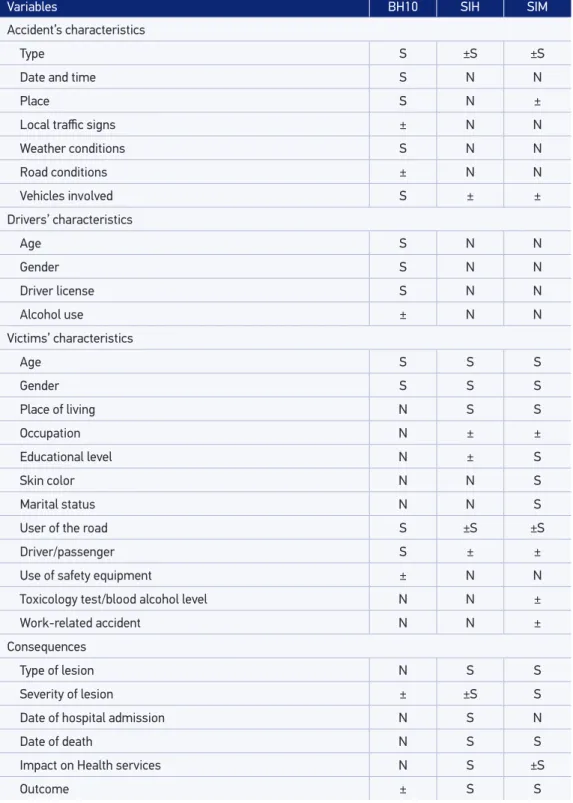
Each database provided information that was essential to the understanding of traic accidents with victims (Table 1).
Variables BH10 SIH SIM
Accident’s characteristics
Type S ±S ±S
Date and time S N N
Place S N ±
Local traic signs ± N N
Weather conditions S N N
Road conditions ± N N
Vehicles involved S ± ±
Drivers’ characteristics
Age S N N
Gender S N N
Driver license S N N
Alcohol use ± N N
Victims’ characteristics
Age S S S
Gender S S S
Place of living N S S
Occupation N ± ±
Educational level N ± S
Skin color N N S
Marital status N N S
User of the road S ±S ±S
Driver/passenger S ± ±
Use of safety equipment ± N N
Toxicology test/blood alcohol level N N ±
Work-related accident N N ±
Consequences
Type of lesion N S S
Severity of lesion ± ±S S
Date of hospital admission N S N
Date of death N S S
Impact on Health services N S ±S
Outcome ± S S
S: available in database; ±S: can be derived from database; ±: limited data; N: not available; BH10: BHTRANS Information System; SIH: Hospital Admissions Information System; SIM: Mortality Information System.
Databases on hospitalizations and mortality covered more complete data about victims characteristics, as socioeconomic variables (educational level, ethnicity/skin color) were only fully available at SIM and presented high completeness rates (above 96%). Fulilling of information about educational level and occupation at SIH was satisfactory (below 10%). Hospitalization costs, procedures, and assistance at intensive care unit were able to estimate the impact on health services in SIH. Use of less speciic codes (IDC-10) in secondary diagnosis at SIH and primary cause at SIM limited the analysis of accident characteristics. The absence of this information and non correlation to hospitalization or death by traic accidents underestimates the number of victims and makes accidents characterization more diicult (Table 1).
At SIM, records about occupation and work-related accidents were inadequately fulilled. The place of accident was not informed in 80% of the records between 2008 and 2009, and in 55% of records in 2010. SIM also allowed identifying deaths on public highways and out of the city. Between 2008 and 2010, 48,918 traic accidents with victims happened within the limits of Belo Horizonte, including roads crossing the city, thus accounting 109,322 people involved in accidents and 61,950 victims, according to BH10. All 10,374 hospital admissions (SIH) and 1,869 deaths (SIM) were related to accidents inside and out the city. Deaths occurred on the scene of accident or at health institutions.
ACCIDENTS WITH VICTIMS ACCORDING TO POLICE REPORTS – BH 10
There was an increase of 6% in number of victims, especially males (72%), Young people aging 18 to 29 (45%), or adults aging 30 to 39 (22%). Table 2 shows a reduction in the ratio fatal victims and obits among pedestrians (41%).
Cars (46%) and motorcycles (34%) were the vehicles more often involved in accidents with pedestrians, to which 18% of the elderly and 15% of teenagers younger than 15 years fall victim. Males were more often among injured drivers (OR = 1.66; 95%CI 1.59 – 1.73) or those dead on the scene of accident (OR = 3.25; 95%CI 1.87 – 5.67). Pedestrians or passengers were almost twice more likely to die on the scene of accident (OR = 1.81; 95%CI 1.58 – 2.08) when compared to drivers. Increase in traic accidents (7%) was below the increase of vehicle leet (20%), with a reduction in the accidents/leet ratio from 142 to 126 per 10,000 vehicles (Table 2). Considering the leet, the proportion of 6.8% of motorcycles involved in accidents was quite superior to that related to cars (1.6%).
TRAFFIC ACCIDENTS VICTIMS ACCORDING TO HOSPITAL ADMISSIONS – SIH/SUS
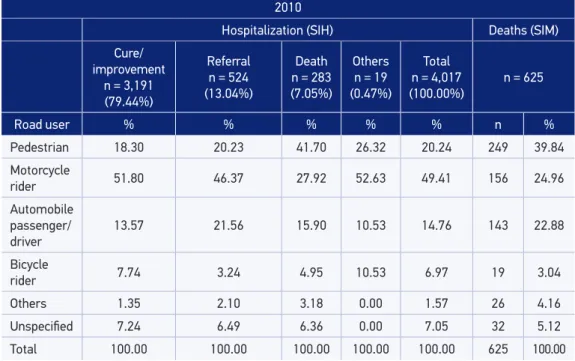
Three public hospitals held more than 90% of admissions due to TA. The progressive increase in hospitalization due to TA in the years studied and predominance of males (81%), young people aging 18 to 29 (39%) or adults aging 30 to 39 years (19%) among victims validate information obtained from BH10. Among residents of the city capital (47%), hospitalization rates increased from 6.2 to 8.3 per 10,000 inhabitants. Table 3 shows predominance of motorcycle riders among victims of traic accidents. In this period, hospital admissions due to car accidents increased by three times, as well as those involving motorcycles (43%) and pedestrians (13%), with reduction in cases involving bicycles.
Head and neck trauma (31%), lower limb trauma (28%), and polytrauma (6%) were the leading causes for hospital admissions, as 23% required intensive care. Surgical procedures were performed in more than 70% of cases. In this period, an increase of 12% was seen in the proportion of hospital discharge due to healing or improvement, and reduction
Year 2008 2009 2010
Accidents with victims 15,719 16,377 16,822
Accident rate* 141.96 134.22 126.26
Accidents with fatal victims 268 274 249
People involved in accident 34,934 36,838 37,550
Victims 19,948 20,874 21,137
Number of deaths† 273 288 262
Accident with pedestrian 104 123 111
Car collision 43 52 52
Motorcycle 105 88 83
Others 21 25 16
Fleet 1,107,259 1,220,125 1,332,381
Automobiles 785,904 863,760 937,819
Motorcycles 131,800 149,046 163,489
RVF** per vehicle 2.46 2.36 1.97
RVF per automobile 0.50 0.60 0.55
RVF per motorcycle 7.96 5.90 5.08
Source: BH10 database; Vehicle leet composition: SisMob-BH8/BHTRANS/PBH.
*accident rate per 10,000 vehicles; †mostly at site of accident; **fatal accident rate per 10,000 vehicles.
of 20% in deaths. In 2010, 3,191 (79%) of hospital admissions had favorable outcomes and 283 (7%) patients died. Referrals and other reasons accounted for 543 (14%) of all hospital admissions (Table 3). Costs increased by 53% between 2008 and 2010, going from R$ 9.3 to 14.2 million due to admissions in intensive care units, accounting for more than half of all costs in 2010.
TRAFFIC ACCIDENTS FATAL VICTIMS ACCORDING TO SIM DATA
1,869 deaths by TA occurred in the period, accounting for 26% of deaths by external causes. Most fatal victims (53%) were residents of Belo Horizonte, males (79%), young people aging 18 to 29 (30%) or adults aging 30 to 39 (18%), single (60%), brown or black-skinned (62%), with less than eight years of study (56%). The level of the aged among deaths due to TA (21%) was higher than that regarding hospital admissions (7%) or police reports (6%). About 30% of deaths of Belo Horizonte residents happened in other cities. There was a 40% increase in mortality rates among residents, from 13.9 to 19.4 deaths per 100,000 inhabitants, when deaths in other cities were included.
Among annual deaths by TA, more than two thirds (479 on average) of cases happened in Health Institutions, almost exclusively in public hospitals (96%). There was a 12% increase in deaths on public highways, on the scene of accident (129 in 2008 to 145 in 2010). A higher rate of death of pedestrians was also found, followed by the death of motorcycle riders and car drivers (Table 3). In 2009, an increase in deaths by “unspecific” TA was reported, as related to 2008 and 2010, reaching 26% of total number of deaths. However, the distribution of road users was similar in all years. In 2010, automobiles were mostly involved in accidents with pedestrians (28%), followed by heavy vehicles such as bus and trucks (22%), and motorcycles (21%).
The leading injuries reported in death certificates were polytrauma (53%), head and neck trauma (35%), and chest and abdominal trauma (6%).
In the course of this three-year study, toxicological test was positive for alcohol, marijuana and/or cocaine/crack in 348 (18.6%) cases of death. Among 432 fatal victims on the scene of accident, 55% were positive for toxicology, while among obits in hospitals (1,437) only 11% of tests were positive. In 275 (79%) of positive tests, alcohol was detected in isolation. Association of alcohol and illicit drugs (marijuana, cocaine/crack) was found in 38 death cases (11%), and illicit drugs only were detected in 35 cases (10%).
DISCUSSION
2008
Hospitalization (SIH) Deaths (SIM)
Cure/ improvement
n = 2,246 (71.26%)
Referral
n = 540
(17.13%)
Death
n = 277 (8.79%)
Others
n = 89 (2.82%)
Total
n = 3,152
(100.00) n = 652
Road user % % % % % n %
Pedestrian 21.06 20.00 42.96 22.47 22.84 260 39.88
Motorcycle
rider 45.10 45.19 28.88 56.18 44.00 178 27.30
Automobile passenger/ driver
7.48 3.33 0.72 7.87 6.19 114 17.48
Bicycle
rider 12.20 4.81 6.50 10.11 10.37 21 3.22
Others 1.69 1.48 2.89 0.00 1.71 23 3.53
Unspeciied 12.47 25.19 18.05 3.37 14.88 56 8.59
Total 100.00 100.00 100.00 100.00 100.00 652 100.00
2009
Hospitalization (SIH) Deaths (SIM)
Cure/ improvement
n = 2,455 (76.60%)
Referral n = 488 (15.23%)
Death
n = 254 (7.93%)
Others
n = 8 (0.25%)
TOTAL
n = 3,205
(100.00%) n = 592
Road user % % % % % n %
Pedestrian 20.65 17.83 46.46 62.50 22.37 216 36.49
Motorcycle
rider 47.37 48.57 23.62 12.50 45.59 104 17.54
Automobile passenger/ driver
11.12 12.30 10.63 25.00 11.29 96 16.22
Bicycle
rider 10.06 4.30 6.69 0.00 8.89 15 2.53
Others 1.47 1.64 0.79 0.00 1.44 8 1.35
Unspeciied 9.33 15.37 11.81 0.00 10.42 153 25.84
Total 100.00 100.00 100.00 100.00 100.00 592 100.00
Table 3. Distribution of hospital admissions due to traic accidents, according to reason for hospital discharge and cause of deaths by type of road user, Belo Horizonte, 2008 – 2010.
professionals at health institutions, and forensic doctors through death certiicates. Our indings show the liability of diferent sources with diferent purposes and point of view to collect data, and justify the increasing use of such databases. Linking information from diferent, more complete and trustworthy sources10,11 can be a reliable strategy for the
assessment and characterization of Information Systems, and also for the improvement of actions to reduce TA.
All three databases lacked some information, which confirms the findings of previous studies on Information Systems12, reflecting inadequate fulfilling of data
regarding important risk factors for severe and fatal accidents: alcohol intake by the driver and misuse of safety equipment1. The adequate report of this type of information
should be continuously encouraged12. The limited availability of information about
the place of accident (such as road conditions and traffic signs) suggests the use of tools such as Google Street View to help analyze these features13. Although SIH only
holds information about hospital admissions at SUS, it covers well the most severe accidents, a gateway to the public health system. Deaths in hospitals may reflect the severity of accidents or poor quality of health care, as well as hospital discharges. Universal coverage of SIM shows total number of deaths, including those happening on the streets, hospitals or out of the city. Fluctuation in death rates due to TA classified as unspecific in the studied period, which increased in 2009, represents a challenge
2010
Hospitalization (SIH) Deaths (SIM)
Cure/ improvement
n = 3,191 (79.44%)
Referral n = 524 (13.04%)
Death
n = 283 (7.05%)
Others
n = 19 (0.47%)
Total n = 4,017
(100.00%) n = 625
Road user % % % % % n %
Pedestrian 18.30 20.23 41.70 26.32 20.24 249 39.84
Motorcycle
rider 51.80 46.37 27.92 52.63 49.41 156 24.96
Automobile passenger/ driver
13.57 21.56 15.90 10.53 14.76 143 22.88
Bicycle
rider 7.74 3.24 4.95 10.53 6.97 19 3.04
Others 1.35 2.10 3.18 0.00 1.57 26 4.16
Unspeciied 7.24 6.49 6.36 0.00 7.05 32 5.12
Total 100.00 100.00 100.00 100.00 100.00 625 100.00
Source: SIM and SIH/ Department of Health of Belo Horizonte.
in continued qualification of secondary databases and points the importance of completing data with information from other sources, including search in newspapers14
and consultation to legal medical reports and certificates. The distribution of deaths per institutions as found at SIM, allows one to know services with greater demand of care in cases of death.
The reduction in TA in proportion to the city fleet was also seen in Campinas by Marín-León et al.15, who attributed this finding to the slowness in traffic due to the large
number of cars on streets. Isolated analysis of this indicator should be avoided, once it does not point an effective reduction in the risk of injuries and death. Although the increase in number of accidents were not exactly related to the urban fleet increase, the magnitude of the problem was reflected in the annual increase of accidents with fatal and injured victims, which places TA as one of the most significant public health problems not only in Belo Horizonte, but in all cities of Brazil4. Besides that, mortality
rates due to TA are high, indicating the need for effective interventions to substantially reduce these indexes3,4. Despite improvements in legislation, the implementation of
traffic control agencies, improvement in automobiles’ safety, and use of electronic monitoring in traffic, no reduction in accidents, deaths and disabilities resulting from them were seen in our study3.
The profile of victims identified in these Information Systems was similar to that reported in literature3-5. The high rate of fatal victims compared to hospital and traffic
reports suggests high severity of lesions in this population as a result of fragility and presence of comorbidities common to this group of people16. Moreover, most of the
victims were pedestrians, that is, more vulnerable to direct impact by cars16.
The finding of predominantly black/brown-skinned or less educated fatal victims points to inequity in TA deaths, rooted in social determinants17,18. This information,
made available only by SIM, is essential for the definition of public policies and strategies aimed at the most vulnerable groups.
The greater involvement of young male motorcycle riders or car drivers, on weekends3, suggests a relation between TA and the use of psychoactive substances,
evidenced by blood alcohol and drugs level detected in more than half of death cases on the scene of accident. A study on fatal victims in the Federal District showed high rates of alcohol use (43%)19. A survey on alcohol intake in Brazil pointed a 35%
prevalence of drinking-driving relation, 6 times higher chances of males drive after using alcohol, and 7 times higher chances of previous involvement in alcohol-related accidents20. More rigidly in road monitoring with the use of breath alcohol analyzers
could reduce these numbers19,21. Previous use of illicit drugs in 21% of fatal victims
point to the need of surveillance aimed at these substances, as there are laws on the subject already22.
actions23. Motorcycles are used as work tools, and some riders are subjected to long
workshifts and low wages by clients and employers24.
The study showed that motorcycle riders have been responsible for an expressive portion of accidents with pedestrians3,25, which happen especially with people under
the age of 15 and with the elderly. The authors gave emphasis to the double risk of accidents with pedestrians by motorcycle riders compared to car drivers25. Freitas
et al. analyzed traffic accidents involving children and reported that 76% of them resulted from accidents with pedestrians or with bicycle riders26. A study about
victims of trauma suggested that accidents with pedestrians are the second leading cause of trauma among the elderly, being fall the first16. Vulnerability of pedestrians
was shown in the analysis of hospital admissions and deaths3.
The large number of fatal victims in the scene of accident, including passengers or drivers, reinforces the idea that, despite the increase in cars’ safety and the presence of speed radars, most severe accidents resulted from overspeeding, even on urban streets27. The increase in hospitalization rates reflects the severity of traffic accidents,
as well as the types of injury found in death certificates and hospital admission reports. Polytrauma was the main cause of death, mostly immediate, and head trauma were the leading cause for hospital admission. In literature reviews, head/neck was the second mostly affected region of the body in accidents, preceded by upper/lower limbs injuries28. The high rate of hospital discharge by improvement of patient’s
condition and the decrease in death rates among patients admitted to hospitals may suggest a better pre-hospital and hospital care. However, the large number of deaths on the scene of accident reveals the need for further specific studies on this theme.
The public health emergency and urgency network in Belo Horizonte has three reference trauma centers, where almost 100% of patients were admitted due to TA, which points the need of actions aimed at improving the assistance to these victims at these institutions6. The correct codification of diagnosis at AIH must also be
stimulated, for these data generate accurate information about hospital admissions by TA, a significant public health problem in Brazil.
High costs of hospitalization, especially for the public health network, were also found in other studies29,30. These costs arise from complex procedures such surgeries
and intensive care assistance. Hospital admissions by external causes were shown to have higher costs than those by natural causes, and admissions by TA have a higher average cost29. Reduction in hospital admissions, severity of injuries and costs could be
reached if prevention measures were taken, correct use of safety equipment included3.
In 2001, the Ministry of Health issued the National Policy for the Reduction of Morbidity and Mortality from Violence and Accidents31,implemented in Belo Horizonte,
based on the magnitude, risk and importance of TA in overall mortality rates4,32,
Although there was no reduction in mortality related to TA, it is important to note the mobilization of the Municipal Health Department and intersectorial articulations that allowed integration of data from Police reports and Health reports. This initiative allowed implementing inspection and educational actions regarding traffic, with special emphasis to the most vulnerable groups.
The use of secondary databases with inadequate fulfilling of information limited the analysis of important features such as alcohol and safety equipment use by car drivers. Isolated assessment of different databases cannot assure analysis of the same individuals. Not all injured victims reported in Police reports were admitted to hospitals, nor did hospitalizations and deaths within the limits of the city exclusively correspond to TA that took place in the city, that is, the ones that can be managed by local traffic agencies.
Linking data from different sources allows completing information available at each database, and also relating victims’ reports to the type of accident and outcomes, expanding understanding of this relevant public health issue.
CONCLUSION
Our study was able to show the completeness of all three sources of information used, with their respective purposes, and allowed pointing out important aspects of the events related to traffic accidents, from the moment they happen to possible death occurrences.
Differences in the estimates of number of injured and fatal victims found in databases represent a difficulty in measuring the actual magnitude of traffic accidents. Despite incompleteness of data and the use of unspecific codes in records, which hinders the exact listing of all victims, our study showed the vulnerability of young males, especially motorcycle riders, and pedestrians, namely the elderly. Our findings could also show the severity of accidents, reflected by the large number of fatal victims on the scene of accident and the type of lesions reported, raising the hypothesis of overspeeding as associated factor, as well as alcohol and/or drug abuse, related to more than half of deaths on the scene of accident.
The increase in mortality coefficient related to TA among Belo Horizonte inhabitants, added by deaths occurred out of the city limits, mostly on roads administered by State or Federal entities, underlies the need for broader policies and the importance of intersectoral and interinstitutional actions.
REFERENCES
1. World Health Organization. Global status report on road safety: time for action. Geneva: World Health Organization; 2009.
2. Ministério da Saúde. DATASUS. Disponível em: http:// www2.datasus.gov.br/ DATASUS/index.php?area=02. (Acessado em 08 de julho de 2014).
3. Bacchieri G, Barros AJD. Acidentes de trânsito no Brasil de 1998 a 2010: muitas mudanças e poucos resultados. Rev Saúde Pública 2011; 45(5): 949-63.
4. Morais Neto OL, Montenegro MMS, Monteiro RA, Siqueira Junior JB, Silva MMA, Lima CM, et al. Mortalidade por acidentes de transporte terrestre no Brasil na última década: tendência e aglomerados de risco. Ciênc Saúde Coletiva 2012; 17(9): 2223-36.
5. Cabral APS, Souza WV, Lima MLC. Serviço de Atendimento Móvel de Urgência: um observatório dos acidentes de transportes terrestre em nível local. Rev Bras Epidemiol 2011; 14(1): 3-14.
6. Gawryszewski VP, Kahn T, Mello Jorge MHP. Informações sobre homicídios e sua integração com o setor de segurança pública. Rev Saúde Publica2005; 39(4): 627-33.
7. Morais Neto OL, Silva MMA, Lima CM, Malta DC, Silva Jr JB, et al. Vida no Trânsito Project: evaluation of the implementation in ive Brazilian state capitals, 2011-2012. Epidemiol Serv Saúde 2013; 22(3): 373-82.
8. Empresa de Transporte e Trânsito de Belo Horizonte (BHTRANS). Frota de veículos em Belo Horizonte – SisMob-BH. Disponível em: http://www.bhtrans. pbh. gov.br/portal/page/portal/portalpublicodl/Temas/ Observatorio/SISMOBBH-2013/Tabelas14_ Frota SisMob-BH-Tab14b190413.pdf. (Acessado em 5 de junho de 2013).
9. Instituto Brasileiro de Geograia e Estatística. Censo 2010 – Dado Belo Horizonte. Disponível em: http:// www.censo2010.ibge.gov.br/painel/?nivel=mn. (Acessado em 15 de janeiro de 2013).
10. Mello Jorge MHP, Koizumi MS. Acidentes de transito no Brasil: breve análise de suas fontes de dados. Rev ABRAMET 2001; 38: 49-57.
11. Tomimatsu MFAI, Andrade SM, Soares DA, Mathias TAF, Sapata MPM, Soares DFPP, et al. Qualidade da informação sobre causa externas no Sistema de Informações Hospitalares. Rev Saúde Pública 2009; 43(3): 413-20.
12. Lima CRA, Schramm JMA, Coeli CM, Silva MEM. Revisão das dimensões de qualidade dos dados e métodos aplicados na avaliação dos sistemas de informação em saúde. Cad Saúde Pública 2009; 25(10): 2095-109.
13. Clarke P, Ailshire J, Melendez R, Bader M, Morenof J. Using Google Earth to conduct a neighborhood audit: Reliability of a virtual audit instrument. Health & Place 2010; 16(6): 1224-9.
14. Villela LCM, Rezende EM, Drumond EF, Ishitani LH, Carvalho GML. Utilização da imprensa escrita na qualiicação das causas externas de morte. Rev Saúde Pública 2012; 46(4): 730-6.
15. Marín-León L, Belon AP, Barros MBA, Almeida SDM, Restitutti MC. Tendência dos acidentes de trânsito em Campinas, São Paulo, Brasil: importância crescente dos motociclistas. Cad Saúde Pública 2012; 28(1): 39-51.
16. Silveira R, Rodrigues RAP, Costa Junior ML. Idosos que foram vítimas de acidentes de trânsito no município de Ribeirão Preto, em 1998. Rev Lat Am Enferm 2002; 10(6): 765-71.
17. Montenegro MMS, Duarte EC, Prado RR, Nascimento AF. Mortalidade de motociclistas em acidentes de transporte no Distrito Federal, 1996-2007. Rev Saúde Pública 2011; 45(3): 529-38.
18. Caiafa WT, Friche AAL. Urbanização, globalização e segurança viária: um diálogo possível em busca da equidade? Ciênc Saúde Coletiva 2012; 17(9): 2238-41.
19. Modelli MES, Pratesi R, Tauil PL. Alcoolemia em vítimas fatais de acidentes de trânsito no Distrito Federal, Brasil. Rev Saúde Pública 2008; 42(2): 350-2.
20. Pechansky E, De Boni R, Diemen LV, Bumaguin D, Pinsky I, Zaleski M, et al. Highly reported prevalence of drinking and driving in Brazil: data from first representative household study. Rev Bras Psiquiatr 2009;31(2): 125-30.
21. Mascarenhas MDM, Malta DC, Silva MMA, Gazal-Carvalho C, Monteiro RA, Morais Neto OL. Consumo de álcool entre vítimas de acidentes e violências atendidas em serviços de emergência no Brasil, 2006 e 2007. Ciênc Saúde Coletiva 2009; 14(5): 1789-96.
22. Brasil. Lei 11.705 de 19 de junho de 2008. Altera a Lei no 9.503, de 23 de setembro de 1997, que institui o Código de Trânsito Brasileiro, e a Lei no 9.294, de 15 de julho de 1996. Diário Oicial da União 2008; Jun 20.
23. Veronese AM, Oliveira DLLC. Os riscos dos acidentes de trânsito na perspectiva dos moto-boys: subsídios para a promoção da saúde. Cad Saúde Pública2006; 22(12): 2717-21.
25. Barros AJ, Amaral RL, Oliveira MS, Lima SC, Goncalves EV. Acidentes de trânsito com vítimas: sub-registro, caracterização e letalidade. Cad Saúde Pública 2003; 19: 979-86.
26. Freitas JPP, Ribeiro LA, Jorge MT. Vítimas de acidentes de trânsito na faixa etária pediátrica atendidas em um hospital universitário: aspectos epidemiológicos e clínicos. Cad Saúde Pública 2007; 23(12): 3055-60.
27. Thielen IP, Hartmann RC, Soares DP. Percepção de risco e excesso de velocidade. Cad Saúde Pública 2008; 24(1): 131-9.
28. Calil AM, Sallum EA, Domingues CA, Nogueira LS. Mapping injuries in traic accident victims: a literature review. Rev Lat Am Enfermagem 2009; 17(1): 120-5.
29. Mello-Jorge MHP, Koizumi MS. Gastos governamentais do SUS com internações por causas externas. Rev Bras Epidemiol 2004; 7(2): 228-38.
30. Melione LP, Mello-Jorge MHP. Gastos do Sistema Único de Saúde com internações por causas externas em São José dos Campos, São Paulo, Brasil. Cad Saúde Pública 2008; 24(8): 1814-24.
31. Brasil. Ministério da Saúde. Portaria n. 723, de 16 de maio de 2001. Dispõe sobre a Política Nacional de Redução de Morbimortalidade por Acidentes e Violência. Disponível em: http://portal.saude.gov. br/portal/arquivos/pdf/politicapromocao.pdf
32. Souza ER, Minayo MCS, Franco LG. Avaliação do processo de implantação e implementação do Programa de Redução da Morbimortalidade por acidentes de Trânsito. Epidemiol Serv Saúde 2007; 16(1): 19-31.
Received on: 12/13/2013