Original article (short paper)
Emotional eating is related to carbohydrate
intake in active women
Marcus Vinicius Lucio dos Santos Camila Maria de Melo
Universidade Federal de São Paulo, São Paulo, SP, Brasil
João Paulo Pereira Rosa
Universidade Federal de Minas Gerais, Pampulha, Belo Horizonte, MG, Brasil
Erica Vale Alves da Silva Hospital São Luiz, São Paulo, SP, Brasil
Giscard Humberto Oliveira Lima Mariana Pantaleão Del Re
Sergio Tuik
Universidade Federal de São Paulo, São Paulo, SP, Brasil
Marco Túlio de Mello
Universidade Federal de São Paulo, São Paulo, SP, Brasil
Universidade Federal de Minas Gerais, Pampulha, Belo Horizonte, MG, Brasil
Abstract — Background: Physical exercise may contribute to changes in eating behavior. Aims: to investigate eating behavior and reported energy intake in physically active individuals. Methods: Thirty-nine healthy adults of both sexes, who were involved in physical itness training, were enrolled to participate in the study. A food diary and the TFEQ-21 was used for energy intake measurement and eating behaviors identiication. Results: All participants showed acceptable levels of all evaluated behaviors: Cognitive restraint (46.58 ± 16.4 and 49.5 ± 20.0), Emotional eating (8.12 ± 12.5 and 40.8 ± 26.7), and Uncontrolled eating (21.6 ± 15.1 and 35.6 ± 20.9) in men and women, respectively. Uncontrolled eating was associated with increased carbohydate intake for women, and fat-free mass content was associated with less Emotional eating only in men. There were no differences in energy and macronutrient consumption between training and non-training days. Conclusion: Regular physical exercise is associate to better eating behaviors, but women may ind it harder to maintain or lose weight due to higher levels of emotional eating.
Keywords: eating behavior, physical exercise, energy intake
Background
Eating behavior (EB) is deined as every practice related to food: its selection, acquisition, preservation, preparation, and intake1. Several factors inluence EB: physiological
fac-tors, such as hunger and satiety sensations, and emotional states, such as cognition and social behavior2. Thus, the food
choices of each individual are determined by a combination of these factors3.
The alarming increase in obesity incidence and prevalence is due, at least in part, to the highly obesogenic environment we face in society4. Conversely, because of the current social
perception of beauty, many people are continuously trying to lose weight.
EB can be distinguished by three different behaviors: cognitive restraint (CR), characterized by several dietary prohibitions and restrictions usually associated with losing weight desire2,5; uncontrolled eating (UE), described as the
loss of self-control when the individual is exposed to diverse
non-healthy food6; and emotional eating (EE), which is directly
related to mood and stress levels7. These behaviors present their own etiology and are derived from theories such as ex-ternality theory, psychosomatic theory and restraint theory8.
All these behaviors are components of EB, however, success in body weight maintenance might be related to an imbalance in these behaviors9,10, which also appear to be inluenced
by components such as sex and obesity severity11. Lifestyle
counseling for weight loss can contribute to changes in these behaviors and weight maintenance12.
In the search for a healthier lifestyle, physical exercise is an important ally: as well as the metabolic effects, exercise can also contribute to behavioral changes that, in turn, result in better eating habits13. Also, is well established that lifestyle
changes promote health beneits, such as reductions in total cholesterol, LDL lipoprotein fraction, blood pressure, and glucose maintenance14.
exercise alone lead to signiicant reductions in body weight? In a meta-analysis study, Johns et al.15concluded that physical
exer-cise alone is of low effectiveness in weight reduction, whereas, in the long term, the best-described intervention comprises both physical exercise practice and dietary control. In 2010, Sweet
et al.16 suggested that interventions that do not propose changes
in eating habits are ineffective for weight loss, and increased energy intake in workout days might be a compensatory effect due the elevated energy expenditure.
Therefore, it is clear that food choices are regulated by several factors and daily physical exercise might be an impor-tant contributing factor. It is believed that people engaged in regular physical exercise practices have more favorable EB and healthier habits, which lead to reductions in food intake and better body weight control. Thus, the aim of this study was to evaluate the EB components (cognitive restraint, emotional eating, and Uncontrolled eating) and food intake of physical exercise practitioners to verify if there is a compensatory food intake on training days compared to non-training days.
Methods
This study was approved by the Ethics Committee for Human Beings of the Federal University of São Paulo (UNIFESP), under number 0155/11. All participants signed an informed consent form.
The sample consisted of 39 individuals of both sexes, aged from 21 to 59 years. All participants were healthy, with no abnormalities shown in clinical parameters or in electrocar-diograms at rest and effort. The subjects had no current or past cardiovascular, respiratory, neurological or psychiatric disease and had all undertaken physical training in the last six months. The participants were committed to training under the supervi-sion of researchers for one year, three times a week, and each training session lasting an hour.
Physical exercise training
The physical exercise training was perfomed at the Centro de Estudos em Psicobiologia e Exercício (CEPE-UNIFESP). The climate of the training room was standardized throughout the whole training session. Aerobic training was performed on a treadmill (Life Fitness® 9500; Schiller Park, United States), continuously, with each session varying from 30 to 50 minutes. The intensity of training corresponded to the ventilatory thresh-old 1 (VT-1), determined by an incremental testing protocol with speed and 1% of inclination increments each minute until maximum voluntary exhaustion17. The test was performed every
three months from the start of the training sessions.
In resistance training, the following physical exercises were performed: chest press, leg press, lat machine, leg curl, shoulder press, leg extension, arm extension, arm curl, and abdominal crunch (Selection, Technogym®, Italy). The subjects were in-structed to perform the exercises, alternating each segment18.
The intensity of exercise was deined from the loads obtained
in a multiple repetitions test, using a pre-deined number of repetitions19. Training intensity was made up of 75% of one
maximum repetition18. The resistance training was designed to
have ive distinct phases, with number of sets varying between two (phase 1) and four (phase 5), repetitions totaling from 10–12 (phase 1) down to 6–8 (phase 5), and with rest intervals between 60 and 90 seconds.
Eating behavior assessment
The Three-Factor Eating Questionnaire R21 (TFEQ-R21) was used to EB evaluations20. The Three-Factor Eating Questionnaire (TFEQ) was irst used in 1985 to determine different types of EBs, and comprised 51 items22. This was later simpliied in an
18-question version23 and inally, in 2005, was expanded to
21 questions24. In 2011, the questionnaire was translated into
Portuguese and validated in adult women20. The three types of behavior evaluated were Cognitive restraint, Emotional eating, and Uncontrolled eating. The Cognitive restraint scale includes six items and measures the avoidance of certain items and control of food intake to inluence body weight. The Emotional eating scale includes six items and measures the propensity to eat excessively in response to negative emotional states such as anxiety, depression and loneliness, and the Uncontrolled eating scale includes nine items and analyzes the tendency of individu-als to lose control of food intake in response to the presence of hunger and external stimuli21.
Energy intake
Dietary intake was assessed by a three-day food diary. All food and beverage intake was recorded on a training session day, a non-training day and a weekend day. AvaNutri® software was used to calculate daily macronutrient intake.
Body composition assessment
Body composition assessment was performed by plethysmog-raphy (Bod POD®, Life Measurement Inc., CA, USA), which consists of an electronic scale, a plethysmograph, a cylinder for calibration, and computer software.
Data analysis
First, data normality was tested by Shapiro-Wilk test. Student’s t
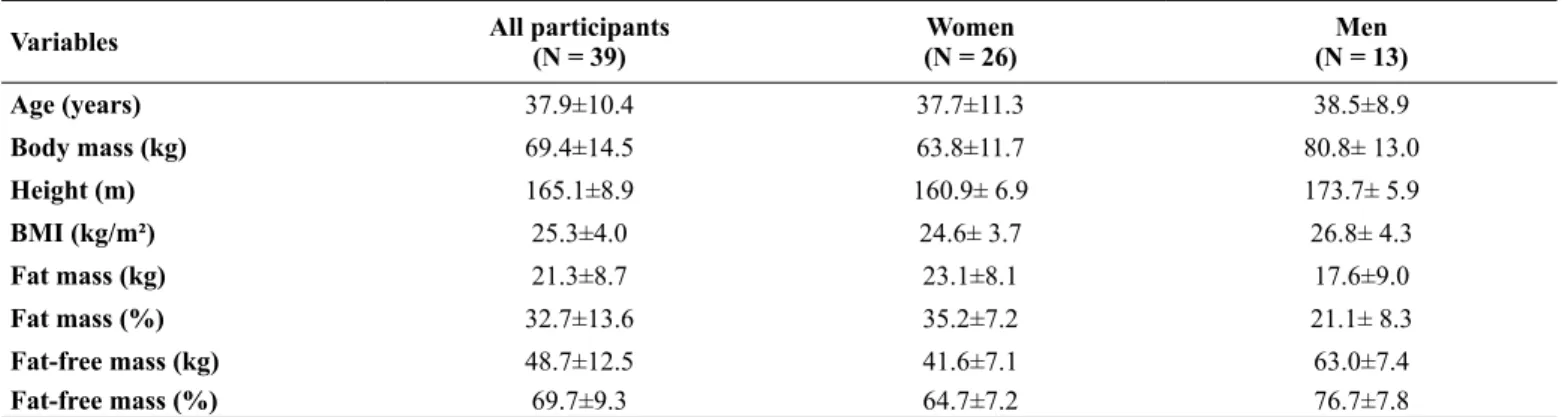
Table 1. Age, anthropometric, and body composition parameters of physically active men and women.
Variables All participants (N = 39)
Women (N = 26)
Men (N = 13)
Age (years) 37.9±10.4 37.7±11.3 38.5±8.9
Body mass (kg) 69.4±14.5 63.8±11.7 80.8± 13.0
Height (m) 165.1±8.9 160.9± 6.9 173.7± 5.9
BMI (kg/m²) 25.3±4.0 24.6± 3.7 26.8± 4.3
Fat mass (kg) 21.3±8.7 23.1±8.1 17.6±9.0
Fat mass (%) 32.7±13.6 35.2±7.2 21.1± 8.3
Fat-free mass (kg) 48.7±12.5 41.6±7.1 63.0±7.4
Fat-free mass (%) 69.7±9.3 64.7±7.2 76.7±7.8
Variables presented in mean ± standard deviation. BMI, body mass index.
Cognitive Restraint Uncontrolled Eating Emotional Eating 80
60
40
20
0
*
*
Figure 1. Eating behaviors evaluated by TFEQ-21 in physically active men and women. Variables showed in mean ± standard deviation; Black bars, all participants; White bars, female participants; Gray bars, male participants. *Signiicant difference between men and women (ANOVA one way, post hoc Tukey; p < 0.05).
Results
Our sample consisted of 39 men and women with a mean age of 38 ± 10 years. Among these, 26 were women and 13 men, ranging in body mass index (BMI) classiication between normal weight, overweight, and obese (Table 1). Our characterization
Figure 1 shows the prevalence of each EB component among participants. Higher scores of UE were found among women (men, 21.6 ± 15.1; women, 35.6 ± 20.9; p < 0.05) and EE (men,
8.12 ± 12.5; women, 40.8 ± 26.7; p < 0.05). No signiicant
dif-ference was found in CR behavior between sexes (men, 46.58 ± 16.4; women, 49.5 ± 20.0).
In this sample, there was no signiicant difference in energy and macronutrient consumption between the evaluated days (training day, non-training day, and weekend). When stratiied by sex, still no signiicant difference is observed in energy and macronutrient intake between the different days in men and women. As expected, in the average of the three evaluated days, higher energy intake was observed in men (Table 2).
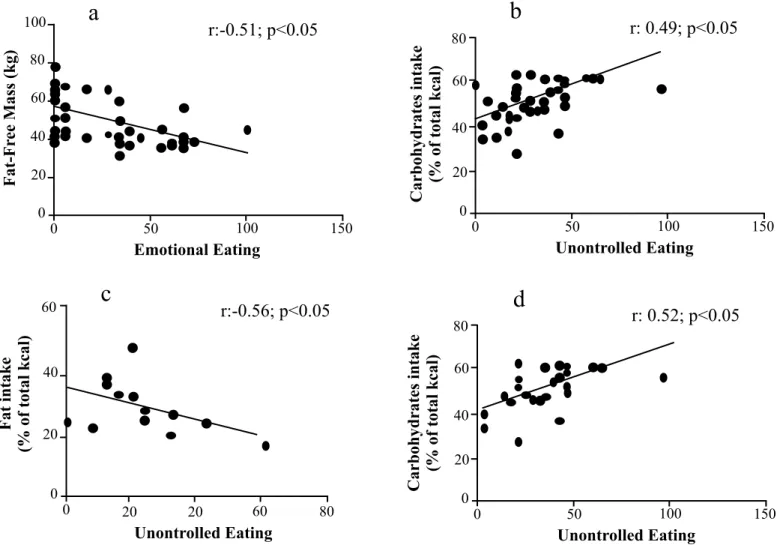
When analysed all participants, Pearson correlations showed a signiicant negative correlation between fat-free mass (kg) and EE (r: -0.514; p < 0.05) and a positive correlation between
UE and percentage of carbohydrate intake (r: 0.488; p < 0.05).
data depicts a normal weight population, with a tendency to overweight for females according to BMI classiication and fat mass and a minor increase in BMI in male population with a normal range of fat mass. No signiicant differences were found between age, anthropometric, and body composition parameters measured (see Table 1).
For men, the only signiicant correlation was between UE and fat intake in the percentage of total kcal consumed (r:-0.566, p < 0.05). For women, a positive correlation was found between
UE and the percentage of carbohydrate intake (r: 0.519, p < 0.05).
Discussion
The present study aimed to describe aspects related to EB and food intake in men and women regularly engaged in physi-cal exercise. Our main inding was that physiphysi-cally active people show good control of their EB, with appropriate levels of all three types of assessed behaviors: CR, EE, and UE. Another important inding is that men and women demonstrate different EB patterns, and higher levels of EE in women is associated to enhanced intake of carbohydrates.
Our initial hypothesis was that individuals engaged in physical exercises have elevated levels of CR due to their constant search for the desired body weight. Among the analyzed behaviors, CR proved to be an important contributor factor to EB in this study, which conirms our hypothesis and highlights that this population have concerns about body weight maintenance. It is important to note that although TFEQ-R21 was initially developed for EB analysis of obese individuals, recent studies validated it also in normal weight populations22,25,26.
Every person presents the all the three behaviors evaluated by TFEQ-21, however, an excess of any of these behaviors may contribute to weight changes9. It is possible that the difference
between success in body weight maintenance or not is in the imbalance between these behaviors10. We can speculate that the
Figure 2. Pearson correlations between eating behaviors components and parameters of body composition and macronutrient intake. (a, b) Signiicant correlations in all participants; (c) Signiicant correlation in male participants; (d) Signiicant correlation in women participants.
100
a
r:-0.51; p<0.05
80
Fat-Fr
ee Mass (kg)
60
40
0 20
0 50 100 150
Emotional Eating
b
r: 0.49; p<0.05
80
Carbohydrates intake
(% of total kcal)
60
40
0 20
0 50 100 150
Unontrolled Eating
c
r:-0.56; p<0.05
Fat intake
(% of total kcal)
40
20
0
0 20 20 60 80
Unontrolled Eating
60
d
r: 0.52; p<0.05
80
60
40
0 20
0 50 100 150
Unontrolled Eating
Carbohydrates intake
(% of total kcal)
Table 2. Energy and macronutrient intake in physically active men and women.
Variables Three days mean (Mean ± SD)
Training day (Mean ± SD)
Non-training day (Mean ± SD)
Weekend day (Mean ± SD) All participants
Kcal 2003.8±736.7 2003.8±736.7 2009.7±523.7 2251.4±1016.8
Carbohydrates (%) 50.7±8.7 50.73±8.7 53.26±9.2 50.29±8.8
Proteins (%) 18.6±6.3 18.57±6.3 16.7±4.5 20.65±21.3
Lipids (%) 30.3±8.3 30.3±8.3 30.1±7.9 31.9±7.3
Women
Kcal 1884.9±530.1 1884.9±530.1 1967.1±463.5 1998.8±850.3
Carbohydrates (%) 51.2±9.0 51.25±8.9 51.5±9.6 49.7±7.6
Proteins (%) 17.3±6.6 17.2±6.6 16.8±4.9 17.3±4.5
Lipids (%) 30.7±7.7 30.73±7.7 31.38±7.9 32.9±6.5
Men
Kcal 2232.4±1012.7* 2232.5±1012.75 2102.0±648.6 2737.3±1163.5
Carbohydrates (%) 49.7±8.4 49.75±8.4 57.03±9.4 51.44±11.1
Proteins (%) 21.1±5.2 21.09±5.2 16.7±3.4 27.05±35.9
Lipids (%) 29.4±9.6 29.39±9.6 27.36±7.3 29.99±8.6
In agreement with others studies27,28, in the present study
women had higher scores of EE behavior compared to men. According to Gattellari and Huon28 and Krawczyk and Thompson29, women who adhere to dietary restrictions mainly have general concerns about their body image and the type of food they eat. The current literature suggests that inappropriate feeding practices to improve body composition are common in women30.
The higher scores of EE and UE support the theory that women have more dificulties in maintain body weight compared to men. Some individuals tend to use food to alleviate anxiety and depres-sion, which results in excessive food intake31. In addition, women
with eating disorders also use physical exercise as a compensatory factor for excessive eating, probably because of their behaviors of anxiety, depression, obsession, and perfectionism associated with a slimmer body32. However, there is no consensus about the
mechanisms related to these attitudes. Some authors suggest a dif-iculty in distinguishing the feeling of hunger from physiological hunger with other behaviors that promote increased appetite33.
The relationship between negative emotional stimuli and in-creased food consumption, especially of foods with high energy density, high fat and sugars, has been extensively studied34. A
signiicant association between stress, emotional stimulation, and weight gain was previously described35. Our results suggest that
there is a relationship between the UE behavior and carbohydrate consumption in women and an inverse relationship between this behavior and fat consumption in men. When compared between sexes, some aspects related to EE, consumption of sweets, and energy rich foods, the current literature shows conlicting results25.
According to Elfhag et al.35women tend to prefer sugar-rich foods,
justifying psychological aspects and comfort feelings. Anxiety, one of the most common feelings in society, contributes signii-cantly to increased EE behavior. Reports show that around 50% of women have some type of eating disorder, which is mainly related to symptoms of anxiety36.
Despite not being our main objective, in this study the training did not modulate the food intake of individuals. Thus, there were no differences in total energy or macronutrients consumption on the different days. Several studies show that physical exercise is an essential component of a healthy lifestyle. However, it is known that it can lead to unhealthy behaviors and, sometimes, the development of eating disorders37,38 when done incorrectly and is
associated to excessive worries about body image.
Although the main association between physical exercise and weight loss is related to the increased energy expenditure, several studies show that physical exercise or physical activity can signiicantly modulate the EB, feelings of hunger or satiety and energy consumption39,40. In 2012, Cormier et al.40,aiming to
evaluate the effects of physical training on neuronal response to food intake and EB in obese individuals, failed to observe effects of exercise on appetite, hunger, and satiety feelings. However, these authors found an association between chronic physical exercise and reduced visual response to food in important brain regions.
No differences were found between energy and macronutrient consumption in the different evaluated days, which means that no compensation in energy intake happened on training days. The effects of physical exercise on food intake are still controversial. However, women seem to have greater variations in EB when
compared to men. It was observed that acute physical exercise has no effect on energy consumption in men41, whereas, in women,
there was an increase in energy intake42. In 2009, Hagobian et al.42
observed higher levels of acylated ghrelin in women compared to men after moderate exercise, suggesting that exercise can modulate this hormone (hunger stimulator). Thus, women may have greater feelings of hunger after physical exercise.
Our indings suggest the existence of higher CR behavior rates in both sexes compared to the other behaviors evaluated. Also, our study population presents no large luctuations in food consumption when analyzing non-training days and weekends, which is in agreement with the higher levels of CR behavior and success in maintaining body weight, considering that this is a normal weight population.
Although the neural and hormonal mechanisms related to hunger and satiety regulation are well described in the literature, the effects of physical exercise on the different types of EB is not so clear. Better understanding of these variables are needed for more accurate adjustments in clinical practice.
Importantly, this study presents a number of limitations: this is cross-sectional study with a small sample size; the evaluation of only one day of food for every situation (with training, with-out training, and weekend), which does not always represent the habits in all individuals; and it was not possible to verify more sensitive markers related to hunger and satiety.
In summary, this study showed that people engaged in regular physical exercise have better control over EB, and that women are more inluenced by emotional factors than men and, therefore, ind it more dificult to maintain body weight. In addition, this study showed that there is no compensation in food consump-tion due to the increased energy expenditure from exercise. This study highlights a common problem, frequently experienced in nutrition clinical practice, in which women experience great dificulty in body weight loss or maintenance. This dificulty is related to speciic EBs and this should be considered when plan-ning strategies for weight loss in this population.
References
1. Poulain JP. The contemporary diet in France: "de-structuration" or from commensalism to "vagabond feeding". Appetite. 2002; 39(1): 43-55.
2. Apfeldorfer G, Zermati JP. Cognitive restraint in obesity. History of ideas, clinical description. Presse medicale. 2001; 30(32): 1575-80. http://dx.doi.org/10.1590/S1415-52732011000300002. 3. Barker ME, Thompson KA, McClean SI. Attitudinal dimensions
of food choice and nutrient intake. Br J Nutr. 1995; 74(5): 649-59. 4. Flier JS. Obesity wars: molecular progress confronts an expanding
epidemic. Cell. 2004; 116(2): 337-50.
5. Lowe MR, Timko CA. What a difference a diet makes: towards an understanding of differences between restrained dieters and restrained nondieters. Eat Behav. 2004: 5(3): 199-208.
behaviors and weight change during 6 months of dietary energy restriction. Int J Obes. 2007; 31(12): 1849-58.
7. Rutters F, Nieuwenhuizen AG, Lemmens SG, Born JM, Westerterp-Plantenga MS. Acute stress-related changes in eating in the absence of hunger. Obesity. 2009; 17(1): 72-7.
8. Cappelleri JC, Bushmakin AG, Gerber RA, Leidy NK, Sexton CC, Lowe MR, Karlsson J. Psychometric analysis of the Three-Factor Eating Questionnaire-R21: results from a large diverse sample of obese and non-obese participants. Int J Obes. 2009 Jun;33(6):611-20.
9. Dalton M, Hollingworth S, Blundell J, Finlayson G. Weak Satiety Responsiveness Is a Reliable Trait Associated with Hedonic Risk Factors for Overeating among Women. Nutrients. 2015; 7(9): 7421-36.
10. Asarian L, Geary N. Sex differences in the physiology of eat-ing. Am J Physiol Regul Integr Comp Physiol. 2013; 305(11): R1215-67.
11. Ernst B, Wilms B, Thurnheer M, Schultes B. Eating behaviour in treatment-seeking obese subjects - Inluence of sex and BMI classes. Appetite. 2015 Dec;95:96-100.
12. Nurkkala M, Kaikkonen K, Vanhala ML, Karhunen L, Keränen AM, Korpelainen R. Lifestyle intervention has a beneicial effect on eating behavior and long-term weight loss in obese adults. Eat Behav. 2015 Aug;18:179-85.
13. Volger S, Wadden TA, Sarwer DB, Moore RH, Chittams J, Diewald LK, et al. Changes in eating, physical activity and related behaviors in a primary care-based weight loss intervention. Int J Obes. 2013; 37(Suppl 1): S12-8.
14. Elliott L, Cifu AS. Healthy Lifestyle Counseling in Persons With Cardiovascular Risk Factors. Jama. 2015; 314(4): 398-9. 15. Johns DJ, Hartmann-Boyce J, Jebb SA, Aveyard P. Diet or
exer-cise interventions vs combined behavioral weight management programs: a systematic review and meta-analysis of direct com-parisons. J Acad Nutr Diet. 2014; 114(10): 1557-68.
16. Sweet SN, Fortier MS. Improving physical activity and dietary behaviours with single or multiple health behaviour interventions? A synthesis of meta-analyses and reviews. Int J Environ Res Public Health. 2010; 7(4): 1720-43.
17. Jones AM, Doust JH. A 1% treadmill grade most accurately relects the energetic cost of outdoor running. J Sports Sci. 1996 Aug;14(4):321-7.
18. Kraemer SJFWJ. Fundamentos do treinamento de força muscular. ARTMED BOOKMAN. 2006;1.
19. Knutzen KM, Brilla LR, Caine D. Validity of 1RM prediction equations for older adults. J Strength Cond Res. 1999; 13(3): 242-246.
20. Natacci LC, Ferreira Junior M. The three factor eating question-naire - R21: tradução para o português e aplicação em mulheres brasileiras. Rev Nutri. 2011; 24(3): 383-94.
21. de Lauzon B, Romon M, Deschamps V, Lafay L, Borys JM, Karlsson J, et al. The Three-Factor Eating Questionnaire-R18 is able to distinguish among different eating patterns in a general population. J Nutr. 2004; 134(9): 2372-80.
22. Stunkard AJ, Messick S. The three-factor eating questionnaire to measure dietary restraint, disinhibition and hunger. J Psychosom Res. 1985; 29(1): 71-83.
23. Karlsson J, Persson LO, Sjostrom L, Sullivan M. Psychometric properties and factor structure of the Three-Factor Eating Questionnaire (TFEQ) in obese men and women. Results from the Swedish Obese Subjects (SOS) study. Int J Obes Relat Metab Disord. 2000; 24(12): 1715-25.
24. Tholin S, Rasmussen F, Tynelius P, Karlsson J. Genetic and en-vironmental inluences on eating behavior: the Swedish Young Male Twins Study. Am J Clin Nutr. 2005; 81(3): 564-9. 25. Yeomans MR, Tovey HM, Tinley EM, Haynes CJ. Effects of
manipulated palatability on appetite depend on restraint and disinhibition scores from the Three-Factor Eating Questionnaire. Int J Obes Relat Metab Disord. 2004; 28(1): 144-51.
26. Bryant EJ, King NA, Blundell JE. Disinhibition: its effects on appetite and weight regulation. Obes Rev. 2008; 9(5): 409-19. 27. 27. Mazzeo SE, Saunders R, Mitchell KS. Gender and binge
eating among bariatric surgery candidates. Eat Behav. 2006; 7(1): 47-52.
28. Gattellari M, Huon GF. Restrained and unrestrained females' positive and negative associations with speciic foods and body parts. Int J Eat Disord. 1997; 21(4): 377-83.
29. Krawczyk R, Thompson JK. The effects of advertisements that sexually objectify women on state body dissatisfaction and judg-ments of women: The moderating roles of gender and internaliza-tion. Body image. 2015; 15: 109-19.
30. Epel E, Lapidus R, McEwen B, Brownell K. Stress may add bite to appetite in women: a laboratory study of stress-induced cortisol and eating behavior. Psychoneuroendocrinology. 2001; 26(1): 37-49.
31. Shroff H, Reba L, Thornton LM, Tozzi F, Klump KL, Berrettini WH, et al. Features associated with excessive exercise in women with eating disorders. Int J Eat Disord. 2006; 39(6): 454-61. 32. Spaziani D, Isidori MV, Floridi S, Casacchia M. Physiological
and psychopathological aspects of eating behavior. Clin Ter. 1993; 143(5): 389-406.
33. Konttinen H, Silventoinen K, Sarlio-Lahteenkorva S, Mannisto S, Haukkala A. Emotional eating and physical activity self-eficacy as pathways in the association between depressive symptoms and adiposity indicators. Am J Clin Nutr. 2010; 92(5): 1031-9. 34. Nguyen-Rodriguez ST, Chou CP, Unger JB, Spruijt-Metz D.
BMI as a moderator of perceived stress and emotional eating in adolescents. Eat Behav. 2008: 9(2): 238-46.
35. Elfhag K, Tholin S, Rasmussen F. Consumption of fruit, veg-etables, sweets and soft drinks are associated with psychological dimensions of eating behaviour in parents and their 12-year-old children. Public Health Nutr. 2008; 11(9): 914-23.
36. Lipsey Z, Barton SB, Hulley A, Hill AJ. "After a Workout ..." Beliefs about exercise, eating and appearance in female exercisers with and without eating disorders features. Psychol Sport Exerc. 2006; 7(5): 425-36.
37. Meyer C, Taranis L, Goodwin H, Haycraft E. Compulsive exercise and eating disorders. Eur Eat Disord Rev. 2011; 19(3): 174-89. 38. King NA, Caudwell P, Hopkins M, Byrne NM, Colley R, Hills
AP, et al. Metabolic and behavioral compensatory responses to exercise interventions: barriers to weight loss. Obesity. 2007; 15(6): 1373-83.
the compensatory responses in eating behaviour and how they contribute to variability in exercise-induced weight loss. Br J Sports Med. 2012; 46(5): 315-22.
40. Cornier MA, Melanson EL, Salzberg AK, Bechtell JL, Tregellas JR. The effects of exercise on the neuronal response to food cues. Physiol Behav. 2012; 105(4): 1028-34.
41. Pomerleau M, Imbeault P, Parker T, Doucet E. Effects of exercise intensity on food intake and appetite in women. Am J Clin Nutr. 2004; 80(5): 1230-6.
42. Hagobian TA, Sharoff CG, Stephens BR, Wade GN, Silva JE, Chipkin SR, et al. Effects of exercise on energy-regulating hor-mones and appetite in men and women. Am J Physiol Regul Integr Comp Physiol. 2009; 296(2): R233-42.
Corresponding author
Camila Maria de Melo
Rua Botucatu, 862, 1 andar, Vila Clementino, São Paulo, Brazil Email: [email protected]
Manuscript received on April 25, 2016 Manuscript accepted on July 10, 2016