From the Divison of Plastic Surgery, Hospital das Clínicas, Faculty of Medicine, University of São Paulo.
RAT ALLOTRANSPLANTATION OF EPIGASTRIC
MICROSURGICAL FLAPS: A STUDY OF REJECTION
AND THE IMMUNOSUPPRESSIVE EFFECT OF
CYCLOSPORIN A
Fábio R. Carramaschi, Gilles Landman, Rosangely C. C. Corsi, Luiz P. M. Vana and Marcus C. Ferreira
RHCFAP/2999
CARRAMASCHI FR et al. - Rat allotransplantation of epigastric microsurgical flaps: a study of rejection and cyclosporin a immunosuppression effects.
Rev. Hosp. Clín. Fac. Med. S. Paulo 55 (1):21-28, 2000.
SUMMARY: The rejection of allotransplantation of epigastric microsurgical flaps and the effect of immunosuppression have been studied in 58 rats. Three sets of experiments were planned: (1) Wistar Furth isogenic donors and receptors (control set); (2) Brown Norway donors and Wistar Furth receptors (rejection set); and (3) Brown Norway donors and Wistar Furth immunosuppressed receptors (cyclosporin A set). Cyclosporin A (10 mg/kg/d) treated rats had a transplantation survival rate of up to 30 days: 83.3% among isogenic animals and 60% among allogeneic. There was 100% rejection by the 9th day after the transplantation in allogeneic non-immunosuppressed rats. Biopsies embedded with historesin were taken from the flap and normal contralateral skin (used as control) on the 3rd, 7th, 15th, and 30th days after the surgery. A quantitative study of infiltrating lymphocytes in the flaps, with and without cyclosporin A, was done by evaluating the local inflammatory infiltrate. A significant increase in the number of lymphocytes among the rejection and immunosuppressed groups was seen, as compared to the isogenic set. Local lymphocytosis in allogeneic non-immunosuppressed transplantations reached its highest level on the 3rd day after surgery, before gross findings of rejection, which could only be seen by naked eye on the 5th or 6th day. Therefore, we conclude that cyclosporin A is effective in preserving allogenic transplantation in rats. Biopsies of transplanted areas may contribute to earlier diagnosis of the need for immunosuppressive therapy.
DESCRIPTORS: Allotransplantation. Cyclosporin A.
Organs and tissue transplantations
have always been one of the
alterna-tives suggested for the correction of
congenital acquired diseases
16,30.
How-ever, tissues coming from autogenous
donor areas are relatively scarce.
Thus, there are clinical
circum-stances in which it would be desirable
to obtain tissues from donors (alive or
dead), as in very large burned areas
1,7,8,
complex oncologic or traumatic tissue
loss, and limb reconstruction due to
trauma or aplasia
11,32.
The improvement of skin graft
sur-vival with the use of cyclosporin A has
already been proved
1,2,12,15,19. However,
attempts at achieving full integration of
skin grafts have not always been
suc-cessful
1,9,17,21,23,34.
The use of immunosuppressing
drugs, usually accompanied by the
concurrent adverse side effects, has
fewer restrictions with organ
transplan-tations that are essential to the patient’s
survival. Limb and tissue
transplanta-tions, however, have more restraints
20.
Therefore, allogeneic transplantations
of tissues and limbs
27, despite their
technical feasibility, have not been
done in humans, and research has been
limited
32.
In order to contribute to the study
of rejection of cutaneous
allotrans-plantations with and without the use of
cyclosporin A, we developed an
experi-mental model. Survival indexes and
lymphocyte quantitative studies were
performed.
MATERIAL AND METHOD
Fifty-eight epigastric flap
microsur-gical cutaneous allotransplantations
were performed. Three sets of
experi-ments were designed as follows:
– isogenic I (transplantation: Wistar
Furth as donors and receptors),
used as controls for the surgery
ef-fects;
Brown Norway donors), used to
study rejection;
– cyclosporin Ci (allogenic
transplan-tation with cyclosporin A treatment,
10 mg/kg/day intramuscular, Wistar
Furth receptors and Brown Norway
donors).
Both the donor and the receptor
were anesthetized with intraperitoneal
sodium pentobarbital 30 mg/kg). A
flap from the right lower abdominal
skin of each animal was obtained,
ac-cording to the technique.
A detailed description of gross
changes of the skin was recorded
dur-ing the 30 days followdur-ing surgery. On
the third day after surgery, a
micro-scopic review of the anastomoses was
performed.
Biopsy specimens of the flap of the
contralateral skin (control) were
ob-tained from groups
I
and
Ci
on the 3
rd,
7
th, 15
th, and 30
thdays after the surgery,
and from
R
group on the 3
rdand 7
thpostoperative days.
The specimens were prepared in
methacrylate historesin and stained
with toluidine blue, and are labelled as
follows:
ICo = control skin from the isogenic
group;
IT = isogenic group transplantation;
RCo = control skin from the rejection
group;
RT = rejection group transplantation;
CiCo = control skin from the
cyclosporin group;
CiT = cyclosporin group
transplanta-tion.
The postoperative day when the
bi-opsies were taken was added to the
code.
A double-blind study was
per-formed for lymphocyte quantitation in
the tissue. Lymphocyte quantitation
was performed through comparison of
means obtained in 18 fields. A
grati-cule adapted to the ocular (10x) with
50 randomly distributed lines was used,
and lymphocytes that were intersected
by the lines were counted. Due to the
great individual variations, a
non-para-metric statistical analysis was
per-formed with a
Mann-Whitney-Wilcoxon test
37. Statistical significance
was declared at p < 0.05.
RESULTS
Among the 58 animals that
under-went transplantation, 45 (77.6%)
pre-sented pervious anastomoses when
evaluated on the 3
rdpostoperative day.
Thirteen animals (22.4%) presented
thrombosis in artery, vein, or both near
the anastomoses, and therefore these
individuals were excluded from the
study.
Figure 1 - Illustration of epigastric flap: a - dono rat; b - receptor rat (dissected flap, preserved panniculus adiposus, vascular pediculous).
Figure 2 - Epigastric flap without rejection.
Table 1
- Analysis of microsurgic cutaneous transplantations survival in the
individuals within 30 days
Group NEC
% NEC
N NEC
% N NEC
I
2/12
16.7
10/12
83.3
R
8/8
100.0
0/8
0
Ci
4/10
40.0
6/10
60.0
NEC = necrosis; N NEC = non necrosis; R = rejection; I = isogenic; Ci = cyclosporin A.
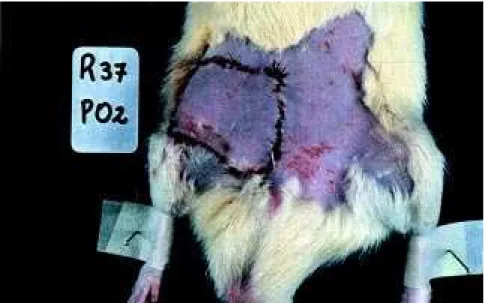
Figure 3 - Epigastric flap with rejection.
Among the 45 remaining rats, 30
survived to the end of the 30 day
fol-low-up period (12 from
I
, 8 from
R
and
10 from
Ci
group) (Table 1).
Daily microscopic analysis of the
flaps from
I
group showed moderate
edema, although color and hair
devel-opment remained similar to the
adja-cent skin area that had not undergone
surgery, other than local moderate
edema.
On the 1st and 2nd postoperative
days, Group
R
transplantations
re-sembled those of group
I
.
Subse-quently, local edema was much more
intense, and on the 4
thor 5
thday,
hy-peremia and local signs of tissue
in-volvement were evident, which
evolved from local ulceration and
ne-crosis to full nene-crosis between the 6th
and 9th days.
Among the 10 rats from the
Ci
group, 60% of the flaps survived. Four
(40%) presented total necrosis at
dif-ferent times, observed on the 10
th, 18
th,
19
th, and 24
thpostoperative days (Table
1). These animals showed an intense
early edema after surgery (3
rdand 4
thdays after surgery).
Gross examination of rats with
30-day graft survival showed significant
differences between the three studies
sets, group
I
= 83,3%, group
R
= 0 and
group
Ci
= 60%.
Figures 2 and 3 are examples of the
features observed in the presence and
absence of rejection. Microscopic
find-ings are shown on Figs. 4 and 5.
There was a significant difference
in the histologic analysis of normal
skin and flap biopsies in all
postopera-tive days for groups
R
and
Ci
, and only
on the 15
thday for
I
group.
Lympho-cytes in control skin among the 3
groups were scarce or absent in all
studied postoperative days.
on the 3
rdpostoperative day (Table 2),
and between the controls of
I
and
Ci
groups on the 7
thday (Table 3).
DISCUSSION
The feasibility of a future use of
allogeneic 60% tissue and limb
trans-plantations in reconstructive plastic
surgery
11,14justifies the development of
an experimental model for the
system-atic study of skin rejection.
A 77.6% vascular permeability was
obtained—a satisfactory rate,
accord-ing to the literature, in which 75 to
90% permeability has been
seen
26,28,29,33.
The isogenic flap survival rate,
83.3%, was considered the basal line
for evaluation of the other sets of
ex-periments.
Mortality, although high (33.3%),
occurred in different postoperative
phases before we observed any gross
sign of rejection. Therefore, we were
able to evaluate transplantation for 30
days among the remaining 30 animals
without having to consider mortality as
a variant for the rejection factor.
In group
R
, flap loss occurred in
100% of the cases after 6 to 8 days, a
rate which is significantly different from
group
I
(Table 1). Gross findings for
group
R
clearly characterized a rejection
delay occurring according to the
re-ported literature
22,31. However, rejection
occurred earlier than the ones observed
in organ transplantations, such as
heart
4,13,18, kidney
25,35,36, and small bowel
rejection in rats
24. Similarly in the
Ci
group, rejection occurred earlier than
for other tissues and organs, even with
the use of cyclosporin A
22. A higher skin
antigenicity may be the reason why
flaps are rejected earlier than other
tis-sues, although the mechanism is not yet
fully understood
5,6,10.
A 30-day follow-up survival was
observed in six flaps from
Ci
Group.
Four flap losses occurred on the 10th,
Table 2
- Lymphocyte counting: probality values Mann-Witney-Wilcoxem’s non
parametric test in the comparison of groups I, R and Ci on the 3
rdpostoperative
day.
Group and POday
IT-3
CiTY-3
Postoperative day
Isogenic set transplantation
CiT
0.199
-RT-3
0.013*
0.143
(-) = comparison not performed * significant values when p£0.05 CiT = cyclosporin set transplantation RT = rejection set transplantation
Figure 4 - Histologic slide, with no inflammatory infiltrate, stained with toluidin blue, in the absence
of rejection.
17th, 18
th, and 23rd postoperative days.
Therefore cyclosporin A was effective,
increasing survival rates of cutaneous
allogeneic transplantations.
Third day post-op biopsy
lympho-cyte counts had significant differences
between the allogenic non-treated
transplantation group (
R
) and isogenic
transplantation group (I) (Table 2).
Comparison between gross
rejec-tion findings and lymphocytic
tion showed that lymphocyte
infiltra-tion precedes gross signs of necrosis.
The lymphocyte infiltration occurred
on the 3
rdday post operative, whereas
symptoms of gross rejection were first
seen on the 6
thpost-operative day.
Therefore, as reported in the literature,
biopsy specimens must be taken and
examined for early signs of rejection in
order to prevent full necrosis of the
transplanted tissue.
In group
Ci
, there was a significant
difference in lymphocytes counted
be-tween transplanted and control sets.
Thus, it was observed that even though
cyclosporin A had a satisfactory action
on rejection control, its use did not result
in a decrease in the number of “in situ”
lymphocytes with the method used.
Based on what was found, the
au-thors continued researching
immuno-histochemical methods with
mono-clonal antibodies
3,6,22to identify the “in
situ” lymphocytes found in this
experi-mental model.
CONCLUSION
1) The rate of survival of epigastric
flap used as microsurgical cutaneous
transplantation to isogenic Wistar Furth
rats was 83.3% up to 30 days,
confirm-ing the efficacy of the adopted
experi-mental model.
2) In our experiments, when flaps
of Brown-Norway rats are transplanted
to Wistar-Furth receptors, a 100%
re-jection rate in non-immunosuppressed
transplantation occurs before the 9
thpostoperative day.
3) Cyclosporin A
immunosuppres-sion (10 mg/kg/d) increased the
allo-geneic transplantation success up to 30
days post-operation.
4) Non-immunosuppressed
allot-ransplantation shows a significant
in-crease of infiltrating lymphocytes on
the 3
rdday as compared to isogenic
transplantation. Symptoms of gross
re-jection findings are preceded by
lym-phocytic infiltration.
5) Despite the use of cyclosporin A,
an increased rate in the lymphocytic
infiltration was seen, as compared to
the control isogenic transplantation
group. Therefore, it may be assumed
that cyclosporin A induces rejection
delay, blocking the cytotoxic cell effect
or humoral immune reaction, even
though cell migration does occur.
6) The use of plastic embedded
tis-sue enables a better characterization of
the histological findings of rejection.
Further studies with
immunohis-tochemical cell sorting are ongoing in
our laboratories to enhance our
knowl-edge in this field.
Table 3
- Lymphocyte counting: probality values Mann-Witney-Wilcoxem’s non
parametric test in the comparison of groups
I
,
R
and
Ci
on the 7th postoperative
day.
Group and POday
I
Co-7
Ci
Co-7
Postoperative day
Isogenic set control
Cyclosporin set control
Ci
Co-7
7.919 x 10
-3-R
Co-7
0.693*
0.476
(-) = comparison not performed * significant values when p£0.05
Rco = rejection set control
RESUMO
RHCFAP/2999
CARRAMASCHI FR e col. - Rejeição
e efeitos da ciclosporina nos
transplantes cutâneos alógenos
microcirúrgicos em ratos.
Rev.
Hosp. Clín Fac Med. S. Paulo
55
(1):21-28, 2000.
Os efeitos da rejeição e da
imunossupressão com ciclosporina A
em retalhos epigástricos utilizados
como transplantes cutâneos alógenos
microcirúrgicos, foram estudados em 58
ratos, distribuídos em três grupos:
como contrôle foram colhidas no
terceiro, sétimo, 15º e 30º dias pós
transplante. As biópsias foram
preparadas em historesina, e
coradas em azul de toluidina, para
avaliação do infiltrado inflamatório
lo-cal, permitindo estudo quantitativo dos
linfócitos infiltrantes nos retalhos. O
modelo revelou-se eficiente, obtendo-se
sobrevivência dos transplantes por 30
dias, de 83,3% entre animais isogênicos,
e de 60% nos alogênicos sob ação da
ciclosporina A. Em ratos alogênicos não
imunossuprimidos houve 100% de
rejeição dos retalhos, até o nono dia
pós-operatório. Nos transplantes desses
animais, verificou-se aumento
signifi-cativo do número de linfócitos
infiltrantes no terceiro dia, quando
comparados aos ratos isogênicos. A
linfocitose observada antecedeu os
achados macroscópicos da rejeição,
verificados apenas no quinto ou sexto
dias.
DESCRITORES:
Transplante de
tecidos.
Ciclosporinas.
REFERENCES
1. ACHAUER BM, HEWITT CW, BLACK KS et al. - Long-term skin allograft survival after short-term cyclosporin treatment in a patient with massive burns. Lancet 1986;1:14.
2. ACHAUER BM, HEWITT CW, BLACK KS et al. - Cyclosporine prolongs skin allografts in a rat burn model. Transplant Proc
1985;15:3073-3076.
3. BAIN JR, MACKINNON SE, HUDSON AR et al. - The peripheral nerve allograft: a dose-response curve in the rat immunosuppressed with cyclosporin A. Plast Reconst Surg 1988;82:447-455. 3. BAIN JR, MACKINNON SE, HUDSON AR et al. - The peripheral
nerve allograft in the primate immunosuppressed with cyclosporin A: I. Histologic and electrophysiologic assessment. Plast Reconstr Surg1992;90:1036-1046.
4. BHAN AK, MIHM MC & DVORAK HF - T cell subsets in allograft rejection. In situ characterization of T cell subsets in human skin allografts by the use of monoclonal antibodies. J Immunol
1982;129:1578-1583.
5. BIRINYI LK, BALDWIN WM & TILNEY NL - Differential effects of heterologous antisera on the survival of cardiac and skin allografts in rats. Transplantation 1981;32:336-338.
6. BLACK KS, HEWITT CW & HENSON LE - Cyclosporine-induced long-term allograft survival and its potential in posttrauma tissue replacement. J Burn Care Rehabil 1987;8:531-535.
7. BLACK KS, HEWITT CW, SMELSER S et al. - Cyclosporine and skin allografts for the treatment of thermal injury. II. Development of an experimental massive third-degree burn model demonstrating extensive graft survival. Transplantation 1988;4513-16.
8. BLACK KS, PATEL MP, PATEL AP et al. Mechanisms of site-specific immunosuppression.Transplant Proc 1991;23:120-121. 10. BOREL JF - Cyclosporin-A: present experimental status. Transplant
Proc 1981;13:344-348.
11. BOREL JF - Cyclosporine: historical perspectives. Transplant Proc
1983; 15:2219-2229.
12. BOREL JF, FEURER C & GUBLER HU - Biological effects of cyclosporin A: a new antilymphocytic agent. Agents Actions
1976;6:468-475.
13. BOREL JF, FEURER C, MAGNÉE C et al. - Effects of the new anti-lymphocytic peptide cyclosporin A in animals. Immunology
1977;32:1017-1025.
14. BOS JD, ZONNEVELD I, DAS PK et al. - The skin immune system (SIS): distribution and immunophenotype of lymphocyte subpopulations in normal human skin. J Invest Dermatol
1987;88:569-573.
15. BUNCKE HJ, DANILLER AI, SCHULZ WP et al - The fate of autogenous whole joints transplanted by microvascular anastomoses. Plast Reconstr Surg 1967;3:333-341.
16. BUNCKE HJ & SCHULZ WP - Experimental digital amputation and reimplantation. Plast Reconstr Surg 1965;36:62-70.
17. BUNCKE HJ & SCHULZ WP - Total ear reimplantation in the rabbit utilizing microminiature vascular anastomoses. Br J Plast Surg
1966;19:15-22.
18. BURKE JF, MAY JW, ALBRIGHT N et al. - Russel PS. Temporary skin transplantation and immunosuppression for extensive burns.
N Engl J Med 1974;290:269-271.
19. BURKE JF, QUINBY WC, BONDOC CC et al. - Immunosuppression and temporary skin transplantation in the treatment of massive third degree burns. Ann Surg 1975;182:183-197.
20. COSIMI AB, SHIELD CF, PETERS C et al. - Prolongation of allograft survival by cyclosporin A. Surg Forum 1979;30:287-289.
22. EGERSZEGI EP, SAMULACK DD & DANIEL RK - Experimental models in primates for reconstructive surgery utilizing tissue transplants. Ann Plast Surg 1984;13:423-430.
23 FIRST international workshop on alloantigenic systems in the rat: report. Transplant Proc 1978;10:271-285.
24. FREEMAN JS & STEINMULLER D - Acute rejection of skin and heart allografts in rats matched at the major rat histocompatibility locus. Transplantation 1969;8:530-533.
25. FUJINO T, HARASHINA T & AOYAGI F - Reconstruction for aplasia of the breast and pectoral region by microvascular transfer of a free flap from the buttock. Plast Reconstr Surg 1975;56:178-181. 26- FUJINO T, TANINO R & SUGIMOTO C - Microvascular transfer of free deltopectoral dermal-fat flap. Plast Reconstr Surg
1975;55:428-434.
27. FURNAS DW, BLACK KS & HEWITT CW - Cyclosporine and long-term survival of composite tissue allografts (limb transplants) in rats (with historical notes on the role of plastic surgeons in allotransplantation). Transplant Proc 1983;15:3063-3068. 28. GILL TJ, CRAMER DV & KUNZ HW - The major histocompatibility
complex - Comparision in the mouse, man, and the rat. A review.
Am J Pathol 1978;90:737-777.
29. GNUDI MT et al. - The sympathetic slave. In: GNUDI MT - The life and Times of Gaspare Tagliacozzi. Los Angeles, Zeitlin Brugge
1976. p.285-286. Apud - FURNAS DW et al.27
30. GRATWOHL A, FORSTER I & SPECK B - Skin grafts in rabbits with cyclosporin A. Absence of induction of tolerance and untoward side effects. Transplantation 1981;31:136-138.
31. GULATI AK & ZALEWSKI AA - Muscle allograft survival after cyclosporin A immunosuppression. Exp Neurol 1982;77:378-385.
32. GUNDLACH M, OLUWOLE S, D’AGATI V et al. - The role of passenger leukocytes in the immunogenicity of intestinal and cardiac allografts in the rat. Transplant Proc 1992;24:1131-1132.
33. HARASHINA T, SAWADA Y & WATANABE S - The relationship between venous occlusion time in island flaps and flap survivals.
Plast Reconstr Surg 1977;60:92-95.
34. HARII K & OHMORI K - Free groin flaps in children. Plast Reconstr Surg 1975;55:588-592.
35. INNIS PC, RANDOLPH MA, PASKERT JP et al. - Vascularized bone allografts: in vitro assessment of cell-mediated and humoral responses. Plast Reconstr Surg 1991; 87: 315-325.
36. KIM SK, AZIZ S, OYER P et al. - Use of cyclosporin A in allotransplantation of rat limbs. Ann Plast Surg 1984;12:249-255.
37. KUROKI H, ISHIDA O, DAISAKU H et al. - Morphological and immunological analysis of rats with long-term-surviving limb allografts induced by a short course of FK 506 or cyclosporine.
Transplant Proc1991; 23:516-520.
38. LAI CS, WESSELER TA, ALEXANDER JW et al. - Long-term survival of skin allografts in rats treated with topical cyclosporine.
Transplantation 1987; 44:83-87.
39. LEE WP, RANDOLPH MA, YAREMCHUK MJ et al. - The effect of graft and donor irradiation on survival of vascularized bone allografts. Orthop Transplant 1988;12:480.
40. LEE WP, YAREMCHUK MJ, PAN Y - Relative antigenicity of components of a vascularized limb allograft. Plast Reconstr Surg
1991;87:401-411.
41. LEMS SPM, CAPEL JA & KOENE RA - Rejection of long-surviving mouse skin allografts after withdrawal of Cyclosporin A therapy.
Transplant Proc 1980;12:283-286.
42. MALT RA & MCKHANN CF - Replantation of severed arms. JAMA.
1964;189:716-722.
43. MANSON PN, NARAYAN KK IM J, BULKLEY GB et al. - Improved survival in free skin flap transfers in rats. Surgery1985;99 :211-215.
44. MANTEL N - Evaluation of survival data and two new rank order statistics arising in its consideration. Cancer Chemother Rep
1966;50:163-170.
45. MARTIN DC, HEWITT CW, BLACK KS et al. - Extensive prolongation of rat renal allograft survival following donor or nonspecific transfusions and concomitant immunosuppressant.
Transplantation 1987;43:790-794.
46. MCCARTY JG - Plastic Surgery - General Principles. New York, Saunders 1990. v.1-9.
47. MURRAY JE, TILNEY NL & WILSON RE - Renal Transplantation: a twenty-five year experience. Ann Surg 1976;184:565-573. 48. PARSA FD & SPIRA M - Evaluation of anastomotic techniques in
the experimental transfer of free skin flaps. Plast Reconstr Surg
1979;63:696-699.
49. PASKERT JP, YAREMCHUK MJ & RANDOLPH MA - The Role of cyclosporin in prolonging survival in vascularized bone allografts.
Plast Reconstr Surg. 1987;80:240-247.
50. PORTER B & LANCE EM - Limb and joint transplantation. Clin Orthop 1974;104:249-274.
51. RUBY LK, GREENE M, RISITANO G et al. - Experience with epigastric free flap transfer in the rat: technique and results.
Microsurgery 1984;5:102-104.
52. SALYER KE & KYGER ER - Studies in rats of survival of composite homotransplants of skin and subcutaneous tissue, with microvascular anastomoses. Plast Reconstr Surg 1973;51
(6):672-681.
53. SNYDER CC, KNOWLES RP, MAYER PW et al. - Extremity replantation. Plast Reconstr Surg 1960;26:251-263.
54. SOBRADO L, POLLAK R, ROBICHAUX WH et al. - The survival and nature of the immune response to soft-tissue and composite-tissue allografts in rats treated with low-dose cyclosporine.
Transplantation 1990;50:381-385.
55. TAN CM, YAREMCHUK MJ, RANDOLPH MA et al. - Vascularized muscle allografts and the role of cyclosporine. Plast Reconstr Surg
1991;87:412-418.
56. TILNEY NL & KUPIEC-WEGLINSKI JW - The biology of acute transplant rejection. Ann Surg 1991;214:98-106.
57. TOWPIK E, KUPIEC-WEGLINSKI JW & TILNEY NL - The potential use of cyclosporine in reconstructive surgery.Plast Reconstr Surg
58. WERKER PM, KON M, GREEN C et al. - Survival characteristics of the epigastric free flap in da-rats. Microsurgery 1992;13:67-71. 59. WHITE DJ, ROLLES K, OTTAWA T et al. - Cyclosporin-A-induced
long-term survival of fully incompatible skin and heart grafts in rats. Transplant Proc 1980;12:261-265.
6. WHITE E & HILDEMANN WH - Allografts in genetically defined rats: difference in survival between kidney and skin. Science
1968;162:1293-1295.
61. WHITE E, HILDEMANN WH & MULLEN Y. Chronic kidney allograft reactions in rats. Transplantation 1969;8:602-617.
62. WRAY R.C, MATHES SM, YOUNG VL et al. - Free vascularized whole-joint transplants with ununited epiphyses.Plast Reconst Surg 1981;67:519-525.
63. YAREMCHUK MJ, NETTELBLAD H & RANDOLPH MA -Vascularized bone allograft transplantation in a genetically defined rat model. Plast Reconstr Surg 1985;75:355-362.
64. YAREMCHUK MJ, SEDACCA T, SCHILLER AL et al. - Vascular knee allograft transplantation in a rabbit model. Plast Reconstr Surg 1983;71:461-471.