Understanding the effects of explicit
association between two brands on consumer’s
brand knowledge: Vichy Dercos Case-Study
Carla Sofia Mateus Simões
152115026
Dissertation written under the supervision of
Professor Pedro Celeste
Dissertation submitted in partial fulfilment of requirements for the MSc in Management with a Specialization in Strategic Marketing, at the Universidade
2
Acknowledgements
My academic journey was a truly great and inspiring one. I am extremely grateful to everyone who crossed my path and contributed to my growth in both a professional and personal way. First, I would like to thank my family for giving me the possibility to build my future and study in the business schools that I chose; for always being available to listen and provide the best advice; for being patient and for supporting me through all of my achievements.
I would also like to thank my thesis supervisor, Professor Pedro Celeste, for making this task seem less scary, and for always providing a pragmatic guidance and sincere encouragement. I would also like to recognize the “Management crew” for being true companions and sharing with me some of the most special moments of my life during the last five years. We are all real warriors.
I would like to thank Madalena and Daniela - my L’Oréal Brandstorm team - for their major impact in my master studies, for being great team players and great friends. I would also like to express my gratitude to Benyi, his patience and endless support.
Finally I also want to sincerely thank Jorge Sucena, Senior Product Manager of brand Vichy, which truly made this master thesis possible. Jorge was tireless in his availability and cooperation efforts, in the time devoted in teaching me, and when it came to sharing his valuable knowledge with me during my summer internship.
3
Abstract
Dissertation Title: “Understanding the effects of explicit association between two brands on
consumer’s brand knowledge: Vichy Dercos Case-Study”
Author: Carla Sofia Mateus Simões
Dercos is the market leader in the Portuguese pharmacy hair care market, with a market share of 25% in 2015. However, Dercos is faced with two major challenges: first, to remain relevant in its increasingly competitive channel and second, to increase the pharmacy channel size, by reaching other channel’s customers.
To achieve this, L’Oréal considers deepening Dercos’ relationship with a successful beauty brand – Vichy – which could on one hand increase its visibility, but on the other, dilute customer trust in the clinical and efficacy-driven image of the brand.
Through the analysis of Vichy’s branding dilemma, this thesis provides an outlook on the Portuguese Hair Care market in the pharmacy circuit. In the Literature Review Section it provides an overview on the topics of brand equity, brand knowledge, brand extensions, brand elements and consumer behavior regarding cosmetic products. The dilemma is then presented in a Case Study and Teaching Note, and complemented by a Market Research study including two Focus Groups and an Online Survey, aimed at presenting closure to the dilemma.
The study done found that a deeper association between Vichy and Dercos is beneficial as it would result in broader attribute associations and willingness to buy or try for Vichy Dercos, when compared with the original Dercos concept.
Keywords: brand equity, brand extensions, brand knowledge, brand elements, consumer
4
Resumo
Título da Dissertação: “Compreender os efeitos da associação explícita entre duas marcas no brand knowledge do consumidor: O Caso de Estudo Vichy Dercos”
Autora: Carla Sofia Mateus Simões
A Dercos é a líder de mercado no segmento farmacêutico de produtos capilares em Portugal, com uma quota de mercado de 25% em 2015. Porém, a Dercos depara-se com dois desafios: primeiro, o de permanecer relevante no seu canal e segundo, o de aumentar o tamanho do canal farmácia, através da conquista de mais clientes.
Para conseguir isso, a L’Oréal considera aprofundar a relação de Dercos com uma conceituada marca de beleza – Vichy – para aumentar a sua visibilidade, arriscando diluir a confiança do consumidor na imagem clínica de eficácia de Dercos.
Através da análise de um dilema da marca Vichy, esta tese fornece uma análise do mercado farmacêutico português de produtos capilares. Na Revisão Literária é proporcionada uma visão dos tópicos de brand equity, brand knowledge, extensões e elementos de marcas e comportamento do consumidor. O dilema é depois apresentado no Caso de Estudo e Nota de Ensino, complementado por um Estudo de Mercado com dois Focus Groups e um Questionário Online, de forma a apresentar uma conclusão.
O estudo realizado concluiu que uma associação mais profunda entre as marcas Vichy e Dercos seria benéfica, resultando em mais associações e numa maior disposição em comprar ou experimentar Vichy Dercos, em relação ao conceito original.
Palavras-chave: brand equity, brand knowledge, extensões de marca, elementos de marca,
5
Table of Contents
1. Introduction ... 7
1.1Problem Statement ... 7
1.2Key Research Questions ... 7
1.3Methodology ... 8
1.4Academic and Managerial Relevance ... 8
2. Literature Review ... 9
2.1Brand Building Strategies in the cosmetics industry ... 9
2.1.1 Building Brand Equity in the cosmetics industry ... 10
2.1.2 Extending Brand Knowledge Strategies ... 10
2.2The role of Brand Elements in the cosmetic industry ... 12
2.3Consumer Behavior regarding cosmetics ... 13
3. Case Study ... 15
3.1Dercos: Planning a strategic response to the increasingly competitive Hair Care market ... 15
3.2The Hygiene and Beauty Market in Portugal ... 16
3.2.1 Hair care offer in the Portuguese pharmacies ... 18
3.3Hygiene & Beauty Global Trends ... 19
3.4The L’Oréal Group and the Active Cosmetics Division ... 19
3.4.1 Vichy ... 21
3.4.2 Dercos ... 23
3.5A New Era: Dercos as Vichy’s “hair-care proposal” ... 25
3.6The branding dilemma... 28
4. Market Research ... 29
4.1Focus Groups ... 29
4.2Survey ... 32
4.2.1 Survey Purpose ... 32
6
4.2.3 Hair Care Category ... 33
4.2.4 The Pharmacy Channel ... 37
4.2.5 Concepts Evaluation... 39
4.2.6 Brand Elements ... 41
4.2.7 Behavioral and Psychographic Sample Description ... 43
4.3Other sources of information ... 44
5. Conclusions ... 45
5.1Conclusions and Recommendations ... 45
5.2Limitations and Further Research ... 48
6. Teaching Note ... 50
6.1 Synopsis ... 50
6.2 Target Audience and Teaching Objectives ... 50
6.3 Teaching Plan ... 51
7. Exhibits ... 53
7.1 Case Study Exhibits ... 53
7.2 Market Research Exhibits ... 57
8. References ... 74
8.1Academic References ... 74
7
1.Introduction
1.1 Problem Statement
In an increasingly more competitive market, Dercos assumes itself as an efficacy-driven hair care brand with a focus on problem solving. It is sold in the pharmacy channel, in which the competition is intensifying, as brands extend their product portfolios, fight to increase store presence and to become more relevant near the consumer and the store managers.
However, in 2015 the pharmacy channel represented only 12% of the total market value, with the mass market and the professional products’ channel significantly more representative (56% and 31% of the total market value, respectively).
Dercos is therefore faced with two challenges: first, to remain relevant in its circuit and second, to tackle the significant growth potential for brands sold in the pharmacy, by reaching other channel’s customers.
Ever since its introduction in L’Oréal Group’s portfolio of brands, Dercos was managed by Vichy’s marketing team. Vichy is a beauty brand first and foremost, while Dercos main feature was always the efficacy of its treatments.
Despite this difference in focus, in 2016 the brand started to consider to explicitly deepening the link between the two brands, turning Dercos into Vichy’s hair care proposal and naming it Vichy Dercos. This decision may increase Dercos visibility across all channels due to Vichy’s popularity, but it may also dilute its clinical and efficacy associations.
Does the explicit association between Vichy and Dercos change Dercos’ brand associations in the consumer’s perspective? Does it make the brand more appealing?
1.2 Key Research Questions
1. What are the general habits and behavior of the population towards the hair care category?
2. How does the population perceive hair care products sold in the pharmacy channel? 3. Which identity meanings does the brand Vichy add to the brand Dercos?
4. Does the explicit association between Vichy and Dercos make Dercos’ proposal more relevant and/or attractive for the consumer?
8
i) Is this perceived increase in relevance and/or attractiveness exclusive to any specific customer or potential customer segment?
5. Which brand elements are the most effective in the creation of a positive image for Vichy Dercos?
1.3 Methodology
Both primary and secondary data, resulting from qualitative and quantitative methods will be used to address the research questions presented, namely:
o A Literature Review, analyzing relevant academic articles concerning the described research topic;
o Information provided by Vichy regarding the brands, its history and strategic positioning, to be used in the Case-Study;
o Two Focus Groups with respondents from different age groups, in order to attain qualitative insights and develop a questionnaire;
o Online questionnaire, applied to current or potential customers of the brands, in order to quantify the qualitative information gathered and answer the research questions.
1.4 Academic and Managerial Relevance
The results of this study may be relevant in academic terms as they will provide practical evidence of the importance of the existing consumer brand knowledge, when inferring about a new offer’s quality. On a managerial perspective, this study will provide Vichy with the consumer’s perspective that can be used to manage the brand’s image and improve its positioning in the competitive arena.
9
2. Literature Review
This section’s goal is to review some relevant marketing topics to this thesis, such as Brand Equity and Knowledge, Brand Extension Strategies and Brand Elements, with an emphasis on research concerning cosmetic products. Consumer behavior towards the category and upcoming trends of the industry are also considered topics of interest and are therefore reviewed.
2.1 Brand Building Strategies in the cosmetics industry
The cosmetic industry represents a business of billions of euros, relevant all around the world. It is often associated with aggressive and competitive marketing tactics, which make usage of claims of effectiveness and potency (Newburger, 2009). Due to industry competitiveness and also with increasing consumer demands, the launch of innovative new products turned into one of the key drivers for growth in the industry (Phaiboon-Udomkarn & Josiassen, 2014). These factors brought to the forefront of the industry the cosmeceutical category – products which character was traditionally dermatological, developed in modern times as a way to both provide aesthetics and immediate results like a cosmetic, and to be effective in producing a long-term effect like a pharmaceutical or drug (Drealos, 2009). These products are now described as active cosmetics, since they incorporate ingredients which produce a physiologic or pharmacologic action on the body and do more than adding scent or color to the skin, as traditional cosmetics do (Draelos, 2009; Newburger, 2009).
The presence and development of active ingredients is therefore crucial for the marketing function of cosmetic companies nowadays, as these allow the building of claims about product performance and as a result, to stay competitive in the market. New claims emerge continuously, only dependent on marketer’s imagination. (Lintner et al., 2009).
Despite this, consumers need influencing and reassuring due to the risky character of the category, related with its potential to affect skin’s health and image. Studies show that the strongest influencers regarding cosmeceutical purchase and usage are expert endorsement (aiding in consumer’s evaluation of risk and quality), the notoriety of the brand (products from a well-known brand are preferred), and previous purchases made (related with existing trust). Along with these factors, innovation is also a generator of favorable brand image in cosmeceutical products (Phaiboon-Udomkarn & Josiassen, 2014).
10
2.1.1 Building Brand Equity in the cosmetics industry
A very relevant and widely accepted conceptualization of Brand Equity was advanced by Keller in 1993. The Customer-Based Brand Equity was defined as “the differential effect of brand knowledge on consumer response to the marketing of the brand“. This definition is linked with the concept of Associative Network of Memory, and requires the creation of a strong brand association in the consumer’s mind, with a positive valence (Keller, 1993; Koll &Wallpack, 2014).
When positioning a brand, marketers establish, implement and monitor which associations are intended to be in the consumers‘ mind as a part of brand knowledge, in order to generate a positive consumer response. A match between management-intended associations and actual consumer associations is desirable – but not necessary, as positive consumer response can also come from individuals with non-matching associations as long as these are perceived as positive (Koll &Wallpack, 2014).
Brand Knowledge is therefore built in the individuals‘ minds from all of the information and meaning stored about the brand. These associations may be based on performance attributes (Keller, 2003) or may be retrieved from intangible cues, such as the brand name, logo, symbols or even user or consumption imagery (Keller & Lehmann, 2006).
The cosmetic industry continuously tries to increase the intangible value of its products, by triggering inner emotions in order to create rich brand associations and a dream-like quality. (Keller, 1993; Jamal, Khan & Tsesmetzi, 2012). Superior advertising, flaring product packaging and point of sale communication, along with constant new product introductions play a key role in the building of strong brand knowledge and equity (Jamal, Khan & Tsesmetzi, 2012).
2.1.2 Extending Brand Knowledge Strategies
There are some meanings that may prove difficult to add to a given brand just through the use of marketing programs, and may instead be obtained through the association with other brands or entities (Keller, 2003).
Co-branding, or Brand Alliances “involve the short or long-term association or combination
of two or more individual brands, products, and/or other distinctive proprietary assets“, acording to Simonin and Ruth (1998). Companies may choose to apply this strategy and add meaning to their brands in order to gain access to new markets (new target group, geographic
11
region or new product) or signal specific features (Geylani & Hofstede, 2008; Baumgarth, 2004).
Geylani and Hofstede (2008) state that the co-brands should be complementary in the given context – meaning, the brands should have a common set of salient attributes (“fit”), but the attribute that each is most strongly and positively associated with should be different.
Spillover effects happen when consumer attitude towards a partnership between brands influences the evaluation of the partner brands on an individual level. This adds to the strategic importance of co-branding strategies and shows that these may be a vehicle to modify or add to consumer’s brand associations, especially for brands with lower brand familiarity levels (Simonin & Ruth, 1998; Baumgarth, 2004). The same authors show that these effects are not always symmetric and are not necessarily positive, as they are moderated by variables such as brand familiarity, prior brand attitudes, brand and product fit.
Therefore, the right partner for brand A should have a moderately higher level of performance and brand familiarity, and be more salient on a desired but congruent attribute. This way, performance beliefs of consumers are likely to increase with less discounting, resulting on a higher level of partner’s brand equity incorporated in A (Geylani & Hofstede, 2008; Venkatesh & Mahajan, 1997).
Brand extensions are another way to respond to an increasingly complex market, by allowing
brands to stretch to different markets, to leverage on existing brand equity, and to signal new or different offerings (Aaker & Joachimsthaler, 2000). Brand extensions differ from brand alliances (or co-branding) as they generally involve only one brand (Simonin & Ruth, 1998). Consumers tend to evaluate more positively extensions that (1) fit with the perceptions held of the core brand, (2) relate to brands whose perceived quality is high and (3) supply the core brand with appealing attributes (Monga & John, 2010). Overall, consumers must see an extension as “making sense”, according to Keller and Lehmann (2006).
Balachander and Ghose (2003) studied spillover effects applied to brand extensions. Their findings reveal that advertising of an extension has a positive effect on the probability of choice of the core brand – at times, even larger than the advertising of the core brand itself -, validating the decision of having extended portfolios, and signaling the importance of allocating advertising budget to extensions (Balachander & Ghose, 2003).
Subbrands are a particular type of brand extension with a purpose similar to the one of brand
alliances - to add or modify the associations of the core brand, which is the primary frame of reference. Usually used to extend the core brand into an interesting new segment, the subbrand can take on a relevant driving role (as a Co-Driver) if its associations are relevant or
12
significant in the segment or market in question. In these situations, it is usual that one of the brands provides presence, visibility and personality while the other provides credibility in the specific context (Aaker & Joachimsthaler, 2000).
Extending a brand must be done carefully as it may result in its dilution. However, brands with extensions were shown to be particularly extendible, as they tend to have associations tied with different product categories (Keller & Lehmann, 2006).
Brand extensions are an important and commonly used tool by the cosmetics industry. Due to the established importance of product and compound innovativeness, brands use the introduction of new products or product lines to signal consumers on how to perceive their brands. Besides providing new information and associations, innovation within the brand also acts as a cue adding to the existing credibility and reputation, updating competitive advantages and adding new value (Jamal, Khan & Tsesmetzi, 2012).
2.2 The role of Brand Elements in the cosmetic industry
Brand elements can be defined as a set of devices used to identify and differentiate a brand, by aiding in the formation of a singular identity and facilitating the linkage with the desired associations (Farhana, 2012). Examples of brand elements include brand name, logos, packages, slogans, symbols, jingles and even spokespeople (Keller, 2003).
The name of the brand poses as the most important element, as it carries most of the product’s identity and brand equity. It has the potential to elicit the most amount of associations. Therefore, it represents a commitment and should be carefully chosen (Keller, 1993; Farhana, 2012). Evidence of this can be found for example in studies regarding co-brand naming, in which significant impact on brand evaluations (both parent and subbrand) was found to be related with the structure of the co-brand name (Sood & Keller, 2012).
Packaging’s importance as a brand communication vehicle is also relevant, as it incorporates several structural (shape, size, materials) and visual elements (color, logos, fonts) which by themselves have meanings intrinsically associated. These meanings are especially relevant in consumer products such as cosmetics - for which the package is designed with the aim of creating visual distinction and producing emotions to reinforce the brand’s benefits and symbolism (Underwood, 2003). In fact, some of the most inventive packages were designed specially for the cosmetics industry, regarding aesthetical and functional features, proving the belief in this element’s ability of adding value and accentuating the product itself (Doyle,
13
2004). It is a strategic tool that often incorporates all of the other brand elements of the brand (brand name, logo, colours, fonts, materials) (Jamal, Khan & Tsesmetzi, 2012).
Brand elements play a very significant role in the cosmetics industry, as it is an industry highly dependent on the subjective consumer’s perception of beauty. Consumer’s perception and quality judgements are made based on the cues chosen by the brand, which must as a result, be chosen with extra care (Jamal, Khan & Tsesmetzi, 2012).
2.3 Consumer Behavior regarding cosmetics
Most studies regarding consumer behavior in the cosmetics category target only one specific market (the UK, the UAE, Japan, Korea), either due to sample restrictions of the research efforts or due to the significant moderating role that cultural differences play in this industry. Despite this, several behaviors and/or trends are found to be similar across the globe. When it comes to cosmetics, Diversity and Culture will be the driving forces of growth in the 21st
century, as cultural adaptation will ensure the effectiveness of advertising and marketing endeavors (Barnes & Yamamoto, 2008).
Like in other categories, brand awareness is known to be related with purchase behavior - a relationship moderated by perceived quality and brand loyalty (which in turn, is dependent on past purchase experience). Therefore, companies should seek to increase brand recall, ensure production quality and good customer experience in order to increase purchase intentions (Kim & Kim, 2016).
Brand perception and brand attitude are intrinsically related, as the second one is a reflection of the first. Guthrie et al., (2008) found cosmetic brand perception to be linked with the consumer’s self-facial image (which also influenced quantity of product used) and with brand personality traits. Brand attitude is also influenced by brand personality and by the consumer’s individual involvement with the category (Guthrie & Kim, 2009). Both studies showed the personality trait Competence to influence consumer’s responses positively (Guthrie et al., 2008; Guthrie & Kim, 2009).
Status was also found to play a role in the purchase of socially visible cosmetic products, like lipstick and lash mascara for example. Chao and Schor (1998) found that these products are associated with high social standings, and even if having a lower quality-price ratio, purchasing behavior patterns favors high-priced brands. These findings are moderated by income, occupation and race (Chao & Schor, 1998).
14
Another important influencer of consumer behavior for cosmetics is the Sample. Samples should be used as a tool in high budget marketing campaigns, for products with high penetration rates and for well-known brands. Their effect is greater next to family-brand users (as these are already familiar with the main brand) and higher income consumers (Amor & Guilbert, 2009).
Finally, one of the major revolutions in the cosmetic industry is now emerging. The men care market or men grooming presents itself as one of the biggest promises of the industry, already showing impressive growth rates in some markets. Targeting this group requires industry adaptation as it typically has a high demand and purchase power and is distinct for being composed by technical and functional buyers, whereas women tend to be emotional (Junaid & Nasreen, 2012).
15
3. Case Study
3.1 Dercos: Planning a strategic response to the increasingly competitive
Hair Care market
Dercos is a pharmacy Hair Care brand, which focus of its offer and communication was, for a long time, masculine hair loss. With time the brand expanded its portfolio and now offers solutions for all target audiences, which turned it into the market leader in its channel, with 25% of market share in value in 2015i, in Portugal.
Dercos is managed by the brand Vichy, which belongs to the Active Cosmetics Division of L’Oréal Group. This division’s products are sold only in healthcare outlets such as pharmacies and drugstores (“parapharmacies” in Portugal), and include an assortment concerning specific needs of the skin and hair.
The Hair Care market is very competitive due to the great convenience offered by the Mass Market brands (which sold 56% of the value of hair care products in 2015) and the hair specialist advice provided by the professional products’ channel (hair salons, accountable for 31% of the sales)ii. In the pharmacy channel (12% of the total market value), the competition
is also intensifying as the players widen their portfolios, become more active near the consumer and provide better incentives to the store managers. This frame creates the need to stay competitive within the channel and also shows that there is significant growth potential for brands sold in the pharmacy – as Shampoo is a product used by almost the entire population, growth of the channel can be achieved by successfully reaching and recruiting other channel’s consumers.
One asset that Dercos has on its side is the fact that it belongs to L’Oréal’s portfolio of brands and that it is managed by Vichy’s marketing team. A deeper explicit association with both L’Oréal and Vichy could increase Dercos’ visibility due to their relevance in the Hygiene and Beauty market in general. This would go in line with the recent strategic focus of Dercos, of having a product portfolio targeting all types of hair needs, and with the goal set by L’Oréal’s Headquarters, of turning Dercos into a Worldwide Scalp Expert Vichy Brand.
But incorporating Dercos in Vichy’s brand in a deeper way wouldn’t come without risks. A big part of the Dercos’ identity is its renowned efficacy and the endorsement of the pharmacists, which play a big role in driving the sale. Vichy’s association with skin care
16
makes it a beauty brand first and foremost, which may dilute the efficacy core of Dercos image – especially as Vichy enjoys a higher notoriety than Dercos.
Would Dercos benefit from tackling a wider market by explicitly becoming a part of Vichy’s brand and adopting its name? Or would a better strategy be to stay focused on its professional endorsed efficacy, and continue growing organically taking advantage of the resourcefulness of L’Oréal and Vichy implicitly?
3.2 The Hygiene and Beauty Market in Portugal
The Hygiene and Beauty (H&B) market concerns the production, distribution and marketing of any product destined to be applied on the surface of the human body, with the purpose of protecting, cleaning, perfuming or changing its physical appearance. These products are grouped according to different segments, defined in Portugal as Hair Care, Styling, Coloration, Face Care, Body, Sun Care, Make Up, Deodorants, Perfumes, Shaving, After Shave, Hands and Shower Gel iiiii.
Figure 1: Portuguese H&B market category segmentation and representativeness 2014-2015, % share, by value. Nielsen (2015); HMR (Health Market Research) and IMS Health (2015); L’Oréal Internal Panels and Estimations (2015).
The H&B market’s size reduced 5,7% between the years of 2012 and 2014, as consumption went from roughly 1 billion euros to 944 million eurosii. Afterwards, a recovery could be
observed, as the market showed signs of following the tendency of the Portuguese economy.
23,3% 23,3% 18,3% 18,1% 12,0% 12,2% 10,1% 10,3% 6,9% 7,1% 6,0% 6,0% 5,9% 6,0% 4,9% 4,8% 5,3% 5,6% 3,5% 3,5% 0% 10% 20% 30% 40% 50% 60% 70% 80% 90% 100% 2014 2015
Figure 1. Portuguese H&B market category segmentation and representativeness 2014-2015, % share, by value
Styling Shower Gel Coloration Deos Sun Care Make Up Body Perfumes Face Care Hair Care
17
In 2012 the economy contracted 4,0% with the H&B market responding with an even stronger contraction. In 2013, the Portuguese GDP showed signs of recovery with the market also recovering slightly, presenting a reduction of only 3,6%. The economy starts growing in 2014 with H&B products consumption also continuing its recovery, decreasing only 2,2%iv
(Exhibit 1). Finally, in 2015 the market starts growing again at a pace of 1,2%, slightly below
the pace of the economy (1,6%).
Figure 2: Total H&B market size evolution in Portugal and the Portuguese GDP, 2011-2015 by value. Nielsen (2015); HMR (Health Market Research) and IMS Health (2015); L’Oréal Internal Panels and Estimations (2015). Pordata
(2017).
This growth is supported by an increasing value of private consumption, a slowing unemployment rate and a very positive indicator of confidence level of the consumersii.
Shower gel, Make-up and Face Care Toilette are the product categories behind the growth in 2015, with positive yearly evolutions of 9%, 6,3% and 5% respectivelyii (Exhibit 2).
H&B brands are sold across a variety of channels. The representativeness of each channel in the market has been somewhat constant throughout the years.
Figure 3: Distribution Channels’ Weight in the Portuguese H&B market in 2015. L’Oréal Portugal -5,2% -6,2% -3,6% -2,2% 1,2% -1,8% -4,0% -1,1% 0,9% 1,6% -7,0% -6,0% -5,0% -4,0% -3,0% -2,0% -1,0% 0,0% 1,0% 2,0% 2011 2012 2013 2014 2015
Figure 2: Total H&B market size evolution in Portugal and the Portuguese GDP, 2011-2015 by value
Total H&B Market Portuguese GDP 42% 22% 18% 12% 5% 0% 10% 20% 30% 40% 50%
Mass Market Pharmacies and
Parapharmacies Perfumeries Hairdressers Sales/MonobrandsDirect
Figure 3. Distribution Channels' Weight in the Portuguese H&B market in 2015
18
In the Pharmacies and Parapharmacies’ channel, L’Oréal Group and Pierre Fabre share the leadership role with 19,7% of market share each, followed by Johnson&Johnson (7,2%) and Uriage (6,3%)ii.
3.2.1 Hair care offer in the Portuguese pharmacies
In 2015, Hair Care represented 23% of the sales of the Portuguese H&B market, being the most relevant product category of the market, as shown by Figure 1. Of those, 12% were sold in Pharmacies or Parapharmacies, making up a business of 28 Million euros in 2015ii (Exhibit
3). This particular distribution channel has an assortment of a more technical character, and a
client who tends to seek problem solving and efficacy.
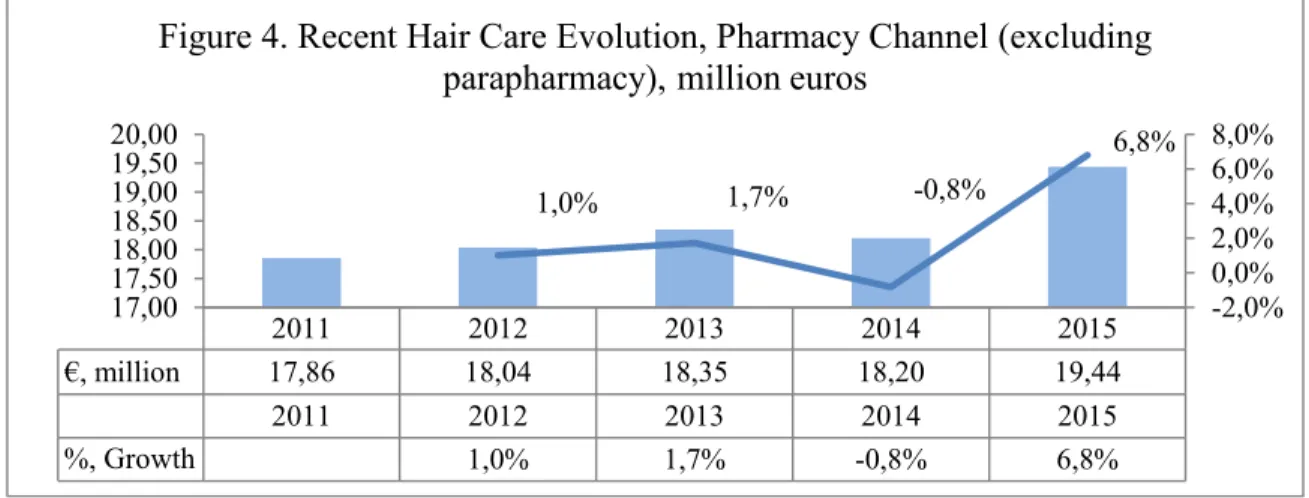
The overall value of the category showed weak growth between the years of 2011 and 2013, falling into negative values in 2014. In 2015 the market showed a tremendous recovery, following the positive trend set by the Portuguese economyiv.
Figure 4: Recent Hair Care Evolution, Pharmacy Channel (excluding parapharmacy), million euros. Sales in the pharmacy represent in recent years around 70% of the total market. L'Oréal Portugal.
The main players in the portuguese Hair Care market in the mentioned channel are Dercos (25% of value market share in 2015), followed by Klorane (18,3%), Ducray (7,9%) and Rene Furterer (7,4%)i (Exhibit 4).This is a channel with great growth potential as it represents just
a small slice of the total market. The professional products’ market is 2,5 times bigger, while the mass market has 4,7 times the sizev. There is the need to recruit new consumers from the
other channels. 2011 2012 2013 2014 2015 €, million 17,86 18,04 18,35 18,20 19,44 2011 2012 2013 2014 2015 %, Growth 1,0% 1,7% -0,8% 6,8% 1,0% 1,7% -0,8% 6,8% -2,0% 0,0% 2,0% 4,0% 6,0% 8,0% 17,00 17,50 18,00 18,50 19,00 19,50 20,00
Figure 4. Recent Hair Care Evolution, Pharmacy Channel (excluding parapharmacy), million euros
19
3.3 Hygiene & Beauty Global Trends
The global H&B market is a dynamic one, with growth rates around 4% a year in the last five yearsvi. Its main markets were in 2015 Asia and Pacific, North America and Western Europe,
worthing in combination close to 70% of the market. The most relevant product categories in value were Skin Care (36,1%), Hair Care (22,9%) and Make up (17,3%).
The growth in the latest years was supported by an increasing consumer interest in beauty and health; a greater dynamism in the make-up category fueled by social networks; the continuing thrive of higher-end channels such as luxury beauty products and active cosmetics; and an accelerating consumption in New Markets such as India, Turkey and South Africavi.
In all parts of the world, an aspiration towards both beauty and health starts presenting itself. This translates into a consumer with a need for transparency, ingredient proof and natural, simple and safe products. The concern with the protection from environmental stresses such as UV radiation and pollution is also more evident.
This industry is also known by its early investment in the digital tools. Digital engagement is done through online guidance and personalized advice, augmented reality tools and the use of social media as a platform to broadcast. Customization is also something that the consumer now looks for in H&B products, as well as expert or influencer advice.
3.4 The L’Oréal Group and the Active Cosmetics Division
L’Oréal has been around for more than a century and has been a part of the shaping of the beauty industry. In 2015 it was the number one company in the specific market and distributed its products all over the worldvi. Its story counts with major product launches,
company acquisitions and the overall goal of unifying beauty and care.
The company was founded in 1909, and its first product was a hair dye formulated by the founder, Eugène Schueller, which was then manufactured and sold to Parisian hairdressers. This set the foundation of L’Oréal’s DNA – research and innovation towards beautyvii.
Inventing new advertising strategies and promotional events was something started by the founder himself – with the first radio advertisement sung instead of spoken, and the first “billboard” posted, consisting of a sheet wrapped around a Parisian buildingvii.
20
In 1957, François Dalle was appointed as Chairman and Managing Director. Shortly after, international subsidiaries and production sites were built, the product categories produced were diversified and the company went publicvii.
From 1984 to 2000, the company experienced tremendous growth, mainly fueled by its significant investment in the field of research, which resulted in strategic and iconic launches such as Studio Line and Vichy for men. During this period the group became the world leader in cosmetics, with brands present worldwidevii.
In 2001 diversity joined the growth agenda of the group. Under the leadership of Jean Paul Agon, the brand continued to make strategic acquisitions to cover the most diverse cosmetic needs while striving for a sustainable developmentvii.
L’Oréal created an extended portfolio planned according to customer segmentation and distribution channel logic. This allowed the company to create limits to existing brands, to manage internal rivalry and optimize profitability, to allocate innovations born out of research and development, while defining a long-term growth strategy (Chailan, 2010).
Figure 5: Some of the brands of L'Oréal's portfolio, grouped by distribution channel
The Active Cosmetics Division was formed by a set of complementary brands focused on Health, Well-Being and Beauty, prescribed and sold by healthcare partners – pharmacies, parapharmacies and drugstores. It grew close to 8% in 2015, mainly supported by the double digit rise in the New Marketsviii.
21
Five brands belonged to the Division in this period: Vichy, which promised radiant skin fueled by mineralizing water sourced from French vulcanoes; La Roche-Posay, a dermatological brand, offering skincare to truly sensitive skins; Skinceuticals, a pioneer brand of cosmeceuticals, providing advanced and innovative skincare; Roger & Gallet, a beauty rituals brand with well-being properties; and Sanoflore (not distributed in Portugal), which offered natural cosmetics made from organic plants, coupled with active ingredientsix.
3.4.1 Vichy
The brand Vichy was born in 1931 by the hands of Dr. Haller, when he discovered the therapeutic properties of Vichy Mineralizing Water, original from the French volcanoes. This Water was found to be rich in 15 different minerals and became a part of the formulation of the brand’s offers as it contributed to the balance and regeneration of the skin.
Its first product launch was a powerful anti-wrinkle cream. As the years went by, more products were added to the line, increasing the brand’s recognition and catching the attention of L’Oreál that ended up acquiring it in 1955x.
Since then, Vichy’s focus on innovation, efficacy and health of the skin helped establishing the dermocosmetic or cosmeceutical concept – a functional cosmetic product, focused on performance.
Brand’s Vision, Beliefs and Behavior
Vichy’s presence in the market was guided by three main beliefs and propositions: Efficacy, Product Tolerance, and Pleasure - the so-called Healthy Beauty Triangle xi. The brand’s DNA,
developed through years of acting and communicating in the market, makes it a Cosmetic, Beauty and Sensorial Brand, with a Business Model supported by Product Innovation and Media Investment.
Vichy’s Brand Identity
Brand Essence or Key Idea “Your Ideal Skin”
Personality Reliable, Stylish, Intelligent, Beautiful
Values Skin science, Safety, Pleasurable
Benefits offered to the consumer Efficacy, Safety. Confidence, Charisma, Flawless skin Physical attributes Visual Logo, Textual logo, Visuals.
22
Communication Concepts
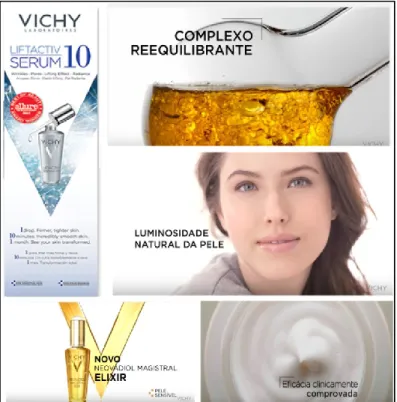
Vichy’s communication is typically focused on “above-the-line” actions, investing heavily on television commercials, press and editorials to obtain maximum levels of awareness and reach.
Figure 7: Sample of Vichy's recurrent communication elements
Vichy’s adverts and publications show some recurrent elements – the support on science and scientific claims, the focus on the product or product packaging and in the center stage, a perfect skin and the Vichy logo. These elements reflect the focus of the brand on being portrayed as beauty-centered, while still creating “clinical skin health” credibility and looking desirable in the eyes of the consumer.
Keeping Vichy’s credibility as a pharmacy offer is a communication premise also achieved through the promotion of the products close to the prescribers, and through strong investment on point of sale communication. Vichy’s displays have always represented a very strong contact point with the client (Exhibit 5).
Vichy’s packaging also acts as a strong communication element. Classically represented by a colorful square, Vichy has more recently assumed as symbol or visual logo a “V”. Initially recalling water in some products, the symbol has evolved into a more solid version in the entire product portfolio (Exhibit 5).
23
Vichy was in 2015 the most relevant cosmetics brand sold in the pharmacy and parapharmacy channel, representing 11% of the market in value, considering all categoriesi. Its offers
extended across categories such as Face Care, Body Care, Hair Care, Makeup, Sun Care and Men Products.
The product portfolio is organized by product lines developed for specific needs, being that the Face and Hair Care categories are the ones with the biggest amount of references.
3.4.2 Dercos
Dercos was born in the 1960’s, in an era of technological and cultural revolution. For the first time, experts combined dermatological skin expertise and knowledge of hair cosmetics – providing liberated access to hair treatments until then confined to the medical sector. The brand’s vision was to combine DERmatology and COSmetics and deliver a thoughtful hair care solution with an added level of sensorialityxii.
In 1972 its first hair loss treatment was launched, which confirmed the brand as a dermatological expert with a focus on the health of the scalp. In 1995, it was acquired by L’Oréal and attached to brand Vichy which in recent times has made efforts to, while maintaining its technical and innovation-based DNA, turn it into a more approachable and mainstream brand.
Nowadays, 70% of Dercos’ sales are made in Europe from which 69% correspond to anti-hair loss and density treatments, despite its broad portfolio of lines concerning different hair needs
xii (Exhibit 6).
The goal set globally in 2015 for Dercos was to double its sales in five years, and to change its positioning from an European Anti-Hair Loss Vichy Range to a Worldwide Scalp Expert
Vichy Brandxii.
Dercos is, in its core, a Technical brand with a focus on Expertise, Specific Effectiveness and Masculinity. Its formulas are dedicated to the Scalp Health and include the most renowned actives and Vichy’s mineralizing water. Its Business Model features a close contact with advisors such as dermatologists and scalp influencers, and bets on the education of the consumer around the important role of the scalp.
24
Dercos’ Competitive Scenario
A relevant factor influencing Dercos’ market presence and growth is its competition. The hair care category in the pharmacy circuit is represented by a few very representative brands, which competitive position tend to be stable through the years (Exhibit 4). Dercos has therefore competed directly in its circuit with the same brands for a fair amount of time – the most relevant being Klorane, René Furterer and Ducray, which are all produced by the same laboratory. All four brands have significantly distinct promises but somehow coincident product portfoliosxiiixivxv.
Pierre Fabre enjoys a good reputation next to the pharmacists and invests heavily on point-of-sale communication, which turns its brands into a popular choice for clients who go to the pharmacy without a preferred brand and in search of a recommendation. L’Oréal, besides investing on the point-of-sale, also invests on media communications, resulting on higher awareness levels and in consumers asking for the brand itself instead of advicexvi.
Due to the problem-solving features of the category in this circuit, consumers tend to become loyal to the first brand they try (if it solves their problem). The key to competitiveness is therefore, to get the consumer to try the product. To achieve this, Dercos invests on samples (and high awareness levels), Klorane enjoys high pharmacist recommendation, René Furterer is sponsored by hairdressers and Ducray is prescribed by dermatologists. The point-of-sale presence and the pharmacist opinion are however, the most relevant and decisive competition success factorsxvi.
Brand Klorane René Furterer Ducray Dercos
Laboratory Pierre Fabre Pierre Fabre Pierre Fabre L’Oréal
Promise
Botanical expertise. Plant-base and natural
active components.
Beauty of the hair fiber. Spa and ritual-like experience. Also sold in
hairdressers. Dermatological solutions and clinical experience. Cosmetic and dermatological care, based on scientific innovation. Product Portfolio/ Types of Treatment Frequent usage, Volume, Hair Loss, Nutrition, Oily Hair, Sensitive Scalp, Anti-dandruff, Dyed Hair, Hair Straightening.
Dry Hair, Damaged Hair, Oily Hair, Hair Loss, Sensitive Scalp,
Anti-Dandruff, Dyed Hair, Thin Hair/Volume,
Hair Straightening, Wavy/Curly Hair.
Hair Loss (local treatment and oral
supplement), Dry Hair, Oily Hair, Sensitive Scalp, Frequent usage, Anti-Dandruff.
Hair Loss, Hair Redensifier, Hair Repair, Sensitive Scalp, Oily Hair, Frequent usage, Anti-Dandruff
(Exhibit 6).
25
3.5 A New Era: Dercos as Vichy’s “hair-care proposal”
The news that the group was considering the possibility of turning Dercos into Vichy’s hair-care proposal arrived in Portugal after a meeting with L’Oréal Headquarters in Paris. The new vision included turning Dercos into a Worldwide Scalp Expert Vichy Brand, which would involve linking the brands in a deeper manner immediately and eventually dissolve the brand Dercos – which would go from belonging to Vichy’s range as a separate brand, to becoming a part of Vichy’s brand.
In bigger markets such as France, Germany and the United Kingdom, Dercos is not in a position of disputing the market’s leadership, like it is in Portugal. The new strategy advanced by Paris is therefore justified by the great growth benefits it could bring overall, since the loss of Dercos’ equity would not be a general concern.
Vichy’s marketing team is asked to deliberate on this strategy and produce a recommendation, based on the local market’s reality. Several points needed to be considered, including the two brand’s identities and fit, the immediate impact close to existing and new consumers, the changes to be done in the different brand elements, in the type of communication used and marketing initiatives.
Brand identities and fit
Both Vichy and Dercos promise efficacy to its users, provided through the advancement of science and scientific innovation. The main difference resides in the meaning that “efficacy” takes for each brand. While for Dercos, efficacy relates to problem solving features, for Vichy, efficacy is intrinsically linked to aesthetics and beauty.
Vichy’s aspirational character gives it the ability to resonate with a much larger target audience and through several product categories. Deepening the link between the two could possibly have positive results for Dercos’ brand awareness and for Vichy’s technical associations, resulting on a bigger influence of L’Oréal on both hair care and skin care markets in the circuit.
26 Figure 9: Consumer Brand Knowledge effects - Association synergies between Dercos and Vichy xii
But it would also be risky – Dercos’ technical character has earned it a lot of credibility close to consumers and pharmacists, which may be extinguished with the association to a beauty and cosmetic brand.
Communication concepts
Communicating “Vichy Dercos” would incorporate two approaches: “beauty-based” adverts and both beauty and science-based adverts, depending on the product line being displayed. The main lines - related with Hair-Loss - command a higher client involvement and monetary investment. For these products, besides the aspirational and beauty factor, a scientific explanation of the product action would be included, alongside with scientific claims. The goal of this communication concept would be to unite the credibility of Dercos with the influence of Vichy.
For the remaining lines the communication would push the beauty component, by advertising the end result. Scientific backing would be included – similarly to Vichy ads -, but the final result would take the center stage, showing the product as the best immediate solution available.
Regarding this changes, the same dilemma comes through: does a broader brand message, approach and target audience make up for a possible loss of clinical focus? Will Dercos’ products be discredited next to its competition, as a result of the widening of its message?
27
New brand elements used
The packaging of Dercos would also change in order to better match Vichy’s brand and other lines’ visuals. The shape (particularly on the lid) would change to better resemble Vichy’s skin products, the background hair images would give place to technological-looking graphics, and the logo scheme would change significantly – Vichy would have a greater feature, represented both by its logo and by its new visual logo, only then followed by a smaller Dercos logo (Exhibit 7).
In order to make a decision, it would also be relevant to understand how the customer perceives the new packaging and whether it serves well the purpose of representing both Dercos and Vichy’s concepts and identities.
New marketing approach
A new marketing approach would come with the change, inherited by Vichy and as a result of the widening of the target market of Dercos.
Besides the usual presence on the media, Vichy Dercos would also attempt to establish a closer relationship with the consumer. It would start leveraging on Influencer Marketing, by inviting lifestyle and beauty bloggers to try the product and feature it in their posts; by investing in a stronger social media presence; and by conducting a new edition of “Mês da Saúde Capilar” initiative – one month in which the population is invited to visit a partner pharmacy in order to get a hair and scalp screening, receiving a personalized advice and a product recommendation.
While the social media actions would be aimed at demystifying the purchase of hair care products in the pharmacy – by communicating that these may be adequate for other uses other than the clinical one -, the screening action would be aimed at creating the need in the consumer of a personalized advice and product. Both the actions were thought out to increase the slice of the population who buys hair care products in the pharmacy, conquering consumers from other channels.
These actions would for sure increase Dercos’ visibility. But would the population still believe in its efficacy and clinical credibility after seeing a staged photo of it on Instagram?
28 Figure 10: Social Media Moodboard for Vichy Dercos
3.6 The branding dilemma
Vichy’s marketing team decided to conduct a market study in order to assist its decision-making process. Besides taking the opportunity to find out more about the hair care habits of the population and its attitudes towards the hair care products sold in the pharmacy circuit, it wanted to examine which associations Vichy Dercos would be able to leverage on, if the new branding concept would prove more appealing than the original Dercos one, and if a Vichy focused packaging would be well received.
Should Dercos risk its established positioning in the search of a wider influence? Would creating “Vichy Dercos” aid in the growth of the hair care line or sabotage it completely? Would the new concept help achieving the urgent goals of staying relevant in the market and conquering market share from other channels?
29
4. Market Research
4.1 Focus Groups
In order to gain a first grasp on the population’s behavior towards the hair care category and to do an initial assessment on the reactions towards “Dercos”, “Vichy” and “Vichy Dercos” concepts, two focus groups were conducted.
The first focus group counted with the participation of 7 members between the ages of 16 and 24. About half of the participants were employed for less than a year while the other half was still a student. All of the participants lived in Lisbon and were somewhat familiar with the hair care category, forming a relatively homogeneous group, allowing the free sharing and flow of ideas.
The second focus group was conducted with 5 members, with ages above 35 years old. All of the participants were employed and were familiar with hair care brands of different distribution channels. Also originating from Lisbon, this group was relatively homogeneous, and even if smaller, it also counted with a significant flow of ideas and opinions.
Hair Care Category
Both groups showed similar habits and behavior patterns towards the hair care category. While every participant claimed to use shampoo, the usage of conditioners and hair masks was exclusive to women, even if not used by all of them. A significant portion of the participants said they use or have used before specific hair treatments concerning hair-loss, dandruff, sensitive scalp or others.
Nearly every respondent claimed to choose hyper or supermarkets as the most frequent place to buy hair care products. This preference is due mainly to its easy accessibility, more attractive prices and a broader range of options when it comes to brands and products.
None of the participants claimed to use the same hair care brand always. Instead, the most common answer was the occasional shift due to the need “to try something new” or to take advantage of a promotion.
30
A high level of importance was attributed to Hair Care in general, in a greater extent by the younger female participants. It was also linked to self-confidence and beauty.
Hair Care Products in the Pharmacy Channel
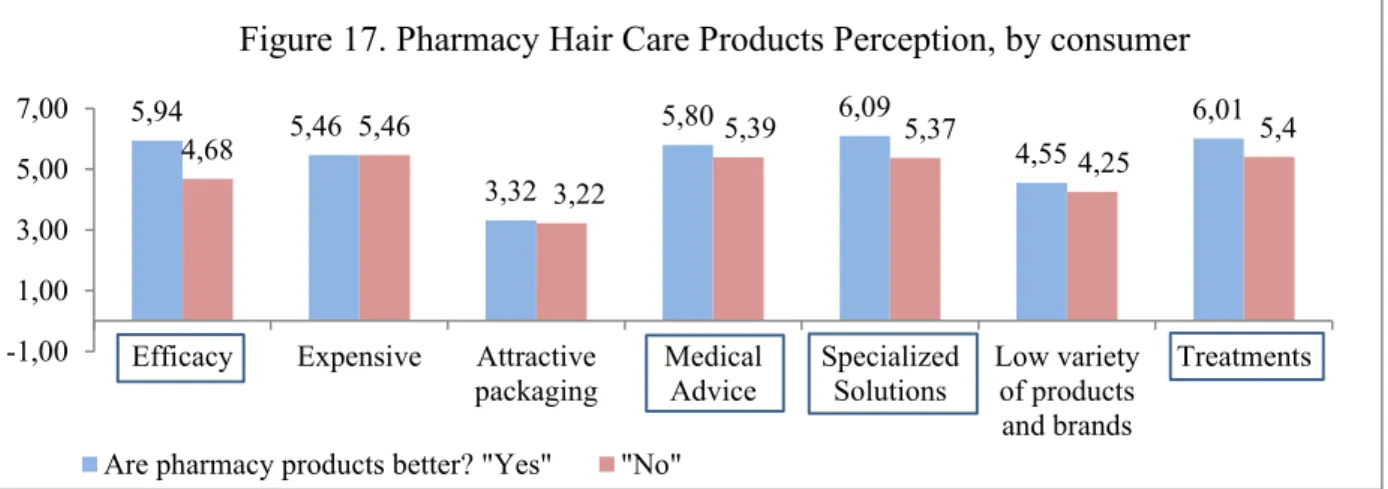
A big part of the respondents claimed to have bought hair care products in the pharmacy at least once before, and that they perceived indeed these products to be “better” than the ones sold in other channels. A preliminary observation was made, that everyone who tried a pharmacy product before was of the opinion that these were superior products. The participants who didn’t try it, had the opposite opinion or were not decisive in their answer. Positive attributes (“high quality”, “trust”, “professional/medical advice”, “efficacy”) were associated with these products mainly by the participants who claimed these products to be better. Neutral but particular attributes were also listed such as “specific benefits” and “specialized”. “More expensive”, “less quantity per bottle” and “low variety” were pointed out as negative features and as possible reasons for a not so frequent usage of these products.
Pharmacy Channel Brands’ awareness and perceptions
Participants, in general, knew the brand or brands they were recommended to use and in some cases were familiar with competitor brand’s visuals or name. Spontaneous recall was therefore limited to brands they used before and was in most cases difficult, suggesting low involvement with the channel.
Through the usage of pictures of the channel’s main players it was, despite this, still possible to identify the brands with greater levels of awareness. Klorane was the most recognized and tried competitor, followed by Ducray that was recognized but tried only by two of the participants. René Furterer did not enjoy significant awareness close to the participants. Regarding Vichy Dercos, an exercise was done to understand which imagery and performance associations the participants had of it. As a first step of the exercise, Vichy Dercos’ picture was shown and the participants were told to write down the name of the brand. In the first group all of the respondents wrote “Vichy” or “Vichy Dercos” while in the second some of participants wrote “Dercos”. Most of the participants across both groups knew the brand and were able to associate attributes to it such as “high quality”, “trust”, “pharmaceutical”,
31
“efficacy”, “beauty”, “expensive”, “hair loss”, “feminine” and also “masculine”, in the case of the second group.
Afterwards, participants were asked to describe the brand as if it was a person, with two contrasting results: while in the first group, most participants described the brand as a middle-aged, affluent working woman with beauty concerns, in the second group participants described an older man with hair-loss problems, seeking for an efficient and strong solution. The exercise allowed observing that the brand personality described by each group fitted with the name that each group attributed to Vichy Dercos product. While some participants of the older generation still held strong associations of the previous Dercos brand’s positioning – technological and targeting masculine hair loss - , the younger generation accepts it as being part of Vichy and transfers its associations (young, modern, feminine) into the “Dercos concept”, which they don’t recall seeing as an individual brand.
Brand Concepts Evaluation
Participants were shown videos portraying three brand concepts: “Dercos”, “Vichy” and “Vichy Dercos”. The videos were chosen to exalt the desired brand positioning in each stage, to evaluate perceptions and to define which concept got the most positive responses.
“Dercos” videos had a focus on the technological and innovative side of the brand, were centered in a scientific explanation and in Dercos as the solution for all causes of hair-loss. Respondents reactions were positive as it “evoked expertise, technology and innovation.” They liked the fact that it focused on educating the consumer and pointed that knowing how the product acts leads to more “credibility and trust”.
“Vichy” concept got very positive responses from female participants and positive to neutral responses from males. It was represented by two product ads featuring beauty and focus on the product. Both genders identified the small scientific component and explanation as a positive factor and female participants also outlined the youth, beauty and naturalness of the brand as making it desirable: “It’s a good combination of the technological and clinical part with the beauty and youth. It doesn’t look like a treatment but like a beauty-boost instead. I like everything”, one of the participants said.
Vichy Dercos’ concept was represented by one clip focused on glamour and hair beauty showing both Vichy and Dercos logos, and another clip pairing scientific claims and
32
innovativeness with beautiful hair and model visuals, also showing both brand’s logos equally. It was defined as “interactive, simple and scientifically innovative” and as “modern” and “less science-like”” with a lower focus on the problem. Female participants showed more enthusiasm regarding this concept than the male ones, who questioned the product’s purpose. This part of the focus-group allowed the collection of attributes associated with each brand concept, to later test in the survey. By using this method the participants’ reactions were moderated by the videos chosen to identify each brand concept, and could differ with a different choice of videos. Direct links to the clips can be found on Exhibits 8 and 9.
Visual Brand Elements
With each concept participants were shown images of the corresponding product packages. The female participants rated Vichy’s packaging very high, highlighting the visual logo (“V”) and the type of font used as the most positive aspects. “Dercos” packaging was rated lower than “Vichy Dercos” one as participants disliked particularly the background image and graphic of the first one and liked the shape and the Vichy’s visual logo in the second one.
4.2 Survey
4.2.1
Survey PurposeThe quantitative part of this study consisted of an Online Survey. Each respondent was taken through a set of common questions, and also through 1 of 3 blocks, attributed randomly (but equally) by Qualtrics software. The survey questions can be found in Exhibit 9.
The survey was launched in Portuguese and English and was distributed through social media and e-mail from March 27th until April 11th, collecting 219 valid responses. The main purpose
of this survey was to find out more about the hair care consumer and to study the appeal of Vichy Dercos concept. The collected data was analyzed with IBM’s SPSS Software.
4.2.2
Demographic Sample DescriptionFrom the 219 survey respondents, 134 (61%) were female and 85 (39%) were male. The majority (56,6%) was below 25 years old, with the remaining age groups represented by smaller portions of the sample but making up for about half of it - 16% between the ages of 25
33
and 34, 11,4% between 35 and 44, 12,8% between 45 and 54 and the remaining 3,2% above 55 years old.
Regarding the annual household income, around 28% of the sample claimed it to be lower than €10.000, 47% claimed it to be between €10.000 and €45.000, around 20% between €45.000 and €75.000, while the remaining 5% stated to have even higher incomes.
When it comes to respondent’s professional activity, 53% of the sample was composed by students – corresponding to a great extent to the younger age group listed -, 39% of the sample stated to be employed, 2% unemployed and 6% in other situation other than the ones listed.
As the questionnaire was also distributed in English, it was able to get foreign responses. Despite this, 91% of the respondents were original from Portugal.
SPSS outputs concerning demographic variables can be found in Exhibit 10.
4.2.3
Hair Care CategoryGeneral Habits and Behavior: What, Where, How, Why?
When characterizing the general habits and behavior of the sample, the first topic of interest was regarding which products are used. Shampoo turned out to be used by almost the entire sample (98,6%), followed by Conditioners (57,5%) and Treatments without the need of water (oil, serum, cream, split ends product, etc.) with 29,7% representativeness. Hair Mascara and Specific Treatments (anti-dandruff, anti-hair loss, sensitive scalp, sun care, oral supplements, etc.) fell below, being used by 24,7% and 20,5% of the sample respectively.
It was also relevant to examine the product usage by gender as some of these products are typically advised for longer hair (which is more commonly found in women). Shampoo was found to be the only product which usage is not associated with the feminine gender. The usage of all other tested products presented an association with the feminine gender, as could be suggested by the results shown in the figure below. The associations are average in strength, except for “specific treatments”, which the association with the feminine gender can be considered weak (Exhibit 11).
34 Figure 11: Hair Product Usage by Gender
The association between the usage of specific treatments (anti-dandruff, anti-hair loss, sensitive scalp, sun care, oral supplements, etc) and the age group was also tested, without positive results.
Regarding where the purchase of hair care products is made most often, the most popular channel was found to be Hyper and Supermarkets, chosen as the most visited by 80,4% of the sample, followed by the parapharmacy (6,4%) and the hairdresser/barber (5,9%).
Figure 12: Distribution Channel used most often to buy Hair Care Products
The factors with the most influence on the channel choice were the easy accessibility of the location (with 60,7% of the sample stating it as one of the reasons why they prefer a certain channel), followed by the price attractiveness (52,1%) and the broad range of products and brands (46,1%) (Exhibit 11).
A new binary variable was computed (1 – respondents who prefer Hyper and Supermarkets and 0 – others) in order to be able to understand if the probability of choice (or importance) of each factor differed significantly between the two groups. Results showed that the results vary
62% 86% 98% 100% 76% 38% 14% 2% 0% 24% 0% 20% 40% 60% 80% 100%
Shampoo Conditioner Hair Mascara Treatments without water
Specific treatments
Figure 11. Hair Product Usage by Gender
Male Female 80,4% 6,4% 5,9%2,7% 2,7%0,9%0,9%
Figure 12. Distribution Channel used most often to buy Hair Care Products
Hiper or supermarkets Parapharmacy Hairdresser/Barber Pharmacy
Specialized Store of hair care products By catalog
35
significantly (at a 5% level) between the two groups regarding all factors except “friend or family advice”.
Figure 13: Significant diferences between the reasons for choosing a hair care purchase location (sig<0,05), between respondents who prefer Hyper and Supermarkets, and respondents who prefer other channels.
While accessibility, price and a broad range of products are factors preferred by the first group, the focus on the result (product suitableness and quality and expert advice) gains more importance for the group which prefers other channels, as can be observed in the figure
below. Lower Upper Equal variances assumed 37,646 0 8,981 217 0,000 0,64 0,071 0,499 0,78 Equal variances not assumed 11,44 94,741 0,000 0,64 0,056 0,529 0,751 Equal variances assumed 213,357 0 5,361 217 0,000 0,429 0,08 0,271 0,587 Equal variances not assumed 6,905 96,925 0,000 0,429 0,062 0,306 0,553 Equal variances assumed 62,618 0 -4,509 217 0,000 -0,246 0,055 -0,354 -0,138 Equal variances not assumed -3,274 48,916 0,002 -0,246 0,075 -0,397 -0,095 Equal variances assumed 382,167 0 -9,042 217 0,000 -0,396 0,044 -0,482 -0,31 Equal variances not assumed -5,144 43,855 0,000 -0,396 0,077 -0,551 -0,241 Equal variances assumed 41,442 0 -3,166 217 0,002 -0,099 0,031 -0,161 -0,037 Equal variances not assumed -1,968 45,335 0,055 -0,099 0,05 -0,201 0,002 Equal variances assumed 48,02 0 -4,871 217 0,000 -0,311 0,064 -0,437 -0,185 Equal variances not assumed -3,853 51,648 0,000 -0,311 0,081 -0,473 -0,149 Equal variances assumed 228,263 0 7,823 217 0,000 0,59 0,075 0,441 0,738 Equal variances not assumed 12,1 154,797 0,000 0,59 0,049 0,494 0,686 Suitable products for my type of hair or benefit I seek Attractive prices Easy access to the location Broad range of products and brands Perception of quality of the products Professional or influencer advice Friend or family advice
Figure 13. Independent Samples Test - Significant differences between respondents who prefer Hyper or Supermarkets and respondents who prefer other channels
Levene's Test for
Equality of Variances t-test for Equality of Means F Sig. t df Sig. (2-tailed) Mean
Difference
Std. Error Difference
95% Confidence Interval of the Difference