Understanding decoupling in the
relationship between social enterprises
and impact investors:
an exploratory study
Malte Hofmann
Dissertation written under the supervision of Tommaso Ramus
Dissertation submitted in partial fulfilment of requirements for the MSc in
Management with specialisation in Strategy & Entrepreneurship, at the
Abstract English
Title: Understanding decoupling in the relationship between social enterprises and impact
investors: an exploratory study
Keywords: Social Enterprise, Impact Investing, Decoupling, Social Entrepreneurship Author: Malte Hofmann
Social enterprises are increasingly required by impact investors to provide reliable indicators about their societal impact in order to get funds to support their activities. However, measuring social impact is extremely complex. In this exploratory thesis, I study the drivers leading to decoupling of impact measurement procedures in the relationships of social enterprises and impact investors. To do so, I conducted semi-structured interviews with both social enterprises and impact investors, used field notes from group discussions and industry reports. The data shows that the motivation for impact measurement, the requirements for metrics as well as impact measurement procedures and the characteristics of investors have a significant influence on the risk of decoupling. Furthermore, I show that due to the strong and transparent relationship between social enterprises and investors, organisations rather occur in means-end than policy-practice decoupling. While policy-practice decoupling is characterized by symbolic implementation of policies, organisations occurring in means-end decoupling implement policies, without them influencing their activities and outcomes. Based on my results I build a process model that helps to get a better understanding of decoupling in social enterprises and to asses and reduce the risk of decoupling.
Resumo Português
Título: Entender a dissociação na relação entre empresas sociais e investidores de impacto
social: um estudo exploratório
Palavras-chave: Empresas Sociais, Investidores de Impacto Social, Dissociação,
Empreendedorismo Social
Autor: Malte Hofmann
As empresas de cariz social são cada vez mais solicitadas pelos investidores de impacto social a providenciarem indicadores fidedignos sobre o seu impacto na sociedade, com o intuito de obterem fundos que suportem as suas atividades. Contudo, medir o impacto social é
extremamente complexo. Nesta tese exploratória estudo os fatores que levam à dissociação dos procedimentos de medição de impacto social na relação entre as empresas sociais e os investidores de impacto social. Para tal, conduzi entrevistas semi-estruturadas junto de empresas sociais e investidores de impacto social, usei também notas recolhidas em
discussões de grupo e relatórios de indústria. Os dados mostram que a motivação para medir o impacto social, os requisitos para as métricas, assim como os procedimentos de medição de impacto e as características dos investidores influenciam significativamente o risco de dissociação. Ademais, mostro que, devido à relação forte e transparente entre as empresas sociais e os investidores, as organizações preferem ocorrer em dissociação means-end, do que em policy-practice. Enquanto que a dissociação policy-practice é caracterizada pela
implementação simbólica de políticas, organizações que ocorrem em dissociação means-end implementam políticas sem que estas influenciem a suas atividades e resultados. Com base nos meus resultados, construí um modelo de processos que ajuda a compreender melhor a dissociação em empresas sociais e a avaliar e reduzir o risco de dissociação.
Acknowledgments
I would like to use this opportunity to thank everybody who supported me during my Master and my thesis, especially in times were motivation was rather low.
First of all, I want to thank Tommaso Ramus for not only supervising me during my thesis but also introducing me to the topic of social entrepreneurship in his “social innovation” class. During my thesis he managed to always support and motivate me while at the same time pushing me into the right direction when needed. He also supported me in visiting the annual EVPA Impact Investing conference, which was extremely helpful to gain insights for my thesis and also to broaden my knowledge of social entrepreneurship.
Furthermore, I want to thank all interview partners for taking the time to talk with me. They provided me with interesting discussions, useful insights and encouraged me in my thesis. Special thanks go to Pascal Vinarnic. He was not only available as an interview partner, but also helped me finding helpful contacts through his network and supported me in getting a ticket for the EVPA conference.
Additionally, big thanks go to my friends who made these two years as memorable as they were. Big thanks to great group projects at the university as well as study breaks at the beach. Lastly, I want to thank my family for always supporting me during the last 27 years. Without them I would not be where I am today, and I am extremely thankful to have them. And of course, to my girlfriend Marion for dealing with me during my thesis and always encouraging me when it was needed.
Table of content
Abstract English ... II Resumo Português ... III Acknowledgments ... IV Table of content ... V List of Figures ... VII List of Tables ... VII Glossary ... VIII 1. Introduction ... 1 2. Literature review ... 3 2.1 Social Enterprises ... 3 2.2 Impact Investing ... 5 2.3 Impact Measurement ... 6 2.4 Decoupling ... 8 3. Methodology ... 10 3.1 Data Collection ... 10 3.2 Sampling ... 12 3.3 Data Analysis ... 15
3.3.1 Step 1: Data exploration and empirical themes ... 15
3.3.2 Step 2: Conceptual categories and aggregation of variables ... 15
3.3.3 Step 3: Process model development ... 16
4.1 Organisations showing no signs of decoupling ... 18
4.2 Organisations showing signs of decoupling ... 21
4.3 Investors perspective ... 27
5. Discussion ... 29
6. Contribution and Managerial Implications ... 31
7. Limitations and Conclusion ... 34
Reference List ... 36
Appendix ... 40
Appendix A Interview Guideline Social Enterprise ... 40
Appendix B Interview Guideline Impact Investor ... 42
List of Figures
Figure 1 Logic impact model ... 7
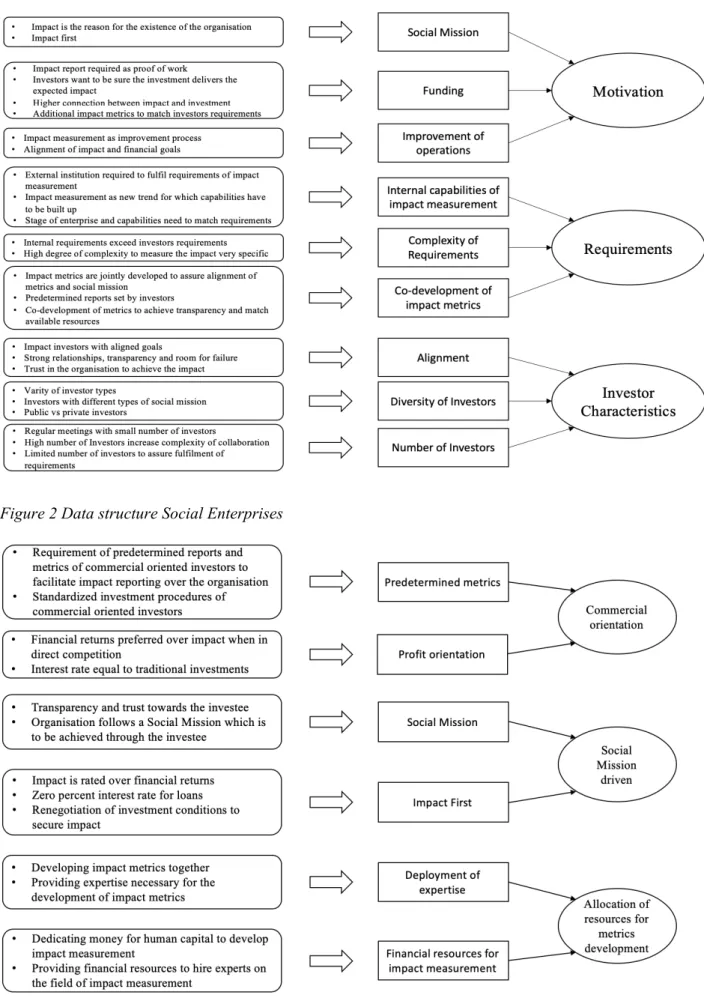
Figure 2 Data structure Social Enterprises ... 17
Figure 3 Data structure Impact Investors ... 17
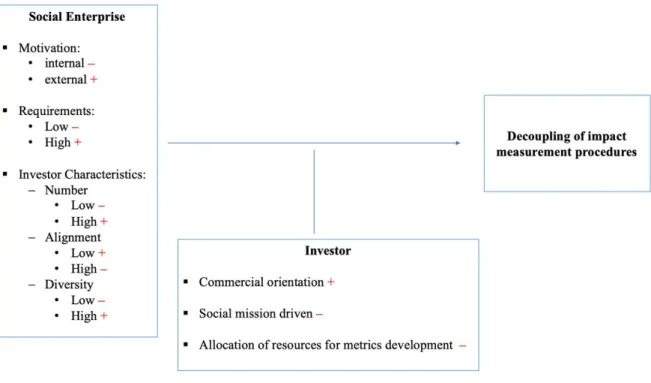
Figure 4 Process Model ... 29
List of Tables
Table 1 Data Overview ... 12Glossary
GIIN Global Impact Investing Network
EVPA European Venture Philanthropy Association WISE Work integration social enterprise
1. Introduction
During the last decades our society experienced a change towards more societal and environmental responsibility on a private as well as corporate level, while governments and non-profit organisations appear to be insufficient in addressing the worlds social problems on their own (Global Impact Investing Network, 2010). Easier access to information through digital media helps consumers to asses company’s sustainability efforts and to avoid those who engage in corporate misbehaviour. Furthermore companies start social oriented initiatives and sustainability program to differentiate themselves from the competition and win customers (Santos, Pache, & Birkholz, 2015).
All this leads to the increased growth of “social enterprises” as organisations that combine a social mission with traditional commercial activities to sustain their activities and therefore combine aspects of common for-profit and non-profit organisations (Santos, 2012). While this hybrid nature of social enterprises can constitute advantages as it opens up the organisation to the commercial as well as social sector, it also faces social enterprises with unique challenges (Ebrahim, Battilana, & Mair, 2014). Those challenges are especially apparent in the acquisition of resources and legitimacy. Not only are social enterprises required to report on their financial performance but also on their social performance and impact metrics to secure investments and proof their legitimacy to society (Battilana & Lee, 2014).
Regarding the acquisition of resources, alongside social enterprises, so called “Impact Investors” gained attention during the last years. They bridge the field between traditional investors and grant giving organisations by aiming for financial returns and social or environmental impact at the same time (Höchstädter & Scheck, 2015). Therefore impact investors can provide financial capital to social enterprises which they would not be able to require through the mainstream capital markets (Mendell & Barbosa, 2013). Alongside the goal to achieve positive impact through their investments also comes the call for reporting procedures to proof the efficiency of the social enterprises. While financial performance measurement standards are well established this is not the case for impact measurement. This leads to diverse requirements on how to measure a social enterprises impact and on what metrics to measure (Ebrahim & Rangan, 2014).
Due to the external pressure and the diverse requirements by stakeholders, social enterprises are especially prone to decoupling. Decoupling means that the organisations only formally
implements procedures required by external stakeholders but does not integrate them into their actual operations (Pache & Santos, 2013). Therefore impact metrics are measured which do not match the targeted impact in order to secure a funding and the results are not reflected back into the daily operations (Ebrahim et al., 2014).
Therefore, this thesis focuses on the decoupling of impact measurement procedures and the question “What drivers lead to decoupling of impact measurement procedures in the relationship between social enterprises and impact investors?”.
In order to answer this question, I interviewed both social enterprises and impact investors and compared the results with the academic literature. The thesis is structured as follows. First, the relevant academic literature on the topic of social enterprises, impact investing, impact measurement and decoupling will be reviewed to show the background and connections of those. Second, the methodology will be introduced and the sampling, collection as well as analysis of the data will be discussed. In this part, also the organisations which have been interviewed will be shortly introduced. Third, the findings will be presented. We start with the organisations which did not show signs of decoupling to then show the differences with the social enterprises that showed signs of decoupling. Afterwards the findings from the social enterprises will be underlined with the findings from the impact investors. Lastly the model will be introduced in the discussion and the contribution and limitations are presented to then finish with the limitations and conclusion.
2. Literature review
2.1 Social Enterprises
The research on social enterprises is a quite new but developing field in management research. According to Battilana & Lee the number of articles on social enterprises published in peer reviewed journals increased from 37 in 1997 to more than 14.000 in 2012 (Battilana & Lee, 2014).
Social enterprises follow a dual mission by combining commercial as well as social welfare logic in their goals and activities (Mair, Mayer, & Lutz, 2015). They are organisations that are trying to solve societal problems while retaining their operations through commercial activities (Battilana & Lee, 2014; Mair, Battilana, & Cardenas, 2012; Santos et al., 2015). This is in contrast to traditional organizations with a commercial focus that try to obtain a maximum financial return to distribute to their shareholders on the one hand and non-profit organizations which put their beneficiaries first and rely on grants to sustain their activities on the other hand (Mair et al., 2015). By following this two different institutional logics, social enterprises are broadly characterized as hybrid organizations (Doherty, Haugh, & Lyon, 2014; Mongelli, Rullani, Ramus, & Rimac, 2019; Santos et al., 2015) and Battilana and Lee even describe them as an ideal type of hybrid organization. While this organisational form presents the chance to combine the best of both worlds (Santos et al., 2015) it also brings along several challenges (Mongelli et al., 2019). Due to the hybrid nature of social enterprises, their success is defined not only by financial figures but also social outcomes. Those dual objectives are not always aligned and are often even contradictory making it difficult to find an optimal balance between them (Ebrahim et al., 2014) leading to internal and external tensions (Battilana & Lee, 2014). Especially when commercial logics gain dominance, in order to sustain financial operations or to please shareholders, social enterprises are in danger of losing sight of their social missions, a phenomenon called mission drift (Ebrahim et al., 2014). Smith, Gonin & Besharow divide the tensions which potentially lead to mission drift into the four categories organizing, belonging, learning and performing tensions, which shall be briefly described in the following (Smith, Gonin, & Besharov, 2013).
Organizing tensions emerge particularly from the organisation itself. Due to the contradictory
institutional logics the social enterprise is faced with, decisions regarding the legal form of the enterprise and the question on which people to hire (Pache & Santos, 2013). Should employees
rather have knowledge in the social field to advance the social mission of the enterprise or in the commercial field to help scale the organization?
The question for commercial or social logic also applies to belonging tensions which are more
concerned with the identity of an enterprise. It can create tensions between employees who potentially identify more with one or the other logic (Battilana & Dorado, 2010) due to their vision for the organisation or professional background. But the dual identity can also lead to complications in the perception of external stakeholders. Traditional businesses might doubt that the social enterprise can deliver the quality of full profit organizations while non-profit organizations might question their legitimacy (Smith et al., 2013).
Learning tensions in contrast addresses tensions regarding different time horizons. Those can
be best described as short-time and long-time goals. On the one hand social enterprises should try to scale their operations and grow financially according to commercial logics which is mostly addressed by short time goals. Social mission outcomes on the other hand usually address a longer time horizon and can be jeopardized if enterprises push for growth too fast, eventually leading to a loss in legitimacy towards social stakeholders (Smith et al., 2013) This is also partly related to performing tensions. Performing tensions emerge mostly through
divergent outcomes. Goals and metrics vary whether a more social or commercials perspective is chosen. Success in the social mission could be improved by giving up partly on financial goals and vice versa. In extreme cases the prioritization of either social or commercial goals can lead to the financial ruin on the one hand or detaching from the social mission and therefore mission drift on the other (Smith et al., 2013). Furthermore, performing tensions can occur when external stakeholder have conflicting or inconsistent demands in terms of measuring impact or when different stakeholders require divergent metrics (Smith, Lewis, & Tushman, 2011). Aligning demands and operations can get even more complex, when the interests of investors contradict the needs of beneficiaries (Ebrahim et al., 2014). This might for example be the case in the field of education. An easy to measure KPI that might be required by investors is the number of beneficiaries that received education through the social enterprise. Therefore, to secure the funding an enterprise could be motivated to provide their service to as many beneficiaries as possible while in order to create a positive impact it would be better to only teach small groups more extensive. The challenge presented here, is that investors might prefer to receive reports on quantifiable numbers that are easy to measure and analyse (Ebrahim & Rangan, 2014). This is because quantifiable metrics can be collected in the short term. True
impact on the other hand is often only achieved over a longer time period. If quantifiable metrics take the dominant role, social enterprises run in danger of favouring business objectives in the long term since they are easier to measure (Smith et al., 2013).
Those tensions which result out of the hybrid character of social enterprise furthermore complicate the acquisition of external resources and as such especially financial capital (Battilana & Lee, 2014). While financing vehicles for full profit and non-profit organisations have evolved over a long time, this is not the case for hybrid organizations such as social enterprises (Battiliana, Lee, Walker, & Dorsey, 2012). While the hybrid nature of social enterprise opens up possibilities to make use of both commercial and non-profit funding mechanisms, they also face challenges when approaching each of them separately (Mongelli et al., 2019). Traditional investors might see social enterprises as more risky investments due to their conflicting institutional logics and the possibility that the management might prioritize the social mission over financial gains in the future (Battilana & Lee, 2014). On the contrary foundations and venture philanthropist usually do not permit distribution of profits to owners which might lead to conflicts with the enterprises commercial activities (Battiliana et al., 2012). During the last decade this gap was filled by so called impact investors which besides financial returns also aim to achieve a social impact with their investments and therefore seem to fit the needs of social enterprises.
2.2 Impact Investing
The term impact investing originated out of a meeting organised in 2007 by the Rockefeller Foundation. This meeting was used to gather leaders from the development, financial and philanthropy sector, to develop a common vocabulary and starting point for investing for societal impact (Harji & Jackson, 2013). The most commonly used definition of impact investing also used by Hehenberger, Mair & Metz (Hehenberger, Mair, & Metz, 2019) defines impact investing as “investments made with the intention to generate positive, measurable social and environmental impact alongside a financial return.” (Global Impact Investing Network, 2020). Therefore Impact investing breaks with the traditional view on allocation of capital, in which capital is allocated either through risk adjusted investments which aim for the highest possible returns without taking societal outcomes into consideration and grants and donations aimed at maximizing societal impact (Global Impact Investing Network, 2010). Höchstädter & Scheck point out that due to similar definitions impact investing and socially responsible investments could be mistaken for one and each other (Höchstädter & Scheck,
2015). While socially responsible investments are characterized by the integration of non-financial concerns of several kind (Sandberg, Juravle, Hedesström, & Hamilton, 2008), impact investing goes beyond this view and more proactively aims for societal outcomes (Höchstädter & Scheck, 2015). Impact Investing is part of a broader global movement in market economics which is aiming for more ethical and social business practices (Dacin, Dacin, & Tracey, 2011) which also led to growing customer social responsibility as well as an ethical consumerism movement (Höchstädter & Scheck, 2015). Since it presents a relatively new topic in research, not many papers can be found about impact investing. Therefore, this thesis also incorporates reports and guidelines of practitioners such as the impact investing organization’s “The Rockefeller Foundation”, the “Global Impact Investing Network” (GIIN) and the “European Venture Philanthropy Association” (EVPA). During the last decade impact investing experienced a substantial growth. From 2014 to 2019 the sum of impact investing assets ,managed by impact investors who participated in the yearly Impact Investor Survey from the GIIN, increased from 60 billion USD to more than 500 billion USD in 2019 (Global Impact Investing Network, 2019).
Unlike the definition for impact investing, methods to measure the impact of investees are rarely researched in the existing literature. Harji and Jackson present regarding this the Impact Reporting and Investment standards (IRIS) and Global Impact Investing Rating System (GIIRS) (Harji & Jackson, 2013). While both systems were introduced to standardize efforts in impact measurement no consensus is presented on how it should ideally look like. In the following paragraph we look more into the theory about impact measurement from a social enterprise perspective.
2.3 Impact Measurement
Just like all normal enterprises, social enterprises are required to measure their performance for internal as well as external stakeholders (Bagnoli & Megali, 2011). While traditional for-profit organisations mostly focus on financial performance, social enterprises need to measure social performance as well. Measuring financial performance is usually straight forward. Accounting tools and metrics are well established and standardized making it easy to compare and benchmark with other organisations (Ebrahim et al., 2014). For social performance measurement in contrast, no common and standardized metrics and procedures have been developed (Ebrahim et al., 2014). Especially the different sectors, social enterprises are working in, such as education, health or environment, make it hard to define comparable benchmarks
(Ebrahim et al., 2014). Furthermore, if we look at the terminology used around social performance management, similar to the term social enterprise or impact investing, a clear definition is missing. While some use the term impact measurement or evaluation for the overall social performance of a social enterprise (Molecke & Pinkse, 2017) others use the term impact only as the last step that an social enterprise can reach with its activities (Ebrahim & Rangan, 2014).
More specifically Ebrahim & Rangan and Bagnoli & Megali describe the basic logic model that was originally developed for the United States Agency for International Development (USAID) (Bagnoli & Megali, 2011; Ebrahim & Rangan, 2014). The following table shows the four main components of the logic model including inputs, outputs, outcomes and impact.
Figure 1 Logic impact model
While Ebrahim and Rangan show activities as a separate component, Bagnoli and Megali include it in outputs. In this model, inputs describe the resources that are contributed to the activities of the social enterprise such as human resources and funds. The outputs are the actual activities and countable products, or services distributed. This could be number of beneficiaries reached or hours of workshops held. Outcomes then present the effect the outputs had on the beneficiaries. How did a workshop or training influence their future incomes etc. Lastly impacts are seen as long term benefits the activities had on the wider community (Bagnoli & Megali, 2011). Since the term’s social performance measurement and impact measurement are used quite interchangeable throughout the literature, I will use the term impact measurement as it is also the dominant term used by practitioners.
Regarding the motivation to measure social impact, two main factors are presented in the literature. According to Nicholls social enterprises adapt impact measurement practices mainly to improve performance, access resources and build legitimacy towards investors (Nicholls, 2009). Lall describes it in her paper as “Measuring to Improve versus Measuring to Prove” (Lall, 2017). Measuring to improve presents an internal motivation. Just as with financial performance tools, social enterprises try to better align their activities with their social mission to maximise the positive impact for beneficiaries in the long term (Lall, 2017). Measuring to
prove however is related to the more complex acquisition of resources social enterprises are faced with and in which context proving legitimacy is key to secure funding (Nicholls, 2009). The reviewed literature shows that in contrary to financial performance measurement, social performance measurement is significantly more complex (Nicholls, 2009). Especially when several investors are involved, social enterprises cannot rely on commonly adapted reporting standards, but instead different metrics might be required from each investor. This leads to increasing external pressure on the enterprise (Ebrahim et al., 2014) and eventually to the decoupling of impact measurement practices.
2.4 Decoupling
As described before, social enterprises are more and more exploited to external pressure by impact investors, pressing them to achieve social outcomes at the same time as earning financial returns. Studies have shown that under those two competing institutional logics organizations tend to decouple their formally introduced policies from their organizational operations (Pache & Santos, 2013). Therefore policies are implemented as symbolic gestures in order to fulfil external requirements while keeping operations as usual, in order to gain legitimacy (MacLean & Behnam, 2010). According to Crilly, Zollo & Hansen decoupling not only occurs on purpose but also due to complex requirements and uncoordinated processes (Crilly, Zollo, & Hansen, 2012).
Social enterprises are especially prone to decoupling due to their hybrid nature, often leading to competing logics between commercial and social characteristics (MacLean & Behnam, 2010). Besides, the previous discussed complexity of measuring the impact of social enterprises favours decoupling, as it leads to a certain lack of transparency. In more transparent cases, decoupling can be more easily identified and therefore prevented (Wijen, 2014). In contrast to the mainly discussed policy-practice decoupling, Bromley & Powell differentiate between policy-practice and means-end decoupling. According to them the mostly discussed form of policy-practice decoupling is characterized by the symbolic implementation of policies which might even be contradictory to the organisations goals without interfering with daily practices. Means-end decoupling on the other hand occurs when implemented policies have actual impact on the organizational operations but do not affect the organizational outcomes (Bromley & Powell, 2012). This could also be the case when organizations adopt new goals due to external pressure which are not aligned with the intended means-end. This kind of decoupling occurs specifically when operational practices, which are not contributing to the organizational goals,
are imposed by external institutions. According to Bromley and Powell a shift from policy-practice decoupling to means-end decoupling is conceivable caused by the continuously changing factors around transparency and accountability giving less room for symbolic implementation of policies (Bromley & Powell, 2012).
3. Methodology
The thesis is written as a qualitative inductive approach, studying the relationships of social enterprises and impact investors with a focus on impact measurement. A qualitative approach is well suited to build theory in fields which received little attention in academic research (Besharov, 2014). It allows for an in-depth exploration of a new research field such as social entrepreneurship in contexts where quantitative methods of counting or measuring cannot easily be performed (Hammarberg, Kirkman, & de Lacey, 2016). By directly interacting with actors of the field through semi-structured interviews or field observations, it allows to obtain first-hand knowledge which than can be reflected back into academic theory (Taylor, Bogdan, & DeVault, 2015). Therefore, a qualitative approach is well justified as the social entrepreneurship field constitutes a rather new field of research which developed quickly and incessant over the last years. Furthermore, the concept of decoupling was given comparably little attention in this academic field.
3.1 Data Collection
For the purpose of this thesis I used three different sources of data. Semi-structured interviews, group discussions and industry reports. I conducted eight semi-structured interviews and collected field notes from several group discussions at the annual EVPA and the Impact Fest conference. The semi-structured interview is well suited for this kind of research since it allows the researcher to react to the participants answers and therefore direct the interview into different directions or further develop specific areas (Galletta & Cross, 2013). Furthermore, it allows participants to freely express their thoughts in their own language, allowing for more elaborate responses compared to structured interviews (Qu & Dumay, 2011). The interviews followed an interview guideline (see Appendix A,B) that was slightly adapted based on the interview partner and already gained insights from previous interviews. Flexibility in the interview questions can help in uncovering new concepts and theories during the research (Gioia, Corley, & Hamilton, 2013). In order to use the data from the interviews I anonymized all organisations. Additionally, I used group discussions from the EVPA annual conference and Impact Fest as additional data. I recorded all group discussions and took field notes. The discussion rounds presented the opportunity to get insights from various actors of the field at the same time, with a lower risk of introducing a bias by the author (Qu & Dumay, 2011). In addition to the interviews they helped me in getting a more comprehensive understanding of the field of social entrepreneurship and impact investing. By coincidence, an investor of Food
Waste participated in one of the discussion rounds, leading to valuable insights about the organisation from an investors point of view. Industry reports, together with the literature review, served as a first set of data to develop the interview guideline. Furthermore, they helped me in getting an understanding of the industry standards and enabled me to follow up on industry specific topics during the interviews. The following table gives an overview of the different data sources.
Collected Data:
a) Semi-structured interviews Social Enterprises:
Credential For / Non-Profit Investment Type Field of Activities
Refugees Non-Profit Impact Bond The organisation helps integrate
refugees and tries to bring them into jobs.
Children Non-Profit Donations/Grants Runs projects for children in
need.
Coding For-Profit Impact Bond/
venture capital Provides for coding classes for unemployed people to lead them back into jobs and develops coding learning software for kids.
Food
Waste For-Profit Venture Capital Produces technical products using AI technology in order to
reduce food waste. Impact Investors:
Credential Organisation Type Investment Type Field of Activities
Blue Foundation Grants Foundation which invests in
non-profit projects and social enterprises.
Red Venture Philanthropy
Organisation Loans The organisation grants loans to early stake social enterprises and supports through mentoring. Yellow Government Impact Bond Local government which
introduced the first impact bond in their region to support social equality.
Green Impact Fund Loans Impact fund which grants loans
to small social enterprises in the field of clean energy.
b) Group Discussion
Id Topic Event
1 Making sure your investment delivers the right social impact. EVPA Annual conference 2 The Brabant Outcomes Fund: pay for multiple-value to scale
enterprises with societal impact! EVPA Annual conference
3 How to set up an Impact Fund? EVPA Annual conference
4 Lockstep model in social investment - where and how to find
the 'sweet spot'? EVPA Annual conference
5 How to measure impact? First steps towards managing,
confirming and communicating your value creation Impact Fest c) Industry reports
Reports/ Paper
Measuring and managing impact - A practical guide / EVPA 2019 Annual Impact Investor Survey / GIIN
Accelerating Impact: Achievements, Challenges and
What's Next in Building the Impact Investing Industry / The Rockefeller Foundation
Table 1 Data Overview
3.2 Sampling
In order to get insights from both the enterprise as well as investor site, I decided to interview four organisation each, with a dedicated interview guideline for both groups. Due to the variety of social entrepreneurial models and the adaptation of different kind of legal forms as well as investment types (Mair et al., 2012) the goal was to interview a diverse range of enterprises and investors to get insights from as many perspectives as possible. Therefore overall 20 organisations were approached for interviews and eight interviews were conducted.
Social enterprises where chosen mainly on the two criteria profit-orientation and investment type. Even though all social enterprises follow a social mission, their legal status might differ between full-profit and non-profit. This is also the case for the chosen social enterprises as Refugee and Children are operating as non-profit organisations while Coding and Food Waste have a full-profit legal status. Therefore, while all four organisations are social mission driven, the non-profit social enterprises follow more social principles while the full-profit organisations show a higher commercial orientation.
Organisation Refugee was chosen as it can be characterized as a Work Integration Social Enterprise (WISE), which are often used for research in this field. WISE’s are generally organisations of private nature that help unemployed beneficiaries of marginalized groups to get employed (Ramus, Vaccaro, & Brusoni, 2016). In the case of Refugee, the focus lies on the integration of refugees into society by providing them job opportunities. Refugee is currently financed through an impact bond by the local government with a running time of three years. Organisation Children is a non-profit organisation operating worldwide to support disadvantaged children in the fields of health and education. Children was chosen as members of the organisation mentioned during the annual EVPA conference that they try to adopt more and more social entrepreneurial practices to secure funding as the requirements of investors are becoming more demanding. Currently Children relies on money from governmental institutions, foundations and private donors.
Coding however has a higher degree of commercial orientation. The organisation operates in two sectors. One is providing coding classes to unemployed people in order to make them job ready for IT-jobs while the other is providing an educational software to schools, with which children can learn first coding skills with the goal of improving analytical and math skills. Coding is financed both through private investors as well as impact bonds for specific projects. Food Waste is the social enterprise which shows the highest profit orientation of all four. The organisations mission is to reduce food waste in industrial kitchen with modern technology. Through intelligent trashcans, utilising artificial intelligence, the food wasted can be analysed and based on the created reports the food purchasing and processing can be optimised to create less waste. As investors, Food Waste works with private investors and an impact first venture capital fund. Regardless of the degree of profit orientation, all organisations have a clear impact driven mission characterizing them as social enterprises.
On the investor site the goal was to interview organisations that invested in the beforehand mentioned social enterprises. This was only possible in the case of the social enterprise Refugee and Investor Yellow. The other interview partner where chosen based on the criteria organisation type and type of investments they make, to cover different impact investing methods. Blue is a traditional foundation, supporting programs of all different backgrounds. Money is provided mostly through grants and more and more money is located to social entrepreneurial projects. Projects reach from early stage to well established projects which already run for several years. In contrary Red invests mostly in early stage social enterprises.
As a venture philanthropy organisation Red provides loans which also include coaching and mentoring for the enterprises. Organisation Yellow was chosen to get insides from a governmental perspective on impact bonds. The interview was conducted with a policy advisor of a local government who was mainly responsible for the implementation of an impact bond that was created to support local social enterprises working on equal opportunities in society. The impact bond runs for three years in its first round. One of the social enterprises taking part in the impact bond is the interviewed social enterprise Refugee. Lastly organisation Green was interviewed as an impact fund that invests into clean energy and water projects by providing loans. Therefore, the focus lies primarily on environmental projects which, after being implemented, also have a positive impact on the local population.
Regarding the discussion rounds, participation was decided based on the topics available, with a focus on impact measurement and investment types. Furthermore, the participant list was taken into consideration, so that in all discussion rounds representatives of relevant organisations were taking part to gain valuable insights. Therefore, no direct selection of organisations was possible but the nature of both conferences, with one dedicated to social enterprises (Impact Fest) and the other to impact investing (EVPA annual conference), allowed for insightful discussions.
3.3 Data Analysis
For the data analysis I followed the tenets of grounded theory (Besharov, 2014) and the Gioia Methodology (Gioia et al., 2013). During the data collection process, I continuously analysed the collected data to gain insights for the further process. During the analysis I followed three recursive steps. I started by analysing the data for empirical themes and secondly formed conceptual categories and aggregated them into variables. Lastly I built a theoretical process model based on the aggregated variables (Gioia et al., 2013). Throughout the analysis process I used the software MAXQDA2020 to transcribe the interviews, code the raw data and group and aggregate codes (see Appendix C for a coding example).
3.3.1 Step 1: Data exploration and empirical themes
In the first step, I collected data from the interviews, group discussions and reports and transcribed them to get an extensive overview of the data. Afterwards I coded the interviews (Strauss & Corbin, 1998) and built empirical themes for both social enterprises and impact investors. During the coding, I looked for themes that were matching in the different transcripts and aggregated them accordingly. Regarding social enterprises, I soon noticed that two organisations showed signs of means-end decoupling (Bromley & Powell, 2012) while the others did not. Both groups differ especially in the selection of their investors and their internal drivers for impact measurement. Analysing the impact investor interviews, it became clear that all four of them where concerned about the social mission of their investees and that they are rather impact-oriented than profit-oriented. While I identified first patterns of signs related to decoupling, the themes did not allow for themselves to build a model around them. Therefore, I analysed the data again and used academic literature to organize the themes and group them in more theoretical conceptual categories.
3.3.2 Step 2: Conceptual categories and aggregation of variables
In the second step I grouped the empirical themes from step one and formed conceptual categories. By going back and forth between data and literature, I then aggregated the conceptual categories into variables. Figures 2 and 3 show an overview of the Data Structure. For the social enterprises I developed the three variables motivation, requirements and investor characteristics. Motivation is related to the drivers leading to impact measurement. The categories differed in internal and external drivers leading to impact measurement. While internal drivers were mostly related to either the social mission (Battilana & Lee, 2014) or
impact measurement as a tool to improve operations and impact of the organisation, external drivers were related to investor requirements to secure funding. As a second variable I created requirements. The data showed that there were big differences in requirements for impact measurement by investors. While some investors required a high degree of complexity others went with the already existing procedures or supported the social enterprise during the development of metrics. Furthermore, the requirements were influenced by the internal capabilities of the social enterprises in terms of impact measurement. As a last variable, Investor characteristics aggregates the alignment of investors with the social enterprises, the diversity of investors and the number. During the interviews the organisations expressed whether they felt that their investors were aligned with their social mission and if they perceived the number of investors as a challenge for their impact measurement procedures.
For the impact investors I created the variables commercial orientation, social mission driven and allocation of resources for metrics development. The data showed that more commercial oriented investors tend to require predetermined metrics for impact measurement. Due to rather standardised investment procedures no customisation of impact reports is made. In contrast the analysis showed more flexibility on this matter by social mission driven investors. For them impact is rated over financial returns and the interviewed organisations described themselves as “impact first”. Lastly Allocation of resources for metrics development describes both the provision of expertise and financial resources towards impact metric development and implementation which were used by the interviewed investors to assure alignment of impact measurement and social mission.
3.3.3 Step 3: Process model development
After aggregating the conceptual categories into variables I used those variables to develop an empirical grounded model (Gioia et al., 2013) that explains the influence of the aggregated variables on the risk of decoupling for social enterprises. It became clear that both social enterprises and impact investor can influence the risk of decoupling through their actions as well as relationship towards each other. Therefore, all variables were combined in a process model (see Figure 4).
Figure 2 Data structure Social Enterprises
4. Findings
The following chapter describes the findings discovered through the interviews. It is structured in three parts starting with the enterprises in which no signs of decoupling were observed and continues with those in which signs of decoupling where identified. In the third part the investor perspective is taken into consideration.
4.1 Organisations showing no signs of decoupling
During the interviews Refugee and Food Waste showed no signs of decoupling in their organisation. It stands out that both organisations show the same characteristics on the previously described variables, even so one is acting rather on the non-profit site while the other is rather profit-oriented. To further understand the logic behind both organisations they will be thoroughly discussed in the following and their similarities will be shown.
Key performance indicators (KPI’s)
Both Refugee and Food Waste are using KPI’s for impact measurement.
“We have KPI's and we have OKR's. So, on the KPI side of things, we are using those to measure our key performance across certain metrics. So, the amount of food that is wasted etc.” (Food Waste)
“We use KPI's for our impact performance mainly. We have several coaches in our organisation that give guidance to our refugees. And they have specific targets about how many refugees they hat to have in their teams and how many they have to bring into jobs.” (Refugee)
In the case of Food Waste several KPI’s were set up around the business model which are mostly quantitative. The number of devices installed in kitchens, how much time the devices are running and how much food is saved. Since the number of devices installed and the amount of food saved is directly correlated, financial performance and impact go hand in hand. The more devices are sold and therefore revenue is generated, the more food is saved and therefore impact is created.
Refugee on the other hand uses both quantitative and qualitative KPI’s. The most important KPI’s required by their investors are the number of refugees that found a job through their program and Refugee receives money directly related to this number. Additionally, they use qualitative KPI’s to measure soft skills of the participants at the beginning of the program, during the program and after the program to assess the long term impact their program has on the beneficiaries besides finding a job.
Motivation
Regarding the motivation for impact measurement both Refugee and Food Waste show high internal motivation. Therefore, impact measurement procedures where not primarily implemented due to external pressure by investors but due to internal motivation.
“The impact measurement processes are a way of making sure that as we get bigger as an organisation, our departments are pulling in the same direction to achieve our overall objective, our kind of NorthStar objective, which is to save 1$ billion worth of food by 2025.” (Food Waste)
“The requirements of the investors are not the main reason that we measure and communicate our impact. I think it is really good that we made financial agreements based on our impact because that helps us to focus on our impact. But the main reason we measure our impact is that we want to know if we do a good job or not. Because that is the reason why we exist.” (Refugee)
In both organisations the KPI’s for impact measurement are not solely used to measure the impact but are also important indicators for the organisation’s operations. This is due to the high alignment of impact and business model. In both cases good performance on the impact site relates automatically to high performance financially leading to a direct correlation between both. This kind of direct correlation between impact and financial performance is commonly described as “Lock-step” model (Holland & Lam, 2014). Besides the mutual reinforcement of impact and financial performance, it also helps to prevent performing tensions due to competing logics between commercial and social logics inside the organisation, reducing the risk of mission drift. In the case of Food Waste the “Lock-step” model was reinforced by the investors (Group discussion 4).
Requirements
The variable requirements describes whether the requirements on the investor site exceed the internal requirements when it comes to impact metrics and procedures. Furthermore, it looks at the development of the metrics and procedures and on whether they were developed in cooperation between social enterprise and impact investor or were predetermined. In both Refugee and Food Waste impact metrics are measured on a more specific level internally, than required for the reporting and communication to investors. Food Waste reports on the metrics directly related to their impact mission and financial performance which are mainly number of systems installed and food waste savings. Internally even more detailed metrics are used to improve operations and the achieved impact.
“Externally we don't show them as much detail. They are not so interested in categorization for example. But the KPI's around business development, financial performance, number of systems and food waste savings are all the same internally and externally.” (Food Waste)
Refugee also measures a greater amount of metrics internally than required by investors and even proactively aims to sensitize investors to eventually integrate more qualitative metrics in the impact bond.
“Well each three month I sit with the client. Different municipalities we work for. And then the talk is only about impact. Where the clients mostly focus on the jobs we have created. But we also try to involve them in the other impact we have created and send them the message well these are the important things that you should look after for.” (Refugee)
In order to meet the discussed metrics leading to the reimbursement of the private investor, primary the number of refugees who found a job are taken into consideration. Going beyond those quantitative number, according to Refugee, up to 90% of the impact they have already occurs before refugees land a job. This is mainly in form of personal development and building up a skill set required for the local job market.
Due to the lower external requirements Refugee and Food Waste do not face the danger of implementing impact metrics which are not aligned with the core functions of their business. Therefore, there is a low risk of decoupling within these variables since required procedures already existed beforehand and where then adapted by investors.
Looking at the development process of the impact metrics and reporting requirements in the investor / social enterprise relationship both Refugee and Food Waste developed the procedures jointly with their investors. In the case of Refugee, the process was supported by an external organisation specialised in impact measurement to ensure acceptance on both the investor and social enterprise side. This prevented the risk of setting to high requirements, leading to high consumption of resources inside the organisation (Interview yellow). In the case of Food Waste the existing metrics where only slightly adapted to assure a lock-step model. Specifically, the main KPI driving both impact and financial performance was changed from number of systems installed to amount of food waste saved. This also happened in cooperation between investors and the social enterprise (Group discussion 4).
Investor Characteristics
Both Refugee and Food Waste are dealing with a small number of investors making it rather simple to jointly develop the impact metrics and procedures. Refugee specifically is only financed through an impact bond. In this constellation the communication is limited to the public agency responsible for the impact bond and the private investors financing the project over the next three years. Food Waste is financed primarily through a small number of socially responsible investors and an impact-first venture capital fund assuring alignment on both the financial as well as the impact goals. Both social enterprises described the interaction with investors as easy to manage. Furthermore, in both social enterprises the investors are aligned with the social mission and diversity of investors are low.
“There has been really strong alignment from the investors. I think this is because they are all interested in both the social impact and the environmental impact we generate and the financial impact. They've always been aligned with the way we report.” (Interview Food Waste)
This makes it easier for both organisations to manage the investors’ expectations and avoids being caught up in divergent requirements eventually leading to decoupling.
Both for Refugee and Food Waste the combination of those variables reduces the risk of decoupling. This being the coordination with few investors rather than many combined with a high internal motivation for measuring impact. Besides higher internal standards for impact metrics than required by investors and a strong cooperation on the topic leading to high alignment in their relationships. This high alignment in terms of impact and social mission averts the risk of decoupling as it does not apply high institutional pressure on the social enterprises.
4.2 Organisations showing signs of decoupling
In contrast to Refugee and Food Waste, the social enterprises Children and Coding showed different characteristics in the defined variables, leading to clear signs of decoupling. While none of the interviewed social enterprises showed signs of policy-practice decoupling the analyses of Children and Coding presented evidence of means-end decoupling.
In the case of Coding two separate impact measurement processes have been implemented. One with the motivation of ensuring that the social mission is successfully achieved and one which is required by investors in order to receive funding.
“We use our internal impact measurement tools because the impact is part of our mission and the results help us to convey our story and improve the products. Additionally, we have separate impact measurement procedures to secure our funding for the impact bond.” (Interview Coding)
This goes hand in hand with Bromley & Powell and their research on means-end decoupling in which they describe that organisations might separate processes of the same nature to focus on their key operations when specific metrics are imposed on them by external institutions (Bromley & Powell, 2012). Therefore, Coding must implement a multidimensional measurement system including financial and two separate impact measurement processes. For Children the changing requirements on the investor and donor site are leading to the development of different impact measurement procedures. Therefore, Children is confronted with increasing pressure from external stakeholders to secure funding for their projects and divergent requirements due to the high number of investors.
“When we were founded hundred years ago, we did not talk about impact at all. Just in the last couple of years that has become a hot topic for us. So, the money today is more linked to results and proven impact and more detailed information is required by donors and foundations.” (Interview Children)
KPI’s
Just like the other two social enterprises, Children and Coding also use KPI’s for their impact measurement and overall performance.
“We are just entering a new level of maturity in the company. But we are starting to have regular board meetings and we have a set of key performance indicators for each area of the company.” (Interview Coding)
In the case of Coding different indicators are used for different parts of the organisation. This has to do with the two different impact and business models they are working with. On the one hand Coding offers coding classes for unemployed people with the goal of re-integrating them into the job market. For this sector the proportion of students who find a job after the course serves as the main impact metric. On the other hand, they provide a learning software for schools also related to coding. In this case the measurement of direct impact which likely occurs in form of improved analytical thinking and improved math skills is difficult to implement. Therefore, more quantitative metrics such as time spent on the software, number of children using the software and satisfaction of teachers is measured.
Children faces a similar challenge as their projects are aiming to support underprivileged kids with several different programs. Due to the variety of projects the main KPI’s are the number of children reached and whenever possible, change of behaviour during the project time. Depending on the specific project and investor other KPI’s must be set up.
Motivation
While Children also measures impact metrics for their own operations to learn and improve, the main motivation behind the change in their measurement procedures is happening due to external pressure by investors. The investors are mostly private donors, foundations and governments / European institutions. Their investors are more and more looking for clear evidence that their money delivered the desired impact when working with Children.
“Yeah the trend is that the money goes to a more social enterprise approach. Of course, all organisations want to change a bit, so they still get money for their programs in the end.” (Interview Children)
Due to this pressure the whole organisation tries to adapt to the higher requirements they are currently facing.
“It is more a trend I think. Organisations don't just want to give money. They think, ok there has to be something proven. We don't just give.” (Interview Children)
The relationships with investors went from being more trust dependent into a more professionalised direction, in which foundations and corporate companies’ hire experts in the field of social impact to assure that their investments deliver the right impact. This is where Children experiences difficulties as the organisation is historically very social driven and therefore also the employees have a strong social background and skills on the commercial site are missing.
For Coding the motivation is also a mix between internal aspiration and external requirements. While specific metrics are measured internally to improve operations and impact on the coding software for kids’, specific metrics and procedures must be met which are mainly imposed by the governmental institute with which the impact bond is being developed.
To a certain degree the impact measurement procedures are internally motivated as they are recognized as part of the social mission and an important factor to communicate the value proposition and theory of change of Coding. On the contrary, the procedures and metrics
introduced in the context of the impact bond, to finance the educational part of Coding, are mostly implemented due to external requirements by a governmental institution.
“In one way it is part of our mission and then in another way we see that there is access to funding that is related with impact so it kind of makes sense that we kind of align ourselves towards having also those goals to become attractive to impact funding and also to some of these grants like social impact bonds” (Interview Coding)
This was further supported during the interview as Coding expressed that they would like to be less dependent on those external requirements but to be more able to measure those metrics which internally are regarded as beneficial.
Compared to Refugee and Food Waste which implemented their metrics and procedures mostly due to internal motivation, Children and Coding acted upon external pressure for specific metrics and procedures.
Requirements
Looking at the requirements of investors for Children and Coding the picture is similar to the observations made for the variable motivation. This is especially visible in the case of Coding where the impact measurement process related to the impact bond requires an external auditor to verify the accuracy of the results. Furthermore, the process is described as quite bureaucratic and consuming valuable resources which are then missing to “build a good product” (Interview Coding).
“We like impact bonds as financial instrument. We think it makes perfect sense on paper. But in practical terms the bureaucracy around makes it kind of difficult to work. So, we want to be less dependent on that. So, with the education business it would be great if we could have government or schools that can pay for our service and not be dependent on an impact measurement to get a bond or a foundation to back this.” (Interview Coding)
So, the procedures introduced in the educational part of the organisation can be described as a means-end to secure the funding for the project rather than internally motivated. Especially since internally different metrics, which are aligned with the organisation’s theory of change, are also measured in parallel.
For Children it is also evident that the organisation is challenged with increasing requirements for impact measurement making procedures more complex.
“The impact part is harder because it is difficult too. You can describe things but making it really proof that something happened because we were there or because the program took pace is hard. And I think donors would like to hear that.” (Interview Children) The complexity might occur due to organisations history as a non-profit organisation relying on personal relationships to secure funding and the fact that today more and more specific impact metrics are required by investors. Additionally, the field in which Children operates, namely underprivileged children, makes the measuring procedures more complex and resource intensive. Furthermore, the high number of investors on which Children is dependent and the variety of projects lead to diverse requirements making it difficult to develop standard metrics and procedures.
The development of impact procedures is only partly developed jointly with investors in the case of Children and Coding. For Children this process is highly dependent on the type of investor.
“The European union and the local government have their own format that we have to use. But for foundations we also sometimes develop a format together actually.” (Interview Children)
To receive funding from official institutions Children must strictly follow the provided requirements. For those funding opportunities no jointly development happens which can lead to misalignment between the requirements and organisations operations, constituting a potential risk for decoupling. With foundations and private donors on the other hand, metrics are often developed together to match the needs of both the organisation and investor.
Also, Coding must cope with the metrics specified by the institution responsible for the impact bond in order to receive the funding.
„With the social Impact Bonds there are social investors. They invest and then they get reimbursed and the project continues to live when metrics are met. So, every year you need to run the project against those metrics and if you reach the milestones, the investors get reimbursed and the project lives for another year. “ (Interview Coding) In both cases, requirements are further specified by the investor when governmental institutions are involved. More formal procedures must be followed and there is less flexibility to tailor the metrics according to the organisation’s theory of change.
Investor Characteristics
Looking at the Investor Characteristics both Children and Coding differ from Refugees and Food Waste. While Coding also has few investors on board, Children is dependent on a high
number of different investors. While Food Waste and Refugees are working primarily with private social investors and the government in form of an impact bond only, Coding receives funding from both. Even though the number of investors Coding depends on is quite low, they are quite diverse and require different metrics. This is visible as the private social investors, which invested in Coding, accept the internal impact procedures while the impact bond institution requires different specific procedures as described before.
“With funding from social investors, we have learned that they are ok with the way we measure impact. They are ok with investing in an education company for adults and kids, so they don't require exact kpi's.” (Interview Coding)
The challenges for organisation Children are lying in the high number of investors. Since Children is extremely social oriented with almost no source of profit, they are highly dependent on their investors. Besides the alignment of the impact investors with the social mission of both enterprises is rather low and their investors are despite the high number also diverse in their requirements and expectations. This especially stands out in the case of Children as they receive funding from governments, foundations commercial organisations and private donors, all following their own agenda.
The described variables of Children and Coding present a degree of external pressure both organisations are exposed to. While for Refugees and Food Waste the alignment on both the impact and commercial side is high this is not the case for Children and Coding. In order to secure funding, both organisations must adapt logics which are not always aligned with their core business. When external requirements are different from already existing internal procedures additional resources must be committed to fulfil the requirements from investors (Molecke & Pinkse, 2017). Due to the lack of alignment with the organisations social mission the produced results are not integrated back into the operations making the procedures only a means-end to secure funding. Organisations Refugees and Food Waste in comparison, show how alignment between investors and social enterprise can lead to an optimal solution for both parties. Especially the jointly development of the required metrics assure that internal procedures are utilized, and the degree of complexity matches the available resources of the organisation. Furthermore, the example of organisation Refugee shows that aligned metrics and procedures are also possible in the case of impact bonds.
4.3 Investors perspective
The interviews with investors were conducted to get insights from the investors perspective to see whether it matches the experience of the interviewed social enterprises. A characteristic which all organisations had in common was that they were “impact first”. Meaning, they would put impact and social mission over financial returns.
“These funds are really impact first funds. And the distinction that I am trying to make is that we will prioritise impact over financial returns.” (Interview Green)
Furthermore, all investors showed awareness of decoupling as a phenomenon that could potentially influence the partnership between both organisations. Therefore, all four organisations develop the requirements for impact measurement procedures in cooperation with the social enterprises to ensure that investors needs are aligned with the enterprise’s resources and mission.
“All contracts of the enterprises are completely adapted to the purpose of the enterprises. Because the experience of Collin is that we often try to standardise it. And then we miss the boat.” (Interview Yellow)
“So, the reason why we do not have a prescribed or templated metric or measurement indicators is for that reason. It's because we understand the constraints that they have. Because it requires human capital from their site to be allocated to this.” (Interview Green)
To assure that the mission of the investor and the enterprise is well aligned, all organisations undertake a detailed screening of the investees. For this, different criteria are used. While Green focuses on social enterprises with an environmental impact, Yellow focuses on a specific region and Red on early stage social enterprises which also receive coaching in addition to the investment.
To secure an aligned strategy in terms of impact measurement and support the social enterprises Blue, Red and Yellow support the enterprises in different ways in the development of the metrics and measurement procedures, since not all social enterprises have the right capabilities to develop them on their own. Blue currently started to allocate parts of their grants to develop the impact measurement procedure together with a specialist to avoid bringing the enterprises into a situation where they must choose between allocating the investment to the daily operation or the impact measurement. And for some investments even no impact measurement is required as Blue describes trust to be one of their success factors.
“Sometimes just let it go. Just trust and accept that the organisation will use the grants well which they have received to the project and that you will maybe not always be able to measure impact at a very detailed level.” (Interview Blue)
Yellow follows a similar procedure where they provide a team of experts during the first phase of the investment which in repeating meetings supports the social enterprises. In that way they can assure that the metrics of the enterprises are not only aligned with their own social mission but are of high quality and incorporate the procedures that were already in place beforehand. Overall the investor interviews showed that there are investors with awareness for decoupling that do not impose standardised guidelines for impact measurement onto the social enterprises but rather invest time and money to customize the procedures to each investment.
While all the interviewed organisations saw this as their responsibility this cannot be generalized for all impact investors. For example, corporate foundations potentially require more standardized metrics and reports as they have an overall impact goal for their organisation on which they must report to the board. This allows less flexibility since the impact of all projects must be consolidated and reported. This goes hand in hand with a more commercial orientation of this organisations. During the discussion rounds more commercial oriented investors expressed that they see the responsibility on the social enterprise site to fulfil their requirements. In contrast to the interviewed social mission driven investors they did not see the need to customize requirements to different social enterprises. Also, the prioritisation between impact and financial results was favoured towards financial results.