What do Cochrane systematic reviews say about the clinical
efectiveness of screening and diagnostic tests for cancer?
O que as revisões sistemáticas de Cochrane falam sobre a eicácia clínica dos testes
de rastreamento e diagnóstico para o câncer?
André Tito Pereira Bueno
I, Vladimir Lisboa Capelasso
I, Rafael Leite Pacheco
I, Carolina de Oliveira Cruz Latorraca
II,
Tiago Biachi de Castria
III, Daniela Vianna Pachito
IV, Rachel Riera
VDiscipline of Evidence-Based Medicine, Escola Paulista de Medicina — Universidade Federal de São Paulo (EPM-Unifesp),
São Paulo (SP), Brazil
ABSTRACT
CONTEXT AND OBJECTIVE: The purpose of screening tests for cancer is to detect it at an early stage in order to increase the chances of treatment. However, their unrestrained use may lead to unnecessary examinations, overdiagnosis and higher costs. It is thus necessary to evaluate their clinical efects in terms of beneits and harm.
DESIGN AND SETTING: Review of Cochrane systematic reviews, carried out in the Discipline of Evi‑ dence‑Based Medicine, Escola Paulista de Medicina, Universidade Federal de São Paulo.
METHODS: Cochrane reviews on the clinical efectiveness of cancer screening procedures were included. Study titles and abstracts were independently assessed by two authors. Conlicts were resolved by another two authors. Findings were summarized and discussed.
RESULTS: Seventeen reviews were selected: ifteen on screening for speciic cancers (bladder, breast, colorectal, hepatic, lung, nasopharyngeal, esophageal, oral, prostate, testicular and uterine) and two others on cancer in general. The quality of evidence of the indings varied among the reviews. Only two reviews resulted in high‑quality evidence: screening using low‑dose computed tomography scans for high‑risk individuals seems to reduce lung cancer mortality; and screening using lexible sigmoidoscopy and fecal occult blood tests seems to reduce colorectal cancer mortality.
CONCLUSION: The evidence found through Cochrane reviews did not support most of the commonly used screening tests for cancer. It is recommended that patients should be informed of the possibilities of false positives and false negatives before they undergo the tests. Further studies to fully assess the ef‑ fectiveness of cancer screening tests and adverse outcomes are required.
RESUMO
CONTEXTO E OBJETIVO: O objetivo do teste de rastreamento para o câncer é detectá‑lo em um estágio inicial, a im de aumentar as chances de cura. Contudo, seu uso descomedido pode levar a exames desne‑ cessários, sobrediagnóstico e aumento de custos. Portanto, é necessário que se avalie a repercussão clínica do rastreamento em termos de benefícios e riscos.
TIPO DE ESTUDO E LOCAL: Revisão de revisões sistemáticas Cochrane realizada na Disciplina de Medicina Baseada em Evidências da Escola Paulista de Medicina (EPM), Universidade Federal de São Paulo (UNIFESP).
MÉTODOS: Foram incluídas revisões sobre efetividade clínica de testes de rastreamento para câncer. Os tí‑ tulos e resumos foram avaliados independentemente por dois autores e divergências foram resolvidas por outros dois. Os achados foram resumidos e discutidos.
RESULTADOS: 17 revisões sistemáticas foram incluídas: 15 sobre rastreamento para cânceres especíicos (vesical, mamário, colorretal, hepático, pulmonar, nasofaríngeo, esofágico, oral, prostático, testicular, ute‑ rino) e duas para câncer em geral. A qualidade das evidências encontradas pelas revisões variou muito. Duas revisões encontraram evidências de alta qualidade: o rastreamento com tomograia em dose baixa em pacientes de alto risco parece reduzir a mortalidade por câncer pulmonar; e rastreamento com sigmoi‑ doscopia lexível e pesquisa de sangue oculto nas fezes parece reduzir a mortalidade por câncer colorretal.
CONCLUSÃO: As evidências de revisões sistemáticas Cochrane não indicam a realização dos testes mais usados para rastreamento de câncer. Recomenda‑se que os pacientes sejam informados sobre as possibilidades de falsos positivos e de falsos negativos antes de serem submetidos aos testes. Estudos adicionais para avaliar melhor a eicácia de testes de rastreamento para o câncer e os eventos adversos são necessários.
IUndergraduate Medical Student, Escola Paulista
de Medicina (EPM), Universidade Federal de São Paulo (Unifesp), São Paulo (SP), Brazil.
IIMSc. Psychologist, Evidence‑Based Health
Program, Universidade Federal de São Paulo (Unifesp), São Paulo (SP), Brazil; and Assistant Researcher, Cochrane Brazil, São Paulo (SP), Brazil.
IIIMD, PhD. Clinical Oncologist, Instituto do
Câncer do Estado de São Paulo, Faculdade de Medicina da Universidade Federal de São Paulo (USP) and Hospital Sírio Libanês, São Paulo (SP), Brazil.
IVMD, MSc. Neurologist and Postgraduate
Student, Evidence‑Based Health Program, Universidade Federal de São Paulo (Unifesp), São Paulo (SP), and Assistant Researcher, Cochrane Brazil, São Paulo (SP), Brazil.
VMD, MSc, PhD. Rheumatologist and Adjunct
Professor, Discipline of Evidence‑Based Medicine, Escola Paulista de Medicina (EPM), Universidade Federal de São Paulo (Unifesp), São Paulo (SP), Brazil.
KEY WORDS:
Diagnosis.
Early detection of cancer. Treatment outcome. Review [publication type]. Evidence‑based practice.
PALAVRAS-CHAVE:
Diagnóstico.
Detecção precoce de câncer. Resultado do tratamento. Revisão.
INTRODUCTION
Cancer is one of the leading causes of morbidity and mortality worldwide and was responsible for 8.8 million deaths in 2015. Its incidence is expected to increase by about 70% over the next two decades.1 Its vast importance can be perceived from its
eco-nomic impact on public health, which was estimated as US$ 1.16 trillion in 2010.2
Screening tests are one of the main pillars of early detection. hey are performed on healthy individuals presenting diferent lev-els of risk, with the aim of detecting the disease at an early stage, even before any symptom becomes noticeable. However, carrying out these tests within screening-based programs is only justiied if they lead to better health outcomes than would be achieved by treating diseases at a later stage.3 heoretically, the aim in
perform-ing such tests is to minimize the number of people with the disease who pass through them undetected (high sensitivity), while also minimizing the number of people without cancer who are selected for further examination (high speciicity).4
he irst concept that needs to be underscored in making a decision to implement screening is overdiagnosis. his is epide-miologically deined as a situation of diagnosing a condition that during the patient’s lifetime would have remained indolent if let undetected.5he main consequence from this would be
overtreat-ment, which would have no beneits for the patients, might cause harm and possibly would generate costs. Additionally, it could divert healthcare professionals and resources away from the most severely ill patients.5 One well-known example of overdiagnosis took place
during the 1950s in the United States, when breast self-examina-tion (BSE) was widely advocated, only for it to be concluded in the 1990s that BSE had no impact on reducing breast cancer mortality.6
A second important concept to have in mind is the likelihood of false-negative results. Aside from the delay in detection of the disease and its further development, such situations could lead to legal action from patients afected by them, and more importantly, could reduce public conidence in screening policies.7
Another important aspect of screening programs to be taken into consideration is that the likelihood that a positive test will give a correct result (positive predictive value) is strongly dependent on the prevalence of the disease within the population. Hence, the efectiveness of screening programs varies between diferent regions. Furthermore, the efectiveness of screening tests is also afected by other variables such as adequate infrastructure, resources and profes-sional qualiication.4 For example, although magnetic resonance
imag-ing may have higher eicacy for detection of breast cancer, compared with conventional mammography, the infrastructure cost and the high number of false-positive results considerably increases its costs and harm, thus leading to a preference for conventional mammography.8
Finally, screening strategies should be implemented only in set-tings in which further investigation and treatment are warranted
for all individuals, whenever necessary. Otherwise, there is no beneit even for evidence-based screening protocols.
OBJECTIVE
he objective of this study was to summarize the evidence from Cochrane systematic reviews regarding the clinical efectiveness of screening tests for detection of diferent types of cancer.
METHODS
Design and setting
his was a review of Cochrane systematic reviews carried out in the Discipline of Evidence-Based Medicine, Escola Paulista de Medicina — Universidade Federal de São Paulo (EPM-Unifesp). his article was speciically developed for the section “Cochrane Highlights”, which is an initiative for disseminating Cochrane reviews. his initiative resulted from a formal partnership between the São Paulo Medical Journal and the Cochrane Collaboration, and it is supported by Cochrane Brazil.
Criteria for including reviews
• Types of studies
Only Cochrane systematic reviews on efectiveness and safety, including randomized, quasi-randomized or non-randomized clinical trials as primary studies, were used in producing the present review. Systematic reviews focusing on diagnostic accu-racy were excluded. Protocols, withdrawn reviews and previous versions of updated reviews were not taken into consideration. • Types of participants
All types of participants, regardless of sex and age or other characteristics (i.e. diferent risks for cancer, genetic factors, previous cancer), were included.
• Types of intervention
Any screening approaches for cancer detection were included. • Type of outcomes
Clinical outcomes involving morbidity and mortality were considered.
Search for reviews
We developed and applied a systematic search strategy in the Cochrane Library on December 19, 2016 (Table 1). Two researchers
Table 1. Search strategy in Cochrane Library. December 19, 2016 #1 “Screening” in title, abstract, keywords
#2 “Mass Screening” in title, abstract, keywords #3 “Early Detection of Cancer” in title, abstract, keywords #4 “ Screen test” in title, abstract, keywords
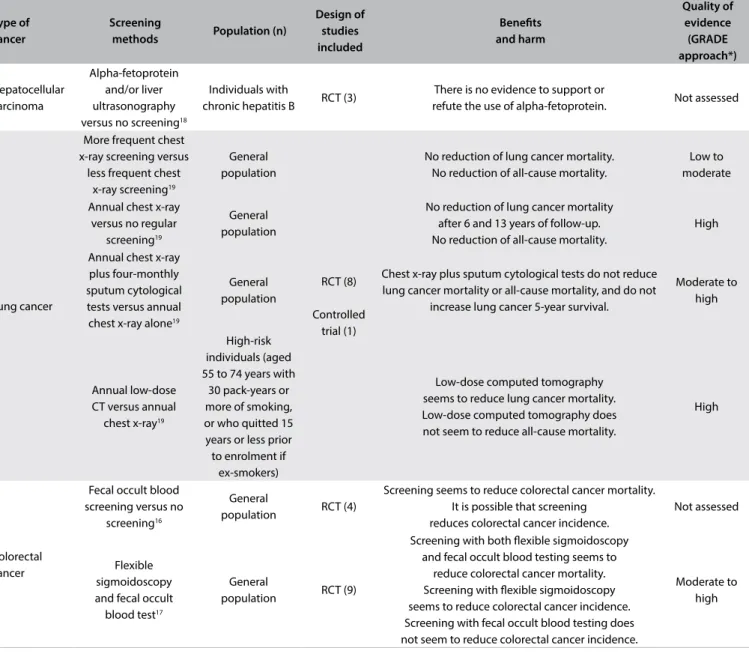
Table 2. Issues addressed, main indings and quality of evidence from systematic reviews that included at least one randomized clinical trial
Type of cancer
Screening
methods Population (n)
Design of studies included
Beneits and harm
Quality of evidence (GRADE approach*)
Hepatocellular carcinoma
Alpha-fetoprotein and/or liver ultrasonography versus no screening18
Individuals with
chronic hepatitis B RCT (3)
There is no evidence to support or
refute the use of alpha-fetoprotein. Not assessed
Lung cancer
More frequent chest x-ray screening versus
less frequent chest x-ray screening19
General population
RCT (8)
Controlled trial (1)
No reduction of lung cancer mortality. No reduction of all-cause mortality.
Low to moderate
Annual chest x-ray versus no regular
screening19
General population
No reduction of lung cancer mortality after 6 and 13 years of follow-up. No reduction of all-cause mortality.
High
Annual chest x-ray plus four-monthly sputum cytological tests versus annual chest x-ray alone19
General population
Chest x-ray plus sputum cytological tests do not reduce lung cancer mortality or all-cause mortality, and do not
increase lung cancer 5-year survival.
Moderate to high
Annual low-dose CT versus annual
chest x-ray19
High-risk individuals (aged 55 to 74 years with
30 pack-years or more of smoking, or who quitted 15 years or less prior to enrolment if
ex-smokers)
Low-dose computed tomography seems to reduce lung cancer mortality. Low-dose computed tomography does not seem to reduce all-cause mortality.
High
Colorectal cancer
Fecal occult blood screening versus no
screening16
General
population RCT (4)
Screening seems to reduce colorectal cancer mortality. It is possible that screening
reduces colorectal cancer incidence.
Not assessed
Flexible sigmoidoscopy and fecal occult
blood test17
General
population RCT (9)
Screening with both lexible sigmoidoscopy and fecal occult blood testing seems to
reduce colorectal cancer mortality. Screening with lexible sigmoidoscopy seems to reduce colorectal cancer incidence. Screening with fecal occult blood testing does not seem to reduce colorectal cancer incidence.
Moderate to high
Continue...
(ATPB and VLC) selected and assessed systematic reviews with themes that showed a correlation with the goals of this review. A third researcher (RR or RLP) resolved any conlicts that arose, when necessary.
RESULTS
Search results
he search resulted in 927 Cochrane systematic reviews. Ater the titles and abstracts had been screened, 17 reviews were found to be related to the theme and fulilled our inclu-sion criteria.9-25 Among these, 7 reviews assessed a screening
method only for the general population, 7 only for a speciic
subpopulation and 3 for both. he reviews assessed screening approaches for the following types of cancer: cancer in gen-eral (n = 2), bladder (n = 1), breast (n = 4), colorectal (n = 2), hepatic (n = 1), lung (n = 1), nasopharyngeal (n = 1), esopha-geal (n = 1), oral (n = 1), prostate (n = 1), testicular (n = 1) and uterine (n = 1).
Results from systematic reviews
Type of cancer
Screening
methods Population (n)
Design of studies included
Beneits and harm
Quality of evidence (GRADE approach*)
Cancer (overall)
General health checkup versus no
checkup9
General
population RCT (16) No reduction of cancer mortality. High
General tests for cancer versus no test10
Individuals with
unprovoked VTE RCT (2)
General tests seem to lead to earlier diagnosis of cancer at an earlier stage of the disease.
Insuicient evidence about cancer-related and VTE-related mortality.
Not assessed
Prostate cancer
PSA testing with or without digital rectal
examination versus no screening23
General male
population RCT (5)
PSA does not seem to reduce mortality PSA seems to increase the diagnosing of prostate cancer and localized prostate cancer and seems to reduce the diagnosing of advanced prostate cancer.
Low to moderate
Oral cancer
Visual examination versus no examination22
Adults > 35 years old
RCT (1)
Visual examination does not seem to reduce mortality. Not assessed
High-risk individuals, > 35
years old, who used tobacco or
alcohol or both
Visual examination seems to reduce oral cancer mortality, to improve survival and to reduce the number of individuals diagnosed with oral cancer of stage III or worse.
Not assessed
Breast cancer
Intensive follow-up (more intensive
scheme with radiological and laboratory tests)
versus non-intensive follow-up (regular physical examinations
and yearly mammography
alone)12
Women treated for stage 1, 2 or 3
breast cancer
RCT (5)
Intensive follow-up seems do not increase overall survival. Intensive follow-up does not seem to
increase disease-free survival. Intensive follow-up does not seem
to increase quality of life.
Low to high
Centralized follow-up (by a hospital-based
specialist) versus decentralized follow-up (by general
practitioners)12
Women treated for stage 1, 2 or 3
breast cancer
Centralized follow-up does not seem to increase overall survival. Centralized follow-up does not seem
to increase disease-free survival. Centralized follow-up does not seem to increase quality of life.
Moderate to high
Regular breast self-examination
versus no regular breast self-examination14
General female
population RCT (3)
Regular self-examination does not reduce breast cancer mortality. Regular self-examination doubled the number of biopsies with benign results.
Not assessed
Mammography screening versus no mammography
screening15
Women aged from
39 to 74 years RCT (8)
Screening does not seem to reduce breast cancer mortality after 10 and 13 years (including only good-quality studies) Screening does not seem to reduce all-cancer mortality after 13 and years (including only good-quality studies)
Screening seems to increase the numbers of lumpectomies and mastectomies and use of radiotherapy.
Screening does not seem to change the use of chemotherapy.
Not assessed
Table 2. Continuation.
General health checkup among adults
he purpose of general health checkups is to detect disease and risk factors for disease with the aim of reducing morbidity and mor-tality. In this review,9 the authors aimed to quantify the beneits
and harm of general health checkups with an emphasis on patient-relevant outcomes such as morbidity and mortality. he results showed that there was no diference between the checkup and ‘no checkup’ groups regarding cancer-related mortality (risk ratio [RR] 1.02; 95% conidence interval [95% CI] 0.92 to 1.12; eight ran-domized clinical trials [RCTs]; 139,290 participants; 3663 deaths). he authors concluded that general health checkups did not reduce cancer-related morbidity or mortality, but that the number of new diagnoses increased. Important harmful outcomes, such as the number of follow-up diagnostic procedures or short term psycho-logical efects, were oten not studied or reported and many trials had methodological problems. With the large number of partici-pants and deaths included and the long follow-up periods used, and considering that cancer mortality was not reduced, general health checkups are unlikely to be beneicial. For further details, refer to the original abstract, available at: http://onlinelibrary.wiley. com/doi/10.1002/14651858.CD009009.pub2/full.
Tests for cancer in patients with unprovoked venous thromboembolism
An unprovoked venous thromboembolism (VTE) is one that afects patients with no underlying or immediately predisposing risk factors. It can frequently be the irst clinical manifestation of an underlying malignancy. his raises the question of whether patients with an unprovoked VTE should be investigated for an underlying cancer. he treatment for VTE difers between cancer and non-cancer patients, and a correct diagnosis would ensure that patients received optimal treatment for VTE, to prevent recurrence and further morbidity. he objectives of this review10
were to determine whether cancer testing for patients with a irst episode of unprovoked VTE is efective in reducing cancer and VTE-related mortality and morbidity and to establish which tests for cancer are most useful. Two RCTs (396 patients) assessed the efect of routine cancer tests versus clinically indicated cancer tests for patients with an unprovoked VTE. Cancer-related mor-tality did not difer between the two testing approaches (odds ratio [OR] 0.49; 95% CI 0.15 to 1.67; P = 0.26; moderate quality evidence). Neither of the studies measured all-cause mortality, VTE-related morbidity and mortality, adverse events, or patient satisfaction. he authors concluded that there was currently insuicient evidence for irm conclusions regarding the efec-tiveness of cancer testing for a irst episode of unprovoked VTE. he results were imprecise and could be consistent with either harm or beneit. Further good-quality RCTs are needed before deinitive conclusions can be reached. For further details, refer to
the original abstract, available at: http://onlinelibrary.wiley.com/ doi/10.1002/14651858.CD010837.pub2/full.
Follow-up strategies for women treated for early breast cancer
Follow-up examinations are oten used, ater primary treatment for women with breast cancer, to detect recurrences at an early (asymptomatic) stage. he objective of this systematic review12
was to evaluate the efectiveness of diferent follow-up strategies for detecting distant metastasis, regarding mortality, morbid-ity and qualmorbid-ity of life among women who had been treated for stage 1, 2 or 3 breast cancer. his updated review included ive RCTs involving 4,023 women with breast cancer (clinical stage 1, 2 or 3). Two trials involving 2,563 women compared follow-up based on clinical visits and mammography with a more inten-sive scheme including radiological and laboratory tests. he data showed that there were no signiicant diferences between the two strategies in relation to the following outcomes:
• Overall survival (hazard ratio [HR] 0.98; 95% CI 0.84 to 1.15; two RCTs; 2,563 participants; high-quality evidence); • Disease-free survival (HR 0.84; 95% CI 0.71 to 1.00; two RCTs;
2,563 participants; low-quality evidence);
• Quality-of-life measurements (one RCT; 639 participants; high-quality evidence).
he results from subgroup analyses according to patient age, tumor size and lymph node status before primary treatment were consistent. In 1999, 10-year follow-up data became available for one RCT, and no signiicant diferences in overall survival were found. Two RCTs compared follow-up performed by a hospital-based specialist versus follow-up performed by general practi-tioners and showed the following results according to outcome: • Overall survival: no diference between the strategies (HR 1.07;
95% CI 0.64 to 1.78; one RCT; 968 participants; moderate-quality evidence);
• Time elapsed until detection of recurrence: no diference between the strategies (HR 1.06; 95% CI 0.76 to 1.47; two stud-ies; 1,264 participants; moderate-quality evidence);
• Quality of life: no diference between the strategies (one RCT; 356 participants; high-quality evidence);
• Patient satisfaction: greater among patients treated by general practitioners.
regularly performing laboratory and instrumental tests, in terms of the time that elapsed until detection of recurrence, overall sur-vival and quality of life. In two RCTs, follow-up care provided by trained and untrained general practitioners working in an orga-nized practice setting had comparable efectiveness to that delivered by hospital-based specialists, in terms of overall survival, detec-tion of recurrence and quality of life. For further details, refer to the original abstract, available at: http://onlinelibrary.wiley.com/ doi/10.1002/14651858.CD001768.pub3/full.
Regular self-examination or clinical
examination for early detection of breast cancer
he practice of clinical breast examination and breast self-exam-ination has been widely disseminated and advocated for years as a general screening method for diagnosing breast cancer. his systematic review14 aimed to assess the clinical efectiveness
of these practices and found two large population-based studies (n = 388,535 women) that had been conducted in Shanghai and Russia, comparing breast self-examination with no intervention (control group). he results showed:
• here was no statistically signiicant diference in breast cancer mortality between the groups (RR 1.05; 95% CI 0.90 to 1.24; 587 deaths in total);
• In Russia, more cancers were diagnosed in the self-examina-tion group than in the control group (RR 1.24; 95% CI 1.09 to 1.41), whereas in Shanghai there was no statistical diference between the groups (RR 0.97; 95% CI 0.88 to 1.06);
• In the screening groups, nearly twice as many biopsies (n = 3,406) with benign results were conducted, compared with the control group (n = 1,856) (RR 1.88; 95% CI 1.77 to 1.99).
Another large population-based study on combined breast self-examination and clinical breast examination was also included, but this study was discontinued due to lack of compliance with follow-up, and no conclusions were drawn. he authors of the systematic review concluded that there was no suggestion of any beneicial efect from breast self-examination screening. Rather, there was only increased harm due to increased numbers of benign lesions identiied, with consequently increased numbers of biopsies performed. herefore, screening by means of physical examina-tion and breast self-examinaexamina-tion is no longer recommended. For further details, refer to the original abstract, available at: http:// onlinelibrary.wiley.com/doi/10.1002/14651858.CD003373/full.
Screening for breast cancer via mammography
his review15 aimed to assess the beneits and harm of
mam-mographic screening for breast cancer. It included seven RCTs (600,000 women, of ages ranging from 39 to 74 years) in which results from mammographic screening and without
mammographic screening were compared. he pooled results from three RCTs with good methodological quality showed that mammographic screening did not reduce:
• Breast cancer-related mortality after 13 years (RR 0.90; 95% CI 0.79 to 1.02);
• All cancer-related mortality, including breast cancer, ater 10 years (RR 1.02; 95% CI 0.95 to 1.10);
• All-cause mortality ater 13 years (RR 0.99; 95% CI 0.95 to 1.03).
he total numbers of lumpectomies and mastectomies were sig-niicantly larger (31% higher) in the screened groups (RR 1.31; 95% CI 1.22 to 1.42), as were the numbers of mastectomies (20% higher) (RR 1.20; 95% CI 1.08 to 1.32). he use of chemotherapy and radiotherapy was similarly increased in both groups (screened and non-screened). he authors concluded that if the overdiagnosis and overtreatment rates were 30%, 10 years of screening on 2000 women would have the outcomes that one women would avoid dying of breast cancer and 10 healthy women would be treated unnecessarily. Also, 200 women would experience signiicant psy-chological distress (anxiety and uncertainty) due to false-positive indings. Furthermore, the authors stated that given the substantial advances in treatment and the greater breast cancer awareness that had been achieved since the time when these RCTs were under-taken, it was most likely that the absolute efect of screening at the time of writing was smaller than at the time of the trials. hey also noted that there were recent studies showing greater degrees of overdiagnosis and very little or no reduction in the incidence of advanced cancers through screening. For further details, refer to the original abstract, available at: http://onlinelibrary.wiley.com/ doi/10.1002/14651858.CD001877.pub5/full.
Screening for colorectal cancer using the fecal occult blood test (Hemoccult)
he fecal occult blood test (FOBT) is used as a population-based screening for reducing mortality due to colorectal can-cer. his review16 evaluated whether screening using FOBT
colonoscopy or a false-negative result; the possibility of overdiag-nosis (leading to unnecessary investigations or treatment); and the complications associated with treatment. For further details, refer to the original abstract, available at: http://onlinelibrary. wiley.com/doi/10.1002/14651858.CD001216.pub2/full.
Flexible sigmoidoscopy versus fecal occult blood testing for colorectal cancer screening
Screening using FOBT and lexible sigmoidoscopy have been shown to reduce mortality due to colorectal cancer in randomized controlled trials. he objective of this review17 was to compare the
efectiveness of screening for colorectal cancer using lexible sig-moidoscopy versus screening using the FOBT. For this purpose, a search for RCTs comparing screening using lexible sigmoid-oscopy or FOBT, with each other or with no screening, was con-ducted. Only studies reporting mortality due to colorectal cancer were included. FOBT had to be repeated (annually or biennially). Nine RCTs involving 338,467 individuals randomized to screen-ing and 405,919 individuals to control groups were identiied. Five RCTs compared lexible sigmoidoscopy with no screening and four studies compared repetitive guaiac-based FOBT (annu-ally and bienni(annu-ally) with no screening. No studies directly com-paring the two screening methods were found. Colorectal can-cer mortality was lower when lexible sigmoidoscopy was used (RR 0.72; 95% CI 0.65 to 0.79; high-quality evidence) than with no screening and when FOBT was used (RR 0.86; 95% CI 0.80 to 0.92; high-quality evidence). Based on indirect comparison of the two screening methods, the RR of dying due to colorectal cancer was 0.85 (95% CI 0.72 to 1.01; low-quality evidence) for screening using lexible sigmoidoscopy, in comparison with FOBT. No complications occurred ater the FOBT test itself, but 0.03% of the participants sufered a major complication ater follow-up. Among more than 60,000 lexible sigmoidoscopy screening pro-cedures and almost 6,000 work-up colonoscopies, a major compli-cation was recorded in 0.08% of the participants. he authors con-cluded there was high-quality evidence showing that screening by means of lexible sigmoidoscopy and FOBT reduced the mortality due to colorectal cancer. On the other hand, there was low-qual-ity indirect evidence that screening using one of the approaches reduced colorectal cancer deaths more than the other. Major com-plications associated with screening require validation from studies with more complete reporting of harm. For further details, refer to the original abstract, available at: http://onlinelibrary.wiley.com/ doi/10.1002/14651858.CD009259.pub2/full.
Alpha-fetoprotein and/or ultrasonography for liver cancer screening in patients with hepatitis B
his review18 included three RCTs, and each of them used a
dif-ferent method for liver cancer screening. he irst one, conducted
in Shanghai, China, randomized the participants to screen-ing every six months usscreen-ing alpha-fetoprotein and ultrasonog-raphy (n = 9,373) versus no screening (n = 9,443). he second trial, conducted in Toronto, Canada, on 1,069 participants with chronic hepatitis B, compared screening every six months with alpha-fetoprotein alone (n = 532) versus alpha-fetoprotein and ultrasound (n = 538) over a ive-year period. he last study, con-ducted in Taiwan, was designed as a cluster randomized trial to determine the optimal interval for screening using alpha-feto-protein and ultrasound. Screening intervals of 4 and 12 months were compared in the groups.
The results from the irst two studies did not show any signii
-cant conclusions. The third study only showed increased incidence of hepatocellular carcinoma in the four-monthly screening group.
None of the three trials included any reports on adverse events. The authors of this systematic review judged that the speciicity and sensitivity of the trials were poor.
he results were inconclusive since there was not enough evi-dence to evaluate the value of alpha-fetoprotein or ultrasound screening, or both, for patients with hepatocellular carcinoma who were positive for hepatitis B surface antigen (HBsAg). For further details, refer to the original abstract, available at: http://onlineli-brary.wiley.com/doi/10.1002/14651858.CD002799.pub2/full.
Screening for lung cancer
he objective of this review19 was to determine whether screening
for lung cancer (using sputum examinations, chest radiography or chest computed tomography) reduced mortality. Eight RCTs and one non-randomized trial (453,965 subjects) were included and these showed the following:
• Comparison of annual chest X-ray screening for smokers and non-smokers versus no screening: no reduction in lung cancer mortality (RR 0.99; 95% CI 0.91 to 1.07; one study); • Comparison of diferent frequencies of chest X-ray
screen-ing: frequent screening was associated with an 11% relative increase in mortality due to lung cancer, compared with less frequent screening (RR 1.11; 95% CI 1.00 to 123; low-quality evidence);
• Comparison of screening using chest X-ray plus sputum cyto-logical tests versus screening using chest X-ray alone: no reduc-tion in lung cancer mortality (RR 0.88; 95% CI 0.74 to 1.03); • Comparison of annual low-dose computed tomography screen-ing versus annual chest X-ray screenscreen-ing for high-risk smokers and ex-smokers: low-dose computed tomography screening was associated with a 20% decrease in mortality due to lung cancer (RR 0.80; 95% CI 0.70 to 0.92).
cytological tests. Annual low-dose computed tomography screen-ing was correlated with a reduction in lung cancer mortality among high-risk smokers. However, it is essential to obtain further data on the cost-efectiveness of screening and the relative harm and beneits of screening across a range of diferent groups at risk and diferent settings. For further details, refer to the original abstract, available at: http://onlinelibrary.wiley.com/doi/10.1002/14651858. CD001991.pub3/full.
Screening programs in oral cancer
his review22 aimed to assess the efectiveness of screening
(using visual examination, toluidine blue, luorescence imaging or brush biopsy) for early detection and prevention of oral can-cer. Only one RCT, with a 15-year follow-up, met the inclusion criteria. his RCT found that there was a 24% reduction in mor-tality associated with screening (30/100,000 person-years ver-sus 39/100,000; RR 0.76; 95% CI 0.60 to 0.97) among high-risk individuals who used tobacco or alcohol or both. Moreover, the screening group presented a 19% reduction in the number of individuals diagnosed with oral cancer in stage 3 or higher (RR 0.81; 95% CI 0.70 to 0.93). he authors concluded that there was evidence that visual examination as part of a popula-tion-based screening program could reduce oral cancer mortal-ity among high-risk individuals and that there was a reduction in staging and an improvement in survival across the popula-tion. here was no evidence to support use of adjunctive tech-nologies (including toluidine blue, brush biopsy or luorescence imaging) as a screening tool to reduce oral cancer mortality. However, the evidence was limited to one study that presented high risk of bias and which did not consider the efect of clus-ter randomization in the analysis. For further details, refer to the original abstract, available at: http://onlinelibrary.wiley.com/ doi/10.1002/14651858.CD004150.pub4/full.
Screening for prostate cancer
Routine mass, selective or opportunistic screening for prostate cancer has resulted in considerable debate regarding whether this screening indeed reduces mortality and improves quality of life. he objectives of this systematic review23 were to assess whether
screening for prostate cancer reduces prostate cancer-speciic mortality or all-cause mortality and to determine its impact on quality of life and adverse events, so as to better inform deci-sion-making relating both to individual patients and to health-care policy.
Five RCTs (341,342 participants, aged from 45 to 80 years, with duration of follow-up from 7 to 20 years) were included and all of them involved prostate-speciic antigen testing, with or without digital rectal examination. here was no signii-cant diference in prostate cancer-speciic mortality between
the screened and non-screened groups (RR 1.00; 95% CI 0.86 to 1.17). hree RCTs presented high risk of bias, and the other two were classiied as having low risk of bias, but provided con-tradictory results, as follows:
• he European Randomized Study of Screening for Prostate Cancer (ERSPC) reported that screening led to a signiicant reduction in prostate cancer-speciic mortality (RR 0.84; 95% CI 0.73 to 0.95). his study was the only RCT that reported a signiicant reduction in prostate cancer-speciic mortality in a pre-speciied subgroup of men aged 55 to 69 years of age. • he US Prostate, Lung, Colorectal and Ovarian (PLCO) Cancer
Screening Trial reported that screening did not lead to any sig-niicant beneit (RR 1.15; 95% CI 0.86 to 1.54).
A meta-analysis on these two studies with low risk of bias alone (ERSPC and PLCO) showed that there was no signiicant difer-ence in prostate cancer-speciic mortality (RR 0.96; 95% CI 0.70 to 1.30). Prostate cancer was diagnosed signiicantly more frequently among screened men than among unscreened men (RR 1.30; 95% CI 1.02 to 1.65). Localized prostate cancer was diagnosed more frequently among screened men (RR 1.79; 95% CI 1.19 to 2.70), and advanced prostate cancer was diagnosed less frequently among screened men (RR 0.80; 95% CI 0.73 to 0.87).
Six systematic reviews that did not ind any primary study that fulilled their inclusion criteria (empty reviews) were also included in our review. heir aims were to evaluate the following: • Screening using urinary dipsticks for reducing morbidity and
mortality;11
• Mammography versus mammography plus ultrasonography for breast cancer screening testing in women at average risk;13
• Screening for nasopharyngeal cancer;20
• Screening for esophageal cancer;21
• Screening for testicular cancer;24
• Follow-up strategies ater treatment (large loop excision of the transformation zone (LLETZ)) for cervical intraepithelial neo-plasia (CIN): Impact of human papillomavirus (HPV) test.25
hus, no recommendations in relation to the topics of these six systematic reviews can be made until primary studies, preferably RCTs with strong methodological quality, have been published.
DISCUSSION
he present study included 17 Cochrane systematic reviews: 15 relating to screening for speciic types of cancer and 2 to screening for cancer in general. However, 6 of the 17 reviews did not ind any clinical trial that met the inclusion criteria, and therefore the authors of those “empty reviews” were unable to provide recommendations on the beneits and risks of screening. hese last reviews were on screening for bladder, breast, naso-pharyngeal, esophageal, testicular and cervical cancer.
Many clinical trials included in the systematic reviews were small, had short-term follow-up and were of poor methodological quality, which limited the quality of evidence available for many relevant outcomes. his was notable in relation to the reviews on screening among individuals with idiopathic deep venous throm-bosis,10 screening for hepatocellular carcinoma among
individu-als with chronic hepatitis B18 and screening for oral cancer in the
general population.22
Regarding the screening strategies most commonly used by professionals on populations, a systematic review14 showed that
routinely performed breast self-examination did not reduce can-cer mortality and also doubled the number of biopsies with benign outcomes.
here continues to be discussion concerning mammography for breast cancer screening. On the basis of a Cochrane systematic review, mammographic screening does not seem to have beneits regarding breast cancer mortality or cancer-related mortality ater 10 and 13 years respectively.15
For prostate-speciic antigen testing with or without digital rectal examination for prostate cancer screening, the results from the two major RCTs are inconsistent regarding the beneits relat-ing to mortality.23
Regarding the implications of this study for clinical practice, the evidence found here does not support most routinely performed screening approaches, given their lack of clinical efectiveness. Patients need to be aware of the risks of positive and false-negative results before undergoing screening tests.
Concerning the implications of this study for further research, since only four systematic reviews provided high-quality bod-ies of evidence, there is a clear need for better designed and bet-ter conducted clinical trials for assessing the clinical outcomes of the various screening methods that are frequently used in clinical practice and for assessing the efectiveness of screening for the vast majority of cancers.
CONCLUSION
his overview brought together 17 systematic reviews with dis-tinct variations in the level of evidence presented, from low to high. he evidence found in this overview did not support most of the commonly used screening tests for cancer. herefore, we take the view that patients need to be aware of, and well-informed about the possibilities of false positives and false negatives before undergoing such tests. he number of studies with high-quality evidence level pointing towards signiicantly decreased mortality was low. hese studies addressed two issues: low-dose computed tomography for high-risk individuals, which seemed to reduce lung cancer mortality; and lexible sigmoidoscopy and fecal occult blood tests, which seemed to reduce colorectal cancer mortality.
Further studies with better quality are needed in order to assess the efectiveness of screening tests for cancer as well their side efects.
REFERENCES
1. Ferlay J, Soerjomataram I, Dikshit R, et al. Cancer incidence and mortality
worldwide: sources, methods and major patterns in GLOBOCAN 2012.
Int J Cancer. 2015;136(5):E359‑86.
2. Stewart BW, Wild CP. World Cancer Report 2014. Lyon: International
Agency for Research on Cancer. World Health Organization; 2014.
Available from: http://publications.iarc.fr/Non‑Series‑Publications/
World‑Cancer‑Reports/World‑Cancer‑Report‑2014. Accessed in
2017 (Jul 17).
3. Institute for Quality and Eiciency in Health Care (IQWiG). Beneits and
risks of screening tests. Available from: https://www.ncbi.nlm.nih.gov/
pubmedhealth/PMH0072602/. Accessed in 2017 (Jul 17).
4. World Health Organization. Screening for various cancers. Geneva:
World Health Organization; 2016. Available from: http://who.int/cancer/
detection/variouscancer/en/. Accessed in 2017 (Jul 17).
5. Bulliard J‑L, Chiolero A. Screening and overdiagnosis: public health
implications. Public Health Reviews. 2015;36(1):8.
6. Thornton H, Pillarisetti RR. ‘Breast awareness’ and ‘breast self‑examination’
are not the same. What do these terms mean? Why are they confused?
7. Petticrew MP, Sowden AJ, Lister‑Sharp D, Wright K. False‑negative
results in screening programmes: systematic review of impact and
implications. Health Technol Assess. 2000;4(5):1‑120.
8. Peregrino AAF, Vianna CMM, Almeida CEV, et al. Análise de Custo‑
efetividade do rastreamento do câncer de mama com mamograia
convencional, digital e ressonância [Analysis of Cost‑efectiveness of
screening for breast cancer with conventional mammography, digital and
magnetic resonance imaging]. Ciên Saúde Coletiva. 2012;17(1):215‑22.
9. Krogsbøll LT, Jørgensen KJ, Grønhøj Larsen C, Gøtzsche PC. General
health checks in adults for reducing morbidity and mortality from
disease. Cochrane Database Syst Rev. 2012;10:CD009009.
10. Robertson L, Yeoh SE, Stansby G, Agarwal R. Efect of testing for cancer
on cancer‑ and venous thromboembolism (VTE)‑related mortality and
morbidity in patients with unprovoked VTE. Cochrane Database Syst
Rev. 2015;(3):CD010837.
11. Krogsbøll LT, Jørgensen KJ, Gøtzsche PC. Screening with urinary dipsticks
for reducing morbidity and mortality. Cochrane Database Syst Rev.
2015;1:CD010007.
12. Moschetti I, Cinquini M, Lambertini M, Levaggi A, Liberati A. Follow‑up
strategies for women treated for early breast cancer. Cochrane Database
Syst Rev. 2016;(5):CD001768.
13. Gartlehner G, Thaler K, Chapman A, et al. Mammography in combination
with breast ultrasonography versus mammography for breast cancer
screening in women at average risk. Cochrane Database Syst Rev.
2013;(4):CD009632.
14. Kösters JP, Gøtzsche PC. Regular self‑examination or clinical examination
for early detection of breast cancer. Cochrane Database Syst Rev.
2003;(2):CD003373.
15. Gøtzsche PC, Jørgensen KJ. Screening for breast cancer with
mammography. Cochrane Database Syst Rev. 2013;(6):CD001877.
16. Hewitson P, Glasziou P, Irwig L, Towler B, Watson E. Screening for
colorectal cancer using the faecal occult blood test, Hemoccult.
Cochrane Database Syst Rev. 2007;(1):CD001216.
17. Holme Ø, Bretthauer M, Fretheim A, Odgaard‑Jensen J, Hof G. Flexible
sigmoidoscopy versus faecal occult blood testing for colorectal cancer
screening in asymptomatic individuals. Cochrane Database Syst Rev.
2013;(9):CD009259.
18. Aghoram R, Cai P, Dickinson JA. Alpha‑foetoprotein and/or liver
ultrasonography for screening of hepatocellular carcinoma in patients
with chronic hepatitis B. Cochrane Database Syst Rev. 2012;(9):CD:002799.
19. Manser R, Lethaby A, Irving LB, et al. Screening for lung cancer. Cochrane
Database Syst Rev. 2013;(6):CD001991.
20. Yang S, Wu S, Zhou J, Chen XY. Screening for nasopharyngeal cancer.
Cochrane Database Syst Rev. 2015;(11):CD008423.
21. Yang S, Wu S, Huang Y, et al. Screening for oesophageal cancer. Cochrane
Database Syst Rev. 2012;12:CD007883.
22. Brocklehurst P, Kujan O, O’Malley LA, et al. Screening programmes for
the early detection and prevention of oral cancer. Cochrane Database
Syst Rev. 2013;(11):CD004150.
23. Ilic D, Neuberger MM, Djulbegovic M, Dahm P. Screening for prostate
cancer. Cochrane Database Syst Rev. 2013;(1):CD004720.
24. Ilic D, Misso ML. Screening for testicular cancer. Cochrane Database
Syst Rev. 2011;(2):CD007853.
25. van der Heijden E, Lopes AD, Bryant A, Bekkers R, Galaal K. Follow‑up
strategies after treatment (large loop excision of the transformation
zone (LLETZ)) for cervical intraepithelial neoplasia (CIN): Impact
of human papillomavirus (HPV) test. Cochrane Database Syst Rev.
2015;1:CD010757.
26. Atkins D, Best D, Briss PA, et al. Grading quality of evidence and strength
of recommendations. BMJ. 2004;328(7454):1490.
Sources of funding: None declared
Conlict of interest: None declared
Date of irst submission: June 2, 2017
Last received: July 11, 2017
Accepted: July 11, 2017
Address for correspondence: Vladimir Lisboa Capelasso
Evidence‑Based Health Program, Escola Paulista de Medicina —
Universidade Federal de São Paulo (EPM‑Unifesp)
Rua Botucatu, 740 – 3o andar
Vila Clementino — São Paulo (SP)
CEP 04023‑900