estudos avançados 24 (70), 2010 81
Drug design, biotechnology
and medicinal chemistry:
applications to infectious
diseases
R
afael
V. C. G
uido
, a
dRiano
d. a
ndRiCopulo
and
G
lauCius
o
liVa
Introduction
I
nfectIous diseases are caused by pathogenic microorganisms (e.g., bacteria, viruses, fungi and parasites) that must invade host cells in order to reproduce. these diseases are serious public health problems affecting a significant portion of the world’s population, and because of their socioeco-nomic aspect represent a major challenge for the twenty-first century, especially in the poorest and most vulnerable regions of the planet. According to the World Health organization (WHo), infectious diseases account for about a third of the causes of death worldwide. the relationship between these diseases and the low income of the poorest populations is evidenced by the fact that infectious diseases rank first among the leading causes of death and permanent disability in developing countries (WHo, 2008).Discovering and developing pharmaceutical drugs is a complex, lengthy and costly process, whose roots are deeply linked to scientific and technological innovations (Guido et al., 2008a). the significant advances in chemistry and bi-ology and the better understanding of biochemical pathways, molecular targets and mechanisms that lead to the onset and progression of diseases have enabled the discovery of remarkable therapeutic innovations, providing significant im-provements in the quality of life of many populations in the world.
estuDos AvAnçADos24 (70), 2010
82
of bioactive molecules, medicinal chemistry also incorporates studies of the me-tabolism and relationships between chemical structure and activity (Wermuth, 2003). this clearly shows the establishment of key interfaces between chemical, biological, pharmaceutical, medical, physical and computational sciences.
Discovery and development of new pharmaceutical drugs
In the implementation of drug design strategies, studies of evolutionary processes of molecular recognition in biological systems are of great impor-tance, since they set up the fundamental basis for understanding properties such as potency, affinity and selectivity. Given this complex paradigm, biotechnologi-cal tools associated with medicinal chemistry methods play an outstanding role in the development of new molecules with biological activity.
the process of discovering and developing drugs, as shown in figure 1, is divided into two major phases: (i) discovery (also known as pre-clinical or basic research phase); and (ii) development (or clinical phase) (Lombardino & Lowe, 2004). In the early stages of the discovery phase, research usually focuses on the identification and optimization of small molecules capable of representing new chemical entities (nce) with potential for clinical development. validation of the molecular target selected is essential for a number of reasons that range from establishing its relevance in the physiopathological process under study to characterizing the impact of its selective modulation in the treatment or cure of diseases or disorders in humans.
figure 1 – Phases involved in the discovery and development of pharmaceutical drugs (ADMe - absorption, distribution, metabolism and excretion; nDA - new drug application).
estuDos AvAnçADos24 (70), 2010 83 Bioactive molecules (or ligands) can be identified from actual (e.g., bio-logical, biochemical) or virtual (e.g., computational) screenings of natural prod-ucts, synthetic compounds or combinatorial collections, or by means of rational planning. It should be emphasized, however, that in all cases the biological properties must be determined experimentally, and the performance of stan-dardized and validated high quality tests is essential. In general, low potency and affinity molecules are identified in the early design phases and should be optimized with respect to a series of pharmacodynamic (e.g., potency, affinity, selectivity) and pharmacokinetics (e.g., absorption, metabolism, bioavailability) properties. the optimized compounds are selected as lead compounds for fur-ther development of a drug candidate (nce) (Guido & Andricopulo, 2008).
With the aid of medicinal chemistry methods it is possible to exploit the vast chemical space outlining the work involving the identification, selection and optimization of molecules capable of interacting, with high affinity and selectivity, with the selected molecular target (e.g., enzyme, receptor), which represents the biological space. several strategies can be used to investigate the chemical- biological space, such as: organization of databases, the use of mo-lecular filters, high-throughput screening and virtual screening.
Knowledge of the structures of macromolecular targets or of ligand-recep-tor complexes enables structure-based drug design. In contrast, when the struc-ture of the selected target is unknown, ligand-based drug design methods can be used, exploiting the properties and characteristics of series of bioactive ligands. In many cases, the use of integrated sBDD and LBDD strategies can generate use-ful information for designing nce, through the synergy and complementarity of knowledge between the strategies (Guido et al., 2008a; Andricopulo et al., 2009). the skilled management of information is a very important factor in the present day, as it enables organizing and analyzing the vast amount of data available.
Biotechnology and drug discovery
estuDos AvAnçADos24 (70), 2010
84
functional genomics (or transcriptome) focuses on the complete knowl-edge of the set of transcripts (messenger RnA, ribosomal RnA, carrier RnA and microRnA) of a given organism, tissue or cell strain. functional genomics studies are based on microarray techniques capable of identifying and quantify-ing mRnA transcripts in cells. the analysis of microarrays of RnA interference (RnAi) has contributed significantly to the evaluation of gene function through gene silencing or decreased expression of proteins (Mousses et al., 2003). How-ever, post-translational events that are important for cellular regulation and sig-naling, such as phosphorylation, glycosylation, membrane-anchoring and fold-ing are rarely detected by this technique. Proteomic methods (Blackstock & Weir, 1999) are useful alternatives in these cases and, although less suitable for large-scale trials, provide more accurate and detailed data, since the strategies involved (e.g., mass spectroscopy) are based on the resolution and detection ability of specific proteins isolated from several sources.
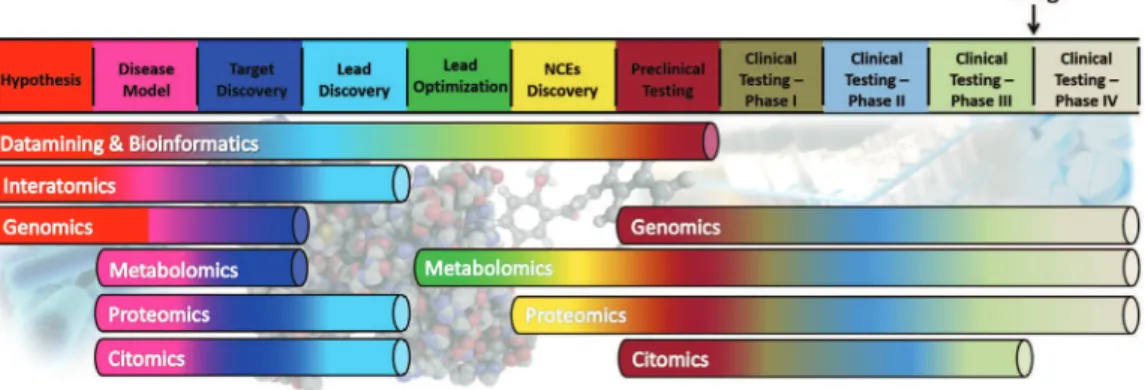
Metabolomic studies allow the identification of low molecular weight me-tabolites through very sensitive techniques such as nMR (Lindon & nicholson, 2008), which requires only 20 mg of tissue or biofluids (Bollard et al. 2005). In addition, the procedures involved can be widely applied in studies to evaluate pharmacokinetic properties of drug candidates, both in the preclinical phase in animal models and in human clinical trials (figure 2). the use of the Human Metabolome Database) (Wishart et al., 2007) assists in the evaluation of the impact of diseases on the metabolism of different organisms.
estuDos AvAnçADos24 (70), 2010 85
table 1 – Biotechnological strategies and methods
Strategy Sample Technology Information Advantages Limitations
Genomics DNA DNA Sequencing Nucleotide
se-quence Eficiency in data generation Excessive data generation
Functional
genomics
RNA Determination of
transcripts - mRNA mRNA hybridization patterns - Eficiency in data generation mRNA transcript Extrapolation of to protein expres
-sion
Proteomics Proteins Mass spectroscopy,
gel electrophoresis, protein chips, anti
-body arrays
Amino acid se
-quence, post-trans
-lational changes, interactions be
-tween proteins
Data generated on a medium-scale; relevant information for
discovering new
targets
Low eficiency in data generation, as
-sociated noise
Metabolo
-mics Metabolites Mass spectroscopy, NMR, HPLC Metabolite mol
-ecules screening with High-scale
signiicant trans
-fer capability for
studies
Complex mixtures, associated noise,
reproducibility
Cytomics Cells Digital imaging, luorescence, immu
-nohistochemistry
Photons Optimization of
temporal and spa
-tial visualization of cellular effects
of drugs
Dificulty in ob
-taining relevant biomarkers
In general, the different biotechnological strategies discussed produce large amounts of data that need be analyzed quickly and effectively. In this con-text, bioinformatics methods play a key role by enabling the organization, man-agement, visualization and interpretation of the information generated. the goal is the establishment of correlation patterns between different biochemical and cellular events involved in the disease state (or during treatment with a drug candidate). the integrated analysis of these data leads to interactomics (cusick et al., 2005), which is characterized by the mapping of interaction networks among the various biological phenomena (e.g., molecular, biochemical, cellu-lar). A significant number of data containing maps of the interaction of various biological systems is available in databases accessible to the public, such as: (i) PsI-MAP - Protein structural Interactome Map (Gong et al., 2005); (ii) DIP - Database of Interacting Proteins (Xenarios et al., 2000); ( iii) BInD - Bio-molecular Interaction network Database (Bader et al., 2003); and (iv) MInt - Molecular Interaction Database) (Zanzoni et al., 2002).
estuDos AvAnçADos24 (70), 2010
86
figure 2 – Integration of biotechnology in drug R&D.
Neglected tropical diseases
neglected tropical diseases (ntD) are striking consequences of social underdevelopment, depicting in detail the situation of the poorest and most disadvantaged regions on the planet (Beyrer et al., 2007). ntD are endemic in several important geographic regions (Dias et al., 2009), affecting millions of people and determining high morbidity and mortality rates. for the majority of priority ntD in WHo special programs (e.g., malaria, African trypanoso-miasis (sleeping sickness), American trypanosotrypanoso-miasis (chagas’ disease), dengue fever, leprosy, leishmaniasis, schistosomiasis, and onchocerciasis, among others), the therapeutic options are inadequate and pose a number of problems such as low effectiveness, high toxicity and the emergence of resistant strains (Guido & oliva, 2009). this scenario is compounded by the limited number and lack of innovation in drug R&D programs in the area of ntD (nwaka & Hudson, 2006; nwaka et al., 2008). thus, the situation calls for concentrated global ef-forts (government - academia - industry) for the creation and maintenance of R&D programs aimed at the discovery of new alternative therapies for the treat-ment and control of these diseases (Guido & oliva, 2009).
the WHo special Program for Research and training in tropical Diseas-es (tDR), the MedicinDiseas-es for Malaria venture (MMv) Program and the Drugs for neglected Diseases Initiative (DnDi) are examples of public-private part-nerships that aim to create, stimulate and invest in R&D of drugs against a va-riety of ntD (Dias et al. 2009). some examples of drugs that have reached the market through public-private partnerships are provided in table 2.
estudos avançados 24 (70), 2010 87
table 2 – Anti-Dtn drugs developed through public-private partnerships
Drug Registry Therapeutic
Indication
Pubic-private partnerships
Praziquantel 1976 Schistosomiasis Bayer / TDR
Meloquine 1984 Malaria Hoffman La Roche / Wrair* / TDR
Ivermectin 1987 Onchocerciasis Merck / TDR
Halofantrine 1988 Malaria Smith Kline Beecham, Wrair* / TDR
Elornithine 1991 Sleeping sickness Marion Merrel Dow / TDR
Liposomal Amphotericin B 1994 Leishmaniasis NeXstar / TDR
Artemisinin 1997 Malaria Rhone Poulenc Rorer / Kunming / TDR
Artemisinin-lumefantrine 1999 Malaria Novartis / Chinese government
Artemotil 2000 Malaria Artecef / WRAIR / TDR
Miltefosine 2002 Leishmaniasis Zentaris, Indian CMR / TDR
Artesunate-amodiaquine 2007 Malaria Sanoi-Aventis / DNDi
Artesunate-meloquine 2008 Malaria Farmaguinhos / DNDi
* WRAIR - Walter Reed Army Institute of Research.
National R&D initiatives in the area of NTD
extremely important initiatives are being successfully implemented to include Brazil in an increasingly significant science and technology scenario. three examples are presented to illustrate the breadth and diversity of networks and partnerships that have provided great opportunities and challenges in the area of ntD.
estudos avançados24 (70), 2010 88
innovation, and disseminating knowledge and education in all areas of biotech-nology. to meet its objectives, the cBMe has adopted an integrated multidis-ciplinary approach, which includes the use of molecular biology, biochemistry, organic chemistry, structural biology and medicinal chemistry methods.
the research projects of the cBMe have as a common link a molecular approach that entails exploring complex biological systems of great importance to sensitive areas of our society, such as pharmaceutical drugs and medicines, agribusiness and biotechnology. one of the major goals of the cBMe is to achieve maximum integration with the productive sector, particularly with na-tional and multinana-tional pharmaceutical industries, biotechnology companies, and research institutions on human health, among others, for the establishment of partnerships and/or other forms of cooperation in drug R&D. In short, in the last ten years the cBMe has spearheaded innovative projects in struc-tural biotechnology and medicinal chemistry, including patent development and technology transfer. the dissemination of science and knowledge achieved through programs dedicated to secondary school students and teachers as well as to the general population also deserve special mention.
the national Institute of structural Biotechnology and Medicinal chem-istry in Infectious Diseases (InBeQMeDI) is another successful example of integrated multidisciplinary initiative focused on the development of new drug candidates using specific molecular targets in microorganisms associated with infectious diseases. the InBeQMeDI was established under the Mct/ cnPq/Ms/fAPesP program of national Institutes of science and technolo-gy (Inct). this program has ambitious and far-reaching goals in national terms as a possibility for mobilizing and aggregating, in a coordinated fashion, the best research groups in frontier areas of science and strategic areas for the sustainable development of the country; boosting competitive basic and fundamental scien-tific research internationally; stimulating the development of advanced scienscien-tific and technological research associated with applications aimed to promote inno-vation and entrepreneurship, in close collaboration with innovative companies, among others (InBeQMeDI, 2010a).
estudos avançados 24 (70), 2010 89 area of ntD. to achieve these goals, the InBeQMeDI has been promoting a multidisciplinary approach, including the use of methods of molecular biol-ogy, biochemistry, structural biology (protein crystallography, multidimensional nMR, molecular modeling and bioinformatics), medicinal chemistry based on products of natural and synthetic origin, drug design, molecular immunology, cell biology and pharmacology (InBeQMeDI, 2010b).
As a last example, it is worth noting that our group has been selected by the World Health organization (WHo), in its special Program for Research and training in tropical Diseases - tDR/WHo-unIcef/unDP/World Bank - Business Line on Lead Discovery for Infectious tropical Diseases - new Medici-nal chemistry centers to Join Drug Discovery networks, as a Reference center in Medicinal chemistry for chagas’ disease. our WHo center aims basically to advance the development of new drug candidates for the treatment of chagas’ disease. Research activities involve effective integration with partner laboratories in the WHo network of medicinal chemistry, including large pharmaceutical companies like Pfizer, Merck, and chemtura and Pharmacopeia (WHo, 2010).
Molecular targets for drug discovery
enzymes are extremely important biological targets for the design of nov-el drugs, because of their essential role in biochemical pathways associated with human diseases and disorders. other attractions include the fact that they are usually easy to obtain, are suitable for biological trials and versatile in the ap-plication of sBDD and LBDD techniques (Mestres, 2005). enzyme inhibitors of the reversible type are the most studied drug candidates and can be classified as competitive and uncompetitive. there are also the irreversible enzyme inac-tivators, which act especially as affinity labels or mechanism-based inacinac-tivators, leading to covalent modification of the enzyme (copeland, 2005).
According to data from the u.s. food and Drug Administration (fDA), approximately 25 percent of registered nce (317 out of 1278 nce) had as targets 71 enzymes from five different sources (figure 3) (Robertson, 2005).
Examples of use of drug design methods
estuDos AvAnçADos24 (70), 2010
90
(ligand) in the binding site of a macromolecule (target protein), followed by the evaluation (scoring) and classification of the proposed binding mode. structure-based virtual screening (sBvs) uses molecular docking methods in the analysis of large databases of compounds, with the aim of characterizing a privileged chemical-biological space and enable the selection of compounds for biochemi-cal and/or biologibiochemi-cal tests (Guido et al. 2008a; Andricopulo et al. 2009).
figure 3 – enzymes as molecular targets of fDA-approved drugs (Robertson, 2005).
estuDos AvAnçADos24 (70), 2010 91
figure 4 – (A) molecular structure of the compounds selected in the vs. (B) Lead compound identified. (c) Binding mode of smPnP inhibitors identi-fied through sBDD strategies. the enzyme is represented by the ribbon model and the active site is indicated by the solvent accessible surface. the pharmacophore model is indicated by spheres that define the areas fa-vorable for hydrogen bond acceptor/donor groups (magenta); hydrogen bond donor groups (blue); and hydrophobic groups (orange). the lead compound (yellow) and one of the thioxothiazolidines (pink) are repre-sented as stick models.
estudos avançados24 (70), 2010 92
and biological evaluation of new molecules, resulting in the discovery of nce that are candidates for clinical studies.
Another option widely explored when 3D structures of macromolecular targets are available is integrating the QsAR and sBDD methods. for example, once the chemical and structural characteristics associated with the biological property are identified in the QsAR modeling, these can be compared with the information obtained from the 3D topology of the receptor in question. Hence the complementary essence of the methods and their importance as a drug de-sign strategy (trossini et al., 2009).
the integration of the QsAR and sBDD methods can be observed in studies conducted with a series of glyceraldehyde 3-phosphate dehydrogenase enzyme inhibitors (GAPDH), an attractive molecular target for the develop-ment of drugs against trypanosomiasis (Guido et al. , 2008b). the data set used to generate the 3D predictive QsAR models consisted of 70 adenosine deriva-tives (figure 5a), which were designed based on significant structural differ-ences between the active sites of Leishmania mexicana enzymes and its human homologue. the molecular properties were quantitatively related to inhibitory potency, using methods of comparative molecular field analysis (coMfA) (cra-mer et al., 1988) and comparative molecular similarity indices analysis (coM-sIA) (Klebe et al. 1994). these methods consider that the biological activity of a data set is directly related to intermolecular interactions prevailing in the mo-lecular recognition and binding affinity process, i.e., the stereo-electronic inter-actions (non-covalent) involved in the formation of the drug-receptor complex type. Because of their 3D character, molecular interaction fields (MIf) are used as descriptors. Another striking feature is the study of bioactive conformations and the 3D structural alignment (orientation in cartesian space) of molecules from the dataset. for that purpose, this study used molecular docking methods to obtain the molecular alignment of inhibitors in the binding site of enzyme
estuDos AvAnçADos24 (70), 2010 93
figure 5 – (A) General structure of the series of adenosine-derived LmGAPDH inhib-itors. (B) structural alignment of the 70 inhibitors used in QsAR model-ing. the compounds are represented as rod models in the LmGAPDH active site, indicated by the solvent accessible surface. (c) Generation of coMfA models with high internal and external consistency. (D) contour maps of the main stereo-electronic characteristics of the dataset. the most potent (light blue), and less potent (orange) inhibitors are shown in the protein binding cavity. contour maps (i) stereo: favorable in green, unfa-vorable in yellow; and (ii) electrostatic: faunfa-vorable in blue, unfaunfa-vorable in red.
Another interesting example of the integration of experimental and com-putational methods, particularly of enzyme kinetics and molecular modeling can be seen in the study of a series of chalcones with activity against Mycobacterium
tuberculosis tyrosine phosphatase A (MtPtpA) (figure 6A), a biomolecule that
plays a central role in the processes of cell signaling and invasion in mycobacteria (Mascarello et al., 2010). In this study, quantitative parameters such as potency (Ic50, inhibitor concentration required to reduce enzymatic activity by 50
per-cent) and affinity (Ki, inhibition constant) were determined experimentally and
the mechanism of action was clarified. Briefly, enzyme kinetic studies have indicated a reversible mechanism of the competitive type for chalcones, with Ki values in the low micromolar range (figure 6B). Based on this information,
estuDos AvAnçADos24 (70), 2010
94
Arg17, His49 and trp48, figure 6c). subsequently, in vitro and in vivo studies demonstrated both the low toxicity of synthetic chalcones and their ability to prevent intracellular survival and proliferation of mycobacteria, suggesting the potential of this class for the development of new drug candidates for the treat-ment of tuberculosis.
Figure 6 – (a) Series of chalcones with potent inhibition activity against MtPtpA. (B)
Lineweaver-Burk double-reciprocal plots for the competitive inhibition mech-anism. (C) Molecular modeling and studies of the mode of interaction of in-hibitors. The active MtPtpA site is indicated by the solvent accessible surface,
inhibitors as rod models and hydrogen bonds as dashed lines.
Conclusion
estudos avançados 24 (70), 2010 95
References
AnDRIcoPuLo, A. D. et al. structure-based drug design strategies in medicinal chemistry. Curr. Top. Med. Chem., v.9, n.9, p.771-90, 2009.
BADeR, G. D. et al. BInD: the biomolecular interaction network database. Nucleic
Acids Res., v.31, n.1, p.248-50, 2003.
BeYReR, c. et al. neglected diseases, civil conflicts, and the right to health. Lancet, v.370, n.9587, p.619-27, 2007.
BHoGAL, n.; BALLs, M. translation of new technologies: from basic research to drug discovery and development. Curr. Drug Discov. Technol., v.5, n.3, p.250-62, 2008. BLAcKstocK, W. P.; WeIR, M. P. Proteomics: quantitative and physical mapping of cellular proteins. Trends Biotechnol., v.17, n.3, p.121-7, 1999.
BoLLARD, M. e. et al. nMR-based metabonomic approaches for evaluating physio-logical influences on biofluid composition. NMR Biomed., v.18, n.3, p.143-62, 2005. cBMe. center for structural Molecular Biotechnology. 2010. Available at: <http:// cbme.if.sc.usp.br/. 2010>. Access on: 8 set. 2010.
coPeLAnD, R. A. Reversible modes of inhibitor interactions with enzymes. new Jersey: Wiley Interscience, 2005. p.48-81, 2005 (evaluation of enzyme Inhibitors in Drug Discovery).
cRAMeR, R. D. et al. comparative molecular-field analysis (comfa). 1. effect of shape on binding of steroids to carrier proteins. J. Am. Chem. Soc., v.110, n.18, p.5959-67, 1988.
cusIcK, M. e. et al. Interactome: gateway into systems biology. Hum. Mol. Genet., v.14, n.2, p.R171-81, 2005.
DIAs, L. c. et al. chemotherapy of chagas’ disease: state of the art and perspectives for the development of new drugs. Quimica Nova, v.32, n.9, p.2444-57, 2009.
fARutIn, v. et al. structure-activity relationships for a class of inhibitors of purine nucleoside phosphorylase. J. Med. Chem., v.42, n.13, p.2422-31, 1999.
GonG, s. et al. PsIbase: a database of protein structural interactome map (PsIMAP).
Bioinformatics, v.21, n.10, p.2541-3, 2005.
GuIDo, R. v. c.; AnDRIcoPuLo, A. D. Modelagem molecular de fármacos. Rev.
Proc. Quim., v.2, n.4, p.24-26, 2008.
GuIDo, R. v. c.; oLIvA , G. structure-based drug design for tropical diseases. Curr.
Top. Med. Chem., v.9, n.9, p.824-43, 2009.
GuIDo, R. v. c. et al. virtual screening and its integration with modern drug design technologies. Curr. Med. Chem., v.15, n.1, p.37-46, 2008a.
_______. structural basis for selective inhibition of trypanosomatid glyceraldehyde-3--phosphate dehydrogenase: molecular docking and 3D QsAR studies. J. Chem. Inf.
Model., v.48, n.4, p.918-29, 2008b.
estudos avançados24 (70), 2010 96
_______. INBEQMeDI: Activity Report 2009. national Institute of structural Biote-chnology and Medicinal chemistry in Infectious Diseases, são carlos, 2010b. p.1-64. KLeBe, G. et al. Molecular similarity indices in a comparative analysis (coMsIA) of drug molecules to correlate and predict their biological activity. J. Med. Chem., v.37, n.24, p.4130-46, 1994.
LoMBARDIno, J. G.; LoWe, J. A. 3rd. the role of the medicinal chemist in drug discovery – then and now. Nat. Rev. Drug Discov., v.3, n.10, p.853-62, 2004.
MAscAReLLo, A. et al. Inhibition of Mycobacterium tuberculosis tyrosine phospha-tase PtpA by synthetic chalcones: kinetics, molecular modeling, toxicity and effect on growth. Bioorg. Med. Chem., v.18, n.11, p.3783-9, 2010.
MestRes, J. Representativity of target families in the Protein Data Bank: impact for family-directed structure-based drug discovery. Drug Discov. Today, v.10, n.23-4, p.1629-37, 2005.
MoDA, t. L. et al. Hologram QsAR model for the prediction of human oral bioavai-lability. Bioorg. Med. Chem., v.15, n.24, p.7738-45, 2007.
Mousses, s. et al. RnAi microarray analysis in cultured mammalian cells. Genome Res., v.13, n.10, p.2341-7, 2003.
nIcHoLson, J. K.; LInDon, J. c. systems biology: metabonomics. Nature, v.455, n.7216, p.1054-6, 2008.
nWAKA, s.; HuDson, A. Innovative lead discovery strategies for tropical diseases.
Nat. Rev. Drug Discov., v.5, n.11, p.941-55, 2006.
nWAKA, s. et al. Advancing drug innovation for neglected diseases-criteria for lead progression. PLoS Negl. Trop. Dis., v.3, n.8, e440, p.1-13, 2008.
PostIGo, M. P. et al. Discovery of new inhibitors of Schistosoma mansoni PnP by phar-macophore-based virtual screening. J. Chem. Inf. Model., DoI: 10.1021/ci100128k, 2010.
RoBeRtson, J. G. Mechanistic basis of enzyme-targeted drugs. Biochemistry, v.44, n.15, p.5561-71, 2005.
sALuM, L. B.; AnDRIcoPuLo, A. D. fragment-based QsAR: perspectives in drug design. Mol. Divers., v.13, n.3, p.277-85, 2009.
_______. fragment-based QsAR strategies in drug design. Expert Opin. Drug Discov., v.5, p.405-12, 2010.
tRossInI, G. H. et al. Quantitative structure activity relationships for a series of inhi-bitors of cruzain from Trypanosoma cruzi: molecular modeling, coMfA and coMsIA studies. J. Mol. Graph. Model., v.28, p.3-11, 2009.
vA Let, G. cytomics as a new potential for drug discovery. Drug Discov. Today, v.11, n.17-18, p.785-91, 2006.
veRLInDe, c. L. et al. Glycolysis as a target for the design of new anti-trypanosome drugs. Drug Resist. Updat., v.4, n.1, p.50-65, 2001.
estudos avançados 24 (70), 2010 97
_______. Available at: <http://apps.who.int/tdr/svc/research/lead-discovery-drugs/ partnerships-network>. Access on: 8 sept. 2010.
WIsHARt, D. s. et al. HMDB: the human metabolome database. Nucleic Acids Res., v.35, n.Database Issue, p.D521-6, 2007.
XenARIos, I. et al. DIP: the database of interacting proteins. Nucleic Acids Res., v.28, n.1, p.289-91, 2000.
ZAnZonI, A. et al. MInt: a Molecular Interaction database. FEBS Lett., v.513, n.1, p.135-40, 2002.
abstRaCt – current drug design strategies are based on the understanding of the physio-pathology of diseases, biochemical pathways and selection of molecular targets. Modern biotechnological tools have provided valuable information to facilitate the discovery of new drug candidates. Medicinal chemistry has a vital role in a variety of processes aimed at the identification of bioactive substances and the development of lead-compounds with optimized pharmacodynamic and pharmacokinetic properties. the present paper presents some fundamental aspects of biotechnology and medicinal chemistry as useful tools in the design of new chemical entities for the therapy of infectious diseases.
estudos avançados24 (70), 2010 98
Rafael V. C. Guido holds a degree in Pharmacy-Biochemistry from state university
Júlio de Mesquita filho (uesP) and a Ph.D. from the Institute of Physics of são carlos (Ifsc-usP), with a sandwich PhD internship in Medicinal chemistry from Philipps university - Germany. He holds a post-doctorate degree in the Biomolecular Physics (Ifsc-usP). He is currently a professor at the Institute of Physics of são carlos, an associate researcher at the World Reference center for chagas’ disease (WHo), a researcher at the centre for structural Molecular Biotechnology (cBMe, cePID-fAPesP) and a researcher at the national Institute of structural Biotechnol-ogy and Medicinal chemistry in Infectious Diseases (InBeQMeDI) of the Mct / cnPq / Ms / fAPesP national Institutes of science and technology (Inct) Pro-gram. @ - [email protected].
Adriano D. Andricopulo holds a degree in Industrial chemistry from the federal
university of santa Maria (ufsM), Msc and Ph.D. in organic chemistry from the federal university of santa catarina (ufsM), with a sandwich PhD internship in Me-dicinal chemistry from the university of Michigan. He holds a post-doctorate degree in Medicinal chemistry and Drug Design from the university of Michigan. He is currently an associate professor at the Institute of Physics of são carlos (Ifsc-usP) and coordinator of the Reference center in Medicinal chemistry for chagas’ Disease, World Health organization. He is the principal researcher at the center for struc-tural Molecular Biotechnology (cBMe, cePID-fAPesP) and the national Institute of structural Biotechnology and Medicinal chemistry in Infectious Diseases (In-BeQMeDI) of the Mct/cnPq/Ms/fAPesP national Institutes of science and technology (Inct) Program. He is the secretary General of the Brazilian chemistry society (sBQ) and an affiliate member of the Brazilian Academy of sciences (ABc). @ - [email protected]
Glaucius Oliva holds a degree in electrical engineering from the school of
engineer-ing of são carlos (eesc-usP), a Master’s degree in Physics from the Institute of Physics and chemistry of são carlos (IfQsc-usP) and a PhD in Protein crystallog-raphy from the university of London. currently he is a full professor at the Institute of Physics of são carlos, coordinator of the center for structural Molecular Biotech-nology (cBMe, cePID-fAPesP) and of the national Institute of structural Bio-technology and Medicinal chemistry in Infectious Diseases (InBeQMeDI) of the Mct/cnPq/Ms/fAPesP national Institutes of science and technology (Inct) Program. He is director of the national council of scientific and technological De-velopment (cnPq) in the area of engineering, exact, social and Human sciences. He is a full member of the Brazilian Academy of sciences (ABc) and commander of the national order of scientific Merit. @ - [email protected]