LETTER TO THE EDITOR
Non-conventional emergency airway management
Lal Dhar Mishra,1Surya Kumar Dubey,2Ankit Agarwal,1Sujit Kumar Pradhan11Department of Anesthesiology & Critical Care, Institute of Medical Sciences, Banaras Hindu University (BHU) – Varanasi/UP, India.2Department of Anaesthesiology, All India Institute of Medical Sciences (AIIMS) – New Delhi/India.
Email: [email protected] Tel.:+91 9415030960
INTRODUCTION
Anesthesiologists often encounter unexpected situations that may result in fatal consequences if not managed promptly and prudently. Management of a difficult airway is a primary consideration for any anesthesiologist. Even in the most experienced hands, an emergency situation may arise because of either limited time or limited resources. Here we present a case report in which a difficult airway was managed with non-conventional equipment.
CASE REPORT
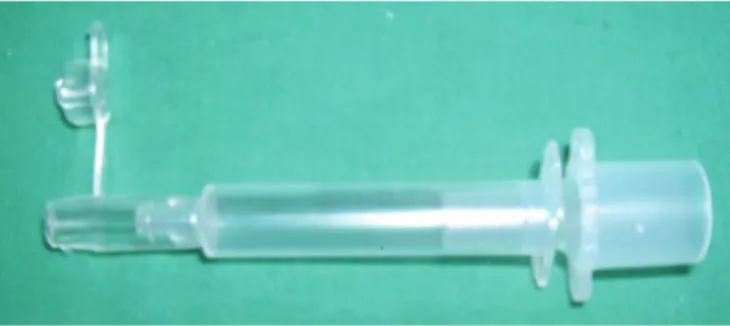
A 67 year-old male presented to our hospital with severe respiratory obstruction and distress. The patient was suffering from carcinoma of the tongue and buccal mucosa and was undergoing radiotherapy. His maximal mouth opening was approximately 3.5 cm. We first attempted to ventilate the patient with a laryngeal mask airway (LMA), but could not due to an ill-fitted LMA. Next, and with difficulty, we managed to secure his airway using an endotracheal tube but noticed significant air-leak through the endotracheal tube cuff after a few minutes of ventilation with an Ambubag. As the patient continued to have persistent respiratory distress with signs of ineffective ventilation, we chose to change the endotracheal tube with a tube exchanger. During the attempted procedure, we were unable to advance the alternate tube into the trachea, possibly due to distorted anatomy secondary to radiotherapy. After further unsuccessful attempts at intubation and increas-ing respiratory distress of the patient, we attempted to ventilate the patient through the tube exchanger without much success, mainly due to the lack of an adaptor that fit the tube exchanger. At that point, we made an adaptor using a 2 ml syringe, a universal endotracheal tube connector (7mm internal diameter) and the Luer connector of a Ryle’s tube (Figure 1). We connected the new adaptor to a pediatric Ambubag (Figure 2) and continued trans-tracheal ventilation. After adequately oxygenating the patient, we secured the patient’s airway with a surgical tracheostomy.
DISCUSSION
Supraglottic pathology can make proper positioning of an LMA difficult or impossible.1 In addition, post-radiotherapy patients often have distorted airway anatomies, which may cause difficulty in endotracheal intubation and problems when ventilating through supraglottic devices. LMA insertion and
proper positioning is especially difficult in post-cervical radio-therapy patients.2,3Hollow tube exchangers enable physicians to oxygenate patients by insufflation or jet ventilation4. At times, ventilation through a hollow tube exchanger can be life-saving until a secure airway is established. In situations in which a properly fitting adaptor for oxygenation through the tube exchanger is not available, the adaptor described in this report can be easily prepared and life-saving.
REFERENCES
1. Evans A. Difficulty in inserting a laryngeal mask airway. Anaesthesia. 1995;50:468–9, doi: 10.1111/j.1365-2044.1995.tb06010.x.
2. Langeron O, Semjen F, Bourgain JL, Marsac A, Cros AM. Comparison of the intubating laryngeal mask airway with the fiberoptic intubation in anticipated difficult airway management. Anesthesiology. 2001;94:968– 72, doi: 10.1097/00000542-200106000-00009.
3. Giraud O, Bourgain JL, Marandas P, Billard V. Limits of laryngeal mask airway in patients after cervical or oral radiotherapy. Can J Anaesth. 1997;44:1237–41, doi: 10.1007/BF03012769.
4. Jerry A. Dorsch, Susan E. Dorsch. Tracheal tube tubes and associated equipments. In Jerry A. Dorsch, Susan E. Dorsch (Ed.) Understanding Anesthesia Equipment, 5thed. Philadelphia: Lippincott Williams and
Wilkins. 2008:606–7.
Copyrightß2010CLINICS– This is an Open Access article distributed under the terms of the Creative Commons Attribution Non-Commercial License (http:// creativecommons.org/licenses/by-nc/3.0/) which permits unrestricted non-commercial use, distribution, and reproduction in any medium, provided the original work is properly cited.
Figure 1- Adaptor for trans-tracheal ventilation.
Figure 2- Trans-tracheal ventilation assembly.
CLINICS 2010;65(8):815 DOI:10.1590/S1807-59322010000800014