Meta-Analysis of Dexmedetomidine on
Emergence Agitation and Recovery Profiles in
Children after Sevoflurane Anesthesia:
Different Administration and Different
Dosage
Min Zhu
1, Haiyun Wang
1*
, Ai Zhu
1, Kaijun Niu
2, Guolin Wang
11Department of Anesthesiology, Tianjin Research Institute of Anesthesiology, Tianjin Medical University General Hospital, Tianjin 300052, China,2Department of Epidemiology, School of Public Health, Tianjin Medical University, Tianjin 300052, China
Abstract
The objective of this article is to evaluate the effect of dexmedetomidine on emergence
agitation (EA) and recovery profiles in children after sevoflurane anesthesia and its
pharmaco-logical mechanisms. Standard bibliographic databases, including MEDLINE, EMBASE,
PsycINFP, Springer and ISI Web of Knowledge, were artificially searched to identify all
ran-domized controlled trials (RCTs) comparing the impact of dexmedetomidine with placebo,
fentanyl and midazolam on EA and recovery profiles after sevoflurane anesthesia in
post-an-esthesia care unit (PACU). Two authors assessed the quality of each study independently in
accordance with strict inclusion criteria and extracted data. RevMan 5.0 software was applied
for performing statistic analysis. The outcomes analyzed included: 1) incidence of EA, 2)
emergence time, 3) time to extubation, 4) incidence of post-operation nausea and vomiting, 5)
number of patients requiring an analgesic, and 6) time to discharge from PACU. A total of
1364 patients (696 in the dexmedetomidine group and 668 in the placebo, fentanyl and
mida-zolam group) from 20 prospective RCTs were included in the meta-analysis. Compared with
placebo, dexmedetomidine decreased the incidence of EA (risk ratio [RR] 0.37; 95% CI 0.30
to 0.46), incidence of nausea and vomiting (RR 0.57; 95% CI 0.38 to 0.85) and number of
pa-tients requiring an analgesic (RR 0.43; 95% CI 0.31 to 0.59). However, dexmedetomidine had
a significantly delayed effect on the emergence time (weighted mean differences [WMD] 1.16;
95% CI 0.72 to 1.60), time to extubation (WMD 0.61; 95% CI 0.27 to 0.95), and time to
dis-charge from recovery room (WMD 2.67; 95% CI 0.95 to 4.39). Compared with fentanyl (RR
1.39; 95% CI 0.78 to 2.48) and midazolam (RR 1.12; 95% CI 0.54 to 2.35), dexmedetomidine
has no significantly difference on the incidence of EA. However, the analgesia effect of
dex-medetomidine on postoperation pain has no significantly statistical differences compared with
fentanyl (RR 1.12; 95% CI 0.66 to 1.91), which implied that its analgesia effect might play an
important role in decreasing the incident of EA. No evidence of publication bias was observed.
OPEN ACCESS
Citation:Zhu M, Wang H, Zhu A, Niu K, Wang G (2015) Meta-Analysis of Dexmedetomidine on Emergence Agitation and Recovery Profiles in Children after Sevoflurane Anesthesia: Different Administration and Different Dosage. PLoS ONE 10 (4): e0123728. doi:10.1371/journal.pone.0123728
Academic Editor:Chang-Qing Gao, Central South University, CHINA
Received:June 15, 2014
Accepted:March 5, 2015
Published:April 13, 2015
Copyright:© 2015 Zhu et al. This is an open access article distributed under the terms of theCreative Commons Attribution License, which permits unrestricted use, distribution, and reproduction in any medium, provided the original author and source are credited.
Data Availability Statement:All relevant data are within the paper.
Funding:This work was supported by Natural Science Foundation of China (81071059, 81100984), Science and Technology Supported Key Project of Tianjin (12ZCZDSY03000), Scientific Grant from Tianjin Health Bureau (09KZ106). The funders had no role in study design, data collection and analysis, decision to publish, or preparation of the manuscript.
Introduction
Children undergoing elective surgeries such as strabismus, tonsillectomy and outpatient
sur-geries, especially under sevoflurane anesthesia, often experience emergency agitation (EA) and
other uncomfortable symptoms [
1
,
2
]. EA is a postoperative negative behavior that may include
symptoms such as combative movements, excitability, thrashing, disorientation and
inconsol-able crying [
3
]. In addition, it is a troublesome phenomenon that can result in injury to the
children themselves or damage to the surgical site, leading to dissatisfaction and anxiety for the
parents and requiring extra nursing care, which further increases associated healthcare costs
[
2
]. Some studies found that EA was closely associated with various etiologies such as anxiety,
pain, physiologic compromise and anesthetics [
4
]. Moreover, nausea and vomiting, severe
pain, eye opening time and extubation time are also the main factors for discharge from the
post-anesthesia care unit (PACU) or hospital, affecting the children’s recovery [
5
]. Therefore,
anesthesiologists aim to reduce the incidence of EA and improve the quality of children’s
post-operative condition with the help of various drugs and techniques.
Although different drugs including opioids, benzodiazepines and clonidine, one kind of
α
2-adrenoreceptor agonists, have been tried in clinic either as a prophylactical measure or
treat-ment, the results have been variable[
6
–
10
]. Among which, dexmedetomidine, a highly specific
α
2-adrenoreptor agonist (receptor selectivity,α
2/α
1
= 1620/1), has sedative and analgesic
prop-erties without significant respiratory depression at the clinically approved dosage [
11
,
12
]. As
the result of it, dexmedetomidine has been administered perioperatively to reduce
postopera-tive negapostopera-tive behaviors such as EA and aggression. However it is notable that several study
re-sults remain ambiguous about the effectiveness and safety of dexmedetonidine with regard to
children’s postoperative condition [
2
,
13
–
31
].
Therefore, the aim of this study was to undertake a systematic review of the literature to
per-form a meta-analysis to determine the influence of dexmedetonidine administration on EA
and post-operative recovery profiles in children after sevoflurane anesthesia.
Materials and Methods
Search strategy
The methods of this meta-analysis were performed in accordance with the Cochrane
Collabo-ration criterion. MEDLINE, EMBASE, PsycINFP, Springer and ISI Web of Knowledge were
searched for relevant electronic studies of randomized controlled trials (RCTs) published
be-fore October 31
th, 2014. Hand searching techniques also were used to identify appropriate
studies. Moreover, we used the following search terms, dexmedetonidine, children, and EA,
and limited the search strategy to English language reports in humans. Articles that met the
fol-lowing criteria were included: 1) randomized and double-blind study design; 2) the
interven-tion was treatment with dexmedetonidine given systemically in any dose during the
perioperative period; 3) children undergoing sevoflurane anesthesia experiencing EA and 4)
participants had no preoperative cognitive dysfunction, had not undergone neurosurgery and
had not received pharmacological intervention which disturbs cognitive function, such as
epilepsy drugs.
Data extraction and analysis
post-operation nausea and vomiting, 5) number of patients requiring an analgesic and 6) time to
discharge from recovery room. Moreover, the subgroup analysis was performed: 1) different
administration ways, 2) different drug dosage, and 3) different surgery procedures. Meanwhile
the effect of dexmedetomidine on the incidence of EA was compared following anesthesia
in-duced with fentanyl and midazolam. Furthermore, the analgesic effect of dexmedetomidine
was also compared with that of fentanyl. If the necessary data did not allow inclusion in the
meta-analysis, the authors of those papers were contacted directly and asked to release the
rele-vant data. Quality of the included studies was assessed by using the modified Jadad score [
32
]
including four items pertaining to description of randomization, allocation concealment,
ap-propriate blinding, and dropouts or withdrawals. The final selected studies were reviewed by
an expert (K. Niu) on statistics to ensure the thoroughness and completeness.
Statistical analysis
Statistical analysis was performed using the Review Manager 5 software. Dichotomous data
were analyzed by using the risk ratio (RR) computed using the Mantel Haenszel method (fixed
or random models). Continuous outcomes measured on the same scale were expressed as a
mean value and standard deviation and were analyzed by using weighted mean differences
(WMD). I-square (I
2) test was performed to assess the impact of study heterogeneity on the
re-sults of the meta-analysis. According to the Cochrane review guidelines, if severe heterogeneity
was present at I
2>
50%, the random effect models were chosen, otherwise the fixed effect
mod-els were used. Moreover, sensitivity analysis was conducted by deleting each study individually
to evaluate the quality and consistency of the results. The funnel plot was used to detect
poten-tial publication bias.
Results
Outcomes
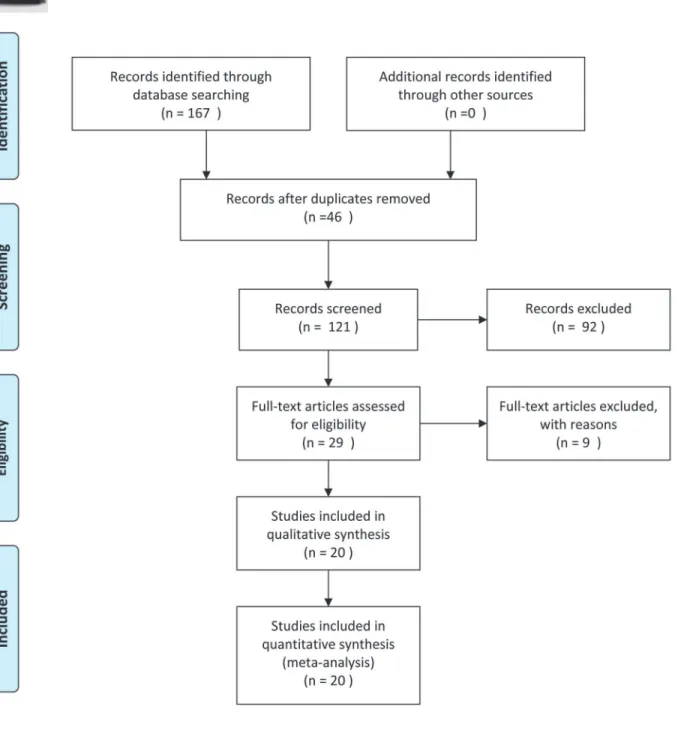
The vast majority of the literature search results were excluded due to an inappropriate study
design, population, intervention or outcome measure. Subsequently, 20 RCTs were included in
this meta-analysis (
Fig 1
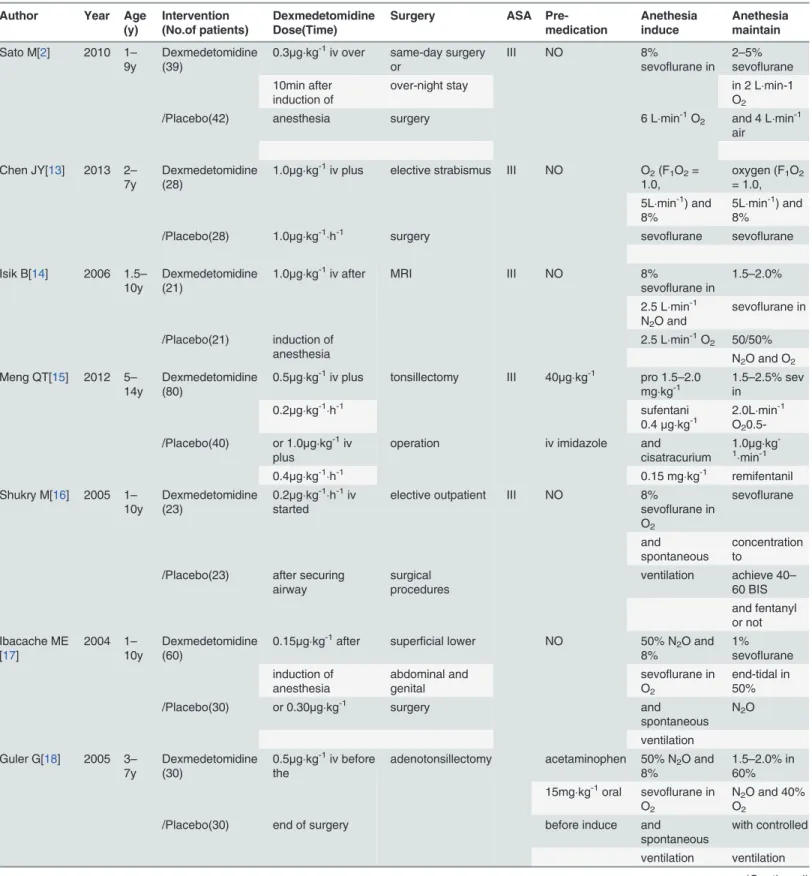
). The characteristic of included studies including intervention,
preme-dication, surgery procedures, anesthesia induction and maintenance of anesthesia were
collect-ed (
Table 1
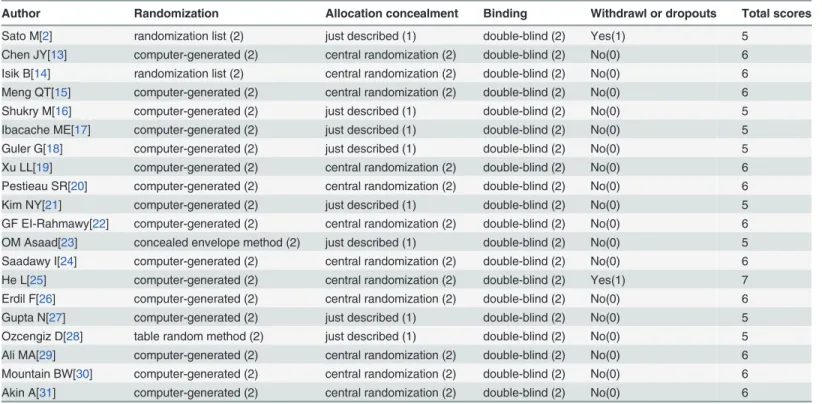
). Moreover our team workers evaluated the quality of included studies by using
Modified Jadad Scores (
Table 2
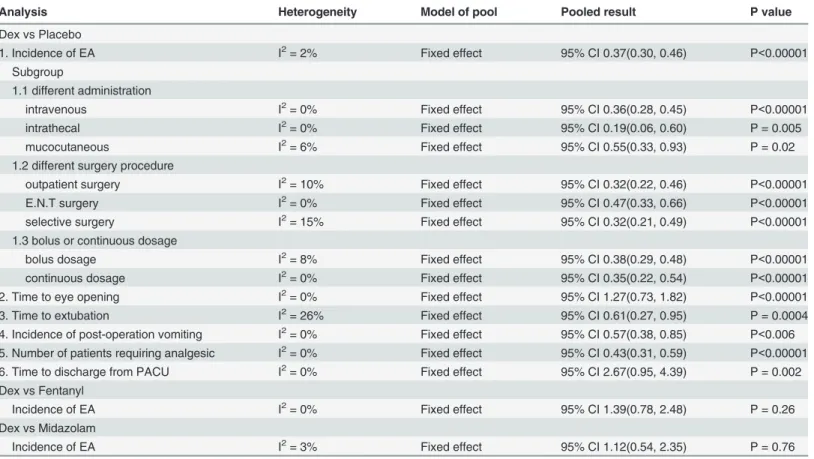
). To each analysis, the heterogeneity, the model to pool
(ran-dom effect or fixed effect), the pooled result, and the P value also were showed (
Table 3
).
Risk of bias
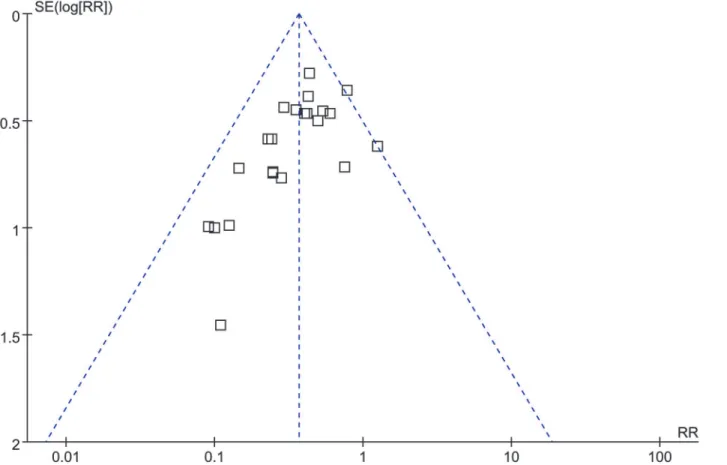
The funnel plot was applied for assessing publication bias of studies included in the incidence
of EA in this meta-analysis. No evident publication bias was obtained through the visual
distri-bution of funnel plot (
Fig 2
).
Sensitivity analysis
Table 1. Characteristics of included studies.
Author Year Age (y)
Intervention Dexmedetomidine Surgery ASA Pre-medication
Anethesia induce
Anethesia
(No.of patients) Dose(Time) maintain
Sato M[2] 2010 1– 9y
Dexmedetomidine (39)
0.3μgkg-1iv over same-day surgery
or ⅠⅡ
NO 8%
sevoflurane in 2–5% sevoflurane 10min after
induction of
over-night stay in 2 Lmin-1
O2
/Placebo(42) anesthesia surgery 6 Lmin-1O2 and 4 Lmin-1
air
Chen JY[13] 2013 2– 7y
Dexmedetomidine (28)
1.0μgkg-1iv plus elective strabismus ⅠⅡ NO O2(F1O2=
1.0,
oxygen (F1O2
= 1.0, 5Lmin-1) and
8%
5Lmin-1) and 8%
/Placebo(28) 1.0μgkg-1h-1 surgery sevoflurane sevoflurane
Isik B[14] 2006 1.5– 10y
Dexmedetomidine (21)
1.0μgkg-1iv after MRI ⅠⅡ NO 8%
sevoflurane in
1.5–2.0%
2.5 Lmin-1 N2O and
sevoflurane in
/Placebo(21) induction of anesthesia
2.5 Lmin-1O2 50/50%
N2O and O2
Meng QT[15] 2012 5– 14y
Dexmedetomidine (80)
0.5μgkg-1iv plus tonsillectomy ⅠⅡ 40μgkg-1 pro 1.5–2.0 mgkg-1
1.5–2.5% sev in
0.2μgkg-1h-1 sufentani
0.4μgkg-1
2.0Lmin-1 O2
0.5-/Placebo(40) or 1.0μgkg-1iv
plus
operation iv imidazole and
cisatracurium
1.0μgkg
-1
min-1
0.4μgkg-1h-1 0.15 mgkg-1 remifentanil
Shukry M[16] 2005 1– 10y
Dexmedetomidine (23)
0.2μgkg-1h-1iv started
elective outpatient ⅠⅡ NO 8%
sevoflurane in O2
sevoflurane
and spontaneous
concentration to
/Placebo(23) after securing airway
surgical procedures
ventilation achieve 40– 60 BIS and fentanyl or not Ibacache ME
[17]
2004 1– 10y
Dexmedetomidine (60)
0.15μgkg-1after superficial lower Ⅰ NO 50% N2O and
8%
1% sevoflurane induction of
anesthesia
abdominal and genital
sevoflurane in O2
end-tidal in 50%
/Placebo(30) or 0.30μgkg-1 surgery and
spontaneous N2O
ventilation Guler G[18] 2005 3–
7y
Dexmedetomidine (30)
0.5μgkg-1iv before the
adenotonsillectomy Ⅰ acetaminophen 50% N2O and
8%
1.5–2.0% in 60% 15mgkg-1oral sevoflurane in
O2
N2O and 40%
O2
/Placebo(30) end of surgery before induce and
spontaneous
with controlled
Table 1. (Continued) Author Year Age
(y)
Intervention Dexmedetomidine Surgery ASA Pre-medication
Anethesia induce
Anethesia
(No.of patients) Dose(Time) maintain
Xu LL[19] 2012 3– 7y
Dexmedetomidine (30)
0.5μgkg-1iv over 10
vitreoretinal
surgery ⅠⅡ
NO 8%
sevoflurane in O2
remifentani 0.2
min after induction of
and spontaneous
μgkg-1min-1 and
/Placebo(30) anethesia ventilation 1–2%
end-tidal
sevoflurane in O2
Pestieau SR [20]
2011 0.5– 6y
Dexmedetomidine (51)
1.0μgkg-1or 2.0μgkg-1
BMT ⅠⅡ NO N2O/O2(2:1)
gas
2–3% sevoflurane by nasal mucosa
after
mixture and inspired
/Placebo(27) induction of anethesia
sevoflurane concentration and
N2O:O2
mixture Kim NY[21] 2014 1–
6y
Dexmedetomidine (20)
1.0μgkg-1iv plus ambulatory surgery Ⅰ NO 6–7% sevoflurane in
adjust end-tidal sevoflurane
/Placebo(20) 0.1μgkg-1h-1 4 L/min O2 concentration
to
achieve 45– 50 BIS GF
EI-Rahmawy [22]
2013 2– 6y
Dexmedetomidine (14)
2.0μgkg-1by fascia farcture femur
surgery ⅠⅡ
0.5mgkg-1 1%-5% increasing
sevoflurane 1–1.5 iliaca copartment
block
imidazole 1h prior
sevoflurane MAC in 40%
/Placebo(14) after induction of to induction concentration
in
air/O2mixture
anesthesia 100% O2
OM Asaad [23]
2011 5– 10y
Dexmedetomidine (30)
0.15μgkg-1iv after elective surgical Ⅰ NO 50% N2O and 1% end-tidal
sevoflurane up to 8%
sevoflurane in
/Placebo(30) induction of anesthesia
procedures in O2with total
gas
50% N2O
above 5L/min Saadawy I
[24]
2009 1– 6y
Dexmedetomidine (30)
1.0μgkg-1by caudal
unilateral inguinal Ⅰ NO propofol
3–4mgkg-1
0.5–2.0
block after induction of
hernia sevoflurane
and
/Placebo(30) anesthesia repair /orchidopexy 70% N2O in
O2
He L[25] 2013 3– 7y
Dexmedetomidine (61)
0.5μgkg-1or 1.0μgkg-1
elective minor ⅠⅡ NO 8%
sevoflurane in O2
2–3% sevoflurane
via a semiclosed
in 1 L/min O2
and /Placebo(26) iv after LMA
insertion
surface surgery anaeshetic 1 L/min air
Incidence of EA
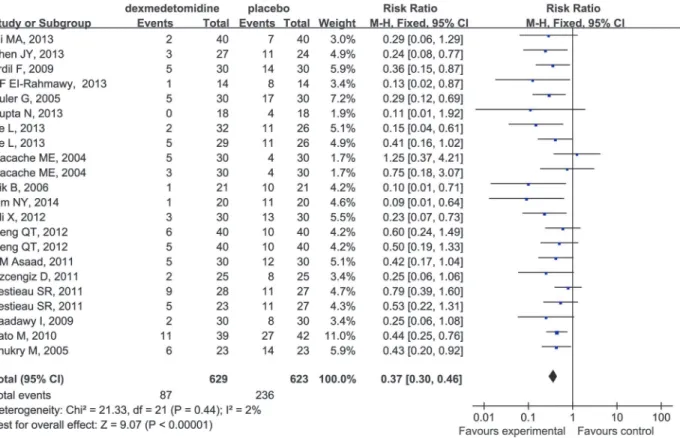
Data extracted from relevant articles indicated that dexmedetomidine compared to placebo
sig-nificantly decreased the incidence of EA in children undergoing sevoflurane anesthesia (RR
0.37; 95%CI 0.30 to 0.46;
Fig 3
).
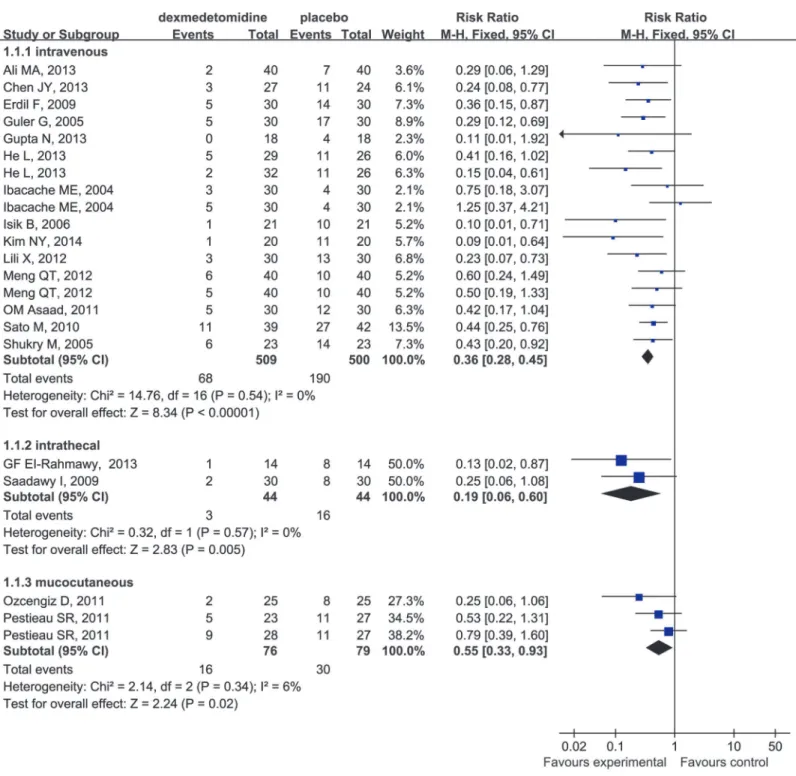
In the subgroup analysis, our study suggested that dexmedetomidine effectively decreased
the incidence of EA regardless of the route when administered intravenously (RR 0.36; 95% CI
0.28 to 0.45), intrathecally (RR 0.19; 95% CI 0.06 to 0.60) and mucocutaneously (RR 0.55; 95%
CI 0.33 to 0.93) (
Fig 4
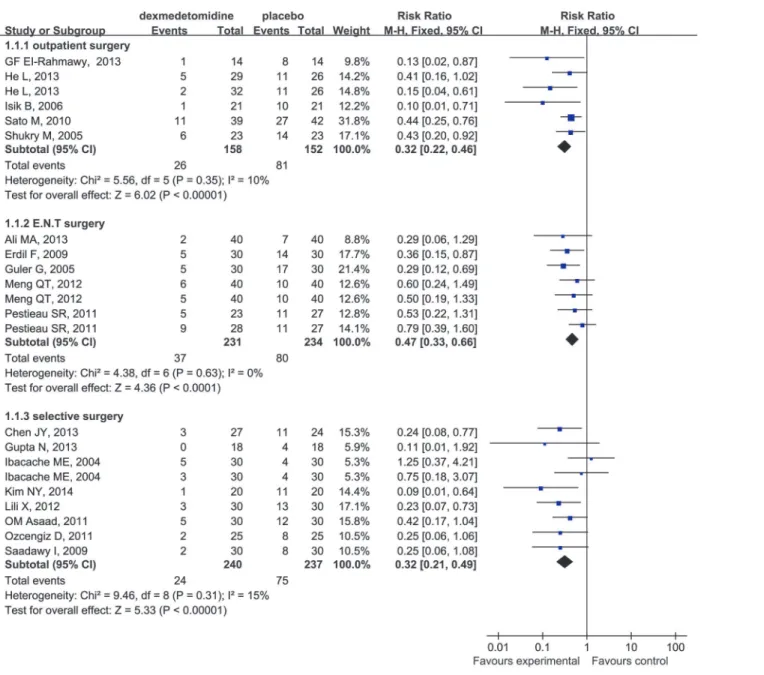
). The same phenomenon was found to be associated with different
Table 1. (Continued) Author Year Age
(y)
Intervention Dexmedetomidine Surgery ASA Pre-medication
Anethesia induce
Anethesia
(No.of patients) Dose(Time) maintain
Erdil F[26] 2009 2– 7y
Dexmedetomidine (30)
0.5μgkg-1iv after adenotonsillectomy Ⅰ paracetamol 40 50% N2O and
8%
1.5–2.5% with or without mgkg-1
reactally
sevoflurane in
/Placebo(30) tracheal intubation bilateral myringotomy
60min before sevoflurane in O2
70% N2O/O2
induction Gupta N[27] 2013 8–
12y
Dexmedetomidine (18)
1.0μgkg-1iv over
ten
corrective surgery ⅠⅡ intramuscular 8% sevoflurane;
60% N2O and
3
minutes glycopyrrolate 1mgkg-1
rocuronium
L/min sevoflurane
/Placebo(18) plus 0.5μgkg-1h-1 0.2mg 1h
before
and 2ugkg-1 to maintain EtCO2
induction fentanyl of 35–40 mmHg Ozcengiz D
[28]
2011 3– 9y
Dexmedetomidine (25)
2.5μgkg-1by oral esophageal
dilatation
ⅠⅡ paracetamol 8%
sevoflurane and
2–4% sevoflurane
before induction of 2–2.5mgkg-1
/Placebo(25) anesthesia before
induction
50% N2O in
O2
and 50% N2O
Ali MA[29] 2013 2– 6y
Dexmedetomidine (40)
0.3μgkg-1iv before
the
adenotonsillectomy ⅠⅡ 0.5 mgkg-1 8%
sevoflurane in
60% N2O and
end of surgery over midazole oral 2–3%
sevoflurane
/Placebo(40) five minutes 30 min before 70% N2O in
O2
to EtCO2of
induction 35±4mmHg
Mountain BW[30]
2011 1– 6y
Dexmedetomidine (22)
4μgkg-1by oral before
dental restoration
and ⅠⅡ
NO sevoflurane
oxygen
isoflurane for
possible tooth /Midazolam(19) induction of
anesthesia
extraction and nitrous
oxide
mainenance
Akin A[31] 2013 2– 9y
Dexmedetomidine (45)
1μgkg-1intranasal adenotonsillectomy Ⅰ NO sevoflurane oxygen
sevoflurane to approximately 45–
60
maintain EtCO2of
/Placebo(45) min before the induction
and nitrous oxide
35–40mmHg
of anesthesia
surgical procedures (
Fig 5
) (outpatient surgery: RR 0.32; 95% CI 0.22 to 0.46; ear-nose-throat
(E.N.T) surgery: RR 0.47; 95% CI 0.33 to 0.66; selective surgery: RR 0.32; 95% CI 0.21 to 0.49)
and drug dosages (
Fig 6
) (single-dose: RR 0.38; 95% CI 0.29 to 0.48; continuouse-dose: RR
0.35; 95% CI 0.22 to 0.54).
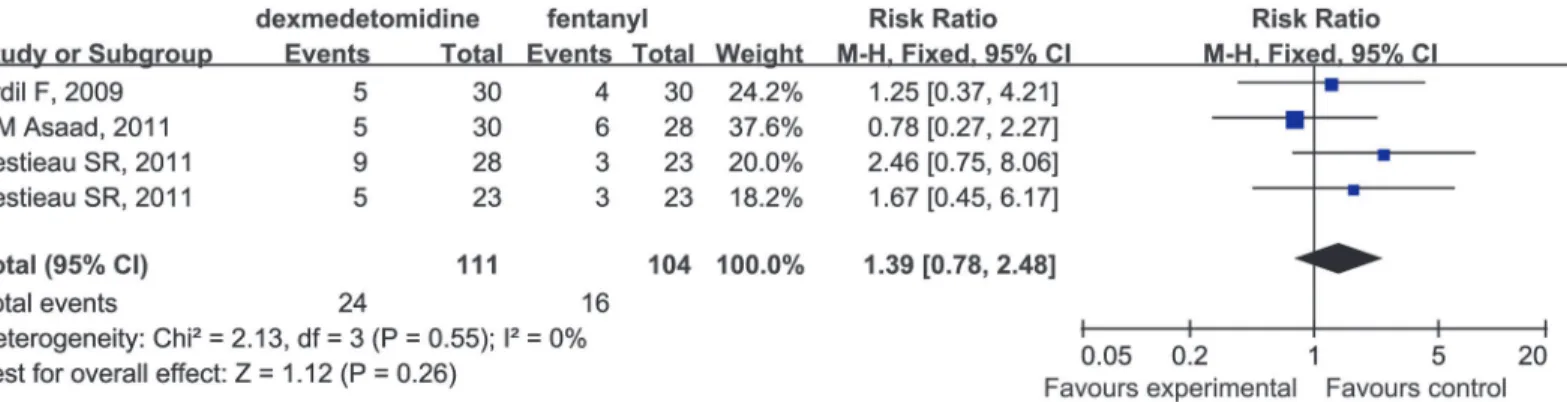
Moreover, there was no significant difference in the incidence of EA among patients
anes-thetized with dexmedetomidine or fentanyl (RR 1.39; 95% CI 0.78 to 2.48;
Fig 7
). It should be
noted that this conclusion was based on the analysis of only three studies and therefore, should
be interpreted with caution.
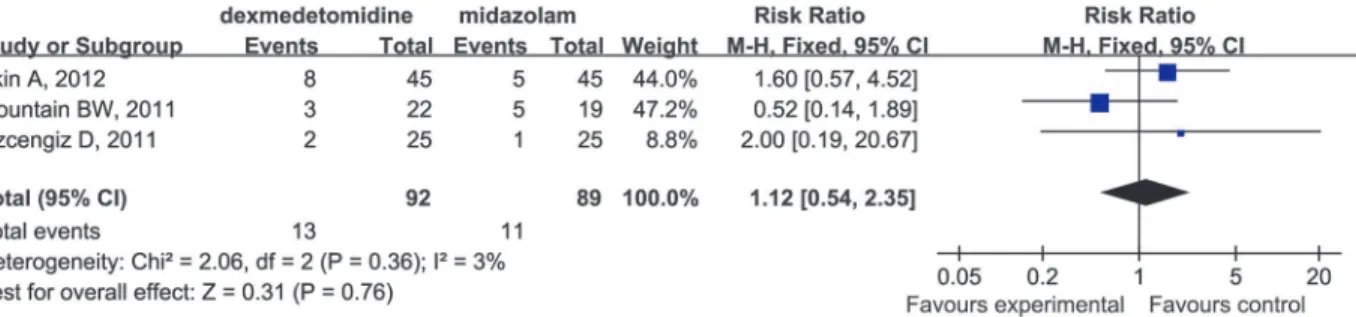
Meanwhile, compared with midazolam (RR 1.12; 95% CI 0.54 to 2.35;
Fig 8
),
dexmedetomi-dine had no significant impact on the incidence of EA, although this observation may also be
limited by the small number of studies (only three) included in our analysis.
Emergence Time
Dexmedetomidine compared to placebo had a delayed effect on emergence time in children
undergoing sevoflurane anesthesia (WMD 1.16; 95% CI 0.72 to 1.60;
Fig 9
).
Time to Extubation
Dexmedetomidine compared to placebo increased the time to extubation in children
undergo-ing sevoflurane anesthesia (WMD 0.61; 95% CI 0.27 to 0.95;
Fig 10
).
Post-anesthesia Nausea and Vomiting
Compared to placebo, dexmedetomidine decreased significantly the incidence of the
occur-rence of post-operative nausea and vomiting in children undergoing sevoflurane anesthesia
(RR 0.57; 95% CI 0.38 to 0.85;
Fig 11
).
Table 2. The modified Jadad scores.
Author Randomization Allocation concealment Binding Withdrawl or dropouts Total scores
Sato M[2] randomization list (2) just described (1) double-blind (2) Yes(1) 5
Chen JY[13] computer-generated (2) central randomization (2) double-blind (2) No(0) 6
Isik B[14] randomization list (2) central randomization (2) double-blind (2) No(0) 6
Meng QT[15] computer-generated (2) central randomization (2) double-blind (2) No(0) 6
Shukry M[16] computer-generated (2) just described (1) double-blind (2) No(0) 5
Ibacache ME[17] computer-generated (2) just described (1) double-blind (2) No(0) 5
Guler G[18] computer-generated (2) just described (1) double-blind (2) No(0) 5
Xu LL[19] computer-generated (2) central randomization (2) double-blind (2) No(0) 6
Pestieau SR[20] computer-generated (2) central randomization (2) double-blind (2) No(0) 6
Kim NY[21] computer-generated (2) just described (1) double-blind (2) No(0) 5
GF EI-Rahmawy[22] computer-generated (2) central randomization (2) double-blind (2) No(0) 6
OM Asaad[23] concealed envelope method (2) just described (1) double-blind (2) No(0) 5
Saadawy I[24] computer-generated (2) central randomization (2) double-blind (2) No(0) 6
He L[25] computer-generated (2) central randomization (2) double-blind (2) Yes(1) 7
Erdil F[26] computer-generated (2) central randomization (2) double-blind (2) No(0) 6
Gupta N[27] computer-generated (2) just described (1) double-blind (2) No(0) 5
Ozcengiz D[28] table random method (2) just described (1) double-blind (2) No(0) 5
Ali MA[29] computer-generated (2) central randomization (2) double-blind (2) No(0) 6
Mountain BW[30] computer-generated (2) central randomization (2) double-blind (2) No(0) 6
Akin A[31] computer-generated (2) central randomization (2) double-blind (2) No(0) 6
Number of Patients Requiring Analgesic
Dexmedetomidine reduced the number of patients requiring analgesic compared to placebo in
children undergoing sevoflurane anesthesia (RR 0.43; 95% CI 0.31 to 0.59
Fig 12
). More
impor-tantly, dexmedetomidine had identical analgesic effects compared with fentanyl (RR 1.12; 95%
CI 0.66 to 1.91
Fig 13
) for the children under sevoflurane anesthesia. Furthermore, the required
dosage of local anesthetics such as bupivacaine was reduced and the analgesia time was
pro-longed (
Fig 13
).
Time to Discharge from Recovery Room
Dexmedetomidine compared to placebo increased the time to discharge from the recovery room
in children undergoing sevoflurane anesthesia (WMD 5.61; 95% CI 4.28 to 6.94). Unfortunately,
severe heterogeneity (I
2= 76%) was obtained in this analysis, which was mainly attributed to the
study by Chen JY et al [
13
]. When this trial was excluded, the heterogeneity changed from 76%
to 0%, and there was also a significant difference in the time to discharge from the recovery room
in favor of dexmedetomidine (WMD 2.67; 95% CI 0.95 to 4.39;
Fig 14
).
Discussion
Twenty RCTs [
2
,
13
–
31
] were identified to evaluate the effect of EA and recovery profiles
asso-ciated with dexmedetomidine compared with placebo, fentanyl and midazolam after
Table 3. Statistics information of each analysis.Analysis Heterogeneity Model of pool Pooled result P value
Dex vs Placebo
1. Incidence of EA I2= 2% Fixed effect 95% CI 0.37(0.30, 0.46) P<0.00001
Subgroup
1.1 different administration
intravenous I2= 0% Fixed effect 95% CI 0.36(0.28, 0.45) P<0.00001
intrathecal I2= 0% Fixed effect 95% CI 0.19(0.06, 0.60) P = 0.005
mucocutaneous I2= 6% Fixed effect 95% CI 0.55(0.33, 0.93) P = 0.02
1.2 different surgery procedure
outpatient surgery I2= 10% Fixed effect 95% CI 0.32(0.22, 0.46) P<0.00001
E.N.T surgery I2= 0% Fixed effect 95% CI 0.47(0.33, 0.66) P<0.00001
selective surgery I2= 15% Fixed effect 95% CI 0.32(0.21, 0.49) P<0.00001
1.3 bolus or continuous dosage
bolus dosage I2= 8% Fixed effect 95% CI 0.38(0.29, 0.48) P<0.00001
continuous dosage I2= 0% Fixed effect 95% CI 0.35(0.22, 0.54) P<0.00001
2. Time to eye opening I2= 0% Fixed effect 95% CI 1.27(0.73, 1.82) P<0.00001
3. Time to extubation I2= 26% Fixed effect 95% CI 0.61(0.27, 0.95) P = 0.0004
4. Incidence of post-operation vomiting I2= 0% Fixed effect 95% CI 0.57(0.38, 0.85) P<0.006 5. Number of patients requiring analgesic I2= 0% Fixed effect 95% CI 0.43(0.31, 0.59) P<0.00001
6. Time to discharge from PACU I2= 0% Fixed effect 95% CI 2.67(0.95, 4.39) P = 0.002
Dex vs Fentanyl
Incidence of EA I2= 0% Fixed effect 95% CI 1.39(0.78, 2.48) P = 0.26
Dex vs Midazolam
Incidence of EA I2= 3% Fixed effect 95% CI 1.12(0.54, 2.35) P = 0.76
sevoflurane anesthesia in children. Nevertheless, there are no widely accepted assessment scales
for the evaluation of EA in children, which led to the use of numberous assessment methods
and agitation rating systems [
13
–
34
]. In most trials, the Pediatric Anesthesia Emergence
Deliri-um scale (PAED) [
35
] was used for assessing the incidence of EA. We chose the time point
after arrival to the PACU for assessment in this meta-analysis. In addition, we chose the
inci-dence of EA post-sevoflurane anesthesia in children as a primary outcome measures analyzed
in the present study. This analysis showed that compared with placebo, dexmedetomidine
sig-nificantly decreased the incidence of EA in children undergoing sevoflurane anesthesia (RR
0.37; 95% CI 0.30 to 0.46). Zhang et al [
36
] suggested the effect of intravenous
dexmedetomi-dine in the prevention of EA (RR 0.346; 95% CI 0.263 to 0.453). They also assessed the
inci-dence of PONV from the entrance of PACU to 24 hours after surgery (WMD 4.597; 95%CI
-0.080 to 9.275). However in their paper only 7 trials were examined, and they mentioned
“when the trials of Gupta et al or Chen et al was removed, the reliability of the test would
de-creased”. In our paper, we assessed the incidence of PONV with more trials included (8 trials).
We found that dexmedetomidine significantly decreased the incidence of occurrence of PONV
in children undergoing sevoflurane anesthesia (RR 0.57; 95% CI 0.38 to 0.85). Furthermore, we
did subgroup analysis for the different route of dexmedetomidine administration. We found
that intrathecal and mucocutaneous administration also both decreased the incidence of EA
(intrathecally: RR 0.19; 95% CI 0.06 to 0.60; mucocutaneously: RR 0.55; 95% CI 0.33 to 0.93),
which would provide new and appropriate choice for dexmedetomidine administration in
Fig 2. Funnel plot of the studies included in the meta-analysis.The vertical line represents the meta-analysis summary estimate, and the scatter represents single studies. In the absence of publication bias, studies will be distributed symmetrically right and left of vertical line. Log risk ratio (RR), natural logarithm of the RR; SE (log RR), standard error of the log RR.clinical work. This is also the difference between ours and the study of Sun et al [
37
]. In their
study, they calculated the sevoflurane related EA in adenotonsillectomy (RR 0.351; 95% CI
0.033 to 0.422). Moreover, Dahmani et al [
38
] suggested that the E.N.T surgery is associated
with a high incidence of EA. In our paper, we did performed the subgroup analysis on the
dif-ferent surgery procedures including outpatient surgeries, E.N.T. surgeries and selective
surger-ies, which provide more theoretical foundation for application of dexmedetomidine in clinical
different surgeries. We found that dexmedetomidine also effectively prevented the EA
associat-ed with outpatient surgery (RR 0.32; 95% CI 0.22 to 0.46), E.N.T surgery (RR 0.47; 95% CI 0.33
to 0.66) and the selective operation (RR 0.32; 95% CI 0.21 to 0.49). This provided a novel
strat-egy and broader application for preventing the occurrence and development of EA in children
after sevoflurane anesthesia.
EA is a negative behavior including combative movements, excitability, thrashing,
disorien-tation and inconsolable crying.[
2
,
3
]. It not only provides a challenging situation to
post-anes-thesia care providers but also results in higher rate of postoperative complications such as
bleeding from operative sites and disturbing the recovery environment[
39
]. Early
epidemiolog-ic studies reported a 5.3% incidence of EA in postoperative patients [
39
], with a widely varying
incidence of EA in children (10% to 80%) [
40
]. Although the precise etiology of EA following
anesthesia is unknown, the risk factors including preschool age, pain, the use of inhalation
an-esthesia and otolaryngology procedures may provoke this phenomenon[
4
,
40
–
42
]. Meanwhile,
studies found that a high incidence of EA was closely associated with sevoflurane anesthesia,
and there has not been well-established prophylaxis and treatment [
43
–
45
]. Dexmedetomidine
Fig 3. Forest plot for the incidence of EA.The plot displays the study, sample size, weighted risk ratio (RR), confidence interval (CI), and P value. Meta-analysis indicates dexmedetomidine significantly decreased the incidence of EA compared with placebo. The square shown for each study (first author and year of publication) is the RR for individual trials, and the corresponding horizontal line is the 95% CI. The diamond is the pooled RR with the CI. The different sizes of squares indicate the weight the individual trials had in the analysis, taking into account sample size.
might be useful for management of post-anesthesia EA [
18
,
21
,
22
]. It is worth noting that the
evidence of the effects of dexmedetomidine on EA and recovery profiles is still unclear.
Sevoflurane, an inhalation anesthesia agent, is commonly used in clinic anesthesia with
rapid induction and fast recovery due to its low blood/gas partition coefficient (0.68) [
46
]. For
the benefit of weak airway irritation, greater hemodynamic stability, comfortable quality and
better cooperation with anesthetists, sevoflurane is popular choice for anesthesia in children
Fig 4. Forest plot for the effect of different administration ways of dexmedetomidine on the incidence of EA.[
47
]. However, some studies have found that a high incidence of EA (up to 80%) was associated
with sevoflurane in children [
44
,
48
]. It is frustrating that the morbidity of
sevoflurane-associat-ed EA is not relatsevoflurane-associat-ed to either the duration of exposure or dose [
43
]. Although a high incidence
of sevoflurane-associated EA has been assumed to be largely related to rapid awakening,
propo-fol anesthesia revealed rapid emergence properties were associated with a low incidence of EA
[
48
]. Similarly, desflurane exhibited faster recovery than other inhalation agents, and has been
found to be associated with a high incidence of EA in pediatric patients, which does not
sup-port the advantage of rapid emergence[
49
]. At present, the underlying mechanism of
sevoflur-ane sevoflur-anesthesia-associated EA remains unclear. Further studies are necessary to determine the
most effective way to manage EA in order to improve peri-operative outcome in
pediatric patients.
Fig 5. Forest plot for the effect of different surgery procedures on the incidence of EA.
Fig 6. Forest plot for the effects of bolus or continuous-dosage administration of dexmedetomidine on the incidence of EA.
doi:10.1371/journal.pone.0123728.g006
Fig 7. Forest plot for the incidence of EA.The plot displays the study, sample size, weighted risk ratio (RR), confidence interval (CI), and P value. Meta-analysis indicates dexmedetomidine had no difference on the incidence of EA compared with fentanyl. The square shown for each study (first author and year of publication) is the RR for individual trials, and the corresponding horizontal line is the 95% CI. The diamond is the pooled RR with the CI. The different sizes of squares indicate the weight the individual trials had in the analysis, taking into account sample size.
Due to its pharmacologically unique profile, dexmedetomidine can produce stage 2
non-rapid eye movement sleep through activation of the endogenous sleep-promoting pathway,
thereby inducing conscious sedation so that patients are drowsy but cooperative and aroused
[
50
,
51
]. Meanwhile, dexmedetomidine can also produce its analgesic effect via receptors in the
spinal cord and attenuate the stress response without evident respiratory depression [
52
]. In
addition, because of the short half-life, about 1.5 to 3 hours, and lack of respiratory side effects,
dexmedetomidine is usually superior to other hypnotics and barbiturates [
53
]. Therefore,
based upon these characteristics dexmedetomidine, the pharmacologically active
dextro-iso-mer of medetomidine [
4
,
54
], is extensively applied in clinic, especially for sedation and
analge-sia in pediatric patients [
55
,
56
]. Our analysis suggests that compared with midazolam,
dexmedetomidine has no significant effect on the incidence of EA, although this conclusion is
limited by the small number of studies (n = 3) (RR 1.12; 95% CI 0.54 to 2.35) and further
re-search is required for confirmation. However, in terms of sedation score or anxiety score,
dex-medetomidine had identical effects compared to midazolam[
31
]. It should be noted that
dexmedetomidine decreased the side-effects induced by midazolam, such as delayed recovery
Fig 8. Forest plot for the incidence of EA.The plot displays the study, sample size, weighted risk ratio (RR), confidence interval (CI), and P value. Meta-analysis indicates dexmedetomidine had no difference on the incidence of EA compared with medizolam. The square shown for each study (first author and year of publication) is the RR for individual trials, and the corresponding horizontal line is the 95% CI. The diamond is the pooled RR with the CI. The different sizes of squares indicate the weight the individual trials had in the analysis, taking into account sample size.doi:10.1371/journal.pone.0123728.g008
Fig 9. Forest plot for emergence time.The plot displays the study, sample size, weighted mean differences (WMD), confidence interval (CI), and P value. Meta-analysis indicates dexmedetomidine significantly increased emergence time compared with the placebo group. The square shown for each study (first author and year of publication) is the mean difference for individual trials, and the corresponding horizontal line is the 95% CI. The diamond is the pooled WMD with the CI. The different sizes of squares indicate the weight the individual trials had in the analysis, talking into account sample size and standard deviations.
time including the time to eye opening, verbal response and cooperation [
57
]. However,
mida-zolam produced inferior postoperative analgesia compared with dexmedetomidine[
31
],
indi-cating that dexmedetomidine is a better choice of sedation for pediatric patients.
Analgesia, one of main pharmacological properties of dexmedetomidine, is deemed to play
an important role in preventing EA after inhalation anesthesia. Some studies found that
al-though the pain alone could not cause EA [
58
,
59
], inadequate postoperative pain control may
be closely associated with varying differences in the incidence of EA[
60
,
61
], therefore it is one
of major causes of the increased frequency and severity of EA[
6
,
62
]. For children, it is too
diffi-cult to describe pain objectively, therefore various pain assessment tools such as the visual
ana-logue scale (VAS) [
63
] and the objective pain scale (OPS) [
64
] were to compare the number of
Fig 10. Forest plot for time to extubation.The plot displays the study, sample size, weighted mean differences (WMD), confidence interval, and P value. Meta-analysis indicates dexmedetomidine significant increased the time to extubation compared with the placebo group. The square shown for each study (first author and year of publication) is the mean difference for individual trials, and the corresponding horizontal line is the 95% CI. The diamond is the pooled WMD with the CI. The different sizes of squares indicate the weight the individual trials had in the analysis, talking into account sample size and
standard deviations.
doi:10.1371/journal.pone.0123728.g010
Fig 11. Forest plot for the number of patients with post-operative nausea and vomiting.The plot displays the study, sample size, weighted risk ratio (RR), confidence interval (CI), and P value. Meta-analysis indicates dexmedetomidine significantly decrease the number of patients with post-operation nausea and vomiting compared with the placebo group. The square shown for each study (first author and year of publication) is the RR for individual trials, and the corresponding horizontal line is the 95% CI. The diamond is the pooled RR with the CI. The different sizes of squares indicate the weight the individual trials had in the analysis, taking into account sample size.
patients who needed post-anesthesia pain control. The results of this meta-analysis suggested
that dexmedetomidine could significantly decrease the number of patients requiring
post-anes-thesia rescue analgesia (RR 0.43; 95% CI 0.31 to 0.59), which might be partly responsible for
decreasing the incidence of EA. However, our analysis revealed that there was no significant
difference in the incidence of EA induced by dexmedetomidine and fentanyl (RR 1.39; 95% CI
0.78 to 2.48). Although our analysis is subject to limitation by the small number of studies
in-cluded (only three), the results may provide the basis of a new strategy for reducing
postopera-tive pain in that compared with fentanyl, dexmedetomidine provided superior analgesia (RR
1.12; 95% CI 0.66 to 1.91). In addition to avoiding side-effects such as respiratory depression
Fig 12. Forest plot for number of patients requiring analgesic.The plot displays the study, sample size, weighted risk ratio (RR), confidence interval (CI), and P value. Meta-analysis indicates dexmedetomidine significantly decreased the number of patients requiring analgesa compared with the placebo group. The square shown for each study (first author and year of publication) is the RR for individual trials, and the corresponding horizontal line is the 95% CI. The diamond is the pooled RR with the CI. The different sizes of squares indicate the weight the individual trials had in the analysis, taking into account sample size.doi:10.1371/journal.pone.0123728.g012
Fig 13. Forest plot for number of patients requiring analgesic dexmedetomidine vs Fentanyl and Bupivacaine.The plot displays the study, sample size, weighted risk ratio (RR), confidence interval (CI), and P value. Meta-analysis indicates the analgesia effect of dexmedetomidine on postoperation pain has no significantly statistical differences compared with fentanyl. The square shown for each study (first author and year of publication) is the RR for individual trials, and the corresponding horizontal line is the 95% CI. The diamond is the pooled RR with the CI. The different sizes of squares indicate the weight the individual trials had in the analysis, taking into account sample size.
induced by opioid analgesics, dexmedetomidine significantly prolonged the duration of
analge-sia and decreased the total consumption of rescue analgesic compared with the use of local
an-esthetics alone [
24
]. Consequently, due to superior analgesia and fewer side-effects,
dexmedetomidine is implicated as a substitute for opioid analgesics for pediatric patients.
Opioids are widely used for analgesia peri- and post-operatively. However, the adverse
ef-fects of opioids including emesis, excessive sedation and risk of respiratory depression restrict
their clinical application [
7
]. Moreover the nausea and vomiting caused by opioids affects the
recovery quality of children, and produces an intense environment for post-anesthesia care
providers [
3
–
5
]. In our analysis, dexmedetomidine significantly decreased the number of
pa-tients with nausea and vomiting compared with placebo (RR 0.57; 95% CI 0.38 to 0.85).
There-fore, the low incidence of nausea and vomiting might provide an advantage, by decreasing the
risk of airway obstruction and increasing post-operation safety.
Some studies indicate that rapid emergence from anesthesia, especially inhalation
anesthe-sia, might be a possible cause of EA [
6
]. In our analysis, dexmedetomidine significantly
in-creased emergence time (WMD 1.16; 95% CI 0.72 to 1.60) and extubation time (WMD 0.61;
95% CI 0.27 to 0.95) in children undergoing sevoflurane anesthesia in PACU. This might be
due to the excessive sedation associated with dexmedetomidine, and contribute to the
de-creased incidence of EA post-anesthesia. However, time to discharge from PACU in the
dex-medetomidine group was also significantly increased compared with the placebo group in our
study (WMD 2.67; 95% CI 0.95 to 4.39). The new measurement which could reverse such
ad-verse effects of dexmedetomidine should be for the focus of future research.
The shortcomings of this meta-analysis are as follows: 1) some outcome measures data,
such as agitation scores and pain scores, which were not normally distributed and were
re-ported in the form of median and quartile, and therefore could not be included in the
meta-analysis; 2) only English language reports have been included and consequently we may have
missing data from important studies published in other languages.
Conclusion
From this meta-analysis it is reasonable to conclude that according to the currently available
data, intra-operative administration of dexmedetomidine statistically decreased the incidence
of EA and postoperative pain in children undergoing sevoflurane anesthesia. Unlike opioids,
Fig 14. Forest plot for time to discharge from recovery room.The plot displays the study, sample size, weighted mean differences (WMD), confidence interval (CI), and P value. Meta-analysis indicates dexmedetomidine significant increase time to discharge from PACU compared with the placebo group. The square shown for each study (first author and year of publication) is the mean difference for individual trials, and the corresponding horizontal line is the 95% CI. The diamond is the pooled WMD with the CI. The different sizes of squares indicate the weight the individual trials had in the analysis, taking into account sample size and standard deviationswhich are associated with respiratory depression, dexmedetomidine could prove to have safer
sedative and analgesic effects. Meanwhile, dexmedetomidine decreased the number of patients
with vomiting, which might be an advantage for airway safety. However, compared with
place-bo, there was a significant increase in emergence time, time to extubation and discharge from
recovery room. Further research is necessary to examine the proper dose, timing and period of
dexmedetomidine infusion which could overcome the high incidence of EA induced by
sevo-flurane anesthesia in pediatrics with shorter emergence.
Supporting Information
S1 PRISMA Checklist. PRISMA Checklist.
(DOC)
Author Contributions
Conceived and designed the experiments: HW GW. Performed the experiments: MZ AZ.
Ana-lyzed the data: MZ KN. Wrote the paper: MZ HW.
References
1. Uysal HY, Takmaz SA, Yaman F, Baltaci B, Basar H. The efficacy of intravenous paracetamol versus tramadol for postoperative analgesia after adenotonsillectomy in children. J Clin Anesth. 2011; 23: 53– 57. doi:10.1016/j.jclinane.2010.07.001PMID:21296248
2. Sato M, Shirakami G, Tazuke-Nishimura M, Matsuura S, Tanimoto K, Fukuda K. Effect of single-dose dexmedetomidine on emergence agitation and recovery profiles after sevoflurane anesthesia in pediat-ric ambulatory surgery. J Anesth. 2010; 24: 675–682. doi:10.1007/s00540-010-0976-4PMID:
20585813
3. Mountain BW, Smithson L, Cramolini M, Wyatt TH, Newman M. Dexmedetomidine as a pediatric anes-thetic premedication to reduce anxiety and to deter emergence delirium. AANA J. 2011; 79: 219–224. PMID:21751690
4. Voepel-Lewis T, Burke C, Hadden SM, Tait AR, Malviya S. Nurses' diagnoses and treatment decisions regarding care of the agitated child. J Perianesth Nurs. 2005; 20: 239–248. PMID:16102704 5. Moir MS, Bair E, Shinnick P, Messner A. Acetaminophen versus acetaminophen with codeine after
pe-diatric tonsillectomy. Laryngoscope. 2000; 110: 1824–1827. PMID:11081593
6. Galinkin JL, Fazi LM, Cuy RM, Chiavacci RM, Kurth CD, Shah UK, et al. Use of intranasal fentanyl in children undergoing myringotomy and tube placement during halothane and sevoflurane anesthesia. Anesthesiology. 2000; 93: 1378–1383. PMID:11149429
7. Cohen IT, Finkel JC, Hannallah RS, Hummer KA, Patel KM. The effect of fentanyl on the emergence characteristics after desflurane or sevoflurane anesthesia in children. Anesth Analg. 2000; 94: 1178– 1181.
8. Viitanen H, Annila P, Viitanen M, Tarkkila P. Premedication with midazolam delays recovery after am-bulatory sevoflurane anesthesia in children. Anesth Analg. 1999; 89: 75–79. PMID:10389782 9. Bock M, Kunz P, Schreckenberger R, Graf BM, Martin E, Motsch J. Comparison of caudal and
intrave-nous clonidine in the prevention of agitation after sevoflurane in children. Br J Anaesth. 2002; 88: 790– 796. PMID:12173195
10. Patel A, Davidson M, Tran MC, Quraishi H, Schoenberg C, Sant M, et al. Dexmedetomidine infusion for analgesia and prevention of emergence agitation in children with obstructive sleep apnea syndrome un-dergoing tonsillectomy and adenoidectomy. Anesth Analg. 2010; 111: 1004–1010. doi:10.1213/ANE.
0b013e3181ee82faPMID:20705788
11. Tobias JD. Dexmedetomidine: applications in pediatric critical care and pediatric anesthesiology. Pediatr Crit Care Med. 2007; 8: 115–131. PMID:17273114
12. Arain SR, Ruehlow RM, Uhrich TD, Ebert TJ. The efficacy of dexmedetomidine versus morphine for postoperative analgesia after major inpatient surgery. Anesth Analg. 2004; 98: 153–158. PMID:
14693611
14. Isik B, Arslan M, Tunga AD, Kurtipek O. Dexmedetomidine decreases emergence agitation in pediatric patients after sevoflurane anesthesia without surgery. Paediatr Anaesth. 2006; 16: 748–753. PMID:
16879517
15. Meng QT, Xia ZY, Luo T, Wu Y, Tang LH, Zhao B, et al. Dexmedetomidine reduces emergence agita-tion after tonsillectomy in children by sevoflurane anesthesia: a case-control study. Int J Pediatr Otorhi-nolaryngol. 2012; 76: 1036–1041. doi:10.1016/j.ijporl.2012.03.028PMID:22537843
16. Shukry M, Clyde MC, Kalarickal PL, Ramadhyani U. Does dexmedetomidine prevent emergence deliri-um in children after sevoflurane-based general anesthesia? Paediatr Anaesth. 2005; 15: 1098–1104. PMID:16324031
17. Ibacache ME, Munoz HR, Brandes V, Morales AL. Single-dose dexmedetomidine reduces agitation after sevoflurane anesthesia in children. Anesth Analg. 2004; 98: 60–63. PMID:14693585
18. Guler G, Akin A, Tosun Z, Ors S, Esmaoglu A, Boyaci A. Single-dose dexmedetomidine reduces agita-tion and provides smooth extubaagita-tion after pediatric adenotonsillectomy. Paediatr Anaesth. 2005; 15: 762–766. PMID:16101707
19. Lili X, Jianjun S, Haiyan Z. The application of dexmedetomidine in children undergoing vitreoretinal sur-gery. J Anesth. 2012; 26: 556–561. doi:10.1007/s00540-012-1354-1PMID:22415678
20. Pestieau SR, Quezado ZM, Johnson YJ, Anderson JL, Cheng YI, McCarter RJ, et al. The effect of dex-medetomidine during myringotomy and pressure-equalizing tube placement in children. Paediatr Anaesth. 2011; 21: 1128–1135. doi:10.1111/j.1460-9592.2011.03615.xPMID:21575102
21. Kim NY, Kim SY, Yoon HJ, Kil HK. Effect of dexmedetomidine on sevoflurane requirements and emer-gence agitation in children undergoing ambulatory surgery. Yonsei Med J. 2014; 55: 209–215. doi:10.
3349/ymj.2014.55.1.209PMID:24339309
22. El-Rahmawy GF, Hayes SMS. Efficacy of dexmedetomidine addition to bupivacaine on the quality of blind fascia iliaca compartment block in children undergoing femur fracture surgery. Egyptian Journal of Anaesthesia. 2013; 29: 137–142.
23. Asaad OM, Hafez M, Mohamed MY, El-mahgoup SS. Comparative study between prophylactic single dose of fentanyl and dexmedetomidine in the management of agitation after sevoflurane anesthesia in children. Egyptian Journal of Anaesthesia. 2011; 27: 31–37.
24. Saadawy I, Boker A, Elshahawy MA, Almazrooa A, Melibary S, Abdellatif AA, et al. Effect of dexmede-tomidine on the characteristics of bupivacaine in a caudal block in pediatrics. Acta Anaesthesiol Scand. 2009; 53: 251–256. doi:10.1111/j.1399-6576.2008.01818.xPMID:19076110
25. He L, Wang X, Zheng S, Shi Y. Effect of dexmedetomidine infusion on laryngeal mask airway removal and postoperative recovery in children anaesthetised with sevoflurane. Anaesth Intensive Care. 2013; 41: 328–333. PMID:23659394
26. Erdil F, Demirbilek S, Begec Z, Ozturk E, Ulger MH, Ersoy MO. The effects of dexmedetomidine and fentanyl on emergence characteristics after adenoidectomy in children. Anaesth Intensive Care. 2009; 37: 571–576. PMID:19681413
27. Gupta N, Rath GP, Prabhakar H, Dash HH. Effect of Intraoperative Dexmedetomidine on Postoperative Recovery Profile of Children Undergoing Surgery for Spinal Dysraphism. J Neurosury Anesthesiol. 2013; 25: 271–278. doi:10.1097/ANA.0b013e31828cb6c0PMID:23519371
28. Ozcengiz D, Gunes Y, Ozmete O. Oral melatonin, dexmedetomidine, and midazolam for prevention of postoperative agitation in children. J Anesth. 2011; 25: 184–188. doi:10.1007/s00540-011-1099-2 PMID:21327805
29. Ali MA, Abdellatif AA. Prevention of sevoflurane related emergence agitation in children undergoing adenotonsillectomy: A comparison of dexmedetomidine and propofol. Saudi J Anaesth. 2013; 7: 296– 300. doi:10.4103/1658-354X.115363PMID:24015133
30. Mountain BW, Smithson L, Cramolini M, Wyatt TH, Newman M. Dexmedetomidine as a pediatric anes-thetic premedication to reduce anxiety and deter emergence delirium. AANA J. 2011; 79(3):219–224. PMID:21751690
31. Akin A, Bayram A, Esmaoglu A, Tosun Z, Aksu R, Aksu R, et al. Dexmedetomidine vs midazolam for premedication of pediatric patients undergoing anesthesia. Paediatr Anaesth. 2012; 22(9):871–876. doi:10.1111/j.1460-9592.2012.03802.xPMID:22268591
32. Jadad AR, Moore RA, Carroll D, Jenkinson C, Reynolds DJ, Gavaqhan DJ, et al. Assessing the quality of reports of randomized clinical trials: is blinding necessary? Control Clin Trials. 1996; 17: 1–12. PMID:8721797
34. Cravero J, Surgenor S, Whalen K. Emergence agitation in paediatric patients after sevoflurane anaes-thesia and no surgery: a comparison with halothane. Paediatr Anaesth. 2000; 10: 419–424. PMID:
10886700
35. Sikich N, Lerman J. Development and psychometric evaluation of the pediatric anesthesia emergence delirium scale. Anesthesiology. 2004; 100: 1138–1145. PMID:15114210
36. Zhang C, Hu J, Liu X, Yan J. Effects of intravenous dexmedetomidine on emergence agitation in chil-dren under sevoflurane anesthesia: a meta-analysis of randomized controlled trials. PLoS One. 2014; 9(6): e99718. doi:10.1371/journal.pone.0099718PMID:24932765
37. Sun L, Guo R, Sun L. Dexmedetomidine for preventing sevoflurane-related emergence agitation in chil-dren: a meta-analysis of randomized controlled trials. Acta Anaesthesiol Scand. 2014; 58(6):642–650. doi:10.1111/aas.12292PMID:24588393
38. Dahmani S, Delivet H, Hilly J. Emergence delirum in children: an update. Curr Opin Anaesthesiol. 2014; 27(3): 309–315. doi:10.1097/ACO.0000000000000076PMID:24784918
39. Voepel-Lewis T, Malviya S, Tait AR. A prospective cohort study of emergence agitation in the pediatric postanesthesia care unit. Anesth Analg. 2003; 96: 1625–1630. PMID:12760985
40. Keaney A, Diviney D, Harte S, Lyons B. Postoperative behavioral changes following anesthesia with sevoflurane. Paediatr Anaesth. 2004; 14: 866–870. PMID:15385017
41. Cohen IT, Drewsen S, Hannallah RS. Propofol or midazolam do not reduce the incidence of emergence agitation associated with desflurane anaesthesia in children undergoing adenotonsillectomy. Paediatr Anaesth. 2002. 12: 604–609. PMID:12358656
42. Jurgens S. Sevoflurane conscious sedation for MRI scanning. Anaesthesia. 2003; 58: 296–297. PMID:
12603482
43. Vlajkovic GP, Sindjelic RP. Emergence delirium in children: many questions, few answers. Anesth Analg. 2007; 104: 84–91. PMID:17179249
44. Aono J, Ueda W, Mamiya K, Takimoto E, Manabe M. Greater incidence of delirium during recovery from sevoflurane anesthesia in preschool boys. Anesthesiology. 1997; 87: 1298–1300. PMID:
9416712
45. Kuratani N, Oi Y. Greater incidence of emergence agitation in children after sevoflurane anesthesia as compared with halothane: a meta-analysis of randomized controlled trials. Anesthesiology. 2008; 109: 225–232. doi:10.1097/ALN.0b013e31817f5c18PMID:18648231
46. Hatch DJ. New inhalation agents in paediatric anaesthesia. Br J Anaesth. 1999; 83: 42–49. PMID:
10616332
47. Goa KL, Noble S, Spencer CM. Sevoflurane in paediatric anaesthesia: a review. Paediatr Drugs. 1999; 1: 127–153. PMID:10937447
48. Cohen IT, Finkel JC, Hannallah RS, Hummer KA, Patel KM. Rapid emergence does not explain agita-tion following sevoflurane anaesthesia in infants and children: a comparison with propofol. Paediatr Anaesth. 2003; 13: 63–67. PMID:12535042
49. Greene LA, Tischler AS. Establishment of a noradrenergic clonal line of rat adrenal pheochromocytoma cells which respond to nerve growth factor. Proc Natl Acad Sci U S A. 1976; 73: 2424–2428. PMID:
1065897
50. Coursin DB, Coursin DB, Maccioli GA. Dexmedetomidine. Curr Opin Crit Care. 2001; 7: 221–226. PMID:11571417
51. Phan H, Nahata MC. Clinical uses of dexmedetomidine in pediatric patients. Paediatr Drugs. 2008; 10: 49–69. PMID:18162008
52. Gerlach AT, Dasta JF. Dexmedetomidine: an updated review. Ann Pharmacother. 2007; 41: 245–252. PMID:17299013
53. Dyck JB, Maze M, Haack C, Vuorilehto L, Shafer SL. The pharmacokinetics and hemodynamic effects of intravenous and intramuscular dexmedetomidine hydrochloride in adult human volunteers. Anesthe-siology.1993; 78: 813–820. PMID:8098190
54. Ihmsen H, Saari TI. [Dexmedetomidine. Pharmacokinetics and pharmacodynamics]. Anaesthesist. 2012; 61: 1059–1066. doi:10.1007/s00101-012-2114-1PMID:23223843
55. Tobias JD, Berkenbosch JW. Initial experience with dexmedetomidine in paediatric-aged patients. Pae-diatr Anaesth. 2002; 12: 171–175. PMID:11882231
56. Tobias JD, Berkenbosch JW. Sedation during mechanical ventilation in infants and children: dexmede-tomidine versus midazolam. South Med J. 2004; 97: 451–455. PMID:15180019
a randomized prospective study. J Anesth. 2010; 24(6): 858–863. doi:10.1007/s00540-010-1023-1 PMID:20924617
58. Cravero JP, Beach M, Thyr B, Whalen K. The effect of small dose fentanyl on the emergence character-istics of pediatric patients after sevoflurane anesthesia without surgery. Anesth Analg. 2003; 97: 364– 367. PMID:12873918
59. Weldon BC, Bell M, Craddock T. The effect of caudal analgesia on emergence agitation in children after sevoflurane versus halothane anesthesia. Anesth Analg. 2004; 98: 321–326. PMID:14742362 60. Hamunen K, Kontinen V. Systematic review on analgesics given for pain following tonsillectomy in
chil-dren. Pain. 2005; 117: 40–50. PMID:16109456
61. LalićevićS, DjordjevićI. Comparison of benzydamine hydrochloride andSalvia officinalisas an adju-vant local treatment to systemic nonsteroidal anti-inflammatory drug in controlling pain after tonsillecto-my, adenoidectotonsillecto-my, or both: an open-label, single-blind, randomized clinical trial. Current therapeutic research. 2004; 65: 360–372. doi:10.1016/j.curtheres.2004.07.002PMID:24672091
62. Watcha MF, Ramirez-Ruiz M, White PF, Jones MB, Lagueruela RG, Terkonda RP. Perioperative ef-fects of oral ketorolac and acetaminophen in children undergoing bilateral myringotomy. Can J Anaesth. 1992; 39: 649–654. PMID:1394752
63. Hannallah RS, Broadman LM, Belman AB, Abramowitz MD, Epstein BS. Comparison of caudal and ilioinguinal/iliohypogastric nerve blocks for control of post-orchiopexy pain in pediatric ambulatory sur-gery. Anesthesiology. 1987; 66: 832–834. PMID:2884900