Effect of Dexmedetomidine on Preventing
Postoperative Agitation in Children: A
Meta-Analysis
Juan Ni1☯, Jiafu Wei2☯, Yusheng Yao3, Xiaoqin Jiang1, Linli Luo1, Dong Luo1*
1Department of Anaesthesiology, West China Second University Hospital, Key Laboratory of Birth Defects and Related Diseases of Women and Children, Sichuan University, Chengdu, Sichuan, China,2Department of Cardiology, West China Hospital, Sichuan University, Chengdu, Sichuan, China,3Department of Anesthesiology, Fujian Provincial Hospital, Fuzhou, China
☯These authors contributed equally to this work. *[email protected]
Abstract
Background
Emergence agitation (EA) is one of the most common postoperative complications in chil-dren. The purpose of this meta-analysis is to assess the effect of dexmedetomidine for pre-venting postoperative agitation in children.
Methods
We searched the Cochrane Central Register of Controlled Trails, MEDLINE, and EMBASE. Randomized controlled trials were included. The following outcome measures were evalu-ated: incidence of EA, number of patients requiring rescue, time to eye-open, time to extu-bation, time to discharge from the postanesthesia care unit (PACU).
Results
We analyzed 19 trials (1608 patients) that met the inclusion criteria. Compared with place-bo, intravenous dexmedetomidine significantly reduced the incidence of EA [risk ratio (RR) 0.34, 95% confidence interval (CI) 0.25–0.44,P<0.00001). Dexmedetomidine also
de-creased the incidence of severe pain (RR 0.41, 95% CI 0.27–0.62,P<0.0001) and
require-ment of a rescue drug (RR 0.31, 95% CI 0.18–0.53,P<0.0001). However, compared with
placebo, dexmedetomidine increased the time to eye-open by 0.98 min (P= 0.01) and the time to PACU discharge by 4.63 min (P= 0.02). Dexmedetomidine was also compared with midazolam, propofol, ketamine, and fentanyl, among others. No significant difference was found in the incidence of EA for most of these comparisons, with the exception of fentanyl and propofol, where dexmedetomidine was more beneficial.
OPEN ACCESS
Citation:Ni J, Wei J, Yao Y, Jiang X, Luo L, Luo D (2015) Effect of Dexmedetomidine on Preventing Postoperative Agitation in Children: A Meta-Analysis. PLoS ONE 10(5): e0128450. doi:10.1371/journal. pone.0128450
Academic Editor:Marco Gemma, Scientific Inst. S. Raffaele Hosp., ITALY
Received:January 11, 2015
Accepted:April 27, 2015
Published:May 21, 2015
Copyright:© 2015 Ni et al. This is an open access article distributed under the terms of theCreative Commons Attribution License, which permits unrestricted use, distribution, and reproduction in any medium, provided the original author and source are credited.
Data Availability Statement:All relevant data are within the paper and its Supporting Information files.
Funding:The authors have no support or funding to report.
Conclusions
Dexmedetomidine was proved effective for preventing EA and for reducing severe pain and the requirement of rescue drugs. It slightly increased the time to eye-open and the time to PACU discharge. Dexmedetomidine was also more beneficial than propofol or fentanyl in preventing EA.
Introduction
Emergence agitation (EA) is a state of nonpurposeful restlessness, noncooperation, and incon-solability. It is often accompanied by crying, screaming, thrashing, and disorientation. EA is one of the most common postoperative complications in children, with reported incidences in
that population ranging from 10% to 80% [1–3]. The definitive cause of EA is still unclear, but
several factors have been implicated, including pain, preoperative anxiety, type of surgical
pro-cedure and anesthetic, and personal characteristics of the patient [4]. EA may result in injury
to the child, interfering with recovery from surgery and prolonging the stay in the postanesthe-sia care unit (PACU). Over several decades, numerous interventions have been studied to pre-vent EA, including the use of opioids, propofol, midazolam, and dexmedetomidine, among
others. Dexmedetomidine is a highly selective and specificα2-adrenergic agonist with sedative,
analgesic, and anxiolytic effects [5]. Compared with opioids, dexmedetomidine may be more
appropriate for children postoperatively because it causes little respiratory depression. Many trials have reported on dexmedetomidine for EA prevention, including those that focused on different dosages, different administration routines, and comparisons with other interventions. The purpose of the article was to review systematically the effects of dexmedetomidine on pre-venting EA.
Methods
This meta-analysis was conducted and reported according to the Preferred Reporting Items for
Systematic Reviews and Meta-Analysis (PRISMA) (S1 PRISMAChecklist).
Search strategy
We searched the Cochrane Central Register of Controlled Trails (November 2013), MEDLINE
(2003 to November 2013), and EMBASE (2003–2013, week 48). We identified additional
stud-ies by reviewing the reference lists of studstud-ies and reviews. The following search-term strategy was used: 1) agitation; 2) delirium; 3) excitement; 4) anesthesia; 5) anesthesia; 6) postoperative; 7) operation; 8) surgery; 9) surgical; 10) dexmedetomidine; 11) children; 12) 1 or 2 or 3; 13) 4 or 5 or 6 or 7 or 8 or 9; 14) 10 and 11 and 12 and 13.
Criteria for study consideration
Data collection and analysis
The eligibility of a trial to be included was assessed by two coauthors independently. As per
Wei et al. [6], titles and abstracts of searched studies were screened for further assessment. Full
texts were reviewed as any trial that appeared eligible. Disagreements were resolved by discus-sion with other authors of our group to achieve consensus.
Data extraction was conducted independently by two of the coauthors using a piloted data extraction form. The following study characteristics were collected: primary author, publica-tion year, country of origin, types of surgery, design (randomized, blind), participant character-istics (age, sample size), intervention (type, dosage, administration route), outcomes of and criteria for EA. For dichotomous data, we recorded the number of participants experiencing the event in each group. Continuous data were extracted using the mean and standard devia-tion (SD).
Data analysis was performed using Review Manager 5.2 (Cochrane, London, UK). Studies with similar interventions were included in a meta-analysis. Results from dichotomous data were expressed as the risk ratio (RR). Results from continuous data were expressed as the mean difference. According to the heterogeneity of the studies, a fixed-effect model or random-effect
model was chosen. Heterogeneity testing was performed with the Z score andχ2statistical
analysis, withp<0.1 considered to indicate heterogeneity. The results were analyzed using the
fixed-effect model if heterogeneity did not exist. When heterogeneity existed, results were ana-lyzed based on the random-effects model. Sensitivity and subgroup analyses were performed to
identify the possible sources of heterogeneity. Publication bias was evaluated by Egger’s test
using Stata 13.1 software (Stata, College Station, TX, USA). Significance was set atP<0.05.
Results
Search results and description of the included studies
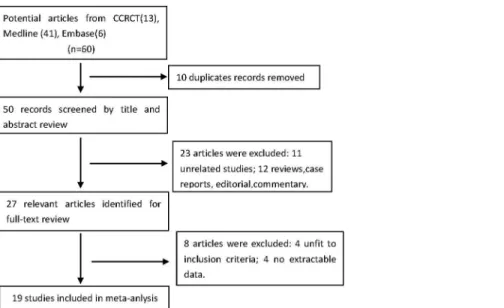
Fig 1. shows a flow diagram of the trial selection process. A total of 60 potential articles from electronic databases were identified. We reviewed 27 records in full after screening the titles
and abstracts. Finally, 19 trials (S1 References) with a total of 1608 patients were included, and
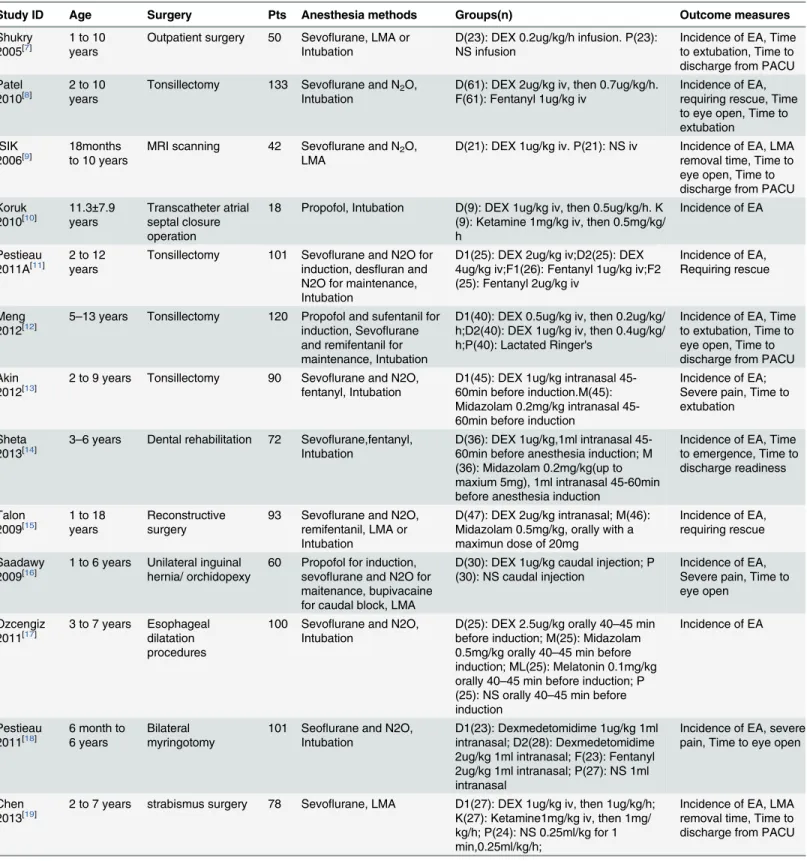
relevant data were extracted (Table 1). All of the included studies were of parallel,
double-Fig 1. Flow diagram of included/excluded studies.
Table 1. Characteristics of included studies.
Study ID Age Surgery Pts Anesthesia methods Groups(n) Outcome measures
Shukry
2005[7] 1 to 10years Outpatient surgery 50 SevoIntubationflurane, LMA or D(23): DEX 0.2ug/kg/h infusion. P(23):NS infusion Incidence of EA, Timeto extubation, Time to discharge from PACU Patel
2010[8] 2 to 10years Tonsillectomy 133 SevoIntubationflurane and N2O, D(61): DEX 2ug/kg iv, then 0.7ug/kg/h.F(61): Fentanyl 1ug/kg iv Incidence of EA,requiring rescue, Time to eye open, Time to extubation
ISIK 2006[9]
18months to 10 years
MRI scanning 42 Sevoflurane and N2O, LMA
D(21): DEX 1ug/kg iv. P(21): NS iv Incidence of EA, LMA removal time, Time to eye open, Time to discharge from PACU Koruk
2010[10] 11.3
±7.9
years
Transcatheter atrial septal closure operation
18 Propofol, Intubation D(9): DEX 1ug/kg iv, then 0.5ug/kg/h. K (9): Ketamine 1mg/kg iv, then 0.5mg/kg/ h
Incidence of EA
Pestieau
2011A[11] 2 to 12years Tonsillectomy 101 Sevoinduction, desflurane and N2O for fluran and N2O for maintenance, Intubation
D1(25): DEX 2ug/kg iv;D2(25): DEX 4ug/kg iv;F1(26): Fentanyl 1ug/kg iv;F2 (25): Fentanyl 2ug/kg iv
Incidence of EA, Requiring rescue
Meng
2012[12] 5–13 years Tonsillectomy 120 Propofol and sufentanil forinduction, Sevoflurane and remifentanil for maintenance, Intubation
D1(40): DEX 0.5ug/kg iv, then 0.2ug/kg/ h;D2(40): DEX 1ug/kg iv, then 0.4ug/kg/ h;P(40): Lactated Ringer's
Incidence of EA, Time to extubation, Time to eye open, Time to discharge from PACU Akin
2012[13] 2 to 9 years Tonsillectomy 90 Sevofentanyl, Intubationflurane and N2O, D1(45): DEX 1ug/kg intranasal 45-60min before induction.M(45): Midazolam 0.2mg/kg intranasal 45-60min before induction
Incidence of EA; Severe pain, Time to extubation
Sheta
2013[14] 3–6 years Dental rehabilitation 72 SevoIntubationflurane,fentanyl, D(36): DEX 1ug/kg,1ml intranasal 45-60min before anesthesia induction; M (36): Midazolam 0.2mg/kg(up to maxium 5mg), 1ml intranasal 45-60min before anesthesia induction
Incidence of EA, Time to emergence, Time to discharge readiness
Talon 2009[15]
1 to 18 years
Reconstructive surgery
93 Sevoflurane and N2O, remifentanil, LMA or Intubation
D(47): DEX 2ug/kg intranasal; M(46): Midazolam 0.5mg/kg, orally with a maximun dose of 20mg
Incidence of EA, requiring rescue
Saadawy
2009[16] 1 to 6 years Unilateral inguinalhernia/ orchidopexy 60 Propofol for induction,sevoflurane and N2O for maitenance, bupivacaine for caudal block, LMA
D(30): DEX 1ug/kg caudal injection; P (30): NS caudal injection
Incidence of EA, Severe pain, Time to eye open
Ozcengiz
2011[17] 3 to 7 years Esophagealdilatation procedures
100 Sevoflurane and N2O, Intubation
D(25): DEX 2.5ug/kg orally 40–45 min
before induction; M(25): Midazolam 0.5mg/kg orally 40–45 min before
induction; ML(25): Melatonin 0.1mg/kg orally 40–45 min before induction; P
(25): NS orally 40–45 min before
induction
Incidence of EA
Pestieau 2011[18]
6 month to 6 years
Bilateral myringotomy
101 Seoflurane and N2O, Intubation
D1(23): Dexmedetomidime 1ug/kg 1ml intranasal; D2(28): Dexmedetomidime 2ug/kg 1ml intranasal; F(23): Fentanyl 2ug/kg 1ml intranasal; P(27): NS 1ml intranasal
Incidence of EA, severe pain, Time to eye open
Chen
2013[19] 2 to 7 years strabismus surgery 78 Sevoflurane, LMA D1(27): DEX 1ug/kg iv, then 1ug/kg/h;K(27): Ketamine1mg/kg iv, then 1mg/ kg/h; P(24): NS 0.25ml/kg for 1 min,0.25ml/kg/h;
Incidence of EA, LMA removal time, Time to discharge from PACU
blind, randomized, controlled design. A total of 15 participants in two trials were dropouts [7,8].
In 17 trials participants were children aged13 years, whereas in the other two trials
pa-tients were 1–18 years of age. Participants in 17 trials were outpatients or short-time inpatients
admitted for such interventions as tonsillectomy, myringotomy, and inguinal hernia repair.
Another study included 42 patients undergoing magnetic resonance imaging [9]. The last
study enrolled 18 patients with congenital heart disease undergoing pediatric cardiac
catheteri-zation [10].
In 16 trials, anesthesia was induced and maintained with sevoflurane with or without N2O. In one of the other three trials, propofol was administered for anesthesia induction and
mainte-nance [10]. In another trial, participants were induced with sevoflurane and N2O and were
maintained with desflurane and N2O [11]. In the last trial, anesthesia was induced with
propo-fol and maintained with sevoflurane [12]. During anesthesia induction or maintenance,
remi-fentanil, propofol, or fentanyl was administered additionally in six trials [10,12–16].
In three trials, the study drugs were administered 40–60 min before anesthesia induction
[13,14,17]. In five trials, the drugs were given as a bolus and then infused until the end of
sur-gery. In one trial, after induction, participants received continuous infusions of the study drugs
without a bolus injection [7]. In seven trials, study drugs were injected intravenously after
anes-thesia induction. In two trials, study drugs were given intranasally after induction [15,18]. In
one trial, dexmedetomidine or saline was administered by caudal injection [16].
Regarding outcome measures, 13 trials employed a 4-point scale to evaluate agitation: 1, awake, calm, cooperative; 2, crying, required consoling; 3, irritable/restless, screaming,
incon-solable; 4, combative, disoriented, thrashing. In 10 trials, patients with a score of3 were
Table 1. (Continued)
Study ID Age Surgery Pts Anesthesia methods Groups(n) Outcome measures
Ali 2013[20] 2 to 6 years Tonsillectomy 120 Sevo
flurane and N2O, Intubation
D(40): DEX 0.3ug/kg iv about 5min before the end of surgery; Pr(40): Propofol 1mg/kg iv about 5min before the end of surgery; P(40):NS iv about 5min before the end of surgery
Incidence of EA, Time to extubation, Time to eye open, Time to discharge from PACU
Erdil
2009[21] 2 to 7 years Tonsillectomy withor without myringotomy
90 Sevofluran and N2O, Intubation
D(30): DEX 0.5ug/kg iv; F(30): Fentanyl 2.5ug/kg iv; P(30): NS iv
Incidence of EA, Requiring rescue, Severe pain, Time to eye open, Time to extubation Guler
2005[22]
3 to 6 years Tonsillectomy 60 Seoflurane and N2O, Intubation
D(30): DEX 0.5ug/kg iv; P(30): NS 5ml iv
Incidence of EA, Requiring rescue, Severe pain, Time to eye open, Time to extubation Ibacache
2004[23] 1 to 10years inguinal herniarepair, orchiopexy, circumcision
90 Seoflurane and N2O and caudal block, LMA
D1 (30): DEX 0.15ug/kg iv; D2(30): DEX 0.3ug/kg iv; P(30): NS 10ml iv
Incidence of EA, Time to eye open, Time to discharge form PACU Olutoye
2010[24]
3 to 12 years
Tonsillectomy and Adenoidectomy
109 Sevoflurane and N2O, Intubation
D1(26): DEX 0.75ug/kg iv; D2(27): DEX 1ug/kg iv; Mor1(30): Morphine 50ug/kg iv; Mor2(26): Morphine 100ug/kg iv
Incidence of EA, Requiring rescue, Time to discharge from PACU
Sato
2010[25] 1 to 9 years same day surgeryor overnight stay surgery
81 Sevoflurane, LMA D(39): DEX 0.3ug/kg iv; P(42): NS 5ml iv
Incidence of EA, Time to discharge form PACU
Abbreviation: EA, emergence agitation; DEX, dexmedetomidine; NS: normal saline; LMA, laryngeal mask airway; PACU, post anesthesia care unit.
classified as having EA. In the other three trials, patients with a score of2 were regarded as
having EA [11,15,18]. Four studies employed a 5-point scale for evaluation: 1, sleeping; 2,
awake and calm; 3, irritable and crying; 4, inconsolable crying; 5, severe restlessness and
dis-orientation. With this scoring system, EA was defined as a score of4, which was identical to a
score of3 using the 4-point scale. One study did not describe the method of evaluation [10].
The last trial employed the Pediatric Anesthesia Emergence Delirium Scale for evaluation, with
a score of10 classified as EA [19].
The incidence of severe pain was evaluated in five trials. We merged the data for the“time
to remove the laryngeal mask airway”with the“time to extubation”data because of their
simi-larity. Time to eye-open and time to extubation were evaluated in nine trials. Time to discharge from the PACU was evaluated in eight trials. All outcome measures referring to time were de-scribed using minutes.
Effects of interventions
Dexmedetomidine vs Placebo. The incidence of EA was compared between dexmedeto-midine and placebo in 12 trials (818 patients). Heterogeneity was not observed when these studies were pooled. The pooled analysis showed that dexmedetomidine significantly reduced
the risk of EA [RR 0.36, 95% confidence interval (CI) 0.28–0.46;Fig 2]. Subgroup analysis was
performed based on the administration route. Intravenous dexmedetomidine significantly
de-creased the risk of EA (RR 0.34, 95% CI 0.25–0.44;Fig 2). Dexmedetomidine did not reduce
the incidence of EA when it was administered via oral, intranasal, and caudal routes. However, there was only one trial for each administration route.
The incidence of severe pain was evaluated in four trials (251 patients). No statistical hetero-geneity was found with a pooled analysis. Subgroup analysis was performed based on surgical procedures with different pain intensities. The results showed that dexmedetomidine signifi-cantly reduced the risk of severe pain compared with placebo after tonsillectomy (RR 0.45, 95%
CI 0.24–0.86;Fig 3). Two studies, Pestieau 2011 and Saadawy 2009, respectively, showed that
dexmedetomidine reduced the risk of severe pain after myringotomy (RR 0.33, 95% CI 0.12–
0.91;Fig 3) and after inguinal hernia repair surgery (RR 0.40, 95% CI 0.21–0.76;Fig 3)
com-pared with placebo. The number of patients requiring a rescue drug was evaluated in two trials (Erdil 2009, Guler 2005) that included 120 patients. No heterogeneity was observed in the pooled analysis. It showed that dexmedetomidine significantly reduced the requirement of a
rescue drug compared with placebo (RR 0.31, 95% CI 0.18–0.53;P<0.0001). Time to eye-open
was observed in eight studies (590 patients). Heterogeneity was observed when these studies were pooled, which was because of the study of Saadawy 2009. Saadawy 2009 administered the study drugs by caudal injection. The pooled analysis (including Saadawy 2009) showed that dexmedetomidine significantly increased time to eye-open by 0.98 min (mean difference 0.98,
95% CI 0.20–1.75;Fig 4). Seven trials (459 patients) evaluated time to extubation.
Heterogene-ity was observed when these studies were pooled, which could be because of the study of Guler
2005. No significant difference was shown in the pooled analysis (P= 0.05). Time to discharge
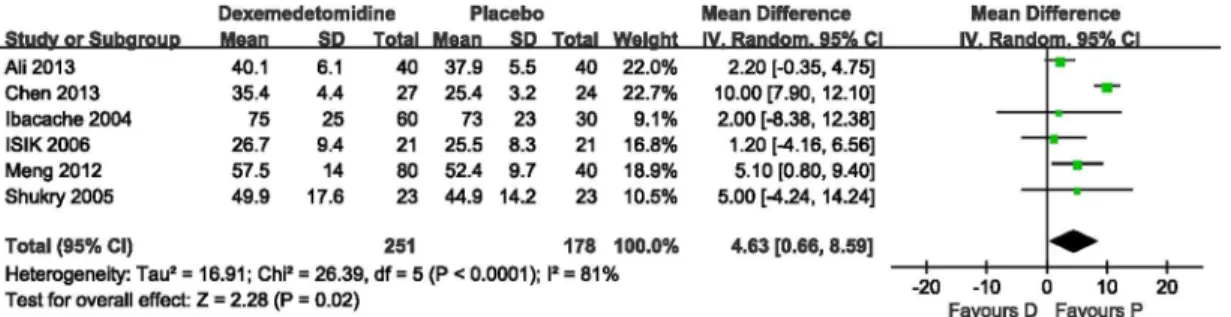
from the PACU was evaluated in six trials (429 patients). Heterogeneity was observed when these studies were pooled owing to the study of Chen 2013. With the random effects model, dexmedetomidine significantly increased time to discharge from the PACU by 4.63 min (mean
difference 4.63, 95% CI 0.66–8.59;Fig 5).
Dexmedetomidine vs Midazolam. Four trials compared the effects of dexmedetomidine and midazolam on preventing agitation. The incidence of EA was evaluated in these four trials. Heterogeneity was not observed when the pooled studies were analyzed. No significant
incidence of EA (Fig 6). The number of patients who required a rescue drug was evaluated in two trials. No heterogeneity was observed in the pooled analysis. It showed that dexmedetomi-dine was more beneficial for reducing the requirement of a rescue drug than midazolam (RR
0.46, 95% CI 0.25–0.85;Fig 6). Only one study (Sheta 2013) evaluated the time to eye-open and
time to discharge from the PACU. Neither showed a significant difference. Another study (Akin 2012) evaluated time to extubation. There was no significant difference.
Dexmedetomidine vs Propofol. Only one study (Ali 2013) compared the effects of dex-medetomidine and propofol on preventing postoperative agitation. The study evaluated the in-cidence of EA, time to eye-open, time to extubation, and time to PACU discharge. The result showed that dexmedetomidine was more beneficial than propofol in all outcome measures ex-cept time to PACU discharge.
Dexmedetomidine vs Ketamine. Two trials (Chen 2013, Koruk 2010) compared the ef-fects of dexmedetomidine and ketamine on preventing postoperative agitation. The incidence of EA was evaluated in both trials. Time to extubation and time to PACU discharge were evalu-ated in the study by Chen 2013. No significant differences were observed in any of the
outcome measures.
Fig 2. Incidence of emergence agitation (EA): dexmedetomidine vs. placebo.Forest plot shows that the overall effect of pooled trials was in favor of dexmedetomidine. D, dexmedetomidine; P, placebo.
Dexmedetomidine vs Fentanyl. Dexmedetomidine and fentanyl were compared in four studies (357 patients). The incidence of EA was evaluated in these four trials. Heterogeneity was observed when these studies were pooled owing to one study (Pestieau 2011). The pooled analysis with a random effects model showed no significant differences between dexmedetomidine and fentanyl. However, the pooled analysis without Pestieau 2011 showed a significant difference in
favor of dexmedetomidine(RR 0.41, 95% CI 0.28–0.62;Fig 7). Two trials (Erdil 2009, Pestieau
2011) evaluated the incidence of severe pain, and no significant difference was found. Three trials (Erdil 2009, Patel 2010, Pestieau 2011A) evaluated the incidence of requiring rescue drugs. When these studies were pooled, heterogeneity was observed owing to one study (Patel 2010). The pooled analysis with the random effects model showed no significant difference between dexme-detomidine and fentanyl. Two trials (Patel 2010, Pestieau 2011) evaluated time to eye-open. The pooled analysis of these two trials showed no significant difference. Two trials (Erdil 2009, Patel 2010) evaluated time to extubation. The pooled analysis of these two trials showed a significant
difference in favor of dexmedetomidine (mean difference−2.19, 95% CI−3.38 to−0.99).
Fig 3. Incidence of severe postoperative pain: dexmedetomidine vs. placebo.Forest plot shows that the overall effect of pooled trials was in favor of dexmedetomidine. D, dexmedetomidine; P, placebo
doi:10.1371/journal.pone.0128450.g003
Fig 4. Time to eye-open: dexmedetomidine vs. placebo.Forest plot shows that the overall effect of pooled trials was in favor of placebo. Patients given dexmedetomidine took more time to recover. Heterogeneity was observed when these studies were pooled and the random effects model was chosen for analysis. D, dexmedetomidine; P, placebo
Other comparisons. One study (Olutoye 2010) compared dexmedetomidine with mor-phine in regard to preventing EA. No significant difference was found in the incidence of EA or in the number of patients requiring rescue drugs. One study (Ozcengiz 2011) compared dex-medetomidine with melatonin, with no significant difference shown in the incidence of EA.
Adverse effects
Except for one study (Chen 2013), all trials reported the effects of interventions on heart rate
and blood pressure. Six studies [8,10,15,18,22,25] reported that the heart rate was lower in the
dexmedetomidine group than in the control group. Three studies [8,18,22] showed that the
blood pressure was lower in the dexmedetomidine group than in the control group. Bradycar-dia was recorded in one child given dexmedetomidine (Saadawy 2009).
Publication bias
Egger’s tests showed that there might be a publication bias for the primary outcome
(P= 0.045). Regarding the effect of the missing trials, a trim-and-fill analysis was conducted
and showed“no trimming performed.”
Fig 5. Time to discharge from the postanesthesia care unit (PACU): dexmedetomidine vs. placebo.Forest plot shows that the overall effect of pooled trials was in favor of placebo. Patients given dexmedetomidine stayed longer in the PACU. Heterogeneity was observed when these studies were pooled and the random effects model was chosen for analysis. D, dexmedetomidine; P, placebo
doi:10.1371/journal.pone.0128450.g005
Fig 6. Overall dexmedetomidine vs. midazolam analysis.Incidence of EA was similar for the two groups, with no significant difference. However, the requirment of a rescue drug was less in the dexmedetomidine group than in the midazolam group. D, dexmedetomidine; M, midazolam
Discussion
EA is one of the most common complications of pediatric anesthesia. To date, there is no well-established prophylaxis, although many preventive measures have been studied.
Dexmedetomidine was one of the interventions mentioned above because of its sedative, an-algesic, and anxiolytic effects that could contribute to avoiding EA. Our meta-analysis showed that dexmedetomidine, administrated intravenously, decreased the incidence of EA (RR 0.34). Oral and caudal administration seems to be effective for preventing EA (RR 0.25), but there was no significant difference compared with placebo, although there was only one trial each
re-garding oral [17] and caudal [16] administration. Children accept oral administration more
easily than an intravenous injection. Oral dexmedetomidine before anesthesia could ameliorate preoperative anxiety and fear, which was one of the causes of EA. Thus, more prospective stud-ies are required to determine the effect of oral dexmedetomidine on preventing postoperative EA. Caudal dexmedetomidine is invasive and is used only for patients with caudal block. The
potential neurotoxicity of dexmedetomidine is another problem that deserves attention [26].
Time to extubation was similar in patients with dexmedetomidine and those with placebo. Compared with placebo, dexmedetomidine significantly increased the time to eye-open by 0.98 min. We did not think, however, that the delay was of notable clinical significance for a proce-dure that often takes more than 10 min. Additionally, dexmedetomidine prolonged the time to PACU discharge by 4.63 min compared with placebo. In five trials, the Aldrete score or the Postanesthetic Discharge Scoring System was selected for setting the criteria for PACU dis-charge. Recovery of consciousness was evaluated. The inherent sedative effect of dexmedetomi-dine might account for the delayed discharge from the PACU.
In our analysis, although dexmedetomidine and midazolam were similarly efficacious in re-gard to preventing EA, dexmedetomidine incurred less requirment for a rescue drug. These two drugs involve different mechanisms of sedative action. Midazolam depresses the central
nervous system by enhancing the effect of the neurotransmitterγ-aminobutyric acid (GABA)
on GABAAreceptors [27]. Dexmedetomidine acts on the endogenous sleep-promoting
path-way to induce a more natural sleep-like status [28]. Pain is another risk factor for EA.
Dexme-detomidine provides analgesia via receptors in the spinal cord, which may contribute to the decreased requirementfor a rescue drug.
Patients aged 1–18 years were enrolled in two trials [10,15]. As the age range was scattered
and heterogeneity arose, we performed sensitivity analyses to test whether the results would qualitatively change if the trials were included.
We noted significant heterogeneity as a result of one study (Pestieau 2011) when the studies were pooled to evaluate the incidence of EA after administration of dexmedetomidine versus fentanyl. The severe heterogeneity seen in this study could be explained by the different Fig 7. Incidence of EA: dexmedetomidine vs. fentanyl.Forest plot shows that the overall effect of pooled trials without the Pestieau 2011 was in favor of dexmedetomidine. The Pestieau 2011 study was excluded because of clinical and statistical heterogeneity. D, dexmedetomidine; F, fentanyl
administration routes. The study drugs in the Pestieau 2011 study were administered by nose drops after anesthesia induction, whereas in other studies the drugs were given intravenously. Hence, we did not include this study in the meta-analysis, although the results were included in the forest plot. The analytic results suggested that intravenous dexmedetomidine was more ef-fective than intravenous fentanyl for preventing postoperative EA in children.
Only one trial compared dexmedetomidine with morphine and melatonin, respectively. Neither showed a significant difference. Hence, no further analysis could be conducted.
In this review, the main limitation is the small number of trials comparing dexmedetomi-dine with other interventions (fentanyl, four trials; midazolam, four trials; ketamine, two trials; propofol, one trial; morphine, one trial). The strength of the evidence may be reduced because
of the limited number of trials. Furthermore, the results of Egger’s test suggested a potential
publication bias in this review. As the sensitivity of Egger’s test is low when the number of
in-cluded trials is<20, the trim-and-fill method was performed to reduce the influence of the
missing studies.
Conclusion
Dexmedetomidine was proved to have a beneficial effect in children receiving general anesthe-sia in regard to preventing EA, avoiding severe pain, and reducing the requirment for a rescue drug. However, it slightly extended the time to eye-open and the time to PACU discharge. The effectiveness of dexmedetomidine for preventing EA was similar to that of midazolam and ke-tamine. It was more effective, however, than fentanyl or propofol.
Supporting Information
S1 PRISMA Checklist. PRISMA Checklist.
(DOC)
S1 References. References included in the meta-analysis.
(DOCX)
Author Contributions
Conceived and designed the experiments: JN DL. Performed the experiments: JN JW YY XJ LL. Analyzed the data: JN JW. Contributed reagents/materials/analysis tools: YY XJ LL. Wrote the paper: JN JW.
References
1. Welborn LG, Hannallah RS, Norden JM, Ruttimann UE, Callan CM (1996) Comparison of emergence and recovery characteristics of sevoflurane, desflurane, and halothane in pediatric ambulatory patients. Anesth Analg 83: 917–920. PMID:8895263
2. Voepel-Lewis T, Malviya S, Tait AR (2003) A prospective cohort study of emergence agitation in the pe-diatric postanesthesia care unit. Anesth Analg 96: 1625–1630, table of contents. PMID:12760985
3. Cravero J, Surgenor S, Whalen K (2000) Emergence agitation in paediatric patients after sevofluranea-naesthesia and no surgery: a comparison with halothane. Paediatr Anaesth 10: 419–424. PMID:
10886700
4. Vlajkovic GP, Sindjelic RP (2007) Emergence delirium in children: many questions, few answers. Anesth Analg 104: 84–91. PMID:17179249
5. Bhana N, Goa KL, McClellan KJ (2000) Dexmedetomidine. Drugs 59: 263–268; discussion 269–270.
PMID:10730549
6. Wei J, Wu T, Yang Q, Chen M, Ni J, Huang D (2011) Nitrates for stable angina: a systematic review and meta-analysis of randomized clinical trials. Int J Cardiol 146: 4–12. doi:10.1016/j.ijcard.2010.05.019
7. Shukry M, Clyde MC, Kalarickal PL, Ramadhyani U (2005) Does dexmedetomidine prevent emergence delirium in children after sevoflurane-based general anesthesia? Paediatr Anaesth 15: 1098–1104.
PMID:16324031
8. Patel A, Davidson M, Tran MC, Quraishi H, Schoenberg C, Sant M, et al. (2010) Dexmedetomidine infu-sion for analgesia and prevention of emergence agitation in children with obstructive sleep apnea syn-drome undergoing tonsillectomy and adenoidectomy. Anesth Analg 111: 1004–1010. doi:10.1213/
ANE.0b013e3181ee82faPMID:20705788
9. Isik B, Arslan M, Tunga AD, Kurtipek O (2006) Dexmedetomidine decreases emergence agitation in pe-diatric patients after sevoflurane anesthesia without surgery. Paediatr Anaesth 16: 748–753. PMID:
16879517
10. Koruk S, Mizrak A, Kaya UB, Ilhan O, Baspinar O, Oner U (2010) Propofol/dexmedetomidine and pro-pofol/ketamine combinations for anesthesia in pediatric patients undergoing transcatheter atrial septal defect closure: a prospective randomized study. Clin Ther 32: 701–709. doi:10.1016/j.clinthera.2010.
04.010PMID:20435239
11. Pestieau SR, Quezado ZM, Johnson YJ, Anderson JL, Cheng YI, McCarter RJ, et al. (2011) High-dose dexmedetomidine increases the opioid-free interval and decreases opioid requirement after tonsillecto-my in children. Can J Anaesth 58: 540–550. doi:10.1007/s12630-011-9493-7PMID:21461792
12. Meng QT, Xia ZY, Luo T, Wu Y, Tang LH, Zhao B, et al. (2012) Dexmedetomidine reduces emergence agitation after tonsillectomy in children by sevoflurane anesthesia: a case-control study. Int J Pediatr Otorhinolaryngol 76: 1036–1041. doi:10.1016/j.ijporl.2012.03.028PMID:22537843
13. Akin A, Bayram A, Esmaoglu A, Tosun Z, Aksu R, Altuntas R, et al. (2012) Dexmedetomidine vs mida-zolam for premedication of pediatric patients undergoing anesthesia. Paediatr Anaesth 22: 871–876.
doi:10.1111/j.1460-9592.2012.03802.xPMID:22268591
14. Sheta SA, Al-Sarheed MA, Abdelhalim AA (2014) Intranasal dexmedetomidine vs midazolam for pre-medication in children undergoing complete dental rehabilitation: a double-blinded randomized con-trolled trial. Paediatr Anaesth 24: 181–189. doi:10.1111/pan.12287PMID:24237879
15. Talon MD, Woodson LC, Sherwood ER, Aarsland A, McRae L, Benham T, et al. (2009) Intranasal dex-medetomidine premedication is comparable with midazolam in burn children undergoing reconstructive surgery. J Burn Care Res 30: 599–605. doi:10.1097/BCR.0b013e3181abff90PMID:19506498
16. Saadawy I, Boker A, Elshahawy MA, Almazrooa A, Melibary S, Abdellatif AA, et al. (2009) Effect of dex-medetomidine on the characteristics of bupivacaine in a caudal block in pediatrics. Acta Anaesthesiol Scand 53: 251–256. doi:10.1111/j.1399-6576.2008.01818.xPMID:19076110
17. Ozcengiz D, Gunes Y, Ozmete O (2011) Oral melatonin, dexmedetomidine, and midazolam for preven-tion of postoperative agitapreven-tion in children. J Anesth 25: 184–188. doi:10.1007/s00540-011-1099-2
PMID:21327805
18. Pestieau SR, Quezado ZM, Johnson YJ, Anderson JL, Cheng YI, McCarter RJ, et al. (2011) The effect of dexmedetomidine during myringotomy and pressure-equalizing tube placement in children. Paediatr Anaesth 21: 1128–1135. doi:10.1111/j.1460-9592.2011.03615.xPMID:21575102
19. Chen JY, Jia JE, Liu TJ, Qin MJ, Li WX (2013) Comparison of the effects of dexmedetomidine, keta-mine, and placebo on emergence agitation after strabismus surgery in children. Can J Anaesth 60: 385–392. doi:10.1007/s12630-013-9886-xPMID:23344921
20. Ali MA, Abdellatif AA (2013) Prevention of sevoflurane related emergence agitation in children undergo-ing adenotonsillectomy: A comparison of dexmedetomidine and propofol. Saudi J Anaesth 7: 296–
300. doi:10.4103/1658-354X.115363PMID:24015133
21. Erdil F, Demirbilek S, Begec Z, Ozturk E, Ulger MH, Ersoy MO (2009) The effects of dexmedetomidine and fentanyl on emergence characteristics after adenoidectomy in children. Anaesth Intensive Care 37: 571–576. PMID:19681413
22. Guler G, Akin A, Tosun Z, Ors S, Esmaoglu A, Boyaci A (2005) Single-dose dexmedetomidine reduces agitation and provides smooth extubation after pediatric adenotonsillectomy. Paediatr Anaesth 15: 762–766. PMID:16101707
23. Ibacache ME, Munoz HR, Brandes V, Morales AL (2004) Single-dose dexmedetomidine reduces agita-tion after sevoflurane anesthesia in children. Anesth Analg 98: 60–63, table of contents. PMID:
14693585
24. Olutoye OA, Glover CD, Diefenderfer JW, McGilberry M, Wyatt MM, Larrier DR, et al. (2010) The effect of intraoperative dexmedetomidine on postoperative analgesia and sedation in pediatric patients under-going tonsillectomy and adenoidectomy. Anesth Analg 111: 490–495. doi:10.1213/ANE.
0b013e3181e33429PMID:20610555
anesthesia in pediatric ambulatory surgery. J Anesth 24: 675–682. doi:10.1007/s00540-010-0976-4
PMID:20585813
26. Konakci S, Adanir T, Yilmaz G, Rezanko T (2008) The efficacy and neurotoxicity of dexmedetomidine administered via the epidural route. Eur J Anaesthesiol 25: 403–409. PMID:18088445
27. Kupietzky A, Houpt MI (1993) Midazolam: a review of its use for conscious sedation of children. Pediatr Dent 15: 237–241. PMID:8247896
28. Coursin DB, Coursin DB, Maccioli GA (2001) Dexmedetomidine. Curr Opin Crit Care 7: 221–226.