O
r
IG
IN
A
l
A
r
T
IC
lE
MRSA outbreak at a transplantation unit
Authors
RomanelliRMC1,2 ClementeWT1,3 LimaSSS1,2 RezendeEM1,2,4 MartinhoGH1,2 PaivaLFR1,2 NevesFAC1
MadeiraJGC5 AmâncioGCS5 LimaAS6 FariaLC7 CoutinhoRL1
1 InfectionControlCommis-sionofHospitaldasClínicas daUniversidadeFederalde MinasGerais.
2StudyandResearchGroup
onHealthCareandHospital Epidemiology-associated Infections(GREPI,fromthe Portuguese).
3StudyandResearchGroup
onHealthCareandHospital EpidemiologyAssociated Infections.
4EpidemiologyDepartment oftheNursingSchoolof UniversidadeFederalde MinasGerais.
5
MolecularBiologyLabora-toryofInstitutoOtávio Magalhães/FUNED.
6SurgeryDepartment,Alpha
InstituteofGastroenterol-ogy-HospitaldasClínicas daUniversidadeFederalde MinasGerais.
7
InternalMedicineDepart-mentoftheMedicalSchool ofUniversidadeFederalde MinasGerais.
Submittedon:08/09/2009 Approvedon:11/24/2009 Correspondence to: ProfessorWanessaTrindade Clemente
ComissãodeControlede InfecçãoHospitalardo HospitaldasClínicasda UniversidadeFederalde MinasGerais.Av.Alfredo Balena,110,1ºandar,Santa Efigênia–BeloHorizonte, MinasGerais,Brazil. CEP30130-100. Phone:553134099383. Fax:553134099380. E-mail:
[email protected] Wedeclarenoconflict ofinterest.
ABSTRACT
Methicillin-resistantStaphylococcus aureus (MRSA)infectionsfrequentlycomplicatethepost-operative courseoftransplantrecipients,anddespitenasalcarriageandendemiccolonization,MRSAoutbreaks arenotcommonlydescribed.ThisstudyreportsacaseofMRSAoutbreakanddiscussesinfectioncontrol measuresandrecommendationsforthissituation.
Keywords: MRSA,outbreak,surgicalsiteinfection,livertransplantation,RAPD.
[Braz J Infect Dis 2010;14(1):54-59]©ElsevierEditoraLtda.
Abbreviations:
MRSA–methicillinresistantStaphylococcus aureus
LT–livertransplantation ICU–intensivecareunit SSI–surgicalsiteinfection TU–transplantationunit
RAPD–randomamplifiedpolymorphicDNA
INTRODUCTION
Bacterial infections are the primary infection complication in patients submitted to solid organtransplantation.Inlivertransplantation (LT), they generally occur in 30% to 55% of thecases,especiallyduringthefirstandsecond monthsaftertheprocedure,raisingmorbidity and mortality. Up to 60% of these infections arecausedbyGram-positivemicroorganisms,
mainly Staphylococcus aureus (S. aureus).1,2
These infections vary according to microor-ganismvirulenceandantimicrobialresistance
profile.3
Many transplanted patients are colonized byS. aureus. Colonization can occur in the pre-orpost-transplantationperiodandisas-sociated with several factors, such as surgery duration, altimicrobial use, permanency in the Intensive Care Unity (ICU), drains and
catheteruse,excessivemanipulation,anddis-easeseverity.1,4,5
S. aureus profile resistance depends on methicillin susceptibility. Methicillin-
re-sistantS. aureus (MRSA) displays amecA
gene, which orders a modified penicillin- binding protein - PBP-2 that decreases its affinityforpenicillin.
MRSA colonization prior to LT occurs in
5.1%to47.4%ofthecases4-9
andcanbeassoci-atedwithahigherriskofinfection.5-7,10
Although some studies have established a correlation between MRSA colonization and infection with LT patients, outbreaks are not
frequent,5-7,10 possibly due to infection control
measures.Singhet al.demonstratedreductionin
colonizationandinfectionaftertheadoptionof infectioncontrolmeasures,basedontheidentifi-cationofnasalorrectalMRSAcarriagebyswabs, contactprecautions,patientcohort,nasaldecolo-
nizationwithmupirocin,andinstructionsforpa-tientsandvisitors.8Thus,S. aureusidentification
and dissemination control should be a priority
actionintransplantationunits.11,12
ThepresentstudydescribesaMRSAsurgi- calsiteinfection(SSI)outbreakinatransplan-tation unit (TU) and discusses measures for dissemination control of this microorganism using epidemiological, microbiological, and molecularbiologytools.
METHODS
inaTU.Thestudywasperformedinatertiarycaremedical trainingcenterofauniversityhospitallocatedinBeloHori-zonte, Minas Gerais, Brazil, from September 2004 to May 2005,theperioddefinedforcasenotification,establishment ofactions,andsurveillance.Outbreakcontrolwasdefinedas fourweeksafterthelastcase.
Caseswereidentifiedthroughadailyactivesearch in medical records and laboratory microbiological results. Infection notification was made by National
Nosocomial Surveillance System criteria.13The
proc-ess followed local Hospital Infection Control Com-mitteeinstructionsandwasmonitoredviacompletion of specific forms and a database constructed for this purpose.
Theindexcasewasthefirstpost-transplantpatientatTU notifiedwithSSIduetoMRSAisolatedinasurgicalwound sample.CasesweredefinedasallotherpatientswithSSIor colonizationduetoMRSAaftertransplantationprocedure. Statisticalanalysisconfirmedtheoutbreakbytheeventin- creasedfrequency,whichmeantanincidenceabovetheex-pectednumberofcases.
During the outbreak, patient nasal and rectal swabs wereperformedroutinelyatTUadmissionandrepeated weekly(exceptifthepatientwaspreviouslycolonizedor infectedbyMRSA).Nasalswabsfromhealthcareworkers werealsocollected.
Microbiologicalcultureswereperformedusingcom-mercial media - BioMérieux®. After a 24-hour
incuba-tion at 35º C, the staphylococcal colonies suspected by
the Gram method were confirmed with enzymatic and biochemical tests. The oxacillin diffusion disk in agar (Kirby-Bauer) was used to define methicillin resistance, asperstandardizationrecommendedbytheClinicaland
LaboratoryStandardsInstitute.14
MRSAgenotypicstudywasperformedusingmolecular biologytechniques.Surgicalwoundsamplesisolatedduring the outbreak and specimens from patients hospitalized in
other units were studied by Random Amplified Polymor-
phicDNA(RAPD)amplificationforgeneticsimilarity.Cri-teriaestablishedbyTenoveret al.wereconsideredforgenetic
groupinganddefinitionofthesamegenotypicstrain.15
Riskfactoranalysiswasperformedbymatchingcasesversus controls.Controlsweredefinedaspatientswhoweresubmitted totransplantationwithoutMRSASSI.Variablesstudiedwere lengthofstayinthehospital,ICU,andTUhospitalizationpe-riodpriortoMRSAinfectionorcolonization,numberofdays withcentralvenouscatheter,andantimicrobialuse.Student’s
t-testwasusedforcomparisonbetweenthegroupsandstatisti-calsignificancewasconsideredwhenp≤0.05.
This study was approved by the Institutional Ethical Committee.
RESULTS
Index case: MRSA SSI was identified on September 27,
2004,andtenothercaseshavebeennotifiedfromthenun-tilApril14,2005.Atotalof11patientsmetthecriteriafor casedefinition.
Description of cases: nine (81.8%) patients were
sub-mittedtoLT;onepatientreceivedrenaltransplantation,and anotherpatientreceivedbonemarrowtransplantationand requiredanexploratorylaparotomyafterasuspicionofap-pendicitis. Seven cases (63.6%) presented with superficial SSI(sixLTpatientsandonerenaltransplantationpatient). Fourothercases(36.4%)presentedwithdeepSSI(threeof themafterLTandoneafterbonemarrowtransplantation).
Genotypic and phenotypic profiles: all 11S. aureus
strains identified in transplanted recipients with SSI were oxacillin-resistant, but vancomycin-sensitive.
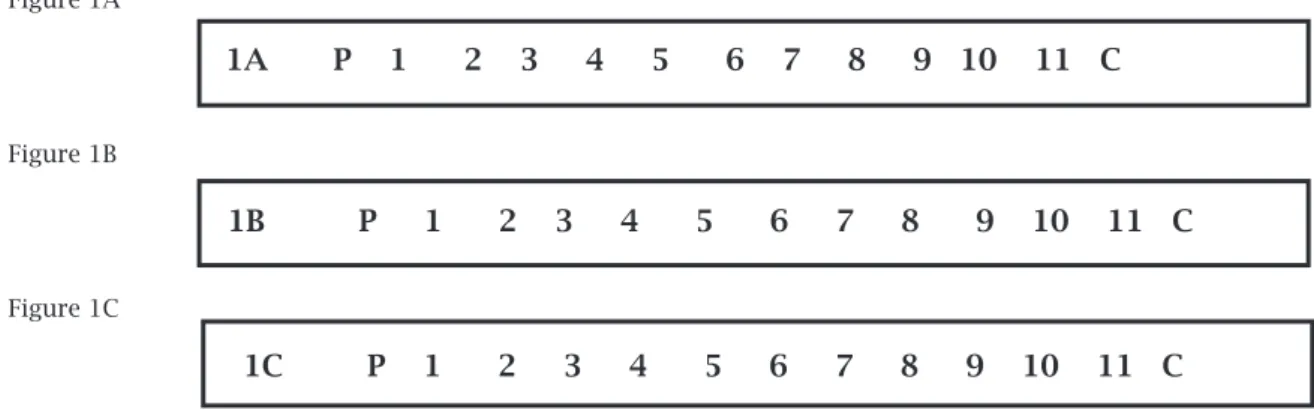
Fig-ure 1 shows 11S. aureus strains studied by RAPD
am-plification, using three different starters (1A, 1B, 1C). Figure 2 presents a phylogenetic study demonstrating 90%ofsimilarityamongMRSAsampleswithadiscrimi-natorypowerofD=0.409.
Figure 1: Genotypic analysis by Random Amplified Polymorphic DNA amplification of MRSA strains from outbreak and other institutional settings.
Figure 1A
Figure 1B
Figure 1C
*P Standard Ф 174/HaeIII; 1 to 11 - Patient samples; C- Negative control s image file number 1 1A P 1 2 3 4 5 6 7 8 9 10 11 C
1B P 1 2 3 4 5 6 7 8 9 10 11 C
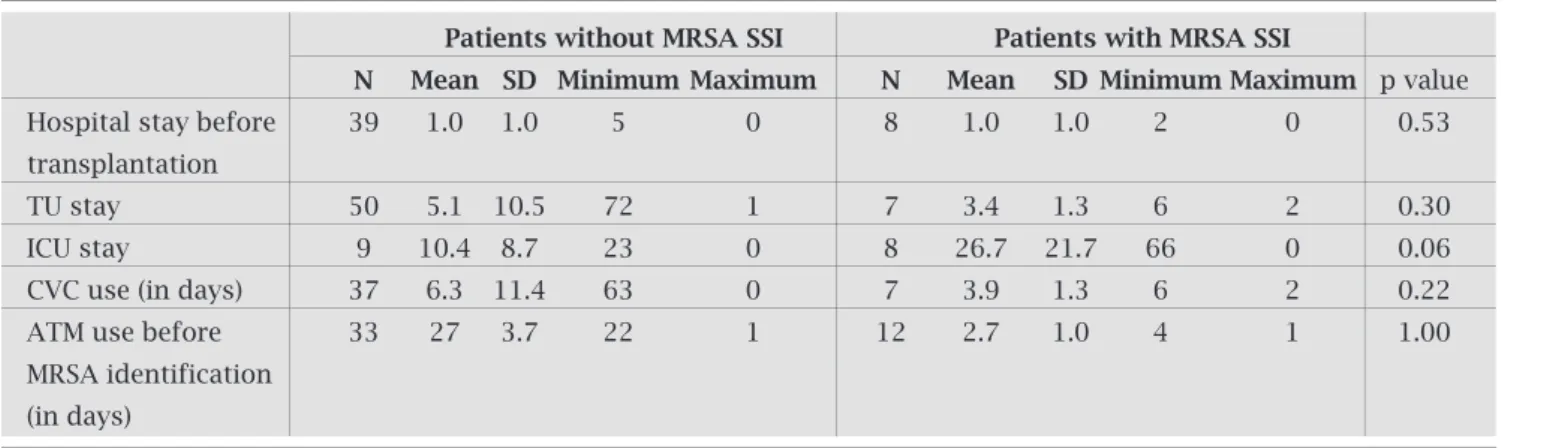
Table 1. Risk factors for patients MRSA colonization or infection
Patients without MrSA SSI Patients with MrSA SSI
N Mean SD Minimum Maximum N Mean SD Minimum Maximum p value Hospital stay before 39 1.0 1.0 5 0 8 1.0 1.0 2 0 0.53 transplantation
TU stay 50 5.1 10.5 72 1 7 3.4 1.3 6 2 0.30
ICU stay 9 10.4 8.7 23 0 8 26.7 21.7 66 0 0.06 CVC use (in days) 37 6.3 11.4 63 0 7 3.9 1.3 6 2 0.22 ATM use before 33 27 3.7 22 1 12 2.7 1.0 4 1 1.00 MRSA identification
(in days)
MRSA: methicillin resistant S. aureus; SSI: surgical site infection; TU: transplantation unit; ICU: intensive care unit; CVC: central venous catheter; ATM: antimicrobial.
Figure 2: Phylogenetic similarity of MRSA samples from outbreak and other institutional settings.
Table 2 - Infection control measures adopted during MRSA SSI outbreak
Control measures Hand hygienization with 2% chlorhexidine for healthcare workers.
Contact precautions for all colonized or infected patients (gloves and gowns in contact with patient); patient and healthcare worker cohort.
Nasal and rectal swab cultures (excluding those with known prior colonization).
Nasal swab cultures of health assistance team.
Frequent meetings with assistance team and Hospital Infection Control Committee.
MRSA: methicillin resistant S. aureus; SSI: surgical site infection.
DISCUSSION
S. aureusisanimportantagentrelatedtoinfectioninsolid organtransplantation,especiallyinLTrecipients.Themost commonformofacquisitionispriorcolonizationornoso-comialcross-transmissionassociatedwithantimicrobialuse and invasive procedures. Although MRSA colonization or infectioniscommoninsolidorgantransplantationrecipi-ents,outbreaksarenotfrequentlydescribed.Theapproach
andmanagementofthissituationusuallyfocusesonindi-vidualaspects.Thisstudyallowsadiscussionofsystematic practicesandinfectioncontrol/preventionmeasuresbased onamultidisciplinaryboard.
Outbreak investigation
Duringanoutbreak,casedefinitionisrecommended.Inthis study, case was defined as a transplanted patient admitted to the TU with MRSA isolation in a swab or in any sam-pleassociatedwithsiteinfection.Afterthat,toidentifythe
31%
49%
30%
49%
90%
39%
64%
49%
100%
5 8 11 4 7 9 6 10 3 1 2
Routine investigation: swab cultures from patients at
TU admission did not identify prior colonization. Dur-ing the outbreak, nasal and rectal swabs were repeated weeklyandnopatientpresentedwithMRSAcolonization before SSI. Healthcare workers also had nasal swabs
per-formedandnocarrierswereidentified.Risk factors: noneof
the risk factors studied showed statistical significance (Table 1).OnlytheICUshowedatendencytowardsMRSAinfection (p=0.06).Nodeathswerenotifiedduringthefollow-upperiod.
Outbreak control: chlorhexidine 2% was used for hand
total number of cases, transplanted patients underwent nasalandrectalswabmonitoring;MRSAisolationinany samplewasalsoconsidered.Infectioncontrolprotocols usually include hand hygiene, precautions with gowns and gloves, in addition to environment and equipment cleansing.
Despite ofS. aureus colonization high frequency in
transplantedpatients,inthisparticularunitMRSAisola-
tionwasarareoccurrence,probablybecauseourinstitu-tionmaintainsalowS. aureus methicillin resistancerate.
Outbreakconfirmationrequiresanincreaseofaspecific infection or complication above the background rate. Duringtwoyearsbeforethisoutbreak,nopatientspre-sentedwithMRSASSIattheTU,andsoMRSAisolation inmorethanonepatientdemandedourattention.
Theoutbreakinvolved11patientsoverasix-month observationperiod.Acaseversuscontrolstudywasper-formed and the source investigation comprised MRSA carrier admission, healthcare workers contamination duringsurgery,andcross-transmissionintheICU,TU, orotherhospitalunits.Fromallvariablesstudied,only theICUstayshowedatendencyforMRSAinfection(p= 0.06),suggestingacross-transmissionthatmightoccur in this setting. At our transplantation service, patients areassistedintheICUforatleast48hoursafterthepro-cedure.MRSA-colonizedpatientspresentedameanTU stayof26.7dayscomparedto10.4daysforpatientswith-outMRSASSI.
Swabculturesareroutinelyperformedbeforesurgery andintheICUwhenpatientsstayforsevendaysormore. As no patient was identified as having MRSA at TU or ICU admission, posterior colonization was considered due to broken barriers. It is noted that swab sensitivity variesenormously,dependingonthenumberofsamples collected,anditisnotpossibletoexcludeMRSAcross-transmissionintheICU.
All stains demonstrate the same antibiogram pat-tern, with resistance to all antimicrobials tested, except for vancomycin. Genotypic analysis by RAPD included eleven samples (MRSA from institucional settings and outbreak strains) and confirmed the hypothesis of ge-netic correlation (with 90% similarity, besides micro heterogeneity among samples - Figure 2). Genotypic analysis by Pulsed Field Gel Electrophoresis, Restric-tion Fragment Length Polymorphism, or RAPD should be used whenever possible with this purpose. However, these techniques present different primers and lack of interpretation standardization. RAPD showed quicker
results as has been demonstrated by several studies.16,17
Thecombinationofthreedifferentstartersinthisstudy improvedthediscriminatorypower(D=0.409),andthis lowvaluecouldbejustifiedbyahighgeneticcorrelation amongthesamples.
Clinical aspects
S. aureus nasal or rectal colonization is frequent in
trans-planted patients, andS. aureus systemic infections,
espe-cially sepsis, still remain as an important cause of serious
complications.8Additionally,cirrhoticpatientsshowgreater
S. aureus colonization rates,18 and the association between
staphylococcal colonization and infection has been dis-cussedinseveralstudies.
Bertet al. showed that 87.5% of MRSA infections
oc-curredinpreviouslycolonizedpatientscomparedto10.1%
ofnon-colonizedpatients(p<0.001).6Desaiet al.describe
agreaterriskforMRSAsepsisinpreviouslycolonizedpa-tientscomparedtonon-colonizedindividuals(p=0.002).7
In a retrospective cohort, sensitive or resistantS. aureus
colonizationwasalsoanindependentfactorforpost-trans-plantation infection, according to multivariate analysis
(p = 0.0004 and p < 0.0001; respectively).4 Hashimotoet
al.demonstratedthatpatientscolonizedbyMRSAafterthe
transplantshowedhigherinfectionratescomparedtothose
non-colonized(p=0.001).10AlsoaccordingtoHashimotoet
al.,higherMRSAinfectionratesoccurredinpatientswith
priorcolonization(p=0.04andoddsratio:3.5).5
Swab monitoring: someauthorsrecommendswabmoni-toring at admission and periodically after transplantation, considering increased infection rates in previously
colo-nized patients. Coiaet al. suggest that swabs must be
re-peatedweeklyormonthly,dependingonlocalprevalence.19
Theidentificationofcolonizedindividualscouldallowcon-
tactprecautions,patientcohorts,decolonization,andedu-cationalinformationforpatientsandtheirvisitors.5,7,8,10In
accordancewithBritishguidelines,swabmonitoringorac-tivesurveillanceculturesshouldbeconsideredaccordingto hospital epidemiological profile and MRSA prevalence for
patientsfromCriticalCareUnits,includingTU.19Moreover,
other variables must be observed, such as prior coloniza-tion,hospitaladmissionsandtransfersfromhospitalswith ahighMRSAprevalence.Inthepresentstudy,swabsfrom transplantedpatientsandhealthcareworkersaimedatcar-rieridentification.Ourresultsshowedthatnopatientwas consideredaspreviouslycolonizedandnoprofessionalwas consideredaMRSAcarrier.Nevertheless,swabmonitoring is still controversial, especially in institutions with a high
endemicMRSAprevalence,becausetheimpactofmonitor-ingmeasures,inthissituation,isreduced.Harbarthet al.,
comparingdifferentperiodswithandwithoutMRSAswab monitoringbyPCR,showednostatisticaldifferenceamong
MRSAinfectionrates(p=0.29).9
Site colonization:
transplantedpatientscouldpresentcon-comitantnasalandrectalcolonizationratesupto25.5%,20as
theyshowahigherinfectionriskwhencomparedtothosewith onlynasalcolonization(p=0.025andoddsratio=23.9).We
highlightthefactthatS. aureusdecolonizationisdifficultdueto
useless.Inthepresentstudy,nopatientwasrecognizedas havingpriorrectalcolonization,butrectalswabsensitivity is no more than 70%, which limits carrier identification andrestrictspreventivemeasurestoavoiddissemination.
Mortality:althoughhighmortalityratesassociatedwith
S. aureus infections are described in several studies,1,2,11,12
nodeathsassociatedwithMRSASSIoccuredduringthis outbreak.ThemajorityofSSIweresuperficial,presenting lowseveritywithbettertreatmentresponse.Inastudyof
165livertransplantpatients,Singhet al
.describedvascu-lar catheter infection as the main site (n = 15), followed bySSIandtheabdominalsite(n=7each),inadditionto
five pulmonary infections.11 Higher mortality (86%) was
observedinpatientswithabdominalorpulmonaryinfec-tions. Torre-Cisneroset al., in a study with 405 patients
submittedtoLT,definedS. aureusastheonlyindependent
variableassociatedwithmortality.12
Prophylaxis: MRSA identification contributes to sur-gical prophylaxis definition. In our Transplantation Service,thesurgicalprophylaxisprotocolincludedcefo- taximeplusampicillinduringthefirst48hours.Thisal-lowsagoodcoverage,withadequatelevelsatthesurgical site and relative safety. Considering a MRSA prevalence of approximately 35% at our hospital, glycopeptides as antimicrobialprophylaxisareindicatedonlyforpatients previouslycolonizedbyMRSAorwhodisplayhypersen- sitivitytofirst-choicedrugs.Duringthisoutbreak,glyco-peptides prophylaxis was discussed, but not used, since no previously colonized patients were identified. Fur-thermore,thereisaselectiveadvantageenjoyedbyMRSA inthepresenceofantimicrobialexposurethatfacilitates patient-to-patientcross-transmission.
Decolonization: MRSA decolonization for LT
candi-dates is controversial. In a meta-analysis by van Rijemet
al.,nasalmupirocinreduceddecolonizationandS. aureus
infectionaftertransplantation(p=0.02,RR0.55,and95%
CI 0.34-0.89).21Although routine MRSA decolonization
issupportedbyliterature,inthisoutbreakitsusewasnot indicated due to high recolonization rates, especially for patientswithanintestinalreservoirorfrequentandpro-
longedhospitaladmissions.Inonestudy,27patientscolo-nizedbyS. aureususedmupirocinand37%recolonized.22
Seven of these patients, previously colonized by sensitive
S. aureus ,wererecolonizedbyMRSA.Theauthorsempha-sizedthatintestinalMRSAcouldbeasourcethatcannotbe eliminatedbynasalmucopirocinandchlorhexidinebath. Besides,mupirocinresistancehasbeendescribed.
Prevention: standardandcontactprecautionsarenec- essaryandshouldbefollowedbyallprofessionalsandvisi-tors, including in home care. Instructions, such as hand washing, contact precautions, swab monitoring, patient cohorts, and regular meetings with the assistance team
wereefficientincontrollingthisoutbreak(Table2).How-ever, transmission control among special patients brings
upnewchallenges.Transplantedliverpatientsareimmu-nosuppressed,andhaveapossibleS. aureus
gastrointesti-nalreservoirandanextendedsurgicalarea.
Conclusion: MRSA outbreaks in transplant recipients haverarelybeendescribed.Thepresentstudydemonstrates the importance of epidemiologic and molecular tools in outbreakinvestigation.Infectioncontrolmeasureswereef- fectivetolimitdissemination,althoughnosourceofinfec-tionhadbeenidentified.Colonizationmonitoringallows carrieridentificationandfacilitatesdecisions,contactpre-cautions,decolonizationandantimicrobialprophilaxis.A specificprotocolincludinginfectioncontrolrecommenda-tionswouldfacilitatehandlingwithfuturesimilarevents.
ACKNOWLEDGMENTS
We wish to thank the Transplantation Unity assistance team,whoareresponsibleforthesepatientsadequatecare. TheauthorsalsoacknowledgethecontributionsoftheHos- pitaldasClínicasandFaculdadedeMedicinadaUniversi-dadeFederaldeMinasGerais,andKathleenRuthGoldsmith Killing,MD,forreadingandrevisingthetext.
REFERENCES
1. SouzaMV,BarthAL,Álvares-da-SilvaMR,MachadoAR.In- fectionsafterlivertransplantationinadults:datafromauni- versityhospitalinsouthernBrazil(1996-2000).ArqGastroen-terol2007;44(2):128-32.
2. BediniM,CodeluppiS,CocchiGet al .Gram-positiveblood-stream infections in liver transplant recipients: incidence, risk factors, and impact on survival. Transplant Proc 2007; 39(6):1947-9.
3. Siegel JD, Rhinehart E, Jackson M, Chiarello L. The Health-careInfectionControlPracticesAdvisoryCommittee.Center of Diseases Control and Prevention (CDC). Management of Multidrug-Resistant Organisms in Healthcare Settings, No-vember 2006. Access: www.cdc.gov/ncidod/dhqp/pdf/ar/ mdroguideline2006.pdf
4. BertF,BellierC,LasselLet al.RiskfactorsforStaphylococcus aureus infection in liver transplant recipients. Liver Transpl 2005;11(9):1093-9.
5. HashimotoM,SugawaraY,TamuraSet al .Impactofnewme-thicillin-resistant Staphylococcus aureus carriage postopera-tivelyafterlivingdonorlivertransplantation.TransplantProc 2007;39(10):3271-5.
6. BertF,GaldbartJO,ZarroukVet al.Associationbetweennasal carriageofStaphylococcusaureusandinfectioninlivertrans-plantrecipients.ClinInfectDis2000;31(5):1295-9.
7. Desai D, Desai N, Nightingale P, Elliott T, Neuberger J. Car- riageofmethicillin-resistantStaphylococcusaureusisassoci- atedwithanincreasedriskofinfectionafterlivertransplanta-tion.LiverTranspl2003;9(7):754-9.
9. HarbarthS,FankhauserC,SchrenzelJet al .Universalscreen-ing for methicillin-resistant Staphylococcus aureus at hospi-tal admission and nosocomial infection in surgical patients. JAMA2008;299(10):1149-57.
10. HashimotoM,SugawaraY,TamuraSet al.Methicillin-resistant Staphylococcusaureusinfectionafterliving-donorlivertrans-plantationinadults.TransplInfectDis2008;10(2):110-6. 11. Singh N, Paterson DL, Chang FYet al. Methicillin-resistant
Staphylococcus aureus: the other emerging resistant gram-positivecoccusamonglivertransplantrecipients.ClinInfect Dis2000;30(2):322-7.
12. Torre-CisnerosJ,HerreroC,CañasE,RegueraJM,DeLaMata M,Gómez-BravoMA.HighmortalityrelatedwithStaphylo-coccusaureusbacteremiaafterlivertransplantation.EurJClin MicrobiolInfectDis2002;21(5):385-8.
13. HoranTC,GaynesRP.Nosocomialsurveillanceofinfections. In:MayhallCG.Epidemiologyofhospitalandinfectioncon-trol. 3rd ed. Philadelphia: Lippincott Williams & Wilkins; 2004:1659-1702.
14. Clinical Laboratory Standard Institute (CLSI). Performance Standards for Antimicrobial Susceptibility Testing; Seven-teenth Information Suplement - M100s15. Access: www.clsi. org/source/orders/free/m100-s15.pdf
15. TenoverFC,ArbeitRD,GoeringRVet al .Interpretingchro-mosomalDNArestrictionpatternsproducedbypulsed-field gel electrophoresis: criteria for bacterial strain typing. J Clin Microbiol1995;33(9):2233-9.
16. Olmos A, Camarena JJ, Nogueira JM, Navarro JC, Risen J, SánchezR.Applicationofanoptimizedandhighlydiscrimi- natorymethodbasedonarbitrarilyprimedPCRforepidemi-ologicanalysisofmethicillin-resistantStaphylococcusaureus nosocomialinfections.JClinMicrobiol1998;36(4):1128-34.
17. Tambic A, Power EG, Talsania H, Anthony RM, French GL. Analysis of an outbreak of non-phage-typeable methicillin-resistant Staphylococcus aureus by using a randomly am-plified polymorphic DNA assay. J Clin Microbiol 1997 Dec; 35(12):3092-7.
18. ChapoutotC,PageauxGP,PerrigaultPFet al.Staphylococcus aureusnasalcarriagein104cirrhoticandcontrolpatients.A prospectivestudy.JHepatol1999;30(2):249-53.
19. CoiaJE,DuckworthGJ,EdwardsDIet al.JointWorkingParty of the British Society ofAntimicrobial Chemotherapy; Hos-pitalInfectionSociety;InfectionControlNursesAssociation. Guidelines for the control and prevention of methicillin-re-sistantStaphylococcusaureus(MRSA)inhealthcarefacilities. HospInfect2006;63Suppl1:S1-44.
20. Squier C, Rihs JD, Risa KJet al. Staphylococcus aureus rec-talcarriageanditsassociationwithinfectionsinpatientsina surgicalintensivecareunitandalivertransplantunit.Infect ControlHospEpidemiol2002;23(9):495-501.
21. van Rijen MM, Bonten M,Wenzel RP, Kluytmans JA. Intra-nasal mupirocin for reduction of Staphylococcus aureus in-fectionsinsurgicalpatientswithnasalcarriage:asystematic review.JAntimicrobChemother2008;61(2):254-61.