Update on Graves’
Ophthalmopathy
Faculdade de Medicina da Universidade de Lisboa
Mestrado Integrado em Medicina - Ano letivo 2015/2016
Clínica Universitária de Endocrinologia
Trabalho Final de Mestrado
Prof. Responsável da Unidade: Professor Doutor Mário Rui Mascarenhas Orientador: Doutora Ana Paula Barbosa Discente: Ana Sofia Cruz Fernandes, nº 12777
Update on Graves’ Ophthalmopathy Abstract
Oftalmopatia de Graves, doença ocular tiroideia ou orbitopatia tiroideia é uma patologia inflamatória autoimune que ocorre em aproximadamente 25% dos casos de Doença de Graves. Apesar da oftalmopatia de Graves ser autolimitada na maioria dos doentes, pode ser extremamente incapacitante devido aos seus efeitos na visão e estéticos, levando a uma diminuição significativa da qualidade de vida. O diagnóstico é tipicamente clínico, baseando-se nos sinais e sintomas oculares. O endocrinologista, médico de medicina geral e familiar e internista podem ter um papel importante no diagnóstico precoce da oftalmopatia, na avaliação da gravidade e atividade da mesma, e na referenciação a centros especializados. O sistema de classificação do Grupo Europeu da Orbitopatia de Graves (EUGOGO) é o mais usado na Europa e foi concebido para avaliar a atividade e gravidade da oftalmopatia de Graves e para guiar a abordagem terapêutica. O plano de abordagem baseado na Declaração de Consenso da EUGOGO sobre o tratamento da oftalmopatia de Graves (2008) é descrito neste trabalho. Os mais recentes avanços no tratamento da oftalmopatia de Graves estão também incluídos.
Abstract
Graves’ ophthalmopathy (GO), thyroid eye disease (TED) or thyroid associated orbitopathy (TAO) is an inflammatory autoimmune disorder that occurs in approximately 25% of all Graves’ disease (GD) patients. Although GO is self-limited in the majority of patients, it may be severely disabling because of its effect on vision and appearance, leading to a significant decrease in quality of life. Diagnosis is typically made clinically based on presenting ocular signs and symptoms. The endocrinologist and both the primary care and the internal medicine doctors can play an important role in early diagnosis of GO, in grading severity and activity, and in arranging appropriate referral to specialized centers. The European Group of Graves’ Orbitopathy (EUGOGO) classification is the most used grading system in Europe and was conceived to assess the activity and severity of GO and guide the therapeutic decision making. The management plan based on the Consensus Statement of the EUGOGO on management of GO (2008) is described. Recent advances in the treatment of GO are also included.
Abbreviations
GO Graves’ ophthalmopathy
GD Graves’ disease
RAI radioactive iodine
HLA-DR3 human leukocyte antigen–DR3 TSH-R thyrotropin receptor
T3 triiodothyronine
T4 thyroxine
TRAb thyrotropin receptor antibodies IGF-1R insulin-like growth factor-1 receptor DON dysthyroid optic neuropathy
CAS clinical activity score
EUGOGO European Group on Graves’ Orbitopathy ANCA anti-neutrophil cytoplasmic antibody
TT total thyroidectomy
ST subtotal thyroidectomy
ORT orbital radiotherapy
IV intravenous
PO per os (oral)
1. Introduction
GO is an autoimmune condition usually associated with GD that produces expansion of the extraocular muscles and fat in the orbit [1, 2].
GO is the most prevalent non-thyroid symptom in GD [3], being the most common cause of morbidity and discomfort in these patients [4]. From 80% to 90% of patients have hyperthyroidism during GO onset, although this condition may also occur in patients with euthyroid or hypothyroid autoimmune thyroiditis [1, 3]. GO is also one of the most common causes of exophthalmos [4].
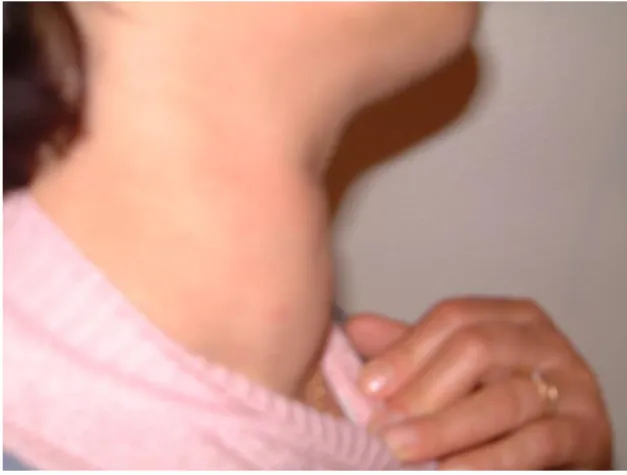
Graves’ disease is characterized by the classic triad of hyperthyroidism with diffuse goiter (Figure 1), ophthalmopathy, and dermopathy [3]. GD associated clinical features such as hyperactivity, heat intolerance, palpitations and weight loss are caused by excessive thyroid hormone secretion induced by thyroid-stimulating autoantibodies. Regarding the extra-thyroidal manifestations, dermopathy occurs in approximately 1.5% of GD patients, while ophthalmopathy is clinically manifest in approximately 25% of GD patients [5].
Figure 1 – Diffuse goiter
2. Epidemiology
The estimated incidence of GO is 16 women or 3 men per 100,000 person per year [1], with a female:male ratio of 5:1 [3].
GO particularly affects young women. It usually starts between the third and fourth decades of life, and its clinical presentation may be more severe in elderly subjects and men, and milder in asian people [3].
There are many risk factors that can affect the development or progression of GO, and the majority of these are not modifiable, such as age, gender, ethnicity, genetics, and thyrotropin receptor antibody status [6]. Others, such as smoking, RAI exposure, and abnormal thyroid function, can be modified with a potential favorable impact on the course of the disease [6, 7]. Smoking is the most important risk factor amenable to modification in these patients and the risk is proportional to daily cigarette intake [1]. Smoking has been associated with more severe and progressive GO, worsening of GO after RAI treatment, and worse response to the immunosuppressant therapies [6]. Smoking, even past smoking, is an independent risk factor associated with impaired response to intravenous corticosteroids in patients with GO [1].
No specific gene or polymorphism has been identified in GO, however, HLA-DR3 has been studied extensively [6].
3. Pathophysiology
The pathogenesis of this illness is summarized in three main phenomena: (1) inflammation of the periorbital soft tissues; (2) overproduction of glycosaminoglycans (especially hyaluronic acid) by orbital fibroblasts; and (3) hyperplasia of adipose tissue [1, 8]. As hyaluronic acid is a profoundly hydrophilic glycosaminoglycan, the orbital tissues retain water and become very edematous [9].
A close temporal relationship exists between the onset of Graves’ hyperthyroidism and the onset of clinically apparent GO, suggesting that these two autoimmune conditions may share etiologic factors [9].
Graves’ hyperthyroidism is caused by autoantibodies that bind to TSH-R on thyroid follicular epithelial cells, causing hyperplasia and the production of thyroid hormones, T3 and T4 [10].
Several findings in patients with GO, including elevated TSH-R expression in orbital tissues and elevated levels of TRAb, support the concept that immunoreactivity against TSH-R in the orbit plays a pivotal role in GO pathogenesis [1, 9].
The serum levels of TRAb correlate with the severity and clinical activity of the disease and high levels in early GO predict a poor prognosis [9].
In addition to TSH-R, orbital fibroblasts from patients with GO express high levels of IGF-1R. Recent studies suggest that these receptors engage in cross-talk induced by TSH-R ligation to synergistically enhance TSH-R signaling, hyaluronic acid production, and the secretion of inflammatory mediators. However, antibodies that specifically target IGF-1R have not been found in normal sera, making it unlikely that such antibodies play a role in GO pathogenesis [9]. Therefore, more studies are required to fully understand the role of IGF-1R and IGF-1R autoantibodies in the pathophysiology of GO [8].
Both cellular and humoral immunity directed against TSH-R expressed on orbital fibroblasts likely initiate the disease process. Activation of helper T cells recognizing TSH-R peptides and ligation of TRAb leads to the secretion of inflammatory cytokines and chemokines and enhanced hyaluronic acid production and adipogenesis [9].
The orbit contains different subpopulations of fibroblasts exhibiting phenotypic heterogeneity. Fibroblasts within the extraocular muscles, when exposed to cytokines, can differentiate into myofibroblasts and then participate in inflammation, repair, and fibrosis (especially in advanced stages of the disease). On the other hand, half of the fibroblasts within the adipose tissue are preadipocytes that, under appropriate conditions, can be induced to differentiate into adipocytes and thus contribute to the increased tissue volume associated with the disease [1, 3].
4. Clinical features
Although GO may develop before or concomitantly with Graves’ hyperthyroidism, in 60% of cases it follows (ranging from months to years) the diagnosis of systemic GD [6].
GO is typically a clinical diagnosis, based on presenting ocular symptoms and signs [1]. The presence of TRAb and imaging characteristics may be of great value in the diagnostic workup [2]. However, when clinical features are sufficient, orbital imaging may not be necessary for diagnosis [1].
It may affect one or both eyes. Bilateral GO is most common, although the severity of the condition in each orbit may be different [3].
Symptoms of GO are primarily of mechanical origin, due to an increase in orbital connective and/or muscle tissue within the space-limited bony orbit, leading to protrusion of the eye and subsequent ocular symptoms [8].
Symptoms are related to (1) ocular exposure, (2) periorbital soft tissue inflammation and congestion, or (3) extraocular muscle involvement (See Table 1). Upper eyelid retraction (90% of patients) and proptosis are the two most common signs of GO (Figure 2). Proptosis is easily assessed with the Hertel exophthalmometer. The lacrimal gland is frequently involved and enlarged [1]. Other signs and symptoms include: ocular or retro-ocular pain at rest, ptosis, corneal opacity, chemosis, lagophthalmos and corneal ulcers. Optic disc edema and afferent pupil defect are specific signs but are not always present [1, 3].
Table 1 – Symptoms of GO
Figure 2 – Patient with upper eyelid retraction and proptosis, more evident on the left side
Ocular exposure
•Ocular dryness and grittiness
•Photophobia •Excessive tearing •Blurred vision
Periorbital soft tissue inflammation and
congestion
•Sensation of retroocular pressure
•Conjunctival redness •Eyelid swelling (Figure 3)
Extraocular muscle involvement
•Aching with eye movement
•Restricted ocular motility •Double vision
Figure 3 – Upper and lower eyelid swelling
In severe cases, blindness can occur [8]. GO most often has a benign course, independent from hyperthyroidism [3]. Even though the majority of patients have a mild, self-limiting and nonprogressive ocular involvement, about 3–7% of GO patients exhibit a severe sight-threatening form of the disease due to corneal exposure or compressive optic neuropathy. The mechanism for DON is the compression of the optic nerve at the orbital apex caused by enlarged extraocular muscles. DON is more common in males, elderly and diabetic patients, and is potentially reversible with appropriate treatment [1]. Symptoms typically consist of desaturation of colours and blurring of central vision [11].
GO typically follows a biphasic course in which an initial active phase (progressive exacerbation), usually lasting for 18-36 months, is followed by a subsequent inactive phase (partial regression and stagnation) [1, 4].
The active inflammatory phase is characterized by periorbital erythema and edema, conjunctival chemosis, orbital inflammation and congestion, associated with eyelid retraction, proptosis and diplopia. The chronic fibrotic (inactive) phase is associated with orbital fibrosis, glycosaminoglycan deposition, enlarged extraocular muscles, and minimal inflammation. This phase results in similar clinical findings to the active phase: eyelid retraction, proptosis, and diplopia [6].
The temporal status is graded as disease activity, and it is therefore essential to clarify that the concept of activity refers to the inflammatory process. The spectrum of orbital symptoms and signs may be graded as disease severity, and this concept refers to the quality of life or the risk of vision loss [1, 11].
Timely diagnosis is important, permitting appropriate evaluation and treatment and potentially preventing the progression to more severe disease manifestations [1].
5. Assessment Protocols of GO
Because of the broad clinical overlap of the active and inactive phases, it is important to identify where a patient is situated in the evolution of his disease [6]. Several classification schemes have been conceived to assess the clinical manifestations of GO [1]. Any such classification or assessment scheme must be reproducible and able to accurately score the severity and activity of the inflammatory phase of the disease [6]. In 1969, Werner devised the NO SPECS Classification (No physical signs or symptoms, Only signs, Soft tissue involvement, Proptosis, Extraocular muscle signs, Corneal involvement, and Sight loss), a clever mnemonic which was the basis of the ophthalmology index for many decades [6]. This classification grades exclusively for clinical severity and does not adequately identify patients in the active phase of the disease [1, 6]. Since then, a number of other classification and assessment schemes have been developed including the CAS, based on 4 of the 5 classical signs of inflammation (pain, redness, swelling, and impaired function), the VISA (vision, inflammation, strabismus, and appearance), and the EUGOGO Classification [4, 6]. These scoring systems assess inflammatory signs in an attempt to identify patients with active disease who are most likely to respond to treatment [6].
The VISA and EUGOGO classifications are the two most widely used grading systems conceived to assess the activity and severity of GO. The first is more frequently used in North America and Canada while the latter is in Europe. Both are grounded in the NO SPECS and CAS classifications and are used to guide the therapeutic decision making, warranting an adequate treatment. As both classifications have been devised for both clinical and research purposes, they have some complexity in the extensive data to be collected [1].
The EUGOGO Classification is an assessment protocol for the evaluation of patients with GO based upon activity and severity parameters. The disease activity is evaluated based on the modified CAS (See Table 2) [1].
Table 2 – Clinical Activity Score (CAS) (amended by EUGOGO after Mourits et al.). One point is given for the presence of each of the parameters assessed. The sum of these points, which ranges from 0 to 10, defines clinical activity: active ophthalmopathy if the score is above 3/7 at the first examination or above 4/10 in successive examinations.
The disease severity assessment (See Table 3) is based on the following: evaluation of CAS items for soft tissue inflammation except pain that is not taken into account, eyelid measurements, proptosis, ocular motility, corneal integrity and optic neuropathy. Some of the signs may be evaluated by comparison with an image atlas developed by the group itself, available for download in the website (http://eugogo.eu/). First and follow-up visits forms may also be downloaded from the website [1].
For initial CAS, only score items 1-7
• Spontaneous orbital pain • Gaze evoked orbital pain
• Eyelid swelling that is considered to be due to active GO • Eyelid erythema
• Conjunctival redness that is considered to be due to active GO • Chemosis
• Inflammation of caruncle OR plica
Patients assessed after follow-up (1–3 months) can be scored out of 10 by including items 8–10
• Increase of ≥2 mm in proptosis
• Decrease in uniocular ocular excursion in any one direction of ≥ 8o
Table 3 – Protocol to assess the severity of GO (EUGOGO). Soft tissues Eyelid swelling
(i) Absent
(ii) Mild: none of the features defining moderate or severe swelling are present
(iii) Moderate: definite swelling but no lower eyelid festoons and in the upper eyelid the skin fold becomes angled on a 45o downgaze
(iv) Severe: lower eyelid festoons OR upper lid fold remains rounded on a 45o downgaze
Eyelid erythema (i) Absent (ii) Present
Conjunctival redness (i) Absent
(ii) Mild: equivocal or minimal redness
(iii) Moderate: < 50% of definite conjuctival redness (iv) Severe: > 50% of definite conjunctival redness Conjunctival edema
(i) Absent
(ii) Present: separation of conjuctiva from sclera present in > 1/3 of the total height of the palpebral aperture or conjunctiva prolapsing anterior to grey line of eyelid
Inflammation of caruncle or plica semilunaris (i) Absent
(ii) Present: plica is prolapsed through closed eyelids or caruncle and/or plica are inflamed
Eyelid
measurements Palpebral aperture (mm)
Upper/lower lid retraction (mm) Levator function (mm) Lagophthalmos (i) Absent (ii) Present Bell’s phenomenon (i) Absent (ii) Present
Proptosis Measurement with Hertel exophthalmometer. Recording of intercanthal distance.
Ocular motility Prism cover test Monocular ductions Head posture Torsion
Field of binocular single vision
Cornea Corneal integrity (i) Normal
(ii) Punctate keratopathy (iii) Ulcer
(iv) Perforation
Optic neuropathy (i) Visual acuity (Logmar or Snellen) (ii) Afferent pupil defect (present/absent) (iii) Colour vision
The management of patients with GO depends on the degree of severity of the ophthalmopathy, a concept clarified earlier. The disease is classified as mild, moderate, severe, or sight-threatening as follows [1, 12].
1. Mild: characteristics of GO have a minimum impact on the patient’s life. They usually present one or more of the following signs: minor lid retraction (< 2 mm), mild soft tissue involvement, exophthalmos < 3 mm (above the normal range for the race and gender), transient or no diplopia, and corneal exposure responsive to lubricants.
2. Moderate to severe: patients without sight-threatening GO whose eye disease has sufficient impact on daily life to justify the risks of immunosuppression (if active) or surgical intervention (if inactive). Patients usually present one or more of the following signs: lid retraction (> 2 mm), moderate or severe soft tissue involvement, exophthalmos ≥ 3 mm (above the normal range for the race and gender), and inconstant (or constant) diplopia.
3. Sight-threatening GO: patients with DON, corneal breakdown or, infrequently, globe subluxation. These cases warrant immediate intervention.
6. Treatment
A coordinated approach should be performed by a multidisciplinary team of ophthalmologists, endocrinologists, radiologists, and orbital surgeons, in order to design an individualized treatment plan [1, 12]. All patients with GO, except for mildest cases, should be referred to multidisciplinary clinics for further assessment and management [13].
There is no consensus as to the best treatment strategy for GO, but in this paper I will focus on the management plan based on the Consensus Statement of the EUGOGO on management of GO (2008) and in the scientific evidence published since then [1, 6].
6.1. Measures for all patients with GO 6.1.1. Restore Euthyroidism
Patients with uncontrolled thyroid dysfunctions are more likely to experience severe GO, and it has also been shown that restoring euthyroidism can improve GO [1, 6]. Frequent monitoring (every 4-6 weeks) of thyroid function is imperative during the early stages of treatment [1]. There are 3 main treatment modalities for patients with Graves’ hyperthyroidism: antithyroid drugs, thyroidectomy, and RAI treatment [6].
6.1.1.1. Antithyroid Drugs
The thionamides (propylthiouracil, methimazole, and carbimazole) lower thyroid hormone production by inhibiting iodination of thyroglobulin and ultimately the production of T4 and T3. Several studies have shown that antithyroid medications do not adversely affect GO [6]. According to Burch [14], the principal disadvantage of thionamide therapy is adverse effects. Minor adverse effects such as pruritic rash and arthralgias occur in approximately 5% of patients receiving methimazole, and typically begin within the first few weeks of starting therapy. A mild rash may be manageable with antihistamine therapy. These patients may be switched to propylthiouracil but 30 to 50% have a similar reaction. The more severe adverse effects of antithyroid medications include agranulocytosis, hepatotoxicity, and ANCA-positive vasculitis. Agranulocytosis occurs in approximately 1 in 500 patients, is dose-related with methimazole, and almost always develops within the first 90 days of therapy. The typical presentation is high fever and severe pharyngitis. In a patient developing agranulocytosis while taking either methimazole or propylthiouracil, use of the other drug is not recommended owing to cross-reactivity between the two drugs. Methimazole hepatotoxicity is frequently cholestatic, whereas propylthiouracil use has been associated with hepatocellular injury, including fulminant hepatic failure. Hepatic dysfunction generally occurs within the first few days to 3 months after drug initiation. ANCA-positive vasculitis is much more frequent with propylthiouracil, being rare with methimazole or carbimazole, and can occur months or years after initiation of drug therapy. Patients typically present with polyarthritis, fever, and purpura, and more severely affected individuals develop glomerulonephritis and pneumonitis. Before starting antithyroid drugs, the patient should be alerted to stop the medication immediately and call their physician when there are symptoms suggestive of agranulocytosis or hepatic injury [14].
6.1.1.2. Thyroidectomy
Thyroidectomy is now recommended by fewer than 1% of experts for the initial management of GD. However, is the favored method to attain euthyroidism in patients with moderate to severe active GO who cannot take antithyroid drugs. If surgery is chosen as the primary therapy for GD, near-total or total thyroidectomy is the procedure of choice [15].
In a retrospective analysis involving TT vs ST, no difference was found in postoperative progression of dysthyroid ophthalmopathy after the shift from ST to TT. However, this
change dramatically reduced the risk for recurrence of GD without increasing the rate of complications [16].
TT has a nearly 0% risk of recurrence, whereas ST may have an 8% chance of persistence or recurrence of hyperthyroidism at 5 years. Potential complications of surgery include transient and permanent hypoparathyroidism and recurrent laryngeal nerve injury [15].
The findings of a recent study indicate that thyroidectomy as the treatment of hyperthyroidism may lower the risk of developing GO. Further studies will be required to substantiate these results [7].
6.1.1.3. RAI Treatment
RAI is an effective therapy for Grave’s hyperthyroidism, but it may cause progression of preexisting GO or its de novo occurrence in 15% to 20% of patients [6, 14, 17]. The development or worsening of GO following RAI is thought to be the consequence of radiation damage to the thyrocytes, resulting in release of thyroid antigens and activation of autoimmune reactions directed to the orbit [18].
Several factors have been found to be associated with the development or exacerbation of GO after RAI treatment, such as tobacco smoking, high pretreatment T3 values (≥ 325 ng/dL or > 5 nmol/L), active and progressive GO over the preceding 3 months, high serum TRAb levels (> 8.8 IU/L), and post-RAI hypothyroidism not promptly corrected by levothyroxine replacement [15, 18].
This risk may be reduced in patients with active GO by a short cycle (3 months) of orally delivered corticoids after the treatment (beginning with 0.3–0.5 mg of prednisone per kilogram daily 1-3 days after radioiodine and tapering the dose until withdrawal) and by avoiding post-RAI hypothyroidism [1]. Lai et al. found that a lower dose of oral prednisone (approximately 0.2 mg/kg body weight) for a shorter duration of six weeks is also effective [17].
Patients without preexisting GO and without risk factors should not be treated with corticosteroid prophylaxis [19].
6.1.2. Supportive Treatment
Smoking cessation advice and referral to smoking cessation services should be offered to all patients known or suspected of having GD or GO who are current smokers [12].
Artificial tears can alleviate symptoms of corneal exposure and prevent corneal ulceration [12]. Sunglasses can improve photosensitivity [6]. Patients should be advised to sleep with the head of the bed slightly elevated. Nocturnal ointment is of great benefit for incomplete eyelid closure [1]. Prisms (or monocular occlusion) can resolve diplopia, one of the most distressing symptoms [6, 12].
6.2. Measures for Patients with Mild Ophthalmopathy
Although oral corticosteroids and ORT reduce the active inflammatory symptoms, there is no proven role for these modalities in decreasing the risk of disease progression in patients with mild ophthalmopathy [6].
Local measures are the mainstay therapy for these patients that generally have a self-limiting process. In the majority of studies which have investigated the natural history of GO in untreated patients, the orbitopathy improved in about half, remained stable in about 35% and worsened in approximately 15% of patients [1]. Watchful waiting is appropriate for the majority of patients with mild GO [20].
Selenium is a trace element and, through its effects from selenoproteins, plays an important role in cell development and proliferation, oxidative stress protection, and production of T3. Most of the European countries are selenium deficient. Since selenium acts as a potent antioxidant, and oxygen free radicals contribute to the orbital inflammatory process, theoretically it could be of some therapeutic benefit in GO [6, 21]. A recent study showed that a 6-month course with oral selenium supplements in the form of sodium selenite at a dose of 100 μg twice daily (equivalent to 91.3 μg of elemental selenium twice daily) significantly improved quality of life, reduced ocular involvement, and slowed progression of disease in patients with active mild GO [1, 12]. Patients taking selenium had no adverse drug reactions, but concerns about selenium toxicity include the increased risk of diabetes mellitus, glaucoma, and neurotoxicity [6]. Botulinum toxin injection into the levator superioris and Müller muscle complex may be considered to temporarily treat upper eyelid retraction and is a valuable therapeutic option in active disease where definitive surgery remains contraindicated [1, 6].
Rehabilitative surgery (Müllerectomy or blepharoplasty), if needed, should be considered providing that the GO remains stable and inactive [1].
6.3. Measures for Patients with Moderate to Severe Ophthalmopathy
In this subtype of patients, eye disease has sufficient impact on daily life to justify the risks of immunosuppressant treatment (if active) or surgical intervention (if inactive). Only patients in the active phase of the disease will respond to immunosuppressive treatments [1].
6.3.1. Immunosuppressive Medical Treatment and ORT
Although corticosteroids are the most often used therapy for GO, the precise dosage, duration, preparation, and route (IV, PO, or periocular) of administration remain a matter of opinion and debate [6].
A recent meta-analysis compared the efficacy and tolerability of the most common immunosuppressive monotherapies for patients with active and moderate to severe ophthalmopathy. Current evidence gave priority to intravenous glucocorticoids, which had a statistically significant advantage over oral glucocorticoids and caused fewer adverse events, such as hypertension and weight gain. Retrobulbar injections of glucocorticoids and orbital radiotherapy did not provide greater efficacy than oral glucocorticoids, although better tolerability and fewer adverse events were shown [13]. Pulses of IV steroids were associated with fewer side effects, shorter treatment course, and lower relapse risk compared with PO steroids. Oral glucocorticoids might be considered when IV infusions are not logistically possible or if the patient prefers the oral route. They can also be used in some moderate to severe patients when the determination of activity is uncertain. A therapeutic trial using a three-day course of oral prednisolone (50 mg) can determine whether clinical features show improvement, and, therefore, IV corticosteroids or radiotherapy may be indicated [1].
The dosage scheme most widely used in the United States and Europe consists of methylprednisolone 500 mg IV weekly for 6 weeks, followed by 250 mg IV weekly for another 6 weeks, for a cumulative dose of 4.5 g [1, 3]. If there is no clinical response, treatment with corticosteroids may be discontinued after the first 6 weeks and other treatments may be attempted [1].
Prolongation of treatment after 12 weeks in patients who respond to corticosteroids should be related to disease severity and its impact on the quality of life [1]. If no
compression neuropathy exists, it is advisable not to exceed a cumulative dose of 8 g [3]. Consecutive day-dosing should also be avoided [1].
Prior to the administration of IV treatment, appropriate liver assessment is recommended, including abdominal ultrasound for liver morphology, liver function tests, detection of hepatitis viral markers, and autoantibodies. Patients with recent hepatitis, liver dysfunction, severe cardiovascular morbidity, or severe hypertension must be excluded. During treatment, liver enzymes, glucose levels, and blood pressure should be monitored on a monthly basis. Assessment of adrenal function may be advisable at the end of treatment [1].
Side effects of long-term corticosteroid therapy should be taken into account. These include hyperglycemia, hypertension, weight gain, fat distribution remodeling, psychiatric disorders, osteoporosis, cataracts, glaucoma and hepatotoxicity – fatal autoimmune hepatitis can occur. Patients must be monitored carefully, weighing the benefits and risks [3, 4, 6, 22].
ORT has been routinely used in GO since the 1940s [3]. Though the efficacy of ORT alone for treatment of GO remains controversial, its combination with glucocorticoids is effective in early and active disease and has an acceptable safety profile [1]. Satisfactory results will not be achieved in patients with long-standing disease, no inflammatory activity, and established fibrotic events [3].
A recent large retrospective study compared the risk of developing compressive optic neuropathy in 351 patients with active thyroid eye disease treated only with corticosteroids (144 patients) or with corticosteroids plus ORT (105 patients). The main indication for offering ORT to patients already on corticosteroids were: development of significant restriction in ocular motility (88%); total cumulative dose of corticosteroids over 8 g (17%); intolerance to corticosteroids (8.6%); and inadequate control of disease activity with corticosteroids (6.5%). At an average of 3.2 years follow-up, the concomitant use of corticosteroids therapy and ORT achieved a significant decrease in the risk of development of compressive optic neuropathy as compared to the use of corticosteroids therapy alone (0% vs 17%) [1].
The typical ORT protocol is a total of 20 Gy per orbit fractionated in 10 days (2 Gy/d) over a 2-week period. However, the optimum fractionation, duration, and dosing of
ORT remains unsettled, and lower doses seem to perform just as well as higher doses [6].
ORT has been shown to improve ocular motility and soft tissue inflammatory signs. It is also effective for the recovery of vision lost due to compression in the active stages of the disease. However, remission of proptosis is uncommon, with responses of only a few millimeters and minimal or doubtful cosmetic impact [3].
ORT is a relatively safe procedure but should be avoided in patients younger than 35 years of age or in patients with severe uncontrolled hypertension or diabetes (especially if there is preexisting diabetic retinopathy) [1, 6].
No severe complications have been reported with ORT, except for visual changes or blindness in the setting of prior diabetic retinopathy. Cataract is the most common major side effect, but it may also be due to previous treatment with high corticosteroid doses. Alopecia of the tail of the eyebrows can occur in some patients due to inclusion in the radiation fields, with subsequent full recovery. Some eye dryness may occur in a very small proportion of patients. Radiation-induced second tumors are exceptional. Some cases of pigmented basal cell carcinoma have been reported, and that’s the reason why ORT should not be used in young patients [3].
Thus, ORT should be considered a second-line treatment, when the first course of steroids has produced only a partial response and the disease is still active [1]. However, ORT may be used as first line treatment with or without concomitant corticosteroids when required [3].
6.3.2. Other immunosuppressors
One of the limitations of corticosteroid therapy is that a significant proportion of patients with active GO (20-30%) do not respond to IV methylprednisolone and approximately another 10-20% of patients present with disease relapse after therapy withdrawal [22]. These patients can be candidates for a trial of treatment with methotrexate (7.5–10 mg/week). In alternative, patients who are nonresponsive to corticosteroids may be treated with combination therapy of cyclosporine A (5 mg/kg/day in 2 doses plus oral glucocorticoids), azathioprine, or specific monoclonal antibody agents (see below) [1].
6.3.3. Novel Therapeutic Agents
In recent years, immunosuppressors that act as disease-modifying drugs, as an alternative to corticosteroids, have been proposed as novel agents which target the various antigens involved in GO pathophysiology [22].
An anti-IGF-1R antibody, teprotumumab, previously developed as a therapeutic strategy for several types of solid tumors and lymphomas, is currently being tested in a phase II randomized placebo-controlled clinical trial after showing to be effective in attenuating orbital fibroblasts stimulation in vitro [22].
There are some evidences in short series reports of the efficacy of other molecules such as tocilizumab, adalimumab, or etanercept [1]. Tocilizumab is a FDA-approved humanized monoclonal antibody against the interleukin-6 receptor for use in rheumatoid arthritis and has shown promise in a recent study in GO patients refractory to IV methylprednisolone treatment. After therapy, CAS improved in 18 out of 18 patients, proptosis reduced in 13 out of 18, and ocular motility improved in 15 out of 18. One patient with compressive optic neuropathy improved without the need for orbital decompression surgery. These positive preliminary results warrant further randomized and controlled studies [22].
Rituximab is a monoclonal antibody directed against B cell surface CD20 [9]. The rationale for its use in GO is the potential blockade of pathogenic autoantibody generation, the depletion of B cells involved in antigen presentation and the production of inflammatory cytokines [22]. In preliminary clinical trials, rituximab significantly reduced the inflammatory and severity of the ophthalmopathy in patients with active eye disease. However, two recently completed randomized controlled trials showed conflicting results, indicating that the agent is not uniformly effective. The reasons for this are unclear but may be related to the differences in the study designs. Because GO duration was shorter in the study showing benefit (mean duration 4 months vs. 12 months), it is possible that a subgroup of patients with short disease duration might benefit from the therapy [1, 9].
Other promising treatments such as the production of TSH-R antagonists, either as monoclonal TSH-R-blocking antibodies or as small-molecule-ligand antagonists of TSH-R, are being developed [1].
6.3.4. Surgical Treatment
There are four components of ophthalmopathy that require attention from the surgical point of view: proptosis, restrictive strabismus, eyelid abnormality (retraction), and cosmetic concerns (eyelid fat bags, periorbital hollows, and rhytids) [23].
In most cases, surgery is indicated for the correction of residual structural changes in patients with stable, inactive (fibrotic) moderate to severe ophthalmopathy [6]. Rehabilitative surgery should only be performed in patients who show evidence of disease quiescence over a period of at least 6 months [1].
The surgical management of GO involves four major stages of rehabilitation: orbital decompression, extraocular muscle surgery, eyelid repositioning, and cosmetic soft tissue redraping. Not all patients require all four stages, but one may require more than one stage of surgery [23].
Orbital decompression is indicated not only for extreme vision-threatening proptosis, but also cosmetically disfiguring proptosis. In theory, there are four bony orbital walls available for decompression: medial, inferior, lateral, and superior. However, orbital roof approach is associated with serious complications, and hence is reserved for extreme cases [23]. Typically, decompression begins with orbital fat removal. For many surgeons, intraconal fat removal is the “first wall” of orbital decompression for mild (2-3 mm) proptosis [2(2-3].
Many different techniques and approaches have been described for orbital decompression surgery [1]. An essential step in the surgical planning of a decompression surgery is a thorough imaging study of the orbit with either magnetic resonance imaging or computed tomography [23].
Strabismus surgery is usually carried out in the inactive phase of the disease, following orbital decompression surgery. This stage constitutes the correction of diplopia, the most disabling side effect of GO, and the most challenging to treat. Patients should, therefore, be encouraged to have realistic expectations [23].
Correction of eyelid abnormality is the third stage, and most commonly includes correction of upper and lower eyelid retraction. There are several surgical options described for the correction of eyelid retraction. Overall, the surgical correction gives good results, although there is still some unpredictability and sometimes more than one stage of surgery is required [23].
The aesthetic concerns of periocular sequelae of GO are best treated toward the end of the surgical rehabilitation. Upper and/or lower blepharoplasty is frequently needed as
the last step in the functional and cosmetic rehabilitation of patients. Botulinum toxin and hyaluronic acid filler injections can be of great help [1, 23].
6.4. Measures for Patients with Sight-Threatening Ophthalmopathy
Patients with sight-threatening ophthalmopathy due to DON must be treated urgently with high-dose IV glucocorticoids (3 x 500 mg–1 g on consecutive days within one week; if necessary, repeated after a week). If the response is insufficient after 1-2 weeks, or the dose/duration of steroid treatment required induces significant side effects, orbital decompression should be offered promptly [1]. Though optic neuropathy responds well to surgery, the nerve is resilient, and minor degrees of compressive optic neuropathy are probably not as emergent as once thought [23]. ORT is not recommended unless as an adjunct to proved therapies [20].
The management of sight-threatening corneal breakdown includes: frequent topical lubricants, moisture chambers, botulinum toxin injections, levator recession surgery, tarsorrhaphy, or even orbital decompression in very severe cases of exophthalmos which impede lid closing. IV methylprednisolone should be administered before surgery if the disease is active [1]. In the case of corneal perforation/severe ulceration, appropriate antibiotics, amniotic membrane transplant, and corneal transplant need to be considered [20].
7. Conclusion
The management of active GO can be a challenging therapeutic dilemma. Therefore, a coordinated approach between healthcare professionals is required in order to meet the needs of patients. Timely diagnosis of sight-threatening GO and identification of risk factors for severe outcomes are critical. All patients must be assessed for disease activity and severity to determine the best course of action. Optimal treatment by a multidisciplinary team improves quality of life. Risk factor modification begins with smoking cessation and normalization of thyroid function. The first-line treatment for moderate to severe GO or DON is IV glucocorticoids, but often a multimodality approach with the addition of ORT or orbital decompression may be required.
In the last few years, as the result of greater understanding of the pathophysiology of GO, novel therapeutic agents against specific immunological targets were developed. Although the lack of randomized controlled trials suggests caution in generalizing results, some data show promising results.
References
1. Barrio-Barrio, J., et al., Graves' Ophthalmopathy: VISA versus EUGOGO Classification, Assessment, and Management. J Ophthalmol, 2015: p. 249125. 2. Verma, R., M. Gupta, and V.K. Mehta, Thyroid associated orbitopathy. BMJ
Case Rep, 2013.
3. Vilar-Gonzalez, S., et al., [Thyroid orbitopathy, an overview with special attention to the role of radiotherapy]. Endocrinol Nutr, 2015. 62(4): p. 188-99. 4. Petrovic, M.J., et al., Evaluation of the patients with Grave's ophthalmopathy
after the corticosteroids treatment. Vojnosanit Pregl, 2012. 69(3): p. 249-52. 5. Bartalena, L. and V. Fatourechi, Extrathyroidal manifestations of Graves'
disease: a 2014 update. J Endocrinol Invest, 2014. 37(8): p. 691-700.
6. Bhatti, M.T. and J.J. Dutton, Thyroid eye disease: therapy in the active phase. J Neuroophthalmol, 2014. 34(2): p. 186-97.
7. Stein, J.D., et al., Risk factors for developing thyroid-associated ophthalmopathy among individuals with Graves disease. JAMA Ophthalmol, 2015. 133(3): p. 290-6.
8. Virakul, S., et al., Platelet-derived growth factor: a key factor in the pathogenesis of graves' ophthalmopathy and potential target for treatment. Eur Thyroid J, 2014. 3(4): p. 217-26.
9. Bahn, R.S., Current Insights into the Pathogenesis of Graves' Ophthalmopathy. Horm Metab Res, 2015. 47(10): p. 773-8.
10. Bahn, R.S., Graves' ophthalmopathy. N Engl J Med, 2010. 362(8): p. 726-38. 11. Dolman, P.J., Evaluating Graves' orbitopathy. Best Pract Res Clin Endocrinol
Metab, 2012. 26(3): p. 229-48.
12. Perros, P., et al., Management of patients with Graves' orbitopathy: initial assessment, management outside specialised centres and referral pathways. Clin Med (Lond), 2015. 15(2): p. 173-8.
13. Mou, P., et al., Common Immunosuppressive Monotherapy for Graves' Ophthalmopathy: A Meta-Analysis. PLoS One, 2015. 10(10): p. e0139544. 14. Burch, H.B. and D.S. Cooper, Management of Graves Disease: A Review.
15. Bahn Chair, R.S., et al., Hyperthyroidism and other causes of thyrotoxicosis: management guidelines of the American Thyroid Association and American Association of Clinical Endocrinologists. Thyroid, 2011. 21(6): p. 593-646. 16. Annerbo, M., P. Stalberg, and P. Hellman, Management of Grave's disease is
improved by total thyroidectomy. World J Surg, 2012. 36(8): p. 1943-6.
17. Lai, A., et al., Lower dose prednisone prevents radioiodine-associated exacerbation of initially mild or absent graves' orbitopathy: a retrospective cohort study. J Clin Endocrinol Metab, 2010. 95(3): p. 1333-7.
18. Vannucchi, G., et al., Graves' orbitopathy activation after radioactive iodine therapy with and without steroid prophylaxis. J Clin Endocrinol Metab, 2009.
94(9): p. 3381-6.
19. Shiber, S., et al., Glucocorticoid regimens for prevention of Graves' ophthalmopathy progression following radioiodine treatment: systematic review and meta-analysis. Thyroid, 2014. 24(10): p. 1515-23.
20. Bartalena, L., et al., Consensus statement of the European Group on Graves' orbitopathy (EUGOGO) on management of GO. Eur J Endocrinol, 2008. 158(3): p. 273-85.
21. Zarkovic, M., The role of oxidative stress on the pathogenesis of graves' disease. J Thyroid Res, 2012: p. 302537.
22. Salvi, M., Immunotherapy for Graves' ophthalmopathy. Curr Opin Endocrinol Diabetes Obes, 2014. 21(5): p. 409-14.
23. Naik, M.N., et al., Minimally invasive surgery for thyroid eye disease. Indian J Ophthalmol, 2015. 63(11): p. 847-53.