Corresponding author: Ms. Joslaine de Oliveira Nunes. e-mail: [email protected]
Received 26 February 2018 Accepted 21 June 2018
Major Article
Cryptococcal meningitis epidemiology:
17 years of experience in a State of the Brazilian Pantanal
Joslaine de Oliveira Nunes
[1], Rosianne Assis de Sousa Tsujisaki
[2],
Maína de Oliveira Nunes
[3], Gláucia Moreira Espíndola Lima
[3], Anamaria Mello Miranda
Paniago
[2], Elenir Rose Jardim Cury Pontes
[2]and Marilene Rodrigues Chang
[1],[4][1]. Programa de Pós-Graduação Stricto Senso em Saúde e Desenvolvimento na Região Centro-Oeste, Faculdade de Medicina, Universidade Federal de Mato Grosso do Sul, Campo Grande, MS, Brasil.
[2]. Programa de Pós-Graduação Stricto Senso em Doenças Infecciosas e Parasitárias, Faculdade de Medicina, Universidade Federal de Mato Grosso do Sul, Campo Grande, MS, Brasil.
[3]. Laboratório de Micologia, Hospital Universitário Maria Aparecida Pedrossian, Universidade Federal de Mato Grosso do Sul, Campo Grande, MS, Brasil.
[4]. Laboratório de Pesquisa Microbiológica,
Universidade Federal de Mato Grosso do Sul, Campo Grande, MS, Brasil.
Abstract
Introduction: This study aimed to describe cryptococcal meningitis (CM) cases and the associated demographic, clinical, and
microbiological data obtained from cities in the State of Mato Grosso do Sul in the Midwestern region of Brazil. Methods: The
data from 129 patients with laboratory-confirmed CM admitted from 1997 to 2014 were retrospectively reviewed. The molecular
types of Cryptococcus neoformans and Cryptococcus gattii isolated from cerebrospinal fluid were analyzed to determine their
geographic distribution. Results: The patients had a mean age of 37 years and consisted mostly of men (76.7%). Most of the
Cryptococcus isolates were obtained from patients infected with human immunodeficiency virus (HIV) and included 105 (87.5%)
and 5 (55.6%) isolates of C. neoformans and C. gattii complexes, respectively. A restriction fragment length polymorphism (RFLP) analysis of URA5 revealed that most of the isolates were C. neoformans molecular type VNI (89.1%), whereas the
molecular types VGII (7%) and VNII (3.9%) were observed less frequently. Notably, 65% of the cases with a time from symptom
onset to laboratory diagnosis of more than 60 days resulted in fatalities, and sequelae were observed among the patients who survived. Conclusions: The present study documents the occurrence of neurocryptococcosis, which is mainly caused by C. neoformans VNI, in Mato Grosso do Sul, Brazil, with probable autochthonous cases in the Brazilian Pantanal, the world’s largest
tropical wetland, and a biome where cryptococcosis has not yet been explored.
Keywords: Cryptococcosis. Aids. Cryptococcus. Molecular typing. Cryptococcus neoformans. Cryptococcus gattii.
INTRODUCTION
Cryptococcosis is a systemic mycosis caused primarily by
Cryptococcus neoformans species complex, which includes
the molecular types VNI, VNII, VNB, VNIII, and VNIV, and
the Cryptococcus gattii speciescomplex, which includes the
molecular types VGI, VGII, VGIII, and VGIV1-3. Differences
in geographical distribution, ecological niches, epidemiology, clinical presentation, and molecular characteristics have been observed among various Cryptococcus spp4.
The Pantanal is the world’s largest tropical wetland area and home to approximately 3,500 plants species and more than 730 species of birds, many of which undergo intercontinental
and intracontinental migration5,6, which may influence the geographic distribution of Cryptococcus spp.
Yeasts are distributed in the environment and can infect the human body primarily through the respiratory tract, causing lung disease in some cases. Cryptococcal meningitis is the most common clinical manifestation due to the remarkable tropism of
Cryptococcus spp. toward the central nervous system7,8. Worldwide, the epidemiology of cryptococcosis has been
influenced by acquired immunodeficiency syndrome (AIDS)8,9.
In Latin American countries, 54.4 cases of cryptococcal
meningitis are estimated to occur annually in every set of 1,000 cases of AIDS10. In Brazil, the disease has been identified as
one of the most life-threatening fungal infections in this group of patients11. The mortality rates associated with cryptococcal
meningitis vary regionally. Despite improvements in medical
care and antifungal treatment, a significant decrease in mortality, which is estimated to be greater than 50% in less developed
Currently, there are limited data on the molecular epidemiology of cryptococcal meningitis in the Midwestern region of Brazil, and this study aimed to provide new
information to the scientific community.
METHODS
We retrospectively analyzed 129 cases of cryptococcal meningitis diagnosed at the University Hospital, Federal University of Mato Grosso do Sul, Campo Grande, the capital
of Mato Grosso do Sul, from May 1997 to May 2014. The University Hospital is a 255-bed university teaching
reference center for the diagnosis and treatment of infectious diseases in the entire State of Mato Grosso do Sul. This state ranked sixth in terms of tertiary extension, with an area of
357,145,534km2, which corresponds to 4.19% of the total area
of Brazil (8,5515,767,049km2) and 22.2% of the area of the
Midwest region. This state was estimated to have 2,651,235 inhabitants in 2015, giving the state a ranking of 21 in terms of
population in Brazil14,15.
The cases were selected from a database and included 72 cases diagnosed between 1997 and 2005 (participants of the study conducted by Lindemberg et al.) and 57 cases diagnosed
from 2006 to 201416.
Cryptococcal meningitis is identified based on the clinical
features of meningeal infection and the isolation of Cryptococcus
spp. from cerebrospinal fluid (CSF) culture.
Patient characteristics were obtained from medical records and the Microbiological Research Laboratory database. Demographic (gender, age, occupation, and area of residence)
and clinical characteristics [human immunodeficiency virus (HIV) coinfection, previous use of antiretroviral therapy, time
elapsed between symptom onset of cryptococcosis to diagnosis, length of hospital stay, and clinical outcomes during the hospitalization period], and the species and molecular type of
Cryptococcus spp. were investigated.
Ethical considerations
The study was approved by the institutional ethics committee.
In this study, polymerase chain reaction (PCR)-restriction fragment length polymorphism (RFLP) was used to distinguish C. neoformans and C. gattii species. The
URA5 gene was amplified by PCR using the primers URA5
(5' ATGTCCTCCCAAGCCCTCGACTCCG 3') and SJ01
(5' TTAAGACCTCTGAACACCGTACTC 3'). The amplified
PCR product was double digested using the HhaI and Sau96I enzymes, as previously described3. The RFLP profiles were
visually analyzed by comparison with reference strains. The data were analyzed using the Statistical Package for the Social Sciences (SPSS) software version 23.0 (IBM Corporation, Armonk, NY, USA). Normality was assessed using the Shapiro–Wilk test. The groups were compared using
Student’s t-test or the Mann-Whitney U test for continuous
variables and Pearson’s chi-square test or Fisher’s exact test for categorical variables. A significance level of 0.05 was adopted.
RESULTS
A total of 129 CSF isolates were recovered during the 17-year study period. One hundred eleven (86%) of the samples were obtained from AIDS patients, and 63 (56.8%) of these had
cluster of differentiation 4 (CD4) counts less than 200 cells/mm3.
Ninety-nine (76.7%) patients were men, and the mean [standard deviation] age of the patients was 37 [11] years (range: 10-74 years). With regard to occupation, 15.5% (20/129) of the patients were general service providers, 13.2% (17/129) were construction workers, 10.8% (14/129) were household workers, 7.8% (10/129) were rural workers, and 16.3% (21/129) had other occupations; however, the profession of 36.4% (47/129)
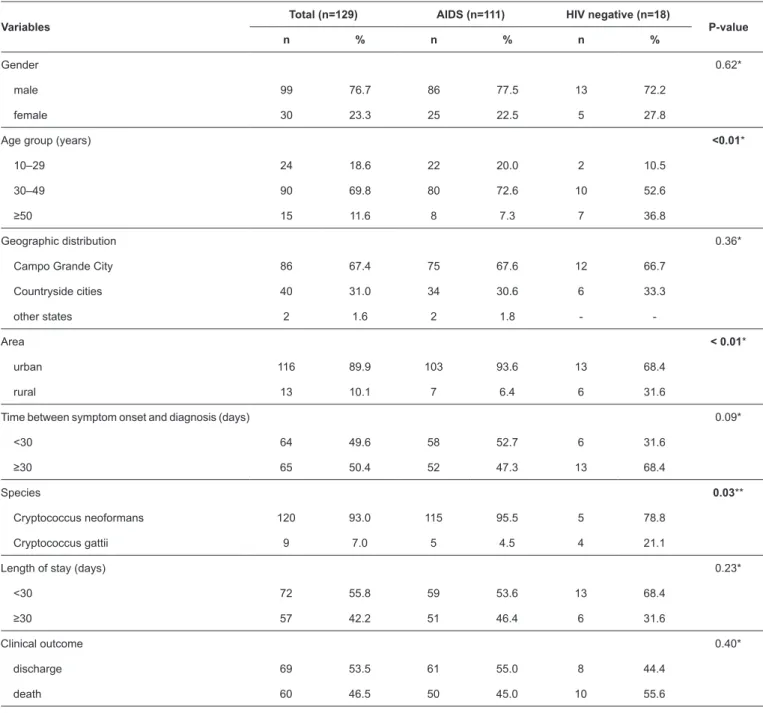
of the cases was not recorded. Other patient characteristics are summarized in Table 1.
No significant differences were observed in the sex ratio,
time from symptom onset to diagnosis, and patient outcomes
between patients with HIV infection and those without HIV infection. However, patient age, area of residence, and
cryptococcal species responsible for causing the infection
showed significant differences between patients with AIDS and HIV-negative patients (P-value <0.05).
The mean age of the AIDS patients was 35.7 [9.5] years, which is lower than the mean age of the HIV-negative patients, which was 44.6 [14.9] years (Student’s t-test; P-value <0.01).
Thirty-five (41.6%) patients with a previous diagnosis of
AIDS reported the use of highly active antiretroviral therapy (HAART) (Figure 1), but only 20.2% (17/84) regularly received
this therapy.
The average time from symptom onset to the diagnosis of
cryptococcal meningitis was 41 [60.9] days (range: 1-297 days). A total of 69 (53.5%) patients survived, and 60 (46.5%) died. Although not statistically significant, 65% (13/20) of the patients
with a time from symptom onset to the laboratory diagnosis of
cryptococcosis of more than 60 days died, and 42.8% (39/91)
of the patients who received a laboratory diagnosis less than 60 days after the onset of disease symptoms died. The period from the onset of disease symptoms to laboratory diagnosis could
not be identified in 18 cases. Patients who were discharged from the hospital (n=70) developed various complications, including visual sequelae (n=5; 7.1%), cognitive impairment (n=4; 5.7%), and hearing loss (n=1; 1.4%).
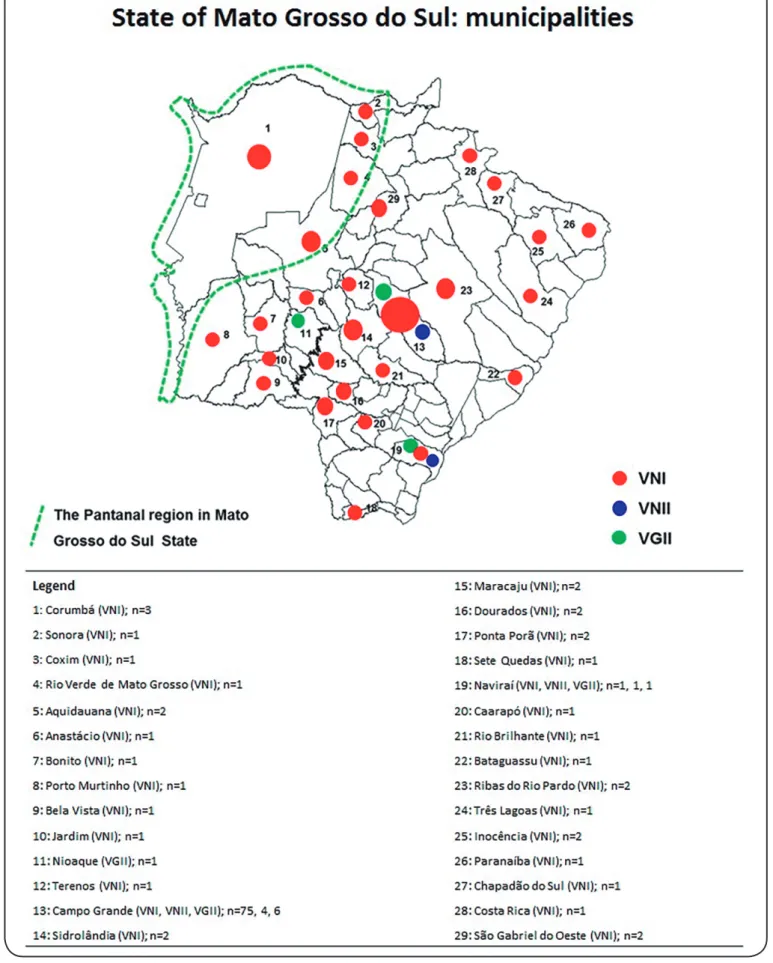
Molecular typing showed that most of the isolates obtained from the studied region belonged to C. neoformans molecular
type VNI (n=115; 89.1%); however, VNII (n=5; 3.9%) and
C. gattii VGII (n=9; 7%) types were also found (Figure 2).
Three out of five C. neoformans VNII strains were isolated
from patients originating from two other states: São Paulo (n=1)
and Paraná (n=2). The molecular types of Cryptococcus spp.
according to HIV infection status and clinical outcomes are
described in Table 2.
DISCUSSION
TABLE 1: Demographic and clinical characteristics of patients with cryptococcal meningitis who either had AIDS or were HIV negative.
Variables
Total (n=129) AIDS (n=111) HIV negative (n=18)
P-value
n % n % n %
Gender 0.62*
male 99 76.7 86 77.5 13 72.2
female 30 23.3 25 22.5 5 27.8
Age group (years) <0.01*
10–29 24 18.6 22 20.0 2 10.5
30–49 90 69.8 80 72.6 10 52.6
≥50 15 11.6 8 7.3 7 36.8
Geographic distribution 0.36*
Campo Grande City 86 67.4 75 67.6 12 66.7
Countryside cities 40 31.0 34 30.6 6 33.3
other states 2 1.6 2 1.8 -
-Area < 0.01*
urban 116 89.9 103 93.6 13 68.4
rural 13 10.1 7 6.4 6 31.6
Time between symptom onset and diagnosis (days) 0.09*
<30 64 49.6 58 52.7 6 31.6
≥30 65 50.4 52 47.3 13 68.4
Species 0.03**
Cryptococcus neoformans 120 93.0 115 95.5 5 78.8
Cryptococcus gattii 9 7.0 5 4.5 4 21.1
Length of stay (days) 0.23*
<30 72 55.8 59 53.6 13 68.4
≥30 57 42.2 51 46.4 6 31.6
Clinical outcome 0.40*
discharge 69 53.5 61 55.0 8 44.4
death 60 46.5 50 45.0 10 55.6
AIDS: acquired immunodeficiency syndrome; HIV: human immunodeficiency virus.*Fisher’s exact test. **Chi-squared test.
Although numerous studies have investigated cryptococcal meningitis throughout the world, few studies have been conducted in this large Brazilian territory.
The results of this study showed that approximately 7.6
cases of cryptococcal meningitis were diagnosed annually at the MAPUH, and the diagnosis rate was six-fold higher in AIDS
patients than in HIV-negative patients. In Goiás, another state of
the Brazilian Midwest, Souza et al.17 described a similar annual
incidence rate (5.9) of cryptococcal meningitis.
Corroborating the findings of previous studies, a greater involvement of men (76.7%) than women was observed in
this study. Approximately 61%-82% of the population has
been found to be affected with cryptococcal meningitis, as reported in several studies, indicating that men might be more susceptible to infection by Cryptococcus spp17-19. The underlying causes for this increased susceptibility may be related to the
following factors: occupational exposure; behavioral aspects, including alcoholism and smoking; and HIV infection12,20.
Hormonal and immunological factors that predispose men to infection by Cryptococcus spp have also been investigated, and testosterone seems to induce greater capsule production and
FIGURE 1: Distribution of patients with cryptococcal meningitis according to HIV infection status and antiretroviral therapy use. HIV:
human immunodeficiency virus; AIDS: acquired immunodeficiency syndrome; HAART: highly active antiretroviral therapy.
TABLE 2: Patients with cryptococcal meningitis according molecular type, HIV infection status, and clinical outcomes.
Variables
Cryptococcus neoformans Cryptococcus gattii
P-value*
VNI and VNII (N=120) VGII (N=9)
n % n %
AIDS 0.03
yes 105 87.5 5 55.6
HIV negative 15 12.5 4 44.4
Clinical outcomes 0.04
discharged 62 51.7 8 88.9
death 58 48.3 1 11.1
HIV: human immunodeficiency virus; AIDS: acquired immunodeficiency syndrome.*Fisher’s exact test. .
Previous studies have shown that cryptococcosis often affects adults, especially those with altered cellular immunity17,18,21.
Worldwide, men aged 30-45 years are at greater risk of
developing cryptococcal meningitis12,22,23. In accordance with
the global trends, cryptococcal meningitis in the Mato Grosso
do Sul State is closely related to HIV infection16,24.
The number of patients aged older than 50 years was proportionally higher in the HIV-negative group. Aging increases an individual’s susceptibility to infectious diseases, even those without HIV, due to the comorbidities associated
with anatomical and physiological changes and poor immune responses25.
Only three (2.3%) cases of cryptococcal meningitis in children were recorded during the 17-year study period. A
similar prevalence was found in the Rio Grande do Sul and Rio de Janeiro states22,26.
The reason why children are less affected by cryptococcosis remains unknown27. In the Northern and Northeastern regions
of Brazil, primarily the States of Bahia (32%), Pará (24%), and Piauí (9.5%), a high prevalence of cryptococcosis in children
was reported, and a majority of these cases are children living in rural areas18,28,29.
This study showed an association between living in a rural
area and an HIV-negative status. Cryptococcosis should be
investigated in patients living in endemic areas who have these characteristics.
Confirming the cosmopolitan nature of this disease, most
patients lived in urban areas, primarily Campo Grande City. This
finding may have been obtained because the urban population
in Mato Grosso do Sul is almost six-fold higher than the rural population according to the census conducted in 2010 by the Brazilian Institute of Geography and Statistics14,15.
Another reason for this finding is that urban centers are often
important ecological niches of domestic pigeons (Columba livia), which are natural reservoirs of Cryptococcus sp. In fact, this yeast was observed in the excreta of captive birds and in public areas that are commonly used by humans30-32.
Vidal et al.11 stated that in Latin American countries, those
who live in poverty and are affected by opportunistic diseases have limited access to medical care. Although the present study did not aim to study the socioeconomic status of patients, in Brazil, the average amount of time from symptom onset to the diagnosis of cryptococcosis ranges from several days to several months, as observed in the studied population18,28. Delays in
diagnosis may reflect the difficulties that patients face accessing
health services as well as the limited diagnostic resources
(serological tests, microscopic findings, and culture) available
in Mato Grosso do Sul cities. From this perspective, the number of cryptococcal meningitis cases in the South Pantanal region may be underestimated. Focused efforts to improve the current diagnostic capacity and identify the agents of cryptococcal disease are urgently warranted.
Notably, in the present study, 65% of the cases involving
patients who received their laboratory diagnosis more than 60 days after symptom onset resulted in fatalities, and sequelae
were observed among those who survived. Because the disease has a high mortality rate if not diagnosed and treated
appropriately, we reaffirm the importance of early diagnosis for
survival and better prognosis.
In the United States, the mortality associated with cryptococcosis seems to be decreasing27. However, in less
developed countries, the estimated mortality rate is 55%, and this rate is even higher in Sub-Saharan Africa (70%), where the
occurrence of AIDS is high10.
Overall, approximately 957,900 cases (range: 371,700-1,544,000) of cryptococcal meningitis occur every year, and 624,700 deaths (range: 125,000-1,124,900) occur within 3
months after the onset of infection. In Latin America, studies have investigated the factors responsible for the high mortality of AIDS-related cryptococcal meningitis11. In Brazil, the mortality
rate ranged from 32% to 60%18,33,34; however, there was limited
information on the fatality rate of HIV-infected patients with
cryptococcal meningitis in the Midwestern region of Brazil16,23.
The World Health Organization recommended the early
diagnosis and treatment of HIV (HAART) as one of the most
important and cost-effective preventive strategies for reducing the incidence and mortality associated with cryptococcal meningitis11. When available, screening tests, including
investigations of the presence of cryptococcal capsular antigen in asymptomatic and symptomatic patients, also contribute to the optimization of the diagnosis and treatment of cryptococcosis35.
Various studies have shown that the incidence of cryptococcal
meningitis can be minimized by the regular use of HAART8,11.
Late and incomplete access to antiretroviral therapy may have resulted in the high rate of cryptococcal infection observed in our study.
Previous studies have shown that the VNI molecular pattern is the most common pattern worldwide, whereas VNII was observed in 1%-16% of cases reported in southern continents,
such as South America, Africa, and Oceania2,3. C. gattii VGII
was also observed in South America, North America3,27,36, and Oceania2. Interestingly, in Brazil, several regions exhibited a
high prevalence of the VNI molecular type and sporadic cases of the VNII and VGII molecular types3,16,29,37,38. The results obtained in this study add new information to the sparsely available data on the molecular epidemiology of cryptococcal meningitis in
the Midwestern region of Brazil. The predominance of the VNI molecular type and the identification of the VGII molecular type
have been described in the States of Goiás and Mato Grosso as well as other Brazilian states16,37 where VGII is endemic38,
except for the states in the North and Northeast region.
This is the first report to describe the molecular types of
Cryptococcus causing cryptococcal meningitis in Campo
Grande, Mato Grosso do Sul. Similar to the findings of a
previous study24, VNI was observed throughout the state. We
highlight the isolation of VNII in patients from Campo Grande
and Naviraí, cities in close proximity to São Paulo State, where this molecular type was previously described38-40.
In addition to Campo Grande and Nioaque City, the VGII
Paraná State, where VGII was previously reported38. Naviraí and
Campo Grande are the only cities where three molecular types
(VNI, VNII, and VGII) were detected. Further studies should
be conducted to investigate this relation.
One of the primary limitations of our study is that it employed a cross-sectional design, and this type of design precludes the analysis of causal relations and only suggests associations between various variables. Another primary limitation is that a convenient sample was used, which makes
it difficult to extrapolate the results to a larger population.
In conclusion, the present study documents the occurrence of neurocryptococcosis, which is mainly caused by C. neoformans
VNI, in Mato Grosso do Sul, Brazil, with probable autochthonous
cases in the Pantanal, a biome where cryptococcosis has not yet been explored. The time from symptom onset to clinical diagnosis is crucial for patient recovery but is largely dependent
on the patient’s access to healthcare and on the available
diagnostic resources available.
Acknowledgments
The authors thank the Mycology Laboratory team of the University Hospital, Federal University of Mato Grosso do Sul.
Conflict of interest
The authors declare that there is no conflict of interest.
Financial support
Financial support was provided by the Fundação de Apoio ao Desenvolvimento
do Ensino, Ciência e Tecnologia do Estado de Mato Grosso do Sul.
REFERENCES
1. Kwon-Chung KJ, Bennett JE, Wickes BL, Meyer W, Cuomo CA, Wollenburg KR, et al. The case for adopting the “species complex” nomenclature for the etiologic agents of cryptococcosis. mSphere.
2017;2(1):pii:e00357-16.
2. Cogliati M. Global molecular epidemiology of Cryptococcus
neoformans and Cryptococcus gattii: an atlas of the molecular
types. Scientifica. 2013;2013:1-23.
3. Meyer W, Castañeda A, Jackson S, Huynh M, Castañeda E, IberoAmerican Cryptococcal Study Group. Molecular typing of IberoAmerican Cryptococcus neoformans isolates. Emerg Infect
Dis. 2003;9(2):189-95.
4. Kwon-Chung KJ, Varma A. Do major species concepts support one, two or more species within Cryptococcus neoformans? FEMS Yeast
Res. 2006;6 (4):574-87.
5. Pott A, Pott VJ. Plants of Pantanal. Brasília: EMBRAPA-SPI; 1997.
320p.
6. Nunes AP, Tomas WM. Aves migratórias e nômades ocorrentes no
Pantanal. 1ª edition. Corumbá: EMBRAPA Pantanal; 2008. 124p. 7. Jackson A, Powderly WG. Cryptococcal infection. Handb Clin
Neurol. 2007;85:159-67.
8. Sloan DJ, Parris V. Cryptococcal meningitis: epidemiology and
therapeutic options. Clin Epidemiol. 2014;6:169-82.
9. Rajasingham R, Smith RM, Park BJ, Jarvis JN, Govender NP,
Chiller TM, et al. Global burden of disease of HIV-associated cryptococcal meningitis: an updated analysis. The Lancet infectious diseases. 2017;17(8):873-81.
10. Park BJ, Wannemuehler KA, Marston BJ, Govender N, Pappas PG, Chiller TM. Estimation of the current global burden of
cryptococcal meningitis among persons living with HIV/AIDS. Aids. 2009;23(4):525-30.
11. Vidal JE, Oliveira ACP, Dauar RF, Boulware DR. Strategies to reduce mortality and morbidity due to AIDS-related cryptococcal
meningitis in Latin America. Braz J Infect Dis. 2013;17(3):353-62.
12. Chan M, Lye D, Win MK, Chow A, Barkham T. Clinical and
microbiological characteristics of cryptococcosis in Singapore:
predominance of Cryptococcus neoformans compared with
Cryptococcus gattii. Int J Infect Dis. 2014;26:110-15.
13. Jarvis JN, Bicanic T, Loyse A, Namarika D, Jackson A, Nussbaum
JC, et al. Determinants of mortality in a combined cohort of 501 patients with HIV-associated cryptococcal meningitis: implications for improving outcomes. Clin Infect Dis. 2014;58 (5):736-45.
14. Secretaria de Estado de Meio Ambiente e Desenvolvimento
Econômico (SEMADE). Mato Grosso do Sul. Perfil Estatístico de Mato Grosso do Sul, 2015. 1st edition. Campo Grande: SEMADE;
2015. 111p.
15. Instituto Brasileiro de Geografia e Estatística (IBGE). Censo 2010. Brasília: IBGE; 2010; Atualizado em: 15 de junho de 2016; citado em: 15 de Junho de 2018. Disponível em: https://censo2010.ibge.gov.
br/sinopse/index.php?dados=8
16. Lindenberg ASC, Chang MR, Paniago AMM, Lazéra MS, Moncada
PMF, Bonfim GF, et al. Clinical and epidemiological features of
cryptococcosis in Mato Grosso do Sul, Brazil. Rev Inst Med Trop
Sao Paulo. 2008;50(2):75-8.
17. Souza LKH, Costa CR, Lisboa OFF, Abrão FY, Silva TC, Tremea CM, et al. Clinical and microbiological features of cryptococcal
meningitis. Rev Soc Bras Med Trop. 2013;46(3):343-7.
18. Barragan NC, Sorvillo F, Kuo T. Cryptococcosisrelated deaths and associated medical conditions in the United States. 2000-2010.
Mycoses. 2014;57(12):741-6.
19. Darzé C, Lucena R, Gomes I, Melo A. Características clínicas e laboratoriais de 104 casos de meningoencefalite criptocócica.
Rev Soc Bras Med Trop. 2000;33(1):21-6.
20. Sipsas NV, Kontoyiannis DP. Occupation, lifestyle, diet, and
invasive fungal infections. Infection. 2008;36(6):515-25.
21. Mcclelland EE, Hobbs LM, Rivera J, Casadevall A, Potts WK, Smith JM, et al. The role of host gender in the pathogenesis of
Cryptococcus neoformans infections. PLoS One. 2013;8(5):e63632.
22. Kaocharoen S, Ngamskulrungroj P, Firacative C, Trilles L, Piyabongkarn D, Banlunara W, et al. Molecular epidemiology reveals genetic diversity amongst isolates of Cryptococcus
neoformans/C. gattii species complex in Thailand. PLoS Negl Trop
Dis. 2013;7(7):e22973.
23. Leal AL, Faganello J, Fuentefria AM, Boldo JT, Bassanesi
MC, Vainstein MH. Epidemiological profile of cryptococcal
meningitis patients in Rio Grande do Sul, Brazil. Mycopathologia.
2008;166(2):71-5.
24. Tsujisaki RAS, Paniago AMM, Lima Júnior MSC, Alencar DSO, Spositto FLE, Nunes MO, et al. First molecular typing of cryptococcemia-causing Cryptococcus in central-west Brazil.
Mycopathologia. 2013;176(3-4):267-72.
25. Heppner HJ, Cornel S, Peter W, Philipp B, Katrin S. Infections in
26. Leimann BCQ, Koifman RJ. Cryptococcal meningitis in Rio de Janeiro State, Brazil, 1994-2004. Cad Saude Publica.
2008;24(11):2583-92.
27. Lizarazo J, Escandón P, Agudelo CI, Castañeda E. Cryptococcosis in Colombian children and literature review. Mem Inst Oswaldo
Cruz. 2014;109(6):797-804.
28. Corrêa MPSC, Oliveira EC, Duarte RRBS, Pardal PPO, Oliveira FM, Severo LC. Criptococose em crianças no estado do Pará.
Brasil. Rev Soc Bras Med Trop. 1999;32(5):505-8.
29. Martins LMS, Wanke B, Lazéra MS, Trilles L, Barbosa GG, Macedo RCL, et al. Genotypes of Cryptococcus neoformans and Cryptococcus
gattii as agents of endemic cryptococcosis in Teresina, Piauí
(northeastern Brazil). Mem Inst Oswaldo Cruz. 2011;106(6):725-30.
30. Menezes T, Scain G, Quadros RM, Miletti LC, Souza AL, Miguel RL, et al. Cryptococcus spp. em excretas de pombos (Columba livia) de áreas públicas de Lages, Santa Catarina. Sciense and Animal
Health. 2014;2(2):102-14.
31. Takahara DT, Lazéra MS, Wanke B, Trilles L, Dutra V, Paula DAJ, et al. First report on Cryptococcus neoformans in pigeon excreta from public and residential locations in the metropolitan area of Cuiabá, State of
Mato Grosso, Brazil. Rev Inst Med Trop São Paulo. 2013;55(6):371-6.
32. Filiú WFO, Wanke B, Agüena SM, Vilela VO, Macedo RCL, Lazéra M. Avian habitats as sources of Cryptococcus neoformans in the city of Campo Grande, Mato Grosso do Sul, Brazil. Rev Soc Bras
Med Trop. 2002;35(6):591-5.
33. Moreira TA, Ferreira MS, Ribas RM, Borges AS. Criptococose: estudo clínico-epidemiológico, laboratorial e das variedades do
fungo em 96 pacientes. Rev Soc Bras Med Trop. 2006;39(3):255-8.
34. Oliveira RB, Atobe JH, Souza SA, Santos DWCL. Epidemiology of invasive fungal infections in patients with acquired
immunodeficiency syndrome at a reference hospital for infectious diseases in Brazil. Mycopathologia. 2014;178(1-2):71-8.
35. Vidal JE, Boulware DR. Lateral flow assay for cryptococcal antigen: an important advance to improve the continuum of HIV
care and reduce cryptococcal meningitis-related mortality. Rev Inst
Med Trop Sao Paulo. 2015;57(suppl 19):38-45.
36. Kidd SE, Hagen F, Tscharke RL, Huynh M, Bartlett KH, Fyfe M, et al. A rare genotype of Cryptococcus gattii caused the
cryptococcosis outbreak on Vancouver Island (British Columbia. Canada). Proc Natl Acad Sci USA. 2004;101(49):17258-63. 37. Favalessa OC, de Paula DAJ, Dutra V, Nakazato L, Tadano T, Lazera
MS, et al. Molecular typing and in vitro antifungal susceptibility of
Cryptococcus spp from patients in Midwest Brazil. J Infect Dev
Ctries. 2014;8(8):1037-43.
38. Trilles L, Lazéra MS, Wanke B, Oliveira RV, Barbosa GG, Nishikawa MM, et al. Regional pattern of the molecular types
of Cryptococcus neoformans and Cryptococcus gattii in Brazil.
Mem Inst Oswaldo Cruz. 2008;103(5):455-62.
39. Matsumoto MT, Fusco-Almeida AM, Baeza LC, Melhem MS, Medes-Giannini MJ. Genotyping, serotyping and determination of mating-type of Cryptococcus neoformans clinical isolates from
São Paulo State, Brazil. Rev Inst Med Trop Sao Paulo. 2007;49(1): 41-7.
40. Lomes NR, Melhem MS, Szeszs MW, Martins MA, Buccheri R.