Effectiveness and safety of first-generation protease
inhibitors in real-world patients with hepatitis C virus
genotype 1 infection in Brazil: a multicenter study
Luciana Azevedo Callefi,I,* Cristiane Alves Villela-Nogueira,IISimone de Barros Tenore,IIIDimas Carnau´ba-Ju´nior,III Henrique Se´rgio Moraes Coelho,II,IVPaulo de Tarso A. Pinto,VLetı´cia Cancella Nabuco,V Ma´rio Guimara˜es Pessoa,VIMaria Lucia Cardoso Gomes Ferraz,VIIPaulo Roberto Abra˜o Ferreira,VIIIAna de Lourdes Candolo Martinelli,IXSilvana Gama Florencio Chacha´,IXAdalgisa de Souza Paiva Ferreira,XAlessandra Porto de Macedo Bisio,XCarlos Eduardo Branda˜o-Mello,XIMa´rio Reis A´ lvares-Da-Silva,XIITaˆnia Reuter,XIIIClaudia Alexandra Pontes Ivantes,XIVRenata de Mello Perez,XVMaria Ca´ssia Jacintho Mendes-CorreaI,XVI
IDepartamento de Molestias Infecciosas e Parasitarias, Faculdade de Medicina, Universidade de Sao Paulo (USP), SP, BR.IIServico de Hepatologia, Departamento de Clinica Medica, Universidade Federal do Rio de Janeiro (UFRJ), RJ, BR.IIICentro de Referencia e Treinamento em DST/Aids, SP, BR.IVCentro de Doencas Hepaticas (CDH), RJ, BR. VSetor de Gastro/Hepatologia, Hospital Federal dos Servidores do Estado do Rio de Janeiro (HFSE), RJ, BR.VIDepartamento de Gastroenterologia e Hepatologia,
Faculdade de Medicina, Universidade de Sao Paulo (USP), SP, BR.VIIDisciplina de Gastroenterologia, Escola Paulista de Medicina (EPM), Universidade Federal de Sao Paulo (UNIFESP), SP, BR.VIIIDisciplina de Infectologia, Escola Paulista de Medicina (EPM), Universidade Federal de Sao Paulo (UNIFESP), SP, BR.IXDivisao de Gastroenterologia, Departamento de Clinica Medica, Faculdade de Medicina de Ribeirao Preto (FMRP), Universidade de Sao Paulo (USP), SP, BR.XCentro de Pesquisa Clinica, Hospital Universitario Presidente Dutra (HUPD), Universidade Federal do Maranhao (UFMA), MA, BR.XIDisciplina de Clinica Medica e Gastroenterologia, Universidade Federal do Estado do Rio de Janeiro (UNIRIO), RJ, BR.XIIDepartamento de Medicina Interna, Universidade Federal do Rio Grande do Sul (UFRGS), RS, BR.XIIIAmbulatorio HIV/AIDS/ Hepatites Virais, Universidade Federal do Espirito Santo (UFES), ES, BR.XIVCentro de Orientacao e Aconselhamento, Secretaria Municipal de Saude (SMS), PR, BR. XVServico de Gastroenterologia, Universidade do Estado do Rio de Janeiro (UERJ), RJ, BR.XVILaboratorio de Virologia-LIM 52, Instituto de Medicina Tropical (IMT), SP, BR.
OBJECTIVE:To evaluate the effectiveness and safety of first-generation protease inhibitors for the treatment of genotype 1 hepatitis C virus-infected patients at Brazilian reference centers.
METHODS:This multicenter cross-sectional study included hepatitis C virus genotype 1 monoinfected patients treated with Peg-interferon, ribavirin, and either boceprevir (n=158) or telaprevir (n=557) between July 2013 and April 2014 at 15 reference centers in Brazil. Demographic, clinical, virological, and adverse events data were collected during treatment and follow-up.
RESULTS:Of the 715 patients, 59% had cirrhosis and 67.1% were treatment-experienced. Based on intention-to-treat analysis, the overall sustained viral response was 56.6%, with similar effectiveness in both groups (51.9% for boceprevir and 58% for telaprevir, p=0.190). Serious adverse events occurred in 44.2% of patients, and
six deaths (0.8%) were recorded. Cirrhotic patients had lower sustained viral response rates than non-cirrhotic patients (46.9% vs. 70.6%, po0.001) and a higher incidence of serious adverse events (50.7% vs. 34.8%, po0.001). Multivariate analysis revealed that sustained viral response was associated with the absence of
cirrhosis, viral recurrence after previous treatment, pretreatment platelet count greater than 100,000/mm3, and achievement of a rapid viral response. Female gender, age465 years, diagnosis of cirrhosis, and abnormal
hemoglobin levels/platelet counts prior to treatment were associated with serious adverse events.
CONCLUSION:Although serious adverse events rates were higher in this infected population, sustained viral response rates were similar to those reported for other patient cohorts.
KEYWORDS: Protease inhibitors; Safety; Hepatitis C; Chronic; Therapeutics.
Callefi LA, Villela-Nogueira CA, Tenore SB, Carnau´ba-Ju´nior D, Coelho HS, Pinto PT, et al. Effectiveness and safety of first-generation protease inhibitors in real-world patients with hepatitis C virus genotype 1 infection in Brazil: a multicenter study. Clinics. 2017;72(6):378-385
Received for publication onDecember 15, 2016;First review completed onMarch 15, 2017;Accepted for publication onApril 17, 2017
*Corresponding author. E-mail: [email protected]
DOI:10.6061/clinics/2017(06)08
Copyright&2017CLINICS–This is an Open Access article distributed under the terms of the Creative Commons License (http://creativecommons.org/licenses/by/ 4.0/) which permits unrestricted use, distribution, and reproduction in any medium or format, provided the original work is properly cited.
’ INTRODUCTION
Infection with hepatitis C virus (HCV) is one of the leading causes of chronic liver disease worldwide (1). The World Health Organization (2) currently estimates that 110 million people have a history of HCV infection, and of these, 80 million are chronically infected with this virus (3). Until 2011, the standard treatment for HCV consisted of the use of PEGylated interferon (Peg-IFN) and ribavirin (RBV), which achieved a sustained viral response (SVR) rate of approximately 50% in patients with HCV genotype 1 (4,5). Unfortunately, this regimen involved the development of significant adverse events (SAEs) and a high rate of treatment discontinuation (2). In 2011, the first direct-acting antiviral agents were introduced into clinical practice for the treatment of chronic hepatitis C (6-9). The protease inhibitors boceprevir (BOC) and telaprevir (TVR) were the first direct-acting antiviral agents used, and these drugs required co-administration with Peg-IFN and RBV, together constituting the so-called triple therapy. Triple therapy improved the response rates of genotype 1 patients in clinical studies and achieved SVR rates of 66–75% in treatment-naïve patients (6,7), 75–88% in
relapsing patients (relapsers), 52–59% in partial responders, and
29–33% in null responders (8,9).
In addition to protease inhibitors, other classes of direct-acting antiviral agents have gradually been introduced into clinical practice, including NS5A and NS5B inhibitors (10,11). In this new therapeutic era, the combination of different classes of drugs has significantly increased the rate of therapeutic success for the treatment of chronic hepatitis C (10,11). Moreover, these new combinations are generally safer and do not require the use of interferon. Given its benefits, this new therapeutic modality is currently the therapy of choice for the treatment of chronic hepatitis C worldwide (10,11).
Between 2013 and 2015 in Brazil, triple therapy with BOC and TVR was the standard treatment for patients infected with HCV genotype 1 (12-13). The objective of this study was to evaluate the effectiveness and safety of this therapeutic modality in patients with chronic hepatitis C genotype 1 who were treated in 15 different reference centers in Brazil. Additionally, the predictive factors for the achievement of SVR and for the occurrence of SAEs associated with this therapy were evaluated.
’ PATIENTS AND METHODS
Patients
This multicenter cross-sectional study included patients chronically monoinfected with HCV genotype 1 (treatment-naïve or previously treated with Peg-IFN and RBV) who were treated with Peg-IFN (a2a ora2b), RBV and either BOC
or TVR according to the guidelines of the Brazilian Ministry of Health (12,13) in 15 reference centers in Brazil. The guide-lines of the Brazilian Ministry of Health prioritized triple therapy for patients monoinfected with HCV genotype 1 with advanced liver disease (Metavir F3 or F4) or evidence of portal hypertension and compensated hepatic cirrhosis (Child-Pughp6), previously treated patients with grade 2 fibrosis (Metavir F2), or patients with extrahepatic manifes-tation (12,13).
All patients who started treatment in these centers between July 2013 and April 2014 were eligible for this study. The exclusion criteria were individuals younger than 18 years of age and individuals co-infected with human immunodefi-ciency virus.
This study was approved by the Ethics Committee for the Analysis of Research Projects (Comissão de Ética para Análise de Projetos de Pesquisa–CAPPesq) of the Clinics
Hospital of the Medical School of the University of São Paulo (Hospital das Clínicas da Faculdade de Medicina da Universidade de São Paulo – HC-FMUSP) under protocol
no. 11,934.
’ METHODS
Data collection and variables analyzed
Data were collected using a standardized questionnaire. The variables selected for analysis were grouped into the fol-lowing different categories: 1) variables related to the patient: age, gender, body mass index, and comorbidities; 2) vari-ables related to HCV infection before the present treatment: genotype 1 subtype, presence of extrahepatic manifestations, presence of previous hepatic decompensation, the last value recorded in medical records for hemoglobin levels, platelet counts, albumin levels, HCV viral load, and staging of liver fibrosis; and 3) variables related to the treatment of hepatitis C: history of previous treatment as well as the type of viral response observed and the occurrence of SAEs during the current treatment. The variables analyzed in our study were standardized according to specific considerations. For the laboratory test conducted prior to treatment, the follow-ing results were considered abnormal: 1- hemoglobin levels o12 g/dL for female patients and o13 g/dL for male patients; 2- platelet counto100,000 per mm3; and 3- albumin levels o3.5 g/dL. Regarding hepatic fibrosis staging, liver biopsy results obtained using the Metavir Cooperative Study Group (14) classification and/or liver elastography were considered. The corresponding cut-off values of transient elastography for Metavir were 7.1 to 9.4 kPa = F2, 9.5 to 12.4 kPa = F3, andX12.5 kPa = F4 (15). Patients were also
classified as F4 if they had clinical characteristics of liver cirrhosis defined by the presence of portal hypertension. There was no histological or elastographic evaluation for this group.
Regarding the type of response observed after previous treatment with Peg-IFN and RBV, non-responders were con-sidered those patients with any of the following types of viral responses as a result of previous treatments: partial responders -reduction of at least 2 log10in HCV RNA levels at week 12 of
treatment but with detectable HCV RNA at week 24; and null responders - reduction under 2 log10in HCV RNA levels
at week 12 of treatment. In addition, those who did not have a defined viral response to previous treatment were con-sidered non-responders.
SAEs were defined as events that resulted in death, repre-sented a threat to life, required hospitalization or prolongation of an existing hospitalization, resulted in persistent or sig-nificant disability, or promoted congenital malformation or anomaly, as defined in previous studies (16). We also fol-lowed previously established guidelines (17,18) with respect to the presence of rash grade 3 or 4 or the presence of labora-tory adverse events grade 3 or 4.
Treatment
The decision to initiate treatment and the choice between BOC or TVR and Peg-IFN-a2a (180 mg) or Peg-IFN-a2b
(1.5 mg/kg) was entirely at the discretion of the attending
guidelines of the Brazilian Ministry of Health and the prod-uct manufacturers (19,20).
Monitoring of HCV RNA
HCV RNA levels were measured at weeks 4 and 12 of treatment, at the end of therapy and at weeks 12 and/or 24 after the end of therapy. We performed real-time poly-merase chain reaction (PCR) with a detection limit of 12 IU/mL (Abbott Molecular, Des Plaines, IL) (21) for these measurements. The rapid viral response (RVR) was defined as undetect-able HCV RNA (o12 IU/mL) at week 8 for those treated with BOC and week 4 for those treated with TVR (we con-sidered week 8 to be when‘‘lead in’’was performed).
Evaluation of effectiveness
Effectiveness was evaluated using the intention-to-treat principle. The primary outcome of the study was SVR, which was defined as undetectable levels of HCV RNA (o12 IU/mL) at least 12 weeks after discontinuation of treatment.
Assessment of safety
The safety of triple therapy using BOC and TVR was asses-sed by determining the occurrence of SAEs during treatment.
Statistical analysis
A descriptive analysis of the baseline demographic and clinical characteristics was performed. The results are presented as frequency tables for qualitative variables; central tendency and dispersion measures were estimated for quantitative vari-ables. Pearson’s chi-square test was used to compare the patients according to the treatment provided. Fisher’s exact test was used for situations in which this test was not appropriate. Student’st-test or the Mann-Whitney U-test was applied for
continuous variables as required.
The prevalence of treatment effectiveness, rate of SAE occur-rence, and respective 95% confidence intervals (95% CIs) were calculated. The factors associated with the effectiveness of treatment and SAE occurrence were determined in patients with chronic hepatitis C by performing a bivariate analysis and determining the prevalence ratios (PRs) and respective 95% CIs. Variables withp-values smaller than 0.20 as determined by
performing bivariate analysis were selected for multivariate analysis. The Poisson regression model with robust variance was used in the bivariate and multivariable analyses. PRs and their 95% CIs were estimated for each of the variables in each final model. A significance level of 5% was adopted.
’ RESULTS
Patient characteristics
A total of 715 adult patients with chronic HCV infection were included in this study. The majority of patients were male (56.1%), with a mean age of 54.1±10.1 years; 267 individuals (37.3%) had HCV subtype 1a, and 315 (44.1%) had subtype 1b. Among the studied patients, 422 (59%) had liver cirrhosis, and 67.1% were treatment-experienced. In total, 557 patients (77.9%) received treatment with Peg-IFN, RBV, and TVR, and 158 (22.1%) patients received treatment with Peg-IFN, RBV, and BOC.
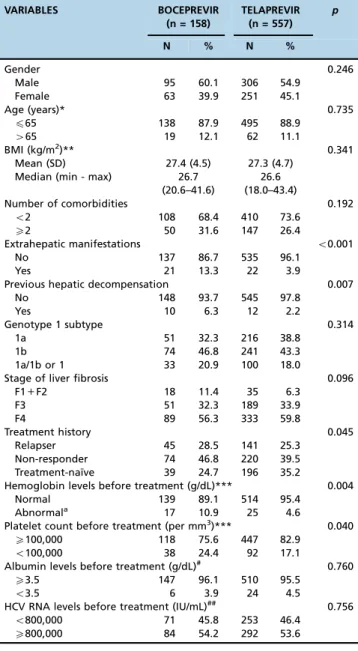
Table 1 shows the baseline characteristics of the patients according to treatment group (BOCvs. TVR). Patients treated
with BOC reported a higher prevalence of extrahepatic manifestations before treatment and a more frequent history of previous hepatic decompensation than those treated with
TVR (13.3 vs. 3.9%, po0.001 and 6.3 vs. 2.2%, p=0.007,
respectively). However, there was a predominance of treatment-naïve patients in the group treated with TVR compared to the number in the group treated with BOC (35.2 vs. 24.7%, p=0.045). Regarding the laboratory tests
conducted before treatment, abnormal hemoglobin levels [o12 g/dL (women),o13 g/dL (men)] and platelet counts o100,000/mm3 in the BOC group were significantly more frequent in the BOC group than in the TVR group (10.9vs.
4.6%,p=0.004 and 24.4vs.17.1%,p=0.040).
Effectiveness
According to the intention-to-treat analysis (n=715), the overall percentage of patients with SVR was 56.6% (95% CI, 52.9–60.3%). The effectiveness of treatment between the Table 1-Baseline characteristics of patients with hepatitis C according to the antiviral treatment received.
VARIABLES BOCEPREVIR (n = 158)
TELAPREVIR (n = 557)
p
N % N %
Gender 0.246
Male 95 60.1 306 54.9
Female 63 39.9 251 45.1
Age (years)* 0.735
p65 138 87.9 495 88.9
465 19 12.1 62 11.1
BMI (kg/m2)** 0.341
Mean (SD) 27.4 (4.5) 27.3 (4.7)
Median (min - max) 26.7 (20.6–41.6)
26.6 (18.0–43.4)
Number of comorbidities 0.192
o2 108 68.4 410 73.6
X2 50 31.6 147 26.4
Extrahepatic manifestations o0.001
No 137 86.7 535 96.1
Yes 21 13.3 22 3.9
Previous hepatic decompensation 0.007
No 148 93.7 545 97.8
Yes 10 6.3 12 2.2
Genotype 1 subtype 0.314
1a 51 32.3 216 38.8
1b 74 46.8 241 43.3
1a/1b or 1 33 20.9 100 18.0
Stage of liver fibrosis 0.096
F1+F2 18 11.4 35 6.3
F3 51 32.3 189 33.9
F4 89 56.3 333 59.8
Treatment history 0.045
Relapser 45 28.5 141 25.3
Non-responder 74 46.8 220 39.5
Treatment-naı¨ve 39 24.7 196 35.2
Hemoglobin levels before treatment (g/dL)*** 0.004
Normal 139 89.1 514 95.4
Abnormala 17 10.9 25 4.6
Platelet count before treatment (per mm3)*** 0.040
X100,000 118 75.6 447 82.9
o100,000 38 24.4 92 17.1
Albumin levels before treatment (g/dL)# 0.760 X3.5 147 96.1 510 95.5
o3.5 6 3.9 24 4.5
HCV RNA levels before treatment (IU/mL)## 0.756
o800,000 71 45.8 253 46.4
X800,000 84 54.2 292 53.6
Missing data: (*) 1; (**) 110; (***) 20; (#) 28; (##) 15 ao12 g/dL (women),o13 g/dL (men)
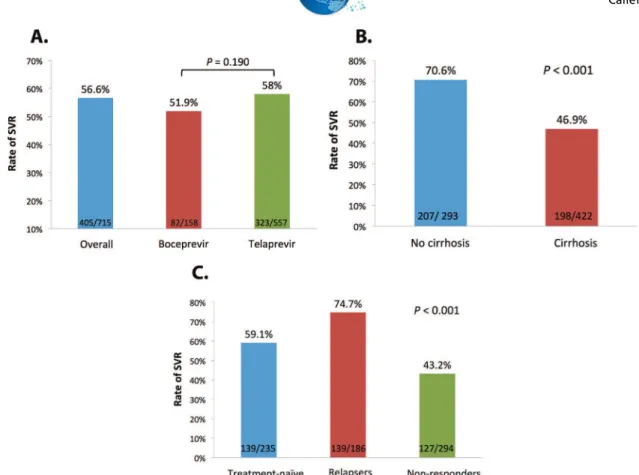
groups that received BOC or TVR was similar (51.9vs.58.0%; p=0.190). However, the SVR rate was higher in patients
without cirrhosis than in patients with cirrhosis (70.6 vs.
46.9%, po0.001). Taking into account a history of previous treatment, SVR rates were 59.1% for treatment-naïve patients, 74.3% for relapsers, and 43.2% for non-responders (60% for prior partial responders and 33.5% for null responders) (po0.001) (Figure 1). Of the 310 patients who did not achieve SVR, 148 (47.7%) patients had viral failure during treatment, 87 (28.1%) patients discontinued treatment because of adverse events, 69 (22.3%) patients relapsed, and 11 (3.5%) patients abandoned treatment.
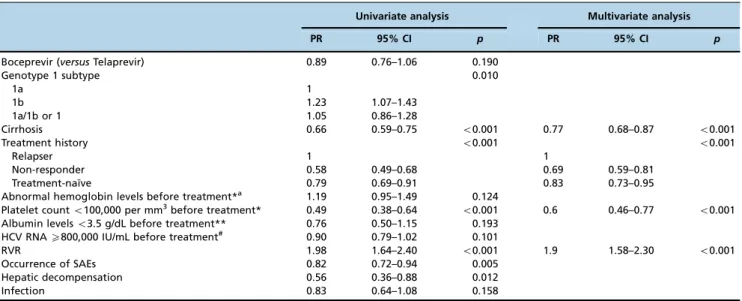
The results obtained for the 2 groups of patients were then combined to identify factors associated with treatment effectiveness. The results of the univariate and multivariate analyses are shown in Table 2. The variables defined as predictors of achievement of SVR were the presence of liver cirrhosis (PR, 0.77; 95% CI, 0.68–0.87; po0.001), history of
previous treatment in non-responders (PR, 0.69; 95% CI, 0.59–0.81;po0.001), being treatment-naïve (PR, 0.83; 95% CI,
0.73–0.95; po0.001) vs. being a relapser, a platelet count
o100,000/mm3 prior to treatment (PR, 0.6; 95% CI, 0.46–
0.77; po0.001), and the presence of RVR (PR 1.9; 95% CI, 1.58–2.30;po0.001).
Safety
Of the 715 patients, 316 (44.2%; 95% CI, 40.5–47.9) had
at least one SAE episode. A total of 581 SAE episodes were observed. The SAE rate was significantly higher among patients with cirrhosis than among patients without cirrhosis
(50.7vs.34.8%,po0.001). Premature discontinuation of treat-ment in cases of SAE was observed in 121 (16.9%) patients, and the most common SAEs were hepatic decompensation (n=28), anemia (n=23), and infection (n=20). Furthermore, six deaths (0.8%) were observed among the treated patients. Most of these cases were associated with infections, includ-ing spontaneous bacterial peritonitis (n=1), septic arthritis (n=1), and skin sepsis (n=1). Other causes of death included hepatorenal syndrome (n=1), pulmonary embolism (n=1), and cerebral aneurysm (n=1).
Table 3 compares patient safety profiles according to treatment group (BOCvs.TVR). Patients treated with TVR
had a higher frequency of degree 3 or 4 anemia than patients treated with BOC and an increased need for blood transfu-sion (26.9 vs. 19.0%, p=0.042 and 13.5 vs. 6.3%, p=0.014,
respectively).
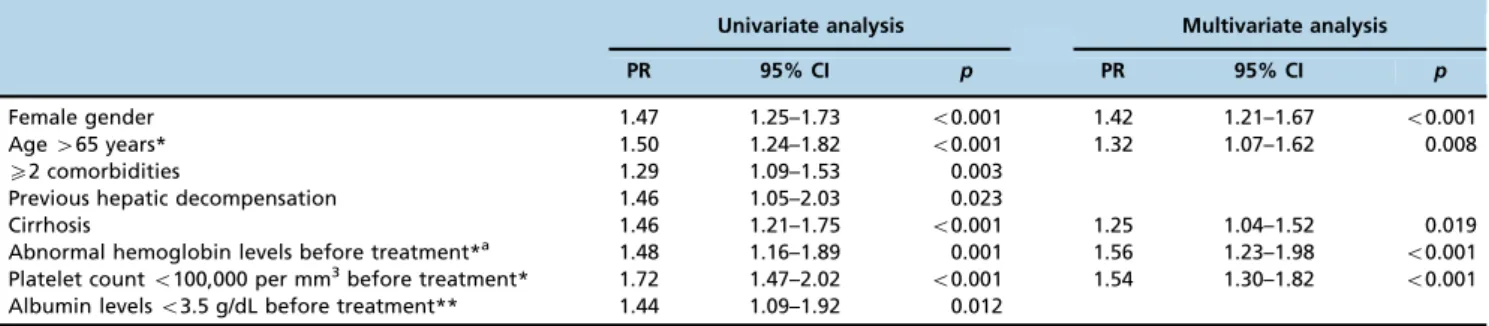
According to a multivariate analysis, the factors associated with the occurrence of SAEs were female gender (PR, 1.42; 95% CI, 1.21–1.67;po0.001), age465 years (PR, 1.32; 95% CI
1.07–1.62;p=0.008), the presence of liver cirrhosis (PR, 1.25;
95% CI, 1.04–1.52;p=0.019), and abnormal hemoglobin levels
or platelet counts before treatment (PR, 1.56; 95% CI, 1.23–
1.98; po0.001 and PR, 1.54; 95% CI, 1.30–1.82; po0.001, respectively) (Table 4).
’ DISCUSSION
Based on our results, 56.6% of patients with chronic hepatitis C treated with therapies involving the use of BOC or TVR achieved SVR. Multivariate analysis indicated that
Figure 1 -Rates of SVR in patients with chronic hepatitis C genotype 1 treated with first-generation protease inhibitors. (A) Overall SVR
the factors associated with the achievement of SVR were the absence of cirrhosis, a history of relapse after previous treatment with Peg-IFN and RBV, a platelet count4100,000/mm3
before therapy, and the presence of RVR. Regarding treatment
safety, approximately 44.2% of study patients had SAEs. Multivariate analysis indicated that the factors associated with the occurrence of SAEs were the presence of liver cirrhosis, female gender, age 465 years, and abnormal hemoglobin
levels or platelet counts before treatment.
Comparison of our results with those observed in other large real-life cohorts involving the use of triple therapy with BOC or TVR suggested the rate of SVR was similar to that observed in previous studies, in which this rate ranged between 44% and 58% (22-24) (Table 5). However, notably, in our sample there was a higher frequency of patients with cirrhosis (59%) than in the samples of other real-life studies, in which this rate ranged between 16% and 44% (22-24). To a certain extent, these results suggested a slightly higher SVR rate in our study considering our sample had a higher frequency of patients with advanced disease. In addition, our results constitute a profile of patients primarily treated in Brazil, i.e., patients with advanced liver disease, which is in accordance with the guidelines recommended by the Ministry of Health of Brazil.
The presence of liver cirrhosis has often been associated with a lower likelihood of SVR in the treatment of chronic hepatitis C, regardless of the treatment used (23-26). The mechanisms that determine a lower likelihood of cure are poorly understood. However, these factors likely include impaired immune response in patients with cirrhosis and lower responsiveness to the proposed treatment, limited distribution of drugs in the compromised liver parenchyma, and factors associated with drug toxicity in this group of patients (27). Our results corroborate this hypothesis, as we observed an SVR rate of 46.9% in patients with cirrhosis and 70.6% in patients without cirrhosis.
With respect to the SVR rates observed in our study for non-responders to previous treatments with Peg-IFN and RBV, our results corroborate those obtained in registration studies with BOC (6,8) and TVR (7,9) and in studies with Table 2-Results of univariate and multivariate analyses of factors associated with sustained viral response in patients with hepatitis C infection.
Univariate analysis Multivariate analysis
PR 95% CI p PR 95% CI p
Boceprevir (versusTelaprevir) 0.89 0.76–1.06 0.190
Genotype 1 subtype 0.010
1a 1
1b 1.23 1.07–1.43
1a/1b or 1 1.05 0.86–1.28
Cirrhosis 0.66 0.59–0.75 o0.001 0.77 0.68–0.87 o0.001
Treatment history o0.001 o0.001
Relapser 1 1
Non-responder 0.58 0.49–0.68 0.69 0.59–0.81
Treatment-naı¨ve 0.79 0.69–0.91 0.83 0.73–0.95
Abnormal hemoglobin levels before treatment*a 1.19 0.95–1.49 0.124
Platelet counto100,000 per mm3before treatment* 0.49 0.38–0.64 o0.001 0.6 0.46–0.77 o0.001 Albumin levelso3.5 g/dL before treatment** 0.76 0.50–1.15 0.193
HCV RNAX800,000 IU/mL before treatment# 0.90 0.79–1.02 0.101
RVR 1.98 1.64–2.40 o0.001 1.9 1.58–2.30 o0.001
Occurrence of SAEs 0.82 0.72–0.94 0.005
Hepatic decompensation 0.56 0.36–0.88 0.012
Infection 0.83 0.64–1.08 0.158
Missing data: (*) 20; (**) 28; (#) 15 ao12 g/dL (women),o13 g/dL (men) RVR, rapid viral response
PR, prevalence ratio
95% CI, 95% confidence interval.
Table 3-Distribution of patients with chronic hepatitis C according to the occurrence of SAEs and the treatment received.
VARIABLES BOCEPREVIR
(n=158)
TELAPREVIR (n=557)
p
N % N %
Grade 3 or 4 anemia 0.042
No 128 81.0 407 73.1
Yes 30 19.0 150 26.9
Blood transfusion 0.014
No 148 93.7 482 86.5
Yes 10 6.3 75 13.5
Grade 3 or 4 rash 0.439a
No 155 98.1 538 96.6
Yes 3 1.9 19 3.4
Grade 4 neutropenia 0.222
No 144 91.1 523 93.9
Yes 14 8.9 34 6.1
Grade 3 or 4 thrombocytopenia 0.063
No 147 93.0 489 87.8
Yes 11 7.0 68 12.2
Hepatic decompensation 0.103
No 145 91.8 530 95.2
Yes 13 8.2 27 4.8
AE that led to discontinuation of treatment
0.587
No 129 81.6 465 83.5
Yes 29 18.4 92 16.5
Death 0.999a
No 157 99.4 552 99.1
Yes 1 0.6 5 0.9
AE, adverse event aFisher
real-life cohorts (23,28-30). Overall, relapsers have a higher likelihood of achieving SVR after triple therapy with BOC or TVR. In phase 3 studies with these drugs, relapsers were the most eligible candidates for triple therapy with BOC and TVR and achieved SVR rates between 75% (8) and 88% (9), respectively. Our study corroborates this finding, given the SVR rate of 74.7% observed among relapsers to previous treatments with Peg-IFN and RBV. Among non-responders, this rate was 43.2% in our sample, which is similar to that reported in clinical studies using BOC and TVR (29-59%, including partial responders and null responders) (8,9).
RVR was the best predictor of treatment success (SVR) in our cohort (OR 1.9, 95% CI, 1.58–2.30) and in other clinical
studies (30,31). However, in our study, the impact of extended RVR was not assessed because this information was not available for analysis in 21% of patients.
Regarding treatment safety, we observed a high preva-lence of SAEs in our study group (44.2%); this rate was higher than that reported in phase 3 studies for BOC (8) and TVR (7,9) and in other real-life studies (22,28,32,33) (Table 5). However, this result was similar to that obtained in the CUPIC study (49.9%) (29), likely due to the large number of patients with advanced liver disease in our study, which was conducted at tertiary referral centers where patients usually have diseases that are more complex. Based on our results, SAEs occurred in 50.7% of patients with cirrhosis and 34.8% of patients without cirrhosis. The higher prevalence of SAEs in cirrhotic patients is also in accordance with other previously published studies (29,32).
The most important factors associated with the occurrence of SAEs were the presence of liver cirrhosis, female gender, age 465 years, and abnormal hemoglobin levels or platelet
counts before treatment. All of these factors have been extensively described in studies similar to ours (29,32). These
findings underscore the strong association between the occur-rence of SAEs during the treatment of hepatitis C and the presence of advanced liver disease (29,32).
Despite the high prevalence of SAEs in our study, the rate of discontinuation of therapy due to adverse events was low (16.9%) compared to rates observed in real-life studies (29,33,34) and was similar to that reported for the REALIZE registration study (9). These rates vary widely in the literature, ranging between 6.8% and 21.1% (22,28,29,33,34). This wide variability may reflect the clinical heterogeneity of the groups of patients included in the different studies. The low rate of treatment discontinuation observed in our study may be justified by the timeframe for the introduction of these drugs in Brazil compared to other countries. Therefore, information on the management of these patients, specifi-cally concerning adverse events and the adjustment of ribavirin administration compared to other foreign services, may facilitate the safer handling of these drugs. However, the mortality rate observed in our cohort was similar to that observed in other real-life studies (22,28,29,32,33).
We believe that this study describes the largest cohort of patients infected with HCV genotype 1 and treated with BOC or TVR in combination with Peg-IFN and RBV in a real-life context in Latin America. We sought to include patients from different Brazilian service centers and with different characteristics to obtain a representative sample of patients during this phase of treatment for hepatitis C in Brazil. However, this study has some limitations. The first limitation is its cross-sectional, retrospective, observational, and multi-centric nature. In this type of study, the leading center researchers involved are fully responsible for the choice of treatment offered and for providing the data. In this respect, the selection of patients for treatment and the choice between different treatments is at the discretion of the local investigator. Table 4-Univariate and multivariate analysis of the occurrence of SAEs in patients with hepatitis C infection.
Univariate analysis Multivariate analysis
PR 95% CI p PR 95% CI p
Female gender 1.47 1.25–1.73 o0.001 1.42 1.21–1.67 o0.001
Age465 years* 1.50 1.24–1.82 o0.001 1.32 1.07–1.62 0.008
X2 comorbidities 1.29 1.09–1.53 0.003
Previous hepatic decompensation 1.46 1.05–2.03 0.023
Cirrhosis 1.46 1.21–1.75 o0.001 1.25 1.04–1.52 0.019
Abnormal hemoglobin levels before treatment*a 1.48 1.16–1.89 0.001 1.56 1.23–1.98 o0.001 Platelet counto100,000 per mm3before treatment* 1.72 1.47–2.02 o0.001 1.54 1.30–1.82 o0.001 Albumin levelso3.5 g/dL before treatment** 1.44 1.09–1.92 0.012
Missing data: (*) 20; (**) 28 ao12 g/dL (women),o13 g/dL (men) PR, prevalence ratio
95% CI, 95% confidence interval.
Table 5-Effectiveness and safety of real-life studies with boceprevir and telaprevir.
Author (Ref.) PI Country n Cirrhosis SVR (%) SAE (%) Deaths (n)
Mauss (22) BOC, TVR Germany 1087 16% 58% 9% 3%
Backus (23) BOC, TVR USA 835 27% (BOC) 44% (TVR) 50% (BOC) 52% (TVR) NA NA
Sterling(24)/Gordon (33) BOC, TVR USA 2084 38% 44% (BOC) 54% (TVR) 12% 5
Calleja (28) BOC Spain 170 79% 47% 37% 2
Hezode (29) BOC, TVR France 511 100% 40% 50% 11
Callefi BOC, TVR Brazil 715 59% 56% 44% 6
This type of study may lead to selection bias for the patients included. Moreover, in this study, it was not possible to determine how many patients with chronic HCV infection and treatment indication were initially considered eligible for treatment or refused treatment. We cannot exclude the possibility that patients selected for treatment who had a higher likelihood of achieving SVR were included in our analysis. However, we believe that by following the stan-dards described in the Brazilian protocol at the time (12,13) and including all patients treated consecutively in each center during the study period, we may have reduced the likelihood of selection bias.
Another potential bias in our study is the possibility of missing data, as only the data recorded in the medical records of the patients were included in the study. This has also been the case in other retrospective studies. In terms of monitoring of adherence to treatment, it was not possible to access this information due to the retrospective nature of this study. However, it is important to note that in our study, only variables that did not exceed 15% patient loss were included for analytical purposes. Conversely, to evaluate the effec-tiveness of treatment in clinical practice, real-life studies offer the advantage of eliminating the potential bias of a change in behavior and conduct that might occur during the execution of a prospective study (35). Therefore, the retrospective nature of our study may be advantageous because it provides a true assessment of the effectiveness of this type of therapy in Brazil. According to data from the Brazilian Ministry of Health, approximately 7,800 treatments with BOC or TVR were performed at the national level between 2012 and 2016 (36). We believe our sample represents a significant and repre-sentative percentage of this group of patients and provides valuable information about this experience with real-life data from treated patients.
In conclusion, although most of our patients achieved SVR after treatment, the rate of SAEs was very high in this population. Patients with cirrhosis had a lower risk of achieving SVR and an increased risk of developing SAEs. Therefore, despite the beneficial outcome and cure of a significant number of patients, the risk of the development of SAEs, including severe clinical complications and death, particularly in those with advanced liver disease, should be taken into consideration. In addition, the use of therapies such as BOC or TVR has been proscribed, and safer, more effective direct-acting drugs should be considered. Our results confirm the need to reformulate the guidelines for the treatment of chronic hepatitis C in Brazil, which recently incorporated safer and more effective drugs for the treatment of this condition.
’ AUTHOR CONTRIBUTIONS
CallefiLA and Mendes-Correa MC were responsible for the study design,
data collection and analysis and manuscript preparation. Villela-Nogueira CA contributed to data collection and participated in data analysis and manuscript revision. Tenore SB, Carnaúba-Júnior D, Coelho HS, Pinto PT, Nabuco LC, Pessoa MG, Ferraz ML, Ferreira PR, Martinelli AL, Chachá SG, Ferreira AS, Bisio AP, Brandão-Mello CE, Álvares-Da-Silva MR, Reuter T, Ivantes CA and Perez RM were responsible for data collection, partic-ipated in the data analysis and critically revised the manuscript. All authors read and approved thefinal version of the manuscript.
’ REFERENCES
1. Lavanchy D. The global burden of hepatitis C. Liver Int. 2009;29 Suppl 1: 74-81, http://dx.doi.org/10.1111/j.1478-3231.2008.01934.x.
2. Guidelines for the screening care and treatment of persons with chronic hepatitis C infection. Genebra: World Health Organization; 2016 [Updated April 2016; Access May 23, 2016]. Available in: http://apps.who.int/iris/ bitstream/10665/205035/1/9789241549615_eng.pdf?ua=1
3. Gower E, Estes C, Blach S, Razavi-Shearer K, Razavi H. Global epide-miology and genotype distribution of the hepatitis C virus infection.
J Hepatol. 2014;61(1 Suppl):S45–57, http://dx.doi.org/10.1016/j.jhep.
2014.07.027.
4. Fried MW, Shiffman ML, Reddy KR, Smith C, Marinos G, Gonc¸ales FL Jr, et al. Peginterferon alfa-2a plus ribavirin for chronic hepatitis C virus infection. N Engl J Med. 2002;347(13):975-82, http://dx.doi.org/10.1056/ NEJMoa020047.
5. Manns MP, McHutchison JG, Gordon SC, Rustgi VK, Shiffman M, Reindollar R, et al. Peginterferon alfa-2b plus ribavirin compared with interferon alfa-2b plus ribavirin for initial treatment of chronic hepatitis C: a randomised trial. Lancet. 2001;358(9286):958-65, http://dx.doi.org/ 10.1016/S0140-6736(01)06102-5.
6. Poordad F, McCone J Jr, Bacon BR, Bruno S, Manns MP, Sulkowski MS, et al. Boceprevir for untreated chronic HCV genotype 1 infection. N Engl J Med. 2011;364(13):1195-206, http://dx.doi.org/10.1056/NEJMoa1010494. 7. Jacobson IM, McHutchison JG, Dusheiko G, Di Bisceglie AM, Reddy KR, Bzowej NH, et al. Telaprevir for previously untreated chronic hepatitis C virus infection. N Engl J Med. 2011;364(25):2405-16, http://dx.doi.org/ 10.1056/NEJMoa1012912.
8. Bacon BR, Gordon SC, Lawitz E, Marcellin P, Vierling JM, Zeuzem S, et al. Boceprevir for previously treated chronic HCV genotype 1 infection. N Engl J Med. 2011;364(13):1207-17, http://dx.doi.org/10.1056/NEJMoa 1009482.
9. Zeuzem S, Andreone P, Pol S, Lawitz E, Diago M, Roberts S, et al. Telaprevir for retreatment of HCV infection. N Engl J Med. 2011;364(25): 2417-28, http://dx.doi.org/10.1056/NEJMoa1013086.
10. European Association for Study of Liver. EASL Recommendations on Treatment of Hepatitis C 2015. J Hepatol. 2015;63(1):199-236, http://dx.doi.org/10.1016/j.jhep.2015.03.025.
11. American Association for the Study of Liver Diseases. HCV Guidance: Recommendations for Testing, Managing, and Treating Hepatitis C. Alexandria (VA): AASLD; 2016. Updated July 6, 2016. Modified July 8, 2016. Available at: http://www.hcvguidelines.org.
12. Brasil. Ministério da Saúde. Secretaria de Vigilância em Saúde. Departamento de DST, Aids e Hepatites Virais. Protocolo clínico e diretrizes terapêuticas para hepatite viral C e coinfecc¸ões: manejo do paciente infectado cronica-mente pelo genótipo 1 do HCV e fibrose avanc¸ada. Brasília, 2013b. 52 p. Suplemento 1.
13. Brasil. Ministério da Saúde. Secretaria de Vigilância em Saúde. Departa-mento de DST, Aids e Hepatites Virais. Protocolo clínico e diretrizes ter-apêuticas para hepatite viral C e coinfecc¸ões: genótipo 1 do HCV e fibrose avanc¸ada. Brasília, 2013a. Suplemento 2.
14. Bedossa P, Poynard T. An algorithm for the grading of activity in chronic hepatitis C. The METAVIR Cooperative Study Group. Hepatology. 1996;24(2):289-93, http://dx.doi.org/10.1002/hep.510240201.
15. Castéra L, Vergniol J, Foucher J, Le Bail B, Chanteloup E, Haaser M, et al. Prospective comparison of transient elastography, Fibrotest, APRI, and liver biopsy for the assessment of fibrosis in chronic hepatitis C. Gastro-enterology. 2005;128(2):343-50, http://dx.doi.org/10.1053/j.gastro.2004. 11.018.
16. European Medicines Agency. Guideline for good clinical practice. London; 2002.
17. Cacoub P, Bourlière M, Lübbe J, Dupin N, Buggisch P, Dusheiko G, et al. Dermatological side effects of hepatitis C and its treatment: patient management in the era of direct-acting antivirals. J Hepatol. 2012;56(2): 455-63, http://dx.doi.org/10.1016/j.jhep.2011.08.006.
18. DAIDS (Division of AIDS). Table for grading the severity of adult and pediatric adverse events. Bethesda, MD, USA: DAIDS, 2004.
19. Victrelis (boceprevir). Prescribing information. 2011. Merck & Co., Whitehouse Station, NJ, USA.
20. Olysio (simeprevir). Prescribing information 2013. Janssen Therapeutics, Titusville, NJ, USA.
21. Chevaliez S, Bouvier-Alias M, Pawlotsky JM. Performance of the Abbott real-time PCR assay using m2000sp and m2000rt for hepatitis C virus RNA quantification. J Clin Microbiol. 2009;47(6):1726-32, http://dx.doi.org/10.1128/JCM.01300-08.
22. Mauss S, Böker K, Buggisch P, Christensen S, Hofmann WP, Schott E, et al. Real-life experience with first generation HCV protease inhibitor therapy in Germany: The prospective, non-interventional PAN cohort. Z Gastro-enterol. 2015;53(7):644-54, http://dx.doi.org/10.1055/s-0034-1399383. 23. Backus LI, Belperio PS, Shahoumian TA, Cheung R, Mole LA.
Com-parative effectiveness of the hepatitis C virus protease inhibitors boce-previr and telaboce-previr in a large U.S. cohort. Aliment Pharmacol Ther. 2014;39(1):93-103, http://dx.doi.org/10.1111/apt.12546.
25. Butt AA, Yan P, Shaikh OS, Freiberg MS, Lo Re V 3rd, Justice AC, et al. Virologic response and haematologic toxicity of boceprevir- and telaprevir-containing regimens in actual clinical settings. J Viral Hepat. 2015;22(9):691-700, http://dx.doi.org/10.1111/jvh.12375.
26. Vo KP, Vutien P, Akiyama MJ, Vu VD, Ha NB, Piotrowski JI, et al. Poor Sustained Virological Response in a Multicenter Real-Life Cohort of Chronic Hepatitis C Patients Treated with Pegylated Interferon and Ribavirin plus Telaprevir or Boceprevir. Dig Dis Sci. 2015;60(4):1045-51, http://dx.doi.org/ 10.1007/s10620-015-3621-0.
27. Al Marzooqi SH, Feld JJ. Sorting out cirrhosis: mechanisms of non-response to hepatitis C therapy. Liver Int. 2015;35(8):1923-33, http://dx.doi.org/ 10.1111/liv.12861.
28. Calleja JL, Pascasio JM, Ruiz-Antorán B, Gea F, Bárcena R, Larrubia JR, et al. Safety and efficacy of triple therapy with peginterferon, ribavirin and boceprevir within an early access programme in Spanish patients with hepatitis C genotype 1 with severe fibrosis: SVRw12 analysis. Liver Int. 2015;35(1):90-100, http://dx.doi.org/10.1111/liv.12656.
29. Hézode C, Fontaine H, Dorival C, Zoulim F, Larrey D, Canva V, et al. Effectiveness of telaprevir or boceprevir in treatment-experienced patients with HCV genotype 1 infection and cirrhosis. Gastroenterology. 2014; 147(1):132-142.e4, http://dx.doi.org/10.1053/j.gastro.2014.03.051. 30. Werner CR, Franz C, Egetemeyr DP, Beck R, Malek NP, Lauer UM, et al.
First-generation protease inhibitor-triple therapy: SVR 24, safety, and predictors of response in a large single center cohort. Virol J. 2015;12:37, http://dx.doi.org/10.1186/s12985-015-0261-0.
31. Morisco F, Masarone M, Rosato V, Camera S, Granata R, Tartaglione MT, et al. Impact of telaprevir in HCV patients with cirrhosis and RVR: real-life data from Boceprevir or Telaprevir based‘‘triple therapy’’experience in southern Italy. Rev Recent Clin Trials. 2016;11(4):306-16, http://dx.doi. org/10.2174/1574887111666151217123222.
32. Wehmeyer MH, Eiing F, Jordan S, Röder C, Hennigs A, Degen O, et al.
Safety and efficacy of protease inhibitor based combination therapy in a single-center‘‘real-life’’cohort of 110 patients with chronic hepatitis C genotype 1 infection. BMC Gastroenterol. 2014;14:87, http://dx.doi.org/ 10.1186/1471-230X-14-87.
33. Gordon SC, Muir AJ, Lim JK, Pearlman B, Argo CK, Ramani A, et al. Safety profile of boceprevir and telaprevir in chronic hepatitis C: real world experience from HCV-TARGET. J Hepatol. 2015;62(2):286-93, http://dx.doi.org/10.1016/j.jhep.2014.08.052.
34. Miotto N, Mendes LC, Zanaga LP, Goncales ES, Lazarini MS, Pedro MN, et al. Predictors of early treatment discontinuation and severe anemia in a Brazilian cohort of hepatitis C patients treated with first-generation protease inhibitors. Braz J Med Biol Res. 2016;49(7), http://dx.doi.org/ 10.1590/1414-431X20165300.
35. De Amici D, Klersy C, Ramajoli F, Brustia L, Politi P. Impact of the Hawthorne effect in a longitudinal clinical study: the case of anesthesia. Control Clin Trials. 2000;21(2):103-14, http://dx.doi.org/10.1016/S0197-2456(99)00054-9. 36. Brasil. Ministério da Saúde. Portal da saúde. Informac¸ões da saúde.