Case Report
Major Article
http://dx.doi.org/10.1590/0037-8682-0199-2013INTRODUCTION
Address to: Dra Juliana Pena Porto. PPG Imunologia e Parasitologia Aplicadas/ UFU. Av. Pará 1720/Bloco 4C, Campus Umuarama, 38400-902 Uberlândia, MG, Brasil.
Phone: 55 34 8816-7987; Fax: 55 34 3218-2236. e-mail: [email protected]
Received 30 September 2013 Accepted 4 December 2013
Active surveillance to determine the impact of
methicillin resistance on mortality in patients with
bacteremia and infl uences of the use of antibiotics
on the development of MRSA infection
Juliana Pena Porto
[1],
Rosana Oliveira Santos
[2],
Paulo Pinto Gontijo Filho
[2]and
Rosineide Marques Ribas
[2][1]. Curso de graduação em Enfermagem, Faculdade de Medicina da Universidade Federal de Uberlândia (FAMED/UFU), Uberlândia, MG. [2]. Programa de Pós-Graduação em Imunologia e Parasitologia Aplicadas, Universidade Federal de Uberlândia, Uberlândia, MG.
ABSTRACT
Introduction: Methicillin-resistant Staphylococcus aureus (MRSA) is among the most important pathogens of nosocomial infections, mainly in intensive care units (ICUs), and accounts for 40-60% of all healthcare-associated S. aureus infections. We evaluated the incidence of nosocomial infection by S. aureus, identifi ed the risk factors for MRSA infection, and evaluated
the effect of resistance to methicillin on mortality in patients. Methods: We conducted MRSA surveillance at a university hospital in Brazil from January 1, 2010, to December 31, 2010, and performed a retrospective case-control matched study to evaluate the frequency of subsequent MRSA bacteremia and death among patients. We evaluated and compared the risk factors between patients with MRSA and methicillin-sensitive Staphylococcus aureus (MSSA) infection. Results: Sepsis was the most common cause of infection (17.7/1,000 patient-days), followed by surgical site (11.4/1,000 patient-days), pneumonia (4.1/1,000 patient-days), and urinary tract infection (2.4/1,000 patient-days). The signifi cant risk factors were time of hospitalization, use of central vascular catheter (CVC), urinary catheter, nasogastric tube, parenteral nutrition, tracheostomy, mechanical ventilation, and previous antibiotic administration, the latter of which was the only independent risk factor for MRSA infection. Mortality was signifi cantly higher in patients with MRSA. The number of antibiotics tested was not related to increases in the frequency of MRSA/1,000 patient-days. The incidence of mortality attributable to MRSA (bloodstream infection) BSI was 50%. Conclusions: Surveillance results showed that the use of high levels of antibiotics was directly related to the development of MRSA infection, and the mortality attributable to MRSA in patients with bacteremia was signifi cant.
Keywords: Methicillin-resistant Staphylococcus aureus. Bloodstream infection. Attributable mortality.
Methicillin-resistant Staphylococcus aureus (MRSA) is among the most important pathogens of nosocomial infections, mainly in intensive care units (ICUs). MRSA has become endemic in most hospitals worldwide1,2 and accounts for 40-60% of all
healthcare-associated Staphylococcus aureus infections3,4. The
relative morbidity and mortality of nosocomial infection caused by MRSA compared with those associated with methicillin-sensitive Staphylococcus aureus (MSSA) remains controversial5.
In Brazil, the incidence of MRSA is high, particularly in tertiary-care hospitals. In Uberlândia, rates vary from 49.5% among patients hospitalized in general medical clinics to 63.7% among patients in ICUs6,7.
Staphylococcus aureus bacteremia is a leading cause of mortality in nosocomial settings; thus, the investigation of bacteremia caused by MRSA has become a major focus of interest over the past few years. Several studies have shown that the characteristics of patients infected with MRSA differed from those of patients with MSSA. Methicillin-resistant Staphylococcus aureus bacteremia is associated with
a signifi cantly higher mortality rate than MSSA7,8.
Objective
In the current study, we evaluated the incidence of nosocomial infection by S. aureus and identified the risk
factors that predispose hospitalized patients to develop MRSA infections. Additionally, we evaluated the effect of methicillin resistance on mortality in patients.
METHODS
Hospital - wide Staphylococcus aureus surveillance
RESULTS
Briefl y, when a new case of MRSA in an inpatient was identifi ed, the workers in the microbiology laboratory of the hospital
warned us. We performed standardized data collection of demographic and clinical information from the patients’ medical records, including the site of the MRSA acquisition and the clinical indication for the culture that yielded a MRSA diagnosis.
Acquired nosocomial infection was defi ned according to
the Center for Disease Control and Prevention System (CDC)9.
Infections that were acquired 48h or more after admission to the
hospital were classifi ed as hospital-acquired infections. We defi ned in-hospital mortality as any death of a patient
during the study period. The mortality rate attributable to MRSA bacteremia was the difference between the mortality rate of patients with MRSA (bloodstream infection) BSI and that of patients with MSSA BSI. The Research Ethics Committee of the university approved the study.
Design of the study
This survey was divided into two stages. The fi rst stage
entailed a case-control study in the hospital by the National
Health-care Safety Network (NHSN) System9. Data from
patients with MRSA infection were compared with those from
patients with MSSA infection to determine risk factors associated with the development of MRSA infection. After the fi rst phase,
a retrospective case-control matched study was conducted to evaluate the frequency of subsequent MRSA bacteremia and
death among patients newly identifi ed as harboring MRSA. We defi ned a case as a patient with at least one positive blood
culture for MRSA who was treated with glycopeptides and had evidence of sepsis, according to the criteria recommended by the Centers for Disease Control (CDC). The controls were individuals who developed MSSA blood stream infections (BSIs) during the hospital stay. Excluded from this group were patients with positive cultures for MRSA at another anatomic site, patients with no negative blood cultures, and patients
treated empirically with vancomycin or fl uoroquinolones for
a period of more than 24h. We matched the controls based on the following criteria: gender, age difference of no more than 15 years, similar diagnosis upon hospital admission, surgery, difference in dates of admission to the hospital of no more than 2 years, and a difference in the period of hospitalization of less than the number of days between the patient,s admission (case)
and the emergence of MRSA bacteremia10.
Risk factors
We evaluated the risk factors for developing MRSA infection
by comparing patients with MRSA and MSSA infection.
Ecological study
To calculate the defi ned daily dose (DDD), we obtained
a report of the consumption of antibiotics from the Hospital of Clinics of Federal University of Uberlândia (HC-UFU) pharmacy.
We retrospectively examined the antimicrobial utilization information for all patients using the hospital pharmacy computer database. The evaluated period was from January 1, 2010, to December 31, 2010 (DDDs of antimicrobials were
correlated with the monthly incidence of MRSA). The DDD
was developed by the World Health Organization (WHO)11. We
obtained the density of use (DDD per 1,000 patient-days) using the following parameters: DDD, consumption of antibiotics in grams; DDD12; DDD/1,000 patient-days = DDD x 1,000;
number of patient-days.
Statistical analysis
Proportions were used as the descriptive statistic for categorical and ordinal variables. Differences in the study population were analyzed by the Student’s t-test, the
Kruskal-Wallis test, Spearman’s correlation analysis, the Mantel-Haenzel X2 test, or Fisher’s exact test, as appropriate. The 95%
confi dence intervals (95% CIs) were computed for each estimate of interest. Data were analyzed using a commercial statistical package, Statistical Package for the Social Sciences (SPSS) PC version 11.0 (SPSS, Chicago) and Epi-Info Software version 2000 (CDC, Atlanta). To test the hypothesis that mortality in patients with MRSA BSI was signifi cantly different from that in controls, we used the McNemar test. A multivariate logistic regression model was fi tted to identify independent factors of MRSA infection.
Epidemiological indicators and risk factors associated with MRSA infection
Epidemiological indicators for infection are shown in Table 1 and revealed an infection rate of 40.5 per 1,000 patient-days. The MSSA infection rate (27.5/1,000 patient-days) was higher than the MRSA infection rate (12.9/1,000 patient-days). Sepsis was the most common cause of infection during the investigated period (17.7/1,000 patient-days), followed by surgical site infection (11.4/1,000 patient-days), pneumonia (4.1/1,000 patient-days), and urinary tract infection (2.4/1,000 patient-days).
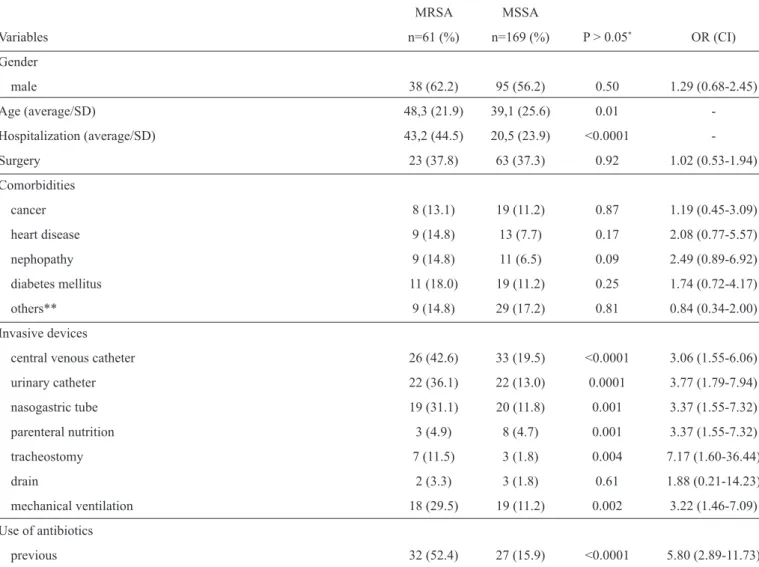
Among the patients with MRSA, the variables identifi ed by univariate analysis as signifi cant risk factors associated with the development of infection were as follows: time of hospitalization (p<0.0001); use of a central venous catheter (CVC) (p<0.0001); use of a urinary catheter (p=0.0001); nasogastric tube (p=0.001); parenteral nutrition (p=0.001); tracheostomy (p=0.004); mechanical ventilation (p=0.002); and previous antibiotic administration (p<0.0001). In the multivariate analysis, only previous antibiotic administration was an independent risk factor for the development of MRSA infection. The mortality rate was signifi cantly higher in patients with MRSA (Table 2).
Defi ned daily dose of antibiotics and MRSA infection Most (70.4%) patients used an antibiotic during hospitalization, and approximately 70% of these patients used more than two antibiotics. Consumption data on 3rd and
4th generation cephalosporins, carbapenems, and vancomycin
TABLE 1 - Rates of Staphylococcus aureus infection in patients hospitalized in Hospital of Clinics of Federal University of Uberlândia, State of Minas Gerais, Brazil, between January and December 2010.
Epidemiological indicators Rates
Staphylococcus aureus infection/1,000 patient-days 40.5
Staphylococcus aureus sepsis/1,000 patient-days 17.7
Staphylococcus aureus pneumonia/1,000 patient-days 4.1
Staphylococcus aureus surgical site infection/1,000 patient-days 11.4
Staphylococcus aureus urinary tract infection/1,000 patient-days 2.4
MRSA infection/1,000 patient-days 12.9 MSSA infection/1,000 patient-days 27.5 MRSA: methicillin-resistant Staphylococcus aureus; MSSA: methicillin-sensitive Staphylococcus aureus.
TABLE 2 - Univariate analysis of risk factors for the acquisition of methicillin-resistant Staphylococcus aureus infection.
MRSA MSSA
Variables n=61 (%) n=169 (%) P > 0.05* OR (CI)
Gender
male 38 (62.2) 95 (56.2) 0.50 1.29 (0.68-2.45) Age (average/SD) 48,3 (21.9) 39,1 (25.6) 0.01 -Hospitalization (average/SD) 43,2 (44.5) 20,5 (23.9) <0.0001 -Surgery 23 (37.8) 63 (37.3) 0.92 1.02 (0.53-1.94)
Comorbidities
cancer 8 (13.1) 19 (11.2) 0.87 1.19 (0.45-3.09) heart disease 9 (14.8) 13 (7.7) 0.17 2.08 (0.77-5.57) nephopathy 9 (14.8) 11 (6.5) 0.09 2.49 (0.89-6.92) diabetes mellitus 11 (18.0) 19 (11.2) 0.25 1.74 (0.72-4.17) others** 9 (14.8) 29 (17.2) 0.81 0.84 (0.34-2.00)
Invasive devices
central venous catheter 26 (42.6) 33 (19.5) <0.0001 3.06 (1.55-6.06) urinary catheter 22 (36.1) 22 (13.0) 0.0001 3.77 (1.79-7.94) nasogastric tube 19 (31.1) 20 (11.8) 0.001 3.37 (1.55-7.32) parenteral nutrition 3 (4.9) 8 (4.7) 0.001 3.37 (1.55-7.32) tracheostomy 7 (11.5) 3 (1.8) 0.004 7.17 (1.60-36.44) drain 2 (3.3) 3 (1.8) 0.61 1.88 (0.21-14.23) mechanical ventilation 18 (29.5) 19 (11.2) 0.002 3.22 (1.46-7.09) Use of antibiotics
previous 32 (52.4) 27 (15.9) <0.0001 5.80 (2.89-11.73) MRSA: methicillin-resistant Staphylococcus aureus; MSSA: methicillin-sensitive Staphylococcus aureus; OR: odds ratio; CI: confi dence
interval; SD: standard deviation; *Fisher exact test and Student´s t test; **Polytrauma, COPD (chronic obstructive pulmonary disease),
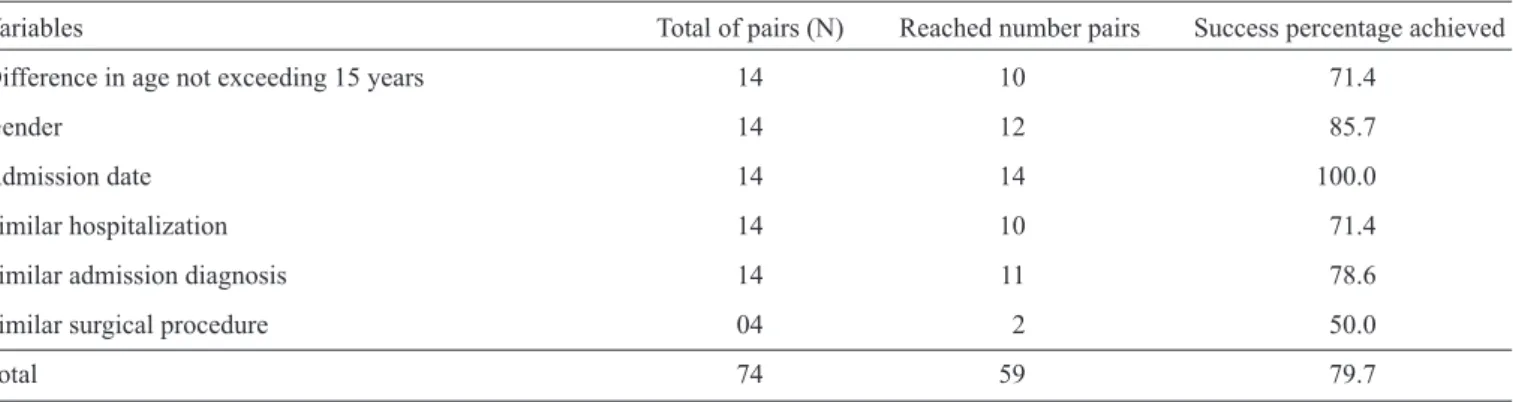
TABLE 3 - Success of matched variables of patients with bloodstream infection by methicillin-resistant Staphylococcus aureus, cases and their controls, in the Hospital of Clinics of Federal University of Uberlândia, State of Minas Gerais, Brazil*.
Variables Total of pairs (N) Reached number pairs Success percentage achieved Difference in age not exceeding 15 years 14 10 71.4
Gender 14 12 85.7
Admission date 14 14 100.0
Similar hospitalization 14 10 71.4 Similar admission diagnosis 14 11 78.6 Similar surgical procedure 04 2 50.0
Total 74 59 79.7
TABLE 4 - Mortality of 14 pairs of patients, with bloodstream infection caused by methicillin-resistant Staphylococcus aureus
and their respective controls in the Hospital of Clinics of Federal University of Uberlândia, State of Minas Gerais, Brazil*.
Controls Cases died survived total
Died 3 7 10
Survived 0 4 4
Total 3 11 14
*McNemar test
FIGURE 1 - Rates of methicillin-resistant Staphylococcus aureus nosocomial
infections per 1,000 patient-days and defi ned daily doses of antibiotics used
by patients hospitalized between January and December 2010 (data were analyzed by Spearman correlation analysis). MRSA: Methicillin-resistant
Staphylococcus aureus
varied, however; the use of extended-spectrum cephalosporins, averaging 113.5 DDD per 1,000 patient-days, was higher than the use of vancomycin (38.7 DDD per 1,000 patient-days) and carbapenems (25.8 DDD per 1,000 patient-days), but the use
0 0,5 1 1,5 2 2,5 3 3,5 4 4,5 0 50 10 0 15 0 20 0 25 0 J a n /1 0 F e v /1 0 M a r/ 1 0 A b r/ 1 0 M a i/ 1 0 J u n / 1 0 J u l/ 1 0 A g o /1 0 S e t/ 1 0 O u t/ 1 0 N o v / 1 0 D e z /1 0 broad cephalosporin carbapenems vanc omycin
infection 1 ,000
patients n /1 0 pect rum -s day -P a ti e n ts d a y s MRSA /nosocomial
of cephalosporins was not related to the increased incidence of MRSA nosocomial infection/1,000 patient-days in the period from July to December 2010. The large number of antibiotics tested was not related to the increase in the frequency of MRSA/1,000 patient-days in the Hospital de Clínicas da Universidade Federal de Uberlândia (HC-UFU) (Figure 1).
Attributable mortality
Thirty of the 45 patients in the cohort died in the hospital (case fatality rate = 66.7%). Mortality rates were similar between the 2 groups of patients; specifi cally, 10 (66.7%) of the patients with MRSA bacteremia died, compared with 20 (66.7%) of the patients with MSSA bacteremia (p=0.67). An analysis of
patients whose deaths were directly or likely attributable to S.
aureus bacteremia showed a statistically signifi cant association
DISCUSSION
This study is one of the few studies in the literature that investigates mortality attributable to nosocomial MRSA infections. According to the literature, MRSA infections have a high prevalence in larger hospitals because of the presence of patients with more risk factors, including advanced age, high illness severity, lengthy hospitalization, use of invasive devices (particularly a central vascular catheter - CVC), mechanical ventilation, urethral catheterization, use of antibiotics, and disability practices for prevention and control of nosocomial infections13-15.
In the present study, more than 90% of the risk factors were associated with MRSA infection. The univariate analysis revealed several factors associated with an increased risk of acquiring MRSA infection, including length of hospital stay, use of a CVC, urinary catheter, nasogastric tube, parenteral nutrition, tracheostomy, mechanical ventilation, and previous antibiotic use. Only the previous use of antibiotics was an independent risk factor for acquiring MRSA infection.
Among the factors that contributed to a causal association between antibiotic use and bacterial resistance, the time and
intensity of exposure to antimicrobials was the most signifi cant16.
This factor is evident in critical care units, where patients are subjected to a few intense antibiotic regimens and there is a greater frequency of multi-drug-resistant microorganisms16,17.
In our study, we performed an assessment of DDD in clinics where cases of infection were detected, and we were unable to demonstrate this relationship; however, the DDDs in our hospital were similar to those reported in other studies involving tertiary hospitals18. When this evaluation was performed in other critical
care units, the use of these drugs was found to be much higher than that in North American and European ICUs, especially with respect to extended-spectrum cephalosporins and carbapenems (data not shown)12,19. Data not shown.
The high proportion of S. aureus nosocomial bacteremia caused by methicillin-resistant strains indicates the importance of
this organism as a signifi cant cause of this infection in hospitals3.
The evidence indicates that bacteremia caused by MRSA is associated with higher morbidity and mortality rates than that associated with MSSA7,8, but there is no conclusive evidence that
the isolates of MRSA are more virulent than those of MSSA21,22.
Although the mortality associated with MRSA infections is considered to be higher than that associated with MSSA infections, the data are controversial, especially considering that the mortality associated with MSSA BSI is also likely signifi cant. The mortality and morbidity rates in the literature differ signifi cantly from our rates, which can be explained by methodological issues, including the choice of variables used for matching23,24.
There are some diffi culties associated with matching patients in matched case-control studies, and, as previously mentioned, MRSA nosocomial infections are usually associated with risk factors such as advanced age, complications related to diagnostic and therapeutic procedures, and several co-morbidities25, which
characterize patients as more susceptible to acquiring these
infections and make it more diffi cult to pair controls. In our study, only one child was infected with MRSA who was not matched to a control, allowing the evaluation of the remaining 93.3% of the population with BSI. Among the 74 variables applied in the matching of cases and controls, 59 (80%) were successfully used.
The results obtained in our study showed a mortality rate of 71.4% in cases and 21.4% in controls. The mortality rate associated with MRSA BSI was 50%, similar to that reported by Moreira et al.20 in a university hospital in São Paulo (45.1%).
There are a number of important observations regarding the
epidemiological profi le of MRSA bacteremia in our region26.
MRSA was responsible for a 33.3% rate of BSI caused by
S. aureus in our hospital. This fi nding has important implications
for empirical antimicrobial therapy in patients with suspected
S. aureus infections. We attempted to approximate the maximum similarity between cases and controls, which led to the conclusion that those cases and controls in our study were similar in most important respects.
This study has some limitations. First, we had a relatively small number of patients in the case group, thus reducing the statistical power and ability to study subsets of patients. Second, because all our study patients were hospitalized in a single tertiary hospital, our results may not be generalizable to other institutions.
Surveillance results showed that the high use of antibiotics in our hospital was directly related to the development of MRSA infection. The results of our study indicate that the mortality attributable to MRSA in patients with bacteremia was signifi cant. The study therefore provides the background for future investigations of the impacts of antimicrobial resistance and infection control programs for endemic pathogens such as MRSA.
REFERENCES
The authors declare that there is no confl ict of interest. CONFLICT OF INTEREST
1. Boyce JM. Are the epidemiology and microbiology of methicillin-resistant Staphylococcus aureus changing? JAMA 1998; 279:623-624. 2. Klevens RM, Morrison MA, Fridkin SK, Reingold A, Petit S, Gershman K,
et al. Community-associated methicillin-resistant Staphylococcus aureus and healthcare risk factors. Emerg Infect Dis 2006; 12:1991-1993.
3. Sader HS, Streit JM, Fritsche TR, Jones RN. Antimicrobial susceptibility of Gram-positive bacteria isolated from European medical centres: results of the Daptomycin Surveillance Programme (2002-2004). Clin Microbiol Infect 2006; 12:844-852.
4. Wenzel RP, Perl TM. The signifi cance of nasal carriage of S.A. and the incidence of postoperative wound infection. J Hosp Infect 1995; 31: 13-24.
5. Gastmeier P, Kampf G, Wischneswski N, Hauer T, Sshulgen G, Schumacher G, et al. Prevalence of nosocomial infection in representative German hospitals. J Hosp Infect 1998; 38:37-49.
7. Ribas RM, Freitas C, Gontijo Filho PP. Nosocomial methicillin-resistant
Staphylococcus aureus bacteremia in a tertiary care hospital: Risk factors,
overall mortality and antimicrobial resistance. Int J Med Sci 2009; 1: 412-417.
8. Selvey LA, Whiby M, Johnson B. Nosocomial methicillin resistant
Staphylococcus aureus bacteremia: Is it anyworse than nosocomial methicillin-sensitive Staphylococcus aureus bacteremia? Infect Control Hosp Epidemiol 2000; 21:645-648.
9. Horan TC, Andrus M, Dudeck MA. CDC/NHSN surveillance defi nition
of health care-associated infection and criteria for specifi c types of
infection in the acute care setting. AJIC 2008; 36:309-332.
10. Harbarth S, Rutschmann O, Sudre P, Pittet D. Impact of methicillin-resistance on the outcome of patients with bacteremia caused by
Staphylococcus aureus. Arch Intern Med 1998; 58:182-189.
11. World Health Organization. ATC/DDD Classifi cation (temporary). WHO drug information. 2000; 14:32-36.
12. National Nosocomial Infections Surveillance (NNIS) System Report, data summary from January 1992 through June 2004, issued October 2004. Am J Infect Control 2004; 32:470-485.
13. Simor AE, Ofner-Agostini M, Bryce E, Green K, McGeer A, Mulvey M, et al. Canadian Nosocomial Infection Sureveillance Program, Health Canada. The evolution of methicillin-resistant Staphylococcus aureus in Canadian hospitals: 5 years of national surveillance. CMAJ 2001; 165:21-26.
14. Thompson DS. Methicillin-resistanat Staphylococcus aureus in a general intensive care unit. J R Soc Med 2004; 97:521-526.
15. Ferrara AM. Treatment of hospital-acquired pneumonia caused by methicillin-resistant Staphylococcus aureus. Intl J Antimicrobiol Agents 2007; 02:011.
16. McGowan Jr JE. Is antimicrobial resistance in hospital microorganisms related to antibiotic use? Bull N Y Acad Med 1987; 63:253-268.
17. Shlaes DM, Gerding DN, John JR, Craic WA, Bornsteins DL, Duncan RA, et al. Society of Healthcare Epidemiology of American and Infection Disease Society of American Joint Committee on the Prevention of Antimicrobial Resistance. Guidelines for the Prevention of Antimicrobial Resistance in Hospitals. Clin Infect Dis 1997; 25:584-599.
18. Pluss-Suard C, Pannatier A, Kronenberg A, Muhlemann K, Zanetti G. Hospital antibiotic consumption in Switzerland: comparison of a multicultural country with Europe. J Hosp Infect 2011; 79:166-171.
19. Moreira M, Medeiros EAS, Pignatari ACS, Wey SB, Cardo DM. Efeito da infecção hospitalar da corrente sanguínea por Staphylococcus aureus
resistente à oxacilina sobre a letalidade e o tempo de hospitalização. Ver Assoc Med Bras 1998; 44:263-268.
20. Moreira MR, Ribas RM, Rodrigues AAA, Gontijo Filho PP. Consumo de antibióticos e etiologia de pneumonia associada à ventilação em pacientes internados na Unidade de Terapia Intensiva do Hospital de Clínicas da Universidade Federal de Uberlândia. Rev Pannam Infect 2009; 11: 11-16.
21. National Healthycare Safety Network (NHSN) annual update: antimicrobial-resistant pathogens associated with healthycare-associated infections: annual summary of data reported to the NHSN at the Center for Disease Control and Prevention, 2006-2007; 2008.
22. Cosgrove S, Sakoulas G, Perencevich R, Schwaber MJ, Karchmer AW, Careli Y. Comparison of mortality associated with methicillin-resistant and methicillin susceptible S. aureus bacteraemia: a meta-analysis. Clin Infect Dis 2003; 36:53-59.
23. Gash O, Ayats J, Angeles Domingues M, Tubau F, Liñares J, Peña C, et al. Epidemiology og methicillin-resistante Staphylococcus aureus (MRSA) bloodstream infection: secular trends over 19 years at a university hospital. Medicine 2011; 90:319-327.
24. Park SY, Son JS, Oh IH, Choi JM, Lee MS. Clinical impact oh methicillin-resistant Staphylococcus aureus bacteremia based on propensity scores. Infection 2011; 39:141-147.
25. Cosgrove SE, Qi Y, Kaye KS, Harbarth S, Karchmer AW, Carmeli Y. The impact of methicillin-resistance in Staphylococcus aureus bacteremia on patient outcomes: mortality, length of stay, and hospital charges. Infect Control Hosp Epidemiol 2005; 26:166-174.
26. Naves KSC, Trindade NV, Gontijo Filho PP. Methicillin-resistant
Staphylococcus aureus bloodstream infection: risk factors and clinical