A quasi-experimental nursing study on pain in comatose patients
Uma pesquisa quase experimental em enfermagem sobre dor em pacientes em coma
Una investigación cuasi experimental en enfermería sobre dolor en pacientes en coma
Gunnar Glauco de Cunto Taets
I, Nebia Maria Almeida de Figueiredo
III Universidade Federal do Rio de Janeiro, Department of Fundamental Nursing. Macaé, Rio de Janeiro, Brazil. II Federal University of Rio de Janeiro State, Center of Biological and Health Sciences,
School of Nursing Alfredo Pinto. Rio de Janeiro, Brazil.
How to cite this article:
Taets GGC, Figueiredo NMA. A quasi-experimental nursing study on pain in comatose patients. Rev Bras Enferm [Internet]. 2016;69(5):871-6. DOI: http://dx.doi.org/10.1590/0034-7167-2015-0121
Submission: 12-22-2015 Approval: 06-25-2016
ABSTRACT
Objective: to verify whether comatose patients feel pain during the bed bath nursing procedure. Method: nineteen patients aged 61 ± 17.39 years participated in the study. A quantitative analysis was conducted on the P substance (PS) in the saliva collected before and during a bed bath, using the ELISA method. Program Graph Pad Prisma 6 was used to analyze the data. The verii cation of normality was made through the Shapiro Wilk test, which determined the choice for the Wilcoxon nonparametric test. Results: the study showed a statistically signii cant increase (∆= 5.62%, p<0.001) in the PS level of the patients studied during the nursing procedure. Conclusion: when caring for comatose patients during a bed bath, professionals cause or add painful stimuli; therefore, they feel pain.
Descriptors: Nursing Care; Intensive Care Units; Pain; Coma; Mechanical Ventilation.
RESUMO
Objetivo: verii car se pacientes em coma sentem dor durante a intervenção de enfermagem banho no leito. Método: 19 pacientes com 61 ± 17,39 anos de idade participaram do estudo. Realizou-se, pelo método ELISA, a análise quantitativa de substância P (SP) na saliva coletada antes e durante o banho no leito. Utilizou-se o programa Graph Pad Prisma 6 para análise dos dados. A verii cação da normalidade foi feita pelo teste de Shapiro Wilk que determinou a escolha do teste não paramétrico de Wilcoxon. Resultados: o estudo apresentou aumento estatístico signii cativo (∆= 5.62%, p<0,001) no nível de SP dos pacientes estudados durante a intervenção de enfermagem. Conclusão: conclui-se que quando cuidamos de pacientes em coma, durante o banho no leito, provocamos ou acrescentamos estímulos dolorosos, logo, eles sentem dor.
Descritores: Cuidados de Enfermagem; Unidades de Terapia Intensiva; Dor; Coma; Ventilação Mecânica.
RESUMEN
Objetivo: verii car si pacientes en coma sienten dolor durante la intervención de enfermería baño en el lecho. Método: 19 pacientes de 61±17,39 años de edad participaron del estudio. Se realizó, por método ELISA, el análisis cuantitativo de substancia P (SP) en saliva colectada antes y durante baño en el lecho. Se utilizó el programa Graph Pad Prisma 6 para analizar los datos. La verii cación de normalidad fue efectuada por test de Shapiro Wilk, que determinó elección del testeo no paramétrico de Wilcoxon. Resultados: se demostró aumento estadístico signii cativo (∆=5.62%; p<0,001) en nivel de SP de los pacientes estudiados durante la intervención de enfermería. Conclusión: se concluye en que cuando cuidamos a pacientes en coma, durante el baño en el lecho, provocamos o incrementamos estímulos dolorosos. Es decir, ellos sienten dolor.
Descriptores: Atención de Enfermería; Unidades de Cuidados Intensivos; Dolor; Coma; Respiración Artii cial.
INTRODUCTION
Painis essential for human integrity and survival of the spe-cies. According to the International Association for the Study of Pain(IASP), it is defined as “an unpleasant sensory and emotional experience associated with actual or potential tissue damage”(1).
Non-alleviated pain may be the source of sleep deprivation and thus lead to anxiety, agitation, fatigue, and disorientation. Persistent pain may cause a stress response that may result in tachycardia, increase in myocardial oxygen consumption, hypercoagulability, immunosuppression, and catabolism. Muscular response with spasms and contractures around the painful area may lead to pulmonary dysfunction because it may limit the diaphragm and thoracic expansion(2).
The experience of being hospitalized in an intensive care unit (ICU) and being in a coma is a complex process that may leave deep marks in those who experience it(3). Many of these marks are not only connected to coma itself but also to the experiences of being (un)cared for during this process, leading many patients to the need for recovering from the illness, as well as from the ex-perience of having been a patient. This happens because despite the theoretical advances regarding care, the practice still develops almost exclusively based on depersonalized professional actions, through which human beings become the illness, the passive ob-ject of investigation and treatment.
In 1950, the P Substance (PS) was considered the neurotrans-mitter of primary sensory afferent fibers, or the transneurotrans-mitter of pain. Results of studies conducted with animals and some in
vitro experiments support the PS role as part of the nociceptive
process, potentiating excitatory inputs in nociceptive neurons(4). PS is still considered the main nociceptive transmitter in afferent sensory fibers and it is activated in response to cu-taneous stimuli, participating in the conduction in afferent sensitive nerves (C fibers). It is also involved in various physi-ological activities, including cardiovascular tonus change, stimulation of salivary secretion, contraction of smooth mus-cles, vasodilation, behavioral changes as part of the defense response to threatening stimuli, and stimulation of the amyg-dala in response to fear or anxiety, triggering autonomous re-sponses and adaptive behaviors.
The first connection between pain and PS occurred when it was seen that its concentration in the dorsal, sensitive region of the spinal horn was ten times higher than in the ventral or motor regions(5). PS is located specifically in the myelinated Aδ fibers and unmyelinated C fibers. These groups of neurons are known as conductors of painful sensations and thus confirm the relation between PS and pain(6-8), in addition to other stud-ies that confirm this relation(9-13).
The objective of this study was to verify whether comatose patients feel pain during the bed bath nursing procedure.
METHOD
Ethical aspects
This study was approved by the research ethics commit-tee of the Rio de Janeiro Municipal Health Department. Each patient’s free consent agreement was signed by a custodian
in view of the impossibility of getting participants’ signature, in accordance with Resolution 466/2012 of Brazil’s National Health Council(14).
Study design, location, and period
This study’s characteristics were those of a quasi-experi-ment with pre- and post-tests in a single group. It was con-ducted at a municipal public hospital in the northern area of the city of Rio de Janeiro, between July 2012 and May 2014. The study variables comprised the independent variable bed bath and the dependent variable P substance.
Study population and inclusion and exclusion criteria
This study was conducted with 19 patients whose mean age was 61 years old, with a standard deviation of ± 17.39 years. Twelve patients (64%) were male and seven (36%) were female. Patients included in this study were above 18 years of age and had been hospitalized for at least 48 hours in an ICU of the researched public hospital, under mechanical ventilation. When the coma was physiological, the score was between 5 and 10 in the Glasgow Coma Scale; when the coma was induced, the score was between R5 and R6 in the Ramsay Sedation Scale. Researchers chose to exclude patients with any previous or identified infecto-contagious disease during their hospitalization period such as chickenpox, herpes, AIDS, hepatitis B and C, tuberculosis, meningitis, measles, diphthe-ria, whooping cough, leprosy, conjunctivitis, and scarlet fever. Thus, 19 volunteers were selected.
The study sample was limited to 19 subjects because the kit for P substance analysis was just enough for conducting this research with this number of subjects.
Study protocol
The bed bath was given by two nursing aides who were employees of the researched hospital. To avoid biases in the study, these professionals did not know what was being ob-served; thus, they carried out the procedure without interfer-ences or concerns.
Saliva was collected before and during the bed bath. In order to do so, a Cremer brand cotton roll was used. This particular brand of cotton rolls is often used at dentists’ offices because it is 100% cotton with high liquid absorption capacity. Additionally, it has no filtering capacity or specific protein binding.
The cotton roll was kept in the left or right corner of the mouth, depending on the positioning of the mechanical ven-tilation tube, for a maximum of 60 seconds. It was removed before this period in case it was already saturated with saliva, not capable of absorbing more of it.
The additional stages of preparation for the sample, re-agents, buffer solution, substrate solution, and PS standard were strictly followed in compliance with the guidelines found in the KGE 007 kit, manufactured and distributed by the company R&D Systems (Minneapolis, United States, 2012). It is important to highlight that the optic density found was inversely proportional to the PS concentration in the sample.
according to which two related amounts are inversely pro-portional when the value of one of them is multiplied by a number; the value of the other is then divided by this same number(15). Thus, applying the reference value of 312 pg/mL, according to this study’s standard curve, the reading value for optic density was 0.9325 nm.
Analysis of results and statistics
Program Graph Pad Prisma 6 was used to analyze the data. Initially, a description of the sample was elaborated with mean, median, standard deviation, and minimum and maxi-mum values. This was followed by the verification of normal-ity measured by the Shapiro-Wilk test, which determined the choice for the Wilcoxon nonparametric test with p<0.01 sig-nificance level.
RESULTS
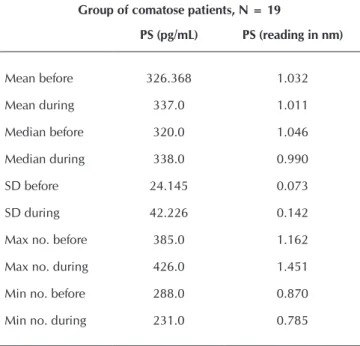
Table 1 presents descriptive statistics of the data, with the studied group’s mean, median, standard deviation, maximum and minimum values.
Table 1 – Description of the studied sample
Group of comatose patients, N = 19
PS (pg/mL) PS (reading in nm)
Mean before 326.368 1.032
Mean during 337.0 1.011
Median before 320.0 1.046
Median during 338.0 0.990
SD before 24.145 0.073
SD during 42.226 0.142
Max no. before 385.0 1.162
Max no. during 426.0 1.451
Min no. before 288.0 0.870
Min no. during 231.0 0.785
Notes: SD = Standard deviation; Max no. = maximum number; Min no. = minimum number; PS = P Substance.
The PS analysis showed high incidence of pain among patients participating in the study even before the accom-plishment of the nursing procedure: 17 (90%) had pain and only two (10%) did not. The value of normality was that of the kit used in the study for analysis of PS: between 150 and 300 pg/mL.
Figure 1 shows the results concerning the conduction of nursing procedure bed bath, indicating that there was statisti-cally significant increase of ∆= 5.62% in pain levels during the procedure.
DISCUSSION
A fact that called the researcher’s attention in this study was that patients felt pain even being in a coma induced by drug Midazolan. This can also indicate that these patients were being poorly sedated. Handling sedation and anal-gesia with ICU patients has been a routine challenge for years(16). Because drug Midazolan does not block the PS re-lease, since it is not an opioid that pertains to the encepha-lin group, another drug from this group could be added, such as fentanyl.
A European study shows the use of at least one analgesic drug for patients in mechanical ventilation as a protocol, and opioid was chosen in 68% of the days when patients had been sedated(17). There is variability in European countries regarding the use of sedatives: midazolam and propofol are the most commonly administered drugs. As analgesic medicines, mor-phine and fentanyl are most commonly used(18).
Authors claim that less than half the patients receive proper pain control in ICU, which confirms the findings of this study(19). According to these authors, the hindrances found for proper analgesia were: physicians’ behavior, use of protocols without evidence, professionals’ unwillingness to change their behavior, inappropriate pain assessment methods, and insufficient professional training in terms of pain assessment and treatment.
The fact that 90% of the studied patients had high levels of PS indicating high level of pain confirms the importance of thinking about pain as the fifth vital sign in the ICU environ-ment(20). A study conducted at 44 ICUs in France shows that patients are suffering and we do not know how to care for them properly. This fact is also evidenced by the result of this study, where less than 25% of the patients received any kind of specific pain control measure.
Another international cohort study with adults in me-chanical ventilation, conducted in 1998, collected data from 48% of the hospitals in Europe, 24% of the Latin Amer-ican hospitals, and 28% of the North AmerAmer-ican hospitals. The results provided researchers with a global, instructive
Figure 1 – Analysis of the effect of the bed bath nursing pro-cedure in comatose patients.
p<0.0001
Before During
Median SP pg/ml
500
400
300
200
100
composition for clinical practice and showed that only 68% of the patients had received analgesic or sedative drugs at some point during mechanical ventilation, with a mean of three days of use(17).
For comatose patients, pain can be understood as a threat or a stress factor. From the psycho-neural-endocrinological point of view, stress can be defined as a complex neuro-en-docrinous process whose duration and intensity vary, involv-ing the release of some neuropeptides(21).
This adds a concern to what we are really doing to ICU pa-tients: Can we call it care or is it negligence in this case? Un-treated pain may cause adverse effects including an increase in the activity of endogenous cathecolamines, myocardial ischemia, hypercoagulability, hypermetabolic states, sleep de-privation, anxiety, and delirium(22).
Even after the publication of a practical guide for acute pain management by the Agency for Health Care Policy and Research (AHCPR) of the US Public Health Service, less than 25% of the patients received some kind of specific measure to control their symptoms, as pointed in a study conducted with more than 200 patients in 44 ICUs in France(23).
It is necessary to extend our clinical gaze to patients and include permanent monitoring of potentially pain inductive factors in the semiotics of care, both in terms of the objec-tive dimension and in terms of the subjecobjec-tive dimension. Therefore, nursing procedures will become clinical proce-dures capable of producing responses in patients’ bodies, as observed in this study.
An illness is no longer a set of characters spread here and there in the body surface, interconnected by concurrences and statistically observed sequences. It is a set of shapes and deformations; figures; accidents; displaced, removed or modi-fied elements that are chained together following a geography that can be threaded step by step. It is no longer a pathological species that enters the body wherever possible; it is the body itself becoming a patient(24).
This is the challenge in capturing this non-verbal communi-cation of pain that expresses itself by the amount of PS found in the saliva, not in order to define the body one cares for, but to provide us with elements which will lead us to get to know it better and take better care of it. Under this perspective, we must base ourselves on the communicating senses of the bod-ies, understanding that the body is capable of revealing the organic foundation of emotions and the materiality of ideas even though no word is said.
On one hand, there is the significant element, the signifi-cant PS rise that expresses the idea of concept; on the oth-er hand, thoth-ere is the element that poth-ertains to the meaning: pain. This is the semiotics we seek for biosciences: like the relevance of language in human facts that point to look at the signs, in the heart of life,leaned over nonverbal systems.
Study limitations
The search for a theoretical foundation that would en-able a better identification of what patients feel as pain when
researchers cared for them was considered a limitation be-cause it involved theoretical knowledge of biochemistry about PS and subjective knowledge to identify signs that express pain. These limitations pertain to a semiotics that does not depend only on our senses that identify signs, but also on our knowledge on biochemical research and on our constant at-tention to the readings of various laboratory exams in order to seek indicators of concrete signs of pain.
Another limitation of this study is related to the size of the sample, which could have been larger if there were enough financial resources to purchase more kits for PS analysis.
Contributions for the nursing and health care fields
Not only does this study offer contributions for nursing, but also to all healthcare professionals who care for hospital-ized patients in intensive care in situations where they cannot communicate verbally, circumstances that are pervaded by challenges.
The first one concerns the choice of the method, which is not often used in nursing studies, mainly when a scien-tific aura is needed to a technical care procedure, in this case the bed bath. The second challenge was the attempt for capturing nonverbal language, the subjectivity of bodies in a coma, unable to speak but expressing themselves through signs such as the increase in the heart rate, in the systolic blood pressure, facial expression changes and that which is objective and measurable; in other words, elements that pertain not only to the category of signs, but are also pres-ent in biochemical body fluids such as PS in the saliva. The third challenge consisted in testing the bed bath as a procedure inducing pain, therefore deserving special and sensitive attention from professionals who conduct it, once they will be able to interfere when broadening their abili-ties to touch and look. The fourth and probably the most complex challenge was to establish a connection between a procedure that pertains to the semio-technique of nurs-ing and another procedure of the biochemistry area. When they are articulated, they can guide us as to how we must behave when caring for comatose patients. The fifth and last challenge consisted in our efforts to understand that the bed bath can cause pain in comatose patients, which means de-mystifying the idea that this moment is a source of comfort. This requires another mindset from professionals once they understand that the activation of PS is a biological marker for the existence of pain also in an act of care.
CONCLUSION
REFERENCES
1. Fernandes CR, Gomes JMA, Moraes RP, Marinho DS, Hol-anda MA, Oliveira FRA. Avaliação sistemática do delirium e da dor em pacientes criticamente enfermos. Rev Dor. 2009; 10(2):158-68.
2. Dimopoulou I. Endocrine and metabolic disturbances in critically ill patients: to intervene or not? Eur J Inter Med, 2005;16:67-8.
3. Silva AL, Schlicknann CG, Faria JG. O coma e seu impacto no processo de ser e viver: implicações para o cuidado de enfermagem. Rev Gaúcha Enferm [Internet]. 2002[cited 2014 Mar 07];23(2):81-107. Available from: http://seer. ufrgs.br/RevistaGauchadeEnfermagem/article/view/4450
4. Devane CL. SP: uma nova era, um novo papel. Farmaco-terapia. 2001[cited 2011 Mar 07];21(9). Available from: http://www.medscape.com/viewarticle/409781
5. Traub RJ. The spinal contribution of substance P to the gen-eration and maintenance of inflammatory hyperalgesia in the rat. Pain [Internet]. 1996[cited 2014 Mar 07];67(1):151-61. Available from: http://journals.lww.com/pain/Abstract/ 1996/09000/The_spinal_contribution_of_substance_P_ to_the.20.aspx
6. Goodale DB. The role of substance P simultaneously me-diating oral pain and inflamamation. Ansth Prog [Inter-net]. 1981[cited 2014 Mar 07];28:41-3. Available from: http://www.ncbi.nlm.nih.gov/pmc/articles/PMC2516380/ pdf/anesthprog00110-0013.pdf
7. Hargreaves KM, Takaya K, Matsuse Y, Shizukuishi S. Relation-ship of the substance P to indicators of host response in human gingival crevicular fluid. J. Clin Peridontol [Internet]. 2000[cited 2014 Mar 07];27:262-6. Available from: http://onlinelibrary. wiley.com/doi/10.1034/j.1600-051x.2000.027004262.x/ abstract
8. Lundy FT, Linden GJ. Neuropeptides and neurogenic mecha-nisms in oral and peridontal inflammation. Crit Rev Oral Bio Med [Internet] 2004[cited 2014 Mar 07];15:82-98. Available from: http://cro.sagepub.com/content/15/2/82.long
9. Jennie CI, Tsao JA, Stein D, Ostrow RD, Stall MW. Mediat-ing role of pain in substance use and depressive symptoms among Multicenter AIDS Cohort Study (MACS) participants Pain [Internet]. 2011[cited 2014 Mar 07];152(12):2757-64 Available from: http://www.ncbi.nlm.nih.gov/pmc/articles/ PMC3215839/pdf/nihms321913.pdf
10. Payen JF. Current practices in sedation and analgesia for mechanically ventilated critically ill patients: a prospective multicenter patient-based study. Anesth [Internet]. 2007[cited 2014 Mar 07];106(4):687-95. Available from: http://anesthesi ology.pubs.asahq.org/article.aspx?articleid=1922741
11. Peyman S, Xiaoyou S, Tian-Zhi G, Yanli Q, David CY, Wade SK, et al. Role of substance P signaling in enhanced noci-ceptive sensitization and local cytokine production after inci-sion.. Pain [Internet]. 2009[cited 2014 Mar 07];145(3):341-9. Available from: http://www.ncbi.nlm.nih.gov/pmc/articles/ PMC2746201/pdf/nihms129756.pdf
12. Jamison RN, Ross EL, Michna E, Chen LQ, Holcomb C, Wasan AD. Substance misuse treatment for high-risk chronic pain patients on opioid therapy: a randomized trial Pain[Internet]. 2010[cited 2014 Mar 07];150(3):390-400 Available from: http://www.ncbi.nlm.nih.gov/pmc/ articles/PMC2910796/pdf/nihms192212.pdf
13. Ashina M, Bendtsen L, Jensen R, Ekman R, Olesen J. Plasma levels of substance P, neuropeptide Y and vaso-active intestinal polypeptide in patients with chronic ten-sion-type headache Pain [Internet]. 1999[cited 2014 Mar 07];83(3):541-7. Available from: http://www.ncbi.nlm.nih. gov/pubmed/10568863
14. Brasil. Ministério da Saúde. Normas para a Realização de Pesquisa em Seres Humanos. Conselho Nacional de Saúde. Resolução 466/12 2012.
15. Dutenhefner F, Sabatucci J, Carneiro MJD, Spira M. Módu-lo Didático: Proporcionalidade Direta e Inversa CurrícuMódu-lo Básico Comum - Matemática - Ensino Fundamental. Centro de Referência Virtual do Professor[Internet]. SEE-MG/2009 [cited 2013 Mar 07]; Available from: http://crv.educacao. mg.gov.br/sistema_crv/index.aspx?ID_OBJETO=104108&ti po=ob&cp=B53C97&cb=&n1=&n2=M%EF%BF%BDd ulos%20Did%EF%BF%BDticos&n3=Ensino%20Fundame ntal&n4=Matem%EF%BF%BDtica&b=s
16. Hansen-Flaschen JH, Brazinsky S, Basile C, Lanken PN: Use of sedating drugs and neuromuscular blocking agents in patients requiring mechanical ventilation for respira-tory failure: a national survey. JAMA [Internet]. 1991[cited 2014 Mar 07];266(20):2870-5. Available from: http:// jama.jamanetwork.com/article.aspx?articleid=393495
17. Arroliga A, Frutos-Vivar F, Hall J, Esteban A, Apezteguia C, Soto L, Anzueto A. Use of sedatives and neuromuscular blockers in a cohort of patients receiving mechanical ven-tilation. Chest 2005, 128:496-506.
18. Soliman HM, Melot C, Vincent JL. Sedative and analgesic practice in the intensive care unit: the results of a Euro-pean survey. Br J Anaesth. 2001, 87:186-92.
19. Byrd PJ, Gonzales I, Parsons V. Exploring barriers to pain management in newborn intensive care units: a pilot sur-vey of NICU nurses. Adv Neonatal Care, 2009;9:299-306.
20. Payen JF, Bru O, Bosson JL, Lagrasta A, Novel E, Deschaux I, et al. Assessing pain in critically ill sedated patients by using a be-havioral pain scale. Crit Care Med [Internet]. 2001[cited 2014 Mar 07];29:2258-63. Available from: http://www.consen sus-conference.org/data/Upload/Consensus/1/pdf/1640.pdf
21. Lima Jr. E, Lima Neto E. Hipertensão arterial: aspectos com-portamentais – estresse e migração. Rev Bras Hipertens [Internet]. 2010[cited 2014 Mar 07];17(4):210-25. Avail-able from: http://departamentos.cardiol.br/dha/revista/17-4/ revisao-hipertensao.pdf
23. Payen JF, Chanques G, Mantz J, Hercule C, Auriant I, Leguillou JL, et al. Current practices in sedation and analgesia for mechan-ically ventilated critmechan-ically ill patients: a prospective multicenter patient-based study. Anesthesiology [Internet]. 2007[cited 2014 Mar 07];106(4):687-95. Available from: http://anesthesiol
ogy.pubs.asahq.org/article.aspx?articleid=1922741