Erly Catarina Moura,
Erly Catarina Moura,
Erly Catarina Moura,
Erly Catarina Moura,
Erly Catarina Moura,
Departamento de Nutrição Faculdade de Ciências Médicas
Pontifícia Universidade Católica de Campinas Av. John Boyd Dunlop, s/n
13059-740 - Campinas, SP Brazil e-mail:[email protected]
This study was conducted as part of an Epidemiology and Public Health Research Project with support from “Coordenadoria de Ensino e Apoio à Pesquisa (PUCCAMP), Departamento de Medicina Preventiva e Social (Universidade Estadual de Campinas)” and “Conselho Nacional de Desenvolvimento Científico e Tecnológico” (804563/90-0, 823035/90-5, 300644/92-2).
The relationship between the use
of primary health care and infant
health status at 12 months in a
Brazilian community
A relação entre a utilização de
serviços de atenção primária à saúde
e o nível de saúde de crianças de um
ano de idade no Município de
Campinas, São Paulo
Abstract
The Brazilian government has been imple-menting health care policies that empha-size primary health care since 1988. Yet, to date, no study has examined the effects of the policies on children. A cohort study as-sessed the effects of primary care on the health status of 85 twelve-month-old infants residing in a neighborhood of São Paulo. Infants were classified as “healthy” if they had been ill no more than three times dur-ing the first year, or “ill” if they had been ill at least four times. Primary pediatric care was considered either “continuous” or “frag-mented”. Continuous care was defined as starting care in the first month after birth and following the guidelines of the Health Secretariat of the City as to the number and interval of medical appointments. Other-wise, the infant was defined as receiving fragmented care. Forty percent of infants were classified as ill, and 89.4% were classi-fied as receiving fragmented care. A bivariate analysis showed an association between frag-mented care and illness (p=0.003). After ad-justing for other variables, health status was predicted by maternal age and number of persons per room. The results show a rela-tionship between low socio-economic sta-tus, inadequate access to care, and illness. The transition towards an equitable primary care system in Brazil is slow and challenging.
Keywords: Keywords: Keywords: Keywords:
Resumo
Com a aprovação da nova Constituição Brasileira, em 1988, o país vem implementando políticas e práticas de atenção à saúde que reforçam o papel das Unidades Básicas como porta de entrada ao Sistema de Saúde. Todavia, até o momento nenhum estudo sobre a avaliação destas políticas e práticas sobre o estado de saúde de crianças foi realizado. Assim, estudo tipo coorte foi desenvolvido com o objetivo de avaliar os efeitos da atenção pediátrica no estado de saúde de 85 crianças, menores de 1 ano de idade, residentes no Município de Campinas, Estado de São Paulo. As crianças foram classificadas em “sadias”, se não apresentassem mais do que 3 doenças durante o primeiro ano de vida, ou “doentes”, caso apresentassem 4 ou mais doenças durante o ano. A atenção pediátrica foi considerada “contínua”, se a criança iniciasse a puericultura no primeiro mês de vida e apresentasse número e espaçamento de consultas de acordo com a recomendação da Secretaria Municipal de Saúde, ou “fragmentada”, caso contrário. Quarenta por cento das crianças foram classificadas como doentes e 89,4% recebiam atenção fragmentada. Associa-ção entre atenAssocia-ção fragmentada e doença foi positiva (p=0,003) conforme análise bivariada. Após o ajuste das demais variáveis estudadas por regressão logística, a idade materna e a concentração de pessoas por quarto foram os melhores preditores do estado de saúde. Observa-se, ainda, relação entre baixo nível socioeconômico, acesso inadequado aos serviços de saúde e doença. Conclui-se que a transição para um modelo de saúde baseado na eqüidade e na justiça social ainda é lenta e difícil.
Palavras-chave Palavras-chave Palavras-chave Palavras-chave
Palavras-chave: Epidemiologia. Assistên-cia à saúde. Saúde infantil. Nível de saúde. Brasil.
Introduction
In 1988, the Brazilian Sanitary Reform Movement, a multiparty advocacy force formed by intellectuals, health care profes-sionals and policy makers achieved the long-standing objective of moving Brazil away from an unresponsive curative care model to one based on equity and social justice. Through the establishment of a Unified National Health System (Sistema Único de Saúde, or SUS), new policies that empha-sized universal access to care, decentrali-zation, service integration and an emphasis on primary care were formulated. Under a reorganization plan, community health centers became the first level of care and the gateway to the system responsible for addressing the health needs of the population1,4.
Health care reform in Brazil has been met with resistance by the private sector, hampered by the severe economic crisis of recent years. These obstacles have intensi-fied the uneven financial access to health services and widened the gap between the population’s health needs and the delivery of services. Despite these challenges, SUS has continued to expand primary health care services. At present, 55% of the Brazil-ian population (88 million) relies exclusively on SUS for its health care needs, whereas 25% (40 million) also has access to private health care. Approximately 20% of the popu-lation (32 million) still has no access to care because there is lack of services in certain areas of the country, especially those with low demographic densities 5.
re-ceived during the first year of life on the health status of 12-month-old infants.
This paper reports the results of this study and addresses the following questions: What are the patterns of health care utilization among infants? What factors are associated with the receiving continuous versus fragmented primary care? Is health status associated with the receipt of continuous or fragmented primary care? What other factors predict infant health status? The implications of these findings in terms of policy and programs are discussed within the context of the current health care reform in Brazil .
Methodology
Sample
A cohort study was conducted between May 1992 and February 1994 in Jardim Campos Eliseos, a community of approxi-mately 10,000 people, located in the city of Campinas in the State of São Paulo. The char-acteristics of Jardim Campos Eliseos are similar to those of 75% of the city. In Jardim Campos Eliseos, , , , , approximately 38% of the community residents live in slum areas, characterized by poor sanitary conditions and below subsistence income levels. An-other 62% of the residents live in urbanized areas with more access to jobs and services. This community was chosen because the local health center is collaborating with the Ministry of Health to expand local access to primary health care.
A cohort design was employed whereby the health status of infants residing in this community was followed over a 12-month period. Participants in the study consisted of all pregnant women and infants who were less than 6 months of age at the onset of the study. Eleven pregnant women and two mothers, out of 71 pregnant women and 64 eligible children identified through a community census, refused to take part in the study. Lack of time or interest and not obtaining husband’s permission to take part in the study were the reasons reported for
refusals. An additional 12 pregnant women moved out of the area. A consent form was signed by 110 women (mothers and pregnant women) who agreed to participate in the project. The study began with 48 newborns and 62 infants. Since only healthy-born infants were included in the study, 4 infants born with low weight were excluded. Over the course of the study, 21 infants were lost to follow-up (one infant died, 19 moved out of the neighborhood, and one parent refused to continue in the study), leaving 85 subjects for analysis.
Using the number of illness episodes during the follow-up as an indicator of health status we found no statistically significant difference between the infants that remained in the study and those that were lost to follow-up, p=0.10, according to the Breslow test for Kaplan-Meier survival analysis6. Furthermore, no significant
differences between the two groups were found regarding maternal education (p=0.77) and urban residence (p=0.75).
Variables and Data Collection Procedures
The outcome variable was the cumula-tive health status from birth to 12 months, assessed as either healthy or ill. An infant was considered “healthy” if he or she had had no more than three illness episodes during the course of the year. Illness epi-sodes were reported by the infant’s mother during the monthly interviews, independ-ent of medical diagnosis. Those infants who experienced four or more illness episodes were classified as “ill”. In the absence of re-liable estimates of the number of illness epi-sodes for Brazilian infants during the first year of life, the cut-off point was based on the average number for our study popula-tion which was 3.2 (SD=2.1) and the median which was 3.0. The dispersion of that value ranged from zero to nine.
City7 for medical appointments, receiving
care in the same health center at least once every four months. Care was defined as “fragmented” if the initial visit started after the first month or the schedule of visits did not comply with the guidelines for pediatric care.
Monthly interviews of approximately 20 minutes were conducted with the mothers in their homes. The questionnaires asked mothers about a series of predisposing, enabling and intervening variables that could influence infant health status.
Following a modified Andersen & Newman model8, several predisposing
variables (that is, sociodemographic background and health factors that help to identify risk for adverse health at twelve months of age) were selected for the study. These included persons per room in a household; income per capita; whether the dwelling was located in an urbanized or slum site; mother’s age, education and employment; infant’s sex, newborn’s weight. Enabling variables refer to measures assessing the use of health care services after the infant’s birth. In addition to using continued or fragmented primary care, enabling factors included average length of appointments and whether most of the visits occurred in a public or private setting. Intervening variables which may have altered the use of primary health care ser-vices measured hospitalization of the infant after birth. Others variables which may in-terfere in the health status such as immuni-zation status, breast feeding time, and weaning age were abandoned because there was no difference between the study groups. Questionnaires were administered by eight nutrition students who received extensive training in interviewing. To minimize attrition, each interviewer was responsible for a given area during the data collection period. Before the study began and during the data collection period, local community leaders were contacted to help encourage mother’s participation in the study. A total of 897 interviews were con-ducted during a 22 month-period.
Statistical Analysis
Analyses were performed using SPSS (Statistical Package for the Social Sciences) for Windows with confidence intervals of 95%6. Student’s t-tests for independent
samples and chi-square or Fisher’s exact tests were used to examine differences in the profile of infants who received continuous and fragmented care during the first year of life. We assessed the bivariate relationship between receiving primary care and infant health status at 12 months. Because there were no continuous-ill cases, it was not possible to calculate the odds ratio. Then, to determine whether the relationship between these two variables persisted after adjusting for other predictors, a logistic regression model was examined in which receiving continuous or fragmented primary health care was forced in. All variables that were related to health status (p≤0.30) and which have shown a relationship with health status in previous studies9-14, including persons per room,
mother’s age, mother’s employment, duration of the appointment and hospitalization during the first year were considered for this model. Finally, the predictors of continuous/fragmented care were identified in a separate regression model using the variables related to health care or health status, which were persons per room, income per capita, urbanized-slum residence site, mother’s age, mother’s education, mother’s employment status, public-private setting for care, length of appointments, and hospitalization during the first year of life.
Results
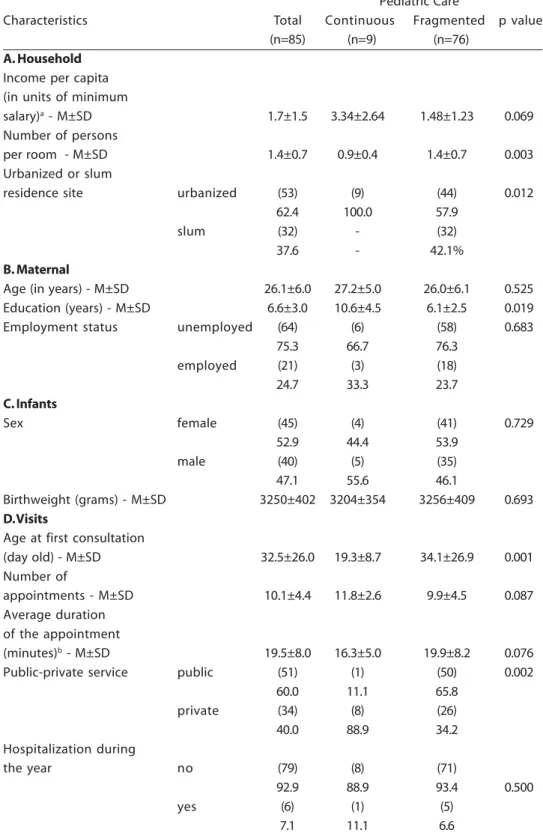
Table 1 - Sample characteristics and patterns of health care utilization
Pediatric Care
Characteristics Total Continuous Fragmented p value
(n=85) (n=9) (n=76)
A. Household
Income per capita (in units of minimum
salary)a - M±SD 1.7±1.5 3.34±2.64 1.48±1.23 0.069
Number of persons
per room - M±SD 1.4±0.7 0.9±0.4 1.4±0.7 0.003
Urbanized or slum
residence site urbanized (53) (9) (44) 0.012
62.4 100.0 57.9
slum (32) - (32)
37.6 - 42.1%
B. Maternal
Age (in years) - M±SD 26.1±6.0 27.2±5.0 26.0±6.1 0.525
Education (years) - M±SD 6.6±3.0 10.6±4.5 6.1±2.5 0.019
Employment status unemployed (64) (6) (58) 0.683
75.3 66.7 76.3
employed (21) (3) (18)
24.7 33.3 23.7
C. Infants
Sex female (45) (4) (41) 0.729
52.9 44.4 53.9
male (40) (5) (35)
47.1 55.6 46.1
Birthweight (grams) - M±SD 3250±402 3204±354 3256±409 0.693
D. Visits
Age at first consultation
(day old) - M±SD 32.5±26.0 19.3±8.7 34.1±26.9 0.001
Number of
appointments - M±SD 10.1±4.4 11.8±2.6 9.9±4.5 0.087
Average duration of the appointment
(minutes)b - M±SD 19.5±8.0 16.3±5.0 19.9±8.2 0.076
Public-private service public (51) (1) (50) 0.002
60.0 11.1 65.8
private (34) (8) (26)
40.0 88.9 34.2
Hospitalization during
the year no (79) (8) (71)
92.9 88.9 93.4 0.500
yes (6) (1) (5)
7.1 11.1 6.6
were 26.1±6.0 years old when their children were born and had 6.6±3.0 years of school-ing. Most women were housewives (75.3%). The average birth weight was 3,250 grams (SD=402), 54,1% were delivered by Cesarean section.
The mean age at which infants started well-baby visits was 32.5 (SD=26.0) days. They received an average of 10.1 (SD=4.4) medical appointments during the first year and the average length of appointments was 19.5 (SD=8.0) minutes. In general, informa-tion on the length of appointments is not accurate because it was referred by the cli-ent. Every month during the study, women were told to keep track of the length of fu-ture appointments, but this variable is only indicative of the quality of care.
For the majority of the infants (89%) health care utilization was fragmented, in so far as 35.3% started care after the first month of age, and 54.1% either started care late, and/or their schedule of visits was be-low what is recommended by the guidelines. Only 10.6% of the infants experienced con-tinuous pediatric care. Infants who received fragmented health care were more likely to live in more crowded households located in slums areas and had less-educated moth-ers than infants who had continuous care. They were more likely to use services in the public sector and to start pediatric care 15 days later than infants receiving continuous care.
At 12 months of age, 47.1% of the infants had experienced four or more illness episodes. As shown in Table 2, there was a
Table 2 - Relationship between pediatric care and health outcomes at 12 months (n=85)
Health care Health status Fisher’s test healthy ill p
continuous 9 - 0.003
(20.0%)
fragmented 36 40
(80.0%) (100.0%)
Total 45 40
(52.9) (47.1%)
strong association between health status at 12 months and receiving continuous/ fragmented care over the course of the first year (p=0.003). All infants who received con-tinuous primary care and 47.4% of those who received fragmented care were con-sidered healthy by 12 months.
To determine whether this relationship persisted after controlling for other factors, receiving continuous/fragmented care was forced into the regression model run. As Table 3 indicates, receiving fragmented or continuous care was not a significant pre-dictor of health status after controlling for persons per room, mother’s age, mother’s employment status and hospitalization dur-ing the first year of age. None of these vari-ables, except persons per room, were shown to be collinear with the care receiving vari-able. Cumulative health status at 12 months was associated with mother’s age and per-sons per room.
capita, urbanized-slum residence site, mother’s age, mother’s education, mother’s employment status, public-private setting for care, duration of the appointment and hospitalization during the first year of life, mother’s education and length of appointments were significant predictors of the adequacy of primary care (Table 4).
Table 4 - Predictors of receipt of fragmented or continuous primary care during the first year (n=79)
Variables Estimated Coefficient Wald statistics p
Mother’s education 0.50±0.21 5.70 0.02
length of appointment 0.23±0.11 4.38 0.04
public-private
setting for care 2.39±1.29 3.44 0.06
Table 3 - Predictors of health status at 12 months (n=79)
Variables Estimated coefficient Wald statistics p
Mother’s age 0.12±0.04 6.76 0.01
persons per room 0.91±0.48 3.67 0.05
primary care received 8.76±30.00 0.09 0.77
hospitalization 4.59±19.81 0.05 0.82
Discussion
This study examined the relationship between adequacy of primary care and health status in a group of infants residing in a community in São Paulo. All infants born healthy and whose mothers consented to participate in the study were followed from birth up to the first year of life. In spite of the small number of infants studied, the present findings are relevant because data on the use of Brazilian health services and its relationship to health status are scarce. According to the findings of this study, a large number of infants (89%) received frag-mented health care, which was character-ized by an inadequate number of visits and a delayed onset of care. Since infants who lived in slums and came from less educated households were more likely to experience fragmented care, the results indicate a strong relationship between low socio-economic status and inadequate access to care.
Infants utilizing health services in the public sector were twice as likely to receive fragmented care when compared to infants
seeking care in the private sector. Differentials in adequacy of care were not related to health status since infants seen in the public sector were as likely to be healthy as infants seen in the private sector.
The findings also indicate that fragmented primary care was associated with illness. A stronger likelihood of this
association was found among infants seeking care in the private sector. In the private sector, continuous care collaborates with the prevention of illness, but frag-mented care does not. However, according to SUS, the goal in the public sector is also based on preventive care, despite the pres-ence of fragmented care. After controlling for other factors in a multivariate socio-eco-nomic analysis, variables such as mother’s age and persons per room were stronger predictors of the infant’s health status than access to continuous care. The higher inci-dence of illness episodes among families liv-ing in crowded households confirms previ-ous studies showing that this factor may in-fluence transmission of diseases15. The
among infants of housewives was 51.6%, compared to 33.3% among infants of work-ing mothers who tend to have higher level of education.
Continuous care, one of the most im-portant policy recommendations formu-lated by SUS in recent years, is not offered consistently and therefore does not seem to occur in the public sector in Brazil. Low wages have created a shortage of pediatri-cians. Lack of nursing staff training and de-ficient appointment scheduling in the pub-lic sector are also drawbacks for continuity of care. According to the data, public health services predominantly offer fragmented pediatric care, leading mothers to take their infants to a variety of service providers. The result is the rise in the cost of public serv-ices due to duplication of records, longer appointments and a higher number of ap-pointments than recommended by the Health Secretariat of the City.
Another noteworthy fact is that the av-erage number of appointments in the pub-lic sector was 9.5 (SD=4.6) in contrast with 11.1 (SD=3.8) in the private sector. Whereas the Health Secretariat of the City recom-mends only four medical appointments per year, many private providers recommend one visit a month.
Our findings can be compared with those of Neumark et al.16, who analyzed the
utilization of health services among infants in Israel. They estimated an average of 12.3 medical appointments for curative care and 2.6 for preventive care, totaling 14.9 appointments per infant during the first year of life. In our study, the average number of medical appointments in both the public and the private sectors for curative care (due to illness) was 3.0 (SD=1.9), and 7.2 (SD=3.5) for preventive care (according to a child health program). The patterns of health services utilization in Brazil are opposed to
observed in Israel in so far as Brazilian in-fants seem to use more preventive than cura-tive care. This overutilization appears to be driven by provider incentives rather than by health needs.
The results of this study need to be interpreted with caution for several reasons. This study was limited to only one geographic area which had reasonable access to care through local health clinics. Furthermore, the sample size was small since it was limited to the cohort of infants residing in the study area. During the study period many pregnant women and infants were lost to follow up due to the high mobility of the population living in slum areas.
Despite these limitations, this longitudi-nal study provides useful insights of the chal-lenges that Brazil faces in its transition to-wards a national, primary-care health sys-tem. It has demonstrated that despite good intentions, these policy implementations are not showing positive results due to system barriers that reduce the quality of care in the public sector or stimulate people to seek care in the private sector. Yet poverty does not allow many mothers to seek care for their infants in the private sector. The ma-jority of infants who receive care in the pub-lic sector end up getting fragmented care which does not counteract the adverse ef-fects of poverty on health status.
References
1. Cohn A. From a policy of inequality to a proposal of equity: political processes and health care in the municipality of São Paulo. Int J Health Serv 1992; 22: 767-81.
2 Mercadante OA, Yunes J, Chorny AH.
Decentralización y municipalización de los servicios de salud en São Paulo, Brasil. Bol Oficina Sanit Panam 1994; 116: 381-96.
3. Dallari SG. O papel do município no
desenvolvimento de políticas de saúde. Rev Saúde Pública 1991; 25: 401-5.
4. Moura EC, Garcia MAA. Organização dos serviços de saúde no Brasil: seu desenvolvimento sob o ângulo das políticas públicas setoriais. Rev Ciênc Méd PUCCAMP 1994; 3: 37-42.
5. Santos NR. Sistema Único de Saúde. Campinas: UNICAMP, 1995. [1º Simpósio International de Políticas de Saúde, Brasilia, 1995].
6. SPSS for Windows. Advanced statistics. Release 5... [computer program] Chicago: SPSS Incorporation; 1992.
7. Secretaria Municipal da Saúde. Próassistência -programa de atenção à criança. Campinas: Prefeitura Municipal de Campinas; 1988.
8. Andersen R, Newman JF. Societal and individual determinants of medical care utilization in the
Uni-ted States. Milbank Mem. Fund. Q. 1973; 88: 95-124.
9. Pantel RH, Lewis CC. Measuring the impact of me-dical care on children. J Chron Dis 1987; 40: 99-108.
10. Puffer RR, Serrano CV. Características de la mortalidad en la niñez. Washington (DC): Organización Panamericana de la Salud; 1973.
11. Yunes J. Características sócio-econômicas da mortalidade infantil em São Paulo. Pediatria 1983; 5: 162-8.
12. Monteiro CA. Saúde e nutrição das crianças de São Paulo... São Paulo: Hucitec/EDUSP; 1988.
13. Victora CG, Barros, FC, Teixeira AMB. Birthweight and infant mortality: a longitudinal study of 5914 Brazilian children. Int J Epidemiol 1987; 16: 239-45.
14. Rumel D, Costa Filho DC, Aiello S, Koyama SM, Rosenbaum W. Acurácia dos indicadores de risco do Programa de Defesa da Vida dos lactentes em região do Estado de São Paulo, Brasil. Rev Saúde Pública 1992; 26: 6-11.
15. Guendelman S, English P, Chavez G. Infants of Mexican immigrants: health status of an emerging population. Med Care 1995; 33: 41-52.