Original Ar
tic
le
Completion of Course Work carried out at the Universidade de Fortaleza – UNIFOR – Fortaleza (CE), Brazil.
(1) Clínica Trajano Almeida – Fortaleza (CE), Brazil.
(2) Graduate Program (Doctorate degree) in Public Health, Universidade Estadual do Ceará – UECe – Fortaleza (CE), Brazil.
(3) Undergraduate Program in Speech-Language Pathology and Audiology, Universidade de Fortaleza – UNIFOR – Fortaleza (CE), Brazil.
Correspondence address: Rita de Cássia de Araújo Almeida. Av. Santos Dumont, 5753, sala 1508, Torre São Mateus II, Papicu, Fortaleza (CE), Brazil, CEP: 60150-162. E-mail: [email protected]
Received: 6/22/2010; Accepted: 10/28/2010
videoluoroscopic indings
Deglutição com e sem comando verbal: achados
videofluoroscópicos
Rita de Cássia de Araújo Almeida¹, Renata Cavalcante Barbosa Haguette², Izabella Santos Nogueira de Andrade³
ABSTRACT
Purpose: To characterize the swallowing process of different food consistencies and quantities, with and without verbal commands, through videoluoroscopy. Methods: Quantitative cross-sectional, observational study held in the period between January and March 2010 with 40 healthy subjects with no apparent signs of swallowing problems. Mean age was 23 years and 5 months (SD±2.5), with a minimum age of 20 years and a maximum of 30 years, and 87.5% of the subjects were female (35/40). A videoluoroscopy swallowing study (VFSS) was carried out with the ingestion of barium in the liquid, thick liquid, pureed and solid consistencies. Two swallowing tests were held during the administration of the liquid consistency, with and without verbal commands. The place of beginning of the pharyngeal phase of swallowing in different structures was analyzed, as well as the presence of premature spillage of food, delayed oral transit time, multiple swallowing, stasis, and laryngeal penetration and/or aspiration in both situations. Results: The beginning of the pharyngeal phase took place in the base of the tongue and in the valleculae for most consistencies and quantities, with the exception of the liquid swallowing (5 ml), which started in the valleculae. There was no inluence of the verbal command both in the place where the pharyngeal phase of swallowing started, and the presence of stasis of residue. However, the command was effective in reducing oropharyngeal indings. Conclusion: The pharyngeal phase of swallowing occurred in the base of the tongue and valleculae. The verbal commands inluenced the dynamics of swallowing.
Clinical Trials – NCT01120587
Keywords: Eating behavior; Deglutition; Fluoroscopy/methods; Pharynx/physiology; Barium/administration & dosage
INTRODUCTION
The act of swallowing is the result of a neuromuscular mechanism, which aims to transport the bolus from the mouth to the stomach effectively(1). The procedure is complex and
dynamic, and essential for the nutrition and hydration of the body(2). It can be divided into the following phases:
anticipa-tory(3); oral-preparatory and oral – voluntary; pharyngeal and
esophageal – involuntary(4).
The analysis of the swallowing process is carried out throu-gh a clinical evaluation, with the ingestion of different amounts and consistencies of food, during which symptoms and signs
that indicate possible alterations in the control and movement of the bolus, food retention or stasis in the oropharyngeal pas-sage, possible larynx penetrations or aspirations are observed. However, this analysis does not allow the quantiication of each one of these events, neither of the silent laryngeal aspirations(5).
To observe the anatomic structures and the dynamic analy-sis, in real-time, of the phases of swallowing, the videoluoros-copy swallow study (VFSS) is considered the diagnostic test, the gold standard for the study of physiology and swallowing disorders(6,7).
It is noteworthy that, with the VFSS, you can effective analyze the pharyngeal phase of swallowing, characterized by a series of physiological events, the soft palate rises, the vocal folds adduct, there is the peristaltic contraction of the pharyngeal constrictor muscles, the larynx moves up and forward, the epiglottis folds backwards, which begins with the stimulation of sensory receptors, located mainly in the oropharyngeal cavity(4).
We discuss the exact moment when the pharyngeal phase is initiated(8,9), and propose that healthy subjects may present it after
sinuses, or in the pharyngoesophageal segment, not necessarily resulting in changes in the condition of healthy subjects. Howe-ver, it may be inluenced by the consistency or amount of food bolus, as well as by verbal commands to swallow(9).
The impact of verbal commands in the swallowing process is not well known yet. However, it is veriied that, with the verbal command, the formation and propulsion of the food bolus are inluenced(8). Due to the dynamic characteristic of
the swallowing, the changes observed in the oral preparatory and oral phases under verbal command, may inluence the beginning of the pharyngeal phase.
Studies show a signiicant variation between the presence and absence of verbal command in the cerebral cortex. It is emphasized that in the presence of verbal command there is more cortical representation, and that both hemispheres are activated in this situation(10).
In fact, this study aims to characterize the swallowing process of different food consistencies and quantities, with and without verbal command, by means of the videoluoroscopy swallowing study.
METHODS
The study was conducted under the approval of the Research Ethics Committee of the University of Fortaleza (UNIFOR) No. 193/2006, in accordance with resolution No. 196/96 of the National Health Council/Ministry of Health (CNS), which regulates researches with human beings (In anima nobili). All participants signed a Term of Consent.
A quantitative, cross-sectional, single, observational study was carried out in the period between January and March 2010, in an Advanced Center for Diagnosis and Treatment in the city of Fortaleza, Ceará, Brazil.
The sample consisted of 40 healthy young adults of both sexes. The inclusion criteria were: chronological age between 20 and 30 years; no signs of swallowing disorders; no surgeries/ treatments in area of the head or neck, except for dental ones. Subjects who have already undergone cardiac, thoracic, and/ or abdominal surgery were excluded.
The mean age of the subjects was 23 years and 5 months (SD±2,5), with a minimum age of 20 years and a maximum of 30 years; 87.5% of them (35/40) were female.
The Videoluoroscopy Swallowing Study Protocol was used for data collection(11)(Appendix1). It addresses issues
regarding the ingestion of barium in the liquid, thick liquid, pureed and solid consistencies.
The videoluoroscopy swallowing study was carried out using a KX012 serioscopy device (Toshiba®), coupled with
an image intensiier (Intecal®) and a computerized system for
recording image and sound to make the subsequent analysis possible. All exams were carried out by a speech therapist, the researcher, and a radiologist.
During the VFS study, subjects remained in a sitting posi-tion, and the images were taken in the anteroposterior and lateral positions, with upper and lower limits ranging from the mouth to the esophagus.
For the liquid consistency, water was added to the liquid barium (Bariogel®), at a one-to-one ratio (15 ml of water to
15 ml of barium); in the thick liquid, 25 ml of liquid barium were used; for the pureed, two 5 ml spoons of thickener (Thick&Easy®) were used for every 30 ml of liquid barium;
and in the solid, half of a wafer biscuit was dunked into liquid barium.
During the study, subjects remained seated, initially in late-ral position, ingesting all consistencies, and then, on a second moment, in the anteroposterior position, with the evaluation of the liquid and solid consistencies only.
In lateral position, for the liquid and thick liquid consis-tencies, they were administered 5 ml on the spoon and 20 ml on the cup, respectively. The pureed consistency was offered in three consecutive 5 ml spoons, and the solid was offered in the form of half wafer biscuit dunked into pure barium.
Two tests were carried out with the liquid consistency in the amount of 5 ml:
- Swallowing with verbal command – The subject placed the spoon near the mouth and waited for the command of the researcher, who used the following verbal command: “You can now swallow!”,
- Swallowing with no verbal command – The subject was instructed to have another spoonful after the swallowing with verbal command, this time without any kind of verbal command.
It is noteworthy that all guidelines referring to both tests were given prior to the examination.
In the anteroposterior position, the liquid consistency was offered only in the amount of 20 ml in the cup, while the solid remained the same as the lateral view.
The following variables were considered when assessing the VFSS:
- Place of beginning of the pharyngeal phase of swallowing – observed at the beginning of the movement of the hyoid bone in the presence of the food bolus, on the base of the tongue, valleculae, epiglottis, aryepiglottic fold, pyriform sinuses, or pharyngoesophageal segment;
- Premature spillage – food going to the wrong way into the oropharynx before the movement of the bolus;
- Increased oral transit time – comparison between the longest times of the voluntary phases of swallowing with and without verbal command;
- Multiple swallowing – number of swallowing processes required to reduce food stagnation;
- Stasis of residue – presence of food residues after swal-lowing three times, in the regions of the base of the tongue, valleculae, epiglottis, pyriform sinuses, or pharyngo-esophageal segment. It was classiied into mild (less than 25%) moderate (between 25 and 50%), and severe (residues exceeding 50%) according to the amount of illing of the whole structure(14,15).
- Laryngeal penetration – penetration of food into the larynx to the level of the vocal cords, characterized into before, during or after the beginning of the pharyngeal phase; and classiied, according to the amount of food penetrated, into mild (less than 10%), moderate (between 10 and 25%) and severe (more than 25% of the bolus)(16);
after the beginning of the pharyngeal phase; and classiied, according to the amount of food aspired, into: mild (less than 10%), moderate (between 10 and 25%) and severe (more than 25% of the bolus)(16);
- Absence of oropharyngeal indings – absence of increased oral transit time, premature spillage, multiple swallowing, laryngeal penetration/aspiration.
The following variables were considered, according to the indings of the VFSS:
- Place of beginning of the pharyngeal phase of swallowing for the different consistencies and quantities of food; - Comparison between the beginning of the pharyngeal phase
of swallowing with and without verbal command, for the liquid consistency (5 ml);
- Inluence of liquid swallowing (5 ml) with and without verbal command on the presence and location of stasis; - Inluence of liquid swallowing (5 ml) with and without
ver-bal command on the presence of oropharyngeal indings. For the investigation of the results, the descriptive analysis of the percentage was used, in order to evaluate the place of beginning of the pharyngeal phase of swallowing for different consistencies and quantities of food. The inferential statistical analysis was used, by means of the test of equality proportion between two samples, in order to assess the inluence of liquid swallowing (5 ml) with and without verbal command in the swallowing process, adopting a signiicance level of p<0.05.
RESULTS
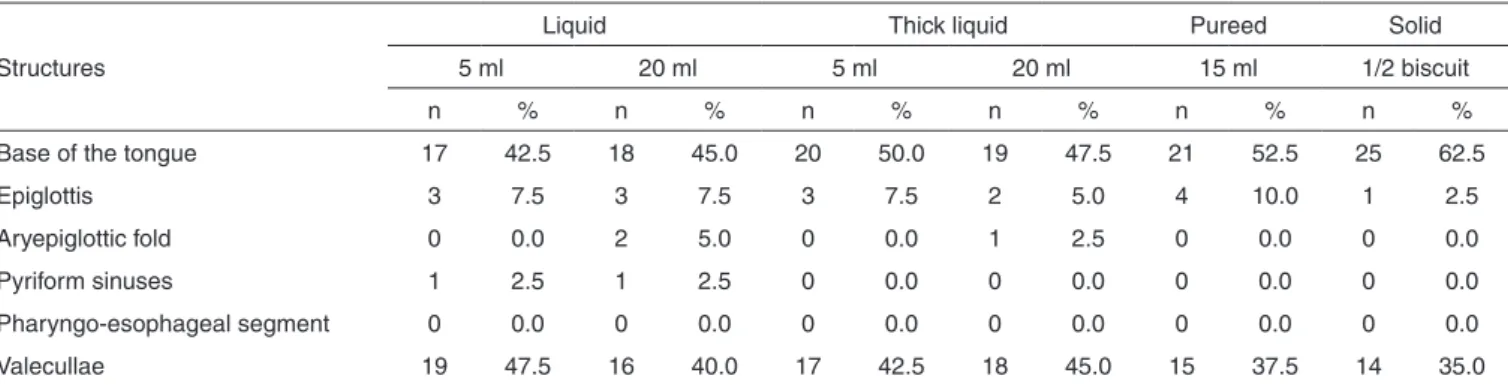
Table 1 shows the distribution of the structures of the oro-pharynx according to the place where the pharyngeal stage of swallowing begins for each food consistency.
It was observed that only for the 5 ml liquid swallowing, the initiation of the pharyngeal phase took place predominantly at the vaIleculae (47.5%). For all the other consistencies and quantities, it was observed that the pharyngeal phase begun predominantly at the base of the tongue and at the valleculae, respectively.
In the correlation analysis between consistency, quantity and place of initiation of the pharyngeal stage, it was possible to identify that the initiation of the pharyngeal phase take place at the valleculae and at the base of the tongue without any distinction between these two structures, for all consistencies of food, except for the solid, which occurs at the base of the tongue (p=0.014).
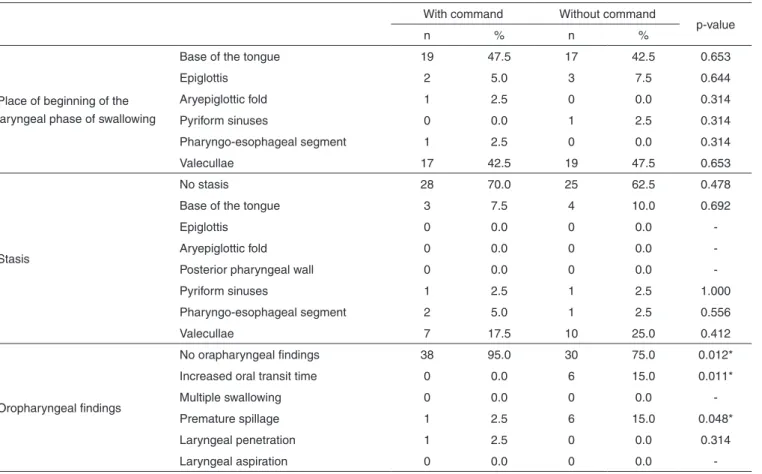
Table 2 describes the distribution of cases of liquid swallo-wing (5 ml) with and without verbal command according to the variables: place of beginning of the pharyngeal phase of swallowing, presence of stasis of residue and oropharyngeal indings.
In this analysis, it became clear that the verbal command did not inluence the place of beginning of the pharyngeal pha-se of swallowing. It was also veriied that the verbal command had no inluence on the episodes of stasis, larynx penetration and/or aspiration.
On the other hand, the increased oral transit time (p=0.011) and the premature spillage of food (p=0.048) were more prevalent in the swallowing without verbal command. In addition, the verbal commands inhibited the presence of any oropharyngeal indings (p=0.012).
DISCUSSION
In the present study, it was observed that the pharyngeal phase of swallowing was initiated at the base of the tongue and at the valleculae for all food consistencies and quantities. For a long time, the pharyngeal phase of swallowing was considered to be initiated by the stimulation of sensory receptors at the region of the tonsillar pillars, especially the anterior pillar(17). Recent studies have shown that the initiation
of the pharyngeal stage may occur, in addition to the base of the tongue, at the valleculae for liquid(18-20), and especially for
thick liquid and pureed consistencies(21), suggesting that the
variability of places of initiation of the pharyngeal phase of swallowing is a physiological characteristic.
When it comes to the solid consistency, the initiation of the pharyngeal phase was related to the base of the tongue in 62.5% of the cases, as opposed to studies that suggest it begins mainly at the valleculae(19,20). Thus, the higher density of solid
food provides a more appropriate neuromuscular control when compared to other consistencies, resulting in more proprio-ceptive stimuli, which brings the pharyngeal stage to superior structures, such as the base of the tongue(22,23).
The inluence of the verbal command on the place of begin-ning of the pharyngeal phase of swallowing was not signiicant in this study. It was observed that the predominant places of beginning of the pharyngeal phase of swallowing with and without verbal command were the base of the tongue and the valleculae, contradicting the theory that the pharyngeal phase of swallowing starts at the valleculae without verbal command
Table 1. Place of beginning of the laryngeal phase of swallowing for different consistencies and quantities of food
Structures
Liquid Thick liquid Pureed Solid
5 ml 20 ml 5 ml 20 ml 15 ml 1/2 biscuit
n % n % n % n % n % n %
Base of the tongue 17 42.5 18 45.0 20 50.0 19 47.5 21 52.5 25 62.5
Epiglottis 3 7.5 3 7.5 3 7.5 2 5.0 4 10.0 1 2.5
Aryepiglottic fold 0 0.0 2 5.0 0 0.0 1 2.5 0 0.0 0 0.0
Pyriform sinuses 1 2.5 1 2.5 0 0.0 0 0.0 0 0.0 0 0.0
Pharyngo-esophageal segment 0 0.0 0 0.0 0 0.0 0 0.0 0 0.0 0 0.0
and at the base of the tongue with verbal command(8).
There is a signiicant difference between the activation of cortical structures with and without verbal command in healthy individuals, as evidenced by the use of magnetic resonance(10,24-26). However, the videoluoroscopy analysis of
swallowing did not demonstrate the inluence of the verbal command on the swallowing dynamics, in contrast with pre-vious studies, which suggested a more eficient swallowing, with the activation of multiple areas of the cerebral cortex, in healthy individuals under verbal command(10,27-30).
In agreement with previous studies, it was observed that except for the absence of increased oral transit time, and the decreased premature spillage of food, every other biomecha-nical events occurring during swallowing with command are similar to the ones of the swallowing without command(10,22).
In the swallowing without verbal command, it is veriied that only the primary sensorimotor cortex is activated, while in the opposite situation, the cingulated gyrus, the parieto-occipital region, and the insular cortex are also activated, providing a better sensory input that favors a more organized swallowing(10).
Studies on the normality process help physicians better understand the physiological mechanisms and its variables, favoring a more accurate and reliable diagnosis of dysphagia,
and promoting more appropriate procedures. It is currently believed, from the observation of the swallowing dynamics of healthy individuals, that there is not only one pattern of “normal” swallowing.
It is believed that the indings in this study may contribute to the establishment of criteria for the diagnosis, rehabilitation and prognosis of dysphagia.
It is important to emphasize that researches on this topic must be carried out with systematic observations of the VFSS, and the administration of various food consistencies and quan-tities to individuals with swallowing disorders, so as to verify the effectiveness of the verbal command in speech therapy for oropharyngeal dysphagia.
CONCLUSION
In this sample, the initiation of the pharyngeal phase of swallowing occurred mainly at the base of the tongue and the valleculae, for most food consistencies and quantities.
There was an inluence of the verbal command on the swallowing dynamics of healthy individuals.
It is important to emphasize the need for other studies cove-ring the proposed subject, especially with individuals with dys-phagia, so as to observe the effectiveness of the verbal command.
Table 2. Dynamics of the liquid swallowing (5 ml) with and without verbal command
With command Without command
p-value
n % n %
Place of beginning of the laryngeal phase of swallowing
Base of the tongue 19 47.5 17 42.5 0.653
Epiglottis 2 5.0 3 7.5 0.644
Aryepiglottic fold 1 2.5 0 0.0 0.314
Pyriform sinuses 0 0.0 1 2.5 0.314
Pharyngo-esophageal segment 1 2.5 0 0.0 0.314
Valecullae 17 42.5 19 47.5 0.653
Stasis
No stasis 28 70.0 25 62.5 0.478
Base of the tongue 3 7.5 4 10.0 0.692
Epiglottis 0 0.0 0 0.0 -
Aryepiglottic fold 0 0.0 0 0.0 -
Posterior pharyngeal wall 0 0.0 0 0.0 -
Pyriform sinuses 1 2.5 1 2.5 1.000
Pharyngo-esophageal segment 2 5.0 1 2.5 0.556
Valecullae 7 17.5 10 25.0 0.412
Oropharyngeal indings
No orapharyngeal indings 38 95.0 30 75.0 0.012*
Increased oral transit time 0 0.0 6 15.0 0.011*
Multiple swallowing 0 0.0 0 0.0 -
Premature spillage 1 2.5 6 15.0 0.048*
Laryngeal penetration 1 2.5 0 0.0 0.314
Laryngeal aspiration 0 0.0 0 0.0 -
RESUMO
Objetivo: Caracterizar a deglutição de consistências e quantidades alimentares diferentes, com e sem comando verbal, por meio da videoluoroscopia da deglutição. Métodos: Estudo quantitativo, transversal e observacional em 40 indivíduos sadios e sem queixas de deglutição, realizado no período de janeiro a março de 2010. A média de idade dos indivíduos foi de 23 anos e 5 meses (DP±2,5), com idade mínima de 20 anos e máxima de 30 anos, sendo 87,5% (35/40) do gênero feminino. Realizou-se avaliação videoluoros-cópica da deglutição com ingestão de bário nas consistências líquida, líquido-pastosa, pastosa e sólida. Durante a administração da consistência líquida, realizaram-se duas provas de deglutição, uma com e outra sem comando verbal. Foram analisados o local do início da fase faríngea da deglutição em diferentes estruturas, a perda prematura do alimento, o aumento do tempo de trânsito oral, a presença de deglutições múltiplas, a presença de estase alimentar e a presença de penetração e/ou aspiração laríngea nas duas si-tuações. Resultados: O início da fase faríngea ocorreu na base da língua e valéculas para a maioria das consistências e quantidades, com exceção da líquida (5 ml) cuja deglutição foi ativada em valéculas. Não houve inluência do comando verbal para o local do início da fase faríngea da deglutição e presença de estase alimentar, entretanto o comando foi eicaz para a diminuição dos achados orofaríngeos. Conclusão: A fase faríngea da deglutição ocorreu em base de língua e valéculas. Houve inluência do comando verbal na dinâmica da deglutição.
Clinical Trials – NCT01120587
Descritores: Comportamento alimentar; Deglutição; Fluoroscopia/métodos; Faringe/isiologia; Bario/administração & dosagem
REFERENCES
1. Bass NH, Morrell RM. The neurology of swallowing. In: Groher ME. Dysphagia: diagnosis and management. 2nd ed. Boston: Butterworth-Heinemann; 1992. p.1-29.
2. Dantas RO, de Aguiar Cassiani R, dos Santos CM, Gonzaga GC, Alves LM, Mazin SC. Effect of gender on swallow event duration assessed by videoluoroscopy. Dysphagia. 2009;24(3):280-4.
3. Leopold NA, Kagel MC. Dysphagia in progressive supranuclear palsy: radiologic features. Dysphagia. 1997;12(3):140-3.
4. Marchesan IQ. Deglutição-normalidade. In: Furkim AM. Disfagias Orofaríngeas. 2nd ed. Carapicuíba: Pró-fono; 2004. p.3-18.
5. Vale-Promodo LP, De Angelis EC, Barros AP. Avaliação clínica fonoaudiológica das disfagias. In: Jotz GP, De Angelis EC, Barros AP. Tratado de deglutição e disfagia: no adulto e na criança. Rio de Janeiro: Revinter; 2009. p. 61-7.
6. Dozier TS, Brodsky MB, Michel Y, Walters BC Jr, Martin-Harris B. Coordination of swallowing and respiration in normal sequential cup swallows. Laryngoscope. 2006;116(8):1489-93.
7. Martin-Harris B, Jones B. The videoluorographic swallowing study. Phys Med Rehabil Clin N Am. 2008;19(4):769-85
8. Palmer JB, Hiiemae KM, Matsuo K, Haishima H. Volitional control of food transport and bolus formation during feeding. Physiol Behav. 2007;91(1):66-70.
9. Matsuo K, Palmer JB. Anatomy and physiology of feeding and swallowing: normal and abnormal. Phys Med Rehabil Clin N Am. 2008;19(4):691-707 10. Kern MK, Jaradeh S, Arndorfer RC, Shaker R. Cerebral cortical
representation of relexive and volitional swallowing in humans. Am J Physiol Gastrointest Liver Physiol. 2001;280(3):G354-60.
11. De Angelis EC, Vale-Promodo LP, Silva SA. Protocolo de avaliação videoluoroscópica da deglutição. In: Jotz GP, De Angelis EC, Barros AP. Tratado de deglutição e disfagia: no adulto e na criança. Rio de Janeiro: Revinter; 2009. p.89-91.
12. O’Neil KH, Purdy M, Falk J, Gallo L. The dysphagia outcome and severity scale. Dysphagia. 1999;14(3):139-45.
13. Rosenbek JC, Robbins JA, Roecker EB, Coyle JL, Wood JL. A penetration-aspiration scale. Dysphagia. 1996;11(2):93-8.
14. Eisenhuber E, Schima W, Schober E, Pokieser P, Stadler A, Scharitzer M, et al. Videoluoroscopic assessment of patients with dysphagia: pharyngeal retention is a predictive factor for aspiration. AJR Am J Roentgenol. 2002;178(2):393-8.
15. Hind JA, Nicosia MA, Roecker EB, Carnes ML, Robbins J. Comparison of effortful and noneffortful swallows in healthy middle-aged and older
adults. Arch Phys Med Rehabil. 2001;82(12):1661-5.
16. Frederick MG, Ott DJ, Grishaw EK, Gelfand DW, Chen MY. Functional abnormalities of the pharynx: a prospective analysis of radiographic abnormalities relative to age and symptoms. AJR Am J Roentgenol. 1996;166(2):353-7.
17. Logemann JA. Evaluation and treatment of swallowing disorders. 2nd ed. Austin: Pro-Ed; 1998.
18. Daniels SK, Foundas AL. Swallowing physiology of sequential straw drinking. Dysphagia. 2001;16(3):176-82.
19. Martin-Harris B, Brodsky MB, Michel Y, Lee FS, Walters B. Delayed initiation of the pharyngeal swallow: normal variability in adult swallows. J Speech Lang Hear Res. 2007;50(3):585-94.
20. Stephen JR, Taves DH, Smith RC, Martin RE. Bolus location at the initiation of the pharyngeal stage of swallowing in healthy older adults. Dysphagia. 2005;20(4):266-72.
21. Saitoh E, Shibata S, Matsuo K, Baba M, Fujii W, Palmer JB. Chewing and food consistency: effects on bolus transport and swallow initiation. Dysphagia. 2007;22(2):100-7.
22. Yamada EK, Siqueira KO, Xerez D, Koch HA, Costa MM. A inluência das fases oral e faríngea na dinâmica da deglutição. Arq Gastroenterol. 2004;41(1):18-23.
23. Shaker R, Ren J, Zamir Z, Sarna A, Liu J, Sui Z. Effect of aging, position, and temperature on the threshold volume triggering pharyngeal swallows. Gastroenterology. 1994;107(2):396-402.
24. Bieger D, Neuhuber W. Neural circuits and mediators regulating swallowing in the brainstem. GI Motility Online. 2006 May 16. 25. Jean A, Dallaporta M. Electrophysiologic characterization of the
swallowing generator in the brainstem. GI Motility Online. 2006 May 16. 26. Lang IM. Brain stem control of the phases of swallowing. Dysphagia.
2009;24(3):333-48.
27. Hamdy S, Mikulis DJ, Crawley A, Xue S, Lau H, Henry S, Diamant NE. Cortical activation during human volitional swallowing: an event-related fMRI study. Am J Physiol. 1999;277(1 Pt 1):G219-25.
28. Hamdy S, Rothwell JC, Brooks DJ, Bailey D, Aziz Q, Thompson DG. Identiication of the cerebral loci processing human swallowing with H2(15)O PET activation. J Neurophysiol. 1999;81(4):1917-26. 29. Mosier K, Patel R, Liu WC, Kalnin A, Maldjian J, Baredes S. Cortical
representation of swallowing in normal adults: functional implications. Laryngoscope. 1999;109(9):1417-23.
Appendix 1. Videoluoroscopy Swallowing Study Protocol(11)
Date of examination: ____________________________________ Tape: ________________________________________________
1) Identiication Name:
_______________________________________________________________Identiication _____________________________________
Referral: ________________________________________________________________________________________________________
Complaint: ______________________________________________________________________________________________________
2) Medical treatment
HPI: ___________________________________________________________________________________________________________
3) Clinical assessment of speech
a) Stomatognathic system: _________________________________________________________________________________________
b) Oral communication: ____________________________________________________________________________________________
c) Swallowing: ___________________________________________________________________________________________________
Lateral view Liquid (ml) Thick liquid (ml) Pureed Solid
Oral preparatory phase 5 20 5 20 5
Oral incontinence
Delayed onset of the oral swallow Alterations in the formation of the bolus Premature loss of the bolus
Penetration before swallow Aspiration before swallow Silent aspiration
Oral Phase Liquid (ml) Thick liquid (ml) Pureed Solid
↓ / Ø AP tongue movement
Penetration before swallow Aspiration before swallow Silent aspiration
Increased oral transit time Stasis on the loor of the mouth Stasis on the heard palate Stasis on the tongue
Stasis on the remaining structure Pharyngeal phase
↓ / Ø contact tongue x pharynx
↓ time of contact tongue x pharynx
Liquid (ml) Thick liquid (ml) Pureed Solid
5 20 5 20 5
Nasopharyngeal regurgitation
↓ / Ø of laryngeal elevation
Stasis on the base of the tongue Alterations in the vestibule closure Alterations in the glottic closure Penetration during swallow Aspiration during swallow Silent aspiration Valleculae stasis
Increased pharyngeal transit time Stasis on the PPF
Penetration after swallow Aspiration after swallow Silent aspiration Stasis on the arytenoids Stasis on the FES Stasis on the OS Penetration after swallow Aspiration after swallow Silent aspiration Functional swallowing
Anteroposterior view Solid Thick liquid
↓ / Ø medial movement of the larynx R/L
↓ / Ø bolus directed laterally
↓ / Ø chewing U / B
Valecullae Stasis R / L
Stasis on the pyriform sinuses R/ L
Note: HPI = history of the present illness; AP = anteroposterior; PPW = posterior pharyngeal wall; FES = pharyngoesophageal segment; PS = pyriform sinuses
Spontaneous maneuvers:____________________________________________________ Number of swallows to clear the valleculae: (1) does not clear (2) more than two
Head posture: (1) down (2) back (3) Turned to the left (4) Turned to the right (5) Inclined to the left (6) Inclined to the right Swallowing maneuvers: (1) Supraglottic swallow (2) Super-supraglottic swallow (3) Mendelsohn (4) Effortful Swallow Clear maneuver: (1) Multiple Swallow (2) Protective Relex
Effectiveness of maneuvering:_________________________________________________
Conclusion: _______________________________________________________________
Dysphagia severity scale(12): 7 6 5 4 3 2 1
Penetration/aspiration scale (13): 1 2 3 4 5 6 7 8
Examiners: Speech Therapist. ____________________________________ Registration No._____________