Original article
Quality of life, depression and anxiety among pregnant
women with previous adverse pregnancy outcomes
Qualidade de vida, depressão e ansiedade em gestantes com má história gestacional
Evelyn Regina Couto
1, Egle Couto
2, Bruna Vian
1, Zoraide Gregório
3, Marcelo Luis Nomura
2,
Renata Zaccaria
4, Renato Passini Junior
2Faculdade de Medicina da Universidade Estadual de Campinas (FCM/Unicamp), Campinas, São Paulo, Brazil
1MSc. Physiotherapist, Department of Obstetrics and Gynecology, Faculdade de Medicina da Universidade Estadual de Campinas (FCM/Unicamp), Campinas, São Paulo, Brazil. 2MD, PhD. Obstetrician and Gynecologist, Department of Obstetrics and Gynecology, Faculdade de Medicina da Universidade Estadual de Campinas (FCM/Unicamp), Campinas, São Paulo, Brazil.
3Obstetric nurse, Department of Obstetrics and Gynecology, Faculdade de Medicina da Universidade Estadual de Campinas (FCM/Unicamp), Campinas, São Paulo, Brazil. 4MD. Obstetrician and Gynecologist, Department of Obstetrics and Gynecology, Faculdade de Medicina da Universidade Estadual de Campinas (FCM/Unicamp), Campinas, São Paulo, Brazil.
ABSTRACT
CONTEXT AND OBJECTIVE: Previous adverse pregnancy outcomes (recurrent spontaneous abortion, fetal death, preterm birth or early neonatal death) can affect the quality of life of pregnant women. The objective of this study was to compare the quality of life and the prevalence of symptoms of anxiety and
depression among pregnant women with and without these antecedents.
DESIGN AND SETTING: An analytical cross-sectional study was performed in four settings (two high-risk and two low-risk prenatal clinics) in the city of Campinas, São Paulo, Brazil.
METHODS: A total of 240 women were interviewed by a single investigator between the 18th and 24th weeks of gestation: 120 women with prior adverse
pregnancy outcomes (group 1) and 120 women with no such history (group 2), matched according to their numbers of living children. Sociodemographic variables were collected and two questionnaires were used: the Short Form-36 quality-of-life questionnaire and the Depression and Anxiety Scale.
RESULTS: The women in group 1 had lower scores in all the items on the quality-of-life questionnaire. Depression and anxiety were more frequent in group 1 (P < 0.0001). An inverse correlation was found between the Short Form-36 domains and anxiety and depression.
CONCLUSIONS: Women with histories of recurrent spontaneous abortion, fetal death, preterm birth or early neonatal death seem to have poorer quality of life and more symptoms of anxiety and depression during their subsequent pregnancy, compared with those without such antecedents.
RESUMO
CONTEXTO E OBJETIVO: O antecedente de resultados gestacionais adversos (aborto espontâneo recorrente, óbito fetal, prematuridade ou óbito neonatal precoce) pode afetar a qualidade de vida das gestantes. O objetivo deste estudo foi comparar a qualidade de vida e a prevalência de sintomas de
ansiedade e depressão em gestantes com e sem estes antecedentes.
TIPO DE ESTUDO E LOCAL: Um estudo transversal analítico foi realizado em quatro locais (duas clínicas de pré-natal de alto risco e duas de pré-natal de baixo risco), na cidade de Campinas, São Paulo, Brasil.
MÉTODOS: Duzentas e quarenta mulheres foram entrevistadas por um único investigador entre 18 e 24 semanas de gestação: 120 tinham antecedentes gestacionais adversos (grupo 1) e 120 não tinham tal história (grupo 2), pareadas por número de ilhos vivos. Variáveis sócio-demográicas foram coletadas e dois questionários foram usados: o de qualidade de vida (Questionário Short Form-36) e a Escala de Depressão e Ansiedade.
RESULTADOS: As mulheres do grupo 1 obtiveram escores mais baixos em todos os itens do questionário de qualidade de vida. Depressão e ansiedade foram mais frequentes no grupo 1 (P < 0,0001). Foi encontrada uma correlação inversa entre os domínios do Short Form-36 e ansiedade e depressão.
CONCLUSÕES: Mulheres com antecedente de aborto espontâneo recorrente, óbito fetal, prematuridade ou óbito neonatal precoce parecem ter pior qualidade de vida e mais sintomas de ansiedade e depressão durante a gestação subsequente quando comparadas com mulheres sem esses
antecedentes.
KEY WORDS: Quality of life.
Depression. Anxiety.
Pregnancy. Reproductive history.
PALAVRAS-CHAVE:
Qualidade de vida.
Depressão. Ansiedade.
INTRODUCTION
Several emotional and physical changes occur during pregnancy. One study on the impact of prior pregnancy loss on subsequent preg-nancy revealed high levels of anguish: the principal symptom reported was a mixture of hope and fear.1 Fetal and neonatal losses are
stress-ful events that may lead to serious long-term efects.2 Traumatic
expe-riences involve a pattern of psychological and physiological reactions such as anxiety, depression, irritability, excess fatigue, sleep disorders and concentration diiculties.3 Denial and repression of feelings may
lead to a greater likelihood of adverse health efects and costly dis-orders such as posttraumatic stress.4 Various studies have described
high rates of symptoms of anxiety and depression following perinatal loss.1,5,6 Nevertheless, little is known of the consequences of
continu-ous grief on future pregnancies.1 Few studies have evaluated quality of
life during pregnancy.
In order to develop interventions to help reduce psychological stress, it is important to understand the efect of this type of loss on the parents. Evaluating the extent to which the trauma of adverse pregnancy outcomes is an event that may trigger psychological disorders in women during subsequent pregnancy is the irst step.1
OBJECTIVE
he objective of this study was to evaluate the quality of life and fre-quency of symptoms of anxiety and depression among women with his-tories of adverse pregnancy outcomes (recurrent spontaneous abortion, fetal death, preterm birth or neonatal death). he objective outlined here was based on the following question: Do women with histories of adverse pregnancy outcomes have poorer quality of life and more symp-toms of anxiety and depression in subsequent pregnancy than women with no such history?
METHODS
Between 2005 and 2006, an analytical cross-sectional study was performed in four settings in the city of Campinas, Brazil: a universi-ty clinic for high-risk pregnancies (Centro de Atenção Integral à Saúde da Mulher, Universidade Estadual de Campinas; CAISM/Unicamp), a tertiary hospital (Campinas Maternity Hospital) and two municipal healthcare clinics ofering prenatal care to low-risk women (Centro de Saúde São José and Centro de Saúde Taquaral). his study was approved by the Internal Review Board of Unicamp.
he inclusion criteria were that the women should be 15-40 years of age and present a gestational age of 18-24 weeks. his gestational age was chosen so that the discomforts of the irst trimester had dis-appeared (nausea or vomiting) and those of late pregnancy had not yet appeared (backache, lower limb edema or breathing diiculties). he exclusion criteria were that the women should not present multiple pregnancy, polyhydramnios, morbid obesity or histories of mental dis-ease. Women with the irst three of these exclusion conditions could be at high risk of preterm birth or have stronger low back pain,7-9 thereby
modifying the quality-of-life evaluation.
Group 1 consisted of 120 pregnant women with a history of one or more of the following adverse pregnancy outcomes: recurrent abor-tion (≥ 3 spontaneous successive fetal losses before 20 weeks,10 fetal
death (death of a product of conception prior to complete expulsion or extraction from its mother, irrespective of the duration of pregnan-cy11), preterm birth (delivery before 37 weeks of gestation11) or early
neonatal death (death of a live-born baby within the irst seven days of life11). Group 2 consisted of 120 pregnant women without any of the
aforementioned adverse outcomes, matched for their numbers of liv-ing children.
he women in group 1 were receiving special antenatal care at the high-risk clinic or at the clinic of the tertiary hospital, while the wom-en in group 2 were receiving routine prwom-enatal care at the two primary care units.
On the same day as the women’s routine prenatal consultations, all their medical and nursing records were evaluated by the irst author to check whether they had any histories of the predeined adverse pregnan-cy outcomes and whether they met the inclusion criteria. he women who fulilled the criteria were invited by the investigator to participate voluntarily in the study. All those who agreed signed an informed con-sent form and were interviewed orally using a structured questionnaire.
Each interview took about 20 minutes and was carried out in a pri-vate oice. Initially, the investigator collected sociodemographic vari-ables: maternal age, race (self-reported), marital status, number of previ-ous pregnancies, type of delivery, abortions, education, family income, alcoholism (disease and addiction that resulted in persistent use of alco-hol despite the negative consequences) and drug addiction (progression from acute drug use to the development of drug-seeking behavior, vul-nerability to relapse and decreased, slowed ability to respond to natural-ly rewarding stimuli). After this, the Short Form-36 (SF-36) and Hospi-tal Anxiety and Depression Scale (HADS) questionnaires were applied. he Health Insurance Experience(HIE) and Medical Outcomes Study(MOS) instruments were historical milestones in the evaluation of quality of life.12 he MOS gave rise to the SF-36 questionnaire. he
SF-36 is a generic instrument consisting of eight areas divided into two components, i.e. physical and mental health summary scales.13 In Brazil,
the SF-36 was translated and validated in 1999, and it has been used in various studies that evaluated patients with rheumatoid arthritis,13
coro-nary disease,14chronic renal failure15 and endometriosis.16 he HADS
was originally developed to evaluate the psychological stress of parents in medical and surgical environments.17-19 In Brazil, the HADS was
vali-dated in 1995.20
he SF-36 has been used to evaluate perceived quality of life in the areas of physical and mental health.21 It includes evaluations of eight
health domains: physical functioning, physical role limitations, bodily pain, general health, vitality, social functioning, emotional role limita-tions and mental health. he measurements are generic and serve to compare patients presenting chronic health problems with individuals from the general population. Previous studies have conirmed the reli-ability and validity of the SF-36 for use in sampled patient populations or in the general population. In the present study, the SF-36 scores were obtained in accordance with the previously described procedures.21 In
ques-tion, 0 representing the worst state of health and 100 the best. In order to avoid false interpretations, there is no value that can summarize the total evaluation, since each score is an isolated calculation.22
HADS is a tool widely used to detect clinically signiicant cases of anxiety or depression. It contains 14 items in two subscales: seven items referring to anxiety and seven to depression. he scores are marked on a four-point scale that ranges from 0 (not at all or only occasionally) to 3 (most of the time or a great deal of the time). he scores of the subscales are added together, resulting in overall scores of 0-21 for the HADS-A and HADS-D subscales. Scores of 11 or more in each subscale are con-sidered indicative of psychological morbidity (clinical cases), whereas scores between 8 and 10 are indicative of mood disorders.
here were no data available in the literature concerning adverse pregnancy outcomes and SF-36. For this reason, the diference in mean SF-36 scores between depressed and non-depressed pregnant wom-en23 was used to calculate the sample size. he calculation was based
on Student’s t test, with a 5% signiicance level and an 80% test power (α = 0.05 and β = 0.20). he minimum sample size obtained was 158 women (total) which was suicient to ind signiicant diferences for all the items of the SF-36.
he average number of pregnant women receiving prenatal care during the study period, at each site from which cases and controls were obtained, was around 300.
Data analysis
he results from the SF-36 were evaluated and expressed as means, standard deviations, medians and ranges for each group, and the two groups were compared using the Wilcoxon signed-rank test. he results from the HADS questionnaire were evaluated in each group using the chi-square test. he signiicance level was deined as 5% throughout the entire statistical analysis, which was carried out using the Statistical Analysis System (SAS) software package, version 8.2.
RESULTS
A total of 258 women were invited to participate in the study and 18 of them refused for various reasons: 15 said that they did not have
Group 1
Previous adverse pregnancy outcomes
Group 2
Controls P
Age in years: mean (SD) 30.3 (5.9) 27.6 (5.9) < 0.0001
Number of previous pregnancies: mean (SD) 3.7 (1.6) 1.4 (0.6) −
Number of previous deliveries: mean (SD) 1.2 (1.0) 0.4 (0.7) −
Married* 88 75 NS
White race 73 70 NS
Education > 10 years 32 46 NS
Monthly income up to 292 United States dollars 72 70 NS
Smoking 4 25 < 0.0001
Alcoholism 4 5 NS
Drug addiction 1 3 NS
Diabetes mellitus 8 5 NS
Hypertension 12 15 NS
Hypothyroidism 22 3 < 0.0001
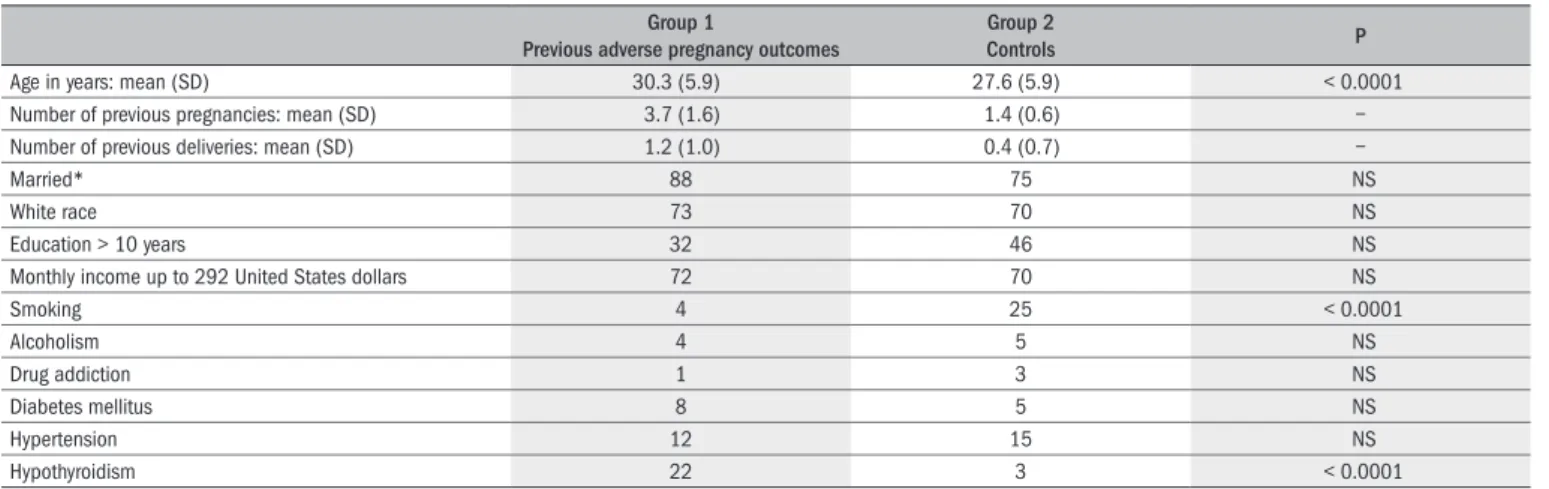
Table 1. Main characteristics of participants
All values expressed as percentages of 120 patients unless otherwise stated. *Legal or common law marriage. SD = standard deviation; NS = not signiicant.
time to take part (ten in group 2 and ive in group 1) and three (all in group 1) refused without specifying a motive.
As presented in Table 1, there were signiicant diferences between
the two groups regarding age (30.3 versus 27.6 years), smoking (4% ver-sus 25%), hypothyroidism (22% verver-sus 3%), mean number of previous pregnancies (3.7 versus 1.4) and mean number of previous deliveries (1.2 versus 0.4) (P < 0.0001 for all the variables).
he period between last delivery and the index pregnancy ranged from 12 to 36 months for both groups, with means of 23.6 and 22.8 months for groups 1 and 2, respectively. In group 1, there were 14 wom-en with a history of recurrwom-ent abortion, 49 with preterm deliveriesand ive with early neonatal deaths. Fifty-two women had histories of more than one adverse event: 36 had had three or more miscarriages, 14 had had more than one premature delivery and two had had more than one previous fetal death.
he SF-36 scores for each variable are shown in Table 2.
Statis-tically signiicant diferences were found between the two groups for each of the variables evaluated. here were signiicantly more women with symptoms of anxiety and depression in group 1 than in group 2 (Table 3).
DISCUSSION
It is impossible to fully comprehend the impact of adverse pregnan-cy outcomes on the subsequent pregnanpregnan-cy. However, some measure-ments may be able to show the efect of these outcomes on quality of life. Some of the consequences of previous pregnancy loss on the subse-quent pregnancy are relected in the results from the SF-36 domains. A study that investigated the psychometric properties of the SF-36 ques-tionnaire in relation to the index pregnancy conirmed that this tool could be used in clinical practice to measure quality of life on eight sub-scales during early pregnancy.24
unexpect-ed situation. hese events can generate anxiety during future pregnan-cies and afect the parents’ quality of life. Psychological and emotional stress and fatigue were identiied as factors that compromised the qual-ity-of-life domains.25
Perinatal loss has long-term efects.1 Pregnancy loss occurs at a time at
which a new life is expected, and there may be no visible child, memories or shared experiences. Moreover, society may not recognize the signii-cance of this type of loss for the parents.26 Several investigators have
de-scribed symptoms consistent with psychological disorders among parents with histories of previous perinatal loss.1,27 Approximately half of mothers
report high levels of symptoms of depression, thus placing them at high risk of depression.28 Reports in the literature show that the prevalence of
stress and symptoms of depression and anxiety are higher during pregnan-cy than during other periods of life, particularly among vulnerable pop-ulations.29 An association between symptoms of anxiety and depression
during pregnancy and adverse pregnancy outcomes such as preterm birth and low birth weight has been described in previous publications.30,31 In
the present study, women with histories of recurrent abortion, fetal death and early neonatal death had lower scores for physical functioning and greater body pain than women without this type of history. hey also had high rates of symptoms of depression. Physical symptoms were found to be associated with occurrences of depression and anxiety during preg-nancy, thus leading to the suggestion that afective disorders may increase somatic symptoms.25 Few studies tothis date have evaluated the
relation-ships between anxiety, depression and quality of life among pregnant women. Armstrong and Hutti found greater rates of anxiety during preg-nancy among women who had had a previous perinatal loss.28
Appraising the parents’ emotions during a pregnancy subsequent to a perinatal loss may lead to a better understanding of the needs of these families at critical moments.28 In a study on parents following a
perina-tal loss or sudden infant death, Vance et al. reported that a gradual
re-duction in the symptoms of depression and anxiety occurred over time. However, even 30 months after the loss, the parents continued to have almost twice as much psychological stress as shown by the parents in the control group.27 In addition, the current indings show that there is no
relationship between parents’psychological stress during a pregnancy subsequent to a perinatal loss and the development of their relationship with the fetus of the index pregnancy.1 Nevertheless, qualitative
com-ments in another study suggest that some parents attempt to delay the onset of their relationship with the baby.1,28 It is important to evaluate
the early development of relationships between parents and the fetus/ newborn infant, in order to identify the efect of prior pregnancy loss on this relationship.1
he recognition that anxiety and depression during pregnancy may be associated with adverse outcomes has led to a search for stress-reduc-ing interventions, with promisstress-reduc-ing results.32,33 Managing psychological
stress may afect the course of the current pregnancy, as well as the fu-ture relationship between the parents and the child.1
CONCLUSIONS
Women with histories of recurrent spontaneous abortion, fetal death, preterm birth or early neonatal death seem to have poorer qual-ity of life and greater symptoms of anxiety and depression during their subsequent pregnancy than do those without these adverse pregnancy outcomes.
REFERENCES
1. Armstrong DS. Impact of prior perinatal loss on subsequent pregnancies. J Obstet Gynecol Neonatal Nurs. 2004;33(6):765-73.
2. Franche RL, Mikail SF. The impact of perinatal loss on adjustment to subsequent pregnancy. Soc Sci Med. 1999;48(11):1613-23.
3. Horowitz M. Stress response syndromes. Character style and dynamic psychotherapy. Arch Gen Psychiatry. 1974;31(6):768-81.
4. Mason S, Rowlands A. Post-traumatic stress disorder. J Accid Emerg Med. 1997;14(6):387-91. 5. Adeyemi A, Mosaku K, Ajenifuja O, Fatoye F, Makinde N, Ola B. Depressive symptoms in a
sample of women following perinatal loss. J Natl Med Assoc. 2008;100(12):1463-8. 6. Armstrong DS. Emotional distress and prenatal attachment in pregnancy after perinatal
loss. J Nurs Scholarsh. 2002;34(4):339-45.
7. Cabrol D, Landesman R, Muller J, Uzan M, Sureau C, Saxena BB. Treatment of polyhydra-mnios with prostaglandin synthetase inhibitor (indomethacin). Am J Obstet Gynecol. 1987;157(2):422-6.
Group 1 (adverse outcomes) Group 2 (controls)
P Mean (SD) Median Mean (SD) Median
Physical functioning 52.7 (29) 55 74.3 (18.8) 75 < 0.0001
Physical role limitations 31.5 (35.3) 25 48.3 (39.9) 50 < 0.0001
Body pain 50.7 (22.8) 41.5 67.1 (23) 62 < 0.0001
General health 63.4 (24.7) 67 87.8 (15.3) 92 < 0.0001
Vitality 48 (21) 45 59.2 (22.6) 65 < 0.0001
Social functioning 56.4 (27.5) 50 67.1 (24.4) 62.5 0.0013
Emotional role limitations 36.9 (38.6) 33.3 63.3 (39.7) 66.7 0.0233
Mental health 55 (21.5) 56 71.2 (20.9) 76 < 0.0001
Anxiety 10.1 (3.9) 11 6.2 (3.7) 5.5 < 0.0001
Depression 6.3 (3.1) 6 3.9 (2.8) 3 < 0.0001
Number of cases 120 120
Table 2. Quality of life (Short Form-36) among women with previous adverse pregnancy outcomes (group 1) and controls (group 2)
Wilcoxon test, matched according to number of live children. SD = standard deviation.
Scores ≥ 8 Group 1 (adverse outcomes) Group 2 (controls) P*
n % n %
Anxiety 92 76.7 40 33.3 < 0.0001
Depression 39 32.5 12 10.0 < 0.0001
Table 3. Anxiety and depression (Hospital Anxiety and Depression Scale)
among women with previous adverse pregnancy outcomes (group 1) and controls (group 2)
8. Leboeuf-Yde C, Kyvik KO, Bruun NH. Low back pain and lifestyle. Part II--Obesity. Informa-tion from a populaInforma-tion-based sample of 29,424 twin subjects. Spine (Phila Pa 1976). 1999;24(8):779-83; discussion 783-4.
9. McDonnell NJ, Paech MJ. The management of a super morbidly obese parturient delivering twins by caesarean section. Anaesth Intensive Care. 2007;35(6):979-83.
10. Cunningham FG, Gant NF, Leveno KJ, Gilstrap LC, Hauth JC, Wenstrom KD. Abortion. In: Cunningham FG, Gant NF, Leveno KJ, Gilstrap LC, Hauth JC, Wenstrom KD, editors. Williams obstetrics. New York: McGraw-Hill; 2001. p. 855-82.
11. World Health Organization. Department of Reproductive Health and Research. Reproductive health indicators: guidelines for their generation, interpretation and analysis for global mo-nitoring. Geneva: World Health Organization; 1998.
12. Valdez RB, Ware JE Jr, Manning WG, et al. Prepaid group practice effects on the utilization of medical services and health outcomes for children: results from a controlled trial. Pediatrics. 1989;83(2):168-80.
13. Ciconelli RM, Ferraz MB, Santos W, Meinão I, Quaresma MR. Tradução para a língua por-tuguesa e validação do questionário genérico de avaliação de qualidade de vida SF-36 (Brasil SF-36) [Brazilian-Portuguese version of the SF-36. A reliable and valid quality of life outcome measure]. Rev Bras Reumatol. 1999;39(3):143-50.
14. Favarato MECS, Aldrighi JM. A mulher coronariopata no climatério após a menopausa: impli-cações na qualidade de vida [The post menopausal climacteric woman with coronary artery disease: implications to quality of life]. Rev Assoc Med Bras. 2001;47(4):339-45. 15. Neto JF, Ferraz MB, Cendoroglo M, Draibe S, Yu L, Sesso R. Quality of life at the initiation of
maintenance dialysis treatment--a comparison between the SF-36 and the KDQ question-naires. Qual Life Res. 2000;9(1):101-7.
16. Marques AA. Qualidade de vida de mulheres com endometriose através do SF-36 [disser-tation]. Campinas: Faculdade de Ciências Médicas da Universidade Estadual de Campinas; 2002.
17. Zigmond AS, Snaith RP. The hospital anxiety and depression scale. Acta Psychiatr Scand. 1983;67(6):361-70.
18. Smith EM, Gomm SA, Dickens CM. Assessing the independent contribution to quality of life from anxiety and depression in patients with advanced cancer. Palliat Med. 2003;17(6): 509-13.
19. Snaith RP. The Hospital Anxiety And Depression Scale. Health Qual Life Outcomes. 2003;1:29.
20. Botega NJ, Bio MR, Zomignani MA, Garcia Junior C, Pereira WAB. Transtornos do humor em enfermaria de clínica médica e validação de escala de medida (HAD) de ansiedade e depressão [Mood disorders among medical in-patients: a validation study of the hospital anxiety and depression scale (HAD)]. Rev Saude Publica = J Public Health. 1995;29(5): 355-63.
21. Ware JE Jr, Sherbourne CD. The MOS 36-item short-form health survey (SF-36). I. Concep-tual framework and item selection. Med Care. 1992;30(6):473-83.
22. Ware J Jr, Kosinski M, Keller SD. A 12-Item Short-Form Health Survey: construction of scales and preliminary tests of reliability and validity. Med Care. 1996;34(3):220-33.
23. Mckee MD, Cunningham M, Jankowski KR, Zayas L. Health-related functional status in preg-nancy: relationship to depression and social support in a multi-ethnic population. Obstet Gynecol. 2001;97(6):988-93.
24. Jomeen J, Martin CR. The factor structure of the SF-36 in early pregnancy. J Psychosom Res. 2005;59(3):131-8.
25. Kelly RH, Russo J, Katon W. Somatic complaints among pregnant women cared for in obs-tetrics: normal pregnancy or depressive and anxiety symptom ampliication revisited? Gen Hosp Psychiatry. 2001;23(3):107-13.
26. Côte-Arsenault D, Mahlangu N. Impact of perinatal loss on the subsequent pregnancy and self: women’s experiences. J Obstet Gynecol Neonatal Nurs. 1999;28(3):274-82. 27. Vance JC, Najman JM, Thearle MJ, Embelton G, Foster WJ, Boyle FM. Psychological changes
in parents eight months after the loss of an infant from stillbirth, neonatal death, or sudden infant death syndrome--a longitudinal study. Pediatrics. 1995;96(5 Pt 1):933-8. 28. Armstrong D, Hutti M. Pregnancy after perinatal loss: the relationship between anxiety and
prenatal attachment. J Obstet Gynecol Neonatal Nurs. 1998;27(2):183-9.
29. Lindgren K. Relationships among maternal-fetal attachment, prenatal depression, and heal-th practices in pregnancy. Res Nurs Healheal-th. 2001;24(3):203-17.
30. Bhagwanani SG, Seagraves K, Dierker LJ, Lax M. Relationship between prenatal anxie-ty and perinatal outcome in nulliparous women: a prospective study. J Natl Med Assoc. 1997;89(2):93-8.
31. Teixeira JM, Fisk NM, Glover V. Association between maternal anxiety in pregnancy and increased uterine artery resistance index: cohort based study. BMJ. 1999;318(7177): 153-7.
32. Hobel CJ, Ross MG, Bemis RL, et al. The West Los Angeles Preterm Birth Prevention Project I. Program impact on high-risk women. Am J Obstet Gynecol. 1994;170(1 Pt 1):54-62. 33. Dejin-Karlsson E, Hanson BS, Ostergren PO, Lindgren A, Sjöberg NO, Marsal K. Association
of a lack of psychosocial resources and the risk of giving birth to small for gestational age infants: a stress hypothesis. BJOG. 2000;107(1):89-100.
Sources of funding: Not declared
Conlict of interest: Not declared
Date of irst submission: February 1, 2008
Last received: May 20, 2009
Accepted: August 24, 2009
Address for correspondence: