
These parties are also represented in the steering group of the program together with the representatives of TEKES and Helsinki and Lappeenranta Universities of Technology. The research areas and focus of the program are defined in the proposal for the content and organization of the new research program. The main funding sources of the program in the year 2003 were KTM, Technical Research Center of Finland (VTT), Radiation and Nuclear Safety Authority (STUK), and the power companies Teollisuuden Voima Oy (TVO) and Fortum Oyj.
These sides are also represented in the steering group of the program together with representatives of Tekesa and the universities of technology in Helsinki and Lappeenranta.
Reactor core and fuel
Enhanced methods for reactor analysis (EMERALD)
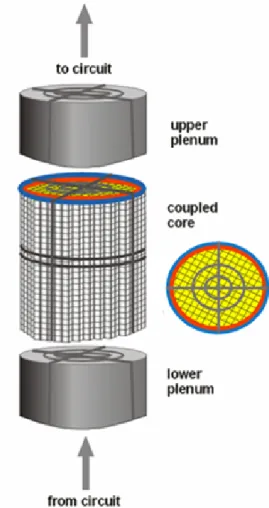
Data between the two codes is exchanged in each channel and in each node of the core. Both in terms of the modeling capability and the behavior of the numerical solution process, the robustness of the CFDPLIM thermal hydraulic solver has been improved. Members of the project team participated in the committee work of OECD/NEA (Nuclear Science Committee and Nuclear Development Committee), and the AER collaboration on the physics and safety of VVER-type reactors.
Members of the project team have participated in international courses on BWR stability and the use of the Monte Carlo code MCNP5, as well as in the national "Basic Professional Training Course on Nuclear Safety".
High-burnup upgrades in fuel behaviour modelling (KORU)
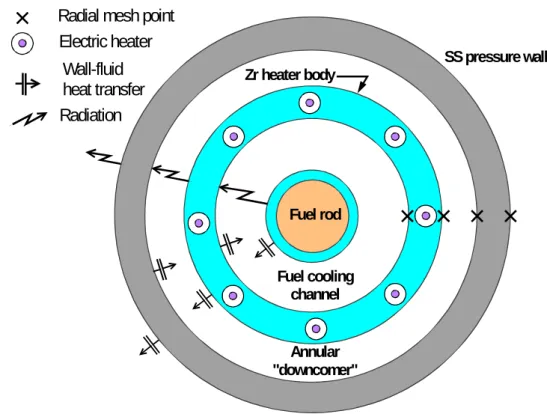
Testing of the iterative steady-state solution is in progress and should be completed in early 2004. Planning and pre-test prediction calculations will be performed for the HP LOCA test circuit and fuel using the FRAPTRAN/GENFLO code. Pre-test calculations for the Halden LOCA test series were made with ultimately good agreement of calculated and measured temperatures.
Participation in the work of the Halden program group and the OECD/CSNI Special Expert Group on Fuel Safety Margins.
Reactor circuit and structural safety
- Integrity and life time of reactor circuits (INTELI)
- Ageing of the Function of the Containment Building (AGCONT)
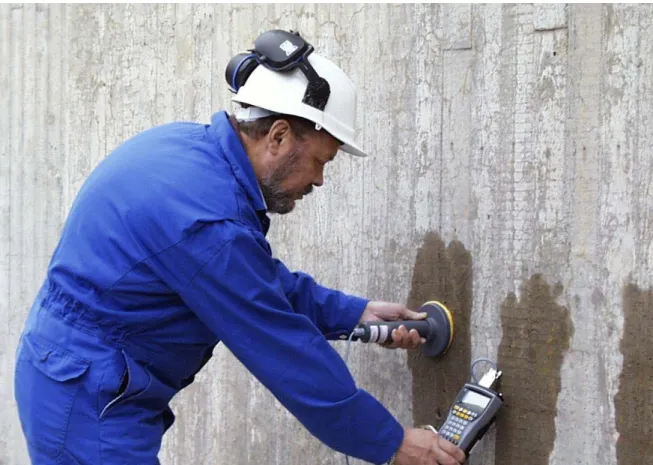
- Participation in the OECD NEA Task Group Concrete Ageing (CONAGE)
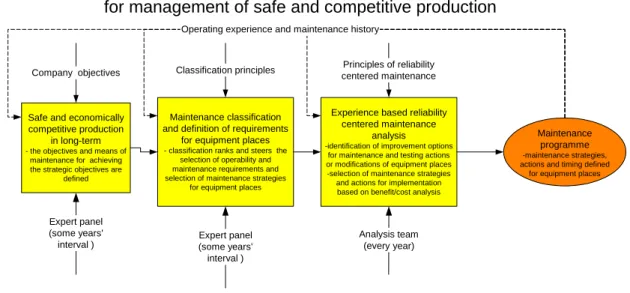
- Concrete Technological Studies Related to the Construction, Inspection and
A report on the review of recent developments regarding the implementation of the LBB principle has been completed, focusing on SINTAP, R6 Rev. The objective of the project was to participate in the activity of the concrete Working Group of OECD/KAM/IAG. Attended the annual meeting of the OECD/NEA/IAG Concrete GP in Paris on 15-16 April 2003.
Participation in the annual meeting of the OECD/NEA/IAGE CONCRETE WG in Paris on 15-16 April 2003.

Containment and process safety functions
- Wall Response to Soft Impact (WARSI)
- The Integral Code for Design Basis Accident Analyses (TIFANY)
- Thermal Hydraulic Analysis of Nuclear Reactors (THEA)
- Severe Accidents and Nuclear Containment integritY (SANCY)
- Fission product gas and aerosol particle control (FIKSU)
- Development of Aerosol Models to Nuclear Applications (AMY)
- Emergency preparedness supporting studies (OTUS)
- Archiving experiment data (KOETAR)
- Condensation pool experiments (POOLEX)
The aim of the first subtask (Support to Experiments) was to simulate with APROS the non-condensable gas tests performed with the PACTEL program. As part of the continuation of international programs, one of the tasks for 2003 was to participate in the writing of a state-of-the-art report on nuclear aerosols within the framework of the OECD/GAMA program. In addition, within the framework of the project, monitoring and cooperation of major international research projects in the field of severe disasters is carried out.
A state-of-the-art study had to be carried out into the remaining uncertainties of serious accidents. The material properties of the first sample set were tested and the results showed some minor changes. The aim of the work at VTT is to use the data obtained from Phebus experiments in the development of models for the emission and transport of fission products.
VTT should actively participate in the analysis of the deposition of fission products, resuspension and revaporization in the primary circuit of the test facility. Planning for the air intrusion experiment, Phebus STLOC, is expected to begin at the next Phebus rendezvous. The controls of the experimental device had to be adapted to the elevated temperatures of the experiments.
The OTUS project aimed to improve emergency preparedness in Finnish nuclear power plants with two specific tasks. In the first task, the PSA2 analyzes performed for the fuel supply and maintenance outage of the Olkiluoto nuclear power plant served as a starting point. In the final preliminary test series with a blow-off pipe DN200, however, the performance limits of the pool can be reached.
Preliminary tests have shown that the maximum measurement frequency of the current combination of instruments and data acquisition system is not suitable for use in actual steam tests in 2004.

Automation, control room and information technology
Interaction approach to development of control rooms (IDEC)
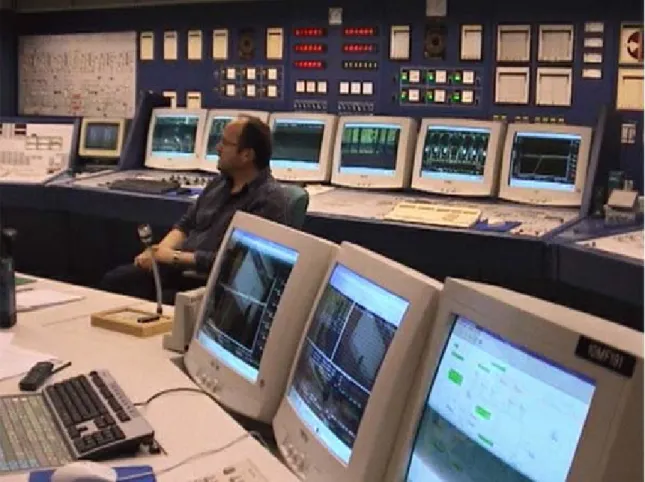
The inclusion of the PACTEL facility in the next phase of the OECD/SETH program has been introduced. The training simulators of the Loviisa and Olkiluoto plants and the experimental control room of Fortum Nuclear Services were used in the IDEC project. A literature review on existing NPP design standards and recent literature related to the evaluation and design of UIs of complex systems.
The analysis of the data collected during the research began with the preliminary assessment framework.
Application Possibilities of Systematic Requirements Management in the
It was found that the focus of the identified ReM practices was on defining stakeholder requirements and on software production. Essential approaches and key practices related to the ReM for use by authorities have been identified in the project and its key principles have been described. The safety control of new and operational nuclear power plants was identified as an area of application of ReM practices for authorities and the procurement of new nuclear power plants and the retrofitting of operational installations for utilities.
An experimental ReM procedure was developed to control the nuclear safety of the FIN5 nuclear power plant. The results showed that ReM was included in the standards in different ways and to varying degrees, and only some of them are good enough for systematic ReM.
Organisations and safety management
Organisational culture and management of change (CulMa)
A study of outsourcing and the use of contractors in the nuclear power industry was carried out. The study is based on a literature survey and a set of interviews conducted at Olkiluoto nuclear power plant. Results were reported both orally at the plant and in writing in two research reports (one in Finnish and the second in English).
A scientific article on the general outline of the CAOC methodology was written and submitted for publication. A scientific article on the use of core task modeling in cultural assessment has been published. Three conference presentations were also held, two scientific articles are in preparation, and two full papers and one summary of various conferences to be held in 2004 were presented.
The project personnel also participated in the NKS-R/Safety Management Network coordinated by Prof. Project personnel have also contributed to the EU LearnSafe project coordinated by Prof.

Risk-informed safety management
Potential of Fire Spread (POTFIS)
A technique has been developed for performing Monte Carlo simulations with two different physical fire models of varying complexity. TMMC now features a new Monte Carlo engine, the random sampling and post-processing part is already self-made, and commercial @RISK software is no longer needed, fire modeling using the OZONE area model and fire modeling using used FDS. The simulation scenario was selected by the TVO plant, selected from the list of ten best scenarios.
However, during the factory visit, the scenario was changed to an electronics room and the necessary input data was collected. An extensive literature review on the theoretical and experimental problem of flame spread was conducted and reported. Based on recent progress, especially in microgravity research, analytical, simultaneous, stable flame propagation models were designed.
The development of a simple test bench began by conducting experiments on vertical samples and adding new measuring instruments one by one with the aim of measuring relevant parameters from real samples. Participation in an international joint project for the evaluation of fire models for use in nuclear power plants (ICP).

Principles and Practices of Risk-Informed Safety MAnagement (PPRISMA) 46
To study classification problems occurring in the safety management context from a decision theory point of view. To participate in the OECD/CSNI/RISK task "Framework for HRA Information Exchange." The purpose of the task is to define a framework for gathering HRA-related information and use this information to obtain more credible and reproducible probabilities of human failure events in PSA. Based on the group work with Fortum, the analysis method was applied to a new fire scenario.
Participation and presentations in the Nordic PSA group meeting, the JRC/ESReDA Seminar on Safety Investigations of accidents and ESReDA Working Groups and the FISA 2003. Participation in the OECD/NEA/CSNI/WGOE/COMPSIS meeting and participation and presentation in the OECD /NEA/CSNI/ WGOE & SEGHOF Workshop. The total volume of the projects financed by KTM amounted to €3.6 million and the total volume of the other four projects amounted to €0.5 million.
The planned and realized financing and expenses of the KTM-funded projects are indicated in Figure 3.1. The share of personnel costs was approximately 80 % of the annual expenditure, as illustrated in Figure 3.2. Planned and realized financing in the KTM-funded projects of SAFIR in 2003. A more detailed survey of the planned and realized costs and funding for the KTM-funded projects is given in Table 3.1.
The number of scientific publications is low primarily for two reasons: 1) during the first year of the new programme, the research is not 'ripe' for scientific publication, especially in the experimental projects, and 2) a part of the projects has deliberately aimed at publication. of the results that the research institute reports. The information about the research carried out in SAFIR has been communicated formally via the quarterly progress reports, the program's annual report and the program's www pages. Nuclear power plant safety research A proposal for content and organization of the new research programme.
THE STEERING GROUP, THE REFERENCE GROUPS AND THE SCIENTIFIC STAFF FOR THE PROJECTS AND THEIR.
![Figure 1.2. Division of the twelve major future safety challenges into the six research areas of SAFIR [1]](https://thumb-eu.123doks.com/thumbv2/9pdfco/19361068.0/7.892.154.710.664.1039/figure-division-major-future-safety-challenges-research-safir.webp)



![Figure 2.9. Acceleration spectra [g] of node 340 in all three global directions in the main case](https://thumb-eu.123doks.com/thumbv2/9pdfco/19361068.0/25.892.163.730.175.497/figure-acceleration-spectra-node-global-directions-main-case.webp)
