NUDGING SUSTAINABLE FOOD CONSUMPTION: A DUTCH CASE STUDY WHICH NUDGES ENCOURAGE DUTCH CONSUMERS TO
CONSUME SUSTAINABLE FOOD PRODUCTS?
Maxime Kosterman (S4979990)
Master Thesis, M.sc. Sustainable Entrepreneurship University of Groningen, Campus Fryslân
Wirdumerdijk 34, 8911 CE, Leeuwarden Email: [email protected]
Tel: +31 6 571 840 50
June 9, 2022 7.575 words
Supervised by prof. dr. Galt de Jong Email: [email protected]
ABSTRACT
Nowadays, global society uses more resources and creates more pollution than the Earth can handle, leading to adverse effects such as global warming. The environmental harm can be reduced when individuals change their eating habits towards sustainable food products. One way to encourage people to make sustainable food choices is by nudging. This study aims to gain insight into nudges or combinations of nudges on eco-friendly food products that stimulate sustainable food consumption among Dutch consumers. The data is collected through a case study with Holie, a Dutch sustainable breakfast brand. Using data from two focus group discussions with Holie's target group, this study shows that sustainable food consumption can be encouraged when food packaging consists of two nudging techniques: traffic light labels of carbon emissions and injunctive norm labels. However, both labels must contain visual and textual information. In the context of traffic light labels, participants are encouraged when there is a textual quantification of the product's environmental impact combined with a symbol of a footprint or a leaf. Participants are triggered by injunctive norm labels when they receive textual confirmation that they are making a positive quantified contribution to the world combined with a smiley symbol.
Keywords: Sustainable food consumption, barriers sustainable food consumption, descriptive norm labels, injunctive norm labels, traffic light labels of carbon emissions.
TABLE OF CONTENTS
1. INTRODUCTION ... 3
2. THEORY ... 6
2.1SUSTAINABLE FOOD CONSUMPTION ... 6
2.2BARRIERS TO SUSTAINABLE FOOD CONSUMPTION ... 7
2.2.1 High prices ... 8
2.2.2 Lack of information ... 8
2.3ENCOURAGING SUSTAINABLE FOOD CONSUMPTION THROUGH NUDGING ... 9
2.3.1 Descriptive norm labels and injunctive norm labels ... 10
2.3.2 Traffic light labels of carbon emissions ... 11
3. METHODOLOGY ... 14
3.1CASE DESCRIPTION ... 14
3.2FOCUS GROUP DISCUSSIONS ... 15
3.3INTERVIEW GUIDELINE ... 16
3.4PRE-TEST ... 17
3.5DATA ANALYSIS ... 17
3.6ETHICAL CONSIDERATIONS ... 17
4. FINDINGS ... 19
4.1TRAFFIC LIGHT LABELS OF CARBON EMISSIONS ... 19
4.1.1 Visual information ... 19
4.1.2 Textual information ... 20
4.1.3 Visual and textual information ... 21
4.2SOCIAL NORM LABELS ... 22
4.2.1 Descriptive norms ... 22
4.2.2 Injunctive norms ... 23
4.3MAIN FINDINGS ... 24
5. DISCUSSION ... 26
5.1CONCLUSION AND DISCUSSION ... 26
5.2RECOMMENDATIONS ... 28
5.2.1 Practical recommendations ... 28
5.2.2 Theoretical recommendations ... 28
5.3LIMITATIONS AND FUTURE RESEARCH ... 29
BIBLIOGRAPHY ... 31
APPENDIX A ... 37
APPENDIX B ... 40
APPENDIX C ... 41
APPENDIX D ... 45
APPENDIX E ... 46
APPENFIX F ... 47
APPENDIX G ... 51
1. INTRODUCTION
Since 1970, global society has used more resources each year than the Earth can handle. More specifically, humanity nowadays uses 1.75 times the Earth's capacity to fulfill its needs (Global Footprint Network, 2022). Due to the continued growth of the world population (9.6 billion by 2050), the demand for resources, such as food, will increase significantly in the coming decades (Gerber et al., 2013; McMichael, Powles, Butler, & Uauy, 2007). Exceeding Earth’s regenerative capacity leads to many adverse effects, such as accelerating global warming. As a result, ice caps are melting, sea levels are rising, and extreme weather conditions are occurring worldwide (NOAA National Centers for Environmental Information, 2016). To decrease environmental damage, changing consumer behavior towards sustainable food products, such as plant-based foods, is becoming increasingly important since small changes in individual diets can significantly reduce environmental harm. For example, not eating meat one day a week saves 2.0 kg of CO2 equivalent per person in climate change or 11.2 km with an average car (Broekema, 2022).
Although the growing awareness that sustainable food consumption can positively affect the Earth's quality of life, few people change their eating habits (Loy, Wieber, Gollwitzer, &
Oettingen, 2016). Most studies (BEUC, 2020; Hansmann, Baur, & Binder, 2020; Vermeir et al., 2020) describe that high prices and lack of environmental-related information are the main constraints. Nonetheless, there are different ways for consumers to be encouraged towards sustainable foods. In particular, food producers, retailers, restaurants, and supermarkets play an essential role since they decide what food is available to the consumer (Dawson, 2013; Lehner, 2015). One way to encourage sustainable food consumption is by nudging. The nudge theory is a behavioral economics concept about influencing an individual's decision without limiting choice or significantly changing economic incentives (Thaler & Sunstein, 2009). Nudging techniques appears in different forms, and the number and diversity are continually growing
(Sunstein, 2014). Some nudges that could stimulate sustainable food consumption are sustainable labels or social norm labels on product packaging. Sustainable labels are logos on product packaging that help consumers make faster, informed, eco-friendly choices. Examples of sustainable labels are traffic light labels (e.g., red, amber, green) that display the product’s carbon emissions or CO2-equivalent, which is a measurement used to quantify the effects of various greenhouse gases on the ecosystem (Pancer, McShane, & Noseworthy, 2017;
Vlaeminck, Jiang, & Vranken, 2014). Such labels can take a visual or textual form but can also contain a combination of both. Moreover, research shows that social norm labels can also encourage behavioral change (Melnyk, van Herpen, Fischer, & van Trijp, 2013). In general, two categories are generally differentiated in the literature on social norms: descriptive and injunctive norms (Cialdini, Kallgren, & Reno, 1991). A descriptive norm gives people information about the ‘normal’ behavior shown by their peers; for example, a quote that 85% of Dutch students do recycling could result in more recycling since people get motivated to follow their peers’
behavior (Nolan, Schultz, Cialdini, Goldstein, & Griskevicius, 2008). An injunctive norm gives people information on what is approved or disapproved by others. For instance, give information to persons by showing a green, happy smiley when they are saving energy and a red, sad smiley when they exceed their energy consumption. Such behavioral nudge can be a useful tool in achieving energy savings (Delmas & Lessem, 2014; Legros & Cislaghi, 2020).
To the best of the researcher’s knowledge, it is clear from the existing literature that the effectiveness of the previously mentioned nudging techniques has been mainly applied to encouraging recycling behavior, reducing energy consumption, and promoting healthy eating (Cecchini & Warin, 2016; Delmas & Lessem, 2014; Melnyk et al., 2013) and not in stimulating sustainable food choices. Therefore, it is interesting to examine the influence of (i) social norm labels, i.e., descriptive and injunctive norm labels, and (ii) sustainable labels, i.e., traffic light labels (e.g., visual, textual, or a combination), of carbon emissions on sustainable food products.
In addition, this study is also motivated by a request from Holie, a sustainable breakfast brand that sells plant-based granolas, cereals, and oatmeals without added sugars. One of the co- founders of Holie explained that the choices for sustainability claims and labels on its product packaging are now mainly based on assumptions instead of testing the effectiveness with its target group. Therefore, the food brand wants to know which nudges encourage their target group to purchase Holie products. Holie's target group, which this study will focus on, exist of highly educated Dutch people between 24 and 30 years old who live in Amsterdam and occasionally consume sustainable food products (Co-founder Holie 2022, pers. comm., 17 March). This study aims to gain insight into nudges or combinations of nudges on eco-friendly food products that stimulate sustainable food consumption among Dutch consumers. Moreover, the study will answer the following research question: "Which nudges encourage Dutch consumers to consume sustainable food products?".
To answer the research question, this study uses a qualitative research approach in the form of a case study. Primary data is collected through two focus group discussions with the target group of Holie. This study is relevant for three reasons. Firstly, this study adds knowledge in the literature on which nudges encourage sustainable food consumption. Secondly, when it is clear which nudges is most effective, Holie can take immediate action by communicating these nudges on their food packaging. Thirdly, when nudging increases the number of people eating sustainable food, this will contribute to a more sustainable world (Aaldijk, 2015). This study is structured as follows. Chapter 2 will offer the theoretical background of sustainable food consumption, the two main barriers, and provide insight into the different nudging types that could encourage sustainable food consumption. Furthermore, chapter 3 will discuss the methodology section of this study, followed by a presentation of the analyzed findings in chapter 4. Finally, chapter 5 will discuss the concluding findings and the practical and theoretical recommendations, limitations, and suggestions for future research.
2. THEORY
Chapter 2 provides the relevant theories of this study. It gives an overview of existing literature related to sustainable food consumption and its two main barriers. In addition, different types of nudging, focusing on social norm labels and traffic light labels that could encourage consumers to eat sustainably, will be explained.
2.1 Sustainable food consumption
Food is an essential part of everyday life, but at the same time, it also contributes to environmental problems such as global warming and extreme weather conditions (Aaldijk, 2015). The global food consumption of families accounts for more than 60% of greenhouse gas emissions and about 65% of total natural resource use (Ivanova et al., 2016). Several studies (Hedin, Katzeff, Eriksson, & Pargman, 2019; Magrini et al., 2018; Vandenbroele, Vermeir, Geuens, Slabbinck, & Van Kerckhove, 2020) describe that changing consumer behavior towards sustainable diets is becoming increasingly important since a small change can reduce environmental damage. For example, not eating meat one day a week saves 2.0 kg of CO2
equivalent per person in climate change or 11.2 km with an average car (Broekema, 2022).
The concept of sustainable food consumption does not yet have a generally accepted definition, but several attempts have been made to sharpen and clarify the concept (Azzurra, Massimiliano,
& Angela, 2019; Reisch, Eberle, & Lorek, 2013). According to Gorgitano & Sodano's (2014) definition, sustainable food consumption should be: "meet safety, political and environmental requirements, such as safe, healthy, and nutritious diets for everyone; viable livelihood for farmers, processors, and retailers; animal welfare; environment protection; biodiversity safeguard; energy saving; minimum waste." Another description which has emerged in several studies (Marques, 2021; Vermeir et al., 2020) is Environmentally Sustainable Food
Consumption (ESFC). ESFC can be defined as the use of food products "that respond to basic needs and bring a better quality of life, while minimizing the use of natural resources, toxic materials and emissions of waste and pollutants over the life cycle, so as not to jeopardize the needs of future generations (Vermeir et al., 2020)". Nonetheless, the researcher defines sustainable food consumption as the use of food products that fulfills the basic needs and is responsibly produced with respect for people, animals, and the environment so that the needs of future generations are not endangered. Moreover, insect-based foods (Caparros Megido et al., 2016), plant-based foods (Lea, Crawford, & Worsley, 2006), and seasonal foods (Macdiarmid, 2014) are examples of food products that fall within sustainable consumption. Furthermore, different studies (de Boer & Aiking, 2019; O’Mara, 2011) reveal that food products with high CO2 emissions, such as red meat (e.g., beef and pork), should be avoided by consumers as much as possible. Researchers at Oxford University contributes to this and found that when global consumption of animal food products is reduced by 50%, about 73% of the greenhouse gas emission reduction of a plant-based diet can be achieved (Poore & Nemecek, 2018).
2.2 Barriers to sustainable food consumption
Although the growing awareness that sustainable food consumption can positively affect the Earth's quality of life, few people change their eating habits (Loy et al., 2016). Several studies (Caruana, Carrington, & Chatzidakis, 2016; Young, Hwang, McDonald, & Oates, 2010) have shown a' gap' between attitude and behavior when it comes to the actual purchase of sustainable food products. Studies have revealed that while 30% to 50% of consumers intend to buy sustainable food, the market share of these products is often below 5% of total sales. This phenomenon is also known as the attitude-behavior gap. According to Vittersø & Tangeland (2015), various barriers hinder consumers from consuming sustainable food. However, most studies (BEUC, 2020; Hansmann et al., 2020; Vermeir et al., 2020) describe that high prices and
lack of environmental-related information are the main constraints for consumers to consume environmentally friendly food.
2.2.1 High prices
Research carried out by Schumacher (2010) indicated that many consumers perceive sustainable food products as expensive, which is often why the commodities are not purchased. Moreover, van Doorn & Verhoef (2011) indicate that the higher prices of environmentally friendly food products discourage consumers from buying them. Several research studies (Paul & Rana, 2012;
Torres-Ruiz, Vega-Zamora, & Parras-Rosa, 2018) support these observations and point out that consumers mention high prices as obstacles to implementing green consumerism. The study of Mai & Hoffmann (2012) contributes to this and found that the prices of sustainable products are one of the main factors affecting consumers' purchasing decisions. Moreover, this finding is remarkable since consumers often think that a more expensive product is of better quality than a low-price choice (Shiv, Carmon, & Ariely, 2005). In contrast, Newman, Gorlin, & Dhar (2014) indicate that when a company deliberately makes a product more sustainable, consumers are more likely to think that resources have been diverted from other attributes, identifying the product as lower in functional condition.
2.2.2 Lack of information
According to Jacobsen & Dulsrud (2007), a lack of reliable and sufficient information to make better choices may also be a barrier for consumers to consume sustainable food products. The study of Terlau & Hirsch (2015) contributes to this and shows that consumers often feel overwhelmed by a large amount of information. Moreover, the European Consumer Organization (BEUC) studied the consumer attitude towards sustainable food across 11 European countries, including the Netherlands. The study revealed several barriers that make
consumers less likely to consume sustainable food. Concerning information on sustainable food products, the next two obstacles emerged among consumers: hard time identifying sustainable foods at stores and the lack of sufficient and solid information to make sustainable food choices.
In addition, the study found that consumers find it challenging to select environmentally friendly food products due to the inconsistent and sometimes contradictory messages (BEUC, 2020).
According to Shahrin et al. (2017), society is increasingly confronted with misleading green claims, also known as “greenwashing,” with the growth of sustainable food products. Delmas &
Burbano (2011) state that greenwashing is the attribute to the combination of two behaviors of companies, namely poor environmental performance, and positive advertising of environmental performance. Moreover, firms can use various cues such as a specific images, colors, or eco- labels to make a food product appear more environmentally friendly than it truly is (Pancer et al., 2017; Pomeranz, 2013).
2.3 Encouraging sustainable food consumption through nudging
Food producers, retailers, restaurants, and supermarkets play an essential role in changing consumer behavior towards sustainable diets because they decide what food is available (Dawson, 2013; Lehner, 2015). The study of Blackwell, Miniard, & Engel (2006) confirmed this observation and indicates that companies are suitable for praising and supporting behavioral change. One way to encourage sustainable food consumption is by nudging (Delmas & Lessem, 2014; Lehner, Mont, & Heiskanen, 2016). The nudge theory is a behavioral economics concept initially initiated in 2008 by Richard Thaler and Cass Sunstein. According to these scholars, the concept is about influencing an individual's decision without limiting choice or significantly changing economic incentives (Thaler & Sunstein, 2009). Nudging, therefore, differs from actions to make sustainable consumption more economically attractive, such as subsidies for
solar panels. Moreover, it does not impose restrictions such as banning plastics but instead embraces the freedom of choice for the customer (Sunstein, 2018).
Furthermore, governments worldwide implement nudging initiatives in society to change individual behavior in pursuit of policy objectives (Benartzi et al., 2017; Schubert, 2017; van der Linden, Maibach, & Leiserowitz, 2015). However, research carried out by Guthrie, Mancino, &
Lin (2015) indicates that anyone can design and implement a nudge, which means that it does not necessarily have to be a policymaker with a lot of influence and resources to put a nudge into action. Nudging techniques can come in different forms, and the number and diversity are continually growing (Sunstein, 2014). Some examples of nudges that have been investigated to push sustainable food choices are using the color green on packaging (Pancer et al., 2017), disseminating information about the social norm of how fellow group members behave (Trijp, 2012), and setting ‘green’ defaults (Sunstein & Reisch, 2013). In addition, using environmentally friendly labels on packaging (Bougherara & Combris, 2009) and placing sustainable food products in a horizontal arrangement in the middle of a retail shelf are also forms of nudging (Trijp, 2012). However, this study will not cover all these nudging techniques but will only focus on descriptive norm labels, injunctive norm labels, and traffic light labels of carbon emissions on sustainable food products.
2.3.1 Descriptive norm labels and injunctive norm labels
According to Cialdini & Trost (1998), social norms are defined as: "rules and standards that are understood by members of a group that guides and/or constrain social behavior without the force of laws." In the literature on social norms, two categories of norms are generally differentiated:
descriptive and injunctive norms (Cialdini, Kallgren, & Reno, 1991). Descriptive norms give people information about their peers' 'normal' behavior; for example, a quote that 85% of the
Dutch students do recycling. This could lead to better recycling behavior among students since they copy their peers' behavior. Research carried out by Nolan, Schultz, Cialdini, Goldstein, &
Griskevicius (2008) indicates that individuals are susceptible to the behavior of the majority, especially when an individual experiences a degree of uncertainty.
Furthermore, while descriptive norms are about what other people do, injunctive norms focus on telling people what to do (Legros & Cislaghi, 2020). An example of an injunctive norm is to send student houses an energy consumption report with a green, happy smiley whether they are performing in a socially desirable way (i.e., reducing energy) and a red, sad smiley when they exceed their energy consumption (Delmas & Lessem, 2014). More precisely, injunctive norms provide information about what behavior is approved or disapproved by others (van Teunenbroek, Bekkers, & Beersma, 2021). This norm is mainly driven by consumers who want to fulfill their obligations, avoid punishment, or obey authority (Hornsey, Majkut, Terry, &
McKimmie, 2003). In the context of social norm labels, various studies (Delmas & Lessem, 2014; Melnyk et al., 2013) have examined the influence of social norm labels on recycling behavior or reducing energy consumption. Moreover, there have also been studies that have examined social norm labels in conjunction with encouraging healthy eating (Salmivaara &
Lankoski, 2021; Stok, de Ridder, de Vet, & de Wit, 2014). However, little research has been done on whether these insights also apply to sustainable food products.
2.3.2 Traffic light labels of carbon emissions
To encourage consumers to consume in an environmentally friendly way, information dissemination such as sustainable labels on food are often used within Europe (Vandenbroele et al., 2020). Sustainable labels, are logos on product packaging that help consumers make faster informed sustainable choices (Pancer et al., 2017). Moreover, several studies (Tang, Fryxell, &
Chow, 2004; Xue & Muralidharan, 2015) have shown that such labels can take a visual or textual form but can also contain a combination of both. However, scholars have an ongoing discussion as to which form or combination of forms is most effective to change consumer behavior.
Research carried out by Mitchell (1986) indicates that individuals are better at remembering visual information than textual information and thereby more likely to change their behavior.
This finding can be explained by the picture superiority effect, in which images are recognized earlier than words. Nonetheless, some studies (Mccarthy, Heath, & Milberg, n.d.; Wolin, Korgaonkar, & Lund, 2002) have a different view and state that textual information has a more positive effect on product attitude because it informs consumers better about the product than a symbol alone.
Moreover, the combination of visual and textual information has also received considerable attention from scholars. Research carried out by Tang, Fryxell, & Chow (2004) indicates that if a consumer is exposed to both forms of information, knowledge will be stored in memory more quickly, leading to more favorable product attitudes. A sustainable label that can be either textual, visual, or a combination of both and that could encourage sustainable food consumption is the traffic light label (e.g., red, amber, green) of carbon emissions (Spaargaren, van Koppen, Janssen, Hendriksen, & Kolfschoten, 2013; Vlaeminck, Jiang, & Vranken, 2014). This is a promising nudging tool because consumers intuitively better understand that the color red is a 'bad' choice and that green is a 'good' choice (Signal et al., 2008). However, much research has been done into traffic light labels on food products to give the consumer insight into whether their food is healthy (green or low) or not (red or high) (Cecchini & Warin, 2016; Graham &
Jeffery, 2011) and not on the effectiveness of traffic light labels of carbon emissions on sustainable food products.
Overall, to the best of the researcher’s knowledge, it is clear from the existing literature that there is insufficient information available on the effectiveness of descriptive norm labels, injunctive norm labels, and traffic light labels (e.g., visual, textual, or a combination) of carbon emissions on stimulating environmentally friendly foods. Therefore, it is interesting to see which nudges contribute to encouraging sustainable food among consumers.
3. METHODOLOGY
Chapter 3 explains how the research question will be answered by collecting primary data based on a case study. In addition, it provides an overview of how the data will be processed and the ethical considerations.
3.1 Case description
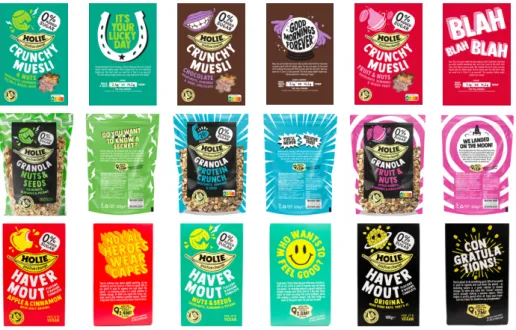
The case study centers on a Dutch sustainable food brand, Holie, and its target group. Holie is an eco-friendly breakfast brand currently sold in ten different (online) supermarkets in the Netherlands, Belgium, and Germany. Nowadays, Holie has twelve distinctive food products: six granolas, three oatmeals, and three cereals; all plant-based and without added sugars. In addition, the brand meets the highest standards in terms of social and environmental impact by their B Corp certificate (B Corp, 2022). Furthermore, Holie has several sustainability claims and labels on its product packaging to encourage consumers to consume sustainably (see Figure 1).
However, during an interview on 2 December 2021, one of Hollie’s Co-founders explained that the food brand bases its choices mainly on assumptions instead of testing the effectiveness with its target group. Holie’s target group is highly educated people between 24 and 30 years who live in cities and occasionally consume sustainable food products.
Figure 1: Holie’s sustainability claims and labels
3.2 Focus group discussions
According to Marsden & Wright (2010), qualitative research and specific interviews can address relevant and vital issues for data and information that is insufficiently researched. Therefore, data is collected through two mini focus group discussions in which a group of people is brought together to discuss a specific topic guided by a moderator. Due to limited time and resources, the focus group discussions consist of 4 - 5 participants instead of the classic focus group comprising 6 - 12 participants. In addition, a smaller focus group offers a more private atmosphere in which participants may be more open to expressing their opinions (Bell, Bryman,
& Harley, 2018), which the researcher considers very important because it gives a better picture of the opinions of all participants. The first focus group discussion consists of 5 participants and the second focus group of 4 participants. All participants are highly educated Dutch people between 24 and 30 years old who live in Amsterdam and occasionally consume sustainable food products. Moreover, this specific group of people is chosen as it includes the characteristics of Holie’s target group, on which its sales and marketing statements are based.
The participants are selected by the purposeful sampling method and approached through snowball sampling. This means that only participants who could provide informed answers regarding the research question are invited (Bell et al., 2018). The researcher uses the connection of a potential participant to gain other participants from the same target group (Sedgwick, 2013).
All participants are approached via email or by WhatsApp message. Moreover, the focus group discussions take place at Holie's main office in Amsterdam on a Saturday at 11:30 p.m., as this day and time are most suitable for the participants. Furthermore, each focus group discussion takes approximately one and a half hours.
you are doing a great job since
this muesli is less harmful to the environment than traditional muesli brands
3.3 Interview guideline
To obtain the completeness of the interview guide and match the data of Holie with the traffic light labels of carbon emissions and social norm labels, an interview with one of the co-founders of Holie was conducted (Co-founder Holie 2022, pers. comm., 17 March). The interview guideline serves as a basis for the focus group discussions and is available in Dutch (see Appendix 1). The questioning strategy adopted in the focus group discussions combined the more structured approach of Richards & Sang (2016) and the somewhat open-ended approach used by Tyler & Cohen (2010). The discussion structure is as follows: first, it will start with an introduction of the research purpose and the critical points of the research informed consent.
Afterwards, the participants receive the research informed consent to sign if they agree (see Appendix 2). Secondly, participants receive questions regarding sustainable food consumption, five nudging techniques and the effect of these nudges (see Figures 2,3,4,5 and 6). Thirdly, at the end of the discussion, participants get the question which nudge(s) encourage(s) them to consume sustainable food products and what could be done to make these nudge(s) even more attractive.
ECO
SCOREECO
SCORE
B ECO
SCORE
A B C D E
ECO
SCORELower Medium Higher
Lower CO2
ECO
SCORE0.65kg Co2e/kg climate footprint
Lower Medium Higher
over 2.5 million people
have eaten this granola before you
60% less co2 will be emitted
switch to plant-based food if the 54 wealthiest countries
B ECO
SCORE 0.65kg Co2e/kg
climate footprint
A B C D E
all the people
who bought this granola, regreened an average of 3.5 m2 of land
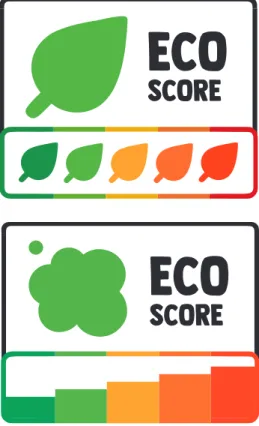
Figure 2: traffic light labels (visual)
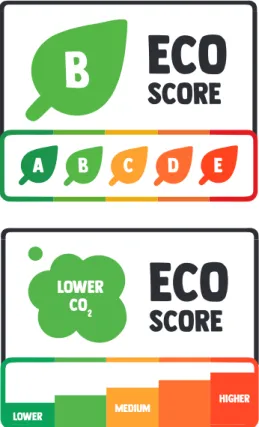
Figure 3: traffic light labels (textual)
Figure 4: traffic light labels (visual and textual)
Figure 5: descriptive norm labels
Figure 6: injunctive norm labels
3.4 Pre-test
To improve the quality of the data, a pre-test focus group discussion is held with one of the co- founders of Holie. The pre-test tests whether the questions from the interview guideline are clear and suitable for this study (see Appendix 3). Doing such a pre-test helps identify ambiguities and, therefore, improves the quality of the questionnaire (Bell et al., 2018). During the pre-test, the participant was asked for extensive feedback on what he thinks of the questions and what he misses. The feedback provided is included in the new version of the interview guideline.
3.5 Data analysis
According to Bell, Bryman, & Harley (2018), a focus group discussion can be difficult to transcribe because the participants of a discussion often talk interchangeably. To avoid loss of data, the authors indicate that it is beneficial to record focus group discussions. This study will use video and audio recordings during the two focus group discussions (see Appendix 4). Based on the recordings, the focus group discussions are fully transcribed (see Appendix 5) and coded (see Appendix 6). However, the focus group discussions are held in Dutch, therefore, the transcripts and coding are processed accordingly. The transcriptions are written out in a Word File and coded with the computer software ATLAS.ti. By moving back and forth between sections of the text, the researcher develops a clear understanding that provides deep insight into the logic of the argumentation that emerged during the focus group discussions. By using three different research methods (i.e., desk research, focus group discussions, and an interview), methodological triangulation is applied (Bekhet & Zauszniewski, 2012).
3.6 Ethical considerations
In line with the academic integrity standards of the University of Groningen, the researcher complies with the Dutch Code of Conduct for Scientific Integrity (NWO). In order to guarantee
the NWO, this study pursues the five principles: honesty, diligence, transparency, independence, and responsibility (KNAW et al., 2018). In addition, this study embraces ethical considerations by allowing participants to participate voluntarily in focus group discussions, asking participants in advance if they wish to remain anonymous, and using the data collected confidentially for this research only.
4. FINDINGS
Chapter 4 presents the main findings. The findings can be described in five themes that address the topics of trust, understanding the underlying message, and the level of encouragement to select a sustainable food product.
4.1 Traffic light labels of carbon emissions 4.1.1 Visual information
The data shows that visual information on traffic light labels of carbon emissions on Holie products causes a wide range of reactions in terms of trustworthiness.
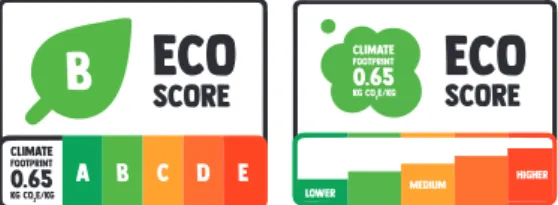
Many participants indicate that they do not trust the labels because seeing only visual information creates ambiguity. According to the participants, the labels do not say enough to know what the underlying message is. When they see the labels, several questions come up, such as: "What is bad, then? is it equal to a kind of slave trade?", "Is it based on the journey it has made?" or "Is it based only on the product inside the packaging or also the packaging?". In addition, the symbols on the
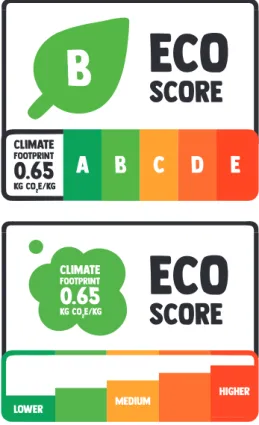
labels are also confusing. Participants indicate that they do not know the meaning behind the leaf and cloud symbols. For example, the cloud symbol is associated with a 'paint spot' and a 'think cloud.' Nevertheless, a few participants indicate that they trust the labels because they won’t overthink their meaning. Participant 7 indicated: "I would not even think about it that much, and therefore I think I would trust it." Furthermore, it is striking that, even though the level of trust is low and the underlying message of the labels is unclear, the vast majority of participants is
ECO SCORE
ECO SCORE
Figure 7: traffic light labels (visual)
encouraged to select an Holie product in the supermarket. Participant 8 stated: "No, it does not say much, but I think when I am in the supermarket, I will fall for it." On the other hand, a few participants indicate that the labels would not be a decisive factor in whether or not to buy an Holie product.
4.1.2 Textual information
The focus group discussions reveal that textual information on traffic light labels of carbon emissions on Holie products leads to a great deal of trust among all participants. The labels are more straightforward with the textual information, and participants value this highly. Participants 6 stated: "Yes, you now have the choice to see what is better and less good, when you are in a supermarket." Although the textual information provides a bit more clarity, the message behind the labels is not necessarily more evident to the participants.
Participant 8 indicated: "So the underlying message, you understand it, but it is still vague because there is not
much specific information on it." The label with words (e.g., lower, medium, and higher) confuses the participants because the words do not give any insight into what a lower or higher CO2 emission means. Moreover, the confusion also applies to the label with the letters (e.g., ABC score). The participants indicate that they would like to read what the letters are based on.
Participant 3 said: "I really like the fact that it is a B, but I really want to read why it is a B." Although the underlying messages behind the labels are not well understood, the encouragement to select an Holie product with those labels is still high among most participants.
B ECO
SCORE
A B C D E
ECO SCORE
Lower Medium Higher
Lower CO2
Figure 8: traffic light labels (textual)
However, the participants indicate that the label with the ‘ABC score’ is more encouraging because it is easier to understand than the label containing the ‘lower CO2 score.’
4.1.3 Visual and textual information
The data demonstrates that the participants attach great value to a combination of visual and textual information on traffic light labels of carbon emissions on Holie products. Furthermore, it turns out that the numerical expression creates a high degree of trust. For example, participants indicate that when a food brand explicitly quantifies its environmental impact, it comes across as if the brand is serious about its climate footprint.
Participant 8 said: "Whether you put 1 or 3 or 0.65 here, the fact that you calculated it just means that you are working on it, and I trust that." However, it also emerges that two participants do not trust the labels
because they do not understand the quantification. This goes hand in hand with not understanding the underlying message of the labels. Even though most participants indicate that they have confidence in the quantification, it turned out that they did not understand what the labels were trying to communicate. Participant 9 stated: "for me, it is a yes at first glance, but when I start thinking about it, I do not really get it." The labels (e.g., 0.65 kg CO2 E/kg) do not appeal to the imagination of the participants. The participants indicate that they need a frame of reference. The data shows that participants are generally encouraged by the combination of visual and textual information on traffic light labels.
B ECO
SCORE
0.65
kg Co2e/kgclimate
footprint
A B C D E
ECO SCORE
0.65
kg Co2e/kgclimate
footprint
Lower Medium Higher
Figure 9: traffic light labels (visual & textual)
4.2 Social norm labels 4.2.1 Descriptive norms
The focus group discussions reveal contradictory reactions to the descriptive norm labels on Holie products. Despite that both labels provide information about the behavior of other consumers, there is little confidence in the label where the number of people is specifically communicated (e.g., about 2.5 million people).
Participants indicate they have no trust because the number of people is rounded off too nicely.
Another given reason is that the label feels
boastful. Furthermore, many participants do not find the sustainability message behind this label clear. Participant 7 states: "This says nothing to me about sustainability." They associate the label's underlying message with the product's taste instead of sustainability. Moreover, the data shows that the participants do not feel special when they see the label on an Holie product and therefore are not encouraged to purchase it.
On the other hand, most participants generally trust the label in which 'all the people' is communicated. However, it is surprising that the quantification of the product’s impact on the planet (e.g., regreened an average of 3.5 m2 of land), and not the descriptive norm information (e.g., all the people who bought this granola), boosts the participants’ trust. Participant 6 says: "I would have confidence because then I would know that this company is not just only focusing on selling, but also doing something back for the world." Furthermore, most participants understand the message of this label. In addition, they also indicate that reading the word 'regreened' gives
over 2.5 million people
have eaten this granola before you
all the people
who bought this granola,
regreened an average of 3.5 m2 of land
Figure 10: Descriptive norm labels
them the feeling that they are doing good for the planet. The data shows that the message, which the label tries to convey, encourages participants to buy Holie products. Participant 7 indicated:
“You immediately give back 3.5 m2 of land, so to me, you are doing something right when you buy the product.”
4.2.2 Injunctive norms
The data shows that most participants trust injunctive norm labels on Holie products. The label specifying that 60% less CO2 will be emitted if the 54 wealthiest countries switch to plant-based food is trusted based on the factual information it displays. The responses (e.g.,
“I do not think this has anything to do with Holie”; “No, this is just a general fact”) indicate that participants do not gain confidence in the product itself. This contrasts the label that addresses participants personally with the text you are doing a great job. According to the
participants, this personal message increases trust in the product itself. Participant 6 indicated:
"This is great because it is addressed to you, so this already has my trust." The participants trust this because they assume that Holie has properly researched this information first. Furthermore, there are several reactions from the participants about whether or not they understand the underlying message of the labels. In general, the participants understand the personally addressed message more than the label with the factual information. This is because the participants feel that the display of the factual information lacks a link to the product. Participant 9 says the
60% less co2 will be emitted
switch to plant-based food if the 54 wealthiest countries
you are doing a great job since
this muesli is less harmful to the environment than traditional muesli brands
Figure 11: Injunctive norm labels
following about this label: "It says so little about this product and about you if you buy this product." The reactions to the personal message are positive and unambiguous. Participants feel that the message comes across strongly because the label aims explicitly at them. However, the participants comment that they missed some of the information with this label. They want to see more information provided through quantification or explanation. Nevertheless, participants indicate that they are encouraged to buy the product despite the need for more specific information. The encouragement mainly combines visual (e.g., the smiley) and textual information (e.g., you are doing a great job). The personal aspect plays an essential role for the participants. The encouragement misses in the label with the factual information, as it does not trigger the participants.
4.3 Main findings
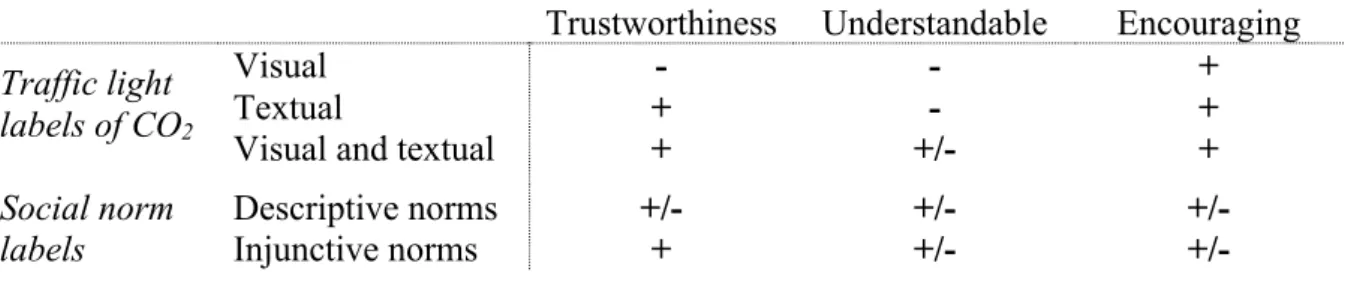
The table below summarizes the main findings of the two focus group discussions.
Based on the data, the combination of visual and textual information has the most positive impact on the participants to make sustainable food choices. They get encouraged when seeing traffic light labels of carbon emissions by combining colors and letters regarding the eco-score (e.g., ABC score). The symbol that displays the eco-score plays an important role here. The participants prefer a symbol of a leaf or a footprint, as they associate it with sustainability.
Furthermore, they attach great value to the quantification of the environmental impact. The participants get also triggered by injunctive norm labels, whose message is directed at themselves. They get mainly triggered by the textual confirmation that they are making a positive
Trustworthiness Understandable Encouraging Traffic light
labels of CO2
Visual - - +
Textual + - +
Visual and textual + +/- +
Social norm
labels Descriptive norms +/- +/- +/-
Injunctive norms + +/- +/-
Table 1: Main findings
quantified contribution to the world, especially when it is communicated in combination with a visual, such as a smiley.
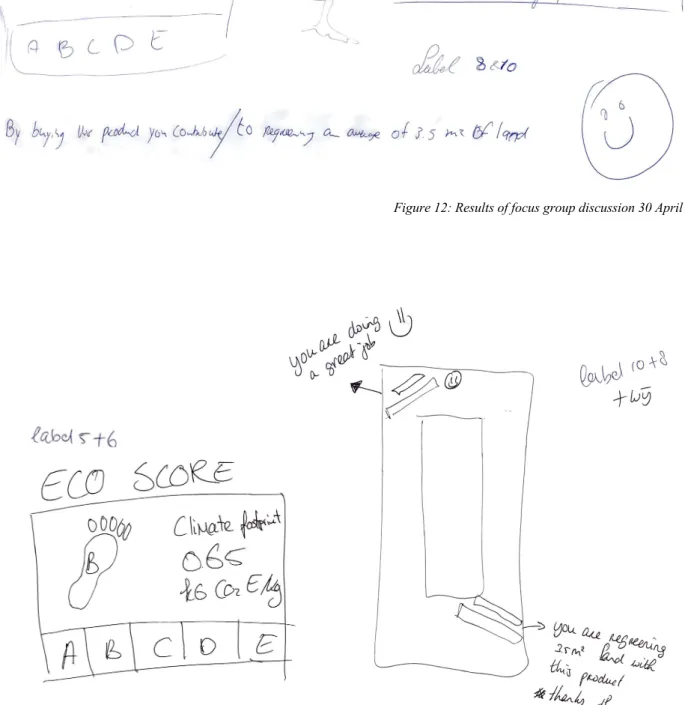
At the end of the focus group discussions, the participants had to design their ideal labels (see Appendix 7). The participants of both focus group discussions independently designed labels that addressed the combination of visual and textual information. In addition, they incorporated a personal message and a quantification of the environmental impact in the labels using words, symbols, and colors.
5. DISCUSSION
Chapter 5 concludes and discusses the main findings regarding the five nudging techniques that encourage sustainable food consumption based on the previously outlined theory. Additionally, some practical and theoretical recommendations, as well limitations, and future research, are discussed.
5.1 Conclusion and discussion
This study investigates the following research question: "Which nudges encourage Dutch consumers to consume sustainable food products?". For this purpose, two focus group discussions are held with Holie's target group to determine which five nudging techniques on eco-friendly food products positively affect purchasing decisions.
From the findings of this study, it can first be concluded that the participants are encouraged to make sustainable food choices when a food product contains a label with both visual and textual information. This finding applies to traffic light labels of carbon emissions and injunctive norm labels. For example, it is found that participants are triggered by visual information on traffic light labels of carbon emissions when an eco-score (e.g., ABC score) displays a symbol of a leaf or a footprint. In addition, the findings shows that the combination with textual information on such labels is reinforcing when the environmental impact of the food product is quantified by combining colors and letters regarding the eco-score. These findings align with the research conducted by Tang, Fryxell, & Chow (2004), which shows that when consumers are exposed to a combination of visual and textual information, knowledge is stored in the memory more quickly, which leads to a more favorable attitude towards the product. In contrast, Mitchell's (1986) research revealed that individuals are better able to remember visual information than textual information, and thereby more likely to change their behavior, which is not supported in this study. The participants indicate that they do not well understand the symbol's meaning when
seeing labels with only visual information. In addition, the findings of this study also show contradictions with other studies (Mccarthy et al., n.d.; Wolin et al., 2002). These studies revealed that only textual information on a product positively affects the purchasing decision because it informs consumers better about the product than a symbol alone. Although textual information provides a bit more clarity, the message behind the label does not necessarily become more evident to the participants in this study.
Moreover, it can be concluded that the participants are encouraged by injunctive norm labels because the underlying message is directed at them. They are not encouraged by descriptive norm labels where the underlying message gives information about what their peers do. This finding contradicts the research conducted by Nolan, Schultz, Cialdini, Goldstein, &
Griskevicius (2008), which showed that individuals are susceptible to the behavior of the majority and are therefore more likely to be stimulated to exhibit the same behavior.
Furthermore, the participants get triggered when they receive visual and textual information which indicates that they are acting in a socially desirable manner. The visual information on injunctive norm labels (e.g. a symbol of a smiley) in combination with textual information (e.g.
text that quantifies the product’s positive contribution to the planet) triggers the participants, which is also supported by Tang, Fryxell, & Chow's (2004) research.
To conclude, sustainable food consumption can be encouraged when a food product consists of two nudging techniques: traffic light labels of carbon emissions and injunctive norm labels.
However, both labels must contain visual and textual information because this ultimately leads to more favorable product attitudes.
5.2 Recommendations
5.2.1 Practical recommendations
The findings of this study seek to guide practitioners in the sustainable food industry who want to encourage consumers to make sustainable food choices through nudging techniques on food packaging. By providing a comprehensive overview of five different nudges, this study gives insight into the nudges that sustainable food brands can use to encourage consumers in their purchasing decisions. Sustainable food brands should consider the implementation of labels with both visual and textual information in the form of a traffic light label of carbon emissions and injunctive norm label. These findings can help companies in their quest to make a positive contribution to the planet while improving their business performance. Furthermore, this study addresses Holie's need to understand better which labels on product packaging encourage consumers to consume an Holie product. These findings are valuable to Holie as the food brand based its choices mainly on assumptions instead of testing the effectiveness with its target group.
In addition, the findings of this study demonstrate that labels with only visual or textual information are insufficient to encourage consumers to make sustainable food choices. These findings apply to traffic light labels of carbon emissions and injunctive norm labels. Descriptive norm labels also appear to be insufficient in the encouragement and should not be implemented by Holie in the future.
5.2.2 Theoretical recommendations
This study fulfills the need for further theory development on the influence of traffic light labels of carbon emissions on sustainable food products, as no previous research had been done on its effectiveness. The theory shows that traffic light labels have been mainly applied to food products to give consumers insight into whether the food is healthy (green or low) or not (red or high) (Cecchini & Warin, 2016; Delmas & Lessem, 2014; Melnyk et al., 2013). This study has
taken the first step for researchers, interested in encouraging sustainable food choices through nudges, by providing new insights. From here, researchers can go deeper into the subject and help in their pursuit of a sustainable world. Moreover, this study also contributes to the theory in the context of social norm labels. Nowadays, various studies have examined the influence of social norms on recycling behavior or reducing energy consumption. In addition, some studies have examined the combination of social norms and encouraging healthy eating. However, little research has been done on whether these insights apply to sustainable food products, meaning that the findings within this study enrich the current theory. These findings are valuable for researchers because it gives insight into which social norm label(s) they can further focus on to encourage sustainable food consumption.
5.3 Limitations and future research
There are several limitations within this study, which point to areas for future research. Firstly, this study focuses on which nudges, or a combination of nudges on Holie products, encourage highly educated Dutch people between 24 and 30 years old who live in Amsterdam and occasionally consume sustainable food products. This study, therefore, focuses on a particular organization, target group, and city. However, decreasing environmental damage by changing consumer behavior towards sustainable food products is a global issue. It is unclear whether implementing traffic light labels of carbon emissions and injunctive norm labels (e.g., visual and textual) on other sustainable food products encourage a more comprehensive set of people in other countries to make environmentally friendly food choices. Future research is needed to provide new insights into whether these nudges can also be applied to diverse, sustainable food products in other countries and a larger population.
Secondly, since several participants speak simultaneously in a focus group discussion, this study runs the risk of some participants expressing more than others. For example, some people do not talk as quickly in a group as others, leading to socially desirable behavior by agreeing with the general opinion. This study could risk not generalizing the findings, as only the dominant participants' responses are obtained, not those of the less prevalent speakers. This could lead to a result in which the sample is not representative and may detract from external validity. Future research could capitalize on this limitation of a focus group discussion by first having the participants fill in a short survey before the discussion starts. By doing so, the participants can think independently about their preference for the nudges.
Lastly, this study is constrained by limited time and resources, which means that no more than two focus group discussions could occur. However, the reader should remember that the number of focus group discussions in a given study is somewhere between 8 and 12 (Bell et al., 2018).
Even though the number of focus group discussions was small, this study achieved theoretical saturation. Nonetheless, future research should maintain the recommended number of focus groups from the literature since there is always the possibility that the responses are particular to that one group. Therefore, future research must be conducted over a more extended period to determine whether the point of theoretical saturation has also been reached in a larger group of people.
Bibliography
Aaldijk, I. 2015. Bevorderen effectiviteit duurzaamheidskeurmerken Rapport, 23.
Azzurra, A., Massimiliano, A., & Angela, M. 2019. Measuring sustainable food consumption:
A case study on organic food. Sustainable Production and Consumption, 17: 95–107.
B Corp. 2022. B Corp Certification demonstrates a company’s entire social and environmental impact. https://www.bcorporation.net/en-us/certification.
Bekhet, A. K., & Zauszniewski, J. A. 2012. Methodological triangulation: An approach to understanding data. Nurse Researcher, 20(2): 40–43.
Bell, E., Bryman, A., & Harley, B. 2018. Business Research Methods. Oxford University Press.
Benartzi, S., Beshears, J., Milkman, K. L., Sunstein, C. R., Thaler, R. H., et al. 2017. Should Governments Invest More in Nudging? Psychological Science, 28(8): 1041–1055.
BEUC. 2020, June 2. One bite at a time: Consumers and the transition to sustainable food.
https://www.beuc.eu/publications/one-bite-time-consumers-and-transition-sustainable- food.
Blackwell, R. D., Miniard, P. W., & Engel, J. F. 2006. Consumer behavior. South-Western Pub.
Bougherara, D., & Combris, P. 2009. Eco-labelled food products: What are consumers paying for? European Review of Agricultural Economics, 36(3): 321–341.
Broekema, R. 2022. Verantwoording campagne Nationale Week Zonder Vlees & Zuivel 2022, 40.
Caparros Megido, R., Gierts, C., Blecker, C., Brostaux, Y., Haubruge, É., et al. 2016. Consumer acceptance of insect-based alternative meat products in Western countries. Food Quality and Preference, 52: 237–243.
Caruana, R., Carrington, M. J., & Chatzidakis, A. 2016. “Beyond the Attitude-Behaviour Gap:
Novel Perspectives in Consumer Ethics”: Introduction to the Thematic Symposium.
Journal of Business Ethics, 136(2): 215–218.
Cecchini, M., & Warin, L. 2016. Impact of food labelling systems on food choices and eating behaviours: A systematic review and meta-analysis of randomized studies. Obesity Reviews, 17(3): 201–210.
Cialdini, R. B., Kallgren, C. A., & Reno, R. R. 1991. A Focus Theory of Normative Conduct: A Theoretical Refinement and Reevaluation of the Role of Norms in Human Behavior. In M.
P. Zanna (Ed.), Advances in Experimental Social Psychology, vol. 24: 201–234.
Academic Press.
Cialdini, R. B., & Trost, M. R. 1998. Social influence: Social norms, conformity and compliance.
The handbook of social psychology, Vols. 1-2, 4th ed: 151–192. New York, NY, US:
McGraw-Hill.
Dawson, J. 2013. Retailer activity in shaping food choice. Food Quality and Preference, 28(1):
339–347.
de Boer, J., & Aiking, H. 2019. Strategies towards healthy and sustainable protein consumption:
A transition framework at the levels of diets, dishes, and dish ingredients. Food Quality and Preference, 73: 171–181.
Delmas, M. A., & Burbano, V. C. 2011. The Drivers of Greenwashing. California Management Review, 54(1): 64–87.
Delmas, M. A., & Lessem, N. 2014. Saving power to conserve your reputation? The effectiveness of private versus public information. Journal of Environmental Economics and Management, 67(3): 353–370.
Gerber, P. J., Steinfeld, H., Henderson, B., Mottet, A., Opio, C., et al. 2013. Tackling climate change through livestock: A global assessment of emissions and mitigation opportunities.
Tackling Climate Change through Livestock: A Global Assessment of Emissions and
Mitigation Opportunities.
https://www.cabdirect.org/cabdirect/abstract/20133417883?q=(bn%3A%2297892510792 01%22).
Global Footprint Network. 2022. World Footprint. https://www.footprintnetwork.org/our- work/ecological-footprint/.
Gorgitano, M. T., & Sodano, V. 2014. Sustainable food consumption: Concept and policies.
Quality - Access to Success, 15: 207–212.
Graham, D. J., & Jeffery, R. W. 2011. Location, Location, Location: Eye-Tracking Evidence that Consumers Preferentially View Prominently Positioned Nutrition Information.
Journal of the American Dietetic Association, 111(11): 1704–1711.
Guthrie, J., Mancino, L., & Lin, C.-T. J. 2015. Nudging Consumers toward Better Food Choices:
Policy Approaches to Changing Food Consumption Behaviors. Psychology & Marketing, 32(5): 501–511.
Hansen, P. G. 2016. The Definition of Nudge and Libertarian Paternalism: Does the Hand Fit the Glove? European Journal of Risk Regulation, 7(1): 155–174.
Hansmann, R., Baur, I., & Binder, C. R. 2020. Increasing organic food consumption: An integrating model of drivers and barriers. Journal of Cleaner Production, 275: 123058.
Hedin, B., Katzeff, C., Eriksson, E., & Pargman, D. 2019. A Systematic Review of Digital Behaviour Change Interventions for More Sustainable Food Consumption. Sustainability, 11(9): 2638.
Hornsey, M. J., Majkut, L., Terry, D. J., & McKimmie, B. M. 2003. On being loud and proud:
Non-conformity and counter-conformity to group norms. British Journal of Social Psychology, 42(3): 319–335.
Ivanova, D., Stadler, K., Steen-Olsen, K., Wood, R., Vita, G., et al. 2016. Environmental Impact Assessment of Household Consumption: Environmental Impact Assessment of Household Consumption. Journal of Industrial Ecology, 20(3): 526–536.
Jacobsen, E., & Dulsrud, A. 2007. Will Consumers Save The World? The Framing of Political Consumerism. Journal of Agricultural and Environmental Ethics, 20(5): 469–482.
Kim, M., & Lennon, S. 2008. The effects of visual and verbal information on attitudes and purchase intentions in internet shopping. Psychology and Marketing, 25(2): 146–178.
KNAW, NFU, NWO, TO2-Federatie, Vereniging Hogescholen, et al. 2018. Nederlandse gedragscode wetenschappelijke integriteit. Data Archiving and Networked Services (DANS). https://doi.org/10.17026/DANS-2CJ-NVWU.
Lea, E. J., Crawford, D., & Worsley, A. 2006. Consumers’ readiness to eat a plant-based diet.
European Journal of Clinical Nutrition, 60(3): 342–351.
Legros, S., & Cislaghi, B. 2020. Mapping the Social-Norms Literature: An Overview of Reviews. Perspectives on Psychological Science, 15(1): 62–80.
Lehner, M. 2015. Translating sustainability: The role of the retail store. (A. P. S. Z. and P. W.
T. Dr Anne Wiese, Ed.)International Journal of Retail & Distribution Management, 43(4/5): 386–402.
Lehner, M., Mont, O., & Heiskanen, E. 2016. Nudging – A promising tool for sustainable consumption behaviour? Journal of Cleaner Production, 134: 166–177.
Loy, L. S., Wieber, F., Gollwitzer, P. M., & Oettingen, G. 2016. Supporting Sustainable Food Consumption: Mental Contrasting with Implementation Intentions (MCII) Aligns
Intentions and Behavior. Frontiers in Psychology, 7.
https://www.frontiersin.org/article/10.3389/fpsyg.2016.00607.
Macdiarmid, J. I. 2014. Seasonality and dietary requirements: Will eating seasonal food contribute to health and environmental sustainability? Proceedings of the Nutrition Society, 73(3): 368–375.
Magrini, M.-B., Anton, M., Chardigny, J.-M., Duc, G., Duru, M., et al. 2018. Pulses for Sustainability: Breaking Agriculture and Food Sectors Out of Lock-In. Frontiers in Sustainable Food Systems, 2: 64.
Mai, R., & Hoffmann, S. 2012. Taste lovers versus nutrition fact seekers: How health consciousness and self-efficacy determine the way consumers choose food products.
Journal of Consumer Behaviour, 11(4): 316–328.
Marques, S. 2021. Creating a guidebook for developing sustainable food habits at daycare.
http://www.theseus.fi/handle/10024/502671.
Marsden, P. V., & Wright, J. D. 2010. Handbook of survey research. Bingley, UK: Emerald.
Mccarthy, M. S., Heath, T. B., & Milberg, S. J. n.d. New Brands Versus Brand Extensions, Attitudes Versus Choice: Experimental Evidence for Theory and Practice, 17.
McMichael, A. J., Powles, J. W., Butler, C. D., & Uauy, R. 2007. Food, livestock production, energy, climate change, and health. The Lancet, 370(9594): 1253–1263.
Melnyk, V., van Herpen, E., Fischer, A. R. H., & van Trijp, H. C. M. 2013. Regulatory fit effects for injunctive versus descriptive social norms: Evidence from the promotion of sustainable products. Marketing Letters, 24(2): 191–203.
Mitchell, A. A. 1986. The Effect of Verbal and Visual Components of Advertisements on Brand Attitudes and Attitude Toward the Advertisement. Journal of Consumer Research, 13(1):
12–24.
Newman, G. E., Gorlin, M., & Dhar, R. 2014. When Going Green Backfires: How Firm Intentions Shape the Evaluation of Socially Beneficial Product Enhancements. Journal of
Consumer Research, 41(3): 823–839.
NOAA National Centers for Environmental Information. 2016. Global Climate Report—
Annual 2015. https://www.ncdc.noaa.gov/sotc/global/201513.
Nolan, J. M., Schultz, P. W., Cialdini, R. B., Goldstein, N. J., & Griskevicius, V. 2008.
Normative Social Influence is Underdetected. Personality and Social Psychology Bulletin, 34(7): 913–923.
O’Mara, F. P. 2011. The significance of livestock as a contributor to global greenhouse gas emissions today and in the near future. Animal Feed Science and Technology, 166–167:
7–15.
Paivio, A. 1971. Imagery and verbal processes. New York: Holt, Rinehart and Winston.
Pancer, E., McShane, L., & Noseworthy, T. J. 2017. Isolated Environmental Cues and Product Efficacy Penalties: The Color Green and Eco-labels. Journal of Business Ethics, 143(1):
159–177.
Paul, J., & Rana, J. 2012. Consumer behavior and purchase intention for organic food. Journal of Consumer Marketing, 29(6): 412–422.
Pomeranz, J. L. 2013. A Comprehensive Strategy to Overhaul FDA Authority for Misleading Food Labels. American Journal of Law & Medicine, 39(4): 617–647.
Poore, J., & Nemecek, T. 2018. Reducing food’s environmental impacts through producers and consumers. Science, 360(6392): 987–992.
Reisch, L., Eberle, U., & Lorek, S. 2013. Sustainable food consumption: An overview of contemporary issues and policies. Sustainability: Science, Practice and Policy, 9(2): 7–
25.
Richards, J., & Sang, K. 2016. Trade unions as employment facilitators for disabled employees.
The International Journal of Human Resource Management, 27(14): 1642–1661.
Rossiter, J. R., & Percy, L. 1980. Attitude Change through Visual Imagery in Advertising.
Journal of Advertising, 9(2): 10–16.
Salmivaara, L., & Lankoski, L. 2021. Promoting Sustainable Consumer Behaviour Through the Activation of Injunctive Social Norms: A Field Experiment in 19 Workplace Restaurants.
Organization & Environment, 34(3): 361–386.
Schubert, C. 2017. Green nudges: Do they work? Are they ethical? Ecological Economics, 132:
329–342.
Schumacher, I. 2010. Ecolabeling, consumers’ preferences and taxation. Ecological Economics, 69(11): 2202–2212.
Sedgwick, P. 2013. Snowball sampling. BMJ, 347: f7511.
Shahrin, R., Quoquab, F., Jamil, R., Mahadi, N., Mohammad, J., et al. 2017. Green “Eco-Label”
or “Greenwashing”? Building Awareness About Environmental Claims of Marketers.
Advanced Science Letters, 23(4): 3205–3208.
Shiv, B., Carmon, Z., & Ariely, D. 2005. Placebo Effects of Marketing Actions: Consumers May Get What They Pay For. Journal of Marketing Research, 42(4): 383–393.
Signal, L., Lanumata, T., Robinson, J.-A., Tavila, A., Wilton, J., et al. 2008. Perceptions of New Zealand nutrition labels by Māori, Pacific and low-income shoppers. Public Health Nutrition, 11(7): 706–713.
Spaargaren, G., van Koppen, C. S. A. (Kris), Janssen, A. M., Hendriksen, A., & Kolfschoten, C.
J. 2013. Consumer Responses to the Carbon Labelling of Food: A Real Life Experiment in a Canteen Practice. Sociologia Ruralis, 53(4): 432–453.
Stok, F. M., de Ridder, D. T. D., de Vet, E., & de Wit, J. B. F. 2014. Don’t tell me what I should do, but what others do: The influence of descriptive and injunctive peer norms on fruit consumption in adolescents. British Journal of Health Psychology, 19(1): 52–64.
Sunstein, C. R. 2014. Nudging: A Very Short Guide. Journal of Consumer Policy, 37(4): 583–
588.
Sunstein, C. R. 2018. “Better off, as judged by themselves”: A comment on evaluating nudges.
International Review of Economics, 65(1): 1–8.
Sunstein, C. R., & Reisch, L. 2013. Green by Default. Kyklos, 66(3): 398–402.
Tang, E., Fryxell, G. E., & Chow, C. S. F. 2004. Visual and Verbal Communication in the Design of Eco-Label for Green Consumer Products. Journal of International Consumer Marketing, 16(4): 85–105.
Terlau, W., & Hirsch, D. 2015. Sustainable Consumption and the Attitude-Behaviour-Gap Phenomenon—Causes and Measurements towards a Sustainable Development, 16.
Thaler, R., & Sunstein, C. 2009. NUDGE: Improving Decisions About Health, Wealth, and Happiness. Nudge: Improving Decisions about Health, Wealth, and Happiness, vol. 47.
Torres-Ruiz, F. J., Vega-Zamora, M., & Parras-Rosa, M. 2018. False Barriers in the Purchase of Organic Foods. The Case of Extra Virgin Olive Oil in Spain. Sustainability, 10(2): 461.
Trijp, J. C. M. van. 2012. Helpt “nudgen” bij een gezonde en duurzame keuze? : Zes nudges en de keuze voor duurzaam of gezond voedsel. Den Haag: Schuttelaar & Partners.
Tyler, M., & Cohen, L. 2010. Spaces that Matter: Gender Performativity and Organizational Space. Organization Studies, 31(2): 175–198.