C A S E R E P O R T S UDC:615.065::615.9 DOI: 10.2298/VSP1208707P
Severe acute caffeine poisoning due to intradermal injections:
mesotherapy hazard
Teško akutno trovanje kofeinom usled intradermalnih injekcija: opasnost od
mezoterapije
Nataša Perkoviü Vukþeviü*, Gordana Babiü*, Zoran Šegrt*, Gordana Vukoviü Ercegoviü*, Snežana Jankoviü†, Ljubomir Aüimoviü†
*Clinic for Emergency and Clinical Toxicology, †Institute of Scientific Information, Military Medical Academy, Belgrade Serbia; †Faculty of Medicine, University of
Belgrade, Belgrade, Serbia
Abstract
Introduction. Caffeine is indicated in the treatment of migraine headaches, as well as neonatal apnea and brady-cardia syndrome. In mild poisoning, the most prevalent symptoms are nausea, vomiting, diarrhea, tremor, anxiety and headache. In more severe cases, symptoms consist of heart rythym abnormalities, myocardial infarction and sei-zures. Due to its common lipolytic effect, caffeine is used in mesotherapy, usually in combination with drugs of similar effect. We presented a patient with acute iatrogenic caffeine poisoning. Case report. A 51-year-old woman, with preexisting hypertension and hypertensive cardiomy-opathy was subjected to cosmetic treatment in order to remove fat by intradermal caffeine injections. During the treatment the patient felt sickness, an urge to vomit, and a pronounced deterioration of general condition. Upon ex-amination, the patient exhibited somnolence, hypotension and nonsustained ventricular tachycardia, which was suffi-cient enough evidence for further hospitalization. On ad-mission to the intensive care unit the patient was anxious with increased heart rate, normotensive, with cold, damp skin, and visible traces of injection sites with surrounding hematomas on the anterior abdominal wall. Paroxysmal supraventricular tachycardia (PSVT) on
electrocardio-graphic monitoring was found. The laboratory analysis determined a lowered potassium level of 2.1 mmol/L (normal range 3,5 – 5.2 mmol/L), and a toxicological analysis (liquid chromatography with ultraviolet detection) proved a toxic concentration of caffeine in plasma – 85.03 mg/L (toxic concentration over 25 mg/L). On application of intensive therapy, antiarrhythmics, and substitution of potassium, as well as both symptomatic and supportive therapy, there was a significant recovery. The patient was discharged without any sequele within four days. Conclu-sion. A presented rare iatrogenic acute caffeine poisoning occured due to massive absorption of caffeine from the subcutaneous adipose tissue into the circulation when in-jected directly into the tiny blood vessels, as evidenced by hematoma formation. Poisoning manifestations were reg-istered in gastrointestinal, CNS (anxiety, somnolence) and cardiovascular (hypotension, ventricular tachycardia and nonsustained PSVT) system. In this era of mesotherapeu-tic treatment promotion, one should keep in mind toxic prevention, with application being carried out exclusively in a specialized institution
Key words:
caffeine; poisoning; cosmetic techniques; risk assesment.
Apstrakt
Uvod. Kofein se primenjuje u leÿenju migrenozne glavo-bolje, a kod dece u leÿenju neonatalne apneje i sindroma bradikardije. Kod lakših trovanja kofeinom najÿešýe se ja-vljaju muÿnina, povraýanje, dijareja, tremor, anksioznost i glavobolja, a kod teških trovanja poremeýaji srÿanog ritma, infarkt miokarda i konvulzije. Zbog poznatog lipolitiÿkog efekta kofein se koristi i u mezoterapiji, obiÿno u kombi-naciji sa supstancama koje sliÿno deluju. Prikaz bolesni-ka. Bolesnica, stara 51 godinu, sa postojeýom
regi-strovana je paroksizmalna supraventrikularna tahikardije (PSVT). Laboratorijskim analizama utvrĀen je snižen nivo kalijuma – 2,1 mmol/L (3,5–5,2 mmol/L), a toksikološkim analizama (teÿna hromatografija sa ultravioletnim detekto-rom) dokazan je kofein u toksiÿnoj koncentraciji – 85,03 mg/L (toksiÿna koncentracija preko 20 mg/L). Na prime-njenu intenzivnu terapiju, antiaritmike i supstituciju kali-juma, simptomatsku i suportivnu terapiju, došlo je do opo-ravka, te je ÿetvrtog dana bolesnica otpuštena bez posledi-ca. Zakljuÿak. Opisano retko jatrogeno akutno trovanje kofeinom nastalo je atipiÿno – zbog masivne resorpcije kofeina iz potkožnog adipoznog tkiva u cirkulaciju.
Ubriz-gavanje direktno u sitne krvne sudove potvrĀeno je prisu-stvom hematoma. Manifestacije trovanja bile su prisutne u gastrointestinalnom, centralnom nervnom (anksioznost, somnolencija) i kardiovaskularnom (hipotenzija, ventriku-larna tahikardija nonsustained i PSVT) sistemu. U eri pro-mocije mezoterapijskih estetskih tretmana treba imati na umu takvu opasnost i estetske intervencije sprovoditi is-kljuÿivo u visokospecijalizovanim ustanovama.
Kljuÿne reÿi:
kofein; trovanje; kozmetiÿke tehnike; rizik, procena.
Introduction
The biochemical structure of caffeine is 1,3,7-trimethylxanthine. This compound belongs to a class of theophyllines with the chemical structure of 1,3-dimethylxanthine and theobromine, 3,7-dimethylxantine. Being an ingredient that is found in coffee, tea, cocoa and various drinks, caffeine is used routinely. The therapeutic use of caffeine in adults is an adjuvant therapy in combined an-algesics for the treatment of migraine headaches, in children for the treatment of neonatal apnea, and in bradycardia syn-drome. Caffeine, theophylline and theobromine belong to the group of methylxanthines, which cause the release of en-dogenous catecholamines, leading to the stimulation of adre-nergic receptors. They are structural analogues of adenosine and pharmacologically function as adenosine antagonists. In higher doses, methylxanthines inhibit phosphodiesterase, the enzyme responsible for degradation of intracellular cyclic adenosine monophosphate (cAMP). The increase in cAMP leads to the clinical effects of adrenergic stimulation, muscle relaxation, stimulation of the myocardium, peripheral vaso-dilatation, stimulation of the respiratory center and the exci-tation of the central nervous system (CNS). Caffeine is bioavailable after oral, intravenous, subcutaneous, intramus-cular and rectal application 1, 2. Caffeine metabolism occurs via hepatic cytochrome P450 oxidase, the main processes in-cluding demethlylation and hydroxylation, with metabolic by-products (3,7-dimethylxanthine) teobromin, and (1,3-dimethyxsanthine) theophylline. For this reason, in patients with caffeine poisoning, serum concentrations of theophyl-line must be determined 1, 3. Methylxanthines have a positive chronotropic and inotropic effect on the myocardium, lead-ing to supraventricular tachycardia, atrial fibrillation, atrial flutter, multifocal atrial tachycardia, ventricular tachycardia and ventricular fibrillation. Electrolyte imbalances may be a factor in enhancing the development of arrhythmias. Caf-feine and theophylline stimulate the respiratory center and increase respiratory rate (frequency of breathing), and there-fore are used to treat sleep neonatal apnea syndromes. Ef-fects on the CNS are manifested as headache, anxiety, agita-tion, insomnia, tremor, irritability, hallucinations and sei-zures. The effects exhibited on the musculoskeletal system result in an increase of intracellular calcium, muscle excita-tion, tremors, fasciculations and rhabdomyolysis 1. The most
common and mild clinical effects of caffeine toxicity are si-nus tachycardia, hypertension, nausea, vomiting, anxiety, CNS agitation and palpitations. Severe clinical effects, fortu-nately less common, are seizure, dysrhythmias, myocardial infarction, hypertensive crisis, hyperthermia and delirium 3.
Treatment of patients with severe caffeine intoxication includes admission to the intensive care unit, electrocardio-graphic (ECG) monitoring, intensive therapy with isotonic solutions, as well as other forms of symptomatic and suppor-tive therapy. In methylxantine severe poisoning, charcoal and hemodialysis are used in order to counteract caffeine’s resistance. Indications for hemoperfusion through activated charcoal and hemodialysis are: serum levels of caffeine which are greater than 90 mg/L, severe poisoning with con-vulsions, hypotension resistant to parenteral infusion therapy, and heart rhythm disorders 1, 4.
Mesotherapy was discovered in Europe as a medical and cosmetic method for intradermal injection of a mixture of specific substances. Although traditionally used in the treatment of pain, it has recently been used for cosmetic pur-poses, especially in the treatment of cellulitis, as well as in the local reduction of fatty deposits 5. In these procedures, the process of inhibition of phosphodiesterase contributes to its overall lipolytic effect.
Case report
A 51-year old woman, underwent aesthetic treatment of excess adipose tissue through lipolysis. The treatment took about sixty minutes and was performed in a beauty salon, under the control of a plastic surgeon specialist. It consisted of 20 intradermal injections of caffeine solution. The patient felt discomfort after the first two applications, and soon felt ill with anxiety, nausea and the urge to vomit. Because of a sudden disturbance of general condition, the patient was further examined in the Emergency Center, Clinical Center of Serbia, ascertaining suffering from somnolence and hy-potension. Electrocardiographic (ECG) examination regis-tered sinus rhythm and occasional nonsustained ventricular tachycardia. Due to suspicion of underlying systemic toxic effects during the treatment the patient was admitted to the Poison Control Center, Military Medical Academy.
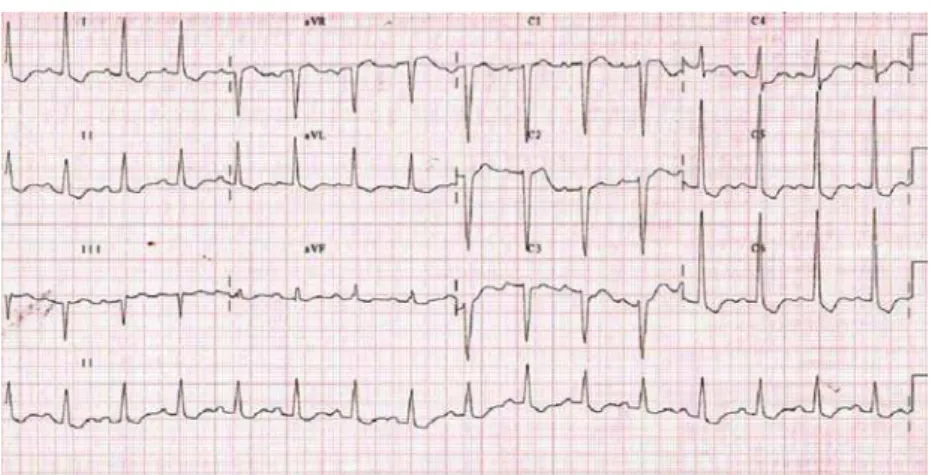
afeb-rile, hyperventilating, with cold/moist skin, and mydriatic pupils. The auscultatory findings in the lungs were normal. The patient’s heart rate was 150 beats per min, tones cleares without additional sounds. Blood pressure on admission was 130/80 mmHg. Injection marks on anterior abdominal wall were present with surrounding hematomas (Figure 1). The personal history of the patient indicated treatment of previ-ous hypertension with nifedipine. ECG recorded paroxysmal supraventricular tachycardia (PSVT) with the frequency of 146/min, changes in repolarization, ST segment depression of 6 mm in left-sided leads (V4–V6) D1 and AVL (Figure 2).
Fig.1 – Injection marks on the anterior abdominal wall with surrounding hematomas.
Biochemical analysis of the blood sodium level deter-mined values of 147 mmol/L (normal range 135–147 mmol/L), potassium 2.1 mmol/L (normal range 3.5 to 5.2 mmol/L), chlo-ride 99 mmol/L (normal range 98–111 mmol/L), glucose 17 mmol/L (normal range 3.5 to 6.4 mmol/L), urea 5.6 mmol/L (normal range 1.7 to 8.3 mmol/L), creatinine 69 mmol/L (normal range 50–124 mmol/L), aspartate aminotransferase (AST) 33 U/L (normal range 10–37 U/L), alanine amino-transferase (ALT) 49 U/L (normal range 20–65 U/L), creat-inine kinase (CK) 79 U/L (normal range 21–232 U/L). The complete blood count showed elevated white blood cells [(the first day of 22 u 109, a second day of 15.7 u 109
(nor-mal range 4.00 to 10.8 u 109)], with normal values of red blood cells, hemoglobin and platelets. Arterial blood gases indicated acute respiratory alkalosis with a hypocapneic level of carbon dioxide partial pressure (pCO2) 30.4 mmHg (nor-mal range 32–48 mmHg), total pH 7.486 (nor(nor-mal range 7.35 to 7.45) and no underlying metabolic disorders.
Toxicology screening of the blood in the patient upon admission confirmed the presence of caffeine in the concen-tration of 85.03 mg/L (therapeutic cocenconcen-tration of 1 to 10 mg/L (toxic being more than 25 mg/L) [using high perform-ance liquid chromatography with ultraviolet scanning detec-tion (HPLC-PDA)] and theophylline, 7.43 mg/L [therapeutic concentration of 8 to 20 mg/L immuno-fluorescence polari-zation method (AXYM)].
The patient was admitted to the intensive care unit with continuous ECG monitoring and parenteral therapy. The first 6 h of parenteral therapy included 5 mg of verapamil, diaze-pam 20 mg, 10 mg metoclopramide, infusion therapy with 3,000 mL of isotonic solution, and substitution with 100 mEq potassium chloride. Diuresis following this therapy was an amount of 1,800 mL. In addition to the therapy, symp-toms included heart rate slowing to 90/min, confirmed by ECG finding (Figure 3), with repeated attack of PSVT at the frequency of 170/min, which is the reason for inclusion of beta blockers in the standard therapy.
On the second day of hospitalization the patient com-plained of nausea, warranting removal of metocloperamide.
From that day until hospital discharge, the patients ECG rhythm was at a normal frequency. Serum potassium level was 2.3 mmol/L. Detection of blood caffeine levels of 57.73 mg/L and theophylline at a concentration 6.59 mg/L were obtained.
On the third day, the patient complained of a headache, as well as pains in the neck area. Hypertension was estab-lished at 170/90 mmHg. Laboratory analysis determined hy-pokalemia (serum potassium level 2.8 mmol/L). The con-centration of caffeine in blood was 27.43 mg/L, which was between the range of concentrations considered to be toxic. The concentration of theophylline was 7.43 mg/L. The
Fig. 2 – The ECG on admission showed sinus rhythm, frequency of 146/min, changes in repolarization, ST segment depression of 6 mm in left-sided leads
treatment started with an angiotensin converting enzyme (ACE) inhibitor, administered both parentally and orally, re-sulting in correction of hypertension, as well as hypokalemia. On the fourth day of hospitalization the patient was in good condition and discharged. The ECG at discharge was found to be a sinus rhythm, at the frequency of 67/min (Fig-ure 4), with the signs of hypertrophy and left ventricular overload. Normal values for biochemical parameters were recorded. The concentration of caffeine in blood was 8.39 mg/L and 1.86 mg of theophylline/L, which was at the thera-peutic level. On echocardiographic examination, there was an enlarged left atrium of 4.3 cm, normal left ventricular di-mensions, with concentric hypertrophy and a wall thickness of 13 mm. There was no failure of segmental contractility; ejection fraction was 65%. Diastolic function was altered by delayed relaxation.
Discussion
Caffeine side effects and systemic toxicity in adults is usually documented after oral administration, and during in-travenous use in pediatric patients or neonates 1.
Intravenous caffeine in neonates has been presented with a number of severe toxic effects such as hypertension, tachycardia, tachypnea, tremor, opisthotonus, tonic-clonic convulsions, cardiac failure, pulmonary edema and metabolic
acidosis with confirmation of toxic concentrations of caf-feine. The symptoms gradually retreated after 7 days, and the concentration of caffeine was then between 60–70 mg/L 6, 7. Ingestion of large amounts of caffeine can cause significant agitation, severe hypotension, tachycardia, ventricular ar-rhythmia, cardiac arrest, myocardial infarction, hypokalemia, rhabdomyolysis, seizures and acute renal impairment 8, 9. Waring et al. 10 showed clinical data of 38 patients with caf-feine ingested at an average dose of 1,040 mg (600 to 1,500 mg), which is equivalent to the amount found in about 10 cups of coffee. Out of them, 28 (73.7%) patients attempted suicide by deliberate self-poisoning, 8 (21.1%) patients in-gested caffeine in order to enjoy (energy drinks), and 2 (5.3%) patients did it for weight loss.
We reported acute poisoning caused by intradermal caf-feine intake by intentional injections for aesthetic purpose.
So, that differs from accidental poisoning with caffeine, usual entry of the toxin.
So far, it has not been proven that consuming caffeine from coffee increases the risk of cardiovascular disease. Also, there is no clear evidence that drinking moderate amounts of coffee, 3 to 4 cups per day (about 300 to 400 mg per day), poses a risk to health. However, certain groups of people, including people with hypertension, children and adolescents may be more sensitive to caffeine in terms of
Fig. 3 – The ECG after beginning the treatment showed heart rate slowing to 90/min with changes in repolarization (the first day)
side effects 11. Before the treatment, the presented patient had already had hypertension, but this higher risk to adverse ef-fects of caffeine was not taken into account.
The contraindications to mesotherapy are 12, 13: pregnant and lactating females, insulin dependent diabetes mellitus, history of bleeding disorders, history of strokes, history of thromboembolic phenomena, patients on medication for car-diac arrythmias, aspirin, warfarin, heparin, history of recent cancer, severe heart disease, renal disease, any severe chronic systemic disease.
The main clinical effects at both, caffeine therapeutic doses as well as in case of poisonings with proven toxic con-centrations, are from adenosine antagonism, beta adrenergic receptor stimulation and phosphodiesterase inhibition. On admission to the hospital, the presented patient’s ECG showed repeated attacks of PSVT, with evidence of hyper-tensive cardiomyopathy and hypoklemia.
Severe caffeine poisoning is relatively rare and accom-panied by unwanted hemodynamic complications, including a high mortality rate. Among complications are the most severe forms of cardiac abnormalities: sinus tachycardia, ventricular tachycardia and ventricular fibrillation, generalized convul-sions, multiple organ failure (MOF) and cardiac arrest 1, 8, 9, 14. The presented patient was initially observed to have hypoten-sion, nonsustained ventricular tachycardia, and PSVT, fortu-nately with a favorable outcome. Sinus tachycardia is a com-mon sign of poisoning, and is most likely benign in people with no previous cardiac disease. However, sinus tachycardia in methylxanthine poisoning, can progress to severe arrhyth-mias. Atrial fibrillation, atrial flutter, multifocal atrial tachy-cardia, ventricular tachycardia and ventricular fibrillation may result from methylxanthine poisoning 1. Caffeine stimulates the respiratory center in the CNS, increasing the frequency of breathing, causing hyperventilation, respiratory alkalosis, res-piratory failure, resres-piratory arrest and acute lung injury (ALI). On admission to the intensive care unit, arterial blood gas vues described in the presented patient indicated respiratory al-kalosis and hypocapnea, which was correlated with increased respiration and tachypnea.
In the article of Scottish authors 10, 24 (63.2%) patients showed only gastrointestinal symptoms, nausea and vomit-ing. In the first 6 hours of the treatment, the presented patient showed gastrointestinal symptoms, nausea and vomiting, which responded favorably to the use of metoclopramide.
It is known that caffeine causes psychiatric disorders under certain circumstances. Caffeine, which is widely used especially in younger population, is also found in many en-ergy drinks, and can cause marked anxiety in otherwise healthy individuals. This is particularly true in sensitive per-sons with existing anxiety disorders. Caffeine may be associ-ated with symptoms of depression, sleep disorders, and worsening of psychotic disorders in people with schizophre-nia15. The presented patient was anxious upon admission, and later complained of a headache. According to the Scot-tish Poison Centre (for the period 2000 – 2008) dizziness, headache, tremor and agitation were much less common symptoms of caffeine poisoning in comparison to those with gastrointestinal symptoms 10.
Hypokalemia is a common manifestation of acute poi-soning with methylxanthines resulting in beta adrenergic agonism and stimulation of Na+/K+ ATP-ase, which leads to a shift of potassium from the extracellular to intracellular space. This can be accelerated by vomiting and loss of po-tassium through the kidneys. In patients with theophylline intoxication, hyperkalemia occurs early and is independent of the initial laboratory analysis with vomiting 16. The pre-sented patient had a potassium concentration of 2.1 mmol/L, which was interpreted as a loss of potassium due to vomiting. After the first analysis of toxic concentrations of caffeine, hyperkalemia was interpreted as caffeine toxic effect. We performed a parenteral and oral potassium re-placement, which exhibited parallel falls in toxic concen-trations of caffeine, but not to completely normal levels. The concentration of caffeine in blood of the patient before mezotherapy remains unknown, but there are recommenda-tions that coffee or caffeine-containing beverages must not be used for at least 12 h before the treatment 17. In the pre-sented patient, the concentration of caffeine was 85 mg/L immediately after mezotherapy, and 57.73 mg/L on the second day.
The immediate cause of death in severe caffeine poi-soning is ventricular fibrillation, as has been shown by an experimental work 18. Generally speaking, a concentration of caffeine in the blood of more than 100 mg/L is considered lethal19, 20.
A case of sudden death has been documented involving a 25-year-old woman previously diagnosed with mitral valve prolapse. Cardiac arrest occurred immediately after drinking energy beverage. At autopsy screening, the presence of 19 mg/L caffeine was indicated in the aortic blood. The caffeine concentration was 10 g/L 21 upon further analysis. Swedish forensic experts during a year period witnessed four fatali-ties, demonstrating caffeine concentration of 80 to 100 mg/L 22 in post-mortem toxicological analysis.
Fatal caffeine overdose in adults is rare and involves more than 5 g of a drug containing caffeine to cause death. American toxicologists 23 from New Mexico, during a one year follow-up documented accidental caffeine poisoning as a cause of death in two patients: in a 39-year-old woman with the history of intravenous drug abuse with the caffeine concentration 192 mg/L in femoral blood and in a 29-year-old man with the disease history of obesity and diabetes mellitus, with caffeine concentration of 567 mg/L in femoral blood.
Adverse effects of cosmetic treatments for cellulitis oc-cur with intradermal injection of lipolytic substances, and can be presented as pain and erythema at the puncture site, vagal reactions, injury to nerves and blood vessels, skin ne-crosis and hematoma formation. Hematomas, which should not follow this type of treatment, are usually the most com-mon side effect, and are a consequence of the effects of the applied substances interfering with the process of coagula-tion. According to the previously published data there are numerous local side effects associated with therapy 5. Ab-dominal wall hematomas in the presented patient are shown as local side effects caused by substances in deeply applied injection (Figure 3). After application there was a massive absorption into the circulation as proved by the elevated con-centration of caffeine 85.03 mg/L in the blood.
The most common local complications of mesotherapy are as follows: bruising and edema due to the chemicals used in mesotherapy 13, 24, skin necrosis 25–27, atypical mycobacte-rial infections 28, allergic reactions due to various chemi-cals26, 29, atrophy and lipodystrophy 25, postinflammatory hyperpigmentation nodularity 25, after irregular lipolysis 29 etc.
Few papers describe systemic toxicity of substances ap-plied during and after mesotherapy. Brazilian authors 30 de-scribe the first case of systemic toxicity in a young woman presenting with thyrotoxicosis caused by mesotherapy with triiodthyroacetate acid. Alster and Tanzi 31 reported that in 2003, mesotherapy was banned by the Brazilian National Agency of Health due to its unwanted side effects. There are also systemic complications. “Systemic complications are allergic reactions, vagal syndromes, lipothymia, infections
(HIV, hepatitis, etc) and liver toxicity with demyelination of nerves due to large doses of phosphatidylcholine” 24, 25.
In addition to supportive and symptomatic treatment for severe poisoning and systemic toxic effects, hemoperfusion and hemodialysis are strongly recommended 14, 32. Fortunately, the presented female patient responded favorably to the treat-ment and did not require the action of extracorporeal detoxifi-cation. Cardiopulmonary resuscitation was needed in the worst case scenario. There were documented cases of survival in pa-tients with cardiotoxicity induced by caffeine in which cardio-pulmonary support was applied percutaneously 9.
Conclusion
The severe systemic toxic effects of caffeine applied intradermally in mesotherapy were seen in the presented pa-tient. The cause of massive caffeine absorption from the sub-cutaneous tissue into the systemic circulation of the patient was partly due to the tiny blood vessels in the skin, as indi-cated by hematomas in the abdominal wall. The clinical pic-ture showed mild gastrointestinal symptoms (nausea, vomit-ing), CNS disorders (somnolence, anxiety), and cardiovas-cular disturbances (hypotension, ventricardiovas-cular tachycardia and nonsustained PSVT). In this era of increasing popularity of mesotherapeutic aesthetic treatment, one should keep in mind the possibility of a significant absorption of the applied substances into circulation and their potential systemic side effects. Proper methods of intervention need to be applied in specialized institutions for cosmetic surgery that are staffed and equipped to respond in case of complications, as well as in poisonings.
R E F E R E N C E S
1. Flomenbaum NE, Goldfrank LR, Hoffman RS, Howland MA, Lewin NA, Nelson LS, editors. Goldfrank's Toxicologic Emer-gencies. 7th ed. New York: McGraw-Hill NY; 2002.
2. Tyrala EE, Dodson WE. Caffeine secretion into breast milk. Arch Dis Child 1979; 54(10): 787î9.
3. Engebretsen KM, Harris CR. Caffeineand Related Nonprescrip-tion Sympathomimetics. In: Ford MD, Delaney KA, Ling LJ, Erickson T, editors. Clinical Toxicology. Philadelphia: W. B. Saunders; 2001. p. 310î5.
4. Holstege CP, Hunter Y, Baer AB, Savory J, Bruns DE, Boyd JC. Massive caffeine overdose requiring vasopressin infusion and hemodialysis. J Toxicol Clin Toxicol 2003; 41(7): 1003î7.
5. Mesotherapy. [Editorial]. Available from: www.carlosaznar. com/ ingles/ mesotherapyaen. html [updated 2009 October 6].
6. Anderson BJ, Gunn TR, Holford NH, Johnson R. Caffeine over-dose in a premature infant: clinical course and pharmacoki-netics. Anaesth Intensive Care 1999; 27(3): 307î11.
7. Banner W Jr, Czajka PA. Acute caffeine overdose in the neo-nate. Am J Dis Child 1980; 134(5): 495î8.
8. Emohare O, Ratnam V. Multiple cardiac arrests following an overdose of caffeine complicated by penetrating trauma. An-aesthesia 2006; 61(1): 54î6.
9. Forman J, Aizer A, Young CR. Myocardial infarction resulting from caffeine overdose in an anorectic woman. Ann Emerg Med 1997; 29(1): 178î80.
10.Waring WS, Laing WJ, Good AM, Malkowska AM. Acute caf-feine ingestion: clinical features in patients attending the emer-gency department and Scottish poison centre enquiries be-tween 2000 and 2008. Scott Med J 2009; 54(4): 3î6.
11.Higdon JV, Frei B. Coffee and health: a review of recent human research. Crit Rev Food Sci Nutr 2006; 46(2): 101î23. 12.American Society of Plastic Surgeons. National plastic surgery
sta-tistics: Cosmetic and reconstructive procedure trends. New York: American Society of Plastic Surgerons; 2007.
13.Vedamurthy M. Mesotherapy. Indian J Dermatol Venereol Leprol 2007; 73(1): 60î2.
14.Fujiyoshi N, Yoshioka T, Morimoto F, Suzuki Y, Sueyoshi K, Shi-buya M, et al. Case of caffeine poisoning survived by percuta-neous cardio-pulmonary support. Chudoku Kenkyu 2008; 21(1): 69î73. (Japanese)
15.Broderick P, Benjamin AB. Caffeine and psychiatric symptoms: a review. J Okla State Med Assoc 2004; 97(12): 538î42. 16.Amitai Y, Lovejoy FH Jr. Hypokalemia in acute theophylline
poisoning. Am J Emerg Med 1988; 6(3): 214î8. 17.Chaney GR. Mesotherapy. Available from:
http://home.windstream.net/grchaney55/mesotherapy.html 18.Strubelt O, Diederich KW. Experimental treatment of the acute
cardiovascular toxicity of caffeine. J Toxicol Clin Toxicol 1999; 37(1): 29î33.
20.Uges D. Therapeutic and toxic drug concentrations list. TIAFT [document online] [cited 2005 July 8]. Available from URL: http://www.tiaft.org/tmembers/ttv/ttv_ps.html
21.Cannon ME, Cooke CT, McCarthy JS. Caffeine-induced cardiac arrhythmia: an unrecognised danger of healthfood products. Med J Aust 2001; 174(10): 520î1.
22.Holmgren P, Nordén-Pettersson L, Ahlner J. Caffeine fatalities-four case reports. Forensic Sci Int 2004; 139(1): 71î3.
23.Kerrigan S, Lindsey T. Fatal caffeine overdose: two case reports. Forensic Sci Int 2005; 153(1): 67î9.
24.Holzman D. Novel medicinal composition, especialy for the treatment of cellulitis. United States Patent 4191748.Available from: www.wikipatents.com/ 4191748.html [cited 1980 March 4].
25.Rotunda AM, Kolodney MS. Mesotherapy and phosphatidylcho-line injections: historical clarification and review. Dermatol Surg 2006; 32(4): 465î80.
26.Rosina P, Chieregato C, Miccolis D, D'Onghia FS. Psoriasis and side-effects of mesotherapy. Int J Dermatol 2001; 40(9): 581î3.
27.Lee DP, Chang SE. Subcutaneous nodules showing fat necrosis owing to mesotherapy. Dermatol Surg 2005; 31(2): 250î1. 28.Sañudo A, Vallejo F, Sierra M, Hoyos JG, Yepes S, Wolff JC, et al.
Nontuberculous mycobacteria infection after mesotherapy: preliminary report of 15 cases. Int J Dermatol 2007; 46(6): 649î53.
29.Urbani CE. Urticarial reaction to ethylenediamine in amino-phylline following mesotherapy. Contact Dermatitis 1994; 31(3): 198î9.
30.Danilovic DL, Bloise W, Knobel M, Marui S. Factitious thyrotoxi-cosis induced by mesotherapy: a case report. Thyroid 2008; 18(6): 655î7.
31.Alster TS, Tanzi EL. Cellulite treatment using a novel combi-nation radiofrequency, infrared light, and mechanical tissue manipulation device. J Cosmet Laser Ther 2005; 7(2): 81î5. 32.Fausch K, Uehlinger DE, Jakob S, Pasch A. Haemodialysis in