O R I G I N A L A R T I C L E UDC: 613.96:[613.2+613.71 DOI: 10.2298/VSP1306548D
Nutritional and physical activity behaviours and habits in adolescent
population of Belgrade
Ponašanje i navike u ishrani i fizi
þ
koj aktivnosti kod beogradskih adolescenata
Marina Djordjeviü-Nikiü*, Milivoj Dopsaj*, Ana Veskoviü†
*Department of Sports Medicine, †Department of Socio-Humanistic Sciences in Sport and Physical Education, Faculty of Sport and Physical Education, University of
Belgrade, Belgrade, Serbia
Abstract
Background/Aim. Proper nutrition and regular physical ac-tivity are essential parts of a adolescent's overall health. The aim of this research was to evaluated eating and physical ac-tivity behaviours and habits, nutritional and food knowledge, beliefs and self-efficacy related to diet and health of the ado-lescents of the city of Belgrade, Serbia. Methods. A dietary questionnaire previously constructed and tested in adolescent population from Italy was self-administrated. We evaluated eating habits, physical activity, meaning of healthy and un-healthy dietary habits and food, self-efficacy, barriers affecting food choices, nutritional and food safety, and body mass in-dex (BMI) of the adolescents. The sample included 707 ado-lescents, the mean age of 15,8 ± 2 years enrolled in the first grade at several high schools in Belgrade. Results. Only 27% of the adolescents had satisfactory eating habits; 31% have a very active lifestyle; 7% good nutritional knowledge and 6– 12% satisfactory food safety knowledge and hygiene practices. Conclusion. Significant deviations from recommendations for healthy lifestyle was noted in adolescents’ habits, knowledge and practice. It is therefore necessary to develop and organize programs for promotion of healthy behaviours adapted to the adolescents’ needs.
Key words:
feeding behaviour; motor activity; adolescent; questionnaires; life style.
Apstrakt
Uvod/Cilj. Pravilna ishrana i redovna fiziÿka aktivnost su suštinski delovi zdravlja adolescenata. Cilj ovog istraživa-nja bio je da se ocene ponašanje i navike u ishrani i fiziÿ -koj aktivnosti, znanje o hrani i ishrani, verovanje i samoe-fikasnost u vezi sa ishranom i zdravljem beogradskih adolescenata. Metode. Primenjen je dijetni upitnik za sa-moprocenu, prethodno konstruisan i proveren na popula-ciji adolescenata u Italiji. Mi smo ocenili navike u ishrani, fiziÿku aktivnost, znaÿenje zdrave i nezdrave hrane i di-jetnih navika, samoefikasnost, barijere koje utiÿu na izbor hrane, bezbednost hrane i ishrane i indeks telesne mase (BMI) adolescenata. Ispitanike je ÿinilo 707 adolescenata, uzrasta 15,8 ± 2 godina koji pohaĀaju prvi razred razliÿ i-tih srednjih škola u Beogradu. Rezultati. Svega 27% adolescenata imalo je zadovoljavajuýe navike u ishrani, 31% vrlo aktivan stil života, 7% dobro znanje o ishrani i 6%–12% zadovoljavajuýe znanje o bezbednosti hrane i higijenske navike. Zakljuÿak. Zabeležena su znaÿajna od-stupanja od preporuka za zdrav stil života u navikama, znanju i praksi adolescenata, te je potrebno razviti i orga-nizovati programe promocije zdravog ponašanja prilago-Āenog potrebama adolescenata.
Kljuÿne reÿi:
ishrana, navike; napor, fiziÿki; adolescenti; upitnici; naÿin života.
Introduction
Nutrition and physical activity are of the greatest im-portance for health promotion. Eating habits and attitudes towards physical activity shape the lifestyle of an individual to the greatest extent, thus determining health, i.e. the most common diseases of a modern man 1.
Acquiring habits of regular physical exercise from the earliest age is thought to be a significant benefit which will
show its positive effects later in life 2–5. However, adoles-cence is a period with significantly reduced physical activity, which is particularly characteristic for girls 6–8. At the same time, during the last decades young people have been spending more and more time in front of TV/computers 6, 9.
and habits takes place in adolescence. Sweeting et al. 13 con-cluded that by the age of 15 eating habits consolidate with minimal changes between 15 and 18 years. This is largely in agreement with findings of Kelder et al. 14, who reported consolidation prior to the 6th grade and extension of nutri-tional and physical activity habits in the adulthood.
Knowledge about healthy and safe food is certainly a precondition for healthy diet, but the motivation for practical application of healthy recommendations is necessary 15. Shannon et al. 16 and Bandura 17 pointed out that a sense of self-efficacy was crucial for personal change. When a person possesses knowledge and abilities, his or her belief in self-efficacy most probably becomes the main guideline for the choice of actions, their level of making efforts and persis-tence in their own efforts to achieve goals 18. Application of behavioural techniques that improve self-efficacy may be ef-fective for weight loss promotion and it may produce posi-tive outcomes related to eating habits in young adults 19.
Recognition of barriers to change behaviour has impli-cations for designing the programs for adolescents’ health promotion. Gracey et al. 15 in their study in adolescents aged 15–16
pointed out that barriers to change were related to the availability of healthy food in the surroundings and insuffi-cient knowledge about nutritive food content. These authors pointed out the importance of beliefs and values regarding healthy diets, controlling weight, lowering cholesterol etc. Wardle et al. 20 believe that prevalence of health beliefs in females compared to males, determine better food choices and healthier dietary pattern, which is ultimately attributed to higher morbidity and mortality in men caused by the most common diseases of modern times.
The aim of our research was to get acquainted with the behavioural pattern related to diet and physical activity of the selected group of adolescents of the urban area of Belgrade, as a representative urban area of South-East Europe. It was therefore important to evaluate eating habits, physical activ-ity, meaning of healthy dietary habits and food, self-efficiency, possible barriers affecting healthy food choices, nutritional and food safety knowledge. In addition, on the basis of height and body weight we determined body mass index (BMI) to investigate the possible relationship between BMI and the above mentioned variables.
Methods
The participants for this cross-sectional study represent a convenience sample among the first grade students who attended several high schools in different municipalities in the city of Belgrade, the capital of the Republic of Serbia. Participants were sampled from a variety of school across the spectrum of high-school education, ranging from general college preparatory education to specific vocational educa-tion, to account for socioeconomic differences. The study was implemented between March and June of 2010, during regular class hours in the presence of teachers and the study investigators. Participation was voluntary and anonymous. Informed written consent was obtained from each student and their parents. The study was approved by the Ethics
Committee of the Faculty of Sport and Physical Education at the University of Belgrade.
Invitations were extended to 900 students, which repre-sents about 2% of the high-school first graders enrolled in the academic year 2009–10 in Belgrade. Of those 900, 733 agreed to participate and mailed back a complete questionnaire. The 26 incorrectly filled out questionnaires were excluded leaving 707 for analysis. The final sample included 377 girls (mean age 15.8 ± 0.2 years) and 330 boys (15.9 ± 0.3 years).
Questionnaire
We used a validated questionnaire 21, which had already been administered to adolescents of the same age in Italy 22. Giovanna Turconi 21, 22, the author of this questionnaire, gave her written consent for the use of this questionnaire in our study.
The questionnaire consisted of 9 sections referred to: Section 1 – Personal information and parents’ education; Section 2 – Eating habits, of 14 questions, the total score being 42; Section 3 – Physical activity, of 6 questions, the total score being 18; Section 4 – Healthy and unhealthy die-tary habits and food, of 5 questions, the total score being 15; Section 5 – Self-efficacy, of 8 questions, the total score being 16; Section 6 – Barriers to change, of 9 questions, the total score being 9; Section 7 – Nutritional knowledge, of 11 questions, the total score being 11; Section 8 – Food safety knowledge, of 10 questions, the total score being 10; Section 9 – Food safety and behaviour in hygiene practices, of 8 questions, the total score being 24.
The answers to the questions within the sections 2–9 were scored from 0 to 3, with the most desirable response having the highest score. The exception was section 6 – Bar-riers to change, where the case was opposite.
The participants were classified as overweight and obese based on Cole's et al. 23 cut-off points.
To derive BMI, body height and mass collected at the time of the last annual check-up were extracted from the stu-dents’ health records kept by primary care institutions.
Reliability of the sections was checked through Cron-bach’s alpha coefficient (reliability of internal consistency type). For Eating habits, Physical activity, Self-efficiency, Barriers to change, derived values of coefficients ranged from 0.536 to 0.68. For Healthy and unhealthy dietary habits and food, Nutritional knowledge, Food safety knowledge, Food safety and behaviour in hygiene practices, whose con-tent of the items generally refers to knowledge testing reli-ability coefficients were low.
correlation coefficient was applied to investigate the correla-tion between BMI and seccorrela-tions scores. Data processing was conducted in SPSS 17.
Results
Sample
The mean BMI was 22.2 ± 3.1 kg/m2 in boysand 20.5 ± 2.6 kg/m2 in girls. A proportion of 21.2% of the boys and 7.7 % of the girls were classified as overweight. Obesity was re-corded in 3.3% of the boys and 1.9% of the girls. Approxi-mately 3% of males and females can be classified in the group of underweight (calculated as third percentile). The sample characteristics are shown in Table 1. The group mean age was 15.8 ± 0.3 years.
Anthropometric characteristics of the sample with re-spect to gender are shown in Table 1.
More than a half of the student’s parents had a high school qualification, while about 40% of them had a higher education degree.
Dietary Questionnaire
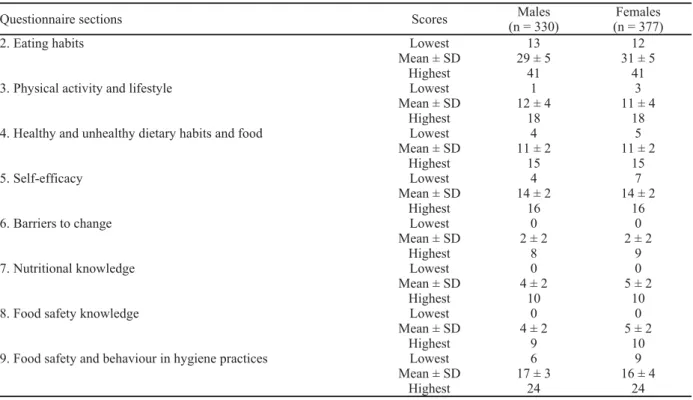
Table 2 shows the percentage distribution of subjects according to the scores.
Eating habits
The total score (42) was divided into tertiles (Table 3). The lowest one referred to “inadequate eating habits” and encompassed almost a third of all students. A total of 45% of the subjects had “partially satisfactory eating habits”, while only a quarter of the sample (26.7%) showed “satisfactory eating habits”. The mean score obtained was 30.5 ± 4.8 with a statistically significant difference (p = 0.000) between males and females (29.4 ± 4.3 for males vs 31.5 ± 4.6 for females). The worst eating habits are skipping breakfast (about 36% of the sample). If the subjects who often have breakfast are added to this category, approximately 15% of
students skip breakfast. Approximately 30% of the subjects of both genders do not drink milk or yogurt at breakfast, 71.5% of students do not eat at least two portions of fruit and
Table 1 Anthropometric characteristics of the subjects with respect to gender
Variables Males (n = 330)(ʉ ± SD) % of males Females (n = 377)(ʉ ± SD) % of females
Age (years) 15.9 ± 0.3 15.8 ± 0.3
Weight (kg) 73.3 ± 12.5 58.5 ± 8.5
Height (m) 1.8 ± 0.1 1.7 ± 0.1
BMI (kg/m2) 22.2 ± 3.1 20.5 ± 2.6
Overweight subjectsƍ BMI (kg/m2) 25.8 ± 1.3 21.2 25.3 ± 1.2 7.7
Obese subjectsƍ BMI [(kg/m2), n%] 31.1 ± 2.2 3.3 30.1 ± 0.7 1.9
Underweight subjectsƍ BMI (kg/m2) 17.1 ± 0.6 3.0 16.6 ± 0.6 3.2
BMI – body mass index
Table 2 Percentage distribution of the subjects according to the scores
Questionnaire sections Scores Males
(n = 330)
Females (n = 377)
2. Eating habits Lowest 13 12
Mean ± SD 29 ± 5 31 ± 5
Highest 41 41
3. Physical activity and lifestyle Lowest 1 3
Mean ± SD 12 ± 4 11 ± 4
Highest 18 18
4. Healthy and unhealthy dietary habits and food Lowest 4 5
Mean ± SD 11 ± 2 11 ± 2
Highest 15 15
5. Self-efficacy Lowest 4 7
Mean ± SD 14 ± 2 14 ± 2
Highest 16 16
6. Barriers to change Lowest 0 0
Mean ± SD 2 ± 2 2 ± 2
Highest 8 9
7. Nutritional knowledge Lowest 0 0
Mean ± SD 4 ± 2 5 ± 2
Highest 10 10
8. Food safety knowledge Lowest 0 0
Mean ± SD 4 ± 2 5 ± 2
Highest 9 10
9. Food safety and behaviour in hygiene practices Lowest 6 9
Mean ± SD 17 ± 3 16 ± 4
vegetables every day, 32.4% of the subjects have sweets-based snacks.
Physical activity and lifestyle
The total score (18) was divided into tertiles (Table 3). Slightly more than a quarter of adolescents (27.4%) was classified into “sedentary physical level” category. Only a third of the students have a very active lifestyle. Physical ac-tivity of the remaining part of the sample corresponded to the category of “partially moderate physical level”. The mean score obtained was 11.7 ± 3.8 with a statistically significant difference (p = 0.000) between males and females (12.4 ± 3.7 for males vs 11 ± 3.7 for females). A total of 49% of the subjects answered watching television/using computer or other sedentary activities in free time. A statistically signifi-cant difference emerged between normal and overweight plus obese boys, with the highest score obtained in normal weight boys (12.5 ± 3.6 score vs 12.1 ± 4.2 score) (p = 0.01). A statistically significant negative correlation was found between physical activity score and BMI referred to as overweight and obese (p = 0.012) in boys. No statistically significant correlation was established between physical ac-tivity score in students with normal BMI.
Healthy and unhealthy dietary habits and foods
The total score (15) was divided into tertiles (Table 3). Almost 40% of girls and boys could be classified into the first tertile “little comprehension of the meaning of healthy and un-healthy dietary habits and food”. The medium one referred to “sufficient comprehension of the meaning of healthy and un-healthy dietary habits and food” and slightly more than one half of the sample belonged to this group. The scores of low percentage of the sample were classified in the last third which indicated “good comprehension of the meaning of healthy and unhealthy dietary habits and food”. No statistically significant difference was found in the average score between males and females for this section (Table 2). In response to the question “According to you, which is healthy food?”, almost a half of the students (50.7%) reported that “a food rich in protein” is the healthiest one, 3.9% chose “food rich in calories”, 2.3% microbiologically tested food“ and 42.8% “food without pre-servatives and additives”.
Self-efficiency
The total score (16) was divided into tertiles, where the lowest one referred to “incapacity for using advice aimed at
improving one’s well-being”, the medium one referred to “sufficient capacity for using advice aimed at improving one’s well-being”, and the highest one referred to “good ca-pacity for using advice aimed at improving one’s well-being”. The mean score obtained was 14.1 ± 2, with statisti-cally significant differences (p = 0.010) between males and females (13.9 ± 2.3 for males vs 14.4 ± 1.8 for females). A large percent of the subjects (81.7%) reported being able to use advice aimed at improving their well-being, while less than one-fifth of the subjects thought themselves not able to do that.
Barriers to change
The total score (9) was divided into tertiles, where the lowest one referred to “no barriers in modifying one’s own eating habits with the aim of improving them”, the medium one referred to “some barriers in modifying one’s own eating habits with the aim of improving them”, and the highest one referred to “a lot of barriers in modifying one’s own eating habits with the aim of improving them”. The mean score obtained was 2.1 ± 1.7, without any statistically significant differences between males and females. Almost a third of the subjects had no barriers to change that would improve eating habits (42.2% of boys and 17.7% of girls), while a half of students had some barrier to change (45.4% of males and 62.0 % of females).
Nutritional knowledge
The total score (11) was divided into tertiles (Table 3). The lowest one referred to “insufficient nutritional knowl-edge”, where almost one-fourth of the students could be clas-sified. Around two-thirds of the subjects had good nutritional knowledge (more females), while only 7% of the sample had quite good nutritional knowledge (highest among females). The mean score obtained was 4.7 ± 1.8 with a statistically significant difference (p = 0.002) between males and females (4.5 ± 1.8 for males vs 4.9 ± 1.7 for females). The worst re-sults emerged in the questions related to fat, energy and pro-tein food content. The worst answer was to the question “Which is the nutrient that contains the most energy?”, with only 8.6% of the students who answered fat, 64.9% an-swered proteins and 24% anan-swered carbohydrates.
Food safety knowledge
The total score (10) was divided into the tertiles (Table 3). Over 40% of the subjects belonged to the lowest third which
re-Table 3 Percentage distribution of the subjects according to the tertile scores
% (n) of subjects Questionnaire sections
1st tertile 2nd tertile 3rd tertile
2. Eating habits 28.3 (200) 45.0 (318) 26.7 (189)
3. Physical activity and lifestyle 27.4 (194) 41.4 (293) 31.1 (220)
4. Healthy and unhealthy dietary habits and food 39.8 (282) 55.2 (390) 4.9 (35)
5. Self-efficacy 18.5 (131) 47.5 (336) 33.9 (240)
6. Barriers to change 29.3 (207) 54.3 (384) 16.4 (116)
7. Nutritional knowledge 23.7 (168) 69.4 (491) 6.8 (48)
8. Food safety knowledge 44.5 (315) 49.2 (348) 6.2 (44)
ferred to “insufficient food safety knowledge”. Almost half of the subjects manifested “good food safety knowledge”, while only 6% of males and females had “quite good food safety knowledge”. The mean score obtained was 4.7 ± 1.8 with a sta-tistically significant difference (p= 0.013) between males and females (4.5 ± 1.8 for males vs 4.9 ± 1.8 for females).
Food safety and behaviour in hygiene practices
The total score (24) was divided into tertiles (Table 3). The lowest one referred to “inadequate behaviour in hygiene practices” where 38.1% of males and 35.5% of females could be classified. Almost equal number of males and fe-males (49% for fe-males vs 52.5% for females) had “partially adequate behaviour in hygiene practices”. Only 12.3% of students had the highest one referred to “quite good behav-iour in hygiene practices”. The mean score obtained was 16.9 ± 3.1 with a statistically significant difference (p = 0.000) between males and females (17.4 ± 2.7 for males vs 16.4 ± 3.6 for females). In response to the following ques-tions “If the butcher touches ham with his hands, do you eat it?”, “Do you read the instructions for use and for preserva-tion written on package foods?” and “Do you eat canapé ly-ing out for a long time at the bar?”, only less than half of the students chose the right answer.
Table 3 summarizes the various scores obtained in each section by males and females, respectively.
Dietary questionnaire and BMI
Scores of all the dietary questionnaire variables were analysed in relation to students’ BMI, considering two groups, normal BMI subjects and overweight plus obese subjects. A statistically significant negative correlation emerged between physical activity score (Section 3) and BMI-overweight plus obese (R = -279; p = 0.01), for males, thus normal weight boys had higher score (12.5 ± 3.6 score), and overweight plus obese boys had lower score (12.1 ± 4.2 score). Statistically significant negative correlations emerged between normal BMI boys and scores of the responses to the Section 5 questions – Self-efficacy score (R = 0.13; p = 0.04); Section 6 – Barriers to change score (R = -0.13; p = 0.04); Section 7 – Nutritional knowledge score (R = 0.14; p = 0.02) and Section 8 – Food safety knowledge score (R = 0.19; p = 0.00). Statistically significant negative correlations emerged between normal BMI girls and scores of the re-sponses to the Section 5 questions – Self-efficacy score (R = 0.14; p = 0.01) and Section 8 – Food safety knowledge score (R = -0.12; p = 0.02).
Discussion
In this research on 707, 16-year-old students we evalu-ated eating habits, physical activity and factors that may af-fect them. We obtained data that could be used in healthy lifestyle promotion.
In accordance with Cole’s et al. 23 reference standards we recorded almost a quarter of boys with excessive BMI, while the number of girls was significantly lower. These data are alarming and call for preventive measures to be taken in
order to control and maintain normal body mass. Obesity prevalence was low in both genders. We recorded much greater incidence of overweight males of Belgrade with re-gard to the data of Pavloviü 24 for the North Baþka district – a northern more developed region of Serbia, (together, rural and urban environment; boys – overweight/obesity 12.0% /4.76%; girls – overweight/obesity – 8.72% /3.33%), for the age of 16. The results of analytical study 25 (Institute for Public Health of Serbia) from 2007 show that almost a fifth of adolescents (18%) was moderately obese and obese, which represented the increase in relation to 2000 (11%). When compared to the research of Turconi et al. 22, our study recorded a lower number of females with excessive BMI, while the number of males with overweight was alike.
Data related to eating habits of our adolescents show that the intake of fruit, vegetables, milk and dairy products should be increased, while the intake of sweets, soft drinks and food rich in fat should be lowered. In addition, more fre-quent meals and regular breakfast should be promoted, which is considered to be important for more qualitative nu-tritive intake and obesity prevention 26, 27. The mentioned de-viations recorded in our students are contrary to the official recommendations for healthy diet in Serbia 28. Our results show similarities with those of the research of Turconi et al. 22. The authors from other countries recorded similar data 10, 29–32 which indicates very similar trends in diet of young people from different regions of developed countries.
Physical activity in boys was higher than in girls, re-corded in other researches, as well. Over a quarter of stu-dents was classified into sedentary category, which is an alarming information. On the basis of their researches in children of younger adolescent age, D’Addesa et al. 33 and Lazarou et al. 30 attributed the greatest importance for over-weight and obesity development to physical inactivity. We recorded a higher physical activity score in normal BMI boys. Almost a half of our subjects spend 3–4 hours a day in front of TV/computer and in other sedentary activities. A similar trend is noted in other researches, as well 4, 30, 34. These sedentary forms of behaviour are related to higher risk of obesity and higher values of cholesterol 34.
Over two thirds of the subjects of our sample perceive their self-efficacy for adoption of attitudes and behaviours that may improve their health status related to diet, as mod-erate to high. Girls estimate their self-efficacy as higher than boys. The finding is in accordance with the research of Gracey et al. 15, and in opposition to the results of Turconi et al. 22. Bearing in mind that media, especially television, have the leading role in informing about the significance of adopting healthy lifestyles 17, the obtained findings may indi-cate the need to formulate different messages to boys and girls.
Barriers to change must be considered when planning the programs for nutrition education. The lack of students’ knowledge about how to increase the intake of dietary fibres, how to meet energy needs and how important thing is not to be influenced by peers when choosing food are the greatest barriers recorded in our students. Then follows the lack of knowledge about food less rich in sugar and fat. However, the greatest number of subjects have some or no barriers to change that may positively affect changes in diet. We did not record differences between boys and girls. Turconi et al. 22 also recorded no differences caused by gender, whereas Gracey et al. 15 recorded more different barriers in girls in relation to boys.
Nutritional knowledge is a predisposing factor for good eating habits. Although most of our students have good nu-tritional knowledge we cannot be satisfied given that almost a quarter of subjects have insufficient knowledge. As in sev-eral other studies 15, 22, 35 our students were not sufficiently able to redirect their knowledge about nutrients into good food choices. Contento et al. 37 and Hoppu et al. 29 in their re-search indicated the fact that just knowledge about diet is not sufficient for adopting healthy eating behaviours. Van Cau-wenberghe et al. 32 in their study found limited results of school-based educational interventions to promote healthy diet in children and adolescents. Certainly, our students lack nutrition instruction during their elementary education, but it is obviously necessary to motivate students to change their behaviours related to health. The girls in our research, along with greater nutritional knowledge, showed better eating habits, as well (Section 2) in comparison to the boys. This difference is attributed to their higher interest in weight con-trol and stronger health beliefs 15, 20. Like the girls in the re-search of Turconi et al. 22, our girls are traditionally more en-gaged in preparing and buying food in the family.
Knowledge about food safety was very low, in almost half of the subjects, but students’ behaviour and hygiene practices were something better. About a half of students showed good knowledge about food safety, and at the same time nearly as many students showed „partially adequate be-haviour in hygiene practices“. We believe that experiences gained in the family have the greatest impact on hygiene be-haviour and practices, so this explains the recorded differ-ence in favour of practice. The girls showed significantly higher knowledge about food safety, but the boys gave better answers to the questions about hygiene practices.
Adolescence is a period when habits and behaviours related to diet and physical activity are strengthened and as such mostly extended into adulthood. In this research we wanted, in a comprehensive manner, to become familiar with behaviour and knowledge about food/diet and physical ac-tivity of the 16-year-olds of Belgrade, a typical urban area of Serbia. At the same time, it was important to become famil-iar with the factors that greatly affect the mentioned behav-iours and BMI as an ultimate outcome related to health. A high level of overweight especially in boys, require inter-ventions that should improve eating habits and increase physical activity. The need for a lower intake of food rich in fat was particularly expressed, which coincided with stu-dents’ insufficient knowledge about nutritional food compo-sition. Apart from that, it is necessary to stimulate higher in-take of fruit, vegetables, milk and dairy products, as well as lower intake of sweets. Better eating habits, greater willing-ness to use advice for improving health and well-being and higher nutritional knowledge in girls are explained by their stronger beliefs and evaluation of healthy diet and health in general. Therefore, activities for promotion of diet and healthy behaviours among boys should be adapted to their specificities.
Nutrition education programs are very important for children and adolescents. They should be practically applica-ble and focused on food. We should work on physical activ-ity promotion continuously, as one of the key factors in pre-venting of various diseases.
Limitations
The first limitation of this study is inherent to its cross-section design. Secondly, the responses are self-reports, which may affect reliability. Finally, height and weight were not measured but rather obtained from medical records at the time of the last check-up.
Conclusion
This study established significant discrepancies from the recommendation for healthy lifestyle in habits, knowledge and practice of adolescents. Almost a third of the students in most of the investigated variables of behaviour and habits was clas-sified in the lowest category, which referred to inadequacy and insufficiency. The difference was manifested between males and females, and the females scored better results except for physical activity. Therefore, it is essential to evaluate the situation previously and determine the significance of all rele-vant factors affecting the lifestyle of adolescents’. Healthy be-haviours promotion should be carried out in a way that is ad-justed to the needs of young people.
Acknowledgements
R E F E R E N C E S
1. OMS/WHO Global Strategy on Diet, Physical Activity and Health. Available from:
http://www.who.int/hpr/global.strategy.shtm/2003. [cited 2008 May].
2. Malina RM. Tracking of physical activity and physical fitness across the lifespan. Res Q Exerc Sport 1996; 67(3 Suppl): S48î57.
3. Eisenmann JC. Physical activity and cardiovascular disease risk factors in children and adolescents: An overview. Can J Cardiol 2004; 20(3): 295î301.
4. Rivera IR, Silva MA, Silva RD, Oliveira BA, Carvalho AC. Physical inactivity, television-watching hours and body composition in children and adolescents. Arq Bras de Cardiol 2010; 95(2): 159î65.
5. Pate RR, Pratt M, Blair SN, Haskell WL, Macera CA, Bouchard C, et al. Physical activity and public health. JAMA 1995; 273(5): 402î7.
6. Nelson MC, Neumark-Stzainer D, Hannan PJ, Sirard JR, Story M. Longitudinal and secular trends in physical activity and sedentary behavior during adolescence. Pediatrics 2006; 118(6): 627î1634. 7. Kohl HW 3rd, Hobbs KE. Development of physical activity be-haviors among children and adolescents. Pediatrics 1998; 101(3Pt 2): 549î54.
8. Kimm S, Glynn NW, Kriska AM, Barton BA, Kronsberg MS, Daniels SR, et al. Decline in physical activity in black girls and white girls during adolescence. New Eng J Med 2002; 347(10): 709î15.
9. Committee on Public Education. Children, adolescents, and televi-sion. Pediatrics 2001; 107: 423î6.
10. Arcan C, Neumark-Sztainer D, Hannan P, van den Berg P, Story M, Larson N. Parental eating behaviours, home food environment and adolescent intakes of fruits, vegetables and dairy foods: lon-gitudinal findings from Project EAT. Public Health Nutr 2007; 10(11): 1257î65.
11. Story M, Neumark-Sztainer D, French S. Individual and environ-mental influences on adolescent eating behaviors. J Am Diet As-soc 2002; 102(3 Suppl): S40î51.
12. Pearson N, Biddle SJH, Gorely T. Family correlates of fruit and vegetable consumption in children and adolescents: a systematic review. Public Health Nutr 2007; 12(2): 267î83.
13. Sweeting H, Anderson A, West P. Socio-demographic correlates of dietary habits in mid to late adolescence. Eur J Clin Nutr 1994; 48(19): 736î48.
14. Kelder SH, Perry CL, Klepp KI, Lytle LL. Longitudinal tracking of adolescent smoking, physical activity, and food choice behaviors. Am J Public Health 1994; 84(7): 1121î6.
15. Gracey D, Stanley N, Burke V, Corti B, Beilin LJ. Nutritional knowledge, beliefs and behaviours in teenage school students. Health Educ Res 1996; 11(2): 187î204.
16. Shannon B, Bagby R, Wang MQ, Trenkner L. Self-efficacy: a con-tributor to the explanation of eating behaviour. Health Educ Res 1990; 5(4): 395î407.
17. BanduraA. Self-efficiency: the exercise of control. New York: W.H. Freeman; 1997.
18. Bandura A. Swimming against materialism: the early years from chilla tributatry to transformative maunstream. Behav Res Ther 2004; 42(6): 613î30.
19. Roach JB, Yadrick MK, Johnson JT, Boudreaux LJ, Forsythe WA, Bil-lon W. Using self-efficacy to predict weight loss among adults. J Am Diet Assoc 2003; 103(10): 1357î66.
20. Wardle J, Haase AM, Steptoe A, Nillapun M, Jonwwutiwes K, Bellisle F. Gender differences in food choice: The contribution of health beliefs and dieting. Ann Behav Med 2004; 27(2): 107î16.
21. Turconi G, Celsa M, Rezzani C, Biino G, Sartirana MA, Roggi C. Re-liability of dietary questionnaire on food habits, eating behav-iours and nutritional knowledge of adolescent. Eur J Clin Nutr 2003; 57(6): 753î63.
22. Turconi G, Guarcello MC, Cignoli F, Setti S, Bazzano R, Roggi C. Eating habits and behaviors, physical activity, nutritional and food safety knowledge and beliefs in an adolescent Italian population. J Am Coll Nutr 2008; 27(1): 31î43.
23. Cole TJ, Bellizzi M, Flegal KM, Dietz WH. Establishing a standard definition for child overweight and obesity worldwide: interna-tional survey. BM 2000; 320(7244): 1240î3.
24. Pavlovic M. Nutritional status of children in the North Backa re-gion based on body mass index. Med Pregl 2000; 53(9î10): 493î501. (Serbian)
25. Institute for Public Health of the Republic of Serbia „Dr Milan Jovanovic - Batut“. The health status of citizens of Serbia– analytic study, 1997-2007. Belgrade: Institute for Public Health of the Republic of Serbia „Dr Milan Jovanovic - Batut“; 2007. (Serbian) 26. Kapantais E, Chala E, Kaklamanou D, Lanaras L, Kaklamanou M,
Tzotzas T. Breakfast skipping and its relation to BMI and health-compromising behaviours among Greek adolescents. Public Health Nutr 2011; 14(1): 101î8.
27. Mota J, Fidalgo F, Silva R, Ribeiro JC, Santos R, Carvalho J, et al. Relationship between physical activity, obesity and meal fre-quency in adolescents. Ann Hum Biol 2008; 35(1): 1î10. 28. Department of Agriculture and U.S. Department of Health and
Human Services: Nutrition and Your Health: Dietary Guidelines for Americans. 5th ed. Home and Garden Bulletin No. 232,
2000.
29. Hoppu U, Lehtisalo J, Tapanainen H, Pietinen P. Dietary habits and nutrient intake of Finish adolescents. Public Health Nutr 2010; 13(6A): 965î72.
30. Lazarou C, Panagiotakos DB, Kouta C, Metalas A. Dietary and other lifestyle characteristics of Cypriot school children: results from the nationwide CYKIDS study. BMC Public Health 2009; 9: 147.
31. Larson NI, Story M, Wall M, Neumark-Sztainer D. Calcium and dairy intakes of adolescents are associated with their home envi-ronment, taste preferences, personal health beliefs, and meal patterns. J Am Diet Assoc 2006; 106(11): 1816î24.
32. Van Cauwenberghe E, Maes L, Spittaels H, van Lenthe FJ, Brug J, Op-pert JM, et al. Effectiveness of school-based interventions in Europe to promote healthy nutrition in children and adoles-cents: systematic review of published and 'grey' literature. Br J Nutr 2010; 103(6): 781î97.
33. DȨAddesa D, DȨAddezio L, Martone D, Censi L, Scanu A, Cairella G, et al. Dietary intake and physical activity of normal weight and overweight/obese adolescents. Int J Pediatr 2010; 2010: 785649. 34. Hancox M. Association between children and adolescents
televi-sion viewing and health, longitudinal birth cohort study. Lancet 2004; 364(9430): 257î62.
35. Niýiforoviý-Šurkoviý O, Kvrgiý S, Aÿ-Nikoliý E. Knowledge of nutri-tion and nutrinutri-tional behaviour of schoolchildren and their par-ents in Vojvodina. Med Pregl 2002; 55: 465î9. (Serbian) 36. Croll JK, Neumark-Sztainer D, Story M. Health eating: What does it
mean to adolescents? J Nutr Educ 2001; 33(4): 193î9.
37. Contento I, Manning AD, Shannon B. Research perspective on school-aged nutrition education. J Nutr Educ 1992; 24: 247î60.