www.adv-geosci.net/35/61/2013/ doi:10.5194/adgeo-35-61-2013
© Author(s) 2013. CC Attribution 3.0 License.
Advances in
Geosciences
Geoscientiic
Geoscientiic
Geoscientiic
Geoscientiic
Analysis of projected drought hazards for Hungary
J. Bartholy, R. Pongr´acz, and B. Holl´osi
E¨otv¨os Lor´and University, Budapest, Hungary
Correspondence to:J. Bartholy ([email protected])
Received: 7 February 2013 – Revised: 17 May 2013 – Accepted: 3 June 2013 – Published: 3 July 2013
Abstract. Global climate change may result in severe re-gional consequences affecting agricultural production poten-tial. One of the essential climatic impacts is associated with drought conditions. Therefore, projected future changes of several drought indices are analyzed for the future period 2071–2100 (compared to 1961–1990, as a reference period) using three different global emission scenarios (A2, A1B, and B2). The monthly time series of the indices have been calculated from the simulation outputs of the regional climate model PRECIS (Providing REgional Climates for Impacts Studies) for Central/Eastern Europe with 25 km horizontal resolution accomplished by the Department of Meteorology, E¨otv¨os Lor´and University. According to the results signifi-cant drying is projected in the region, especially in summer.
1 Introduction
Global warming may be recognised both in shifts of re-gional mean climate, and also, in the frequency and in-tensity changes of different climatological extremes associ-ated with both temperature and precipitation (IPCC, 2007). Temperature increase together with precipitation decrease is likely to result in severe drought consequences, which might especially affect agricultural production and food security. This climatological hazard must be addressed and investi-gated with special focus on possible future trends. In the past decades, especially, the southern half of Europe suffered longer and more intense drought events (Sheffield and Wood, 2008a; IPCC, 2012). Burke and Brown (2008) compared re-sults of 11 global climate models (GCMs) and showed that a statistically significant increase (by 5–45 %) of drought is projected for land area. GCM simulations project increase in duration and intensity of droughts in many regions of the world, including Southern Europe, the Mediterranean region, and Central Europe (Sheffield and Wood, 2008b; Dai, 2011).
Burke and Brown (2008) highlighted the large uncertain-ties in projected regional changes in drought when GCM results are considered, therefore regional climate models (RCMs) nested in GCMs should be applied to assess future trends of climatic conditions on national and regional scales. In this study, the PRECIS model developed at the UK Met Office Hadley Centre is used for the Carpathian Basin located in Central/Eastern Europe. In order to evaluate the future drought conditions in the region, different types of drought indices are used, namely, simple precipitation index (PI), standardised precipitation anomaly index (SAI), Lang’s rain-fall index (LRI), de Martonne aridity index (MAI), Thorn-thwaite aridity index (TAI), Ped’s drought index (PDI), and Foley’s anomaly index (FAI). In order to calculate the time series of these indices, monthly temperature and precipita-tion datasets of PRECIS model experiments accomplished by the Department of Meteorology, E¨otv¨os Lor´and University (Bartholy et al., 2009) are used. Simulations for the periods 1961–1990 (as the reference period), and 2071–2100 (using the A2, A1B, and B2 emission scenarios) are analyzed. The last three decades of the century has been selected as the tar-get period in our study due to the robust climate change sig-nal (Pieczka et al., 2011) compared to the climate variability. In this paper, first, the PRECIS model is introduced, which provides the temperature and precipitation data used to cal-culate the monthly time series of drought indices for the Carpathian Basin. Definitions of drought indices are pre-sented in Sect. 3. Projected seasonal average changes are discussed in Sect. 4. Finally, the main conclusions are sum-marised in the last section.
2 Regional climate model PRECIS
PRECIS is a high resolution limited area model with both atmospheric and land surface modules. The model was de-veloped at the Hadley Climate Centre of the UK Met Office (Wilson et al., 2009), and it can be used over any part of the globe (e.g., Hudson and Jones, 2002; Rupa Kumar et al., 2006). The PRECIS regional climate model is based on the atmospheric component of Hadley Centre Coupled Model (HadCM3) (Gordon et al., 2000) with substantial modifica-tions to the model physics (Jones et al., 2004). The atmo-spheric component of PRECIS is a hydrostatic version of the full primitive equations, and it applies a regular latitude-longitude grid in the horizontal and a hybrid vertical coor-dinate. For modelling the Central/Eastern European climate, the target region contains 123×96 grid points, with a
hori-zontal resolution set to 0.22◦×0.22◦, which gives a resolu-tion of∼25 km at the equator of the rotated grid. There are 19 vertical levels in the atmospheric module, the lowest at
∼50 m and the highest at 0.5 hPa with terrain-followingσ -coordinates (σ= pressure/surface pressure) used for the bot-tom four levels, pressure coordinates used for the top three levels, and a combination in between. The model equations are solved in spherical polar coordinates and the latitude-longitude grid is rotated so that the equator lies inside the re-gion of interest in order to obtain quasi-uniform grid box area throughout the region. An Arakawa B grid (Arakawa and Lamb, 1977) is used for horizontal discretisation to improve the accuracy of the split-explicit finite difference scheme. Due to its fine resolution, the model requires a time step of 5 min to maintain numerical stability. In the post processing of the RCM outputs, daily mean values are used.
The initial and the lateral boundary conditions for the re-gional model are taken from the HadCM3 ocean-atmosphere coupled GCM using 2.5◦
×3.75◦
latitude-longitude resolu-tion. According to the validation, PRECIS is able to suffi-ciently reconstruct the climate of the reference period in the Carpathian Basin (Bartholy et al., 2009; Pieczka et al., 2011). Temperature and precipitation bias fields of the PRECIS sim-ulations can be considered acceptable if compared to other European RCM simulations (Jacob et al., 2007; Pongr´acz et al., 2011). Therefore, the PRECIS model can be used to es-timate future climatic change of the Carpathian Basin. For the future (2071–2100), three experiments have been com-pleted so far, according to A2, B2 and A1B global emission scenarios (Nakicenovic and Swart, 2000), respectively. The A2 scenario is the least optimistic and B2 is the most opti-mistic, as indicated by the CO2concentration level projected by 2100 (856 ppm and 621 ppm, respectively). In case of the A1B scenario CO2concentration level by 2100 is estimated to increase to 717 ppm (Nakicenovic and Swart, 2000).
3 Drought indices
Drought indices (Dunkel, 2009) are commonly used to char-acterise drought conditions. They can be grouped into four different types. (i) Precipitation indices are simple and re-quire solely precipitation data, however, they are suitable for separating dry and wet periods, as well as determining tem-poral variability. PI and SAI are used in the present study. (ii) Water balance indices consider other elements of the wa-ter balance besides precipitation, mainly evaporation as a function of temperature. LRI, MAI, and TAI are calculated in the present study. (iii) Recursive indices consider data from preceding period, and thus characterise long time periods. A classical example of recursive indices is the Palmer Drought Severity Index, PDSI (Palmer, 1965), which we did not use in this study due to the complex calculation algorithm. FAI is used instead. (iv) Soil moisture indices are able to estimate loss in crop yields and water shortage; here, PDI is used.
Different drought indices emphasize different aspects of drought, therefore, for a complex regional analysis covering the most drought characteristics one should evaluate several drought indices (IPCC, 2012).
PI is the simplest drought index (Kane and Trivedi, 1986), which considers the precipitation anomaly as follows: PI=Pi−m (P ) , (1) wherePi is the actual monthly precipitation amount in mm, andm(P ) is the average monthly precipitation amount for 1961–1990 in mm. Negative and positive values are associ-ated with dry and wet climatic conditions, respectively. The main advantage of PI is the simple calculation using only one climatic variable. However, precipitation by itself may not be sufficient to characterise drought events.
Precipitation can be normalised by using the standard de-viation, and thus, SAI is defined (Katz and Glantz, 1986) as follows:
SAI=Pi−m (P )
d (P ) , (2)
wherePi is the actual monthly precipitation amount in mm, whilem(P )andd(P )are the average monthly precipitation amount and standard deviation for 1961–1990, respectively (both are expressed in mm). Similarly to PI, negative and positive values are associated with dry and wet climatic con-ditions, respectively. Normalisation helps to compare inten-sity of dry and wet months in case of non-homogeneous an-nual distribution. However, this index still uses only one cli-matic variable.
Besides precipitation data, temperature is also used when LRI (Lang et al., 1999) is calculated as the simple ratio of the monthly precipitation amount (Pi)in mm and the monthly mean temperature (Ti)in◦C. The applied formula is the fol-lowing:
LRI=Pi
Ti
Table 1.Spatial average of projected seasonal change of drought in-dices by 2071–2100 considering A1B scenario taking into account the 229 grid points located within Hungary (reference period: 1961– 1990). Statistically significant projected changes at 0.05 level are indicated by bold characters. LRI, MAI, and TAI are not relevant for winter because of possible negative temperature values.
Drought index Winter Spring Summer Autumn
PI (mm) +14.7 +2.7 −18.7 −1.8
SAI +0.6 +0.1 −0.6 −0.1
LRI (mm/◦C) – −4.0 −1.3 −3.6 MAI (mm/◦C) – −5.8 −9.6 −7.6
TAI (mm/◦C) – −0.6 −1.2 −0.9
PDI −0.5 −0.3 +0.4 +0.1
FAI (mm) −0.3 −0.2 −4.3 +6.1
The simple ratio is somewhat modified in case of MAI (de Martonne, 1926), which can be used to determine the poten-tial regions with lack of water. The applied formula is the following:
MAI= 12·Pi
Ti+10
. (4)
Agrometeorological studies often use the more sophisticated TAI (Thornthwaite, 1948), which considers an important agricultural effect, the evaporation determined from temper-ature. Index values can be calculated as follows:
TAI=1.65
P
i Ti+12.2
109
. (5)
Standardised values of temperature and precipitation define PDI (Ped, 1979):
PDI= 1T
d (T )− 1P
d (P ), (6)
where1P (1T) is the difference between the actual monthly precipitation amount (mean temperature) and the average monthly precipitation (temperature) for 1961–1990 in mm (◦
C); whereasd(P ) andd(T )are the 1961–1990 standard deviation values of precipitation in mm and temperature in ◦
C, respectively. The main advantage of this index is that it can be used for identifying short dry and wet periods. This index is different from the other indices because negative values imply wet conditions and positive values indicate dry climatic conditions.
FAI is a recursive index (Foley, 1957), which is able to consider the cumulative effects of moisture surplus or defi-ciency; thus, the meteorological “memory” is included. The applied formula is the following:
FAI1=1P1 (7)
FAIk=FAIk−1+1P . (8)
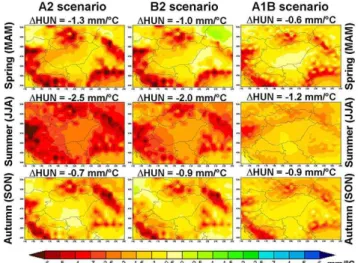
Fig. 1.Projected seasonal change of TAI for three future
scenar-ios, 2071–2100, reference period: 1961–1990. The spatial average changes are shown above the maps taking into account all 229 grid points located within Hungary.
4 Projected seasonal trends
Monthly time series of drought indices are calculated from the simulated temperature and precipitation time series for each grid point of the Central/Eastern European domain. Then, the seasonal changes are determined for 2071–2100 relative to the reference period, 1961–1990 considering all the three emission scenarios. Spatial averages of the pro-jected seasonal change are summarised in Table 1 for the intermediate A1B scenario for Hungary.
Fig. 2.Inter-annual variability of seasonal SAI time series in Hun-gary in the reference period (1961–1990) and the target period (2071–2100).
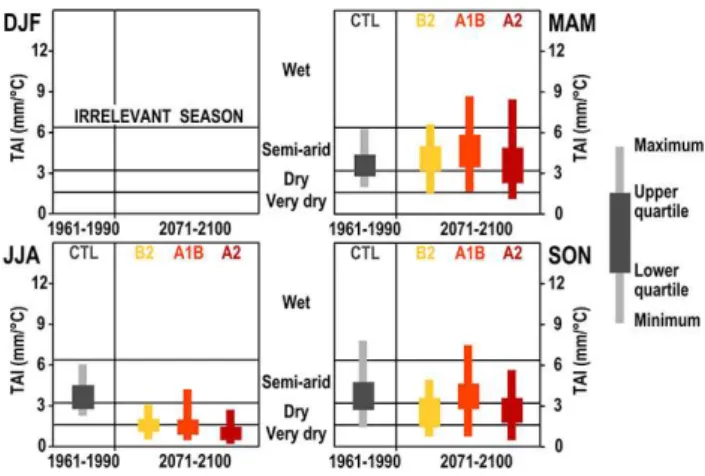
Fig. 3.Inter-annual variability of seasonal TAI time series in
Hun-gary in the reference period (1961–1990) and the target period (2071–2100).
hazard would be the most severe in summer in case of the most pessimistic A2 scenario.
Besides the spatial structure, seasonal time series are also analysed. Box-Whisker plot diagrams in Figs. 2–4 illustrate the variability of seasonal SAI, TAI, and PDI time series of 30 yr. The graphs include seasonal spatial averages for the past 1961–1990 and the future 2071–2100 time slices. Thick boxes show the middle 50 % of the distribution by using the lower and upper quartiles. Thin columns indicate the maxi-mum and minimaxi-mum values, and thus, the entire range of sea-sonal index values during the 30 yr.
On the basis of SAI values (Fig. 2), individual seasons of the reference period 1961–1990 are considered to have been either slightly wet or slightly dry, and only a few seasons can be categorised as intermediate wet. The most pronounced estimated change of SAI can be identified in summer when very few years are projected to be slightly wet (if any) in the
Fig. 4.Inter-annual variability of seasonal PDI time series in
Hun-gary in the reference period (1961–1990) and the target period (2071–2100).
future and the majority of seasons are likely to be charac-terised by either slightly dry or medium dry conditions.
TAI values (Fig. 3) suggest that the reference period 1961– 1990 is considered to have been mainly semi-arid in all the three seasons (winter is not shown in case of this index be-cause of the irrelevance). Summer seasons in the last three decades of this century are projected to be mainly dry or very dry. According to the simulation results, in case of the A2 scenario, most of the summers will be very dry in the fu-ture. Furthermore, a slight shift towards drier conditions is projected in autumn, too.
Drought indication of PDI values differs from either SAI or TAI; namely, positive values (changes) imply dry con-ditions (trends) and negative values (changes) indicate wet conditions (trends). In general, a large increase in PDI vari-ability is projected for 2071–2100 (which is clearly indicated by larger sizes of boxes and columns) compared to the ref-erence period (Fig. 4). Moreover, medium dry conditions are more likely to occur in spring, summer, and autumn than in 1961–1990. In the late 21st century even severe dry condi-tions might occur in a few seasons.
5 Conclusions
In this paper the main focus was on the analysis of precipitation-related climatic conditions using the results from the regional climate modeling experiments of PRECIS. For this purpose we used different types of drought indices. The results suggest that the climate of the Carpathian Basin is projected to become generally drier. The largest drying trend in the 21st century is very likely to occur in summer.
Based on the results, the following conclusions can be drawn.
1. The largest changes in drought indices are projected for summer and winter. Summer is projected to become sig-nificantly drier in the region. Winter is generally pro-jected to become wetter.
2. The estimated decreases of the water balance indices (i.e., LRI, MAI, TAI) are significant at 0.05 level in all seasons. However, winter projections are irrelevant in case of these indices because drought conditions cannot be evaluated with them due to possible freezing. 3. Results of projected SAI (standardised precipitation
anomaly index) in summer show considerable shift from slightly wet and slightly dry conditions towards dry con-ditions (slightly dry and medium dry).
4. Results of projected TAI (Thornthwaite aridity index) in summer show considerable shift from semi-arid condi-tions towards dry and very dry condicondi-tions.
5. Results of projected PDI (Ped’s drought index) show a large increase in interannual variability. Thus, contrary to the 1961–1990 reference period, medium dry condi-tions are projected to occur more often in 2071–2100 in summer as well, as in spring and autumn.
6. Future summer drought hazard is projected to be the most severe in case of the A2 scenario, which assumes the highest CO2 concentration among the emissions scenarios evaluated here.
Acknowledgements. This work was partially supported by the European Union and the European Social Fund through the project FuturICT.hu (grant no.: T ´AMOP-4.2.2.C-11/1/KONV-2012-0013). Research leading to this paper has been supported by the Hungarian National Science Research Foundation under grant K-78125, and projects KMR 12-1-2012-0206, GOP-1.1.1.-11-2012-0164.
Edited by: K. Tokeshi
Reviewed by: two anonymous referees
References
Arakawa, A. and Lamb, V. R.: Computational design of the ba-sic dynamical processes of the UCLA general circulation model, Methods in Computational Physics, 17, 173–265, 1977. Bartholy, J., Pongr´acz, R., Pieczka, I., Kardos, P., and Hunyady, A.:
Analysis of expected climate change in the Carpathian Basin us-ing a dynamical climate model, Lect. Notes Comput. Sc., 5434, 176–183, 2009.
Betts, R. A., Boucher, O., Collins, M., Cox, P. M., Falloon, P. D., Gedney, N., Hemming, D. L., Huntingford, C., Jones, C. D., Sex-ton, D. M. W., and Web, M. J.: Projected increase in continental runoff due to plant responses to increasing carbon dioxide, Na-ture, 448, 1037–1041, 2007.
Burke, E. J. and Brown, S. J.: Evaluating uncertainties in the pro-jection of future drought, J. Hydrometeorol., 9, 292–299, 2008. Dai, A.: Drought under global warming: a review, Wiley
Interdisci-plinary Reviews: Climate Change, 2(1), 45–65, 2011.
de Martonne, E.: Une nouvelle fonction climatologique: L’Indice d’Aridit´e, La M´et´eorologie, 2, 449–458, 1926.
Dunkel, Z.: Brief surveying and discussing of drought indices used in agricultural meteorology, Id˝oj´ar´as, 113, 23–37, 2009. Foley, J. C.: Droughts in Australia: Review of Records from Earliest
Years of Settlement to 1955, Australian Bureau of Meteorology, Bull. 43, 1957.
Gordon, C., Cooper, C., Senior, C. A., Banks, H., Gregory, J. M., Johns, T. C., Mitchell, J. F. B., and Wood, R. A.: The simulation of SST, sea ice extents and ocean heat transports in a version of the Hadley Centre coupled model without flux adjustments, Clim. Dynam., 16, 147–168, 2000.
Hudson, D. A. and Jones, R. G.: Regional climate model simu-lations of present-day and future climates of Southern Africa. Technical Notes No. 39. UK Met Office Hadley Centre, Brack-nell, 2002.
IPCC: Climate Change 2007 – The Physical Science Basis, Con-tribution of Working Group I to the Fourth Assessment Report of the Intergovernmental Panel on Climate Change, edited by: Solomon, S., Qin, D., Manning, M., Chen, Z., Marquis, M., Averyt, K. B., Tignor, M., and Miller, H. L., Cambridge Uni-versity Press, Cambridge, UK and New York, NY, USA, http: //www.ipcc.ch, 2007.
IPCC: Managing the Risks of Extreme Events and Disasters to Ad-vance Climate Change Adaptation, A Special Report of Work-ing Groups I and II of the Intergovernmental Panel on Climate Change, edited by: Field, C. B., Barros, V., Stocker, T. F., Qin, D., Dokken, D. J., Ebi, K. L., Mastrandrea, M. D., Mach, K. J., Plattner, G.-K., Allen, S. K., Tignor, M., and Midgley, P. M., Cambridge University Press, Cambridge, UK, and New York, NY, USA, 582 pp. 2012.
Jacob, D., B¨arring, L., Christensen, O. B., Christensen, J. H., de Castro, M., D´equ´e, M., Giorgi, F., Hagemann, S., Hirschi, M., Jones, R., Kjellstr¨om, E., Lenderink, G., Rockel, B., S´anchez, E., Sch¨ar, Ch., Seneviratne, S. I., Somot, S., van Ulden, A., and van den Hurk, B.: An inter-comparison of regional climate mod-els for Europe: Model performance in Present-Day Climate, Cli-matic Change, 81, 21–53, 2007.
Kane, R. P. and Trivedi, N. B.: Are droughts predictable?, Climate Change, 8, 209–223, 1986.
Katz, R. W. and Glantz, M. H.: Anatomy of a rainfall index, Mon. Weather Rev., 114, 764–777, 1986.
Lang, M., Ouardab, T. B. M. J., and Bobee, B.: Review: Towards operational guidelines for over-threshold modeling, J. Hydrol., 225, 103–117, 1999.
Nakicenovic, N. and Swart, R. (Eds.): Emissions Scenarios, A Spe-cial Reports of IPCC Working Group III, Cambridge University Press, Cambridge, UK, http://www.ipcc.ch, 2000.
Palmer, W. C.: Meteorological Drought, Research Paper, No. 45, US Weather Bureau, Washington, DC, 1965.
Ped, D. A.: Temporal fluctuations of atmospheric aridity and excess moisture in May–August in the European USSR, Gidrometizdat, 213, 82–103, 1979.
Peters, E., Torfs, P. J. J. F., van Lanen, H. A. J., and Bier, G.: Prop-agation of drought through groundwater – a new approach using linear reservoir theory, Hydrol. Process., 17, 3023–3040, 2003. Pieczka, I., Pongr´acz, R., and Bartholy, J.: Comparison of simulated
trends of regional climate change in the Carpathian Basin for the 21st century using three different emission scenarios, Acta Sil-vatica et Lignaria Hungarica, 7, 9–22, 2011.
Pongr´acz, R., Bartholy, J., and Mikl´os, E.: Analysis of projected climate change for Hungary using ENSEMBLES simulations, Appl. Ecol. Env. Res., 9, 387–398, 2011.
Rupa Kumar, K., Sahai, A. K., Krishna Kumar, K., Patwardhan, S. K., Mishra, P. K., Revadekar, J. V., Kamala, K., and Pant, G. B.: High-resolution climate change scenarios for India for the 21st century, Curr. Sci. India, 90, 334–345, 2006.
Seneviratne, S. I., Corti, T., Davin, E. L., Hirschi, M., Jaeger, E., Lehner, I., Orlowsky, B., and Teuling, A. J.: Investigating soil moisture-climate interactions in a changing climate: A review, Earth Sci. Rev., 99, 125–161, 2010.
Sheffield, J. and Wood, E. F.: Global trends and variability in soil moisture and drought characteristics, 1950–2000, from observation-driven simulations of the terrestrial hydrologic cy-cle, J. Climate, 21, 432–458, 2008a.
Sheffield, J. and Wood, E. F.: Projected changes in drought oc-currence under future global warming from model, multi-scenario, IPCC AR4 simulations, Clim. Dynam., 31, 79–105, 2008b.
Thornthwaite, C. W.: An approach toward a rational classification of climate, Geogr. Rev., 38, 55–94, 1948.