BIOCHEMICAL CHANGES IN SOYBEAN LEAVES INFECTED BY Corynespora cassiicola
Tese apresentada à Universidade Federal de Viçosa, como parte das exigências do Programa de Pós-Graduação em Fitopatologia, para obtenção do título de Doctor Scientiae.
VIÇOSA
Aos meus amados pais Maria A. Fortunato e Antônio Fortunato, e amadas filhas
Maria Eduarda e Ana Luísa
OFEREÇO e DEDICO
“Live as if you were to die tomorrow. Learn as if you were to live forever.”
AGRADECIMENTOS
À Deus por todas as bênçãos a mim concedidas durante essa caminhada.
Aos meus pais, Maria A. Fortunato e Antônio Fortunato, meus irmãos Thiago e Dinho, e minhas filhas Maria Eduarda e Ana Luísa por todo amor, carinho, ajuda, apoio incondicional e pelo referencial de dedicação.
Ao Professor Fabrício de Ávila Rodrigues pela orientação, apoio, amizade, bem como por todo ensinamento e aconselhamentos que serão essenciais para minha vida pessoal e profissional.
À Universidade Federal de Viçosa, ao Departamento de Fitopatologia e ao Programa de Pós-graduação em Fitopatologia, por proporcionarem condições de realizar este trabalho.
A Fundação de Amparo à Pesquisa no Estado de Minas Gerais (FAPEMIG) pela concessão da bolsa de doutorado.
Aos funcionários do Departamento de Fitopatologia, especialmente ao Delfim e o Daniel, pela amizade e pelo apoio técnico, além das secretárias do Departamento de Fitopatologia e Pós-graduação em Fitopatologia, Elenize e Sara Moreira por todo suporte.
A Dra. Claudine Dinali Santos Seixas, por gentilmente ter fornecido sementes das cultivares de soja e ao Dr. Hércules Diniz Campos, professor da Universidade de Rio Verde, por gentilmente ter fornecido o isolado de C. cassiicola empregado neste estudo.
Aos professores do Departamento de Fitopatologia da Universidade Federal de Viçosa pelos ensinamentos.
Aos queridos amigos Daniel Debona e José Cupertino Pinheiro, por toda amizade, ajuda e suporte técnico.
Aos amigos do Departamento de Fitopatologia, pela amizade, ajuda e pelas palavras de incentivo e apoio, em especial para, Rafael Alfenas por seu companheirismo.
Aos integrantes do Laboratório de Interação Planta-Patógeno, Wilka, Leandro, Maria, Patrícia, Renata, Bruno, Carlos, Wiler, Maria Fernanda, Leonardo, Jonas e Isaías pelo apoio e pela amizade e em especial para, Arthur Bernardeli, André, Leandro e Patrícia que além do companheirismo contribuíram diretamente para a realização deste trabalho.
A todos que direta ou indiretamente contribuíram para a realização deste trabalho.
BIOGRAFIA
SUMÁRIO
RESUMO ... vii
ABSTRACT ... ix
GENERAL INTRODUCTION ... 1
REFERENCES ... 4
CHAPTER 1 ... 7
Changes in the antioxidant system of soybean leaves infected by Corynespora cassiicola ... 7
ABSTRACT ... 7
INTRODUCTION ... 8
MATERIAL AND METHODS ... 10
Plant material and growth ... 10
Inoculation procedure... 10
Disease assessment... 11
Biochemical analysis ... 11
Determination of enzyme activities ... 11
Determination of reduced ascorbate concentration ... 15
Determination of malondialdehyde concentration ... 15
Determination of hydrogen peroxide (H2O2) concentration ... 15
Determination of superoxide (O2•-) concentration ... 16
Experimental design and data analysis ... 16
RESULTS ... 18
DISCUSSION ... 20
CHAPTER 2 ... 39
Defence-related enzymes in soybean resistance against Corynespora cassiicola infection... 39
ABSTRACT ... 39
INTRODUCTION ... 40
MATERIAL AND METHODS ... 42
Plant material and growth ... 42
Inoculation procedure... 42
Disease assessment... 43
Biochemical assay ... 43
Determination of defense enzyme activities ... 43
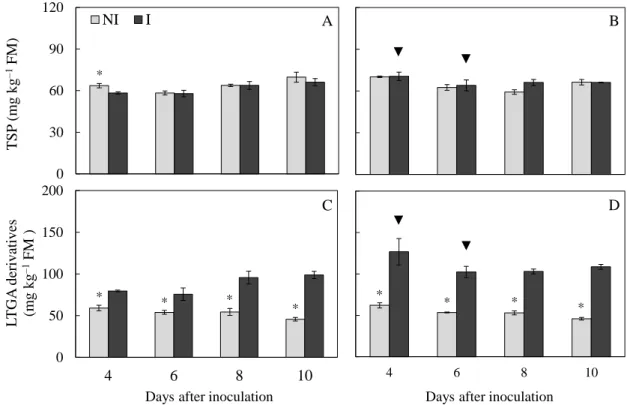
Determination of the concentrations of total soluble phenolics (TSP) and lignin-thioglycolic acid (LTGA) derivatives ... 45
Experimental design and data analysis ... 45
RESULTS ... 47
DISCUSSION ... 48
REFERENCES ... 52
LIST OF TABLES AND FIGURES ... 57
RESUMO
FORTUNATO, Alessandro Antônio, D. Sc., Universidade Federal de Viçosa, julho de 2014. Alterações bioquímicas em folhas de soja infectadas por Corynespora cassiicola. Orientador: Fabrício Ávila Rodrigues. Coorientador: Luís Cláudio Viera da Cunha.
Amancha alvo da soja, causada pelo fungo Corynespora cassiicola, tornou-se uma importante doença em campos de soja no Centro-Oeste Brasil hoje em dia, causando perdas de produtividade de 20 a 40%. No entanto, informações sobre como as plantas de soja respondem à infecção de C. cassiicola, especialmente considerando o sistema de defesa antioxidantiva e a indução de defesa basal, ainda é incipiente. Portanto, o objetivo deste trabalho foi investigar as respostas bioquímicas de plantas de soja de duas cultivares (TMG 132 e FUNDACEP 59) à C. cassiicola. No primeiro estudo, foram medidas as atividades de superóxido dismutase (SOD), catalase (CAT), peroxidase (POX), peroxidase do ascorbato (APX), peroxidase da glutationa (GPX), glutationa redutase (GR), glutationa S-transferase (GST) e lipoxigenase (LOX), bem como as concentrações de ascorbato (ASA), aldeído malônico (MDA), peróxido de hidrogênio (H2O2) e de superóxido (O2•-). A doença foi significativamente reduzida nos folíolos da
cv. FUNDACEP 59 em comparação com a cv. TMG 132. Em geral, após a infecção as atividades de SOD, CAT, POX, APX, GPX, GR e GST foram significativamente maiores, independente da cultivar, em comparação com as plantas do controle. No entanto, a atividade de LOX em plantas de soja foi menor independente da cultivar. A concentração de AsA aumentou em ambas as cultivares em resposta a C. cassiicola. As cultivares apresentaram semelhanças quanto as respostas bioquímicas estudadas durante a patogênese. No entanto, as atividades de SOD, APX, GPX e GR em plantas inoculadas da cv. FUNDACEP e 59, bem como a concentração de AsA aumentaram em comparação com as mesmas plantas provenientes da cv. TMG 132. Foram observados aumentos significativos nas concentrações de MDA, H2O2 e O2•-, especialmente nas
ABSTRACT
ALESSANDRO, Alessandro Antônio, D. Sc., Universidade Federal de Viçosa, July, 2014. Biochemical changes in soybean leaves infected by Corynespora cassiicola. Adviser: Fabrício de Ávila Rodrigues. Co-adviser: Luís Cláudio Viera da Cunha.
Soybean target spot, caused by the fungus Corynespora cassiicola, has become an important disease on soybean fields in Midwest Brazil nowadays, causing yield losses from 20 to 40%. However, information regarding how soybean plants responds to C. cassiicola infection, especially considering the antioxidant defence system and the induction of basal defence, is still incipient. Therefore, the aim of this work was to investigate at the biochemical responses soybean plants from two cultivars (TMG 132 and FUNDACEP 59) to C. cassiicola. In the first study, it was measured the superoxide dismutase (SOD), catalase (CAT), peroxidase (POX), ascorbate peroxidase (APX), glutathione peroxidase (GPX), glutathione reductase (GR), glutathione S-transferase (GST) and lipoxigenase (LOX) activities as well as the concentrations of ascorbate (AsA), malondialdehyde (MDA), hydrogen peroxide (H2O2) and superoxide (O2•-). The
disease was significantly reduced in leafleats from cv. FUNDACEP 59 compared to cv. TMG 132. In general, upon infection SOD, CAT, POX, APX, GPX, GR and GST activities were significantly higher, regardless of cultivar, in comparison to the control plants. However, LOX activity in soybean plants was lower upon infection regardless of cultivar. The concentration of AsA increased in both cultivars in response to C. cassiicola. The cultivars presented similarities regarding the biochemical responses studied during pathogenesis. However, SOD, APX, GPX and GR activities in inoculated plants from cv. FUNDACEP 59 and as well as the concentration of AsA were increased compared to the same plants from cv. TMG 132. There were observed significant increases in the concentrations of MDA, H2O2 and O2•-, especially in
GENERAL INTRODUCTION
(Sinclair, 1999). Brazil is the second the largest soybean (Glycine max (L.) Merril) producer in the world and largest exporter (FAO, 2014). In the 2013/14 growing season, the country produced about 89 million tons, accounting for 30% of the global production (CONAB, 2014).
Global soybean production for 2014/15 is projected at 304.8 million tons, up 4.8 million than last season (USDA, 2014). However, among the diseases affecting soybean production, soybean target spot, caused by the fungus Corynespora cassiicola (Berk & MA Curtis) CT Wei., has become important nowadays in fields due the losses caused in soybean production (Godoy et al., 2012, Teramoto et al., 2013). Among the reasons the over utilization of high yielding susceptible cultivars and continuous use of benzimidazole fungicides, resistant populations have been found in soybean fields in Goiás and Mato Grosso States (Xavier et al., 2013).
The fungus C. cassiicola infects more than 372 host plants from over 70 tropical and subtropical countries (Farr & Rossman, 2014). Despite the wide range of host species, studies have shown that physiological specialization may occur in the field among isolates and their hosts (Dixon et al., 2009). The fungus has been isolated from leaves, stems and roots of plants, and nematode cysts, human skin, and is able to produce chlamydospore (Dixon et al., 2009, Huang et al. 2009; Oliveira et al., 2012). Saprophytism and parasitism habits are common survival strategies for this pathogen, therefore endophytic isolates were recovered from rubber trees have been described recently in the literature (Déon et al. 2012).
registered fungicides, epidemics of target spot have been frequent in many soybean growing regions in Brazil (Godoy et al., 2012; Teramoto et al., 2013).
As an example of foliar and necrotrophic pathogenesis, C. cassiicola completely destroys the leaf cells as a strategy to obtain nutrients, thereby achieving massive growth, and the diffusion of secreted hydrolytic enzymes and non-host selective toxin (cassiicolin) into the healthy leaf tissues further increases the cellular damage (Lamotte et al., 2006; Onesirosan et al., 1975). The cellular damage caused by C. cassiicola
results in the production of reactive oxygen species (ROS) such as superoxide (O2•-),
hydrogen ion (-OH), hydrogen peroxide (H
2O2) and singlet oxygen (1O2) (Daub et al.,
2013). Because ROS are strong oxidizing agents, they can oxidase essential macromolecules such as membrane lipids, pigments, nucleic acids, carbohydrates, DNA and proteins, thereby leading to premature plant senescence (Gill & Tuteja, 2010). In order to maintain the balance between harmful and beneficial functions of ROS, their
levels are strictly controlled by a flexible and complex antioxidant defence system
orchestrated by the plants (Mandal et al., 2008). In addition, ROS has been associated with plant defense due to their antimicrobial activity or contributing to the lignification of the host cell walls against pathogens colonization (Daub et al., 2013; Grant & Loake, 2000).
During the necrotrophic phase of B. cinerea in tomato plants, the peroxisomal catalase activity on leaves was increased in the diseased plants at the first stages of fungal infection, however it was followed by a strong decline at the late stages compared to the healthy plants (Kużniak & Skłodowska, 2005). Differences between soybean cultivars for glutathione S-transferase activity expressing different resistance level to Sclerotinia sclerotiorum was reported by Malenčić et al. (2010). Soybean seedlings infected by Rhizoctonia solani, showed a significant increase for the superoxide dismutase activity on infected leaves in comparison to the healthy ones during the fungal infection process (Kiprovski et al., 2012).
For the soybean-Fusarium solani f.sp. glycines interaction, Lozovaya et al., (2004) reported an increase in the concentration of lignin in the inoculated roots of soybean plants from resistant lines compared to the susceptible ones in response to fungal infection. Upchurch & Ramirez (2010) showed an up-regulation of polyphenol oxidase (PPO) gene on soybean detached leaves and seeds infected by Cercospora kikuchii or Diaporthe phaseolorum var. meridionalis compared to the control plants. The patterns of gene expression in soybean roots infected by Phytophthora sojae showed that the PPO gene was strongly down-regulated during the course of pathogen infection (Moy et al., 2004). The genes coding for the enzymes phenylalanine ammonia-lyase and
chalcone synthase and pathogenesis-related proteins PR1 and PR5 were up-regulated on the roots of plants from a resistant soybean cultivar to F. solani f.sp. glycines in comparison to a susceptible one (Iqbal et al., 2005).
REFERENCES
Almeida AMR, Ferreira LP, Yorinori JT, Silva JFV, Henning AA, Godoy CV, Costamilan LM, Meyer MC, 2005. Doenças da soja (Glycine max (L.) Merril). In: Kimati H, Amorim L, Rezende JAM, Bergamin Filho A, Camargo LEA, eds. Manual de fitopatologia: doenças das plantas cultivadas, 4. ed. São Paulo, SP, Brasil: Ceres. 569-88.
CONAB - Companhia Nacional de Abastecimento. Disponível em http://conab.gov.br. Acesso em 17 de julho de 2014.
Daub ME, Herrero S, Chung KR, 2013. Reactive oxygen species in plant pathogenesis: the role of perylenequinone photosensitizers. Antioxidants & Redox Signaling 19, 970-89.
Déon M, Scomparin A, Tixier A, Mattos CR, Leroy T, Seguin M, Pujade-Renaud V, 2012. First characterization of endophytic Corynespora cassiicola isolates with variant cassiicolin genes recovered from rubber trees in Brazil. Fungal diversity 54, 87-99.
Dixon LJ, Schlub RL, Pernezny K, Datnoff LE, 2009. Host specialization and phylogenetic diversity of Corynespora cassiicola. Phytopathology 99, 1015-27. FAO. Food and Agriculture Organization. Disponível em http://faostat.fao.org. Acesso
em 28 de junho de 2014.
Farr DF, Rossman AY, 2014. Fungal Databases, Systematic Mycology and Microbiology Laboratory, ARS, USDA. Retrieved July 20, 2014, from http://nt.ars-grin.gov/fungaldatabases/
Gill SS, Tuteja N, 2010. Reactive oxygen species and antioxidant machinery in abiotic stress tolerance in crop plants. Plant Physiology and Biochemistry 48, 909-30.
Godoy CV, Utiamada CM, Meyer MC, Campos HD, Pimenta CB, Borges EP, 2012 Eficiência de Fungicidas para o Controle da mancha-alvo, Corynespora cassiicola, na Safra 2011/12: Resultados Sumarizados dos Ensaios Cooperativos. Londrina, PR, Brasil, Embrapa Soja (Circular Técnica, 94).
Grant JJ, Loake GJ, 2000. Role of reactive oxygen intermediates and cognate redox signaling in disease resistance. Plant Physiology 124, 21-30.
Huang HK, Liu CE, Liou JH, Hsiue HC, Hsiao CH, Hsueh PR, 2010. Subcutaneous infection caused by Corynespora cassiicola, a plant pathogen. Journal of Infection 60, 188-90.
Hückelhoven R, 2007. Cell wall-associated mechanisms of disease resistance and susceptibility. Annual Review of Phytopathology 45, 101-27.
Iqbal MJ, Yaegashi S, Ahsan R, Shopinski KL, Lightfoot DA. (2005) Root response to Fusarium solani f.sp. glycines: temporal accumulation of transcripts in partially
resistant and susceptible soybean. Theoretical and Applied Genetics 110:1429-1438.
Kiprovski B, Malencic D, Popovic M, Budakov D, Stojšin V, Baleševic-Tubic S, 2012. Antioxidant systems in soybean and maize seedlings infected with Rhizoctonia solani. Journal of Plant Pathology 94, 313-24.
Kużniak E, Skłodowska M, 2005. Fungal pathogen-induced changes in the antioxidant systems of leaf peroxisomes from infected tomato plants. Planta 222, 192-200. Lamotte F, Duviau MP, Sanier C, Thai R, Poncet J, Bieysse D, Pujade-Renaud V, 2007.
Purification and characterization of cassiicolin, the toxin produced by Corynespora cassiicola, causal agent of the leaf fall disease of rubber tree. Journal of Chromatography B 849, 357-62.
Lozovaya VV, Lygin AV, Li S, Hartman GL, Widholm JM, 2004. Biochemical response of soybean roots to Fusarium solani f. sp. glycines infection. Crop science 44, 819-26.
Malenčić D, Kiprovski B, Popović M, Prvulović D, Miladinović J, Djordjević V, 2010.
Changes in antioxidant systems in soybean as affected by Sclerotinia sclerotiorum (Lib.) de Bary. Plant Physiology and Biochemistry 48, 903-8.
Mandal S, Mitra A, Mallick N, 2008. Biochemical characterization of oxidative burst during interaction between Solanum lycopersicum and Fusarium oxysporum f. sp. lycopersici. Physiological and Molecular Plant Pathology 72, 56-61.
Moy P, Qutob D, Chapman BP, Atkinson I, Gijzen M, 2004. Patterns of gene expression upon infection of soybean plants by Phytophthora sojae. Molecular Plant Microbe Interaction 17, 1051-62.
Oliveira RR, Aguiar BM, Tessmann DJ, Pujade-Renaud V, Vida JB, 2012. Chlamydospore formation by Corynespora cassiicola. Tropical Plant Pathology 37, 415-8.
Sinclair JB, 1999. Target spot. In: Hartman GL, Sinclair JB, Rupe JC, eds. Compendium of soybean diseases. 4th Ed. St. Paul, MN, USA: APS Press.
Teramoto A, Machado TA, Santos LMD, Volf MR, Meyer MC, Cunha MGD, 2013. Reaction of soybean cultivars to Corynespora cassiicola. Tropical Plant Pathology 38, 68-71.
Upchurch RG, Ramirez ME, 2010. Defense-related gene expression in soybean leaves and seeds inoculated with Cercospora kikuchii and Diaporthe phaseolorum var. meridionalis. Physiological and Molecular Plant Pathology 75, 64-70.
USDA – United States Department of Agriculture. World Agricultural Supply and Demand Estimates. Disponível em http://usda.gov/oce/commodity/wasde/latest.pdf. Acesso em 20 de julho de 2014.
Xavier SA, Canteri MG, Barros DCM, Godoy CV, 2013. Sensitivity of Corynespora cassiicola from soybean to carbendazim and prothioconazole. Tropical Plant Pathology 38, 431-5.
CHAPTER 1
Changes in the antioxidant system on soybean leaves infected by Corynespora cassiicola
Alessandro Antônio Fortunato, Daniel Debona, Arthur Martins Almeida Bernardeli and Fabrício Ávila Rodrigues
Universidade Federal de Viçosa, Departamento de Fitopatologia, Laboratório de Interação Planta-Patógeno, Viçosa, Minas Gerais, 36570-900, Brasil.
ABSTRACT
Target spot, caused by the fungus Corynespora cassiicola, has been very important foliar diseases of soybean nowadays. However, information regarding the soybean-C. cassiicola interaction is still scarse in the literature. In the present study, it was determined the superoxide dismutase (SOD), catalase (CAT), peroxidase (POX), ascorbate peroxidase (APX), glutathione peroxidase (GPX), glutathione reductase (GR), glutathione S-transferase (GST) and lipoxygenase (LOX) activities as well as the ascorbate (AsA), malondialdehyde (MDA), hydrogen peroxide (H2O2) and superoxide
(O2•-) concentrations were studied in soybean plants from cultivars (TMG 132 and
FUNDACEP 59). The target spot significantly decreased in in the leaflets of plants from cv. FUNDACEP 59 compared to cv. TMG 132. In general, the mentioned enzymes significantly increased their activities in the inoculated plants, regardless of cultivar, in comparison to the non-inoculated plants upon infection. Moreover, LOX activity interestingly was reduced in both cultivars. Upon pathogenesis, the enzyme activities were similar among both cultivars, however significant increases were observed to SOD, APX, GPX and GR activities. The concentration of AsA significantly increased upon C. cassiicola infection in both cultivars, especially for cv. FUNDACEP 59. The MDA, H2O2 and O2•- concentrations increased in response to C. cassiicola infection,
especially for the plants from cv. TMG 132. Increases on SOD, POX, APX, GPX, GR and GST activities as well as on the AsA concentration in soybean plants were important to decrease the MDA concentration and the removal of the excess of ROS generated during to C. cassiicola infection.
INTRODUCTION
Soybean (Glycine max (L.) Merrill), one of the most profitable crops grown worldwide, is susceptible to many diseases, which contribute to reduce grain quality and yield (Yorinori, 1997). In Brazil, target spot, caused by the necrotrophic fungus Corynespora cassiicola (Berk & MA Curtis) CT Wei., has increased in importance (Godoy et al., 2012; Teramoto et al., 2013). Symptoms the target spot on leaves include roughly circular to irregular necrotic lesions, which have alternating light and dark rings surrounded by a dull green or yellowish-green halo (Almeida et al., 2005; Sinclair, 1999). As the lesions expand, they start to coalesce and exhibit a zonate pattern contributing, therefore, to significantly decrease the photosynthetically active leaf area (Sinclair, 1999). Premature defoliation may occur in susceptible cultivars (Almeida et al., 2005; Sinclair, 1999). The fungus overwinters on soybean debris and seeds (Almeida et al., 2005; Sinclair, 1999). Elevated temperatures associated with high relative humidity in mid to late season, especially when the plant canopy has been filled, are environmental conditions that favor the occurrence of severe epidemics of target spot (Godoy et al., 2012). Target spot control has been difficult to achieve because of the absence of cultivars with a desirable level of resistance and the low efficiency and availability of fungicides (Xavier et al., 2013, Teramoto et al., 2013).
The secretion of lytic enzymes and non-host selective toxins, such as cassiicolin, by C. cassiicola (Barthe et al., 2007; Onesirosan et al., 1975) results in the production of reactive oxygen species (ROS) such as superoxide (O2•-), hydroxyl ion (-OH), hydrogen
peroxide (H2O2) and singlet oxygen (1O2) (Daub et al., 2013). ROS have been
associated with plant defense due to their antimicrobial activity or even contributing to the lignification of the host cell walls that reduce the extension of pathogens colonization on their host tissue (Daub et al., 2013; Grant & Loake, 2000). However, ROS are strong oxidizing agents that can damage essential macromolecules such as membrane lipids, pigments, nucleic acids, carbohydrates, DNA and proteins thereby leading to premature leaf senescence (Gill & Tuteja, 2010). To maintain an adequate balance between production and removal of the ROS, plants have a flexible and complex antioxidant system (Mittler et al., 2004). This system involves a wide range of compounds including reduced ascorbate (AsA) and glutathione (GSH), carotenoids,
glutathione peroxidase (GPX) and glutathione-S-transferase (GST) (Asada, 1999; Mittler, 2002, 2004; Malenčić et al., 2010; Noctor & Foyer, 1998).
During the necrotrophic pathogenesis of Botrytis cinerea in tomato plants, the peroxisomal CAT activity on leaves was increased in the diseased plants at the first stages of fungal infection, however was followed by a strong decline at advanced stages compared to the healthy ones (Kużniak & Skłodowska, 2005). Increases in antioxidant system during fungal infection was associated with removal of ROS in soybean-Sclerotinia sclerotiorum interaction (Malenčić et al., 2010). Soybean seedlings infected by Rhizoctonia solani showed a significant increase for SOD activity on infected leaves in comparison to the healthy ones (Kiprovski et al., 2012).
MATERIAL AND METHODS Plant material and growth
A total of ten soybean seeds from cvs. TMG 132 and FUNDACEP 59, susceptible and moderately resistant to target spot based on field performance (Godoy et al., 2012; Pitol et al., 2011), respectively, were sown into 2 L plastic pots (Ecovaso, Jaguariúna, SP, Brazil) containing 2 kg of Tropstrato® (Vida Verde, Mogi Mirim, SP, Brazil) substrate composed of an 1:1:1 mixture of pine bark, peat and expanded vermiculite. Five days after seedlings emergence, each pot was thinned to two seedlings. After the emergence of the cotyledons, plants were fertilized weekly with 50 mL of a nutrient solution, prepared using deionized water, containing 40 mM KNO3, 10 mM NH4H2PO4, 10 mM
MgSO4.7H2O, 15 mM Ca(NO3)2.4H2O, 2.4 mM ZnSO4.7H2O, 3 mM H3BO3, 10 mM
K2SO4, 3.3 mM CH4N2O and 7.5 mM NH4H2SO4 (Dallagnol et al., 2012). Plants also
were watered as needed with deionized water.The plants were kept in greenhouse (relative humidity of 65 ± 5% and temperature of 30 ± 5ºC) during the experiments.
Inoculation procedure
A pathogenic isolate of C. cassiicola obtained from symptomatic soybean plants collected in the city of Rio Verde located in the State of Goiás, Brazil, was used to inoculate the plants. After isolation and morphological identification of conidia, the isolate was preserved by Castellani's method (Dhingra & Sinclair, 1995). At 14 days before inoculation, plugs of potato-dextrose-agar medium containing fungal mycelia
preserved by Castellani’s method were placed in Petri dishes containing carrot leaf -pea-dextrose-agar (CL-PeDA) media. The CL-PeDA media was prepared using 200 mg carrot leaves, 100 g fresh pea, 20 g dextrose, and 20 g agar, and before media preparation, carrot leaves and peas were mixture in a blender to obtain a homogenous mixture, which was sieved to remove the solids excess. Fragments of fungal mycelia were transferred and homogenously spread to new Petri dishes. The Petri dishes were placed in a growth chamber at 25°C with a 12-h photoperiod for four days. After this period, the fungal colonies were stressed using a Drigalski spatel in a laminar flow chamber to avoid contamination. The plates were then kept in a growth chamber at continous white light (40 W lamps alternately distributed to provide the light intensity
of 165.3 μmol s-1 m-2) for 6 days until the conidia were formed. Conidia were then
inoculated with a conidial suspension of C. cassiicola (5 × 10⁴ conidia mL-1) (20 ml per plant). The conidial suspension was applied as a fine mist using a VL Airbrush atomizer (Paache Airbrush Co., Chicago, IL) to both adaxial and abaxial leaf surfaces of each plant until runoff. After inoculation, plants were maintained in a plastic mist growth chamber (MGC) inside a greenhouse for the duration of the experiments. The MGC was constructed of wood (2 m wide, 1.5 m high and 5 m long) and covered with transparent plastic (100 µm thick). The maximum natural photon flux density at plant canopy height
was ≈ 700 µmol m-2 s-1 and the temperature was 25 ± 2ºC (day) and 20 ± 2ºC (night).
The relative humidity was maintained at 92 ± 3% using a misting system in which nozzles (model NEB-100, KGF Co., São Paulo, Brazil) sprayed mist every 30 min for 15 s above the plant canopy. The temperature and relative humidity were measured with a thermohygrograph (TH-508, Impac, Brazil).
Disease assessment
Target spot severity was evaluated on the 8th trifoliate leaf from plants of each replication and treatment (cultivars) at 4, 6, 8, and 10 days after inoculation (dai) (based on personal greenhouse trials) using a diagrammatic scale proposed by Soares et al. (2009). Data from target spot severity was used to calculate the area under disease progress curve (AUDPC) according to Shaner & Finney (1977). At 10 dai, the number of lesions per cm2 of leaf area was counted at five randomized places on on the 8th trifoliate leaves from the plants of each replication and cultivars with a hand-held microscope.
Biochemical analysis
For all biochemical assays, the 6th, 7th, 8th and 9th trifoliate leaves, from base to the top, of plants from the replications of each treatment (cultivars × plant inoculation) were collected at 4, 6, 8 and 10 dai (based on personal greenhouse trials). Leaf samples were kept in liquid nitrogen during samplings and subsequently stored at -80°C until further analysis.
Determination of enzymes activities
a mortar using a pestle adding liquid nitrogen. The fine powder was immediately homogenized in 2000 µL of a solution containing 50 mM potassium phosphate buffer (pH 6.8), 0.1 mM EDTA, 1 mM phenylmethylsulfonyl fluoride (PMSF) and 2% (w/v) polyvinylpolypyrrolidone (PVPP). Then, the homogenate was centrifuged at 12,000 g for 15 min at 4°C and the supernatant was used as a crude enzyme extract. To determine the glutathione reductase (GR, EC 1.6.4.2) activity, 200 mg of homogenized leaf tissue was ground as described above and the extraction solution used to homogenize the fine powder containing 100 mM potassium phosphate buffer (pH 7.5), 0.1 mM EDTA, 1 mM DL-dithiothreitol, 1 mM PMSF and 2% (w/v) PVPP in final volume of 2000 µ L. The homogenate was centrifuged as described previously.
SOD activity was determined using a method described by Del Longo et al. (1993), which measures its capacity to photochemically reduce the p-nitrotetrazolium blue (NTB) available in the reaction solution. The reaction was started after the addition of 40 µL of the crude enzyme extract to 960 µ L of a mixture containing 50 mM potassium phosphate buffer (pH 7.8), 13 mM methionine, 75 µM NTB, 0.1 mM EDTA and 2 µM riboflavin. The reaction was carried out at 25°C under 15-W lamp light per 10 min. After light exposure, the light was turned off and the production of formazan blue, which resulted from the photoreduction of NTB, was measured at 560 nm in spectrophotometer (Evolution 60; Thermo Fisher Scientific Inc., MA) (Giannopolitis & Ries, 1977). For the control samples, the reaction mixture was kept in darkness for 10 min and the absorbance measured at 560 nm. The values obtained from the samples (light) were subtracted from the values obtained from the control samples to determine the SOD activity. The amount of enzyme necessary to inhibit NBT photoreduction by 50% was defined as one unit of SOD (Beauchamp & Fridovich, 1971).
CAT activity was determined following the method proposed by Cakmak & Marschner (1992). The reaction was initiated after the addition of 25 µL of the crude enzyme extract to 975 µ L of reaction mixture consisted of 50 mM potassium phosphate buffer (pH 6.8) and 20 mM H2O2. The determination of CAT activity was based by the
rate of hydrogen peroxide (H2O2) decomposition measured in the spectrophotometer at
240 nm for 1 min at 25°C. An extinction coefficient of 36 M-1 cm-1 was used to calculate CAT activity (Anderson et al., 1995).
was obtained through the absorbance of colored purpurogallin recorded at 420 nm for 1 min at 25°C. The extinction coefficient of 2.47 mM-1 cm-1 was used to calculate POX activity (Chance & Maehley, 1955).
APX activity was assayed using the method proposed by Nakano & Asada (1981). The reaction was started after the addition of 25 µL of the crude enzyme extract to 975 µ L of reaction mixture consisted by 50 mM potassium phosphate buffer (pH 6.8), 1 mM H2O2 and 0.8 mM ascorbate. The APX activity was measured by the rate of ascorbate
oxidation at 290 nm for 1 min at 25°C. The extinction coefficient of 2.8 mM-1 cm-1 was used to calculate APX activity (Nakano & Asada, 1981).
GPX activity was determined after the addition of 50 µL of the crude enzyme extract to a 950 µL of mixture containing 50 mM potassium phosphate buffer (pH 7.0), 1 mM EDTA, 0.114 M NaCl, 1 mM GSH, 0.2 mM NADPH, 0.25 mM H2O2 and 1 U of GR
(Nagalakshmi & Prasad, 2001). The enzyme activity was measured as a decrease in absorbance at 340 nm for 1 min at 30°C. The extinction coefficient of 6.22 mM-1 cm-1 was used to calculate GPX activity (Anderson et al., 2004).
GR activity was assayed according to method described by Carlberg & Mannervik (1985). The reaction was started after the addition of 50 µL of the crude enzyme extract to 950 µL of a mixture containing 100 mM potassium phosphate (pH 7.5), 1 mM EDTA, 1 mM oxidized glutathione (GSSG) and 0.1 mM NADPH prepared in 0.5 mM Tris-HCl buffer (pH 7.5). The decrease in absorbance was determined at 340 nm for 1 min at 30°C. The extinction coefficient of 6.22 mM-1 cm-1 was used to calculate GR activity (Foyer & Halliwell, 1976).
The methodology proposed by Habig et al. (1974) was used to determined the GST activity. Firstly, 75 µL of the crude enzyme extract was add to 925 µ L of a reaction mixture containing 50 mM potassium phosphate buffer (pH 6.5) and 50 mM reduced glutathione (GSH). Then, the reaction was started by the addition of 500 µL of 30 mM 1-chloro-2,4-dinitrobenzene and the absorbance was measured at 340 nm over 3 min at 25°C. GST activity was determined using an extinction coefficient of 9.6 mM-1 cm-1 (Habig et al., 1974).
spectrophotometer at 234 nm. The extinction coefficient of 25,000 M-1 min-1 was used to calculate LOX activity.
Determination of reduced ascorbate concentration
The concentration of reduced ascorbate (AsA) was determinated following the method described by Kampfenkel et al. (1995). A total of 300 mg of leaf tissue was homogenized in 2000 µL of 6% (w/v) acid trichloroacetic (TCA) and centrifuged at 15,000 g for 5 min at 4°C. Aliquots of 200 μL of the crude extract leaf were added to 800 µL of 0.2 M sodium phosphate buffer (pH 7.4). The mixture was incubated at 42°C
for 15 min. Subsequently, 1.0 mL of 10% (w/v) TCA, 800 μL of 42% (v/v) H3PO4, 800 μL of 4% (w/v) 2,2'-dipyridyl (dissolved in 70% ethanol) and 400 μL of 3% (w/v) FeCl3
were added to the mixture. After vigorous stirring, the mixture was incubated at 42°C for 40 min. Then, the reaction was stopped on ice bath and the absorbance was determined at 525 nm. The AsA concentration was determined according to a calibration curve of AsA.
Determination of malondialdehyde (MDA) concentration
The oxidative damage in leaf cells was determined as the concentration of total 2-thiobarbituric acid (TBA) reactive substances and expressed as equivalents of malondialdehyde (MDA) according to Cakmak & Horst (1991). Firstly, 100 mg of leaf tissue was ground into a fine powder using a mortar with pestle adding liquid nitrogen. Then, the fine powder was homogenized in 2000 µl of 0.1% (w/vol) trichloracetic acid (TCA) solution. The homogenate was centrifuged at 12,000 g for 15 min at 4°C. After centrifugation, 500 µ L of the supernatant was reacted with 1500 µL of TBA solution (0.5% in 20% TCA) in ThermoMixer at 95°C for 30 min (Eppendorf, Hamburg, Germany). After this period, the reaction was stopped in an ice bath. The samples were centrifuged at 9,000 g for 10 min and the specific absorbance was determined at 532 nm. The nonspecific absorbance was estimated at 600 nm and subtracted from the specific absorbance value. An extinction coefficient of 155 mM-1 cm-1 was used to
calculate the MDA concentration (Heath & Packer, 1968).
Determination of hydrogen peroxide (H2O2) concentration
The method described by Kuo & Kao (2003) was used to assay the H2O2 concentration.
for 15 min at 4°C and the supernant collected. The reaction was initiated with addition of 100 µL of the supernatant to the reaction mixture containing 100 µM ferric ammonium sulfate (FeNH4[SO4]), 25 mM sulfuric acid, 250 µM xylenol orange and
100 mM sorbitol in a volume of 2000 µ L (Gay & Gerbicki, 2000). The samples were kept in the darkness for 30 min and then the absorbance was determined at 560 nm. The controls for the reagents and crude extracts were prepared under the same conditions and subtracted from the sample. The H2O2 concentration was estimated based on a
standard curve of H2O2.
Determination of superoxide (O2•-) concentration
A total of 200 mg of leaf tissue was ground into a fine powder in a mortar and pestle with liquid nitrogen to determine the O2•- concentration. The fine powder was
homogenized in an ice bath in 2000 µ L of a solution containing 100 mM sodium phosphate buffer (pH 7.2) and 1 mM sodium diethyl diethyldithiocarbamate. The homogenate was centrifuged at 22,000 g for 20 min at 4°C. After centrifugation, 100 µL of the supernatant was reacted with 1900 µ L of a solution containing 100 mM sodium phosphate buffer (pH 7.2), 1 mM diethyl sodium diethyldithiocarbamate and 0.25 mM p-nitrotetrazolium blue. The O2•- concentration was determined by subtracting the
absorbance of the final product from the initial absorbance at 540 nm (Chaitanya & Naithani, 1994).
Experimental design and data analysis
RESULTS
The factors cultivars and sampling time as well as their interaction were significant for target spot severity (Table 1). For the NLL and AUDPC, the factor cultivars was significant (Table 1). The symptoms of target spot, characterized as circular brownish lesions with yellow halos, were more developed on the leaflets of plants from cv. TMG 132 in comparison to cv. FUNDACEP 59 (Fig. 1A). The NLL was significantly reduced by 14% for plants from cv. FUNDACEP 59 compared to cv. TMG 132(Fig. 1B). The target spot severity was significantly reduced by 50, 13, 21 and 19% at 4, 6, 8 and 10 dai, respectively, on the leaflets of plants from cv. FUNDACEP 59 in comparison to the leaflets of plants from cv. TMG 132 (Fig. 1C). The AUDPC was significantly lower by 15% on the leaflets of plants from cv. FUNDACEP 59 in comparison to the leaflets of plants from cv. TMG 132 (Fig. 1D).
The factors cultivars, plant inoculation and sampling time were significant for SOD, POX, APX, GR and LOX activities as well as for the AsA and O2•- concentrations
(Table 1). For CAT and GST activities, only the factors plant inoculation and sampling time were significant. Only the factors cultivars and plant inoculation were significant for GPX activity and the MDA and H2O2 concentrations. The SOD, CAT, POX, APX,
GPX, GR, GST and LOX activities as well as the AsA, MDA, H2O2 and O2•
-concentrations were significantly influenced by at least one of the 2-way and 3-way interactions (Table 1). For cvs. TMG 32 and FUNDACEP 59, POX, GPX and GST activities were significantly increased upon fungal inoculation (Fig. 2). For cv. TMG 32, inoculated plants had significant higher activities of SOD at 6, 8 and 10 dai, CAT at 6 dai, APX at 4 dai and GR at 4 and 10 dai in comparison to the non-inoculated plants (Fig. 2). For cv. FUNDACEP 59, the inoculation with C. cassiicola resulted in a significant increase on the activities of SOD at 6, 8 and 10 dai, CAT at 6 and 10 dai, APX at 4, 8 and 10 dai and GR at 4, 6 , 8 and 10 dai (Fig. 2). For the non-inoculated plants, significant difference between the cvs. TMG-32 and FUNDACEP 59 occurred only for GST at 4 dai, with higher values recorded for the former cultivar (Fig. 2). For the inoculated plants from cv. FUNDACEP 59, higher activities were observed for SOD at 8 and 10 dai, APX at 4 and 10 dai, GPX at 4 and 6 dai, GR at 6 and 10 dai and GST at 4 dai, whereas a lower POX activity occurred at 4 dai in comparison to the inoculated plants from cv. TMG 132 (Fig. 2). In general, for cv. TMG 32, the concentrations of AsA, MDA, H2O2 and O2•- were significantly higher for the inoculated plants upon
cassiicola, compared with the non-inoculated ones. The LOX activity significantly decreased for the inoculated plants in comparison to the non-inoculated counterparts during pathogenesis (Fig. 3). Higher AsA concentration was found upon infection for the inoculated plants from cv. FUNDACEP 59 in contrast to plants from cv. TMG 132. Moreover, inoculated plants from cv. FUNDACEP 59 showed lower values for the MDA H2O2 and O2•- concentrations in response to C. cassiicola in comparison to the
inoculated plants from cv. TMG 132 (Fig. 3).
For cv. TMG 132, there was a positive correlation of target spot severity with POX, GPX, and the O2•- concentrations, whereas a negative correlation occurred with LOX
(Table 2). SOD correlated positively with POX and with the AsA concentration, but was negatively correlated with GST. CAT correlated negatively with GR and POX positively correlated with APX. POX positively correlated with AsA. GST and LOX were negatively correlated with the O2•-concentration (Table 2). For the cv.
FUDANCEP 59, there was a positive correlation of target spot severity with SOD, POX, APX and the O2•- concentration, but negatively correlated with LOX (Table 2).
There was a positive correlation of POX with APX and the O2•- concentration, whereas
CAT correlated negatively with GST (Table 2). LOX correlated positively with the O2•
DISCUSSION
Plant cells exposed to pathogens produce ROS such as O2•-, -OH, H2O2 and 1O2 in
response to their infection (Daub et al., 2013; Knörzer et al., 1999). The imbalance between the ROS produced by the pathogens and by their hosts cause an accumulation of ROS that results in damage to the host cells that promotes pathogen colonization (Daub et al., 2013; Heller & Tudzynski, 2011). However, the ROS also has been associated with plant defense against pathogens due to their antimicrobial activity or contributing to the strengthening of host cell walls via lignification resulting in reduce disease symptoms on leaves (Daub et al., 2013; Grant & Loake, 2000). The present study brings novel evidence that a more efficient antioxidative system on the leaves of soybean plants is essential to reduce the damages caused ROS associated with the infection caused by C. cassiicola. The reduced target spot severity, NLL and AUDPC in the leaves of plants from cv. FUNDACEP 59 compared to plants from cv. TMG 132 confirmed the variation in their resistance as previously reported by Godoy et al. (2012) and Pitol et al. (2011). However, information regarding the possible mechanisms involved in soybean resistance to target spot is lacking, in the literature. A more efficient antioxidant system in the leaves of plants from cv. FUNDACEP 59 could explain their higher resistance to target spot in removing the excess of ROS and, consequently, reducing the cellular damage caused by C. cassiicola infection.
Lipid peroxidation is considered as the most damaging process known to occur in plant cells and membrane damage is sometimes taken as a single physiological variable to determine the level of lipid destruction under various stresses especially by ROS (Apel & Hirt, 2004; Blokhina & Fagerstedt, 2010). The ROS may induce the peroxidation of unsaturated fatty acids in the membranes leading to the formation of lipid peroxidation products such as MDA (Mishra et al., 2008). The high ROS concentration in the roots of tomato plants infected by F. oxysporum f.sp. lycopersici resulted in increased lipid peroxidation (Mandal et al., 2008). In the present study, the O2•-, H2O2 and MDA concentrations for inoculated plants from cv. TMG 132 were
higher than for the non-inoculated counterparts. The lower activities of scavenger enzymes on inoculated plants could explain the high level of ROS and MDA concentrations. On the other hand, for plants from cv. FUNDACEP 59 there was only an increase in O2•- in the late stage of fungal infection in comparison to the
non-inoculated plants. Debona et al. (2012) showed that wheat plants from a susceptible cultivar showed a significant increase in the MDA, O2•- and H2O2 concentrations in
present study, increases in the MDA, O2•- and H2O2 concentrations were observed only
for inoculated plants from cv. TMG 132. The lower target spot severity on plants from cv. FUNDACEP 59 than for plants from cv. TMG 132 could be associated with the increases in the scavengers enzymes examined in the present study and with high AsA concentration and the interaction of these ROS scavengers could avoid the accumulation of ROS and the MDA formation.
SOD is one of the most important scavenging enzymes and represents the first line of defence catalyzing the dismutation of O2•- to H2O2 and oxygen (O2) (Gill & Tuteja,
2010; Giannopolitis & Ries, 1977; Hao et al., 2011). SOD activity increased on the leaves of plants from both cultivars in response to C. cassiicola infection; however, we hypothesized that a more prominent increase in SOD activity for plants from the cv. FUNDACEP 59 showed in the early stage of fungal infection, could contributed to reduce O2•- concentration. Kiprovski et al. (2012), studying the antioxidant responses of
soybean seedlings in response to Rhizoctonia solani infection, showed that SOD activity on infected leaves was lower than in the leaves of non-inoculated plants resulting in a higher O2•- concentration in their tissue. In tomato, the peroxisomal SOD activity
increased at the initial stages of Botrytis cinerea infection, but decreased as the necrotic lesions appeared (Kużniak & Sklodowska, 2005). SOD activity increased in maize ears infected by Fusarium verticillioides for the resistant cv. CO44 compared to the susceptible cv. CO354 (Lanubile et al., 2012). The fungus C. cassiicola could exploit the increase in ROS species, especially the O2•-, generated during its interaction with the
soybean leaf cells for its own benefit. However, a higher SOD activity on the leaves of plants from cv. FUNDACEP 59 could be one of the strategies to restrict fungal colonization.
CAT is responsible for the detoxification of the excess H2O2 generated spontaneously
or by O2•- dismutation via SOD (Lanubille et al., 2012). Higher CAT activity occurred
only in the leaves of inoculated plants from cv. FUNDACEP 59 at 6 and 10 dai in comparison to the non-inoculated plants. Debona et al. (2012) showed that an increase in the concentration of H2O2 in the leaves of the Pyricularia oryzae inoculated plants of
a susceptible cultivar compared with the non-inoculated plants was associated with a reduction in CAT activity. It was detected that a decrease on CAT activity on the leaves of inoculated plants compared to non-inoculated counterparts could be associated with the increases in H2O2 concentration. The peroxisomal CAT activity on tomato leaves in
the non-inoculated plants (Kużniak & Sklodowska, 2005). Lanubile et al. (2012) demonstrated that for the maize-F. verticillioides interaction, no significant changes occurred for CAT activity on inoculated ears from a resistant cultivar. Nevertheless, in the present study, CAT activity, associated with the other antioxidant enzymes, could efficiently maintain the H2O2 concentration at the same level as detected for the
non-inoculated plants from cv. FUNDACEP 59.
POX plays an important role in the host defence through the process of antioxidant protection by catalyzing the oxidation of H2O2 (Mittler et al., 2004; Gill & Tuteja,
2010). POX also participates in the synthesis of lignin, which strengthens the cell wall against the action of lytic enzymes produced in abundance by several pathogens (Chittoor et al., 1999). In the present study, there was a consistent increase in POX activity for inoculated plants of both cultivars in comparison to the non-inoculated counterparts; nevertheless, the increase was more pronounced for plants from cv. FUNDACEP 59 at early stage of fungal infection than for the susceptible cultivar. In agreement with the data from the present study, Hong-xia et al. (2011) showed that for the wheat-Rhizoctonia cerealis interaction, POX activity was higher for a resistant than for a susceptible wheat cultivar in response to fungal infection. Great POX activity was maintained at a higher level in the leaves of wheat plants of resistant cultivar than in the susceptible during the infection process of P. oryzae (Debona et al., 2012). Based on the roles of POX as ROS scavenger and lignification process, the higher POX activity in the inoculated plants, especially for the cv. FUNDACEP 59 could somehow act directly catalyzing the oxidation of H2O2 or participating in the lignin biosynthesis.
APX is responsible by the removal of H2O2 in the plant tissue using AsA, considered
as a most powerful ROS scavenger, as electron donor to reduce H2O2 to water (Foyer &
concentration of AsA were significantly higher for the resistant cultivar than for the susceptible ones. These authors suggest that APX activity and AsA played an important role in the regulation of ROS levels upon P. infestans infection. Indeed, the balance between SOD activity and the H2O2-scavenging enzymes, such as APX, is considered to
be crucial in determining the steady-state level of H2O2 and O2•- in plant cells (Lanubille
et al., 2012). Thus, the increased SOD and APX activities and the high AsA concentration for the inoculated plants from cv. FUNDACEP 59 could prevent the excess of O2•- and the toxic effect of H2O2 over-accumulation.
GPX and GST are important enzymes on pathogen-infected plants and use available GSH to reduce H2O2 and other hydroperoxides alleviating the oxidative stress in plant
cells (Gill & Tuteja, 2010). For the inoculated plants from cvs. TMG 132 and FUNDACEP 59, there was a consistent increase in the GPX and GST activities during C. cassiicola infectious process compared to the non-inoculated plants. However, Debona et al. (2012) observed increases in the GPX activity only for the inoculated plants from the susceptible wheat cultivar to blast compared to the non-inoculated ones. In the present study, differences between cultivars regarding GPX activity occurred only at the early stages of fungal infection. GST activity was more pronounced for plants of cv. FUNDACEP 59 especially at 4 dai than for plants of cv. TMG 132. Polkowska-Kowalczyk et al. (2007) demonstrated differences in GST activity between susceptible and resistant genotypes of S. tuberosum inoculated with P. infestans in which the resistant genotype showed lower GST activity than the susceptible one. Therefore, in the present study, plants from cv. FUNDACEP 59 showed a more pronounced increase on GST activity during C. cassiicola infectious process. GPX and GST activities for plants from cv. FUNDACEP 59 were slightly higher than for plants from cv. TMG 132, which could explain the reduced disease severity as well as associated with a more efficient ROS removal in the plant tissue of plants from the former cultivar.
was higher than in the susceptible one following virus infection (Hernández et al., 2001). In a study involving the interaction between S. tuberosum and an elicitor derived from P. infestans, the increase on GR activity at an early phase of culture filtrate treatment was higher in the susceptible than in the resistant cultivars (Polkowska-Kowalczyk et al., 2007). However, data from the present study suggest that a higher increase in GR activity in the plants from cv. FUNDANCEP 59 than for cv. TMG 132 at the first and late stages of fungal infection could be important to the removal of excess of H2O2.
investigate the antioxidative system in the most productive soybean cultivars will play a pivotal role in the development of biochemical markers that can be used in breeding programs to select cultivars that can be grown in areas in which severe epidemics of target spot often occur.
Acknowledgements
REFERENCES
Almeida AMR, Ferreira LP, Yorinori JT, Silva JFV, Henning AA, Godoy CV, Costamilan LM, Meyer MC, 2005. Doenças da soja (Glycine max (L.) Merril). In: Kimati H, Amorim L, Rezende JAM, Bergamin Filho A, Camargo LEA, eds. Manual de fitopatologia: doenças das plantas cultivadas, 4. ed. São Paulo, SP, Brasil: Ceres. 569-88.
Anderson D, Prasad K, Stewart R, 1995. Changes in isozyme profiles of catalase, peroxidase and glutathione reductase during acclimation to chilling in mesocotyls of maize seedlings. Plant Physiology 109, 1247-57.
Anderson JV, Davis DG, 2004. Abiotic stress alters transcript profiles and activity of glutathione-S-transferase, glutathione peroxidase, and glutathione reductase in Euphorbia esula. Physiologia Plantarum 120, 421-33.
Apel K, Hirt H, 2004. Reactive oxygen species: Metabolism, oxidative stress, and signal transduction. Annual Review of Plant Biology 55, 373-99.
Asada K, 1999. The water-water cycle in chloroplasts: scavenging of active oxygen and dissipation of excess photons. Annual Review of Plant Biology 50, 601-39.
Axelrod B, Cheesbrough TM, Laasko S, 1981. Lipoxygenases from soybeans. Methods in Enzymology 71, 441-51.
Barthe P, Pujade-Renaud V, Breton F, Gargani D, Thai R, Roumestand C, Lamotte F, 2007. Structural analysis of cassiicolin, a host-selective protein toxin from Corynespora cassiicola. Journal of Molecular Biology 367, 89-101.
Beauchamp C, Fridovich I, 1971. Superoxide dismutase: improved assays and an assay applicable to acrylamide gels. Analytical Biochemistry 44, 276-87.
Blokhina O, Fagerstedt KV, 2010. Oxidative metabolism, ROS and NO under oxygen deprivation. Plant Physiology and Biochemistry 48, 359-73.
Bradford MN, 1976. A rapid and sensitive method for the quantitation of microgram quantities of protein utilizing the principle of protein-dye binding. Analytical Biochemistry 72, 248-54.
Cakmak I, Marschner H, 1992. Magnesium deficiency and high light intensity enhance activities of superoxide dismutase, ascorbate peroxidase and glutathione reductase in bean leaves. Plant Physiology 98, 1222-7.
Câmara GMS, 2011. Tecnologias de produção de soja: Região central do Brasil 2012-2013. Ed. 1. Londrina, PR, Brasil: EMBRAPA.
Carlberg C, Mannervik B, 1985. Glutathione reductase. Methods in Enzymology 113, 488-95.
Chance B, Maehley AC, 1955. Assay of catalases and peroxidases. Methods in Enzymology 2, 764-75.
Chittoor JM, Leach JE, White FF, 1999. Induction of peroxidase during defense against pathogens. In: Datta SK, Muthukrishnan S, eds. Pathogenesis-Related Proteins in Plants. Boca Raton, Florida, USA: CRC Press, 171-193.
Dallagnol LJ, Rodrigues FA, Tanaka FAO, Amorim L, Camargo LEA, 2012. Effect of potassium silicate on epidemic components of powdery mildew on melon. Plant Pathology 61, 323-30.
Daub ME, Herrero S, Chung KR, 2013. Reactive oxygen species in plant pathogenesis: the role of perylenequinone photosensitizers. Antioxidants & Redox Signaling 19, 970-89.
Debona D, Rodrigues FÁ, Rios JA, Nascimento KJT, 2012. Biochemical changes in the leaves of wheat plants infected by Pyricularia oryzae. Phytopathology 102, 1121-9. Del Longo OT, González CA, Pastori GM, Trippi VS, 1993. Antioxidant defenses
under hyperoxygenic and hyperosmotic conditions in leaves of two lines of maize with differential sensitivity to drought. Plant and Cell Physiology 34, 1023-8.
Dhingra OD, Sinclair JB, 1995. Basic Plant Pathology Methods. Boca Raton, Florida, USA: Lewis Publishers.
El-Zahaby HM, Gullner G, Kiraly Z, 1995. Effects of powdery mildew infection of barley on the ascorbate-glutathione cycle and other antioxidants in different host-pathogen interactions. Phytopathology 85, 1225-30.
Foyer CH, Noctor G, 2011. Ascorbate and glutathione: the heart of the redox hub. Plant Physiology 155, 2-18.
Foyer CH, Halliwell B, 1976. The presence of glutathione and glutathione reductase in chloroplasts: a proposed role in ascorbic acid metabolism. Planta 133, 21-5.
Gay C, Gerbicki JM, 2000. A critical evaluation of sorbitol on the ferric-xylenol orange hydroperoxide assay. Analytical Biochemistry 284, 217-20.
Giannopolitis CN, Ries SK, 1977. Superoxide dismutases I. Occurrence in higher plants. Plant Physiology 59, 309-14.
Godoy CV, Utiamada CM, Meyer MC, Campos HD, Pimenta CB, Borges EP, 2012. Eficiência de fungicidas para o controle da mancha-alvo, Corynespora cassiicola, na safra 2011/12: resultados sumarizados dos ensaios cooperativos. Londrina, Paraná, Brasil: Embrapa Soja (Circular Técnica, 94).
Grant JJ, Loake GJ, 2000. Role of reactive oxygen intermediates and cognate redox signaling in disease resistance. Plant Physiology 124, 21-30.
Habig WH, Pabst MJ, Jakoby WB, 1974. Glutathione-S-transferases. The first enzymatic step in mercapturic acid formation. The Journal of Biological Chemistry 249, 7130-9.
Hammond-Kosack KE, Jones JDG, 1996. Resistance gene-dependent plant defense responses. Plant Cell 8, 1773-91.
Hao Z, Wang L, Liang J, Tao R, 2011. Expression of defense genes and activities of antioxidant enzymes in rice resistance to rice stripe virus and small brown planthopper. Plant Physiology and Biochemistry 7, 744-51.
Heath RL, Packer L, 1968. Photoperoxidation in isolated chloroplast. I. Kinetics and stoichometry of fatty acid peroxidation. Archives of Biochemistry and Biophysics 125, 189-98.
Heller J, Tudzynski P, 2011. Reactive oxygen species in phytopathogenic fungi: signaling, development, and disease. Annual Review of Phytopathology 49, 369-90. Hernández JA, Talavera JM, Martínez-Gómez P, Dicenta F, Sevilla F, 2001. Response
of antioxidative enzymes to Plum pox virus in two apricot cultivars. Physiologia Plantarum 111, 313-21
Hong-xia L, Zhi-yong X, Zeng-yan Z, 2011. Changes in activities of antioxidant-related enzymes in leaves of resistant and susceptible wheat inoculated with Rhizoctonia cerealis. Agricultural Sciences in China 10, 526-33.
Kampfenkel K, Van Montagu M, Inzé D (1995) Extraction and determination of ascorbate and dehydroascorbate from plant tissue. Analytical Biochemistry 225, 165-67.
Kar M, Mishra D, 1976. Catalase, peroxidase, and polyphenol oxidase activities during rice leaf senescence. Plant Physiology 57, 315-19.
Kilpatrick RA, Johnson HW, 1956. Sporulation of Cercospora species on carrot leaf decoction agar. Phytopathology 46, 180-81.
Knörzer OC, Lederer B, Durner J, Böger P, 1999. Antioxidative defense activation in soybean cells. Physiolgia Plantarum 107, 294-302.
Kuo MC, Kao CH, 2003. Aluminium effects on lipid peroxidation and antioxidative enzyme activity in rice leaves. Biologia Plantarum 46, 149-152.
Kużniak E, Skłodowska M, 2005. Fungal pathogen-induced changes in the antioxidant systems of leaf peroxisomes from infected tomato plants. Planta 222, 192-200. Lanubile A, Bernardi J, Marocco A, Logrieco A, Paciolla C, 2012. Differential
activation of defense genes and enzymes in maize genotypes with contrasting levels of resistance to Fusarium verticillioides. Environmental and Experimental of Botany 78, 39-46.
Malenčić D, Kiprovski B, Popović M, Prvulović D, Miladinović J, Djordjević V, 2010.
Changes in antioxidant systems in soybean as affected by Sclerotinia sclerotiorum (Lib.) de Bary. Plant Physiology and Biochemistry 48, 903-8.
Mandal S, Mitra A, Mallick N, 2008. Biochemical characterization of oxidative burst during interaction between Solanum lycopersicum and Fusarium oxysporum f. sp. lycopersici. Physiological and Molecular Plant Pathology 72, 56-61.
Nagalakshmi N, Prasad MNV, 2001. Responses of glutathione cycle enzymes and glutathione metabolism to copper stress in Scenedesmus bijugatus. Plant Science 160, 291-9.
Nakano Y, Asada K, 1981. Hydrogen peroxide is scavenged by ascorbate-specific peroxidase in spinach chloroplasts. Plant Cell Physiology 22, 867-80.
Noctor G, Foyer CH, 1998. Ascorbate and glutathione: keeping active oxygen under control. Annual Review of Plant Biology 49, 249-79.
Ohta H, Shida K, Peng Y-L, Furusawa I, Shishiyama J, Aibara S, Morita Y, 1991. A lipoxygenase pathway is activated in rice after infection with the rice blast fungus Magnaporthe grisea. Plant Physiology 97, 94-8
Onesirosan P, Arny D, Durbin RD, 1975. Increasing sporulation of Corynespora cassiicola. Mycopathologia 55, 121-3.
Onesirosan P, Mabuni CT, Durbin RD, Morin RB, Rich DH and Arny DC, 1975. Toxin production by Corynespora cassiicola. Physiological Plant Pathology 5, 289-95. Pitol C, Erbes EJ, Romeiro TS, Bagega D, Valensuel MLB, Silva LL, 2011. Resultados
Polkowska-Kowalczyk L, Wielgat B, Maciejewska U, 2007. Changes in the antioxidant status in leaves of Solanum species in response to elicitor from Phytophthora infestans. Journal of Plant Physiology 164, 1268-77.
Shaner G, Finney RE, 1977. The effect of nitrogen fertilization on the expression of slow-mildewing resistance in Knox wheat. Phytopathology 67, 1051-6.
Sinclair JB, 1999. Target spot. In: Hartman GL, Sinclair JB, Rupe JC, eds. Compendium of soybean diseases. 4th Ed. St. Paul, MN, USA: APS Press.
Slusarenko AJ, 1996. The role of lipoxygenase in plant resistance to infection. In Piazza G, ed. Lipoxygenase and Lipoxygenase Pathway Enzymes. Champaign, IL, USA: AOCS Press, 176-97.
Soares RM, Godoy CV, Oliveira MCND, 2009. Escala diagramática para avaliação da severidade da mancha alvo da soja. Tropical Plant Pathology 34, 333-8.
Teramoto A, Machado TA, Santos LMD, Volf MR, Meyer MC, Cunha MGD, 2013. Reaction of soybean cultivars to Corynespora cassiicola. Tropical Plant Pathology 38, 68-71.
Xavier SA, Canteri MG, Barros DCM, Godoy CV, 2013. Sensitivity of Corynespora cassiicola from soybean to carbendazim and prothioconazole. Tropical Plant Pathology 38, 431-5.
LIST OF TABLES AND FIGURES
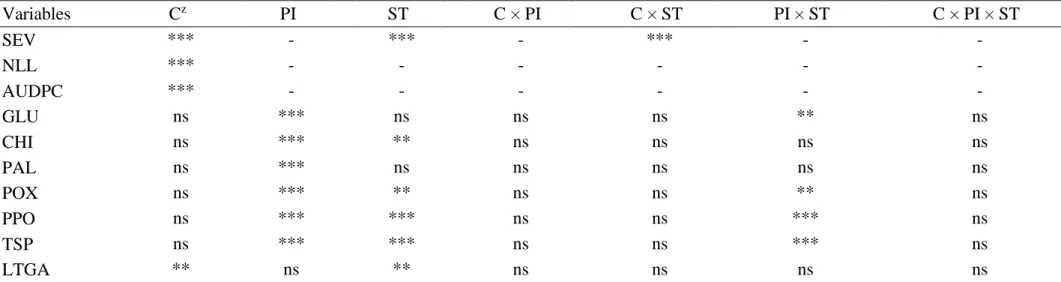
Table 1 Analysis of variance of the effects of cultivars (C), plant inoculation (PI) and sampling time (ST) on the target spot severity (SEV), number of lesions per leaflet (NLL), area under disease progress curve (AUDPC), and the activities of superoxide dismutase (SOD), catalase (CAT), peroxidase (POX), ascorbate peroxidase (APX), glutathione peroxidase (GPX), glutathione reductase (GR), glutathione S-transferase (GST) and lipoxigenase (LOX) as well as on the concentrations of ascorbate (AsA), malondialdehyde (MDA) and hydrogen peroxide (H2O2) and superoxide (O2•-) in the leaves
of soybean plants from cvs. TMG 132 and FUNDACEP 59 inoculated with Corynespora cassiicola.
Variables Cz PI ST C × PI C × ST PI × ST C × PI × ST
SEV *** - *** - *** - -
NLL *** - - - -
AUDPC *** - - - -
SOD ** *** *** ** ns ** ns
CAT ns *** ** ns ns ** ns
POX ** *** *** ** ns ** ns
APX * *** *** ** ns ** ns
GPX ** *** ns ** ns ns ns
GR *** *** **z * ns *** ns
GST ns *** *** ns ns *** *
LOX * *** *** ns *** *** ns
AsA *** *** *** *** * ns ns
MDA ** *** ns ** ns ns ns
H2O2 ** *** ns ** ns ns ns
O2•- *** *** *** ** ns *** ns
Table 2 Pearson correlation coefficients among target spot severity (SEV), the activities of superoxide dismutase (SOD), catalase (CAT), peroxidase (POX), ascorbate peroxidase (APX), glutathione peroxidase (GPX), glutathione reductase (GR), glutathione S-transferase (GST) and lipoxigenase (LOX) and the concentrations of ascorbate (AsA), malondialdehyde (MDA), hydrogen peroxide (H2O2) and superoxide (O2•-) in the leaves of soybean
plants from cvs. TMG 132 (above the diagonal) and FUNDACEP 59 (below the diagonal) inoculated with Corynespora cassiicola.
Variables SEVz SOD CAT POX APX GPX GR GST LOX AsA MDA H2O2 O2•
-SEV - 0.35 -0.17 0.51* 0.39 0.60* -0.27 -0.40 -0.72** 0.40 0.26 -0.25 0.82***
SOD 0.78*** - 0.27 0.65** 0.34 0.36 -0.27 -0.53* -0.03 0.57* -0.03 0.17 0.19
CAT -0.02 0.21 - 0.32 0.04 0.49 -0.53* -0.13 0.56 0.28 -0.15 -0.15 -0.40
POX 0.77*** 0.90*** 0.16 - 0.55* 0.45 -0.05 -0.06 -0.30 0.56* -0.11 0.09 0.24
APX 0.63** 0.54* -0.10 0.67** - 0.31 -0.14 0.04 -0.12 0.26 -0.40 0.11 0.15
GPX -0.02 0.20 0.00 0.35 0.12 - -0.49 -0.32 -0.15 0.17 0.19 -0.23 0.31
GR -0.31 -0.18 0.09 -0.07 0.32 0.08 - 0.44 -0.19 -0.35 0.13 0.46 -0.05
GST -0.31 -0.16 -0.53* 0.01 0.21 0.24 0.43 - 0.10 -0.48 -0.05 0.39 -0.53*
LOX -0.77*** -0.80*** -0.06 -0.72** -0.61* -0.07 -0.18 0.09 - -0.03 -0.19 0.13 -0.69**
AsA -0.48 -0.23 0.17 -0.14 -0.34 0.42 0.32 0.08 0.13 - -0.24 -0.08 0.32
MDA -0.16 -0.30 0.26 -0.42 -0.38 -0.24 0.02 -0.30 0.07 -0.12 - 0.24 0.27
H2O2 -0.01 0.02 -0.18 0.05 0.03 0.27 0.09 0.13 -0.14 0.19 0.12 - -0.37
O2•‒ 0.83*** 0.75*** -0.03 0.76*** 0.82*** 0.07 0.12 0.05 0.85*** -0.32 -0.30 0.03 - z Levels of probability: ns = not significant, * = 0.05, ** = 0.01 and *** = < 0.0001.
0 25 50 75 100
TMG 132 FUNDACEP 59
AUDPC
D
* 0
3 6 9 12
TMG 132 FUNDACEP 59
N
L
cm
-2
B
*
0 5 10 15 20
4 6 8 10
SEV
(%)
Days after inoculation
TMG 132 FUNDACEP 59 C
*
*
*
*
A
F * * * * H * * * J * * * * L * * * * 0 2 3 5 6 A PX ( µ m o l m in ‒ 1mg ‒ 1 p ro tei n ) G * 0 25 50 75 100 PO X ( µ m o l m in ‒ 1mg ‒ 1 p ro tei n ) E * * * * 0.0 0.3 0.5 0.8 1.0 C A T ( m m o l m in ‒ 1mg ‒ 1 p ro tei n ) C * 0.0 0.5 1.0 1.5 2.0 G PX ( µ m o l m in ‒ 1mg ‒ 1 p ro tei n ) I * * * * 0.0 0.3 0.5 0.8 1.0 G R ( µ m o l m in ‒ 1mg ‒ 1 p ro tei n ) K * * 0.0 0.2 0.3 0.5 0.6
4 6 8 10
G ST ( µ m o l m in ‒ 1mg ‒ 1 p ro tei n ) M * * * *
4 6 8 10
N
* * * *
Days after inoculation Days after inoculation
0 3 5 8 10 S OD
(SOD unit m
in ‒ 1mg ‒1 prote in)
NI I A
* * *
B
* * *
D