REGULAR ARTICLE
THE ANALYSIS OF HEART FREQUENCY OF HORSES UNDER LOAD
Eva Mlyneková¹*, Marko Halo¹, Branislav Gálik², Ivan Imrich³
Address: ¹Department of Animal Husbandry,
²Department of Animal Nutrition, ³Department of Veterinary Sciences, Faculty of Agrobiology and Food Resources, Slovak University Agriculture in Nitra, Slovak Republic,
Tr.A.Hlinku 2,949 76 Nitra, Slovakia
*Corresponding author: [email protected]
ABSTRACT
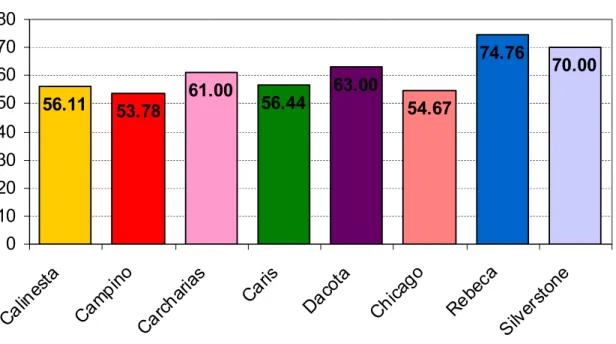
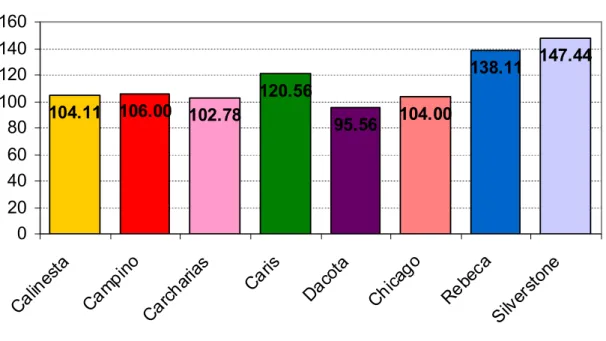
In our work we analysed the heart frequency of 11 warmblood horses on the load regulator of motion. The test lasted 3 weeks with gradual increase of load. The load was applied only in a step with gradual increase of time of load in up-sloping direction. The mean values of heart frequency of tested horses were within 61 beats/min. At the evaluation of maximum value of heart frequency we detected its twofold increase in comparison with mean values. The maximum rate of heart frequency under load was at the level of 147 beats/min. Detected values were not statistically significant which confirms that the load on tested horses was not causing any physiological changes.
Key words: heart frequency, load of horses, testing
INTRODUCTION
Utiliziation of the knowledge from the physiology of adaptation of horses is the first step not only toward more intense but mainly toward better quality of the training process.
adaptation takes place (Švehlová, 2009). As the author further states, the body under the load reacts very effectively to the increased requirements and does everything so that the moving muscles can have sufficient amount of nutrients and oxygen.
Circulatory system is a transport system which through the blood connects all organs and tissues and enables blood to perform its vital functions – the distribution of oxygen, nutrients, hormones and other biologically active substances to tissues, off-take of product of metabolism to the organs, their excretion by homeostatic and thermodynamic function (Jelínek, Koudela, 2003).
Cardiovascular system according to Hanák (1996) specifically adapts according to the type of training load. The greatest morphological and functional changes are monitored on cardiovascular apparatus during endurance adaptational impulses which broaden so called aerobic capacity of the organism and transport conditions for oxygen.
Olehla and Hanák (2010) declare that systolic volume at horses increases from quiescent values around 750 ml up to 40 % i.e. to the values around 1 000 ml. During the heart frequency over 200 beats/min. this represents the volume over 200 l of blood /min. The increase of the minute heart volume during the load on a horse through the increase of heart beat volume is far more effective than through the speeding up of heart frequency.
Authors Fazio et al. (2012) monitored in their work the heart frequency by cardio-frequency meter at the horses during the preparation for showjumping and found statistically significant effect of training on the length of utilization and the speed of organism regeneration. Monitored changes are useful for the evaluation of metabolism and respiratory changes at horses during the training and competitions.
Changes of heart frequency were not detected not only during physical load but also during changed conditions of stabling, transport or feeding. The topic of changes of heart frequency while postponing the feeding time of regular daily regime was monitored by Ohmura et al. (2012), who discovered statistically significant difference between the feeding time.
Wegener et al. (2012) in their study confirmed the effect of training on heart frequency values. At race horses during training period were found higher values of heart frequency with 2 years young English thoroughbred in comparison with older horses.
volume during the load mainly by means of heart frequency increase. It is then obvious that differences in horse training and their performance are manifested mainly in the pulse reaction and in overall number of beats needed for performed standard work. More trained horse needs for the same work smaller number of beats than less trained horse because the required blood volume for work was secured by beat volume increase at lower heart frequency. Therefore there is an increase of so called effectivity of heart work.
Borstel et al. (2011) monitored at horses the heart frequency, variability of heart frequency and the behavior of horses with the same temperament in tests during the beginning of riding, during leading and during the free movement. Their results confirmed that the horse rider or his influence substantially affects the changes of heart frequency. Studies of temperament, based on pulse frequency and the variability of heart frequency were realized by Visser et al. (2002) at 41 Dutch hot-blooded horses. The half of tested horses underwent the training from the age of 5 months, the second half was not trained. The authors recorded the increase in mean heart frequency and the decrease in heart frequency variability measurements, which suggests significant change at horses without training. Apart from that, the statistical analysis showed that the increase of mean heart frequency can not be entirely precedented only by physical activity. Further increase of heart frequency was more significant at untrained horses in comparison with the trained ones. The changes in decrease or increase of heart frequency at monitored horses can cause at some horses higher level of emotionality. From the results it is possible to assume that the measurements of mean heart frequency and the variability of heart frequency during the tests can be affected by the horse temperament.
MATERIAL AND METHODS
the fotodetector for scanning the movement of the horse. This prevents injuries of horse on the belt.
To determine exact heart frequency of tested horses we used the instrument Polar Equine FT 40. This instrument provides us, by means of electrodes which copy the shape of a crest, the exact and reliable information about the horse pulse – while standstill, during the load and also during the recovery.
The tested horses during three weeks were loaded as follows: • 1st week - 20 minutes gait on flat surface, speed 4.9 km/h • 2nd week - 30 minutes gait on flat surface, speed 4.9 km/h
• 3rd week - 20 minutes gait on flat surface, speed 4.9 km/h and 15 minutes gait uphill gradient 3°, speed 4.9 km/h
RESULTS AND DISCUSSION
70.00 74.76
54.67 63.00
56.44 61.00
53.78 56.11
0 10 20 30 40 50 60 70 80
Calin esta
Camp ino
Carch
arias Caris
Daco ta
Chica go
Rebe ca
Silve rston
e
n/min.
Figure 1 Mean heart frequency
138.11 104.00 95.56 120.56 102.78 106.00 147.44 104.11 0 20 40 60 80 100 120 140 160 Calin esta Camp ino Carch
arias Caris Dacota
Chica go Rebe ca Silve rston e n/min.
Figure 2 Maximum heart frequency
The highest measured maximum values of heart frequency we found at three tested horses. Caris – 7 years old gelding, 120 beats per minute, this monitored gelding was during the whole experiment very perceptive to outside effects and easily excited. That led many times even to the stoppage of the motion regulator. Rebeca – 12 years old mare reached 138 beats per minute. We registered increased values mainly at the beginning of experiment when this mare was often neighing and frightened, later on, this mare was steady and adapted to the conditions of the load regulator of movement. The highest maximum heart frequency we detected at 20 years old stallion Silverstone. The increased values could be caused by its older age. It is generally know that older horses do not have the same physical fitness as the young individuals. It could have been affected by the fact that Silverstone is a stud horse what was expressed during the experiment in a form of periodic neighing on the movement regulator. Hanák and Olehla (2010), Janzekovic (2010) list the pulse frequency values, which are at horses in standstill within 30 – 40 beats per minute. At work of the greatest intensity the heart frequency can reach up to 240 beats per minute (the increase 6 – 8x in comparison with standstill).
its length and the degree of load were correctly selected for attaining higher level of trained condition at tested horses.
CONCLUSION
In order to achieve the potential performance while keeping metabolic balance in organism of individuals it is very important to monitor the basic physiological parameters. The primary indicator of the effect of load on the organism is monitoring of heart frequency of the tested individual. By analysis of heart frequency of tested horses we did not register statistically significant differences among tested horses. The mean values of heart frequency an tested horses were in our experiment at the level of 61.31 beats per minute. While evaluating the maximum value of heart frequency we detected twofold increase in comparison with the mean values. Only at two monitored horses we measured the increase to the level 138, resp. 147 beats per minute. But even these increased values were not statistically significant. The detected values confirm that the tested load did not cause any physiological changes and its length and degree of load were correctly selected for achieving greater degree of trained condition at tested horses.
Acknowledgments: This work was supported by Grand Agency of the Slovak Ministry of Education,Research. No: 1/0391/12
REFERENCES
DUŠEK, J. – MISAŘ, D. – MÜLLER, Z. – NAVRÁTIL, J. – TLUČHOŘ, V. – ŽLUMOV, P. 2001. Chov koní. Praha: Brázda, 2001. vol. II., p. 282, ISBN80-209-0282-1
FAZIO, F. – MESSINA, V. – CASSELA, S. – GIANNETTO, C. – MARAFIOTI, S. – PICCIONE, G. 2012. Effect of a simulate show jumping competition on the blood gas profile
of horses trained for show jumping In Turkish Journal of veterinary and animal sciences, vol.
36, no. 3, p. 259-265. ISSN 1300-0128.
HANÁK, J. 1996. Klinická fyziologie a patologie tréninku koní. First edit. Praha: Turf Klub Praha, 1996.
JANZEKOVIC, M. – PRISENK, J. – MURSEC, B. – VINDIS, P. – STAJNKO, D., CUS, F. 2010. The art equipment for measuring the horse’s heart rate In Journal of achievements in materials and manufacturing engineering, vol. 41, no. 1-2, p. 180-186.
JELÍNEK, P. – KOUDELA, K. 2003. Fyziologie hospodářských zvířat. Brno: MZLU v Brně, 2003.
KÖNIG von BORSTEL, U. – EUENT – S., GRAF, P. – KÖNIG, S. – GAULY, M. 2011. Equine behaviour and heart rate in temperament tests with or without rider or handler. In: Physiology & Behavior, 104, p. 454–463.
OHMURA, H. – HOBO, S. – HIRAGA, A. – JONES, J.H. 2012. Changes in heart rate and heart rate variability during transportation of horses by road and air. In: American Journal of veterinary research, vol. 73, issue 4, p. 515-521.
ŠVEHLOVÁ, D. 2009. Trénujeme kone: Základy, které by měl znát každý. In Jezdectví, vol. 57, no.11, p. 62-65.
VISSER, E.K. –VAN REENEN, C.G. –VAN DER WERF, J.T.N. –SCHILDER, M.B.H. – KNAAP, J.H. – BARNEVELD, A. – BLOKHUIS, H.J. 2002. Heart rate and heart rate variability during a novel object test and a handling test in young horses. In Physiology and behaviour, 76, p. 289-296.