i
LEANDRO DE MORAIS CARDOSO
SORGHUM: VARIABILITY OF NUTRIENTS AND BIOACTIVE
COMPOUNDS AND THEIR HEAT PROCESSING STABILITY
Tese apresentada à Universidade Federal de Viçosa, como parte das exigências do Programa de Pós-Graduação em Ciência da Nutrição, para obtenção do título de Doctor Scientiae.
VIÇOSA
Fichi citilográfici prepiridi peli Biblioteci Centril di Universidide Federil de Viçosi - Câmpus Viçosi
T
Cardoso, Leandro de oorais, 1984-C268s
2014 compounds and their heat processing stability / Leandro deSorghum : variability of nutrients and bioactive oorais Cardoso. - Viçosa, oG, 2014.
xi, 112f. : il. (algumas color.) ; 29 cm.
Orientador : Helena oaria Pinheiro Sant Ana. Tese (doutorado) - Universidade Federal de Viçosa. Inclui bibliografia.
1. Sorgo - Nutrientes. 2. Antioxidantes. 3. Flavonóides. 4. Carotenóides. 5. Vitamina E. I. Universidade Federal de Viçosa. Departamento de Nutrição e Saúde. Programa de Pós-graduação em Ciência da Nutrição. II. Título.
CDD 22. ed. 633.62
FichaCatalografica :: Fichacatalografica https://www3.dti.ufv.br/bbt/ficha/cadastrarficha/visua...
LEANDRO DE MORAIS CARDOSO
SORGHUM: VARIABILITY OF NUTRIENTS AND BIOACTIVE
COMPOUNDS AND THEIR HEAT PROCESSING STABILITY
Tese apresentada à Universidade Federal de Viçosa, como parte das exigências do Programa de Pós-Graduação em Ciência da Nutrição, para obtenção do título de Doctor Scientiae.
APROVADA: 25 de novembro de 2014.
Hércia Stampini Duarte Martino
(Coorientadora)
Ana Vládia Bandeira Moreira
Mônica Ribeiro Pirozi Valéria Aparecida Vieira Queiroz
Helena Maria Pinheiro Sant’Ana
Dedico
aos meus pais Maria e Antônio Paulo, às minhas irmãs
AGRADECIMENTOS
À Universidade Federal de Viçosa e ao Departamento de Nutrição e Saúde (DNS) pela oportunidade de realização do doutorado.
À Universidade Federal de Juiz de Fora e ao Departamento de Nutrição (DNUT/UFJF-GV) pela liberação parcial na etapa final do doutorado.
À Coordenação de Aperfeiçoamento de Pessoal pela concessão da bolsa de doutorado.
À Fundação de Amparo à Pesquisa de Minas Gerais e ao Conselho Nacional de Desenvolvimento Científico e Tecnológico pelo suporte financeiro para realização dessa pesquisa e pela concessão das bolsas de iniciação científica.
À Empresa Brasileira de Pesquisa Agropecuária (Embrapa) Milho e Sorgopelo suporte financeiro para realização dessa pesquisa.
À Embrapa Agroindústria de Alimentos e ao seu pesquisador Dr. Carlos Wanderlei Piler de Carvalho pelas providências para extrusão dos grãos de sorgo.
À professora Dr.aHelena Maria Pinheiro Sant’Ana, com toda admiração, meus sinceros agradecimentos, pela orientação segura, pelo estímulo e apoio nos momentos difíceis e pela amizade e confiança em mim depositada. Aprendi e cresci muito durante os cinco anos de mestrado e doutorado sob sua orientação
Às professoras Dr.as Hércia Stampini Duarte Martino e Rita de Cássia Gonçalves Alfenas pela amizade e confiança em mim depositada, pelo incentivo e colaboração desde a concepção e execução desta pesquisa, até a redação da tese e artigos científicos.
Às professoras Dr.as Ana Vládia Moreira Bandeira (DNS/UFV), Hércia Stampini Duarte Martino (DNS/UFV) e Mônica Ribeiro Pirozi (DTA/UFV) e à pesquisadora Dr.a Valéria Aparecida Vieira Queiroz (Embrapa Milho e Sorgo) por aceitarem participar da banca examinadora.
Menezes pelas providências para cultivo dos grãos de sorgo,e Dr. Flávio Dessaune Tardin pela valiosa contribuição na análise estatística dos dados.
Aos professores Dr. Frederico Augusto de Barros (DTA/UFV) e Dr. Joseph Awika (Texas A&M University) pela colaboração na realização das análises de proantocianidinas e contribuições na redação de artigo cientifico. À bolsista de Iniciação Científica, vitaminada, amiga e namorada Soraia Silva Pinheiro, pela total dedicação e disponibilidade e, principalmente, pela amizade, carinho, cuidado e companheirismo. Esta caminhada se tornou menos cansativa e mais alegre com você por perto.
À vitaminada Letícia Linhares Silva pela total dedicação e disponibilidade para colaborar nas análises de vitamina E.
À vitaminada Pamella Cristine pela ajuda fundamental durante a finalização do meu doutorado.
Aos vitaminad@s Carlos Mário, Ceres Della Lucia, Daniela Avelino, Renata Sena e Taís Barros pelo apoio, risadas, companheirismo e eventual ajuda.
Aos meus pais Antônio Paulo e Maria e meus padrinhos Natalício e Maria Antônia pelo estímulo, por sempre apoiarem as minhas escolhas e por não medirem esforços para que eu alcançasse os meus objetivos. Muito obrigado por tudo, pois sem o apoio de vocês nada disso faria sentindo.
Às minhas irmãs Graciliane, Simone e Paloma pelo auxílio e apoio em todos os momentos ao longo desses anos.
Aos amigos Alejara Laje, Caio Eduardo, Daniela Silva, Flávia Xavier, Luana Ribeiro, Lucas Souza, Júlia Carraro e Simone Santos que não permitiram que a distância, a falta de tempo e as adversidades que a vida impõe afetassem as nossas amizades.
Aos colegas de pós-graduação e companheiros de lutas e risos Crislaine Almeida, Fernanda Vidigal, José Luiz Rocha, Rita Stampini, Vanessa Reis, Viviane Macedo e Winder Ton pela convivência extremamente agradável.
BIOGRAFIA
Leandro de Morais Cardoso, filho de Antônio Paulo de Morais
Cardoso e Maria Emília Cardoso, nasceu no município de Curvelo, estado de Minas Gerais, em 21 de agosto de 1984.
Em agosto de 2004, iniciou o curso de graduação em Nutrição na Universidade Federal dos Vales do Jequitinhonha e Mucuri, MG, concluindo-o em julhconcluindo-o de 2008. Fconcluindo-oi bconcluindo-olsista de Iniciaçãconcluindo-o Científica dconcluindo-o PROBIC/FAPEMIG (2006-2008) atuando em pesquisa sobre a influência do tratamento com cloreto de cálcio e da temperatura de armazenamento na qualidade de vida pós-colheita de morangos cultivados no Alto Vale do Jequitinhonha.
Em fevereiro de 2009, ingressou no Curso de Pós-Graduação Stricto Sensu, nível mestrado, em Ciência da Nutrição da Universidade Federal de
Viçosa, MG, atuando na linha de pesquisa ‘Valor Nutricional, Funcional e
Controle de Qualidade de Alimentos e de Dietas’, obtendo o título de MagisterScientiae em fevereiro de 2011.
Em fevereiro de 2012, ingressou no Curso de Pós-Graduação Stricto Sensu, nível doutorado, em Ciência da Nutrição da Universidade Federal de Viçosa.
Em maio de 2014, ingressou na carreira de magistério superior, através de concurso público federal, na Universidade Federal de Juiz de Fora (UFJF) - Campus Governador Valadares.
“Feliz aquele que transfere o que sabe e aprende o que ensina.”
RESUMO
CARDOSO, Leandro de Morais, D.Sc., Universidade Federal de Viçosa,
novembro de 2014. Sorghum: variability of nutrients and bioactive
compounds and their heat processing stability. Orientadora: Helena
Maria Pinheiro Sant’Ana. Coorientadoras: Hércia Stampini Duarte Martino e
Rita de Cássia Gonçalves Alfenas.
O sorgo é o quinto cereal mais produzido no mundo e considerado uma fonte de nutrientes e de compostos bioativos, especialmente 3-deoxiantocianidinas, taninos, vitamina E, policosanóis e outros compostos antioxidantes, que modulam beneficamente parâmetros relacionados com doenças não transmissíveis. Antes da utilização para consumo humano, o sorgo precisa ser processado, o que pode alterar os seus nutrientes e compostos bioativos. Este estudo teve como objetivo avaliar a variabilidade de nutrientes e compostos bioativos em sorgo (Sorghum bicolor L.) e a estabilidade deles à extrusão e processamento em forno convencional, utilizando calor seco. Cem genótipos de sorgo foram selecionados a partir de uma coleção com alta variabilidade genética da Embrapa Milho e Sorgo (Sete Lagoas, MG, Brasil) e analisados quanto aos teores de carotenoides e vitamina E (tococromanois) por cromatografia líquida de alta eficiência (CLAE) com detector de arranjo de diodos (DAD). A variabilidade genética de carotenoides e tococromanois em 100 genótipos de sorgo foi avaliada pela técnica de agrupamento de Tocher. Os cem genótipos de sorgo apresentaram alta variabilidade nos teores de tococromanois (280,7-2.962,4 µg/100g, base úmida), sendo que 23% dos genótipos foram classificados como fonte de vitamina E. Os carotenoides totais variaram entre 2,12 e 85,46 µg/100g nos cem genótipos de sorgo. De acordo com a variabilidade genética para carotenoides e tococromanois, os 100 genótipos foram divididos em sete grupos geneticamente distintos entre si. A partir de 100 genótipos de sorgo, três foram selecionados (SC319; B.DLO357 e SC391) e submetidos a três tipos de tratamento: F1) Farinha crua: grãos moídos em um moinho analítico micro-rotor (850 µm); F2) Calor seco em forno convencional/moagem (Forno/moagem): grãos inteiros submetidos ao calor seco em forno convencional (CSFC) (121 °C, 25 min) e, subsequentemente,
Extrusão/moagem: grãos extrudados em uma extrusora com parafuso de dupla rosca. Os grãos dos três genótipos processados foram caracterizados quanto ao teor de carotenoides, 3-deoxiantocianidinas, flavonas e flavanonas, determinados por CLAE-DAD; tococromanois e grau proantocianidinas, analisados por CLAE com detecção por fluorescência; e
fenólicos totais e atividade antioxidante, determinados por
espectrofotometria. As diferenças entre os efeitos dos diferentes processamentos foram avaliadas pela ANOVA, seguida do teste de Duncan
(α = 5%). A retenção do total de tococromanois e equivalente de α-tocoferol
ABSTRACT
CARDOSO, Leandro de Morais. D.Sc. Universidade Federal de Viçosa,
November de 2014. Sorghum: variability of nutrients and bioactive
compounds and their heat processing stability. Adviser: Helena Maria
Pinheiro Sant’Ana. Coadvisers: Hércia Stampini Duarte Martino and Rita de
Cássia Gonçalves Alfenas.
Sorghum is the fifth most produced cereal in the world. This cereal is a
source of nutrients and bioactive compounds, especially
3-deoxyanthocyanidins, tannins, and polycosanols, which beneficially modulate parameters related to non-communicable diseases. Sorghum needs to be processed prior to use for human consumption, which may change its antioxidant compounds. This study aimed to evaluate the variability of nutrients and bioactive compounds in sorghum (Sorghum bicolor L.) and their stability to extrusion and dry heat in a conventional oven. One hundred sorghum genotypes were selected from a core collection with high genetic variability from Embrapa Maize and Sorghum (Sete Lagoas, MG, Brazil) and the content of carotenoid and vitamin E were analyzed by high performance liquid chromatography (HPLC) with diode array detector. The genetic variability of carotenoids and tocochromanols in 100 sorghum genotypes
were assessed by Tocher’s clustering technique. The one hundred sorghum
genotypes showed high variability in tocochromanol content (280.7-2,962.4 µg/100g in wet basis) and 23% of the genotypes were classified as source of vitamin E. Also, the total carotenoid content varied from 2.12 to 85.46
of carotenoids, 3-deoxianthocyanidins, flavones and flavanones, that were determined by HPLC with diode array detector; the vitamin E content and the degree of polymerization of proanthocyanidins, that were analyzed by HPLC with fluorescence detection; and the total phenolics compounds and the antioxidant activity, that were determined by spectrophotometry. Data normality on the stability of antioxidant compounds was assessed using the Shapiro-Wilk test and the differences between treatments were evaluated by ANOVA, followed by Duncan test to compare the treatment averages, at 5%
probability. The retention of the total tocochromanols and α-tocopherol equivalent decreased after extrusion (69.1-84.8% and 52.4-85.0%, respectively) but increased after DHCO (106.8-114.7% and 109.9-115.8%, respectively). Sorghum carotenoids were sensitive to extrusion (30.7-37.1%) and DHCO (58.6-79.2%). The content of flavanones and flavones decreased after extrusion (100%) and DHCO (31.7 to 61.6%). The 3-DXAs were stable in DHCO, but were susceptible to extrusion (70.7 to 93.9%). Proanthocyanidins were identified only in the genotype SC391 and reduced after both treatments (DHCO: 39.2% and extrusion: 52.1%). Phenols decreased in the genotype SC319 submitted to DHCO (8.3%) and in all extruded genotypes (13.6-14.9%). The DHCO increased the antioxidant capacity in all genotypes, whereas extrusion reduced the antioxidant capacity in only two genotypes. In conclusion, the tocochromanols profile in sorghum varied widely and the genotypes presented high genetic variability for carotenoids and tocochromanols. Sorghum was a source of tocochromanols, which increased after DHCO and decreased after extrusion. The carotenoid content in sorghum decreased after DHCO and extrusion. The differential stability of the major flavonoids in sorghum was observed under DHCO and extrusion treatments, implying that different processing techniques can be selected to minimize losses of bioactive polyphenols in sorghum depending on the flavonoid composition.
SUMÁRIO
1 BACKGROUND ... 1
2 OBJECTIVES ... 5
2.1 General Objective... 5
2.2 Specific Objectives ... 5
3 RESULTS ... 6
3.1 Article 1: Sorghum (Sorghum bicolor L.): nutrients, bioactive compounds, and potential impact on human health ... 6
3.2 Article 2: Tocochromanols and carotenoids in sorghum (Sorghum bicolor L.): diversity and stability to the heat treatment ... 62
3.3 Article 3: Phenolic compounds profile in sorghum processed by extrusion and dry heat in a conventional oven ... 90
1
1. BACKGROUND
Sorghum is one of the most resistant crops to drought and due to the increase in world population and reduction of water availability, it is an important crop for future use (TAYLOR et al., 2006). This cereal is the fifth most produced in the world and provides up to 70% of the calories ingested by individuals from countries in Africa, Asia and Central America. In the United States, South America and Australia, sorghum grain is used primarily for livestock feed and in a growing number of ethanol plants. Sorghum has also recently appeared in gluten-free food products in the U.S. (CIACCI, et al., 2007), such as tortillas and breakfast cereals.
In Brazil, sorghum is mainly used for animal feed (FOOD AND AGRICULTURAL ORGANIZATION, 2010). The Brazil is the 7th largest producer of sorghum (FOOD AND AGRICULTURAL ORGANIZATION, 2012), but it has few commercial cultivars of sorghum for human consumption. The Embrapa Maize and Sorghum is a major contributer to selecting sorghum genotypes that have high nutritional and functional value and that are appropriate for the climate and soil conditions in Brazil, as well as those suitable for development of products intended for human consumption. In partnership with Embrapa Tropical Agroindustry, Embrapa Food Technology, Embrapa Temperate Climate, Universidade Federal de Minas Gerais, Universidade Federal de São João Del Rei and Universidade Federal de Viçosa, the Embrapa Maize and Sorghum has developed the research project entitled "Sorghum for human consumption: characterization of genotypes in the compounds of interest for nutrition and human health, along with development of gluten-free products”. One of the lines of this project includes the characterization of sorghum genotypes with regards to their functional potential and evaluation of retention in products developed with sorghum, which encompasses the focus of this thesis.
al., 2005) and can present a wide variability (CARDOSO ET AL., 2014; MARTINO et al., 2012; PINHEIRO-SANT'ANA, GUINAZI, OLIVEIRA, DELLA LUCIA, REIS & BRANDÃO, 2011). However, the variability of nutrients and bioactive compound, for example carotenoids and vitamin E, has not been evaluated in representative sorghum panels.
Sorghum must be processed prior to use for human consumption, which may change its bioactive compound profile (DLAMINI et al., 2007; OCHANDA et al., 2010; AFIFY et al., 2012; CARDOSO et al., 2014). Most of the studies published to date showed chemical changes resulting from processes traditionally used in African and Asian countries (fermentation, germination and maceration) (DUODU et al., 2002; DICKO et al., 2005; DICKO, GRUPPEN, ZOUZOUHO, et al., 2006; AFIFY et al., 2011; AFIFY, EL-BELTAGI, EL-SALAM, et al., 2012; JOOD et al., 2012; WU et al., in press). The effects of processing reflect the culture of the population and the needs of Western industries have been little studied. The main processes include dry heat in a conventional oven, widely used domestically, and extrusion, an important industrial technique (ATHAR et al., 2006; DING et al., 2006). In addition, a small number of bioactive components in sorghum were evaluated in these studies (AWIKA, 2003; DLAMINI et al., 2007; MORAES, 2011; WU et al., in press).
This research sought to develop studies to assess the variability and stability of nutrients and bioactive compounds in sorghum. It was speculated that sorghum has high variability with respect to carotenoid and vitamin E contents and profiles, and that its nutritional and functional values are modified by dry heat in a conventional oven and extrusion. It was expected that these studies contribute to the advancement in research on sorghum, providing input on possible methods for its use in food. Furthermore, it was expected to contribute to the realization of studies evaluating the effects of sorghum on other parameters related to human health, such as the intestinal microbiota, diabetes, hormones, gene expression and others.
REFERENCES
AFIFY, A. E.-M. M. R. et al. Bioavailability of iron, zinc, phytate and phytase activity during soaking and germination of white sorghum varieties. PLoS
AFIFY, A. E.-M. M. R. et al. Biochemical changes in phenols, flavonoids, tannins, vitamin E, –carotene and antioxidant activity during soaking of three white sorghum varieties. Asian Pacific Journal of Tropical
Biomedicine, v. 2, n. 3, p. 203-209, 2012.
ATHAR, N. et al. Vitamin retention in extruded food products. Journal of
Food Composition and Analysis, v. 19, n. 4, p. 379-383, 2006.
AWIKA, J. M. Antioxidant properties of sorghum. 2003. Texas A&M University: College Station, Texas
CARDOSO, L. D. M. et al. Effects of processing with dry heat and wet heat on the antioxidant profile of sorghum (Sorghum bicolor L.). Food Chemistry, v. 152, p. 201-217, 2014.
DICKO, M. H. et al. Evaluation of the Effect of Germination on Phenolic Compounds and Antioxidant Activities in Sorghum Varieties. Journal of
Agricultural and Food Chemistry, v. 53, n. 7, p. 2581-2588, 2005/04/01
2005.
DICKO, M. H. et al. Effects of germination on the activities of amylases and phenolic enzymes in sorghum varieties grouped according to food end-use properties. Journal of the Science of Food and Agriculture, v. 86, n. 6, p. 953-963, 2006.
DING, Q.-B. et al. The effect of extrusion conditions on the functional and physical properties of wheat-based expanded snacks. Journal of Food
Engineering, v. 73, n. 2, p. 142-148, 2006.
DLAMINI, N. R.; TAYLOR, J. R. N.; ROONEY, L. W. The effect of sorghum type and processing on the antioxidant properties of African sorghum-based foods. Food Chemistry, v. 105, n. 4, p. 1412-1419, 2007.
DUODU, K. G. et al. Effect of grain structure and cooking on sorghum and maize in vitro protein digestibility. Journal of Cereal Science, v. 35, n. 2, p. 161-174, 2002.
FOOD AND AGRICULTURAL ORGANIZATION. FAOSTAT. Rome, Italy, 2012. Disponível em: < http://faostat.fao.org/faostat/ >.
JOOD, S.; KHETARPAUL, N.; GOYAL, R. Effect of Germination and
Probiotic Fermentation on pH, Titratable Acidity, Dietary Fibre, -Glucan and Vitamin Content of Sorghum Based Food Mixtures. Journal of Nutrition &
Food Sciences, v. 2, n. 9, p. 1-4, 2012.
KAYODÉ, A. P. P. et al. Genetic and Environmental Impact on Iron, Zinc, and Phytate in Food Sorghum Grown in Benin. Journal of Agricultural and
MARTINO, H. S. D. et al. Chemical characterization and size distribution of sorghum genotypes for human consumption. Rev Inst Adolfo Lutz, v. 71, p. 337-344, 2012.
MORAES, E. A. Antioxidant activity, protein quality and functional
potential of sorghum genotypes available for human consumption.
2011. 104 (Doctorate). Department of Nutrition and Healt, Federal University of Viçosa, Viçosa, Minas Gerais.
OCHANDA, S. O. et al. Effects of malting and fermentation treatments on group B-vitamins of red sorghum, white sorghum and pearl millets in Kenya.
J. Appl. Biosci, v. 34, p. 2128-2134, 2010.
PINHEIRO-SANT'ANA, H. M. et al. Method for simultaneous analysis of eight vitamin E isomers in various foods by high performance liquid
chromatography and fluorescence detection. Journal of Chromatography
A, v. 1218, n. 47, p. 8496-8502, 2011.
TAYLOR, J. R. N.; SCHOBER, T. J.; BEAN, S. R. Novel food and non-food uses for sorghum and millets. Journal of Cereal Science, v. 44, n. 3, p. 252-271, 11/2006.
2. OBJECTIVES
2.1 General Objective
To evaluate the variability of nutrients and bioactive compounds in sorghum (Sorghum bicolor L.) and their stability when submitted to extrusion and dry heat in a conventional oven
2.2 Specific objectives
Summarize the recent findings concerning nutrients and bioactive
compounds of sorghum and its potential impact on human health;
To evaluate the variability of carotenoids and vitamin E in one hundred sorghum genotypes;
3. RESULTS
3.1 Article 1: Sorghum (Sorghum bicolor L.): nutrients, bioactive
compounds, and potential impact on human health
ABSTRACT
Sorghum is the fifth most produced cereal in the world and is a source of nutrients and bioactive compounds for the human diet. We summarize the recent findings concerning the nutrients and bioactive compounds of sorghum and its potential impact on human health, analyzing the limitations and positive points of the studies and proposing directions for future research. Sorghum is basically composed of starch, which is more slowly digested than that of other cereals, has low digestibility proteins and unsaturated lipids, and is a source of some minerals and vitamins. Furthermore, most sorghum varieties are rich in phenolic compounds, especially 3-deoxyanthocyanidins and tannins. The results obtained in vitro and in animals have shown that phenolics compounds and fat soluble compounds (polycosanols) isolated from sorghum benefit the gut microbiota and parameters related to obesity, oxidative stress, inflammation, diabetes, dyslipidemia, cancer, and hypertension. The effects of whole sorghum and its fractions on human health need to be evaluated. In conclusion, sorghum is a
source of nutrients and bioactive compounds, especially
3-deoxyanthocyanidins, tannins, and polycosanols, which beneficially modulate, in vitro and in animals, parameters related to noncommunicable diseases. Studies should be conducted to evaluate the effects of different processing on protein and starch digestibility of sorghum as well as on the profile and bioavailability of its bioactive compounds, especially 3-deoxyanthocyanidins and tannins. Furthermore, the benefits resulting from the interaction of bioactive compounds in sorghum and human microbiota should be studied.
Keywords: nutritional value; 3-deoxyanthocyanidins; tannins;
noncommunicable diseases; oxidative stress; cancer
ABBREVIATIONS: ABCA1: ATP-binding cassette transporter A1; COX-2:
cyclooxygenase-2; DP: degree of polymerization; GPx: glutathione peroxidase activity; HDL-c: high-density lipoprotein-cholesterol; HIF-1α: hypoxia-inducible factor 1α; HMG-CoA: 3-hydroxy-3-methylglutaryl CoA; IGF-1R: insulin-like growth factor 1; IL-1 : interleukin-1 ; LDL-c: low-density
NADH:quinone oxyreductase; NF- к : nuclear factor-к ; PPAR- : peroxisome proliferator-activated receptor gamma; PUFA: polyunsaturated fatty acids; RES: reactive electrophilic species; RNS: reactive nitrogen species; ROS: reactive oxygen species; SOD: superoxide dismutase; TBARS: thiobarbituric acid reactive substances; TNF-α: tumor necrosis factor-α; VEGF: vascular endothelial growth factor.
INTRODUCTION
Sorghum (Sorghum bicolor L.) is a cereal of the family Poaceae, native to Africa, and was domesticated between 3,000 and 5,000 years ago (U.S. Grains Council, 2004). It is the fifth most produced cereal in the world, and is preceded by wheat, rice, maize, and barley (Food and Agricultural Organization, 2010). Around the world, there are over 7,000 varieties of sorghum (Kangama & Rumei, 2005).
The sorghum crop is extremely important in Asia, Africa, and other semi-arid regions of the world, where it is mainly used in human feeding (Afify, et al., 2011; Dillon, et al., 2007; Elkhalifa, et al., 2005). In Western countries such as the United States, Australia, and Brazil, sorghum is developed and cultivated primarily for animal feeding (Taleon, et al., 2012). However, due to its high nutritional and functional potential, several studies on sorghum for human consumption have been conducted in these countries (Ciacci, et al., 2007; Dykes, et al., 2005; Ferreira, et al., 2009; Maunder, 2005; Schober, et al., 2005; Taylor, J. R. N., et al.).
vitamins, B-complex vitamins, and minerals (Earp, et al., 2004; Food Security Department, 1999; Slavin, 2004; Waniska & Rooney, 2000).
Sorghum is an excellent source of bioactive compounds that can promote benefits to human health. The results of in vitro and animal studies have shown that compounds isolated from sorghum, mainly phenolics, promote beneficial changes in parameters related to noncommunicable diseases such as obesity, diabetes, dyslipidemia, cardiovascular disease, cancer, and hypertension (Awika, et al., 2009; Farrar, et al., 2008; Kamath, V., et al., 2007; Kim, J. & Park, 2012; Moraes, et al., 2012a; Muriu, et al., 2002; Shih, C.-H., et al., 2007; Woo, et al., 2012; Yang, L., et al., 2009).
Given the high beneficial potential of sorghum on human health and the absence of a critical review about the subject, we summarize the recent findings concerning the nutrients and bioactive compounds of sorghum and its potential to modulate parameters related to human health, analyzing the limitations and positive points of recent studies and proposing directions for future research.
METHODOLOGY
Original articles published between 2005 and 2013 in scientific indexing bases (PubMed, Biological Abstracts, CAB Abstracts, Food Science and Technology Abstracts, LILACS, Scielo, MEDLINE, and Science Direct) were researched. In addition, some relevant scientific papers published in previous years were included.
insulin, insulinic response, cancer, oxidative stress, inflammation, interleukins, gut microbiota, and hypertension). The articles were screened and selected based on the title and abstract presented.
CHEMICAL COMPOSITION AND NUTRITIONAL VALUE
The chemical composition and nutritional value of whole sorghum are similar to rice, corn, and wheat. The energy value of 100g of sorghum grains varies between 296.1 and 356.0 kcal (Martino, et al., 2012; U.S. Department of Agriculture, 2012). The main components of sorghum are the polysaccharides (starch and non-starch), followed by proteins and lipids (Martino, et al., 2012; U.S. Department of Agriculture, 2012).
Polysaccharides
The content and composition of starch, the main polysaccharide of sorghum, are influenced by the genetic characteristics and growing conditions of the grain (Hill, et al., 2012). In some varieties, starch ranges between 32.1 and 72.5 g/100g and is composed mainly of amylopectin (81.0-96.5%) and amylose (3.5-19.0%) (Shegro, et al., 2012; Udachan, et al., 2012). The proportion of amylose and amylopectin affects the rheological proprieties (gelatinization, retrogradation, and gelling) and digestibility of the sorghum starch (Sang, et al., 2008; Singh, H., et al., 2010).
Sorghum has the lowest starch digestibility among cereals due to the strong association between the starch granules and proteins and tannins (Barros, et al., 2012; Mkandawire, et al., 2013; Rooney & Pflugfelder, 1986). Overall most of the starch granules are slowly digestible (30.0-66.2%) and the remainder is rapidly digestible (15.3-26.6%) or resistant (16.7-43.2%) (Mkandawire, et al., 2013; Sang, et al., 2008). The non-starch polysaccharides of sorghum (6.0 to 15.0 g/100g) include insoluble fibers (75.0-90.0%), mainly arabinoxylans, and soluble fibers (10.0-25.0%) (Martino, et al., 2012; Taylor, J. R. N. & Emmambux, 2010; U.S. Department of Agriculture, 2012).
Proteins
al., 2012b; Belton, et al., 2006; Martino, et al., 2012; U.S. Department of Agriculture, 2012). The kafirins are the major prolamins of the sorghum and comprise three major classes: α-kafirins (66-84%), -kafirins (8-1γ%) and -kafirins (9-21%) (Belton, et al., 2006; Mokrane, et al., 2010). Sorghum kafirins are stored in the endoplasmic reticulum in spherical protein bodies.
The and -kafirins are located in the peripheral protein bodies region while
α and δ-kafirins are encapsulated in the inner region (Wu, Yongrui, et al., 2013). This conformation determines the digestibility of sorghum proteins.
Overall, the digestibility of sorghum proteins, especially after cooked, is lower than cereals like wheat and maize (Afify, et al., 2012b; Duodu, et al., 2003; Mokrane, et al., 2010; Moraes, et al., 2012b). The kafirins of sorghum are resistant to peptidase due to the formation of intramolecular disulfide bonds; this is the main cause of the low digestibility (Belton, et al., 2006). However, in varieties rich in tannins, the complexation of the kafirins with this phenolic compound can reduce the protein digestibility up to 50% (Taylor, J., et al., 2007). Furthermore, other exogenous factors (interaction of the proteins with non-protein components such as starch, non-starch polysaccharides, phytic acid, and lipids) and endogenous factors (nature and organization of proteins inside the grain) contribute to this low digestibility (Belton, et al., 2006; da Silva, et al., 2011a; Duodu, et al., 2002; Duodu, et al., 2003; Ezeogu, et al., 2008; Ezeogu, et al., 2005).
Despite the reduction in protein digestibility of sorghum after cooking in wet heat, processing such as fermentation and germination may increase the digestibility up to 2 times (Afify, et al., 2012b; Correia, et al., 2008; ELKhier & Abd-ALRaheem, 2011; Pranoto, et al.; Wedad, et al., 2008). However, major recent efforts to improve the protein digestibility of sorghum
aim to reduce the amount of kafirins, especially and forms, and to
increase the glutenins and albumins (da Silva, et al., 2011b; Goodall, et al., 2012; Kumar, et al., 2012; Taylor, J. & Taylor, 2011; Wu, Yongrui, et al., 2013). The genetically modified varieties have in vitro digestibility from 23 to 102% higher than control varieties (da Silva, et al., 2011a; Kumar, et al., 2012; Taylor, J. & Taylor, 2011).
value (Wu, Yongrui, et al., 2013). The and -kafirins are rich in cysteine, which forms disulfide bonds, and are therefore assumed to block the
accessibility of α-kafirins to hydrolytic enzymes (Duodu, et al., 2003; Wong, et al., 2009). Thus, the higher digestibility in modified varieties can be
attributed to increased enzyme susceptibility of the major storage protein, α
-kafirin, because of changes in protein body morphology as well as to a
reduction of the formation of disulfide bonds between and -kafirins
(Henley, et al., 2010; Kumar, et al., 2012; Mehlo, et al., 2013; Oria, et al., 2000).
Generally, sorghum proteins are rich in glutamic acid and nonpolar amino acids (proline, leucine, and alanine) and have lysine as the main limiting amino acid (De Mesa-Stonestreet, et al., 2010; Mokrane, et al., 2010; Moraes, et al., 2012b). In addition, they may be deficient in 5 other essential amino acids (methionine, cysteine, isoleucine, valine, and threonine) (Moraes, et al., 2012b). However, varieties obtained through breeding programs have 52-115% more lysine than conventional varieties (da Silva, et al., 2011b; Henley, et al., 2010; Kumar, et al., 2012; Taylor, J. & Taylor, 2011). Improved lysine contents were attributed to decreased levels of kafirin proteins and increased levels of lysine-rich, non-kafirin proteins in the grain endosperm (Shewry, 2007).
Unlike the major prolamins of wheat (gliadin), rye (secalin), and barley (hordein), the kafirins do not trigger an allergic response or an autoimmune reaction in humans (De Mesa-Stonestreet, et al., 2010). In addition to the qualitative evidence based on the type of proteins found in sorghum, there is genetic evidence that it has characteristics that do not allow the expression of toxic peptides related to gliadin (Pontieri, et al., 2013). Thus, sorghum is an effectively safe cereal for consumption by people with celiac disease.
Lipids
(45.6-51.1%), oleic (32.2-42.0%), palmitic (12.4-16.0%), and linolenic acids (1.4-2.8%) (Afify, et al., 2012a; Hadbaoui, et al., 2010; Mehmood, et al., 2008).
Minerals and vitamins
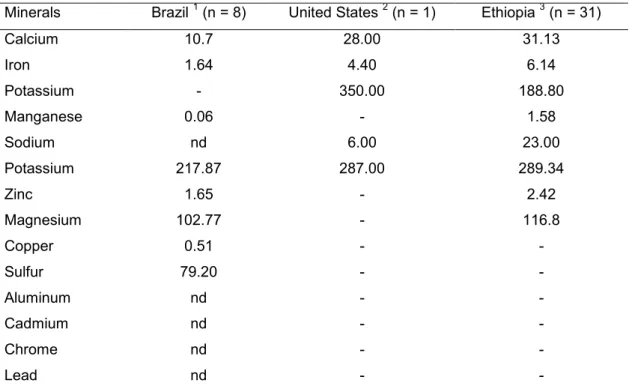
Sorghum is a source of minerals (phosphorus, potassium, and zinc) whose content varies according to the place of cultivation (Table 1) (Martino, et al., 2012; Shegro, et al., 2012; Silva, et al., 2012; U.S. Department of Agriculture, 2012). The bioavailability of most minerals of sorghum is still little known. However, it is known that zinc availability varies between 9.7% and 17.1% and iron availability ranges from 6.6% to 15.7% (Afify, et al., 2011; Kruger, et al., 2013). Studies have been conducted in order to increase the content and bioavailability of iron and zinc through biofortification, fortification, and genetic improvement of sorghum (Ashok Kumar, et al., 2013; Kruger, et al., 2013; Tripathi, et al., 2010; Tripathi & Platel, 2013).
Table 1: Average content of minerals (mg/100g) in sorghum grown in Brazil,
United States and Ethiopia.
Minerals Brazil 1 (n = 8) United States 2 (n = 1) Ethiopia 3 (n = 31)
Calcium 10.7 28.00 31.13
Iron 1.64 4.40 6.14
Potassium - 350.00 188.80
Manganese 0.06 - 1.58
Sodium nd 6.00 23.00
Potassium 217.87 287.00 289.34
Zinc 1.65 - 2.42
Magnesium 102.77 - 116.8
Copper 0.51 - -
Sulfur 79.20 - -
Aluminum nd - -
Cadmium nd - -
Chrome nd - -
Lead nd - -
1
Information on the content of vitamins in sorghum is scarce. However, it is worth noting that it is a source of some B-complex vitamins (thiamine, riboflavin, and pyridoxine) and fat-soluble vitamins (D, E, and K) (Cardoso, et al., 2014; Martino, et al., 2012; Ochanda, et al., 2010; U.S. Department of Agriculture, 2012).
BIOACTIVE COMPOUNDS
Phenolic compounds and their bioavailability
The phenolic compounds are the main bioactive compounds of sorghum and are present in all varieties of this cereal (Dykes & Rooney, 2006). Almost all classes of phenolics are found in sorghum (Awika & Rooney, 2004; Dykes, et al., 2005); however, the classes of phenolic acids, tannins, and flavonoids are major.
The profile and content of phenolic compounds in sorghum are more diverse and higher than those observed in wheat, barley, rice, maize, rye, and oats (Ragaee, et al., 2006). Sorghum varieties resistant to biotic and abiotic stresses were found to have on average higher contents of proanthocyanidins, 3-deoxyanthocyanidins, and flavan-4-ols than susceptible varieties (Dicko, et al., 2005).
The bioavailability of phenolic compounds after dietary intake has been a topic of increasing research in recent years (Crozier, et al., 2010; Faria, et al., 2013; Hole, et al., 2012; Prior & Wu, 2006; Yang, M., et al., 2011). However, the results obtained in humans are scarce and controversial. In addition, information about the bioavailability of phenolic compounds of sorghum, including tannins and 3-deoxyanthocyanidins, is not available yet.
Different factors affect the bioavailability of phenolic compounds in humans, including environmental factors, food processing, food matrix, and interaction with other compounds and polyphenols (D’Archivio, et al., β010; Fernandes, et al., In press). There is a need for extensive investigation about the alterations of phenolic compounds by the gastrointestinal tract and their subsequent absorption and metabolism, including distribution in tissues (D’Archivio, et al., β010; Lafay & Gil-Izquierdo, 2008). Studies have shown that catabolites of phenolic compounds not absorbed in the small intestine pass into the large intestine where they can affect the colon microbiota (Crozier, et al., 2010; Faria, et al., 2013).
Knowledge of the bioavailability of phenolic compounds in sorghum, including dietary factors able to modulate it, is essential for analysis of their functional potential in humans and, in the long term, for the implementation of therapeutic measures for health professionals.
Phenolic acids
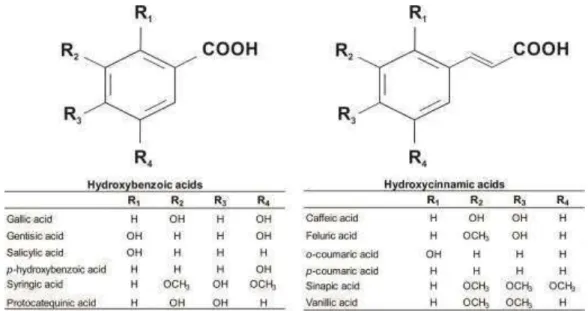
The phenolic acids are classified as hydroxybenzoic acid derivatives and hydroxycinnamic acid derivatives (Figure 1). These acids exhibit high antioxidant activity in vitro and thus may promote benefits to human health (Kamath, V. G., et al., 2004).
Figure 1. Structure of the major phenolic acids present in foods, including in
The content of phenolic acids in some sorghum varieties ranged between 135.5 and 479.40 µg/g (Afify, et al., 2012c; Chiremba, et al., 2012), with major amounts of the protocatechuic (150.3 to 178.2 µg/g) and ferulic (120.5 to 173.5 µg/g) acids and small amounts of the p-coumaric (41.9 to 71.9 µg/g), syringic (15.7 to 17.5 µg/g), vanillic (15.4 to 23.4 µg/g), gallic (14.8 to 21.5 µg/g), caffeic (13.6 to 20.8 µg/g), cinnamic (9.8 to 15.0 µg/g), and p-hydroxybenzoic (6.1 to 16.4 µg/g) acids (Afify, et al., 2012c; Svensson, et al., 2010).
The phenolic acids in wines, fruits, and vegetables have a good bioavailability. In these matrices, the majority of phenolic acids are free or as conjugated forms that can be hydrolyzed in the upper intestinal tract (Hole, et al., 2012). On the other hand, phenolic acids in cereals, including in sorghum, are mostly bound to arabinoxylans chains or lignin (Abdel-Aal, et al., 2012; Dykes & Rooney, 2006; Hole, et al., 2012). These bound phenolic acids are not hydrolyzed by human digestive enzymes that decrease their bioavailability, but are fermented by the microbiota of the colon (Hole, et al., 2012; Saura-Calixto, 2010).
Knowledge about techniques for improving the bioavailability of phenolic acids in sorghum is incipient. The microorganisms and processing of grains can play a key role in improving this bioavailability. The study results demonstrated that cereal fermentation with specific probiotic strains and cooking processes can significantly increase the content-free phenolic acids (Hole, et al., 2012; Lafay & Gil-Izquierdo, 2008; N'Dri, et al., 2013; Saura-Calixto, 2010), thereby improving their bioavailability. The effects of other types of processing on the profile of phenolic acids in sorghum need to be studied.
Tannins (proanthocyanidins)
among others (Hahn, D. H. & Rooney, L. W., 1986; Wu, Yuye, et al., 2012). The tannins in sorghum vary as to the type, content, and distribution of the individual oligomers and polymers. They are classified as type I (no significant levels), type II (tannins that are extractable only in acidified methanol) and type III (tannins that are extractable in methanol and acidified methanol) (Hahn, D. & Rooney, L., 1986; Price, et al., 1978). Almost all of the tannins in sorghum are condensed and constituted by oligomers or polymers of catechins (flavan-3-ols and/or flavan-3,4-diols) (Awika & Rooney, 2004; Wu, Yuye, et al., 2012). In general, most sorghum tannins have a high molecular weight and a degree of polymerization (DP) higher than 10 (69-81%) (Awika, et al., 2003).
The content of tannins in sorghum varies between 0.2 and 48.0 mg/g and is highest in sorghum with black testa (Afify, et al., 2012c; Awika, et al., 2003; Dykes, et al., 2013; Martínez, et al., 2009; Schons, et al., 2011). However, this content, as well as the activity of tannins in sorghum, can be affected by the season (Mkandawire, et al., 2013). Therefore, the effect of the environment on tannins should be considered during the selection and breeding of tannin containing sorghum genotypes when the aim is to achieve health benefits (Mkandawire, et al., 2013).
The tannins reduced the availability of minerals, proteins, and starch of the sorghum (Al-Mamary, et al., 2001; Barros, et al., 2012; Taylor, J., et al., 2007). This reduction correlates not only with the content of tannins in the grain, but also with DP (Kaufman, et al., 2013; Mkandawire, et al., 2013). It is attributed mainly to the tannins with higher molecular weight or more complex tannin structures (DP > 10) (Barros, et al., 2013; Mkandawire, et al., 2013; Osman, 2004). Polymeric tannins, for example, are the major contributors to resistant starch formation due to their stronger interaction with starch, especially amylose (Barros, et al., 2013).
the antioxidant capacity of the diet and promote benefits to human health due to immunomodulatory, anticancer, antioxidant, antirradical, anti-inflammatory, vasodilatory, cardioprotective, anti-thrombotic, and anti-UV actions (Dixon, et al., 2005; Floegel, et al., 2010; Sharma, S. D., et al., 2007; Waniska & Rooney, 2000).
The oligomeric and polymeric proanthocyanidins are not absorbed by animals and humans (Crozier, et al., 2010; Serrano, et al., 2009). But minor quantities of dimers of B1 and B2 procyanidins are detected in human plasma (Donovan, et al., 2007; Holt, et al., 2002). However, so far, it is unclear whether this low bioavailability is also observed in tannins in sorghum. Most tannins in foods pass unaltered to the large intestine where part of them are catabolized by the colonic microbiota yielding a diversity of phenolic acids (Selma, et al., 2009). The biological effects of tannins are generally attributed to their more readily absorbed colonic breakdown products, the phenolic acids, although there is a lack of detailed study in this area (Crozier, et al., 2010).
As to phenolic acids, processing can improve the digestibility of tannins in sorghum. The processing of grain sorghum in dry heat (95 °C for 20 min and 121 °C for 30 minutes) can depolymerize the condensed tannins in sorghum (Barros, et al., 2012), which can increase their bioavailability. The thermal processing can be a strategy to increase the bioavailability of tannins with a minimum reduction in the content of these compounds. Thus, the functional potential of sorghum rich in tannins can be maintained or even increased. Furthermore, the nutritional value of the grain may increase due to higher digestibility of starch and proteins resulting from the reduction of polymeric tannins. The depolymerization of tannins through other types of processing needs to be studied.
Flavonoids
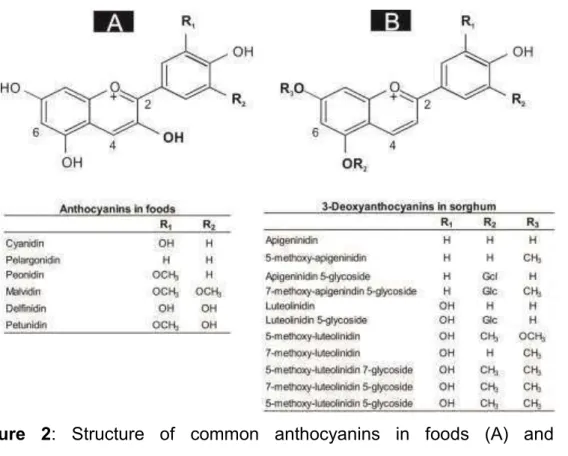
Three classes of flavonoids are in large quantities in sorghum: anthocyanins, flavones, and flavanones. Sorghum anthocyanins belong to the class of 3-deoxyanthocyanidins and correspond up to 79% of the
flavonoids’ content (Dykes & Rooney, 2006; Shih, C.-H., et al., 2007; Taleon, et al., 2012). They have a differentiated structure due to the absence of a hydroxyl group at position C-3 and therefore they are more stable than other anthocyanins (Awika, 2008; Awika & Rooney, 2004; Dykes, et al., 2009; Shih, C.-H., et al., 2007).
Figure 2: Structure of common anthocyanins in foods (A) and 3-deoxyanthocyanidins in sorghum (B).
The total flavones of the sorghum vary from 0 to 386 µg/g (on average, 87 µg/g), with a prevalence of aglycone forms of luteolin and apigenin (Dykes, et al., 2011; Dykes, et al., 2009). The main flavanones of sorghum are the aglycone forms of eriodictyol and naringenin (Dykes, et al., 2011; Dykes, et al., 2009). The smallest contents are found in white varieties and the largest contents are observed in those with lemon-yellow pericarp (474 to 1780 µg/g) (Dykes, et al., 2011).
Information about the bioavailability of the 3-deoxyanthocyanidins, flavones, and flavanones in sorghum is not available in the literature so far. In other foods, including cereals, flavones and flavanones are highly available and are rapidly absorbed and excreted (Crozier, et al., 2009; Donovan, et al., 2007). The aglycone of flavones and flavanones, the forms most prevalent in sorghum, are rapidly absorbed (Spencer & Crozier, 2012; Urpi-Sarda, et al., 2012).
X., et al., 2005). Unlike flavonoids, where glycosides are hydrolyzed, anthocyanin glycosides are rapidly and efficiently absorbed in the small intestine (Fernandes, et al.; Prior & Wu, 2006). This fact indicates that the main aglycone forms present in sorghum can have low bioavailability.
The anthocyanins in foods appear to be rapidly absorbed and eliminated, reaching only low maximal concentrations in plasma and urine (Fernandes, et al.). In studies with animals and humans, the quantities of anthocyanins excreted in urine were less than 0.1% of intake (Crozier, et al., 2010; McGhie, et al., 2003; Prior & Wu, 2006; Wu, X., et al., 2005). Although anthocyanin bioavailability in foods appears low, it could have been underestimated due to the fact that some major metabolites have been ignored or not analyzed due to analytical limitations (Manach, et al., 2005). The difficulty in overcoming those analytical problems may contribute significantly to the low bioavailability of anthocyanins (Fernandes, et al.).
Between 60 and 90% of the anthocyanins may disappear from the gastrointestinal tract within 4 h after a meal (Prior & Wu, 2006). What happens to the bulk of the anthocyanins that disappear is not clear. Degradation accounts for a part of this disappearance, but differs for the various aglycones and may be modified further by the nature of the aglycone glycosylation, which further complicates our understanding of this process (Prior & Wu, 2006). Special attention is given to the contribution of the gastric mucosa to anthocyanin absorption as the result of the high content of intact anthocyanins (20–25%) detected in plasma few minutes after intake (Fernandes, et al.).
The contribution of intestinal tissue and the microbiota impact on absorption and anthocyanin bioavailability is also highlighted (Faria, et al., 2013; Fernandes, et al.). It has been suggested that this is likely due to the spontaneous degradation under physiological conditions or following microbial metabolism (Fernandes, et al.; Woodward, et al., 2009). In fact, colonic microbiota hydrolyzes glycosides into aglycones and degrades them to simple phenolic acids (Fernandes, et al.), which can be further fermented in the colon (Williamson & Clifford, 2010).
Stilbenes
phenylpropanoid pathway that have numerous implications in plant disease resistance and human health (Chong, et al., 2009). The total content of stilbenes correlates with the color of the grain and is present in smaller quantities in white varieties. White sorghum contains traces of trans-piceid (up to 0.1 mg/kg) and trans-resveratrol is absent while in red sorghum, these two classes are present (Br̈han, et al., β011).
Polycosanols and phytosterols
Polycosanols and phytosterols are associated with the lipid fraction of the sorghum (Leguizamón, et al., 2009; Wang, et al., 2008; Zbasnik, et al., 2009). Thus, these compounds have been studied mainly in lipids extracted from dry sorghum obtained after alcohol production.
One of the main components of the long-chained lipids extracted from sorghum grain kernels are polycosanols (33.4–44%) (Hwang, Keum Taek, et al., 2005; Hwang, Keum T, et al., 2004). Sorghum can be a major source of polycosanols that have physiological benefits. Total polycosanols content in unpolished sorghum grain was 74.5 mg/100g in the dry kernel while the content in the polished grain was 9.8 mg/100g in the dry kernel (Hwang, Keum Taek, et al., 2005; Hwang, Keum T, et al., 2004).
The content of sorghum phytosterols (4.13 to 24.45 µg/g, dry weight basis) is affected by growing conditions (Chung, et al., 2013). Sorghum grains are a relatively rich source of phytosterols when compared with fruits, vegetables, and other cereal grains commonly found in the food supply. Of the more than 200 sterols in vegetables, 3 have been identified in sorghum (sitosterol: 44.8 to 48.2%; campesterol: 26.1 to 38.0% and stigmasterol: 17.3% to 25.6%) (Delgado-Zamarreño, et al., 2009; Leguizamón, et al., 2009; Singh, V., et al., 2003; Wang, et al., 2007; Ye, et al., 2010).
Phytochemicals with anti-nutritional activity
POTENCIAL IMPACT OF SORGHUM ON THE HUMAN HEALTH
24
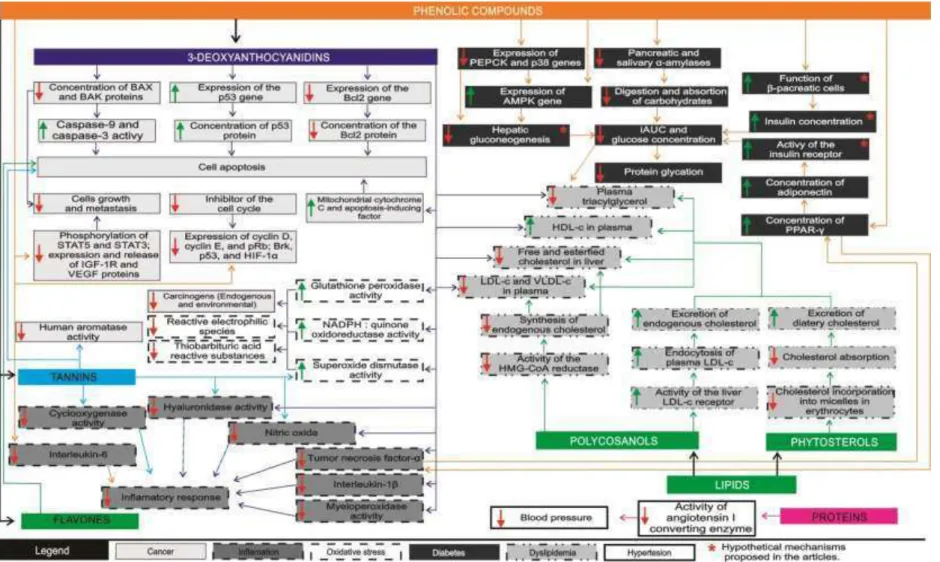
Figure 3: Main mechanisms of action of the sorghum on parameters related to noncommunicable diseases (diabetes,
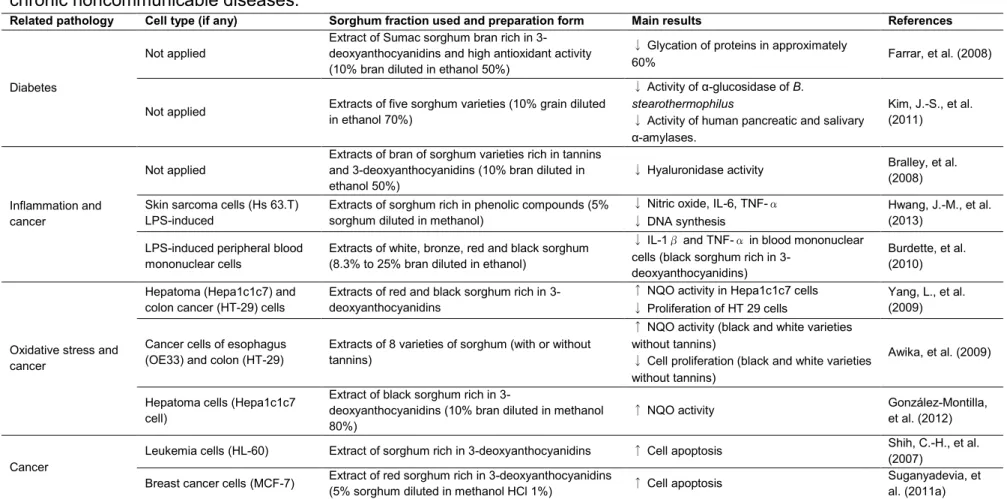
Table 2: Description of the in vitro studies about the effects of the fractions isolated from sorghum on parameters related to chronic noncommunicable diseases.
Related pathology Cell type (if any) Sorghum fraction used and preparation form Main results References
Diabetes
Not applied
Extract of Sumac sorghum bran rich in 3-deoxyanthocyanidins and high antioxidant activity (10% bran diluted in ethanol 50%)
↓ Glycation of proteins in approximately
60% Farrar, et al. (2008)
Not applied Extracts of five sorghum varieties (10% grain diluted in ethanol 70%)
↓Activity of α-glucosidase of B. stearothermophilus
↓ Activity of human pancreatic and salivary
α-amylases.
Kim, J.-S., et al. (2011)
Inflammation and cancer
Not applied
Extracts of bran of sorghum varieties rich in tannins and 3-deoxyanthocyanidins (10% bran diluted in ethanol 50%)
↓ Hyaluronidase activity Bralley, et al. (2008) Skin sarcoma cells (Hs 63.T)
LPS-induced
Extracts of sorghum rich in phenolic compounds (5% sorghum diluted in methanol)
↓ Nitric oxide, IL-6, TNF-
↓ DNA synthesis
Hwang, J.-M., et al. (2013)
LPS-induced peripheral blood mononuclear cells
Extracts of white, bronze, red and black sorghum (8.3% to 25% bran diluted in ethanol)
↓ IL-1 and TNF- in blood mononuclear cells (black sorghum rich in
3-deoxyanthocyanidins)
Burdette, et al. (2010)
Oxidative stress and cancer
Hepatoma (Hepa1c1c7) and colon cancer (HT-29) cells
Extracts of red and black sorghum rich in 3-deoxyanthocyanidins
↑ NQO activity in Hepa1c1c7 cells
↓ Proliferation of HT 29 cells
Yang, L., et al. (2009)
Cancer cells of esophagus (OE33) and colon (HT-29)
Extracts of 8 varieties of sorghum (with or without tannins)
↑ NQO activity (black and white varieties without tannins)
↓ Cell proliferation (black and white varieties without tannins)
Awika, et al. (2009)
Hepatoma cells (Hepa1c1c7 cell)
Extract of black sorghum rich in
3-deoxyanthocyanidins (10% bran diluted in methanol 80%)
↑ NQO activity González-Montilla, et al. (2012)
Cancer
Leukemia cells (HL-60) Extract of sorghum rich in 3-deoxyanthocyanidins ↑ Cell apoptosis Shih, C.-H., et al. (2007)
Breast cancer cells (MCF-7) Extract of red sorghum rich in 3-deoxyanthocyanidins
(5% sorghum diluted in methanol HCl 1%) ↑ Cell apoptosis
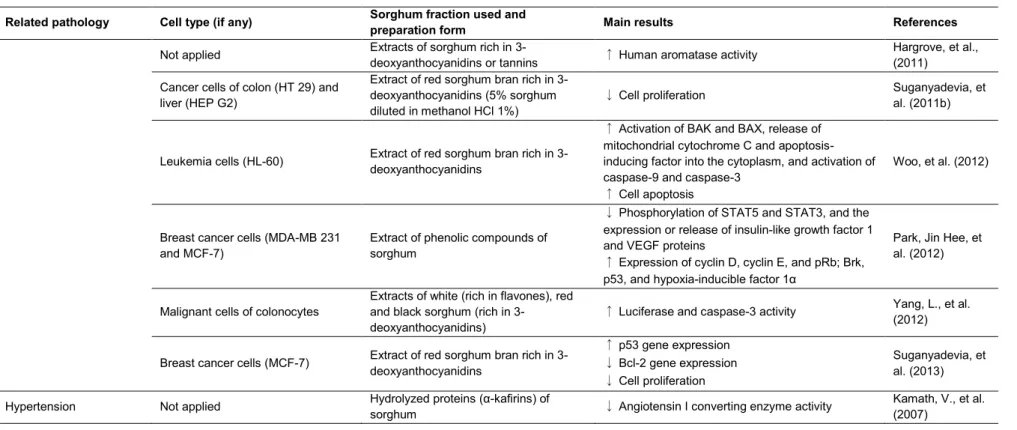
Table 2: continued
Related pathology Cell type (if any) Sorghum fraction used and
preparation form Main results References
Not applied Extracts of sorghum rich in
3-deoxyanthocyanidins or tannins ↑ Human aromatase activity
Hargrove, et al., (2011)
Cancer cells of colon (HT 29) and liver (HEP G2)
Extract of red sorghum bran rich in 3-deoxyanthocyanidins (5% sorghum diluted in methanol HCl 1%)
↓ Cell proliferation Suganyadevia, et al. (2011b)
Leukemia cells (HL-60) Extract of red sorghum bran rich in 3-deoxyanthocyanidins
↑ Activation of BAK and BAX, release of mitochondrial cytochrome C and apoptosis-inducing factor into the cytoplasm, and activation of caspase-9 and caspase-3
↑ Cell apoptosis
Woo, et al. (2012)
Breast cancer cells (MDA-MB 231 and MCF-7)
Extract of phenolic compounds of sorghum
↓ Phosphorylation of STAT5 and STAT3, and the expression or release of insulin-like growth factor 1 and VEGF proteins
↑ Expression of cyclin D, cyclin E, and pRb; Brk, p53, and hypoxia-inducible factor 1α
Park, Jin Hee, et al. (2012)
Malignant cells of colonocytes
Extracts of white (rich in flavones), red and black sorghum (rich in
3-deoxyanthocyanidins)
↑ Luciferase and caspase-3 activity Yang, L., et al. (2012)
Breast cancer cells (MCF-7) Extract of red sorghum bran rich in 3-deoxyanthocyanidins
↑ p53 gene expression
↓ Bcl-2 gene expression
↓ Cell proliferation
Suganyadevia, et al. (2013)
Hypertension Not applied Hydrolyzed proteins (α-kafirins) of
sorghum ↓ Angiotensin I converting enzyme activity
27
Oxidative stress
The chronic and excessive production of free radicals is crucial in the development of noncommunicable diseases (Hotamisligil, 2006; Lee, S., et al., 2011). The activity of components isolated from sorghum against oxidative stress has been demonstrated in vitro (Table 2). These functional benefits are attributed to the phenolic compounds and are most evident when extracts from black or red sorghum were used (Burdette, et al., 2010; Moraes, et al., 2012a).
Phenolic compounds isolated from sorghum regulate the expression of phase II enzymes (Awika, et al., 2009; González-Montilla, et al., 2012; Yang, L., et al., 2009). These enzymes modulate the defense system against oxidative stress by continuously converting highly reactive electrophilic species (RES) into non-toxic and excretable metabolites (González-Montilla, et al., 2012; Takabe, et al., 2006).
The main effect of sorghum on phase II enzymes is to increase the NADH:quinone oxyreductase (NQO) activity (Figure 3). This effect is attributed to sorghum 3-deoxyanthocyanidins and depends on their profile but not on the content (Awika, et al., 2009; Lewis, 2008; Suganyadevia, et al., 2011b; Yang, L., et al., 2009). Recent studies demonstrated that apigeninidin and luteolinidin did not show any significant NQO inducer activity (Awika, et al., 2009; Yang, L., et al., 2009). On the other hand, their 7-methoxylated forms were strong NQO inducers (Awika, et al., 2009; Yang, L., et al., 2009).
poor ability to induce NQO and can inhibit the NQO activity caused by other phenolic compounds (Awika, et al., 2009).
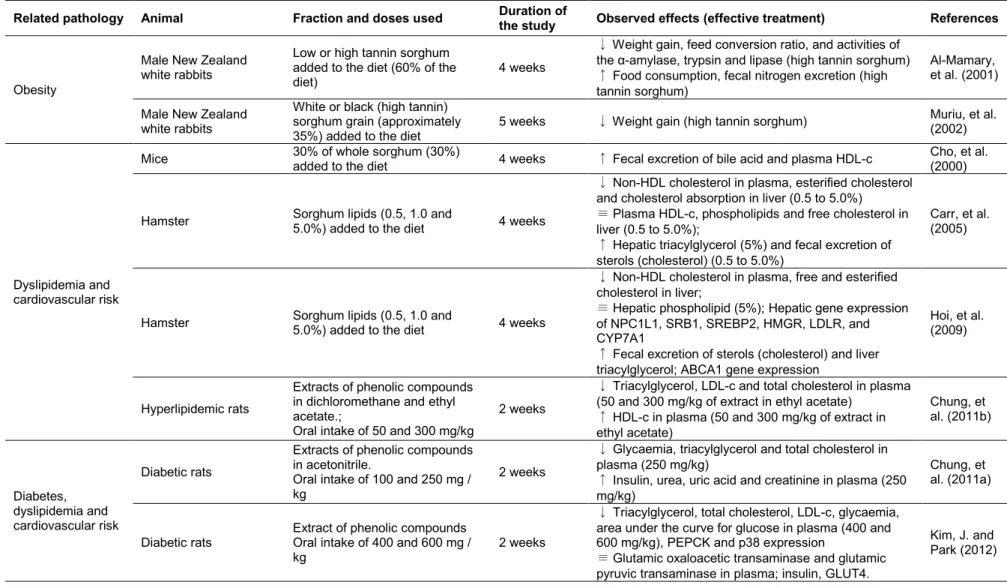
The effects of sorghum on the oxidative stress in vivo are little known (Table 3). The superoxide dismutase activity (SOD) increased in normolipidemic rats fed with black sorghum bran (rich in 3-deoxyanthocyanidins) (Lewis, 2008). This increase appears to be strictly related to the action of 3-deoxyanthocyanidins present in the bran. Furthermore, white (rich in phenolic acids), brown (rich in tannins) or black (rich in 3-deoxyanthocyanidins) sorghum brans suppressed the glutathione peroxidase activity (GPx) (Lewis, 2008). However, in the single animal study done so far using whole grains, normolipidemic rats that consumed different sorghum varieties (white, brown rich in tannin, and red without tannin) showed no change in the SOD activity (Moraes, et al., 2012a). The absence of significant changes in the SOD activity (Moraes, et al., 2012a) may reflect the lower content of bioactive compounds in whole sorghum grain compared with the bran. Thus, the amount of bioactive compounds consumed by the rats treated with whole grain may have been lower than those fed sorghum bran.
29 Table 3: Description of the in vivo studies about the effects of the isolated fractions from sorghum on parameters related to chronic noncommunicable diseases.
Related pathology Animal Fraction and doses used Duration of
the study Observed effects (effective treatment) References
Obesity
Male New Zealand white rabbits
Low or high tannin sorghum added to the diet (60% of the diet)
4 weeks
↓ Weight gain, feed conversion ratio, and activities of
the α-amylase, trypsin and lipase (high tannin sorghum)
↑ Food consumption, fecal nitrogen excretion (high tannin sorghum)
Al-Mamary, et al. (2001)
Male New Zealand white rabbits
White or black (high tannin) sorghum grain (approximately 35%) added to the diet
5 weeks ↓ Weight gain (high tannin sorghum) Muriu, et al. (2002)
Dyslipidemia and cardiovascular risk
Mice 30% of whole sorghum (30%)
added to the diet 4 weeks ↑ Fecal excretion of bile acid and plasma HDL-c
Cho, et al. (2000)
Hamster Sorghum lipids (0.5, 1.0 and
5.0%) added to the diet 4 weeks
↓ Non-HDL cholesterol in plasma, esterified cholesterol and cholesterol absorption in liver (0.5 to 5.0%)
≡ Plasma HDL-c, phospholipids and free cholesterol in liver (0.5 to 5.0%);
↑ Hepatic triacylglycerol (5%) and fecal excretion of sterols (cholesterol) (0.5 to 5.0%)
Carr, et al. (2005)
Hamster Sorghum lipids (0.5, 1.0 and
5.0%) added to the diet 4 weeks
↓ Non-HDL cholesterol in plasma, free and esterified cholesterol in liver;
≡ Hepatic phospholipid (5%); Hepatic gene expression of NPC1L1, SRB1, SREBP2, HMGR, LDLR, and CYP7A1
↑ Fecal excretion of sterols (cholesterol) and liver triacylglycerol; ABCA1 gene expression
Hoi, et al. (2009)
Hyperlipidemic rats
Extracts of phenolic compounds in dichloromethane and ethyl acetate.;
Oral intake of 50 and 300 mg/kg
2 weeks
↓ Triacylglycerol, LDL-c and total cholesterol in plasma (50 and 300 mg/kg of extract in ethyl acetate)
↑ HDL-c in plasma (50 and 300 mg/kg of extract in ethyl acetate) Chung, et al. (2011b) Diabetes, dyslipidemia and cardiovascular risk Diabetic rats
Extracts of phenolic compounds in acetonitrile.
Oral intake of 100 and 250 mg / kg
2 weeks
↓ Glycaemia, triacylglycerol and total cholesterol in plasma (250 mg/kg)
↑ Insulin, urea, uric acid and creatinine in plasma (250 mg/kg)
Chung, et al. (2011a)
Diabetic rats
Extract of phenolic compounds Oral intake of 400 and 600 mg / kg
2 weeks
↓ Triacylglycerol, total cholesterol, LDL-c, glycaemia, area under the curve for glucose in plasma (400 and 600 mg/kg), PEPCK and p38 expression
≡ Glutamic oxaloacetic transaminase and glutamic pyruvic transaminase in plasma; insulin, GLUT4.
Table 3: Continued
Related pathology Animal Fraction and doses used
Duration of the study
Observed effects (effective treatment) References
Dyslipidemia, cardiovascular risk and diabetes
Mice
Oral administration of 0.5% and 1% sorghum methanolic extract in mice fed a with high-fat diet
6 weeks
↓ Triacylglycerol, total cholesterol, LDL-c, glycaemia, insulin, area under the curve for glucose in plasma; adiponectina expression (0.5 to 1%)
↓ Tumor necrosis factor-α (1%).
≡ HDL-c, alanine and aspartate amino-transferase
↑ PPAR- expression (1%)
Park, Ji Heon, et al. (2012)
Mice
Modified AIN-93 M diet (37) supplemented with 0%, 1% and 5% grain sorghum lipid
3 weeks
↑Bifidobacterium (mainly a phylotype related to B. animalis) and HDL-c
↓Coriobacteriaceae (mainly unclassified phylotypes yet) and non-HDL-c
Martínez, et al. (2009)
Inflammation
Mice
Application of ethanolic extract of white, bronze, red and black sorghum in the ear of the mice
-
↓ Ear edema of mice, generated induced inflammation (bronze and black sorghum) and myeloperoxidase activity (black sorghum)
Burdette, et al. (2010)
Rats
Oral administration of 0.62 a 5g/kg of golden gelatinous sorghum rich in phenolic compounds
2 weeks
≡ Albumin, glutamic oxaloacetic transaminase, glutamic pyruvic transaminase, alkaline phosphates, creatinin, total protein, albumin, blood urea nitrogen, chloride, sodium, potassium, and calcium; cell structure and formation (liver, kidney, spleen, lungs, and heart)
↓ Nitric oxide in Raw264.7 cells
↓ Inducible nitric oxide synthase and anti-cyclooxygenase
(COX)-2, 12-O-tetradecanoylphorbol-13-acetate-induced ear edema
Shim, et al. (2013) Inflammation, oxidative stress, diabetes, dyslipidemia Normolipidemic Wistar rats
Whole sorghum (21.2 to 26.4%) added
to the hyperlipidic diet 5 weeks
↓ TBARS in liver, tumor necrosis factor-α in plasma (red sorghum without tannin)
≡ Glucose, fructosamine, cholesterol, HDL-c,
triacylglycerol, alanine and aspartate amino-transferase, superoxide dismutase, IL-8 and IL-10
Moraes, et al. (2012a)
Cancer
Normolipidemic rats
Diets containing 6% of bran from white (contains phenolic acids), brown (contains tannins), or black sorghum (contains 3-deoxyanthocyanidins)
10 weeks
↓Number of aberrant crypts (black and brown sorghums)
↑Superoxide dismutase activy (black sorghum) and glutathione peroxidase activity (three genotypes)
Lewis (2008)
Mice
Application of methanolic extract of sorghum rich in phenolic compounds by subcutaneous injection
↓ Cell growth and metastasis in breast cancer cells (MDA-MB 231 and MCF-7)
31
Cancer
Most cancers originate from DNA damage caused by carcinogens (toxics, mutagenic, and carcinogenic agents) that make up reactive intermediates, such as reactive oxygen species (ROS), reactive nitrogen species (RNS), and other reactive electrophilic metabolites (Sharma, S., et al., 2010; Shih, P.-H., et al., 2007). The carcinogen rate in humans is strongly dependent on the activity of the phase I (cytochrome P-450) and II of the enzyme systems, which also removed endogenous and environmental carcinogens (Takabe, et al., 2006). The benefits of sorghum on phase II enzymes cited in the previous section, especially on NQO reductase, demonstrate its chemoprevention (Table 2 and Figure 3). However, it is not possible to infer its effects in humans due to the lack of studies.
Elimination of tumors in early stages is considered an integral part of anticancer effects. The results of the study have demonstrated that phenolic compounds from sorghum, especially 3-deoxyanthocyanidins, act directly against cancer cells due to the increase of the apoptosis and inhibition of the growth and metastasis of cancer cells of skin melanoma, colon, esophagus, liver, breast, and bone marrow (Awika, et al., 2009; Hwang, J.-M., et al., 2013; Park, Jin Hee, et al., 2012; Shih, C.-H., et al., 2007; Suganyadevia, et al., 2011a; Woo, et al., 2012; Yang, L., et al., 2009). Sorghum 3-deoxyanthocyanidins are more cytotoxic to cancer cells than the respective analogous anthocyanidins present in other foods (cyanidin and pelargonidin) (Shih, C.-H., et al., 2007). In addition to 3-deoxyanthocyanidins, apoptosis of the colon cancer cells resulted from estrogenic activity of the flavones of sorghum (Yang, L., et al., 2012).
The mechanisms by which sorghum’s phenolic compounds induce in
vitro apoptosis included the overexpression of genes and apoptotic proteins
(BAX e BAK proteins and p5γ gene expression), increase in enzymes’
32
the release of insulin-like growth factor 1 (IGF-1R) and vascular endothelial growth factor (VEGF) and increasing cell cycle inhibitors (expression of cyclin D, cyclin E, and pRb; Brk, p53, and HIF-1α - hypoxia-inducible factor 1α) (Park, Jin Hee, et al., 2012; Suganyadevia, et al., 2011a; Woo, et al., 2012). All of these events can inhibit cellular DNA synthesis, as was recently observed in skin melanoma cells (Hwang, J.-M., et al., 2013).
Furthermore, in addition to 3-deoxyanthocyanidins, sorghum has tannins that may have anticancer activity. Studies have shown that tannins isolated from other foods affect regulatory enzymes, blocking signal transduction pathways and inducing apoptosis; thus, they have attracted wide attention for cancer treatment (Huang, et al., 2009). However, sorghum tannins still need to be better studied. In an recent study, sumac sorghum bran extract rich in tannins inhibited human aromatase (CYP19) activity in vitro more strongly than black sorghum bran extract rich in 3-deoxyanthocyanidins (Hargrove, et al., 2011). This suggests that the tannins found in sumac sorghum are more potent inhibitors than the 3-deoxyanthocyanidins found in black sorghum, inhibiting and precipitating aromatase (Hargrove, et al., 2011). This enzyme is key to the synthesis of estrogen and is an important target for chemotherapy of breast cancer dependent on this hormone (Dowsett, et al., 2010).
The anticancer effects of sorghum in vivo have been little studied (Table 3). Recently, cellular growth and metastasis in breast cancer cells (MDA-MB 231 and MCF-7) in rats were reduced after the application of subcutaneously methanolic extract of sorghum rich in phenolic compounds (Park, Jin Hee, et al., 2012). The results of the single study that evaluated the anticancer effects of sorghum showed that whole grains of the black and brown varieties (rich in 3-deoxyanthocyanidins and tannins, respectively) reduced the number of aberrant crypts of mice (Lewis, 2008). Furthermore, sorghum rich in tannins increased the colonocytes apoptosis.
Obesity and inflammation