RESEARCH ARTICLE
Gastrointestinal pH and Transit Time
Profiling in Healthy Volunteers Using the
IntelliCap System Confirms Ileo-Colonic
Release of ColoPulse Tablets
Jacoba M. Maurer1*, Reinout C. A. Schellekens1, Hèlen M. van Rieke1, Christoph Wanke2, Ventzeslav Iordanov2, Frans Stellaard3, Klaus D. Wutzke4, Gerard Dijkstra5, Margot van der Zee6, Herman J. Woerdenbag6, Henderik W. Frijlink6, Jos G. W. Kosterink1,7 1University of Groningen, University Medical Center Groningen, Department of Clinical Pharmacy and Pharmacology, Groningen, The Netherlands,2Medimetrics Personalized Drug Delivery BV, Eindhoven, The Netherlands,3University of Groningen, University Medical Center Groningen, Department of Laboratory Medicine, Groningen, The Netherlands,4University of Rostock, Children’s Hospital, Research Laboratory Gastroenterology and Nutrition, Rostock, Germany,5University of Groningen, University Medical Center Groningen, Department of Gastroenterology and Hepatology, Groningen, The Netherlands,6University of Groningen, Department Pharmacy, Section of Pharmaceutical Technology and Biopharmacy, Groningen, The Netherlands,7University of Groningen, Department Pharmacy, Section of Pharmacotherapy and Pharmaceutical Care, Groningen, The Netherlands
Abstract
Introduction
ColoPulse tablets are an innovative development in the field of oral dosage forms character-ized by a distal ileum and colon-specific release. Previous studies in humans showed release in the ileo-colonic region, but the relationship between gastrointestinal pH and release was not experimentally provenin vivo. This information will complete thein vivo
release-profile of ColoPulse tablets.
Materials and Methods
Release from ColoPulse tablets was studied in 16 healthy volunteers using the dual label isotope strategy. To determine gastrointestinal pH profiles and transit times the IntelliCap system was used. A ColoPulse tablet containing13C-urea and an uncoated, immediate
release tablet containing15N
2-urea were taken simultaneously followed by a standardized
breakfast after three hours. Five minutes after intake of the tablets the IntelliCap capsule was swallowed and pH was measured until excretion in the feces. Breath and urine samples were collected for isotope analysis.
Results
Full analysis could be performed in 12 subjects. Median bioavailability of13C -urea was
82% (95% CI 74–94%, range 61–114%). The median lag time (5% release of13C) was 5:42
PLOS ONE | DOI:10.1371/journal.pone.0129076 July 15, 2015 1 / 17
OPEN ACCESS
Citation:Maurer JM, Schellekens RCA, van Rieke
HM, Wanke C, Iordanov V, Stellaard F, et al. (2015) Gastrointestinal pH and Transit Time Profiling in Healthy Volunteers Using the IntelliCap System Confirms Ileo-Colonic Release of ColoPulse Tablets. PLoS ONE 10(7): e0129076. doi:10.1371/journal. pone.0129076
Editor:Parasuraman Padmanabhan, The Lee Kong
Chian School of Medicine, SINGAPORE
Received:December 30, 2014
Accepted:May 3, 2015
Published:July 15, 2015
Copyright:© 2015 Maurer et al. This is an open
access article distributed under the terms of the Creative Commons Attribution License, which permits unrestricted use, distribution, and reproduction in any medium, provided the original author and source are credited.
Data Availability Statement:All relevant data are
within the paper and its Supporting Information files.
Funding:Medimetrics Personalized Drug Delivery,
h (95% CI 5:18–6:18 h, range 2:36–6:36 h,) There was no statistically significant difference between lag time based on isotope signal and colon arrival time (CAT) based on pH (median 5:42 vs 5:31 h p = 0.903). In all subjects an intestinal pH value of 7.0 was reached before release of13C from the ColoPulse tablet occurred.
Discussion and Conclusions
From the combined data from the IntelliCap system and the13C -isotope signal it can be
concluded that release from a ColoPulse tabletin vivois not related to transit times but occurs in the ileo-colonic region after pH 7.0 is reached. This supports our earlier findings and confirms that the ColoPulse system is a promising delivery system for targeting the dis-tal ileum and colon.
Trial Registration
ISRCTN Registry18301880
Introduction
Distal ileum and Colon-specific delivery of medicines is clinically relevant because their effi-cacy can be improved, side effects can be reduced and the bioavailability of drugs that are metabolized or poorly absorbed in the higher parts of the small intestine can be enhanced. This offers interesting perspectives for the treatment of for instance inflammatory bowel diseases
with peptides [1].
In the literature different strategies for colon-specific delivery have been described. They include pH-responsive systems, time-based systems and systems triggered by the colon flora,
as well as combinations of such systems [1,2]. The recently developed ColoPulse technology is
a promising pH-responsive system being able to specifically deliver the active substance to the ileo-colonic region. Because of the non-percolating incorporation of a super-disintegrant in the coating, by which a more reliable and pulsatile release is achieved, it differs from other pH-responsive systems. The dissolution of this coating is triggered by the physiologically occurring
increase in pH from 5.5 in the upper small intestine to 7.5 in the ileo-colonic region [3].
Until now bioavailability from ColoPulse dosage forms has been studied in healthy
volun-teers and in patients with Crohn’s disease using stable isotopes of urea [4,5,6]. All studies
showed a mean total bioavailability of13C-urea of>76%, but the relationship between
gastro-intestinal pH and release from a ColoPulse dosage form has so far not been proven
experimen-tallyin vivo. To obtain more insight in the behaviour and functioning of ColoPulse tablets and
capsulesin vivo, studies on the gastrointestinal pH with the concomitant administration of a
ColoPulse tablet are justified.
In the literature different devices for gastrointestinal pH measurement have been described
[7]. They can be divided in two subgroups: the“static”devices and the“freely moving”devices.
With representatives of the first group only the oesophageal, intra-gastric or peri-mucosal colonic pH can be measured. Their main disadvantage is the inability to measure the pH along the entire length of the gastrointestinal tract. The second group mainly comprises pH sensitive wireless radiotelemetry capsules (RTC). After administration of a RTC the subject is able to perform normal daily activities. Emitted radio signals are detected by a recorder mostly worn around the waist. If the device functions properly, measuring ends when the RTC is excreted
Ileo-Colonic Release of ColoPulse Tablets Confirmed with IntelliCap
PLOS ONE | DOI:10.1371/journal.pone.0129076 July 15, 2015 2 / 17
Competing Interests:The authors have the
with the feces. Disadvantages of the RTCs used so far are the frequent loss of signals, batteries running out of power before excretion, large pH-drift (up to approximately 1 unit) and
difficul-ties in determining the exact location of the capsule in the gastrointestinal tract. InTable 1a
summary of the available literature on freely moving devices studied in inflammatory bowel
diseases and / or healthy volunteers is presented [8–21].
Recently a medical device for thein vivomeasurement of pH and temperature in the
gastro-intestinal tract was developed by Medimetrics (Eindhoven, The Netherlands): the IntelliCap
system [20,21]. Furthermore the system can be used for electronically controlled drug delivery
in defined sections of the gastrointestinal tract to quantify regional drug absorption [22]. It
dif-fers from the so far available freely moving RTCs by more accurate and more frequent
mea-surements, minimal signal loss, a built-in drug reservoir and improved battery power (>72 h)
to ensure reliable and complete data acquisition. By combining diagnostic functionalities and the capability to generate adjustable controlled drug release profiles, the IntelliCap system can play a promising role in pharmaceutical drug profiling and formulation development.
In this paper we describe a study performed in healthy volunteers in which we studied the relationship between gastrointestinal pH obtained with the IntelliCap system as well as the release from a ColoPulse tablet to prove that release from a ColoPulse tablet indeed does occur
in the ileo-colonic region and after a pH value of7.0 is reached.
Materials and Methods
Subjects
Sixteen healthy volunteers (10 male, 6 female, age 18–65) were initially included in this study (Table 2). Participant recruitment started January 2011 and ended April 2011. Written informed consent was obtained from all participants. They had no history of gastrointestinal diseases or gastrointestinal surgery. None of the subjects used antibiotics or drugs influencing the gastrointestinal transit time for at least three months prior to the start of the study. A possi-bleHelicobacter pyloriinfection was excluded with a13C-urea breath test (INFAI, Köln, Germany).
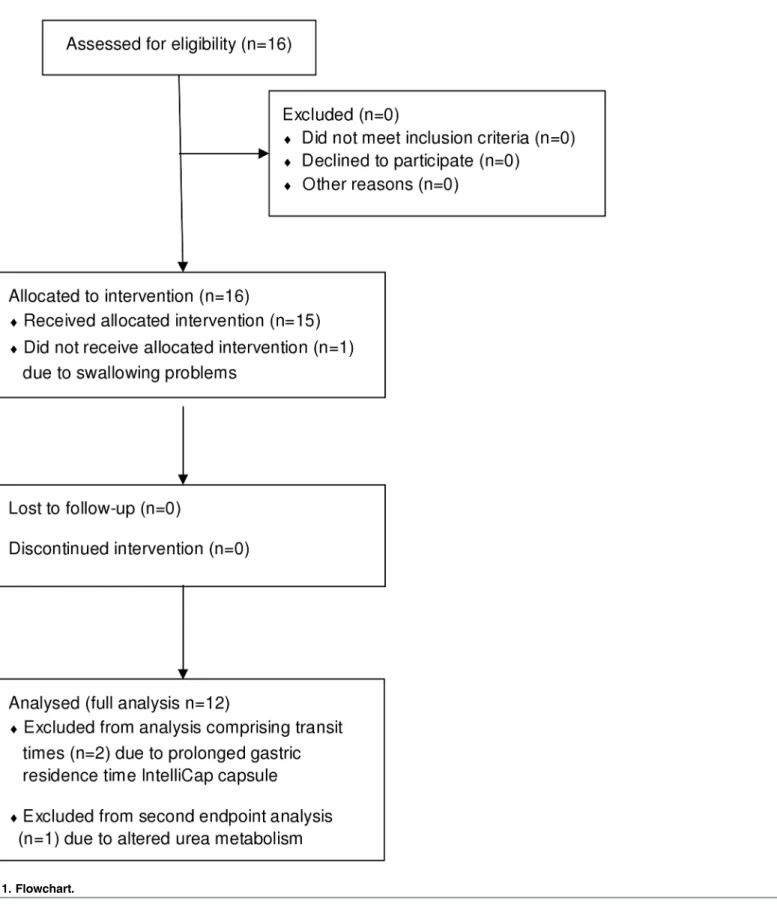
A flowchart summarizing recruitment and analysis is shown inFig 1.
Study-design
This bioavailability study was performed as an open-label, non-randomized, single arm clinical
trial and was part of a study described by Maurer et al [6]. The design was based on a previous
feasibility study in which two stable isotopes of urea are administered simultaneously [23].
Subjects were fasted from 8 p.m. the day before the test day. Only water, apple juice (until 11 p. m.) and unsweetened tea without sugar were allowed. On the test day an uncoated tablet
con-taining 50 mg15N2-urea and a ColoPulse tablet containing 50 mg13C-urea were taken
simulta-neously at around 8 a.m. with 100 mL apple juice. Five minutes thereafter the IntelliCap capsule was swallowed with another 100 mL apple juice. A standardized breakfast was taken three hours after the intake of the tablets. The meal consisted of a standardized double sand-wich and 200 mL unsweetened tea. Approximately 6 and 10 hours after tablet intake, respec-tively lunch and dinner were taken. There were no food-restrictions for lunch and dinner
except foods rich in13C, like corn products, cane sugar and pineapple. During the test day,
(that ended at 8 a.m. the next morning) water, apple juice and tea were the only beverages allowed.
Sampling, administration of the tablets and IntelliCap capsule took place in a controlled facility until 5 p.m. Thereafter subjects went home were they continued sampling of breath and
Ileo-Colonic Release of ColoPulse Tablets Confirmed with IntelliCap
Table 1. Summary of available literature on gastrointestinal pH measurement with freely moving devices in healthy volunteers and / or inflammatory bowel diseases.
Study Device Subjects Battery
life pH Sampling interval Position detection Food intake during study
Data loss pH drift
device during study Total transit time Remarks
Watson et al, 1972 [8]
Radiotelemetry Capsule 2 healthy subjects 7 patients with miscellaneous gastrointestinal disorders
10 days 60 min Abdominal x-ray
Device intake after breakfast. No restrictions in food and beverages
-a 0.1 unit
-Evans et al, 1988 [9]
Radiotelemetry capsule (Remote control systems Ltd, UK)
72 healthy subjects
- 12 seconds “locator”to detect highest signal intensity Device intake after overnight fasting. breakfast after leaving the stomach. No restrictions in food and beverages In 14
subjects>75%
loss in the small intestine
pH 4:<
0.6 unit pH 9.2<1.0
unit
Mean: 23.3 h
Measurement up to 48 h. Median signal loss 20.4%. 2 subjects>1.0 unit pH drift
Fallingborg et al, 1989 [10]
Radiotelemetry Capsule (Remote control systems Ltd, UK)
39 healthy subjects
- 15–120 min (not between 11 pm and 8 am)
Fluoroscopy Device intake after overnight fasting; breakfast after leaving the stomach. Food and beverages according to the protocol
- <0.9 unit 9–129 h
Raimundo A et al 1992 [11]
Radiotelemetry Capsule 7 patients with acute colitis 6 patients with ulcerative colitis in remission
- - Based on pH - - -
-Fallingborg et al, 1993 [12]
Radiotelemetry Capsule 7 patients with ulcerative colitis
- 30 min (not between 11 pm and 8 am)
Fluoroscopy Device intake after overnight fasting; breakfast after leaving the stomach. No restrictions in food and beverages
- <0.4 unit 8 ->123 h
Measurement max 39h.
Sasaki et al, 1997 [13]
Radiotelemetry Capsule (Remote control systems Ltd, UK)
4 healthy subjects 4 patients with Crohn’s disease
1 1 second Based on pH, x-ray, contrast colonogram and a radio-directional probe Device intake after overnight fasting; breakfast after leaving the stomach. Food according to the protocol
- <0.5unit
-(Continued)
Table 1. (Continued)
Study Device Subjects Battery
life pH Sampling interval Position detection Food intake during study
Data loss pH drift
device during study Total transit time Remarks
Press et al, 1998 [14]
Radiotelemetry Capsule (7036, Oakfield instruments, UK)
12 healthy subjects 11 patients with ulcerative colitis 15 patients with Crohn’s disease
- - “locator”to detect highest signal intensity Device intake after overnight fasting; breakfast after leaving the stomach. No restrictions in food and beverages In 4
subjects>75% loss in 24h
<0.5 unit - Measurement in
the colon was marked as unpredictable. 4 subjects had to repeat the study
Fallingborg et al, 1998 [15]
Radiotelemetry Capsule (remote control systems Ltd, UK)
13 healthy subjects 9 patients with Crohn’s disease
- 10–15 min Fluoroscopy Device intake after>8h fasting; breakfast after leaving the stomach
- <0.4 unit - Difference in
small intestine transit time between resected patients and healthy volunteers Ewe et al,
1999 [16]
Radiotelemetry Capsule (7036, Oakfield instruments, UK)
15 healthy subjects 15 patients with Crohn’s Disease 5 patients with ulcerative colitis
24 h 6 seconds Metal detector Device intake after>8h fasting; breakfast after leaving the stomach 6 subjects excluded, several reasons - Median
24–31 h
In 1 subject>2
weeks retention of RTC
Maqbool et al, 2009 [17]
SmartPill, (Buffalo, NY, USA)
10 healthy subjects
5 days 5 seconds, after 24 h 20 seconds
Based on pH 2000 kcal diet, 30% fat. Device intake after breakfast
- -
-Rubin et al, 2009 [18]
Smartpill, (Buffalo, NY, USA)
10 patients with active ulcerative colitis
- - Based on pH,
motility and temperature
- - - Median
24.6 h
No complications with the device
Lalezari et al, 2012 [19]
SmartPill, (Buffalo, NY, USA)
10 healthy subjects 9 patients with IBS
5 days 5 seconds Based on pH Device intake after>8h fasting; breakfast after leaving the stomach
- -
-Schaar et al, 2013 [20] / Koziolek et al, 2014 [21]
(IntelliCap
MedimetricsEindhoven, NL)
2x 10 healthy volunteers
>48 h 10 seconds Study 1: based on pH and temperature. Study 2: also based on
99MTc
Device intake with water after overnight fasting. Food 4 h after device intake
Mean 3.5% (one subject 13%)
- Average 30:34 h
Two publications, same studies
a- = no information in publication.
urine according to the study protocol. All necessary information was recorded in a diary. A
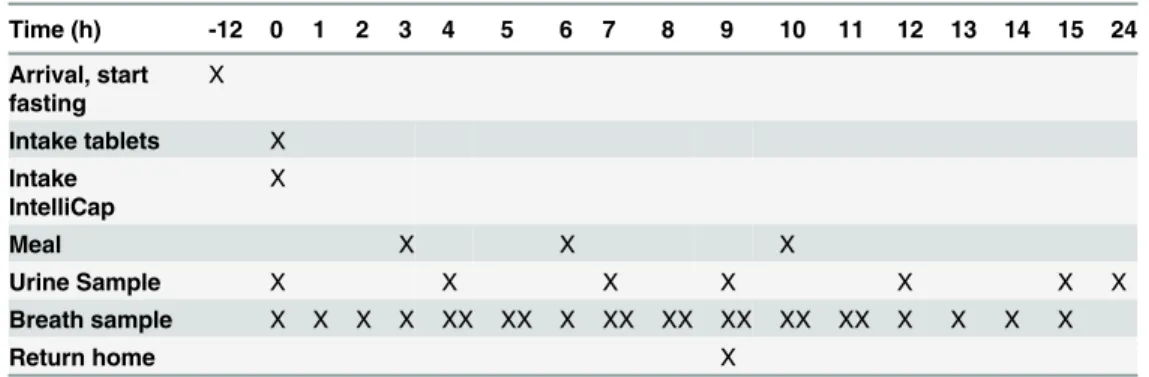
summary of the study design is shown inTable 3.
Ethics statement
The study was approved by the ethical committee of the University Medical Center Groningen (ref 2009.188 / EudraCT 2009–01347121) and was performed according to the principles of the Declaration of Helsinki. The study has been registered in the ISRCTN register
(ISRCTN18301880). This was not done before the start of recruitment because at that time this was not required by internal procedures and the ethical committee that approved this study.
IntelliCap system
The IntelliCap system was supplied by Medimetrics (Eindhoven, The Netherlands) and con-sisted of a capsule and a portable unit. The size of the IntelliCap capsule was 27 x 11 mm. A complete description including illustrations of the IntelliCap system can be found in the
litera-ture [20]. The drug reservoir was filled with normal saline solution which had no function in
this study and was not expelled from the IntelliCap capsule during the experiments.
Data were measured until excretion of the IntelliCap capsule or until the battery ran out of power. The excretion of the IntelliCap capsule from the body had to be confirmed by collecting the device from the stool. If the IntelliCap capsule was not retrieved within 96 hours it was probably missed and its absence from the body was confirmed with an abdominal X-ray. No follow up was required after retrieving the IntelliCap capsule or confirmation of its absence by X-ray.
Analysis of pH profiles
The pH profiles were analysed for gastrointestinal landmarks (ingestion, pylorus, ileocecal valve and excretion) using the following criteria:
▪. Ingestion: rapid and sustained rise in temperature from room to body temperature and a
rapid drop of>3 pH units
▪. Pylorus: rapid and sustained rise of at least 3 pH units
▪. Ileocecal valve (cecum): first and rapid drop of>0.8 pH units at least 1 h after the
pylo-rus to pH6.5
▪. Excretion: rapid and sustained drop in temperature from body to room temperature
Gastrointestinal residence and transit times were derived from the identification of gastroin-testinal landmarks and are defined as follows:
▪. Gastric residence time (GRT): elapsed time between ingestion and pylorus
▪. Small intestine transit time (SBTT): elapsed time between pylorus and ileocecal valve
▪. Colonic arrival time (CAT): elapsed time between ingestion and ileocecal valve
Table 2. Demographics of included subjects (healthy volunteers).
Median (range)
Sex (male / female) 10 / 6
Age (year) 27.5 (19–63)
Weight (kg) 77.0 (54.5–121.4)
doi:10.1371/journal.pone.0129076.t002
Ileo-Colonic Release of ColoPulse Tablets Confirmed with IntelliCap
Fig 1. Flowchart.
doi:10.1371/journal.pone.0129076.g001
Ileo-Colonic Release of ColoPulse Tablets Confirmed with IntelliCap
▪. Colonic transit time (CTT): elapsed time between ileocecal valve and excretion
▪. Whole gut transit time (WGTT): elapsed time between ingestion and excretion
Chemicals, isotopes and coated tablets
All substances were of pharmacopoeial grade (Ph. Eur. or USP) and were obtained via a
certi-fied wholesaler as described before [6]. The stable isotopes13C-urea and15N2-urea (AP 99%)
were obtained from an FDA-controlled facility (Isotec, USA). Tablet cores containing 50 mg
13C- or 50 mg15N
2-urea and 25 mg caffeine were compounded in the Department of Hospital
and Clinical Pharmacy of the University Medical Center Groningen and analysed according to
the European Pharmacopoeia 7thedition
A ColoPulse coating of 13–17 mg/cm2was applied on the tablets containing13C-urea.The
coating was composed of a mixture of Eudragit S-100:PEG 6000:Ac-di-sol:talc in a ratio of 7:1:3:2 (w/w). The solvent was an acetone-water 97:3 mixture (w/w). Coating thickness was
determined and expressed as the amount of Eudragit S100 applied per cm2. Caffeine was added
to the13C-urea tablet cores for quality control purposes and was used as a marker substance
for thein vitrodetermination of the release characteristics lag- and pulse time in thein vitro
dissolution test. Caffeine was also added to the15N2-urea tablet cores to obtain comparable
tab-let cores, with no particular function in this tabtab-let. All tabtab-lets, coated and uncoated, met
estab-lished pharmaceutical quality control criteria [6].
Urea-kinetics
To study the bioavailability from a ColoPulse tablet in the ileo-colonic region the difference in
kinetics and fate between13C-urea and15N2-urea was used. An overview of the relevant kinetic
steps can be found in Maurer et al [23,24]. Release of13C-urea in the ileo-colonic region
(ure-ase-rich) from a ColoPulse tablet leads toin situfermentation of13C-urea into13CO2which is
subsequently exhaled in breath. The delivery of the isotope in the colon can therefore be
estab-lished by measuring the13CO2response in breath. Unfermented urea (i.e. release in the small
intestine, urease-poor) can be measured as the amount of13C-urea in urine. The second stable
isotope of urea,15N2-urea, in an uncoated tablet functions as a reference and reflects 100%
release in a urease-poor region. Release of15N2-urea in the small intestine from an uncoated
capsule leads to recovery of15N2-urea in urine. Bioavailability can be described by the
differ-ence between kinetics of13C- and15N2-urea [23,24].
Table 3. Study schedule, activities are marked with an X (T0 is 8 a.m.).
Time (h) -12 0 1 2 3 4 5 6 7 8 9 10 11 12 13 14 15 24
Arrival, start fasting
X
Intake tablets X
Intake IntelliCap
X
Meal X X X
Urine Sample X X X X X X X
Breath sample X X X X XX XX X XX XX XX XX XX X X X X
Return home X
doi:10.1371/journal.pone.0129076.t003
Ileo-Colonic Release of ColoPulse Tablets Confirmed with IntelliCap
Sample collections and analysis
Breath samples were collected every 0.5–1 h up to 15 h after intake of the tablets (Table 2) and
were analysed as described before [23]. Briefly,13C/12C isotope ratios in the CO2of breath
sam-ples were analysed by using a validated breath13C-analyser (Thermo Fisher Scientific, Bremen,
Germany) based on isotope ratio mass spectrometry (IRMS).
Urine samples were collected during 24 h after intake of the tablets at prescribed intervals (Table 2) in 500 or 1000 mL containers containing an aliquot of 6M HCl. Urine volumes were
recorded and 20 mL samples were stored at -80°C until analysis. Concentrations of total15N
and13C were determined as described before using an elemental analyzer interfaced with
IRMS [23].
Calculations
The Percentage of the administered Dose Recovered (PDR) of13C and15N in each urine
sam-ple, the ratio of the PDRs13C versus15N (the13C/15N-ratio), the fermented (Ffermented) and
not-fermented (Fnot-fermented) fraction of13C urea were calculated as described before [23,24].
In short:
▪. Ffermentedwas calculated as the cumulative (c)PDR of13C in breath over a 15 h time period
▪. Fnot-fermented= cPDR13C / cPDR15N in a 24 h urine collection
▪. Bioavailability = Ffermented+ Fnot-fermented
▪. The lag time was derived from the cPDR of13C in breath and was defined as de time
between administration of the tablets and the time the cPDR reached the value of 5% of cPDR at t = 15 h
All data were corrected for baseline-concentrations of13C and15N in breath and /or urine.
Furthermore, breath data were corrected for CO2-retention as described before [4].
Statistical procedures
This study was performed as a bioavailability study. Based on previous data on transit times of a ColoPulse tablet a sample size of 10 patients is needed to detect a clinically relevant difference of 15% between lag-time based on isotope-signal and colon arrival time based on pH with 80%
power and a significance level ofα= 0.05 (two sided). Because this study was part of another
study [6] requiring a higher sample size and anticipating some drop-out 16 subjects were
included.
The results were evaluated by descriptive statistics with SPSS version 22. Normal distribu-tion of the data was investigated with the Shapiro-Wilk test. The center was characterized by the mean and standard deviation (pH-data) or the median and corresponding bootstrap based 95% confidence intervals (95% CI). The dispersion was characterized by the coefficient of vari-ation (CV) and range because not all data were normally distributed. A (parametric)
paired-samples t-test (two tailed,α= 0.05) was used to compare the results within groups when data
were normally distributed for both variables. A (non-parametric) Wilcoxon signed rank test was performed to compare the results when at least one of the variables was not normally
dis-tributed. Differences were considered significant when p<0.05.
Ileo-Colonic Release of ColoPulse Tablets Confirmed with IntelliCap
Endpoints
The endpoint was to investigate the relationship between the gastrointestinal pH-profile
obtained with the IntelliCap system and release of13C-urea from a ColoPulse tablet and to
con-firm that release occurs in the ileo-colonic region after pH 7.0 has been reached.
Results
The results of 15 out of 16 healthy volunteers initially included in the study were evaluated (Fig
1). One volunteer could not swallow the IntelliCap capsule and was therefore excluded without
replacement. Two other subjects (6 and 15) appeared to have a prolonged gastric residence time and the IntelliCap capsule was still in the stomach when breakfast and the following meals were taken. Because their gastric residence time was respectively 17 and 22 h data of these subjects were excluded from any analysis comprising transit times. Their lag time based on the isotope signal was within the normal range. Subject 5 was also excluded from analysis comprising lag time and bioavailability, because of a probably altered urea metabolism. This
was concluded from the fact that the cPDR13C in breath was<6.5% after 15h combined with a
cDPR of unfermented13C in urine of 70% at t = 24 h. The pH profile of this subject was normal
with a GRT of 0:15 h and a SBTT of 3.15 h. The coating functioned well, because the
appear-ance of13C in the urine sample could be seen in the sample collected between t = 4 and 7 h and
not earlier. This means that13C-urea in stead of being fermented was absorbed into the
blood-stream when it was released at the ileo-colonic region. The data from the remaining 12 subjects were available for all analyses.
IntelliCap capsules could be recovered from the feces within 72 hours after intake in 13 out of 15 subjects. For two subjects the temperature data indicated that the IntelliCap capsule had left the body, but the subjects failed to retrieve it from the feces. Absence from the body was confirmed with an abdominal X-ray. No adverse events potentially related to the IntelliCap system were observed during the study.
In three subjects the portable unit ran out of power after circa 60 hours. This did not influ-ence the data collection necessary for the endpoint analysis because in all subjects the Intelli-Cap capsule already passed the cecum. However, for these subjects time of excretion and whole gut transit time (WGTT) could not be determined.
In three other subjects the communication between the capsule and portable unit was inter-rupted varying from 4 to 12 h because the subjects did not wear the portable unit close enough to the body or did not wear it. This also did not influence the data collection for endpoint anal-ysis because all interruptions occurred more than 24 h after intake, when the IntelliCap capsule already had passed the cecum. For one of these subjects excretion, CTT and WGTT could not be determined because excretion occurred during the period of interrupted communication. No other loss of data was encountered in the study.
All gastrointestinal pH profiles recorded with the IntelliCap system were analysed according
to the mentioned methods. A summary of the gastrointestinal transit times is shown inFig 2
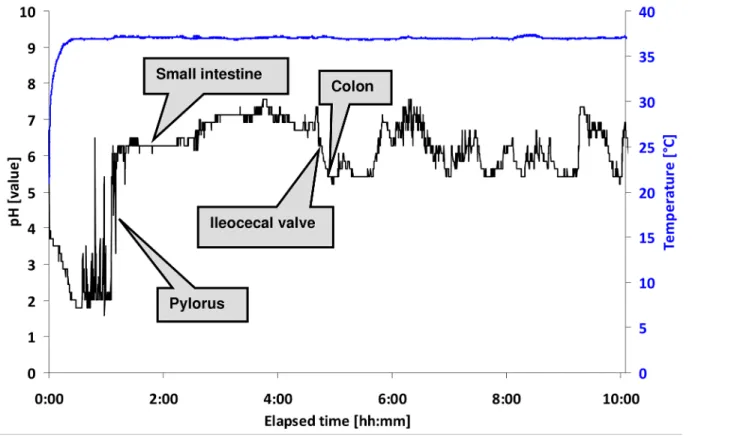
and a representative example of a pH and temperature profile is shown inFig 3. The residence
in the stomach, passage of the pylorus, course of pH in the small intestine and the ileocecal
valve (cecum) are all clearly visible in this figure. FromFig 2it is obvious that there are large
inter-individual differences in transit times. For example, the colon arrival time (CAT) differs from 3:25–8:20 h (median 5:31 h, 95% CI 4:51–5:48 h, CV 26%) and the whole gut transit time for the IntelliCap capsule was 10:01–59:39 h (median 27:08 h, 95% CI 22:49–59:11 h, CV 52%). Gastric residence time varied between 0:15 and 3:14 h (median 1:30 h, 95% CI 1:05–2:08 h, CV 59%). The median difference between the time when pH 7.0 was reached and the CAT was
Ileo-Colonic Release of ColoPulse Tablets Confirmed with IntelliCap
2.26 h and in most subjects pH remained>7.0 until the cecum was reached. A summary of
measured pH values in the stomach, small intestine and colon is shown inFig 4.
Lag time and bioavailability of13C-urea from a ColoPulse tablet were calculated as
described. The median lag time was 5:42 h (95% CI 5:18–6:18 h, range 2:36–6:36 h, CV 18%) and median bioavailability was 82% (95% CI 74–94%) range 61–114%, CV 10%). More detailed
results can be found in S1 summary and in Maurer et al [6].
There was no statistically significant difference between CAT based on pH-data (IntelliCap)
and the lag time of the ColoPulse tablet based on the stable isotope signal of13C-urea in breath
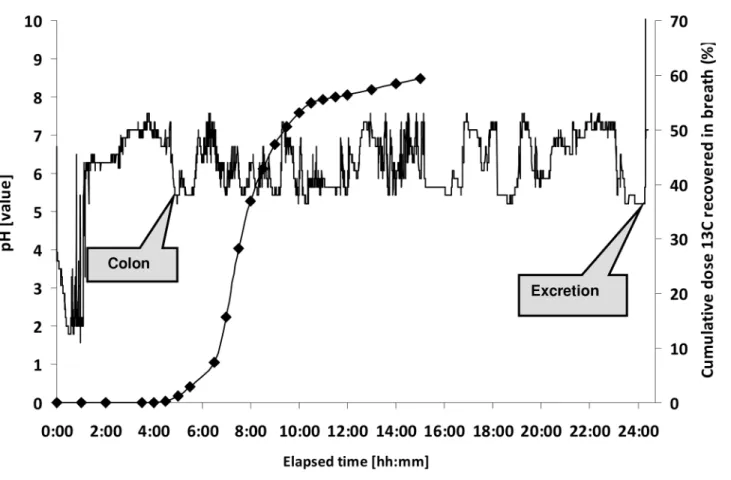
(median 5:31 vs 5:42 h, p = 0.903, parametric test). A representative example is shown inFig 5.
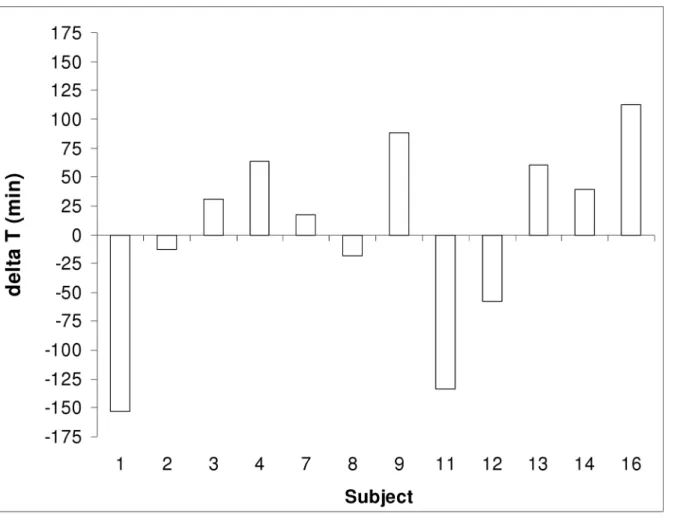
Information about all subjects can be found inFig 6.
In all subjects a pH value of 7.0 was reached before release of13C from the ColoPulse tablet
occurred, as measured in exhaled breath. There was a statistically significant difference between the time when pH 7.0 was reached and the lag time (185 vs 342 minutes, p = 0.002, non-parametric test).
Fig 2. Mean (gastrointestinal residence and transit times determined with the IntelliCap system.Data are presented mean and standard deviation of 13 evaluable subjects (for CTT and WGTT n = 9).
doi:10.1371/journal.pone.0129076.g002
Ileo-Colonic Release of ColoPulse Tablets Confirmed with IntelliCap
Discussion
This is the first study in humans combining release from ColoPulse tablets andin vivo
gastro-intestinal pH measurements using the IntelliCap system. There was no difference between CAT (pH-data) and lag time (isotope data) found in this study which delivers proof that release of ColoPulse tablets occurs in the ileo-colonic region. Furthermore the results show that release from the ColoPulse tablet does not occur before an intestinal pH value of 7.0 is reached.
Several studies have been published with radiotelemetry capsules (RTC). Through the years the functioning of RTCs improved considerably. The first RTCs were used in the 1970’s and
had logging intervals from 5 to 120 minutes to save battery capacity [8,10]. Furthermore high
data loss (75%) has been described [9]. Thereafter RTCs with shorter logging intervals up to 5
seconds became available and battery life improved considerably [16,17,19]. However in some
studies data loss was still described mostly attributed to the angle between the RTC and the
antenna [16]. In the current study with the IntelliCap system data loss was observed in three
subjects out of 15. This didn’t occur in the first 8 hours after intake of the capsule, when data were also sent to the control center, but only when the subjects were at home and did not keep their receiver close enough to the body. Therefore this event did not influence the outcome of our study, because the IntelliCap capsule already passed the cecum at the time data loss occurred. On the other hand, this shows that an overnight stay in a controlled facility is prefer-able when longer pH profiling is needed.
The IntelliCap system was able to record complete gastrointestinal pH and temperature profiles as well as derived transit-times from intake to excretion. The observed gastrointestinal transit times for the small intestine and the colon are within the range of earlier published data
Fig 3. Example of pH-profile of the first 10 hours after intake of the IntelliCap capsule (subject 14).
doi:10.1371/journal.pone.0129076.g003
Ileo-Colonic Release of ColoPulse Tablets Confirmed with IntelliCap
of healthy volunteers, only the median GRT appeared to be increased [10,25]. Published data collected with RTC and dosage forms labeled with gamma emitting radionuclides mention an
average GRT of about1 h in fasted, healthy volunteers while we observed an average gastric
residence time of 1:30 h in the evaluable subjects. A likely explanation is the intake of the tab-lets with apple juice, since it is known that food increases the GRT of pharmaceutical dosage
forms [25]. Due to its caloric content apple juice apparently also has a delaying effect. However
in this study, the apple juice was given to get the same study design as previous studies with ColoPulse formulations. This was done to be able to compare the functioning of ColoPulse tab-lets used in this study with capsules which were used in previous studies. In the future Colo-Pulse formulations can also be administered with water.
All subjects showed an elevated gastric pH (pH 3–4) immediately after administration prob-ably due to administration with apple juice, which decreased to a more acidic level of around pH 1.6 in about 30 minutes. Because in our study the determination of the location of the Intel-liCap capsule was only based on pH, pH values of the different segments of the small intestine and colon could not be determined. The median pH values of the stomach, small intestines and colon as observed in the majority of subjects are consistent with published data from fasted,
healthy volunteers [7].
No difference was found between the colon arrival time based on the13C-isotope signal (lag
time of ColoPulse tablets) and pH-measurements (from IntelliCap system). This proves the site-specific release of the active substance from the ColoPulse tablets in the ileo-colonic region.
Fig 4. Summary of pH in the stomach, small intestine and colon as measured with the IntelliCap system.Data are presented as mean and standard deviation of 15 evaluable subjects.
doi:10.1371/journal.pone.0129076.g004
Ileo-Colonic Release of ColoPulse Tablets Confirmed with IntelliCap
Simultaneous migration of the ColoPulse tablet and the IntelliCap capsule after leaving the
stomach is supported by the literature. According to Davis et al [25] no difference in intestinal
transit times was seen between solid dosage forms with the same size of ColoPulse tablets and the IntelliCap capsule. Gastric emptying of large single unit systems however, was highly influ-enced by the presence of food in the stomach. Even a light breakfast delayed emptying in some subjects. This may explain the increased stomach residence time of the IntelliCap capsule in two subjects as seen in the current study. In these subjects colon arrival time and bioavailability based on isotope signal were within the normal range. However the relatively large IntelliCap capsule was retained in the stomach for respectively 17 and 21 h, probably because they
returned to their“normal”meal intakes when the IntelliCap capsule was still in the stomach.
After pylorus passage of these two IntelliCap capsules intestinal transit times were comparable to those of the other subjects.
In this study we observed no relation between the lag-time of a ColoPulse tablet and the time when pH 7.0 was reached or the CAT. However, in none of the subjects release from the ColoPulse tablet occurred before pH 7.0 was reached.
The difference between the time when pH 7.0 was reached and the CAT was approximately 2.5 hours, supporting the fact that release occurs in the distal ileum and colon. Remarkably,
this difference in time is relatively large and differs from parameters usedin vitrodissolution
tests that were performed with the ColoPulse tablets in the gastrointestinal simulation system
(GISS) [26]. We use this in vitro test for quality control of ColoPulse tablets and normally
dis-solution of the coating and subsequent release occurs within 30 minutes after raising pH from
Fig 5. Colon arrival time based on pH (-) corresponds with release of13C (
♦) (subject 14).See alsoFig 4for the first 10 hours.
doi:10.1371/journal.pone.0129076.g005
Ileo-Colonic Release of ColoPulse Tablets Confirmed with IntelliCap
6.8 to 7.5. However, the volumes of intestinal fluid in vivo differ from the volumes used in the
GISS. According to Schiller et al [27] the fluid volume of the small intestine has a maximum of
319 mL while the volume in this stage of the GISS is as high as 940 mL. Furthermore the fluid
is not distributed homogenously along the small intestine in vivo with water pockets and“dry”
segments randomly scattered. This contributes to the relatively slow dissolution of the Eudra-git-S coating and is probably the cause of the relatively large difference between the time point at which pH 7 was reached and the CAT. The clinical relevance of this phenomenon seems to be limited because median bioavailability was 82%.
Conclusion
Based on the combined data from the IntelliCap system and the urea-isotope signal from a ColoPulse tablet as obtained in this study in healthy volunteers it can be concluded that release from ColoPulse tablets indeed occurs in the distal ileum and colon and after pH 7.0 is reached. This supports our earlier observations and confirms that the ColoPulse system is a promising delivery system for site-specific delivery and local therapy in inflammatory bowel diseases pres-ent in the distal ileum and colon.
Fig 6. Difference (delta T) between lag-time (based on isotope signal) and CAT (based on pH) for each subject (n = 12).
doi:10.1371/journal.pone.0129076.g006
Ileo-Colonic Release of ColoPulse Tablets Confirmed with IntelliCap
Supporting Information
S1 Table. Summary results of all subjects. (DOC)
S1 File. Study protocol (ENG). (DOC)
S2 File. Study protocol (NL). (DOC)
S3 File. Consort Checklist. (DOC)
Acknowledgments
The authors thank Theo de Boer for analyzing the breath samples.
Author Contributions
Conceived and designed the experiments: JM RS HR FS KW GD HW HF JK. Performed the experiments: JM HR CW VI. Analyzed the data: JM HR MZ HW CW VI. Contributed reagents/materials/analysis tools: JK CW VI FS KW. Wrote the paper: JM RS HR CW VI FS KW GD MZ HW HF JK.
References
1. McConnell EL, Liu F, Basit AW. Colonic treatments and targets: issues and opportunities. J Drug Target 2009; 17: 335–363. doi:10.1080/10611860902839502PMID:19555265
2. Singh BN. Modified-release solid formulations for colonic delivery. Recent Pat Drug Deliv Formul 2007; 1: 53–63. PMID:19075874
3. Schellekens RCA, Baltink JH, Woesthuis EM, Stellaard F, Kosterink JG, Woerdenbag HJ et al. Film coated tablets (ColoPulse technology) for targeted delivery in the lower intestinal tract: Influence of the core composition on release characteristics. Pharm Dev Technol 2012; 17: 40–47. doi:10.3109/ 10837450.2010.513986PMID:20923321
4. Schellekens RCA, Olsder GG, Langenberg SMCH, Boer T, Woerdenbag HJ, Frijlink HW et al. Proof-of-concept study on the suitability of13C-urea as a marker substance for assessment of in vivo behaviour of oral colon-targeted dosage forms. Br J Pharmacol 2009; 158: 532–540. doi:10.1111/j.1476-5381. 2009.00302.xPMID:19732063
5. Schellekens RCA, Stellaard F, Olsder GG, Woerdenbag HJ, Frijlink HW, Kosterink JGW. Oral ileocolo-nic drug delivery by the ColoPulse-system: A bioavailability study in healthy volunteers. J Control Release 2010; 146: 334–340. doi:10.1016/j.jconrel.2010.05.028PMID:20621586
6. Maurer JM, Schellekens RC, Rieke HM van, Stellaard F, Wutzke KD, Buurman DJ et al. ColoPulse tab-lets perform comparably in healthy volunteers and Crohn’s patients and show no influence of food and time of food intake on bioavailability. J Control Release 2013; 172: 618–624 doi:10.1016/j.jconrel. 2013.09.021PMID:24096020
7. Nugent SG, Kumar D, Rampton DS, Evans DF. Intestinal luminal pH in inflammatory bowel disease: possible determinants and implications for therapy with aminosalicylates and other drugs. Gut 2001; 48: 571–577 PMID:11247905
8. Watson BW, Meldrum SJ, Riddle MC, Brown RL, Sladen GE. pH profile of gut as measured by radio-telemetry capsule. Br Med J 1972; 8: 104–106
9. Evans DF, Pye G, Bramley R, Clark AG, Dyson TJ, Hardcastle JD. Measurement of gastrointestinal pH profiles in normal ambulant human subjects. Gut 1988; 29: 1035–1041 PMID:3410329
10. Fallingborg J, Christensen LA, Ingeman-Nielsen M, Jacobsen BA, Abildgaard K, Rasmussen HH. pH-profile and regional transit times of the normal gut measured by a radiotelemetry device. Aliment Phar-macol Therap 1989; 3: 605–613
11. Raimundo AH, Evans DF, Rogers J, Silk DBA. Gastrointestinal pH profiles in ulcerative colitis. Gastro-enterology 1992; 102: A681
Ileo-Colonic Release of ColoPulse Tablets Confirmed with IntelliCap
12. Fallingborg J, Christensen LA, Jacobsen BA, Rasmussen SN. Very low intraluminal colonic pH in patients with active ulcerative colitis. Dig Dis Sci 1993; 38: 1989–1993 PMID:8223071
13. Sasaki Y, Hada R, Nakajima H, Fukuda S, Munakata A. Improved localizing method of radiopill in mea-surement of entire gastrointestinal pH profiles: colonic luminal pH in normal subjects and patients with Crohn’s disease. Am J Gastroenterol 1997; 92: 114–118 PMID:8995949
14. Press AG, Hauptmann IA, Hauptmann L, Fuchs B, Fuchs M, Ewe K et al.Gastrointestinal pH profiles in patients with inflammatory bowel disease. Aliment Pharmacol Ther 1998; 12: 673–678 PMID:9701532
15. Fallingborg J, Pedersen P, Jacobsen BA. Small intestinal transit time and intraluminal pH in ileocecal resected patients with Crohn’s Disease. Dig Dis Sci 1998; 43: 702–705 PMID:9558022
16. Ewe K, Schwartz S, Petersen S, Press AG. Inflammation does not decrease intraluminal pH in chronic inflammatory bowel disease. Dig Dis Sci 1999; 44: 1434–1439 PMID:10489931
17. Maqbool S, Parkman HP, Friedenberg FK. Wireless capsule motility: comparison of the SmartPill GI monitoring system with scintigraphy for measuring whole gut transit. Dig Dis Sci 54 2009: 2167–2174 doi:10.1007/s10620-009-0899-9PMID:19655250
18. Rubin DT, Bunnag AP, Surma BL, Mikolajczyk A. Measurement of luminal pH in patients with mildly to moderately active UC: a pilot study using SmartPill. Gastroenterology 2009; 136: M1097
19. Lalezari D. Gastrointestinal pH profile in subjects with irritable bowel syndrome. Ann Gastroenterol 2012; 25: 333–337 PMID:24714241
20. van der Schaar PJ, Dijksman JF, Broekhuizen-de Gast H, Shimizu J, van Lelyveld N, Zou H et al. A novel ingestible electronic drug delivery and monitoring device. Gastrointest Endosc 2013; 78: 520–
528 doi:10.1016/j.gie.2013.03.170PMID:23684148
21. Koziolek M, Grimm M, Becker D, Iordanov V, Zou H, Shimizu J et al. Investigation of PH and tempera-ture profiles in the GI tract of fasted human subjects using the IntelliCap system. J Pharm Sci 2014 (doi: 10.1002/jps.24274)
22. Becker D, Zhang J, Heimbach T, Penland RC, Wanke C, Shimizu J et al. Novel orally swallowable Intel-licap device to quantify regional drug absorption in human GI tract using diltiazem as model drug. AAPS PharmSciTech 2014: 15: 1490–1497 doi:10.1208/s12249-014-0172-1PMID:25023947
23. Maurer JM, Schellekens RCA, Wutzke KD, Dijkstra G, Woerdenbag HJ, Frijlink HW et al. A non-inva-sive, low-cost study design to determine the release profile of colon drug delivery systems: a feasibility study. Pharm Res 2012; 29: 2070–2078 doi:10.1007/s11095-012-0735-3PMID:22422322
24. Maurer JM, Schellekens RC, Wutzke KD, Stellaard F. Isotope-labelled urea to test colon drug delivery devices in vivo: principles, calculations and interpretations. Isotopes Environ Health Stud 2013; 49: 473–491 doi:10.1080/10256016.2013.803099PMID:24313370
25. Davis SS, Hardy JG and Fara JW. Transit of pharmaceutical dosage forms through the small intestine. Gut 1986; 27: 886–892 PMID:3732895
26. Schellekens RC, Stuurman FE, van der Weert FH, Kosterink JG, Frijlink HW. A novel dissolution method relevant to intestinal release behaviour and its application in the evaluation of modified release mesalazine products. Eur J Pharm Sci 2007; 30: 15–20 PMID:17085024
27. Schiller C, Fröhlich CP, Giessmann T, Siegmund W, Mönnikes H, Hosten N et al. Intestinal fluid vol-umes and transit of dosage forms as assessed by magnetic resonance imaging. Aliment Pharmacol Ther 2005; 22: 971–979 PMID:16268972
Ileo-Colonic Release of ColoPulse Tablets Confirmed with IntelliCap